林昭Lin Zhao
背景:一个不肯认错的人:林昭,原名彭令昭,1932年生于江苏苏州,1954年考入北京大学中文系新闻专业。她的一生可以分成两段抗争:1957年,她在北大的「五·一九」运动中公开为同学辩护,被划为右派,却拒绝认错、拒绝检讨,成为北大右派学生中以「死不认错」著称的人;1960年,她因在地下刊物《星火》上发表长诗被捕,此后八年关押在上海的看守所与提篮桥监狱,在没有纸笔、戴着镣铐、屡遭虐待的处境里,以鲜血写下数十万字的申诉、诗歌与政论,直到1968年4月29日被改判死刑、当天枪决,年仅三十六岁。本站把她列入抗争记录,依据的是这条完整的主线:她的抗争不是一时一事的冲动,而是从公开辩论、拒绝认罪,到狱中以血写作、以绝食抗议、以呼喊对抗封口,连续十一年、至死未停的言论抗争。她死后十二年,法院才分两步宣告她无罪;而她的文字、她的墓和纪念她的人,至今仍在管控之下。Background: A woman who would not confess:Lin Zhao, born Peng Lingzhao in Suzhou, Jiangsu, in 1932, entered the journalism program of Peking University's Chinese Department in 1954. Her life falls into two campaigns of resistance. In 1957, during Peking University's May 19 movement, she publicly defended fellow students, was branded a rightist, and then refused to admit error or write self-criticism, becoming famous among the university's rightist students as the one who would not confess even unto death. In 1960 she was arrested for publishing long poems in the underground journal Spark, and spent the next eight years in a Shanghai detention house and in Tilanqiao Prison, where, deprived of paper and pen, shackled and repeatedly abused, she wrote hundreds of thousands of characters of appeals, poems and political essays in her own blood, until on April 29, 1968 her sentence was changed to death and she was shot the same day, aged thirty-six. This site files her under Resistance on the strength of that whole line: her resistance was no momentary impulse, but eleven consecutive years of speech in defiance — public debate, refusal to plead guilty, writing in blood in prison, hunger strikes, and shouting against the gag — that stopped only with her death. Twelve years later the courts took two separate steps to declare her innocent; her writings, her grave and those who commemorate her remain under control to this day.
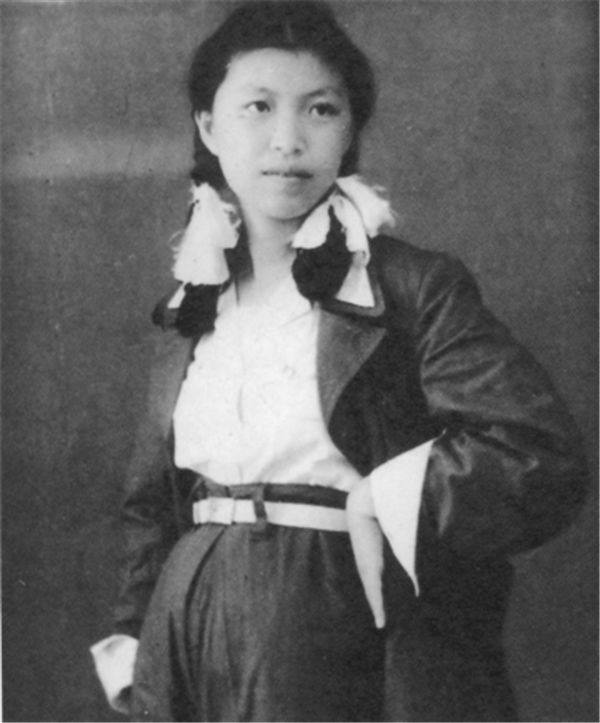
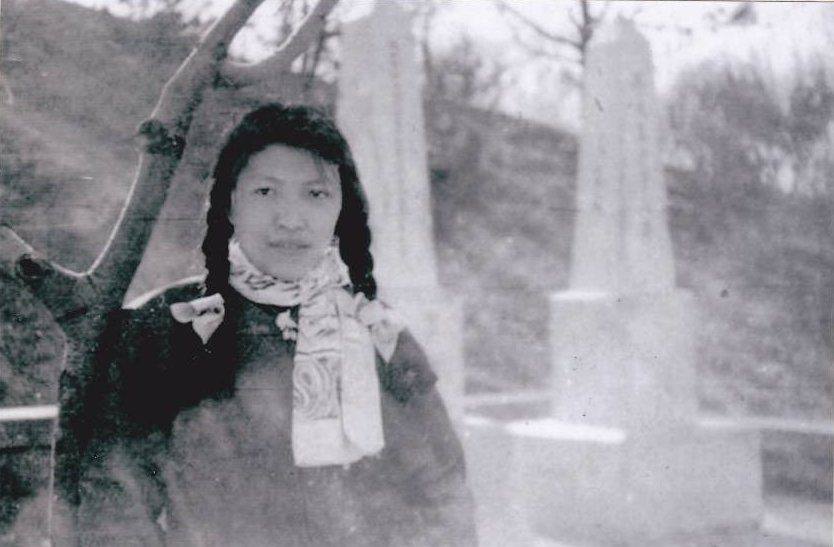
苏州家庭:县长的女儿、抗日者的女儿:林昭的父亲彭国彦是民国时期的官员:1928年,他在国民政府举办的第一届县长考试中名列前茅,出任苏州吴县县长,以清廉耿直著称。母亲许宪民则是抗战时期的活跃人物:抗日战争期间坐过牢,任苏州《大华报》总经理,为中国民主同盟成员,曾秘密资助共产党地下活动、为地下电台提供掩护,1949年后任苏州市民革委员、政协委员。林昭的大舅许金元是早期共产党人,1927年在清党中被杀。这样的家庭给了她两样东西:自幼熟读诗书的文学底子,和一种「家传的政治基因」——她的妹妹彭令范后来这样形容姐姐对政治的执着。按多数传记与维基百科的口径,林昭生于1932年1月23日,另有以农历日期换算造成的不同说法,本站的处理见文末核实说明。她早年就读苏州萃英中学,后转入教会学校景海女中,在校期间受洗成为基督徒;这个信仰在她脱离教会、投身革命多年之后,又在牢狱中回到了她身上,成为她最后岁月里自称的「上帝仆人的路线」。A Suzhou family: A county magistrate's daughter, a resistance fighter's daughter:Lin Zhao's father, Peng Guoyan, was an official of the Republican era: in 1928 he placed at the top of the Nationalist government's first county-magistrate examination and served as magistrate of Wu County, Suzhou, known for incorruptible uprightness. Her mother, Xu Xianmin, was an activist of the war years: imprisoned during the war against Japan, general manager of Suzhou's Dahua newspaper, a member of the China Democratic League who secretly funded Communist underground work and sheltered an underground radio station, and after 1949 a member of Suzhou's Revolutionary Committee of the Kuomintang and of the municipal People's Political Consultative Conference. Her eldest maternal uncle, Xu Jinyuan, was an early Communist killed in the 1927 purge. This family gave her two things: a literary formation steeped in poetry and books from childhood, and what her younger sister Peng Lingfan later called an inherited political gene — an obsession with politics. Most biographies and Wikipedia date her birth to January 23, 1932; alternative dates arise from lunar-calendar conversions, handled in the verification notes at the end of this entry. She attended Suzhou's Cuiying Middle School and then the missionary Jinghai Girls' School, where she was baptized a Christian. That faith, abandoned when she threw herself into revolution, returned to her in prison and became, in her final years, what she called the path of God's servant.
投身革命的少女:苏南新闻专科学校:1949年,十七岁的林昭考入苏南新闻专科学校。这一步在当时意味着与家庭决裂:据多种传记记载,她离家时留下近乎绝交的话,要与旧家庭「生不来往,死不吊孝」,并揭发父亲的「过错」。她参加土地改革工作队,下到苏南农村,对新政权充满热忱。这段经历必须如实记下,因为它是理解她后半生的钥匙:林昭不是从一开始就站在政权对面的人,她曾经是真诚的信仰者。正因为信仰过,她后来的反省才格外彻底——她控诉的不是一个与她无关的制度,而是她曾经为之与父母决裂、后来却把她和成千上万无辜者一起碾碎的制度。1954年,她以江苏省总分第一的成绩考入北京大学中文系新闻专业,深得古典文学教授游国恩赏识,被劝改读文学专业;她担任校刊编辑,参加北大诗社,是公认的才女。在北大,她读杜甫、鲁迅,也读西方政治哲学,思想的底色在这几年里悄悄变化。The girl who joined the revolution: The South Jiangsu Journalism School:In 1949, at seventeen, Lin Zhao entered the South Jiangsu Journalism School. The step amounted to a break with her family: several biographies record that she left home with words close to a severance — no contact in life, no mourning in death — and denounced her father's alleged faults. She joined a land-reform work team in the villages of southern Jiangsu, full of ardor for the new regime. This episode must be recorded plainly, because it is the key to her later life: Lin Zhao did not begin as an opponent of the regime; she was once a sincere believer. Precisely because she had believed, her later reckoning was so thorough — what she indicted was not a system foreign to her, but the system for which she had once broken with her parents, and which then crushed her together with countless innocents. In 1954 she entered Peking University's Chinese Department journalism program with the highest total score in Jiangsu Province. The classical-literature professor You Guoen prized her talent and urged her to switch to literature; she edited the university journal, joined the poetry society, and was recognized as a brilliant young writer. At Peking University she read Du Fu and Lu Xun alongside Western political philosophy, and the ground color of her thinking quietly changed in those years.
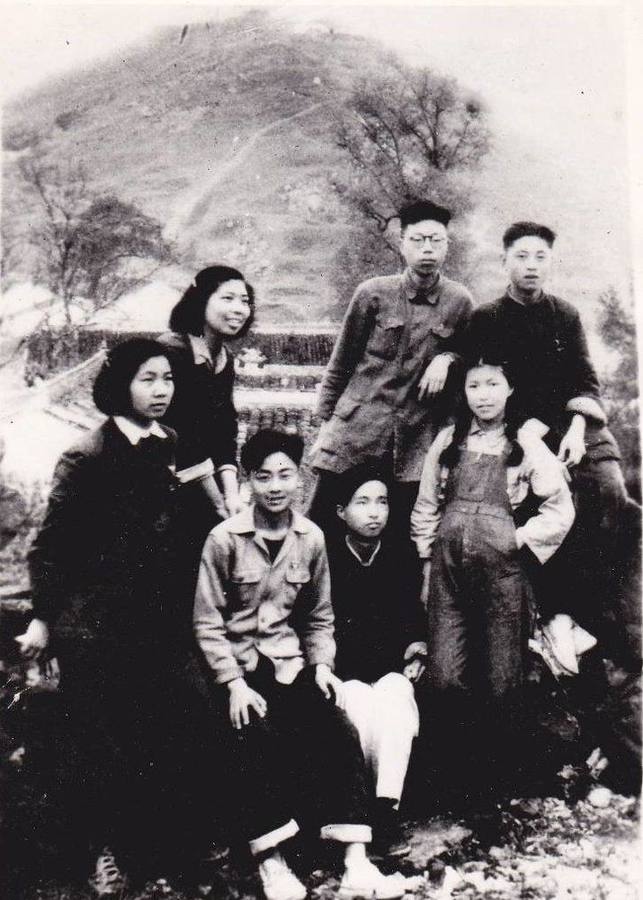
1957年:「五·一九」运动与《广场》:1957年春,中共号召「大鸣大放」、帮助党整风。5月19日晚,北大学生贴出第一批大字报,史称「五·一九」运动。中文系学生沈泽宜、张元勋的长诗大字报《是时候了》影响最大,也最先遭到围攻,被指为「右倾」「反革命煽动」。次日,林昭写长诗《这是什么歌》声援张元勋等人;5月22日的广场辩论会上,她公开站出来反驳那些上纲上线的指控。张元勋晚年回忆里留下一个细节:辩论中有人质问发言者姓名,林昭当场报出自己的名字,并把「昭」字拆开说成「刀在口上之日」,说既然来了,就不考虑刀在哪里。月底,一批学生成立「百花学社」,创办刊物《广场》,张元勋任主编,林昭以笔名「任锋」参与并发表文章。关于这场运动的全局,见本站反右运动档案。本站要在这里固定一个判断:林昭在1957年的所作所为,全部发生在政权自己号召提意见的窗口之内——她说的话没有一句超出当时公开号召的范围,灾难是在号召收回之后才落到她头上的。1957: The May 19 movement and The Square:In the spring of 1957 the Communist Party called for a great blooming and contending — speak out, and help the Party rectify its style. On the evening of May 19, Peking University students put up the first big-character posters, in what became known as the May 19 movement. The long-poem poster It Is Time, by Chinese Department students Shen Zeyi and Zhang Yuanxun, had the widest reach and drew the first attacks, denounced as rightist and as counter-revolutionary incitement. The next day Lin Zhao wrote the long poem What Song Is This in support of Zhang and his fellows, and at the plaza debate of May 22 she stood up publicly to rebut the escalating charges. Zhang Yuanxun's later memoir preserves one detail: when someone in the debate demanded a speaker's name, Lin Zhao gave hers on the spot and broke the character Zhao apart as a knife over the character for day, saying that having come, she would not think about where the knife was. At the end of the month students founded the Hundred Flowers Society and its journal The Square (Guangchang), with Zhang as editor; Lin Zhao took part and published under the pen name Ren Feng. For the movement as a whole, see this site's file on the Anti-Rightist Campaign. One judgment should be fixed here: everything Lin Zhao did in 1957 fell inside the window the regime itself had opened when it invited criticism — not one word of hers exceeded the scope of that public invitation. The catastrophe landed on her only after the invitation was withdrawn.
划为右派:以死抗争与「死不认错」:1957年6月以后,鸣放被定性为右派进攻。林昭与张元勋等人被划为右派分子。据多种传记与研究记载,林昭以死抗争,吞服大量安眠药自杀,被抢救过来;这一举动被认定为对抗组织、态度恶劣,处分随之加重。关于处分的形式,来源之间有出入:一种口径说她被处劳动教养三年,因新闻系教师罗列等人怜其体弱、冒险求情,才改为留在资料室接受监督改造;另一种以档案校注为据的口径说处分是保留学籍、劳动察看。本站并列两说,共同的事实是:她没有被送进劳教场所,而是被留在学校资料室里,在群众监督下劳动,同时被剥夺了正常毕业与工作的前途。1958年6月起,她转到人民大学新闻系资料室监督劳动,在那里与同为右派的学生甘粹相恋;两人申请结婚,被上级指斥为谈情说爱、抗拒改造,不予批准,甘粹随后被发配到新疆的劳改营,一去二十二年。林昭的立场在这一时期定型:北大同学多年后异口同声地说,反右之后人人检讨过关,唯独她死不认错。有人劝她只要承认一句错了就可以过关,她的回答始终是:我没有错。她还投书团中央质问:当年蔡元培在北大做校长时,敢向北洋军阀政府保释五四被捕的学生,如今北大的领导却把学生送进去,良知何在?Branded a rightist: Suicide in protest, and 'dead but unconfessing':After June 1957 the blooming was reclassified as a rightist offensive. Lin Zhao, Zhang Yuanxun and others were branded rightists. According to several biographies and studies, Lin Zhao protested with her life, swallowing a large dose of sleeping pills; she was revived, and the act was treated as defiance of the organization and a vicious attitude, bringing a heavier punishment. Sources differ on the punishment's form: one account says she was sentenced to three years of re-education through labor and, only because journalism teacher Luo Lie and others pleaded for her frail health at personal risk, was instead kept in the department's data room under supervised labor; another account, resting on annotated archival editions, gives the punishment as retention of student status with labor under observation. This site sets both side by side. The shared fact is that she was not sent to a labor camp but kept in a university data room, working under mass supervision, stripped of a normal graduation and future. From June 1958 she was moved to the data room of Renmin University's journalism department, where she fell in love with Gan Cui, another rightist student; when they applied to marry, superiors denounced the romance as resisting reform and refused permission, and Gan Cui was exiled to a labor camp in Xinjiang for twenty-two years. Her stance hardened in these years: Peking University classmates said decades later, in one voice, that after the Anti-Rightist Campaign everyone wrote confessions and passed, except her — she would not admit error even unto death. Told that one sentence of admission would free her, she answered always: I did nothing wrong. She also wrote to the Central Committee of the Youth League demanding to know: when Cai Yuanpei was president of Peking University, he dared to bail out May Fourth students arrested by the warlord government — now the university's leaders deliver students in themselves; where is their conscience?
大饥荒与《星火》:两首长诗惹来的案子:1959年起,林昭因病离开北京,到上海、苏州休养。此时大跃进造成的大饥荒正在蔓延,饿死人的消息不断传来,她为此忧心,并给领导人写信,试图阻止悲剧。与此同时,一批在甘肃劳动改造的右派学生和教师——兰州大学历史系学生张春元等人——在武山等地串联,谋求救国救民之道,并通过在上海的兰州大学研究生顾雁辗转与林昭取得联系。张春元专程到上海与她面谈,她赠以《南斯拉夫共产党纲领》一书和新作长诗;这批人后来写出《当前的形势和我们的任务》,提出要在中国实现和平、民主、自由的社会主义,并创办油印刊物《星火》,创刊号发表了林昭的长诗《海鸥之歌》和《普罗米修斯受难的一日》,《海鸥之歌》还被单独油印成宣传品散发。刊物只出了极少的份数,传播范围很小。但在1960年的政治空气里,一群右派办刊物、写纲领,本身就被定性为集团犯罪。1960年7月,张春元等人在甘肃被捕,其后被捕者包括《星火》相关人员三十九人,以及同情、支援他们的数十名当地农民和干部。林昭的案子,就是从这两首诗开始的。The famine and Spark: The case that two long poems brought:From 1959, ill health took Lin Zhao from Beijing to recuperate in Shanghai and Suzhou. By then the famine caused by the Great Leap Forward was spreading, news of people starving kept arriving, and she wrote to the leaders in anguish, trying to stop the tragedy. Meanwhile a group of rightist students and teachers undergoing labor reform in Gansu — Zhang Chunyuan of Lanzhou University's history department among them — were linking up around Wushan to seek a way to save country and people, and through Gu Yan, a Lanzhou University graduate student in Shanghai, made contact with Lin Zhao. Zhang traveled to Shanghai to meet her; she gave him a copy of the Program of the Yugoslav Communists and her new long poems. The group went on to write The Present Situation and Our Tasks, proposing a peaceful, democratic and free socialism for China, and founded the mimeographed journal Spark, whose first issue carried Lin Zhao's long poems Song of the Seagull and Prometheus Suffers a Day; the Seagull poem was also printed separately as a leaflet. The journal produced very few copies and circulated narrowly. But in the political air of 1960, rightists founding a journal and drafting a program was itself classified as organized crime. In July 1960 Zhang Chunyuan and others were arrested in Gansu; in the end thirty-nine people connected with Spark were arrested, together with dozens of local peasants and cadres who had sympathized with or aided them. Lin Zhao's case began with those two poems.
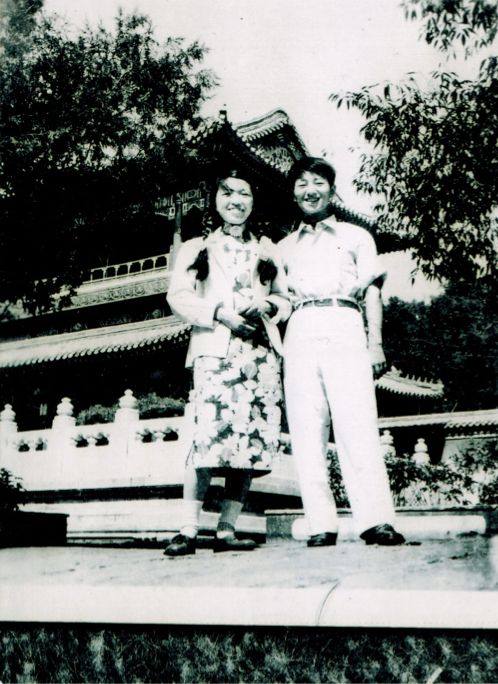
1960年10月24日:第一次被捕与父亲之死:1960年10月24日,林昭在苏州被捕——这一日期有独立中文笔会《中国当代文字狱囚徒编年录》和林昭文稿校注本等多个来源相互印证,个别叙述笼统写作1960年10月或12月,本站以10月24日为准。她被指控的罪名,在后来的判决语言里包括「阴谋推翻人民民主专政」与组织「反革命集团」等。她先被关押在上海第一看守所。她的父亲彭国彦当时已被打成历史反革命,靠糊火柴盒度日;得知女儿被捕后约一个月,他服食鼠药自杀身亡。这位民国县长,先是在女儿投身革命时被女儿揭发、与女儿决裂,又在女儿成为右派后重新与女儿和解,最后死在女儿入狱的打击之下。林昭1962年保外就医期间,头上戴了一朵小白花,同学问她为谁戴孝,她说是为父亲。入狱之初,她就开始了申诉与写作,并且从一开始就不认罪——审讯者要的是认罪态度,她给的是对案件本身合法性的质疑。这个姿态,她保持了八年,直到被枪决。October 24, 1960: The first arrest, and her father's death:On October 24, 1960, Lin Zhao was arrested in Suzhou — a date corroborated by the Independent Chinese PEN Center's chronicle of literary prisoners and by annotated editions of her manuscripts, while some narratives give only October or December 1960 in general terms; this site follows October 24. The charges later formulated against her included conspiring to overthrow the people's democratic dictatorship and organizing a counter-revolutionary clique. She was first held in Shanghai's No. 1 Detention House. Her father, Peng Guoyan, had by then been branded a historical counter-revolutionary and was living by pasting matchboxes; about a month after her arrest he killed himself by swallowing rat poison. The Republican county magistrate had first been denounced by his daughter and broken with her when she joined the revolution, then reconciled with her after she became a rightist, and finally died under the blow of her imprisonment. During her 1962 medical release Lin Zhao wore a small white flower in her hair; asked for whom she was mourning, she said: for my father. From the very start of her imprisonment she began filing appeals and writing, and from the very start she refused to plead guilty — interrogators wanted an attitude of confession; she gave them a challenge to the legality of the case itself. She kept that posture for eight years, until she was shot.
1962年:保外就医与再次入狱:1962年3月5日,林昭因肺病等原因保外就医——这个具体日期见于林昭文稿校注本,多数通俗叙述写作1962年初或3月。她回到苏州、上海一带养病,短短几个月里没有沉默:她与在上海结识的青年黄政等人共同起草中国改革方案,其内容据后来研究者的整理,包括解散人民公社、允许私人经营、对外开放、地方自治等在当时惊世骇俗、后来却大多成为现实的主张;她还委托朋友把《我们是无罪的》《给北大校长陆平的信》等文章带到海外发表。1962年11月8日,她再次被收监——这一日期有艾晓明等研究者据案卷所作的注释为据,不少叙述则写作1962年12月,本站以案卷口径的11月8日为正、12月说并列存疑。同年12月23日,她被转关进上海提篮桥监狱——一所关押已决犯的监狱,把未决犯关进去,本身就是一种别有用意的处理。从这一天起,直到1968年4月29日,她再没有离开过监狱的围墙。1962: Medical release, and prison again:On March 5, 1962, Lin Zhao was released for medical treatment of tuberculosis and other illness — the precise date appears in annotated editions of her manuscripts, while most popular accounts give early 1962 or March. She recuperated around Suzhou and Shanghai, and in those few months she did not fall silent: with Huang Zheng, a young man she met in Shanghai, and others, she drafted a program of reform for China whose contents, as later scholars reconstructed them, included dissolving the people's communes, permitting private business, opening to the outside world and local self-government — proposals shocking at the time that later mostly became reality. She also entrusted friends with carrying essays such as We Are Innocent and her letter to Peking University president Lu Ping abroad for publication. On November 8, 1962, she was taken back into custody — a date supported by case-file annotations by the scholar Ai Xiaoming and others, while many narratives give December 1962; this site follows the case-file date of November 8 and records the December version alongside. On December 23 that year she was transferred to Shanghai's Tilanqiao Prison — a prison for sentenced convicts, into which placing an unsentenced detainee was itself a deliberate handling. From that day until April 29, 1968, she never again left the prison walls.
狱中抗争的主线:拒绝认罪:提篮桥监狱里的林昭,抗争的方式首先是拒绝。狱方和家属都反复给她同一条出路:承认错误,就可以出去。据同学和亲属的回忆,有人当面对她说,你只要承认一句自己错了,就可以放你出去,她斩钉截铁地回答:不,我没有错,决不向邪恶低头。母亲许宪民也曾劝她:孩子,你就认个错吧,不然他们会杀死你的。她回答:我怎么能认错,我没有错。她在狱中文字里这样自述这种性格:遇到外来的侵犯镇压,首先想到的永远只是反抗;「不怕你们把林昭磨成了粉,我的每一粒骨头渣儿都还只是一颗反抗的种子」。与拒绝认罪配套的是申诉:她分别给时任上海市长柯庆施、《人民日报》编辑部等写信,反映案情、表达政治见解,一次又一次,都没有回音。她也多次绝食抗议,并有自杀之举。这些行为在狱方的档案语言里被汇总成四个字——「死不悔改」,后来成为加重她刑罚直至改判死刑的核心理由。换言之,她被处死,不是因为做成了什么行动,而是因为八年不肯低下头。本站把这一点写在全页的中心:林昭案的实质,是一场以认罪为条件的交易被拒绝之后,国家机器对一个拒绝者实施的逐步升级的惩罚。The main line of her prison resistance: Refusing to confess:In Tilanqiao Prison, Lin Zhao's first form of resistance was refusal. Keepers and family alike repeatedly offered her the same exit: admit error, and you can go out. Classmates and relatives recalled that when someone said to her face that one sentence of admission would free her, she answered flatly: No. I did nothing wrong, and I will never bow to evil. Her mother Xu Xianmin pleaded with her too: Child, just admit you were wrong, or they will kill you. She answered: How can I admit error? I have done nothing wrong. In her prison writing she described this temperament herself: when invasion and suppression come from outside, the first thing she ever thought of was resistance — grind Lin Zhao to powder, and every grain of her bone would still be a seed of resistance. Paired with refusal went appeal: she wrote to Ke Qingshi, then mayor of Shanghai, to the editors of the People's Daily and elsewhere, presenting her case and her political views, again and again, and never received a reply. She also staged repeated hunger strikes and made attempts on her own life. In the language of the prison files, all of this was summed up in four characters — dead and unrepentant — which later became the core ground for aggravating her punishment step by step up to a death sentence. In other words, she was put to death not for any action she had accomplished, but for eight years of refusing to bow her head. This site places that point at the center of the page: the Lin Zhao case is, in substance, the escalating punishment a state machine inflicted on a refuser, after a bargain conditioned on confession had been refused.
以血写作:发卡、竹签与白色被单:林昭在狱中长期得不到纸笔。据她妹妹彭令范的回忆和多种研究,她用发卡、竹签刺破手指和皮肉取血,在白色被单上、衬衣上、囚室墙上和报纸边角上写作,伤口未愈时再挑开放血,日复一日。狱方自己的报告无意中为这件事作了证:提篮桥监狱给她加刑的报告里写着,关押期间她用发夹、竹签等物千百次戳破皮肉,用血写了几十万字信件、笔记和日记,把自己说成反对暴政的自由战士。她的狱中作品,今天能确认名目的包括:写给《人民日报》编辑部的长信,即著名的「十四万言书」;长篇《灵耦絮语》,据狱方在起诉书跋语中开列的清单,写于1965年5月至12月,约十八万字;1965年3月23日开始写的《告人类》;1965年5月31日判决后血书的《判决后的申明》;以及《囚室哀志》《基督还在世上》《血诗题衣》《血衣题跋》、血写日记等。关于她狱中文字的总量,口径分歧很大:胡杰纪录片的解说词说二十余万字,狱方清单合计已达数十万字,近年民间档案机构则有约五十万字的说法。本站并列三说、不取其一,因为档案至今没有完整公开,任何单一数字都超出了可核实的范围。她以发卡写下的那件血衣,穿在身上九个多月,背上四个血字是:「天日何在?!」Writing in blood: Hairpins, bamboo splinters and a white sheet:For long stretches in prison Lin Zhao was given no paper and no pen. According to her sister Peng Lingfan's recollections and multiple studies, she pricked her fingers and skin with hairpins and bamboo splinters to draw blood, and wrote on white sheets, on her shirt, on cell walls and on newspaper margins, reopening wounds before they healed, day after day. The prison authorities unwittingly testified to it themselves: Tilanqiao Prison's report recommending a heavier sentence stated that during her confinement she had pierced her flesh hundreds and thousands of times with hairpins and bamboo splinters and written several hundred thousand characters of letters, notes and diaries in blood, styling herself a freedom fighter against tyranny. The prison works whose titles can be confirmed today include her long letter to the editors of the People's Daily, the celebrated Letter of 140,000 Characters; the long work Conversations of the Paired Spirits (Ling'ou Xuyu), which the authorities' own indictment postscript lists as written from May to December 1965 at some 180,000 characters; To Mankind, begun on March 23, 1965; the Statement After the Verdict, written in blood after her sentencing on May 31, 1965; and A Lament from the Prison Cell, Christ Is Still in the World, blood poems inscribed on clothing, prefaces to a blood-written shirt, and diaries in blood. Totals for her prison writing diverge widely: Hu Jie's documentary narration says more than 200,000 characters; the authorities' own lists already add up to several hundred thousand; and folk-archive institutions have recently spoken of roughly 500,000. This site sets the three figures side by side and adopts none, because the file has never been fully opened and any single number would exceed what can be verified. One blood-written shirt she wore for more than nine months; the four blood characters on its back asked: Where is heaven's justice?!
镣铐、禁闭与封口:压制的手段:拒绝的代价写在她自己的血书里。她描述镣铐的花样:一副反铐,两副反铐,时而平行,时而交叉;臂肘上创痕犹在。最令她愤怒的是,不论她在绝食之中、胃炎发作痛得死去活来之时、乃至月经期间,镣铐从未解除、甚至从未减轻。她被单独关押,指定阅读,专人管教,并多次遭到殴打。因为她在女监时时大声呼喊抗议,据一位同狱者的回忆,狱方把她转到男监三号监的五楼单独禁闭——那里整层空置;她在楼上喊叫时,被戴上一种只露眼睛和鼻子的橡胶头套,同狱者称之为「孙悟空帽」,她被憋得双眼通红。到了最后的宣判大会,据同狱犯人转述亲属的记载,她被带上台时口中塞着橡皮塞子——这种塞子随张口程度伸缩,专防囚犯喊口号——颈部还系着扣紧喉管的绳子。本站对这一段的来源层级如实标注:镣铐一段出自她本人的狱中文字,头套与塞口则来自同狱者和亲属的转述,与胡杰纪录片《寻找林昭的灵魂》采访所得的口径相互参照,但未经狱方档案原文证实。任务流传说法中常见的「约束衣」一节,本站在可靠来源中没有查到,故不写入正文,以免以讹传讹。Shackles, solitary confinement and the gag: The instruments of suppression:The price of refusal is written in her own blood letters. She described the variations played with handcuffs: one pair of reverse cuffs, two pairs, now parallel, now crossed, with scars still on her arms and elbows. What enraged her most was that whether she was on hunger strike, writhing with gastritis, or menstruating, the cuffs were never removed and never even loosened. She was held in solitary confinement, given designated reading, placed under a dedicated discipline officer, and repeatedly beaten. Because she kept shouting protests in the women's prison, a fellow prisoner recalled, the authorities moved her to solitary confinement on the fifth floor of the men's No. 3 block, an entire empty floor; when she shouted there, she was fitted with a rubber hood exposing only eyes and nose — fellow inmates called it the Monkey King hat — until her eyes were bloodshot from suffocation. At the final sentencing rally, according to an account passed from a fellow prisoner to her family, she was brought onto the stage with a rubber gag in her mouth — a gag that expanded as the mouth opened, made to stop prisoners shouting slogans — and a cord tightened around her throat. This site marks the source level of this passage honestly: the shackles passage comes from her own prison writing, while the hood and the gag rest on fellow prisoners' and relatives' relayed accounts, cross-referenced against interviews in Hu Jie's documentary Searching for Lin Zhao's Soul, but not confirmed by the original prison file. The straitjacket that appears in some circulating accounts could not be found in any reliable source consulted, and is therefore not written into this entry, to avoid passing error on as fact.
1965年5月31日:二十年徒刑与《判决后的申明》:1965年5月31日,林昭案开庭审判。法院以她是所谓「中国自由青年战斗联盟」反革命集团主犯等罪名,判处她有期徒刑二十年。(本站注:个别通俗叙述把判刑系于1960年或1962年,均不确;1960年是被捕,1962年是再次收监,正式判决是1965年5月31日,这一日期有文稿校注本、独立中文笔会编年录与多种研究一致印证。)宣判之后,她血书《判决后的申明》,其中写道:这是一个可耻的判决,但我骄傲地听取了它;这是敌人对于我个人战斗行为的一种估价,我应该做得更多,以符合你们的估价。同月,刑满释放的老同学张元勋到提篮桥监狱看望她——他记下了她的话:顶多也就是死,他们杀机已定,哀求之与痛斥之,其结果完全相同。此后她被正式转入服刑,在提篮桥监狱里继续写作:1965年下半年,她第三次给《人民日报》写信;1966年,她写下《鲜花开放在悲壮的红五月》等诗文与血写日记。二十年徒刑对一个身患肺病、体重不断下降的人而言已经近乎无期,而她显然早已预见,这甚至不是最后的数字。May 31, 1965: Twenty years, and the Statement After the Verdict:On May 31, 1965, Lin Zhao's case came to trial. The court sentenced her to twenty years' imprisonment as the principal of the alleged counter-revolutionary clique the China Free Youth Battle League and on related charges. (Note by this site: some popular accounts attach the sentencing to 1960 or 1962; both are wrong. She was arrested in 1960 and taken back into custody in 1962; the formal judgment was May 31, 1965, a date consistently corroborated by annotated editions of her manuscripts, the Independent Chinese PEN chronicle and multiple studies.) After the verdict she wrote in blood her Statement After the Verdict: this is a shameful judgment, but I listened to it with pride; it is the enemy's appraisal of my personal combat, and I should do more to live up to your appraisal. That same month her old classmate Zhang Yuanxun, released after serving his own term, visited her at Tilanqiao Prison and recorded her words: death is the most it can be; their intent to kill is set, and begging and denouncing come to exactly the same result. Thereafter she formally began serving her sentence, and went on writing inside Tilanqiao: in the second half of 1965 she wrote to the People's Daily for a third time; in 1966 she wrote poems such as Flowers Bloom in the Tragic Red May and diaries in blood. For a woman with tuberculosis whose weight kept falling, twenty years was already close to a life sentence — and she plainly foresaw that even this would not be the final number.
文革:从禁止会见到改判死刑:1966年文化大革命开始后,林昭的处境进一步恶化。她被继续关押在提篮桥监狱,在狱中书写的日记与诗文被狱方认定为在文革中继续进行「反革命」活动。自1967年5月起,家属被禁止会见:当月1日,张元勋陪许宪民来到提篮桥监狱要求探望,被传达室告知监狱已经军管、一切接见停止。1967年11月1日,她在给母亲的家信中总结自己的狱中抗争,说这半年多来她多次写血书、加以绝食抗议。此时她的身体已被折磨到极点:据胡杰纪录片采访的狱医等人的回忆,她被送进监狱医院时体重不到七十磅、大口咳血;一位同情她的医生悄悄问,你又何苦呢,她轻声回答:宁为玉碎。她早年写下的诗句这时成了自己的判词:「自由无价,生命有涯,宁为玉碎,以殉中华。」1968年4月,上海市的公检法军事管制机构决定改判:上海市高级人民法院(军管时期)的死刑判决书送达狱中——她由二十年有期徒刑被改判死刑,理由仍然是狱中书写与不认罪。本站需要指出这处程序事实:改判死刑的决定,针对的不是任何新的行动,而是她在镣铐之下写下的文字和不肯认错的态度本身。The Cultural Revolution: From banned visits to a death sentence:After the Cultural Revolution began in 1966, Lin Zhao's position worsened further. Still held at Tilanqiao, she was found by the authorities to be continuing counter-revolutionary activity during the Cultural Revolution through the diaries and poems she wrote in her cell. From May 1967 family visits were banned: on May 1 that year Zhang Yuanxun accompanied Xu Xianmin to Tilanqiao Prison to ask for a visit and was told at the gate office that the prison was under military control and all visits had stopped. In a letter home dated November 1, 1967, she summed up her prison resistance herself, saying that over the previous half year she had repeatedly written in blood and added hunger strikes in protest. By then her body was at its limit: a prison doctor interviewed in Hu Jie's documentary recalled that when she was carried into the prison hospital she weighed under seventy pounds and was coughing up blood; a sympathetic doctor whispered, why do you put yourself through this, and she answered softly: rather a jade shattered. A line she had written years earlier now became her own verdict: freedom is priceless, life is finite; rather be shattered jade, to die for China. In April 1968 Shanghai's military-control organs for public security, prosecution and courts decided on resentencing: a death judgment from the Shanghai Higher People's Court, in its military-control period, was delivered into the prison — her twenty years were changed to death, on the same grounds as before, her prison writing and her refusal to confess. The procedural fact deserves emphasis: the death sentence answered no new act, but the words she had written in shackles and the attitude of non-confession themselves.
1968年4月29日:龙华枪决与五分钱子弹费:1968年4月29日,林昭在狱中被宣布改判死刑,随即被执行。关于执行地点,主流记载是上海龙华机场:维基百科中英文版、独立中文笔会编年录与多数研究均作此说,并注明行刑者为中国人民解放军上海市公检法军事管制委员会;个别同狱者的转述则说枪决地点在监狱礼堂后面的小院子,本站并列存疑,正文从主流记载。据亲属从狱医和同狱者处辗转得知的情形,她是从监狱医院的病房被直接拖走的,不容更换衣服,穿着病号服;据一个在龙华机场做杂工的少年目击者的转述(见黄河清《话讲林昭》),行刑时她口中似乎塞着东西,被踢跪后中枪,倒下后又曾挣扎爬起,行刑者再补枪——这一段属于单一来源的转述,本站标注其层级,不作定论。她死时三十六岁。家属没有收到任何正式的死刑通知:1968年5月1日,公安人员来到她母亲家,只说了三句话——我是上海市公安局的;林昭已在4月29日被枪决;家属要交五分钱子弹费。一颗子弹,五分钱,这是这个家庭为女儿的死接到的唯一一份官方文书性质的交代,此事后来被1981年报道「两高」审判的《历史的审判》一文提及,广为人知。April 29, 1968: Execution at Longhua, and the five-cent bullet fee:On April 29, 1968, Lin Zhao was told in prison that her sentence had been changed to death, and she was executed forthwith. On the place of execution, the mainstream record is Longhua airfield in Shanghai: both the Chinese and English Wikipedia entries, the Independent Chinese PEN chronicle and most studies give this, naming the executors as the Military Control Commission of the Shanghai public security, prosecution and court organs under the People's Liberation Army; one fellow prisoner's relayed account instead places the shooting in a small yard behind the prison auditorium. This site records the discrepancy and follows the mainstream account in its text. From what the family pieced together from a prison doctor and fellow inmates, she was dragged directly from her prison-hospital ward, not allowed to change, still in hospital clothes. A teenage odd-job worker at Longhua airfield, in an account relayed in Huang Heqing's Telling of Lin Zhao, recalled that something seemed stuffed in her mouth, that she was kicked to her knees and shot, rose struggling after falling, and was shot again — a single-source relayed account, marked here as such and not treated as settled. She was thirty-six. The family received no formal notification of the death sentence. On May 1, 1968, a public-security officer came to her mother's home and said three sentences in all: I am from the Shanghai Public Security Bureau; Lin Zhao was shot on April 29; the family must pay a five-cent bullet fee. One bullet, five cents — the only official accounting this family ever received for its daughter's death, later mentioned in the 1981 account The Trial of History of the Gang of Four trials and now widely known.
家人:父亲已死,母亲疯了:林昭之死给这个家庭的打击是连续的。父亲彭国彦已在1960年她被捕后自杀。母亲许宪民在接到索要子弹费的通知时当场受到巨大刺激,此后精神失常。据妹妹彭令范的回忆,母亲晚年境况极惨,医院拒不收治;1975年,她被发现死在上海外滩街头。关于她的死因,来源说法不一:有说自杀,有说暴病而死,也有说被打死——本站并列三说,不取其一,只确认两点有据可查的事实:她在女儿死后精神失常,以及她死于1975年的上海街头,未能等到女儿平反。妹妹彭令范成了这个家最后的档案保管人:她保存姐姐的遗稿,追寻案卷的下落,多年里一次次讲述姐姐的经过,并最终在2009年把档案原件送出国门。弟弟等其他家人的公开记载较少。回头看这个家庭的时间线:1927年大舅死于清党,1960年父亲死于女儿入狱,1968年女儿死于枪决,1975年母亲死于疯癫——一个苏州望族四十多年的遭遇,恰好是这个国家政治运动碾过普通家庭的一条完整切口。Her family: Her father already dead, her mother driven mad:The blow to the family came in sequence. Her father Peng Guoyan had already killed himself in 1960 after her arrest. Her mother Xu Xianmin suffered a devastating shock at the bullet-fee notification and thereafter lost her mind. According to her sister Peng Lingfan's recollections, the mother's last years were wretched, with hospitals refusing to admit her; in 1975 she was found dead on the street at the Shanghai Bund. Sources disagree on the cause: some say suicide, some sudden illness, some that she was beaten to death. This site sets the three versions side by side and adopts none, confirming only the two documented facts — that she lost her sanity after her daughter's death, and that she died on a Shanghai street in 1975, without living to see her daughter exonerated. Her younger sister Peng Lingfan became the family's last archivist: she preserved her sister's manuscripts, hunted for the case file, retold her sister's story over and over for decades, and finally, in 2009, sent the original archive abroad. Public records of her younger brother and other relatives are sparse. Looked at whole, the family's timeline — an uncle killed in the 1927 purge, a father dead by suicide in 1960 after his daughter's arrest, the daughter shot in 1968, the mother dead insane in 1975 — is a complete cross-section of what this country's political campaigns did as they rolled over one ordinary Suzhou family of standing.
平反两步走:1980年「以精神病宣告无罪」,1981年撤销重判:林昭的平反分两步,两个步骤的差别正是本页必须写清的地方。第一步:1980年8月22日,上海市高级人民法院作出复查判决(沪高刑复字第435号),撤销军管时期的死刑判决,宣告林昭无罪,并称这是一起冤杀无辜——但这次宣告无罪的理由,是认定她患有精神病。也就是说,法院在还她清白的同时,给她留下了一个病名:她的八年抗争,在这份判决的逻辑里,是病人言行,而非一个公民的政治抗争。第二步:1981年12月30日,上海市高级人民法院再次复查,认为以精神病为由撤销原判不妥,撤销1980年的判决和1968年的原判,重新宣告林昭无罪。这一次,判决不再以病为据——她的无罪,是因为她本来就无罪。本站的处理方式是两步分开写、日期与文号分开标明,并明确指出:通常所说的「林昭1980年平反」只完成了第一步,那份平反本身带着侮辱性的附加理由;干净的平反要等到1981年底。至于她的行为是否应当被追认为抗争而非疾病,则不是法院说了算的——狱中那几十万字逻辑严密的政论与申诉,本身就是回答。Rehabilitation in two steps: 'Innocent by reason of mental illness' in 1980, both judgments revoked in 1981:Lin Zhao's rehabilitation came in two steps, and the difference between them is exactly what this page must make clear. Step one: on August 22, 1980, the Shanghai Higher People's Court issued a review judgment (Hu Gao Xing Fu Zi No. 435) revoking the death judgment of the military-control period, declaring Lin Zhao innocent and calling the case a wrongful killing of an innocent — but the ground on which it declared her innocent was a finding that she had suffered from mental illness. That is, while restoring her innocence, the court left her with a diagnosis: in the logic of that judgment, her eight years of resistance were the words and deeds of a patient, not the political resistance of a citizen. Step two: on December 30, 1981, the Shanghai Higher People's Court reviewed the case again, held that revoking the original judgment on grounds of mental illness was inappropriate, revoked both the 1980 judgment and the 1968 original judgment, and declared Lin Zhao innocent anew. This time the judgment did not rest on illness — she was innocent because she had always been innocent. This site's handling is to write the two steps separately, with their dates and document number marked separately, and to state plainly that the commonly invoked rehabilitation of Lin Zhao in 1980 completed only the first step, and that rehabilitation itself carried a humiliating rider; a clean exoneration waited until the end of 1981. As to whether her conduct should be recognized as resistance rather than illness, that is not for a court to decide — the hundreds of thousands of characters of rigorously argued political essays and appeals she wrote in prison are themselves the answer.
遗作、档案与胡杰的纪录片:林昭死后,她的文字经历了一个被封存、被寻找、被送出国门的过程。1980年代初,她的档案曾一度开放:《民主与法制》记者陈伟斯据档案写成《林昭之死》,1981年发表——但不久档案重新封存,报刊对林昭案长期噤声。1999年起,前新华社记者、独立制片人胡杰辞职寻访,历时数年,采访了约八十位认识林昭的人,并通过特别途径拍摄到林昭狱中文稿,于2003至2004年间完成纪录片《寻找林昭的灵魂》;这部片子从未在国内公开发行,只能以非公开放映的方式在关注者之间流传,却成为一代人认识林昭的主要入口。由林昭生前故友整理编辑的《林昭文集》收录了她自中学时期以来的近百篇散文、诗歌、评论、报道以及部分狱中文稿和书信,在海外出版。2009年4月,彭令范将林昭档案原件——狱中血书、公开信、私人信件与家庭照片——捐赠给美国斯坦福大学胡佛研究所图书档案馆,2009年10月26日,档案电子版首次公开,研究者可以在网上查阅目录。至此,她最重要的遗存,保存在一所美国大学的档案馆里向全世界开放,而在她的祖国,公开出版与公开纪念仍然受限。2018年,她遇难五十周年之际,美国对华援助协会设立「林昭自由奖」,表彰以她的精神推进中国公民社会与法治的人士。Her writings, the archive, and Hu Jie's documentary:After Lin Zhao's death, her writings passed through a sequence of being sealed, being sought, and being sent abroad. In the early 1980s her file was briefly opened: Chen Weisi, a journalist with Democracy and Law, wrote The Death of Lin Zhao from the file, published in 1981 — but the file was soon sealed again, and the press kept silent about her case for a long time. From 1999, Hu Jie, a former Xinhua journalist turned independent filmmaker, resigned his job to search for her, spending years interviewing some eighty people who had known her and filming her prison manuscripts obtained through special channels, completing the documentary Searching for Lin Zhao's Soul in 2003–2004. The film has never been publicly released inside China and circulates only through private screenings among the concerned, yet it became the main door through which a generation came to know her. The Collected Writings of Lin Zhao, edited by her surviving friends, gathers nearly a hundred of her essays, poems, criticism and reportage from her middle-school years onward, together with part of her prison manuscripts and letters, and was published overseas. In April 2009 Peng Lingfan donated the originals of Lin Zhao's archive — prison writings in blood, open letters, private letters and family photographs — to the Hoover Institution Library and Archives at Stanford University in the United States, and on October 26, 2009 an electronic version of the archive was made public for the first time, with its catalogue searchable online. Thus her most important legacy is preserved in an American university archive open to the whole world, while in her own country public publication and public commemoration remain restricted. In 2018, the fiftieth anniversary of her death, the American organization ChinaAid established the Lin Zhao Freedom Award, honoring those who advance Chinese civil society and rule of law in her spirit.
衣冠冢、灵岩山与受限的纪念:林昭的遗体至今下落不明。她的墓是一座衣冠冢:据维基百科与多种记载,墓中保存的是她生前的一件衣服和一缕头发;另有记载说,她的骨灰曾安放在上海的骨灰堂里,盒中是用旧报纸包着的头发。2004年4月22日,家人把她安葬在苏州木渎镇灵岩山安息公墓,墓碑背面刻着她1964年写下的诗句:「自由无价,生命有涯,宁为玉碎,以殉中华。」此后许多年,前往凭吊的人络绎不绝;但纪念从2008年——她遇难四十周年、北京奥运之年——开始收紧:据民间档案机构与海外报道,墓地上方装了监视器,此后又竖起铁门,每逢4月29日忌日,墓地一带被封锁、严密监控,聚集的凭吊者曾被驱散、拘留。中国民间档案馆的编辑手记写道,公开纪念林昭的空间一直存在到2010年代中期,其后当局禁止人们前往她的墓地拜祭。另据海外学者的记述,2018年曾有一名凭吊者翻越墓园大门在墓前献花,后被判刑——此节为单一学者的转述,本站标注来源、不作独立核实。她与同时代被枪决的青年遇罗克常被并提:两人都是在言论的罪名下被处死、又在死后被宣告无罪的年轻人;不同的是,遇罗克的抗争集中在文革数年,而林昭的抗争早在文革之前十一年就已经开始,并且主要是在一间囚室里完成的。A grave of clothes, Lingyan Mountain, and commemoration under restriction:Lin Zhao's body has never been found. Her grave is a cenotaph: according to Wikipedia and several accounts, it holds one garment she wore in life and a lock of her hair; another account says her ashes once rested in a Shanghai columbarium, the box containing hair wrapped in old newspaper. On April 22, 2004, her family buried her at the Anxi Cemetery on Lingyan Mountain in Mudu, Suzhou, with a line she wrote in 1964 carved on the back of the headstone: Freedom is priceless, life is finite; rather be shattered jade, to die for China. For years afterward a stream of mourners visited. But commemoration began to tighten in 2008 — the fortieth anniversary of her death and the year of the Beijing Olympics: folk-archive institutions and overseas reporting describe surveillance cameras installed above the grave, later an iron gate, and on each April 29 anniversary the area sealed and closely monitored, with gathered mourners dispersed or detained. The editors' note of the China Unofficial Archives records that public commemoration of Lin Zhao remained possible until the mid-2010s, after which the authorities prohibited visits to her grave. An overseas scholar further recounts that in 2018 a mourner who climbed the cemetery gate to lay flowers at her grave was later sentenced to prison — a single scholar's relayed account, sourced as such here and not independently verified. She is often named together with Yu Luoke, another young person executed for words and posthumously declared innocent. The difference is that Yu Luoke's resistance was concentrated in the Cultural Revolution years, while Lin Zhao's began eleven years before the Cultural Revolution — and was carried out mainly inside a single prison cell.
档案来源:本条目依据的材料包括:林昭狱中文字本身及其校注本,包括《致人民日报编辑部信》(「十四万言书」)、《灵耦絮语》与起诉书跋语所引狱方清单、《告人类》与《判决后的申明》的公开文本;她的妹妹彭令范关于案卷来龙去脉的回忆文字与2009年捐赠说明;独立中文笔会《自由之笔》刊载的《中国当代文字狱囚徒编年录》林昭案与张敏、沙光、陈奎德等人的研究文章;中山大学艾晓明关于林昭遗稿与提篮桥狱中经历的研究;北京大学同学张元勋关于北大往事与探监经过的回忆;胡杰纪录片《寻找林昭的灵魂》(2003–2004)及其解说词全文;斯坦福大学胡佛研究所「林昭档案」(Lin Zhao papers, 1934–1982)的馆藏目录;中国民间档案馆(民间档案馆/中国民间档案馆)林昭条目与纪念手记;对华援助协会关于1980年、1981年两次再审与林昭自由奖的历次说明;钱理群等学者对《致人民日报编辑部信》的研究文字。本站引用的日期、文号与数字,均以两种以上来源交叉核对后写入;来源不一致之处,在下一段核实说明中逐项标明处理方式。Sources for this entry:Materials behind this entry include Lin Zhao's prison writings themselves and their annotated editions, including the Letter to the Editors of the People's Daily (the Letter of 140,000 Characters), Conversations of the Paired Spirits, the authorities' list quoted in the indictment postscript, and the published texts of To Mankind and the Statement After the Verdict; her sister Peng Lingfan's memoir of the case file's history and her 2009 donation account; the Lin Zhao case in the Independent Chinese PEN Center's Free Pen chronicle of literary prisoners and research essays by Zhang Min, Sha Guang, Chen Kuide and others; Sun Yat-sen University scholar Ai Xiaoming's research on Lin Zhao's manuscripts and her years in Tilanqiao; Peking University classmate Zhang Yuanxun's recollections of the university years and of visiting her in prison; Hu Jie's documentary Searching for Lin Zhao's Soul (2003–2004) and the full text of its narration; the catalogue of the Lin Zhao papers, 1934–1982, at Stanford University's Hoover Institution; the Lin Zhao entries and commemorative notes of the China Unofficial Archives; ChinaAid's successive accounts of the two retrials of 1980 and 1981 and of the Lin Zhao Freedom Award; and scholarly studies of the Letter to the People's Daily by Qian Liqun and others. Dates, document numbers and figures in this entry were written only after cross-checking at least two sources; where sources disagree, the handling is itemized in the verification notes that follow.
核实说明:本条目的核实说明列明八处分歧及其处理。第一,出生日期:维基百科作1932年1月23日,并注明张元勋的解释——农历1932年12月16日换算为公历1月23日;胡杰纪录片解说词与若干传记则直接写作1932年12月16日,另有1931年生年之说与她自注年龄引出的1934年之说。本站正文只写1932年生于苏州,日期从维基百科口径,余说存此。第二,1957年的处分形式:劳动教养三年后经求情改留资料室监督改造,与保留学籍、劳动察看,两说并列,正文已注明。第三,第一次被捕日期从1960年10月24日(笔会编年录、校注本),个别来源作10月泛称或12月,不取。第四,再次收监日期:案卷注释作1962年11月8日(艾晓明注,同年12月23日转入提篮桥),多数通俗叙述作1962年12月,正文以11月8日为准并注明分歧;保外就医作1962年3月5日(校注本),通俗叙述作年初或3月。第五,判刑日期为1965年5月31日、刑期二十年,1960年判刑之类的转述系误传。第六,狱中文字总量:二十余万字(纪录片)、数十万字(狱方清单合计)、约五十万字(民间档案机构)三说并列;作品名目以狱方起诉书跋语清单为准,流传的《囚室之歌》未见于该清单,清单中对应作品为《囚室哀志》,正文从清单。第七,压制手段:镣铐出自她本人文字;橡胶头套与宣判时橡皮塞口出自同狱者与亲属转述,未经档案原文证实;「约束衣」一节可靠来源未见,不取。第八,执行地点从主流记载上海龙华机场,同狱者转述的监狱礼堂后小院之说并列存疑;她死时的年龄,中文来源多作三十六岁,个别英文与中文来源作三十五岁,系出生日期口径与虚实岁算法之差,正文作三十六岁。母亲许宪民的死因(自杀、暴病、被打死)三说并列,正文只确认精神失常与1975年死于上海外滩街头两点。此外,她1960年代成为基督徒的具体时间与形式,各来源表述不一,正文只写她自称走「上帝仆人的路线」,不作精确系年。以上各点之外的事实,均有至少两个来源相互印证后方写入正文。Verification notes:Eight discrepancies in this entry require the reader's attention, with their handling. First, the birth date: Wikipedia gives January 23, 1932, noting Zhang Yuanxun's explanation that the lunar date December 16, 1932 converts to January 23; Hu Jie's documentary narration and several biographies give December 16, 1932 directly, and there are further theories of 1931 and even 1934, the latter inferred from an age she annotated herself. The text gives only born in Suzhou in 1932, follows Wikipedia for the date, and preserves the rest here. Second, the form of the 1957 punishment — three years of re-education through labor commuted on pleading to supervised labor in the data room, versus retention of student status with labor under observation — is presented in both versions in the text. Third, the first arrest follows October 24, 1960 (the PEN chronicle and annotated editions); sources giving a general October or December are not followed. Fourth, the return to custody: case-file annotations give November 8, 1962 (Ai Xiaoming's note, with transfer to Tilanqiao on December 23), while most popular accounts give December 1962; the text follows November 8 and notes the divergence, and the medical release follows March 5, 1962 (annotated editions) against popular early-1962 or March. Fifth, the judgment was May 31, 1965, twenty years; retellings that sentence her in 1960 are errors. Sixth, the total of her prison writing is given in three versions — over 200,000 characters (the documentary), several hundred thousand (the authorities' own list in sum), and roughly 500,000 (folk-archive institutions) — and titles follow the authorities' indictment-postscript list: the circulating title Song of the Prison Cell does not appear in that list, whose corresponding work is A Lament from the Prison Cell, which the text follows. Seventh, on instruments of suppression: the shackles come from her own writing; the rubber hood and the rubber gag at sentencing come from fellow prisoners' and relatives' relayed accounts, not confirmed by the original file; no reliable source consulted mentions a straitjacket, and it is not used. Eighth, the execution site follows the mainstream record of Shanghai's Longhua airfield, with the fellow prisoner's small-yard-behind-the-auditorium version preserved alongside; her age at death is given as thirty-six, the thirty-five found in some sources reflecting the birth-date discrepancy and differing age reckonings. Her mother Xu Xianmin's cause of death — suicide, sudden illness, beaten to death — is presented in all three versions, the text confirming only her insanity and her death on a Shanghai Bund street in 1975. In addition, sources phrase the time and form of her Christian recommitment in the 1960s differently; the text records only her own phrase, the path of God's servant, without precise dating. Every other fact in this entry was written only after corroboration by at least two sources.
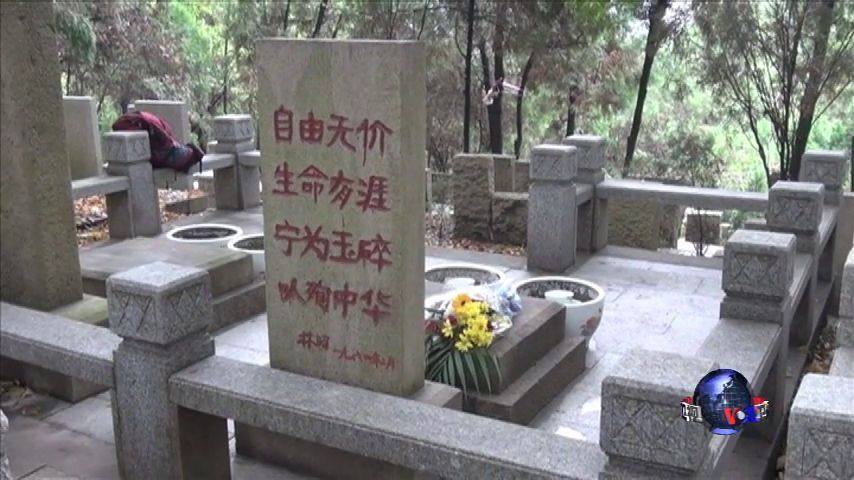
视频证据Video Evidence
以下为林昭纪念活动的影像资料。Video records of commemorations of Lin Zhao.
《北大才女林昭遇难周年祭 当局警力空前如临大敌》:2014年4月29日,林昭遇难46周年,苏州灵岩山墓地一带警力密布,祭扫者遭盘查、驱赶(美国之音中文网)|2014年|中文原声"On the anniversary of Lin Zhao’s death, police out in force": on 29 April 2014, the 46th anniversary of her execution, police blanketed Lin Zhao’s grave on Suzhou’s Lingyan Hill, checking and dispersing mourners (Voice of America Chinese) | 2014 | In Chinese