
第144案 | 谭作人Case 144 | Tan Zuoren
谭作人,1954年5月15日生于成都,华西医科大学毕业,作家、环保人士,《文化人》杂志主编,环保组织「绿色江河」共同发起人、副秘书长。2008年5月12日汶川地震后,大批校舍倒塌、官方迟迟不公布学生遇难名单,他自2008年12月起发起公民独立调查,2009年2月发布《5·12学生档案》倡议,呼吁逐校核实遇难学生姓名并调查校舍质量;2009年3月25日,他与合作者发布初步报告,统计学生死亡5,522人、失踪78人(注明不全),并指出相当比例个案的主要死因是建筑质量。报告发布三天后,3月28日,他被成都市公安局以涉嫌煽动颠覆国家政权罪刑事拘留,住所被搜查,手稿与文件被抄走,关押于温江区看守所。2009年7月17日的起诉书列了四条线:一篇2007年的六四目击日记、2008年以义务献血纪念六四、与王丹的私人电邮、地震后接受境外媒体采访。8月12日开庭,法庭拒绝辩方三名证人出庭,赴成都作证的艾未未凌晨在酒店被警察殴打扣留至庭审结束,律师被频繁打断,视频证据不被接受,庭审未当庭宣判;一周前,同一座城市的黄琦刚以国家机密罪受审,后被判刑三年。2010年2月9日,成都市中级人民法院以煽动颠覆国家政权罪判处谭作人有期徒刑五年、剥夺政治权利三年,判决只认定日记与献血两项,地震与采访从判决中消失;其妻王庆华称判决荒谬、不是正义。2010年6月9日,四川省高级人民法院用约十分钟驳回上诉,欧盟随即要求无条件释放他,中国外交部表示坚决反对。服刑监狱名称无公开记录;狱中他获独立中文笔会刘晓波写作勇气奖与中国民主教育基金会杰出民主人士奖,2013年有公开信联署呼吁释放他。2014年3月27日,他刑满释放,表示手握两千多份证人材料、将以研究者身份把调查做完,并拒绝警方对他未来活动设定的条件。2020年3月,疫情期间他受到警察多次上门探访、微信账号被冻结;此后至2024年及其后动态,无公开记录。Tan Zuoren, born on 15 May 1954 in Chengdu, was a graduate of West China University of Medical Sciences, a writer and environmentalist, editor-in-chief of Literati magazine, and a co-founder and deputy secretary-general of the environmental NGO Green Rivers. After the 12 May 2008 Wenchuan earthquake, in which large numbers of school buildings collapsed while officials withheld any list of the students killed, he launched an independent citizen investigation from December 2008 and in February 2009 issued his '5.12 Student Archive' proposal, calling for the names of dead students to be verified school by school and the quality of school construction to be investigated; on 25 March 2009 he and a partner released a preliminary report tallying 5,522 students dead and 78 missing — expressly incomplete — and finding that in a substantial proportion of cases the principal cause of death had been construction quality. Three days after the report, on 28 March, Chengdu police criminally detained him on suspicion of inciting subversion of state power, searched his home and seized his manuscripts and papers, and held him at the Wenjiang District Detention Center. The indictment of 17 July 2009 ran along four lines: a 2007 eyewitness diary of 1989, a 2008 commemoration of June 4 by blood donation, private emails with Wang Dan, and interviews with foreign media after the earthquake. At the trial on 12 August the court refused all three defense witnesses; Ai Weiwei, who had traveled to Chengdu to testify, was beaten and held in his hotel from 3 a.m. until the trial ended; the lawyers were repeatedly cut off, video evidence was refused, and no verdict was announced. A week earlier Huang Qi had been tried in the same city on state-secrets charges and was later sentenced to three years. On 9 February 2010 the Chengdu Intermediate People's Court sentenced Tan to five years' imprisonment and three years' deprivation of political rights for inciting subversion, the verdict confirming only the diary and the blood donation while the earthquake and the interviews vanished from it; his wife Wang Qinghua called the verdict ridiculous and not justice. On 9 June 2010 the Sichuan Provincial High People's Court took about ten minutes to reject his appeal; the European Union then demanded his unconditional release, which China's foreign ministry firmly opposed. The name of the prison where he served his sentence is a matter of no public record; in prison he received the Independent Chinese PEN Center's Liu Xiaobo Courage to Write Award and the China Democracy Education Foundation's Outstanding Democrat Award, and an open letter in 2013 campaigned for his release. On 27 March 2014 he was released at the end of his full term, saying he held more than two thousand witness reports, would finish the investigation as a researcher, and had refused the conditions police tried to impose on his future activities. In March 2020, during the pandemic, he received multiple police visits and his WeChat account was frozen; of his life in 2022–2024 and since, there is no public record.
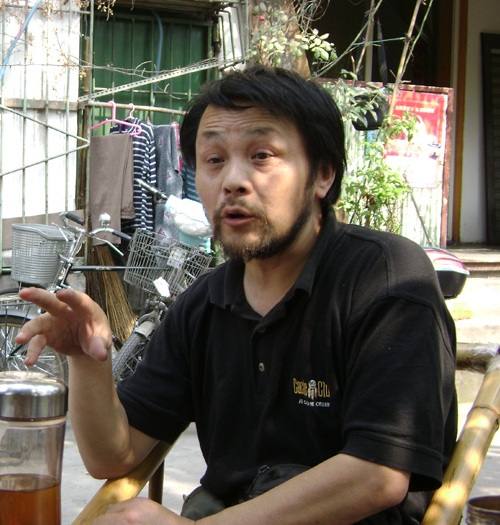
1. The man: a doctor-turned editor, an environmentalist, and the "bearded Don Quixote"
Tan Zuoren was born on 15 May 1954 in Chengdu, Sichuan. His date of birth rests on the hardest primary evidence available: the indictment issued by the Chengdu People's Procuratorate itself records 15 May 1954, and the case lists of the Independent Chinese PEN Center, the political prisoner database of the U.S. Congressional-Executive Commission on China (CECC), and multiple institutional archives agree. One circulating error must be corrected at the outset: the Chronicles of Modern China archive's entry on Tan carries "b. 1959" in its heading, while the body of the same entry gives 15 May 1954. Heading and body contradict each other; this archive follows the indictment and the multi-source consensus of 1954 and does not use 1959.
According to the Chinese Wikipedia entry on Tan, he graduated from West China University of Medical Sciences; his father Tan Yinghua was a professor of history at Sichuan University, his mother Jun Yi was a doctor, and he was the fourth of five siblings. The entry itself flags those family details as needing sources, and this archive accordingly marks them unverified, retaining only what multiple sources support: he was trained in medicine, worked in medical-related employment in his early years, and later turned to writing and editing. The same chronology credits him with initiating the television drama The First Drift of the Yangtze in 1985 and the Let the World Be Filled with Love charity concert in 1987; this archive found no institutional source to corroborate those two 1980s cultural credits and preserves them as chronology items only, not as load-bearing facts.
What made him a known figure in Chengdu were his two later identities. The first was literary: in 2004 he helped found the independent magazine Literati (Wenhua Ren), serving as deputy chair of its editorial board and as editor-in-chief, and he was an honorary member of the Independent Chinese PEN Center. The second was environmental: in 1998 he co-founded the environmental NGO Green Rivers and served as its deputy secretary-general — a role confirmed again and again, in a U.S. consular cable, in CECC analysis, and in PEN International's case lists, and the most solidly documented part of his public biography. His friend Ran Yunfei called him a big-bearded Don Quixote: self-styled clever people mocked him for tilting at windmills, Ran wrote, but he simply kept doing what he believed in. The nickname was quoted by many later reports because it forecast the shape of this case exactly: a man with no organization behind him, no funding, and no legal team of his own, who decided to establish a fact by the slowest possible method — form by form, name by name — and who paid for that decision with five years of his life.
2. 1989: the eyewitness, and the diary that convicted him
To understand this case, one must first understand the place of 1989 in Tan's life, because in the end it was nominally the words of 1989 that convicted him. According to the Chronicles of Modern China archive and the Chinese Wikipedia chronology, in the spring and summer of 1989 he voiced support for protesting students in both Chengdu and Beijing and witnessed the violent crackdown of June 4 at first hand; afterward he was named in a Sichuan provincial government circular (the Chinese Wikipedia entry cites circular No. 57 of 1989, a single-source detail this archive marks unverified) and for a time had to leave Chengdu to earn a living in Shenzhen. For Tan, 1989 was not history from a book. It was something he had seen with his own eyes and had already paid a price for. That is what determined the posture of all his later writing on the subject: he did not write as a commentator, but as a self-described eyewitness.
On 27 May 2007 he wrote "1989: A Witness to the Last Beauty — An Eyewitness's Tiananmen Square Diary" and published it on overseas websites including Torch of Liberty (in some translations, "Fire of Liberty"). The diary recorded what he had seen and felt around Tiananmen Square in 1989. Shortly after it appeared, Wang Dan, a 1989 student leader exiled in the United States, contacted him by email and on several occasions sent him June 4-related propaganda materials. On 4 June 2008, Tan and others commemorated June 4 in Chengdu's Tianfu Square by making voluntary blood donations; he also emailed Wang Dan proposing a "global Chinese blood donation" campaign to mark the twentieth anniversary of June 4 in 2009. None of these acts drew any public sanction at the time. Two years later, each was dredged up and assembled into the entire core of his indictment and judgment: one diary, a handful of private emails, one blood donation. In writing this section, this archive relies only on the indictment in translation, the excerpts of the verdict preserved by PEN's publications, and the archived defense plea; the three legal documents agree on the factual framework and differ only in legal evaluation.
A background question often blurred in briefs and secondhand retellings should be recorded precisely. In the public discussion of the time, Tan's 2009 citizen investigation was treated by many observers as a landmark: volunteers organizing themselves, coordinating across regions, and doing factual verification with questionnaires and name lists had few precedents in the public life of the People's Republic since 1949, and the scholar Bin Xu made the 2008 volunteer wave and the name-list investigations a central case in his book on the Sichuan earthquake and civic engagement in China. Within the scope of this archive's search, however, no verifiable quotation was found in which Tan himself pronounced on what his work meant "since the founding of the PRC" in any sweeping formula. If such a quotation circulates, this archive marks it unverified and does not use it. What can be recorded is the verifiable part: what he actually did, and how contemporary researchers and reporters situated it.
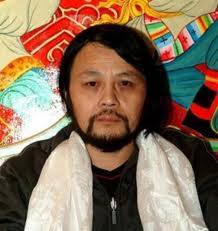
3. Twenty years of environmental work: Green Rivers, Kekexili, and the Pengzhou petrochemical plant
Apart from the earthquake and June 4, the main line of Tan's public activity over the previous twenty years was environmental. The Chinese Wikipedia chronology records that in September 1999 he spent more than twenty days doing volunteer labor in Kekexili on the Qinghai-Tibet Plateau and helped initiate the Yangtze Source environmental monument; that in 2000 he pasted and handed out leaflets in Chengdu's streets opposing a redevelopment scheme for Tianfu Square, and his "ten points" of opinion were later accepted by the city government; that in 2001 Chengdu media named him a "civilized citizen of Chengdu"; and that in 2002 he offered legislative suggestions on giant panda protection at a Sichuan provincial people's congress consultation, said to have been adopted. Of these items, the Green Rivers deputy secretary-generalship is corroborated by multiple sources; the rest rest largely on the single chronology, and this archive preserves them at that evidence grade without inflating it. The composite picture they form is credible — a local environmentalist working at the edge of the system with proposals, leaflets and field labor, who dealt with official bodies repeatedly and occasionally got results — but each individual year and honor is archived only at the strength of its source.
More directly connected to this case is the Pengzhou petrochemical campaign. In 2008 Tan launched a "peacefully protect the city" campaign against the large petrochemical complex planned at Pengzhou, near Chengdu, submitted a citizens' opinion paper on the project to the government, and published "The Pengzhou Petrochemical Project Endangers Chengdu's Urban Safety" in Yazhou Zhoukan (Asia Weekly) on 30 November 2008. When the U.S. Consulate General in Chengdu introduced Tan in its August 2009 cable, the first things it mentioned were precisely these two: he had organized protests against the multibillion-dollar petrochemical plant, and he had published lists of the numbers of children killed in collapsed schools. In Tan's own analysis, offered around the time of his trial and relayed by Asia Weekly, one reason for his arrest was that his environmental activism had harmed the interest groups behind Pengzhou petrochemical, and another was that the earthquake investigation had damaged the local government's reputation. This archive records that as the defendant's own attribution, reported as such, and does not dress it up as an independently verified conclusion. But one point is multiply verifiable regardless of attribution: before March 2009, Tan was already a name on the lists of Sichuan's police and propaganda apparatus — a man who wrote articles, ran investigations, organized blood donations, and campaigned against a petrochemical plant. The earthquake investigation was not the first time he had "caused trouble." It was the first time someone decided to close the file with a national-security charge.
Amnesty International's record adds that he had earlier issued a report warning of the health, safety and environmental hazards of PX chemical projects in Sichuan, and that he volunteered in disaster relief after the earthquake. Assembled, these traces correct a widespread simplification: Tan Zuoren was not a passerby suddenly "awakened" on the afternoon of 12 May 2008. When the earthquake struck, he was already a fifty-four-year-old editor with a decade of environmental work, a magazine, an organizational network, and experience negotiating with government departments. That is why his later investigation was no impulse, but an operation with a method, forms, and a division of labor — and why, in the authorities' eyes, it was all the more dangerous.
4. 12 May 2008: the earthquake, the collapsed schools, and the list with no names
On 12 May 2008 a massive earthquake struck Wenchuan, Sichuan. China's official measurement put it at magnitude 8.0; the U.S. Geological Survey put it at 7.9, and the two figures have coexisted in reporting ever since — this archive notes both. The final official toll was 68,712 dead and 17,921 missing (People's Daily figures of May 2009, cited in CECC analysis); international media generally reported roughly 90,000 dead or missing. Large numbers of school buildings collapsed outright while neighboring structures remained standing, and from the first week of digging through the rubble, that contrast seared the public: how many children died in their classrooms, and why did their schools fall?
The official response traced a clear arc. At first, reporting was relatively open and senior officials promised to punish anyone responsible for shoddy construction. But as bereaved parents kept demanding investigation and answers, the response turned to suppression. According to the contemporaneous reporting compiled by CECC, riot police broke up parents' protests; some localities offered parents money in exchange for silence; parents were threatened with reeducation through labor, kept under surveillance, and barred from holding memorials; a court refused to hear a lawsuit by parents seeking an apology and compensation; and parents traveling to Beijing to petition were intercepted. Media controls tightened in parallel, and reporting that questioned construction quality came under pressure. The single most important number was withheld for a full year: not until May 2009 did officials publish a student death toll — 5,335 students dead or missing — and even then it was a total only, with no names, no schools, no classes. The Associated Press recorded the artist Ai Weiwei's disappointment at the announcement: officials "didn't give any names or any other information on where they died, which schools or which classes they were in."
The head of Sichuan's construction department maintained, then and long afterward, that according to official investigations and sampling, not a single case had been found of a building collapsing mainly because of construction quality. Against that official conclusion, the word circulating among the public was "tofu-dreg" — bean-curd dregs, a metaphor for shoddy work that crumbles at a touch. The English Wikipedia says Tan "coined" the expression. This archive's check shows otherwise: as early as 15 May 2008, three days after the quake, Canada's Globe and Mail was already recording that people in the disaster zone commonly used the term for substandard buildings, so it cannot have originated with Tan. This archive's position is that "tofu-dreg" was folk slang in circulation before and after the quake, and that Tan was the most representative figure to bind the word systematically to the school collapses and to try to prove it with an investigation; the claim of coinage is marked unverified. The distinction may look small, but it is the archivist's basic discipline: crediting one man with a circulating word as an achievement, and charging one man with an investigation as a crime, are the same kind of carelessness.
What the parents wanted was in fact very concrete: a list of names, a quality appraisal, and a statement of who was responsible. Eleven months on, officials had provided neither a definitive count of dead students nor a complete investigation into why the schools fell — a background confirmed by German Wikipedia's synthesis and many reports. Into that vacuum, Tan Zuoren decided to do the work himself. It was not his decision alone, but he is the one who wrote it into a plan.
5. The "5.12 Student Archive": the citizen investigation's plan and method
Tan's investigation began in December 2008 (by the Associated Press's account) and took public shape in February 2009: he drafted a proposal titled the "5.12 Student Archive," published it online, and called on volunteers to travel to the Sichuan disaster zone to verify, school by school, the lists of students killed, to research how the bereaved parents were being treated, and to conduct an independent investigation into the quality of school construction. The University of Hong Kong's China Media Project (CMP) preserved and translated the investigation's original documents, which are of exceptional archival value: a questionnaire addressed to parents on the scale of teacher and student deaths in the education system on 12 May, a "5.12 Student Death Circumstances Data Sheet," and a contact email sent in the name of the "5.12 Independent Citizen Investigation Student Archive." The questionnaire states its principles plainly: formulated on the basis of objectivity and impartiality, it aims, through an independent citizen investigation, to establish the true situation and principal causes of teacher and student deaths in each region and each school, to understand the demands and circumstances of bereaved parents, to provide a rational basis for public policy, and to help identify who bore legal responsibility for causing or aggravating the harm. In the appeal text Tan asked: how many children did we actually lose on May 12? The official version is not credible and the popular version lacks factual support — out of respect for life, should there not be a parents' version that comes closer to the truth?
The essence of the method was to turn "the victims" from a total back into people. What officials eventually supplied was the number 5,335, a year late. What Tan wanted was the real figure for every class, every school, every township, every county — names, schools, classes, and circumstances of death, registered item by item. Ai Weiwei's citizen investigation in Beijing followed the same line: from 15 December 2008 his volunteers conducted field verification and registered names one by one, aiming to compile a list of the dead students with names before the first anniversary; the verified name list produced by Ai's team appears in his later commemorative works as 5,196 and, in another version, 5,197 names, and this archive preserves both without forcing them into one. The two investigations relayed one another, which shows that Tan's plan was no isolated impulse: it was a real, organized effort at factual verification by Chinese civil society in 2008–2009. Global Voices put it bluntly at the time: Tan's project kicked off in February, he appealed online and mustered an army of self-organized volunteers — and he was the first victim of the government's effort to prevent such investigation.
The authorities' characterization of this work was never "superfluous." As CECC compiled the record, as early as 27 May 2008 Tan had told the South China Morning Post that the government and the public must work together to find out why so many schools collapsed, and had urged local governments to inspect other school buildings for shoddy construction; it was precisely the failure of local governments and of education and construction officials to investigate fully that prompted his February 2009 appeal. In other words, his citizen investigation was from its first day a public, signed operation whose tools were questionnaires and data sheets, with nothing secret about it at all. The proceedings that later convicted him therefore had to lock him in a detention center first and then go looking for a crime in articles three years old and in private emails — the investigation itself was too clean to be charged. That is the key to this case, and the following sections document it step by step.
6. 25 March 2009: the preliminary report and the war of numbers
In March 2009 Tan and a partner issued the citizen investigation's preliminary report. The joint urgent appeal of the World Organisation Against Torture (OMCT) and the International Federation for Human Rights (FIDH) pins the date precisely: the report, presenting the findings of the investigation into the causes of the widespread collapse of school buildings, was released online on 25 March 2009; at the same time Tan released his proposal to compile a list of the students who died and to assist their parents in their fight for justice. Three days later, he was detained. The report's conclusions were not extreme. As CMP relayed them through Ai Xiaoming's open letter quoting the report draft, the report stated clearly that the earthquake itself was the principal reason buildings collapsed in general, and the chief reason for the collapse of schools and the high student death toll; but in a relatively high proportion of specific cases, the principal cause of death had been construction quality: among 64 school buildings that had collapsed entirely or substantially, 53.05 percent of the students who died in schools had died in problem structures not built to withstand an earthquake, and 27.17 percent in old buildings that had not been properly reinforced. Those percentages reach us through Ai Xiaoming's open letter to National People's Congress delegates quoting the draft report — a secondhand relay — and this archive grades them accordingly; but the report's two-layer conclusion, earthquake as main cause with construction quality as the main cause in a substantial set of cases, matches defense lawyer Pu Zhiqiang's later courtroom summary that Tan's investigation was objective and scientific.
The preliminary student toll in the report was 5,522 dead and a further 78 missing, expressly noted as incomplete (CECC, citing a May 2009 Chinese Human Rights Defenders report). Set the parallel figures side by side, as this archive does without merging them: the Associated Press and other outlets cited Tan's estimate of at least 5,600 students killed; Ai Weiwei's team, verifying name by name, reached a list of roughly 5,196 to 5,197; the official figure published in May 2009 was 5,335. The four numbers measure different things — an estimate, an incomplete tally, a name-by-name list, and an official total — and this archive does not collapse them into one. One fact is nonetheless worth recording: Tan's avowedly incomplete tally of 5,522 sits within four percent of the total the government itself published a year later, 5,335. A citizen investigation accused of "fabrication" landed within a whisker of the official count. What actually embarrassed the authorities was never the total. It was the tables behind the list: which school, which building, how many dead, when the building was built, and whose signature was on its acceptance certificate.
The report also criticized two specific failures: officials had not followed through on their commitment to investigate fully what role shoddy construction played in the collapses, and local officials could not deal with the parents' demands. In the same month, March 2009, the government's own investigation conclusions were released, holding that the strength of the tremors, not construction quality, was to blame for the school collapses. The citizen report and the official conclusion collided head-on in the same month. The report went online on 25 March; the man was taken on 28 March. In the evidentiary sense, the interval between those two dates is the whole of this case.
7. 28 March 2009: detention, the home search, and the Wenjiang Detention Center
The fullest account of the detention is Amnesty International's bulletin of 2 April 2009. On the morning of 28 March, local police asked Tan Zuoren to come to the police station for a "talk." At about 3 p.m. that afternoon, a group of officers searched his home and took away some of his writings, other documents and video discs, and telephoned his wife saying they had something to deliver to her. That evening the family received a notice from the Chengdu police stating that Tan had been criminally detained; the police refused his wife's request to visit him. He was held at the Wenjiang District Detention Center in Chengdu, and Amnesty warned that he was at risk of torture and other ill-treatment. Before the detention he had been repeatedly questioned by police; according to local sources relayed by Amnesty, unidentified individuals had twice stolen his computer and had stabbed and injured his dog. The identity of those harassers has never been publicly established, and this archive records the episode at Amnesty's relay grade without naming any perpetrator. On the duration and scale of the home search, Ai Xiaoming wrote in a public essay that she had heard police rummaged through his home from morning into the evening and took everything they were after; that hearsay does not fully square with Amnesty's "about 3 p.m." timing, and this archive preserves both, treating Amnesty's contemporaneous bulletin as the primary account.
One date discrepancy must be archived in parallel. The great majority of institutional sources — Amnesty International, Human Rights Watch, CECC, and the indictment itself, which states that he "was placed under criminal detention according to law on 28 March 2009" — give 28 March 2009. The case table in the Chinese Wikipedia entry, however, gives 27 March as the arrest date, and a text by the writer Fu Guoyong reposted on 3 April 2009 likewise relays the family's account that Tan was taken the previous Friday, 27 March. This archive uses 28 March 2009 as the case's sort date and main text date, on the strength of the primary legal document and the institutional bulletins, and preserves 27 March alongside it; the difference may reflect the gap between the day he was taken and the date on the formal detention instrument, and this archive does not paper it over. A second transmission error in the record deserves a line: a U.S. State Department consular cable from Chengdu, relaying a Voice of America report, placed Tan in a "Dujiangyan Detention Center" and garbled his lawyer's name as "Hu Zhiqiang." The indictment's own footnote, Amnesty, and the PEN case list agree on the Wenjiang District Detention Center and on lawyer Pu Zhiqiang; this archive follows Wenjiang and records the Dujiangyan version as a relay error preserved for the record.
Between the detention on 28 March and the indictment on 17 July, the sources diverge slightly on the formal arrest date: the indictment in translation records that he was arrested on 24 April 2009 in connection with the alleged crime, while Human Rights Watch records that police formally lodged the subversion charges on 28 April 2009. This archive preserves the two as "formally arrested in late April 2009 (24 April and 28 April versions)" and adopts neither as sole truth. The procedural outline, by contrast, is certain: detention, arrest approval, custody at Wenjiang, indictment in July, trial in August. By the time he stood in court he had already been locked up for four and a half months, while the latest act alleged against him dated from 2008 and the earliest from 2007. Why an indictment about old words had to wait until three days after the 25 March report to move, the indictment itself does not answer, and never will.
8. The indictment: four charges, and how the earthquake was written in and out
On 17 July 2009 the Chengdu People's Procuratorate indicted Tan Zuoren before the Chengdu Intermediate People's Court in indictment Cheng Jian Xing Su [2009] No. 183; the prosecutors were Chen Shiti and assistant prosecutor Wang Yihong. The full text of this indictment, in English translation preserved by China Digital Times and Probe International, is the single most important primary document in the case. As CECC summarized it, the charges ran along four lines: first, that in a 2007 online diary he had distorted the Party's handling of the 1989 protests and libeled the Communist Party; second, that in June 2008 he had given a telephone interview to the overseas "enemy" radio station Sound of Hope (Voice of Hope) and had commemorated June 4 that year by donating blood; third, that he had been in contact with Wang Dan, a prominent 1989 student leader now in the United States, about holding a global Chinese blood drive to commemorate the twentieth anniversary of the protests; and fourth, that in interviews with international media after the earthquake he had severely harmed the image of the Party and the Chinese government. The indictment's general formula was that Tan had "fabricated things out of whole cloth, distorted the facts," and spread speech injurious to state power and the socialist system in order to subvert state power, and should be held criminally responsible under Article 105 of the Criminal Law for inciting subversion of state power. Its footnote recorded that the defendant was confined in the Wenjiang District Detention Center.
Look at what those four lines are made of: a two-year-old diary, one blood donation, a set of private emails, and some media interviews. No violent language. No organization. No money. In the defense plea, Tan's lawyers invoked Principle 6 of the Johannesburg Principles on National Security, Freedom of Expression and Access to Information: expression may be punished as a threat to national security only if the government can demonstrate that it is intended to incite imminent violence or is likely to incite such violence. None of Tan's language incited violence, the lawyers argued; his motives were not only peaceful but protective of national security rather than endangering it. The plea went further and dismantled the charge conceptually: a people's democratic dictatorship means that the great majority of the people hold state power through democratic means, and everything Tan wrote showed a man who passionately loved the people, supported democracy, and opposed autocracy — a pioneer and guardian of people's democracy, whose conviction for inciting its overthrow would contradict the basic character of the regime itself. The plea closed by quoting the famous couplet of Chengdu's Wuhou Temple as an admonition to those handling the case, and asked, under Article 162 of the Criminal Procedure Law, for a verdict of not guilty. The plea, submitted by lawyers Xia Lin and Pu Zhiqiang at the 12 August 2009 trial, is archived in full by China Digital Times; this archive paraphrases rather than reproducing it at length.
Still more deserving of the record is the trajectory of "the earthquake" through this file. The original indictment included the fourth line — the interviews criticizing the earthquake aftermath — and Human Rights Watch's pre-trial statement expressly tied the charges against Tan to his compilation of the list of dead children. But as the next sections show, the first-instance judgment of February 2010 in the end confirmed only the diary and the blood donation, and left the foreign-interviews strand unconfirmed. Pu Zhiqiang said it plainly after sentencing: the court had been "smart" — it took any mention of the earthquake out of the verdict because it was afraid of referring to it. He also offered, in remarks widely relayed from an Asia Weekly report, the judgment that by avoiding Sichuan's earthquake and discussing only June 4, the Chengdu court was using June 4 to shield local corruption; this archive records that as reported speech. The way the earthquake enters and exits the file draws the true shape of the case by itself: the reason for the arrest could not be written into the judgment, and the reasons that could be written into the judgment had not required an arrest in 2009.
9. 12 August 2009: a three-hour trial, refused witnesses, and Ai Weiwei seized at 3 a.m.
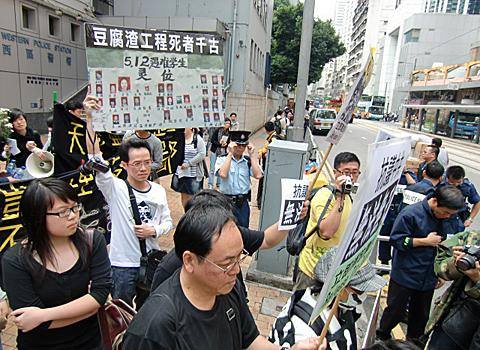
On 12 August 2009 the Chengdu Intermediate People's Court tried Tan Zuoren. The hearing lasted about three hours; Tan pleaded not guilty; the court announced no verdict. As CECC compiled from China Daily, Chinese Human Rights Defenders (CHRD) and Human Rights in China (HRIC), the procedural record of that day includes the following: the court rejected the defense request to call three witnesses — the geologist Fan Xiao, Sichuan University professor Ai Nanshan, and the artist Ai Weiwei — on the ground, as the Chinese Wikipedia entry relays it, of "no relevance"; the defense request to show video evidence was not accepted; lawyers Pu Zhiqiang and Xia Lin were repeatedly cut off by the judge. Reporters were barred from the courtroom. Some five hundred supporters gathered outside the court (CHRD's estimate, archived at that grade) and were blocked by about one hundred police, who said passes were required to enter, although court staff had previously told them no passes were necessary. Parents of dead students attempting to attend were detained. By multiple accounts, the only relatives and friends actually seated inside were Tan's wife, his daughter, and one friend.
The day's best-known scene happened in the small hours. Ai Weiwei and a party of more than ten arrived in Chengdu on 11 August intending to testify, and checked into a hotel. At about 3 a.m. on 12 August, police entered their rooms. Ai said he and ten accompanying volunteers were woken and taken away or held; when he questioned the officers, one struck him on the right cheek, leaving a swollen bruise; an officer allegedly told him, in substance, that they could beat him to death if they needed to — Ai's own account to the Associated Press and other media, archived here as a party's testimony. The group was guarded by some twenty officers until roughly an hour after the trial ended, when seven were released first while the whereabouts and grounds for five others remained unexplained for a time. The Chinese Wikipedia entry adds names: companions Zhang Jinsong, Xu Ye, Zang Yi and Liu Yanping were taken away for questioning, while the rest were held until the trial ended, and Ai's studio later edited its footage of the episode into the documentary Lao Ma Ti Hua (Disturbing the Peace). Ai later said he suffered head-injury symptoms after the beating and required hospital treatment; in a 2021 retrospective he said the injury had nearly cost him his life — his own later account, archived at that grade. Pu Zhiqiang's verdict on the method survives in the Financial Times and in quotation since: the authorities get hold of your witness list, then harass the witnesses and lock them away — a disgrace for China's courts, but the status quo of the judicial system, and done, he said, because they are afraid.
The press was handled the same day in the same spirit. Two journalists from Hong Kong's now TV were held in their hotel for seven hours while police searched their rooms and luggage on a stated suspicion of drugs; the station broadcast the footage, and Hong Kong journalists' associations issued statements condemning the interference. Put the inside and the outside of that courtroom together and the "public trial" existed in name only: the witnesses could not get in, the reporters could not get in, the parents could not get in, the supporters could not get in, the lawyers could not finish a sentence, and the evidence could not be played. The only people present were the ones the verdict required. After the hearing Tan remained in custody, and the case then stalled for nearly half a year until sentencing on 9 February 2010 — a delay between trial and verdict for which, Amnesty International noted, the court offered Tan's lawyers no explanation, in violation of criminal procedure.
10. The parallel week: the case of Huang Qi
Exactly one week before Tan's trial, on 5 August 2009, another Chengdu earthquake activist, Huang Qi, was tried behind closed doors at the Wuhou District People's Court on a charge of illegally holding state secrets. Huang, the founder of the Tianwang Human Rights Center, had been seized by plainclothes police at a restaurant dinner on 10 June 2008, shortly after traveling to the disaster zone and publishing, on the Tianwang website, writings about parents who had lost children and their demands for investigation and compensation. According to HRIC, at Huang's trial four police officers kidnapped Pu Fei, a Tianwang volunteer, to prevent him from testifying for the defense — the same technique as in Tan's case, witnesses disappearing before the court could hear them. Huang himself suffered from multiple medical conditions, including abdominal tumors, hepatitis B and an irregular heartbeat; the authorities reportedly refused him treatment and refused to let him visit his seriously ill father (HRIC and Associated Press accounts). On 23 November 2009 the Wuhou District Court sentenced Huang to three years, the conviction resting on two city-level documents found in his home. Amnesty International called the same day for his immediate and unconditional release, noting that he had been detained for his work on behalf of the families of five primary school pupils who died in collapsed schools — he had been trying to help the parents bring a legal case against the local authorities.
This archive records Huang Qi's case in parallel not to pad the page, but because only the two cases together reveal what happened in Chengdu in the summer of 2009: in the same city, one week apart, two men seized over the earthquake investigation and the parents' rights defense stood trial in turn — one charged with state secrets, the other with subversion; in both cases the defense witnesses were taken away in advance; in both cases the public and the press were shut out. The charges differed; the script was identical. Huang had already served five years from 2000 to 2005 on the same inciting-subversion charge, that time for articles about democracy, June 4 and Falun Gong posted on the Tianwang site. In 2016 he was arrested again, for allegedly leaking state secrets to foreign entities, and in 2019 sentenced to twelve years — a separate case, noted here only to show the continuity of this kind of suppression: for some people, imprisonment is not an event but a condition repeatedly imposed. Tan Zuoren and Huang Qi, an editor and a website founder, had exactly one thing in common: both of them had asked, on behalf of dead children, the question why.
11. 9 February 2010: five years, and the earthquake that vanished from the verdict
On the morning of 9 February 2010 the Chengdu Intermediate People's Court pronounced sentence. In judgment (2009) Cheng Xing Chu No. 273, the court found Tan Zuoren guilty of inciting subversion of state power and sentenced him to five years' imprisonment with three years' deprivation of political rights — the maximum term then available for the offense, as Reuters and many other reports noted. The verdict was read out in less than ten minutes (Agence France-Presse). According to the verdict excerpts preserved in the Independent Chinese PEN Center's journal, the facts the court actually found narrowed to two items: he had written and published the "Square Diary" on overseas media, and he had publicized the so-called "June 4 spirit" by means of blood donation; the remaining accusations were not confirmed, and the evidence submitted by the defense was not accepted. The indictment's strand about his foreign-media interviews — statements "severely denigrating the image of the Party and the government" — was quietly set down in the judgment. The defense had pointed out that the twenty-two interview texts the prosecution used as evidence had all been taken from Tan's private computer rather than being the media's own interview records, and that the prosecution had never identified which article, or which sentence, constituted incitement. A casebook of Chinese speech prosecutions published by an American scholar in 2022, in summarizing the judgment, still lists the interviews among the court's grounds; that differs from Pu Zhiqiang's statement to the media on the day of sentencing, and this archive follows the verdict excerpts and the lawyer's same-day account, with the discrepancy preserved in parallel below.
Outside the court, sentencing day repeated the pattern of trial day. According to the Chinese Wikipedia entry relaying Voice of America and other reports, Tan's wife Wang Qinghua and his daughter were refused entry to the sentencing hearing, and several Hong Kong journalists covering it were roughly treated by police: a reporter for the official Radio Television Hong Kong had her mobile phone taken by police and returned only after its contents were deleted; a television cameraman scraped his hand in a scuffle with police; and some journalists were taken to a room in the court and released only after the verdict was announced. Hong Kong's chief executive, Donald Tsang, said that day that he had conveyed the Hong Kong press's concerns to the mainland authorities, and after the Hong Kong government's Chengdu economic and trade office intervened, the journalists were released at about 11 a.m. The same day, Hong Kong citizens marched to the central government's Liaison Office to protest the writer's sentence. As she left the court, Wang Qinghua told reporters the verdict was ridiculous — "this isn't justice" (the BBC's rendering). In later coverage prompted by the European Union's statement she was quoted again: her view had not changed from the start; every day he remained convicted was wrong; he had done nothing against the law, and everything he had done was right.
International reaction took shape on the day of sentencing. Amnesty International called for Tan's immediate release; its Asia-Pacific deputy director said his arrest, unfair trial and guilty verdict were further disturbing examples of how the Chinese authorities use vague and overly broad laws to silence and punish dissenting voices, and Amnesty stated its belief that the real reason for the detention was his planned independent report on the school collapses. The United States government, through its embassy in Beijing, said it was "dismayed" by the sentence and called for the release of Tan and other jailed dissidents; an officer of the U.S. Consulate General in Chengdu was present at the courthouse for the sentencing, and another U.S. official told media that such convictions were politically motivated. The State Department's 2010 human rights report wrote the case into its text, recording that on 9 February he was sentenced to five years with three years' deprivation of political rights in a trial closed to the public, and that the Sichuan High People's Court upheld the sentence on 9 June. Human Rights Watch grouped the case with those of Liu Xiaobo and Huang Qi as specimens of the unfair trials of 2009–2010. None of these reactions shortened the sentence by a day. What they did was ensure that the case existed in the international record from its first day, so that when domestic reporting later vanished altogether, the record remained.
12. The appeal: ten minutes in the Sichuan Provincial High People's Court
Tan appealed. The second-instance legal document is ruling (2010) Chuan Xing Zhong No. 346 of the Sichuan Provincial High People's Court — the docket number is established by the text of the ruling preserved on Wikisource. The procedural details assemble from several sources: on 20 April 2010, Pu Zhiqiang and Xia Lin submitted a second application for an open appellate hearing, together with a defense statement. In the appeal the defense pressed a series of sharp points, among them a request that the court hear the truth of the June 4 events described in the Square Diary, and that it summon Chen Xitong, Li Peng, Yuan Mu and Zhang Gong to testify; the court, on review, decided the proposed witnesses had no relevance to the facts of the crime and declined to summon them. The defense also argued that the diary described the government of 1989, which had long since been succeeded in accordance with the constitution, and that a diary that never mentioned the present government could not subvert it; the ruling answered that the object of the offense is the state power of the People's Republic of China, so the argument could not stand. To the defense's point that official characterizations of June 4 had themselves shifted over the years, the ruling made no response. On 6 June the Sichuan High Court informed Pu that a ruling had already been reached and would be announced on 9 June.
On 9 June 2010 the appeal was dismissed and the original judgment upheld. The whole proceeding lasted about ten minutes by Amnesty International's account; HRIC's record gives about twelve minutes, and this archive preserves both. Amnesty recorded that Tan's wife was permitted to attend the announcement, while his elder daughter, waiting outside the court, was taken away by two police officers in what was seen as an attempt to intimidate the supporters gathered there. A person relayed by the Chinese Wikipedia entry — describing himself as a political-legal cadre ordered by his work unit to attend — said the gallery had reserved only two seats for the family and that the rest were staff ordered to be present, and that after the presiding judge read out the ruling the session ended in haste without entertaining any defense request; that detail is single-source and this archive marks it unverified, though the outline of "ten minutes, no defense voice heard" matches the Amnesty and HRIC records. One conflict over the court's name must also be archived: Amnesty International's press-release headline and the English Wikipedia name the court that upheld the sentence as the Chengdu (City) Intermediate People's Court, while Chinese Human Rights Defenders, the EU statement, the U.S. State Department's human rights report and the ruling's own docket number all point to the Sichuan Provincial High People's Court. Since the first instance was the Chengdu Intermediate Court, the appeal could in law lie only to the Sichuan High Court; this archive adopts the Sichuan High Court and records the Chengdu attribution as an error in some reports, preserved in parallel.
What followed was a diplomatic exchange. On 11 June, Catherine Ashton, the European Union's High Representative for Foreign Affairs and Security Policy, issued a statement in Brussels calling on the Chinese government to release Tan unconditionally, saying the verdict against him was entirely incompatible with his right to freedom of expression and did not meet international standards of fairness. China's foreign ministry spokesman Qin Gang responded that Tan had committed the crime of subverting state power, that China's judicial departments handled the case independently according to law, that the EU statement interfered in China's judicial internal affairs, and that China expressed resolute opposition and strong dissatisfaction. Human Rights Watch, in its subsequent policy recommendations to the EU, listed the release of Liu Xiaobo, Tan Zuoren and Huang Qi together among the demands to put to Beijing. A Chengdu editor's case had reached the level of an EU foreign-policy statement answered by a Chinese foreign-ministry spokesman — not because his articles had any great circulation, but because the file itself could not bear looking at: everyone could see that he had been arrested for an investigation and convicted for a diary.
13. Five years inside: a prison with no public name, honors in prison, and the 2013 open letter
After the appeal, Tan was transferred to a prison to serve his sentence. The name and location of that prison appear in no public report this archive could find. We searched the records and reporting of Amnesty International, Human Rights Watch, CECC, the PEN International case lists, the annual prisoner censuses of press-freedom organizations, and the coverage of Reuters, the Associated Press, Agence France-Presse and Radio Free Asia: the only place of custody any of them confirms is the Wenjiang District Detention Center of his pre-trial detention (the PEN case list still gave Wenjiang as his place of detention in 2010, a pre-trial-stage record). To which prison he was sent after June 2010, no institutional source records. This archive states it plainly: prison of service, no public record. The Committee to Protect Journalists' 2010 annual prison census listed him as a freelance writer, imprisoned 28 March 2009, and correctly recorded that the Sichuan Provincial High People's Court rejected his appeal on 9 June 2010 — and even the CPJ, an organization meticulous about such records, did not or could not name a prison. That blank is itself an archival fact: in a case reported by media worldwide, which prison a sentenced man was sent to for five years was something the public beyond his family had no way to learn.
Inside, he was not forgotten. The China Democracy Education Foundation's 2012 Outstanding Democrat Award went to Tan Zuoren together with Ai Xiaoming and Zhu Chengzhi, announced in September 2013 (Radio Free Asia, 30 September 2013). On 15 November 2013, the Day of the Imprisoned Writer, the Independent Chinese PEN Center gave its Liu Xiaobo Courage to Write Award to Tan and to the Vietnamese writer Nguyen Xuan Nghia, honoring their long tenacity in writing despite the threat of imprisonment; Tan was also an honorary member of the Center. PEN International's 2010 Tokyo congress resolution included Tan's release in its list of demands on the Chinese government. Such awards and lists do not change a sentence. They are the outside world's receipts to the people inside: your name has not been forgotten, and what you did is being written down by others.
The other receipt was the open letter of 2013. Ahead of the fifth anniversary of the earthquake, an open letter calling for Tan's release circulated on the Chinese internet, signed by, among others, the rights lawyers Guo Feixiong and Zheng Enchong and the veteran democracy figures Xu Wenli and Wang Ruowang based in the United States (Radio Free Asia's report, preserved in the ecoi.net archive). The letter called his five-year sentence a wrongful conviction for incitement to subversion, and said that he and Huang Qi had both been jailed for trying to investigate the collapse of school buildings in the 2008 earthquake. The letter opened no prison gate early — he served the five years in full, to the day, with no public record of any reduction or parole. But it left a timestamp: in May 2013, while the official narrative was wrapping the earthquake story up in gratitude and rebirth, there were still people saying publicly that the man who had tried to list the names of the dead children was still in prison.
14. After release: two thousand witness reports, "researcher only," and the frozen WeChat of 2020
On 27 March 2014 Tan Zuoren was released at the end of his full term, aged fifty-nine. Agence France-Presse, carried by The Guardian, confirmed the release that day; Ai Weiwei told AFP that Tan had come out "under a kind of probation — he doesn't have the right to speak up." Tan then gave an interview to Radio Free Asia's Cantonese Service which is the core primary source for his post-release condition. He said that on his release on 27 March he had struck an arrangement with the authorities: they wanted to avoid any public celebration of his return and, in exchange, allowed him first to tend to elderly and ailing relatives before going home to his wife; shortly before the interview he had returned to his home in Chengdu. At the same time he stated clearly that he had refused to accept any conditions the police tried to impose on his future activities. The first thing he intended to do was finish the investigation: he said he had already compiled more than two thousand reports and contributions from witnesses. The role he set himself was that of a researcher pure and simple: he would not appeal or lodge legal complaints over the school-construction corruption, but would continue the work through government channels, filing information-disclosure requests with the departments concerned; he would continue to exercise his rights to freedom of expression and opinion, but would confine his rights campaigning to the single issue of the child victims of the Sichuan earthquake.
This interview must be archived whole, because it records two opposite facts at once. On one side is the shape of a compromise: a quiet release, no celebration, filial duties first, research only and no lawsuits. On the other side are the compromise's limits: refusal of conditions, the investigation to continue, two thousand files still in his hands, and not one word of his claim to free expression surrendered. Put the two together and you have the real position of the fifty-nine-year-old who walked out in 2014: five years served, elderly relatives ill, a wife who had waited five years, daughters five years older — and a man saying he would go on checking the facts, while knowing that the manner of the checking and the measure of his speech could never again be what they had been in February 2009. The three years of deprivation of political rights ran from his release and expired, by the arithmetic of the judgment, in March 2017; this archive notes that date as a computation from the sentence, not as an independently reported event.
After that, the public record of Tan Zuoren thins rapidly. At the tenth anniversary of the Wenchuan earthquake in 2018, overseas media and academic retrospectives still invoked him: SupChina's account of forbidden commemoration spoke of the continued work of activists such as Tan, and the Lowy Institute's retrospective placed him beside Ai Weiwei among those who tried to preserve the memory of earthquake accountability. These are retrospective mentions; they supply no concrete whereabouts or words of his in 2018, and this archive does not dress them up as "recent developments." In March 2020, Freedom House's China Media Bulletin, in a survey of coronavirus-era repression, left what remains the last concrete record: citing Chinese Human Rights Defenders' documentation, it reported that Tan Zuoren, an online activist and former political prisoner in Sichuan, had received multiple visits by police and had his account on the WeChat social media platform frozen. The item has a date, an acting authority, and a measure taken — it is the only post-2020 record of his personal situation that meets this archive's evidence standard. Beyond it, for 2022, 2023 and 2024, this archive searched the reporting of Amnesty International, Human Rights Watch, PEN, Radio Free Asia, the South China Morning Post and the update history of his encyclopedia entries, and found no new public reporting about Tan Zuoren. This archive states it honestly: his activities in 2022–2024 are a matter of no public record. The case brief's suggestion of his works being sold in Hong Kong in 2019 finds no support in any Chinese- or English-language source searched and is marked unverified, not written into the facts. As of this page's last verification date, 10 November 2026, what can be confirmed is only this: he was released in 2014 after serving his full term; in 2020 he was still within the Chengdu police's field of vision; and after that the public world has had no news of him. That a man who once pursued the truth with more than two thousand witness statements should have his own whereabouts become "no public record" is, in itself, one of the most accurate endings this case affords.
15. The record's afterlife: documentaries, scholarship, and the unfinished list
The traces this case left in culture and scholarship are thicker than those of most comparable cases. At least four documentaries are directly connected to it: Ai Xiaoming's Our Children (2009) documented the bereaved parents and the school-building question after the earthquake, and her later film Enemy of the State records the days around Tan's verdict, with interviews with his lawyer, friends and family, and is preserved and viewable through the China Unofficial Archives; Ai Weiwei's studio's Lao Ma Ti Hua (Disturbing the Peace, 2009) records his team's journey to testify in Chengdu and their beating and detention in full; and the Chinese Wikipedia entry lists two further films about his earthquake investigation, Citizen Investigation and its sequel Why Are the Flowers So Red. The significance of these images is precise: when China's courts refused to let the witnesses speak, cameras outside the courtroom filmed "why the witnesses could not speak" itself, and became a different kind of trial record.
In scholarship, Cambridge's Modern Asian Studies published in 2018 a study of Tan examining how his August 2008 essay "Longmen Mountain, Please Bear Witness for the Children of Beichuan" attempted to narrate an alternative version of the Wenchuan earthquake and to present a vision of an alternative future — balance between human beings and nature, respect for minorities, and responsible rule. The researcher pointed out that Tan did not demand an end to Communist Party rule but explained how the system could be changed for the better — a reading that echoes, across a decade, the defense plea's own characterization of him as a guardian of people's democracy. A casebook of Chinese speech prosecutions published in the United States in 2022 included a full English translation of Tan's judgment as a specimen case of conviction for commemorating June 4. And Bin Xu's monograph on the earthquake and civic engagement in China set the name-list investigations inside the whole landscape of 2008 civil society. The treatments differ, but they share one thing: all of them treat Tan Zuoren as a serious actor and writer, not as a symbol.
Finally, the list itself. After Tan was seized, Ai Weiwei's team carried the name-by-name verification forward, and the commemorative works Remembrance and Nian Nian later had volunteers around the world relay-read more than five thousand dead students' names over thirty-nine days. The official totals were published and republished, and they were always only numbers. The meaning of the citizens' list was never its size: it was that behind every name stood a specific child, a specific classroom, a specific building. Tan said on his release in 2014 that he held more than two thousand witness files and meant to finish the work. Whether that work was completed, and in what form it is preserved, is not recorded in any public channel this archive could find, and is marked here as no public record. Archival honesty includes this sentence: what we do not know, we write down as unknown. But the other thing we do know is this: in February 2009 a man seriously believed that dead children should have names, that collapsed school buildings should have an explanation, and that parents deserved a version of the truth closer to the facts than the official number — and for that "should," he paid with five years of freedom. This archive preserves his case as one copy of that "should" that cannot be deleted.
16. Discrepancies and unverified items, archived in parallel
Under this archive's rules, the discrepancies among sources in this case are listed without merging. (1) Detention date: the indictment and Amnesty International, Human Rights Watch and CECC all give 28 March 2009; the Chinese Wikipedia case table and the family's account relayed by Fu Guoyong give 27 March. This archive sorts and dates by 28 March. (2) Arrest-approval date: the indictment in translation gives 24 April 2009; Human Rights Watch gives 28 April for the formal lodging of charges; archived in parallel as late April. (3) Appellate court: the ruling's docket number, CHRD, the European Union and the U.S. State Department's human rights report give the Sichuan Provincial High People's Court; Amnesty International's press-release headline and the English Wikipedia give the Chengdu (City) Intermediate People's Court. This archive follows the Sichuan High Court and records the Chengdu attribution as an error preserved in parallel. (4) Length of the appeal proceeding: Amnesty gives about ten minutes, HRIC about twelve; preserved in parallel. (5) Length of the sentencing pronouncement: Agence France-Presse gives less than ten minutes; it belongs to a different proceeding from the appeal and the two are not conflated. (6) Student death figures: the preliminary report's tally of 5,522 dead and 78 missing, expressly incomplete; the Associated Press's citation of Tan's estimate of at least 5,600; Ai Weiwei's team's name list of about 5,196 to 5,197; and the official 5,335. The four measure different things and are not merged. (7) The 64-building percentages (53.05 percent and 27.17 percent) reach us through Ai Xiaoming's open letter quoting the report draft, a secondhand relay. (8) The "tofu-dreg" coinage claim: the English Wikipedia credits Tan with coining the expression, but foreign reporting of May 2008 already records it as disaster-zone slang; coinage is unverified, and this archive records only his systematic use of it. (9) Whether the verdict confirmed the foreign-interviews strand: Pu Zhiqiang said on sentencing day that the court had not confirmed it and had removed the earthquake from the verdict, and the preserved verdict excerpts support him; the translator's summary in the 2022 academic casebook still lists the interviews among the grounds; preserved in parallel, with this archive following the verdict excerpts and the lawyer's same-day account. (10) Custody-location relay errors: a U.S. consular cable relaying broadcast reporting gives a "Dujiangyan Detention Center" and a lawyer "Hu Zhiqiang," against the Wenjiang District Detention Center and Pu Zhiqiang of the indictment, Amnesty and PEN; graded a relay error. (11) Family details: the parents' names, the sibling order, the 2001 "civilized citizen" honor and similar chronology items rest mostly on the Chinese Wikipedia entry, parts of which flag themselves as needing sources; marked unverified. (12) The birth-year error: the Chronicles of Modern China heading gives 1959 against its own body and the indictment's 1954; not adopted. (13) Magnitude: China's 8.0 and the USGS's 7.9 coexist. (14) The Hong Kong 2019 bookselling suggestion in the case brief: no record in any source searched; unverified. (15) The prison of service, the outcome of any petition beyond the appeal, and the completion of his post-release investigation: no public record for any of them.
17. Verification and sources
The core facts of this entry were cross-checked against the following independent sources. Primary legal documents: the full English translation of Chengdu People's Procuratorate indictment Cheng Jian Xing Su [2009] No. 183 (preserved by China Digital Times and Probe International: date of birth, the four strands of the charge, the Wenjiang custody footnote); the full first-instance defense plea (preserved by China Digital Times: the Johannesburg Principles, the plea of not guilty); the verdict excerpts preserved in the Independent Chinese PEN Center's journal PEN for Freedom, Spring 2010 (the findings narrowed to the diary and the blood donation; the term and the deprivation); and the docket number and appellate issues of Sichuan Provincial High People's Court ruling (2010) Chuan Xing Zhong No. 346 (Wikisource and the Chinese Wikipedia case archive). Institutional records: Amnesty International's April 2009 detention bulletin (the police-station "talk," the home search, Wenjiang, the stolen computers and the stabbed dog), its August 2009 pre-trial appeal, its February 2010 sentencing statement, and its June 2010 appeal statement (ten minutes, the elder daughter taken away, the verdict confined to June 4 commemoration); Human Rights Watch's statement of 4 August 2009 (the case paired with Huang Qi's, the arrest date, the call to cancel the trials) and its 2011 assessment of China's National Human Rights Action Plan; the CECC's special analysis of the two Chengdu trials (witnesses refused, video evidence refused, parents detained, reporters held, the preliminary report's tally of 5,522, the official totals and the background of pressure on parents) and its political prisoner database; the OMCT/FIDH urgent appeal (the report released on 25 March and the detention three days later); the PEN International and Independent Chinese PEN Center case lists and the announcement of the 2013 Liu Xiaobo Courage to Write Award; the Committee to Protect Journalists' 2010 prison census; Freedom House's China Media Bulletin of March 2020 (the 2020 police visits and WeChat freeze); the U.S. Consulate General Chengdu cable of August 2009, released via WikiLeaks (the Pengzhou petrochemical and name-list background, with its Dujiangyan and lawyer-name errors handled as flagged in the text), and the State Department's 2010 human rights report (the appellate court as the Sichuan High Court). Reporting: Reuters, the Associated Press and Agence France-Presse as carried by The Guardian and other papers on the trial, the sentencing and the release (Ai Weiwei's pre-dawn detention, the five-year maximum, Wang Qinghua's words on sentencing day, the U.S. embassy's response); Radio Free Asia's reports on the 2013 Outstanding Democrat Award and the open letter, and its April 2014 post-release interview (the two thousand files, the refusal of conditions, the researcher-only undertaking); the BBC's sentencing report; the China Media Project's preservation and translation of the original 5.12 Student Archive documents and of Ai Xiaoming's open letter (the source of the 64-building percentages); the 2018 Modern Asian Studies article; and the 2022 casebook of Chinese speech prosecutions. Evidence grading: detention, indictment, trial, sentencing, appeal and release are each corroborated by two or more sources or by primary documents and are graded verified; single-source and relayed items are graded in the text where they appear; the prison of service and his post-2020 record are graded no public record. No single source is quoted at more than fifty words; the text is a synthesis in this archive's own words.
18. Our Take
Our comment on this case is confined strictly to its own facts. First, the most glaring structure in the file is the mismatch between the reason for the arrest and the reasons for the conviction: the man was seized three days after his report was published, yet the judgment contains no report, no school buildings, and not one dead child's name — only a diary from two years before and a blood donation. The case handlers did not dare write the real reason into the verdict, because writing it would have admitted that investigating collapsed schools is a crime. June 4 served as the fig leaf — exactly as Pu Zhiqiang said, an old account used to shield local corruption. Second, every link of the procedure served the same end: the witness list was obtained first; the witnesses were taken from their hotel in the small hours; video evidence could not be played; the lawyers' sentences were cut off mid-way; the parents were kept outside; reporters were held in a hotel on a drug pretext; and the appeal was read out and finished in ten minutes. When a court needs that many people to disappear in order to hold a "public trial," what it is trying is not the case but the audience. Third, remember the full weight of the material of conviction: one eyewitness diary, a few private emails, and one blood donation for the wounded of a disaster zone. Not one line inciting violence, not one cent of money, not one organized follower. To price such material at the offense's maximum of five years is a confession in the form of a sentence: what they feared was never what he did, but what he remembered and refused to forget. Fourth, the true plaintiffs' bench in this case seated more than five thousand children and their parents. The parents asked for a list, an appraisal, and an explanation, and received dispersal, buy-offs, surveillance and threats of labor reeducation; the man who made their list for them received five years, while for those responsible for the quality of the school buildings the official conclusion was that not one collapse had been "found" to be caused by quality. In this case the arrow of accountability points backwards: the man who investigated the problem went to prison, and the men who created the problem had no problem at all. Fifth, the record after release says the same thing in a quieter voice: a man who had served his full term, additional punishment included, could still, in 2020, be visited repeatedly by police and have his WeChat frozen amid an epidemic-era speech clampdown — and after that, even the question "is he all right" has no public answer. The five years did not settle this account, because the account was never his to owe. This archive preserves his name, his wife's name, the prison that has no public name, and the list that could not be finished — together, in the record. The children needed someone to remember their names. The name of the man who remembered them needs remembering too.
视频证据Video Evidence
《老妈蹄花》(艾未未工作室)|2009|普通话原声,英文字幕"Disturbing the Peace" (Ai Weiwei Studio) | 2009 | Mandarin audio, English subtitles