
第139案 | 孙茜Case 139 | Sun Qian
孙茜,中国出生、2007年入籍加拿大的企业家,与丈夫共同创办北京利德曼生化股份有限公司并任副总裁,曾登胡润百富榜;2014年开始修炼法轮功。2017年2月19日,二十多名警察进入她在北京的住所将她带走(据科特勒称同行另有四人被带走),关押于北京市第一看守所;警察抄走法轮功资料,逮捕文书只称她涉「邪教」活动。她经律师传出的签认自述与2018年庭上陈述称:2017年5月在看守所被推倒喷辣椒水、抬上金属椅继续喷至喷完,戴手铐连脚镣约两周,两个月不许换袜子内衣,并被强迫观看诋毁法轮功的影片、被反复要求放弃修炼;美国国会—行政当局中国委员会2021年度报告复述了镣铐与辣椒水两项。辩护一线是本案的标本:妹妹孙赞说家人先后聘请十一名律师,几近全部被迫退出——被上门警告、被要求写下「成功说服家属解约」、身份证被标记——谢燕益在代理此案后于2018年4月底被注销执业证。加拿大领事官员定期探视,国会议员里德2017年11月致信特鲁多请他在APEC向习近平提出释放,十五个组织组成的联盟在特鲁多访华前发表公开信将她列入名单;但特鲁多是否具体提出此案,无公开记录。2018年9月12日,朝阳区人民法院在温榆河法庭开庭,记者与欧洲使馆代表被挡在门外,孙茜当庭称自己没有做任何违法之事;近二十二个月后,2020年6月30日,同院以《刑法》第三百条「利用邪教组织破坏法律实施罪」判处她有期徒刑八年,此时代理她的是法院指派、据报被要求替她作有罪辩护的律师。谢燕益与加拿大前司法部长科特勒均指她在羁押中被迫放弃加拿大国籍、被迫认罪,科特勒坚持她仍是加拿大公民,并以时间顺序否定了与孟晚舟案挂钩的说法。孙茜另在庭上指控丈夫沈光千伪造签名转移其利德曼股权,其夫未公开回应,此节仅按单方指控存档。八年刑期按2017年2月19日羁押折抵推算于2025年2月届满,但截至2026年11月无任何可靠公开来源确认她已获释、返回加拿大或仍在服刑,服刑监狱名称亦无公开记录。流传的「被强制服用精神药物」一说,经多组关键词检索无任何指名到她个人的可靠来源,本站标未核。Sun Qian, a Chinese-born businesswoman naturalised as a Canadian citizen in 2007, co-founded Beijing Leadman Biochemistry Co., Ltd. with her husband, served as its vice president, appeared on the Hurun rich lists, and took up Falun Gong in 2014. On 19 February 2017 more than twenty police officers entered her Beijing home and took her away — Cotler says four others were taken with her — seizing Falun Gong materials and holding her at the Beijing No. 1 Detention Centre on arrest papers that spoke only of 'cult' activities. In a signed account passed out through her lawyer, and again in her own courtroom testimony in 2018, she said that in May 2017 detention guards pushed her down and pepper-sprayed her, carried her to a metal chair and emptied the can on her, handcuffed and shackled her for about two weeks, kept her two months in the same socks and underwear, forced her to watch videos vilifying Falun Gong and pressed her repeatedly to renounce her practice; the U.S. Congressional-Executive Commission on China's 2021 annual report restated the shackling and pepper-spray allegations. The defence bench is the case's grim specimen: her sister Sun Zan counted eleven lawyers hired by the family, almost all forced out — warned at their homes, made to write that they had 'successfully convinced' the family to fire them, identity cards flagged — and Xie Yanyi's practising licence was cancelled in late April 2018 while he represented her. Canadian consular officials visited her regularly; MP Scott Reid wrote to Prime Minister Trudeau in November 2017 asking him to raise her release with Xi Jinping at APEC, and a fifteen-organisation coalition listed her in an open letter before Trudeau's China visit — though whether Trudeau ever raised her case specifically is not on public record. On 12 September 2018 the Chaoyang District People's Court sat in its Wenyuhe courtroom, barring Globe and Mail journalists and European embassy staff, while Sun Qian told the court she had done nothing illegal. Nearly twenty-two months later, on 30 June 2020, the same court sentenced her to eight years under Article 300 for 'using a cult organisation to undermine law enforcement,' by then represented by a court-appointed lawyer reported to have been instructed to plead her guilty. Xie Yanyi and former Canadian justice minister Irwin Cotler both say she was forced in detention to renounce her Canadian citizenship and coerced into a false confession; Cotler insists she remains a Canadian citizen and rejected any link to the Meng Wanzhou case on simple chronology, Sun having been arrested almost two years earlier. In court she also accused her husband Shen Guangqian of forging her signature to transfer her Leadman shares; he made no public reply, and that allegation is archived as one side's claim only. An eight-year term credited from 19 February 2017 expired by calculation in February 2025, but as of November 2026 no reliable public source confirms that she has been released, returned to Canada or remains in prison, and the prison where she served has never been named. The circulating claim that she was forcibly given psychiatric drugs could not be matched to any source naming her personally and is marked unverified.
1. The woman: Leadman, the Hurun lists, and the turn of 2014
Sun Qian was born in China and naturalised as a Canadian citizen in 2007. No public source gives her exact date of birth; it can only be triangulated from the ages reported along the way — 51 in Canadian parliamentary and Falun Gong accounts in May 2017, 52 in The Globe and Mail's September 2018 reporting as relayed by Minghui, 54 in a Canadian Falun Gong community statement in June 2020. The three figures are broadly consistent with a birth around 1965, and this archive records that estimate and nothing harder. With her husband she co-founded Beijing Leadman Biochemistry Co., Ltd., a maker of in-vitro diagnostic reagents and biochemical analysers; English-language sources describe her variously as "founder and vice president" and as a billionaire joint owner of the company with her husband, and this archive records both formulations rather than settling on one title. A September 2018 Globe and Mail report, known to this archive through Minghui's summary, says she graduated from Peking University; that detail rests on a single reporting chain and is marked unverified. What is not in doubt is her wealth and standing: multiple sources place her on the Hurun Report's rich lists, though they disagree on how often — Epoch Times-linked and some Minghui reports say she appeared every year from 2012 to 2016, while other Minghui reports say she was listed twice. Both versions are archived side by side (see Section 13). Before February 2017 she was, in short, a rich, recognisable businesswoman moving between China and Canada on a Canadian passport.
The turn came in 2014. Family and Falun Gong sources agree that years of overwork had left her with liver and heart problems and depression, and that after she took up Falun Gong in 2014 she believed her health improved quickly; she became a committed practitioner and an enthusiastic advocate to others. This archive cannot verify the medical claims and records only that she and her family told the story this way. The context that matters legally is this: Falun Gong has been banned and suppressed in China since July 1999, and practitioners on the mainland have no lawful space for open practice. A Canadian-passport-holding executive practising at home in Beijing was, in the authorities' filing system, not a private believer but a standing candidate for Article 300. Her fate grew directly out of that gap.
2. 19 February 2017: more than twenty police officers at the door
On 19 February 2017, more than twenty police officers entered Sun Qian's Beijing home and took her away. The figure of "more than twenty" is consistent across Minghui, the Falun Dafa Association of Canada, and the 2021 annual report of the U.S. Congressional-Executive Commission on China (CECC). Cotler said in 2020 that four other people were taken with her; that detail comes from his account and Minghui reporting, with no further independent source, and is graded accordingly. Police seized Falun Gong materials in the raid, according to the CECC report. Her family needed several weeks to learn where she was held: the Beijing No. 1 Detention Centre. The arrest paperwork contained a detail her lawyers and family returned to for years: it did not use the words "Falun Gong," accusing her instead of involvement in "cult" activities — while no Chinese law in force names Falun Gong a cult. That was the spine of the defence's legal argument from first to last, and Section 8 returns to it.
From the moment of the arrest, the case ran on two tracks that never met. One was the Beijing criminal track: detention centre, Chaoyang prosecutors and court, Article 300. The other was the Ottawa consular and political track: consular visits, parliamentary questions, public appeals timed to a prime minister's travels. For eight years the two tracks ran in parallel without touching: Canada could visit and could speak, but could not enter the core of the proceedings; Beijing's procedure missed no formal step, yet kept lawyers, journalists and European embassy staff outside its decisive doors. This archive records both tracks side by side.
3. The Beijing No. 1 Detention Centre: pepper spray, an iron chair, and two months in the same underwear
The allegations of abuse in custody rest on three connected layers of sourcing, and they must not be blurred. The first is Sun Qian's own signed account, passed out through her lawyer and obtained and published by The Globe and Mail in 2017, then carried by outlets including World-Wide Religious News. The second is her testimony in open court on 12 September 2018, relayed to the Globe by her lawyer, mother and brother. The third is supplementary family and Falun Gong reporting. The CECC's 2021 annual report restated two core allegations in an institution's own voice — prolonged shackling (two weeks) and pepper spraying — which lifts those two items above single-source status.
By her account: in early May 2017 — the Globe's 2017 report said "early last month," and in court she dated the episode to May 2017 — detention guards pushed her to the ground and pepper-sprayed her, then carried her to a metal chair and kept spraying until the bottle was empty; she was then handcuffed, with her handcuffs attached to foot chains. She called the experience a kind of unbearable mental torture. Minghui and the CECC put the duration of the shackling at two weeks. The same account says she was made to spend two months in the same pair of socks and underwear, and that after the pepper spraying she was kept in the same clothes for ten days. Those details rest on her account alone and are archived at exactly that grade: a detainee's signed statement, relayed by counsel, published by a mainstream newspaper — no higher, no lower.
Falun Gong protest materials list further allegations: solitary confinement, being strapped to a restraint known as an iron chair, and sleep deprivation by being woken every thirty minutes. Solitary confinement was also mentioned by the actress and activist Anastasia Lin when she raised Sun's case at the UN Human Rights Council in Geneva in June 2017. The "woken every thirty minutes" detail appears only in Falun Gong rally materials, with no second source, and is marked unverified. Forced viewing of videos vilifying Falun Gong, and repeated demands that she renounce her practice, are corroborated across the Globe's reporting, Minghui and Cotler's public statements. One further claim circulates in summaries of this case and must be dealt with squarely: that she was forcibly given psychiatric drugs. This archive searched Chinese- and English-language sources repeatedly and found no reliable source that names Sun Qian as having been forcibly medicated or injected with psychiatric drugs. The only "psychological" episode on record is the March 2018 persuasion campaign by three counsellors (Section 5) — talking pressure, not medication. The finding is therefore recorded plainly: forced psychiatric medication, in Sun Qian's case, is unverified and unsupported by any public record this archive could find. That Falun Gong practitioners in other cases have documented forced drugging cannot be transferred onto her file.
4. Eleven lawyers: a defence bench consumed by one case
Much of this case's value as a specimen of the Chinese legal system lies in the lawyers' track. The Globe and Mail's long report of 9 May 2018, by its Asia correspondent Nathan VanderKlippe, records Sun Zan's count: the family had by then hired eleven lawyers, and almost all had stopped representing her sister. Minghui's post-verdict report in 2020 says the family hired "more than ten" lawyers, all forced to drop the case, with the authorities threatening to revoke their licences. The two figures are close and are archived together. The manner of the exits, assembled, forms a complete map of pressure: some lawyers were ordered off the case directly by justice and security officials; some were visited at home by police and told to accept no interviews and write nothing about the case online; lawyer Huang Hanzhong was required to give the Beijing Lawyers Association a written statement saying that, on the orders of justice and security officials, he had "successfully convinced" two clients' families to terminate his retainer — he told the Globe that a mainland lawyer being made to write such a thing was almost unbelievable. Lawyer Gao Chengcai said public-security officers came to his home repeatedly and told him, in terms, "when we say no, it's a no — it means you had better stop"; he found his identity card flagged so that it set off alarms at airport and railway security, was barred from travelling to Beijing four times in 2017, and finally chose his job over the case.
Xie Yanyi's fate marks the high point of this track. Himself detained for 553 days in the 709 Crackdown, he took Sun's case after his release, called it one of the most important cases in China for what it would mean for the rule of law, and said that from the arrest to the seizure of property "every single procedure was illegal." In late April 2018 his practising licence was suddenly cancelled; an unusual number of surveillance cameras appeared near his home, and plainclothes officers and state-security personnel followed him regularly. Li Jinsong was still on the defence bench at the September 2018 hearing; Liu Hao, who took the case in mid-April 2018, was "continuously told" not to post online, take interviews or write on WeChat. Minghui separately counts three lawyers forced out between June 2017 and late March 2018 — a figure for that window only, not inconsistent with eleven across the whole case, and archived with its window attached. The foreign side of the bench fared no better in one respect: Cotler worked with her Beijing lawyers throughout but could never enter a Chinese courtroom himself. A Canadian citizen's case consumed Chinese lawyers in double figures — and ended, as Section 9 shows, with a court-appointed lawyer standing beside her instead.
5. The "transformation" room: March 2018
In early March 2018, weeks before the trial date first set for 9 April and then postponed, the detention centre mounted an intensive persuasion effort. Sun Zan told the Globe that a trio of therapists came three times a week for two weeks to talk her sister out of Falun Gong; they never stopped talking, her sister said, until she felt dizzy, and she finally resolved to answer none of their questions. Then the staff began playing, again and again, videos about the supposedly lethal effects of Falun Gong. Sun Zan called it brainwashing; Cotler and Falun Gong sources call the same process "brainwashing sessions" and place it in the run-up to the postponed April hearing. The episode has two independent outlets — the family's account through a mainstream newspaper, and the Canadian counsel's public statements — so this archive treats "intensive in-custody persuasion aimed at making her renounce her faith" as the confirmable core, while the precise content of the sessions rests on the family's account alone, with no recording or official document to check it against. She did not yield in that round: the evidence is what she said in court five months later (Section 8). But the archive must hold two facts at once — by the June 2020 sentencing, the official version of Sun Qian had "pleaded guilty," represented by an appointed lawyer. What changed in between, and whether it changed freely, is the case's central dispute, and Section 10 handles it in layers rather than reaching for a verdict here.
6. The share line: a husband, an alleged forged signature, and a family story that cannot be settled from outside
The case carries a property dispute that is easily mishandled, and this archive handles it with deliberate restraint. According to the Globe's two 2018 reports, Sun Qian testified in court that her husband, Shen Guangqian, had forged her signature while she was in detention and illegally transferred her Leadman shares to himself; she also accused him of reporting her beliefs to the authorities and of an affair with a younger woman. The same reporting notes that the court refused her lawyer's request to cross-examine Shen and the family maid, and that Shen refused to answer reporters' questions about the shares. Her then-lawyer Liu Hao told the Globe he believed the authorities' intense attention to the case might be explained mainly by the sheer scale of the disputed shares. Every element of this section is an allegation by Sun Qian's side or speculation by her lawyer: no share-register document, civil judgment or public response from Shen Guangqian is available to check it against. This section is therefore archived in full as "allegations by Sun Qian's side, not independently verified," and the only facts this archive asserts are procedural ones: she made these statements in court, cross-examination was refused, and her husband made no public reply that can be found. The section is included not because this archive credits either side, but because it helps explain two otherwise puzzling features of the case — why a belief case drew such high-level suppression of lawyers, and why the family's narrative has always carried a property dispute inside it. Readers should bring the same restraint to it.
7. The Ottawa track: consular visits, Parliament, and the eve of a prime minister's visit
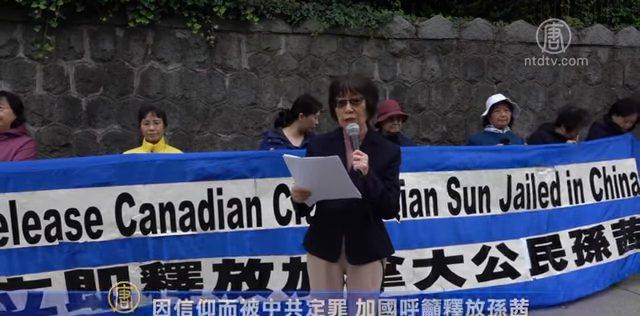
Canada's side of the case has a complete public timeline. In May 2017 the case was raised in the House of Commons foreign affairs committee by Conservative MP Peter Kent; John McCallum, the former cabinet minister then serving as ambassador to China, stated that consular services were being provided to the detained Canadian citizen in Beijing, with details withheld for privacy. The Globe's 2018 reporting confirms that Canadian consular officials visited Sun Qian regularly — a material difference between her case and the great majority of Falun Gong cases involving Chinese citizens only: outside her cell door there was always a consular channel. In June 2017 Anastasia Lin testified on her behalf at the UN Human Rights Council in Geneva, saying she was imprisoned solely for her belief and had faced solitary confinement and torture. On 3 November 2017, MP Scott Reid wrote to Prime Minister Justin Trudeau asking him to raise Sun's release with Xi Jinping at the APEC summit in Da Nang, noting that in 2002 he had made the same request of Prime Minister Jean Chrétien before an APEC meeting, after which several practitioners with Canadian family ties were released. On 30 November 2017 the Canadian Coalition on Human Rights in China — fifteen organisations including Amnesty International Canada — published an open letter asking Trudeau to put human rights at the top of his agenda during that week's visit to China, with a list of prisoners whose release he was asked to press for; Sun Qian was on it, though the list's size is given as thirteen names in Minghui's account and sixteen closely connected individuals in Amnesty Canada's own release (see Section 13).
Whether Trudeau himself ever raised Sun Qian's name with the Chinese leadership is a different question, and the honest answer is that the public record does not say. The only Trudeau statement this archive could find is a general one: on 21 October 2017, asked in Edmonton about human rights abuses in China and forced organ harvesting, he replied that he always raises human rights whenever he sits down with Chinese leaders. No reliable public source confirms that he raised Sun Qian specifically, at APEC or during his December 2017 visit to China. This archive records the gap as it stands: the appeals were public and dense; a specific raising is not on public record. After the 2020 verdict, Global Affairs Canada spokesman Sylvain Leclerc told the National Post that Canada had raised her case directly with Chinese counterparts. In November 2024 her name was still being spoken in Canada's Parliament in the present tense of her sentence, when MP Greg McLean presented a Falun Gong petition describing her as sentenced to eight years; nothing in that intervention suggested she had been freed.
8. 12 September 2018: one day at the Wenyuhe courtroom
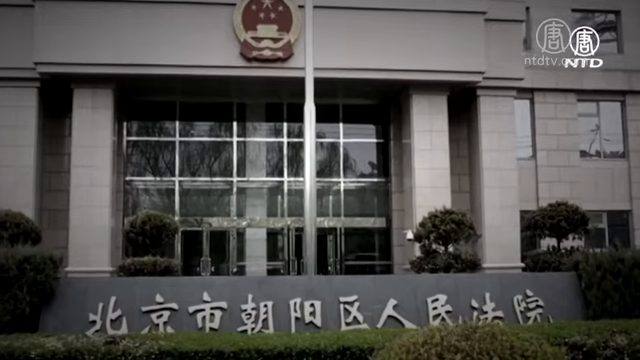
The trial was first set for 9 April 2018, then postponed. A pre-trial hearing followed on 23 April 2018, with newly hired lawyers still reading the file; afterwards her family and friends wrote to the Chaoyang District Court asking for the case to be dropped, arguing that no law designates Falun Gong a cult and that the judicial interpretation in force since 1 February 2017 does not mention Falun Gong, so an Article 300 charge has no legal basis. The letter received no reply and no sequel. On the morning of 12 September 2018 the case was heard at the Wenyuhe courtroom of the Beijing Chaoyang District People's Court — English reports often shorten this to the "Wenyuhe Court," while the CECC report and others say simply the Chaoyang District People's Court; this archive uses the fuller form. The court had promised an open hearing, but Globe and Mail journalists and representatives of European embassies were barred from entering.
The Sun Qian who stood in that courtroom did not plead guilty. As the Globe reported the same day, drawing on her lawyer, mother and brother, she said she had not done, was not doing and would not do anything illegal; she charged that every element and procedure of her case was unlawful, testified that she had been given neither water nor food at the start of her detention, and repeated to the judges' faces her allegation that guards at the Beijing No. 1 Detention Centre had pepper-sprayed her in May 2017. Her lawyer Li Jinsong argued that the prosecution simply did not dare to play the interrogation videos in court. The court gave no verdict that day. For nearly twenty-two more months the case hung undecided and she remained in a cell — by the time of sentencing she had been held, pre-verdict, for three years and over four months. No official transcript of that day has ever been published; everything in this section comes from the Globe's account via her lawyer and family, and is graded as such.
9. 30 June 2020: eight years
On 30 June 2020 the Beijing Chaoyang District People's Court delivered its verdict: eight years' imprisonment for "using a cult organisation to undermine law enforcement." The fact is corroborated three ways — Minghui's report of 5 July 2020, the Canadian Falun Gong community's condemnation statement, and the CECC's 2021 annual report — making it one of the best-attested facts in the file. Credited from her detention on 19 February 2017, an eight-year term runs to about 18 February 2025. That end date is arithmetic, not an officially published date: the judgment has never been released, and this archive found no official text stating the term's start or end. The distinction matters and is flagged wherever the date is used. Attendance at the sentencing was tightly limited: Sun Zan said the court admitted only four people — herself, her husband, and two staff members of the Canadian Embassy. Xie Yanyi, her former lawyer, said after the verdict that the proceedings were invalid and illegal, that she had been deprived of legal representation and of the right to appeal, and that the sentence had been handled in secret before it was announced. His statement sits awkwardly beside Sun Zan's account of family and embassy staff present in the room; the two can coexist if Xie's charge is read as aimed at the process — the cleared defence bench, the appointed lawyer — rather than at a literally empty courtroom. This archive prints both and reconciles neither on the parties' behalf.
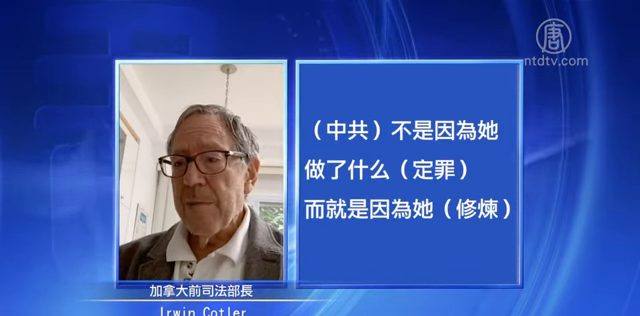
By sentencing day, the lawyer beside her was no longer one the family had hired but one the court had appointed. Minghui and the Canadian Falun Gong community's statement both say the appointed lawyer had been instructed by the authorities to enter a guilty plea on her behalf. Cotler said after the verdict that sustained torture had in the end coerced a false confession, that this is how ninety-nine per cent of such cases end in conviction, and that conviction and sentence alike were pre-ordained. China has never published a transcript, a plea document or a reasoned judgment in this case, so the precise documentary form of that "guilty plea" — a signed plea-leniency statement, words spoken in court, or merely the appointed lawyer's submission — cannot be examined from outside. There is no public record of it. This archive leaves that unknown exactly where it lies; it is the necessary premise for the dispute in the next section.
10. The dispute in layers: three renunciations that must not be merged
Three distinct "renunciations" are tangled together in public accounts of Sun Qian, and they must be separated. The first is renouncing Falun Gong. Her public posture through 2017 and 2018 was refusal — her signed account, her courtroom statements and her family's reports all agree. By 2020 an appointed lawyer was pleading guilty for her and the official version had her confessing; Falun Gong sources and Cotler alike attribute that outcome to prolonged abuse and pressure. Of Sun Qian's own wishes after 2020, not one statement has reached the outside world through an independent channel. The only honest conclusion available is layered: the coercion account rests on consistent accusations by her lawyers and her Canadian counsel; the voluntariness account rests on a procedural outcome with no public text of her own. This archive prints both and does not pretend to read her mind.
The second renunciation is of her Canadian citizenship. Xie Yanyi said she had been forced to give up her Canadian citizenship in detention, with the details still to be investigated. Cotler put the Canadian position to the Globe in full: she should still be regarded as a Canadian citizen, because a confession tortured out of a person is not something Canada has to acquiesce in. Amnesty International Canada said in 2021 that she had likely renounced her citizenship under duress. Whether Beijing ever formally refused consular rights on the ground that she was "only" Chinese has no official Chinese text on public record; Canada, for its part, treated her as a citizen throughout — visits, embassy seats at the sentencing, and direct representations are all documented. The third tangle is the attempt to tie her case to Meng Wanzhou. Cotler rejected it explicitly, and the calendar rejects it on its own: Sun Qian was arrested in February 2017, almost two years before Meng's December 2018 arrest in Vancouver, so retaliation is chronologically impossible. Reports that paired the two cases were, on this point, simply misreading the timeline; this archive adopts the correction and records it here.
11. The family, and the price: eleven lawyers counted by a sister
The cost to the family has a concrete shape. Sun Zan, moving between Canada and Beijing, counted the lawyers to eleven — hire one, lose one, hire the next. In 2017 she described a family that needed weeks just to find where her sister was held. Her mother and brother became the world's conduit for the 2018 trial, because the journalists were outside the door and the day's events survive mainly in their retelling. On the other side of the family stands the husband: the share dispute unresolved, her accusation and Shen Guangqian's silence both on the record (Section 6). Leadman itself traded on through its founder's imprisonment and the contested transfer; the present legal state of her relationship to the company she founded is not on public record. Finally there is the plain arithmetic of time. She was in her early fifties when the police came, fifty-four when sentenced, and would be nearing sixty at the end of the term as calculated. The last prime years of a business career were spent in a detention centre and a prison, and no release date, whenever it fell or falls, gives those years back.
12. After the term: the silence of February 2025
On this archive's calculation, Sun Qian's eight years expired in February 2025. To verify her situation, this archive searched Minghui, Canadian media, parliamentary records and human-rights organisations' materials in Chinese and English, and the result must be stated without decoration: no reliable public source reports that she was released in 2025; there is no report of her returning to Canada; there is no public statement by her or her family after the calculated end of the term; and there is equally no report that she remains in custody. The name of the prison where she served her sentence has never been published. Whether she received any reduction, was released early, or left prison subject to restrictions is, in every case, not on public record. The last official-grade mention this archive could find before the term's calculated end is the November 2024 Canadian parliamentary petition intervention, still speaking of her in the present tense of an eight-year sentence. Her status is therefore recorded in these terms: term calculated to have expired in February 2025; release unconfirmed by any public source; present situation unknown. In a case involving a foreign citizen with a working consular channel, the absence of even a single public line recording her release is itself a fact worth archiving. It means that after the 2020 verdict the information channel around this case effectively closed — whether because the family chose quiet, because the authorities sealed it, or because she herself, if free, chose silence, cannot be told from outside, and this archive does not speculate.
13. Archived in parallel: where the sources disagree
Under this archive's rules, the disagreements are listed, not merged. (1) The Hurun lists: Epoch Times-linked and some Minghui reports say she appeared every year from 2012 to 2016; other Minghui reports say she was listed twice. (2) The arrest: the number of officers is consistent at more than twenty; that four other people were taken with her comes from Cotler alone. (3) The lawyers: Sun Zan counted eleven to the Globe in 2018; Minghui in 2020 said "more than ten"; a narrower count of three forced out between June 2017 and late March 2018 covers only that window. (4) The court's name: English reports say "Wenyuhe Court" or "Chaoyang District People's Court" (CECC); both refer to the same court sitting in its Wenyuhe courtroom. (5) The Trudeau list: thirteen names in Minghui's account of the Coalition's open letter, sixteen closely connected individuals in Amnesty Canada's own release — two texts of the same event. (6) The openness of the sentencing: Xie Yanyi called it secret and appeal-proof; Sun Zan recorded herself, her husband and two embassy staff admitted to hear it — both printed, with the discussion in Section 9. (7) Her title: founder and vice president, or joint owner with her husband, depending on the English source. (8) Forced psychiatric medication: attributed to her personally in some summaries, supported by no reliable source this archive could find — marked unverified (Section 3). (9) The term's end and her status: February 2025 is calculated from the detention date, with no official text; no release appears anywhere in the public record (Section 12). (10) The Peking University degree: a single reporting chain through the Globe's September 2018 report — unverified.
14. Verification and sources
The core facts of this entry were cross-checked against the following, graded as follows. Grade A, institutional and mainstream: the CECC's 2021 annual report (arrest, seizure of materials, the September 2018 trial, the 30 June 2020 eight-year sentence by the Chaoyang District court, two weeks' shackling and pepper spraying, pressure on lawyers); The Globe and Mail's 2017 reporting on the pepper spraying and the forced withdrawal of counsel, its long report of 9 May 2018 on the eleven lawyers, and its report of the 12 September 2018 trial day (the latter two checked through Minghui and classroom-edition republication texts, consistent with the originals' wording); Amnesty International Canada's news release of 30 November 2017 on the Coalition's open letter; the Canadian parliamentary record (Peter Kent in 2017, Greg McLean's petition intervention in November 2024); and MP Scott Reid's letter to the Prime Minister of 3 November 2017, published on his own website. Grade B, interested-party sources usable where mutually consistent and flagged where alone: Minghui's reporting from 2017 to 2021, including its post-verdict report of 5 July 2020; statements of the Falun Dafa Association of Canada and the Canadian Falun Gong community; and Cotler's public statements of 2018 and 2020, cited throughout at the grade of "accusations and positions of her Canadian counsel." Grade C, single-source or single-chain: the Peking University degree, the thirty-minute waking detail, and the specifics of the report-against-her allegation in the share dispute, each cited only as labelled in the text. Not obtained: the judgment, any trial transcript, the indictment, or any official Chinese response to this case. No single source is quoted at more than fifty words; every conflict is layered rather than merged, and every gap is written as what it is — no public record.
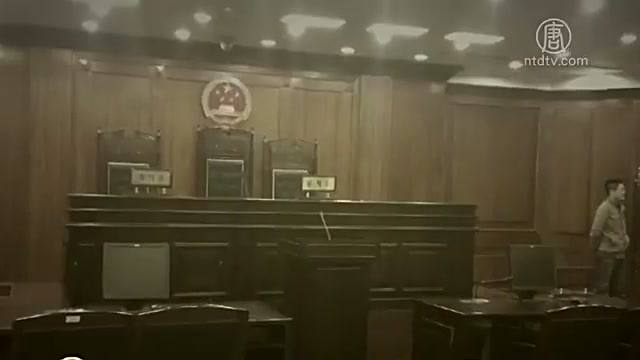
视频证据Video Evidence
以下视频与本页人物、事件直接相关,为公开发布的影像记录。The following videos are publicly released visual records directly related to the person and events on this page.
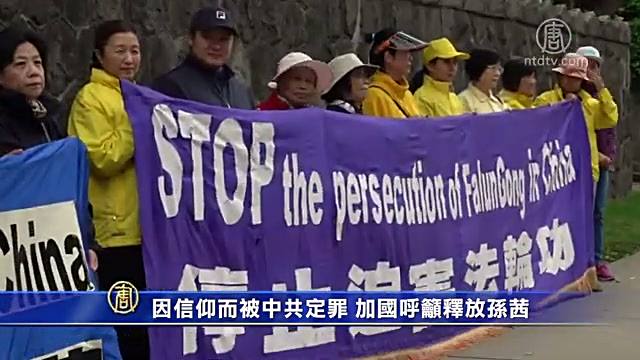
以下为新唐人加拿大频道的报道《给孙倩的一封信》,含加拿大声援活动与北京朝阳法院的画面。NTD Canada's report "A Letter to Sun Qian", with footage of Canadian solidarity actions and of the Chaoyang court in Beijing.
▲ 新唐人加拿大:《给孙倩的一封信》(实拍报道)|2019年|英语原声▲ NTD Canada: A Letter to Sun Qian (report) | 2019 | English audio
15. Our Take
This archive's commentary is confined to the facts of this case. First, there was never a third thing in it: no victim, no violence, and no conduct of hers beyond her belief and the materials in her home was ever alleged as the crime. Article 300, as used here, punished an identity, not an act. Second, how a state treats the defence bench tells more than how it treats the defendant: eleven lawyers cleared away one by one — a licence cancelled, warnings delivered at homes, one lawyer made to write that he had "successfully convinced" a family to fire him — until the only counsel left standing beside her was the court's own appointee, pleading her guilty. A trial that must first empty the other side's bench has its result written before it opens. Third, citizenship in this case was a sheet of paper fought over from both ends: she entered China on a Canadian passport, Canadian consuls visited her and embassy staff sat in the sentencing room, yet the same machinery produced a supposed renunciation of that citizenship — an attempt to cut the consular channel at its root. Cotler's answer, that a statement tortured out of a prisoner does not have to be accepted, is the response most worth archiving from that contest. Fourth, there is the ending, which is a silence: eight years calculated to expire in February 2025, and not one public line recording her release. A case that once moved twenty-odd police officers, eleven lawyers, two parliaments' worth of questions and a prime minister's travel agenda ends with the outside world unable even to confirm whether its subject is free. This archive preserves that blank exactly as found. It is not a defect of this page. It is the last fact of the case.