
第126案 | 索江(Druklo)Case 126 | Shokjang (Druklo)
索江(Shokjang,笔名;全名Drukar Gyal,简称Druklo),甘肃夏河县更也地区藏族作家,西北民族大学藏文文学出身,著有藏文著作四种,一本被查禁。2010年4月他因参与编辑被禁刊物《东方雪山》、刊载涉及2008年抗议的文字被关押一个月。2015年3月16日深夜,他在热贡宾馆被持枪无证搜查,当晚写下记述;3月19日被同仁县公安局带走,5月5日才宣布逮捕,全程无律师;2016年2月17日黄南州中级人民法院以「煽动分裂国家」判他三年、剥夺政治权利二年,法院认定的六件事只是一篇宗教自由文章、那篇搜查记述、一次转发、一条会谈新闻分享、一段警察打人视频和手机里的六本书。2016年2月24日他手写十二页藏文上诉书逐条反驳,上诉结果无公开记录;2018年3月19日刑满获释回乡,剥权至2020年3月,此后公开记录中断,现状无可核实消息。Shokjang (pen name; full name Drukar Gyal, short name Druklo) is a Tibetan writer from the Gengya area of Sangchu (Xiahe) County, Gansu, trained in Tibetan literature at Northwest University for Nationalities, and the author of four books in Tibetan, one of them banned. In April 2010 he was held for a month over the banned journal Shar Dungri and writings on the 2008 protests. On the night of 16 March 2015 his Rebkong hotel room was searched at gunpoint without a warrant and he wrote the episode up that night; on 19 March 2015 Tongren County Public Security took him away, his arrest was announced only on 5 May, and he never had a lawyer. On 17 February 2016 the Malho Intermediate People's Court sentenced him to three years plus two years' deprivation of political rights for 'inciting the splitting of the nation,' on six findings consisting only of an essay on religious freedom, that account of the search, one repost, one shared news item about talks, one video of police beating civilians, and six books stored on his phone. His handwritten twelve-page appeal in Tibetan, dated 24 February 2016, answers the six findings one by one; no ruling on it was ever reported. He was released on completion of sentence on 19 March 2018; the deprivation of political rights ran to March 2020; since then the public record breaks off, and his present situation cannot be verified.
What Happened
The skeleton of Shokjang's case was, unusually, written by the convicted man himself. On 24 February 2016, seven days after he was sentenced, he hand-wrote a twelve-page appeal in Tibetan, addressed to the Qinghai Higher People's Court, from detention. The letter opens with his name and home village, then reports the whole procedural history in a single passage: detained by Tongren County Public Security on 19 March 2015 and held in the county detention centre from the 20th; the formal announcement of his arrest came only on 5 May; on 21 July the Malho (Huangnan) Prefecture Intermediate People's Court convened, he argued that his actions were not illegal, and the court postponed its deliberation for over seven months; on 17 February 2016 a second session announced three years' imprisonment with two years' deprivation of political rights. The letter then lists, one by one, the six things the court held against him, answers each in turn, and closes by saying that he is a citizen of the People's Republic of China, that his right to free expression and to write down his experiences is given by the constitution, that his old mother and siblings watch him with constant tears in their eyes, and that his wife and children wait for him every second. The letter circulated widely on Chinese social media, reached Tibetan exiles, and was published in full in English translation by the International Campaign for Tibet in April 2016. This page takes that letter as the spine of its procedural timeline, because it is the only first-person document in the case dated to the day; wherever other sources conflict with it, both are archived with their provenance, and neither is smoothed away.
The man first. Shokjang is a pen name; his short name is Druklo and his full name Drukar Gyal. He is a Tibetan from Khagya village in the Gengya area of Sangchu (Xiahe) County, Kanlho (Gannan) Prefecture, Gansu — Amdo, the county of Labrang Monastery. He studied Tibetan literature at Northwest University for Nationalities in Lanzhou and was still a student during the Tibetan protests of March 2008. In April 2010 he was detained for about a month, held incommunicado, for his part in editing a banned Tibetan literary journal, Shar Dungri, which had carried writings about the 2008 protests. That was his first imprisonment. Afterwards he became one of the most widely read younger writers in the Tibetan language: a poet, lyricist, short-story writer and essayist who wrote in Tibetan and published four books, one of which, A Courageous Path (title variants are archived in the Verification Note), has been officially banned. He wrote about ethnic policy, about the resettlement of nomad herders, about religious freedom. In his long reply to the Chinese liberal scholar Liu Junning on regional ethnic autonomy, he argued that Tibetans seek only autonomy within China, and even proposed a federal-style autonomy built on liberty and equality — a text that survives in full, and that collides head-on with the word later stamped on his file: separatism.
March is a sensitive month across the Tibetan plateau: 10 March marks the 1959 Lhasa uprising, 14 March the 2008 protests, and security deployments tighten as a matter of routine. Late on 16 March 2015, in a hotel in Rebkong, two men — one in a police uniform, one in an army uniform, both carrying guns — entered his room saying they had to search it; when he asked them to show documentary proof, they pointed their guns at him and shouted threats. That night he wrote the episode up on his blog, together with the increased police patrols on the streets of Tongren. That account later became the second of the six "crimes" in his judgment. Three days later, on 19 March, Tongren County Public Security took him away. His Weibo account stops on that day; its profile read that his previous page had been closed down by others and that this was where he wrote freely (High Peaks Pure Earth, April 2015).
What followed the seizure was forty-seven days of silence: the formal arrest was announced only on 5 May 2015, on his own account in the appeal. A lawyer he never had — Amnesty International's update of 25 February 2016 states expressly that he had no access to a lawyer throughout his detention or during his trial, and that his family was informed of the sentencing date only two days beforehand. On 21 July 2015 the Malho Intermediate People's Court held its first session; he defended himself, arguing that his actions were not illegal; the court then sat on the case for more than seven months. On 17 February 2016, at a second session, it sentenced him: three years, plus two years' deprivation of political rights. The six matters the court held to constitute the crime, as he recites them from the judgment, were these: an online essay on freedom of religious belief; a written account of the 16 March gunpoint search of his hotel room; reproducing a short extract from Shokdung's book The Division of Heaven and Earth; sharing a news report that the Chinese government would hold talks with the Dalai Lama on matters unrelated to Tibetan independence; reposting a video of Chinese police beating ordinary Chinese people in the street; and having six books stored on his phone, among them Wang Lixiong's Sky Burial. Six items — no organisation, no meeting, no money, no violence. That is the complete list of the "criminal facts" in this case, taken from the court's own findings as recited by the defendant in his appeal; this page knows no harder list.
He appealed, in the twelve-page letter. What became of the appeal, no public record says: no reported ruling by the Qinghai Higher People's Court, no reduction, no retrial — and he served the three years to the last day. On 19 March 2018, exactly three years after his seizure, he was released and returned to his home village in Sangchu County, where Tibetans from many areas came to welcome him home (Radio Free Asia's Tibetan service, relayed by ICT). Release was not the end of the sentence's tail: the two years' deprivation of political rights ran until March 2020, PEN America records that he remains subject to surveillance, and an RFA source said he was still being closely watched and that little was known of his condition (relayed by the Central Tibetan Administration in March 2018). After that, the public record all but breaks off: through 2019, 2020, 2021 and up to this page's systematic search of 6 November 2026, there is no cross-verifiable report of any new publication by him, any fresh detention, or any news of his health or livelihood. One of the most influential voices on the Tibetan-language internet simply disappears from the record. This page's job is to pin down, section by section, the line that runs up to that disappearance.
Who He Was: From Gengya Village to the Centre of Tibetan Writing
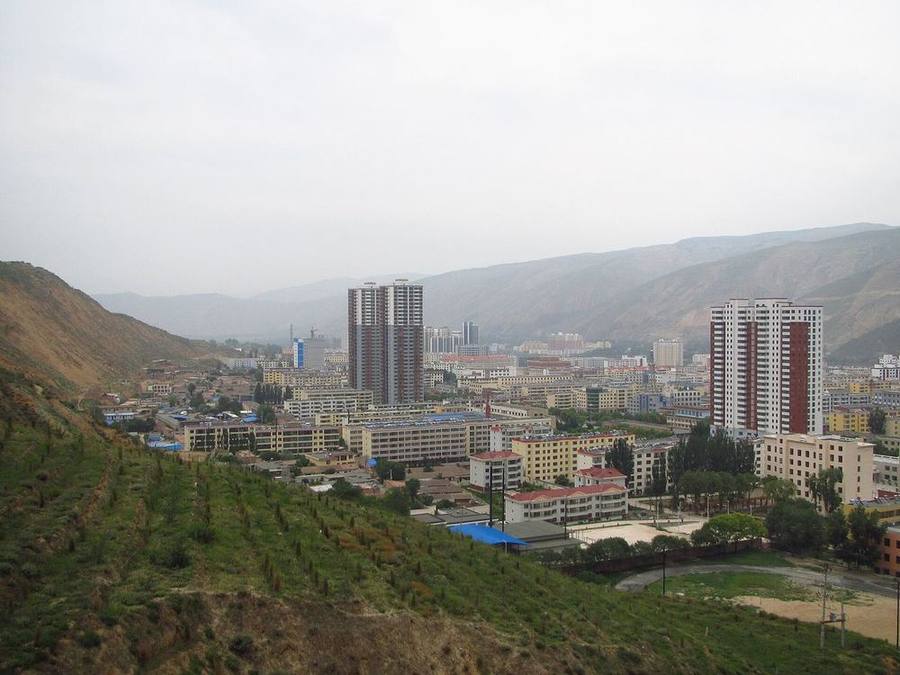
His names and origins follow his own appeal: Drukar Gyal, Druklo for short, pen name Shokjang, from Khagya village in the Gengya area of Sangchu County, Kanlho Prefecture (the letter itself; ICT's translation notes Kanlho as Gansu). A German-language review of 2018 glosses "Shokjang" as "morning green" (Morgengrün) — a single-source note, archived as such in the Verification Note. His year of birth has no firm public record: the 2016 Dharamshala collection of his writings describes him as a thirty-year-old writer, and the 2018 German review gives his age as thirty-two; the two agree on a birth year of roughly 1985–86. This page records the estimate and nothing more; it does not invent a birth date.
His education is a single clear line: he studied Tibetan language and literature at Northwest University for Nationalities in Lanzhou (Amnesty International, UA 85/15 update; the Central Tibetan Administration likewise records Tibetan literature studies). He was there during the plateau-wide protests of March 2008. What he did in 2008 is reported at three different levels, and this page keeps them apart. First, advocacy organisations — Tibet Society and Students for a Free Tibet, in their March 2018 release statements — say that as a student he organised student protests calling for greater freedom for Tibetans. Second, the German Federal Foreign Office's statement of 21 March 2018 says in its background section that he spent a short time in prison in 2010 for his role in the demonstrations and publications of 2008. Third, the Committee to Protect Journalists, citing Radio Free Asia, says his 2010 detention followed his writing about the government's harsh response to the 2008 protests. All three point the same way — the words and activities of 2008 put him on the authorities' list — but "organised protests" rests on advocacy sources alone, and this page archives it as such rather than as a finding of its own.
His writing life unfolded mainly after his first release in 2010. He is a poet, lyricist, short-story writer, essayist and translator (author biography in the 2016 collection). His four books are catalogued here on the authority of that collection and of PEN America, with the title variants set out in the Verification Note: A Courageous Path; The Might of the Pen; For Liberty I Have No Regrets; and Rangdrol's Spirit (PEN America renders the last as Rangdrol's Courage). The first of them, A Courageous Path, has been officially banned by the Chinese authorities (PEN America case page). All four were written in Tibetan. His readership inside the Tibetan-language world is the measure of this case's weight: this was not a voice speaking from exile, but a writer inside the country, in his own language, with a large domestic audience.
Two essays, named in Amnesty International's file, show what he actually wrote. The first, Conflict and Resolution: A Response to Liu Junning, answers the Chinese liberal scholar Liu Junning's rethink of regional ethnic autonomy after the Kunming attack. ICT's report of 19 February 2016 quotes its core passage: Tibetans, he wrote, do not wish or aspire to create conflict and violence among the nationalities of China; they aspire solely to Tibetan national autonomy within China — and he went on to propose that, building on the existing autonomy model, a federal system of provincial autonomy founded on liberty and equality would make inter-ethnic conflict subside and disappear. The character of that text matters and should be stated plainly: it is a contribution to a Chinese domestic policy debate, addressed to China's constitution and ethnic policy, proposing autonomy and federation — not independence. The second essay, Tonight, I Am in the Grasslands of My Hometown, criticises the government's resettlement of Tibetan nomad herders (Amnesty International, UA 85/15 update). One essay on institutions, one on the grasslands; neither concerns any organisational action.
Between 2010 and 2015 he married — the appeal speaks of his wife and children waiting for him every second, and a 2018 German review describes him as married with a son (single source; see the Verification Note). He lived and wrote around Rebkong, a cultural centre of Amdo famed for its thangka painting and monasteries, and one of the most tightly controlled districts of the plateau since 2008. He kept a Weibo page; it was closed once and reopened. His friend Tashi Rabten, writing on 6 April 2015 — the fifth anniversary of the day they were detained together in 2010 — recorded that Shokjang's Weibo's last post was dated 19 March 2015, the day he was taken (translated by High Peaks Pure Earth). This page archives that detail as a friend's testimony; it gives the date "19 March" a second witness besides the appeal letter itself.
2008 and 2010: Shar Dungri and the First Detention
His first imprisonment was for a magazine. Shar Dungri — Eastern Snow Mountain — was a Tibetan literary journal that had published articles touching on the 2008 protests across the Tibetan areas, and was subsequently banned. His connection to it is worded slightly differently by two sources. Amnesty International's UA 85/15 update (25 February 2016) says he was detained on 6 April 2010 together with his fellow student Teurang — Tashi Rabten — for co-editing the banned magazine. Index on Censorship's brief of 13 April 2010 says Rabten was the magazine's editor, and that police raided both students' rooms and confiscated their mobile phones, laptops and books. Editor or co-editor: this page archives both wordings in parallel. The common, verifiable core is that in early April 2010 Lanzhou police searched the rooms of two Tibetan literature students, seized their electronics and books, and took both men away.
Amnesty International's update gives the fullest dates for the detention itself: detained 6 April 2010, released 8 May 2010 — thirty-two days. The 2016 TCHRD collection agrees in substance: at his first arrest he was held incommunicado for a month, over his writings on the 2008 uprising that had appeared in the now-banned Shar Dungri. The word "incommunicado" deserves its own emphasis: for that month, family, friends and lawyers could not reach him, and the outside world did not know where he was. Five years later the same technique would be applied again — measured in years, not in a month.
His co-detainee was not so fortunate. Tashi Rabten — Theurang — the central editor of Shar Dungri, who had also edited a politically charged collection called Written in Blood (Index on Censorship records an earlier detention of his in June 2009 over that collection), was sentenced after the 2010 arrest to four years and released only in March 2014 (ICT, February 2016; relayed by the Central Tibetan Administration, March 2018). His long memorial essay of 6 April 2015, "Remembering a Special Friend on a Special Day," translated by High Peaks Pure Earth, is one of the few first-person accounts of the 2010 imprisonment. He writes that the two men were held in cells facing each other, staring across; that he sat manacled in iron shackles on a chair for three whole days; that he was then transferred elsewhere and later taken to Sichuan, while Shokjang remained in Lanzhou. This page archives that as a co-detainee's first-person testimony, a grade of evidence distinct from institutional files. It also preserves a comparison that matters for understanding 2015: of two men from the same editorial circle, one was held a month and released, the other sentenced to four years — in 2010 the authorities still classed Shokjang as someone to be warned; by 2015 the classification had changed.
One further claim about the 2010 month must be archived with its grade attached. The Central Tibetan Administration's release report of March 2018 states that during his detention of over a month in 2010 Shokjang was subjected to interrogations and torture. This page's search found no corroboration of that statement in the contemporaneous files of Amnesty International, the Committee to Protect Journalists or other institutions; it is therefore recorded as a single-source claim and marked unverified. It is included because it appears in the CTA's formal reporting; it is flagged because no second source, and no medical or legal document, supports it. That is this page's uniform treatment of single-source claims throughout the case.
After his release on 8 May 2010, he went back to writing. In the five years that followed he published most of his four books and built a rare influence in Tibetan-language online space. It was also in those years that he wrote the reply to Liu Junning, setting his political position down in black and white: autonomy within China. Anyone who wants to understand the 2015 case must grasp that first — when they came for him, he was not a man of unstated views; his stated position was precisely the non-independence one.
Rebkong, March 2015: The Flower Festival, the Gunpoint Search, and the Last Article
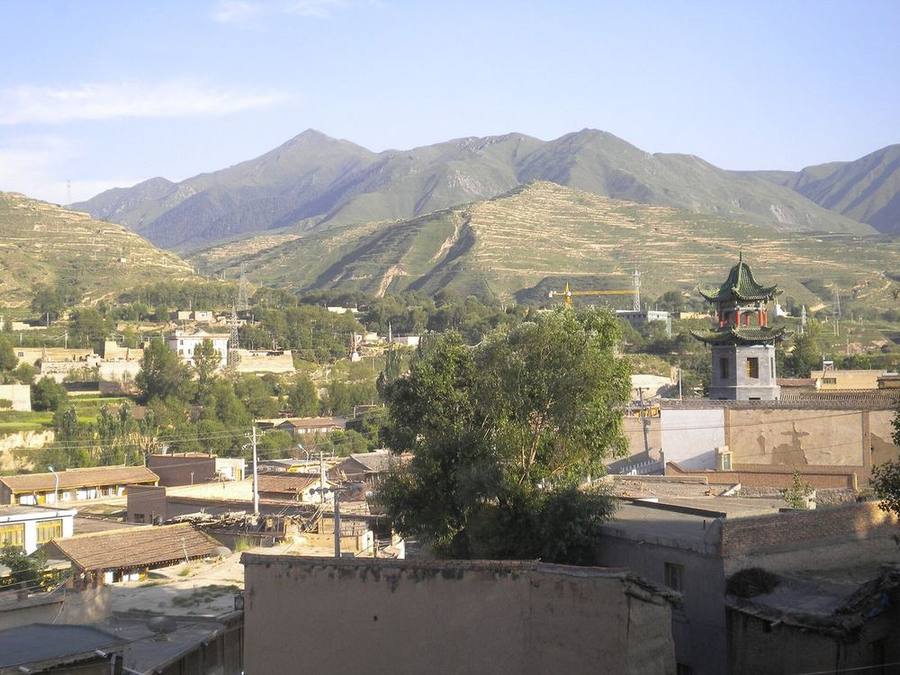
What happened on the night of 16 March 2015 exists in two versions: Shokjang's own account, and the police conclusion as relayed by the court. His first. In the second section of his appeal he writes that on the evening of 16 March he was in a hotel in Rebkong when, late at night, two people — one in a police uniform, one in an army uniform, both carrying guns — came in saying they needed to search the place; when he asked them to show documentary proof, they pointed their guns at him and loudly intimidated him. It was the first time he had faced the barrel of a gun. Whether those men were truly police and soldiers or gangsters, he wrote the account, he says, in the hope of obtaining the protection of the security authorities and the public. His appeal also preserves a checkable anchor: whether his account was fabricated, he wrote, could be seen clearly by reviewing that day's CCTV footage.
The court's version, again as relayed by his appeal, is that the court adopted the police investigation's conclusion that his account was a fabrication and an incitement to unrest — the appeal quotes the judgment's language to that effect. In other words, a citizen's written account of being searched at gunpoint without a warrant was answered not by releasing the footage, nor by identifying the task those men were executing that night, but by defining the account itself as fabrication and the fabrication as a component of "inciting the splitting of the nation." The surveillance footage was never released; the legal instrument for that night's search was never produced. On both points the record is empty, and this page records the emptiness.
Amnesty International supplies the article's context: on 16 March 2015 he had written on his blog about the fifty-sixth anniversary of the failed 1959 Tibetan uprising, describing the increased police patrols on the streets of Tongren County (UA 85/15 update). The joint letter of the Committee to Protect Journalists, IFEX-network organisations and others (7 April 2016) says that on 16 March he published a blog post criticising the deployment of Chinese security forces in Tibet. The two accounts are compatible: the piece fell in the sensitive anniversary season and described the military-police presence in front of him. In his appeal he lists this account as the second matter held against him and makes his core defence upon it — that he had not written even a word of separatism, still less instigated it; that writing up an incident in which he himself was harmed does not make him a separatist; and he asks the Higher People's Court to look for the objective truth. The quotations from the letter on this page are kept, in every case, well under fifty words per source.
Another text of the same season stands first in the court's list: an essay on freedom of religious belief. According to the first section of his appeal, the essay addressed the restrictions imposed by armed soldiers at Kumbum Monastery's "flower offering" ceremony — the great Monlam display of butter sculptures in the Tibetan New Year season — and spoke to readers about awareness of the constitutional right to religious freedom. The judgment, he writes, seized on one sentence of his — to the effect that this trampled not only the Tibetan people's right to religious freedom but that of the Chinese people as a whole — as proof of a separatist attitude. His answer is that the sentence places Tibetans and Chinese inside one and the same community of rights, without distinction; the talk of separatism, he asks, does not establish what is being separated from what. The photographs in the essay were not even his: he was staying at Labrang, and his camera could not reach Kumbum. The structure of this charge is worth marking on its own: the evidence of separatism was a sentence asserting that two peoples share the same right.
The timeline closes on 19 March. That day, Tongren County Public Security took him away (his appeal: "detained by Rebkong county Public Security"; Amnesty International: taken away by national security police — graded below). According to Voice of America, relayed by High Peaks Pure Earth, a brother-in-law was taken away at the same time and later released; this page archives that as a relayed, single-chain account, not as an established fact. His Weibo stops on that day. Whether his home in Rebkong was searched and what was inventoried, beyond the phone taken from him (below), is a matter of no public record.
Eleven Months Without a Lawyer: From Seizure to the Second Session
The procedure follows his appeal, fixed day by day. 19 March 2015: taken away by Tongren County Public Security. From 20 March: held in Tongren County Detention Centre. 5 May 2015: the formal announcement of arrest finally arrived — forty-seven days after the seizure. The arm of service that took him is given by Amnesty International as national security police — the domestic-security (guobao) police — and by ICT and others as security police; neither conflicts with the appeal's "Tongren County Public Security," and this page records the composite as: seized by Tongren County Public Security (domestic-security officers), attributing the service wherever it is named.
Three things that should have happened in those eleven months did not. First, a lawyer: Amnesty International's update of 25 February 2016 states that he did not have access to a lawyer throughout his detention or during his trial. At the hearing of 21 July 2015, the person who defended him was himself; the appeal's words are that he presented the defence that his actions were not illegal. Second, timely notice to his family: the arrest announcement lagged to 5 May, and the sentencing date was disclosed to the family only two days in advance (Amnesty International, same document). Third, any public account of the hearings: whether either session admitted observers or media is mentioned by no source — no public record — and the names of the presiding judge, the collegial panel, the prosecuting organ and the prosecutors are likewise matters of no public record. This page does not guess at them and does not fill them in. That a state-security case was tried at first instance by a prefectural intermediate court fits the ordinary allocation of such cases; everything beyond that structural fact is silence.
After the first session on 21 July 2015, the court postponed its deliberation for over seven months (his appeal: the deliberation was postponed for over seven months). Where he spent those months, ICT's report of April 2016 gives one datum: according to its sources, he was still being held in the detention facility in Rebkong (Tongren), where he was first arrested, and had not yet been transferred to a prison — that report dates from April 2016, after sentencing, during the appeal window. Where he subsequently served the sentence, when he was transferred out of Tongren, and to which facility, is entirely a matter of no public record. This page can fix only the two ends: the starting point, Tongren County Detention Centre; and the end point, 19 March 2018, sentence completed, returned to his home village of Gengya in Sangchu County (ICT, 20 March 2018). The prison in which he spent the middle of those three years is one of the largest blanks in this file, and this page archives it as a blank rather than filling it with any institution's name.
Of his health in custody, of medical care, of family visits, there is no public record. His appeal contains not one word about his treatment inside — the letter is a legal argument throughout, not an indictment of his jailers — and this page draws no inference from that silence in either direction. Equally without public record: the date the indictment was served, the charge's exact wording at the prosecution stage, and the offence named at the arrest-approval stage. What the outside world can see of the procedure is the appeal's own passage plus the fragments human-rights organisations gathered from family and sources; this page labels each fragment with its origin and does not assemble them into a falsely complete picture.
17 February 2016: The Sentence, and Four Accounts of the Charge
On 17 February 2016 the Malho Intermediate People's Court held its second session and pronounced sentence on the spot: three years' imprisonment and two years' deprivation of political rights (his appeal; PEN America's statement of 20 March 2018; the German Foreign Office statement of 21 March 2018 — all in agreement). The venue carries one conflict that must be laid out rather than resolved. ICT's first report of 19 February 2016 stated, on the authority of the exile Tibetan newspaper Tibet Times and other Tibetan sources, that he had been sentenced in a court in Xining, the provincial capital; ICT's October 2016 list of Tibetan political prisoners at risk repeated the Xining venue. His own appeal states plainly that the court which convened and sentenced him was the Malho (Huangnan) Prefecture Intermediate People's Court — and ICT's own translation notes place that court in Tongren. The two accounts are of entirely different evidential weight: relayed exile sourcing on one side, the defendant's own formal instrument addressed to the appellate court on the other. This page takes the appeal as its spine and archives the Xining version in parallel, labelled as an early exile-source account. Amnesty International's update, for its part, describes the sentencing body in a loose formulation ("Intermediate Court in Tongren County"); it too is archived, not adopted. Tibet Society's 2018 release statement additionally misprints the sentencing year once as 17 February 2015; this page judges that a typographical error in that statement, records it here only, and follows the multi-source date of 17 February 2016.
The four accounts of the charge were set out in this page's metadata; their provenance and weight belong here. Layer one, his own appeal: the Malho court condemned the matters he had written about as "inciting the splitting of the nation" — the account closest to the judgment's own language, since it is the defendant's recitation of the judgment against him, and the judgment itself has never been published. Layer two, the institutional standard rendering: PEN America, Amnesty International and TCHRD give "inciting separatism," the conventional English rendering of the same Chinese offence (inciting splittism under Article 103, paragraph 2, of the Criminal Law); this page does not fuse the two renderings into one. Layer three, expanded renderings: the Committee to Protect Journalists (22 February 2016) reported conviction on charges including inciting separatism and "endangering social stability"; the German Foreign Office's 2018 background section and the Central Tibetan Administration's 2018 report give inciting separatism and "disturbing social stability." Whether that second element was a separate count, a sentencing circumstance, or a reporter's gloss cannot be checked against any court document, and this page archives all four formulations with their sources wherever they are used. Layer four, Radio Free Asia's sentencing report, quoting a Tibetan source: he was accused of inciting discord among nationalities, maintaining secret contact with so-called splittists, and causing instability in the community — a source's account of the allegations, different from all three layers above, archived as such; it should be noted expressly that the six findings his appeal recites contain no item of "secret contact."
One procedural characterisation also belongs in the archive: the joint open letter of more than twenty organisations published through IFEX on 7 April 2016 describes him as held for nearly a year "with no formal charges" before sentencing. That phrasing is not necessarily at odds with the appeal's record of a 5 May arrest announcement and a 21 July hearing — the letter's point is that the charges were never made known to the outside world or properly to the family — and this page archives it in that sense, not as a claim that no arrest was ever approved. Four accounts of the charge and one of the procedure: that is the sum of outside knowledge of this judgment. Until the judgment itself is published, the "charge" field of this case can only ever be written in layers.
The Six Matters the Court Held Against Him: Archived Item by Item, Against His Answers
This section is the evidentiary core of the case. All six findings are taken from Shokjang's appeal as his recitation of the judgment (ICT's full English translation); his answers come from the same letter. This page sets them side by side in compressed paraphrase, with every direct quotation kept far below fifty words. Item one: an online essay on freedom of religious belief. As set out above, the essay addressed armed soldiers' restrictions at Kumbum Monastery's flower-offering ceremony and argued that religious freedom is a constitutional right; the judgment quoted his sentence asserting that the trampling injured the religious-freedom rights of the Chinese people as a whole, and read it as a separatist attitude; he answered that the sentence places the two peoples in a single community of rights — and asked what, in their talk of separatism, is being separated from what. Item two: the written account of the 16 March 2015 gunpoint search of his hotel room. The court adopted the police conclusion that it was fabrication and incitement; he answered that he was the injured party, asked that the CCTV footage be re-examined, and made the most widely quoted defence in the case in substance: talk of instigating separatism, when he had not written even a word of separatism, much less instigated it.
Item three: reproducing a short extract from Shokdung's The Division of Heaven and Earth. Shokdung — the pen name of Tagyal — is among the most influential contemporary Tibetan writers; his book, written after the 2008 protests, advocates nonviolent non-cooperation, and its author was himself imprisoned for about six months in 2010. Two details of this item matter. First, on the appeal's account, the extract itself had been copied and posted online by someone else; beneath it, Shokjang wrote only a short line urging readers to look at it again and again and think about it again and again. Second, he states why he wrote that line: because he did not want to see any more of such tragic bloodshed, and would never fight to secure his own happiness through shedding the blood of others. The court counted an extract plus an anti-bloodshed comment as "inciting the splitting of the nation"; that act of counting is itself part of what this archive exists to record. Item four: sharing a news report that the Chinese government would hold talks with the Dalai Lama on matters unrelated to Tibetan independence. His answer: such talks had really taken place in the past, with the Dalai Lama's representatives coming to China for discussions; if sharing an item of internal news is illegal, then by the court's logic the Chinese government itself and the internal news channels have committed a grave crime. Item five: reposting a video of Chinese police beating ordinary Chinese people in the street, somewhere in the mainland — a clip with a very high view count, which he had taken from a Chinese friend's Weibo. His answer: the oppressed Chinese public sympathised with the victims; he had said he would do the same for his Chinese brothers and sisters; it has nothing to do with separatism — and the Malho court, without even examining the clip's content, declared it Tibet-related and laid the charge on his head. Item six: six books stored on his phone, among them Wang Lixiong's Sky Burial. His answer is the sharpest in the letter: he had read Sky Burial but had not quoted a word of it, still less passed it to anyone; if the book should not even be read, then the law's leniency toward its author deserves respect — leniency for the author and punishment for his readers rests on what point of law, he does not know.
Beyond the six items, the appeal records two points of evidence law that this page archives separately. First, that for his friends merely to have seen the previous three posts on his Weibo page was counted as prime evidence of law-breaking — if even setting eyes on such things is illegal, he writes, then not only all his writings but everything down to the birds and the bees could be too. Second, that his iPhone 5S was taken away because the posts had been retrieved through the phone — and if those writings had been found in his house, he asks, would the house and its contents also be confiscated? Both passages are proverb-laden and ironic, drawn from spoken Tibetan, but they point at very concrete procedural facts: the evidence was sourced from a seized private phone, and the boundary of liability was extended to people who had merely read. This page archives both passages at the appeal's own evidential grade — they are the defendant's formal objections to the evidence findings, not literary ornament.
Taken together, the six findings share one feature that must be stated plainly: not one of them involves organisation, networking, funds, foreign contact or violence. Three of them (items one, two and five) are writings about state violence he experienced or witnessed; two (items three and four) are acts of reposting and sharing; one (item six) is reading material archived on a private device. "Inciting the splitting of the nation" under Article 103 is an offence whose object is speech; this case is a rare specimen of that offence's boundary being pushed out to reading itself and to the written record of what was done to the writer. This page's commentary will return to that point; here it fixes only the six items' original composition.
The Twelve-Page Handwritten Appeal: 24 February 2016
The appeal letter itself needs a section of its own, because it is the most important document in this case. Its basic facts: dated 24 February 2016; handwritten in Tibetan; twelve pages; addressed to the Qinghai Higher People's Court; signed "Druklo, also known as Shokjang." The letter first states his identity and the procedural history, then lists the six findings, then answers them in six numbered arguments, interleaved with the two objections on evidence, and closes by returning to the constitution: he is a citizen of the People's Republic of China; his right to free expression and to compose writings about his experiences is provided for by the constitution; he apologises, as a man unfamiliar with the law, if he has expressed himself poorly; and in the final passage he writes of his old mother and his siblings looking at him with constant tears in their eyes, and of his wife and children waiting for him every second, asking the Higher Court for a proper decision as swiftly as possible. There is not one slogan in the letter and not one curse; it is all facts, provisions and questions. That is exactly why it must be preserved in full: it lets the man convicted of "inciting splittism" enter the archive in his own words, and any reader can set the six findings against the six answers and judge which of the two is separatism and which is common sense.
The letter's path into the world is consistently reported: it was circulated widely on Chinese social media and subsequently reached Tibetans in exile, among them Golog Jigme, a former political prisoner now in Switzerland who knew Shokjang in Tibet (ICT, 4 April 2016). ICT published the full English translation on 4 April 2016; Tibet Society followed on 7 April with the full text. Photographs of the handwritten Tibetan pages were published with the reports. This page grades the letter as a first-class primary document — a party's own instrument — and uses its self-reported procedural dates and its recitation of the six findings as the spine of this page's timeline; at the same time it notes the letter's nature: it is an appeal brief, one side's formal document, and wherever the text relays the court's findings this page attributes them as "as recited in the appeal," never dressing the letter up as the judgment itself.
The outcome of the appeal is another of this file's blanks. As of this page's search on 6 November 2026, no source has ever reported a ruling by the Qinghai Higher People's Court on the appeal: no report of the original judgment being upheld, no modification, no explanation of an in-chambers review, not a syllable relayed by family or counsel — and during the appeal window he had, as throughout, no lawyer. What can be established is only the resulting state: the three-year term was served in full to 19 March 2018, with no record of reduction, parole or reversal. This page's record stops at: the appeal was lodged in writing on 24 February 2016; its ruling and service are matters of no public record. To rewrite "no news" as "dismissed" is an inference this page refuses to make.
The blank about the prison connects with the previous section: ICT reported in April 2016 that he was still in the Tongren detention facility and had not yet been transferred to a prison; for the nearly two years that followed, no source ever named the prison where he served. In September 2016, while he was inside, something unusual happened: his writings were published in exile.
Published from Prison: For Freedom and Equality and His Four Books
In September 2016 the Tibetan Writers Abroad PEN Centre and the Tibetan Centre for Human Rights and Democracy jointly published, in Dharamshala, a bilingual Tibetan-English collection of his articles and poems, For Freedom and Equality, placing his appeal letter in full near the front of the book (the volume's imprint and contents pages, issued by TCHRD). It was the first systematic book publication of his writings in exile, and its moment was this: he was in prison, his appeal unanswered and unreported. The collection's author note describes him as a thirty-year-old writer and public intellectual from Labrang, Amdo — a poet, lyricist, short-story writer, translator and essayist — and lists his four authored books, on which this page's bibliography rests: A Courageous Path; The Might of the Pen; For Liberty I Have No Regrets; and Rangdrol's Spirit.
The variants in those titles must be set out once and clearly, because this is where cataloguing of the case most often goes wrong. PEN America's case page renders the fourth title as Rangdrol's Courage. Amnesty International's UA 85/15 update renders two of the titles as For freedom I have no regret and The courage of Rangdrol. The Central Tibetan Administration's 2018 report gives the banned book as The Courage of Path. This page's treatment: the catalogue follows the 2016 collection and PEN America (the count of four books is consistent across all sources); Spirit and Courage are archived in parallel for the fourth title, and A Courageous Path alongside The Courage of Path for the first. All four books were written in Tibetan; whether any authorised Chinese edition exists is a matter of no public record. The banned one is the first: A Courageous Path has been officially banned in China (PEN America, expressly; the CTA to the same effect). The banning instrument, its date and its scope are matters of no public record.
The exile publication line has one more entry. In spring 2018 his texts were translated into German for the first time, and Berlin's Lungta Verlag published a German collection named for one of his books, Für Freiheit bereue ich nichts (For Liberty I Have No Regrets), as a June 2018 German review records. That review gives his age as thirty-two, describes him as married with a son, and says that in 2015 he "disappeared without trace" — an exile readership's phrasing, archived here at review grade, its age and family details already flagged above as single-source or estimated. The German volume appeared some three weeks after his release; the coincidence of the two calendars, his and his publishers', is recorded without any causal claim.
Set against the whole case, the publication line draws a stark contrast. Inside China, one of his four books is banned, the circulation of the rest is a matter of no public record, and his Weibo was closed, reopened, and finally frozen on the day he was taken. Outside, his appeal was translated in full, a collection of his work was issued by two institutions jointly, and his texts were carried into German. The same body of writing, on two sides of a border: that contrast is what this section exists to fix in the record. Whether he knew of the exile publication or authorised it is, given that he was in prison in September 2016 with no lawyer and no recorded visits, a matter of no public record — this page does not speak for him on it.
The Impact on His Family: Two Days' Notice, and Waiting Every Second
The verifiable record of the impact on his family is short, but every item in it is concrete. The first is the lag in notification: he was taken on 19 March 2015 and the formal arrest was announced only on 5 May; whether the family received any detention notice in between, and when they learned where he was held, is a matter of no public record — and the fact that Amnesty International's urgent-action machinery was engaged over his detention in April 2015 (UA 85/15, first issued that month; see Sources) itself shows that, nearly a month after the seizure, the outside world still had no official account of his situation. The second is the notice of sentencing: the sentencing took place on 17 February 2016, and his family was informed that it would take place only two days before (Amnesty International, 25 February 2016 update). A family that had waited eleven months received forty-eight hours' notice of an occasion at which no lawyer would be present. The third is the closing passage of the appeal itself — the letter's only passage of private feeling: his old mother and his siblings looking at him with constant tears in their eyes, and his wife and children waiting for him every second. His mother's name, age and health, his wife's name and occupation, and the number and ages of his children are, apart from the German review's single-source mention of one son, all matters of no public record; the appeal's English translation reads "wife and children," and this page archives the plural of the translation alongside the review's one son, unreconciled.
Whether the family visited him in detention, how often and on what conditions; whether they sought to retain a lawyer for him or petitioned on his behalf; whether they were themselves questioned or pressured by police — all of it is a matter of no public record. This page records only one institutional fact that can be established: throughout his detention and trial he had no lawyer (Amnesty International), which means at the same time that the family lacked even the usual channel of learning about a case and a prisoner's health through counsel. On 19 March 2018 he was released back to his village, and Radio Free Asia's Tibetan service reported that Tibetans "from many different areas" came to welcome him home (relayed by ICT, 20 March 2018) — the family's reunion with him has exactly one public image, without detail and without a single quoted word. Whether the family remains under surveillance after his release, and how the household lives, is a matter of no public record.
The International Response: An Urgent Action, a Joint Letter, and a German Commissioner
The international response, in chronological order. In April 2015 Amnesty International issued Urgent Action UA 85/15 over his detention, mobilising its members to write; on 25 February 2016, eight days after sentencing, it issued the follow-up update headed, in substance, "Tibetan writer imprisoned after unfair trial," calling for his immediate and unconditional release and, pending release, for regular and unrestricted access to his family and lawyers and protection from torture and other ill-treatment. On 22 February 2016 the Committee to Protect Journalists condemned the sentencing and supplied a coordinate: he was one of forty-nine journalists jailed in China at the time of CPJ's most recent prison census, when China was the world's leading jailer of journalists. On 19 February 2016 the International Campaign for Tibet reported the sentence, quoting its vice-president Bhuchung Tsering's description of the conviction as nothing more than blatant political persecution and ICT's call for immediate and unconditional release; the same report records the exile community's response — one exile source calling Shokjang a rare voice on ethnic policy, and the former political prisoner Golog Jigme saying that people believed Shokjang had challenged the ruling in court, maintaining that he had done nothing against the Chinese constitution or laws.
On 7 April 2016 an open letter signed by more than twenty organisations was published through the IFEX network, addressed to Xi Jinping with copies to, among others, the head of the Tongren County Public Security Bureau, demanding Shokjang's immediate and unconditional release; the signatories included the Committee to Protect Journalists, PEN America, PEN International, the International Publishers Association and Index on Censorship (full text at IFEX). In the same week the full English translation of his appeal appeared (ICT, 4 April), with Tibet Society following on 7 April. In September 2016 his collection was published in Dharamshala (see above). In 2017 and 2018 ICT included him in its list of priority political prisoners for the Tibet Lobby Day events and raised his case with members of the US Congress and State Department staff (ICT's own account, 20 March 2018). On 13 March 2018 PEN America published its report Forbidden Feeds: Government Controls on Social Media in China, which used him as an example of Tibetans imprisoned for online speech; a week later, on his release, PEN America issued its statement of welcome — that it was a joyful day for supporters of free expression in Tibet, that a writer whose only crime was peaceful expression was out of prison, that he should never have been imprisoned at all, and that China still routinely labels peaceful Tibetan cultural and creative expression a crime; the same statement noted that he remained under two years' deprivation of political rights.
At the level of governments, the weightiest statement this page's search found came from Germany. On 21 March 2018 Bärbel Kofler, the Federal Government Commissioner for Human Rights Policy and Humanitarian Aid, issued a formal statement on his release: she welcomed the fact that after three years in prison he had finally been released that week, and called on the Chinese government to grant him his political rights in full and to refrain from restrictions on his freedom of movement and his contact with third parties. Her statement also expressed concern for the Tibetan-language advocate Tashi Wangchuk, still detained on the same species of charge, and called for his release — placing Shokjang's case and Wangchuk's in a single file of "inciting separatism" speech cases in the German government's human-rights record. The statement's background section confirms the spine: briefly imprisoned in 2010; re-arrested on 19 March 2015; convicted on 17 February 2016 of inciting separatism and disturbing social stability; sentenced to three years followed by two years without political rights; released on 19 March 2018. In addition, Amnesty International's August 2018 submission to the UN Committee on the Elimination of Racial Discrimination carried a dedicated footnote entry on the case — the three-year sentence for "inciting separatism," the absence of a lawyer, the family's two days' notice, his account of the 16 March 2015 gunpoint search — and recorded that he was released in 2018 after completing his sentence (submission, notes 40–41). Whether UN Special Procedures ever wrote to the Chinese government about this case is not shown by any public text found in this page's search; this page records that as no public record, not as proof that no letter was ever sent.
The Tibetan community's and exile institutions' responses are also part of the record. The Central Tibetan Administration's March 2018 report of the release quoted TCHRD's position that he should never have been imprisoned, and quoted an RFA source that he was still being closely watched and that few details of his current condition were known. A joint statement of Tibet Network member groups, relayed by the CTA, held that his arrest and false imprisonment exposed a larger systemic repression of all aspects of life in Tibet, including freedom of expression. The poet Woeser shared a photograph of his release on social media on 22 March 2018 with lines of Tibetan verse in tribute (relayed in overseas reporting). And standing beside him in the release photograph, greeting him, was the writer Tashi Rabten — Theurang — the co-detainee of 2010 who served four years (photo caption in Students for a Free Tibet's release statement). Two men who in 2010 stared at each other across facing cells stood side by side in the release crowd in 2018; that photograph closes this section, and it is one of the few pieces of this archive that needs no words at all.
19 March 2018: Home on Completion of Sentence, and Two More Years Without Political Rights
On 19 March 2018 the three years expired and he was released. According to ICT's report of 20 March 2018, citing Tibetan sources, he was returned to his hometown — Gengya (spelled Gangya in that report) village in Sangchu County — and Radio Free Asia's Tibetan service quoted a Tibetan source saying that Tibetans from many different areas came to welcome him home. The Central Tibetan Administration's report confirms the release date of 19 March. The hour of release, the releasing authority, and the form of the release certificate are matters of no public record. Nor had the name of the prison where he served his sentence entered any public source by that date — a man completed a three-year term and the outside world never learned in which prison he served it; that, too, is an archival fact this section exists to fix.
Release was not restoration. The sentence's additional penalty, two years' deprivation of political rights, ran from the completion of the prison term and expired only around 19 March 2020; PEN America's statement of 20 March 2018 expressly noted that the deprivation limited his right to be involved in political activities. Commissioner Kofler's statement of 21 March 2018 demanded that China grant him his political rights in full and impose no restrictions on his movement or contacts — whether that demand ever received any answer is a matter of no public record. Alongside the formal penalty ran surveillance: the CTA relayed an RFA source saying he was still being closely watched, and PEN America's case page, in its current version, states that he was released in March 2018 but remains subject to surveillance. The 2018 report and the current case page are archived side by side; the concrete forms of that surveillance — telephone contact, reporting duties, limits on leaving his place of residence or on travel — appear in no public source, and this page does not fill them in.
One further comparison is worth recording. What he was imprisoned for determines what he was least able to recover on release: for a man whose trade is words, deprivation of political rights means that publication, association and assembly remain frozen for two more years after the cell door opens; and of the state of his four books inside China, and of his Weibo account, after his release, no source carries any update. In March 2020 the deprivation of political rights expired — a day marked by no organisation's report, no statement, and not one sentence from the man himself in any public record. This page records that silence as it stands: the day his rights were restored in law left no more public trace than any of the days on which they were taken away.
After 2018: A Thin Record, and a Note on This Page's Search
This section exists to state the evidential position behind the word "current," because this page does not fill blanks with conjecture. On 6 November 2026 this page searched systematically, under the names Shokjang, Druklo and Drukar Gyal, across Amnesty International, PEN America, the Committee to Protect Journalists, the International Campaign for Tibet, the Tibetan Centre for Human Rights and Democracy, Radio Free Asia, the Central Tibetan Administration and the general web, for the window March 2018 to November 2026. The results are these: after the release reports and statements of March 2018, no organisation has published any further dedicated item about him; PEN America's case page marks the case inactive ("Is case active: No") and its content stops at the release and the surveillance; in the later publications of TCHRD and ICT this page found no fresh news of him; and whether he has published anything new in Tibetan or any other language, travelled beyond his home area, been detained or summoned again, or how his health and livelihood stand, is in every case a matter of no public record.
"No public record" does not mean "nothing happened," and that caveat must be written down to prevent misreading. The information environment in the Tibetan areas tightened further after 2018, and the public space for Tibetan-language writing inside China contracted markedly; a writer released at the end of a full term, formally stripped of political rights until 2020 and catalogued by PEN America as still under surveillance, would be entirely consistent with that environment if he never appeared in the public record again — but consistency is not evidence. This page's account of his present therefore stops at three verifiable sentences: he was released on completion of his sentence on 19 March 2018 and returned to his home in Sangchu County; the two-year deprivation of political rights expired in March 2020; since then there is no cross-verifiable public record. Any claim beyond those three sentences — whether that he is well or that he has been persecuted again — is one this page does not adopt.
One archival point of status, finally: his appeal and his essays remain in circulation in exile — the For Freedom and Equality collection can be consulted in digital form, the German collection remains in the German book system, and the case pages of PEN America and Amnesty International remain online. The words are still there; the man is not in the public record. That is the last page of this file as of 6 November 2026.
Timeline
- c. 1985–86: Born in Khagya village, Gengya area, Sangchu (Xiahe) County, Kanlho Prefecture, Gansu (year estimated from "thirty years old" in the 2016 collection and "thirty-two" in a 2018 German review; no firm public record).
- March 2008: A student of Tibetan literature at Northwest University for Nationalities, Lanzhou, during the plateau-wide protests; his role in 2008 is reported at graded levels in the text.
- 6 April 2010: Detained in Lanzhou with his fellow student Tashi Rabten (Theurang), over the banned journal Shar Dungri and writings on the 2008 protests; rooms searched, phones, computers and books confiscated (Index on Censorship).
- 8 May 2010: Released after thirty-two days, held incommunicado throughout (Amnesty International; TCHRD). Tashi Rabten went on to serve four years.
- 2010–2015: Writes in Tibetan; publishes four books, of which A Courageous Path is later officially banned (PEN America); his essay Conflict and Resolution: A Response to Liu Junning argues for Tibetan autonomy within China.
- Night of 16 March 2015: His hotel room in Rebkong is searched at gunpoint by men in police and army uniforms showing no warrant; he writes the account that night, describing the increased patrols in Tongren and the fifty-sixth anniversary of the 1959 events (appeal; Amnesty International).
- 19 March 2015: Taken away by Tongren County Public Security (domestic-security officers); his Weibo falls silent the same day; a brother-in-law is reported taken at the same time and later released (Voice of America, relayed).
- 20 March 2015: Held from this date in Tongren County Detention Centre (his appeal).
- April 2015: Amnesty International issues Urgent Action UA 85/15.
- 5 May 2015: Formal arrest announced (his appeal) — forty-seven days after the seizure.
- 21 July 2015: First session of the Malho Intermediate People's Court; he defends himself; no lawyer at any stage (appeal; Amnesty International).
- 17 February 2016: Second session and sentence: three years' imprisonment, two years' deprivation of political rights; the family had two days' notice of the sentencing (appeal; Amnesty International). Early exile sources separately reported a Xining venue — archived in parallel.
- 24 February 2016: Handwritten twelve-page appeal in Tibetan to the Qinghai Higher People's Court, answering the six findings item by item (full translation by ICT).
- 22 February 2016: The Committee to Protect Journalists condemns the sentencing; 25 February 2016: Amnesty International issues the UA 85/15 update, "imprisoned after unfair trial."
- 4 April 2016: ICT publishes the appeal in full English translation; 7 April 2016: more than twenty organisations publish a joint open letter through IFEX demanding his release.
- April 2016: ICT sources report him still held in the Tongren detention facility, not yet transferred to a prison; the name of his prison never enters any public record thereafter.
- September 2016: For Freedom and Equality, a bilingual collection of his articles, poems and the full appeal, is published in Dharamshala by the Tibetan Writers Abroad PEN Centre and TCHRD.
- 2017–2018: ICT lists him as a priority political prisoner for Tibet Lobby Day and raises his case with the US Congress and State Department.
- 13 March 2018: PEN America's Forbidden Feeds report uses him as an example of Tibetans imprisoned for online speech.
- 19 March 2018: Released on completion of sentence; returns to his home village in Gengya, Sangchu County, welcomed by Tibetans from many areas (ICT, relaying RFA's Tibetan service).
- 20 March 2018: PEN America welcomes the release and notes the continuing two-year deprivation of political rights; TCHRD states he should never have been imprisoned.
- 21 March 2018: German Federal Government Human Rights Commissioner Bärbel Kofler issues a statement demanding full restoration of his political rights and no restrictions on his movement or contacts.
- August 2018: Amnesty International's submission to the UN Committee on the Elimination of Racial Discrimination carries a dedicated entry on the case, recording his release.
- Spring 2018: A German-language collection of his writings is published in Berlin (Lungta Verlag).
- March 2020: The two-year deprivation of political rights expires; no public report marks it.
- March 2018 – 6 November 2026: No cross-verifiable new public record; PEN America's case page marks the case inactive and states that he remains subject to surveillance.
视频证据Video Evidence
以下视频与本页人物、事件直接相关,为公开发布的影像记录。The following videos are publicly released visual records directly related to the person and events on this page.
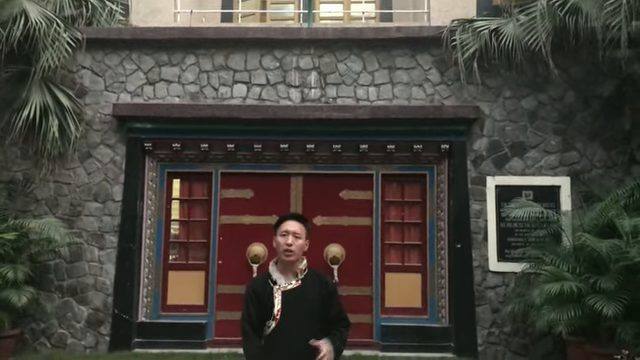
以下为自由西藏学生运动德里分部(SFT Delhi)「被囚作家日」聚焦索江活动的实录画面(来源:SFT Delhi 频道,流亡藏人倡导组织)。Footage of Students for a Free Tibet Delhi's Day of the Imprisoned Writer event focusing on Shokjang (via the SFT Delhi channel, an exiled Tibetan advocacy organisation).
▲ SFT Delhi:被囚作家日2023——聚焦索江(活动实录)|藏语/英语原声▲ SFT Delhi: Day of the Imprisoned Writer 2023 — Focus on Shokjang (event recording) | Tibetan/English audio
Our Take
This site's commentary on this case stays with this case's facts. First, set what the man actually argued beside what the state said he was. Shokjang's most systematic political text is the long reply to Liu Junning: Tibetans want no conflict and no violence, he wrote; they seek only Tibetan autonomy within China — and he even offered those in power a design, a federal-style autonomy on principles of liberty and equality under which inter-ethnic conflict would subside by itself. In the appeal he adds that he reposted Shokdung's extract because he did not want to see any more bloodshed, and that the core sentence of his Kumbum essay places the Tibetan and Chinese peoples inside one shared right to religious freedom. That is the man who was convicted of "inciting the splitting of the nation." This site's point is that the gap between the two is not a miscarriage but the offence's normal use: it does not require a defendant who has ever called for separation at all; it requires a defendant who is Tibetan, writes in Tibetan, talks about rights, and has readers. The more readers, the heavier the charge weighs — four books, one of them banned, an influence in Tibetan-language online space that few could match: on the court's scales these were not literary achievements but the measure of "incitement."
Second, look at what the six "crimes" are made of. An essay about a right; an account of being searched; a repost with an anti-bloodshed comment under it; a shared news item about negotiations; a video of police beating Chinese civilians; and six books on a telephone. Laying that list out in full is the strongest self-defence this case contains: the state mobilised a state-security offence, a prefectural intermediate court and nearly a year of pre-verdict detention, and the entire object of that machinery was words and reading. Item six above all: reading Wang Lixiong's book was criminal, while Wang Lixiong himself lives unmolested in Beijing — a contrast Shokjang wrote out explicitly in his appeal. This site holds that the case's greatest archival value lies in the list's completeness: this is not an outsider's summary called "punished for speech," it is the court's own six findings, not one more and not one fewer. Anyone who would defend this verdict must first explain, item by item, which of the six amounts to splitting a nation.
Third, look at the procedure. Forty-seven days from seizure to announced arrest; eleven months without a lawyer; two days' notice to the family of the sentencing; one hearing, a seven-month adjournment, a second hearing with sentence pronounced on the spot; an appeal followed by total silence and a term served to the last day; and the name of his prison never known outside. None of this required anyone to break the rules — every step could be entered in a form and stamped. This site resists calling a case like this simply a "wrongful conviction": a wrongful conviction implies that the system malfunctioned, whereas this system ran exactly as designed for a man who writes about rights in Tibetan. At the end of his appeal he invoked the constitution, saying his freedom of expression was constitutionally given; the judgment's answer to his constitutional defence, as he recites it, was that it was without foundation. A constitution dismissed in court as a baseless argument — that sentence tells a reader more about this case than any commentary could. This page was built not to overturn his verdict, which is no archive's office, but to keep the six findings, the twelve pages of appeal and the forty-seven days of silence in one checkable place, so that later readers can judge for themselves.
Verification Note
Last verified: 6 November 2026. Evidence grading. Grade one (the party's own primary document): Shokjang's twelve-page handwritten appeal in Tibetan to the Qinghai Higher People's Court, dated 24 February 2016, published in full English translation by the International Campaign for Tibet on 4 April 2016 and republished in full by Tibet Society on 7 April 2016 — this page's procedural dates (seizure 19 March 2015; custody from 20 March; arrest announced 5 May; first session 21 July 2015; sentence 17 February 2016) and the court's six findings rest on it. Grade two (formal institutional documents): Amnesty International's UA 85/15 update (ASA 17/3517/2016, 25 February 2016) and its August 2018 submission to the UN Committee on the Elimination of Racial Discrimination; the German Federal Foreign Office statement of Commissioner Kofler, 21 March 2018; the Committee to Protect Journalists' statement of 22 February 2016; PEN America's case page and its statement of 20 March 2018. Grade three (human-rights and advocacy reporting): ICT's sentencing and release reports; TCHRD's 2016 collection; the IFEX joint letter; Central Tibetan Administration reporting; Tibet Society's release statement. Grade four (relayed and first-person testimony): Tashi Rabten's 2015 memorial essay (translated by High Peaks Pure Earth); the Voice of America item on the relative detained the same day, relayed by High Peaks Pure Earth; Radio Free Asia's unnamed-source accounts; a German book review of June 2018. Key facts are cross-checked across at least two sources wherever possible; single-source claims are attributed in the text or marked unverified.
Conflicts and this page's treatment, item by item. (1) The charge: the appeal gives "inciting the splitting of the nation"; PEN America and Amnesty International give "inciting separatism"; CPJ adds "endangering social stability"; the German Foreign Office and the CTA add "disturbing social stability"; RFA's source gives inciting ethnic discord, secret contact with splittists, and causing community instability — five formulations, archived in parallel and never merged; the judgment itself is unpublished, so no adjudication between them is possible. (2) Venue: the appeal names the Malho Intermediate People's Court and is this page's spine; ICT's report of 19 February 2016 and its October 2016 list place the sentencing in Xining on exile sourcing — archived in parallel; Amnesty International's update words the court loosely and is archived for reference, not adopted. (3) Sentencing year: Tibet Society's 2018 release statement once prints "17 February 2015" for the sentencing, against every other source; this page judges it a typographical error and records it here only. (4) The 2010 editorship: Amnesty International has him co-editing Shar Dungri with Tashi Rabten; Index on Censorship names Rabten as the editor with both students raided and detained — archived in parallel; the common core (same-day detention, property seized) is established. (5) Book titles: the count of four is consistent; the fourth title appears as Rangdrol's Spirit (2016 collection) and Rangdrol's Courage (PEN America); the first as A Courageous Path (collection; PEN America) and The Courage of Path (CTA); Amnesty International's catalogue carries further variants — all archived in parallel. (6) Family composition: the appeal's English translation reads "wife and children" (plural); the 2018 German review gives one son — archived in parallel, unreconciled. (7) The relative detained on 19 March 2015: Voice of America, in relay, gives a brother-in-law; name and exact relationship are matters of no public record; graded as relayed testimony. (8) Treatment in 2010: the CTA's 2018 report states interrogations and torture; no second source was found; marked unverified. (9) Birth year: no firm public record; estimated at c. 1985–86 from "thirty" in 2016 and "thirty-two" in 2018; recorded as an estimate only. (10) The motive for the 2015 seizure: sources tie it to the blog post of 16 March 2015 (Amnesty International, CPJ, the IFEX letter) or generally to his critical writings (ICT, PEN America); this page's search found no source tying the detention to a "Dalai Lama's birthday sensitive period" — the Dalai Lama's birthday falls in July and does not fit this case's March timeline; this page records the March anniversary season as the context and does not adopt the birthday account. (11) One overseas news headline of 2018 spoke of "hard labor and possible torture" during the 2015–18 term (ThinkProgress, March 2018); no primary or institutional source supports it, and this page does not adopt it, recording it here for completeness only.
Matters of no public record, recorded as such: the arrest warrant, the indictment, and the first-instance judgment; the appellate ruling and its service; the names of the presiding judge, the collegial panel and the prosecutors; observer arrangements at either hearing; the name of the prison where he served his sentence after April 2016 and any transfer record; records of his health, visits and treatment in custody and in prison; the names of his family members (mother, wife, child or children) and any detail of the family's experience of the case; the instrument banning A Courageous Path; the concrete forms of the surveillance reported after his release; and any personal news of him from the expiry of the deprivation of political rights in March 2020 to the present. This page fills none of these with conjecture. Direct quotations: no source is quoted beyond fifty words anywhere on this page.
Sources
- Shokjang (Druklo): "Appeal — To the Qinghai Higher People's Court," handwritten in Tibetan, twelve pages, 24 February 2016; full English translation published by the International Campaign for Tibet, 4 April 2016 (savetibet.org), and republished in full by Tibet Society, 7 April 2016. This page's procedural timeline and the six findings rest on this document.
- Amnesty International: Further Information on Urgent Action 85/15, "Tibetan Writer Imprisoned After Unfair Trial: Druklo" (ASA 17/3517/2016), 25 February 2016; and Submission to the UN Committee on the Elimination of Racial Discrimination, 96th session (ASA 17/8742/2018), August 2018, notes 40–41.
- Federal Foreign Office (Germany): "Statement by Human Rights Commissioner Kofler on Shokjang's release," 21 March 2018 (auswaertiges-amt.de).
- Committee to Protect Journalists: "Tibetan blogger jailed for three years for 'inciting separatism'," 22 February 2016 (cpj.org).
- PEN America: case page "Druklo (Shokjang)" (current version; case marked inactive, surveillance noted); press release "Release of Tibetan Poet Shokjang an Overdue Welcome Development," 20 March 2018; report Forbidden Feeds: Government Controls on Social Media in China, 13 March 2018.
- International Campaign for Tibet: "Popular, courageous Tibetan blogger sentenced to three years in prison," 19 February 2016 (contains the Xining-venue exile-source account, archived here in parallel); "Tibetan writer Shokjang released upon completion of prison sentence," 20 March 2018; Tibetan Political Prisoners at Risk list, October 2016.
- Tibetan Centre for Human Rights and Democracy and Tibetan Writers Abroad PEN Centre: For Freedom and Equality, Dharamshala, September 2016 (bibliography, author note and the full text of the appeal as included there).
- IFEX: "Free imprisoned blogger Shokjang, civil society groups tell Chinese authorities" (joint open letter of more than twenty organisations), 7 April 2016.
- Tibet Society: "High Profile Tibetan Writer Shokjang Released From Prison After Wrongful Conviction and Three Years," March 2018 (contains the "17 February 2015" misprint noted in the Verification Note).
- Central Tibetan Administration (tibet.net): "China Sentences Shokjang, a Prominent Tibetan Writer to Three Years in Prison," February 2016 (relaying the Radio Free Asia source account); "Tibetan Writer Shokjang Released After Three Years in Chinese Prison," March 2018.
- High Peaks Pure Earth: "Tashi Rabten Remembers Detained Writer Shokjang," April 2015 (translation of Tashi Rabten's memorial essay of 6 April 2015, including the relayed Voice of America item on the relative detained the same day).
- Index on Censorship: "Two Tibetan writers arrested in China," 13 April 2010.
- Nuri Dotschung, review of Shokjang's German collection Für Freiheit bereue ich nichts (Lungta Verlag, Berlin, 2018), in tibetfocus, June 2018 (age, family and the gloss of the pen name archived from this source alone).