
第133案 | 李泽华Case 133 | Li Zehua
李泽华(1995年生于江西萍乡,网名Kcriss Li),中国传媒大学毕业、2016年入职央视任主持人,后离职成为独立记录者。2020年2月中旬,在陈秋实失联之后,他逆行进入封城的武汉,约两周内报道了百步亭社区居委会涉嫌掩盖感染、殡仪馆夜间以高薪招募临时工搬运遗体、武昌火车站地下停车场里滞留的务工者,并去到武汉病毒研究所一带。2月26日,他直播了自己驾车被白色SUV追赶约三十公里、回到住处后门外公安敲门的全过程,在开门前发表长篇讲话,随后被带走、全网失联五十六天。他被带至派出所以涉嫌扰乱公共秩序询问近二十四小时后,被告知不予处罚、不予指控,却以到过殡仪馆等「高危疫区」为由强制隔离:先在武汉酒店隔离至3月14日,再被护送回江西老家隔离,至3月28日结束——2023年他在美国追述总时长为约三十五天、两段各十六至十七天,与2020年自述并列存档。4月22日他发布语气判若两人的复出视频,以《尚书》「允执厥中」收尾。此后他在国内受不定期监视,2021年8月合法出境赴纽约州罗切斯特大学求学,2023年1月与3月先后接受自由亚洲电台与保护记者委员会专访,直言中国「没有自由,没有媒体,只有宣传」。本案无任何正式指控与判决,是未经指控的失踪与隔离;本站严格区分其与陈秋实、方斌、张展三人各自的命运。Li Zehua (born 1995 in Pingxiang, Jiangxi; online name Kcriss Li) graduated from the Communication University of China, joined CCTV as a presenter in 2016, and later left to work independently. In mid-February 2020, after Chen Qiushi disappeared, he entered locked-down Wuhan and spent roughly two weeks reporting on a neighbourhood committee's alleged cover-up of infections at the Baibuting community, a crematorium hiring temporary porters at high night wages to move bodies, migrant workers stranded in the underground garage of Wuchang Railway Station, and the area of the Wuhan Institute of Virology. On 26 February he livestreamed a roughly thirty-kilometre car chase by a white SUV and then police knocking at his door, delivered a long monologue before opening it, and vanished for fifty-six days. After nearly twenty-four hours of questioning at a police station on suspicion of disrupting public order, he was told there would be no penalty and no charge — but that, having visited a crematorium and other high-risk areas, he must be quarantined: in a Wuhan hotel until 14 March, then escorted to his Jiangxi hometown for a second quarantine ending 28 March 2020; in his 2023 retelling from the United States the total was around thirty-five days, sixteen to seventeen days in each leg, and both versions are archived in parallel. His 22 April comeback video, strikingly different in tone, closed with the Book of Documents line 'hold fast to the mean.' Monitored intermittently thereafter, he left China lawfully in August 2021 to study at the University of Rochester, and told Radio Free Asia and the Committee to Protect Journalists in early 2023 that in China 'there is no freedom, there is no media, there is only propaganda.' There was never a formal charge or a sentence: this is a case of uncharged disappearance and quarantine, kept strictly separate on this site from the distinct fates of Chen Qiushi, Fang Bin, and Zhang Zhan.

1. The Man: Born in Pingxiang in 1995, Trained by the System He Would Film Against
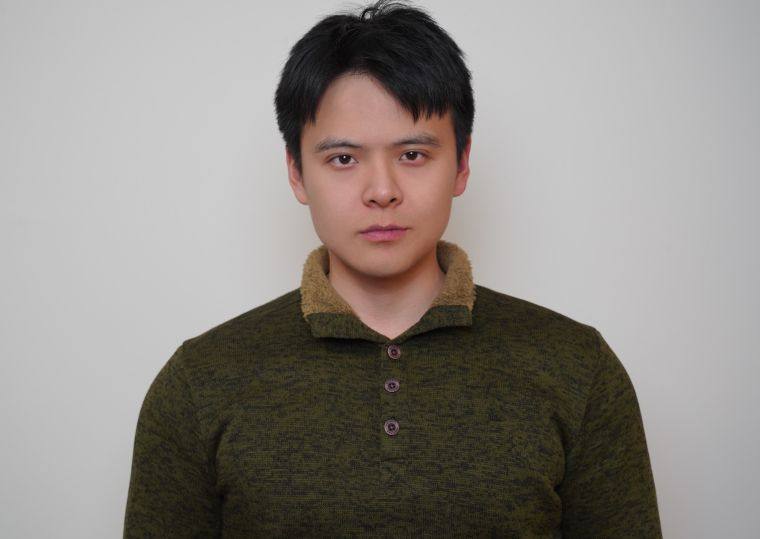
Li Zehua was born in 1995 in Pingxiang, a city in Jiangxi Province, and is known online as Kcriss Li. His birthplace is carried consistently across reference works in several languages, which cite a 2018 Sohu feature on Pingxiang natives; no source consulted for this page disputes it. In 2016 he graduated from the Communication University of China — the country's principal training ground for state broadcasting talent — and joined China Central Television, the national broadcaster, as a television presenter. When he walked into locked-down Wuhan in February 2020 he was twenty-five years old: a young man who had hosted programmes for the state broadcaster, who also ran his own YouTube channel, Weibo and Twitter accounts, published video blogs, and recorded rap music. Chinese Wikipedia today describes him as a former CCTV presenter, citizen journalist, YouTuber and researcher, with a bachelor's degree from the Communication University of China and a master's degree from the University of Rochester. The second half of that description belongs to a later life. In February 2020 only the first half existed.
His starting point matters for understanding everything that followed. Li was not raised outside the system as a dissident; he was produced by it, trained in its flagship media university and employed at its flagship broadcaster. Looking back from the United States in 2023, he told the Committee to Protect Journalists (CPJ) that he had wanted to take on the responsibility of being a journalist, that he used to call himself a journalist but had not done anything a real journalist is supposed to do, and that he felt he had to take part in the historical event unfolding in Wuhan. By the time he travelled there he had already left CCTV. Sources phrase the timing slightly differently: the China Media Project, writing on 28 February 2020, described him as a journalist who had "recently resigned" from his job as a CCTV news anchor; the Guardian and China Heritage describe him as having resigned from the state broadcaster before going to the front line as a citizen reporter; CPJ in 2023 calls him a former CCTV journalist. This page keeps those phrasings in parallel and asserts only their common core: in February 2020 he acted entirely on his own — no assignment desk, no press credentials to shelter behind, no newsroom standing behind him — with his own equipment and his own accounts.
His chosen professional ancestor was Chai Jing, the former CCTV reporter whose documentary "Under the Dome," about China's air pollution, drew more than three hundred million views online before the authorities deleted it. In the long livestreamed monologue he delivered on 26 February 2020, minutes before opening his door to the police, Li said explicitly that he had hoped to work on the front line the way Chai Jing had during the 2004 SARS fight in Beijing, and to make a film the way she had. That speech, translated in full by the China Media Project, is the single best primary document of his motives, and Section 5 of this page archives it in detail. He also quoted Lu Xun's essay on China's spine — the people who have always spoken for the people, fought tenaciously, and abandoned their bodies in search of the truth — and said he was unwilling to disguise his voice or shut his eyes and ears. Those words were not a retrospective manifesto. They were spoken with officers standing outside his door and the livestream still running, which gives them a time stamp, a setting, and an audience that no memoir could fake.
2. A Locked-Down City, a Missing Predecessor, and a One-Man Newsroom
Wuhan was sealed off on 23 January 2020. On 24 January the lawyer-turned citizen journalist Chen Qiushi arrived in the city and began streaming the hospitals, streets, and residents of the lockdown to YouTube and Twitter; on 6 February Chen disappeared, with his family and friends saying he had been forcibly quarantined, and he remained out of contact for a very long time afterwards. Every major source consulted for this page identifies Chen's disappearance as Li Zehua's immediate reason for going. CPJ's alert of 15 April 2020 records that Li travelled to Wuhan from Beijing to report on the outbreak after Chen went missing in the city in early February, citing Li's own YouTube post of 11 February explaining why he had come. The Guardian, the BBC, and China Heritage all describe him travelling to Wuhan after Chen Qiushi disappeared, hoping to pick up the trail — in Wikipedia's summary, hoping to trace the disappeared journalist. His journey, in other words, had a relay quality from the start: one recorder had been taken away, so another recorder walked in and set his camera down in the same city.
How he got in and how he lived there is documented only in outline. With the help of local people, he obtained a car and found a place to stay. Wuhan's external transport links were cut, and no source offers verifiable detail about how an out-of-town twenty-five-year-old secured housing, a vehicle, and supplies inside the sealed city; this page records that plainly: the specifics of his entry route have no public record. Sources also differ on his exact arrival. The China Media Project places him at the Baibuting residential community — a huge housing complex in Jiang'an District that had drawn attention for its mass banquet and concentrated infections — on 16 February. CPJ's timeline begins with his explanatory video post of 11 February and a community report posted on 17 February. Held in parallel, the sources support only this: he was active inside Wuhan by mid-February, his first traceable posts date to around 11–12 February, and he published continuously for roughly two weeks until he was taken on 26 February. CPJ later noted that his videos had already been viewed more than two million times in total; Reuters singled out his crematorium video, published around 20 February, as having been watched 850,000 times on YouTube — a platform blocked inside China, meaning his audience watched from outside the firewall or reached him through circumvention tools.
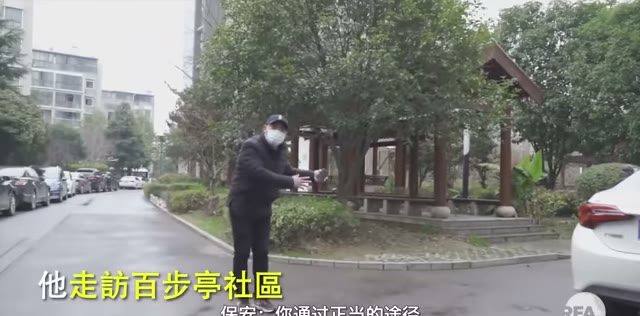
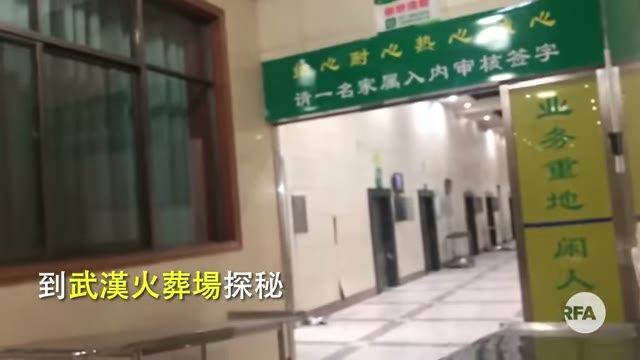
3. The Fourteen Days of Reporting: Baibuting, a Crematorium, a Railway Station Basement, a Virology Institute
Laid out item by item from the sources, Li's roughly two weeks of work inside Wuhan covered at least four subjects. First, the neighbourhood level of the lockdown. CPJ's alert records that on 17 February he posted a video saying a local neighbourhood committee had not carried out the basic countermeasures the authorities had promised, and had tried to cover up information about infected cases in the community. The Guardian's summary of his later account likewise notes that he reported on a neighbourhood committee's efforts to cover up new infections and interviewed sick residents. The China Media Project places him at Baibuting on 16 February, and Chinese Wikipedia lists Baibuting among the places he visited. Whether the committee report and the Baibuting visit were one and the same assignment is not stated by any source, and this page does not merge them: the Baibuting visit is attested by the China Media Project and Chinese Wikipedia; the cover-up allegation is attested by CPJ and the Guardian; their identity with each other is unproven.
Second, the crematorium night shift — his most widely seen report, and the visit the police later cited when they imposed quarantine on him. Its date is given three different ways by three respectable sources, and this page archives all three without merging them. The China Media Project (28 February 2020) says he livestreamed on 18 February from a crematorium in the city, reporting that porters were being hired at high wages to transport corpses. Reuters (23 April 2020) says a video he published on 20 February showed temporary porters hired to transport the bodies of people who had apparently died of the coronavirus, and that it was viewed 850,000 times on YouTube. CPJ (15 April 2020) says that on 21 February he visited a local crematorium and spoke to a porter who claimed the crematorium was hiring more workers at higher wages to transport bodies. The spread of one to three days may reflect the difference between filming, posting, and time zones; this page cannot adjudicate it and does not. The name of the crematorium is given by no source: no public record. The core fact, on which all three sources agree, is the economically eloquent detail at the report's centre — at night, temporary labour, wages above the normal rate, bodies to be moved — at a moment when official death figures were widely doubted, a hiring notice at a crematorium was a way of counting the dead by the price of carrying them, and it is not hard to see why the report travelled so far, or why it angered the authorities so much.
Third, the stranded workers. CPJ records that on 24 February Li interviewed a Chinese worker who had travelled to Wuhan for work and been stranded by the lockdown. The China Media Project records that on 25 February he interviewed migrant workers who had been forced to set up camp in the underground parking garage of Wuchang Railway Station. The dates differ by one day; the subject and setting corroborate each other, and both versions are kept. Fourth, the Wuhan Institute of Virology. CPJ's 2023 interview notes that he "even made it to" the government laboratory at the heart of speculation about the virus's origins; Chinese Wikipedia lists the P4 laboratory — the institute's biosafety level-4 facility — among his destinations. When he went, what he filmed there, and whether he entered any part of the grounds are described by no source; this page records only that he went to the area and posted related material, and goes no further. Fifth, an item this page removes: the original brief for this page listed a visit to Wuhan's Tianhe airport among his stops. No source consulted — not CPJ's two reports, Reuters, the BBC, the Guardian, the China Media Project, China Heritage, or Wikipedia in either language — mentions any airport visit. The Tianhe airport item accordingly has no public record and is not entered into his itinerary. The same applies, with the opposite geography, to the brief's claim that the second leg of his quarantine took place in Zhumadian, Henan; Section 8 corrects that error in full.
The method across these fourteen days was consistent: he did not attend press conferences; he went to a housing compound, a crematorium, a railway station basement, and the gate of a laboratory, and he interviewed committee staff, porters, stranded workers, and the sick rather than officials. He told CPJ in 2023 that he gave officials chasing reporters the slip and interviewed residents of a city of twelve million who had not been told the truth about COVID-19, finding communities frustrated by hastily imposed movement restrictions and migrant workers who could not find work. The China Media Project noted, already in February 2020, that he had reported continued harassment from local police and security guards. The following was real, and on 26 February it reached its conclusion.
4. 26 February 2020: A Thirty-Kilometre Chase, a Knock at the Door, Silence
On 26 February Li posted two livestream videos saying that state security agents were pursuing him. The first was filmed in his car: driving, he told his viewers that a white SUV was chasing him, in a stream circulated under titles amounting to an SOS. The BBC's account, as relayed by multiple outlets, puts the chase at thirty kilometres, about nineteen miles. The Guardian records that he was last seen after posting a video of being chased by a white SUV and an hours-long livestream that ended when several agents entered his apartment. Who exactly was in the pursuing vehicle he could only guess at the time; sources phrase it variously as state security agents (his own claim), the Wuhan authorities (the Guardian), and men identifying themselves as public security (the summary of his April video). Having driven back to his temporary apartment, he began the second stream: speaking to camera while knocking sounded outside, from men who said they were police. Before opening the door he spoke at length — Section 5 archives that speech — then he opened it, and the stream ended. CPJ's alert says the stream "ended abruptly with two unidentified individuals entering the apartment." China Heritage, quoting the Guardian, says at least three men entered, identifying themselves as public security. The Guardian's own phrasing is "several agents." Two, at least three, several: the three versions are archived in parallel and this page does not adjudicate between them.
One further cluster of details comes from the reporting around his livestreams: Wikipedia's synthesis of the BBC's reporting says he was supposedly taken to a police station, where he had fingerprints and blood samples taken, before being taken to an interrogation room and told he was suspected of disturbing public order but would face no penalty. That skeleton matches his own April account — police station, investigation for disrupting public order, no penalty — with the station's name and the questioning's duration set out in Section 7. The fingerprints-and-blood-samples detail is flagged here for what it is: media relay of material from his own broadcasts, not independently corroborated by a second source. After 26 February, his YouTube, Weibo, and Twitter accounts all went silent. CPJ records that he posted no videos and made no posts on Weibo or Twitter from that day forward. A daily video journalist, taken mid-livestream, followed by fifty-six days of total silence across every channel he owned: that silence, and nothing else, is what the world knew about Li Zehua between 26 February and 22 April 2020.
One contrary rumour from the first days of the disappearance must be archived alongside the silence, because later retellings have occasionally hardened it into fact. Radio Free Asia reported on 28 February that Li might have been released that day and placed under house arrest, or had returned to his hotel; French Wikipedia still carries the item with the note that it was contradicted by multiple reports, including National Review's observation on 19 March that no one had heard from Li since 26 February. This page's ruling: the 28 February "released/returned to hotel" story is a single uncorroborated report, and it conflicts directly with Li's own later account of an unbroken sequence running from the police station on 26 February through two successive quarantines ending 28 March. It is archived as a rumour that circulated at the time, unverified and inconsistent with the subject's own testimony, and it is not accepted as fact. The distinction matters, because writing 28 February down as a release date would cut his confinement in half at its midpoint and dissolve a continuous detention into two unrelated episodes — precisely the kind of quiet falsification an archive exists to prevent.
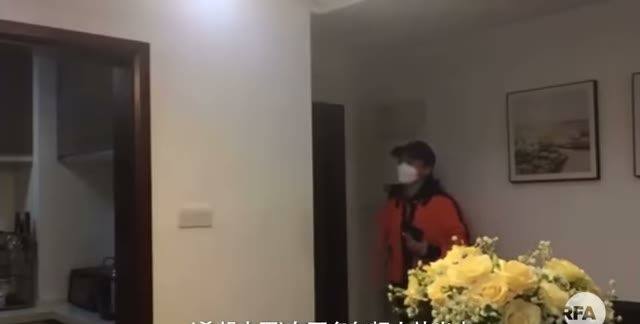
5. Before Opening the Door: A Speech Preserved in Full
The second livestream of 26 February ended with Li speaking for some minutes inside his apartment — to his audience, and through the door to the men outside it — before he opened the door. The China Media Project published a complete English translation of that message on 28 February 2020 under the title "Opening the Door," and this page summarises its substance from that translation and from Chinese-language relays, in paraphrase rather than extended quotation. He began by saying he admired the men who had hunted him down — admired the diverse methods they had used in broad daylight to pinpoint his position so accurately, and the way they had pressured his friend into bringing them to him. He then stated that everything he had done since arriving in Wuhan accorded with the Constitution and laws of the People's Republic of China; that at every place designated a danger area he had worn full protective gear — protective jacket, goggles, disposable gloves, disinfectant, all in ample supply; that the 3M mask he wore had been bought for him by a friend who supported him; that he was physically fine and strong, and that if he registered a temperature it could only be because the gear was stuffy. He said he realised it was now highly unlikely that he would not be taken away and quarantined.
He then laid out his clear conscience: toward himself, toward his parents, toward his family, toward the Communication University of China from which he had graduated and the journalism profession he had studied, and toward his country, which he said he had done nothing to harm. He said that he, Li Zehua, twenty-five years of age, had hoped to work on the front line like Chai Jing — like her reporting during the 2004 SARS fight in Beijing, or like "Under the Dome" in 2016, the film that was completely blocked online. He reminded the men outside the door of the Lu Xun essay they would all have read in middle school, "Has China Lost Its Confidence?", and of its line about those who have always spoken for the people, fought tenaciously, and abandoned their bodies in search of the truth — in such people, Lu Xun wrote, we discover China's spine. He said he was not willing to disguise his voice or shut his eyes and close his ears; that this did not mean he could not have lived a happy, comfortable life with a wife and children — of course he could — and that the reason he had resigned from CCTV was that he hoped more young people, more people like him, could stand up. He was careful to add that this was not about uprising, that saying a few words does not amount to opposing the Party, and that he knew "our idealism was already annihilated in spring and summer that year" — 1989 — and that sitting quietly in protest no longer accomplishes anything. He said that today's youth, swiping through Bilibili, Kuaishou, and Douyin, probably have no idea what happened in the past and think the history they have is the history they deserve. He said everyone is like Truman in "The Truman Show": once you catch the strange radio frequency and find the exit door, you walk out and can never go back. He ended by saying he understood the men outside the door and the mission they had been given, but that he also sympathised with them, because when you support a cruel order unconditionally and without reason, the day will come when the same cruel order falls on your own heads. Then he said he was ready to open the door.
The archival value of this text lies in its completeness and its immediacy. It is not a memoir polished after the fact; it is what the subject said minutes before being taken, on camera, addressed partly to the officers who were about to take him, and it was translated and archived by an independent outlet within forty-eight hours. It establishes three things at once: why he resigned (so that more young people might stand up), why he did not run (he maintained that everything he had done was constitutional and lawful, and that his protective equipment was complete), and how he understood the men outside (executors of an order that would one day fall on their own heads). Interviewed in the United States in 2023, he told CPJ what had been in his mind at that moment on 26 February: he felt very disappointed and sad; the feeling recalled his travels in North Korea; his thought was, in effect — come on, we are in a so-called democratic country in the twenty-first century, what have I done, am I a criminal? He added that for all his courage he was trembling, that in that fear there was total disappointment with the Chinese state, and that he thought the first half of his life had been terminated. The 2020 livestream and the 2023 recollection corroborate each other, and this page preserves them side by side.
视频证据Video Evidence
以下为李泽华2020年2月26日被追截前的最后一次直播。Li Zehua's final livestream, 26 February 2020.
李泽华被国保追截前的最后一次直播|2020年|中文原声,无字幕轨Li Zehua's final livestream before state security closed in | 2020 | In Mandarin; no subtitle track
6. Fifty-Six Days Missing: Questions from Outside, Silence from the Authorities
From the interruption of the livestream on 26 February to the release of his comeback video on 22 April, Li Zehua was missing for fifty-six days. The public record of that period contains exactly three kinds of material: questions from news organisations and press-freedom groups, appeals from a foreign politician, and uninterrupted official silence. The International Federation of Journalists (IFJ) issued a statement on 11 March 2020, republished by IFEX on 15 March, saying that the number of citizen journalists to have disappeared in China in the previous month after reporting on COVID-19 had risen to at least three — Fang Bin, Chen Qiushi, and now Li Zehua — and urging the Chinese authorities to provide transparent information on their whereabouts and grant their immediate release. The statement noted specifically that Li had uploaded video of himself being chased and arrested on 26 February and had not been heard from since. The IFJ had already issued a statement on Fang Bin and Chen Qiushi on 11 February; Li was the third name added to the list. CPJ tracked the case throughout the disappearance and formalised it in an alert on 15 April 2020, "Chinese journalist Li Zehua missing in Wuhan since late February," which set out his reporting and his disappearance and recorded, in one bleak sentence, that CPJ had called the Wuhan Public Security Bureau for comment but no one had answered. No source consulted for this page records any public response about Li's individual case from the Wuhan police, the Wuhan municipal government, or China's foreign ministry: an official response to his case has no public record.
On the political track, United States Representative Jim Banks of Indiana, a Republican, called on 31 March 2020 for the US State Department to urge China to investigate the disappearance of the three journalists — Reuters dates the call to 31 March, while Chinese Wikipedia dates his request to 1 April; both dates are archived here in parallel, and the substance is not in dispute: Banks asked the State Department to press Beijing over the disappearances of Li Zehua, Chen Qiushi, and Fang Bin. Whether any other government or international body publicly raised Li's individual case during the fifty-six days is not established by the sources consulted, and this page does not invent further interventions. One further asymmetry of the period is worth recording. News of his disappearance spread widely in the English-language world — the Guardian was already reporting the chase on 1 March under a headline built from his own words, "They're chasing me" — while inside the Chinese internet his Weibo material was deleted and his streams removed, leaving the domestic public with scattered screenshots and word of mouth. That asymmetry was built into his choice of platform from the beginning: YouTube is blocked in China, so his "live" presence never existed within the domestic platforms' power to preserve it in the first place.
One date anchor closes this section. When Li resurfaced on 22 April, the other two men had not. Reuters' report of 23 April 2020 states explicitly that Chen Qiushi and Fang Bin, the other two citizen journalists, had not resurfaced publicly. At that moment, then, of the three disappeared Wuhan reporters, Li was the only one back in public view — and he returned in a video whose tone every observer found transformed. Why he was the first out, and why the video sounded the way it did, is the subject of the next section. This page establishes only the timeline here and pre-judges nothing: of the three men missing as of 26 February, Li resurfaced on 22 April 2020; Chen Qiushi did not reappear even indirectly until late September 2021, when a message was posted through a friend's account (see this site's Chen Qiushi page); Fang Bin was not publicly reported released until early May 2023, after a release dated 30 April 2023 (see this site's Fang Bin page). Their forms of custody, durations, and outcomes were wholly different, and any account that merges the three men's fates into one story falsifies all three.
7. The Video of 22 April 2020: His Own Account, 2020 Version
On 22 April 2020 Li posted a video simultaneously to YouTube, Twitter, and Weibo, titled, in his own bilingual caption, "I'm Kcriss, here is something about me since February 26th." According to Reuters, he said the video had been recorded on 16 April, some three weeks after his last quarantine ended. Its contents were summarised consistently by Reuters, the BBC, the Guardian, CPJ, and China Heritage, and the factual spine is as follows. On 26 February he was taken from his temporary apartment in Wuhan to a police station and investigated on suspicion of disrupting public order. The questioning and statement-taking lasted nearly twenty-four hours. The station chief then told him he would not be charged and would receive no penalty, but that because he had been to high-risk areas such as a crematorium, he would have to undergo quarantine. Police required him to hand his electronic devices to a friend. He was then quarantined in a Wuhan hotel until 14 March. On the morning of 14 March he left the Wuhan quarantine site and was escorted to his hometown, where he was quarantined for a further fourteen days. The end of quarantine, by his account, was 28 March. Since then, he said, he had been with his family, planning his development for the year. Throughout, he said, the police had treated him well: he was served three meals a day, monitored by security guards, able to watch CCTV's evening newscast, and — in the phrase the Guardian quoted — the police "acted civilly and legally, making sure I had rest and food. They really cared about me."
The name and district of the police station are given by no English-language source, which says only "a local police station." Chinese Wikipedia supplies the specific name: the Badajia police station in Wuhan's Qingshan District, recording that he was questioned and gave a statement until the following evening, that the station chief then told him there would be no punishment but that quarantine was required because he had visited high-risk epidemic areas, that all his electronic devices were confiscated and he was taken to a quarantine site, and that on the morning of 14 March staff of the Qingshan District Health Commission escorted him to a quarantine site in his hometown. This page's handling of that cluster of detail is explicit: the station name and the health-commission escort are carried by Chinese Wikipedia's account, ultimately derived from his own video, and have not been corroborated by a second independent source; they are archived with that provenance attached, and readers citing them should carry the caveat with them. By contrast, the "no penalty" element is attested by his own video as relayed by the Guardian, Reuters, and the BBC alike, and can be stated firmly: after the questioning, the police told him expressly that he would not be punished and not charged, and the sole stated basis for the month of confinement that followed was "quarantine."
The video's tone is the anomaly every account remarked on. The Guardian wrote that Li's tone and comments, "neutral and patriotic, were markedly different from his previous videos." China Heritage's editor, Geremie Barmé, noted the somewhat mannered, staged-looking scenes of the former presenter brushing his teeth and working out, and the voiceover praising his captors' civilised and legal behaviour — but also noticed how the video ends. After all the praise, Li recites, in his trained, sonorous broadcaster's voice, a line from the "Instructions of Yu the Great," a chapter of the Book of Documents: the mind of man is restless, its affinity for the right way is small; be discriminating, be undivided, and sincerely hold fast to the mean — ending on the four characters yun zhi jue zhong, "hold fast to the mean." China Heritage's reading, offered at the time, is that the classical line functions as a statement of self-exhortation: that he should remain faithful to his principles without fear or favour. CPJ, writing in 2023, dispensed with delicacy and described the April video as "obviously staged," and — more importantly — carried Li's own later explanation: the authorities had wanted him to praise them, and he had reduced that element to the minimum; and after his release a provincial-level police chief had contacted him asking him to post something further, because many people were concerned about his whereabouts, and he had refused — "I couldn't do it." Read against that 2023 evidence, the correct evidentiary treatment of the April 2020 video is twofold. Its statements of gratitude toward the police were made under detention's shadow and must be discounted accordingly. Its factual timeline, however — police station, nearly twenty-four hours, no charge, two successive quarantines, out on 28 March — is corroborated in its skeleton by his free-environment retelling three years later, and is accepted on this page as the spine of events.
8. Two Versions of the Quarantine, and the Hometown Question: Correcting the Zhumadian Error
This section exists to handle, in the open, the three points on which this case is most often written wrong: how long the confinement lasted in total, how long each leg of it lasted, and where the second leg took place. First, the 2020 version. By his comeback video, he was quarantined in a Wuhan hotel until 14 March — counting from 27 February, roughly sixteen days — then quarantined in his hometown for a further fourteen days, ending 28 March. Now the 2023 version. Speaking to CPJ in the United States, he said: they detained him for around thirty-five days; the so-called quarantine was supposed to be fourteen days; he was quarantined for sixteen or seventeen days in Wuhan; he was then sent to his hometown — CPJ's editors gloss this, in brackets, as Nanchang city, Jiangxi Province — and quarantined again for sixteen days. The two versions are archived side by side, unmerged. Wuhan leg: about sixteen days in the 2020 version (ending 14 March), sixteen or seventeen days in the 2023 version — broadly consistent. Hometown leg: fourteen days in 2020, sixteen days in 2023 — a two-day discrepancy. Total: about thirty-one days from the night of 26 February to 28 March in the 2020 framing, "around thirty-five days" in the 2023 framing. The differences may come from memory or from different start points; this page cannot adjudicate them and does not. What both versions jointly establish is the point that matters: a nominal fourteen-day public-health measure was executed, in his case, as two back-to-back confinements in two provinces totalling more than a month, with no free day in between, and with the second confinement imposed not in the epidemic city of Wuhan but in his home province, among his own family — a geography in which "quarantine" had plainly stopped being about infection control and become a mechanism for removing a reporter from his story and delivering him to local custody.
Second, the hometown. The original brief for this page described his ancestral home area as Zhumadian, Henan, and placed the second quarantine there. Research for this page establishes that this is wrong, and the correction is recorded here rather than silently made. The evidence chain is as follows. First, his birthplace is Pingxiang, Jiangxi — carried consistently by a 2018 local feature and by Wikipedia in several languages. Second, CPJ's 2023 interview, relaying his statement that he was sent to his "hometown," adds an editorial bracket identifying that hometown as Nanchang city, in Jiangxi Province. Third, the uniform phrasing of the 2020 sources is that the second quarantine was in his hometown "in a different province" from Hubei — a description that fits Jiangxi; and no source consulted — not Reuters, the BBC, the Guardian, CPJ, Radio Free Asia, the China Media Project, or China Heritage — mentions Zhumadian or Henan in connection with Li Zehua at all. Fourth, Chinese Wikipedia says only "hometown," naming no city. This page's conclusion: the public record supports only "his hometown in Jiangxi" for the second quarantine site, with CPJ's editorial note giving Nanchang and his documented birthplace being Pingxiang; both are retained in parallel, and no single city is asserted. "Zhumadian, Henan" has no public source behind it; it is deleted from this site's archive as of this page, with the deletion recorded here. Archival work's worst failure is not missing information but engraving an unsourced place-name into a timeline where later pages copy it forward; this page would rather print "the city differs across sources" than print a Zhumadian that no source contains.
Third, the conditions and the luck. By his 2020 account: three meals a day delivered, security guards watching, CCTV news available, devices surrendered to a friend. By his 2023 supplement: the April video's praise had been solicited and minimised, a further post had been requested and refused, and after release "secret police" were assigned to monitor him. On the question of physical mistreatment, both his 2020 and his 2023 accounts agree that he was, in his word, lucky — he was not treated badly. But in 2023 he added the sentence that converts that luck into evidence about the system: he did not think the authorities would treat others the same way; he believed what protected him was that he had livestreamed the whole process of his detention, and that he belonged to the first group of reporters, like Chen Qiushi, who entered Wuhan at the very beginning, when the police had no experience of dealing with such cases — whereas, he said, journalists who went to Wuhan after him were arrested, naming Zhang Zhan. This page records that judgement as the testimony of the subject, clearly labelled as such, rather than as its own independent conclusion. The comparison it invites is nonetheless a matter of public record: Zhang Zhan, who reported from Wuhan in the spring of 2020 and was seized on 14 May, was sentenced that December to four years in prison for "picking quarrels and provoking trouble" (see this site's Zhang Zhan page), while Li, seized in February, was never charged at all. The difference lies not in the conduct but in the timing — and in how much of the taking happened on camera.
9. April 2020 to August 2021: Surveillance, Silence, and a Quiet Exit
After the video of 22 April 2020, Li Zehua vanished from public view a second time, this time for nearly three years. Everything known about that interval comes from his own 2023 account in the United States; there is no contemporaneous public record, and this page archives the material as testimony, item by item. By his account to CPJ: after his release, the authorities assigned "secret police" to monitor him every now and then — a couple of times a month at first; as time went on, they came to his house to visit his parents once a month. He said the police know how to control a person's network, family, and everyone surrounding them in order to control the person. His father runs a small business, a dental clinic, and at the very beginning some officers tried to interfere with the business. But, Li said, his parents did not really care about what he had been doing, and precisely because they were not concerned, the police could not leverage the relationship between him and his parents — in his formulation, the less his parents were concerned about him, the fewer safety issues there were. Before he left China, only his parents and his closest friends knew what he was planning. He pretended to be struggling to make a living doing low-end jobs; when police reached out to him he acted as though he were out of his mind, and began speaking dialect instead of the perfect Mandarin of his broadcasting years — a performance of incapacity intended to convince them he would never go abroad. Once he had his visa from the embassy, he said, he simply booked a ticket, walked through customs, and came out.
Three archival cautions attach to this account. First, the exit date: CPJ's editorial narrative states it plainly — in August 2021 Li made it out of China to study at a college in Rochester, New York. That date rests on CPJ alone among the sources consulted, but it is consistent with the master's graduation he reported in 2023, and this page accepts it with its source named. Second, the manner of exit: by his own account it was entirely lawful — a student visa obtained from an embassy, a normally booked ticket, a normal customs passage — preceded by a performance designed to lower the watchers' estimate of him. That combination makes his case genuinely unusual: he is one of very few people known to have been seized by name by the security apparatus over Wuhan reporting who nonetheless left China legally some eighteen months later, with no criminal record and no publicly recorded exit ban standing in his way. He told CPJ he was himself surprised to have been allowed to leave, and offered his own explanation: the bureaucratic system was, in his words, stupid. Third, the silences inside the interval: whether he posted anything on domestic platforms during those sixteen months, whether he was summoned or warned again, and what formal status, if any, attached to his surveillance are matters with no public record, and this page does not speculate. The "planning my development for this year" of the April 2020 video found its answer in August 2021: he would leave, and he would study something with no connection to journalism — Section 10 takes up that turn.
His parents' situation during this period is the whole of this case's family-impact record, and it rests entirely on his 2023 testimony: officers attempted to interfere with his father's small dental clinic at the beginning, and police later settled into a rhythm of monthly visits to his parents' home. His parents remained in China after his departure. Whether the visits continued after August 2021, and how the clinic fared, have no public record. A boundary against embellishment is also drawn here: beyond his Jiangxi birth and his father's dental clinic, no reliable public source consulted for this page documents his family members, their occupations, or their assets, and various embellished versions of his family background circulating on overseas social media are not carried. An archive page that prints only two facts about a family does so because only two facts are sourced, not because the family's experience was small.
10. The Rochester Years: From News Anchor to Cognitive-Science Researcher
Arriving in Rochester in August 2021, Li enrolled at the University of Rochester. Radio Free Asia's report of 23 January 2023, published on the third anniversary of the Wuhan lockdown, described him as studying in the university's science faculty. In CPJ's interview of March 2023 he said he had just graduated from the University of Rochester, was working at an artificial intelligence laboratory to gain experience, and would probably apply for a PhD programme, adding that he wanted to contribute in a practical way and to find a way to fight digital totalitarianism. The University of Rochester's Audio Information Research Laboratory listed a Zehua Li among its 2023 master's graduates — a detail this page knows through Wikipedia's citation of the laboratory's page and flags as relayed, not independently inspected. Chinese Wikipedia currently gives his credentials as a University of Rochester master's graduate and doctoral student, and states that he later entered the university's Brain and Cognitive Sciences PhD programme and joined its Computational Neuroscience of Audition Laboratory; English Wikipedia further lists him as first author of a paper at Interspeech 2024, the annual conference of the International Speech Communication Association. These later academic details are archived at the evidentiary level of "Wikipedia, citing laboratory listings" — recorded, attributed, and not upgraded into independently verified fact.
The grading in this section is deliberate and deserves one plain statement. The core of the Rochester story — arrival in August 2021, study at the University of Rochester, his own statement in March 2023 that he had graduated with a master's degree and was working in an artificial intelligence laboratory — rests on CPJ's reporting and RFA's reporting, and this page accepts it. The finer grain — the named laboratory, the doctoral programme, the conference paper — rests on institutional listings as relayed by Wikipedia, and this page labels it accordingly. No official degree announcement was directly inspected in the research for this page. The trajectory itself, however sourced, has a shape worth noting without embellishment: a voice trained to read state news copy, then used to livestream a sealed city, became in exile an object of laboratory study — speech, hearing, and the neuroscience of audition. And the silence is part of the record too: after 2023 he gave no further long interview that this page can find, resumed nothing resembling his old publishing rhythm, and, as of this page's archiving in November 2026, his most recent publicly traceable appearances remain the two interviews of early 2023 and the 2024 author listing. His current immigration status, employment, and whether he remains in doctoral study have no public record. This page records the silence; it does not interpret it for him.
11. Speaking Again in 2023: What the RFA and CPJ Interviews Established
On 23 January 2023, the third anniversary of the Wuhan lockdown, Radio Free Asia published an exclusive interview with Li Zehua — his first public appearance after nearly three years of silence. As summarised by China Heritage and Wikipedia, he recounted the events leading to his arrest in February 2020 and restated his views on the lack of freedom for Chinese citizens and his disdain for the totalitarianism and tyranny of the Chinese Communist Party. A detail supplied two years later filled in the interview's backstory: in a May 2025 article in the New York Times, RFA's president Bay Fang recalled that in February 2020 the RFA reporter Jane Tang, then investigating China's cover-up of the new disease, had received a panicked text from a source in Wuhan — "They are following me," "I'm too scared to move" — and that shortly afterwards Li was arrested; Tang's source was Li himself. He had, in other words, sent a distress signal to a foreign-media reporter before he was taken, which is part of why his disappearance was locked onto by international media from the first hours. On 9 March 2023 CPJ published Iris Hsu and Robert Mahoney's long interview with him, "Chinese journalist held for reporting on Wuhan COVID outbreak wishes he'd done more" — the fullest first-person account of his case in existence, and the source of many particulars archived on this page: the roughly thirty-five days of confinement, the surveillance visits, the performance of incapacity before his exit, his father's clinic, and his verdicts on the charge and on Chinese media.
His answers to CPJ's key questions are archived individually here, in paraphrase. On the "disrupting public order" investigation: he called it stupid and hilarious, and said the authorities wanted to be seen as following legal process while in fact doing whatever they wanted. On the state of Chinese media: there is no freedom, he said; there is no media; there is only propaganda. On what open media would have meant for the epidemic: the more media freedom and freedom of speech, the less the disease would have spread; the disease was a scientific problem, and the political factors could have been removed from the scientific discussion. On regret: his regret was that he had not been better prepared and had not revealed more factual information about what the authorities were doing; better prepared, he might have let more people understand how important the freedom to spread information is. On returning to China: he did not know; it was sad; officials had threatened him although he had done nothing criminal, and totalitarianism and authoritarianism meant that people like him could not go back. Set beside the "neutral and patriotic" voice of April 2020, these five positions complete an evidentiary arc: the distance between what the same man said under surveillance and what he said in freedom is itself the cleanest measurement of what the surveillance was for.
In June 2023, CPJ's Robert Mahoney placed Li's position in a one-paragraph census of the Wuhan reporters in an essay on the lingering legacy of China's COVID censorship: Chen Qiushi was free, having emerged after twenty months, and remained largely silent inside China; Li Zehua had fled to the United States after his release; Fang Bin had been unexpectedly released that May. That single paragraph, three fates in three clauses, is the seed of the next section's fuller comparison. After 2023, no further long interview with Li has been found in the research for this page, and his YouTube and social accounts have drawn no continuing public coverage. This page therefore closes his public timeline in 2024, with the author listing noted in Section 10, and asserts nothing beyond it.
12. Strictly Separate: Li Zehua Is Not Chen Qiushi, Fang Bin, or Zhang Zhan
This section is one of the reasons this page exists. At least four citizen journalists were disappeared out of Wuhan in the first half of 2020: Chen Qiushi on 6 February, Fang Bin on 9 February, Li Zehua on 26 February, and Zhang Zhan on 14 May. Overseas coverage habitually groups them as "the Wuhan citizen journalists," which is fair as a collective label and false as a biography: their legal treatment and their subsequent lives diverge so sharply that merging them corrupts all four records. Chen Qiushi, the lawyer who arrived on 24 January and disappeared into forced quarantine on 6 February, remained out of contact until a message surfaced through a friend's account in late September 2021; he has since lived inside China in near-total public silence, and no judgment in his case has any public record — his full file is on this site's Chen Qiushi page, and this page goes no further into it. Fang Bin, the Wuhan clothing businessman who filmed hospitals and a crematorium and was seized on 9 February, vanished for more than three years and was not publicly reported free until early May 2023, following a release dated 30 April 2023; subsequent reporting holds that he had been sentenced to three years for "picking quarrels and provoking trouble" — his full file is on this site's Fang Bin page, to which this outline defers. Zhang Zhan, the Shanghai lawyer and citizen journalist seized in Wuhan on 14 May 2020 and taken back to Shanghai, was sentenced on 28 December 2020 by the Pudong New Area People's Court to four years in prison for "picking quarrels and provoking trouble," and conducted long hunger strikes in custody that gravely damaged her health — her full file is on this site's Zhang Zhan page.
Li's differences from the other three can be stated as a table in prose. Date taken: 26 February, the latest of the February three. Form of custody: he is the only one told expressly, by the detaining authority itself, that there would be no penalty and no charge. Duration: roughly one month for Li, against periods measured in years for Fang Bin and Zhang Zhan and in long months of incommunicado quarantine for Chen Qiushi. Legal instruments: no arrest, indictment, or judgment in Li's case has any public record at all; Fang Bin and Zhang Zhan received criminal sentences. Exit: Li is the only one of the four who subsequently left China lawfully to live and study abroad. Voice: Li spoke fully and critically in exile in 2023; Chen has remained silent inside China; Fang Bin has kept a low profile since release; Zhang Zhan's post-release circumstances are a separate record again. The four share exactly one thing: each of them picked up a phone in Wuhan in 2020 and recorded the same catastrophe, and each was processed by the same machinery at a different setting. To write that "three of the journalists were sentenced" is to falsify Li's case; to project Li's one-month quarantine and eventual Rochester doctorate onto Fang Bin or Zhang Zhan would be a second injury to people who served years. This site's four pages cross-reference one another and substitute for none, and readers citing any of them should hold the name and the dates firmly together.
One collective fact, finally, belongs on the record without rhetoric. Li entered Wuhan because Chen Qiushi had disappeared; Chen's friends had published his disappearance in turn; Fang Bin had livestreamed the police at his own door before he was taken; and Zhang Zhan entered Wuhan when all three of the others were already gone. The four of them walked in one after another, each knowing the previous one's fate. This page declines the available grand words and simply lays the four lines side by side: Chen arrived 24 January, disappeared 6 February. Fang disappeared 9 February. Li arrived in mid-February, disappeared 26 February. Zhang disappeared 14 May. A reader who finishes those four lines does not need an archivist to add a comment.
13. International Response and Institutional Context: How "Quarantine" Became a Detention Tool
Li's place in the international press-freedom record is fixed by three documents: the IFJ statement of 11 March 2020, CPJ's missing-person alert of 15 April 2020, and CPJ's interview of 9 March 2023. Their common move is definitional: all three treat the case as a journalist taken by the authorities for his reporting, not as a traveller undergoing medical observation. The IFJ framed the disappeared citizen journalists as a rising count — at least three — and demanded transparent information and immediate release. CPJ framed him as "missing," and recorded its unanswered call to the Wuhan Public Security Bureau. CPJ in 2023 went further, calling the April 2020 comeback video obviously staged and the whole episode a detention by the authorities. Representative Jim Banks' request that the State Department press for an investigation, archived in Section 6, is the case's only public action by a foreign politician. Beyond those, whether Human Rights Watch, Amnesty International, or US State Department human-rights reporting named Li individually — as distinct from addressing the Wuhan citizen journalists as a group — was not verified document by document in the research for this page, and this page therefore states only what it verified: group-level condemnation was broad, and the individually naming documents are the IFJ's and CPJ's. No organisation's case-specific statement is listed here on credit.
Institutionally, the case is a clean specimen of a low-cost suppression technique available under emergency public-health powers. It requires no case filing, no procuratorate, and no court: a single sentence — you have been to a high-risk area — suffices to place a person in a hotel room under security guards, strip him of his communication devices, transfer him across a provincial border, and place him in a second room, with the total duration assembled at the executors' discretion (fourteen nominal days becoming, in his account, about thirty-five), and with no criminal file created that any lawyer could later demand to read. If the subject afterwards wishes to complain, there is no document bearing the word "detention" for him to complain about. The design intent is visible in the very moment the police told him there would be no penalty: a penalty leaves a record, quarantine leaves none; a charge can be defended against, quarantine cannot. His 2023 verdict — they wanted to be seen as following the legal process, but were actually just doing whatever they wanted — is the subject's own concise footnote to that technique. This page also records the contrast that completes the institutional picture: in the same year, for materially similar reporting from the same city, Zhang Zhan received a formal criminal judgment and four years. A machinery that answers one reporter with a month of nameless quarantine and another with a four-year sentence — the variables being the month of the seizure, the scale of attention, and the apparatus's accumulated experience — exhibits an arbitrariness that is itself the most important institutional fact this case preserves.
14. Verification and Sources: How This Page Handled Conflicting Accounts
The sources for this page are graded as follows. First rank, the subject's own testimony: his comeback video of 22 April 2020 (as relayed by Reuters, the BBC, the Guardian, CPJ, and China Heritage); his pre-arrest livestream monologue of 26 February 2020 (translated in full by the China Media Project); his Radio Free Asia interview of January 2023; and his CPJ interview of March 2023. Second rank, press-freedom organisations' documents: CPJ's alert of 15 April 2020 and the IFJ statement of 11 March 2020 as republished by IFEX. Third rank, wire and newspaper reporting: Reuters' dispatch of 23 April 2020; the Guardian's reports of 1 March and 22 April 2020; the BBC's report of 23 April 2020. Fourth rank, scholarly and cultural journals: China Heritage's "Holding Fast" of 23 April 2020 and the China Media Project's "Opening the Door" of 28 February 2020. Wikipedia, in English and Chinese, was used only as an index of leads for cross-checking and never as the sole source for a key fact; every detail resting solely on a Wikipedia relay — the Badajia police station's name, the University of Rochester laboratory's graduate listing, the Interspeech 2024 authorship — is flagged as relayed and unverified wherever it appears on this page.
Six clusters of conflicting claims are preserved on this page in parallel, unmerged, and are summarised here. One, the crematorium report's date: 18 February (China Media Project), 20 February (Reuters), 21 February (CPJ). Two, the Wuchang Railway Station interview's date: 24 February (CPJ), 25 February (China Media Project). Three, the number of men who entered his apartment: two (CPJ), at least three (China Heritage quoting the Guardian), several (the Guardian). Four, the length of the second quarantine: fourteen days (his 2020 account), sixteen days (his 2023 account), with the 2023 total given as around thirty-five days. Five, the hometown city: Nanchang, Jiangxi (CPJ's 2023 editorial bracket), against a documented birthplace of Pingxiang, Jiangxi, with the 2020 sources saying only "hometown, in a different province" — this page asserts no single city. Six, the date of Representative Banks' appeal: 31 March (Reuters), 1 April (Chinese Wikipedia). Two unsourced claims are deleted on this page, with the deletions recorded. First, "the second quarantine took place in Zhumadian, Henan": no consulted source contains it, and it conflicts with his Jiangxi birth and CPJ's Nanchang note — deleted, with this note as its trace. Second, "he visited Wuhan Tianhe International Airport": no consulted source contains it — deleted. The page's several "no public record" notations — the specifics of his entry into Wuhan, the name of the Wuhan quarantine hotel, the name of the crematorium, any official response to his individual case, his circumstances after 2024, his parents' situation after his departure — are findings of the research, not omissions.
A final note on boundaries. The complete files on Chen Qiushi, Fang Bin, and Zhang Zhan live on their own pages on this site; the comparison in Section 12 draws only on the outlines in published reporting, and where a dedicated page is updated, the dedicated page governs. For Li Zehua himself, this page stops where public sources stop, and does not track, solicit, or speculate about his private life in exile. The respect an archive owes its subject is threefold: state clearly what is known, mark plainly what is not, and correct openly what was wrong. Section 8's public correction of the Zhumadian error is this page's compliance with that rule, performed in the open rather than by silent edit.
15. Our Take
Our Take is confined strictly to the facts of this case. First, the label must be exact. Li Zehua was not a "sentenced journalist," and he was not a "released suspect" either: he was a reporter taken away on camera, told expressly that there would be no penalty, and then confined for roughly a month under a public-health label — no warrant, no charge, no court, no file. To inflate his case into a prison sentence is exaggeration; to describe it as cooperation with epidemic control is whitewash; both are false. The true form lies between those poles and is more instructive than either: a detention that leaves no dossier, answers to no judge, and has no built-in ceiling can perform every function of arrest — removal from the story, interrogation, cross-provincial transfer, and long surveillance afterwards — while remaining, on paper, a health measure. Second, the most substantial documents this case leaves behind are not any newsroom's reports but the subject's own two utterances: the monologue delivered to the door on 26 February 2020, with its Lu Xun quotation and its Truman Show exit, and the distance between the April 2020 video's praise of his captors and the 2023 verdict from Rochester — there is no freedom, there is no media, there is only propaganda. That distance, measured in one man's voice, is the calibration scale of the speech environment he reported from. Third, this case carries a working lesson for anyone who cites it: its second quarantine acquired, in second-hand retelling, a place-name in the wrong province, and only source-by-source checking kept that error out of this site's timeline. Cite this case from CPJ and Reuters, not from retellings of retellings. Fourth, the four-line chronology of Section 12 stands: Wuhan in 2020 was not short of witnesses; its witnesses were processed one by one. Li Zehua's outcome was the "lightest" of the four, and the lightest outcome still comprised some thirty-five days of uncharged confinement, nearly two years of surveillance visits to his parents' home, pressure on his father's clinic, and an exit from his own country achieved by feigning incapacity in dialect. A system under which an ordinary journalist must perform madness to earn a plane ticket out has no claim to have treated him leniently. This page is filed in this site's 2020 Wuhan citizen-journalist series alongside the separate pages for Chen Qiushi, Fang Bin, and Zhang Zhan — cross-referenced, never merged, each standing as its own evidence.