
第138案 | 程佩明Case 138 | Cheng Peiming
程佩明,1965年8月生于黑龙江鸡西,1998年3月经母亲介绍修炼法轮功,父母与两个妹妹同为学员。1999年镇压开始后,他先后五次被抓:1999年10月初在山东即墨被抓、绝食两日获释,儿子被学校开除;同年10月20日与2000年新年两次赴天安门上访被抓(第二次为全家五口);2001年5月在鸡西被抓后自述遭约四十小时折磨、关押一年;2001年12月被判刑八年(中方调查文章作2002年),2002年4月入哈尔滨监狱,2004年7月1日转大庆监狱,7月8日他名列三十名学员联署控告哈尔滨监狱的名单。2004年11月16日,他被送大庆市第四医院接受左侧开胸手术——手术存在三方无争议,争议在诱因、同意与内容:其2024年发布会版本称无病被送医、拒绝签字后被六名狱警按住强制麻醉;其较早书面自述则承认事发前在绝望中吞下数枚金属钉、昏厥后醒来已被开刀;中方2024年调查文章称其吞下10厘米铁钉与墙纸刀片、妹妹程佩凤签署同意书、手术仅为探查取异物、未伤肝肺、疤痕20厘米。其抵美后九项影像检查经麦吉芬、斯特朗、丁楷庭等具名专家解读,称肝脏左外叶(第二、三段)缺失并伴代偿肥大、左肺下叶至少一半缺失、形态符合外科切除;影像不能证明切除年份、场合与组织去向。2006年3月2日他再入大庆龙南医院,3月3日凌晨经消防通道逃脱,此后流亡九年,2015年抵泰国,经聂森与前助理国务卿德斯特罗等人营救,2020年7月抵美。2024年7月3日与8月9日,他在华盛顿两次公开展示35厘米疤痕作证,《每日电讯报》《外交家》、BMJ等报道,倡导组织称其为已知首位强摘器官幸存者;中方随即以长篇调查全面否认。本页按本人证词、医学影像、倡导组织说法、官方说法四层分列存档,证据逐项分级,不作单方定论。Cheng Peiming was born in August 1965 in Jixi, Heilongjiang, and began practicing Falun Gong in March 1998, introduced by his mother; his parents and two sisters also practiced. After the suppression began in 1999 he was seized five times: taken in Jimo, Shandong, in early October 1999 and released after a two-day hunger strike, his son expelled from school; seized at Tiananmen Square on 20 October 1999 and again at the Lunar New Year in 2000, the second time with all five family members; seized in Jixi in May 2001 and, by his account, tortured for some forty hours and held for a year; and sentenced in December 2001 to eight years (a Chinese investigation article dates the sentencing to 2002), entering Harbin Prison in April 2002, transferring to Daqing Prison on 1 July 2004, and signing, on 8 July 2004, a joint accusation by thirty practitioners against Harbin Prison. On 16 November 2004 he was taken to Daqing No. 4 Hospital and underwent left-sided open-chest surgery. The operation itself is undisputed; its trigger, consent, and content are not. His 2024 press-conference version says he was taken with nothing wrong with him, refused to sign, and was pinned down by six guards and forcibly anesthetized; his earlier written account admits that beforehand, in despair, he had swallowed several metal nails and passed out, waking to find himself operated on; China's 2024 investigation article says he swallowed a 10-centimeter nail and a wallpaper blade, that his sister Cheng Peifeng signed the consent, and that the surgery was an exploratory removal of foreign objects that never touched his liver or lungs, leaving a 20-centimeter scar. Nine imaging examinations performed after his arrival in the United States were read by named specialists including David McGiffin, Russell W. Strong, and Ding Kai-ting as showing the left lateral sector of his liver (segments 2 and 3) missing with compensatory hypertrophy and at least half of his left lower lung lobe missing, in a pattern consistent with surgical removal; imaging cannot establish the year or setting of the removal or the destination of the tissue. Taken to Daqing Longnan Hospital on 2 March 2006, he escaped through the fire escape in the early hours of 3 March, lived as a fugitive for nine years, reached Thailand in 2015, and, through a rescue effort involving Sen Nieh and former Assistant Secretary of State Robert Destro, arrived in the United States in July 2020. On 3 July and 9 August 2024 he testified twice in Washington, displaying a 35-centimeter scar; The Telegraph, The Diplomat, and the BMJ news service reported the case, and advocacy organizations named him the first known survivor of forced organ harvesting, which China then denied in a long investigation article. This file archives the case in four layers — his testimony, the medical imaging, advocacy claims, and official statements — with the evidence graded item by item and no one-sided verdict imposed.
1. Why this case must be written in layers of evidence
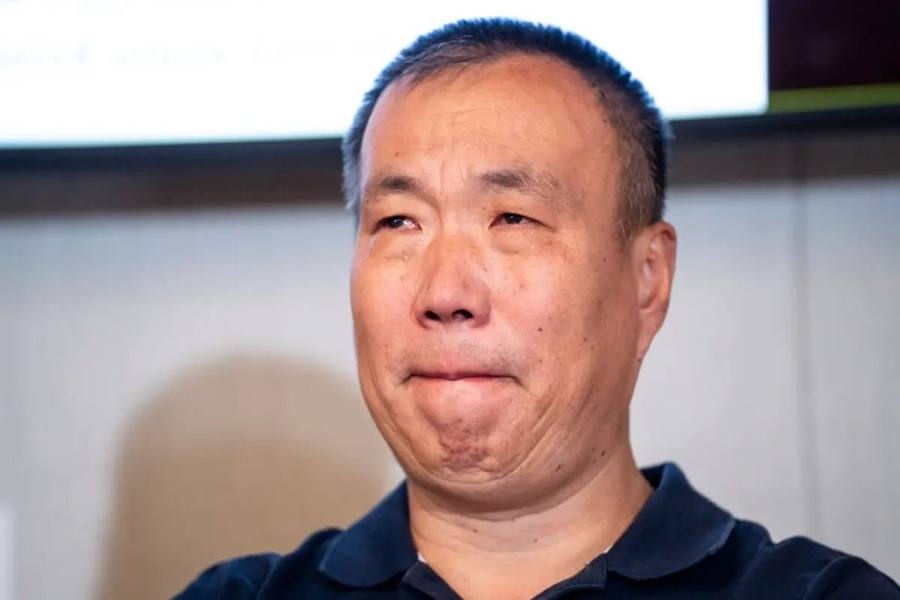
The case of Cheng Peiming is the first named-survivor individual file in this site's forced-organ-harvesting archive (see the topic page "Forced Organ Harvesting" in the Persecution section), and its evidence structure is unlike any other case on this site. Until now, allegations that the Chinese Communist Party has harvested organs from imprisoned Falun Gong practitioners rested mainly on statistical anomalies in transplant volumes and organ sources, recorded telephone inquiries, second-hand witness accounts, and lists of the disappeared — grave charges that lacked a living complainant who could be questioned repeatedly and examined with modern medical imaging. In the summer of 2024 Cheng appeared twice in public in Washington, displayed a long scar across the left side of his torso, and described being taken from Daqing Prison to a hospital in 2004 and waking to find his chest opened. Several transplant surgeons who later reviewed his imaging stated publicly that the left lateral sector of his liver (segments 2 and 3) and roughly half of his left lower lung lobe were missing. Supporters accordingly named him the "first known survivor of forced organ harvesting." In October and November 2024, the China Anti-Cult Network published a long investigation article (its English version carried by the China Human Rights website) reporting interviews with his family, prison officers, and the operating surgeon, and offering a wholly opposite account: that in 2004 Cheng had swallowed an iron nail and a wallpaper blade and was taken for life-saving surgery; that the operation was an exploratory thoracotomy to remove foreign objects, consented to by his sister; that no liver or lung tissue was removed; and that Daqing No. 4 Hospital had no organ-transplant capability at all.
The two narratives agree, remarkably, on a skeleton of facts — the date and hospital of the surgery, the site of the chest incision, the return to prison and the December 2 milestone, the second hospitalization in 2006 and the pre-dawn escape route correspond almost point for point — while contradicting each other completely on the purpose and content of the operation. This file therefore departs from our usual format and separates the material into four explicit layers throughout: (A) Cheng Peiming's own testimony; (B) medical imaging and expert readings of it, independent of his narrative; (C) the retellings and conclusions of advocacy organizations (Minghui, The Epoch Times, the International Coalition to End Transplant Abuse in China — ETAC — the China Organ Harvest Research Center, and others); and (D) statements by the Chinese authorities and by the family members, officers, and doctors they quote. Each layer is presented on its own terms and lends no authority to the others; key facts carry an explicit verification status. Our own assessment appears only in the closing "Our Take," and it does not reorder the evidence: readers should work through all four layers before they reach it.
Three errors in the case brief and in parts of the English-language coverage are corrected here at the outset, so they do not propagate. First, the 2004 operation took place at Daqing No. 4 Hospital, not at a hospital in Suihua as the brief stated — Cheng's account, Minghui's reporting, and the Chinese investigation article all agree on this. Second, Cheng is from Jixi, Heilongjiang, not from Shandong: the "rural Shandong" phrasing in reports by The Telegraph and The Diplomat traces to the fact that he was working in Jimo, Shandong, when first seized in 1999, while his family and registered home were in Jixi. Third, the year of his sentencing is disputed: Cheng himself and Minghui say December 2001; the Chinese investigation article says 2002; one China Organ Harvest Research Center summary says January 2002. The body of this file follows December 2001 (the subject's own account, partially corroborated by the list of co-defendants sentenced the same day) while archiving the 2002 version in parallel, unmerged. The sort date of this file is his first seizure, early October 1999, per his own account; no exact day is in the public record, and the sort key uses the start of that month.
2. The man: a Jixi coal miner in a family of practitioners
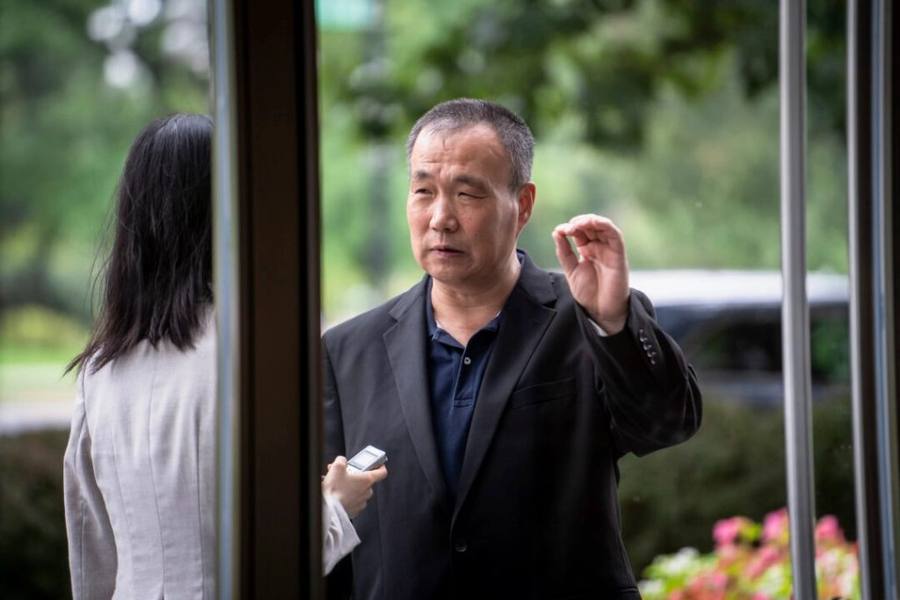
Cheng Peiming was born in August 1965 in Jixi, Heilongjiang Province. The date appears in the Chinese investigation article and in multiple Chinese-language reports, and it is consistent with his being described as 58 years old at his August 2024 appearance and as turning 59 that month; the exact day of his birth is not in the public record. According to the Chinese investigation article, quoting his former wife (under the pseudonym Wang Min), Cheng had some schooling and a regular job at a well-regarded local coal-mining enterprise in Jixi; they married in 1987 and had a son, and family life was for a time stable. This background comes solely from the Chinese side, and the former wife spoke with open bitterness toward both Falun Gong and Cheng himself; it is archived as background only and is not used here to judge him.
In March 1998 Cheng began practicing Falun Gong, introduced to it by his mother — a point he states plainly in his own written account, carried by Minghui and by the China Organ Harvest Research Center. At that time his parents and both of his sisters also practiced; only his younger sister Cheng Peifeng did not (a detail from the Chinese investigation article quoting Cheng Peifeng herself, and consistent, as to family composition, with Cheng's account of all five family members petitioning together in Beijing). In July 1999 the Chinese state banned Falun Gong nationwide and the regime of Jiang Zemin launched the suppression campaign, building out the "610 Office" apparatus. For the Cheng family the campaign was not an abstraction: by Cheng's account he was seized five times over the following years, his son was expelled from school, his marriage ended in 2005, and his parents and sisters were questioned repeatedly; in the Chinese narrative the same family is described as wholly consumed by the practice and refusing medicine. The two descriptions share one factual base — a family that collided head-on with the state over its faith — and differ only in moral judgment. This file archives the facts and leaves judgment to the reader and to the closing commentary.
3. Five seizures, 1999–2001: the full timeline (Layer A: his own account)
Cheng's early persecution is sourced mainly to the written statement he submitted to the China Organ Harvest Research Center and to Minghui's reporting over the years. Details such as specific torture methods and quoted dialogue have no second source and are marked throughout as his account, unverified; but the chronological skeleton fits the documented history of the Falun Gong suppression, and a jointly signed accusation letter of July 2004, preserved by Minghui and naming him among thirty practitioners transferred from Harbin Prison to Daqing Prison, independently establishes that he was then imprisoned at Harbin and took part in a collective complaint (see section 4).
First seizure: early October 1999. Cheng states that four officers of the Yingshang police station in Jimo City, Shandong (place names as transliterated in his statement), took him from his home, held him in a small room, and demanded he renounce Falun Gong; he hunger-struck and was released after two days. His son, he says, was expelled from school because he refused to renounce the practice — the school's name and any expulsion document are not in the public record. Second: on 20 October 1999 he and another practitioner went to Tiananmen Square in Beijing to "clarify the truth," were arrested, beaten in the police vehicle, taken to the Jixi liaison office in Beijing, and released after he spoke with the officers. Third: on the second day of the Lunar New Year in 2000, all five family members — his parents, himself, and his two sisters — petitioned at Tiananmen together and were all arrested; he and his father were sent to the Hengshan District Detention Center in Jixi, his mother and sisters to the Jixi City Detention Center; he states that police instigated inmates to beat him until his nose and mouth bled, that he was made to write a guarantee not to petition in Beijing again, and that he was released after a month. Fourth: on 10 May 2001, living in hiding and digging wild vegetables on a mountainside, he was seized by more than a dozen officers from Jixi's Jiguan District, beaten, stripped, bound, handcuffed, and tortured for some forty hours by methods he describes as nearly killing him; on 13 May 2001 he was taken to the Jixi No. 1 Detention Center and held for about a year, during which, he states, he was subjected to electric-baton shocks, steel torture implements, instigated beatings, and repeated offers of release in exchange for renouncing the practice. A pattern runs through all four episodes in his telling: each detention began with faith or petitioning, and each release was conditioned on renunciation. That is not our summary imposed on the material; it is the same sentence recurring in his account of every detention.
The fifth seizure was the sentencing. In December 2001, Cheng states, he was given a "show trial": he told the court Falun Gong was a righteous practice, was beaten by two bailiffs with batons, was shocked with electric batons back at the detention center, and was sentenced to eight years' imprisonment on a charge related to "disrupting the implementation of the law." Two practitioners sentenced the same day, Guo Meisong and Liu Guihua (names as transliterated in his account), later died at the Harbin Women's Labor Camp, he states — unverified, though consistent in kind with the many documented deaths of Heilongjiang practitioners in custody archived on this site. The Chinese investigation article dates the sentencing to 2002, gives the charge as "using a cult organization to undermine the implementation of the law," and places him directly in Daqing Prison — omitting the Harbin Prison period entirely, which conflicts with both Cheng's account and the July 2004 joint accusation letter (a complaint against Harbin Prison officers, signed by thirty practitioners transferred to Daqing, Cheng among them). This file therefore records his path as follows: Harbin Prison from April 2002 (his account gives 10 April; The Epoch Times and other retellings give 1 April; both dates archived), transferred to Daqing Prison on 1 July 2004.
4. Harbin and Daqing prisons: torture testimony and a contemporaneous corroboration
Cheng states that abuse continued at Harbin Prison: in early 2003, officers instigated several inmates to torture him — the inmates saying, in his account, "the government told us to do this" — stuffing a towel into his mouth, digging fingers into his eyeballs, striking both ears, kicking his head, and twisting his joints for hours until he lost consciousness and woke in the prison hospital; fellow practitioner Wang Dayuan (name as transliterated) and others, he says, were persecuted to death in the same prison. None of this can be independently verified by this site, and it is marked unverified. But a document of 8 July 2004 provides rare contemporaneous support for the framework: a letter of accusation to the Supreme People's Procuratorate and the Heilongjiang Provincial Procuratorate, signed by thirty Falun Gong practitioners who had been transferred from Harbin Prison to Daqing Prison and accusing Harbin Prison police personnel, with Cheng Peiming among the signatories, published by Minghui. That document establishes at least three things: Cheng was indeed imprisoned at Harbin between 2002 and 2004; by early July 2004 he had been transferred to Daqing (matching his stated 1 July transfer); and the abuse allegations were not invented for a 2024 press conference — they were made, under real names, twenty years earlier. A joint accusation proves that allegations were made at the time; it does not by itself prove every detail alleged.
At Daqing Prison, Cheng states, he was assigned to a unit rendered in his account as the Sixth Unit, and the persecution continued: he recounts being taken to a toilet by inmates, one of whom told him he had been instructed to strangle Cheng there with a rope and stage a suicide, could not bring himself to do it, and offered to testify one day. This is double hearsay within his own account and is marked unverified; it is archived because it forms the psychological background to a fact he himself admits in the same written statement — that on 16 November 2004 he swallowed several metal nails in despair. That admission is the key to the whole case, and it is the element that many advocacy retellings have chosen to omit and that this file insists on printing.
5. 16 November 2004: one operation, three narratives
The central event of this case occurred on 16 November 2004. On that day Cheng Peiming was taken from Daqing Prison to Daqing No. 4 Hospital and underwent open-chest surgery through an incision between the ribs on his left side. That the operation happened is not disputed by any side. What is disputed is why he was taken to hospital, who consented to the surgery, and what the surgery did. The three narratives are archived in full below, without reconciliation.
Narrative one: Cheng's 2024 press-conference version (Layer A). At the Washington press conference of 3 July 2024, Cheng said that on 16 November 2004, although he was mentally clear and had no health problems, officials sent him to Daqing No. 4 Hospital at 8 p.m.; guards told his family he was in life-threatening condition and that the probability of death from the surgery would be 80 percent; he was asked to sign a surgical consent form and refused; six guards then held him down and forcibly administered anesthesia. He regained consciousness on 19 November with his right ankle cuffed to the hospital bed, an intravenous line in one arm, injection tubes in both feet, and an oxygen tube in his nose. He was returned to Daqing Prison on 23 November, and on 2 December a doctor at the prison clinic removed the stitches from his wound; thereafter he coughed daily, his left ribs were painful and numb, he could not get up, and his left arm and ribs ache to this day, unbearably in rainy weather or when he is tired. He also relayed what a guard surnamed Zhao, present at the surgery with a gun, was said to have told a prisoner friend: that Zhao had overheard the head nurse say, "I have been a nurse for thirty years; this is the first time I have seen an organ transplant operation" — a remark prisoners then discussed for about a year, so that "everyone knew I had an organ transplant surgery." This version makes no mention of swallowed nails.
Narrative two: Cheng's earlier written account (Layer A). In his own statement published by the China Organ Harvest Research Center, the same day reads differently: on 16 November 2004 he was persecuted again and, "in desperation, swallowed several metal nails"; he was hung up in handcuffs, the cuffs came loose, he freed himself, struck his head on a triangular piece of metal, and passed out; when he woke, there was a long surgical cut on the left side of his torso; six days later he was taken back to prison. He adds that doctors he consulted believe the scar "has nothing to do with foreign objects in my stomach." This version contains neither the refused signature and six guards forcing anesthesia, nor any medical conclusion about what was done — only the outcome: he woke to find he had been operated on. The two versions come from the same man and differ in material detail: one stresses that he was taken with nothing wrong with him; the other admits he had swallowed nails and lost consciousness beforehand. This file does not smooth over that contradiction on his behalf; it archives it as important information for assessing Layer A. What both of his versions agree on is that the surgery was performed without his own consent and that no one ever explained its content to him. What remains uncertain is the immediate trigger for the hospital transfer.
Narrative three: the China Anti-Cult Network investigation (Layer D). The investigation article published in October–November 2024 states: on 16 November 2004, duty officer Zhang Zhijie (name as transliterated) was told by a fellow inmate that Cheng might have swallowed something, a note on his bed reading "I swallowed a nail"; in the isolation ward Cheng broke a window, cut his wrist, and shouted that he had swallowed a nail; after his wrist was bandaged he was sent to Daqing No. 4 Hospital, admitted to thoracic surgery at 9 p.m. for "foreign objects in the esophagus and stomach"; X-rays showed a 10-centimeter iron nail and a wallpaper blade 8.3 centimeters long and 1.7 centimeters wide, the blade lodged in his esophagus near the aorta; an ENT consultation concluded endoscopic removal was impossible and recommended thoracotomy; Cheng refused surgery, his family was brought to the hospital, and his sister Cheng Peifeng is quoted: "To save my brother's life, it was I who finally signed the consent for the surgery." The operation, at 4:30 p.m. on 17 November, is recorded as an "exploratory thoracotomy, removal of foreign objects from the esophagus and jejunum," lasting about three hours and leaving a scar of about 20 centimeters; he was transferred back to the prison hospital on 24 November and fully recovered by 2 December. The article adds that his prison records show an April 2002 diagnosis of "infiltrative pulmonary tuberculosis," treated before he was re-incarcerated, and quotes the operating surgeon, Dr. Cheng Liwen, as saying the hospital had no organ-transplant capability then or now, that the surgery did not touch his liver or lungs, and that the harvesting claim is laughably absurd.
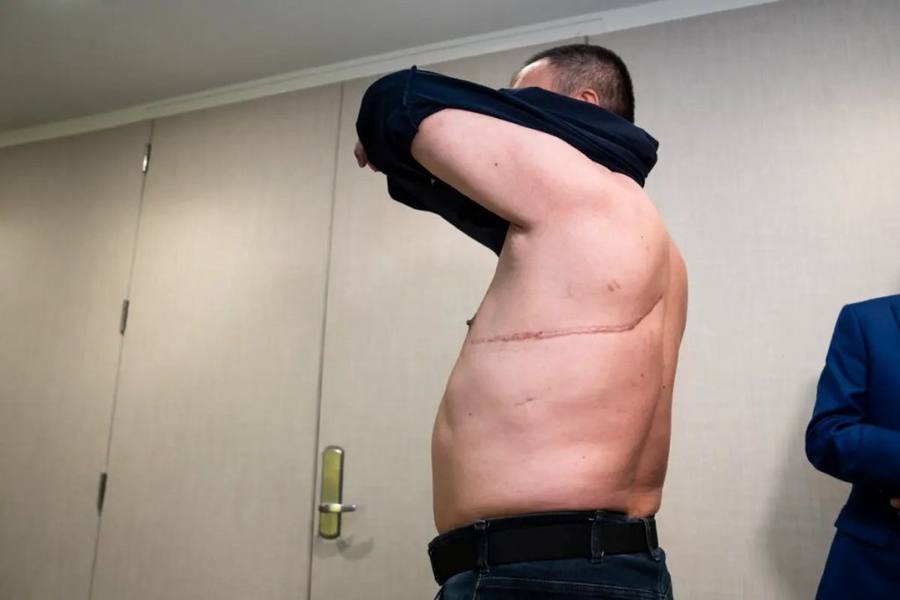
The overlap and the conflicts must be pinned down item by item. Agreed: transfer to hospital on the evening of 16 November 2004; Daqing No. 4 Hospital, thoracic surgery; an incision around the left fifth intercostal space and an open-chest procedure; return to the prison system within about a week (23 November in Cheng's version; transfer to the prison hospital on 24 November in the Chinese version — one day apart, archived in parallel); 2 December as the post-operative milestone (stitch removal / recovery). In conflict: the trigger (nothing wrong / nails swallowed in despair / self-harm by swallowing); consent (he refused and no one signed for him / his sister signed); the content of the surgery (parts of liver and lung removed / foreign objects only, liver and lungs untouched); scar length (35 centimeters / 20 centimeters); and the timing of the operation (anesthetized on the night of the 16th / operated at 4:30 p.m. on the 17th). On scar length, anyone who has seen the 2024 press-conference photographs can form a view: the incision visible in them runs from below the left armpit along the rib cage toward the back, visually consistent with the 35-centimeter (roughly 14-inch) figure given by Cheng's side and plainly longer than 20 centimeters — although photographic estimation is no substitute for a forensic measurement, and this file records it as our reading of published photographs, nothing more. The 16th-versus-17th discrepancy is partially bridgeable by sequence — admitted on the night of the 16th, operated on the afternoon of the 17th is the internal chronology of the Chinese version itself — but Cheng's version, in which he was forcibly anesthetized on the night he arrived, still conflicts with it on whether surgery began that night.
6. What the imaging shows — and what it cannot show (Layer B)
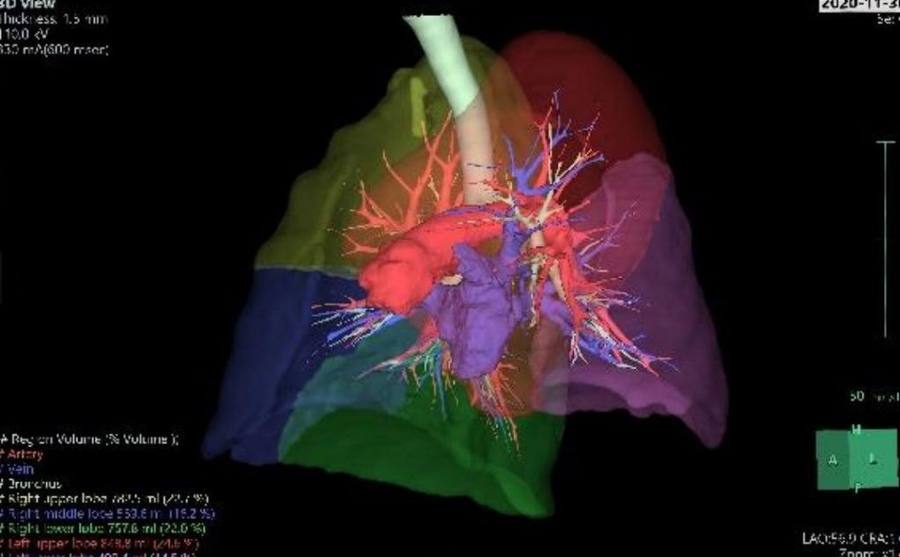
What sets this case apart from every previous harvesting allegation is the existence of modern, re-examinable medical imaging. After reaching the United States, Cheng underwent nine medical imaging examinations — according to the list published by his supporters, three CT scans, three ultrasounds, two X-rays, and one MRI. The existence of the imaging and the count of examinations are published by the advocacy side (Minghui, The Epoch Times, and the China Organ Harvest Research Center); no U.S. medical institution has published his records for this site to inspect directly, so that framework is marked "published by supporters, not independently verified." But the readings of the imaging by the following named experts were issued under their own names, and their professional identities are publicly checkable; they form the core of Layer B.
First, David McGiffin, a cardiothoracic surgeon trained in Australia who worked for many years at the University of Alabama at Birmingham and returned to Australia in 2013 as head of cardiothoracic surgery at The Alfred Hospital and professor at Monash University, Melbourne. In his written statement he said that in July 2023 he was approached, through ETAC executive director Susie Hughes, for an expert opinion on thoracic CT scans of a patient who might have been a victim of forced organ procurement in China; the scans were Cheng's; and "[t]he thoracic CT scan demonstrates that there has been removal of at least half the left lower lobe of the lung." Note the boundary of his opinion: he attests that at least half of the left lower lobe is missing and was removed; he offers no opinion on why or where it was removed. Second, Russell W. Strong, emeritus professor and a pioneer of hepatopancreatobiliary surgery and liver transplantation who established Australia's first liver-transplant program in 1985. His written opinion states: "The left lateral sector of the liver (segments 2 & 3) is missing. Segment 4 of the liver is present and hypertrophied, possibly as a result of removal of the left lateral sector." Third, Ding Kai-ting, a Taiwanese attending physician in hepatobiliary medicine and gastroenterology, testified by video: part of the left lateral lobe of the liver (segments 2 and 3) is missing; segment 4 and the right lobe are enlarged, consistent with compensatory regeneration after partial removal of the left lobe; and three-dimensional CT reconstruction shows an uneven surface localized to the left lobe, likely surgical scarring — whereas cirrhosis, fibrosis, and chronic hepatitis, the usual causes of an uneven liver surface, produce diffuse change across the whole liver, and Cheng's history and U.S. clinical examinations show no liver tumor or abscess, making previous surgery the most likely cause of the localized finding. Fourth, Wendy Rogers, professor of ethics at Macquarie University and chair of ETAC's International Advisory Committee, went furthest in characterization, calling the case "surgical assault resulting in the theft of organ parts" and asserting that Cheng "did not have a disease or illness requiring this surgery." Fifth, David Matas's remarks are legal and advocacy commentary, not medical opinion, and are filed under Layer C.
What Layer B proves and does not prove must be kept separate. What it establishes, through mutually consistent readings by several named specialists: segments 2 and 3 of Cheng's liver are missing; roughly half of his left lower lung lobe is missing; and the pattern — clean segmental absence with compensatory hypertrophy of the remaining liver — is, in the experts' judgment, the signature of surgical removal rather than the usual appearance of congenital variation. In plain terms, two portions of his organ tissue are gone, and they were cut out. What it does not directly establish: the year of the removal (imaging cannot date an operation by itself; the advocacy claim that "evidence dates the surgery to 2004" has not been fully laid out in public materials and is marked unverified); the setting and purpose of the removal (imaging cannot distinguish "removed during emergency surgery" from "removed for transplantation"); and where the removed tissue went or whether it was transplanted into anyone (for which there is no public evidence at all). Fairness also requires recording a potential Layer D rejoinder: the Chinese side states that Cheng was diagnosed in April 2002 with infiltrative pulmonary tuberculosis. Tuberculosis can, in uncommon cases, destroy lung tissue — but it cannot explain the tidy absence of two liver segments with compensatory hypertrophy, and the Chinese investigation article does not in fact deploy tuberculosis to explain the imaging; it simply denies that any liver or lung tissue was removed, and, although the U.S. imaging and expert statements had been public for months when it appeared, it offers no medical response to the CT finding of missing liver segments. This file regards that as the most conspicuous gap in Layer D to date: to rebut surgical removal, the missing segments must be explained — why are segments 2 and 3 not there? Symmetrically, Layers A to C owe an explanation of their own: if the trigger for the 2004 hospitalization included swallowed foreign objects — a point supported by Cheng's own earlier written admission of swallowing nails — why do the later images show parts of the liver and lung removed? The supporters' answer is that the "foreign object" medical record was fabricated (see section 11) and the operation was in fact a partial harvesting; this file cannot authenticate or falsify the 2004 hospital record. Both sides' open accounts are entered here, and no conclusion is presumed.
7. March 2006: the second hospitalization and the pre-dawn escape
After the 2004 operation, Cheng states, he suffered shortness of breath for nearly two years. In February 2006 he began another hunger strike against a new round of abuse (Minghui reports the prison maintained him on intravenous drips). On 2 March 2006 he was taken to Daqing Longnan Hospital — the hospital's name is the same in Cheng's 2024 account and in the Chinese investigation article, though his earlier written statement says only "Daqing Hospital" and describes being placed on a rotating chair for multiple tests, a nurse's surprise that he was not tied up, her remark that "[a]ll the Falun Gong practitioners who have come here were tied up using ropes," his pulling out the drip needle and her reply "You'll be quiet soon enough," and a doctor in his forties who that evening pressed points on his abdomen and lower back and announced an operation the next day. The Chinese version of the same admission is that on the afternoon of 2 March Cheng again swallowed three broken saw blades and was sent to Longnan Hospital, where imaging showed the blades had reached the small intestine with a chance of passing naturally, and Dr. Li Shuangqi prescribed oral paraffin oil and close observation. The two versions fork again between "he swallowed objects" and "he faced surgery": in his account the transfer followed a hunger strike and examinations, with an operation announced for the next day; in the Chinese account the transfer followed swallowed saw blades, the plan was conservative observation, and no operation was ever scheduled.
The escape itself is described in substantially the same terms by all three sources — Cheng's account, the Chinese investigation, and Minghui: at about 2 a.m. on 3 March 2006, on a trip to the toilet — one guard asleep and the other awake (in the Chinese version, the guard had gone back to the room for toilet paper; the ward was on the fifth floor) — Cheng slipped out through the hospital's fire escape (emergency exit), took a taxi away, and, with the help of other practitioners, got out of Heilongjiang Province. The escape is one of the few facts in this case confirmed by both the accusing and the denying sides; the Chinese article even dwells on the unlocked fire exit and the main entrance left open for mothers and newborns. That agreement in turn strengthens the credibility of the shared factual skeleton, including the 2004 operation itself. After the escape, the Ministry of Public Security issued a wanted notice: Minghui describes a Class B warrant with a reward of 50,000 yuan; Cheng states that the notice was broadcast on television in 2009 and 2012, and that armed police, public security, judicial, and neighborhood-committee personnel asked his family about his whereabouts every week for years afterward. He also recounts being told by a friend inside the Daqing Public Security Bureau that a confidential internal order authorized killing him on capture anywhere rather than bringing him back — double hearsay, marked unverified and not stated as fact. Whatever the truth of that order, a man sentenced to eight years for his faith escaped on the night of a second hospital transfer, hid inside China for nine years, and on his single attempt to visit home in October 2013 was begged by his frightened family never to return. The outline of that fugitive life is corroborated from several directions — his account, his family's statements to Chinese reporters that they did not know where he was for years, and the eventual record of his departure.
8. Five years in Thailand and the arrival in America in 2020: the rescue chain
In 2015 Cheng escaped China and reached Thailand. He remained there for years as a refugee — one retelling, following The Diplomat, places him in a United Nations refugee camp — and states that he had to hide from Chinese agents in Bangkok as well; the Chinese investigation article says he was detained by Thai police in late 2019. Two people were central to bringing him to the United States. The first is Sen Nieh, a professor at the Catholic University of America, who recalls that in late 2015 a friend brought him photographs of Cheng's long scar and his story, after which the rescue effort took five years. The second is Robert Destro, former Assistant Secretary of State for Democracy, Human Rights, and Labor, who described the process publicly at the 2024 press conference: on learning of "Mr. C.'s" story, he had a staff member in the bureau's East Asia–Pacific office investigate the claims and his circumstances, judged on the material provided, including photographs, that the case warranted further investigation, and set in motion the process by which Cheng came to the United States for examination and further investigation. Cheng arrived in the United States in July 2020 — the month is given by Nieh and multiple reports, and the year is broadly consistent across the advocacy side, Destro himself, and the Chinese article's "escaped to the United States by early 2020." The chain matters for a precise reason: it means a part of the U.S. executive branch had contact with the case, and conducted some preliminary checking, as early as 2020 — but that checking has never been published, and Destro's 2024 endorsement was delivered in his personal capacity as a former official at an advocacy press conference. It is not an official finding of the U.S. government on this case, and this file labels it accordingly. That qualification weakens inflated retellings of the form "the U.S. government has verified the case"; it does not diminish the independent value of the imaging evidence itself.
9. The family: a son expelled, a marriage ended, and a sister's signature
The family cost of this case is scattered through the narratives of two hostile camps, and assembled, it is harrowing. The son: Cheng states that after his first seizure in 1999 his son was expelled from school because he refused to renounce his faith; the former wife, in the Chinese account, says that after the divorce she left their young son with her parents and went out to work, at one point relying on social welfare, with her brother repeatedly helping the family financially. The marriage: the former wife states that they married in 1987, that after taking up the practice Cheng was rarely home, gave up his job, and neglected the child, that the family broke apart, and that she went to the prison to process the divorce in 2005 — the divorce year rests on the Chinese quotation alone and is marked unverified, though it does not conflict with the family disintegration traced in Cheng's own account. Parents and sisters: the whole family's joint petition trip to Beijing in 2000 is the clearest evidence of their shared faith; afterward, Cheng states, armed police and officials questioned the family about his whereabouts weekly for years after his 2006 escape, and in 2013 the family told him to his face never to come home again — fear, here, is not rhetoric but the family's daily condition for over a decade. And the sister, Cheng Peifeng, the family's only non-practitioner, plays the most contested role in the entire case: the Chinese side states that she signed the 2004 surgical consent form, was present at both hospitalizations, and "noticed nothing unusual"; Cheng's 2024 account says only that guards told the family he was critically ill and that he himself refused to sign, and says nothing about a sister signing in his place. This file cannot contact Cheng Peifeng to verify; her testimony was published unilaterally by the China Anti-Cult Network — an official-background website whose purpose is anti-Falun Gong advocacy — with no independently verifiable authentication of the signature document and no third-party record of the interviews, and it is marked "published by Layer D alone, not independently verified." The same applies to the former wife's testimony, in which the Chinese article itself notes that some interviewees appear under pseudonyms, reducing checkability. A family in which the husband, in exile overseas, publicly accuses, while the wife and sister publicly deny on state-aligned media, has already been torn in half whatever happened in that operating room — and the tearing is itself part of the persecution.
10. Going public in 2024: two press conferences and the international response
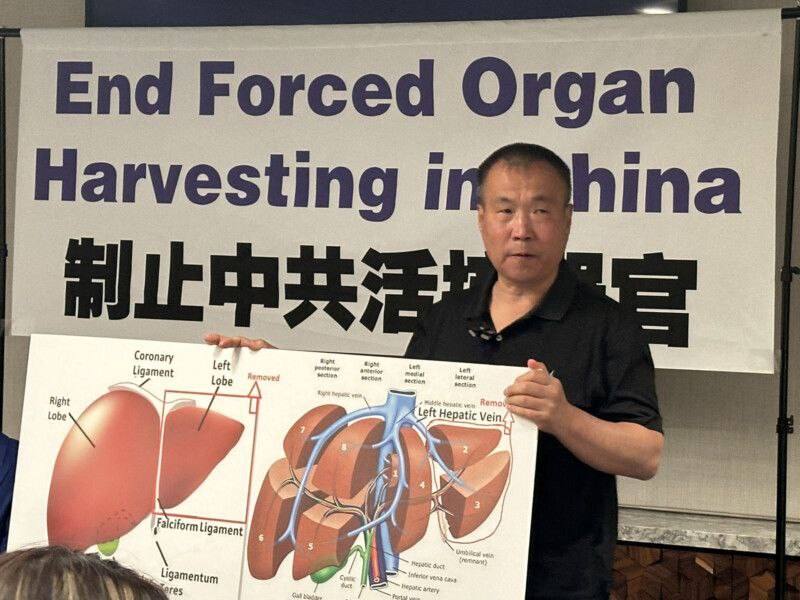
On 25 June 2024 the U.S. House of Representatives passed the Falun Gong Protection Act (H.R.4132), which condemns the persecution and forced organ harvesting and calls for sanctions on those involved — one week before Cheng's first appearance. The Chinese side reads the timing as choreography in support of legislation; the advocacy side reads it as a witness coming forward within a legislative process. Both readings are archived; the passage of the bill is public fact. On 3 July 2024 Cheng spoke publicly for the first time, in Washington (reported by Minghui correspondent Li Jingfei), displaying the scar on the left side of his torso; former Ambassador-at-Large Sam Brownback and Senator Bob Menendez issued written statements condemning forced organ harvesting, and Destro described the rescue. On 9 August 2024 a second press conference was held in Washington, with an advocacy coalition against forced organ harvesting by the CCP and the Center for Human Rights at the Catholic University of America among the participants, hosted by Nieh, at which transplant experts addressed the imaging in writing or by video (see section 6) and Matas, Rogers, Katrina Lantos Swett of the Lantos Foundation, and Eric Patterson of the Victims of Communism Memorial Foundation spoke. Coverage spread quickly: The Telegraph (Iona Cleave, 9 August) reported him as the "first known survivor" and published photographs of the scar; The Diplomat (10 August) published Tasnim Nazeer's interview; the BMJ news service reported on 12 August under a headline to the effect of "'Tortured, drugged, and assaulted': Chinese survivor of forced organ harvesting speaks out" — and its report noted that Cheng said sharp objects had been swallowed before the 2004 operation, a detail matching his earlier written account but omitted from most advocacy retellings; the Daily Mail, The Sun, Australia's News.com.au, and The American Spectator followed. The other side of the international response is silence, and it must be recorded plainly: as of the writing of this file, no UN human rights body, no government, and no international medical organization has published an independent investigation or finding on Cheng Peiming's individual case. To describe the case as "confirmed by the international community" would be false. The accurate statement is narrower: named medical experts' readings of his imaging are on the public record and no named expert has publicly disputed that the organs shown are missing, while the contest over what explains the absence continues.
11. The Chinese counter-narrative and the battle over the medical record (September–November 2024)
At a further advocacy press conference on 4 September 2024, Dr. Charles Lee and others charged that a recently published Chinese article about Cheng admitted he had undergone open-chest surgery in 2004 while falsifying the reason for the surgery, its procedure, and the length of the scar. From October 2024 the Chinese side published its version of the medical record and investigation domestically; on 5 November 2024 the China Anti-Cult Network's long investigation appeared in English on the China Human Rights website, with a Chinese version circulating at the same time. Its full substance is archived in narrative three of section 5; its argumentative structure is worth recording here: it builds a "life-saving surgery" narrative on four points — the sister's signature, the operating surgeon's presence, photographs of the extracted objects, and the hospital's lack of transplant capability — and a "cult destroyed the family" narrative on the testimony of the former wife and sister, concluding that the harvesting story is a political farce fabricated by Falun Gong. The advocacy rebuttal concentrates on the record itself: that it evades the imaging fact of the missing left liver lobe and part of the lung; that its timeline (surgery nineteen hours after admission) is inconsistent with the post-operative picture; and that it inflates the size of the foreign objects while shrinking the scar (20 centimeters against 35). This file has no capacity to authenticate handwriting, paper, or archival provenance of the 2004 record. It can only identify three publicly testable points. First, scar length: the published photographs falsify the 20-centimeter figure (see section 5). Second, the missing liver segments: CT imaging falsifies the claim that the liver was untouched — unless the Chinese side publishes Cheng's pre- and post-operative imaging demonstrating an intact liver, which, as of this writing, it has not: what it has published is photographs of foreign objects and photocopied documents, not images of Cheng's liver. Third, consent: if the sister did sign, independent authentication of the original form is the single easiest self-vindication available to the Chinese side, yet the published copies have been verified by no independent body. The battle over the record is thus a stalemate of assertion — except that the balance turns on a simple question: whose central claim survives contact with the other side's evidence. The imaging test is one Layer D has not yet passed. Layer A, symmetrically, is damaged by the inconsistency between Cheng's two versions of the hospital trigger, and Layer C by its long omission of the swallowed-nails episode; selective narration injures the accusing side's credibility too, and this file declines to follow it. Both debits are entered here.
One further tension inside the Chinese narrative deserves archiving. The article concedes that in prison Cheng hunger-struck frequently, swallowed foreign objects twice, cut his wrist, and struck his head — that is, it concedes that a detainee injured himself repeatedly in despair — while attributing all of it to "cult mind control" and saying nothing about the fact that the hunger strikes and self-harm were protests against the detention and abuse themselves. It quotes prison officers as saying he "recovered well and was in good health" after the 2004 surgery, flatly contrary to his own account of two years of breathlessness and coughing and pain that continues today; both statements are archived in parallel. Beijing's standing official position on harvesting allegations generally — that they are fabrications by Falun Gong and anti-China forces, that China ended the use of executed prisoners' organs in 2015, and that donation must be voluntary — appears in repeated Chinese embassy statements and is systematically archived on this site's organ-harvesting topic page; it is not repeated here.
12. This case within the organ-harvesting file
Cheng Peiming's case cannot be read in isolation; it belongs inside the evidence chain of this site's "Forced Organ Harvesting" topic page. In 2006 David Kilgour and David Matas published their report on allegations of organ harvesting of Falun Gong practitioners in China, building the charge on circumstantial evidence: a surge in transplant volumes, implausibly short waiting times, and recorded telephone inquiries. For more than a decade thereafter, support and skepticism alike turned on whether circumstantial evidence could carry so enormous a conclusion. In 2019 the China Tribunal in London, chaired by Sir Geoffrey Nice, a former lead prosecutor at The Hague, issued its final judgment, concluding beyond reasonable doubt that forced organ harvesting from prisoners of conscience had been practiced in China for a substantial period on a substantial scale, with Falun Gong practitioners a principal source — a tribunal initiated by ETAC, whose independence supporters and critics assess differently, as the topic page records in layers. In 2021 UN human rights experts expressed alarm at "credible information" that detained members of minorities were subjected to involuntary medical examinations consistent with organ-registry screening; China rejected the concerns. Against that chain, the increment contributed by Cheng's case is very specific: for the first time there is a living accuser whose body can be examined repeatedly by modern imaging, and whose examination results — the surgical absence of two liver segments and of roughly half a lower lung lobe — have been publicly endorsed by several named transplant specialists. That does not convert the harvesting allegation into settled fact: links in the causal chain remain unclosed (see section 6). But it moves the argument from "does such a person exist" to "how is what is missing from this person's body to be explained" — and the burden-of-proof landscape has changed accordingly. That is why this case merits an archive-grade file written to the highest verification standard this site can apply: it is both a key case in the organ-harvesting line and a test of this archive's evidentiary discipline. If this site were loose with this file, taking one side's word where the record is contested, the credibility of the entire topic would suffer.
Latest verifiable status, as of the writing of this file in November 2026: Cheng Peiming lives in the United States; since the two 2024 press conferences there has been no new publicly reported development in his individual case; no state and no international body has opened a public independent investigation of his case; China has issued no further response specific to him; and there is no public update on his health beyond his 2024 account of chronic pain. These are recorded as matters of no public progress, without speculation.
13. Evidence grading: a summary table
For the reader's convenience, the core propositions of this case are graded as follows. Confirmed by multiple sides or by contemporaneous documents: Cheng is a Falun Gong practitioner from Jixi who began practicing in 1998; he was seized repeatedly after 1999; he was sentenced to eight years and imprisoned at Harbin Prison and then Daqing Prison (the July 2004 joint accusation letter is documentary support); on 16 November 2004 he was taken to Daqing No. 4 Hospital and underwent left-sided open-chest surgery, returning to the prison system within a week, with 2 December as the stitch-removal or recovery milestone; on 2 March 2006 he was taken to Daqing Longnan Hospital and escaped through the fire escape in the early hours of 3 March; he then lived as a fugitive for years, reached Thailand in 2015 and the United States in 2020; and in 2024 he appeared twice in public in Washington and displayed his scar. Supported by named medical experts' opinions (Layer B): the left lateral sector of his liver (segments 2 and 3) is missing, with compensatory hypertrophy of segment 4, and at least half of his left lower lung lobe is missing, in a pattern consistent with surgical removal; nine imaging examinations were performed in the United States (supporters' published list). Resting on his testimony alone (Layer A; items unverified are flagged in the body): the details of the five seizures and of torture; the refused signature and forced anesthesia in the 2024 version; the head nurse's "first organ transplant" remark as relayed; the announcement of a next-day operation in 2006; the details of the wanted notice and the alleged confidential kill order. Published by the Chinese side alone (Layer D, not independently verified): the sister's signature on the consent form; surgery limited to foreign-object removal without injury to liver or lungs; a 20-centimeter scar; the April 2002 tuberculosis diagnosis; the former wife's account of the marriage. In direct conflict with no third-party adjudication: the trigger for the 2004 transfer; the timing of the operation (night of the 16th / afternoon of the 17th); the date of return to prison (23 / 24 November); and the year of sentencing (December 2001 / 2002). Not in the public record: the judgment and court file for the eight-year sentence; the complete original 2004 hospital record (the Chinese-published version is unauthenticated; Cheng's side has published no in-hospital documents); the destination of any removed tissue; Cheng's asylum or immigration status in the United States; and his son's present circumstances.
14. Sources and verification notes
The principal sources of this file, grouped by evidence layer, are as follows. Layer A (the subject's testimony): Minghui's report of 5 July 2024 by correspondent Li Jingfei, a full account of the 3 July press conference, republished by the Falun Dafa Information Center in Australia; Cheng Peiming's own written statement (the "Account of Cheng Peiming" page of the China Organ Harvest Research Center), including his year-by-year account for 1999–2006 and his admission of swallowing nails in 2004; and his remarks at the 9 August 2024 press conference as reported by multiple outlets. Layer B (medical opinions): Minghui's report of 15 August 2024 publishing the written statements of David McGiffin and Russell W. Strong and the substance of Ding Kai-ting's video testimony; Wendy Rogers's characterization delivered at the press conference; and the nine-examination imaging list published by supporters. Layer C (advocacy and media retelling): The Telegraph, 9 August 2024 (Iona Cleave); The Diplomat, 10 August 2024 (interview by Tasnim Nazeer); the BMJ news report of 12 August 2024; The Epoch Times, August 2024 (on the two hospitalizations, the hunger strike, and the reward); the China Organ Harvest Research Center's "Latest Developments" page; the Chinese Wikipedia article on allegations of organ harvesting of Falun Gong practitioners (used as a lead summary only — its claims of confirmation by "at least ten experts" and of evidence dating the surgery to 2004 could not be independently verified by this site and are flagged unverified in the body); and the Catholic University of America Center for Human Rights event page of 9 August 2024 (confirming the press conference's co-sponsorship and the attendance of Nieh and Destro). Layer D (the Chinese side): the China Anti-Cult Network's long investigation article (English version on the China Human Rights website, 5 November 2024, containing the interviews with Cheng Peifeng, Dr. Cheng Liwen, and the former wife, and descriptions of medical-record copies); the parallel rebuttal article on the Facts website (facts.org.cn); and the advocacy press conference of September 2024 rebutting the Chinese medical record (Dr. Charles Lee's remarks, as reported by People's News and others). Verification method: every key fact was checked against at least two independent sources; multiple outlets repeating a single origin (for example, many reports drawing on the same Minghui press-conference account) count as one source, not several; inconsistencies within the subject's own accounts are not harmonized but presented in parallel; expert opinion is credited only within the expert's professional competence (what the imaging shows), while experts' comments on motive and policy are filed under Layer C; and Layer D material is labeled with its official publishing background and its use of pseudonyms for some interviewees. The English and Chinese versions of this file carry equal information, including the full structure of the disputes.
15. Our Take
Our assessment is tied strictly to the facts of this case, in three layers. First: whatever the truth of the 2004 operation ultimately proves to be, a body of fact stands confirmed by both the accusing and the denying sides, and it is already grave enough. A man imprisoned for eight years for his faith hunger-struck, swallowed nails, cut his wrist, and struck his head inside that prison — the Chinese investigation article does not deny a single one of these details; it merely renames them "self-harm" and "mind control." A place of detention that drives a prisoner to swallow iron nails and saw blades repeatedly has questions to answer that no dispute about an operating room can lighten; the more minutely the Chinese narrative catalogues his self-injury, the more minutely it documents the cruelty of the detention itself. Second, on the operation, we say exactly as much as the evidence permits and not one step more: the imaging and the named experts' opinions have established that tissue from the left lateral sector of Cheng Peiming's liver and from his left lower lung lobe was surgically removed — a fact the "foreign object removal" narrative has to this day neither explained nor squarely addressed. If the Chinese side wishes to overturn it, the path lies open and is not difficult to name: publish the pre- and post-operative imaging and submit the record to independent authentication, rather than sending an anti-cult website to interview a former wife about a failed marriage. At the same time, we record the weaknesses on the accusing side with equal clarity: the subject's two versions differ on the trigger for the hospital transfer, and advocacy retellings long omitted the swallowed-nails episode altogether; such selective narration damages the accusers' own credibility, and this archive refuses to follow it. Third, the most damning institutional detail in the case hides in a timeline both sides accept: a prisoner underwent open-chest surgery, and no one — not the hospital or prison at the time, not any institution in the twenty years since — ever gave him an account of his own operation that he could read. What was missing from his body he learned sixteen years later, on another continent, from a CT scan. A system that treats a citizen's body as something that may be disposed of in silence, and an international order that can begin the discussion only when a survivor unbuttons his shirt, together constitute the full meaning of that 35-centimeter scar. This file will be updated if either side produces verifiable new evidence — that is the rule of an archive, and it is the same promise this site makes to Cheng Peiming, to his critics, and to its readers.