
第148案 | 陈云飞Case 148 | Chen Yunfei
成都维权人士陈云飞因年年为六四死难者扫墓、纪念而屡遭打压:2015年扫墓后被以寻衅滋事罪判刑四年,2021年又在秘密审判中被变更罪名判刑四年,2025年刑满释放后于2026年9月被第三次正式逮捕。Chengdu activist Chen Yunfei has been persecuted for years for sweeping the graves of June 4 victims and commemorating them: sentenced to four years in 2017 after a 2015 grave visit, sentenced to four more years in 2021 after a secret trial on substituted charges, released in March 2025 — and formally arrested for a third time in September 2026.
1. The man: a student of 1989, a "lion tamer," and the man who swept the graves
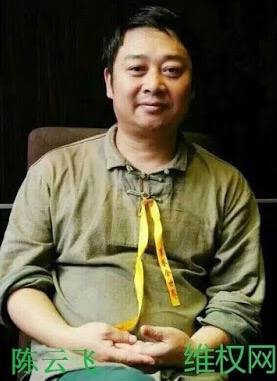
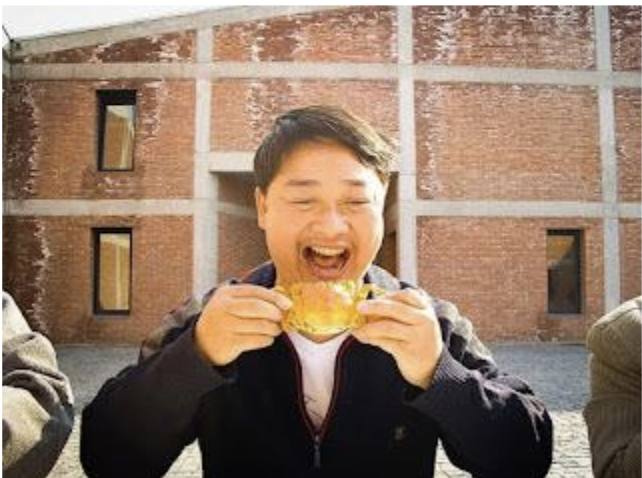
Chen Yunfei was born on 13 August 1967 in Sichuan Province — the birth date is recorded in the case file of Chinese Human Rights Defenders (CHRD); ChinaAid reporting places his family origins in the Dazhou area of Sichuan, and this page records both. In the spring of 1989 he was a student at China Agricultural University in Beijing (then Beijing Agricultural University), and he took part in that year's democracy movement. CHRD's file records that he spent the following decades calling on the authorities to investigate the June 4 massacre and to provide redress to victims' families, and that his advocacy — often laced with humor and performance art — made him a frequent target of police harassment, violent assaults, and arbitrary detention. PEN America lists him as a performance artist and human rights activist. People who know him know his self-chosen nickname, the "lion tamer": his livelihood involved animal training, and when he was taken away in 2021 he joked, in his own later account, that the police had forcibly "transferred" his job — animal tamer — into a detention center and then a prison. The joke is a key to his whole style. He treated persecution as absurdist theater and answered intimidation with laughter; the authorities, it seems, found this refusal to be properly frightened especially hard to forgive.
To understand this case, hold on to one thread that runs through more than thirty years: sweeping the graves of the June 4 dead, commemorating them, and demanding an accounting. Tending the graves of the deceased around the Qingming Festival is among the most ordinary acts of filial duty in Chinese life. But because the people in those graves are students killed by the army in Chengdu and Beijing in 1989, this ordinary act is treated by the authorities as a political event that must be policed every single year. Chen went every year, and every year he was stopped, questioned, or taken away. His biography therefore has a strange rhythm: it is not that he went looking for events, but that the same date delivered him back to the same place every year. The 2007 newspaper advertisement, the 2015 grave-sweeping arrest, the hotel "soft detention" around June 4 in 2020, the 2021 arrest after he joined a global online June 4 commemoration — connect the dots and you have the complete price list for one ordinary Chinese citizen's attempt to exercise the right to remember. This page archives that list: three criminal cases, two four-year prison terms totaling roughly eight years behind bars, and a third arrest less than a year and a half after his release.
2. 4 June 2007: one line of advertising in the Chengdu Evening News
On 4 June 2007, the eighteenth anniversary of the crackdown, the Chengdu Evening News carried a one-line classified advertisement saluting the mothers of the June 4 victims. The Chinese Wikipedia entry preserves the wording as a salute to the "steadfast mothers of the June 4 victims"; English-language reporting usually renders it as a salute to the "Tiananmen Mothers," and this page records both versions. How the advertisement got into print is itself a specimen of the censorship system: according to a veteran staffer's account translated by Global Voices at the time and Reuters' follow-up reporting, the staff who handled the advertisement did not recognize what "June 4" referred to, and a single line of text passed through the entire review machinery of a Party-run evening paper. After the affair came to light, three editorial managers at the paper were suspended or removed — Reporters Without Borders, in a statement carried by IFEX, condemned the punishment of the three editors and warned that the person who placed the advertisement might be arrested and heavily sentenced. The person who placed it, Chen Yunfei, was taken from his home by police and placed under six months of residential surveillance on suspicion of "inciting subversion of state power" — a fact recorded consistently by CHRD, by the Independent Chinese PEN Center's relaying of Radio Free Asia reporting, and by Chinese Wikipedia.
Three points deserve archiving. First, the price: half a year of residential surveillance for one line of print, and that was only the opening entry in his file. Second, the object of the salute: not any organization, but mothers who had lost their children — the Tiananmen Mothers group, which has spent more than three decades asking for the truth to be published, responsibility to be assigned, and families to be comforted, and has received none of the three; in official discourse they are not even entitled to be saluted. Third, the method: throughout his life Chen used the seams inside ordinary life — a newspaper's classified-ad column, a blood donation, a grave visit, pajamas, postcards — choosing the most everyday and harmless vehicle each time, which is precisely why each episode made the censorship and stability-maintenance machinery look at once absurd and brutal. After 2007 he repeatedly tried to travel to Beijing to mourn Zhao Ziyang and was repeatedly stopped and warned by Chengdu police (per Chinese Wikipedia, recorded here at that source level). In 2011, when calls for "Jasmine Rallies" circulated online, police confined him to his home (CHRD). By the time of the 2015 grave visit, he had been on the Chengdu state-security list for years.
3. 2011–2014: house arrest, a demolition injury, and a Qingming policed every year
The public record for 2011 to 2014 is scattered but consistent. He was placed under house arrest during the 2011 Jasmine episode (CHRD). In May 2013, he was badly injured in an altercation with hired men and security personnel when he tried to stop the government-ordered demolition of his home (CHRD's file uses the words "badly injured"; no public medical record of the injuries exists). In 2014, ahead of the twenty-fifth anniversary of June 4, the authorities detained and controlled activists and victims' family members nationwide, and Chengdu was no exception. Reporting in 2016 noted that Chen went to Xinjin every year to sweep the graves of Xiao Jie and Wu Guofeng — and that the police were waiting on the road every year. The significance of this period is that it proves the 2015 arrest was not a spontaneous clash but the closing of a net around a man on a long-term watch list. The only difference in 2015 was that this time they decided not to let him go home. Within the sources searched for this page, there is no public count of how many times he was taken in or "talked to" between 2011 and 2014; CHRD and PEN summarize it as detentions and beatings across dozens of police stations and detention centers, and this page archives that institutional summary without inventing a number.
4. 21 March 2015: before the grave visit — a break-in and a beating at the police station
The first case has a prelude that is often skipped. CHRD's file and the UN Human Rights Office's special-procedures urgent appeal of 29 October 2015 (UA CHN 10/2015) both record that on 21 March 2015 Chen's apartment was broken into and some of his belongings were stolen. He called the police for help; an officer who responded assaulted him on the way to the Jitou Police Station in Wuhou District; after they arrived, he was beaten again; the officer tore up and threw away his identification documents, including an entry permit for Hong Kong; and before he was released, the same officer forcibly injected an unknown liquid into his body. The evidentiary grade of this account must be stated plainly: it comes from CHRD's submission to the United Nations and the special procedures' relaying of it. It is an allegation on the record, never confirmed by any court or by the Chinese side, and this page archives it at the allegation level rather than as adjudicated fact. But its archival value lies in the date: the grave visit was 25 March; the break-in and the beating were 21 March. The machinery aimed at Chen Yunfei was moving before he ever set out for the cemetery. Four days later — the fellow sweepers, the victims' families, and more than a hundred armed police waiting on the road home — formed a carefully prepared picture. The only people who may not have anticipated the scene were the grave-sweepers themselves.
5. 25 March 2015: the Xinjin grave visit and more than a hundred armed police
On 25 March 2015, shortly before Qingming, Chen Yunfei and more than twenty Chengdu residents went to Xinjin, Sichuan, to sweep the graves of Xiao Jie and Wu Guofeng, students killed in the 1989 June 4 crackdown. Wu Guofeng was a Renmin University student and amateur photographer who, according to PEN America, was stabbed to death with a bayonet by a soldier in Beijing; Xiao Jie was also a Renmin University student. Family members of the dead were among the group. On the way back, more than one hundred armed officers — ChinaAid describes them as SWAT agents, CHRD as police officers — intercepted and took away the group. The others were released one by one. Chen Yunfei was the only one who did not come home. The next day, 26 March, he was criminally detained on suspicion of "inciting subversion of state power" and "picking quarrels and provoking trouble," and held at the Xinjin County Detention Center. For ten days his family searched for him while the authorities refused to provide any information about his whereabouts; only on 3 April did police hand the family the criminal detention notice (CHRD) — nine days after he was seized and eight days after the detention decision. The UN special-procedures document records 3 April as the day he was formally charged with the two offenses, while CHRD's case table and multiple institutional files give 30 April 2015 as the formal arrest date. The two dates reflect a recurring slippage between "charged" and "arrested" in relayed accounts; this page uses 30 April as the arrest date and archives 3 April separately as the date the family finally received notice, without forcing the two into one.
After the arrest, access to a lawyer became the first battlefield. Citing "state security," the authorities repeatedly blocked his lawyers from visiting him, and from the spring to the autumn of 2015 he went nearly half a year without access to legal counsel (CHRD). His lawyer Sui Muqing was himself placed under residential surveillance at a designated location on 10 July 2015 — the UN urgent appeal treated the lawyer's residential surveillance and the client's arbitrary detention as a single matter and demanded that China guarantee both men's rights. CHRD submitted the case to the United Nations on 21 September 2015 and filed an update on 25 October 2017. Consider the toolkit deployed against a grave-sweeper: interception by more than a hundred armed police, ten days of official silence toward his family, nearly six months without a lawyer, and the lawyer himself placed under surveillance. That toolkit is the most honest sentencing statement in the entire case.
6. Two years of pre-trial detention: a shrinking indictment, two postponed hearings, and shackles in the detention center
On 21 March 2016, nearly a year after he was taken, the indictment from the Wuhou District People's Procuratorate finally settled: the "inciting subversion" charge was dropped, leaving only "picking quarrels and provoking trouble," with the indictment covering, among other things, online and social-media posts said to have "slandered China's political system" (CHRD's summary of the indictment; CHRD archives the Chinese original). In other words, the man was seized under a subversion charge, held for a year, and then the procuratorate conceded that subversion would not stand and swapped in a pocket crime to keep holding him. The trial then slipped, twice. A hearing at the Wuhou District Court was first expected on 30 June 2016 and was postponed at the last moment (reported by Radio Free Asia from his lawyer's information; the Congressional-Executive Commission on China devoted a passage of its 2017 annual report's criminal-justice chapter to this case, noting also that defense lawyer Liu Zhengqing had spoken out over the Wuhou court's seizure of his computer in connection with a December 2016 hearing episode). The court later announced a 26 December 2016 hearing and postponed it again, without giving a reason (CHRD). From 25 March 2015 to the trial and sentencing on 31 March 2017, Chen Yunfei spent two full years in detention without ever seeing a judge.
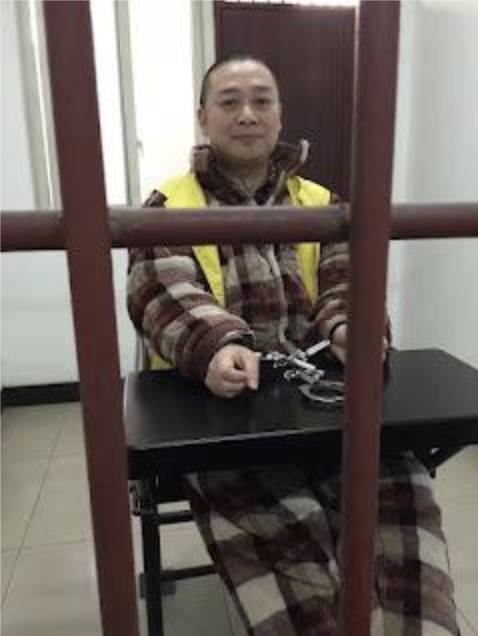
What happened inside during those two years is preserved in a first-hand record from a lawyer visit on 13 January 2017: Chen told his lawyers that, in punishment for refusing to give the standard greetings to detention-center officers, he had twice been subjected to cuffing and shackling that injured his hands and feet, and that guards prevented the lawyers from photographing the injuries as evidence (CHRD; Front Line Defenders and PEN America record the same two episodes and the prolonged shackling). As a vegetarian, he had asked for, and been verbally promised, eggs for protein; the detention center never delivered (CHRD). Front Line Defenders launched an urgent action demanding medical care and protection from torture. Put the two halves of this section together and the procedural picture is complete: on one side, an indictment shrinking; on the other, a man in shackles. On one side, hearing dates dissolving one after another; on the other, defense evidence-gathering blocked on the spot. The delay was not a malfunction of the process. The delay was the punishment — two years of pre-trial detention is exactly half of the four-year sentence that followed, punishment served in advance of any verdict.
7. 31 March 2017: the defendant in pajamas, and a sentence protested as "too light"
On 31 March 2017 the Wuhou District People's Court tried the case and sentenced him the same day: four years for "picking quarrels and provoking trouble." The details of that day, recorded by multiple organizations, make it one of the rare fully documented scenes of a Chinese political trial. He appeared in long pajamas — Front Line Defenders noted the reference: pajamas, sleep, and Xi Jinping's slogan of the "Chinese Dream." Throughout the hearing he ignored everything the court officers said to him and communicated only with his lawyers. When the court announced the four-year sentence, he raised both hands in a victory sign. Before leaving the courtroom, he announced that he would sue the court, because the verdict was "too light" (Front Line Defenders' trial record; Radio Free Asia, citing his lawyer Sui Muqing, reported that he had hoped for a heavier sentence — five or even ten years). The hearing was closed in all but name: the court refused to admit evidence submitted by defense lawyers Guo Haibo and Sui Muqing, the judges repeatedly interrupted and warned the lawyers, and Chen was cut off during his closing statement (CHRD). His lawyer Sui Muqing had himself been illegally detained twice after visiting his client (PEN America). On appeal, the Chengdu Intermediate People's Court upheld the original sentence (CHRD archives the second-instance judgment; the same page states that the intermediate court heard the appeal on "April 20" and upheld the sentence, without specifying the year — this page flags the year as unverified, while the outcome itself is supported by the archived judgment and multiple sources).
How should the pajamas and the "too light" protest be read? Not as a loss of control, but as the performance-art resistance he practiced all his life. When a court refuses to conduct a trial as a trial, the defendant refuses to honor the court as a court. The body language told the gallery and the record exactly what he believed: the conviction had nothing to do with evidence and everything to do with a list, and the length of the sentence measured not his conduct but the authorities' fear of two characters — "June 4." The same day, the Foshan Intermediate People's Court in Guangdong convicted Su Changlan and Chen Qitang of inciting subversion (Front Line Defenders reported all three cases together): on a single day, 31 March 2017, three rights defenders were sentenced in three courtrooms, every term above three years. That is not a scheduling coincidence. That is the management of a sensitive calendar.
8. Four years inside: three prisons, fourteen days of torture, and an appeal he was not allowed to write
After sentencing he was moved through three prisons. On 4 July 2017 he was sent to Qiongxia Prison (the name as rendered in ChinaAid's English reporting; this page keeps the original rendering and notes that no second source confirms the facility's name), where he was put to forced labor of great intensity, punished by being made to stand when he did not comply, and beaten by another prisoner when he still refused. About two months later he arrived at Meizhou Prison, a facility with tight surveillance, where he was locked alone in a dark room and forbidden to walk outside, read books, or contact others; officers there beat him, and he took more than forty days to recover. On 21 September 2018 officials secretly transferred him to Ya'an Prison; there, after he reported abuse by another prisoner, prison officers struck him, one of them using implements usually associated with torture; he sued the prison for violating the law. He tried to pursue a retrial petition in his case, and the prison prevented him from writing it (ChinaAid's release report of 24 April 2019, sourced to a case report received by that organization — relay grade, flagged here as such).
A second cluster of prison-abuse records dates from May 2017, when Radio Free Asia reported that he was being tortured and abused while serving his sentence (cited in the CECC annual report's footnotes). ChinaAid's release report also names two specific shackling tortures: on one occasion, after he defied an associate director's ban on practicing tai chi and practiced anyway, he was subjected to two punishments — "chicken pecks rice," in which the inmate's hands and feet are shackled together, causing severe pain, and "dragon embraces a pole," in which hands and feet are bound so the body folds, in the report's words, like a shrimp. The report says he was tortured in this way for fourteen days. These details come from a single organization's relayed case report with no independent second source, and this page archives them at that grade; but the detention-center shackling episodes are corroborated by a lawyer-visit record and three organizations, and the two clusters corroborate each other in pattern. On 25 March 2019 he was released from Ya'an Prison at the end of his term — from the roadside seizure on 25 March 2015 to the prison gate on 25 March 2019, exactly four years, not one day less. The release was announced publicly on 17 April (ChinaAid). Release was not the end of the sentence in any practical sense: ChinaAid's later reporting records that soon after he came home, police in Pi County (now Pidu District) pressured his landlord and forced him and his elderly mother to move out. Living with his mother under a regime of forced relocations became the basic condition of his life from then on.
9. 19 September 2019: speaking for Hong Kong, and thirty-one more days inside
Less than six months after his release, he was taken again. On 19 September 2019, state-security police took him from his home in the Gucheng area of Chengdu (PEN America renders the location as Gucheng township; this page records both). On 21 September police formally notified his family that he was criminally detained for publishing comments in support of Hong Kong's anti-extradition-bill protesters (PEN timeline; ChinaAid, same substance: police questioned him about his tweets concerning the Hong Kong protests, Xi Jinping, and Tsai Ing-wen). Chinese Wikipedia records that he was held at the Wenjiang District Detention Center in Chengdu. He was released after roughly a month — PEN gives 18 October, followed by six months of house-arrest-like control; Chinese Wikipedia gives 19 October as a release on bail pending trial; this page records both versions side by side. His friend Luo Kaiwen told reporters at the time that if the authorities wanted to charge him, "they have a lot of different options" — a sentence that came true two years later in the ugliest possible way. On 1–5 June 2020, after he spoke online about June 4, the authorities held him again in "soft detention" in a Chengdu hotel for five days (PEN timeline). Words of his from that period were preserved by PEN, to the effect that the unrest in Hong Kong and on the mainland showed the government had not found the root of popular grievance, and that what the 1989 movement fought for was right, and that there was no reason June 4 should not be publicized and commemorated in any number of ways; this page relays PEN's paraphrase rather than quoting at length. Thirty-one years on, the reason he was taken was still the same date.
10. 2020–2021: investigating compulsory education, postcards to prisoners of conscience, and a second arrest
The trigger for the second case had nothing to do with grave-sweeping. It was another investigation. In the roughly two years after his 2019 release, Chen traveled to schools across Sichuan to investigate the implementation of China's "nine-year compulsory education" system — including corruption within it — spoke with students, and wrote two articles presenting his findings (ChinaAid's 2022 reporting and PEN's 25 March 2021 entry corroborate each other: PEN records that he was detained over an article published online based on his school visits). In his own account, published after his release in July 2025, he listed three reasons for the arrest: investigating corruption in compulsory education, joining the global online commemoration of June 4, and supporting prisoners of conscience (ChinaAid, 10 July 2025, carrying his own testimony — archived here at the first-person-account grade). On 3 February 2021, after he mailed postcards to prisoners of conscience and posted photographs of them on Twitter, Chengdu police forcibly summoned him for twenty-four hours on suspicion of minor offenses; by his account, police also questioned him about his meetings with underage students (PEN timeline). That summons entry matters in the later record: it shows the police already preparing to reframe his contact with students in a different direction. On 25 March 2021 — the same calendar date as his seizure six years earlier — the Pidu district authorities detained him on suspicion of "picking quarrels and provoking trouble." On 30 April he was formally arrested, still on "picking quarrels." On 14 May his lawyer visited him and reported that he was in good spirits (PEN; CHRD). In July 2021 the case was transferred to the procuratorate for review and prosecution (PEN). At that point, neither his lawyers nor his family anticipated the two words that would appear on the judgment.
11. 3 December 2021: a secret trial and substituted charges
On 3 December 2021 the Pidu District People's Court heard Chen Yunfei's case behind closed doors. CHRD's record shows that his defense lawyer raised a jurisdictional objection, asked to view the synchronized audio and video recordings of his interrogation, and asked for illegally obtained evidence to be excluded — all three requests were denied by the court, after which Chen asked to dismiss his lawyer. The outcome: he was convicted of "forcible indecency" and "child molestation." Radio Free Asia's report of 6 December 2021 quoted the Pidu court's statement, relayed by the rights site Weiquanwang, to the effect that the defendant was sentenced to eighteen months for forcible indecency and three years for molesting a child, with four years to be served in combination. Weiquanwang and RFA characterized the case as resting on trumped-up charges. Chen himself issued a statement through friends denying everything: the original charge, he pointed out, had been "picking quarrels," and the prosecution had changed it to sexual offenses in order deliberately to stigmatize him (RFA's report of his statement, relayed here in paraphrase). CHRD's file records the same position: he believes the charge is being used to smear his reputation. On 3 March 2022, lawyers Bao Longjun and Wang Yu traveled to the Pidu District Detention Center to visit him and were refused on the grounds that "a verdict has been made in the case"; together with lawyer Ren Quanniu, they pointed out that the first trial had been held in secret without his lawyers, and that the second-instance proceedings had likewise taken place without notifying the lawyers or the family and without hearing the defense — in violation of the Criminal Procedure Law's rule that a second-instance court discovering first-instance procedural violations affecting the judgment must quash and remand (ChinaAid, 7 March 2022). In other words, as of March 2022 his lawyers learned that an appeal had already concluded only from a detention center's refusal of a visit. Within the sources searched for this page, the date of the second-instance decision in the second case and its text are not publicly recorded. CHRD's case table lists 3 December 2021 as the trial date and "child molestation" as the crime; whether trial and sentencing fell on the same day is stated inconsistently across sources, and this page records the divergence rather than resolving it.
The ethics of writing this case turn on a distinction this section must make explicit. The procedural facts are hard: arrest and prosecution review as a speech offense, conviction in a secret courtroom under substituted sexual charges, lawyers excluded twice over. Three different organizations — CHRD, RFA, and ChinaAid — recorded these facts at different times and corroborate one another. The underlying facts of the sexual allegations, by contrast, are sealed: there is no public case summary, no verifiable witness account, no open hearing, no published judgment. This page does not possess, and does not pretend to possess, the truth inside a closed file. It records three verifiable things: Chen denies the charges in full; the charges materialized only after he published education-investigation articles and joined an online June 4 commemoration, and were substituted wholesale at the trial stage; and the prosecuting side used a closed trial to deny the public any opportunity to test the accusations. The destructive power of a stigma charge lies precisely in its unfalsifiability — which is exactly the fabrication logic that Chen and multiple organizations identify. This page's position is stated in Our Take: when a regime chooses the filthiest available charge against a man who commemorates the dead, and refuses to let anyone examine its basis, it is the trial that forfeits trust, not the defendant who must prove innocence to a closed door.
12. The second sentence, and 24 March 2025: Guangyuan Prison and a completed term
The place of his second imprisonment is known from the account he published after his release in 2025: he served the term at Guangyuan Prison, where he was subjected to three severe punishments; by his account, one followed false accusations made against him by inmates assigned to monitor others, after which his rights to drink water during labor and to write while waiting for materials were stripped (ChinaAid, 10 July 2025, carrying extracts of his own testimony — archived here at the first-person-account grade; the punishment details have no second source). His account also describes continued writing and religious life inside; by then he was a member of Chengdu's Early Rain Covenant Church (ChinaAid). On 24 March 2025 he was released at the end of his term (ChinaAid's testimony report gives 24 March; the same organization's September 2026 report says "March 2025"; this page uses 24 March and notes the variant). From the seizure on 25 March 2021 to the prison gate on 24 March 2025 was, once again, a full four years. The two terms together amount to roughly eight years in custody since 2015 — the same figure ChinaAid's 2026 reporting gives. He was fifty-seven years old when he walked out. PEN America's writers-at-risk file updated his status to "Released." Nobody knew that the word "released" would hold for only seventeen months.
13. 2025–2026: surveillance, an assault, a tiger bench, and a third arrest
His life after release can be archived item by item from ChinaAid's long report of 30 September 2026: continuous close surveillance, repeated police summonses, and pressure to relocate. He has also publicly alleged that after an earlier police operation, money kept at his home for his daughter's overseas studies — including US$30,000, several thousand additional dollars, and tens of thousands of yuan — disappeared; he filed administrative lawsuits and complaints over the missing property and the repeated forced relocations, which he says were rejected or delayed. This is his own public allegation, relayed by ChinaAid, with no independent corroboration, and this page archives it at the allegation grade — noting specifically that it is the only sourced record concerning his daughter anywhere in this file, and that it concerns this money allegation, not any advocacy activity. On 8 January 2026 an unidentified man attacked him outside his residence in Pidu District, warned him not to post about the incident on X, and left him with facial injuries that required several stitches at a hospital. Chen later speculated that the attack might be connected to a brief encounter one or two months earlier, when, walking with his elderly mother, he had offered a drawing book to a young girl; ChinaAid's report states expressly that no connection between the encounter and the assault has been publicly established, and this page archives the matter exactly at that grade: a speculation, with no established link. After the attack he and his mother left Pidu District and moved to Wenjiang District. Later, seeking documentation he needed for a medical assessment, he went with six friends to a local police station; after he obtained the hospital records, officers escorted him into an interrogation area and made him sit on a metal restraint device known as a "tiger bench"; friends waiting outside were not notified, and he shouted from the lobby to get their attention; the roughly three-hour questioning ended with a formal compulsory-summons notice. He called the episode a barbaric forced summons (ChinaAid, relaying his account).
In August 2026, during a trip to Gansu Province, local police placed him under administrative detention. When the detention expired on 17 August, the Subei County Administrative Detention Center did not release him: Chengdu police officers who had come to collect him took him directly away. For more than a month afterward, almost no information about his status reached the outside world. On 23 September, the Wenjiang Branch of the Chengdu Public Security Bureau formally arrested him on suspicion of "picking quarrels and provoking trouble" — news relayed by relatives and informed sources; his nephew said the family learned of it from local political-security officers and had still received no written notice of either the criminal detention or the formal arrest. At the time of publication, 30 September 2026, the Wenjiang Branch had disclosed no specific allegations, and his precise detention facility had not been publicly confirmed (ChinaAid, 30 September 2026 — the latest status source for this page). The same report places the arrest against the background of renewed pressure on the Early Rain Covenant Church: raided and monitored since the mass crackdown of December 2018, the church faced another coordinated operation on 6 January 2026 in Chengdu and Deyang, and Elder Li Yingqiang and preacher Dai Zhichao were formally arrested in February on suspicion of inciting subversion and remain in custody. Before he was taken, Chen had continued attending Early Rain prayer gatherings and community-service activities. As of this page's last verification date, 11 November 2026, this page's searches found no public reporting of any indictment, trial, or release following the third arrest. The record is stated as it stands: progress in the third case — no public record; his current status is detained pending investigation, at a facility that is not publicly recorded.
14. Family: ten days of not knowing, a mother evicted by pressure on landlords, and a lifetime of moving
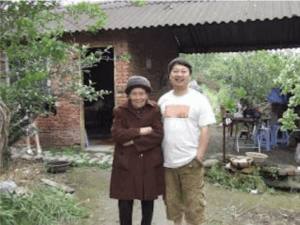
The documented family impact of this case concentrates in three places. The first is 2015: for ten days after he was seized, his family searched for him everywhere while the authorities refused to say where he was; the detention notice reached the family only on 3 April (CHRD). A family left for ten days not knowing whether a man is alive or dead, or where he is held, is not experiencing a procedural oversight; it is being given its own first taste of the fear. The second is his mother: he lived with his elderly mother, and soon after his 2019 release the police pressured his landlord and forced mother and son to move (ChinaAid, 2022); after his 2025 release he again faced relocation pressure and constant surveillance; after the January 2026 assault he moved with his mother from Pidu to Wenjiang (ChinaAid, 2026). A man nearing sixty is not the only one paying the cost of persecution — his elderly mother pays it beside him, one forced move at a time. The third is his daughter. The only sourced record concerning her in the materials checked for this page is his public allegation that money saved for her overseas studies disappeared after a police operation (see the previous section, allegation grade). A claim circulating in the commissioning brief for this page — that a daughter named Chen Xintong publicly advocated for him — could not be found in any of the institutional sources searched in Chinese or English (CHRD, PEN, RFA, ChinaAid, Wikipedia), and is flagged here as unverified and excluded from the factual record: this archive does not fill its pages with unconfirmed names and deeds. The one family member who appears by role in the 2026 reporting is his nephew, who relayed to the outside world that the family had received no written arrest documents (ChinaAid). One more entry belongs in this section: after his 2015 arrest, concerned citizens and netizens launched a campaign, online and on the streets, "Searching for Noble Citizen Chen Yunfei" (2016 reporting). When the family could not even obtain a detention notice, it was strangers who first called his name out loud.
15. International response: a UN urgent appeal, the case files, and a record that never stopped
In this case the international response is not decoration; it is part of the file. On 29 October 2015, the UN Working Group on Arbitrary Detention together with the Special Rapporteurs on freedom of opinion and expression, on human rights defenders, on the independence of judges and lawyers, and on torture addressed an urgent appeal (UA CHN 10/2015) to the Chinese government concerning Chen's alleged arbitrary detention and the residential surveillance of his lawyer Sui Muqing, invoking Articles 9 and 10 of the Universal Declaration of Human Rights and reminding Beijing that prolonged incommunicado detention can facilitate torture. CHRD submitted the case to the United Nations on 21 September 2015 and updated it on 25 October 2017, maintaining a continuously updated case file that archives the indictment and both the first- and second-instance judgments. The Congressional-Executive Commission on China entered him in its Political Prisoner Database (record 2010-00014, with issue codes covering June 4, democracy, and speech), and its 2017 annual report's criminal-justice chapter discussed the case at length, including the Wuhou court's seizure of a defense lawyer's computer and a hearing that collapsed when legal representation was terminated. Front Line Defenders ran a 2017 action over his shackling and ill-treatment and documented the trial day in detail. PEN America maintained him as a featured case, updating it through the 2021 second conviction and the 2025 release. Radio Free Asia followed the case year by year: the postponed hearing in 2016, the sentencing-day report of 31 March 2017, the prison-abuse report of May 2017, and the second sentencing report of 6 December 2021. ChinaAid reported continuously from the 2019 release through the third arrest in 2026. He was also honored with an Outstanding Democrat Award by the Chinese Democratic Education Foundation for his lifelong activism and public commemoration of the June 4 victims (RFA, 2021, quoting the foundation's director Zhao Xin). None of this shortened his imprisonment by a single day. But it accomplished the one thing the authorities least wanted: every secret hearing, every substituted charge, and every refused lawyer visit was written into a timeline outside the wall — so that when he was taken for the third time in 2026, the world knew exactly where to pick up the record.
16. Discrepancies and unverified items, archived side by side
Under this archive's standards, the discrepancies in this case are listed rather than smoothed over. (1) Origins: CHRD gives a birth date of 13 August 1967 in Sichuan; ChinaAid places his origins in Da County, Dazhou. This page treats the birth date as the hard field and records the origin in parallel. (2) First-case arrest date: CHRD's case table and institutional files give 30 April 2015; the UN special-procedures document records that he was "charged" with two offenses on 3 April, the day the family received notice — a relay slippage between charging and arrest. This page uses 30 April for arrest and 3 April only for the family's notice. (3) First-case appeal date: CHRD's case page states that the Chengdu Intermediate People's Court heard the appeal on "April 20" and upheld the sentence, without specifying the year; the year is flagged unverified, while the upheld outcome is supported by the archived second-instance judgment and multiple sources. (4) The 2019 release mechanism: PEN gives 18 October, followed by six months of house arrest; Chinese Wikipedia gives 19 October, released on bail from the Wenjiang District Detention Center. Recorded side by side. (5) Second-case sentencing date: CHRD's table lists 3 December 2021 as the trial date; RFA quoted the court's statement of the verdict on 6 December; ChinaAid describes a secret trial and sentencing on 3 December. Whether hearing and sentencing were the same day is stated inconsistently; recorded side by side. (6) The second case's appeal: ChinaAid's March 2022 report indicates the lawyers learned of a completed verdict — and of secret second-instance proceedings — only from the detention center's refusal of a visit; the appeal date and text are not publicly recorded. (7) The first prison's name: ChinaAid's English report renders it "Qiongxia Prison"; no second source confirms the rendering. (8) Prison torture details ("chicken pecks rice," "dragon embraces a pole," fourteen days): a single organization's relayed case report, graded as relay; the detention-center shackling is multi-source corroborated, and the two clusters are graded separately. (9) The 2025 release date: ChinaAid's testimony report gives 24 March; the same organization's 2026 report says March 2025. This page uses 24 March and notes the variant. (10) The "daughter Chen Xintong advocacy" claim: no record in any institutional source checked; unverified, not used. The verifiable family record consists of his mother living with him through forced relocations, his nephew relaying the arrest news, and his own allegation about the missing study funds (allegation grade). (11) The events of 21 March 2015 — break-in, beating, and the unknown injection: from CHRD's UN submission and the special procedures' relay; allegation grade; no response from the Chinese side. (12) The third case (2026): the formal arrest and the Gansu transfer rest on a single organization's report relaying relatives and informed sources; as of 11 November 2026 no second organization has independently reported the details, and this page grades them as the latest single-source institutional report, with the source date stated in the status field.
17. Verification and sources
The core facts of this entry were cross-checked against the following independent sources. Institutional case files: CHRD's Chen Yunfei case page (birth date; both cases' charges, courts, dates, and sentence lengths; the family's ten-day search; nearly six months without counsel; the 13 January 2017 lawyer-visit shackling record; links to the indictment and the first- and second-instance judgments; six months' residential surveillance after the 2007 advertisement; the 2011 house arrest; the 2013 demolition injury) and its UN submissions of 21 September 2015 and 25 October 2017; PEN America's case page and writer-at-risk file (the 2019 Hong Kong-comments detention timeline; the June 2020 hotel soft detention; the February 2021 summons and the stated grounds for the March 2021 arrest; the transfer for prosecution review; post-2025 status); the Congressional-Executive Commission on China's Political Prisoner Database record 2010-00014 and its 2017 annual report criminal-justice chapter (the 2016 hearing turmoil and the seized lawyer's computer); the UN special procedures' urgent appeal UA CHN 10/2015 of 29 October 2015 (the 21 March events, incommunicado detention, and the lawyer's residential surveillance); Front Line Defenders' 2017 action and trial record (shackling; the pajamas, the victory sign, and the "too light" protest; the three same-day verdicts). Media and organizational reporting: Radio Free Asia's sentencing report of 31 March 2017 (preserved by the Independent Chinese PEN Center), its May 2017 prison-abuse report (via CECC's footnotes), and its 6 December 2021 second-case report (the court's statement, the split sentences, Chen's denial, and the democracy award); ChinaAid's series (the 24 April 2019 release report with the three-prison transfer sequence and relayed torture accounts; the May 2020 residential-surveillance account; the 7 March 2022 lawyer-visit refusal and secret appeal; the 10 July 2025 post-release testimony including Guangyuan Prison; and the 30 September 2026 long report on the third arrest); Reporters Without Borders via IFEX and Global Voices on the 2007 advertisement affair (three editors punished; how the advertisement passed review); and Chinese Wikipedia's Chen Yunfei entry (the advertisement's wording and the 2019 Wenjiang bail date, used at secondary-source grade). Evidence grading: the detentions, arrests, hearings, charges, sentences, and release dates in both adjudicated cases are corroborated by two or more independent sources and are graded verified; single-source and relayed items are flagged at grade in the text; the second case's appeal document, and the third case's detention facility and subsequent progress, are recorded as having no public record. No single source is quoted for more than fifty words; this entry is a synthesized rewrite and copies no single report.
18. Our Take
Our Take is confined strictly to the facts of this case. First, look at what triggered three arrests: sweeping the graves of the dead, saluting the dead men's mothers in a newspaper advertisement, investigating where the money for children's schooling went, mailing postcards to prisoners, and commemorating June 4 online. Not one item on that list is violent; not one is for profit; not one targets any individual. To answer that list with two four-year prison terms totaling about eight years — and then to seize the man a third time seventeen months after his release — is not law enforcement. It is a regime measuring its own fear in units of imprisonment. What it fears is not Chen Yunfei. It fears memory itself. Second, the charge substitution in the second case must be nailed into the record: arrested as a speech case, convicted in a secret courtroom under sexual charges, with no lawyer admitted, no family notified, and no case details published. Stigmatization is a punishment more insidious than imprisonment, because it aims to make sympathizers hesitate for three seconds before speaking. Our position is simple: the credibility of an accusation depends on whether the accuser dares to be examined. A verdict that refuses examination has not earned the public's default trust. Third, the procedural details are the most honest part of this system: a family left ten days without word; a client denied his lawyer for nearly half a year; the lawyer himself under residential surveillance; a request to view interrogation recordings refused; an appeal concluded before the defense knew it had begun; and after release — landlords pressured, a mother moving house again and again, a beating on the street that left stitches, and a tiger bench at the police station when he went to collect his own medical records. Each step can be defended individually as "lawful." Strung together, they are a personalized, lifelong expulsion order — an expulsion from public life. Fourth, he walked into court in pajamas, raised a victory sign, and said four years was too light. Some call that performance art. We call it testimony: when a defendant is certain the trial has nothing to do with the facts, mockery is the last defense speech available to him. And the authorities' answer — two four-year terms and a third arrest — proved his point for him. A normal state does not deploy more than a hundred armed police against a man sweeping a grave. A state that does is afraid of precisely what the people in those graves once demonstrated: that when ordinary people stand up, this regime can fall. This archive records this case — the three 25ths of March, the two four-year terms, and one arrest for which the family never received a piece of paper — so that the act of remembering, on the days when he cannot perform it, is still being performed by someone.