
Wang Hongwen (1935–1992)
A Shanghai mill security cadre turned workers' rebel leader and the youngest member of the Gang of Four: from 1960 he did militia and security work in the security section of Shanghai No. 17 Cotton Textile Mill; on 12 June 1966 he led the mill's first big-character poster; on 6 November 1966 he prepared, and on 9 November founded, the Shanghai Workers' Revolutionary Rebel General Headquarters (the Workers' Headquarters) as its commander, leading the Anting Incident (the Shanghai–Nanjing line interrupted — 31 hours 34 minutes per the railway dispatch certificate, 20 hours per a chronology; both filed). In the Kangping Road incident of 30 December he chaired the meeting ordering the destruction of the Scarlet Guards' district liaison stations, and his Headquarters' Urgent Order of the next day directed the seizure of Scarlet Guard leaders at every level (91 injured, over 300 arrested in the fighting). On 6 January 1967 his Headquarters was the ground organisation of the seizure of Shanghai's party and government power (the January Storm — this site's tag date); the Shanghai People's Commune was proclaimed on 5 February (not in January — the English Wikipedia's Wang article misstates the month and is corrected) and renamed the Revolutionary Committee on 23 February, with Wang as vice-chairman (chairman Zhang Chunqiao, first vice-chairman Yao Wenyuan). On 4 August 1967 he planned and directed the smashing of the Shangchai Liansi, Shanghai's largest armed fight, its casualty ledgers filed in parallel and never merged (Li Xun: over 1,000 injured, over 800 detained, one dead; the Yangpu District Gazetteer: over 120 Liansi injured, over 570 detained). At the Tenth Congress in August 1973 he became the second-ranking Party Vice-Chairman and a Politburo Standing Committee member, nominally third in the Party behind Mao Zedong and Zhou Enlai — exhibited to successor specifications, the title never reaching paper; after his Changsha denunciation trip of October 1974 Mao criticised him to his face and he fell from favour. In July 1975 he told Shadian's Hui representatives in person that 'we will storm the earthen stockades' — the sentence is nailed to his personal account; the final order for the suppression of 29 July is filed in four layers (the Mao-approved central directive, the Deng Xiaoping direct-order version, the Wang Hongwen order version, the Yunnan local execution layer), with some 1,600 dead including about 300 children and an official low figure of about 130 also filed. After Mao's death in September 1976 he ranked second in the Party, set up a rival duty office and flew to Shanghai to push the militia 'second armed force' (74,220 rifles rushed out from August — a case-materials figure); he was arrested at Huairentang on the evening of 6 October — Immanuel Hsü's claim that he killed two arresting guards conflicts with the participants' record and is registered as unverified, not adopted. On 25 January 1981 (variant: the 23rd) the Special Court sentenced him on five counts to life imprisonment with lifelong deprivation of political rights: the only one of the four sentenced directly to life in the judgment itself (Jiang Qing and Zhang Chunqiao received death with reprieve, later commuted to life; the circulating claim that Wang himself was death-sentenced and reprieved is a misattribution, corrected). He served at Qincheng, was held at Beijing's Fuxing Hospital from 1985/86, and died on 3 August 1992 aged 56: Xinhua gave the cause as 'liver disease' and his age as 58 (an error), the encyclopaedias and foreign media as liver cancer. The sanctions category does not apply (he died in 1992); domestic accountability is written in full, though responsibility for launching the Cultural Revolution lay outside the trial's scope. Birth year 1935 as correct, 1934 archived; Party-joining year filed in both its 1951 and 1953 versions.
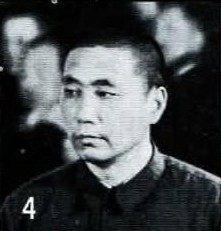
1. December 1935, Kaiyuan Village, Changchun: a poor peasant's eldest son, and three discrepancies in the birth record
The mainstream record of Wang Hongwen's birth and death is consistent: born December 1935 in Kaiyuan Village, Changchun County; died 3 August 1992 in Beijing. The English and Chinese Wikipedia articles, the Chinese article's infobox and the New York Times obituary of 5 August 1992 agree. He was the eldest son of the poor peasants Wang Guosheng and Wang Yangshi, with three younger brothers and a younger sister; the family was so poor that he never formally attended school, spent about three months at an old-style private school, and as a boy herded pigs for his uncle's household to help feed the family (Chinese and English biographical materials agree). That origin was used again and again afterwards: a boy who never entered a schoolhouse, who herded pigs and served as a soldier, sitting within ten years in the Vice-Chairmanship of the Chinese Communist Party. His rise is itself the most complete specimen of the Cultural Revolution's logic — rebellion as merit, origin as qualification — and this file therefore keeps to the events, item by item, rather than pronouncing on the specimen in advance.
The discrepancies are three, and each is registered. First, the birth year: the German Wikipedia gives "1934/35", the GlobalSecurity profile gives "born in 1934 or 1935 — different versions of the story vary", and a footnote in the Chinese Wikipedia's text also records "one version says 1934". The 1934 version mostly circulates in early Western intelligence-style syntheses, its basis unclear; this file takes December 1935 as correct and archives 1934. Second, the exact birthday: the Vietnamese Wikipedia alone gives 9 December 1935; every other language edition and the Chinese materials give only month and year — a single source, marked unverified here and not used. Third, the age at death: Xinhua's death notice of 4 August 1992 stated "Wang Hongwen was fifty-eight years old", whereas a man born in December 1935 who died on 3 August 1992 was 56; the Chinese Wikipedia's footnote files "one version 58, another 57" in parallel. The 58 most likely comes from the Xinhua wire itself, whether by traditional nominal-age counting or by error; this file fixes it as an error in the official obituary wire: he died aged 56. When even the official wire can misstate this man's age by two years, the first lesson of archive work is the old one: every number goes back to a checkable birth date and death date and is recomputed.
The year he joined the Party is likewise given two ways. The Chinese Wikipedia's text says "in June 1951, Wang Hongwen joined the CCP", and its infobox dates his membership 1951 to his expulsion on 21 July 1977; the English Wikipedia says he joined in 1953. The two datings differ by two years, and within the public materials this site found nothing of primary grade to settle between them; both are filed, neither is forced. His military years, by contrast, agree across sources in outline: in 1950 he was recruited into the 27th Army's 80th Division of the Chinese People's Volunteers, serving as a guard and messenger; in 1951 he entered Korea with the unit, working as a messenger in the communications department and playing the bugle (English Wikipedia, citing Perry and Li, Proletarian Power, p. 45); in 1952 the unit redeployed to Wuxi; in 1956 he trained with a reserve-officer course in Nanjing and in September was demobilised into civilian life with the rank of reserve second lieutenant (Chinese Wikipedia's synthesis of biographical materials).
Sources: English Wikipedia, "Wang Hongwen" (born December 1935 in Kaiyuan Village, Changchun; eldest of five children of a poor farming family; never enrolled in school, briefly a pig herder; enlisted 1950; Korea 1951 as messenger and bugler; joined the Party in 1953 — variant filed; died 3 August 1992 aged 56); Chinese Wikipedia, "Wang Hongwen" (December 1935; joined the Party June 1951 — variant filed; three months of private schooling; 27th Army, 80th Division; demobilised as reserve second lieutenant; footnotes recording the 1934 birth variant and the 58/57 age variants); German Wikipedia and the GlobalSecurity profile (1934/35 — discrepancy registered); Vietnamese Wikipedia (9 December — single source, unverified); Xinhua wire of 4 August 1992 ("fifty-eight years old" — error registered; full text as quoted in Ye Yonglie's account).
2. The security section of Cotton Mill No. 17: how a security cadre was made (1956–1966)
In September 1956 Wang Hongwen was demobilised into Shanghai No. 17 Cotton Textile Mill, a large plant of some nine thousand workers on Yangshupu Road. He began in the No. 4 spinning shop as a machine cleaner, moved to the No. 2 shop as a maintenance fitter, and in a 1958 party-branch election in that shop polled well enough to become a part-time propaganda committee member, later the shop's public-order (zhibao) chief (Chinese biographical materials, of the Ye Yonglie Biography of Wang Hongwen line). The step that fixed the shape of his career came in 1960: in March he was seconded to the mill's security section for militia work, as a militia company commander; in July he was formally transferred into the security section as a security cadre — and with that crossed from worker status into cadre status. The security section was the factory's political-protection and public-order organ: household registration, political vetting, the militia, internal precautions. The tasking brief's description of him as a "textile-mill security cadre" checks out, and it is more precise than "textile worker": when the Cultural Revolution broke out in 1966, he had spent six years doing security and militia work, not tending looms. The English record converges: in 1960 he moved to the factory security department for militia work, where he was later placed in charge of all militia work in the factory as a security cadre (Perry and Li, p. 45).
From September 1960 to December 1962 he was seconded to Chongming Island for the Shanghai committee's great reclamation project, returning to the city once for an appendectomy of ten days or so; when the project ended, the organisation considered keeping him as a farm cadre, he refused, and in December 1962 he returned to Mill No. 17 as a security cadre. On the eve of the Cultural Revolution his monthly wage was 64 yuan (Chinese biographical materials). The biographies also preserve his grumbling from the Chongming years — a negative view of the Three Years of Hardship, remarks to the effect of "natural disaster? I call it man-made" (anecdote section of the Chinese Wikipedia, citing biographical materials). This file grades such anecdotes as biographical hearsay: they help explain one source of the resentment he carried into his 1966 posters against the mill party committee, but they constitute no responsibility event; they are archived, not built on. In the mill he also studied at night school and earned a junior-middle-school certificate (same source) — a man whose schooling was repaired to junior-middle level at night would, seven years later, deliver the report on revising the Party constitution at the Tenth Congress. That gap is background for understanding his political personality, not a charge.
The structural fact this section nails down is this: the organisational competence Wang later displayed in Shanghai's rebel movement — building units, setting up a general headquarters, issuing orders, running pickets (jiucha) and "dagger squads" — did not come from nowhere. It came from six years of professional training in a factory security section and as a militia company commander. From its first day the Workers' Headquarters carried the bureaucratic shape of a quasi-military organ: commander, deputy commanders, liaison stations, pickets, dagger squads. The prototype of that shape was the factory security system. To write that "an ordinary worker was pushed up by the times" is inaccurate; the accurate statement is that a junior cadre of a factory political-protection system, in the year when the Centre itself struck down party committees at every level, turned the security system's organisational techniques to rebellion.
Sources: Chinese Wikipedia, "Wang Hongwen", early-life section (demobilised into Mill No. 17 in September 1956; machine cleaner and maintenance fitter; 1958 branch propaganda member and public-order chief; seconded to the security section in March 1960 as militia company commander, formally a security cadre in July 1960; Chongming reclamation September 1960–December 1962; monthly wage 64 yuan before the Cultural Revolution; night-school junior-middle certificate; hardship-years grumbling anecdote); English Wikipedia, "Wang Hongwen" (1960 move to the security department in charge of factory militia work, citing Perry & Li, Proletarian Power, p. 45).
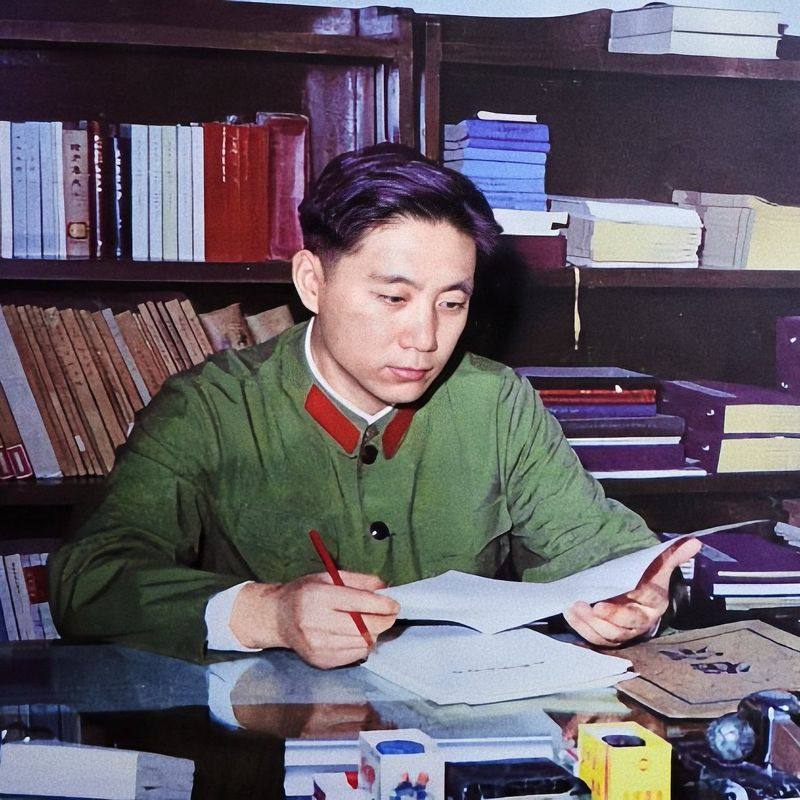
3. 12 June 1966: the first big-character poster and the "die-hard" team
The start of Wang Hongwen's rebellion is dated with unusual precision: on the morning of 12 June 1966, a big-character poster titled "Tearing Off the Party Committee's Mask to See the Truth", drafted by Wang and six others — six of the authors working in sensitive departments such as the security and organisation sections — went up beside the mill clinic, with Wang's name leading the signatures (Ye Yonglie, Biography of Wang Hongwen, ch. 3; Chinese Wikipedia text). The mill party committee promptly suspended him from work; on 18 June he posted a second poster, "Again Exposing the Factory Party Committee's Revisionist Cadre Line"; on the evening of 19 June came the so-called "Security Section Incident"; after 20 June, work teams from the Shanghai Textile Industry Bureau and then the Municipal Committee entered the mill in succession (Chinese Wikipedia synthesis). The English record agrees in outline and adds a decisive turn: the first work team initially blessed his attacks; its replacement, sent by the municipal system, did not support his assault on the work team (English Wikipedia, citing Perry and Li, p. 45).
In October 1966 he posted another poster attacking the work team and founded a rebel group with a very long name — rendered in the English record as "Warriors Sworn to the Death to Carry Through with the Cultural Revolution to the End" (English Wikipedia, same page; the full Chinese name varies slightly between retellings, so this file registers the function and the English rendering). He then travelled to Beijing with fifteen followers, and returned with his prestige greatly raised — the springboard that turned a one-mill rebel into the leader of Shanghai's rebels city-wide (same source). Note the shape of this rising curve: each of his promotions followed his raising his target by one level — first the mill party committee, then the work team, then the municipal committee. In the autumn of 1966 the bodies Mao himself had repudiated were precisely the party committees and work teams at every level; Wang's private grievances and the movement's direction fitted tooth to groove. That was both his luck and the engine of everything that follows. This file's booking stops here for 1966's first half: between June and October his conduct inside the mill falls within the ordinary range of rebel-faction struggle, with no persecutory event that can be pinned to his name. The account opens in November.
Sources: Ye Yonglie, Biography of Wang Hongwen, ch. 3 (poster of the morning of 12 June 1966 and its authorship; second poster of 18 June; the Security Section Incident; the work teams' arrival; checked against Chinese web reprints); Chinese Wikipedia, "Wang Hongwen" (the seven-man poster of 12 June; his suspension; successive work teams after 20 June); English Wikipedia, "Wang Hongwen" (the first team's blessing and the second team's refusal; the October poster and the founding of the die-hard group; the Beijing trip with fifteen followers and the leap in prestige, citing Perry & Li, p. 45).
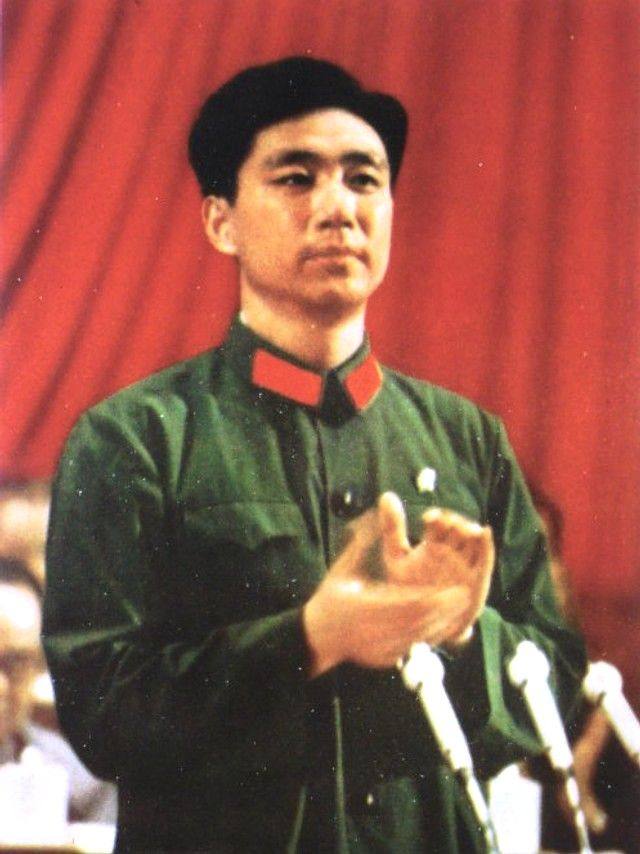
4. The Workers' Headquarters: prepared 6 November, founded 9 November, and the Anting Incident (November 1966)
The founding date of the Workers' Headquarters has two layers in the public record, and they must be written separately. The preparation layer: on the afternoon of 6 November 1966, more than twenty worker rebels who mostly did not know one another met at the Capital Third Headquarters' Shanghai liaison office at 311 Yuyuan Road and decided that night to build a workers' revolutionary rebel organisation, fixing 9 November for a rally at Culture Square to proclaim it (Cultural Revolution artefact research: Chen Guokang, "The Armbands, Seals, Badges and Publications of the Workers' Headquarters"); the Chinese Wikipedia's Wang article likewise says that on 6 November he "prepared to organise" the Headquarters with Pan Guoping, Chen Ada and others and took the post of commander — the verb is "prepared". The founding layer: the rally at Culture Square on 9 November, at which the Headquarters formally appeared; both the Cultural Revolution chronology and the German Wikipedia date the founding to 9 November (the German article: founded by workers of 17 Shanghai factories, the 32-year-old Wang at its head; another version puts the initiating factories at a dozen-plus — the factory count varies by source and is filed as such). The English January Storm article dates the alliance of several rebel groups under the Headquarters, led by Wang, to 6 November. The tasking brief's "founded in November 1966" checks out; this file's fixing is: preparatory meeting 6 November, founding rally 9 November — both dates sourced, neither allowed to stand for the whole.
The Shanghai Municipal Committee met this cross-factory workers' organisation with a "three noes" policy — not in favour, not supporting, not taking part — and refused to recognise its legality (Zheng Zhong, "A Re-examination and Re-study of the Anting Incident", Twenty-First Century web edition, citing Shanghai Railway Bureau materials and contemporary documents). On the night of 9–10 November the Headquarters, refused an audience at the committee building, decided to go north to Beijing to petition. In the early morning of 10 November some two thousand people boarded a train out of Shanghai (Zheng's article, citing railway materials, gives over 2,000 boarding express No. 65; the Cultural Revolution chronology gives 1,000 members going north — the two headcounts are filed together); the train was held at Anting station, the petitioners lay on the tracks and blocked the line — refusing passage even to the Shanghai–Beijing special express No. 14 carrying foreign guests — and traffic on the Shanghai–Nanjing line stopped. Whether anyone literally lay on the tracks is a point Zheng's study itself flags as "still in doubt". For the duration, the Shanghai Railway Bureau dispatch office's certificate of 8 December 1979 gives the precise version: from 09:20 on 10 November to 16:54 on 11 November, traffic was interrupted for 31 hours 34 minutes in total; a Cultural Revolution chronology synthesis gives "the Beijing–Shanghai line interrupted for 20 hours", and another synthesis says over thirty hours. This file registers the railway certificate's 31 hours 34 minutes first as the most specific version, files the 20-hour version beside it, and merges nothing.
The settlement decided Wang Hongwen's fate for the next ten years: the Centre sent Zhang Chunqiao, deputy head of the Central Cultural Revolution Group, to Anting to handle it. On the afternoon of 13 November, at Culture Square, Zhang signed the Headquarters' five demands — recognition of the Headquarters as a legal revolutionary organisation; recognition that the trip to Beijing to petition was a revolutionary act; the consequences of the petition to be borne by the Municipal Committee; Cao Diqiu to make a public self-examination; and all-round facilities for the Headquarters (Cultural Revolution chronology synthesis; Wang Hongwen's own speech text of 7 January 1967 relies on the same account). On 15 November, at Suzhou, Zhang signed a second set of five demands for the petition team together with Han Zheyi and Cao Diqiu — Cao signing only under Zhang's pressure of "if you won't sign, I will" (Wang's January 1967 speech text — a contemporary self-account by the rebel side, graded as party testimony). Mao subsequently endorsed Zhang's handling, on the reasoning "act first, report later; facts come before concepts" (Mao's words as relayed in the same speech text). The consequence of that signature is stated most plainly by the chronology: the ban on cross-trade, regional workers' mass organisations was thereby abolished. From that moment Wang Hongwen was no longer the rebel chief of one factory but the leader of Shanghai's workers' movement acknowledged by signature of the Central Cultural Revolution Group; and Zhang Chunqiao became, from that moment, his political patron. The line formed between the two men at Anting runs unbroken to the night both were arrested, 6 October 1976.
Sources: Zheng Zhong, "A Re-examination and Re-study of the Anting Incident", Twenty-First Century (web edition), October 2006 (the Municipal Committee's "three noes"; the Shanghai Railway Bureau dispatch office certificate of 8 December 1979: track-blocking and the 31 hours 34 minutes interruption; the lying-on-tracks doubt note; over 2,000 boarding); Chen Guokang, "The Armbands, Seals, Badges and Publications of the Workers' Headquarters" (preparatory meeting of 6 November 1966 at 311 Yuyuan Road; decision to proclaim the founding at Culture Square on 9 November; checked against Memory no. 62); Chinese Wikipedia, "Wang Hongwen" (prepared 6 November; commander); German Wikipedia, "Wang Hongwen" (founded 9 November by 17 factories); Chinese Wikipedia, "Chronology of the Cultural Revolution" (proclaimed 9 November; 1,000 going north; the 20-hour variant; the full five demands signed by Zhang Chunqiao on 13 November); Wang Hongwen, speech of 7 January 1967, "The Shanghai Municipal Committee's Monstrous Crime of Aiming Its Guns at the Proletarian Headquarters" (the five demands; the second Suzhou signing and "if you won't sign, I will"; Mao's "act first, report later" — contemporary rebel-side testimony grade).
5. The Jiefang Daily incident: he entered the newspaper with a "dagger squad" (30 November – 9 December 1966)
Seventeen days after Anting, Shanghai's rebels struck a second blow. On 27 November 1966 the Red Guards association of Shanghai's colleges (Honggehui) demanded that its Red Guard Combat News be distributed bundled with Jiefang Daily; the newspaper refused. At about 1 a.m. on 30 November, large numbers of Honggehui members drawn from the colleges stormed the Jiefang Daily building at 274 Hankou Road, occupied the wire room, meeting rooms, auditorium and some offices, set up a "front-line command", and seized the paper so it could not be distributed; Jiefang Daily ceased publication for eight days and nine nights in all (Chinese Wikipedia, "The Jiefang Daily Incident", and "Jiefang Daily"). Wang Hongwen's place in the affair is stated concretely in the incident article: the leaders of the "Shangti Headquarters" headed by Wang brought a "dagger squad" into the newspaper as an "advance party" in the name of a vanguard detachment, and joined the "front-line command" — note that he was at that time also connected with the rebel organisation of the Shanghai Institute of Physical Education (the "Shangti Headquarters"), and that he entered as a reinforcer, not as the initiator; the initiating party was the Honggehui. This file writes that gradation as it stands: he was an occupier and a member of the front-line command, not the affair's first mover.
The heaviest item in the affair fell on 3 December: that morning, "some members of the Workers' Headquarters and the Honggehui" kidnapped Jiang Wenhuan, deputy director of the Municipal Party Committee's propaganda department, and Li Gancheng, a vice-mayor of Shanghai (incident article). Jiang Wenhuan was afterwards persecuted to death by the rebels (same article). The public record's subject for the kidnapping is a collective one — "some members of the Workers' Headquarters and the Honggehui". That Wang was commander of the Workers' Headquarters and present within the newspaper's front-line command system is a fact at the level of post and presence; but of a personal order by him to kidnap Jiang and Li there is, within the range this site searched, no public record, and the blank is left visible exactly so — "his army did it" is not to be converted directly into "he ordered it". That same afternoon the Scarlet Guards' headquarters issued a leaflet demanding the committee hold to principle and both factions quit the newspaper — the antagonism between Scarlet Guards and Workers' Headquarters was now in the open, and three weeks later it would draw blood at Kangping Road. On 9 December, after the Central Cultural Revolution Group indicated its support for the rebels' action, the rebels withdrew from the building in full (same article). A municipal party organ occupied for nine days, a vice-mayor and a propaganda deputy director kidnapped, and the affair closed with total victory for the occupiers — the Anting signature's logic repeated once: whoever makes the bigger disturbance is the one the Centre recognises. That was the whole of the political science Wang Hongwen learned in the winter of 1966.
Sources: Chinese Wikipedia, "The Jiefang Daily Incident" (the bundling refusal of 27 November 1966; the occupation of the newspaper building and front-line command from the early hours of 30 November; Wang Hongwen's dagger squad entering as an advance party; the kidnapping of Jiang Wenhuan and Li Gancheng on 3 December; Jiang's later death under persecution; the withdrawal of 9 December); Chinese Wikipedia, "Jiefang Daily" (publication suspended eight days and nine nights; resumed 7 December).
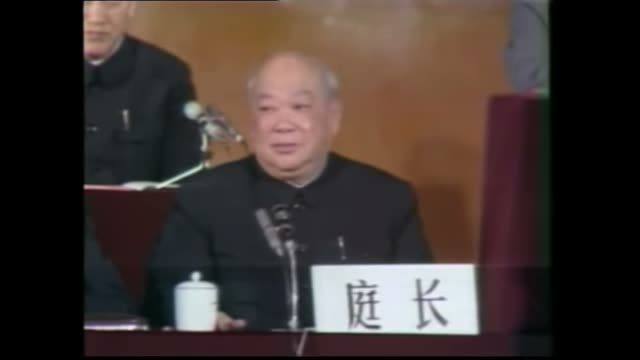
6. Kangping Road: the destruction of the Scarlet Guards, and Wang Hongwen's precise place in it (23–31 December 1966)
The Scarlet Guards — in full, the Shanghai General Headquarters of the Workers' Scarlet Guards for Defending Mao Zedong Thought — were the conservative workers' organisation formed after Anting under the Municipal Committee's covert guidance and support; their members were drawn mainly from skilled workers, craftsmen, and party and league members, the "advanced workers", and they contested the leadership of Shanghai's workers' movement with the Workers' Headquarters (Chinese Wikipedia, "January Storm"; the English January Storm article describes them as a "loyalist" group of skilled factory workers and technicians established by local party officials). The two factions' conflict escalated day by day in late December; the Kangping Road article fixes the timeline day by day. On the afternoon of 23 December the Scarlet Guards held a rally of 300,000 on People's Square and presented eight demands including recognition of their organisation; Mayor Cao Diqiu was made to sign. On 24 December a meeting of the Municipal Committee's secretariat held Cao's signature to have been a political stand error. On the afternoon of 25 December, eight rebel organisations headed by the Workers' Headquarters rallied at Culture Square, where Cao declared his signature void. From the morning of 27 December nearly twenty thousand Scarlet Guards poured into the Municipal Committee compound on Kangping Road, demanding to see Cao. Chen Pixian later recalled his own analysis: the Scarlet Guards' chant of "Down with old man Cao" was a tactic — their real aim was to protect the Municipal Committee and prevent the Workers' Headquarters from seizing its power (Kangping Road article, citing Chen Pixian's memoir, p. 110 — a participant's recollection, graded as such).
On the night of 28 December or the small hours of the 29th, Zhang Chunqiao telephoned his wife Wen Jing from Beijing; Wen Jing passed the word to Xu Jingxian. Zhang's meaning was: the Scarlet Guards have gone to rebel against Cao Diqiu — why do Shanghai's rebels sit and watch? If Cao surrenders, "the peach will have been picked by the Scarlet Guards"; the worker rebels were to be mobilised to Kangping Road at once for a political offensive (Kangping Road article, citing research literature, pp. 520–521). On the morning of 29 December Xu Jingxian convened a meeting to relay the instruction — and the article notes expressly: Wang Hongwen did not attend the meeting. That sentence is recorded exactly as written: the first mobilisation order for the Kangping Road clearance came from Zhang Chunqiao, relayed by Xu Jingxian, with Wang not present. Geng Jinzhang, who was in Beijing, took a call from Zhang's secretary that day, returned to Shanghai, set up a temporary command and moved men to Kangping Road. On the night of the 29th Cao Diqiu negotiated a partial agreement with Scarlet Guard representatives; at 2 a.m. on the 30th the rebels drove the Scarlet Guards out of the compound; by 6 a.m. over 300 Scarlet Guard cadres had been seized, and 91 seriously injured had been taken to the Huadong, Huashan and Zhongshan hospitals (Kangping Road article, p. 326; the researcher Huang Jinhai has questioned this official record — the doubt is registered, not deleted). The English January Storm article's figures agree: 91 injured, over 300 arrested.
Wang Hongwen's named place comes after six o'clock that morning, and comes from the same article, recorded without altering a word of its substance: on the morning of 30 December, Wang Hongwen chaired a meeting that arranged to "destroy the Scarlet Guards' district liaison stations"; on 31 December the Workers' Headquarters issued an "Urgent Order" directing that the heads of the Shanghai Scarlet Guards' headquarters and of its district and sub-branch organisations all be seized and delivered to the public security bureau — and the Scarlet Guards were thereby forcibly dissolved. In other words, the two orders that turned the Scarlet Guards from the losers of a brawl into an organisation arrested and dissolved as a whole — the deployment meeting on destroying the liaison stations, and the Headquarters' Urgent Order — are booked to Wang Hongwen: the first a meeting he personally chaired, the second a document issued by the headquarters of which he was commander. On the afternoon of the 30th about ten thousand Scarlet Guards set off on foot northward to appeal in Beijing; on the 31st they reached Kunshan, clashed with rebels sent to block them, and part of the Shanghai–Nanjing railway was interrupted; on 3 January 1967 Municipal secretariat secretary Ma Tianshui and others went to Kunshan to talk them back, but six to seven thousand still went on to Beijing (Kangping Road article) — the Kunshan Incident; from then on the Scarlet Guards ceased to exist. The Kangping Road incident is often taken as the opening of large-scale armed fighting in the Cultural Revolution (the Kangping Road and Wang Hongwen articles agree). At the Special Court's investigation in 1980, the court examined Wang on "the Kangping Road armed-fight incident in Shanghai that he directed and brought about", and he accepted the criminal instances charged (Chinese Wikipedia, "Wang Hongwen", trial section) — fourteen years later, this stretch closed inside a court record in the form of the defendant's own admission.
Sources: Chinese Wikipedia, "Kangping Road Incident" (day-by-day timeline: the 300,000 rally and Cao Diqiu's signature on 23 December; the secretariat's ruling on the 24th; the signature declared void on the 25th; nearly 20,000 entering the compound from the 27th; Zhang Chunqiao's instruction relayed via Wen Jing and Xu Jingxian on the night of the 28th; the morning meeting of the 29th, Wang Hongwen not attending; the driving-out in the small hours of the 30th, over 300 cadres seized, 91 seriously injured, with Huang Jinhai's doubt noted; Wang Hongwen chairing the morning meeting of the 30th on destroying district liaison stations; the Urgent Order of the 31st; the Kunshan Incident and six to seven thousand reaching Beijing); Chinese Wikipedia, "January Storm" (the Scarlet Guards formed under the Municipal Committee's covert guidance); English Wikipedia, "January Storm" (the Scarlet Guards as a loyalist skilled-worker organisation; 91 injured and over 300 arrested on 30 December; the general strike and the Kunshan interception); Chen Pixian's memoir (via the Kangping Road article — participant-recollection grade).
7. The January Storm and the Shanghai People's Commune: this site's tag date (6 January – 23 February 1967)
On 4 January 1967 Zhang Chunqiao and Yao Wenyuan arrived in Shanghai as "investigators of the Central Cultural Revolution Group" to plan the seizure of power (Chinese Wikipedia, "January Storm"). On 5 January Zhang passed the word to the chiefs of the Workers' Headquarters and other rebel organisations: the basic question now is to take the leadership back from the capitalist-roaders, and the revolutionary rebels should get the key departments under their control (Twentieth Century: A Complete Record, synthesis). On 6 January, under Zhang's and Yao's planning and direction, the Shanghai rebels headed by Wang Hongwen held the "rally to thoroughly overthrow the Shanghai Municipal Committee headed by Chen Pixian and Cao Diqiu", after which the committee's power was seized — the "January Storm" broke out (the January Storm article and the Complete Record agree; the English article dates the storm's span 5 January to 23 February). On 8 January a "Shanghai Front-Line Command for Grasping Revolution and Promoting Production" was set up as the city's actual leading organ for production; the same day Mao declared his support for the January Storm and called on the whole country to learn from it (Wang Hongwen article, note). On 11 January, at Mao's instigation, a congratulatory telegram in the names of the CCP Central Committee, the State Council, the Central Military Commission and the Cultural Revolution Group went to Shanghai's rebel organisations (Complete Record). This site's tag and sort date is 6 January: it is the first day in Wang Hongwen's life on which he answers for an event of national consequence — the object seized was the Shanghai Municipal Committee and People's Committee, the ground organisation that seized it was his Workers' Headquarters, and in the Shanghai regime that followed the seizure he sat in office. The English synthesis calls the affair a coup d'état and lists its leading figures as Zhang Chunqiao, Yao Wenyuan, Wang Hongwen, Xu Jingxian and Geng Jinzhang (English Wikipedia, "January Storm").
The Commune's founding date requires correcting a widely circulated month error. The English Wikipedia's Wang Hongwen article states in its text that "he organized the Shanghai Commune in January 1967" — wrong. The timeline is: on 19 January the rebels, meeting at the Municipal Party School, proposed a "New Shanghai Commune"; on 2 February Mao suggested the provisional power organ be named the "Shanghai Commune", and Zhang Chunqiao, after a call from Wang Li, proposed rebuilding it as the "Shanghai People's Commune"; on 5 February the Shanghai People's Commune was formally proclaimed and issued its Declaration, announcing that leaders would ultimately be elected by the revolutionary masses on Paris Commune principles (Chinese Wikipedia, "Revolutionary Committee" and "January Storm", the Declaration and the date cross-confirming each other). The Commune provisional committee's leadership was: director Zhang Chunqiao, first vice-director Yao Wenyuan, vice-director Wang Hongwen (leadership roster in the Shanghai Revolutionary Committee article). On 12 February Mao, talking with Zhang, Yao and others, repudiated the Commune's name and its electoral system, on the ground that they would undermine the Party's leadership; on 19 February the Centre issued a document formally repudiating the "people's commune" name; on 23 February the Shanghai People's Commune was renamed the Shanghai Revolutionary Committee (same articles; the Wang Hongwen article dates his becoming the Revolutionary Committee's vice-chairman to 24 February — the renaming of the 23rd and the appointment notice of the 24th differ by a day and are both filed). The Commune lived eighteen days, but the signal it sent lived ten years: power may be seized ahead of every procedure, a promise of elections can be withdrawn by the supreme leader in a single sentence, and after the withdrawal the vice-director's seat is still his. In both Commune and Revolutionary Committee Wang's rank was always third — Zhang and Yao ahead of him — and wherever this file touches the Shanghai regime it books him at that rank: he was not Shanghai's number one; he was Shanghai rebels' number one. The first ran the government; the second ran the army of followers. Both were real power.
Sources: Chinese Wikipedia, "January Storm" (Zhang and Yao arriving as investigators on 4 January 1967; the overthrow rally and seizure of 6 January; the 15 January dating variant; the New Shanghai Commune proposal of 19 January; Mao's naming suggestion of 2 February; the Commune proclaimed 5 February; renamed 23 February); Twentieth Century: A Complete Record (Zhang Chunqiao's words of 5 January; the rally of 6 January; the four-name congratulatory telegram of 11 January; checked against Chinese web text); Chinese Wikipedia, "Revolutionary Committee" (the Commune Declaration and electoral principle of 5 February; Mao's repudiation of 12 February; the Centre's document of 19 February); Chinese Wikipedia, "Shanghai Revolutionary Committee" (director Zhang Chunqiao, first vice-director Yao Wenyuan, vice-director Wang Hongwen; tenure February 1967 – October 1976); English Wikipedia, "January Storm" (span 5 January–23 February; the coup d'état characterisation; the leadership roster); English Wikipedia, "Wang Hongwen" ("organized the Commune in January 1967" — month error, corrected and registered here).
8. Which way the cannon pointed: the "cannonade against Zhang Chunqiao" of 28 January 1967, and the audit of the brief's "1968 cannonading"
The tasking brief for this page mentioned Wang Hongwen in connection with a "cannonading" of 1968 and required verification. This section is the verification result, and it begins with the conclusion: within the range searched for this run, no checkable record connects Wang Hongwen with any event named a "cannonade" occurring in 1968. The "cannonade" events that do connect with him are two sets, their directions exactly opposite, and neither falls in 1968. The first set is him firing at others: in 1966, inside Cotton Mill No. 17, his poster tactics are summarised in the biographical narrative as first "bombarding" the mill party committee and then "cannonading" the Municipal Committee's work team (the chapter language of Ye Yonglie's Biography of Wang Hongwen, ch. 3) — a literary summary, not an event name. The second set is others firing at his camp: in late January and February 1967, Shanghai Red Guard factions opposed to Zhang launched the "28 January Cannonade against Zhang Chunqiao", aimed at Zhang himself, with participants including the Red Guards' colleges revolutionary committee and the "Shanghai Revolutionary Rebels' Grand Alliance Committee" (the January Storm article's parties list; Li Xun's Revolutionary Rebellion Era, ch. 19, titled "The 1.28 Cannonade against Zhang Chunqiao and the Waning of Shanghai's Red Guard Movement"). The dating itself carries a conflict: the January Storm article's infobox gives "28 February – 30 February 1967" — February has no 30th, and the dating contradicts the event's own "1.28" name; this file takes 28 January, consistent with the chapter title and the name, as correct, and registers the infobox date as an error internal to that article.
The substance of the "cannonade against Zhang" was the first split inside the rebels after the successful seizure: Red Guard organisations that had received no share of power, or that opposed Zhang's monopoly of Shanghai, turned their guns on the new regime. Connected with it is the Geng Jinzhang affair (15 January – 25 February 1967, listed in parallel in the January Storm article): Geng was a deputy-commander-level figure of the Workers' Headquarters — the same Geng who, at Kangping Road, took Zhang Chunqiao's orders and returned to Shanghai to run the temporary command. After the seizure he set up a rival "Second Commune", broke with Zhang and Wang, and was in the end suppressed (Li Xun's chapter contents: Geng at the scene directing the siege; Geng founding the Second Commune). Wang Hongwen's place in these two affairs was that of a defender on Zhang Chunqiao's side: the cannon pointed at his superior and patron, and the Workers' Headquarters general command he led was the power machine of the side being cannonaded. To write this event as Wang "taking part in a cannonade" reverses its direction; to date it to 1968 gets its year wrong. This file's treatment is to write the audit itself into the archive: the brief's formulation does not stand; what stands is the record above, opposite in both direction and date. What is firmly booked to Wang in 1968 is other business — in January he concurrently became first convener of the Shanghai Textile Industry Bureau's revolutionary committee; on 24 June he spoke at the city's "Deepen the Struggle against the Enemy" rally; on 1 October he led Shanghai's National Day delegation and was received by Mao in person; on 31 October, at the closing of the Twelfth Plenum, Mao introduced him to the whole meeting. The year 1968 is dealt with in Section 10, after the real bloodletting of August 1967.
Sources: Li Xun, Revolutionary Rebellion Era: A Draft History of Shanghai's Cultural Revolution Movement (Oxford University Press, Hong Kong, 2015), chapter contents (ch. 19, "The 1.28 Cannonade against Zhang Chunqiao"; the Geng Jinzhang chapters; checked against the Chinese web text); Chinese Wikipedia, "January Storm" (parties list for the "28 January cannonade against Zhang Chunqiao" and the Geng Jinzhang affair's dates; the infobox's "28–30 February" — an error internal to the article, registered); Ye Yonglie, Biography of Wang Hongwen, ch. 3 (the 1966 "bombarding the mill party committee" and "cannonading the work team" chapter language); Chinese Wikipedia, "Wang Hongwen" (first convener of the Textile Bureau revolutionary committee, January 1968; the speech of 24 June 1968 in the works list; the National Day reception of October 1968).
9. Smashing the Shangchai Liansi: 4 August 1967, Shanghai's largest armed fight, and three casualty ledgers that do not agree
The Shanghai Diesel Engine Factory (the Shangchai plant) stood on Jungong Road; it was then China's largest diesel-engine works, directly under the Shanghai First Machinery Industry Bureau, with over six thousand staff (Li Xun's research; the Chinese Wikipedia's Shangchai article, citing Li, p. 856). Inside the plant, two factions — the "Workers' Headquarters Shangchai Battalion" (the Dongfanghong line) and the "Shangchai Revolutionary Rebel Joint Command" (the Liansi, some three thousand members, led by the technician Yang Zhongchi) — had faced off since late 1966; after the Liansi seized the plant's party and government power in January 1967 the conflict sharpened; in March an army propaganda team entered the plant, and in May Zhang Chunqiao said all sides should be brought in so as to identify "which one is the left" (Shangchai article, citing Li, pp. 867–869). On Li Xun's account the fuse was lit on 30 July: that afternoon Wang Hongwen convened a meeting of the Headquarters' responsible persons and settled on seizing the chance to wipe the Liansi out "in one net" (article, citing Li, p. 880). On the afternoon of 3 August, representatives of the Revolutionary Committee and the three armed services and reporters rode propaganda trucks to the plant and were detained by Liansi members, their vehicles seized and over twenty people beaten and held (same article).
The course of 4 August is fixed hour by hour in the same article. At about 1 a.m., tens of thousands attended a "Denounce the Liansi's Crimes Rally" on People's Square; afterwards a truck knocked down three rebels of the Headquarters' metallurgy liaison station, seriously injuring one; metallurgy rebels at once besieged the Shangchai plant. At about 8 a.m. the rebel leaders Wang Chenglong, Wang Hongwen, Zhang Baolin, Wang Feili, Dai Liqing, Pan Guoping, Geng Jinzhang and others met and decided first on a propaganda offensive; propaganda trucks and men approaching the gates were answered by the Liansi with iron nuts, and several were hurt. Stalemated to noon, some rebels had already begun forcing the attack; "at this point Wang Hongwen decided the Workers' Headquarters would act" (article, citing Li, p. 898). By about 2 p.m. two-thirds of the plant had been taken; at 5 p.m. the Liansi was utterly smashed; at 6:45 p.m. the fighting ended completely. That evening Wang Feili also posted boats on the Huangpu to patrol against a water escape. The attacking force is given in the article's lead as "100,000 rebels with the Workers' Headquarters as the main body". The official characterisation of the trial period converges: at the 1980 court investigation Wang was held to have "directed and brought about" the Kangping Road and Shangchai armed fights (Wang Hongwen article, trial section), and the table of contents of a trial chronicle titles its chapter "Wang Hongwen admits the criminal facts of planning and directing Shanghai's two armed-fight incidents" (The Great Trial of China, contents). Mao Zedong was in Shanghai at the time and expressed appreciation of the smashing of the Liansi; on 8 September Zhang Chunqiao publicly praised the action; Shanghai Television even filmed the documentary Smash the Liansi on the spot (Shangchai article, citing Li, p. 906). Within two months of the smashing, armed fighting in Shanghai had basically subsided (same article).
On casualties and detentions this site holds three ledgers, queued one by one and never merged. Ledger A, Li Xun's Revolutionary Rebellion Era: over one thousand people injured in the fighting, over eight hundred detained afterwards; one death — the Shangchai worker Ren Hongbao, who died on the day of the fight and was found the next day; "apart from this there were no dead" (Shangchai article, citing Li, p. 903). Ledger B, the Yangpu District Gazetteer: over 120 Liansi members injured, of whom 30 seriously hurt were rushed to the Yangpu District Central Hospital; over 570 Liansi members were taken that day to the Yangpu public security sub-bureau and interrogated through the night (article, quoting it). Ledger C, the Dutch Wikipedia: about 100,000 people besieged the factory, about 600 employees were violently detained and tortured — but its plant headcount is given as 25,000, where every Chinese source puts the staff at just over six thousand; Ledger C's base figure is plainly wrong, and its 600 is registered only as a low-grade synthesis, not used. The gap between A and B (over a thousand injured against over one hundred twenty) may arise from the counting frame — total injuries on all participating sides city-wide, against one side's hospitalised count — but the public materials do not allow this site to perform that conversion for the reader; the gap is archived as it stands. What can be nailed down is one named life, Ren Hongbao; over 570 detained on the day; and this fight's chain of decision: the preparatory meeting of 30 July and the attack decision of 4 August are both booked to Wang Hongwen — Li Xun's conclusion from archives and interviews, and the same direction as the defendant's own confession in the 1980 court. This file's booking for the section is: planning and command, established; the exact casualty total, discrepancy archived.
Sources: Chinese Wikipedia, "Smashing the Shangchai Liansi" (the plant's scale and 6,000-plus staff; the two factions' formation; Wang Hongwen's 30 July 1967 meeting settling on wiping them out "in one net", citing Li Xun, p. 880; the truck detentions of 3 August; the hour-by-hour course of 4 August, citing Li, pp. 891–903, with Wang's noon decision that the Headquarters would act at p. 898; Ren Hongbao's death; Li's casualty ledger, p. 903; the Yangpu District Gazetteer's ledger; Mao's appreciation in Shanghai and Zhang Chunqiao's praise of 8 September, p. 906; the 100,000 rebels of the lead); Li Xun, Revolutionary Rebellion Era (Oxford University Press, 2015), cross-checked between the Shangchai article and Li's Aisixiang essay; The Great Trial of China, contents (the chapter title on Wang admitting planning and directing the two armed fights); Dutch Wikipedia, "Wang Hongwen" (600 detained and tortured, with the 25,000 base figure — low grade and base in error; registered, not used).
10. 1968–1972: Shanghai's number three, the man Mao introduced to the plenum, and the East China Lin Biao investigation
After the Liansi was smashed, Wang's Shanghai posts were nailed down level by level. In January 1968 he concurrently became first convener of the revolutionary committee of the Shanghai Textile Industry Bureau — back in the textile system where he had started, in its first seat (Chinese Wikipedia, "Wang Hongwen"). On 1 October 1968 he was received in person by Mao Zedong as leader of the city's National Day observance delegation; in Xu Jingxian's account, it was after this reception that Mao began to favour him and conceived the idea of promoting new forces from among the workers (same article — Xu's view, filed at participant-testimony grade); after the observance he was kept on to sit in on the Twelfth Plenary Session of the Eighth Central Committee, which opened on 13 October, and at the closing meeting on 31 October Mao said to the whole assembly words to the effect of: let me introduce a man — his name is Wang Hongwen — stand up and let everyone have a look (same article). A factory security cadre, named by the supreme leader to stand up before a Central Committee plenum — that scene is the headwaters of every promotion that followed, and this file registers it as it stands, without embellishment.
In April 1969 the Ninth Party Congress elected him to the Central Committee. Here a common error in English-language syntheses must be corrected: liquisearch-type biography pages and some retellings have it that "in 1969 he was elevated to the Politburo" — it does not stand. At the Ninth Congress he became a Central Committee member only; the Politburo and its Standing Committee both belong to the Tenth Congress of 1973 (the English Wikipedia's Wang article text and the China Quarterly's 1973 political profile both date his entry into the Standing Committee to the Tenth Congress; the 1969-Politburo version is registered here as an error, corrected). Biographical-layer details such as Mao noticing him on a televised struggle-session broadcast after reaching Shanghai in the wake of the Wuhan July 20 Incident of 1967 (Wang article, note) are filed as background only. In January 1971 the Fourth Shanghai Municipal Party Congress elected him a secretary of the Municipal Committee (ranked third) and a member of its standing committee; syntheses add concurrent posts as director of the city's workers' congress, chairman of its trade-union federation and political commissar of the Shanghai Garrison (Twentieth Century: A Complete Record, Wang Hongwen sketch — synthesis grade; the start and end dates of individual concurrent posts are not item-checkable in the public record, and none are invented here). After the September 13 Incident, he and Xu Shiyou were put in charge of the Lin Biao case work for East China, and in that tenure, working with Xu, they lured and arrested Wang Weiguo, implicated from the air force system (Wang article). The numbers of people implicated in East China by the Lin Biao-case purge and what was done with them cannot be verified from any complete public record within this site's search range — no public record, and the blank is left as such; what can be nailed is only that he was one of the two men in charge of the East China purge, reporting directly to Mao (English Wikipedia, "Wang Hongwen"). In September 1972 Mao transferred him to Beijing "to study", and from then he entered the Centre (Wang article). The much-retold anecdotes of his Beijing life — riding a motorcycle for pleasure, jeep-hunting rabbits by night — belong to the anecdote layer and are not admitted to the main text; they are registered once, in Section 16's context: those life details were later systematically assembled by the case group and used to characterise him as "corrupt" — in the archive, anecdotes have a political use.
Sources: Chinese Wikipedia, "Wang Hongwen" (first convener of the Textile Bureau revolutionary committee, January 1968; the reception of 1 October 1968 and Xu Jingxian's account; sitting in on the Twelfth Plenum and Mao's introduction of 31 October; Central Committee member at the Ninth Congress, April 1969; Shanghai party secretary ranked third, January 1971; charge of the East China Lin Biao case with Xu Shiyou after September 13 and the luring and arrest of Wang Weiguo; transfer to Beijing in September 1972); English Wikipedia, "Wang Hongwen" (Ninth Congress: Central Committee only; the Shanghai-area Lin Biao investigation reporting directly to Mao); Twentieth Century: A Complete Record, Wang Hongwen sketch (third secretary in 1968 and the workers'-congress, trade-union and garrison concurrent posts — synthesis grade); liquisearch biography page ("elevated to the Politburo in 1969" — error, corrected and registered).
11. Vice-Chairman at the Tenth Congress: August 1973, nominal number three, and the evidence chain of the successor mirage
The procedural documents for the 1973 ascent all survive. The Central Work Conference of May 1973 announced that, on Mao Zedong's proposal, the Politburo had decided Wang Hongwen would come to work at the Centre and would sit in on Politburo meetings together with Hua Guofeng and Wu De; the conference also set up a Party-constitution revision group under Wang's charge (Chinese Wikipedia, "Wang Hongwen", note). In early August the Politburo discussed and constituted a Tenth Congress election preparatory committee with Wang as director and Zhou Enlai, Kang Sheng, Ye Jianying and others as deputy directors (same article). The Tenth Congress sat in Beijing from 24 to 28 August 1973: Zhou Enlai delivered the political report, Wang Hongwen the report on the revision of the Party constitution (congress press communiqué, as held by the Marxists Internet Archive; Peking Review, 1973, nos. 35–36 combined). At the closing session on 28 August Mao, unwell, was absent and entrusted Wang Hongwen to vote on his behalf (Wang article). On 30 August the First Plenary Session of the Tenth Central Committee elected five vice-chairmen, in the order Zhou Enlai, Wang Hongwen, Kang Sheng, Ye Jianying, Li Desheng (English Wikipedia, "10th Central Committee"); Wang simultaneously entered the Politburo Standing Committee. The ranking is fixed here on two independent sources: the English Wikipedia's Wang article gives "the second-ranking Vice-Chairman, and the third-ranking member of the Party, behind only Mao Zedong and Zhou Enlai", and the abstract of The China Quarterly's 1973 profile (Political Profiles: Wang Hung-wen and Li Teh-sheng, Cambridge University Press) says the same. In June 1966 he had been posting big-character posters in Cotton Mill No. 17; seven years later, nominally, only two men stood above him. As for the tasking brief's "at one point second in line after Zhou Enlai": if it means the vice-chairmen's order, the accurate statement is that he ranked second among the vice-chairmen (Zhou first) and third in the Party; if it means the period after Mao's death, he ranked second, behind Hua Guofeng alone (Section 15). Two periods, two different "seconds" — this file writes them apart and lets neither borrow the other.
The "successor" claim likewise has to be layered by evidence. The supporting side: Mao entrusted him with his closing vote; he delivered the constitution report; between 12 September 1973 and 29 May 1974 Mao had him accompany him at sixteen meetings with foreign heads of state and government, to build his image (Wang article, note); and the second place among the vice-chairmen — "widely considered to be Mao Zedong's second successor after Lin Biao" is the Wang article's synthesis judgement, and a September 1973 US State Department cable from Hong Kong likewise said he had "skyrocketed to the number three position" through Mao's special favour and Zhang Chunqiao's patronage (declassified cable 1973HONGK08868, via WikiLeaks — contemporary diplomatic-observation grade). The opposing side must be booked too: he was never formally designated successor; Mao never gave him any instrument of appointment; and from the second half of 1974 Mao's criticisms of him (next section) show the "favour" could be withdrawn at any time. This file's fixing is: in 1973–74 he was a candidate exhibited to successor specifications; the exhibition was arranged by Mao's own hand; the title never reached paper. To write the legend as an appointment, or to back-project the later disgrace into "he was never favoured", are both ways of letting later events rewrite earlier history, and this file takes neither.
Sources: Chinese Wikipedia, "Wang Hongwen" (the May 1973 Central Work Conference decision and the constitution revision group; the election preparatory committee of early August; Mao's entrusted vote of 28 August; the sixteen accompanied foreign-leader meetings; the "widely considered Mao's second successor after Lin Biao" synthesis); Tenth Congress press communiqué (29 August 1973, Marxists Internet Archive: Zhou's political report, Wang's constitution report, the presidium's composition); English Wikipedia, "10th Central Committee" (First Plenary Session, 30 August 1973: Chairman Mao Zedong; vice-chairmen Zhou Enlai, Wang Hongwen, Kang Sheng, Ye Jianying, Li Desheng); English Wikipedia, "Wang Hongwen", and The China Quarterly's 1973 profile abstract (second-ranking vice-chairman, third in the Party); US State Department Hong Kong cable 1973HONGK08868 (September 1973: risen to number three through Mao's special favour — contemporary diplomatic observation, via WikiLeaks text).
12. Criticise Lin, Criticise Confucius, the Changsha denunciation and the fall from favour (1974–1975)
In early January 1974 Jiang Qing and Wang Hongwen proposed launching the "Criticise Lin Biao, Criticise Confucius" campaign; Mao approved, and Jiang's faction used it to attack the side represented by Premier Zhou Enlai (Chinese Wikipedia, "Wang Hongwen", note). The campaign was launched in his name alongside Jiang's and functioned in practice as an allusive assault on Zhou — this file books the two layers separately: that Jiang and Wang jointly requested it is public record; the campaign's real target is the convergent judgement of scholarship and official historiography, and is not dressed up as the wording of the request. On 4 October 1974 Mao had a secretary telephone Wang Hongwen: he proposed that Deng Xiaoping become First Vice-Premier of the State Council, and Wang was to convey it to the Politburo (the Criticise-Deng article, citing the chronicle of Mao, pp. 384). On the evening of 17 October a Politburo meeting erupted over the "Fengqing ship" affair, Jiang Qing and others attacking Deng; after the meeting the Gang decided to send Wang Hongwen to Changsha to denounce (gaozhuang) Zhou and Deng to Mao, intending to block Deng's appointment as First Vice-Premier (the Changsha Decision article; the Wang article dates his Changsha trip, on Jiang's instructions, to 18 October).
What Mao said to him in Changsha is this section's highest-grade material; quotation is kept within the fifty-word limit and only two short sentences are taken. Mao criticised him: disagreements should be raised face to face — "doing it this way is no good"; and he warned him: "Don't get mixed up with Jiang Qing — watch out for her" (Wang article, note 17). From 23 to 27 December Zhou Enlai and Wang Hongwen travelled together to Changsha to report on preparations for the Fourth National People's Congress; over several talks Mao said to Wang, in this file's rendering: "Don't form a Gang of Four", and "don't engage in factionalism; those who do, come to grief" (same article, notes 18–19). This is what later usage calls the "Changsha Decision": the personnel settlement fixed Deng Xiaoping as CMC vice-chairman, First Vice-Premier and Chief of the General Staff (Changsha Decision article). In January 1975 Deng was given charge of the daily work of the Centre, the State Council and the military commission. Wang's complaint to Xu Jingxian was written down: all he could still run was "the Centre's study class" (Wang article, note 20, excerpted — Xu Jingxian retelling grade). Between August 1973 and October 1974, fourteen months, his vice-chairmanship completed the full arc from exhibit to idling. This file's responsibility booking for the stretch must be clear: the Criticise-Lin-Criticise-Confucius campaign and the Changsha denunciation go on his political account as power struggle, not as the direct persecution and armed fighting of the earlier sections. His record still held one more large item of real harm in 1975 — Shadian, the next section.
Sources: Chinese Wikipedia, "Wang Hongwen" (Jiang and Wang's January 1974 request for Criticise Lin, Criticise Confucius; the Changsha denunciation of 18 October 1974 and Mao's criticisms in short quotation; the Changsha talks of 23–27 December and "don't form a Gang of Four"; Wang's complaint to Xu Jingxian, excerpted); Chinese Wikipedia, "The Changsha Decision" (the Politburo Fengqing-ship quarrel of 17 October and the decision to send Wang to Changsha; the December personnel settlement); Chinese Wikipedia, "Criticise Deng, Counterattack the Right-Deviationist Reversal" (Mao's 4 October 1974 telephone instruction, conveyed by his secretary to Wang, proposing Deng as First Vice-Premier, citing the chronicle, pp. 384–387).
13. Shadian: July 1975, the "storm the stockades" sentence, and the four-way conflict over the final order
Shadian was a Hui (Muslim) town in Gejiu, Yunnan (then under Mengzi County). The conflict's root was religious freedom: from 1974 the Hui of Shadian travelled to Kunming demanding the religious freedom guaranteed by the constitution and the reopening of mosques closed during the Cultural Revolution; the standoff with the local authorities escalated year by year; in the first half of 1975 Beijing summoned representatives of both sides to mediate, and the truce broke at once (English Wikipedia, "Shadian incident"). In early July 1975 Wang Hongwen received the Shadian Hui representatives in Beijing and pressured them to their faces. His words are quoted in full in the Chinese Wikipedia's Wang article; this file, keeping to the quotation limit, takes the operative sentence: if the work team and the PLA were still not let into the villages, "we will storm the earthen stockades" (Wang article, notes 21–23). A "stockade" (tuweizi) was the defensive earthwork of a Hui village. For a Vice-Chairman of the Party to say "we will storm the stockades" to petitioning ethnic-minority representatives was itself a preview of military suppression; the sentence has a text, an occasion and a recorded provenance — the highest evidence grade in this section — and this file nails it to the first line of Wang Hongwen's personal account.
In the small hours of 29 July the PLA's 14th Army, some ten thousand men, began the military encirclement and assault on Shadian and the neighbouring villages; the action ran about a week (most sources give 29 July to 4 August; the Wang article gives the military action ending 18 August — the two spans are filed together). The result: some 1,600 civilians killed, of whom 866 from Shadian alone, including about 300 children; nearly 1,000 wounded and disabled; over 4,400 houses destroyed (Chinese Wikipedia, "Shadian incident", multi-source synthesis; the English article agrees). An official low figure exists separately: officials once stated that only about 130 were killed (English Shadian article, note) — between 1,600 and 130 lies an order of magnitude; both are filed, 1,600 as the main figure on multi-source synthesis, the low figure registered, nothing merged or harmonised. The PLA itself took over a hundred casualties (Chinese Shadian article). In February 1979 the Yunnan Party Committee and the Kunming Military Region party committee, with the Centre's approval, rehabilitated the Shadian Incident and overturned the "armed rebellion" verdict; in August 1987 the Yunnan committee issued a supplementary notice completing the rehabilitation (same article).
Who gave the final order is the single most conflicted cell in this entire file, and the four layers of evidence stand side by side with none swallowing another. Layer one, Mao Zedong: on 5 July 1975 the CCP Central Committee issued a directive approved and signed by Mao, ordering the PLA to bring the situation under control if all other means failed (English Shadian article, citing research); the Chinese Shadian article likewise says the suppression had "the Central Committee's approval". Layer two, Deng Xiaoping: the English, German and Portuguese Shadian articles agree that "some ten thousand soldiers received a direct order from Deng Xiaoping" — Deng was then CMC vice-chairman and Chief of the General Staff in charge of the commission's daily work, and operational orders passing down the General Staff chain are consistent with that version. Layer three, Wang Hongwen: the Yunnan Cultural Revolution Chronology states the suppression was ordered by "Gang of Four member Wang Hongwen" (Chinese Shadian article, note 10); an Economist article on Deng also mentions the attribution (same article, relaying it); and the Wang article has Yunnan party secretary Zhou Xing acting "in the spirit of Wang Hongwen's 'storm the stockades' remarks" when, in the name of suppressing a counterrevolutionary armed rebellion, he moved the troops. Layer four, the local level: as early as March 1975 the Yunnan committee had requested military means from the Centre, and the 14th Army took part (Chinese Shadian article). This file's fixing: Wang's early-July "storm the stockades" speech is a nail-downable personal act — it supplied the political signal and the formula for the suppression, and Chinese materials support the local level acting on that formula; but to book the operational order of 29 July directly as "ordered by Wang Hongwen" collides head-on with the multi-language record of Deng's order and with the Mao-approved central directive, so this file makes no single assertion — the cell's state is "order attribution: discrepancy archived". Wang's name holds the speech and the signal, not the order itself. Whoever one day produces the original order cables of the General Staff or the 14th Army may come and change this cell.
Sources: Chinese Wikipedia, "Wang Hongwen", Shadian passage (the early-July 1975 reception of Hui representatives and the "storm the stockades" words, excerpted; the Zhou Xing "in the spirit of his remarks" version; the military-action span to 18 August, notes 21–23); Chinese Wikipedia, "Shadian incident" (some 1,600 civilians dead including 866 from Shadian; nearly 1,000 disabled; 4,400-plus houses destroyed; PLA casualties over one hundred; Yunnan's March 1975 request for military means; the Yunnan chronology's Wang Hongwen order version; the rehabilitations of February 1979 and August 1987); English Wikipedia, "Shadian incident" (the Central Committee directive of 5 July 1975 signed by Mao; the Deng direct-order version filed in parallel with the Wang version in some sources; the official low figure of about 130 dead; deaths about 1,600 including 300 children); German and Portuguese Wikipedias, Shadian articles (order attribution Deng/Wang in parallel).
14. 1976: the April Fifth telephone calls, a rival duty office, and 74,220 rifles
Zhou Enlai died in January 1976; from late March to 5 April, Beijing, Nanjing and other cities saw the April Fifth Movement of mourning for Zhou and opposition to the Gang, which the Politburo characterised as a "counterrevolutionary incident" (Chinese Wikipedia, "Wang Hongwen"). During the movement Wang carries two named items on the Shanghai line: he telephoned to require the Shanghai authorities to step up war readiness; and he required the Shanghai side to instruct and deploy the public security forces and the militia, and jointly draw up an "Implementation Plan for Preventing a Counterrevolutionary Riot" (same article). These two items are a compound of post and personal instruction: the calls were his, the plan was drawn up at his requirement — and Shanghai's public security and militia system in 1976 was by now the private preserve he had cultivated for nearly ten years. Mao died on 9 September 1976; Wang's party ranking rose to second, behind only First Vice-Chairman Hua Guofeng (the English and Chinese Wang articles agree); at Mao's memorial on 18 September he served in a master-of-ceremonies role for the national broadcast (English article — synthesis grade, registered).
Three days after Mao's death, on 11 September, he set up inside Zhongnanhai a separate "Central General Office Duty Room" and, in the General Office's name, notified localities throughout the country that major questions were to be reported promptly to the duty personnel they designated — Hua Guofeng's side held this to be a deployment to cut the Centre's and Hua's links with the provinces and municipalities and issue orders themselves (Wang article, citing research literature, p. 298). On 17 September he flew quietly to Shanghai to push the "second armed force" (same article, citing p. 299). The rifle figures come from the post-arrest case materials: from August 1976 onward, Shanghai had rushed to issue the militia with 74,220 rifles, 300 artillery pieces and over ten million rounds of assorted ammunition (same article, note 26, p. 42). This file marks the grade of that figure set plainly: it is a figure from materials compiled by the victors after the Gang's fall, never independently audited by a third party; but its order of magnitude is consistent in direction with every side's narration of "the Shanghai militia as a second armed force" — including his own courtroom confession to organising a clique armed force and instigating militia armed rebellion — so it is registered as an official-materials figure, not promoted to a figure this site has measured. On 4 October, Guangming Daily published the "Liangxiao" article "Forever Act on Chairman Mao's Laid-Down Policy" (same article, citing p. 300). Two days later, on the evening of 6 October, the lights came on at Huairentang. As for the Shanghai militia's actual movements after his arrest — his confidants were said to have planned to mobilise the militia to march on Beijing in his support, and never in the end launched it — the memoir accounts differ considerably, and within this site's search range there is no cross-checkable complete record; the cell is recorded as: after the arrest, no actual armed rebellion occurred in Shanghai; the details of the mobilisation plan have no public record by which they can be settled.
Sources: Chinese Wikipedia, "Wang Hongwen" (the two telephone instructions during the April Fifth Movement; party ranking second after 9 September 1976; the rival duty office of 11 September, citing p. 298; the Shanghai flight of 17 September to push the second armed force, citing p. 299; 74,220 rifles issued, 300 artillery pieces, over ten million rounds, note 26, p. 42; the Liangxiao article of 4 October, citing p. 300); English Wikipedia, "Wang Hongwen" (ranked second after Mao's death, behind Hua Guofeng alone; the master-of-ceremonies role at the memorial of 18 September 1976).
15. 6 October 1976, Huairentang: three accounts of the arrest, and the audit of the "killed two guards" claim
At 8 p.m. on 6 October 1976, Hua Guofeng and Ye Jianying, in the name of a Politburo Standing Committee meeting at Huairentang in Zhongnanhai to discuss publication of the fifth volume of Mao Zedong's Selected Works, summoned Wang Hongwen and Zhang Chunqiao to attend and Yao Wenyuan to sit in; as the three arrived one after another, Hua announced to each that he was placed under isolation and investigation (Chinese Wikipedia, "Wang Hongwen", citing research literature, p. 301). Jiang Qing was arrested the same evening at her residence (all sources agree). Wang struggled the hardest — on that the Chinese participants' accounts agree — but how hard has three versions, and they must be kept separate. Version one: Wang Dongxing's recollection of 15 June 1984 to staff of the Central Party History Research Office. As the action team's guards seized Wang in the corridor, he shouted "I'm here for a meeting! What are you doing?" and punched and kicked; dragged into the hall with his arms pinioned, and before Hua had finished reading the decision, he roared, broke free, and lunged at Ye Jianying from five or six metres away, and was brought down and handcuffed one or two metres short of him, then dragged out and bundled into a car (Wang article, notes 27–28 — a participant's recollection, eight years after the event). Version two: the recollection of Wu Jianhua, then deputy director of the Central Security Bureau. Wang was pinned at the hall entrance by two assault-team members in the "jet pose", arms wrenched up behind him; he managed only two shouts of "What are you doing?" and, before he could react, was twisted away, handcuffed and taken. Wu adds expressly: the outside rumour that Wang once broke free, punched and kicked his way toward Hua and Ye, and so on, "is all false transmission, not fact" (same article, notes 29–30 — a participant's recollection, carrying its own debunking). Version three: the historian Immanuel C. Y. Hsü's China Without Mao (1990) states that Wang killed two of the agents trying to capture him and was wounded himself before being subdued (English Wikipedia, "Wang Hongwen", citing Hsü, p. 18).
This site's audit conclusion on version three: it does not stand as established fact, and is registered as unverified and in head-on conflict with the participants' record. The reasons are three. First, neither Chinese participant account — Wang Dongxing's or Wu Jianhua's — records any guard's death, their details differing as they do, and Wu specifically debunked the embellished escape-and-lunge story. Second, had two members of the Central Guard died that night, an event of that magnitude could not have left not one word in the vast exposure-and-criticism materials the authorities afterwards published against the Gang, nor in the 1980 trial — a trial that accounted even for the Maotai in his office cabinet would not have omitted two lives. Third, Hsü's version is a single scholarly relay with no second source taking it up. Under this site's rule, a single source in conflict with records closer to the scene is marked unverified, not adopted as fact, and its existence and provenance are registered — which is what is done here. The date carries one small variant: the GlobalSecurity profile gives "detained and investigated by Politburo decision on 7 October 1976" — 6 October as the night of the action is agreed by all major sources; the 7 October version may derive from the decision document's or the announcement's dating, and this file takes 6 October as correct and registers 7 October as a document-dating variant. On 18 October the Centre issued Central Document No. 16 of 1976, transmitting to the whole Party "the incident of the Wang Hongwen, Zhang Chunqiao, Jiang Qing and Yao Wenyuan anti-Party clique" (Wang article, note 31). The day before his arrest — the afternoon of 5 October — he had told his secretary Liao Zukang that his official cap might be taken any day, that when it happened he would not be an official but a prisoner, and he asked the secretary to convey a divorce proposal to his wife, to spare the family implication; Cui Gendi replied that if the children were left to her she would agree; the formalities had not been completed when he was arrested that next night. After his arrest, when the relevant leaders talked with her, she stated she would not divorce him and would wait for him (same article, note 45 — biographical-materials grade). This item is booked under family impact: the shape of that household for the following sixteen years was Qincheng visiting days and a ward in Fuxing Hospital.
Sources: Chinese Wikipedia, "Wang Hongwen", arrest section (isolation and investigation at Huairentang at 8 p.m. on 6 October 1976, citing p. 301; Wang Dongxing's 1984 recollection, notes 27–28; Wu Jianhua's recollection and debunking, notes 29–30; Central Document No. 16 of 18 October, note 31; the divorce errand of 5 October and Cui Gendi's refusal, note 45); English Wikipedia, "Wang Hongwen" (Hsü 1990, p. 18, the "killed two agents" version — unverified and in conflict with the participants' record, not adopted here); GlobalSecurity profile (the 7 October detention version — document-dating variant, registered).
16. The case-file materials, Qincheng, and two incompatible accounts of custody (1976–1980)
On 20 October 1976 the Centre set up the "Wang–Zhang–Jiang–Yao Case Group" under Wang Dongxing; on 10 December 1976, 6 March 1977 and 23 September 1977 the Centre issued in succession the case group's compiled Criminal Evidence against the Wang Hongwen, Zhang Chunqiao, Jiang Qing and Yao Wenyuan Counterrevolutionary Clique, Materials One, Two and Three (Chinese Wikipedia, "Wang Hongwen"). A considerable share of the material on Wang concerned his life-style — colour televisions, cameras, watches and other light-industrial goods extracted by "hard requisition" and "commissioned trial production": thirty-five cartons of premium cigars and sixty boxes of liqueur chocolates at one taking, a searchlight copied for his hunting at a cost of over ten thousand yuan, five premium watches specially made for him by forty-odd technicians drawn from seven factories and a shop, and so on (same article, quoting Material Two — the case materials' own text; this file registers their catalogue and magnitude only, and does not adopt their characterising language item by item). The reception office of the Shanghai Municipal Committee's general office produced a further exposure account, itemising three and a half months of his food, water, electricity, gas and car expenses at 23,662.22 yuan in total (same article, relaying it). This file states the function of such materials plainly: the legitimacy narrative of the Gang's overthrow needed its political opponents written simultaneously as corrupt in their private lives; the figures may have a basis, the characterisations served a campaign — readers are to use them at that grade. On 9 April 1977 he was transferred to Qincheng Prison (same article). From 16 to 21 July 1977 the Third Plenary Session of the Tenth Central Committee adopted a resolution characterising him as a "bourgeois careerist, conspirator, counterrevolutionary double-dealer and new bourgeois element", expelling him from the Party and removing him from all posts inside and outside it (same article, quoting the resolution) — his vice-chairmanship ended in law only on that day, which is the source of the two infobox end-dates registered in the Career Outline cell.
Accounts of his treatment in custody come in two mutually incompatible sets, and this file files them side by side without reconciliation. The official and semi-official account: the authorities set the Gang members' food standard at 30 yuan a month, about twice the canteen rate of the organs of the time; he lived in a building with full facilities, each meal one meat dish, one vegetable and a soup, two jin of fruit a week, milk twice, one dumpling meal, rice and steamed buns at every meal (Wang article, note 33 — the custodial system's own account, graded as self-description); in 1980 his siblings were permitted to visit him at Qincheng (Ye Yonglie's account). The other set comes from fellow prisoners' memoirs: Qiu Huizuo's memoir states that what Wang suffered after his arrest was horrifying — handcuffs that tightened automatically when he moved, a timed sounding device installed in his cell that kept him from sleeping, rounds every two hours at which he was woken and made to talk, injections of a drug that made sleep impossible, the stopping of the injections traded against good "confession"; and that afterwards he often fell without warning, foaming at the mouth (Wang article, quoting the Memoirs of Qiu Huizuo). The former culture vice-minister Liu Qingtang's recollection likewise records his repeated sudden falls, which doctors called a vegetative-nervous disorder (same article, note 36). Neither set can be independently verified by this site: the first is the detaining system's self-commendation, the second a fellow convict's retrospective memoir, and no third-party record takes up either. This file's fixing: whether torture and abuse occurred in his custody — unverified; both narratives are archived whole, with their provenances; and the fact that this body of unverified allegation stands behind his complete courtroom confession of 1980 is itself written into the archive, for readers to weigh. That his body collapsed is corroborated from more than one direction: eyewitnesses to his falls were multiple; in 1985/86 he left prison for hospital with liver disease (Section 18); and he died of it in 1992. A man who in 1976 could still punch and kick at Huairentang had, over sixteen years, been reduced to that — and of the process there is no complete public record.
Sources: Chinese Wikipedia, "Wang Hongwen" (the case group set up 20 October 1976; the issue dates of Criminal Evidence Materials One, Two and Three and the light-industrial goods and expense figures; the transfer to Qincheng of 9 April 1977; the July 1977 Third Plenum resolution's characterisation in its own words; the official food-standard narrative, note 33; the torture allegations in Qiu Huizuo's Memoirs, note 35; Liu Qingtang's eyewitness account of the falls, note 36); Ye Yonglie, "The Last Moments of the 'Gang of Four' Clique" (the siblings' permitted Qincheng visit of 1980; checked against the Aisixiang text).
17. The Special Court: the charges against him item by item, and correcting "the only one given life" (November 1980 – January 1981)
On the afternoon of 20 November 1980 the Special Court of the Supreme People's Court opened at Zhengyilu, Beijing, to try the ten principal defendants of the "Lin Biao and Jiang Qing counterrevolutionary cliques" cases, Wang Hongwen among them (trial-chronicle syntheses). The indictment's overall figures for the two cliques combined — 729,511 people framed and persecuted, 34,800 of them persecuted to death — are the prosecution's figures for both cliques together (registered in this site's Yao Wenyuan file), not figures for Wang Hongwen alone, and any writing that books them to him personally is not followed here. Of the court's examination of him personally, the public record allows four groups to be nailed item by item. Group one, framing central leaders: on the morning of 6 December 1980, at the First Tribunal's second examination, the court charged that in November 1968, on Zhang Chunqiao's instruction and together with Xu Jingxian and others, under cover of preparing materials for the Ninth Congress, he had fabricated A Collection of Chen Yi's Reactionary Remarks and circulated it in Shanghai's Ninth-Congress study classes to frame Chen Yi, and had collected and fabricated defamatory materials against Ye Jianying, Li Xiannian, Chen Yun, Chen Yi, Nie Rongzhen, Li Fuchun, Tan Zhenlin and others totalling 76 dossiers and 1,163 pages; he replied: "I believe it is fact" (Chinese Wikipedia, "Wang Hongwen", trial section). The court further charged that in 1976 he and Yao Wenyuan had directed Lu Ying of the People's Daily to send people out collecting material to "frame" cadres (same section). Group two, the armed fights: the court examined the Kangping Road and Shangchai armed-fight incidents, he accepted them all, and stated in substance: "I am guilty; I will confess my guilt to the people of the whole country" (same section). Group three, armed rebellion: at the third examination on 13 December, the court charged that Zhang Chunqiao, Yao Wenyuan, Wang Hongwen and others had used Shanghai as a base to build an armed force privately and, after Mao's death, plotted armed rebellion (same section). Group four, his final statement: on the morning of 20 December he admitted all the crimes charged in the indictment, stating in his own summary that he had committed the grave crimes of taking part in framing Premier Zhou Enlai, Comrade Chen Yi and other central leaders, of suppressing the masses, and of organising a clique armed force and inciting a militia armed rebellion, and asked to be given a chance to "remake myself and become a new man" (same section, quoting the final statement in full — this file relays only the catalogue of charges he admitted, and does not reproduce the whole text). He engaged no defence counsel (same section).
The verdict carries three points that must be corrected or registered. First, the date: the Chinese Wikipedia's Wang article and most records give the sentencing as 25 January 1981; the trial summary table compiled by Ye Yonglie gives the Special Court's judgment on Wang as made on 23 January 1981, with 25 January the uniform sentencing day for the Gang case — the two may be the date the judgment was made and the date it was pronounced; this file takes 25 January as correct and files 23 January beside it. Second, the counts and the penalty: on the five counts of organising and leading a counterrevolutionary clique, conspiring to subvert the government, instigating armed rebellion, counterrevolutionary injury, and framing others with false charges, he was sentenced to life imprisonment with lifelong deprivation of political rights (Wang article). Third, the brief's formulation "the only Gang member given life imprisonment" needs precision: of the four principals, Jiang Qing and Zhang Chunqiao were sentenced to death with a two-year reprieve (later commuted to life), Yao Wenyuan to twenty years, and Wang Hongwen to life imprisonment — so the accurate statement is that he was the only one of the four sentenced directly to life imprisonment in the judgment itself; judged by final time served under sentence, Jiang and Zhang after commutation were likewise lifers, and the shorthand "the only lifer" would swallow that layer. A reverse error also circulates — fact-index and the Dutch Wikipedia say Wang was "sentenced to death, later commuted to life": that is Jiang's and Zhang's penalty mistakenly fitted onto him, and this file corrects it expressly — he was never sentenced to death. The trial's boundary was registered in the Career Outline cell: the trial dealt with his framing, armed-fighting and rebellion charges, but never tried responsibility for launching the Cultural Revolution itself — Mao was not in the dock, the congratulatory telegram for the January seizure was sent at Mao's instigation, and that layer lies outside the scope of Special Court Judgment No. 1.
Sources: Chinese Wikipedia, "Wang Hongwen", trial and verdict section (the second examination of 6 December 1980, the Chen Yi collection and the 76 dossiers / 1,163 pages charge and the "I believe it is fact" reply; the Lu Ying material-collection charge; the Kangping Road and Shangchai examinations and his confession; the armed-rebellion examination of 13 December; the final statement of 20 December and its catalogue of admitted crimes; no defence counsel engaged; the five counts and life sentence of 25 January 1981); Ye Yonglie, "The Last Moments of the 'Gang of Four' Clique" (the summary table's 23 January judgment date against the 25 January sentencing day — variant registered); The Great Trial of China, contents (the titles of the Wang Hongwen trial chapters); fact-index and the Dutch Wikipedia ("death sentence commuted to life" — error, corrected and registered); this site's Yao Wenyuan file (the indictment's combined two-clique figures of 729,511 persecuted and 34,800 dead — prosecution figures).
18. Qincheng, Fuxing Hospital and 3 August 1992: the death record in four layers
After sentencing he served his term at Qincheng Prison. His mother Wang Yangshi, on hearing the news of the sentence, suffered a cerebral haemorrhage and died in Changchun in 1981 (Chinese Wikipedia, "Wang Hongwen"; Ye Yonglie's account agrees) — the family-impact cell records the item: the eldest son's verdict and the mother's death reached the old home in Changchun in the same year. In 1980 his siblings had been permitted to visit him at Qincheng (Ye Yonglie). The year he left prison for treatment is given two ways: the Chinese Wikipedia's text says a routine examination in 1985 found serious liver disease and he was, with approval, transferred to Beijing's Fuxing Hospital, run by the Ministry of Public Security, the same hospital as Zhang Chunqiao; Xinhua's death notice says "after falling ill in 1986 he was sent to hospital for treatment"; and his younger brother Wang Hongshuang's recollection dates his leaving Qincheng to 1986, living thereafter at Fuxing Hospital in the same ward building as Zhang Chunqiao, in good medical conditions (Ye Yonglie, quoting Wang Hongshuang). Discovery in 1985 and transfer in 1986 could coexist — found first, moved later — but the public materials never align that seam, and this file files both versions without sewing them together.
The death record stands in four layers. Date and place: 3 August 1992, Fuxing Hospital, Beijing (Chinese and English Wikipedias; the Chinese infobox gives the place precisely as Fuxing Hospital, Xicheng District, Beijing). Cause: Xinhua's wire used the broad term "liver disease" — "died of liver disease in Beijing on 3 August 1992"; the Chinese and English Wikipedias and the New York Times obituary (Nicholas D. Kristof, 5 August 1992) give liver cancer. This file's registration: official-wire wording "liver disease", encyclopaedia and media wording "liver cancer", the two layers coexisting — no pathology report exists in the public record to settle cancer against non-cancer, and the cell is recorded as a wording discrepancy, neither layer promoted. Age: 56 is correct; Xinhua's "fifty-eight" is the error fixed in Section 1. Prominence of publication: the news was released by Xinhua on 4 August and printed at the lower right of page two of the People's Daily of 5 August (Wang article, notes 39–40) — a man who had been Vice-Chairman of the Chinese Communist Party received, for his death, a short wire at the bottom right of page two. One common misstatement must be corrected in this cell: he was not the first of the Gang of Four to die. Jiang Qing preceded him, hanging herself on 14 May 1991. The accurate fixing is: the youngest of the four, the second to die (after Jiang Qing), and one of those who never left custody (Jiang likewise died in custody) — in his case the life sentence was literal: from his arrest on 6 October 1976 to his death on 3 August 1992, fifteen years and ten months, he did not spend a single day outside the walls of custody and hospital. Zhang Chunqiao and Yao Wenyuan both died in 2005, after release or medical parole; Yao, the last survivor of the four, died that December (see this site's Yao Wenyuan file).
Sources: Xinhua wire of 4 August 1992 ("died of liver disease in Beijing on 3 August 1992"; "after falling ill in 1986 he was sent to hospital for treatment"; the age "fifty-eight" — error registered; full text as quoted in Ye Yonglie's account; printed in the People's Daily of 5 August 1992); Chinese Wikipedia, "Wang Hongwen" (imprisonment at Qincheng; his mother Wang Yangshi's death from cerebral haemorrhage in 1981; the 1985 discovery of liver disease and transfer to Fuxing Hospital; place of death Fuxing Hospital and cause liver cancer; the page placement of the death notice, notes 39–40); English Wikipedia, "Wang Hongwen" (died of liver cancer in a Beijing hospital on 3 August 1992, aged 56, citing Kristof's New York Times obituary and The Guardian); Ye Yonglie, "The Last Moments of the 'Gang of Four' Clique" (the siblings' Qincheng visit of 1980; Wang Hongshuang on Fuxing Hospital from 1986).
19. Three ledgers: the personal, the post, and the no-public-record
This site's whole account of Wang Hongwen is gathered into three ledgers, each item checked into its own column. The first is the personal ledger — items supported by contemporary texts, participant records or courtroom confession as coming from his own words and acts. One: leading the Workers' Headquarters in the track-blocking at Anting in November 1966 (railway interruption of 31 hours 34 minutes per the railway dispatch certificate; the lying-on-tracks detail carries a doubt note). Two: chairing the meeting of the morning of 30 December 1966 that arranged the destruction of the Scarlet Guards' district liaison stations, and the Workers' Headquarters' Urgent Order of 31 December, issued under his command, directing the seizure of Scarlet Guard leaders at every level (Kangping Road article). Three: convening the meeting of 30 July 1967 that settled on wiping out the Liansi "in one net", and deciding on 4 August that the Headquarters would force the attack on Shangchai (Li Xun's research, closing with the court confession). Four: taking part in November 1968 in fabricating A Collection of Chen Yi's Reactionary Remarks and the 76 dossiers of 1,163 pages of defamatory material (court examination; accepted by him in the courtroom). Five: the Changsha denunciation trip of October 1974 to block Deng Xiaoping's appointment (multiple sources agree; Mao's face-to-face criticism). Six: saying to the Shadian Hui representatives in early July 1975, "we will storm the earthen stockades" (the words are on record). Seven: the two telephone instructions to Shanghai during the April Fifth Movement of 1976, to step up war readiness and draw up an anti-riot plan (Wang article). Eight: setting up the rival Central General Office duty room on 11 September 1976 and flying to Shanghai on 17 September to push the militia "second armed force" (research literature with the court charge, closing with his confession).
The second is the ledger of post and institution — items whose premise is his office and whose acting subject is the body he led or belonged to: the Workers' Headquarters, as Shanghai's rebel general command, and its seizures, clearances and purges of 1966–67 (including his membership of the occupation and front-line command in the Jiefang Daily affair, and the kidnapping of Jiang Wenhuan and Li Gancheng under its collective-actor attribution); the Shanghai regime's whole conduct during his vice-chairmanship of the Commune and the Revolutionary Committee (February 1967 – October 1976), at rank three; the Gang-of-Four-level conduct during his tenure as Party Vice-Chairman, Politburo Standing Committee member and CMC Standing Committee member (August 1973 – October 1976) — the Criticise-Lin-Criticise-Confucius campaign, the anti-Deng opinion campaign and the cabinet-forming designs — booked to the clique as a clique, not broken down onto his name item by item to counterfeit a personal ledger; and the Shanghai militia "second armed force" establishment with the 74,220 rifles and other official-materials figures of 1976. The third ledger is the cells of no public record and of the unverified, listed together to prevent filling: of a personal order by him to kidnap Jiang Wenhuan and Li Gancheng — no public record. That the operational order for Shadian on 29 July 1975 was given by him directly — unverified, in conflict with the Deng-order version and the Mao-approved central directive; archived pending primary cables. The claim that he "killed two arresting guards" — unverified, in conflict with the participants' record, not adopted. The memoir allegations of torture in his custody — unverified, archived side by side with the official preferential-treatment narrative. His exact birthday (the 9 December version) — unverified, single source. The versions that he entered the Politburo in 1969 and that he was sentenced to death and reprieved — both errors, corrected by this file and admitted to no ledger. The sanctions cell's fixing is restated: he died in 1992, and every modern targeted-sanctions regime postdates his death by over two decades, so "was he sanctioned" is a question that does not arise for him; the domestic-accountability cell, by contrast, is full — isolation and investigation, expulsion from the Party, five counts and a life sentence at the Special Court, and a life term served to the end. He is one of the very few figures in this site's People archive to have been formally tried by the very regime he served and to have served a life sentence in full — and the boundary of that trial (responsibility for launching the Cultural Revolution lay outside its scope) is booked on the same page.
Sources: this section is this site's classified summary of the sources cited in Sections 1–18 — the personal-ledger items rest respectively on the Shanghai Railway Bureau dispatch certificate (via Zheng Zhong's article), the Kangping Road article, Li Xun's Revolutionary Rebellion Era and the Special Court examination record (Wang article, trial section), the Wang article's Shadian and April Fifth passages, and research literature pp. 298–299; the institutional ledger on the Jiefang Daily incident article, the Shanghai Revolutionary Committee article and the case materials; the no-public-record and unverified cells are the negative results and conflict registrations within this site's 7 November 2026 search range, set out in the Verification Note.
20. Verification Note
Verification date: 7 November 2026. This page's facts are fixed in three grades. Grade one (contemporary texts and primary-grade trial and railway records): the Shanghai Railway Bureau dispatch office certificate of 8 December 1979 (Anting's 31 hours 34 minutes interruption, quoted in Zheng Zhong's Twenty-First Century article); Wang Hongwen's speech text of 7 January 1967 (the five demands and the second Suzhou signing — rebel-side testimony, its standpoint noted within grade one); the records of the Special Court's three examinations of Wang Hongwen and his final statement of 1980 (as transcribed in the Chinese Wikipedia's trial section); the full text of Xinhua's death notice of 4 August 1992 (as quoted in Ye Yonglie's account). Grade two (scholarship and authoritative syntheses): Li Xun, Revolutionary Rebellion Era: A Draft History of Shanghai's Cultural Revolution Movement (Oxford University Press, Hong Kong, 2015) — the archive-grade narrative and page-cited quotations for Kangping Road and Shangchai, on which this file's two armed fights are built; Perry and Li, Proletarian Power (1997), pp. 45–47, underlying the English Wikipedia's Wang article skeleton; Guo, Song and Zhou, The A to Z of the Chinese Cultural Revolution (2009), pp. 308–309; The China Quarterly's 1973 political profile of Wang (the ranking). Grade three (reference works and encyclopaedia syntheses): birth, death and career skeleton cross-checked between the English and Chinese Wikipedias; the biographical materials cited in the Chinese article — Ye Yonglie's Biography of Wang Hongwen, Xu Jingxian's recollections and the like — used at participant/biography grade; the case group's Criminal Evidence materials used at victors'-campaign-materials grade, registering catalogue and magnitude only.
Discrepancies and corrections registered: twelve items. Correction one: the Shanghai People's Commune was proclaimed on 5 February 1967, not in January — the English Wikipedia's Wang article ("organized the Commune in January 1967") misstates the month; January was the seizure (6 January), the Commune was 5 February, and this site's tag date takes 6 January, as explained in the text. Correction two: the brief's "1968 cannonading" does not stand — the checkable "cannonade against Zhang Chunqiao" falls on 28 January 1967 (the January Storm infobox's "28–30 February" is an error internal to that article), and its guns pointed at Wang's camp rather than issuing from his hand; what connects with him in 1968 is the Textile Bureau revolutionary committee, the speech of 24 June and Mao's October reception. Correction three: at the Ninth Congress of 1969 he became a Central Committee member only; "entered the Politburo in 1969" is an error of English-language syntheses. Correction four: "the Gang's only lifer" must be made precise as "the only one sentenced directly to life imprisonment in the judgment" — Jiang and Zhang's original death-with-reprieve sentences were later commuted to life; the reverse error, "Wang was sentenced to death and reprieved" (fact-index; Dutch Wikipedia), is a misattribution and is expressly not adopted. Discrepancy five: the end of his vice-chairmanship — actual arrest 6 October 1976 against legal removal 21 July 1977, a matter of convention; both filed. Discrepancy six: the verdict date — 25 January as correct, Ye Yonglie's summary table's 23 January (judgment-made date) filed beside it. Discrepancy seven: the Party-joining year — June 1951 (Chinese) against 1953 (English); both filed. Discrepancy eight: the birth year — 1935 correct, 1934 archived; the exact birthday of 9 December single-sourced and unverified; the age at death 56 correct, Xinhua's "58" fixed as an error. Discrepancy nine: Anting's interruption — the railway certificate's 31 hours 34 minutes against the chronology's 20 hours, both filed; the northbound headcount, over 2,000 against 1,000, both filed. Discrepancy ten: Shangchai casualties — Li Xun's ledger (over 1,000 injured, over 800 detained, 1 dead) and the Yangpu District Gazetteer's ledger (over 120 Liansi injured, 30 seriously, over 570 detained) filed side by side; the Dutch synthesis demoted to low grade for its erroneous base figure. Discrepancy eleven: Shadian's order attribution — the Mao-approved central directive, the Deng direct-order version, the Wang order version and the Yunnan local execution layer in four parallel rows; under Wang's name only the "storm the stockades" speech and the political signal are nailed; the death toll of 1,600 (multi-source synthesis) and the official low figure of 130 filed together. Discrepancy twelve: the violence of the arrest — Wang Dongxing's recollection, Wu Jianhua's recollection (with its debunking) and Hsü's "killed two guards" version in three layers, the last fixed as unverified and not adopted; the hospital-transfer year, 1985 against 1986, both filed; the cause of death, "liver disease" (Xinhua) against "liver cancer" (encyclopaedias and foreign media), archived as a wording discrepancy. A self-correction is also registered: an early draft of Section 18 mis-stated Wang as "the first of the four to die"; checked against Jiang Qing's death in May 1991, the text was corrected to "the youngest, the second to die, and one of those who never left custody". Number discipline: figures belonging to the two cliques combined in the prosecution's indictment (729,511 people; 34,800 dead) are never booked to Wang Hongwen personally; figures from case and trial materials (the 74,220 rifles and the like) carry their materials provenance grade and are not promoted. The sanctions section is fixed as "category not applicable", for the reasons given in the Career Outline cell.
视频证据Video Evidence
以下为与本页人物直接相关的机构新闻影像与档案影像。Institutional news and archival footage directly related to this page's subject.
《1980年中国「四人帮」审判(上)》(Jim Laurie(记者档案影像))|1980年|中文原声 / In Chinese"1980 China the Gang Of Four Trial Part One" (Jim Laurie(记者档案影像)) | 1980 | 中文原声 / In Chinese
Sources
- English Wikipedia, "Wang Hongwen" (birth and death December 1935 – 3 August 1992, aged 56; the 1953 Party-joining variant; security-cadre career citing Perry & Li, p. 45; Ninth Congress Central Committee only; second-ranking Vice-Chairman and third in the Party at the Tenth Congress; ranked second after Mao's death; the Huairentang arrest and the Hsü p. 18 variant; Qincheng and liver cancer citing Kristof's obituary): https://en.wikipedia.org/wiki/Wang_Hongwen
- Chinese Wikipedia, "Wang Hongwen" (the June 1951 Party-joining variant; Cotton Mill No. 17 and security-section career; preparation of the Workers' Headquarters; Shanghai Revolutionary Committee vice-chairmanship; third Shanghai party secretary, 1971; the Tenth Congress and the entrusted vote; the Changsha denunciation in his words; the "storm the stockades" Shadian words; the April Fifth telephone calls; the duty room and the rifle figures; both participants' Huairentang accounts; the case materials; the three court examinations and final statement; the five counts and life sentence of 25 January 1981; Qincheng and Fuxing Hospital; his mother's death and the death notice's placement; footnotes for the 1934 and age-58 variants): https://zh.wikipedia.org/wiki/王洪文
- Li Xun, Revolutionary Rebellion Era: A Draft History of Shanghai's Cultural Revolution Movement (Hong Kong: Oxford University Press, 2015) — the Kangping Road, Shangchai Liansi and "1.28 Cannonade against Zhang Chunqiao" chapters, cross-checked between the page-cited quotations in the Chinese Wikipedia articles and Li's Aisixiang essay
- Chinese Wikipedia, "Kangping Road Incident" (day-by-day timeline; the relay chain of Zhang Chunqiao's instruction and Wang Hongwen's absence from the 29 December meeting; Wang chairing the meeting of the morning of the 30th; the Urgent Order of the 31st; 91 injured and over 300 seized; the Kunshan Incident): https://zh.wikipedia.org/wiki/康平路事件
- Chinese Wikipedia, "January Storm" (the seizure of 6 January 1967; the Commune proclaimed 5 February; the renaming of 23 February; the 28 January cannonade against Zhang Chunqiao and the Geng Jinzhang affair; the Scarlet Guards' background): https://zh.wikipedia.org/wiki/一月风暴
- Chinese Wikipedia, "Smashing the Shangchai Liansi" (the meeting of 30 July 1967; the hour-by-hour course of 4 August; Li Xun's and the Yangpu District Gazetteer's two casualty ledgers; Ren Hongbao's death): https://zh.wikipedia.org/wiki/砸上柴联司
- Chinese Wikipedia, "Shanghai Revolutionary Committee" (director Zhang Chunqiao, first vice-director Yao Wenyuan, vice-director Wang Hongwen; tenure February 1967 – October 1976): https://zh.wikipedia.org/wiki/上海市革命委员会
- Zheng Zhong, "A Re-examination and Re-study of the Anting Incident", Twenty-First Century (web edition), October 2006 (the Shanghai Railway Bureau dispatch office certificate of 1979: the 31 hours 34 minutes interruption; the Municipal Committee's "three noes"; the lying-on-tracks doubt note): https://cuhkqa.mirrorweb.com/qa/20221204005446mp_/https://www.cuhk.edu.hk/ics/21c/media/online/0607039.pdf
- Wang Hongwen, speech of 7 January 1967, "The Shanghai Municipal Committee's Monstrous Crime of Aiming Its Guns at the Proletarian Headquarters" (the five demands; the second Suzhou signing; Mao's "act first, report later" — contemporary rebel-side testimony): https://github.com/ProletRevDicta/Prolet/raw/f663fe6f17b4e84d409498212313f92316eac64c/D%20%E4%B8%8A%E6%B5%B7%E6%96%87%E9%9D%A9/%E4%B8%8A%E6%B5%B7%E5%B8%82%E5%A7%94%E6%8A%8A%E7%82%AE%E5%8F%A3%E5%AF%B9%E5%87%86%E6%97%A0%E4%BA%A7%E9%98%B6%E7%BA%A7%E5%8F%B8%E4%BB%A4%E9%83%A8%E7%9A%84%E6%BB%94%E5%A4%A9%E7%BD%AA%E8%A1%8C.pdf
- Chinese Wikipedia, "The Jiefang Daily Incident" (the occupation of 30 November 1966; Wang's dagger-squad advance party; the kidnapping of Jiang Wenhuan and Li Gancheng on 3 December; Jiang's later death under persecution; the withdrawal of 9 December): https://zh.wikipedia.org/wiki/《解放日报》事件
- Chinese Wikipedia, "Shadian Incident", and English Wikipedia, "Shadian incident" (deaths about 1,600 including 300 children, and the official low figure of 130; the central directive of 5 July 1975; the Deng/Wang order-attribution variants; the rehabilitations of 1979 and 1987): https://zh.wikipedia.org/wiki/沙甸事件 ; https://en.wikipedia.org/wiki/Shadian_incident
- Chinese Wikipedia, "The Changsha Decision", and "Criticise Deng, Counterattack the Right-Deviationist Reversal" (the Fengqing-ship quarrel and Changsha denunciation of October 1974; Mao's telephone instruction of 4 October; the December Changsha personnel settlement): https://zh.wikipedia.org/wiki/长沙决策
- Ye Yonglie, "The Last Moments of the 'Gang of Four' Clique" (the summary table's 23 January judgment variant; the siblings' Qincheng visit of 1980; Wang Hongshuang on Fuxing Hospital from 1986; the full text of Xinhua's wire of 4 August 1992; checked against the Aisixiang text): https://www.aisixiang.com/data/58209.html
- Ye Yonglie, Biography of Wang Hongwen (early details including the poster of 12 June 1966 and the Security Section Incident; checked against Chinese web reprints): https://www.weilishi.org/zhuanjiwenxue/w/wanghongwenzhuan-yeyonglie/3800.html
- The China Quarterly, "Political Profiles: Wang Hung-wen and Li Teh-sheng" (Cambridge University Press, 1973: second-ranking vice-chairman, third in the Party): https://www.cambridge.org/core/product/453DCFAD8165F40E5393CD4C74B742F0
- Tenth Congress press communiqué (29 August 1973) and the First Plenary Session's vice-chairmen list (Zhou Enlai, Wang Hongwen, Kang Sheng, Ye Jianying, Li Desheng), cross-checked between the Marxists Internet Archive text and the English Wikipedia's 10th Central Committee article: https://www.marxists.org/subject/china/documents/cpc/press_commu.htm
- Nicholas D. Kristof, "Wang Hongwen Dies in Beijing; A Member of the 'Gang of Four'", The New York Times, 5 August 1992 (liver cancer; aged 56), as cited in the English Wikipedia's Wang Hongwen article
- GlobalSecurity profile, "Wang Hongwen" (the 1934/35 birth variant and the 7 October detention variant — discrepancies registered): https://www.GlobalSecurity.org/military/world/china/wang-hongwen.htm
- US State Department Hong Kong cable 1973HONGK08868 (September 1973: Wang risen to number three through Mao's special favour — contemporary diplomatic observation; public text via WikiLeaks): https://wikileaks.org/plusd/cables/1973HONGK08868_b.html
Contact: endccpworld@proton.me