
Liu Qi (1942- )
A metallurgist who ended up running the capital: twenty-five years at the Wuhan Iron and Steel Company, five as Minister of Metallurgical Industry, transferred to Beijing in 1998, Mayor of Beijing from February 1999, and from October 2002 Secretary of the Beijing Municipal Party Committee and a Politburo member, presiding over the 2008 Olympic Games as head of the Beijing Organising Committee. This site tags him 1999, with a sort date of 22 July 1999, the day the Falun Gong ban was promulgated: the campaign was launched less than six months into his mayoralty, and the continuing Tiananmen Square arrests, labour-camp detentions and torture in Beijing were then recorded year by year by US State Department reports and human rights organisations. The judicial file that fixes that tenure is Doe v. Liu Qi in the US District Court for the Northern District of California (Case No. C 02-0672 CW (EMC)): six Falun Gong plaintiffs sued on 7 February 2002; he was served at San Francisco International Airport en route to the Salt Lake City Winter Olympics and never appeared; over the State Department's objections the magistrate judge carried the default proceedings forward, and on 8 December 2004 the court entered a civil default judgment declaring him liable for the torture and arbitrary detention of two Chinese plaintiffs and for the cruel, inhuman or degrading treatment of a French plaintiff, with relief limited to a declaration and the remaining claims dismissed. This page keeps three lines distinct throughout: a civil default judgment is not a criminal conviction and not a sanctions designation — checked on 5 November 2026, neither the OFAC SDN list of 28 October 2026 nor the UK Sanctions List of 27 October 2026 contains any designation of him. The Olympic account of his secretary years (2002–2012) is kept in a separate book: COHRE estimated 1.25 million people already displaced by the preparations, rising to a projected 1.5 million, against the Beijing authorities' figure of 6,037 households — the two calibres filed side by side, never merged; the jailing of Hu Jia and the pre-Games arrests of Falun Gong practitioners fell within his combined tenure as party secretary and BOCOG president, with 'no public record of a personal order' stated item by item. He left the secretaryship and the Politburo in 2012; no later post is on public record.
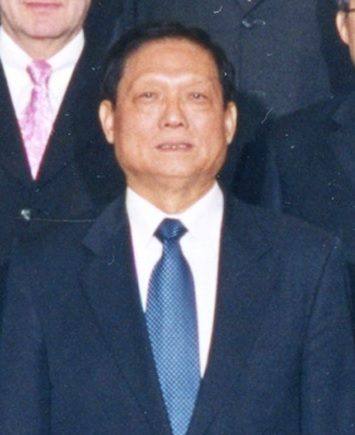
1. November 1942: the Wujin birth entry — month and day are pinned separately
Liu Qi's birth survives in the public record in two layers, and the layers differ by one day, so they are written separately. The official biographical sketch issued by Xinhua (published on 22 October 2007 during the 17th Party Congress and carried by CCTV International) reads: male, ethnic Han, native of Wujin, Jiangsu, born in November 1942 — official sketches give the month, year and native place, never the day. The English Wikipedia article on Liu Qi gives the full date: born 3 November 1942 in Wujin, Changzhou, Jiangsu. This page's rule is: month, year and native place are pinned on the authority of the official sketch; the day, 3 November, is recorded at reference-work grade, with a note that no official text confirming it has been found. The archive's discipline is the same here as on every other page of this site: write down exactly as far as the record reaches, and no further.
Wujin belonged to the Changzhou area of Jiangsu in 1942 and is today Wujin District of Changzhou. Of his family background and childhood there is no reliable public material — no public record — and this section does not fill the gap. The first verifiable node in his file is schooling: he graduated from Beijing 101 Middle School in 1959 and entered the metallurgy department of the Beijing Institute of Iron and Steel Engineering. The seventeen-year-old's university admission is worth pausing on, because it set the colour of the next thirty-four years of his working life: steel. To understand how he later came to sit in the Beijing mayor's office, and then to become the public face of an Olympic Games, one first has to understand that he was a technocrat who spent half a lifetime beside blast furnaces, not a political-work cadre parachuted into power.
Two further entries from the official sketch are recorded as they stand: he joined the Chinese Communist Party in September 1975 and began work in June 1968 (Xinhua sketch).
Sources: Xinhua biographical sketch of Liu Qi, 22 October 2007 (carried by CCTV International: born November 1942, native of Wujin, Jiangsu, ethnic Han, joined the CPC September 1975, began work June 1968, graduate of the Metallurgical Department of the Beijing Institute of Iron and Steel Engineering in iron smelting, postgraduate education, senior engineer of professor rank); English Wikipedia, "Liu Qi (politician, born 1942)" (born 3 November 1942 in Wujin, Changzhou; graduated Beijing 101 Middle School in 1959).
2. Thirty-four years of steel: from the Wuhan furnaces to Minister of Metallurgical Industry (1959–1998)
From 1959 to 1964 Liu Qi studied iron smelting in the Metallurgical Department of the Beijing Institute of Iron and Steel Engineering, and from 1964 to 1968 he stayed on for postgraduate study (the People's Daily people database and the Xinhua sketch agree). In June 1968 he began work at the Wuhan Iron and Steel Company, serving successively as a gas controller, a furnace worker and section chief of the No. 2 blast furnace — the official sketch lists these shop-floor posts one by one, and this stretch is the most solid and least contested part of his file. He then climbed the company's technical and managerial ladder: technician and deputy head of the No. 3 blast furnace, deputy director of the steel works and head of its production department, first deputy manager of the company from 1985, and manager (general manager) from 1990 to 1993. From 1968 to 1993 he spent a full twenty-five years inside a single giant steel enterprise in Wuhan.
In March 1993 he moved to the central government as Minister of Metallurgical Industry and secretary of the ministry's Leading Party Members' Group, serving until March 1998 (English Wikipedia infobox: March 1993 – March 1998, predecessor Qi Yuanjing; the ministry itself was abolished in the 1998 government restructuring). Those five years were his passage from enterprise manager to ministerial official. When the ministry was wound up he was not kept in the ministerial system but sent to Beijing — a direction of travel that proved to be the watershed of his political life: in 1998 he became deputy secretary of the Beijing Municipal Party Committee and a vice mayor of Beijing (Xinhua sketch: deputy secretary and vice mayor, 1998–1999; the People's Daily people database carries an additional line describing him in 1998 as deputy secretary and candidate for mayor; both are recorded). A man who had spent thirty-four years in steel thus entered the power centre of the capital at the age of fifty-six. This section records the career and nothing more: in those thirty-four years he held no post in the police, the political-legal system or the propaganda system, and no public record shows him handling any suppression or ideological work before he reached Beijing. His responsibility ledger begins with the year he arrived in the capital — which is where the next section starts.
Sources: Xinhua sketch of 2007 and the People's Daily people-database entry for Liu Qi (Wuhan Iron and Steel posts 1968–1978, 1978–1983, 1983–1985; first deputy manager 1985–1990; manager 1990–1993; Minister of Metallurgical Industry 1993–1998; deputy secretary and vice mayor of Beijing 1998–1999; the people database's additional "candidate for mayor" line for 1998); English Wikipedia infobox (ministerial tenure March 1993 – March 1998, predecessor Qi Yuanjing, post thereafter abolished).
3. February 1999: succeeding Jia Qinglin as Mayor of Beijing — the start date, layered
When exactly Liu Qi formally became Mayor of Beijing is stated differently by different sources, by days and by months, and this page pins it in layers rather than adopting one convenient date. First layer, the complaint's wording: the 2002 American complaint states that he had been Mayor of Beijing "since February 1999" (complaint, paragraphs 2 and 5), and the plaintiffs' lawyers and the International Crimes Database (ICD) case record both use the rounded tenure 1999–2003. Second layer, the reference works' exact day: the English Wikipedia infobox gives the mayoral tenure as 10 February 1999 to 19 January 2003, predecessor Jia Qinglin, successor Meng Xuenong. Third layer, the official sketches' annual table: Xinhua and the People's Daily record only years — deputy secretary and vice mayor 1998–1999, deputy secretary and mayor 1999–2002. Read together, the three layers support one firm conclusion: he arrived in 1998 as vice mayor (and mayoral candidate) and formally took the mayoralty through the Beijing People's Congress procedure in February 1999; 10 February is adopted on this page at reference-work grade and labelled as such. This page's tag year is 1999 and its sort date is 22 July 1999 — chosen not for his inauguration but for the date of the ban, for reasons set out in the Verification Note.
The moment of his arrival has to be read against the political calendar of 1999. Five months after he took office, in July 1999, the nationwide campaign against Falun Gong was launched. What weight the mayor's office carries in Beijing's power structure is put most bluntly in the complaint itself: the plaintiffs alleged that as mayor he held the power to formulate the city's important policies and to supervise and direct the executive branch of the city government, including the operation of the Beijing Public Security Bureau (complaint, as quoted in the State Department Legal Adviser's letter transcribing it; see the ICD record). Whether that allegation held, and how far, was the question the court later had to answer (Sections 6 and 7); but the mayor's administrative leadership of the municipal public security bureau is itself a public fact of China's local government system and needs no inference. In plain terms: from February 1999, the administrative machine that arrested people on Beijing's streets, held them and sent them to labour camps had, at the top of the government chain, Liu Qi. The municipal party secretary above him at that time was Jia Qinglin; party and government were two chains, and this page keeps their accounts apart item by item in what follows.
His mayoralty ended on 19 January 2003: on that day the Beijing People's Congress appointed a new mayor (the plaintiffs' Notice of Change in Defendant's Status, filed with the US court on 3 February 2003, records the appointment, citing the Wall Street Journal of 19 January 2003). Leaving the mayor's office did not mean leaving power — quite the opposite. On 22 October 2002 he had already succeeded Jia Qinglin as Secretary of the Beijing Municipal Party Committee and entered the Politburo, holding mayor and secretary together briefly until January 2003. From then until 2012 he was the capital's first-ranking leader. This page therefore speaks of a "mayoral segment" (February 1999 – January 2003) and a "secretary segment" (October 2002 – July 2012), overlapping between October 2002 and January 2003, and states, for every year discussed below, which chair he was sitting in.
Sources: English Wikipedia infobox (mayoral tenure 10 February 1999 – 19 January 2003, predecessor Jia Qinglin, successor Meng Xuenong); Xinhua sketch and People's Daily people database (the year-only tables: deputy secretary and vice mayor 1998–1999, deputy secretary and mayor 1999–2002); the American complaint, paragraphs 2 and 5 ("Mayor of Beijing since February 1999"; the mayor's executive authority over the municipal government including the Public Security Bureau — plaintiffs' allegation); plaintiffs' Notice of Change in Defendant's Status, 3 February 2003 (citing the Wall Street Journal, 19 January 2003: a new mayor appointed that day; Liu thereafter held party posts only).

4. July 1999: the ban fell less than six months into his mayoralty — the contemporary record of Beijing's suppression machine
On 20 July 1999 the Central Committee of the Chinese Communist Party launched the nationwide campaign to eradicate Falun Gong; on 22 July the Ministry of Civil Affairs promulgated its decision banning the Falun Dafa Research Society and the Ministry of Public Security issued its prohibitions, and Falun Gong was formally declared an illegal organisation in China (for the campaign's chronology see the standard dating of the persecution and the US State Department's 1999 human rights report, which records that tens of thousands of Falun Gong members were detained after the movement was banned in July). This page's sort date is 22 July — the date of the ban itself. Liu Qi's mayoralty and this campaign thus began counting their months almost together. In the years that followed, Beijing was the campaign's most visible stage: practitioners from all over the country travelled to the capital to petition, converging on the petitions offices and on Tiananmen Square, and Beijing's police — at the square, at the petitions offices, in the detention centres — carried out the capital's share of the campaign.
The numbers in the contemporary record are queued here source by source and are never merged. First: the US State Department's Country Report on Human Rights Practices for 1999, China section — tens of thousands of practitioners detained after the July ban; several leaders of the movement sentenced to long prison terms in late December; and hundreds of others sentenced administratively to re-education through labour in the autumn. The same report relays a figure given by Vice Premier Li Lanqing in a speech to party members on 30 November 1999: more than 35,000 detentions of Falun Gong practitioners between 22 July and 30 October — with the government's subsequent clarification that the figure represented the total number of confrontations between police and practitioners, many persons having had multiple encounters. This page registers the figure and the official clarification side by side: on either reading, a magnitude of thirty-five thousand encounters in just over three months is itself a measure of the workload of the police system in the capital and across the country in those months. Second: materials presented to the US Commission on International Religious Freedom on 15 May 2001, citing State Department and Amnesty International reporting — on 1 October 2000, National Day, security forces beat and detained hundreds of practitioners (perhaps up to one thousand) holding peaceful demonstrations in Tiananmen Square. Third: the State Department's annual reporting for 2001 and thereabouts — thousands of practitioners remained in detention, or sentenced to re-education through labour camps, or confined in mental institutions. Three sources, three dates, three calibres, each kept in its own name.
Beyond arrest, the hinge of Beijing's machinery was re-education through labour (RTL). RTL required no court trial: a labour-camp management committee chaired through the public security system could impose years of detention administratively, and during the Falun Gong years practitioners who travelled to Beijing to petition or who unfurled banners in the square were sent in large numbers directly into labour facilities in Beijing and elsewhere. Reports of the State Department and of the Congressional-Executive Commission on China estimate that the cumulative number of practitioners held in RTL camps, prisons and other detention facilities nationwide ran into the hundreds of thousands and perhaps millions. That is a nationwide estimate and is registered here as such; this page does not convert it into a Beijing figure, because no reliable source has ever published a Beijing-only RTL total — no public record. What can be pinned for Beijing are cases and places: for example, the Beijing Women's RTL facility named in public accounts and human rights records as holding practitioners who had come to the capital. Testimony of that kind is registered at its own grade, as testimony, and is not promoted into statistics. The arrests in Tiananmen Square were carried out in front of the world's cameras: a 2002 Reporters Without Borders report estimated at least fifty international press representatives arrested around the square since July 1999, some beaten by police — one reason the suppression could later be evidenced, item by item, in an American courtroom.
How this section's account is booked to Liu Qi is governed by a rule stated here and executed below. The decision to launch the nationwide campaign issued from the Party centre and Jiang Zemin; the administrative ban issued from the Ministry of Civil Affairs and the Ministry of Public Security; the 610 Office was the dedicated organ — none of those decisions was made by the Mayor of Beijing, and this page books no decision account to him. But from July 1999 to January 2003 the arrests, detentions and RTL committals in Beijing were carried out by the Beijing Public Security Bureau and its subordinate organs, and in the government chain that bureau answered to the mayor; Tiananmen Square lay within his city, and practitioners from across China were beaten, held and sent to camps in his city. The US State Department's Legal Adviser, in a letter to the Department of Justice dated 25 September 2002, summarised the plaintiffs' allegation against Liu in these terms: that as mayor he knew or should have known of the abuses committed against Falun Gong adherents in Beijing, and was under a duty under both Chinese and international law to prevent them (the letter transcribing the complaint). "Knew or should have known", and failure to supervise — that is precisely the layer of responsibility the court later examined. This section books the institutional and post layer. Of any specific personal instruction issued by him, apart from the single attributed remark dealt with next, there is no public record, and this page says so plainly.
The next item of material must be graded on its own. A remark attributed to Liu Qi has circulated widely overseas: that in September 2000, in connection with Beijing's bid for the 2008 Olympic Games, he said Beijing would "eliminate Falun Gong" — a claim relayed through a Reuters reporting chain and later quoted in advocacy materials. In this verification round this page was unable to find the original report text, and unable to find a second independent source confirming the occasion and wording. The remark is therefore registered only at the grade of "relayed through the Reuters chain — unverified": it is not quoted as fact, no personal account is booked on it, and a line is left here and in the Verification Note so that later checkers know the lead exists and that this page declined to use it as fact. A sentence that has circulated for more than twenty years is given, by the archive, exactly the treatment its evidence can bear — with its grade written on its face.
Sources: US Department of State, Country Reports on Human Rights Practices for 1999, China section (tens of thousands detained after the July ban; leaders sentenced to long terms; hundreds given RTL; Li Lanqing's figure of over 35,000 detentions and the government's clarification); US Commission on International Religious Freedom hearing materials, 15 May 2001 (hundreds, perhaps up to one thousand, beaten and detained in Tiananmen Square on 1 October 2000; State Department and Amnesty reporting on police torture); Reporters Without Borders 2002 report, as relayed in the persecution literature (at least 50 international press representatives arrested around the square since July 1999); US State Department Legal Adviser's letter, 25 September 2002 (summary of the allegation: "knew or should have known", and the duty to prevent); the "eliminate Falun Gong" remark registered as unverified, Reuters-chain only — see Verification Note.
5. 7 February 2002: six plaintiffs sue in San Francisco — service on the road to the Salt Lake City Winter Olympics
On 7 February 2002 six Falun Gong practitioners filed a complaint in the US District Court for the Northern District of California, Case No. C 02-0672 CW (EMC), captioned Jane Doe I, et al. v. Liu Qi. The six plaintiffs' names are recorded from the ICD case record and the complaint itself: Jane Doe I and Jane Doe II (two Chinese practitioners suing under pseudonyms), Helene Petit (of France), Martin Larsson, Leeshai Lemish and Roland Odar. Counsel for the plaintiffs were the San Francisco-based Center for Justice and Accountability (CJA) and human rights lawyer Terri Marsh. The legal bases pleaded were the Alien Tort Claims Act (ATCA) and the Torture Victim Protection Act (TVPA), and the complaint sought compensatory and punitive damages (ICD case record; the complaint text as published by CJA).
What the complaint alleged is recorded item by item, in the complaint's own terms. It states that each plaintiff, after appearing at peaceful gatherings in Beijing's Tiananmen Square in 2000 or 2001 in support of Falun Gong, was subjected by Beijing police or other security forces to arbitrary detention, torture or cruel, inhuman and degrading treatment (complaint, preliminary statement). The allegations against Liu Qi himself run in three strands: that he "planned, instigated, ordered, authorized, or incited" the police and security forces to commit the abuses; that he held command or superior responsibility over those forces and controlled, or aided and abetted, them; and that, as mayor, he failed to supervise and discipline the police who committed them (ICD summary; complaint, paragraph 2). The methods of abuse described include beatings, sexual assault and torture; among them, the detail of "electric shocks through needles placed in [the] body" became widely known after the plaintiffs' evidence was relayed by the Center for Investigative Reporting in April 2008. This page registers that detail at the grade of "complaint allegation, as relayed by CIR": it appears in the plaintiffs' case, and the court's eventual declaratory judgment did not confirm each method item by item — readers must not treat the complaint's catalogue as the judgment's findings.
The service of process is the most dramatic, and legally the most consequential, scene in the case. In February 2002 Liu Qi travelled to the United States in his capacity as a leader of Beijing's Olympic bid and of the Chinese Olympic delegation, to attend the Winter Olympics in Salt Lake City; en route, at San Francisco International Airport, he was served with the complaint (ICD case record: served at San Francisco International Airport; CIR, April 2008: served while en route to the 2002 Winter Olympics in Salt Lake City). He had come to stand for Beijing's Olympic image, and at the airport he was handed a complaint accusing Beijing's police of torture — a scene reported by Agence France-Presse and other outlets between 9 and 11 February 2002, and registered here at the grade of contemporary reporting.
The defendant's response was no response. Liu Qi never appeared in the case, never answered and never instructed counsel to defend it (ICD record: he did not reply or appear after service). The clerk in due course entered a default (the State Department's letter records the entry of default on 12 March — the letter is dated September 2002, and the date referred to is 12 March 2002). The executive branches of both states, meanwhile, intervened to have the case dismissed: both the Chinese government and the US State Department expressed to the court the view that the case should be dismissed, arguing among other things that it would likely have a negative impact on relations between the two states; the State Department further argued, under the Act of State doctrine, that US courts should be cautious when asked to sit in judgment on the acts of foreign officials taken within their own countries pursuant to their government's policy (ICD procedural summary, citing the State Department's submission at page 7). From the outset, then, three forces were in play: plaintiffs determined to have the case heard, two governments determined to make it disappear, and a defendant who remained entirely silent. The court's work over the next two years consisted of walking the procedure to its end under that silence and that pressure — day by day, in the next section.
Sources: International Crimes Database (ICD), Case 991 (Case No. C 02-0672 CW (EMC); the six plaintiffs' names; filing on 7 February 2002; the three strands of allegation; service at San Francisco International Airport; the defendant's failure to reply or appear; the Chinese government's and US State Department's submissions urging dismissal); the complaint as published by the Center for Justice and Accountability (ATCA and TVPA bases; detention and torture after the 2000–2001 Tiananmen gatherings; damages sought); Center for Investigative Reporting, 23 April 2008, as relayed in Falun Dafa Information Center materials (service en route to Salt Lake City; the needles detail as relayed; plaintiffs represented by CJA); US State Department Legal Adviser's letter, 25 September 2002 (default entered on 12 March).
6. The full procedural record: from the briefing order of May 2002, through the immunity fight of 2003, to the amended recommendation of October 2004 (2002–2004)
This section pins the procedural timeline day by day, because the easiest way to miswrite this case is to compress three years of procedure into one sentence about a court "finding him guilty". Step one: on 1 May 2002 (the ICD record gives 1 May; related case materials carry a 3 May date for Magistrate Judge Edward M. Chen's letter soliciting the State Department's views — the two-day difference reflects two different documents, an order and a letter, and both dates are recorded here), the magistrate judge called for briefing on two threshold questions: whether the case was barred by the Foreign Sovereign Immunities Act (FSIA), and whether it should be declared non-justiciable under the Act of State doctrine. On 25 July 2002 the district court consolidated the proceedings with a parallel case against Xia Deren, a deputy governor of Liaoning Province (Plaintiff A, et al. v. Xia Deren, Case No. C 02-0695), and referred that case to Judge Chen as well (State Department letter). This page notes expressly: Xia Deren was a different defendant with a different factual record (allegations centred on Liaoning and the Masanjia labour camp); the two cases were joined only for the handling of the shared legal questions, and neither man's account may borrow from the other's. On 25 September 2002 the State Department's Legal Adviser, William H. Taft, wrote to the Department of Justice setting out the executive branch's position in full: at its core, that the FSIA's terrorism exception did not apply (China had never been designated a state sponsor of terrorism), and that everything the complaint alleged consisted of acts by Liu in his capacity as a senior official implementing official policy (the letter itself).
Step two was the default procedure and the first recommendation. After the entry of default the plaintiffs moved for a default judgment. For 11 June 2003 the sources carry two registrations, which this page sets side by side and then reads together. In their announcements of 20 June 2003, the plaintiffs and the Falun Dafa Information Center declared that Judge Chen had reported that Liu Qi was not entitled to foreign sovereign immunity, that he was responsible for overseeing the torture of practitioners by police under him, and that the recommendation had gone to the district court (a press conference to that effect was held outside the federal courthouse in San Francisco on 2 July 2003, with CJA's executive director among the speakers). The ICD's procedural history, by contrast, registers 11 June 2003 as the date on which the plaintiffs filed their request for default judgment. The two registrations point at adjacent links of the same procedural chain: in June 2003 the plaintiffs' application for default judgment and the magistrate's first, plaintiff-favourable word on immunity converged. This page's coordinating line (from the assignment spine) is that on 11 June 2003 the magistrate judge recommended that Liu was not entitled to immunity for these claims, notwithstanding the State Department's position; that line is adopted as the main thread, with the ICD's registration of the same date as the filing of the request recorded alongside, so that readers can see the seam in the materials. On one point all sources agree: by the summer of 2003 the court's inclination already ran in the plaintiffs' favour, and the executive branch's view had not been adopted as the last word.
Step three was the amended recommendation of 2004 and its adoption. In June 2004 the US Supreme Court, in Sosa v. Alvarez-Machain, restated the scope of the ATCA, and the State Department wrote again (the Taft letter of 3 August 2004, registered in the ICD's additional materials). On 28 October 2004 Judge Chen issued his amended Report and Recommendation (reported at 2004 U.S. Dist. LEXIS 23743), dealing with the Liu and Xia cases together: he recommended that default judgment be granted in part and denied in part, and that relief be limited to declaratory relief, with no money damages. The amended recommendation's legal reasoning is clearly summarised in the ICD record: although Liu's acts had been "authorised" by a covert, unofficial government policy of torture, he had acted outside the scope of his authority under Chinese law itself, and since the FSIA shields only officials acting within the scope of their authority, he enjoyed no sovereign immunity; the Act of State doctrine did not apply; and a declaratory judgment against him would "alleviate any foreign policy concerns" — that is, the court deliberately pressed the remedy down to the lightest available form, declaring rights violated and awarding no damages, precisely so as not to collide head-on with the executive's foreign-policy judgment. That restraint is itself the key to understanding the final judgment's nature: it was designed, from the start, not as a judgment to be executed for money, but as a judgment to stand on the record.
Sources: ICD case record, procedural history (the briefing order of 1 May 2002; the Chinese government's and State Department's dismissal submissions; the registration of 11 June 2003 as the filing of the request for default judgment; the Report and Recommendation of 28 October 2004 and its reasoning on exceeding authority, the FSIA and the Act of State doctrine; the "alleviate any foreign policy concerns" passage); US State Department Legal Adviser's letter, 25 September 2002 (the judge's 3 May request for views; consolidation with the Xia Deren case on 25 July; the executive's position that the FSIA exception did not apply); Falun Dafa Information Center releases of 20 June and 2 July 2003 (the announcement that immunity had been denied and the CJA press conference); the amended Report and Recommendation text (2004 U.S. Dist. LEXIS 23743: default judgment granted in part; relief limited to declaratory relief).
7. The default judgment of 8 December 2004: what it held, what it did not hold — and the lines between it, a criminal conviction and a sanction
On 8 December 2004 District Judge Claudia Wilkin adopted the magistrate judge's recommendation and entered a default judgment against Liu Qi. Its declaratory content can be stated on the authority of the ICD case record, which tracks the judgment's own first page: the court declared that Liu Qi had violated the rights of Jane Doe I and Jane Doe II to be free from torture and arbitrary detention, and the right of Helene Petit to be free from cruel, inhuman or degrading treatment (judgment, page 1). Of the six plaintiffs, only these three succeeded; the claims of the others (Larsson, Lemish and Odar) were dismissed (ICD: the court dismissed the claims of the other plaintiffs). The relief was declaratory only; there was no award of money damages — the framework set by the amended recommendation was carried through. By the time judgment was entered, Liu's own position had changed: he had long since left the mayor's office and risen to Beijing party secretary and Politburo member — a change the plaintiffs' February 2003 notice had already reported to the court. An American federal court thus entered this judgment against a man who was, at that moment, the Communist Party chief of China's capital and a member of the ruling party's highest body. The weight of the judgment, and its limits, both have to be read against that fact.
Three lines are now drawn one by one, because this is the most important passage on the page. First line: this was a civil judgment, not a criminal one. The case was a civil action from the day it was filed; the plaintiffs were private parties; what they sought was damages and a declaration. Liu Qi was never criminally charged by any prosecutor, never stood trial and was never sentenced. Some advocacy materials describe the case as his having been "found guilty" or "convicted of torture"; that is campaign language, not the legal record, and this page nowhere adopts it — whenever the case is mentioned here, the wording used is the accurate one: a default judgment declaring him liable. Second line: it was a default judgment. The defendant never appeared and never defended; the court ruled with only the plaintiffs' evidence and legal argument before it, and even then cut the claims down sharply (three of six plaintiffs succeeding, declaratory relief only). A default judgment is a valid judgment in American law, but its evidentiary path differs from that of a contested judgment, and an honest archive prints that procedural fact beside the conclusion, always. Third line: it was not a sanction. It produced no asset freeze, no entry ban and no prohibition on transactions; it belongs to the judicial track, wholly separate from the administrative track by which governments later designated individual Chinese officials. Section 11 will show that, as late as 2026, Liu Qi's name had never appeared on any sanctions list. Hold all three lines at once and the judgment's true historical place becomes clear: it is a declaration, entered on the record of a United States federal court, of a serving member of China's highest leadership's responsibility for torture — unprecedented in its specificity, and in its enforceability close to nil. Both halves of that sentence must stand.
At the time, the judgment attracted almost no mainstream media attention (CIR, 2008: the 2004 judgment received little media attention when it was entered). It returned to public view on the eve of the Beijing Olympics: on 23 April 2008 the Center for Investigative Reporting published its account, "Beijing Olympic Chief Linked to Torture", exhuming the judgment and pointing out that the man then presiding over the Olympic preparations had, four years earlier, been held by a US federal court responsible for the illegal detention and torture of two Chinese nationals and for treatment, involving a sexual assault, of a French woman (CIR report, carried and registered by the Falun Dafa Information Center and by Friends of Falun Gong in early May 2008; the reporting window runs from late April into early May 2008). From December 2004 to April 2008 the judgment lay in the court file for more than three years: it did not stop its defendant from sitting on the Politburo, it did not stop him from bidding for and preparing an Olympic Games, and it took a journalist, four months before the opening ceremony, to dig it out.
Sources: ICD case record, holding (default judgment of 8 December 2004; the declarations for Doe I and Doe II on torture and arbitrary detention and for Petit on cruel, inhuman or degrading treatment; the other plaintiffs' claims dismissed; judgment, page 1); the amended Report and Recommendation (the framework limiting relief to declaratory relief, with no money damages); Center for Investigative Reporting, 23 April 2008 (the judgment's obscurity in 2004 and its exhumation before the Games; its summary of the holding); plaintiffs' Notice of Change in Defendant's Status, February 2003 (the defendant's position at judgment: party secretary and Politburo member).
8. The 2008 Olympics: BOCOG president and municipal party secretary in one person — evictions, arrests and round-ups of the preparation years
On 13 July 2001 Beijing won the right to host the 2008 Olympic Games; on 13 December 2001 the Beijing Organising Committee (BOCOG) was established, with Liu Qi as its head, a post he kept until BOCOG was wound up in August 2009 (English Wikipedia: chairman of BOCOG, 13 December 2001 – 22 August 2009; a second tenure line gives "President of BOCOG", 29 August 2004 – 24 August 2008. The two lines differ in the English rendering of the title and in their start and end dates; both are recorded, and the uncontested core — that he took BOCOG's leadership in December 2001 and presided over the preparation of the 2008 Games — is the main thread). At the same time, from October 2002, he was Secretary of the Beijing Municipal Party Committee and a member of the Politburo. Throughout the preparation period for the 2008 Games, therefore, the party power of the city of Beijing and the organisational power of the Olympics were held by the same man: where venues were built, which lanes of hutongs came down, who might remain in Beijing as the Games approached — within the system, those decisions converged on his office. The accounting rule for this section is set at the outset: evictions, arrests and round-ups that issued from the municipal and BOCOG systems are booked to his dual post account; those that issued from nationwide political-legal deployments (such as Ministry of Public Security directives) are booked at the institutional layer with their level named, and are not automatically promoted into his personal orders. Of any document in which he personally ordered a specific eviction or arrest in the Olympic preparations there is no public record, and that is stated item by item.
The eviction figures are, as usual on this page, layered. Human Rights Watch's record is qualitative: to build Olympic venues, thousands of Chinese citizens were forcibly evicted from their homes with practically no due process in consultation or compensation; its submission to the 2009 Olympic Congress lists forced evictions among the four categories of abuse linked to the Beijing Games (Human Rights Watch, submission of 23 February 2009). The Geneva-based Centre on Housing Rights and Evictions (COHRE) put a number on it: its report of June 2007 estimated that 1.25 million people had already been displaced in preparation for the Games and that, by the opening of the Games in August 2008, a total of 1.5 million Beijing residents would have been displaced (COHRE report, as reported by the Associated Press and Reuters on 5 June 2007). The Beijing authorities' official line rejected the magnitude wholesale: the Foreign Ministry called COHRE's figures "groundless", and municipal officials stated that since 2002 only 6,037 households had been demolished to make way for nine venues, and that not one household had been forced to move out of Beijing (official responses as quoted in the same reports). The three layers stand side by side: 1.25 million and 1.5 million are an independent organisation's estimates; 6,037 households is the official venue-only count (venues only, not the accompanying municipal works); the two count different things, and they may not be merged or inflated into one another. The intermediate facts that can be pinned are these: forced eviction in the preparation years existed on a large scale; disputes over compensation and procedure are documented in many individual cases; and in 2007 COHRE named the Beijing Municipality and BOCOG jointly as recipients of its Housing Rights Violator Award — BOCOG was named, which means the organising institution itself holds a box in this account, and that box belongs to Liu Qi's tenure as its president.
The round-up of people is a separate ledger. Human Rights Watch recorded that in the preparation period rights activists and critics were jailed or placed under house arrest, among them those punished specifically for criticising the Games: Hu Jia was sentenced on 3 April 2008 to three and a half years for "inciting subversion of state power"; the authorities also set up nominal "protest parks", and citizens who applied to protest in them were themselves detained (Human Rights Watch, letter to the IOC Ethics Commission, 31 March 2008, and submission of 2009). The pre-Games arrests of Falun Gong practitioners carry a specialist record of their own: the Falun Dafa Information Center reported cases, within the first three months of 2008, of practitioners dying within days — in some cases hours — of arrest, and published a list of 67 practitioners detained in Beijing as of March 2008. This page registers those two items at the grade of advocacy-organisation records, noting that they have not received independent corroboration of the same weight as Human Rights Watch's. At ministry level there was also a nationwide deployment: Amnesty International recorded that Zhou Yongkang, then Minister of Public Security, issued a Strike-Hard-style directive against "hostile forces" in the Olympic preparation period — that entry belongs to the ministry and the central political-legal layer, not to Liu Qi personally; but Beijing's share of its execution took place in a city whose party secretary he was, and is booked at the city post layer. The suppression of the March 2008 protests in Tibet and the global protests along the torch relay form the Games year's wider background; this page registers them as background only and books no Beijing account for them.
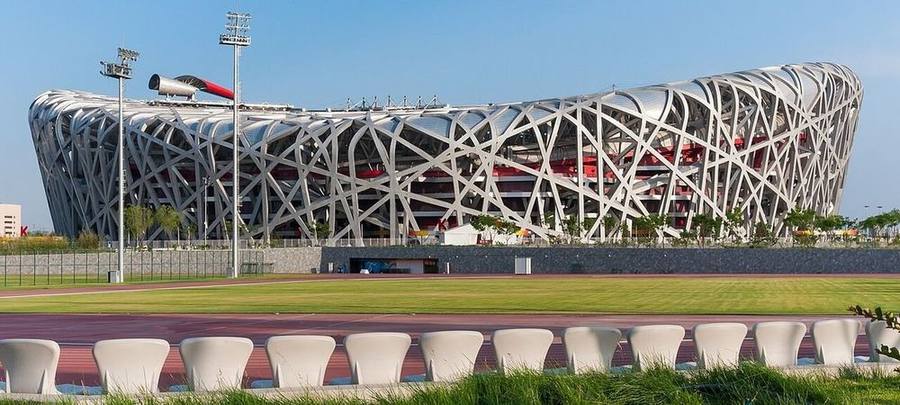
The Games themselves were held from 8 to 24 August 2008 and were widely judged an organisational success. On 25 August, IOC President Jacques Rogge conferred the Olympic Order on Liu Qi (English Wikipedia). This section closes by filing two pictures side by side. In one: fireworks over the Bird's Nest and a gold Olympic Order. In the other: the 1.25 million displaced of COHRE's report, Hu Jia on Human Rights Watch's lists, the practitioners arrested before the Games on the Information Center's lists, and, in a San Francisco court file, the unexecuted and never-overturned default judgment of 2004. In 2008 Liu Qi stood at the centre of both pictures — the first was the summit of his career; the second is the reason this site exists. The archive does not reconcile the two pictures; it insists only that neither lose its page.
Sources: English Wikipedia (BOCOG chairmanship, 13 December 2001 – 22 August 2009, and the President tenure line, 2004–2008; the Olympic Order conferred by Rogge on 25 August 2008); Human Rights Watch, submission to the 2009 Olympic Congress, 23 February 2009 (the four categories of Games-linked abuse: media censorship, forced evictions, migrant labour, silencing of activists), and letter to the IOC Ethics Commission, 31 March 2008 (the Hu Jia case; protest-park applicants detained; "massive uncompensated forced evictions"); COHRE report of June 2007, as reported by AP and Reuters, 5 June 2007 (1.25 million already displaced; 1.5 million projected; the official 6,037-household response); Falun Dafa Information Center materials of 2008 (deaths shortly after arrest in early 2008 and the Beijing list of 67 detainees — advocacy-organisation grade); Amnesty's record of Zhou Yongkang's directive, as relayed in Information Center materials (ministry-level record).
9. One paragraph on SARS: the mayor changed in 2003; the secretary did not (kept brief)
This section is deliberately brief, as the assignment requires: SARS is not the main line of this file's account of Liu Qi, but the personnel earthquake of 2003 shows the reader exactly where he stood. In January 2003 Meng Xuenong succeeded Liu as Mayor of Beijing, and Liu continued as party secretary alone. In the spring of 2003 SARS broke out in Beijing and was worsened by an early cover-up; on 20 April 2003 the Party centre removed Meng Xuenong from his post as deputy secretary of the Beijing Municipal Committee (the mayoralty went with it) and removed Health Minister Zhang Wenkang from his party post, the pair being widely reported as held responsible for the mishandling (Associated Press and other reports, 21 April 2003). Wang Qishan, party secretary of Hainan, was transferred in as Beijing deputy secretary and then acting mayor and mayor. Two facts only are pinned against Liu Qi here. First, he was at the time the municipal party secretary, the city's highest party official, and the man removed was his own successor of two months before; contemporary reporting speculated that Meng had been "sacrificed" to protect higher levels — a claim registered in the English Wikipedia article on Meng Xuenong as something "some reports claimed", recorded by this page at the grade of unproven speculation and not adopted as fact. Second, Liu himself was subjected to no public accountability of any kind, his secretaryship was untouched, and he sat in it for nine more years. The SARS cover-up and accountability account belongs to other pages and other histories; this page registers only the personnel fact and his place in it: in 2003, the mayor changed twice — the secretary did not change.
Sources: English Wikipedia, "Meng Xuenong" (mayor January–April 2003; removed over SARS; party secretary Liu Qi; succeeded by Wang Qishan; the "sacrificed" claim at the grade of reported speculation); Associated Press, 21 April 2003 (Meng Xuenong and Zhang Wenkang removed from party posts; the near-tenfold jump in Beijing case numbers).
10. The responsibility ledger: personal, post, institutional and background accounts, kept in four separate books
All of this page's material is gathered here into four books, closed one by one, with no transfers between them. The personal book — acts or words proved by contemporary documents to be his own — contains, within the scope of this file's checks, one and a half items. The one item is an act in his official capacity: having been lawfully served in the United States in 2002, he chose never to appear and never to answer; that silence was his own litigation decision, and its legal consequence — the default judgment — rests on him personally, and is booked personally. The half item is the September 2000 "eliminate Falun Gong" remark attributed to him: one Reuters relay chain, no original text, no second source; this page registers it only as an unverified lead and books nothing on it in the personal book's settled part (see Section 4 and the Verification Note). Beyond that, of any document in which he personally ordered an arrest, approved an RTL committal or directed an eviction, there is no public record — a boundary marker, not an acquittal: in the Chinese system, responsibility grows chiefly in the post and institutional books.
The post book records what the chairs he sat in answer for, in the conduct and the omissions of the machines under them. The mayoral segment (February 1999 – January 2003): the Beijing Public Security Bureau's arrests, detentions and RTL committals of Falun Gong practitioners, in Tiananmen Square and across the city, took place under the municipal government he headed; and that is exactly the layer of responsibility the American court's 2004 judgment recognised — its logic was not "he beat anyone with his own hands" but the plaintiffs' case, accepted in default proceedings, that he had formulated and authorised policy and had failed to supervise and discipline the police beneath him. The secretary segment (October 2002 – July 2012): the evictions of the Olympic preparations, the handling of rights defenders and the pre-Games sweeps took place in the city whose party secretary he was, and the organising institution was chaired by him personally; they are booked to the post account, with the decision level of individual cases (municipal or central) following the public record where one exists and marked as unrecorded where it does not. The BOCOG presidency carries a box of its own: COHRE named BOCOG a housing-rights violator, and the IOC gave its president the Olympic Order; both entries fall within the same tenure.
The institutional and background books are stated together, to prevent misreading. The institutional book holds what was executed by organs under him without depending on his personal will: the Beijing execution share of the nationwide anti-Falun Gong campaign (the public security system); the daily operation of the RTL system (the police-chaired RTL committees); the Beijing landing of the nationwide Olympic security deployments (execution of ministry directives). The background book records overlap only, and books no responsibility: the decision to launch the campaign (the Party centre); the administrative and legislative acts of the ban (the Ministry of Civil Affairs, the Ministry of Public Security, and the Standing Committee of the National People's Congress's anti-cult decision of October 1999); the creation and operation of the 610 Office; the national decision-making of the SARS response. All of these happened within his tenures and touched his jurisdiction, but the power to decide them never lay in the hands of a Mayor or Secretary of Beijing. This page's only treatment of the background book is to register the temporal overlap and, where needed, to mark the boundary between the deciding layer and the executing layer. Finally, the exclusions: the consolidation of his case with Xia Deren's was a procedural arrangement only, and the Liaoning labour-camp allegations are not booked to Liu Qi; the matters recorded against other officials (Jiang Zemin, Li Lanqing, Zhou Yongkang and others) in other jurisdictions belong to their own pages and are not imported here. Within the scope of this file's searches, there is no reliable record of any second foreign lawsuit against Liu Qi as defendant — no public record.
Sources: this section is this site's statement of the attribution rules applied to the whole page; the facts relied on are those of the preceding sections and their sources; for the judgment's logic of responsibility see the ICD case record and the amended Report and Recommendation.

11. Sanctions and accountability: two boxes, two legal categories, neither impersonating the other
This section expands the conclusion in the ev-meta box into a checkable record. First, the accountability box. The only legal accountability in Liu Qi's life that rests on a court file is the civil default judgment in Doe v. Liu Qi of 8 December 2004: a declaration that he was liable for the torture and arbitrary detention of Doe I and Doe II and for the cruel, inhuman or degrading treatment of Petit, with relief limited to that declaration. In China he was never investigated, charged or disciplined — no public record. Of lawsuits against him in other countries, this file's searches found no public record. The criminal box is empty: no prosecutor in any country has ever brought a criminal charge against him — no public record. The complete statement of this box is: one foreign civil declaration in default, and nothing else.
Second, the sanctions box. A sanction is a designation made by an executive authority under sanctions legislation; its consequences are asset freezes, transaction prohibitions and entry restrictions, and it runs on a wholly separate track from any court judgment. The coordinator check relied on for this page was carried out on 5 November 2026, and its objects and method are recorded: the full OFAC Specially Designated Nationals list published on 28 October 2026, and the UK Sanctions List of 27 October 2026, checked against "Liu Qi" and his identifying particulars — neither list contains any designation of him. Other major sanctions jurisdictions, such as the European Union, were not exhaustively checked in this round, so the conclusion is stated strictly as "no US or UK designation on record", and is not inflated into an unconditional global assertion. One common misreading is guarded against expressly: after the 2004 judgment, Liu travelled the world on Olympic business as usual and accepted the Olympic Order in 2008 — which itself proves that the judgment was never converted by any executive authority into an entry or asset measure. Judgment is judgment and sanction is sanction: the former he has; the latter he does not. The two boxes are printed side by side here so that any reader can see the line at a glance, and so that no room is left for the substitution of "sued in an American court" for "sanctioned by America".
Sources: coordinator check record of 5 November 2026 for this site (the full OFAC SDN list, published 28 October 2026, and the UK Sanctions List of 27 October 2026 — no designation of Liu Qi in either); for the accountability box, the ICD case record and Sections 5 to 7 of this page and their sources.
12. After 2012: out of the Politburo, and no post thereafter — current status and a closing timeline
On 3 July 2012 Liu Qi stepped down as Secretary of the Beijing Municipal Party Committee and was succeeded by Guo Jinlong, then the city's mayor (English Wikipedia: secretaryship 22 October 2002 – 3 July 2012, successor Guo Jinlong); in November 2012, after the 18th National Congress of the Party, he left the Politburo, ending his service on the 16th and 17th Politburos. Two searches were then made for this file (verification round, 5 November 2026). First: did he hold any subsequent post? No public record was found of any later post — National People's Congress, Chinese People's Political Consultative Conference, advisory or associational — and the conclusion is recorded as it stands: no public record of any party or state post after 2012. Second: what is his latest reliably verifiable public status? In post-retirement reporting his name appears only in retrospect, in his retired identities as former Beijing party secretary and former BOCOG president; this file found no reliable contemporary report of public activity by him in the 2020s, and the gap is left blank as no public record. He was born on 3 November 1942 and was eighty-four on this page's verification date, 5 November 2026; his health and residence are matters of no public record. The archive, for a living person, writes only as far as the public record reaches: his last certain status is retired, former Politburo member, and defendant in an unenforced American default judgment.
The timeline is drawn together here for the whole page. 3 November 1942: born in Wujin, Jiangsu (the official sketch gives November 1942). 1959: graduates from Beijing 101 Middle School and enters the Beijing Institute of Iron and Steel Engineering. June 1968: begins work at the Wuhan Iron and Steel Company. September 1975: joins the Chinese Communist Party. 1990: manager of Wuhan Iron and Steel. March 1993: Minister of Metallurgical Industry. 1998: deputy secretary of the Beijing Municipal Party Committee and vice mayor. February 1999: becomes Mayor of Beijing (reference works give 10 February). 20 July 1999: the nationwide campaign against Falun Gong is launched; 22 July 1999: the ban is promulgated — this page's sort date. 1 October 2000: hundreds to a thousand practitioners beaten and detained in Tiananmen Square (US Commission on International Religious Freedom materials). 13 December 2001: heads BOCOG. 7 February 2002: six plaintiffs file suit in San Francisco; he is served at San Francisco International Airport. 22 October 2002: becomes Beijing party secretary, then enters the Politburo. 19 January 2003: leaves the mayoralty. April 2003: Meng Xuenong is removed as mayor over SARS and Wang Qishan succeeds him; Liu's secretaryship is untouched. June 2003: the default proceedings advance, with the magistrate's plaintiff-favourable step on immunity (for the differing registrations of the date, see Section 6). 28 October 2004: the amended Report and Recommendation. 8 December 2004: the default judgment. April–May 2008: CIR exhumes the judgment. August 2008: the Beijing Olympics are held; on 25 August he receives the Olympic Order. 3 July 2012: leaves the Beijing secretaryship; November 2012: leaves the Politburo. 5 November 2026: this site's check — no designation of him in the OFAC or UK lists: no sanctions record; the American default judgment remains his only entry in the accountability box.
Sources: English Wikipedia (secretaryship 22 October 2002 – 3 July 2012, successor Guo Jinlong; Politburo service 2002–2012; departure from the Politburo in November 2012); the sources of the preceding sections for every other node of the timeline, which are not repeated here.
13. Verification Note
This page was verified on 5 November 2026. The tag and sorting are explained first. This site's People section is sorted by the year of a figure's signature responsibility event. Liu Qi's signature responsibility event is the suppression in Beijing that followed the 1999 Falun Gong ban — the year he became mayor, the year from which the capital's share of the campaign ran under his mayoralty, and the conduct later written into an American court file. This site therefore tags him 1999, with a sort date of 22 July 1999, the day the ban was promulgated, and a sort year of 1999. It is stated at the same time: the ban was not his decision (see the background book in Section 10); the date is chosen because it marks where his tenure and the campaign's arrival in Beijing begin, not to book the central decision to him.
The layering and the corrections made in this writing round are itemised. (1) Birth date: the official sketch gives only the month and year (November 1942); 3 November comes from the English Wikipedia; the two are recorded in parallel and graded, and the day is not dressed as official text. (2) Mayoral start: the complaint and the ICD give February 1999, the reference works give 10 February, the official sketches give years only; the main text reads "February 1999", with the exact day labelled at reference-work grade. (3) The procedural registration of 11 June 2003 diverges: the ICD's procedural history registers it as the date the plaintiffs filed their request for default judgment, while the plaintiffs' contemporary announcements and this page's assignment spine give it as the magistrate's recommendation against immunity; Section 6 reads the two together and leaves the divergence visible in the text rather than smoothing it away. (4) The "eliminate Falun Gong" remark: it rests on a Reuters relay chain alone; this round found neither the original report text nor a second independent source, and the remark is accordingly downgraded to an "unverified" lead — registered as existing, never quoted as fact. That is this page's downgrade of the most widely circulated "Liu Qi quotation" in the literature, and later writers may not promote it back. (5) Olympic displacement figures: COHRE's 1.25 million (already displaced) and projected 1.5 million, and the Beijing authorities' 6,037-household figure, count different populations; they are registered in parallel, never merged and never maximised. (6) The nature of the judgment: this page uses "civil default judgment, declaratory relief" throughout and rejects the advocacy vocabulary of "conviction" and "sentence"; only three of the six plaintiffs succeeded and the other three claims were dismissed, and that is recorded as it stands. (7) The boundary of the sanctions conclusion: this round's check covered only the full OFAC SDN list (edition of 28 October 2026) and the UK Sanctions List (edition of 27 October 2026); the conclusion is stated as "no US or UK designation on record" and is not extended into a global assertion. (8) Other foreign lawsuits: within this file's searches, no second foreign suit against Liu Qi as defendant was found; the procedural consolidation with the Xia Deren case, and the suits against other officials in other jurisdictions, are fenced off in the text. Materials not used are also registered: advocacy details of Liu's personal words and acts that lack independent corroboration (beyond the graded relay chain already noted) were not used; there is no reliable public record concerning his family members, and this page has no family section.
视频证据Video Evidence
以下为与本页人物直接相关的机构新闻影像与档案影像。Institutional news and archival footage directly related to this page's subject.
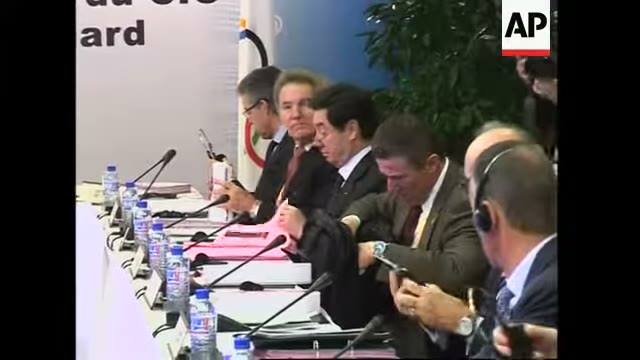
《北京奥组委主席刘奇与国际奥委会举行会谈》(AP)|2008年影像|原声:英语报道BOCOG president Liu Qi meets the IOC executive board (AP) | footage 2008 | Audio: English
Sources
- Xinhua, biographical sketch of Liu Qi, 22 October 2007 (carried by CCTV International: birth month and year, native place, dates of joining the Party and beginning work, education, and the annual table of posts): http://www.cctv.cn/english/20071023/102293.shtml
- People's Daily people database, entry for Liu Qi (the Wuhan posts year by year; Minister of Metallurgical Industry; the additional "candidate for mayor" line for 1998): http://english.peopledaily.com.cn/data/people/liuqi.shtml
- English Wikipedia, "Liu Qi (politician, born 1942)" (exact birth day; mayoral and party-secretary tenures with predecessors and successors; BOCOG tenure; the Olympic Order; departure from the Politburo in 2012): https://en.wikipedia.org/wiki/Liu_Qi_(politician,_born_1942)
- International Crimes Database (ICD), Jane Doe I, et al. v. Liu Qi, et al., Case 991 (Case No. C 02-0672 CW (EMC); the parties; filing and service; procedural history; the holding of the default judgment of 8 December 2004): https://www.internationalcrimesdatabase.org/Case/991
- Center for Justice and Accountability, the complaint as published, Jane Doe I, et al. v. Liu Qi, Civil Action No. C 02 0672 CW (structure of the allegations; ATCA and TVPA bases): https://cja.org/wp-content/uploads/downloads/LiuQi_Complaint_Unsealed_1.pdf
- US Department of State, Legal Adviser William H. Taft, letter of 25 September 2002 (entry of default; consolidation with the Xia Deren case; the FSIA position; the summary of the complaint's allegations), archived by the Asser Institute: https://www.asser.nl/upload/documents/DomCLIC/Docs/NLP/US/LiuQi_StateDept_25-9-2002.pdf
- Doe v. Liu Qi, amended Report and Recommendation, 28 October 2004, 2004 U.S. Dist. LEXIS 23743 (default judgment granted in part; relief limited to declaratory relief): https://hrlf.net/wp-content/uploads/2014/08/LiuQi_Judgment_for_Declaratory_Relief-1.pdf
- Plaintiffs' Notice of Change in Defendant's Status, 3 February 2003 (a new mayor appointed on 19 January 2003; Liu thereafter held party posts only): https://hrlf.net/wp-content/uploads/2014/08/LiuQi_Notice_of_Change_in_D_Status_and_Declaration_of_Matthew_Eisenbrandt.pdf
- Center for Investigative Reporting, S. Nasiripour, "Beijing Olympic Chief Linked to Torture", 23 April 2008 (the judgment's exhumation; the service; the needles detail as relayed), registered via the ICD's additional materials and the Friends of Falun Gong repost of 4 May 2008: https://fofg.org/2008/05/04/beijing-olympic-chief-linked-to-torture/
- US Department of State, Country Reports on Human Rights Practices for 1999, China section (detention and RTL figures after the July ban; Li Lanqing's 35,000 figure and the official clarification), checked against the State Department release text as carried by Minghui: http://en.Minghui.org/html/articles/2000/2/26/8551.html
- US Commission on International Religious Freedom, testimony materials of Elliott Abrams, 15 May 2001 (the Tiananmen beatings and detentions of 1 October 2000; State Department and Amnesty records on RTL and torture): https://www.uscirf.gov/resources/china-human-rights-issues-consider
- Human Rights Watch, submission to the 2009 Olympic Congress, 23 February 2009 (the four categories of Games-linked abuse: media censorship, forced evictions, labour, silencing of activists): http://text.hrw.org/sites/default/files/related_material/HRW-Submission-to-CopenhagenOlympicCongress-Feb2009.pdf
- Human Rights Watch, letter to the Ethics Commission of the International Olympic Committee, 31 March 2008 (the Hu Jia case; protest-park applicants; forced evictions and sweeps): https://www.hrw.org/news/2008/03/31/china-letter-ethics-commission-international-olympic-committee
- Centre on Housing Rights and Evictions (COHRE), report of June 2007, as reported by the Associated Press and Reuters, 5 June 2007 (1.25 million already displaced; 1.5 million projected; the official 6,037-household response): https://www.mykhel.com/more-sports/beijing-games-fuelling-forced-evictions-group-048049.html
- English Wikipedia, "Meng Xuenong" (the mayoralty of January–April 2003; removal over SARS; the "sacrificed" claim at reported-speculation grade); Associated Press, 21 April 2003 (Meng Xuenong and Zhang Wenkang removed from party posts)
- Falun Dafa Information Center materials of June 2003, December 2004 and 2008 (the immunity announcement; the judgment announcement; the pre-Games arrest lists — advocacy-organisation grade, labelled as such throughout the text)
- Coordinator check record for this site, 5 November 2026: no designation of Liu Qi in the full OFAC SDN list (published 28 October 2026) or in the UK Sanctions List (edition of 27 October 2026)
Contact: endccpworld@proton.me