
Chen Boda (1904–1989)
Mao Zedong's chief pen and the Cultural Revolution's commander of the written word: he joined the Party in 1927, was trained at Moscow Sun Yat-sen University, and in the spring of 1939 was transferred to Mao's office as a secretary (foreign syntheses also carry a 1937 dating, recorded alongside), becoming the longest-serving of Mao's secretaries. In Yan'an he helped systematise Mao's words into 'Mao Zedong Thought'; after 1949 he was a deputy director of the Propaganda Department, director of the Central Political Research Office and a vice-president of the Chinese Academy of Sciences, and on 25 May 1958 he became editor-in-chief of Red Flag, his two works of 1951 having established him as the thought's chief interpreter. This site tags him with the CCRG list notification of 28 May 1966: in the spring of 1966 he and Kang Sheng accused Peng Zhen to his face and reclassified the February Outline as a revisionist document, then convened and chaired the drafting group that criticised the Outline clause by clause and wrote the first draft of the May 16 Notification (Qi Benyu's participant memoir; the first-draft attribution also rests on Russo's 2020 monograph; Mao's revision was substantial). On 28 May he took up the headship of the Central Cultural Revolution Group, which answered to the Politburo Standing Committee and became in practice China's most important political body. On 31 May he led the work team that seized the People's Daily, whose 'Sweep Away All Cow Demons and Snake Spirits' editorial appeared the next day; on 12 August he entered the Politburo Standing Committee ranked fourth; he took part in drafting the Sixteen Points (participation recorded, sole authorship not); on 16 October he delivered the report 'The Two Lines in the Great Proletarian Cultural Revolution'; on 12 November he directed the Qufu Persecute-Kong Red Guards that Confucius's grave could be dug up. In July 1967 he jointly decided with Jiang Qing and Kang Sheng to subject Liu Shaoqi to personal persecution (at the grade of a Special Court finding of fact); his Tangshan speech of 26 December 1967 created the Jidong underground-Party frame-up (prosecution figures of over 80,000 persecuted and nearly 3,000 dead, with no independent count beside them). In the Wang Li affair of 1967 those who fell were Wang Li, Guan Feng and Qi Benyu; Chen himself was untouched — his marginalisation was a gradient of 1967–1969, and the briefing-style claim that he was 'sidelined in 1967' is corrected on this page. He remained on the Standing Committee at the Ninth Congress of 1969, then fell at the Lushan plenum of 1970 over the 'genius' affair and the state chairmanship: investigation announced on 6 September, custody on 18 October, expulsion from the Party at the Tenth Congress in 1973 (Britannica gives 1983, recorded alongside). Tried by the Special Court from 20 November 1980 to 25 January 1981 — deliberately assigned to the Jiang Qing clique — he was sentenced on four counts (active participation in a counter-revolutionary group, conspiracy to subvert the government, counter-revolutionary propaganda and incitement, and false accusation and framing) to eighteen years with five years' deprivation of political rights. His medical parole was formalised on 5 August 1981 (not 1988; the briefing dating is corrected on this page), and his sentence — credited from his 1970 detention — expired on 17 October 1988. He died of a myocardial infarction at his Beijing home on 20 September 1989, aged 85 (Britannica gives the death day as 22 September, recorded alongside). The sanctions cell is inapplicable as a category: he died in 1989, before every modern targeted-sanctions regime. The accountability cell is fixed as: tried in an intra-regime reckoning, never held to account in any independent sense. Birth-name discrepancy registered: Jianxiang as correct, the English infobox's 'Shangyu' misprint and the Namu retelling's Shengxun archived.
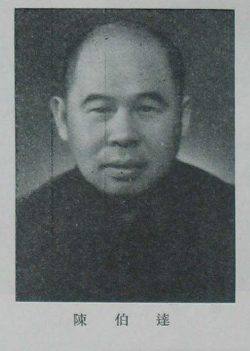
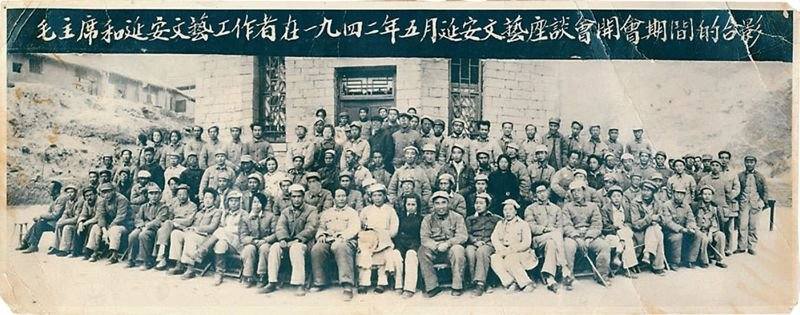
1. 29 July 1904, Hui'an: a peasant's son, and two registered discrepancies over his name and his death day
The mainstream record of Chen Boda's birth and death carries no disagreement: born 29 July 1904 in Chenzhuang Pulingtou, Shibadu, Hui'an County, Quanzhou Prefecture, Fujian — in the area of present-day Meiling Village, Luoyang Town, Hui'an County, Quanzhou — and died in Beijing on 20 September 1989. The infoboxes of the English and Chinese Wikipedia entries, the Encyclopaedia Britannica entry (which gives the birth year as 1904) and the Library of Congress authority record (Chen, Boda, 1904–1989) all agree. He was born to peasant parents (the English Wikipedia's phrase), moved with his family in childhood to Jimei, attended the Jimei Normal School and, after graduating, taught at elementary schools (English Wikipedia, citing Guo Jian and others' Historical Dictionary of the Chinese Cultural Revolution). That a farm boy from coastal Fujian should rise to fourth place on the Politburo Standing Committee, holding the Party's pen and its Cultural Revolution command organ in his hands, is an ascent whose every link this page pins down in turn — beginning with his name.
The birth-name cell carries three versions, all registered and none deleted. Version A (adopted): born Chen Jianxiang, courtesy name Shangyou — the Chinese Wikipedia's text and infobox agree, and the English Wikipedia's body text likewise gives Chen Jianxiang and expressly identifies Shangyou as the courtesy name. Version B (a misprint): the English Wikipedia's infobox renders the birth name as "Chen Shangyu" — mistaking his courtesy name Shangyou for a birth name, in flat contradiction of the same article's own body text; this file registers it as an infobox error and does not adopt it. Version C (a variant): a Korean Namu-derived text gives his real name as Chen Shengxun, entirely different from Version A, of unknown provenance and the lowest grade; this file registers its existence only. An alias, Zhonghui, is recorded in the Chinese Wikipedia's infobox and is noted here as well. As to pen names: the English Wikipedia records that in the 1930s, teaching in Beiping, he published under the pen names Chen Zhimei and Chen Boda — so that "Chen Boda", the name that entered Party history, was itself a pen name. The archive's rule is laid down here and not repeated: the birth name used is Chen Jianxiang, the common name Chen Boda, and every variant is on the table.
The death-day cell also diverges, and is registered here in advance and taken up again in Section 13: the mainstream record gives 20 September 1989 (the Chinese, Japanese and Arabic Wikipedias and the People's Daily web account agree; the Chinese Wikipedia, citing People's Daily materials, records that he died of a myocardial infarction at his Beijing home on 20 September 1989). Encyclopaedia Britannica and the Korean Wikipedia give 22 September, two days later. This file adopts 20 September: the Chinese record chain is complete — death, cremation at Babaoshan, and Xinhua's dispatch of 30 September form a self-consistent sequence — while the 22 September dating has, within the range this site searched, no contemporaneous or near-contemporaneous Chinese source behind it, and is registered at the grade of a reference-work error. His age carries no dispute: from 29 July 1904 to 20 September 1989 he was 85, on all sources.
Sources: Chinese Wikipedia, "陈伯达" [Chen Boda] (born 29 July 1904 in Hui'an, with the birthplace; born Chen Jianxiang, courtesy name Shangyou, alias Zhonghui; died 20 September 1989 in Beijing; cause of death myocardial infarction, citing People's Daily web materials); English Wikipedia, "Chen Boda" (body text: born Chen Jianxiang, courtesy name Shangyou; the Jimei Normal School and elementary-school teaching; the pen names Chen Zhimei and Chen Boda; infobox birth name misprinted as Chen Shangyu — registered discrepancy); Encyclopaedia Britannica, "Chen Boda" (born 1904, Hui'an; death given as 22 September 1989, Beijing — registered discrepancy); Library of Congress authority record (Chen, Boda, 1904–1989); Korean Wikipedia and Namu-derived text (death day 22 September; real name Chen Shengxun — low-grade variants, registered).
2. Moscow, a Tianjin prison cell and the Northern Bureau: the fourteen years before the secretaryship (1925–1937)
Before Chen Boda entered the core of power, his life had the shape of "man of letters plus underground worker". The Chinese Wikipedia's early chronology is the fullest: in 1919 he entered the Xiamen Jimei Normal School; in 1924 he went to Shanghai, worked as the Shanghai correspondent of the Xiamen newspaper Xia Sheng Bao and studied in the literature department of Shanghai University (the English Wikipedia gives Shanghai Labor University; the institution's name is recorded in both forms). In the spring of 1925 he returned to Xiamen and joined the Kuomintang, then went to Guangzhou and entered the arts faculty of Sun Yat-sen University. In 1926 he became a secretary of the Kuomintang's Shantou municipal party committee, met his fellow Fujianese Zhang Zhen, commander of a National Revolutionary Army independent regiment stationed at Shantou, and became Zhang's secretary; when the Northern Expedition took Fuzhou and Zhang's unit was expanded into a division under his command, Chen served as the division commander's secretary and as a political instructor, with the rank of major, at the Fuzhou military cadres school. The English Wikipedia's corresponding account: he was hired as the personal secretary of General Zhang Zhen, helping to prepare the Northern Expedition of 1926–1927 from the CCP side of the First United Front; when the Front collapsed he fled, was arrested in Nanjing, was released after a month on Zhang's recommendation, and was shortly afterwards sent by the Party to Moscow Sun Yat-sen University, where he studied politics and Marxist philosophy for four years. Laid side by side, the two accounts agree in skeleton — and the skeleton matters: his first secretary's job was not done for a Communist at all, but for a Kuomintang general. From its first day, this man's profession was drafting and staff work for whoever held power.
The prison episode of 1931 is recorded by the sources with differing detail, and this file writes it in layers. The Chinese Wikipedia: he returned to China in 1930, taught at China College in Beiping and headed the propaganda department of the CCP's Northern Bureau; on the night of 8 April 1931, the day he arrived in Tianjin, he was arrested together with Chen Yuandao, Xu Lanzhi and others of the Shunzhi provincial committee; on 4 September 1931 he was transferred from Tianjin to Beiping and sentenced to two and a half years' imprisonment; he was released in 1932. The English Wikipedia's corresponding passage records only that he was a professor of politics and ancient Chinese history at China College in Beijing, wrote articles under pen names, and did underground Party work in Tianjin — it carries no arrest details. That episode later became a handle in the official investigation report produced after his fall in 1970 — the report circulated by the Centre on 2 July 1972 carried the word "traitor" in its very title (see Section 11) — but that was a product of retrospective labelling after a purge, and this file's treatment is fixed: that he was arrested in 1931, sentenced to two and a half years and released in 1932 is the factual layer consistently supported by the Chinese chronology; as to his conduct in prison, this site found no archivally checkable public material within its search range — that cell is a matter of no public record, and neither side's retrospective narrative is adopted. After his release: in early 1933 he went to Zhangjiakou to work with Ji Hongchang's forces; on the day after the December Ninth Movement of 1935 in Beiping, he was sent by the Northern Bureau to lead the citywide student strike and was charged with drafting the student movement's propaganda outline; in the spring of 1936, when Liu Shaoqi reorganised the Northern Bureau as the Centre's representative, Peng Zhen became organisation chief, Chen Boda propaganda chief and Lin Feng secretary-general (Chinese Wikipedia). That staffing table deserves attention: Peng Zhen and Chen Boda were Northern Bureau colleagues in 1936. Thirty years later, in 1966, one of them drafted the February Outline and the other chaired the drafting that destroyed it — the two principals of Sections 5 and 6 of this page had stood on the same organisational chart long before Yan'an.
Sources: Chinese Wikipedia, "陈伯达" (the Jimei Normal School in 1919; the Shanghai correspondent and Shanghai University in 1924; joining the Kuomintang in 1925 and Sun Yat-sen University in Guangzhou; Zhang Zhen's secretary in 1926 and the Northern Expedition; joining the CCP in late April 1927 and the posting to Moscow; the return in 1930, China College in Beiping and the Northern Bureau propaganda department; the Tianjin arrest of 8 April 1931, the transfer to Beiping on 4 September and the two-and-a-half-year sentence; release in 1932; Ji Hongchang's forces in 1933; leading the student strike and drafting its outline after December Ninth, 1935; propaganda chief in the 1936 Northern Bureau reorganisation); English Wikipedia, "Chen Boda" (personal secretary to Zhang Zhen and the Northern Expedition preparations; the Nanjing arrest and release after a month; four years at Moscow Sun Yat-sen University studying politics and Marxist philosophy; the return in 1931; professor at China College in Beijing and underground work in Tianjin).
3. Yan'an: becoming Mao Zedong's secretary, and the two datings of the secretaryship (1937–1949)
In 1937 Chen Boda reached Yan'an. The Chinese Wikipedia's chronology is the most detailed: he taught in turn at the Shaanbei Public School and the Central Party School and was vice-president of the Marxism-Leninism Institute; in the spring of 1939 he was transferred to Mao Zedong's office and became Mao's secretary; he was elected an alternate member of the Central Committee at the Seventh Congress and subsequently promoted to full membership. The English Wikipedia's corresponding account reads: from 1937 he taught politics and Marxist philosophy at the Central Party School in Yan'an, became one of the leaders of the Yan'an Rectification Movement, and soon became Mao's personal research assistant and chief political aide; he published the first collection of Mao's writings in 1937 and an official history of the Party in 1945 (English Wikipedia, citing Leung (ed.), Political Leaders of Modern China: A Biographical Dictionary). A tension between the two datings must be named: the English synthesis places his becoming Mao's close aide at the very start of his Yan'an period, in 1937, and the German Wikipedia states outright that he became Mao's political secretary in 1937 and held the post until 1956; the Chinese chronology pins the formal transfer to Mao's office to the spring of 1939. This file's handling: the spring 1939 transfer to Mao's office is registered as the correct dating of the formal appointment, and the 1937 dating is registered as a foreign-synthesis usage that merges "arriving in Yan'an and entering Mao's theoretical team" with "formally becoming his secretary"; the two are not forced into one. That two-year gap in the starting point is precisely the home ground of the round figure of "31 years" that attaches to his secretaryship: the Chinese Wikipedia's synthesis calls him the longest-serving of Mao's many secretaries, at 31 years in all. Counted from 1939 to his fall in 1970, 31 years fits; counted to the point in the later 1960s when he in practice left day-to-day secretarial work, it does not. This file registers the claim and its arithmetic without endorsing it: what can be pinned is the entry into the post in the spring of 1939 and his executing role on Mao's side in Yan'an Rectification; what cannot be pinned is the integer 31.
The shape of his Yan'an output is the key to understanding 1966. He was not a man who led troops, nor a man who managed grain and money; he was the man who turned Mao Zedong's words into a theoretical system. The English Wikipedia records that as early as the 1930s he instructed that Party cadres should perform systematic critiques of traditional philosophy such as Confucianism, "enrich" dialectical materialism by applying it concretely in the Chinese context, and called this approach the "Sinification of Marxism" — in part a precursor to Mao's own May 1938 formulation of the Sinicisation of Marxism (English Wikipedia, citing Galway, 2025). In other words, a substantial share of the foundation bricks of the edifice called "Mao Zedong Thought" were fired by Chen Boda; the standing on which he became that thought's chief interpreter after 1949 rests squarely on this Yan'an record. This file's bookkeeping for the period is deliberately restrained: of any personal order by Chen Boda disposing of a named individual in Yan'an Rectification there is, within this site's search range, no public record. What can be pinned is the layer of posts and texts — Party School teacher, vice-president of the Marxism-Leninism Institute, Mao's secretary, one of Rectification's theoretical executors. That blank stands in exact contrast to the word-by-word documentary record he left in 1966, and the following sections write each period at its own evidential density, letting neither borrow light from the other.
Sources: Chinese Wikipedia, "陈伯达" (arrival in Yan'an in 1937; teaching at the Shaanbei Public School and the Central Party School; vice-president of the Marxism-Leninism Institute; transfer to Mao Zedong's office as secretary in the spring of 1939; alternate then full Central Committee membership at the Seventh Congress; the "31 years as secretary" claim); English Wikipedia, "Chen Boda" (teaching at the Central Party School from 1937; a leader of the Yan'an Rectification Movement; personal research assistant and chief political aide to Mao; the first collection of Mao's writings in 1937 and an official Party history in 1945; the "Sinification of Marxism" formulation, citing Galway 2025); German Wikipedia, "Chen Boda" (political secretary to Mao from 1937 to 1956 — registered dating discrepancy).
4. Editor-in-chief of Red Flag and chief interpreter: the table of posts for the seventeen years after 1949 (1949–1966)
Chen Boda's post-1949 table of posts is listed most tidily in the English Wikipedia, and this file reproduces it after checking each item against the Chinese record: deputy director of the CCP Propaganda Department, overseeing the People's Daily and the Xinhua News Agency; director of the Institute of Political Research of the Central Committee; editor-in-chief of the Party's theoretical organ Red Flag from its founding in 1958; vice-president of the Chinese Academy of Sciences, overseeing the social and political sciences (which later branched off toward the Chinese Academy of Social Sciences, in the English synthesis's phrasing). The Chinese Wikipedia supplies the founding decision's date: on 25 May 1958 the Fifth Plenary Session of the Eighth Central Committee, meeting in the Huairen Hall at Zhongnanhai, decided that the Centre would run a theoretical journal named Red Flag, appearing twice monthly, with Chen Boda as editor-in-chief — from that day he was simultaneously the Party's chief theoretical editor and Mao's authoritative spokesman. In 1951 he published the article "Mao Zedong's Theory of the Chinese Revolution Is the Combination of Marxism-Leninism with the Chinese Revolution" and the book Mao Zedong on the Chinese Revolution; the two works established him as one of the most important interpreters of Mao Zedong Thought, and in the 1950s he became one of Mao's closest associates, compiling many of the quotations later published in the Little Red Book (English Wikipedia, citing Meisner). In 1950 he accompanied Mao to Moscow for the negotiations with Stalin that produced the thirty-year Sino-Soviet treaty of alliance of February 1950 (same source). In 1962, against the background of Mao's complaint that the economic apparatus was blocking him and Liu Shaoqi, he was appointed a vice-director of the State Planning Commission (English Wikipedia, citing Hou Li, 2021). The Chinese Wikipedia adds that he took part in drafting the Common Programme, the Constitution of the PRC, the resolution on agricultural cooperativisation and the Twenty-Three Articles of the Socialist Education Movement, among a series of programmatic documents — and the point of that drafting list is this: the pen of 1966 was not fetched in at short notice. It was the standing draftsman of nearly every major document since the founding of the state.
Two entries from those seventeen years must be shelved separately, because they are the immediate prehistory of 1966. The first is Lushan in 1959. The Chinese Wikipedia records that at the Lushan meeting of July 1959, when Peng Dehuai and Huang Kecheng attacked the Great Leap Forward's policies and problems, Mao said Chen Boda had not co-operated well and began to suspect him, whereupon Chen wrote a long work attacking Peng Dehuai in order to win back Mao's trust. The German Wikipedia's version is blunter: at the 1959 Lushan Conference Mao used Chen Boda to criticise Peng Dehuai, because Mao did not want to lose credibility himself. The two versions differ in detail — one has him first suspected and then writing to save himself, the other has him used as Mao's weapon from the outset — and agree in skeleton: by 1959 Chen Boda was already the pen Mao used to strike at men inside the Party, and the man struck was Peng Dehuai. Seven years later, when Peng Zhen followed Peng Dehuai down in the February Outline affair, the hand holding the pen was the same. The second entry is the Sino-Soviet polemic of the early 1960s: the Chinese Wikipedia records that after the people's communes drew Soviet hostility, Chen, at Mao's direction, wrote a stream of editorials denouncing the Soviet Union as "revisionist", and took part in the Nine Commentaries on the Soviet party of 1962–1963. Together, the two entries are the career explanation for why, in 1966, Mao chose him and no one else to draft the May 16 Notification: he had struck Peng Dehuai and he had denounced the Soviet Central Committee. The pen's loyalty and its lethality had both been field-tested.
Sources: English Wikipedia, "Chen Boda" (deputy director of the Propaganda Department overseeing the People's Daily and Xinhua; director of the Institute of Political Research; editor-in-chief of Red Flag from its 1958 founding; vice-president of the Chinese Academy of Sciences; the two interpretive works of 1951 and the compilation of Little Red Book quotations, citing Meisner; accompanying Mao to Moscow in 1950; vice-director of the State Planning Commission in 1962, citing Hou Li 2021); Chinese Wikipedia, "陈伯达" (the decision of 25 May 1958 at the Fifth Plenary Session to found Red Flag with Chen as editor-in-chief; participation in drafting the Common Programme, the Constitution and the Twenty-Three Articles; the long attack on Peng Dehuai written at Lushan in 1959; the Nine Commentaries); German Wikipedia, "Chen Boda" (Mao's use of Chen Boda to criticise Peng Dehuai at Lushan in 1959).
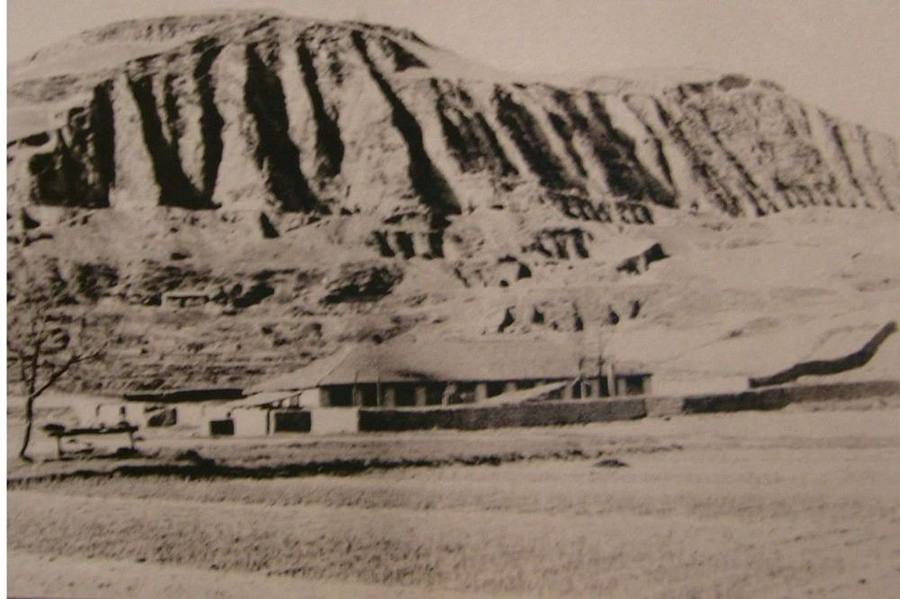
5. From the February Outline to the drafting group: the confrontation of February to April 1966
The launching chain of the Cultural Revolution requires its previous link to be pinned first. On 12 February 1966 the "Group of Five in Charge of the Cultural Revolution", headed by Beijing mayor Peng Zhen, issued its Report Outline on the Current Academic Discussion — the February Outline — which sought to confine the criticism of Wu Han's play Hai Rui Dismissed from Office within the bounds of academic discussion (Chinese Wikipedia, CCRG article, and English Wikipedia, Cultural Revolution article, in agreement). Mao's counterstroke ran through Shanghai. Chapter 2 of Qi Benyu's memoir, "Criticising the 'February Outline' and Drafting the 'May 16 Notification'", is this section's first-grade participant material — Qi Benyu was a member of the drafting group — and its details, as carried in the memoir, are these: on 28 and 29 March 1966 Mao spoke with Kang Sheng in Shanghai, and on the afternoon of 30 March he spoke with Kang Sheng, Zhao Yimin, Wei Wenbo, Zhang Chunqiao, Jiang Qing and others, sharply criticising the February Outline and raising the call to "topple the King of Hell and free the little devils"; on 31 March Kang Sheng returned to Beijing on Mao's orders, and at an enlarged Politburo meeting relayed the spirit of Mao's Shanghai talks; at that meeting, on Mao's proposal, it was decided to abolish the original Group of Five and to establish a new Cultural Revolution document-drafting group, with Chen Boda as its head, Jiang Qing and Liu Zhijian as deputy heads and Kang Sheng as adviser (Qi Benyu's memoir, Chapter 2, as published by the Chinese Marxists Internet Archive). The English record's phrasing for the same node is that Mao delivered his final blow to Peng Zhen at a high-profile Politburo meeting through his loyalists Kang Sheng and Chen Boda, who accused Peng of opposing Mao and labelled the February Outline a revisionist document (English Wikipedia, Cultural Revolution article, synthesis). With the Chinese and English records closed together, the fact that can be pinned is this: the men who, on the public stage, converted the February Outline from "an arrangement for academic discussion" into "a political document opposing Mao" were Kang Sheng and Chen Boda — and the task of drafting a new document formally to abolish it fell to the group Chen headed.
Qi Benyu also recorded Chen Boda's opening words at the drafting meeting itself, which this file renders in substance rather than transcribing at length: when those summoned had assembled, Chen convened the meeting and first relayed Mao's instruction — they were gathered to criticise the February Outline written by Peng Zhen, Xu Liqun and their associates, and to write a document abolishing it; he added that for a document already issued by the Centre to be abolished and criticised in this way was a first since Liberation (Qi Benyu's memoir, Chapter 2). The drafting group then proceeded to discuss, analyse and criticise the February Outline sentence by sentence and clause by clause, identifying where each clause and each sentence was wrong (same source). The value of this participant account is that it pins Chen Boda's position in the spring of 1966 to the paper: he was not a "participant" recognised as such after the fact. He was the drafting meeting's convener and its tone-setter. His name, it is true, appears nowhere on the May 16 Notification — Central Committee documents never carry individual signatures — but the participant record of who convened and chaired the drafting is intact, and it is on that chain of evidence that this file books his responsibility for the document.
Sources: Qi Benyu, Memoirs of Qi Benyu (2016), Chapter 2, "Criticising the 'February Outline' and Drafting the 'May 16 Notification'" (Mao's Shanghai talks of 28–30 March 1966 criticising the February Outline; "topple the King of Hell and free the little devils"; Kang Sheng's return to Beijing on 31 March to relay the talks; the abolition of the Group of Five and the establishment of a drafting group headed by Chen Boda; Chen's convening of the drafting meeting and his charge to abolish the February Outline), as published by the Chinese Marxists Internet Archive; Chinese Wikipedia, "中央文化革命小组" [Central Cultural Revolution Group] (the February Outline of February 1966 sought to confine the criticism within academic discussion); English Wikipedia, "Cultural Revolution" (Mao's blow at Peng Zhen delivered through Kang Sheng and Chen Boda at a Politburo meeting, accusing Peng of opposing Mao and labelling the February Outline revisionist).
6. May 1966: the May 16 Notification and the CCRG list — this site's sort date (May 1966)
From 4 to 26 May 1966 an enlarged meeting of the Politburo met in Beijing and concentrated its fire on Peng Zhen, Luo Ruiqing, Lu Dingyi and Yang Shangkun. On 16 May the meeting adopted the Central Committee Notification, repeatedly revised by Mao Zedong — the May 16 Notification — deciding to revoke the February Outline as transmitted by the Centre, to abolish the original Group of Five and its offices, and to establish a new Cultural Revolution Group directly under the Politburo Standing Committee (Chinese Wikipedia, May 16 Notification article). The Notification rebutted the February Outline point by point and issued the judgement that would decide the fate of countless people over the following decade: that bourgeois representatives who had burrowed into the Party, the government, the army and every cultural field were a batch of counter-revolutionary revisionists (the Notification's language, rendered here in substance rather than quoted at length). The drafting attribution must be layered by source, in three layers. Layer one, the participant layer: the drafting group was headed by Chen Boda, on Qi Benyu's account in the previous section. Layer two, the scholarly layer: the English Wikipedia's "May Sixteenth elements" article, citing Alessandro Russo's 2020 monograph, records that Chen Boda wrote the initial draft of the May 16 Notification and that Mao Zedong substantially revised it. Layer three, the meeting layer: the Chinese Wikipedia's May 16 Notification article records the drafting group's leading figures as Kang Sheng and Chen Boda. The conclusion the three layers support when closed together is that the May 16 Notification was a document drafted under Chen Boda's chairmanship, jointly led by Kang Sheng, and heavily revised and finalised by Mao Zedong. Any account that books the document under one name alone — Chen's only, Mao's only, Kang's only — fails all three layers of evidence; this file books all three names.
The day of the organisational appointment is not the day the document was adopted, and this site's sort date is taken from exactly that distinction. On 28 May 1966 the Centre issued its notification of the membership list of the Central Cultural Revolution Group: head, Chen Boda; adviser, Kang Sheng; deputy heads, Jiang Qing, Wang Renzhong, Liu Zhijian and Zhang Chunqiao; members including Xie Tangzhong, Yin Da, Wang Li, Guan Feng, Qi Benyu, Mu Xin and Yao Wenyuan. On 2 August Tao Zhu was added as an adviser. On 8 August the Sixteen Points, adopted by the Eleventh Plenary Session of the Eighth Central Committee, endowed the Group with the character of "the organ of power of the Proletarian Cultural Revolution". And on 30 August the Centre issued a further notification: during any sick leave of Chen Boda, or any future absence from Beijing on work, his post as head of the Central Cultural Revolution Group was to be acted in by the first deputy head, Jiang Qing (Chinese Wikipedia, CCRG article). That last entry is no footnote: three months after the head formally took office, the acting arrangement was already on paper — and the four-year waxing and waning between Jiang Qing and Chen Boda is visible in embryo in that notification of 30 August 1966. The English record carries one summary judgement of the institution's weight: in time, the Group would rise to become the most important political body in China, surpassing even the influence of the Politburo (MacFarquhar and Schoenhals, Mao's Last Revolution, as cited in the English Wikipedia's Chen Boda article). A body of some seventeen people, headed by a man who had held a pen all his life, received on 28 May 1966 its formal warrant to command a nationwide movement. This site takes that day as the sort date of Chen Boda's page: not 16 May, when the document was adopted, and not any anniversary of the man himself, but the day he formally took up the headship of the Cultural Revolution's command organ.
Sources: Chinese Wikipedia, "五一六通知" [May 16 Notification] (the enlarged Politburo meeting of 4–26 May 1966 and its concentrated criticism of Peng, Luo, Lu and Yang; adoption of the Notification on 16 May; revocation of the February Outline and the original Group of Five; the new Cultural Revolution Group under the Politburo Standing Committee; Kang Sheng and Chen Boda as the drafting group's leading figures); Chinese Wikipedia, "中央文化革命小组" [Central Cultural Revolution Group] (the list notification of 28 May 1966: head Chen Boda, adviser Kang Sheng, deputy heads including Jiang Qing; Tao Zhu added as adviser on 2 August; the Sixteen Points endowing the Group with the character of an organ of power; the 30 August notification of Jiang Qing acting as head during Chen's absences); English Wikipedia, "May Sixteenth elements" (Chen Boda wrote the initial draft of the May 16 Notification and Mao Zedong substantially revised it, citing Russo 2020, p. 117); MacFarquhar & Schoenhals, Mao's Last Revolution (2006), p. 155 (the Group became the most important political body in China, surpassing the Politburo), as cited in the English Wikipedia's Chen Boda article.
7. Seizing the People's Daily and "sweeping away all cow demons": the ignition of 31 May to June 1966
Once the document was adopted came the seizures, and the first institution seized was the Party newspaper. The Chinese Wikipedia's Chen Boda article, citing contemporaneous records, states: on 31 May 1966, with Mao Zedong's approval, Chen Boda led a work team into the People's Daily and seized control of the paper; on 1 June the People's Daily published an editorial calling on the masses to rise up and "sweep away all cow demons and snake spirits"; on the same day, a big-character poster by Nie Yuanzi and others of Peking University was broadcast nationwide with Mao's approval; on 4 June the People's Daily published the Central Committee's decision reorganising the Beijing Municipal Party Committee, together with the new municipal committee's decision to reorganise the Peking University Party committee and send in a work team to lead the "Cultural Revolution". The English Wikipedia's Cultural Revolution article assesses the 1 June editorial as a call for the proletariat to completely eradicate the "Four Olds" that had poisoned the Chinese people for thousands of years (citing MacFarquhar and Schoenhals, p. 50). The four days' sequence must be read as one movement: change the personnel on 31 May; issue the order on 1 June; broadcast one university poster to the entire country on the same day; reorganise the capital's municipal and university Party committees on 4 June. In the first week after Chen Boda's work team entered it, the People's Daily had been converted from a Party newspaper into the movement's transmitting station. This file writes the editorial's personal attribution only as far as the evidence allows: the editorial was an institutional text published in the paper's name on the day after he seized it, and of the identity of its word-by-word draftsman there is, within this site's search range, no public record. What can be pinned is institutional responsibility — the paper was under the control of his work team, and the editorial was the first order issued after the seizure. One of the counts on which he was later convicted by the Special Court was precisely "counter-revolutionary propaganda and incitement", part of whose factual basis lay in the propaganda machine he commanded in this period; this file registers that link at the level of the chain of office and invents no draftsman.
One further name from the same weeks must be shelved in the archive: Deng Tuo. The English record notes that Deng Tuo — the Beijing Party secretary for culture and education and a former editor of the People's Daily — took his own life in Beijing on 17 May 1966 (Jonathan Spence's review in The New York Review of Books, synthesising MacFarquhar and Schoenhals's research). That was the day after the May 16 Notification was adopted, and before Chen Boda's work team entered the People's Daily. This file places the entry here to pin the sequence, not to assign the blame: Deng Tuo's death preceded Chen's takeover of the paper, and of any personal instruction by Chen Boda in Deng Tuo's case there is no public record; this file does not book that death to his personal account. But Deng died after the passage of the document whose drafting Chen had chaired, and inside the political storm of the very newspaper Chen was about to take over — and that timeline is itself an archival fact for understanding the atmosphere of Beijing in May 1966. A smaller entry belongs to 30 June: the Chinese Wikipedia records that, on the instructions of Chen Boda, then head of the Central Cultural Revolution Group, the rebel organisation of the General Office of the Central Committee posted the State Planning Commission's first big-character poster, aimed at a figure in Tian Jiaying's circle (same source, citing its note materials). The word "instructions" comes from a Chinese synthesis's retelling and is registered here at synthesis grade: it shows that by the end of June 1966 the weapon of the big-character poster was already being fired, on his instructions, into the State Planning Commission of which he was himself a vice-director.
Sources: Chinese Wikipedia, "陈伯达" (the seizure of the People's Daily by a work team led by Chen Boda with Mao's approval on 31 May 1966; the 1 June editorial "Sweep Away All Cow Demons and Snake Spirits"; the nationwide broadcast of Nie Yuanzi's poster the same day; the decisions of 4 June reorganising the Beijing Municipal Committee and the Peking University Party committee; the State Planning Commission's first big-character poster of 30 June on his instructions); English Wikipedia, "Cultural Revolution" (the People's Daily front-page editorial of 1 June 1966 calling for the complete eradication of the "Four Olds", citing MacFarquhar & Schoenhals, p. 50); Jonathan D. Spence, review in The New York Review of Books, 21 September 2006 (Deng Tuo's suicide on 17 May 1966, as relayed from MacFarquhar & Schoenhals's research).
8. The Sixteen Points, the Eleventh Plenum and the "Two Lines" report: August to October 1966
From 1 to 12 August 1966 the Eleventh Plenary Session of the Eighth Central Committee met. In its course Mao Zedong wrote his big-character poster "Bombard the Headquarters", aimed at Liu Shaoqi and Deng Xiaoping; on 8 August the session adopted the Decision of the Central Committee Concerning the Great Proletarian Cultural Revolution — the Sixteen Points (Chinese Wikipedia, Cultural Revolution chronology and CCRG article). The drafting attribution of the Sixteen Points is written in this file at a completely different evidential state from that of the May 16 Notification: the body text of the Chinese Wikipedia's Chen Boda article records that he "took part in drafting" the Sixteen Points — and nothing more. In this round of searching, this site found no participant memoir and no scholarly study that books the first draft of the Sixteen Points to Chen Boda alone, and no reliable record of who chaired its drafting group. This file therefore records "participation in the drafting" and nothing beyond it: whoever wishes to write that Chen drafted the Sixteen Points must first produce a source. The distinction is not pedantry. For the May 16 Notification there are two chains — Qi Benyu's participant account and Russo's scholarship; for the Sixteen Points there is one chain only, "participation" — and this page writes the two documents at their two different grades of attribution. The institutional fact that can be pinned is that the Sixteen Points endowed the Central Cultural Revolution Group with the character of "the organ of power of the Proletarian Cultural Revolution" (Chinese Wikipedia, CCRG article): that is, after 8 August the group he led was, on paper, formally the movement's organ of power, and no longer a merely advisory small group.
The session's personnel outcome carried him to his apex: on 12 August 1966 he was added, at the Eleventh Plenary Session, to the Politburo Standing Committee, ranked fourth, behind only Mao Zedong, Lin Biao and Zhou Enlai (Chinese Wikipedia, text and infobox: Standing Committee tenure 12 August 1966 – 6 September 1970). The English Wikipedia's corresponding phrasing is that he became a full member of the Politburo and entered its Standing Committee (citing Meisner). From 18 August, Mao received the Red Guards at Tiananmen at eight mass rallies; the aggregate attendance is given differently by different sources — the English Wikipedia's Cultural Revolution article gives eight rallies drawing some twelve million people, most of them Red Guards — and this file registers only that order of magnitude and the skeleton of "eight receptions, 18 August to 26 November 1966", adopting no single precise total. Of Chen Boda's personal words and acts at the receptions and during the great exchanges of revolutionary experience, a Korean Namu-derived text records a remark of 16 August 1966 praising Red Guards arriving in Beijing through wind and rain for coming to the "capital of the proletarian revolution" — that retelling has no primary source behind it and is of low grade; this file marks it unverified, does not adopt it as fact, and registers only its circulation. The personal text that can be pinned falls in October: on 16 October 1966 Chen Boda delivered the long report "The Two Lines in the Great Proletarian Cultural Revolution" to the Central Work Conference, attacking the "bloodline theory" in the name of the "proletarian headquarters" and mobilising the masses more broadly into the Cultural Revolution (Chinese Wikipedia, Chen Boda article, citing its note materials). The bookkeeping significance of that report is plain: in the autumn of 1966 the Red Guards were splitting between the bloodline-theory conservatives of "if the father is a hero, the son is a stalwart" and the rebel factions; the head of the Central Cultural Revolution Group came down in person, with a long report, to underwrite the rebels and to issue the framework of line struggle to the whole country. It is the most clearly attributable nationwide mobilisation speech he left in 1966.
Sources: Chinese Wikipedia, "文化大革命年表" [Cultural Revolution chronology] and "中央文化革命小组" (the Eleventh Plenary Session of 1–12 August 1966; adoption of the Sixteen Points on 8 August; the Sixteen Points endowing the CCRG with the character of an organ of power); Chinese Wikipedia, "陈伯达" (participation in drafting the Sixteen Points; addition to the Politburo Standing Committee on 12 August 1966, ranked fourth; Standing Committee tenure to 6 September 1970; the report "The Two Lines in the Great Proletarian Cultural Revolution" of 16 October 1966 attacking the bloodline theory); English Wikipedia, "Chen Boda" (Politburo membership and Standing Committee entry in 1966, citing Meisner); English Wikipedia, "Cultural Revolution" (eight rallies drawing some twelve million Red Guards); Korean Namu-derived text (the remark of 16 August 1966 praising the Red Guards — unverified, single-chain retelling, not adopted as fact).
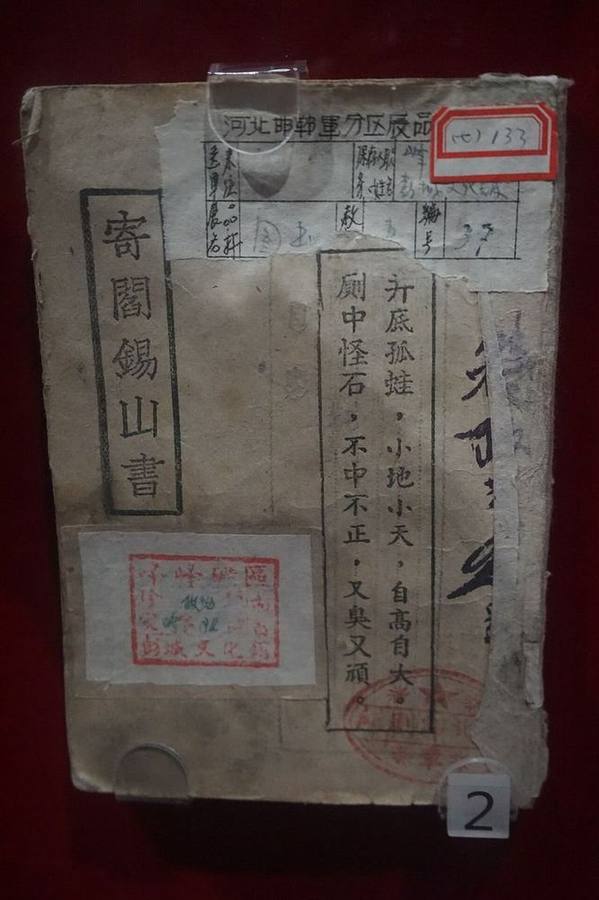
9. Qufu and the "Persecute Kong" campaign: one directive — "Confucius's grave may be dug up" — and its evidential grade (November 1966)
This section carries the most demanding evidential layering on the page, and its sources are laid on the table first. The section rests on the research notes "The Fate of the Confucius Temple, the Kong Mansion and Kong Cemetery", by Sang Ye and Geremie Barmé, published in China Heritage Quarterly. The notes' material base is the Red Guards' own publication Persecute Kong Battle Dispatches (Tao Kong zhanbao), which appeared irregularly from 10 November 1966 to 31 August 1967 and was started by the Jinggang Shan Red Guard Corps of Beijing Normal University, supplemented by oral-history interviews and memoirs. That is to say, the material is a two-layer composite of a primary Red Guard publication and scholarly editing — a grade above web retellings and below the original text of a central archive — and this file uses it at exactly that grade, neither promoting it nor demoting it to "legend".
The sequence is pinned day by day from those research notes. On 7 November 1966 the Jinggang Shan Red Guard Corps of Beijing Normal University gathered in Tiananmen Square and swore an oath to "annihilate the Kong family business". On 10 November over two hundred Red Guard representatives, led by Tan Houlan, arrived in Qufu, Shandong. On 12 November the Revolutionary Rebel Liaison Station to Annihilate the Kong Family Business requested guidance from Qi Benyu and Chen Boda in Beijing — both members of the Cultural Revolution Group — and Chen issued a directive in which he said that they could "hold a mass rally and dig up Confucius's grave" (the short sentence as quoted in the notes, within this site's quotation limits). On 15 November the Liaison Station held a rally outside the Kong Mansion and destroyed the National Cultural Relics stelae erected by order of the State Council at the Confucius Temple, the Kong Mansion, the Kong Family Cemetery and the ancient city of the State of Lu. On 28 and 29 November a mass rally at Qufu, said to number one hundred thousand people, was held "to thoroughly smash the Kong family business", and the clay statues of the Confucius Temple and much else were destroyed (same notes; a reproduced synthesis likewise carries the two-day rally). The numbers cell must be kept separate: a set of figures in wide circulation — more than six thousand cultural artefacts destroyed, two thousand seven hundred books, nine hundred paintings and calligraphic works, two thousand graves dug up — was found by this site only on a low-grade study-flashcard page and could not be verified in the China Heritage Quarterly research notes; this file does not adopt that set of figures, and registers only the documented layer: systematic destruction continuing for weeks, with the Temple, the Mansion and the Cemetery all hit. One further cell must be left visibly blank: whether Confucius's own grave mound was in the end actually opened is told inconsistently by the retellings — the directive authorised digging, and a grave-digging team was organised (the notes record a telephone instruction of 25 November from the Qufu County Party Committee ordering a three-hundred-strong "poor-and-lower-middle-peasant grave-digging team" to be formed) — but on whether the mound itself was opened, this site found no consistent, reliable record within its search range. That cell is written exactly so: no consistent public record, and no version of the story is allowed to impersonate a settled conclusion. The bookkeeping conclusion of the section pins one sentence only: on 12 November 1966 the head of the institution commanding the nationwide Cultural Revolution personally authorised the grave-digging and smashing operation against Confucius's home town — the directive rests on the double support of the Red Guards' own contemporaneous publication and scholarly editing, and the figures for the scale of the destruction are left blank at the level the evidence reaches.
Sources: Sang Ye & Geremie Barmé, "The Fate of the Confucius Temple, the Kong Mansion and Kong Cemetery", China Heritage Quarterly research notes (material base: the Red Guard publication Persecute Kong Battle Dispatches, 10 November 1966 – 31 August 1967, and oral history: the Tiananmen oath of 7 November 1966; Tan Houlan's arrival in Qufu with over 200 Red Guards on 10 November; the request for instructions reaching Chen Boda through Qi Benyu on 12 November and the directive "hold a mass rally; Confucius's grave may be dug up"; the destruction of the cultural-relics stelae on 15 November; the telephone instruction of 25 November organising a grave-digging team; the rally of 28–29 November); David Cowhig's reproduced synthesis (2009; likewise carrying the instruction chain of 12 November and the two-day rally); the set of destruction figures carried on a low-grade flashcard page — not verified in the research notes, not adopted, registered only as circulating.
10. 1967: the February Countercurrent, one entry in the Liu Shaoqi case, the fall of Wang–Guan–Qi, and the Jidong frame-up
Chen Boda's 1967 is written in four entries. The first is the February Countercurrent: in January and February 1967, senior cadres including Tan Zhenlin, Chen Yi, Ye Jianying, Li Fuchun, Li Xiannian, Xu Xiangqian and Nie Rongzhen clashed fiercely with Jiang Qing, Chen Boda, Kang Sheng and Yao Wenyuan; Mao afterwards labelled the episode the "February Countercurrent", a label later revised to the "February Resistance" (Chinese Wikipedia, Cultural Revolution chronology). The shape of that entry is this: those being confronted were the marshals and vice-premiers who held military and governmental power, and among the figures facing them across the table stood Chen Boda — the role he played that year inside the Central Cultural Revolution Group was precisely that of fronting Mao's movement line against the establishment's elders. The second entry is the one concrete decision booked to his name in the Liu Shaoqi case: the chain of facts as found by the Special Court records that in July 1967 Jiang Qing, together with Kang Sheng and Chen Boda, took the decision to subject Liu Shaoqi to personal persecution, from which point he was stripped of his freedom of movement (the findings-of-fact section "The case of Liu Shaoqi's being falsely accused, framed and persecuted to death" in the Chinese Wikipedia's article on the Case of the Lin Biao and Jiang Qing Cliques). This file's grade marking for that entry must be conspicuous: it is a finding of fact of the Special Court of 1980–1981, emerging from a trial of heavy political character — a grade above popular retelling and below an uncontested contemporaneous archive — and in this round of searching this site found no second, independent source giving the same concrete account of a "three-person decision of July 1967"; readers should use it at that grade. Liu Shaoqi died in custody in Kaifeng in November 1969, the end point of that chain of persecution, a fact itself disputed by no source.
The third entry is the fall of Wang Li, Guan Feng and Qi Benyu — and the exact measure of Chen Boda's "marginalisation", on which a widely circulated simplification must be corrected: the claim that Chen was sidelined immediately after the Wang Li affair of 1967. The chain of facts is this. In the Wuhan Incident of July 1967, Wang Li, a member of the Central Cultural Revolution Group, and Xie Fuzhi, the Minister of Public Security, were sent to Wuhan to deal with the crisis, and on 20 July Wang Li was seized and detained by the "Million Heroes" faction (English Wikipedia, Wuhan Incident article). The Wuhan Incident made Mao aware of the risk of a military backlash, and he began to scale back the movement's most radical components (same source). On 30 August 1967, following Zhou Enlai's report on the involvement of Wang Li and other CCRG members in foreign and military affairs, Mao decided to arrest Wang Li and Guan Feng, with Qi Benyu's arrest deferred to January 1968 (the chronology of Guo Jian, Song Yongyi and Zhou Yuan, Historical Dictionary of the Chinese Cultural Revolution, second edition, checked in the dictionary's electronic edition). Wang Li and Guan Feng fell at once; Qi Benyu was arrested on 13 January 1968; all three were sent to Qincheng Prison (English Wikipedia, Qi Benyu article). The critical point is this: those arrested were Wang, Guan and Qi. Chen Boda was not among them. He remained head of the Central Cultural Revolution Group, and in December 1967 he was still receiving delegations in Tangshan in his capacity as the man charged with north China's Cultural Revolution (see the next entry). The accurate formulation is therefore: from the summer and autumn of 1967 onward the Central Cultural Revolution Group as an institution began to lose power, Jiang Qing's practical ascendancy rose, and Chen Boda's personal weight declined step by step — a gradual process running from 1967 to 1969, not a purge event of 1967. To date his fall to 1967 would squeeze out two hard facts: his Tangshan speech of December 1967 and his retention on the Standing Committee at the Ninth Congress of 1969. This file writes the process as a gradient, and corrects the briefing-style simplification here. The fourth entry is the Jidong frame-up. In 1967 Chen Boda was charged with the Cultural Revolution in north China. On the morning of 26 December he received, in Tangshan, delegations from the counties and cities of the Tangshan region, the regional revolutionary preparatory group and the garrison troops; after hearing a report on the problems of the eastern Hebei (Jidong) Party organisation, he spoke on the spot, declaring that the Jidong Party was very complicated, that it might be a Party of Kuomintang–Communist cooperation in which the Kuomintang was actually at work and traitors were at work, and naming the former municipal first secretary Yang Yuan and the mayor Bai Yun (Chinese Wikipedia, Chen Boda article, citing the record of his remarks). Once those words were spoken, a large body of leading cadres and grassroots Party officials, Yang Yuan among them, were branded Kuomintang men and traitors. At the post-Cultural Revolution Special Court, one of the charges against Chen Boda was precisely that this had created the Jidong underground-Party frame-up, causing the persecution of more than 80,000 cadres and members of the public, of whom nearly 3,000 died (same source, citing the Special Court indictment). This file's marking of the figures matches the Responsibility cell: the 80,000 and the nearly 3,000 are the prosecution's figures, and within this site's search range no independent scholarly count exists to set beside them; that cell is archived at indictment grade. But the speech itself rests on a contemporaneous record and its naming effect on a chain of facts, and the skeleton of this entry stands without dependence on those two numbers.
Sources: Chinese Wikipedia, "文化大革命年表" (the clashes of January–February 1967 between the senior cadres and Jiang Qing, Chen Boda, Kang Sheng and Yao Wenyuan, and the change of label from "February Countercurrent" to "February Resistance"); Chinese Wikipedia, "林彪、江青反革命集团案" (the Special Court's findings of fact: the decision of July 1967 by Jiang Qing together with Kang Sheng and Chen Boda to subject Liu Shaoqi to personal persecution and strip him of his freedom of movement — court-finding grade); English Wikipedia, "Wuhan incident" (the Wuhan Incident of 16–25 July 1967; Wang Li and Xie Fuzhi sent to Wuhan; Wang Li seized on 20 July; Mao's scaling-back of the movement's most radical components thereafter); Guo Jian, Yongyi Song & Yuan Zhou, Historical Dictionary of the Chinese Cultural Revolution, 2nd ed., chronology (Mao's decision of 30 August 1967 to arrest Wang Li, Guan Feng and Qi Benyu, Qi's arrest deferred to January 1968); English Wikipedia, "Qi Benyu" (Qi Benyu's arrest on 13 January 1968; Wang, Guan and Qi all sent to Qincheng); Chinese Wikipedia, "陈伯达" (the north China charge in 1967; the record of the Tangshan remarks of 26 December; the Special Court indictment's Jidong figures of over 80,000 persecuted and nearly 3,000 dead — indictment grade).
11. From the Ninth Congress's number four to the fall at Lushan: the shifting alliance and the "genius" affair (1969–1970)
At the Ninth Party Congress of April 1969 Chen Boda remained on the Politburo Standing Committee. The Ninth Congress Standing Committee had five members — Mao Zedong, Lin Biao, Chen Boda, Zhou Enlai and Kang Sheng — and his place in that list stood after Lin Biao and before Zhou Enlai; the Chinese Wikipedia's customary description of him as the Party's "number four man" follows the popular ordering of Mao, Lin, Zhou and Chen, and this file retains that label while noting that it is a popular ordering, not the formal sequence of the Ninth Congress list. The Central Cultural Revolution Group was not reconstituted after the Ninth Congress and lapsed in fact (the English Wikipedia's Chen Boda article dates the Group's formal dissolution to the Ninth Congress in the spring of 1969; another English synthesis records that the Politburo ceased to function between 1966 and 1968 while the CCRG held de facto control of the country, and that the pattern was reorganised after the Ninth Congress). With the institution gone, his headship of it became an empty title, and his remaining bases of power were his Standing Committee seat and Mao's trust — both of which shook at once in 1970. The English Wikipedia's synthesis of his late trajectory is that after the Ninth Congress his reputation began to wane because of his close ties with Lin Biao — the two had collaborated closely on the publication of the Little Red Book — and his opposition to Zhou Enlai's attempts to de-escalate the Cultural Revolution and refocus on consolidating the Party (same source, citing MacFarquhar and Schoenhals, p. 156, and Joseph's study). The other face of the shifting alliance was his conflict with Jiang Qing's camp: in his old age he told an interviewer that his downfall came about because he had clashed with Jiang Qing (Chinese Wikipedia, later-life section). A subject's own account is registered here at the grade of a one-sided self-account; it points in the same direction as the scholarly synthesis — that he leant toward Lin Biao's side as a counterweight to Jiang Qing and Kang Sheng — and the two are archived side by side.
The fuse was the constitutional revision dispute of 1970. From March 1970, during the discussion of the 1970 draft constitution, Mao proposed abolishing the state chairmanship (the presidency), a proposal opposed by many Party leaders including Lin Biao (English Wikipedia, "Abolition of the presidency in China"). On 13 August, at a meeting of the constitution drafting group, Wu Faxian clashed fiercely with Kang Sheng and Zhang Chunqiao over whether the constitution should describe Mao as a "genius" (same source). On 23 August the Second Plenary Session of the Ninth Central Committee opened at Lushan; in his opening speech Lin Biao raised both the "genius" reference and the restoration of the state chairmanship; in the group discussions of 23 August, Chen Boda and Wu Faxian attacked Zhang Chunqiao, accusing him of exploiting Mao's modesty to disparage Mao Zedong Thought (same source). The Chinese record adds the meeting-room detail: at the North China group's session of 24 August, Chen Boda, without naming names, charged that someone opposed Chairman Mao and was "taking advantage of Chairman Mao's modesty in an attempt to belittle Mao Zedong Thought", and the North China Group's Bulletin No. 2 carried the denunciation of Zhang Chunqiao to the whole plenum (Chinese Wikipedia, Second Plenum article and Chen Boda article). On 25 August Mao intervened: discussion of Lin Biao's opening speech was halted and North China Group Bulletin No. 2 was withdrawn. On 31 August Mao wrote "Some Points of View of Mine" (Wo de yidian yijian), naming the "genius" materials as Chen Boda's work, which had deceived not a few comrades, and writing the sentence that afterwards ran through the whole Party — that he and this "theoretician of genius", Chen Boda, had worked together for more than thirty years and had never once co-operated, let alone co-operated well, on major questions (the language of "Some Points of View of Mine", rendered here only as to that one sentence's substance and attribution, not transcribed in full). On 1 September Mao convened the Politburo and the conveners of the discussion groups and sharply criticised Chen Boda (Chinese Wikipedia, Second Plenum article, citing meeting-record materials). One historiographical division must be archived here: the official and Maoist verdict books the plenum's focus as a surprise attack by the Lin Biao grouping, mounted through the state-chairmanship question and the "genius theory" to seize power; the alternative account, represented by the memoirs of participants such as Wu Faxian and by non-official historiography, holds that the plenum's real focus was the North China group's denunciation of Zhang Chunqiao, and that the "genius theory" and the chairmanship were handles Mao afterwards selected for punishing Lin and Chen (the Chinese Wikipedia's Second Plenum article carries both accounts). This file records both and adjudicates neither. The factual layer that can be pinned is one of dates and texts: the opening on 23 August, the North China group speeches of 24 August, "Some Points of View of Mine" on 31 August, and the announcement of Chen's investigation on 6 September. As to Mao's motives and the scholarly quarrel over the plenum's true focus, this file makes no ruling.
Sources: Chinese Wikipedia, "陈伯达" (one of the five Standing Committee members of the Ninth Congress and the "number four man" label; Lin Biao and Chen Boda tabling the "genius" materials and insisting on a state chairman at the plenum of 23 August 1970; the North China group speech of 24 August; Mao's writing of "Some Points of View of Mine" on 31 August); Chinese Wikipedia, "中国共产党第九届中央委员会第二次全体会议" [Second Plenary Session of the Ninth Central Committee] (the official and non-official accounts carried side by side; North China Group Bulletin No. 2; Mao's three instructions of 25 August and his criticism of 1 September; the closing of 6 September and its verdicts); English Wikipedia, "Abolition of the presidency in China" (the March 1970 proposal to abolish the state presidency; the "genius" clash at the constitution group meeting of 13 August; Lin Biao's speech of 22–23 August and the group attacks on Zhang Chunqiao; Mao's denunciation of Chen as a "political fraud" and the campaign against Chen); English Wikipedia, "Chen Boda" (the CCRG's formal dissolution at the Ninth Congress in the spring of 1969; the post-Congress waning of his reputation through his Lin Biao ties and his opposition to Zhou Enlai's de-escalation, citing MacFarquhar & Schoenhals, p. 156).
12. Investigation, custody and expulsion: the Campaign to Criticise Chen and the Qincheng years (1970–1976)
The procedural chain of the fall is pinned most finely in the Chinese record, and this file reproduces it day by day with its grades marked. On 6 September 1970, at the closing meeting of the Second Plenary Session of the Ninth Central Committee, the Centre announced that Chen Boda was under investigation. There followed the "Criticise Chen and Rectify the Work Style" campaign (outwardly styled "criticise revisionism and rectify the work style"), and a Chen Boda case group was set up to investigate him. On 18 October the Central Guard Regiment took Chen Boda into custody; his secretaries Wang Wenyao and Wang Baochun were isolated and detained the same day. On 16 November the Centre issued its Directive on Transmitting the Anti-Party Problem of Chen Boda, declaring that the plenum had exposed Chen's face as a "sham Marxist, careerist and conspirator", and deciding to circulate Mao's "Some Points of View of Mine". In December the Party committee of the 38th Army submitted a report denouncing Chen, on which Mao wrote a comment demanding to know why Chen had been allowed to become the "supreme emperor" of the Beijing Military Region and north China. On 24 January 1971 Zhou Enlai delivered the summing-up speech at the North China Conference, systematically exposing Chen's "crimes" and announcing the reorganisation of the Beijing Military Region. On 26 January 1971 the Centre issued "Materials on the Crimes of the Anti-Party Element Chen Boda". On 2 July 1972 the Centre circulated an investigation report whose title labelled him a "Kuomintang anti-Communist element, Trotskyist, traitor, secret agent and revisionist element" (all as synthesised in the Chinese Wikipedia's Chen Boda article). The bookkeeping significance of that chain lies in its shape: from the announcement of investigation, to custody, to nationwide denunciation, to the retrospective reconstruction of his history, every step used the very procedure he had helped to operate in 1966 — verdict first, materials afterwards, then a nationwide campaign of criticism — except that this time the man ground through the procedure was one of its own designers. The English record's corresponding phrasing is far briefer: he was removed from the Politburo in 1970 (Britannica), and was denounced as a "revisionist secret agent" for his associations with Lin Biao — a characterisation proclaimed at the Tenth Party Congress in 1973 (English Wikipedia, Chen Boda article, citing Guillermaz).
The Party-membership cell carries a discrepancy, recorded here without adjudication. The Chinese record gives expulsion from the Party at the Tenth Congress in 1973; the Chinese Wikipedia's infobox likewise dates his CCP membership to an expulsion in 1973, and the English Wikipedia's infobox gives his party years as 1927–1973. Encyclopaedia Britannica's entry states that he was "officially dismissed from the Communist Party in 1983". The two datings differ by ten years. This file's handling: expulsion at the Tenth Congress in 1973 is registered as the correct dating (three records — the Chinese synthesis and both infoboxes — agree), and Britannica's 1983 is registered as a discrepancy. It may arise from confusing the year some formal procedure was completed with the year of the Tenth Congress decision, but this site has no material that explains the gap, and what cannot be explained is not explained — it is registered. The place-of-custody cell: the Chinese Wikipedia's synthesis narrates that in the small hours of 13 September 1971, the day Lin Biao died in his plane crash, Chen Boda was carried off to Qincheng Prison, recording his cries for help and appeals, the subsequent improvement in his treatment in prison and daily checks by a doctor. That narrative is vivid in detail but rests on a single chain of synthesis, and this file registers its skeleton at single-chain grade — a transfer into Qincheng custody around September 1971 — without adopting its details as settled. After Mao's death in September 1976 and the arrest of the Gang of Four in October, Chen Boda was formally arrested and his special treatment ended (Chinese Wikipedia synthesis). "Formal arrest" and the custody running since 1970 are two different legal states: the first six years were detention under the name of a Party investigation; only after the second six years' threshold did the judicial process begin. This file states the distinction expressly, because it determines the arithmetic of the sentence computation in the next section.
Sources: Chinese Wikipedia, "陈伯达" (the announcement of investigation on 6 September 1970; custody by the Central Guard Regiment on 18 October and the isolation of his secretaries the same day; the Central directive of 16 November and the Criticise-Chen campaign; Mao's comment on the 38th Army's report; Zhou Enlai's North China Conference speech of 24 January 1971 and the crime materials of 26 January; the title verdict of the investigation report of 2 July 1972; the single-chain narrative of the transfer to Qincheng on 13 September 1971; expulsion at the Tenth Congress in 1973; formal arrest after the arrest of the Gang of Four in 1976); English Wikipedia, "Chen Boda" (the denunciation as a "revisionist secret agent" at the Tenth Congress in 1973, citing Guillermaz, p. 461; infobox party years 1927–1973); Encyclopaedia Britannica, "Chen Boda" (removal from the Politburo in 1970; formal dismissal from the Party in 1983 — registered discrepancy).
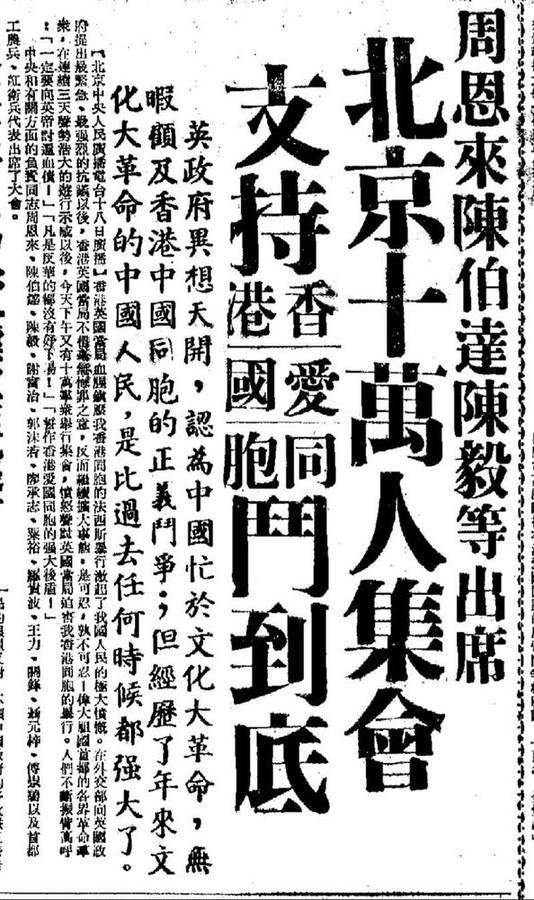
13. The Special Court: ten defendants, eighteen years, and the key to the sentence computation (1980–1981)
The skeleton of the trial is pinned first. On 29 September 1980 the Sixteenth Session of the Standing Committee of the Fifth National People's Congress decided to establish a Special Procuratorate of the Supreme People's Procuratorate and a Special Court of the Supreme People's Court to try the principal offenders of the Lin Biao and Jiang Qing counter-revolutionary cliques case (Chinese Wikipedia, cliques case article). At three o'clock in the afternoon of 20 November 1980 the Special Court opened its first session, and its president, Jiang Hua, announced the division of the case: Jiang Qing, Zhang Chunqiao, Yao Wenyuan, Wang Hongwen and Chen Boda would be tried by the First Tribunal, and Huang Yongsheng, Wu Faxian, Li Zuopeng, Qiu Huizuo and Jiang Tengjiao by the Second Tribunal (same source). Chen Boda stood fifth among the ten defendants (the Chinese Wikipedia's Chen Boda article records his order in the dock). One trace of official engineering in the classification must be archived: the Party leadership deliberately assigned Chen Boda — Zhang Chunqiao's political enemy — to the "Jiang Qing clique" for trial, in order to avoid the complications of the Lin Biao question (Chinese Wikipedia, cliques case article, background section). A man who after 1969 had leant toward Lin Biao and clashed with Jiang Qing was seated in the dock as a member of Jiang Qing's clique; that classification is itself archival evidence of the trial's political character, and this file records it as found, without tidying it away. In December 1980 the First Tribunal held its court debate on Chen Boda's crimes: Chen defended himself for an hour; his counsel Gan Yumu argued that Chen had lost his freedom shortly after the close of the Lushan plenum in 1970 and should not bear responsibility for the Lin Biao and Jiang Qing cliques' continuing crimes thereafter; that the consequences in the Jidong affair — thousands framed and persecuted — had not been caused by Chen's speech alone, and that Chen should bear a measure of responsibility for them but not the whole of it; and that Chen had admitted all of the facts and consequences of his crimes and shown a good attitude (Chinese Wikipedia, Chen Boda article, synthesising the trial record; the verdict table in the English Wikipedia's cliques case article names Chen's defenders as Gan Yumu and Fu Zhiren, and records the judgment's comment on him as "confessed to some of his crimes"). In a third statement Chen himself asked the court for leniency, saying that the case as a whole could carry the death penalty but that the measure need not necessarily be adopted (Chinese Wikipedia, Chen Boda article, synthesising his words in court). A man who had once written verdict-language for countless others wrote, in the dock, a single plea for his own life. This file records it and adds no gloss.
The verdict was pronounced on the morning of 25 January 1981: the Special Court found all ten defendants to be principal members of the Lin Biao and Jiang Qing counter-revolutionary cliques. Chen Boda's entry in the verdict table lists four counts — active participation in a counter-revolutionary group, conspiracy to subvert the government, counter-revolutionary propaganda and incitement, and false accusation and framing — and a sentence of eighteen years' imprisonment with five years' deprivation of political rights (English Wikipedia, cliques case article, verdict table; the Chinese Wikipedia's Chen Boda article likewise gives eighteen years in January 1981). Britannica's corresponding record is also eighteen years in January 1981. Within the ten defendants his sentence stood in the middle band: Jiang Qing and Zhang Chunqiao received death sentences with reprieve, Wang Hongwen life imprisonment; Chen Boda's eighteen years stood level with Huang Yongsheng's eighteen and above the seventeen-year band of Li Zuopeng and Wu Faxian (English Wikipedia, cliques case article, verdict table). This file registers that ranking because Chen is often misremembered as a member of the Gang of Four, or his term confused with Yao Wenyuan's twenty years; the verdict table pins it here: he was not a member of the Gang of Four, but a defendant of the second weight class, assigned to Jiang Qing's group for trial. Then comes the key to the sentence computation, an item of arithmetic this page must work out for the reader: he had been deprived of his freedom continuously from his custody on 18 October 1970, pre-trial detention is credited against a sentence by law, and his eighteen-year term therefore ran from 1970 and expired in 1988. That is the shared arithmetical basis of the Chinese Wikipedia's "released on completion of his sentence in 1988" and the English Wikipedia's "his parole time ended in 1988". Whoever reads "1988" as the year he first received medical parole, or was first released, misreads this timeline by a full seven years. The next section pins the three nodes apart.
Sources: Chinese Wikipedia, "林彪、江青反革命集团案" [Case of the Lin Biao and Jiang Qing Counter-Revolutionary Cliques] (the NPC Standing Committee decision of 29 September 1980 establishing the Special Procuratorate and Special Court; the first session of 20 November 1980 at 15:00 and the division between the two tribunals; the background note on Chen Boda's deliberate assignment to the Jiang Qing clique; the pronounciation of verdicts on 25 January 1981 finding all ten defendants principal members); English Wikipedia, "Case of the Lin Biao and Jiang Qing Counter-Revolutionary Cliques", verdict table (Chen Boda's four counts; eighteen years with five years' deprivation of political rights; defenders Gan Yumu and Fu Zhiren; the judgment's comment "confessed to some of his crimes"; the ranking of all defendants' sentences); Chinese Wikipedia, "陈伯达" (fifth in the order of defendants; the court debate of December 1980 and the main points of Gan Yumu's defence; Chen Boda's three statements in court; eighteen years in January 1981); Encyclopaedia Britannica, "Chen Boda" (eighteen years in January 1981).
14. Medical parole, completion of sentence, and death at home in Beijing: three nodes that must not be conflated (1981–1989)
The eight years after 1981 are habitually narrated with three nodes kneaded into one; this file takes them apart one by one. Node one, medical parole. On 5 July 1981 Wang Li — Chen's former colleague on the Central Cultural Revolution Group — wrote from Qincheng Prison to the central leadership pleading Chen Boda's case; ten days later, emissaries of the Centre visited Chen in the prisoners' ward of Beijing Fuxing Hospital and conveyed the Centre's message; he was transferred, under the form of release on medical parole, to a senior cadres' ward of Beijing Friendship Hospital, and the Beijing Municipal Public Security Bureau brought his son Chen Xiaonong to Beijing to care for him. On 5 August 1981 his medical parole was formalised. Some months later, as he gradually recovered at Friendship Hospital, the Beijing Public Security Bureau settled him in a suburban bungalow, and he never returned to Qincheng Prison (Chinese Wikipedia, Chen Boda article, synthesis). Britannica's corresponding phrasing is that he was released on bail shortly after sentencing for reasons of health, and the Korean Wikipedia likewise gives a release in August 1981 — with the three records closed together, his leaving prison in the summer of 1981 to live outside under medical parole is the documented layer. The English Wikipedia's body text — released under parole shortly after sentencing, with the parole time ending in 1988 — points the same way. Node two, completion of sentence. On 17 October 1988 Chen Boda's sentence expired and he was released; his personnel file was transferred from the Beijing Municipal Public Security Bureau to the Beijing Municipal Institute of Culture and History. The account descending from Ye Yonglie's biography of Chen records that on that day the departments concerned went to the hospital ward where he was then an inpatient and held a release ceremony, at which Yu Sang, a vice-minister of public security, announced to him that his eighteen-year term was complete (Ye Yonglie's account, checked in an English retelling — the detail of the ceremony rests on a single biographical source, and this file registers that the existence or otherwise of the ceremony does not affect the completion date itself). Node three, death. On 20 September 1989 Chen Boda died of a myocardial infarction at his home in Beijing, aged 85. His body was cremated at Babaoshan; there was no obituary and no eulogy; Xinhua did not issue its dispatch until 30 September (Chinese Wikipedia, citing People's Daily web materials). The death-day discrepancy is closed here: Britannica and the Korean Wikipedia give 22 September, registered as a discrepancy in Section 1; this file restates its adopted dating only — 20 September is taken as correct, and the 22 September dating, which has no Chinese source behind it, is not adopted.
One cell of late writings is archived alongside, because it is this man's last public record. After his release from prison — precisely, during his years living outside on medical parole — he published old-style scholarly pieces under pen names: "The Difficulty of Seeking Knowledge" (Qiu zhi nan) under the name Ji Xun in issue 10 of the journal Dushu in 1982, and a piece on Buddhist philosophy under the name Cheng Shu in July 1983 (Chinese Wikipedia, later-life section). In the interview he gave Ye Yonglie after completing his sentence in 1988, he left a self-account from which this file quotes only its shortest sentence, marked for what it is — the subject's own late self-account, not this site's assessment: "I am a man who committed great crimes" (a single quoted sentence, within this site's quotation limits; the same passage, as reproduced in the Chinese Wikipedia from Ye Yonglie's interview, also calls the Cultural Revolution a mad age, his former self a madman, and his life a tragedy). The evidential position of that self-account is stated expressly: it is a perpetrator's confessional statement to an interviewer after serving his sentence, tested by no procedure in which victims could question him. Its archival value lies in the fact itself that he admitted guilt; it does not lie in the depth of the repentance — depth cannot be verified, and this file does not measure it for him.
Sources: Chinese Wikipedia, "陈伯达" (Wang Li's letter of 5 July 1981 pleading his case and the Centre's emissaries; formal medical parole on 5 August 1981; the Friendship Hospital senior cadres' ward and the suburban bungalow; Chen Xiaonong brought to Beijing to care for him; completion of sentence and release on 17 October 1988 and the transfer of his file to the Beijing Municipal Institute of Culture and History; death by myocardial infarction at his Beijing home on 20 September 1989; cremation at Babaoshan with no obituary and no eulogy; Xinhua's dispatch of 30 September, citing People's Daily web materials; the late pen names Ji Xun and Cheng Shu; Ye Yonglie's interview self-account as reproduced); Encyclopaedia Britannica, "Chen Boda" (release on bail shortly after sentencing for reasons of health; death day given as 22 September — registered discrepancy); English Wikipedia, "Chen Boda" (parole shortly after sentencing, the parole period ending in 1988; death on 20 September 1989 aged 85, citing Ye Yonglie's 2010 Guangming Daily text); Ye Yonglie's account (the release ceremony of 17 October 1988 in the hospital ward and Yu Sang's announcement of the completed sentence, checked in an English retelling — single biographical source grade).
15. Three ledgers: the personal, the post, and the no-public-record
Everything this file has booked on Chen Boda is gathered here into three ledgers, item by item, with no item allowed to wander between columns. The first is the personal ledger — matters a participant account, a contemporaneous record or a court finding proves came from his own words and acts. One: in March and April 1966, his joint accusation with Kang Sheng of Peng Zhen at a Politburo meeting, the reclassification of the February Outline as a revisionist document, and his convening and chairing of the drafting group that criticised the February Outline clause by clause and wrote the new document abolishing it (Qi Benyu's participant memoir and the English Wikipedia's synthesis). Two: his writing of the first draft of the May 16 Notification (Russo's 2020 monograph, as cited in the English Wikipedia; Mao Zedong's heavy revision recorded beside it). Three: on 31 May 1966, his leading of the work team that entered the People's Daily and seized the paper (Chinese Wikipedia, citing contemporaneous records). Four: on 16 October 1966, his long report "The Two Lines in the Great Proletarian Cultural Revolution" to the Central Work Conference (Chinese Wikipedia). Five: on 12 November 1966, his directive to the Qufu Persecute-Kong Red Guards that they could "hold a mass rally and dig up Confucius's grave" (the China Heritage Quarterly research notes, resting on Persecute Kong Battle Dispatches and oral history). Six: in July 1967, his joint decision with Jiang Qing and Kang Sheng to subject Liu Shaoqi to personal persecution (at the grade of a Special Court finding of fact). Seven: on 26 December 1967, his Tangshan reception speech characterising the Jidong Party organisation as one in which the Kuomintang and traitors were at work (Chinese Wikipedia, citing the record of his remarks). The second ledger is the post and institutional ledger — acts whose subject is the institution he headed, under the premise of his office: the whole record of the Central Cultural Revolution Group as the Cultural Revolution's command organ from 28 May 1966 to 1969, whose head he was; the propaganda mobilisation of the early Cultural Revolution by Red Flag, which he edited, and by the People's Daily and Xinhua systems, which he oversaw; the People's Daily editorial of 1 June 1966, "Sweep Away All Cow Demons and Snake Spirits", issued while the paper was under his work team's control (an institutional text, whose word-by-word draftsman is a matter of no public record); and the victim-scale figures of the Jidong frame-up (the prosecution's figures of over 80,000 persecuted and nearly 3,000 dead — indictment grade, with no independent count beside them). The weight of this ledger is structural: between 1966 and 1969, China's Cultural Revolution command, its theoretical line-setting and its central propaganda machine were concentrated in the hands of one man — a man whose profession was secretary and penman. He never led troops for a single day and never governed a single locality; his power came wholly from the pen and from Mao's trust. That is precisely why this site books him in its People section and not only on its event pages: documents and directives were his weapons, and the weapons' lethality is checkable on a chain of facts.
The third ledger is the column of no-public-record and unverified entries, listed together so that no imagination fills them. Whether he drafted the "Sweep Away All Cow Demons and Snake Spirits" editorial word by word — no public record. The drafting group's composition for the Sixteen Points and his specific drafting share in it — no public record; this file records "participation in the drafting" only. Any personal instruction by him in the case of Deng Tuo — no public record, and in sequence Deng died before his takeover of the People's Daily. Whether Confucius's grave mound was in the end actually opened — no consistent public record. His specific remarks praising the Red Guards during the August 1966 receptions (the Namu retelling) — unverified, a single-chain retelling, not adopted as fact. Archival material on his conduct in prison after his Tianjin arrest of 1931 — no public record; the "traitor" label in the investigation report of 1972 belongs to the retrospective narrative produced after his fall, and this file does not adopt it as a statement of fact. An independent scholarly count of the Jidong frame-up's victims — no public record; only the prosecution's set of figures exists. Finally, the sanctions and accountability cells are fixed in this form. The sanctions cell is inapplicable as a category: he died in 1989, decades before every modern targeted-sanctions regime, and this site performed no, and fabricates no, list-search action in respect of him. The accountability cell, contrary to most of this site's people pages, must be written full rather than left blank — he was tried, and sentenced to eighteen years. But his judges were the new holders of power within the regime he had served, conducting an intra-regime reckoning; the trial assigned him to the Jiang Qing clique against which he had stood in life; Mao Zedong's primary responsibility for launching the Cultural Revolution was not in the dock; and the victims were never a party to that trial. This file's fixed formulation is therefore: a reckoning in the Party's and the judiciary's name there was; accountability in any independent sense there was not. The two sentences side by side are the complete portrait of that cell.
Sources: this section is this site's classification of the sources already cited in Sections 1–14 — the personal ledger's items rest respectively on Chapter 2 of Qi Benyu's memoir, on Russo's 2020 monograph (as cited in the English Wikipedia's "May Sixteenth elements" article), on the Chinese Wikipedia's Chen Boda and CCRG articles, on the China Heritage Quarterly Qufu research notes, and on the findings of fact in the Chinese Wikipedia's cliques case article; the institutional ledger's items rest on the Chinese Wikipedia's CCRG article, on MacFarquhar and Schoenhals's Mao's Last Revolution, and on the Chinese Wikipedia's Chen Boda article; each no-public-record entry is a negative result within the range of this site's searches of 7 November 2026, whose scope is stated in the Verification Note.
16. Verification Note
Verification date: 7 November 2026. This page's facts are pinned at three grades. Grade one (participant accounts and contemporaneous texts): Chapter 2 of Qi Benyu's Memoirs, a first-person participant account by a member of the drafting group, on the criticism of the February Outline and the drafting of the May 16 Notification in March–April 1966; Chen Boda's directive of 12 November 1966 as carried in the Red Guards' contemporaneous publication Persecute Kong Battle Dispatches, organised and cited in Sang Ye and Barmé's China Heritage Quarterly research notes; the attribution and date of Mao Zedong's "Some Points of View of Mine" (31 August 1970). Grade two (scholarship and authoritative syntheses): MacFarquhar and Schoenhals, Mao's Last Revolution (2006), on the Central Cultural Revolution Group's standing and the waning of Chen Boda's reputation (as cited in the English Wikipedia, pp. 155–156); Alessandro Russo, Cultural Revolution and Revolutionary Culture (2020), on the first draft of the May 16 Notification being Chen's and Mao's revision substantial (as cited in the English Wikipedia's "May Sixteenth elements" article, p. 117); Guo Jian, Song Yongyi and Yuan Zhou, Historical Dictionary of the Chinese Cultural Revolution, second edition, for the Jimei Normal School entry and the chronology entry on the decision of 30 August 1967 to arrest Wang, Guan and Qi; Jacques Guillermaz, The Chinese Communist Party in Power (1976), on the characterisation proclaimed at the Tenth Congress in 1973 (as cited in the English Wikipedia). Grade three (reference works and encyclopaedia syntheses): the skeleton of birth, death and career cross-checked between the English and Chinese Wikipedias, calibrated for the birth year against the Encyclopaedia Britannica entry and the Library of Congress authority record; the Special Court's counts and sentence taken from the verdict table in the English Wikipedia's cliques case article and cross-checked against the Chinese Wikipedia's cliques case article.
Eight discrepancies and corrections are registered. Discrepancy one, the birth name: the correct form is Chen Jianxiang (the Chinese and English body texts agree); the English infobox's misprint "Shangyu" and the Namu retelling's Chen Shengxun are registered and not adopted (Section 1). Discrepancy two, the day of death: the mainstream record gives 20 September; Britannica and the Korean Wikipedia give 22 September; the text takes 20 September as correct (Sections 1 and 14). Discrepancy three, the start of the secretaryship: the Chinese chronology gives the spring of 1939 for the transfer to Mao's office, while the German Wikipedia dates the political secretaryship from 1937; the text takes 1939 as correct and registers the 1937 dating (Section 3); the "31 years as secretary" figure is a Chinese Wikipedia synthesis claim whose arithmetic depends on the starting-point convention, and is registered without endorsement. Discrepancy four, the year of expulsion from the Party: the Chinese record and both infoboxes give expulsion at the Tenth Congress in 1973, Britannica gives 1983; the text takes 1973 as correct (Section 12). Discrepancy five, the timing of the 1970 custody: the English presidency article's retelling has Mao ordering Chen's "immediate arrest" and confinement in Qincheng before the plenum had closed, which is inconsistent in timing with the Chinese chronology's stepped sequence — investigation announced on 6 September, custody by the Central Guard Regiment on 18 October, transfer to Qincheng in September 1971 — and this file takes the Chinese stepped sequence as correct, registering the English retelling's "immediate arrest" as compressed narration whose timing is not adopted. Correction six (a correction of the task brief): the brief stated that Chen was "sidelined after the Wang Li incident of 1967". On checking: those removed in the Wang Li affair — the Wuhan Incident of July 1967 and the decision of 30 August 1967 to arrest Wang, Guan and Qi — were Wang Li, Guan Feng and Qi Benyu. Chen Boda himself was not touched; he remained head of the Group, received delegations in Tangshan in December 1967, and remained on the Standing Committee at the Ninth Congress of 1969. His marginalisation was a gradient running from 1967 to 1969, and the text has been corrected to the gradient (Section 10). Correction seven (a correction of the task brief): the brief stated "medical parole 1988". On checking: the formal date of his medical parole is 5 August 1981, and 17 October 1988 is the date his sentence expired and he was released — the eighteen years credited from his detention in 1970. The two nodes stand seven years apart, and the text pins them separately (Sections 13 and 14). Discrepancy eight, the focus of the Lushan plenum: the official verdict (a surprise attack by the Lin Biao grouping, through the "genius theory" and the state chairmanship) and the non-official historiography (that the plenum's real focus was the denunciation of Zhang Chunqiao) are recorded side by side, and this file adjudicates neither (Section 11). Number discipline: the Red Guard reception totals are registered only at the order of "eight rallies, some twelve million", and no single precise total is adopted; the circulating set of Qufu destruction figures could not be verified in the research notes and is not adopted; the Jidong figures of over 80,000 and nearly 3,000 are registered at prosecution grade only, with no independent count beside them. Materials not adopted are registered: the Namu retelling's remark of 16 August 1966 is marked unverified; the cries-for-help detail in the narrative of the transfer to Qincheng on 13 September 1971 is a single-chain account, of which only the skeleton is registered; the Qufu artefact figures on flashcard-type pages are not adopted. The sanctions section is fixed as "category inapplicable": the man died in 1989, before every modern targeted-sanctions regime, and this site performed no, and fabricates no, list-search action in respect of him.
Sources
- Chinese Wikipedia, "陈伯达" [Chen Boda] (birth and death and birthplace; born Chen Jianxiang, courtesy name Shangyou; the 31 years as secretary and the "number four man"; the Red Flag founding decision; Lushan 1959; the seizure of the People's Daily on 31 May 1966 and the editorial of 1 June; the "Two Lines" report of 16 October; the Tangshan remarks of 26 December 1967 and the Jidong indictment; the whole chain of Lushan 1970, investigation and custody; expulsion at the Tenth Congress in 1973; the Special Court debate and verdict; formal medical parole on 5 August 1981; completion of sentence on 17 October 1988; death on 20 September 1989, citing People's Daily web materials): https://zh.wikipedia.org/wiki/%E9%99%88%E4%BC%AF%E8%BE%BE
- English Wikipedia, "Chen Boda" (birth and death; the Jimei Normal School and Moscow Sun Yat-sen University; the Yan'an secretaryship and Rectification; the post-1949 table of posts; the interpretive works of 1951; head of the Central Cultural Revolution Group and Politburo Standing Committee member in 1966; the Group's dissolution and the waning of his reputation in 1969; the characterisation of 1973; the eighteen-year sentence and the parole ending in 1988, citing Guo Jian et al.'s dictionary, Meisner, MacFarquhar & Schoenhals, Guillermaz and Ye Yonglie's Guangming Daily text): https://en.wikipedia.org/wiki/Chen_Boda
- Encyclopaedia Britannica, "Chen Boda" (born 1904, Hui'an; chief interpreter of Mao Zedong Thought; removal from the Politburo in 1970; the 1983 expulsion dating; eighteen years in January 1981 and release on bail shortly afterwards for reasons of health; death day given as 22 September 1989 — registered discrepancy): http://www.britannica.com/biography/Chen-Boda
- Qi Benyu, Memoirs of Qi Benyu (2016), Chapter 2, "Criticising the 'February Outline' and Drafting the 'May 16 Notification'" (Mao's Shanghai talks of March 1966; the abolition of the Group of Five; the drafting group headed by Chen Boda and his convening of the drafting meeting), Chinese Marxists Internet Archive: https://www.marxists.org/chinese/reference-books/qibenyu/3-02.htm
- Chinese Wikipedia, "中央文化革命小组" [Central Cultural Revolution Group] (the full composition of the list notification of 28 May 1966; Tao Zhu added as adviser on 2 August; the Sixteen Points endowing the Group with the character of an organ of power; the notification of 30 August on Jiang Qing acting as head; the background of the February Outline): https://zh.wikipedia.org/wiki/%E4%B8%AD%E5%A4%AE%E6%96%87%E5%8C%96%E9%9D%A9%E5%91%BD%E5%B0%8F%E7%BB%84
- Chinese Wikipedia, "五一六通知" [May 16 Notification] (the enlarged Politburo meeting of 4–26 May 1966; adoption of the Notification on 16 May; the Notification's content and Kang Sheng and Chen Boda as the drafting group's leading figures): https://zh.wikipedia.org/zh-cn/%E4%BA%94%E4%B8%80%E5%85%AD%E9%80%9A%E7%9F%A5
- English Wikipedia, "May Sixteenth elements" (Chen Boda wrote the initial draft of the May 16 Notification and Mao Zedong substantially revised it, citing Alessandro Russo, Cultural Revolution and Revolutionary Culture, Duke University Press, 2020, p. 117): https://en.wikipedia.org/wiki/May_Sixteenth_elements
- English Wikipedia, "Cultural Revolution" (the February Outline of 12 February 1966; the accusation of Peng Zhen by Kang Sheng and Chen Boda at a Politburo meeting; the "Sweep Away All Cow Demons and Snake Spirits" editorial of 1 June 1966, citing MacFarquhar & Schoenhals, p. 50; eight rallies drawing some twelve million Red Guards): https://en.wikipedia.org/wiki/Cultural_Revolution
- Sang Ye & Geremie Barmé, "The Fate of the Confucius Temple, the Kong Mansion and Kong Cemetery", China Heritage Quarterly research notes (materials: Persecute Kong Battle Dispatches and oral history: the Qufu sequence of November 1966 and Chen Boda's directive of 12 November): https://www.chinaheritagequarterly.org/scholarship.php?searchterm=020_confucius.inc&issue=020
- Chinese Wikipedia, "林彪、江青反革命集团案" [Case of the Lin Biao and Jiang Qing Counter-Revolutionary Cliques] (the decision of 29 September 1980 to establish the Special Court; the opening of 20 November and the division between the tribunals; the background to Chen Boda's assignment to the Jiang Qing clique; the finding of fact on the July 1967 decision to persecute Liu Shaoqi personally; the verdicts of 25 January 1981): https://zh.wikipedia.org/wiki/%E6%9E%97%E5%BD%AA%E3%80%81%E6%B1%9F%E9%9D%92%E5%8F%8D%E9%9D%A9%E5%91%BD%E9%9B%86%E5%9B%A2%E6%A1%88
- English Wikipedia, "Case of the Lin Biao and Jiang Qing Counter-Revolutionary Cliques" (trial dates 20 November 1980 – 25 January 1981; the defendant list; Chen Boda's four counts and eighteen years with five years' deprivation of political rights; defenders Gan Yumu and Fu Zhiren; all defendants' sentences): https://en.wikipedia.org/wiki/Case_of_the_Lin_Biao_and_Jiang_Qing_Counter-Revolutionary_Cliques
- Chinese Wikipedia, "中国共产党第九届中央委员会第二次全体会议" [Second Plenary Session of the Ninth Central Committee] (the Lushan plenum of 23 August – 6 September 1970; North China Group Bulletin No. 2; Mao's instructions of 25 August and "Some Points of View of Mine" of 31 August; the official and non-official accounts carried side by side): https://zh.wikipedia.org/wiki/%E4%B8%AD%E5%9B%BD%E5%85%B1%E4%BA%A7%E5%85%9A%E7%AC%AC%E4%B9%9D%E5%B1%8A%E4%B8%AD%E5%A4%AE%E5%A7%94%E5%91%98%E4%BC%9A%E7%AC%AC%E4%BA%8C%E6%AC%A1%E5%85%A8%E4%BD%93%E4%BC%9A%E8%AE%AE
- English Wikipedia, "Abolition of the presidency in China" (the March 1970 proposal to abolish the state presidency; the "genius" clash at the constitution group meeting of 13 August; the group attacks on Zhang Chunqiao of 23 August; Mao's denunciation of Chen and the campaign against him): https://en.wikipedia.org/wiki/Abolition_of_the_presidency_in_China
- English Wikipedia, "Wuhan incident" (the Wuhan Incident of 16–25 July 1967; Wang Li and Xie Fuzhi sent to Wuhan and detained; Mao's scaling-back of the movement's radical components thereafter): https://en.wikipedia.org/wiki/Wuhan_Incident
- Guo Jian, Yongyi Song & Yuan Zhou, Historical Dictionary of the Chinese Cultural Revolution, 2nd ed. (the Chen Boda biographical entry, pp. 33–35; chronology: Mao's decision of 30 August 1967 to arrest Wang Li, Guan Feng and Qi Benyu), checked in the electronic edition published via cantook
- English Wikipedia, "Qi Benyu" (Qi Benyu's arrest on 13 January 1968; Wang, Guan and Qi all sent to Qincheng Prison): https://en.wikipedia.org/wiki/Qi_Benyu
- German Wikipedia, "Chen Boda" (political secretary to Mao from 1937 to 1956 — registered dating discrepancy; Mao's use of Chen Boda to criticise Peng Dehuai at Lushan in 1959): https://de.m.wikipedia.org/wiki/Chen_Boda
- Jonathan D. Spence, "China's Great Terror", review in The New York Review of Books, 21 September 2006 (Deng Tuo's suicide on 17 May 1966, as relayed from MacFarquhar & Schoenhals, Mao's Last Revolution): https://www.nybooks.com/articles/2006/09/21/chinas-great-terror/
Contact: endccpworld@proton.me