
Zhou Bin and the PetroChina System: From Zhongxu Yangguang to the Yichang Judgment
The petroleum piece of this series' state-enterprise line. Its subject never held a post in any state enterprise — he was not a PetroChina executive but the PetroChina executives' "young master": a private company with RMB 5 million in registered capital won the informatisation contract for some 8,000 of PetroChina's filling stations, and two oilfield cooperation blocks obtained for RMB 10–20 million were resold for RMB 550 million. In the end it was not the market that priced all this, but the Yichang Intermediate People's Court in Hubei on 15 June 2016: three offences combined, eighteen years, and a fine of RMB 350.2 million. This piece digs into one line only — Zhou Bin himself and his transactions with the PetroChina system. For the full-family overview of judgments, see The Zhou Yongkang Family: A Whole Family Written into Court Judgments.
Contents
- I. Fixing the Identity First: He Was Not a State-Enterprise Executive
- II. Early Years and the Return: Inside and Outside an Oil Family's Gate
- III. Zhongxu Yangguang: The Equity Chain of a RMB 5 Million Company
- IV. 8,000 Filling Stations: To Whom Did PetroChina's Informatisation Door Open?
- V. Oilfield Blocks and Equipment: The Middleman's Second Line
- VI. The PetroChina Purge: The Jiang Jiemin Thread
- VII. The Judicial Process: From 1 December 2013 to the Yichang Judgment
- VIII. His Wife Huang Wan: Another Judgment and a Long Restriction
- IX. Reconciling the Numbers, Appeal and Current Status
- Material Gaps (stated faithfully)
- Source List
This series' state-enterprise line has recorded several ways of entering a state enterprise: some sat down in a top executive's office, some on a board list, some in the chairman's seat of a state-capital investment platform. This piece records the most unusual position of all, and the hardest to find by ordinary CV-checking — Zhou Bin held no post in any state enterprise whatsoever. His name appears on no PetroChina executive list; it appears instead in PetroChina procurement contracts, in oilfield block approvals and in the contractor register for the filling-station informatisation project — and finally in the Yichang court's judgment, written next to his father's name after the words "joint bribe-taking." The series' state-enterprise dossier therefore created a single exception clause for him: a person who never held a state-enterprise post but is proved by a court judgment to have profited systematically from state-enterprise transactions in the capacity of an immediate family member is recorded separately, with the "not a state-enterprise appointee" distinction stated expressly. He is the only case in the whole series to which that clause applies. This piece is that case, in full.
The division of labour with the family piece should be stated. The Zhou Yongkang family piece has already set out the whole panorama of that family's four judgments and three power networks; this piece does not repeat the panorama. It does one thing: it takes the eldest son Zhou Bin's every checkable transaction with the PetroChina system apart, one by one — how the company was set up, how its equity moved, how the contracts were won, how the blocks were flipped, how the executives fell, and how the court priced each item. The two pieces are obverse and reverse of one another: the family piece answers "how did this family end?", and this piece answers "how exactly did this son make his money off a petroleum state enterprise?"
I. Fixing the Identity First: He Was Not a State-Enterprise Executive
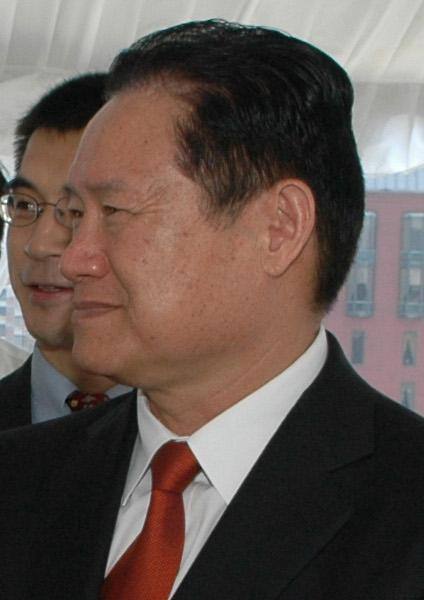
The kinship first, nailed down. Zhou Bin, born in January 1972 in Wuxi, Jiangsu, is the eldest son of Zhou Yongkang and his first wife Wang Shuhua. Zhou Yongkang himself served as general manager of China National Petroleum Corporation (1996–1998), spent thirty-two years in the petroleum system, and went on to become minister of land and resources, party secretary of Sichuan and minister of public security, before serving from 2007 to 2012 as a Politburo Standing Committee member and secretary of the Central Political and Legal Affairs Commission. The father-son relationship and the father's career are attested by official CVs and judgment releases: A-grade. (Sources 1, 7, 12)
Then the single most important identity statement in this piece: Zhou Bin himself never held any post of any kind in China National Petroleum Corporation, in PetroChina Company Limited, or in any state enterprise. His public identity was always that of a private businessman: shareholder and chairman of a Beijing petroleum technology company, and the actual controller of a set of affiliated companies fronted by partners. This must be said first, because outside accounts often misdescribe him as a PetroChina executive's son who himself served inside PetroChina. The truth is the reverse, and the whole point of this piece lies in it: a man entirely outside the system, relying not on any post of his own but on the network left behind by his father's thirty years in oil, completed a full set of transactions — from informatisation contracts to oilfield blocks — on the body of the largest petroleum enterprise inside the system. The legal names the judgment finally gave that model were "joint bribe-taking" and "bribe-taking by trading on influence."
The outline of the father's network needs setting out only as far as this piece requires. Zhou Yongkang entered the Daqing oilfield in 1966, passed through the Liaohe oilfield and the Ministry of Petroleum Industry, became a deputy general manager of CNPC in 1988 and its general manager in 1996. A whole generation of later PetroChina executives — Jiang Jiemin, Wang Yongchun, Li Hualin, Ran Xinquan and their cohort — were promoted and placed during his years as vice minister and general manager. When he left the petroleum system in 1998, that network did not dissolve with his departure: when his son began setting up petroleum companies in Beijing in 2004, the men sitting in PetroChina's key posts were precisely those old subordinates. Everything that followed must be read inside that time lag: the father gone six years, his shadow still at work; nine more years, and the network, beneficiaries included, was taken away node by node in the same anti-corruption campaign.
II. Early Years and the Return: Inside and Outside an Oil Family's Gate
Zhou Bin's education carries the clear mark of an oil dynasty. According to public compilations, he studied technological English at Southwest Petroleum Institute (now Southwest Petroleum University) from 1989 to 1992, where his classmate was his later business partner Mi Xiaodong; he then went to the United States, studied at the University of Texas at Dallas, and there met and married Huang Wan. Huang Wan comes from another oil family: her father Huang Yusheng is the son of the celebrated geologist Huang Jiqing, and her mother is Zhan Minli — two names that will recur throughout the shareholder registers of Zhou Bin's companies. In 2001 Zhou Bin returned to China with Huang Wan and settled in Beijing. (Source 12) The grade of this section must be marked: the schooling and marriage details rest on mutual corroboration between public compilations and Caixin's investigation, with no official CV text — compilation level; but the parts that connect to the judgments and the registration record below — the year of return, the names of his wife and mother-in-law — are supported by business archives and investigative reporting, and they stand.
According to Caixin's investigation, Zhou Bin was already selling foreign petroleum equipment to domestic petroleum enterprises for margins and commissions while still studying in the United States; after his return, his business resolved into three main lines. The first was trading petroleum equipment, acting as middleman between oilfields and equipment makers. The second was trading cooperation interests in oilfield development blocks — acquiring cheap, reselling dear. The third was acting directly, through companies he controlled, as a PetroChina supplier taking in-system contracts. The three lines share one feature: none of the profit came from technology, capacity or market competition; all of it came from a single fact — that the doors inside the PetroChina system opened to him alone. (Sources 2, 3) Sections IV and V take these lines one by one. One person must be registered here: the Sichuan businessman Wu Bing. Around 2001, Wu Bing set up Zhongxu Investment and other companies under Zhou Bin's direction, and for more than a decade he fronted shareholdings, signed contracts and ran projects — Caixin's "white glove" for Zhou Bin — while Zhou Bin himself mostly stayed behind the scenes, moving between Beijing, Hong Kong and elsewhere. The key to this piece's corporate structures is exactly that front-and-back division: the registered shareholders changed again and again, while the real beneficiary and controller remained the same one man.
III. Zhongxu Yangguang: The Equity Chain of a RMB 5 Million Company
The core company of this piece is Beijing Zhongxu Yangguang. Its founding and equity movements left the most complete business-registration chain in this series' state-enterprise line, and it deserves year-by-year registration, because the chain itself is evidence: it shows how a company passed in six years from a shell in a mother-in-law's name to a joint-stock company eighty percent held by Zhou Bin — and how, on the eve of the case, his name was lifted off its board list.
In 2004, Beijing Zhongxu Yangguang Petroleum and Natural Gas Technology Co., Ltd. was established in Beijing with registered capital of RMB 5 million. According to the investigation by Xinhua's Economic Information Daily, based on registration materials and restructuring documents, the registered shareholders at founding were two natural persons: Zhan Minli, contributing RMB 4 million, and Zhao Ming, contributing RMB 1 million; Zhao Ming served as manager from the company's founding and later as legal representative and general manager. A discrepancy of caliber must be marked here: some early reporting summarised the founding shareholders as "Zhou Bin and Zhan Minli," which does not fully match the registration detail, while Caixin's investigation records that Zhan Minli later transferred her equity to Zhou Bin. This piece follows the registration chain: at founding, Zhou Bin was not among the registered shareholders — the person fronting the company was his mother-in-law, which is precisely what the "white glove" structure looks like at the equity layer. (Sources 4, 5)
The subsequent movements, year by year: in November 2007, Beijing Guanglong Jiarun Investment Advisory Co., Ltd. put in RMB 15 million, raising the company's capital to RMB 20 million; in August 2008 that investor's shares were transferred back into the names of Zhan Minli and Zhao Ming and the investor exited; in June 2009 the shares of Zhan Minli and Zhao Ming were briefly transferred to two young men, Deng Fuzuo and Lu Ninglong, and only two months later Deng Fuzuo transferred 16 million shares back to Zhan Minli while Lu Ninglong transferred his 4 million shares to a new shareholder, Nan Xin; in January 2010 Zhan Minli transferred all her shares to Zhou Bin — after six years of detours, the company returned, in the registration record, to the name of its real controller. In February 2010 the company was restructured from a limited company into a joint-stock company and renamed Beijing Zhongxu Yangguang Energy Technology Co., Ltd. (later generally "Zhongxu Nengke," of the "Zhongxu group"): the restructuring documents show assets of RMB 77.43 million, liabilities of RMB 44.84 million and net assets of RMB 32.59 million, of which RMB 30 million was converted one-for-one into share capital — Zhou Bin holding 24 million shares, eighty percent, and Nan Xin 6 million shares. The board consisted of Zhou Bin, Zhao Ming, Huang Yusheng, Yan Yong and Zhu Liping, with Zhou Bin as chairman and Zhao Ming as legal representative and general manager; the supervisory board included Zhan Minli. (Sources 4, 5) His father-in-law on the board, his mother-in-law on the supervisory board: the governance layer of a petroleum technology company was seated with the relatives of Zhou Bin and his wife — the list itself is the registration-record footnote to the words "family company."
In December 2012 Zhou Bin left the board and ceased to be a director, and the chairmanship passed to his wife Huang Wan. (Sources 4, 5) The date deserves a mark of its own: it was eight months before the storm broke over the PetroChina system, and exactly a year before Zhou Bin himself was taken away. This piece registers the date and interprets no one's motive — whether it was an ordinary business arrangement or a cutting of ties in anticipation of the weather, the public record gives no answer. In outcome, the exit changed nothing: the joint bribe-taking and influence-trading determined in the 2016 judgment cover precisely the years in which he actually controlled this company and the Zhongxu group. What the law determined was never the board list; it was actual control and actual benefit.
The Zhongxu group was larger than this one company. Zhongxu Investment and Zhongxu Industrial, controlled by Wu Bing, ran hydropower, property and expressway projects in Sichuan — the Longtoushi and Geshizha hydropower stations on the Dadu River, property ventures in Chengdu, a controlling stake in the Chengdu–Wenjiang–Qionglai expressway — the network's second line, in the Sichuan system, which the family piece has covered; this piece does not expand it. What this piece pins down is the petroleum line alone: Zhongxu Yangguang (Zhongxu Nengke) was the principal transaction channel between Zhou Bin and the PetroChina system, and it is complete in all three chains — registration, business and judgment — making it the archival spine of the whole piece.
IV. 8,000 Filling Stations: To Whom Did PetroChina's Informatisation Door Open?
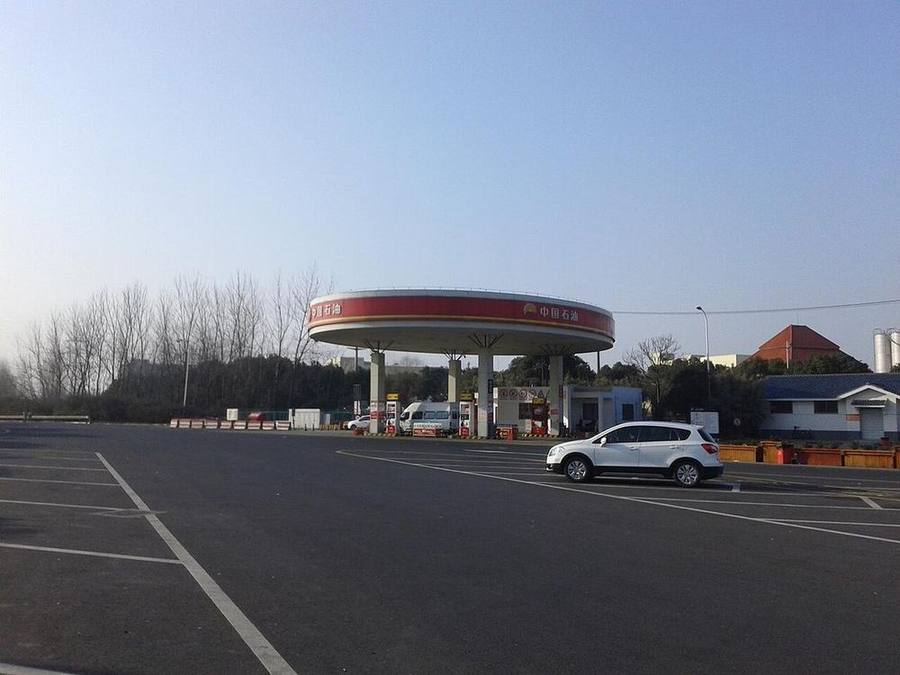
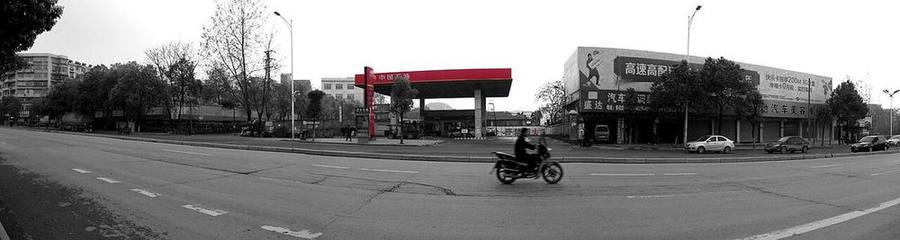
Soon after its founding, Zhongxu Yangguang landed a contract to make any competitor take notice: the informatisation project for PetroChina's filling-station retail management system. According to Caixin's investigation, Zhongxu Yangguang won this project from more than ten of PetroChina's provincial sales branches, covering some 8,000 filling stations; Zhongxu Nengke's own website stated that the company was responsible for the concrete implementation and management of PetroChina's filling-station management system across some 8,000 stations, covering the pilot units and all three deployment phases; and of the seventeen success cases the company listed publicly, fifteen were PetroChina projects. Beyond the filling-station system, the company also took part in building PetroChina's refined-oil logistics and distribution system and its engineering project management system, and it had equipment sales relationships with the Tarim, Jilin, Changqing, Liaohe and other PetroChina oilfields. (Sources 2, 3, 5)
To state the weight of this contract takes three comparisons. The first is the company's size: a private firm founded only in 2004, with RMB 5 million in registered capital and a few dozen employees, facing China's largest oil company and a retail network of some eighteen thousand filling stations at the time — 8,000 of them, roughly forty percent. The second is the industry's threshold: a filling-station retail management system governs every station's product inventory and cash settlement; it is the core data channel of the sales system, and such projects normally go to systems integrators with long track records, whereas Zhongxu Yangguang had no checkable industry record before this. The third is timing: the project ran from pilots around 2006 through batch rollouts and rolling implementation over nearly a decade, spanning exactly the period after Zhou Yongkang had left PetroChina, while he served as minister of public security and secretary of the Political and Legal Affairs Commission — the contracts and renewals were signed at the highest stretch of the father's power, not during his years in the petroleum system. That time structure matches the judgments' characterisation precisely: this was not a project a father in post awarded his son directly; it was a project for which the old subordinates "provided assistance" after the father had moved on.
"Provided assistance" is not this piece's rhetoric; it is the common wording of three judgments. Zhou Yongkang's judgment determined that he required Jiang Jiemin and Li Chuncheng to provide assistance to the business activities of Zhou Bin and others, causing the persons concerned illegally to gain more than RMB 2.136 billion and causing economic losses of more than RMB 1.486 billion — note that this set of figures is the aggregate harmful consequence determined under the abuse-of-power count, covering the business activities of five people; it is neither Zhou Bin's gain alone nor a bribery amount, and this piece merges it with no bribery figure. Jiang Jiemin's judgment determined that from 2004 to 2008 Jiang, at Zhou Yongkang's direction or prompting and in violation of the rules, provided assistance to others' business activities, causing exceptionally grave losses to the interests of the state. (Sources 1, 6, 7) The three judgments dovetail exactly on this point: the father issued the instruction, the central-enterprise chief executed it, the son's company benefited. What this piece can do is align that judgment-confirmed chain with the contract record of this section: the year the contracts began, 2004, is the first year of the "assistance" period determined in Jiang Jiemin's judgment.
The boundary must be registered at the end of this section: the total contract value of Zhongxu Yangguang's filling-station system, its per-station price and its profit levels are given in no checkable complete figures in either the published releases or the investigative reporting, and the judgment itemised no determination of the legality of each Zhongxu project. This piece writes only as far as "the project existed, the scale existed, the beneficiary existed, and the assistance relationship was confirmed by judgment"; the characterisation of each individual contract is left to the gap list.
V. Oilfield Blocks and Equipment: The Middleman's Second Line
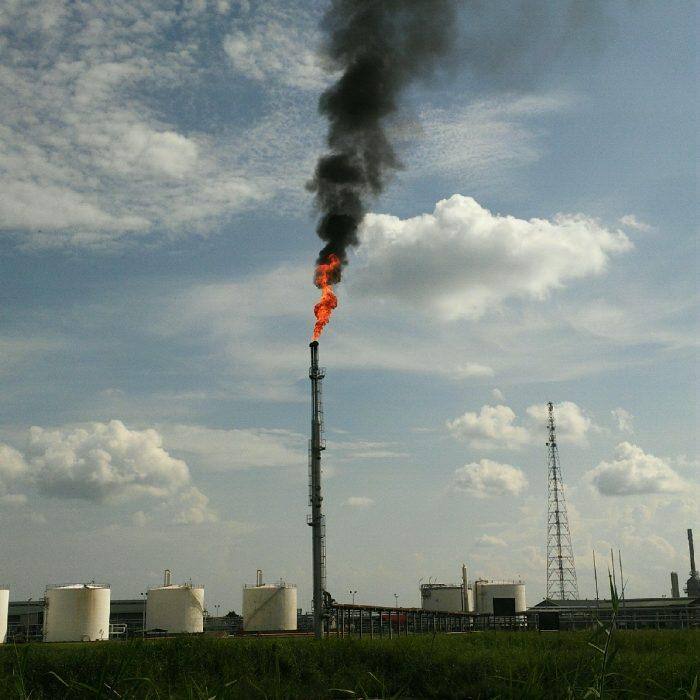
Beyond the informatisation contracts, Zhou Bin's second line reached into the most richly profitable upstream of the oil industry: cooperation interests in oilfield development blocks. The operator of this line was his university classmate Mi Xiaodong. According to Caixin's investigation, Mi set up Shaanxi Qiuhai Jiqing Petroleum Technology Co., Ltd. in Xi'an in January 2007, and at the end of the same year, at the same Xi'an office address, Shaanxi Degan Petroleum Technology Co., Ltd. — both companies actually controlled by Zhou Bin, with Zhan Minli among Degan's shareholders. For a low price of some RMB 10–20 million, the two companies obtained the cooperation interests in the Changyin and Changhai blocks of PetroChina's Changqing oilfield cooperation development project. (Sources 2, 3, 12) The man then in charge of the Changqing oilfield was Ran Xinquan — another of Zhou Yongkang's petroleum-era subordinates, who would fall in August 2013; that personnel line closes in the next section.
Acquisition was followed by resale. Mi Xiaodong sold Degan, together with its Changyin project, to the side of Wang Letian, a private energy businessman from Jilin, for RMB 550 million; the buyer later discovered that Changyin's recoverable area was only some 13 square kilometres, not the 50 square kilometres originally claimed, and demanded renegotiation, with the result that Qiuhai Jiqing's Changhai project and a small Wangpanshan oilfield were given to the buyer as compensation. In and out: approvals and block interests obtained for RMB 10–20 million, priced at RMB 550 million — even allowing for the subsequent compensation, this remains the most glaring markup multiple among all the transactions in this piece. Its source of profit is equally plain: approval for cooperation development at the Changqing oilfield was itself a scarce resource, and the qualification to obtain that approval cheaply was the whole of this business's technical content. (Source 12) The grade of this section must be marked: the acquisition price, the resale price and the area dispute rest on mutual corroboration between Caixin's investigation and public compilations — the investigative layer; Zhou Bin's judgment published no itemised statement of whether this transaction was counted into the bribery totals, or under which count, and this piece does not answer on the judgment's behalf.
The third, smaller line is the equipment middleman. According to Caixin's special report, in 2010–2011, with Mi Xiaodong handling the concrete arrangements, Zhou Bin acted as middleman in selling several batches of domestically made Christmas-tree and other oil-production equipment to the Chinese operating company at Iraq's Misan oilfield, using connections to help make the sales and earning commissions. (Sources 2, 12) The sums were not large, but the line marks the geographic radius of the middleman model: from Changqing block interests to equipment for an Iraqi oilfield, what was sold was the same one thing — a channel into the PetroChina supply chain. As for the circulating claim that Wison Engineering was "held on Zhou Bin's behalf," Caixin's original text itself flagged it as unverified; this piece does not adopt it and registers it only in the reconciliation of Section IX.
A Sichuan entry must be appended to this section, because it is the only doorway to understanding why the name Liu Han appears in the Zhou family's accounts — but this piece writes only the small segment relevant to its petroleum main line. In 2003 Zhou Bin sold a tourism asset in Sichuan's Aba prefecture to the side of Liu Han of Sichuan Hanlong Group for about RMB 20 million; in 2005 Zhou Bin took a twenty percent stake in a Hanlong power company in Sichuan and later returned it for nothing. The transactions themselves are supported by Caixin's investigation and registration records; the "overpriced cultivation" reading of their motive is investigative analysis, determined by no judgment — Liu Han was sentenced to death in 2014 for organising and leading a mafia-style organisation, among other offences, and executed in 2015; his judgment does not mention Zhou Bin, and Zhou Bin's judgment does not mention Liu Han. This piece registers the matter at that grade and expands it no further; the detail is in Section IV of the family piece.
VI. The PetroChina Purge: The Jiang Jiemin Thread
At the end of August 2013, a corner of the PetroChina system collapsed in two days. According to Caixin and other media's collation of the official notices: on 26 August 2013, Wang Yongchun, a CNPC Group deputy general manager and Party group member concurrently general manager of the Daqing oilfield, was announced to be under organisational investigation; on 27 August, three more men were announced under investigation the same day — Li Hualin, a CNPC Group deputy general manager; Ran Xinquan, a PetroChina vice president and general manager of the Changqing oilfield branch; and Wang Daofu, PetroChina's chief geologist and head of its Exploration and Development Research Institute. In two days, four executives at group and listed-company deputy-general-manager level had fallen — among them Ran Xinquan, the Changqing chief at the time Degan obtained its Changqing blocks, and Li Hualin, who had risen from a secretary's post under Zhou Yongkang. (Source 9) In the same month of August, Zhou Bin's "white glove" Wu Bing was taken away by police at Beijing West railway station, and the Zhongxu group stalled with him. (Source 3)
On Sunday, 1 September, came the apex of this line: the Central Commission for Discipline Inspection announced that Jiang Jiemin, director and deputy Party secretary of the State-owned Assets Supervision and Administration Commission, was suspected of serious disciplinary violations and under organisational investigation. Jiang Jiemin was the first Central Committee member to fall after the Eighteenth Party Congress. His career is the key to the whole thread: a petroleum-system man who was sent out in 2000 to serve as a vice governor of Qinghai, returned to CNPC in 2004 as a group deputy general manager, and from late 2006 to 2013 served successively as CNPC Group general manager and chairman and as PetroChina chairman — seven years at the head of China's largest petroleum state enterprise — before transferring to the SASAC directorship in March 2013 and falling six months later. Zhongxu Yangguang founded in 2004, the filling-station project piloted in 2006, the Changqing blocks obtained in 2007: in every key year, the man in CNPC's first or second seat was Jiang Jiemin. (Sources 6, 9)
Jiang Jiemin's judgment wrote this line into a judicial instrument. On 12 October 2015 the Hanjiang Intermediate People's Court in Hubei delivered its first-instance judgment: the court found that from 2004 to 2013 Jiang used his position to seek gains for others in project construction, post adjustments and other matters, accepting bribes totalling RMB 14,039,073; that as of 31 August 2013 his and his family's property and expenditure manifestly exceeded their lawful income, of which a difference of RMB 14,766,174 could not be explained; and that from 2004 to 2008 Jiang, at Zhou Yongkang's direction or prompting and in violation of the rules, provided assistance to others' business activities, causing exceptionally grave losses to the interests of the state. The court sentenced him to twelve years for bribe-taking, with confiscation of RMB 1 million in personal property; to five years for holding a huge amount of property from unidentified sources; and to five years for abuse of power by a state-company employee — combined, sixteen years to be served, with confiscation of RMB 1 million in personal property, the bribe proceeds, unexplained property and illegally obtained gains to be recovered for the state treasury. Jiang stated in court that he accepted the judgment and would not appeal. (Source 6) The judgment's vague word "others" and the wording of Zhou Yongkang's judgment — "required Jiang Jiemin … to provide assistance to the business activities of Zhou Bin and others" — gloss each other: two judgments, a year apart and from two courts, wrote the same matter once from the instruction end and once from the execution end.
On 17 December, PetroChina's chief accountant Wen Qingshan was likewise announced under investigation, and the PetroChina purge list was by then essentially complete. Over the following two years Wang Yongchun, Li Hualin, Ran Xinquan and others were sentenced in turn (their terms are in the family piece and the published releases; this piece does not expand them one by one); and on the Sichuan line, Li Chuncheng — the other executor named in Zhou Yongkang's judgment as having been required to "provide assistance" — was sentenced the same day, 12 October 2015, by the Xianning court to thirteen years for bribe-taking and abuse of power. (Source 9) This section closes on one structural fact: the Zhou Bin case was never one son's isolated case. Upstream of it stands a full layer of one state enterprise's executives and their judgments — without that layer of men, there would have been no 8,000 filling stations in the hands of a RMB 5 million company, and no RMB 10–20 million Changqing approvals.
VII. The Judicial Process: From 1 December 2013 to the Yichang Judgment
First, the procedural timeline of Zhou Bin himself, pinned day by day. In September 2013, overseas and Hong Kong media carried reports that Zhou Bin had been placed under house arrest; on 25 September Caixin published its first disclosure of the businesses of Zhou Bin and his in-laws inside the PetroChina system — the article was deleted for a time, revived in November, and on 22 November a further special report named Zhou Bin as suspected of obtaining huge gains by improper means. (Sources 2, 12) On 1 December 2013 Zhou Bin was formally taken away in Beijing; taken the same day were his wife Huang Wan, and Zhou Yuanqing and Zhou Lingying in Wuxi and Zhou Feng in Chengdu — the family piece records that day in panorama, and this piece registers only the point directly relevant to the petroleum line: from Wu Bing taken in August, the four PetroChina executives fallen at the end of August and Jiang Jiemin fallen on 1 September, to Zhou Bin taken on 1 December, the sequence ran first to suppliers and the white glove, then to the state enterprise's executives, and only last to the beneficiary himself. Published reporting thereafter showed Zhou Bin approved for arrest by the Yichang People's Procuratorate in Hubei on suspicion of illegal business operations — the case's jurisdiction landed in Yichang, forming, with his father's Tianjin jurisdiction and Jiang Jiemin's Hanjiang jurisdiction in the same province, the pattern of separate-location trials across the Zhou Yongkang series of cases. (Source 12)
On 22 May 2015 Zhou Yongkang's case was tried in camera at the Tianjin No. 1 Intermediate Court, with Zhou Bin and Jia Xiaoye appearing by video to testify; on 11 June Zhou Yongkang was sentenced to life imprisonment, and the handlers of the more than RMB 129 million in family bribes determined in his judgment were precisely Jia Xiaoye and Zhou Bin. In his father's trial, the son appeared as a witness; a year later, his own trial opened.
On 15 June 2016, the Yichang Intermediate People's Court in Hubei publicly delivered its first-instance judgment in Zhou Bin's case. The main points of the judgment published on the Supreme People's Court's official website are the source of every core figure in this piece, and are recorded item by item as follows: (Source 1)
- Bribe-taking — thirteen years, and a fine of RMB 190 million. The court determined that Zhou Bin, together with his father Zhou Yongkang and using the convenience of Zhou Yongkang's posts, sought gains for others and illegally accepted property totalling RMB 98.0466 million — an especially huge amount — Zhou Bin being an accomplice in Zhou Yongkang's bribe-taking.
- Bribe-taking by trading on influence — eight years, and a fine of RMB 160 million. The court determined that Zhou Bin, together with others and using the convenient conditions created by his father Zhou Yongkang's authority and position, through the official acts of other state functionaries sought improper gains for supplicants and accepted their property, totalling more than RMB 124 million — an especially huge amount.
- Illegal business operations — three years, and a fine of RMB 200,000. The court determined that Zhou Bin, as the person in charge directly responsible for a unit, in violation of state rules dealt without a licence in goods whose sale the state restricts, disrupting market order, in serious circumstances. The published release does not name the goods or the unit involved; this piece marks that gap faithfully and fills in nothing by speculation.
- Sentencing circumstances and the combined result: the court also determined that Zhou Bin showed statutory or discretionary mitigating circumstances — surrender, frank confession, active return of the proceeds, and admission of guilt with repentance. On combined punishment for the three offences, he is to serve a fixed term of eighteen years, with a fine of RMB 350.2 million, and his illegal gains are to be recovered and paid into the state treasury. After the verdict, Zhou Bin stated in court that he accepted the judgment and would not appeal — the first-instance judgment thereupon became effective, and there is no record of any second-instance revision.
Two readings of this judgment must be explained to the reader. The first is the legal difference between the two bribery sums: the RMB 98.0466 million is "joint bribe-taking with his father" — supplicants were buying Zhou Yongkang's official acts, and Zhou Bin was the accomplice; the more than RMB 124 million is "bribe-taking by trading on influence" — Zhou Yongkang need not have acted directly; what Zhou Bin sold was the convenient conditions created by his father's authority and position, executed through other state functionaries. The first sum sold the office itself; the second sold the office's shadow — and the court priced the shadow higher than the substance. The second is the numerical relationship with the father's judgment: the RMB 1,297,721,113 determined in Zhou Yongkang's case is the total accepted by Jia Xiaoye and Zhou Bin with Zhou Yongkang's knowledge, a different caliber from this piece's RMB 98.0466 million in joint bribe-taking, overlapping with it in part, and neither judgment ever published addable itemisation — the RMB 129.77 million and the RMB 222 million must never be added together into any "father-and-son total bribes" figure; this piece and the family piece use the same caliber throughout.
VIII. His Wife Huang Wan: Another Judgment and a Long Restriction
This section records Zhou Bin's wife Huang Wan separately, because her involvement and her judgment were a named item for verification — and the verification result itself demonstrates this series' evidence discipline: for her judgment, there is no A-grade source.
First, what is documented. Huang Wan (born 1971, English name Fiona) is a United States citizen — by her own account she emigrated to the United States with her parents in 1986 and took U.S. citizenship in 1998; her father is Huang Yusheng and her mother Zhan Minli, the couple seated on Zhongxu Yangguang's board and supervisory board after its restructuring. She herself entered the Zhongxu group deeply: mother and daughter both held shares and posts in a number of Zhou Bin's companies, and when Zhou Bin left the board in December 2012, Huang Wan succeeded him as chairman of Zhongxu Nengke. (Sources 5, 10, 11) On 1 December 2013 she was taken away the same day as Zhou Bin. (Source 10)
Then the judgment, with its grade written in plain sight: according to public compilations and to Huang Wan's own later public accounts overseas, on 26 May 2016 the Wujiagang District People's Court in Yichang sentenced Huang Wan, for the offence of embezzlement by taking advantage of her position (职务侵占), to two years and six months' imprisonment, suspended for three years. (Sources 10, 11, 12) This site's present checking found no official court release or official-media report of that judgment — it appears neither in the Supreme People's Court website's notices on the Zhou Yongkang series nor in Xinhua's sentencing releases for Zhou Bin, Jia Xiaoye and Zhou Feng. This piece therefore registers it at B-grade: the offence and the term are mutually corroborated by compilations, the subject's own caliber and human-rights reporting, but no A-grade judicial instrument can be cited, and readers citing it should retain that qualification. Huang Wan's own assessment of the judgment is a complete denial — she says the case had "no victim and no criminal act," and that the conviction rested purely on her identity as a Zhou family daughter-in-law. (Source 10) This piece records both sides: the outcome of the judgment at compilation grade, the subject's objection at self-account grade, and leaves the merits to a future archive.
Probation was followed by community correction. On 6 June 2019 Huang Wan obtained her certificate of release from community correction in Beijing's Chaoyang District; by her own account, from 1 December 2013 she had passed through two days of detention without procedures, 319 days of residential surveillance at a designated place, 590 days in a detention centre, ten days on release pending investigation, and 1,095 days of community correction — 2,016 days without freedom in all. (Source 10) Yet two days before the correction was to end, she was barred from leaving the country on the basis of a civil lawsuit, and could not return to the United States; on 24 December 2020 she published on social media an open letter to Xi Jinping, asking to be allowed to take her child back to the United States to reunite with her parents, by then nearly eighty, and stating that the Yichang court had, since 2016 and on the basis of the judgments in Zhou Bin's and Jiang Jiemin's cases, pursued and cleared her property, and that her requests that the court produce the relevant judgments and enforcement rulings had gone unanswered. (Source 11) Whether Huang Wan was permitted to leave after the open letter is, within the range this piece has checked, a matter of no public record. The evidentiary shape of this section deserves the reader's attention: for a U.S. citizen, the daughter of an oil dynasty and a Standing Committee member's daughter-in-law, no official release of her judgment can be found, and her current situation rests on her own account alone — which is exactly why this piece gives her a section of her own, with the grades written in full.
IX. Reconciling the Numbers, Appeal and Current Status
Finally, the reconciliation promised in the opening statement. The court-determined figures (A-grade): joint bribe-taking of RMB 98.0466 million and influence-trading bribe-taking of more than RMB 124 million, together more than RMB 222 million; itemised fines of RMB 190 million, RMB 160 million and RMB 200,000, combined into a fine of RMB 350.2 million; itemised terms of thirteen, eight and three years, combined into eighteen years to be served. The figures in the father's judgment that relate to Zhou Bin (A-grade, different caliber): more than RMB 129 million in family bribes, including portions handled by Jia Xiaoye, and illegal gains of more than RMB 2.136 billion caused by abuse of power — neither of which may be added to, or equated with, Zhou Bin's personal figures. Jiang Jiemin's judgment figures (A-grade): bribes of RMB 14,039,073, unexplained property of RMB 14,766,174, and a term of sixteen years. Those are all the "money figures" the main text of this piece has used, each marked with the judgment it comes from and the caliber it belongs to.
The rumoured figures appear only here, with their full caveats attached. The claim that "Zhou Bin personally held RMB 2.2 billion in assets" circulates widely, but Caixin's original text itself flagged it as unverified, and no judgment, audit or asset list stands behind it — note that it differs from the court's determined "RMB 222 million in bribes" only by the position of a decimal point, and the two are very easily misread as one another in circulation; this piece separates them expressly: RMB 222 million is the judgment-determined flow of bribes, and RMB 2.2 billion is a sourceless asset rumour. The claim that Wison Engineering was "held on Zhou Bin's behalf" was likewise flagged as unverified in Caixin's original text and is not adopted. The RMB 90 billion in seizures reported by Reuters in March 2014 measured the stock of assets of Zhou Yongkang's family members and an entire relationship network, from anonymous sources and never officially confirmed — its relation to Zhou Bin personally is one step further removed still; the family piece reconciles it in full in its Section VII, and this piece registers only one sentence here: that figure does not belong to Zhou Bin personally, and the main text has never used it to describe him.
Appeal and current status. Zhou Bin stated in court on 15 June 2016 that he would not appeal, and the first-instance judgment became effective; there is no public record thereafter of any appeal, retrial or sentence reduction. His place of imprisonment has no official public record — reporting connected with Huang Wan in 2019 mentioned that he was serving his sentence on the outskirts of Beijing; that is second-hand reporting, registered here at B-grade and not treated as settled. By mechanical computation: counting from his detention in December 2013, an eighteen-year term served in full would run to about the turn of 2031; but no public record exists of commutation, parole or any other change in execution, and "2031" is arithmetic, not fact. This piece writes only as far as this: as of the verification date of this piece (6 November 2026), no public record shows Zhou Bin released or his term altered. As to international reaction: on the day of the verdict Xinhua issued Chinese and English releases, and Reuters, the Associated Press, The New York Times and other international media followed with reports headlined on the eighteen-year sentence of the son of China's former security chief Zhou Yongkang, generally characterising the case as the closing chapter of the Zhou Yongkang affair and one of the emblematic judgments of Xi Jinping's anti-corruption campaign; Chinese officials, for their part, have repeatedly cited the series of judgments including this one as evidence of an "overwhelming victory" in the anti-corruption struggle. Both narratives stand in the public record; this piece registers one sentence of each and adjudicates neither.
To close the piece. Zhou Bin's place in the state-enterprise line is the hardest-evidenced of all its forms: other pieces prove "structure" — who sat in what position, whose company took what project; this piece proves "pricing" — China's courts, in three judgments, itemised what a father's one sentence was worth, what a son's two lines of business were worth, and what an executor's sixteen years were worth. A company of RMB 5 million registered capital, 8,000 filling stations, block approvals of RMB 10–20 million and a resale price of RMB 550 million all converge, in the end, on four figures in the Yichang judgment: 98.0466 million, 124 million and more, 350.2 million, and eighteen years. That is the whole story of this piece: the complete transaction history, and judgment history, between a man who never held a state-enterprise post and a state enterprise. For the family panorama, see the Zhou Yongkang family piece.
Source List
- Supreme People's Court official website, 2016-06-15, "Zhou Bin sentenced at first instance to eighteen years' imprisonment" (main points of the judgment of the Yichang Intermediate People's Court, Hubei) — joint bribe-taking of RMB 98.0466 million (bribe-taking: 13 years, fine RMB 190 million), influence-trading bribe-taking of more than RMB 124 million (8 years, fine RMB 160 million), illegal business operations (3 years, fine RMB 200,000; "dealing without a licence in goods whose sale the state restricts"), mitigating circumstances including surrender, frank confession and active return of proceeds, combined execution of 18 years with a fine of RMB 350.2 million, recovery of illegal gains, no appeal in court: https://www.court.gov.cn/zixun/xiangqing/22011.html — court judgment notice (official, A-grade; source of this piece's core figures).
- Caixin, 2014-07-29, "Zhou Bin: The Most Famous Mysterious Tycoon," and Caixin's Zhongxu-group investigation series — Zhongxu Yangguang's largest shareholder and former chairman, equipment trading while studying abroad, the oilfield-block and equipment middleman lines: https://china.caixin.com/m/2014-07-29/100710373.html — authoritative media investigation (A/B-grade).
- Caixin, 2013-09-15, "Uncovering Wu Bing's 'Zhongxu Group'" — Wu Bing fronting operations, the Zhongxu group's project covering some 8,000 filling stations for more than ten PetroChina provincial branches, business with the Tarim, Jilin, Changqing and Liaohe oilfields, Wu Bing taken away at Beijing West station in August 2013: https://other.caixin.com/2013-09-15/100582675_all.html — authoritative media investigation.
- Caixin, 2013-09-26, "The Huang Family of Laguna Beach" — Zhongxu Yangguang's joint-stock restructuring: Zhou Bin holding 24 million shares, eighty percent, as chairman, with mother-in-law Zhan Minli an early contributing shareholder: https://other.caixin.com/2013-09-26/100586365.html — authoritative media investigation (based on registration records and the restructuring appraisal).
- Xinhua's Economic Information Daily, 2013-09-14, registration-record tracing in its report on the woman behind Wu Bing and the 8,000 PetroChina stations — founding registration in 2004 with Zhan Minli contributing RMB 4 million and Zhao Ming RMB 1 million, capital raised to RMB 20 million in 2007, two equity transfers in 2009, Zhan Minli's shares transferred to Zhou Bin in January 2010, restructuring in February 2010 with net assets of RMB 32.59 million and the board and supervisory lists, Zhou Bin leaving the board in December 2012 with Huang Wan succeeding as chairman, and the company's own statement that it implemented the system for some 8,000 stations: https://www.jjckb.cn/2013-09/14/content_467527.htm — official-media-system investigation (based on registration materials and restructuring documents).
- Supreme People's Procuratorate official website (release of the Hanjiang Intermediate People's Court, Hubei), 2015-10-13, first-instance judgment in the Jiang Jiemin case — bribes of RMB 14,039,073, unexplained property of RMB 14,766,174, assistance provided to others' business activities at Zhou Yongkang's direction or prompting in 2004–2008, combined punishment of 16 years with confiscation of RMB 1 million in personal property, acceptance of the judgment without appeal: https://www.spp.gov.cn/zdgz/201510/t20151013_105755.shtml — court judgment notice (official, A-grade).
- Supreme People's Court English website, 2015-06-12, Zhou Yongkang sentenced to life imprisonment, and Xinhua's release of 2015-06-11 on the Zhou Yongkang case — total bribes of RMB 1,297,721,113 (accepted by family members with his knowledge), the requirement that Jiang Jiemin and Li Chuncheng provide assistance to the business activities of Zhou Bin and others, causing illegal gains of more than RMB 2.136 billion and economic losses of more than RMB 1.486 billion, the in-camera trial of 22 May 2015, and video testimony by Jia Xiaoye and Zhou Bin: https://english.court.gov.cn/2015-06/12/c_767183.htm — court judgment release (official, A-grade).
- Reuters, 2014-03-30, exclusive report, "China seizes $14.5 billion assets from family, associates of ex-security chief" — the itemisation of at least RMB 90 billion in seized assets, more than 300 relatives, allies and protégés detained or questioned, two anonymous briefing sources, and the original text's own caveat that it was unclear how much constituted ill-gotten gains (cited in this piece only in the Section IX reconciliation) — international wire investigation (anonymous sources, never officially confirmed).
- Caixin, "600 Days of Anti-Corruption" and its collation of official notices, 2014-07-04 — the timeline of investigation announcements: Wang Yongchun on 26 August 2013, Li Hualin, Ran Xinquan and Wang Daofu on 27 August, Jiang Jiemin on 1 September: https://weekly.caixin.com/m/2014-07-04/100699531_all.html — authoritative media (compiled from official notices).
- China Change, 2019-06-30, "Billionaires and Zhongnanhai Families — China's Newest Breed of Rights Defenders" — Huang Wan's certificate of release from community correction on 6 June 2019, her own account of two days' detention without procedures, 319 days of designated-place residential surveillance, 590 days in a detention centre, ten days on release pending investigation and 1,095 days of community correction, 2,016 days in all, the embezzlement conviction and her "no victim" objection, and the second-hand report of Zhou Bin serving his sentence on the outskirts of Beijing: https://chinachange.org/2019/06/30/billionaires-and-zhongnanhai-families-chinas-newest-breed-of-rights-defenders/ — human-rights reporting (subject's own account, B-grade).
- Published reporting on Huang Wan's open letter to Xi Jinping, 2020-12-24 — emigration to the United States in 1986 and U.S. citizenship in 1998 (her own account), the exit ban imposed through a civil lawsuit shortly before her community correction ended in 2019, her request to take her child back to the United States to reunite with her parents, and the Yichang court's pursuit of property under the Zhou Bin and Jiang Jiemin judgments together with her objections: https://www.kanzhongguo.eu/node/58310 — media reporting (subject's own account, B-grade).
- Wikipedia entries "Zhou Bin," "Zhou Yongkang case" and "Huang Wan" and the published materials they cite, in compilation — Zhou Bin born January 1972, technological English at Southwest Petroleum Institute and the classmate relationship with Mi Xiaodong, study at the University of Texas at Dallas, return with Huang Wan in 2001, Shaanxi Qiuhai Jiqing and Degan obtaining the Changqing oilfield's Changyin and Changhai blocks for some RMB 10–20 million, the sale of Degan and the Changyin project to Wang Letian's side for RMB 550 million and the area-dispute compensation, and Huang Wan's sentence on 26 May 2016 by the Wujiagang District Court in Yichang to two years and six months, suspended for three years (used for CV and investigative cross-checking only, not as a standalone grading basis; the Huang Wan judgment item has no official release — see Section VIII) — public compilation.
Material Gaps (stated faithfully)
- No A-grade instrument for Huang Wan's judgment: the result of two years and six months, suspended for three years, for embezzlement by taking advantage of her position, is attested only by public compilations, her own account and human-rights reporting in mutual corroboration; this site found no sentencing release from the Wujiagang District People's Court in Yichang or from official media, and the details of the offence, the sums involved and the judgment's reasoning are matters of no public record. This piece registers it at B-grade (see Section VIII).
- The specific subject matter of the illegal-business-operations count is not public: the Yichang court's release states only "dealing without a licence in goods whose sale the state restricts" and that Zhou Bin was "the person in charge directly responsible for a unit"; it names neither the goods, the unit nor the turnover. Circulating accounts that equate it directly with a particular category of oil-product trading have no support in the release and are not adopted.
- The item-by-item composition of the RMB 222 million is not public: the judgment release gives only the two totals for joint and influence-trading bribe-taking, without itemising supplicants, dates or consideration; whether, and under which count, the Zhongxu Yangguang contracts and the Changqing block transactions were counted is stated in no judicial document item by item. This piece's commercial narrative stops at the investigative layer.
- No public record of Zhongxu Yangguang's contract totals or profits: the total contract price of the 8,000-station project, its per-station price and the company's profits over the years have no checkable figures within the range this series has examined; the company's own website statement proves scale, not sums.
- No public record of Zhou Bin's place of imprisonment or changes in execution: the prison is not officially published; the 2019 report of his serving "on the outskirts of Beijing" is second-hand; commutation and parole are matters of no public record. "About the turn of 2031" is only a mechanical computation from the date of detention, not a confirmed release date.
- Huang Wan's latest verifiable point stops at 2020: after the open letter of December 2020, whether she was permitted to leave the country or the exit ban was lifted is a matter of no public record; the situation of Zhou Bin's children likewise has no public record, and this piece does not write it.
- No public sentencing instruments for Wu Bing or Mi Xiaodong: Wu Bing was taken away in August 2013 and Mi Xiaodong operated the block line; whether either was prosecuted, and with what result, has no citable judgment or official notice in public channels, and this piece offers no speculation.
- "RMB 2.2 billion in assets" and "Wison held on his behalf" are not registered as facts: the former has no judgment or audit provenance, and the latter was flagged as unverified in Caixin's original text; both appear only, as rumours, in the reconciliation of Section IX.
Contact: endccpworld@proton.me