
Rong Zhijian and CITIC Pacific: Rong Yiren's Only Son, Nineteen Years at the Helm of a Red-Chip Flagship, and a Parent-Group Rescue After a HK$15.5 Billion Loss
The signature case of this site's finance series: Rong Yiren founded CITIC in 1979, and his only son came to sit in the chairman's seat of the group's Hong Kong listed platform, CITIC Pacific, for nearly nineteen years — himself holding about eighteen per cent as its second-largest shareholder. In the good years he topped the Hurun Strong List five years running. In the bad year, a book of Australian-dollar option contracts tore a hole of about fifteen and a half billion Hong Kong dollars in the company, and what caught the company was not the market but a US$1.5 billion standby credit from its parent, CITIC Group. This profile is the counterpart to the CITIC line of the Wang Zhen family profile: that profile follows the chairmanship of CITIC Group itself, while this one excavates only the single listed platform of CITIC Pacific and its chairman.
Contents
- 1. Identity and evidence: the published record that he is Rong Yiren's only son
- 2. The start: moving to Hong Kong for business in 1978 and joining CITIC Hong Kong in 1986/87
- 3. The platform takes shape: acquiring Taifu Development in 1990 and the renaming as CITIC Pacific in 1991
- 4. The equity position: second-largest shareholder at about 18 per cent, behind CITIC Group at 29 per cent
- 5. Expansion and the list years: airline stakes, red-chip leadership and the Hurun Strong List, 2003–2007
- 6. The turn: about HK$15.5 billion lost on Australian-dollar accumulator contracts in 2008
- 7. Rescue and resignation: the parent's US$1.5 billion standby credit and the announcement of 8 April 2009
- 8. The boundary of the evidence: the differing probative weight of the helm, the loss and the rescue
- Material gaps (stated as found)
- Sources
This is the most structurally complete — and the sharpest — case in the finance line of this series, and its sharpness comes from the fact that every key node of the story is held up by a listed company's documents. CITIC Pacific was listed in Hong Kong. Who chaired it, who owned it, how much it lost, who put up the money to catch it, when the chairman resigned and who succeeded him: under listing rules, all of that had to be announced, and what was announced exists as text, and text can be checked. A storyline that in other profiles can often only be strung together by inference can here be nailed down square by square and year by year. The only son of a founding-generation business statesman chaired the overseas listed platform of a central state group for nearly nineteen years, and was himself its second-largest shareholder. When the platform was riding high, its chairman stood at the top of a rich list five years in a row. When a single book of derivative contracts tore a hole of about fifteen and a half billion Hong Kong dollars in the platform, the hand that filled the hole belonged to the parent group holding twenty-nine per cent. The archive needs to add no adjectives to this story; its own shape says enough.
The man first, pinned down. Rong Zhijian is the only son of Rong Yiren (Source 2). In 1979 Rong Yiren founded China International Trust and Investment Corporation, CITIC, the predecessor of the CITIC Group and one of the first outward-facing window enterprises of the reform era. The father founded the group; the son later headed its most important Hong Kong listed platform. That succession structure is a matter of published record and needs no leak to establish it: the biographical page on the official website of the School of Electrical Automation and Information Engineering at Tianjin University records expressly both Rong Zhijian's relationship to Rong Yiren and his chairmanship of CITIC Pacific (Source 2), and other published accounts agree. In this series' grading, a family relationship verifiable in an institutional website's text is written as fact, at grade A. Everything that follows in this profile rests on that pinned-down line of succession. The question is not whether he was Rong Yiren's son — that is settled. The question is how the governance story of this listed company unfolded once that identity was layered together with a chairman's seat and a shareholder's stake.
| Date | Event |
|---|---|
| 1978 | Rong Zhijian moves to Hong Kong to do business (Source 2) |
| 1979 | His father, Rong Yiren, founds CITIC (Source 2) |
| 1986/87 | Rong Zhijian joins CITIC Hong Kong as vice-chairman and general manager (Source 2) |
| 1990 | CITIC Hong Kong acquires Taifu Development and injects assets into it (Source 2) |
| 1991 | The company is renamed CITIC Pacific Limited; Rong Zhijian becomes chairman of the board, concurrently an executive director of CITIC Group (Source 2) |
| 2003–2007 | Rong Zhijian tops the Hurun Strong List for five consecutive years, and at one point tops the Forbes China rich list (Source 2) |
| 2008 | Rong Zhijian holds about 18 per cent and is CITIC Pacific's second-largest shareholder; CITIC Group holds 29 per cent and is the largest (Source 2) |
| 2008 | CITIC Pacific loses about HK$15.5 billion on Australian-dollar accumulator contracts; parent CITIC Group supports it through the crisis with arrangements including a US$1.5 billion standby credit (Sources 1, 2) |
| 8 April 2009 | CITIC Pacific announces Rong Zhijian's resignation as director and chairman of the board, with Chang Zhenming succeeding him; his chairmanship ends (Source 1) |
1. Identity and evidence: the published record that he is Rong Yiren's only son
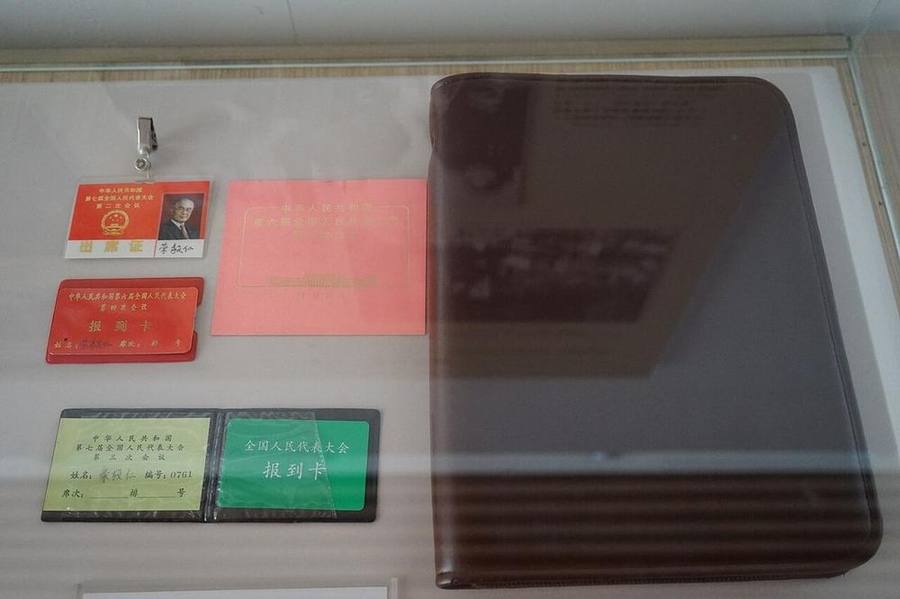
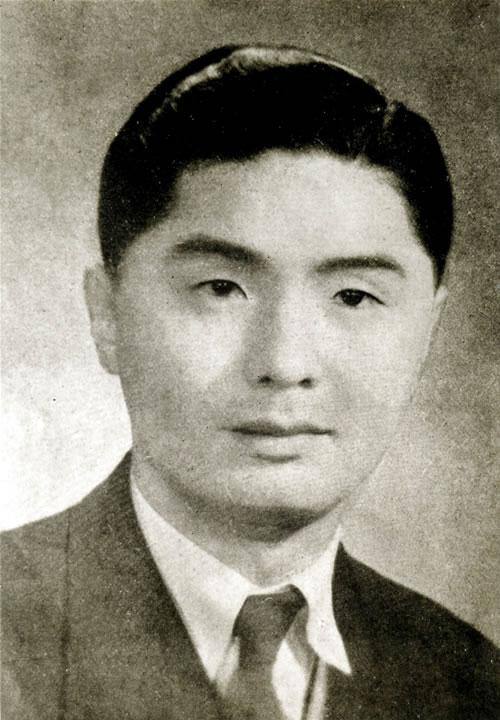
The identity section carries double weight in this profile, because Rong Yiren was no ordinary businessman. When he founded CITIC in 1979, the company carried the state's window function for bringing in foreign capital and technology; its birth was bound directly to the national strategy of reform and opening (Source 2). That the founding chairman's only son should, more than two decades later, be both chairman and second-largest shareholder of the group's flagship Hong Kong listed platform is, in itself, one of the most concrete forms the phrase "red aristocracy" takes in the financial field: not an outsider parachuted in by a single appointment document, but a founder's family member seated for the long term at the governance core and inside the share structure of the listed platform. This profile states that layer plainly — and draws its boundary in the same breath. The succession structure is fact. The procedural detail of each step within it — what process accompanied his joining CITIC Hong Kong, how the board voted on the Taifu Development acquisition, the individual transactions by which he accumulated his stake — is not provided by the research file or the two sources, and this profile does not supply it. The archive writes the structure; it does not fabricate the process.
The source base is declared here. This profile rests on exactly two sources: Sina News' report of 9 April 2009 carrying the substance of CITIC Pacific's resignation announcement (Source 1), and the biographical page for Rong Zhijian on the official website of the School of Electrical Automation and Information Engineering at Tianjin University (Source 2). Their division of labour is clear. Source 2 carries the skeleton of identity and career — the father-son relationship, the move to Hong Kong, the joining of CITIC Hong Kong, the renaming as CITIC Pacific, the chairmanship. Source 1 carries the terminal event — the resignation announced on 8 April 2009. The research file notes additionally that the resignation rests on the company's announcement and Hong Kong exchange disclosure, and that the father-son relationship is recorded consistently across published accounts. Two sources are not many, but the single most important fact, the resignation, sits on a company announcement, and the identity sits on an institutional website's text; both are directly checkable public documents, at grade A. Anything the two sources and the research file do not contain — the terms of the option contracts, the full composition of his personal wealth, his whereabouts after 2009 — is not asserted in the body of this profile. It is registered, item by item, in the gaps.
A distinction of reading must also be set out first, because it runs through the whole text. Rong Zhijian's presence in this company had three layers: office — chairman of the board; equity — second-largest shareholder; and identity — the founder's only son. In most other figures, only one of the three layers is present. A professional manager has office alone; a financial investor has equity alone; a founder's descendant has identity alone. Rong had all three, and the three reinforced each other. Identity explains how he entered. Office gave him governing power. Equity bound his personal wealth directly to the company's share price. The reason the 2008 loss and the 2009 resignation became a signature case is that all three layers were struck at once: the company lost, the chairman resigned, and the wealth coordinates of the second-largest shareholder were rewritten with them. Readers should keep the three layers in separate accounts throughout: which layer's facts rest on which source is set out section by section below.
2. The start: moving to Hong Kong for business in 1978 and joining CITIC Hong Kong in 1986/87
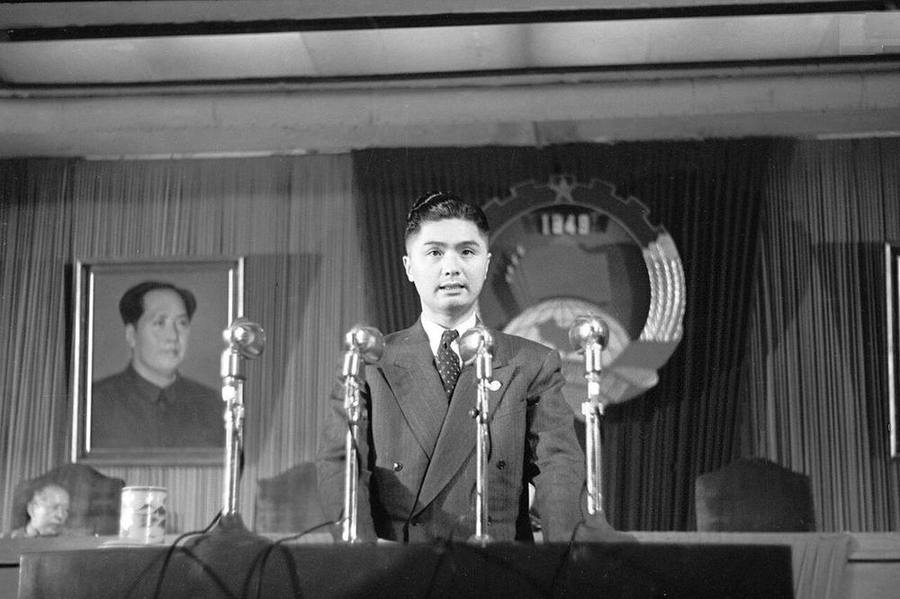
Rong's starting point was not Beijing. It was Hong Kong. In 1978 he moved to Hong Kong to do business (Source 2). The year deserves registering: 1978 was the first year of reform and opening, and in the following year his father, Rong Yiren, founded CITIC. Father and son form an interesting temporal counterpoint — the father charged, at home, with building the state's outward window enterprise, while the son had taken a step earlier into Hong Kong's commercial society to make his footing in business. For the nearly ten years that followed, the research file does not develop the detail of Rong's Hong Kong business life: what trades he was in, which institutions he worked with, how his capital accumulated — the published sources within this profile's base give no checkable list. This profile registers that honestly as a material gap and does not write an imagined "Hong Kong decade." The archive confirms only the two endpoints: the man arrived in Hong Kong in 1978, and in 1986/87 he entered the Hong Kong arm of the system his father had founded.
In 1986/87, Rong Zhijian joined CITIC Hong Kong as vice-chairman and general manager (Source 2). The year is written "1986/87" because the research file itself presents the two datings side by side; this profile keeps that side-by-side form and does not choose one year on its own authority. Small discrepancies of dating should be preserved as they are in an archive — they remind the reader that even a grade-A career record can carry a one-year variance at the level of the year, and that the honest practice is to display the variance rather than smooth it away. The office itself is not in doubt: vice-chairman and general manager was the number-two seat and the chief executive post of CITIC Hong Kong at the time. The manner of his entry is recorded in the file with the single word "joined"; there is no appointment document and no procedural record, and this profile does not speculate. What can be confirmed is the outcome: from this step onward, Rong Zhijian formally entered the senior executive sequence of the CITIC system, and for more than twenty years he never left that system's governance core.
CITIC Hong Kong's own position at the time he joined it also needs a sentence of context, because it determines the meaning of the acquisition that followed. CITIC Hong Kong was the CITIC Group's offshore investment and financing platform, and Hong Kong's capital market could supply what the mainland then lacked: listed status, international capital and acquisition instruments. Sitting on that platform as vice-chairman and general manager, Rong's work was precisely the use of those instruments. The acquisition of 1990 was the platform's signature operation, and the springboard by which he moved from senior executive to chairman of a listed platform. This section can be gathered into one sentence: the 1978 move gave him Hong Kong commercial experience and standing; the 1986/87 joining gave him office in the state group's offshore platform; and the two met in 1990, at the acquisition of Taifu Development, which is the subject of the next section.
3. The platform takes shape: acquiring Taifu Development in 1990 and the renaming as CITIC Pacific in 1991

In 1990, CITIC Hong Kong acquired Taifu Development and injected assets into it (Source 2). The institutional meaning of that step has to be taken apart. Acquiring an existing Hong Kong listed company delivered, first of all, a listing: a company's exchange quotation, its public shareholder base and its continuing channel to raise capital. Injecting the acquirer's assets into that listed company then replaced the content of its business; shell and assets were combined. This was a mature technique of the Hong Kong market, and CITIC Hong Kong used it to convert an offshore investment platform into a listed company with real assets, public shareholders and continuing disclosure obligations. The executive responsible for the transformation was CITIC Hong Kong's vice-chairman and general manager of the day, Rong Zhijian. The research file does not provide the consideration paid, the list of assets injected or the details of the board's votes, and this profile does not supply them. What can be confirmed is the result and its timing: the acquisition in 1990, and the new name in 1991.
In 1991 the company was renamed CITIC Pacific Limited, Rong Zhijian became chairman of its board, and he concurrently served as an executive director of CITIC Group (Source 2). A renaming is not a small thing. Putting the parent's name at the front of the new name announced to the market exactly where this listed company came from and what stood behind it: it was CITIC Group's flagship listed platform. Chairman of the board is the highest office in a Hong Kong listed company's governance structure, responsible for presiding over the board and setting the company's broad direction; the concurrent executive directorship of the group pinned him, at the same time, into the parent group's own governance layer. One man sitting simultaneously at the top of the listed platform and in the parent group's executive directorship made the channel between platform and parent run through his own person: when the platform needed the parent's support, that channel was the shortest available; when the parent needed to act offshore through the platform, it was shortest too. Looking back from the governance structure, the speed of the parent's rescue in the 2008 crisis is the proof that this channel existed — though that is structural analysis, not a decision process recorded in the research file, and this profile marks analysis and fact separately.
Counted from 1991 to the resignation of 2009, Rong Zhijian's chairmanship of CITIC Pacific spanned nearly nineteen years, a span the research file summarises as a nineteen-year chairmanship (Source 1). By simple difference of calendar years, 1991 to 2009 is eighteen years; counted inclusively by first and final years, it is nineteen. This counting difference is registered in the gaps section; the body text adopts the research file's summary and notes the method. What a chairmanship of nearly nineteen years means is clearest against ordinary listed-company governance: chairmen of Hong Kong listed companies change with results and shareholding shifts as a matter of routine, and holding the same seat for nearly nineteen years rested not on appointment alone but on the long-term stability of the share structure and the group's support. His tenure coincides exactly with CITIC Pacific's whole journey from a newly assembled red-chip platform to an industry leader — the platform's history is the history of his tenure — which is what the next section, on equity, and the one after it, on expansion, set out.
4. The equity position: second-largest shareholder at about 18 per cent, behind CITIC Group at 29 per cent
Rong Zhijian's fundamental difference from most figures in this series sits in two numbers in this section. By 2008 he held about eighteen per cent of CITIC Pacific and was the company's second-largest shareholder; the largest shareholder was CITIC Group, with twenty-nine per cent (Source 2). The two numbers must be read separately. The largest shareholder's twenty-nine per cent shows that, in equity terms, this listed company still belonged firmly to CITIC Group: it was a state group's listed platform, not an enterprise bought away by private hands. The second-largest shareholder's eighteen per cent shows that the chairman personally held a real and large private stake inside that state platform. He was not an executive drawing only a salary: every rise and fall of the share price directly rewrote his personal wealth figures. Office, identity and equity were layered together in him, and the equity layer is one that other chairmen rarely have. This profile pins both numbers to the year 2008, because that is the dating the research file attaches to the shareholding figures. Changes in the holding in other years are not recorded in the file, and this profile does not write them year by year.
The governance meaning of a second-largest-shareholder position deserves a further paragraph, because it explains the shape of much that followed. A chairman holding close to a fifth of the company speaks in the boardroom not only with the authority of an appointed office but with the standing of a shareholder in his own right: he is at once the manager and a major contributor of capital, and in good times the two roles reinforce each other — the share price rises, and managerial reputation and personal wealth rise together. In bad times, the two roles come under pressure simultaneously, and they entangle the question of responsibility: was a giant loss a manager's dereliction, a major shareholder's own market risk, or both at once? Announcement texts do not answer that question for the reader. This profile's task is only to set the structure out clearly. Before 2008, Rong Zhijian was a man in whom founder's son, chairman of the board and second-largest shareholder were combined in one person. Grasp that structure, and it becomes clear why the 2008 option loss was not merely one listed company's financial event, but the signature case cited again and again across this whole series.
The equity layer carries one more boundary that must be written down. The research file gives only the single time-point figure of about eighteen per cent in 2008; it does not give the process by which those shares were obtained. Whether they came from a founding arrangement, a management placement, market purchases or accumulation over the years — neither the research file nor the two sources provides any transaction-by-transaction record, and this profile registers that in the gaps without inference in any direction. Likewise, whether he held equity in companies other than CITIC Pacific is a matter for which this profile's materials provide no list, and it is not developed. The task of this section is to pin "second-largest shareholder, about eighteen per cent" down as a number with a year and a source — not to weave an acquisition history around the number. The number itself is enough to describe the structure; where the process of acquisition cannot be found, the space stays empty.
5. Expansion and the list years: airline stakes, red-chip leadership and the Hurun Strong List, 2003–2007
What CITIC Pacific did during Rong's tenure is summarised in the research file in two strokes: it acquired stakes in Cathay Pacific and Dragonair, and the company thereby developed into the leader among red-chip stocks (Source 2). The weight of the airline stakes has to be read in a Hong Kong context. Cathay Pacific is Hong Kong's flagship airline, and Dragonair operated the route network connecting Hong Kong with the mainland; for a listed platform with a mainland state-group background to hold stakes in both carriers meant that its business map reached beyond investment holding into Hong Kong's most emblematic real-economy assets. The title of red-chip leader, meanwhile, was the capital market's verdict on the company: red chips are companies incorporated offshore, listed in Hong Kong and carrying a mainland state background, and CITIC Pacific stood for a long time at the front of that board, one of the earliest and most representative windows through which offshore investors came to know China's state-group assets. The research file does not give the percentages or the consideration for the airline stakes, and this profile does not supply figures. What can be confirmed are the two qualitative conclusions: the acquisitions happened, and the leadership position was real.
Running in step with the company's expansion was Rong's personal position on the wealth lists: from 2003 to 2007 he topped the Hurun Strong List for five consecutive years, and at one point he topped the Forbes China rich list as well (Source 2). Five consecutive years at the top is the research file's exact formulation, and this profile adopts it as it stands — while putting the rich-list evidence on its proper rein. The Hurun and Forbes lists are media organisations' estimates and rankings of personal wealth. They prove that, in those years, published estimates placed him first; they do not prove a precise wealth figure, and they do not prove how the wealth was obtained. The lists' archival value lies in their time-marking function. They fix the peak years of Rong's personal wealth and standing: from 2003 to 2007 the company was the red-chip leader, its chairman was the lists' number one, and office, equity and identity all stood at their highest point simultaneously. The next year was 2008. Peak and turning point sit that close together in the timeline's own shape; this profile only has to lay the years out straight, and the reader will see it.
One contrast, easily overlooked, also belongs in this section. Rong's five list years were the very years in which China's entrepreneur wealth rankings took shape, and the top of those rankings was populated mostly by founders of private enterprises. A state platform's chairman ranked alongside private founders — and above them — marks his dual character in itself: in governance identity he was a chairman appointed within a state group; in wealth identity he was estimated as a major-shareholder entrepreneur. This case earns its signature place in the series for one further reason that sits here: it prevents the discussion of "red aristocracy" from stopping at the level of appointment and office. When the chairman personally holds eighteen per cent of the platform, the question of how much of the platform's appreciation belongs to the state and how much to the individual shareholder is an arithmetic problem written into the share structure itself. This profile does not answer that problem on the reader's behalf, and the research file offers no year-by-year dividend or share-price data with which to compute it. The profile's responsibility is to copy the problem itself — the two shareholding numbers and the five years of list records — accurately into the archive.
6. The turn: about HK$15.5 billion lost on Australian-dollar accumulator contracts in 2008
In 2008, CITIC Pacific lost about fifteen and a half billion Hong Kong dollars on Australian-dollar accumulator contracts (Sources 1, 2). This is the turning point of the whole profile, and the boundary of the facts must first be drawn cell by cell. Four items can be confirmed. The instrument that caused the loss was a book of Australian-dollar accumulator contracts — derivative contracts linked to the Australian-dollar exchange rate. The order of magnitude of the loss was about HK$15.5 billion; the word "about" belongs to the research file's own formulation and is retained here rather than upgraded into a precise audited figure. The year was 2008. And the bearer of the loss was the listed company, CITIC Pacific: the loss sat on the company's books. A great deal more cannot be confirmed. When the contracts were entered into, who the counterparties were, what the notional amounts were, who inside the company proposed them, who approved them, when the risk was discovered and how it was reported upward — the research file and the two sources provide none of it. This profile refuses to fill those cells from the circulating versions found elsewhere. Giant derivative losses breed detail-rich second-hand narratives more readily than almost any other subject; the richer the detail, the more its source must be checked, and detail whose source cannot be checked does not enter the body of an archive text.
What HK$15.5 billion means needs a frame of reference, and the frame may only be built from numbers inside the research file: the company's largest shareholder, CITIC Group, held twenty-nine per cent, and its second-largest shareholder, Rong Zhijian himself, held about eighteen per cent. A derivative loss in the tens of billions of Hong Kong dollars strikes not only at one year's profit statement but at the very basis of the company as a going concern — and that is the background against which the word "rescue" appears in the next section. A ordinary listed company that tore a hole of this size in itself would ordinarily face a collapsing share price, a debt restructuring or even liquidation as its market outcomes. CITIC Pacific's outcome was different, because behind it stood a parent holding twenty-nine per cent. The size of the loss and the necessity of the rescue are two faces of one coin. This profile places the two faces in adjacent sections so that readers can compare them: how much was lost determined how large a hand was needed to catch the company, and who caught it determined the final character of this case.
Responsibility is the question this section cannot avoid — and the one where restraint is most obligatory. Rong Zhijian was chairman of the board at the time, the highest responsible officer in the company's governance, and the giant loss occurred during his tenure. That is a fact of time and office, and this profile writes it as such. But between "occurred during his tenure" and "decided by him personally" or "ordered by him personally" lies a whole chain of evidence that only internal documents could carry a reader across: contract approval records, risk-management reports, board minutes. Neither the research file nor the two sources contains a single document of that kind, and this profile therefore writes no sentence pointing at a personal decision process. Equally, the company's internal handling after the event and any subsequent regulatory steps are not recorded in the research file, are not developed here, and are registered only in the gaps. The archive's position in this section can be summarised plainly: the loss is real, its magnitude has a published formulation, and the chairman was in office — that is real too. Beyond that, process and personal responsibility are without public record. Saying exactly that much, and stopping there, is what responsibility to the facts and to the subject simultaneously requires.
7. Rescue and resignation: the parent's US$1.5 billion standby credit and the announcement of 8 April 2009
What caught CITIC Pacific after the giant loss was its parent, CITIC Group. The research file's formulation is that the company was carried through the crisis by arrangements including the parent CITIC Group's injection of a US$1.5 billion standby credit (Sources 1, 2). The sentence must be read word by word. "Parent company" identifies the rescuer: not a market investor, not a direct appropriation from state finance, but the largest shareholder, holding twenty-nine per cent. "A US$1.5 billion standby credit" identifies the instrument: a standby credit is a committed credit facility whose function, at the moment a company most needs liquidity and credit endorsement, is to send creditors and the market an unmistakable signal — someone stands behind this company, and its debts need not be doubted. The words "arrangements including" tell the reader that the research file's formulation is a summary: there were other supporting arrangements besides the standby credit, their detailed list is not developed in the file, and this profile does not complete it. And "carried through the crisis" states the outcome: the company was not liquidated, was not forced to sell its core assets cheaply, and kept its listing. Those four layers together are the full meaning of "rescue" in this profile's main line: the platform chaired by a princeling tore a giant hole in itself, and the resources that filled it came from inside the parent-group system his father's generation had founded.
The rescue solved the company's survival problem. It did not solve the chairman's position. On 8 April 2009, CITIC Pacific announced that Rong Zhijian had resigned as director and chairman of the board, and that Chang Zhenming would succeed him (Source 1). The announcement's elements are registered one by one. The date was 8 April 2009. The posts resigned included both director and chairman of the board — a simultaneous exit from the board and from its highest office, not an arrangement of stepping back to a second line. The successor, Chang Zhenming, was named in the same announcement, which marks the change as a handover with arrangements made rather than a vacancy. And Sina News carried the announcement the following day under the headline of Rong's resignation (Source 1). With that, the Rong Zhijian era at CITIC Pacific, begun in 1991, formally ended. In the order of events, the resignation followed the giant loss and the rescue by about half a year; that order is what the archive can confirm. As for how the decision to resign was formed — whether it was a voluntary tender, a group arrangement or the outcome of negotiation among several parties — the announcement does not say, the research file does not record it, and this profile registers the point in the gaps rather than writing a motive on anyone's behalf.
This section closes by gathering the profile's main line into archive language. Rong Yiren founded CITIC. Rong Zhijian headed its Hong Kong listed platform for nearly nineteen years and was simultaneously its second-largest shareholder. The platform lost about HK$15.5 billion on Australian-dollar option contracts. The parent group carried it through the crisis with arrangements including a US$1.5 billion standby credit, and the company survived. The chairman resigned by announcement on 8 April 2009, and Chang Zhenming succeeded him. Every step of that line can be checked against an announcement or an institutional website's text — and that is precisely why the research file designates this the signature case of "a princeling chairing a state group's listed platform, whose giant loss was absorbed by the parent group." This profile adopts that designation as it stands and has unpacked it into the years, numbers and offices of the seven sections above. "Signature" is not this site's rhetoric; it is the evaluation that this case's own evidential structure carries with it. Structural relationships that other profiles must argue for with effort are, in this case, written in full in a listed company's announcements and shareholding figures.
8. The boundary of the evidence: the differing probative weight of the helm, the loss and the rescue
What can be proved, gathered together: Rong Zhijian is the only son of Rong Yiren, the relationship recorded consistently in public texts including the Tianjin University website's biographical page (Source 2); Rong Yiren founded CITIC in 1979; Rong Zhijian moved to Hong Kong for business in 1978, joined CITIC Hong Kong in 1986/87 as vice-chairman and general manager; CITIC Hong Kong acquired Taifu Development and injected assets into it in 1990; the company was renamed CITIC Pacific in 1991, with Rong Zhijian as chairman of the board and concurrently an executive director of CITIC Group (Source 2); during his tenure CITIC Pacific acquired stakes in Cathay Pacific and Dragonair and developed into the leader among red-chip stocks, while he himself topped the Hurun Strong List for five consecutive years from 2003 to 2007 and at one point topped the Forbes China rich list (Source 2); in 2008 he held about eighteen per cent as second-largest shareholder, with CITIC Group holding twenty-nine per cent as the largest (Source 2); in 2008 CITIC Pacific lost about HK$15.5 billion on Australian-dollar accumulator contracts, and parent CITIC Group supported it through the crisis with arrangements including a US$1.5 billion standby credit (Sources 1, 2); and on 8 April 2009 CITIC Pacific announced his resignation as director and chairman, with Chang Zhenming succeeding him (Source 1). Every item above carries a source number, at grade A.
What cannot be proved is set out item by item as well: the signing dates, counterparties, terms and approval process of the Australian-dollar accumulator contracts — neither the research file nor the two sources contains internal documents; the precise audited figure of the loss — the published formulation is only the order of magnitude of "about HK$15.5 billion"; the transaction-by-transaction process by which Rong Zhijian obtained his roughly eighteen per cent — only the 2008 time-point figure exists, with no record of acquisition history; the detailed list and conditions of the rescue arrangements beyond the US$1.5 billion standby credit — the research file offers only the summary formulation "arrangements including"; the concrete motive and decision process behind the resignation — not stated in the announcement; and Rong Zhijian's posts, activities and present circumstances after his 2009 resignation — not recorded in the research file or the two sources. On that last point this profile writes "no public record" and adds nothing. On each of these items this profile registers only the state of absence, and draws no inference in either direction.
A single concluding sentence. The shape this case leaves in the public archive is a complete arc: a founder's son entered the system, sat in the highest seat of its listed platform, and shared, as a major shareholder, in the platform's five golden years; then, after a giant derivative loss, the parent group stepped in to catch the company, and the man himself left by announcement. Judgements on this case may take many positions — on governance, on responsibility, on the gains and losses of state assets — and positions may be argued. But the archive precedes position-taking. This profile nails every checkable year and number to the timeline and leaves every uncheckable cell empty, with the reason for its emptiness stated. The special value of this case is that its key cells are almost entirely filled with announcement-grade text, and what remains empty is only the internal process. That is exactly why it stands as this series' signature case.
<!--正文结束-->
Sources
- Sina News (Sichuan News Network – Chengdu Evening News), "Rong Zhijian Resigns", 2009-04-09 — Key points: carries CITIC Pacific's announcement of 8 April 2009 that Rong Zhijian resigned as director and chairman of the board, with Chang Zhenming succeeding him: https://news.sina.cn/sa/2009-04-09/detail-ikkntian1500649.d.html — Official record (grade A).
- Tianjin University, School of Electrical Automation and Information Engineering, official website, "Rong Zhijian", no date shown — Key points: son of Rong Yiren; chairman of CITIC Pacific; records the move to Hong Kong, the joining of CITIC Hong Kong, the renaming as CITIC Pacific, the airline stakes, the rich-list record and the shareholding: https://seea.tju.edu.cn/info/1238/3577.htm — Official record (grade A).
Material gaps (stated as found)
- Dating variance for joining CITIC Hong Kong: The research file presents 1986 and 1987 side by side. This profile writes 1986/87 and does not choose a single year on its own authority.
- Counting of the chairmanship: Taking office in 1991 and resigning in 2009 gives a simple calendar difference of eighteen years; the research file summarises the tenure as nineteen years, counting the first and final years. This profile notes the difference of counting method and does not alter the file's formulation.
- Detail of the Hong Kong business decade: Between the 1978 move to Hong Kong and the joining of CITIC Hong Kong in 1986/87, the businesses he conducted, the institutions he worked with and the accumulation of his capital have no checkable list in the research file or the two sources.
- Acquisition and injection details: The consideration for the 1990 acquisition of Taifu Development, the list of assets injected and the process of the board's votes, as well as the exact percentages and consideration for the Cathay Pacific and Dragonair stakes, are not provided in the research file.
- Process of acquiring the shareholding: The holding of about 18 per cent exists only as a 2008 time-point figure. The manner of its acquisition and its changes over the years have no transaction-by-transaction public record, and no list of his holdings outside CITIC Pacific can be verified.
- Internal process of the option contracts: The signing dates, counterparties, notional amounts, approval and risk-reporting process of the Australian-dollar accumulator contracts are not documented in any internal file available in the research file or the two sources. The loss exists only in the published order of magnitude of about HK$15.5 billion, with no precise audited figure.
- Full picture of the rescue arrangements: Beyond the US$1.5 billion standby credit, the other supporting arrangements exist in the research file only under the summary phrase "arrangements including." Their detailed list, conditions and subsequent execution are without public record available to cite.
- Reasons for the resignation: The announcement of 8 April 2009 records only the resignation and the succession arrangement, not the reasons. The process by which the resignation decision was formed is without public record.
- Circumstances after 2009: New posts, public activities and present circumstances after the resignation are not recorded in the research file or the two sources. There is no public record, and this profile adds nothing.
Contact: endccpworld@proton.me