
The Wang Zhen Family: One Thick File, One Solid File, One Thin File
A family piece in the Red Families series. Wang Zhen and Wang Jiqing had three sons — the eldest, Wang Bing; the second, Wang Jun; and the youngest, Wang Zhi — and the three brothers followed three entirely different trajectories. Wang Jun served CITIC Group for twenty-seven years, rose to its chairmanship, and was a co-founder of Poly Technologies: his is the thickest file in this piece and its main line. Wang Zhi organised the development of China's first microcomputer, the Great Wall 0520CH, and chaired the Great Wall Group for nine years, leaving a complete CV and no controversy on record. Wang Bing's naval and China Ocean Helicopter line is middling in material, and several widely circulated accounts of his posts were checked and found to have no verifiable record behind them. This piece checks each man's public CV, business nodes and latest verifiable status, writes the thick file thick and the thin file thin, sets disagreements side by side, and states plainly where nothing can be found.
Contents
- I. The Source of the Family: Wang Zhen, Wang Jiqing and the List of Three Sons
- II. Wang Jun (1): Twenty-Seven Years at CITIC — From Business Department General Manager to Group Chairman
- III. Wang Jun (2): Hong Kong Listed Platforms and the CITIC Pacific Share Transfer
- IV. The Poly Line: Jointly Founded in 1984, a Lesson in Names, and Four Accounts of Wang Jun's Poly Title
- V. Operation Dragon Fire and the White House Coffee: A Company Investigated, the Man Never Charged
- VI. The Precise Meaning of "1.6 Trillion US Dollars"
- VII. Wang Zhi: The Great Wall Computer Line — the Most Complete CV, and No Controversy on Record
- VIII. Wang Bing: The Navy and China Ocean Helicopter Line — Middling Material, False Claims Peeled Away One by One
- IX. Spouses and the Third Generation: What Can Be Verified and What Cannot Be Found
- X. The Kaili Confusion: No Verifiable Record Links the Wang Family to Kaili
- XI. Testing the Characterisation: One Thick File, One Solid File, One Thin File
- Material Gaps (stated faithfully)
- Source List
The Wang Zhen family has the clearest structure of any family in this series — and is also one of the easiest for second-hand genealogy sites to garble. The structure is clear because each of the three sons kept to a single line: a finance line, a computer line, and a naval-enterprise line, which barely intersect. The garbling happens because one word, "Poly", runs through all the retellings: Poly was jointly founded by the General Staff and CITIC, Wang Jun was one of its founders, He Ping was the Poly Group's chairman — and a careless second-hand narrative will promote Wang Jun into "chairman of the Poly Group", convert the combined assets of three state enterprises into one family's fortune, and rewrite an enforcement operation that indicted thirteen people as one man's criminal case. This piece proceeds as the series always does: it sets out, for each person, the institutions, exact dates, turning points, both sides of each controversy and the latest verifiable status that can actually be found; it attaches the object and the year to every figure and the source and the formulation to every title; and where the record runs out, it stops. It begins, as it should, at the source of the family and with the list of the three sons.
I. The Source of the Family: Wang Zhen, Wang Jiqing and the List of Three Sons

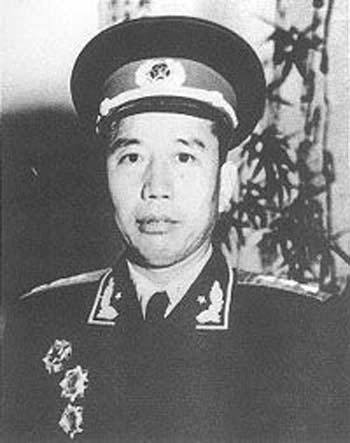
Wang Zhen (born 11 April 1908 in Liuyang, Hunan — died 12 March 1993 in Guangzhou) commanded the 359th Brigade of the Eighth Route Army's 120th Division, concurrently serving as its political commissar — the brigade of the Nanniwan reclamation — and later commanded the First Army Group of the First Field Army, leading his troops into Xinjiang in 1949. After 1949 he served as secretary of the Xinjiang branch of the Party Central Committee, acting commander and political commissar of the Xinjiang Military District, commander of the Railway Corps, a deputy chief of the General Staff, minister of state farms and land reclamation, and a vice premier of the State Council; he was made a full general in 1955, was elected a vice president of the People's Republic in 1988, and was counted among the "Eight Elders" of the Deng Xiaoping era. (Sources 1, 2, 3) His wife Wang Jiqing (born 1913 in Shenyang, Liaoning) joined the Eighth Route Army in 1937, was transferred to the 359th Brigade as a cultural instructor, and married Wang Zhen after an introduction by He Long; in Xinjiang she headed the military district's Russian-language team, founded the Xinjiang Russian Language School in 1951 as its principal, and then established the military district's children's school (the Bayi Middle School) as its principal; in 1953 she returned to Beijing with Wang Zhen and worked in education. (Source 4) Her education is disputed and is stated here in parallel: an article on the website of the Institute of Modern History of the Chinese Academy of Social Sciences gives her as a graduate of Peking University's history department, while a biographical compilation gives her as entering Peking University's chemistry department in 1935 and later transferring to history — the two accounts agree on the university and differ on the department and the path, no more authoritative source settles the point, and this piece files both. No official obituary or authoritative media report confirming her year of death was found; it is registered as a gap at the end of this piece.
The list and birth order of the three sons are consistent across the main sources, and this piece nails them down at the outset: the eldest son is Wang Bing (born 11 September 1938 in Yan'an — died 27 January 2014 in Beijing); the second son is Wang Jun (11 April 1941 — 10 June 2019); the youngest son is Wang Zhi (born 26 May 1942; no obituary has been seen as of this draft). (Sources 5, 8, 18, 19) Wang Bing's obituary gave his age as 76 by traditional reckoning; by his birth and death dates he was 75 in full years, and this piece uses the dates themselves to avoid the dispute. One note on the order of the narrative: this piece takes Wang Jun's line first because his material is the thickest, then Wang Zhi's because his CV is the most complete, and last Wang Bing's because his material is the thinnest and the false claims around it the most numerous. That is an order dictated by the thickness of the files, not by birth order, for which this section is the authority.
II. Wang Jun (1): Twenty-Seven Years at CITIC — From Business Department General Manager to Group Chairman
Wang Jun's career spine is consistent across multiple obituaries: he studied at the Harbin Military Engineering Institute from 1960 to 1966; worked as an engineer at the Jiangnan Shipyard from 1966 to 1967 and at the Wuchang Shipyard from 1967 to 1977; served in the navy from 1977 to 1978; in 1979 followed Rong Yiren into the China International Trust and Investment Corporation (CITIC) as general manager of its business department; was a deputy general manager of CITIC from 1986 to 1993, its general manager from 1993 to 1994, and its vice chairman and general manager from 1994 to 1995; and was chairman of CITIC Group from 1995 to 2006, when Kong Dan succeeded him. He was CITIC's third chairman, after Rong Yiren and Wei Mingyi — eleven years at the helm and twenty-seven years of service to the group. (Sources 5, 6, 7) To understand that promotion line, CITIC itself must first be placed: the China International Trust and Investment Corporation was founded by Rong Yiren in 1979 as reform-era China's window company for bringing in foreign capital and technology, and Wang Jun entered it in its founding year; Bloomberg counts him among those who assisted Rong Yiren in founding CITIC. He started as general manager of the business department and rose through deputy general manager and general manager to the chairmanship in 1995. That twenty-seven-year internal promotion line is the premise for understanding why he later appears simultaneously in the founding team of Poly and on several Hong Kong listed platforms: his business map always unfolded inside the "CITIC system" and its peripheral platforms, rather than in a private company of his own founding.
Wang Jun as he appears in Hong Kong exchange filings is the hardest set of material in this section. The annual reports of Fortune SG Group Limited (HKEX: 0172) for 2006/07, 2011/12 and 2015/16 record that Wang Jun served from April 2007 as Fortune SG's chairman and an executive director, concurrently holding the chairmanship of Poly (Hong Kong) Investments Limited, the chairmanship of CITIC 21CN Limited, an honorary chairmanship of Hong Kong Construction (Holdings), and an independent non-executive directorship of China Communications Services. (Sources 10, 11) Two notes must travel with any citation: first, the annual reports give his university as the "Harbin Institute of Technology", which conflicts with the obituaries' "Harbin Military Engineering Institute" (today's Harbin Engineering University) — the error is the listed company's own, and must be flagged when the reports are cited; second, Wikipedia and some obituaries date his Fortune SG chairmanship from 2013, which conflicts with the annual reports' April 2007, and this piece follows the annual reports. A man who had stepped down as chairman of a mainland financial group continued to sit, years afterwards, in the chairman's seat of Hong Kong listed platforms — the sharpest difference between Wang Jun's line and those of other families in this series: his record of posts is preserved not only in obituaries but in years of exchange disclosure documents.
One post-retirement arrangement is recorded by Bloomberg with original detail, and deserves its own paragraph: Bloomberg reported in 2012 that in 2008 Wang Jun chaired Shenzhen Orient Sports Management Co., Ltd., a joint venture set up five years earlier by a CITIC subsidiary, and that Wang Jun acquired a 20 per cent stake in that joint venture from CITIC — while one of the venture's principal clients was CITIC Group itself. (Sources 8, 9) That arrangement — a retired chairman personally holding shares in his old group's joint venture, which in turn served the old group — is one of the few interest structures in Bloomberg's princeling reporting that is documented with a concrete figure. This piece adopts it with its provenance stated: it rests on Bloomberg's reporting alone, and no public response from CITIC has been seen. Wang Jun's sports line is otherwise a matter of obituary record: honorary vice president of the China Golf Association and president of the China Professional Golfers' Association, with Bloomberg also noting his enthusiasm for golf; there is no controversy on that line, and it is registered here for completeness of the CV. (Sources 5, 8)
III. Wang Jun (2): Hong Kong Listed Platforms and the CITIC Pacific Share Transfer
The CITIC Pacific share transfer is the largest controversy of Wang Jun's tenure, and it is presented here with both sides' accounts complete and no judicial document behind either. According to a long report in Caijing magazine (carried by Sina Finance), Wang Jun, without reporting the matter to the State Council, sold CITIC's 18 per cent holding in CITIC Pacific to a management group led by Larry Yung at HK$33 per share, recovering HK$10.8 billion for CITIC; the share price subsequently rose to HK$58, and one view, computing the difference between the contract price and the delivery price, characterised the transaction as a "loss of 3.6 billion yuan of state assets". Zhu Rongji, commissioned by the central leadership, spoke with Wang Jun: Wang Jun admitted that he had failed to report in time and accepted responsibility, but argued that CITIC's original investment in CITIC Pacific had been only HK$250 million, that it had recovered HK$10.8 billion while retaining control — an appreciation, not a loss — and that the funds had helped CITIC through the Asian financial crisis; before the crisis broke he was still answering questions put by the relevant State Council departments. (Source 23) Jiemian News' obituary carries a shorter version of the episode. (Source 24) The boundary of this piece is stated plainly: no public record of any criminal or administrative penalty exists, and the matter closed with internal talks and questioning. "Loss of state assets" was one view expressed at the time; "appreciation, not loss" was Wang Jun's own defence; the two stand side by side, and neither is written up alone as a finding.
The end of Fortune SG must likewise be cut cleanly between a corporate event and personal responsibility: Fortune SG (0172) was suspended from trading from 28 June 2019, failed to resume trading by 28 December 2020, and was delisted by the exchange on 2 August 2021. (Source 28) In time, Wang Jun had died on 10 June 2019, a fortnight before the suspension; this check found no record of any disciplinary action by the Hong Kong exchange against Wang Jun personally, and the delisting must not be attributed to personal misconduct by him — a delisting is a company-level event, and this piece records its facts without personal attribution. The record of Wang Jun's death itself is clear: he died in Guangzhou at 22:56 on 10 June 2019, aged 78, as reported by Caixin, The Paper and the Beijing News. (Sources 5, 7) The gap must be stated as faithfully: this search found no obituary of Wang Jun by Reuters, the Associated Press or the New York Times, and no original obituary or funeral-committee notice on CITIC Group's official website; the mainland reports all cite "media learning from CITIC insiders", with no formal obituary text — the posthumous record of CITIC's third chairman is thinner than his tenure would suggest, and the point is filed here as outstanding.
IV. The Poly Line: Jointly Founded in 1984, a Lesson in Names, and Four Accounts of Wang Jun's Poly Title

Poly's origins are the necessary background to Wang Jun's line, and must be set out before the dispute over his title. In early 1983 the Equipment Department of the General Staff applied to the Central Military Commission to establish an import-export company; in February 1984 Poly Technologies was formally established, jointly formed by the General Staff Equipment Department and CITIC, principally to conduct import and export trade in special equipment and military materiel, alongside diversified business. (Sources 12, 13) The narrative that "Wang Jun was a co-founder of Poly" arises precisely from that CITIC link — he was then serving at CITIC. In February 1993 the China Poly Group Corporation was formed, under the General Staff; in March 1999 it was transferred to the sequence of central large enterprises, later coming under the State-owned Assets Supervision and Administration Commission. The Poly Group's first chairman was He Ping, whom Bloomberg's 2012 investigation records as holding the chairmanship until 2010; He Ping is the husband of Deng Xiaoping's daughter Deng Rong, and his Poly line is treated separately in this series' Deng Xiaoping family piece. (Sources 8, 12) The lesson in names is the key to this section: Poly Technologies, established in 1984 as the arms-trade import-export entity, and the China Poly Group Corporation, formed in 1993, are not the same legal person at the same point in time — the former is the core predecessor of the latter. Second-hand English-language material habitually merges the two into a single "Poly" and then converts Wang Jun's relation to Poly Technologies into a group-level title; most of the four-way dispute that follows is born of exactly that merger. Throughout this piece, any reference to Poly states whether the 1984 technologies company or the 1993 group is meant.
Wang Jun's actual title within the Poly system is stated here in four parallel accounts, which this piece does not merge and among which it does not choose. First, the mainland obituary account: Caixin's profile pages and the Jiemian News obituary give his Poly post as general manager of the China Poly Group Corporation. (Sources 5, 24) Second, the Hong Kong exchange filing account: Fortune SG's annual reports record him as chairman of Poly (Hong Kong) Investments Limited — the only Wang Jun title naming Poly that appears in exchange documents, and its object is Poly's Hong Kong investment platform. (Source 10) Third, the United States Senate report account: Part 13 of the Senate Governmental Affairs Committee's report (S. Rept. 105-167) calls Wang Jun "reportedly chairman" of Poly Technologies — but the testimony the report itself cites is expressly doubtful: former military aide Robert L. Suettinger testified that he had consulted Defence Intelligence Agency and Central Intelligence Agency officials about "Wang Jun's actual role at Poly Technologies", that both said they were "not entirely clear", and that Suettinger estimated the title was "mostly a nominal one, because he is Wang Zhen's son". (Source 14) Fourth, the Bloomberg account: the Poly Group's chairman was He Ping (until 2010); Wang Jun was a co-founder of Poly Technologies, and He Ping became a major shareholder and chairman "through his cooperation with Wang Jun". (Source 8) With the four accounts side by side, the formulation this piece adopts is: Wang Jun was a co-founder of Poly Technologies; within the Poly system, the mainland account gives him as general manager of the Poly Group, and Hong Kong exchange filings verify only his chairmanship of Poly (Hong Kong) Investments; the flat assertion that he headed the Poly Group at its highest level has no support in A- or B-grade sources, and this site does not adopt it.
V. Operation Dragon Fire and the White House Coffee: A Company Investigated, the Man Never Charged
Operation Dragon Fire (1996) is the largest body of hard evidence on the Wang Jun line in the United States, and its boundary must be written exactly on the official account. On the official account of the Bureau of Alcohol, Tobacco and Firearms (ATF), a federal grand jury in the operation indicted 13 individuals and one company on charges involving federal firearms law and money laundering, and ultimately three conspirators were convicted. (Source 16) The media's more detailed version differs numerically from the official account and is filed alongside it: the Miami Herald reported that the operation seized 2,000 AK-47 rifles and 700,000 dollars in cash from an arms dealer in Oakland, drawing in Hammond Ku and Robert Ma (Wu Junliang) of "Dynasty Holding"; Ku's employer as stated in the indictment was Poly Technologies, and he later pleaded guilty in 1997; the report also stated that Poly Technologies was indicted together with Norinco, Dynasty Holding and 14 other co-defendants. (Source 17) The North American reporting's defendant figures do not match the ATF's official page, and this piece cites each figure with its own source, without splicing them together and without letting one account erase the other.
The critical boundary has two layers, each resting on a first-hand statement. At the first layer, Pentagon spokesman Kenneth Bacon stated publicly at the time: "They were pretty careful. They didn't indict Poly Technology per se. They indicted ... persons who work for or are related to or affiliated with Poly Technology." That is, those indicted were individuals, and Poly Technologies itself was not on the indictment list in that case either. At the second layer, Vanity Fair described Wang Jun as one of the persons of interest in the American investigation (on the second-hand account of American investigators) — a "worth noting" grade of media suspicion; no A-grade source shows Wang Jun himself to have been indicted, wanted, or convicted in absentia. The conclusion of this piece therefore stops where the evidence reaches: in 1996, Poly personnel and affiliated entities in the United States were caught up in an arms-smuggling case in which individuals were indicted and convicted, the company's senior leadership was not held to account, and Wang Jun himself was never indicted — a point that must never be rewritten as "Wang Jun was prosecuted in America over an arms case".
The White House coffee is the second line of the same year, written here on the Senate report's own text. In the investigation of the 1996 campaign-finance scandal (the so-called "Chinagate"), Chapter 31 of the Senate Governmental Affairs Committee's report (the Thompson Committee, S. Rept. 105-167) cites a National Security Council memorandum identifying Wang Jun as the "head" of the "significant Chinese weapons manufacturer Poly Technologies"; on 6 February 1996, introduced by Democratic fundraiser Charlie Trie, he met Bill Clinton for about fifty minutes — the so-called White House coffee; the National Security Council approved his entry without a background check, the report found his admission to the White House "manifestly inappropriate", and the President and the Democratic National Committee themselves acknowledged as much. (Source 15) A sentence of Clinton's, quoted through the Senate documents, runs: "It would be a big mistake to take a contribution from somebody who ...(was) connected to the arms merchants in China." It must be noted that the sentence addresses the contribution question itself; it does not name Wang Jun as having broken any law. The sequel is written with equal clarity: Hong Kong businessman Ernest Green said that the small company that had accompanied the visit had since folded and that "no contribution ever happened"; and no record was found of Wang Jun himself being sued in the United States over the donations case — the person sued was the introducer, Charlie Trie, who pleaded guilty in 1999 (that detail rests on media reporting, grade B). The endpoint of this piece's formulation is: committee documents establish that Wang Zhen's son Wang Jun, then a senior figure in the CITIC and Poly systems, entered the White House and met the President without a background check, that the committee found the admission improper — and that Wang Jun himself was never charged.
VI. The Precise Meaning of "1.6 Trillion US Dollars"
This section drives the opening statement's first point into the body of the piece, because it is the single most widely misreported figure in the entire Wang Zhen family narrative. Bloomberg's December 2012 investigation states, in its own words: "Bloomberg has calculated that three people — Wang Jun at China Citic Group, … He Ping of the arms-trading Poly Group and Chen Yuan of China Development Bank Holdings — controlled state-owned companies with combined assets of about $1.6 trillion in 2011, or more than a fifth of China's economic output." That is: the state-owned companies headed by Wang Jun (CITIC Group), He Ping (Poly Group) and Chen Yuan (China Development Bank) held combined assets of about 1.6 trillion US dollars in 2011, equivalent to more than a fifth of China's economic output that year. (Source 8) Retellings that convert the figure into "the Wang Zhen family sits on 1.6 trillion dollars" commit a triple error: an error of persons — three men are not one; an error of nature — state-enterprise assets are not personal wealth; and an error of object — the arms-trading Poly share of the sum is He Ping's. Of the three men, the He Ping line intersects the Wang Jun line at Poly, as set out in the Deng Xiaoping family piece; and the Chen Yuan line — the founding of China Development Bank and Chen Yuan's tenure there — is treated in the piece on Chen Yuan and China Development Bank. Each of the three lines has its own piece in this series, and any citation of this figure must name all three enterprises together, with the year and the "combined corporate assets" character of the sum stated.
A second figure in the same Bloomberg report must be kept apart from the first: Bloomberg reported that, less than a year after Wang Jun became CITIC's chairman, a Nanniwan tourism complex project valued at 1.6 billion dollars ($1.6B) was placed under Wang Jun's management and development. (Source 8) Nanniwan is the place where Wang Zhen's 359th Brigade had conducted its reclamation, and the project's symbolic resonance with the family is precisely what Bloomberg dwelt on; but as a number, 1.6 billion dollars is one thousand times smaller than 1.6 trillion, the one is the value of a single project and the other the combined assets of three state enterprises, and their years and objects are entirely different. Whenever this piece cites either figure it states the object and the year with it; second-hand retellings that merge the two numbers into one, or narrate the project sum as family property received, are not adopted by this site. (The kinship relation through which Bloomberg said the project changed hands rests on Bloomberg alone, has no second source to corroborate it, and is registered only in the gaps at the end of this piece.)
VII. Wang Zhi: The Great Wall Computer Line — the Most Complete CV, and No Controversy on Record
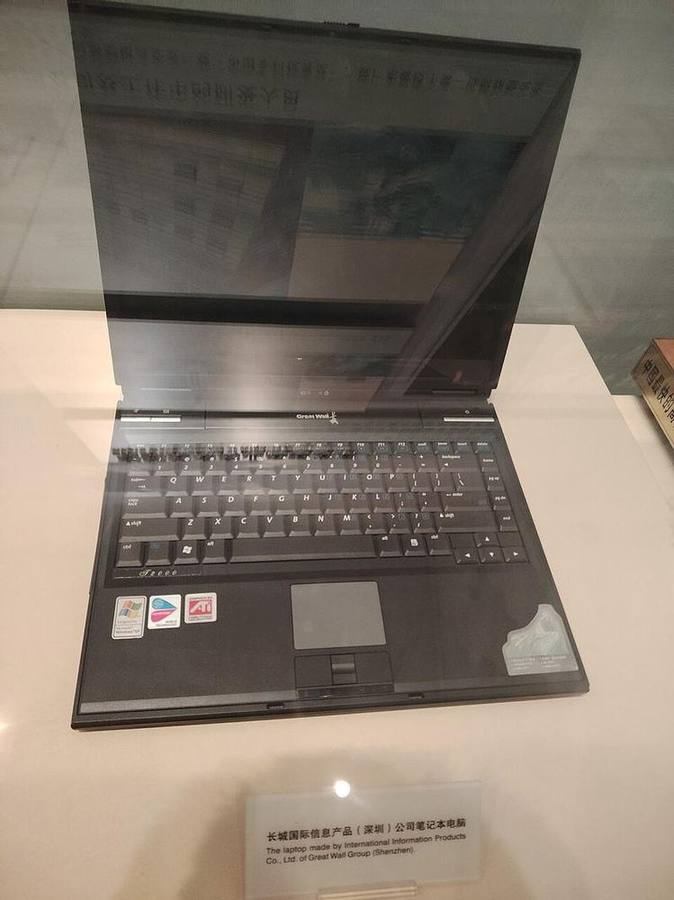
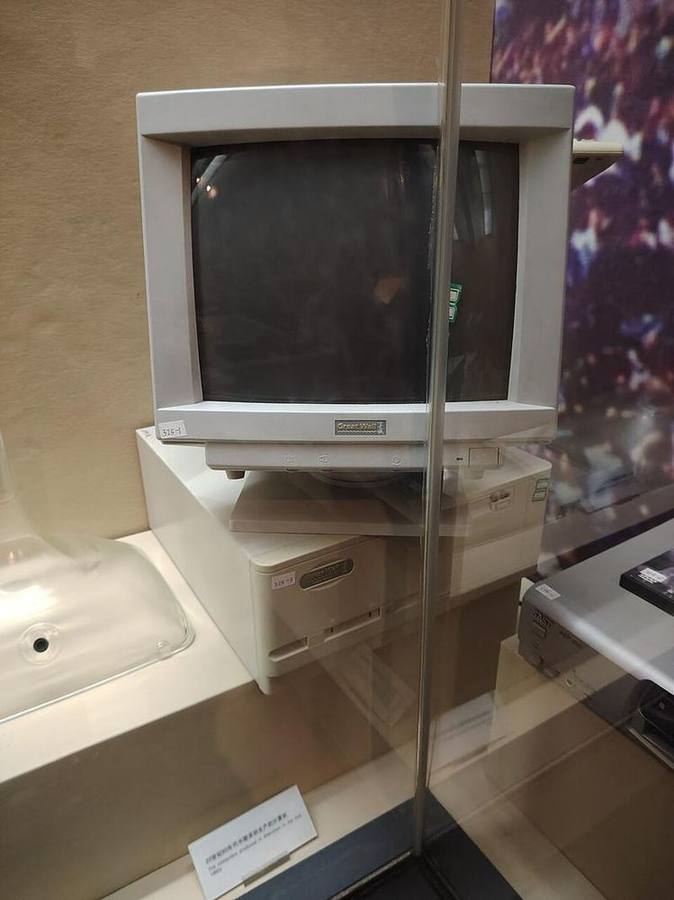
Wang Zhi, the youngest son, was born on 26 May 1942. His career spine is complete and steady: he entered the Harbin Military Engineering Institute in 1960 and graduated in March 1966; joined the Fifth Academy of the Seventh Ministry of Machine Building as a technician and engineer in 1966; and in March 1979 transferred to the Computer Industry Administration of the Fourth Ministry of Machine Building (later the Ministry of Electronics Industry), rising through deputy division head, division head, deputy chief engineer and deputy director. (Sources 19, 20) Where his second brother Wang Jun's trajectory was of the capital-platform type, Wang Zhi's was the family's only "technocrat" trajectory — Bloomberg's 2012 family narrative placed him in exactly those terms. (Source 8) The most solid node of his life is the Great Wall 0520: he organised and led the development of China's first microcomputer, the Great Wall 0520CH. The year is disputed and is stated in parallel: Wikipedia gives "in 1984 he organised and led the birth of the 0520CH"; KongZhong director materials (drawn from his United States securities filings) give "in June 1985, Wang Zhi, as deputy director of the Electronics Ministry's Computer Industry Administration, led the team that successfully developed the Great Wall 0520CH"; and an article of the Shenzhen Computer Industry Association gives "in 1987, the 0520-H organised and developed by Wang Zhi took first place overall in a national microcomputer evaluation" — the 0520CH and the 0520-H are different nodes, and must not be written as one. (Sources 20, 21, 28)
His Great Wall Group tenure has identical start and end dates in Chinese- and English-language sources: in December 1986 he co-founded the China Computer Development Corporation as its general manager and Party secretary; in January 1989 the company was renamed the China Great Wall Computer Group Corporation, and he continued as general manager and Party secretary until May 1995; from May 1995 to May 2004 he was chairman of the Great Wall Group, retiring in May 2004. (Sources 19, 20) One segment is verifiable in a listed company's documents: the 1999 annual report summary of Great Wall Computer Shenzhen Co., Ltd., a Great Wall Group subsidiary, records Wang Zhi as its chairman (term June 1997 to June 2000), holding 54,600 shares at the end of 1999, and concurrently chairing both its direct controlling shareholder, Great Wall Technology, and its indirect controlling shareholder, the Great Wall Group; from August 1999 he was also chairman and president of Great Wall Technology Co., Ltd. (Source 22) His post-retirement posts are registered from the KongZhong filing materials: chairman of Payton Technology (Shenzhen) from July 2004; chairman of Kingston Technology (Shanghai) from August 2004; chairman of a Powerchip subsidiary (Suzhou) from September 2009; and an independent director of the Nasdaq-listed KongZhong Corporation from December 2014, serving until 2017. (Source 20) One caveat travels with that paragraph: the SEC original of KongZhong's Form 20-F was not located on sec.gov in this check, and the transcription of the filing text carried by a Chinese finance platform is used in its place, graded provisionally A-minus; before formal citation it should be rechecked on EDGAR under "KongZhong" and "Zhi Wang".
Bloomberg carries one further line about Wang Zhi, which must be labelled as Bloomberg's account: Bloomberg wrote that Wang Zhi started in personal computers with 300,000 yuan from the Electronics Ministry and later cooperated with Bill Gates on developing a Chinese version of Windows. (Source 8) The "cooperation with Gates" element found no corroboration in Chinese-language sources in this check, and this piece registers it only as Bloomberg's account, without merging it into the Chinese CV as a finding. On controversy and cases, the conclusion is a clean blank: searches combining "Wang Zhi", "Great Wall", and litigation, defendant, discipline-commission and investigation terms returned no judicial, disciplinary or regulatory record directed at him personally, and no public sanction touching him personally during his Great Wall Group tenure. His latest verifiable status: after his KongZhong independent directorship ended in 2017, no new public post, public activity or obituary for Wang Zhi was found, and biographical pages still list him as living. The cautious formulation is: he retired from the Great Wall Group in 2004, afterwards chaired several semiconductor and memory-related companies into at least the 2010s, and has had no public record since 2017.
VIII. Wang Bing: The Navy and China Ocean Helicopter Line — Middling Material, False Claims Peeled Away One by One
Wang Bing, the eldest son, was born on 11 September 1938 in Yan'an. Only one line of his posts is documented: he enlisted in 1955 and joined the Party in August 1965; in 1983 he founded the China Ocean Helicopter Corporation (Zhonghaizhi) and served as its chairman; and in 1987 he was appointed a deputy chief of staff of the naval aviation of the South Sea Fleet. (Source 18) One chronological puzzle is flagged faithfully: the same obituary places "founding Zhonghaizhi in 1983" alongside "deputy chief of staff of South Sea Fleet naval aviation in 1987" without explaining how his military post and his company post ran in parallel between 1983 and 1987, and this piece does not invent the connecting narrative. A further note: the obituary page failed to open during the research stage of this draft and is at present cited from archived search-result text; the original page must be rechecked before the citation is treated as final. Wang Bing died of illness in Beijing at 11:37 on 27 January 2014, his obituary giving his age as 76 by traditional reckoning; a daughter of Ye Jianying was among those who attended the farewell. (Source 18)
The remainder of the Wang Bing line is handled in this piece as "results of checks" rather than as a CV: several accounts of his posts that circulate widely on genealogy sites and in second-hand narratives were searched one by one in this check, and no verifiable record was found for any of them — including accounts placing him at the Poly Group (the A- and B-grade sources on Poly's founders and executives name Wang Jun and He Ping only, never Wang Bing), at the Xinxing Group (the General Logistics Department's Xinxing company — no source of any kind was found), and at the Guangda Group (every search hit for "Wang Bing" and "Guangda" concerned other men of the same name). The same-name trap must be isolated with particular care: the serving vice governor of Gansu named Wang Bing (born 1972, formerly board secretary of the Bank of China and a vice president of China Construction Bank) and the former chairman of Beijing New Building Materials named Wang Bing are both unrelated to Wang Zhen's eldest son, genealogy sites habitually confuse them, and this piece's searches separated them by birth year and career. As for the magazine narrative of the Shenzhen "June 24" incident and the variant account of whether Zhonghaizhi was founded by Wang Bing or merely taken over by him, neither reaches the evidentiary grade required for the factual layer; both are registered only in the closing "Material Gaps" section, with their forms and the reasons they are not adopted — and that is the true shape of this section: one documented line of posts, three circulated accounts that checked out as unrecorded, and a name that must be cut away from its namesakes. That is not a failure of research; it is the shape of the public archive itself.
IX. Spouses and the Third Generation: What Can Be Verified and What Cannot Be Found
One entire blank must be entered first: the names and lives of the wives of all three brothers — Wang Bing, Wang Jun and Wang Zhi — produced no citable record in this search of obituaries, company annual reports and major-paper reporting, and Bloomberg's family narrative does not reach the three wives either. That stands in contrast to the Ye and Deng families, whose spouses often held documented public posts. This piece does not guess, and does not adopt genealogy-site name lists; where Wang family marriages by affinity are concerned, it uses only the third-generation marriage verified below.
Wang Jingyang, Wang Bing's son and Wang Zhen's eldest grandson, was born in 1970, took a double degree in computer science and mathematics at York University in Canada, and serves as chairman and president of Beijing PalmWeb Technology Co., Ltd., a company known for mobile securities services. (Source 28) His wife is Ye Jingzi (born 1975), a granddaughter of Ye Jianying and daughter of Ye Xuanning, founder of Hong Kong's Intercontinental Cultural Group, who in 2001 curated a Tibetan treasures exhibition; the two married in 2005 and have one son. That marriage makes the Wang and Ye families relatives by marriage — and the affinity is the key to the Kaili confusion treated in the next section: kinship by marriage is one thing, a business connection is another, genealogy narratives habitually blur the two, and this piece keeps them strictly apart. Wang Jingjing, Wang Jun's daughter, is verified by Bloomberg from company documents in these terms only: she was educated in Australia; the address registered for her in business documents was a Hong Kong apartment valued at 7 million US dollars and partly owned by CITIC; and she did not respond to Bloomberg's enquiries. (Source 8) A second passage must keep its qualification intact: Bloomberg reported in the same piece that the documents for a Shenzhen property project promoted by Deng Rong in the late 1990s showed half its equity held by two persons bearing the same names as "Liu Xiaoyuan and Wang Jingjing" — Bloomberg's own wording is "same names as", Bloomberg itself did not establish that the persons were identical, and this piece preserves that qualification in citation and never writes the holding up as Wang Jingjing's own. Her daughter Wang Jixiang (Clare Wang), Wang Jun's granddaughter, is recorded by Bloomberg in 2012 as aged 21, attending a Swiss boarding school, with social-media records of luxury consumption (accessories of about 5,000 dollars) — that is the full extent of the Bloomberg-verified layer; every further claim about her education and companies lacks a reliable source and is registered at the end of this piece. Wang Jun's son Wang Jingjun and Wang Zhi's children: the former carries only uncorroborated fragments, the latter produced no reliable public record at all; both are registered only in the gaps, and neither enters the factual layer.
X. The Kaili Confusion: No Verifiable Record Links the Wang Family to Kaili
This section deals with a crossed wire that recurs across several pieces in this series. The conclusion of the check comes first: no verifiable record shows any member of the Wang Zhen family operating or heading "Kaili". Kaili — China Kaili Industrial Co., Ltd. — was an operating entity of the Liaison Department of the PLA General Political Department, and its chairman and president was Ye Xuanning, a son of Ye Jianying, whose line is treated in this series' Ye Jianying family piece. The confusion has two sources: first, an informal book manuscript circulating on a document-sharing site narrates Kaili (General Political Department) and Poly (General Staff) side by side, while English-language translation-and-aggregation sites excerpted only the Poly passages, so that Wang Jun, Poly and Kaili were strung into a single line by second-hand narrative (the manuscript is entered in this piece's source list solely as the object of that tracing); and second, the affinity itself — Ye Xuanning's daughter Ye Jingzi married Wang Bing's son Wang Jingyang, and genealogy sites misread the kinship as a business connection. This piece's treatment matches the Deng Xiaoping family piece's treatment of the same problem: the Wang family piece does not write Kaili business at all, and registers here only the sources of the confusion and the reasons for cutting the line. If that line is ever to be used, a first-hand registration record or a major-media investigation must be produced first; until then, no inference of a connection is drawn.
XI. Testing the Characterisation: One Thick File, One Solid File, One Thin File
Return, finally, to this piece's title, and audit it person by person. Wang Jun's file is "thick": a twenty-seven-year CITIC career carried by consistent obituary accounts, with the chairmanship's start and end precisely dated; the Poly founding link documented in the group's own official history and the state-assets regulator's institutional record; his Hong Kong platform posts checkable year by year in exchange annual reports; Operation Dragon Fire and the White House coffee carried by two sets of American official documents, the ATF's and the Senate report's; and the 1.6 trillion figure verifiable word for word in Bloomberg's original text. It is precisely this thickest of lines that second-hand retellings have damaged most — a title promoted, a figure converted, a company's personnel indicted rewritten as the man himself indicted — and the whole work of Sections IV, V and VI of this piece is to take those three errors apart and restore each to its original formulation. Wang Zhi's file is "solid": the development node, the group tenure, the listed company's annual report and the post-retirement posts follow one another with a document or a filing behind each, while his controversy record is a clean blank — and in a red family, the fact that "no judicial, disciplinary or regulatory record directed at him personally exists" is itself a fact that needs writing down. Wang Bing's file is "thin": only the Zhonghaizhi line of posts is documented, and the circulated accounts of his other posts each checked out as unrecorded. Thin is not a pejorative; it is the truth of the archive, and this piece marks it as thin, without filling it out with rumour.
What cannot be proved is stated with equal itemisation: Wang Jun has no writable figure for "personal wealth" at all — the 1.6 trillion is the combined assets of three state enterprises and has nothing to do with his personal property; his Poly title exists to this day only as four parallel accounts, none of which can alone be settled as the group's highest post; and the year of Wang Jiqing's death, the names and lives of the three brothers' wives, Wang Zhi's activities after 2017, Wang Jingjun's education and posts, and Wang Jingjing's Hong Kong listed posts are all matters of no public record. The stronger claims about this family in overseas narrative — state-enterprise assets written up as family wealth, magazine narrative written up as adjudicated fact, namesakes written up as the man himself — belong, under this series' evidence rules, to the grade that cannot be used; this piece adopts none of them, and records only their forms and the reasons for exclusion, at the end. A single concluding sentence: in the public archive, the Wang Zhen family presents as three sons each keeping to one line inside the system — one running to a financial group and an arms-trade platform, one to the domestic computer industry, and one ending at a naval enterprise of the 1980s; all three lines passed squarely through power, and not one of them left behind a figure for personal wealth that a judgment or a prospectus can pin down. What was found is all here; what was not found is all here too.
Source List
- Hunan Provincial People's Government portal, biographical page for Wang Zhen (life and posts). https://www.hunan.gov.cn/topic/fdbnl/dlrw/202209/t20220921_29030229.html — Official page (Grade A).
- Hunan Provincial Archives, biographical page for Wang Zhen. https://www.hnsdag.cn/show/3502 — Official archives body (Grade A).
- Liuyang Local Chronicles Compilation Office / Yiyang Municipal Government, chronology and birth and death dates of Wang Zhen. https://www.yiyang.gov.cn/yiyang/2/78/79/content_1028833.html — Official local-chronicles page (Grade B).
- Wang Xiaoping and Lü Wenli, "Wang Zhen Governs Xinjiang", website of the Institute of Modern History, Chinese Academy of Social Sciences, 2014 (Wang Jiqing's life and education). http://jds.cssn.cn/xscg/xslw/201605/t20160506_3298950.shtml — Academic institution (Grade B).
- Caixin, Wu Hongyuran, "Former CITIC Chairman Wang Jun Dies Aged 78", 2019-06-11. https://m.caixin.com/m/2019-06-11/101426079.html — Caixin-grade reporting (Grade A).
- Caixin Global, "Wang Jun, Ex-Chairman of China's Citic Group, Dies Aged 78", 2019-06-26. https://www.caixinglobal.com/2019-06-26/wang-jun-ex-chairman-of-chinas-citic-group-dies-aged-78-101431913.html — Caixin English edition (Grade A).
- Sina Finance, carrying the Beijing News / The Paper, "Former CITIC Group Chairman and Former CITIC Pacific Director Wang Jun Dies Aged 78", 2019-06-11. http://finance.sina.com.cn/chanjing/gsnews/2019-06-11/doc-ihvhiews8206386.shtml — Major-media obituary (Grade B).
- Bloomberg News, "Heirs of Mao's Comrades Rise as New Capitalist Nobility", 2012-12-26 (full text as carried on the tibet.net archive page; the "$1.6 trillion" passage and the Orient Sports shareholding passage checked word for word). https://tibet.net/wp-content/uploads/2016/11/Bloomberg-part-1.pdf — Major-paper investigation (Grade A).
- South China Morning Post (blog digest, English), "China's Princelings: The Tale of Three Families" (including the Orient Sports shareholding passage), 2013-12-24. https://www.scmp.com/comment/blogs/article/1390419/chinas-princelings-tale-three-families — Major-paper digest of reporting (Grade B).
- Fortune SG Group Limited, Annual Report 2015/16 (Wang Jun as chairman and executive director from April 2007; chairman of Poly (Hong Kong) Investments), HKEX disclosure. https://www1.hkexnews.hk/listedco/listconews/sehk/2016/1117/ltn20161117047.pdf — Listed-company annual report (Grade A).
- Fortune SG Group Limited, Annual Report 2011/12 (chairman's statement and directors' biographies), HKEX disclosure. https://www1.hkexnews.hk/listedco/listconews/sehk/2012/1119/a13568/glsehk_c.pdf — Listed-company annual report (Grade A).
- China Poly Group Corporation, official website, "Company Overview" (founded in 1984, jointly formed by the General Staff and CITIC). https://www.poly.com.cn/poly/about/introduction/index.html — Corporate official history (Grade A).
- State-owned Assets Supervision and Administration Commission website, group profile of China Poly Group Corporation. http://www.sasac.gov.cn/n2588045/n2593540/n2593547/c3809320/content.html — Regulator's page (Grade A).
- United States Senate Report S. Rept. 105-167, Part 13 (Poly Technologies; the "reportedly chairman" citation and the Suettinger testimony). https://www.govinfo.gov/content/pkg/CRPT-105srpt167/html/CRPT-105srpt167-pt13.htm — Congressional committee document (Grade A).
- United States Senate Report S. Rept. 105-167, Chapter 31 (the White House coffee; the National Security Council memorandum; the quotation of Clinton's words). https://www.govinfo.gov/content/pkg/CRPT-105srpt167/html/CRPT-105srpt167-pt11-8.htm — Congressional committee document (Grade A).
- Bureau of Alcohol, Tobacco and Firearms (ATF), official website, Operation Dragon Fire case page (13 individuals and one company indicted; three convicted). https://www.atf.gov/our-history/famous-atf-investigations — Law-enforcement agency's official account (Grade A).
- The Miami Herald, reporting on the Oakland seizure of 2,000 AK-47s and the Poly Technologies indictment (as archived at envirosagainstwar.org). https://www.envirosagainstwar.org/know/arms_sub.html — Major newspaper reporting, archived copy (Grade B).
- Sina News, carrying the obituary and farewell report, "Naval Figure Wang Bing Dies in Beijing Aged 76", 2014-02-03. https://news.sina.cn/2014-02-03/detail-iaqzrwic6838233.d.html — Obituary as carried (Grade B; original page pending recheck, see Material Gaps).
- Harbin Engineering University alumni website / Huanggang alumni chapter, CV of Wang Zhi (chairman of the Great Wall Group 1995–2004). https://xy.hrbeu.edu.cn/2014/0915/c5906a182886.htm — University official alumni page (Grade A).
- Tonghuashun's transcription of KongZhong director materials (Wang Zhi's CV from his US filing documents: the 0520CH; the Payton / Kingston / Powerchip posts; independent director of KongZhong from 2014). http://basic.10jqka.com.cn/KZ/manager.html — Transcription of filing documents (Grade A-minus; SEC original pending recheck).
- Shenzhen Computer Industry Association, "Episodes from Wang Zhi's Computer Career (25)". https://www.szcia.org.cn/default-CA28BA28-B6D8-40E6-A4B0-CA3AE6C290E-2111E83E4880.html — Industry association article (Grade B).
- Sina Shantou, carrying the summary of Great Wall Computer's 1999 annual report (Wang Zhi's chairmanship term and holding of 54,600 shares). https://shantou.sina.com.cn/news/zh/2014-05-17/4543-2.html — Listed-company annual report summary as carried (Grade B).
- Caijing magazine, long report "Wang Jun and CITIC Pacific" (Sina Finance edition), 2019-06-22. https://finance.sina.com.cn/roll/2019-06-22/doc-ihytcerk8713157.shtml — Finance-magazine long-form reporting (Grade A reporting; both sides of the dispute presented).
- Jiemian News, obituary of Wang Jun (including the mainland formulation "general manager of the Poly Group"), June 2019. https://www.jiemian.com/article/4881080.html — Reliable-media obituary (Grade B).
- China News Digest (CND), "Look What the Central Leaders' Children Are Doing", 2007 (error sample: all three brothers' birth order misplaced). https://www.hx.cnd.org/2007/03/29/%E7%9C%8B%E7%9C%8B%E4%B8%AD%E5%A4%AE%E9%A2%86%E5%AF%BC%E7%9A%84%E5%AD%90%E5%A5%B3%E4%BB%AC%E5%9C%A8%E5%B9%B2%E5%95%A5%EF%BC%9F/ — Error sample (Grade C; not adopted, registered only).
- Scribd, informal book manuscript "Subduing the Guangdong Faction" (the source of the Kaili / Poly parallel-narrative confusion; entered here solely as the object of that tracing). https://id.scribd.com/document/562246953/%E9%99%8D%E6%9C%8D%E5%B9%BF%E4%B8%9C%E5%B8%AE — Informal manuscript (Grade C; for tracing only).
- China.com self-media article, the claim that Wang Jingyang and Ye Jingzi were "facing each other in court", 2025-02-12. https://kan.china.com/article/1370025.html — Self-media article (Grade C exclusion sample; registered only).
- Wikipedia lead pages (used only to cross-check leads, never as a sole source): the entries for Wang Zhen, Wang Jiqing, Wang Jun, Wang Bing, Wang Zhi, Wang Jingyang and Ye Jingzi; and the Fortune SG Group entry (suspension in 2019, delisting in 2021), consulted November 2026. Example entry point: https://zh.wikipedia.org/zh-hans/%E7%8E%8B%E5%86%9B_(%E4%BC%81%E4%B8%9A%E5%AE%B6) — Compilation of leads (not graded individually).
Material Gaps (stated faithfully)
- Principal disagreements (set out in parallel in the text; no single account adopted): Wang Jun's Poly title in four parallel accounts (general manager of the Poly Group / chairman of Poly (Hong Kong) Investments / "reportedly" chairman of Poly Technologies, with the cited testimony itself expressing doubt / co-founder, with the Group's chairman being He Ping); Wang Jun's university — the Harbin Military Engineering Institute (all obituaries) versus the Harbin Institute of Technology (Fortune SG annual reports, an error in the listed company's own documents); the start of Wang Jun's Fortune SG chairmanship — April 2007 (annual reports) versus 2013 (Wikipedia and some obituaries); Wang Jiqing's education — Peking University history (Academy of Social Sciences) versus Peking University chemistry-then-history (compilation); the Great Wall 0520 node years — 1984 / June 1985 / 1987 (the 0520-H, a different node); and the Dragon Fire defendant figures — 13 individuals and one company, three convicted (ATF) versus 2,000 AK-47s, 700,000 dollars and 14 co-defendants (Miami Herald), two sets of figures filed in parallel and cited with their sources kept separate.
- C-grade exclusion register (the following eight items are not stated as facts anywhere in the body of this piece and are registered here only, with their forms and the reasons they are not adopted): (1) the full narrative of Wang Bing's "June 24 gunpoint debt-collection" incident — a single-source account in the August 1995 issue of Qianshao magazine, relayed through second-hand books and websites, for which no court judgment, procuratorial document or original 1995 Hong Kong newspaper report was found; not adopted as adjudicated fact; (2) the claim that Wang Zhi was "the boss of a vast arms empire" — an overseas political commentary that misplaces the arms line onto Wang Zhi of the computer line, a misattribution of its object; not adopted; (3) the claim that Wang Bing was a vice chairman of CITIC Shenzhen — a single-source narrative on one overseas history site, with no company document to corroborate it; not adopted; (4) the claim that Wang Jingyang and Ye Jingzi were divorced or "facing each other in court" — a single self-media-style article of February 2025, with no corresponding case found through public court channels; not adopted; (5) the claimed cousin relationship between Wang Jun and Xiao Yang — Bloomberg alone, with no second source to corroborate it; Section VI of this piece records the Nanniwan project's value only, and does not treat that kinship as fact; (6) claims about Wang Jixiang's year of birth, Australian university education and founding of a Hong Kong design practice — genealogy-site sources only, unverified; not adopted (the Bloomberg-verifiable portion concerning her is stated in Section IX on Bloomberg's terms); (7) the "Yenching University chemistry" account of Wang Jiqing's education — a relayed web text that conflicts with both the Academy of Social Sciences account and the compilation account and has no reliable provenance, suspected to be a popular miswriting; not adopted; (8) claimed Hong Kong listed posts for Wang Jingjing, including a vice chairmanship of a "China Environmental Resources / Sino Environmental Energy" entity and a vice chairmanship and chief executive role at a "Huixin Yintong" entity — no corresponding HKEX announcement or annual report was found, and the companies' English names and stock codes could not be confirmed; held as unverified and excluded from the factual layer. Separately, the claim that Wang Jingjun is a "Harvard graduate" appears only on Wikipedia and genealogy sites, with no university, company-filing or major-paper record to corroborate it, and is registered only as "according to Wikipedia".
- Two downgraded items: the accounts of Wang Bing and Zhonghaizhi — "founded it and chaired it" (obituary account) versus "established by six shareholders, with Wang Bing later taking over as chairman and general manager" (a princeling-literature narrative, grade C) — disagree on whether he was the first holder or a successor, with no company archive to arbitrate; the body of this piece follows the obituary account and registers the variant here. And a sentence attributed by Bloomberg's 2012 report to the ailing Wang Zhen, addressed to an anonymous visitor about his sons, rests on a single anonymous source who said he feared retaliation — rumour-grade material embedded in a major paper's reporting; this piece does not quote it and registers only the reason for its downgrading.
- Registered error sample: a 2007 China News Digest (CND) article, "Look What the Central Leaders' Children Are Doing", misplaced all three brothers' birth order (Wang Jun as eldest son, Wang Zhi as second son, Wang Bing as youngest son); it remains in the chain of republication to this day and is one source of the scrambled birth orders in genealogy-type material; this piece registers it as an error sample and does not adopt it (Source 25).
- Not found / no public record (item by item): official or authoritative-media confirmation of the year of Wang Jiqing's death; the original of Wang Jun's formal obituary and any memorial text on CITIC Group's official website, and any Reuters, Associated Press or New York Times obituary of Wang Jun; any record of Wang Bing serving at Poly, Xinxing or Guangda (none found); judicial documents and original 1995 Hong Kong press reports for the "June 24" incident; the names and lives of the three brothers' wives (no citable record in obituaries, annual reports or major papers); corroboration of Wang Jingjun's education and posts; any public record of Wang Zhi's children; any public post or activity of Wang Zhi after 2017; the SEC original of KongZhong's Form 20-F (a transcribed text is used in its place, grade A-minus, pending an EDGAR recheck); and the original Sina page of the Wang Bing obituary (which failed to open at the research stage and is at present cited from archived search-result text, pending recheck).
Contact: endccpworld@proton.me