
The Li Peng Family's Power Empire: From the Power Ministry to the Big Five Generators
A deep-dive in the Red Families series' state-enterprise line. This site's overview, The Li Peng Family: Thirty Years of a Power Kingdom, already draws the whole family's outline — origins, offshore structures, the younger son and the spouse are all in that piece. This piece does one thing only: it takes the electric-power line out on its own and follows it from Li Peng's own years in the power-industry system, through the 2002 reform split, through two companies' listings in Hong Kong and New York, to the siblings' exits in 2008 and 2018. The appointment detail, the reform's institutional genealogy and the listing documents that the overview only touches are set out in full here, and here only.
Contents
- I. The Source: Li Peng's Years in the Electric-Power System
- II. The Window Companies: Huaneng Development and China Power International
- III. Li Xiaopeng's Huaneng Tenure, 1991–2008
- IV. The 2002 Reform: The State Power Corporation Split Eleven Ways
- V. Capitalisation: Huaneng Power's Three Listings and China Power's Hong Kong Listing
- VI. Li Xiaolin: From Founding China Power International to Datang Deputy General Manager
- VII. The State Grid Line: The Half the Family Never Entered
- VIII. The Exits and the Latest Status: 2008, 2018, 2024
- IX. The Boundary of the Evidence: What This Piece Can and Cannot Prove
- Material Gaps (stated faithfully)
- Source List
Of all China's industrial sectors, electricity is the only one long marked by a single family's name. This is not rhetoric: the father was the sector's minister and its supervising vice premier, the son was general manager of the sector's largest generation enterprise, and the daughter founded the sector's largest offshore financing platform — three people, three chairs, covering all three levels of the industry: administration, operation and capital. The overview has already assembled this family's full outline once. This piece asks a narrower and harder question: how, step by step, was the power line itself built? On which year, which institution and which document does each step rest? What follows is set out in time order, and only so far as published provenance reaches.
I. The Source: Li Peng's Years in the Electric-Power System
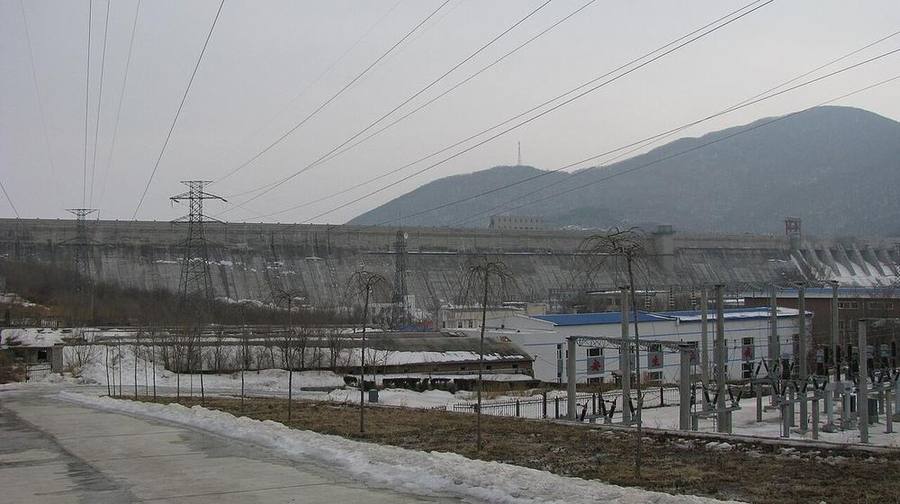
Li Peng's tie to electricity began with his studies. In September 1948 he went to the Moscow Power Institute in the Soviet Union to study hydroelectric generation, returning in 1955; for more than twenty years thereafter he never left the power system: deputy director and chief engineer of Fengman Power Plant; deputy chief engineer and dispatch bureau director of the Northeast China Electric Power Administration; director of Fuxin Power Plant; head of the Beijing Power Supply Bureau and the Beijing Electric Power Administration. In April 1979 he became vice minister of the Ministry of Electric Power Industry; on 2 March 1981 he rose to minister of electric power and secretary of its Party group; in the 1982 institutional reform the power ministry was merged with the Ministry of Water Resources into the Ministry of Water Resources and Electric Power, and he became vice minister and deputy Party group secretary. Xinhua's obituary characterises this career as that of "an outstanding leader of China's electric power industry and an important founder of the nuclear power enterprise," recording that in office he put forward "electric power must take the lead" and development "moderately ahead of demand," and promoted generation by many parties through many channels. (Source 1) This piece takes only the industry meaning of that CV; the man's biography and political assessment belong to the overview and its companion pieces, and are touched on here only in passing.
The industry meaning has two layers. The first is time: from walking into Fengman Power Plant in 1955 to supervising energy, transport and key construction as a vice premier from June 1983, Li Peng stood at or above the top of the power system continuously; and energy remained within his remit during his premiership from April 1988 to 1998. That is, across the whole span in which the second generation grew up, entered the industry and rose — the 1980s through the 2000s — the industry's highest administrative office was held first by their father himself and then by his colleagues and subordinates. The second layer is structure: in the China of the 1980s, government and enterprise were not separated in electric power. The Ministry of Electric Power Industry was regulator and operator at once; every power plant, grid, design institute and equipment works in the country answered to the one ministry. A minister's weight inside such a structure far exceeds that of any sector regulator today: personnel, projects, investment and policy all passed through the same door. Only with those two layers in view does the next section's pair of "window companies" make sense.
One genealogy node often confused must also be registered: in 1998 the State Council's institutional reform abolished the Ministry of Electric Power Industry, and its assets and staff passed wholesale into the State Power Corporation, formed in 1997 — the administrative shell vanished and a corporate entity succeeded it. Thereafter the industry's top layer ran in sequence: the State Power Corporation (1997–2002), then, after the 2002 reform, two grid companies plus five generation groups. The shell changed three times. What this piece tracks is how the people moved inside those three shells.
II. The Window Companies: Huaneng Development and China Power International
A planned-economy ministry could not itself raise listed companies, but the power ministry of the 1980s founded, with its own hand, two "window companies" run on market lines — and in time the two siblings headed one each. This is the hinge of the whole line in this piece, and it earns a section of its own.
The first was Huaneng. In 1985, to build power plants with foreign capital, the State Council approved the founding of the Huaneng International Power Development Corporation, charged with bringing in foreign investment and foreign debt to build plants; it grew from coal-for-oil special funds and joint construction with local governments, and by the early 1990s had completed several modern large plants. The year of that approval, 1985, Li Peng was the vice premier supervising energy; the same year the State Council issued policies on pooled-capital generation and multiple tariffs, opening power investment to capital outside the system for the first time. Huaneng later evolved into the China Huaneng Group and its core listed subsidiary, Huaneng Power International, Inc. (Source 7)
The second stood in Hong Kong. In 1994 the Ministry of Electric Power Industry decided to establish China Power International Limited (CPI) in Hong Kong as the power system's offshore investment and financing platform, invested in solely by the ministry — and after it, in succession, by the State Power Corporation and the China Power Investment Corporation; CPI was formally launched in Hong Kong on 7 July 1995. Its mission complemented Huaneng's: Huaneng drew capital inward to build plants; CPI raised funds, held shares and made acquisitions offshore. CPI later spun off the listed China Power International Development Limited (China Power, 02380.HK) and, after the 2015 group restructuring, passed into the State Power Investment Corporation. (Sources 10, 12)
Set the two window companies' founding years beside the second generation's entry years and the timeline speaks for itself: Huaneng Development founded in 1985, Li Xiaopeng transferred into Huaneng in 1991; CPI set in preparation in 1994, Li Xiaolin seconded to Hong Kong the same year to help prepare it. This piece holds no document — and claims none exists in the public record — that ties the children's appointments directly to the father's supervisory office. What an archive can do is set the two time series honestly side by side: when this industry first reached for capital, the people standing at the window were the second generation of this family.
III. Li Xiaopeng's Huaneng Tenure, 1991–2008
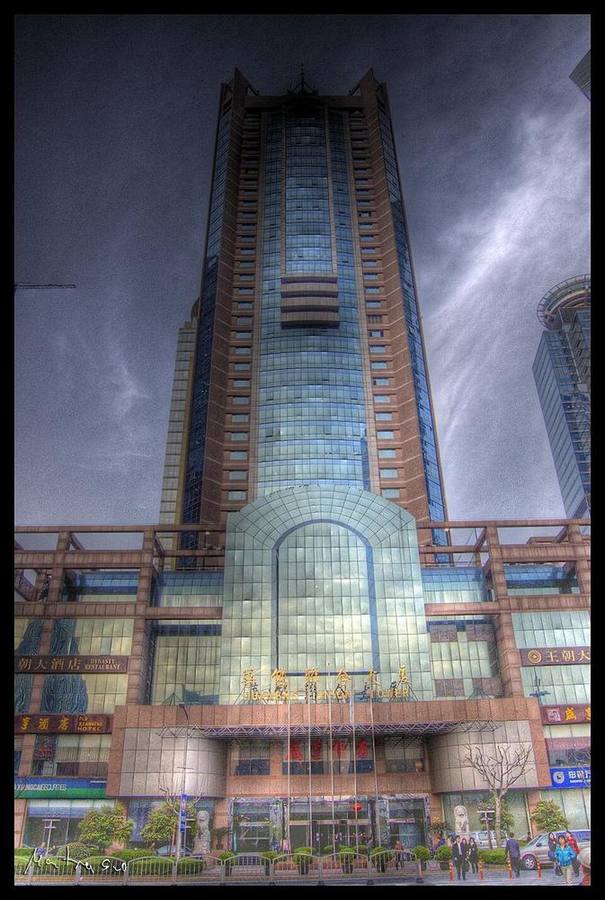
Li Xiaopeng, born in June 1959, is Li Peng's eldest son. In August 1982 he graduated from North China Electric Power College in power-plant and power-system engineering and entered the Electric Power Research Institute, working up from technician and assistant engineer; from February 1987 to February 1988 he trained in Canada with Ontario Hydro, at the Manitoba HVDC Research Centre and at the University of Manitoba; on his return he served as deputy director of the institute's planning and operations office and director of its power technology and economics research institute. That is the purely technocratic segment of his CV, and it is checkable against his official résumé. (Source 4)
In October 1991 he transferred into the Huaneng International Power Development Corporation and climbed: assistant to the general manager, deputy general manager in 1993, general manager from October 1995; in March 1999, chairman, general manager and Party group secretary of Huaneng Development, concurrently chairman of the listed Huaneng Power International; in December 1999, director, general manager and Party group secretary of the China Huaneng Group. He was forty, already of vice-ministerial rank, and mainland media called him the "Asian Power King" — a media styling, not an official title, recorded here as such. This series' state-enterprise dossier, checking the Huaneng Power announcements and profile CVs carried on the National Energy Administration's website, fixes his Huaneng Group general managership at 1999–2008; his resignation as Huaneng Power's chairman rests on a company announcement. (Sources 4, 5)
In December 2001 he additionally became a deputy general manager and Party group member of the State Power Corporation — on the eve of the 2002 split he sat at the dismantling table as the national industry's number two; after the split he returned to Huaneng as group general manager, Party group secretary and chairman of Huaneng Power International, serving until 2008. The meaning of that in-and-out is detailed in the next section. First, the plate he handed over: Huaneng Power International generated 173.688 billion kilowatt-hours in 2007, with controllable installed capacity of 37,404 megawatts at year-end, then the largest listed generation company in China; financial media, reading the 2007 annual report, noted that as chairman Li Xiaopeng held no shares in Huaneng Power International at all — his power was positional, not proprietary, and that fact fixes the nature of this piece's whole line. (Sources 5, 6)
His departure, too, left documents. On 2 June 2008 Li Xiaopeng tendered his resignation to Huaneng Power's board; the company's 2008 annual report records that he resigned as chairman and director "due to a work transfer," with Huang Yongda succeeding him; the same month he left the Huaneng Group general managership and entered politics as a Shanxi provincial Party standing committee member and vice governor. His later political course — governor of Shanxi, minister of transport — is set out in full in the overview's chronology; under this piece's remit it is noted in one line only: those are government posts, not part of the power line, and only his exit year is registered in Section VIII. His Huaneng service spans some seventeen years (1991–2008), about nine of them as group general manager — the longest single-enterprise tenure on this piece's timeline.
IV. The 2002 Reform: The State Power Corporation Split Eleven Ways
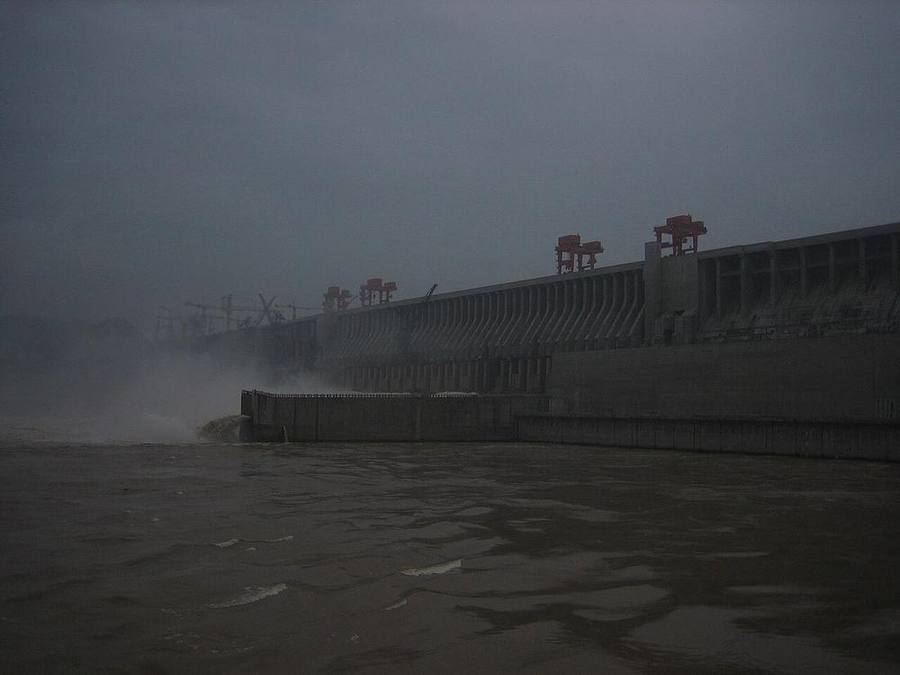
The 2002 power reform is this piece's institutional watershed, and the key frame for understanding how the family's positions changed. On 10 February 2002 the State Council issued the Power System Reform Plan (State Council Document [2002] No. 5), establishing the principles of separating plants from grids and of competitive bidding for grid access: the State Power Corporation's assets were to be divided by generation and grid business and recombined — grid assets into the State Grid Corporation of China and China Southern Power Grid Co., Ltd.; generation assets into five generation groups: China Huaneng Group, China Datang Corporation, China Huadian Corporation, China Guodian Corporation and China Power Investment Corporation; with four auxiliary groups besides (power engineering consulting, hydropower engineering consulting, water conservancy and hydropower construction, and Gezhouba). The Plan stated expressly that the Huaneng company could be directly reorganised as an independent generation enterprise. (Source 2)
On 29 December 2002 the eleven newly formed or reorganised central power enterprises were inaugurated together at the Great Hall of the People, and the State Power Corporation passed into history (it ceased operating in 2003). The same round of reform created a State Electricity Regulatory Commission for the industry. It was the largest organisational restructuring of China's power industry since 1949: a single government-enterprise monopoly was dismantled into two grids, five generators and four auxiliaries, and the generation side thereafter bid competitively for dispatch. (Sources 2, 3)
The personnel distribution at the moment of the split is a cell this piece must pin down: before the split, Li Xiaopeng was a deputy general manager of the State Power Corporation and a party to the work; after it, he took charge of Huaneng, first of the five — the very company the Plan named as directly reorganisable, with the thickest assets and the most complete listing platform. On Li Xiaolin's side, in December 2002 she became a deputy general manager and Party group member of the newly formed China Power Investment Corporation (CPI Group); CPI became the group's offshore platform, and from 2003 she served concurrently as its general manager. That is: when the one-into-eleven list settled, the two siblings stood at two of the five generation groups — one the largest of them, the other the only one holding a Hong Kong-listed red-chip platform. This piece likewise registers the distribution only, and does not infer the process of arrangement — the personnel decision documents of the split are not public, and there is no public record from which to reconstruct them.
The Big Five pattern later shifted twice more, at two points relevant here: in 2015 CPI Group and the State Nuclear Power Technology Corporation were recombined into the State Power Investment Corporation (SPIC), and Li Xiaolin did not enter the new leadership (see Section VI); in 2017 China Guodian and the Shenhua Group were recombined into the China Energy Investment Corporation, leaving the "Big Five" in practice a five-plus-one-giant field. Huaneng remains one of the five generation groups to this day, and Huaneng Power International and China Power remain listed in Hong Kong — the latest checkable status of this piece's two listing lines as of this piece's verification date, 6 November 2026.
V. Capitalisation: Huaneng Power's Three Listings and China Power's Hong Kong Listing
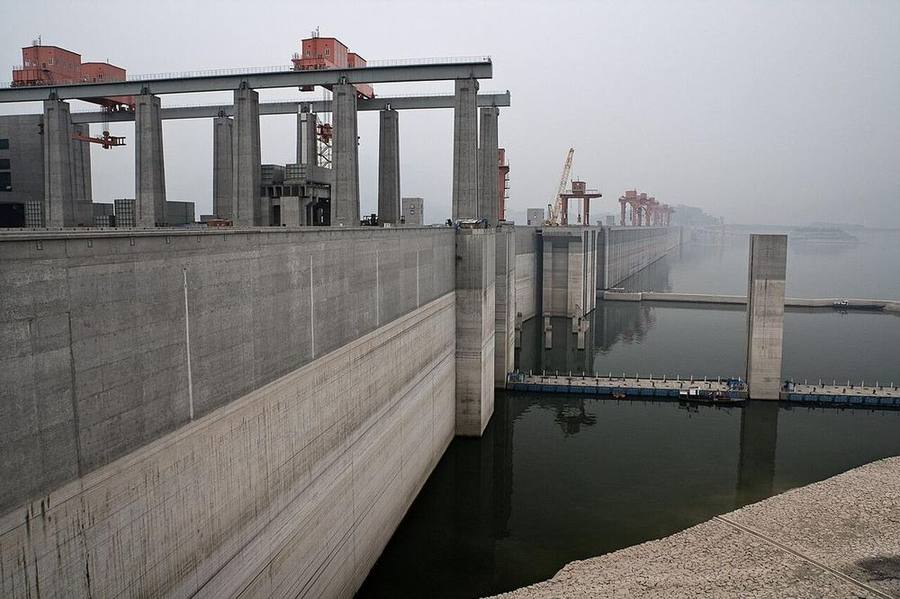
The power line's meeting with capital markets concentrates in two companies and four years.
Huaneng Power International's three listings. Huaneng Power International, Inc. was incorporated on 30 June 1994, sponsored by the Huaneng Group and Huaneng Development out of their quality plant assets. In October 1994 the company issued 1.25 billion foreign shares, listed on the New York Stock Exchange in American Depositary Share form (ticker HNP), raising some US$625 million — then the largest sum raised by a Chinese enterprise listing in the United States. In January 1998 its foreign shares were listed on the Stock Exchange of Hong Kong by way of introduction (code 0902, followed by a further issue that March); on 6 December 2001 its A shares listed on the Shanghai Stock Exchange (code 600011), completing the three-exchange pattern. (Sources 7, 8) Read those three years against Section III: at the New York listing Li Xiaopeng was a deputy general manager of Huaneng Development; the year after the Hong Kong listing he rose to chairman of Huaneng Development and concurrently chairman of Huaneng Power International; at the Shanghai listing he was already general manager of the Huaneng Group. Across one company's whole march to three capital markets, the chairman's seat in its second half was his.
China Power's Hong Kong listing. China Power International Development Limited was incorporated in Hong Kong on 24 March 2004 as the red-chip vehicle CPI created expressly for a spin-off listing — the only red-chip listed company among the five generation groups. On 15 October 2004 China Power listed on the Main Board of the Hong Kong Stock Exchange (code 02380) at an offer price of HK$2.53 per share; at listing its three plants — Pingwei and Yaomeng (100% interests in each) and Changshu (50%) — had total installed capacity of 3,610 megawatts and attributable equity capacity of 3,010 megawatts. (Source 8) The expansion curve thereafter is in the company's own results announcements: in June 2009 it acquired a 63% stake in Hunan Wuling Power from its parent for RMB 4.465 billion, the largest single step on the curve; by the end of 2014, on the eve of Li Xiaolin's departure, its equity installed capacity had reached 15,028.4 megawatts, nearly four times the listing figure in ten years. (Source 9)
Set side by side, the two listing lines differ instructively: Huaneng Power International ran "window company first, assets injected and listed after," its listed vehicle reaching market before the group's own reorganisation; China Power ran "offshore platform first, assets spun off into a listing after," and the platform's head, Li Xiaolin, was herself the listed company's founder. Two roads, one common point: the assets were the state's; the hand that signed belonged to this family's second generation. Both companies' prospectuses and annual reports are public disclosures — which is also why the Li Peng family archive, and this piece within it, is the most "sunlit" material in this series: a large part of the record needs no leak at all. The annual reports suffice.
VI. Li Xiaolin: From Founding China Power International to Datang Deputy General Manager
Li Xiaolin, born in June 1961, is Li Peng's daughter. In 1988 she took a master's degree in power-system engineering and automation from Tsinghua University, and later went to the Sloan School of Management at MIT as a visiting scholar; on her return she served in the North China Power Administration and in the Ministry of Electric Power Industry's international cooperation department, rising to head its economic and trade office. (Source 12)
In 1994 she was seconded to Hong Kong to help prepare China Power International Limited — the power ministry's sole-invested offshore platform — as assistant to the general manager, rising to deputy general manager in 1998. In December 2002 she became a deputy general manager and Party group member of the newly formed CPI Group; from 2003 she served concurrently as CPI's general manager, and from March 2004 as its Party group secretary and chairman; that October, China Power listed in Hong Kong (see Section V). On 1 January 2008 she formally succeeded as chairman of the listed China Power, and the media styled her the "Power Queen"; concurrently she chaired China Power New Energy Development and sat as a director of the Macau power utility, CEM. Counting from the preparatory team, she worked twenty-one years inside the CPI system. (Sources 10, 12)
Her public face is recorded alongside: she sat as a member of the 11th and 12th National Committees of the CPPCC, submitting thirty-two proposals in eight years; Fortune placed her on its global list of powerful businesswomen in 2007 and among Asia's twenty-five most influential business leaders in 2011. At the 2012 CPPCC session her proposal to "build a moral file for every citizen" drew wide public controversy, after which she clarified that she had meant a social credit system — the overview records that episode in full; this piece touches it in passing. (Source 12)
The turn came in 2015. On 29 May 2015 CPI Group and the State Nuclear Power Technology Corporation announced their recombination; in June the State-owned Assets Supervision and Administration Commission (SASAC) confirmed SPIC's ten-person leadership, five seats each from CPI and SNPTC — and Li Xiaolin's name was not on the list. On 7 July 2015 SASAC announced that Li Xiaolin would transfer to China Datang Corporation as a Party group member and deputy general manager (ranked third), characterising the move as "decided according to work needs" and crediting her familiarity with the power industry and her comparatively rich listed-company management experience. Mainland media widely read the transfer as an "exit" or a lateral demotion — that is media interpretation, not official characterisation; this piece sets the two registers side by side and adopts neither as its conclusion. (Sources 10, 11) Datang is itself one of the five generation groups formed in the 2002 reform, so the transfer completed a rare trajectory of service at two generation groups: deputy general manager at CPI Group, deputy general manager at Datang.
In January 2018 the membership list of the 13th CPPCC National Committee was published, and Li Xiaolin — together with a batch of red descendants including Mao Xinyu, Deng Nan, Chen Yuan and Zhu Yanlai — was not on it; Singapore's Lianhe Zaobao reported the fact on 29 January 2018 and commented that it signalled a high-level curbing of political privilege — the comment is the newspaper's analysis, and this piece registers the list fact and the report's existence only. (Source 14) On 23 May 2018 Li Xiaolin ceased to serve as a Datang Party group member and deputy general manager, publishing a retirement message the same day in which she called Datang "the last stop of my work in this industry," at the age of fifty-seven. Thereafter she held no further power-sector SOE post; the public record retains only social roles such as her CEM directorship. (Source 11)
At the end of this section, one offshore item, registered at the level of documentary fact only — the detail and the equity structures are in Section V of the overview: the ICIJ's Swiss Leaks (February 2015) disclosed that Li Xiaolin and her husband had been HSBC Swiss clients since 2001, beneficiaries of one client account linked to five bank accounts holding at most US$2.48 million combined in 2006/2007, the account held in the name of the Panama-registered Metralco Overseas S.A. (dissolved in 2012); the ICIJ had separately disclosed in 2014 that she had been a director of two British Virgin Islands companies registered in 2005. Li Xiaolin did not respond to the ICIJ's repeated requests for comment — neither denial nor confirmation; the ICIJ likewise states that inclusion in its database does not imply wrongdoing. Holding an offshore account is not in itself unlawful, and that point must be written together with the documentary facts. (Source 13)
VII. The State Grid Line: The Half the Family Never Entered
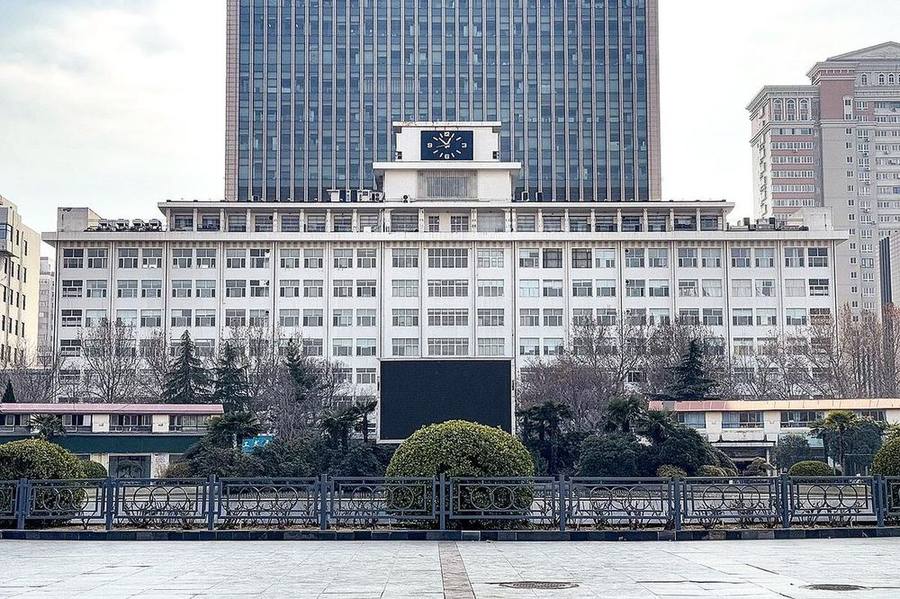
The 2002 reform cut the industry in two: five companies on the generation side, two on the grid side. Every family footprint this piece tracks lies on the generation side; the grid side — the State Grid Corporation and China Southern Power Grid — requires its own sentence of "none found," and that sentence matters as much for the archive's completeness as for its honesty with readers.
The State Grid Corporation of China was inaugurated on 29 December 2002, succeeding to the State Power Corporation's grid assets and operating the networks of every region except the five southern provinces (Guangdong, Guangxi, Yunnan, Guizhou and Hainan, served by China Southern Power Grid); it has long been the world's largest utility. This series' state-enterprise dossier checked, one by one, the successive chairmen and general managers of State Grid and China Southern Power Grid (among them Liu Zhenya, Shu Yinbiao, Kou Wei and Xin Baoan) and the top officers of the other generation groups: all were technical and managerial cadres who rose step by step inside the power system, and no verifiable case of a direct red-elite descendant was found among them. No member of the Li Peng family — Li Xiaopeng, Li Xiaolin or Li Xiaoyong — ever held any post at State Grid or China Southern Power Grid, and there is no public record linking the family to either grid company's equity or personnel.
The meaning of this "none found" is delimitation: the loose outside claim of a "Li family monopoly of the grid" does not match the picture the published lists give. Before the power ministry's abolition in 1998, Li Peng himself was the administrative head of the whole industry, grids included — that is the ministerial office itself, not a family holding in, or appointment at, a grid company; after 1998 the family's positions continued on the generation side only. An archive's rule is to write both faces: the family density on the generation side is real, and the family blank on the grid side is equally real. One recent development is appended to show the grid line's own trajectory: Kou Wei, a former State Grid chairman who moved to Datang as general manager in 2019, was announced by the Central Commission for Discipline Inspection in December 2024 to be under investigation — a matter concerning him personally, with no public connection of any kind to the Li Peng family; this piece registers it only as a background node on the grid/Datang personnel line and draws no inference of association.
VIII. The Exits and the Latest Status: 2008, 2018, 2024
The three principals of this power line exited in different years; set together, the three dates are the whole course of this family's loosening from the power industry.
The father retired first: after stepping down as premier in 1998 and as chairman of the National People's Congress Standing Committee in 2003, Li Peng held no further post; he died in Beijing on 22 July 2019, aged ninety-one, and Xinhua's obituary called him "an outstanding leader of China's electric power industry." (Source 1) The son exited in the middle: Li Xiaopeng left Huaneng for politics in 2008, sealing his power tenure there; his political course ended at the Ministry of Transport (2016–2024) — on 11 October 2024 he became a vice chairman of the Economic Committee of the 14th CPPCC National Committee, and on 8 November 2024 he was removed as minister of transport — closing the second generation's service inside the system altogether. (Source 4) The daughter left the industry last: Li Xiaolin's retirement from Datang on 23 May 2018 is the endpoint of this family's relations with the power SOEs. Counted from Li Peng's entry into Fengman Power Plant in 1955, the family's continuous presence inside the power system ran sixty-three years; from 2018, it is zero.
The latest checkable status, as of this piece's verification date, 6 November 2026: the Huaneng Group, Huaneng Power International and China Power, the Datang Corporation and SPIC all operate normally, and Huaneng Power International (0902.HK / 600011.SH) and China Power (02380.HK) continue to publish annual reports on the Hong Kong exchange; neither Li Xiaopeng nor Li Xiaolin holds any publicly recorded post, and no official investigation notice or judicial record concerning either of them appears in public channels. At the academic level, a 2024 Leiden University doctoral dissertation taking China's power industry of 1978–2013 as a case study devotes a chapter to Li Peng and the power system and lists family kinship as one of three lines explaining the industry's oligarchisation — this piece's factual skeleton broadly agrees with that study's archival conclusions. (Source 15)
IX. The Boundary of the Evidence: What This Piece Can and Cannot Prove
Gather what this piece can pin down: Li Peng became vice minister of electric power in 1979 and minister on 2 March 1981, and long supervised energy as vice premier and premier; the two window companies, Huaneng Development (1985) and China Power International (1994), were founded within his supervisory system; Li Xiaopeng entered Huaneng in 1991, served as Huaneng Group general manager from 1999 to 2008 while chairing Huaneng Power International, concurrently held a State Power Corporation deputy general managership from 2001, and resigned the listed chairmanship on 2 June 2008; Document No. 5 of 2002 and the inaugurations of 29 December split the State Power Corporation into two grids, five generation groups and four auxiliaries, with the siblings at Huaneng and CPI Group; Huaneng Power International listed in New York in 1994, Hong Kong in 1998 and Shanghai in 2001, and China Power listed in Hong Kong on 15 October 2004; Li Xiaolin became a CPI Group deputy general manager in 2002, CPI's chairman in 2004, transferred to a Datang deputy general managership on 7 July 2015 and retired on 23 May 2018; and no member of this family appears on the successive top-officer lists of State Grid or China Southern Power Grid. Every one of these statements carries its source; the appointment, listing and reform documents among them are A-grade, and the media interpretations and list analyses are B-grade and marked as such in the text.
What cannot be proved is likewise itemised. Claims that "the Li Peng family monopolised the nation's electricity" or that its wealth ran to tens or hundreds of billions circulate on social media and forums without support from any financial statement, judgment or first-tier media estimate — the siblings' posts are real; the wealth figures do not follow from them; this piece adopts none of them and registers only their form of existence in the Material Gaps. Whether Li Xiaolin's 2015 transfer was a "sidelining," or her 2018 absence from the CPPCC list a "curbing of privilege," are media interpretations and newspaper comment without official characterising documents; this piece presents them in parallel and draws no conclusion. On the offshore item, this piece uses only the ICIJ database's documentary facts, written together with the subject's non-response and the point that holding such accounts is not in itself unlawful.
One sentence to close: what most deserves archiving about this power line is not any single transaction but its completeness — from a minister's appointment, a window company's approval and a reform plan's document number, to two listed companies' prospectuses and a deputy general manager's retirement message, every link can be checked against a public document. A family's sixty-three-year binding to one industry is written entirely in the open; where the open record ends, this piece leaves the space blank, as it stands.
<!--正文结束-->
Source List
- Xinhua obituary, "Comrade Li Peng passes away," 23 July 2019 (published on gov.cn) — born 1928; the power-system CV after his 1955 return; vice minister of electric power in 1979, minister in 1981, vice minister of Water Resources and Electric Power, vice premier and premier; died 22 July 2019. The official biographical account (CPPCC website, 30 July 2019) calls him "an outstanding leader of China's electric power industry and an important founder of the nuclear power enterprise": https://www.gov.cn/guowuyuan/2019-07/23/content_5413838.htm — official document (A-grade). The ministerial appointment date of 2 March 1981 is cross-checked against compilations of public CVs.
- State Council, Power System Reform Plan (State Council Document [2002] No. 5), issued 10 February 2002, full text on the National Energy Administration website — separation of plants and grids; division of generation and grid assets; creation of the State Grid Corporation; the provision that the Huaneng company could be directly reorganised as an independent generation enterprise: https://www.nea.gov.cn/2011-08/17/c_131054253.htm — official document (A-grade).
- National Energy Administration, Fujian regulatory office, retrospective "Five Years of Power Reform" — on 29 December 2002 the eleven central power enterprises (State Grid, China Southern Power Grid, Huaneng, Datang, Huadian, Guodian, CPI Group and the four auxiliary groups) were inaugurated at the Great Hall of the People: https://fjb.nea.gov.cn/dtyw/hyxx/202311/t20231113_210733.html — official agency (A-grade).
- Li Xiaopeng's official résumé (Ministry of Transport website résumé, republished in full May 2023) — born June 1959; North China Electric Power College, class of 1982; Electric Power Research Institute and the Canadian training year; Huaneng Development posts from 1991; chairman of Huaneng Development in March 1999; general manager of the Huaneng Group in December 1999; concurrent deputy general manager of the State Power Corporation from December 2001; departure from Huaneng in May 2008; minister of transport from September 2016; CPPCC Economic Committee vice chairmanship in October 2024 and removal as minister on 8 November 2024 (the last two per Xinhua and CPPCC reporting): https://www.eptchina.com/news/dnews202305176010.html — compilation of official personnel records (A-grade).
- National Energy Administration website (Fujian office republication), "Li Xiaopeng resigns as chairman of Huaneng Power International," and Huaneng Power International's 2008 annual report — resignation as chairman and director on 2 June 2008 due to a work transfer, succeeded by Huang Yongda; media checks of the 2007 annual report confirming he held no shares in the company: https://fjb.nea.gov.cn/dtyw/hyxx/202311/t20231113_210797.html — listed-company announcement / official-agency republication (A-grade).
- Huaneng Power International, 2007 annual report and 2007 annual general meeting materials (CNINFO) — 2007 generation of 173.688 billion kWh and year-end controllable installed capacity of 37,404 MW: http://static.cninfo.com.cn/finalpage/2008-03-26/38257865.PDF — listed-company document (A-grade).
- Huaneng Power International listing history: company disclosure filed with HKEX (18 April 2019) and its listing documents — October 1994 issue of 1.25 billion foreign shares listed on the New York Stock Exchange in ADS form (HNP); January 1998 listing on the Hong Kong main board by introduction (0902); A shares listed on the Shanghai Stock Exchange on 6 December 2001 (600011): https://www.hkexnews.hk/listedco/listconews/sehk/2019/0418/ltn20190418217_c.pdf — HKEX / listed-company documents (A-grade). Huaneng Development's 1985 founding is cross-checked against public CVs and company-history compilations.
- China Power International Development Limited, prospectus (HKEX, 2004) — incorporated in Hong Kong on 24 March 2004; listed on the HKEX Main Board on 15 October 2004 (02380) at HK$2.53 per share; at listing, three plants with total installed capacity of 3,610 MW and attributable equity capacity of 3,010 MW: https://www.hkexnews.hk/listedco/listconews/sehk/2004/1004/2380/f101_c.pdf — HKEX prospectus (A-grade).
- China Power International Development Limited, 2014 annual results announcement (company announcement) — equity installed capacity of 15,028.4 MW as of 31 December 2014; the June 2009 acquisition of a 63% stake in Wuling Power for RMB 4.465 billion per the company's 2013 results announcement and acquisition announcements: https://doc.irasia.com/listco/hk/chinapower/annual/2014/cres.pdf — listed-company documents (A-grade).
- SASAC appointment reporting, 7 July 2015 (Datang Group website, republished by multiple outlets) — Li Xiaolin appointed Datang Party group member and deputy general manager (ranked third), characterised as "decided according to work needs"; the same reporting records CPI's Hong Kong launch on 7 July 1995: https://gdshe.org/article/4953.html — official appointment, media republication (A-grade); SPIC's ten-person leadership list (confirmed by SASAC in June 2015, Li Xiaolin not included) per Eastmoney / Jiemian reporting of 25 June 2015 (presented at B-grade).
- Sina Finance, "Behind Li Xiaolin's retirement message," 23 May 2018 — on 23 May 2018 she ceased to serve as Datang Party group member and deputy general manager and published a retirement message calling Datang "the last stop of my work in this industry": https://finance.sina.cn/chanjing/gsxw/2018-05-23/detail-ihaysvix3588956.d.html — reliable media (the post facts cross-checked against the SASAC announcement and Datang's website; A-grade facts in media presentation).
- Yicai / Sina republication, "Li Xiaolin: twenty years of youth given to China Power International," 9 July 2015, with the Jiefang Daily report of 24 May 2018 in compilation — born 1961; Tsinghua master's; head of the power ministry international department's trade office; seconded in 1994 to prepare CPI; CPI Group deputy general manager in December 2002; CPI chairman in March 2004; chairman of the listed China Power from 1 January 2008; two CPPCC terms and thirty-two proposals; the Fortune listings: https://edu.sina.cn/bschool/al/2015-07-09/detail-ifxewnih2162814.d.html — reliable-media compilation (B-grade presentation; appointment nodes cross-checked against listed-company materials).
- ICIJ Swiss Leaks people page: Li Xiaolin, February 2015 — she and her husband HSBC Swiss clients since 2001; one client account linked to five bank accounts holding at most US$2.48 million combined in 2006/2007, held in the name of Panama-registered Metralco Overseas S.A. (dissolved 2012); the ICIJ states that inclusion in the database does not imply wrongdoing, and Li Xiaolin did not respond to requests for comment: https://projects.icij.org/swiss-leaks/people/li-xiaolin — ICIJ database (A-grade documentary facts).
- Lianhe Zaobao (Singapore), Yu Zeyuan, "Why are red descendants leaving the CPPCC?", 29 January 2018 — Li Xiaolin, with Mao Xinyu, Deng Nan, Chen Yuan, Zhu Yanlai and others, absent from the 13th CPPCC National Committee list (the list fact); the "curbing of political privilege" reading is the newspaper's commentary (B-grade): https://www.zaobao.com/forum/zaodian/ji-yan-chun-qiu/story20180129-830830 — reliable media (fact A / comment B).
- Song Chen, The Oligarchy in China: A Case Study of China's Electricity Industry, 1978–2013, Leiden University doctoral dissertation, 2024 — the power industry's oligarchic structure and a chapter on Li Peng and the national power system, with family kinship as one of three explanatory lines: https://scholarlypublications.universiteitleiden.nl/access/item%3A4109204/view — academic research (A-grade).
Material Gaps (stated faithfully)
- The family's total wealth: no financial statement, judgment or first-tier media estimate gives a total for the Li Peng family's power-related wealth; claims of a "monopoly of the nation's electricity" or wealth in the tens or hundreds of billions appear only on social media and forums, without documentary support, and are not adopted (the state-enterprise dossier's rumour register, item 2, takes the same line). The only offshore figure in this piece is Source 13's ICIJ figure of US$2.48 million, with its nature stated.
- The decision process behind appointments: how Li Xiaopeng's 1999 Huaneng Group appointment, Li Xiaolin's 1994 secondment to prepare CPI, and the siblings' postings in the 2002 split were decided and recommended is a matter of no public record; this piece registers outcomes and juxtaposed dates only, and infers no arrangement.
- Beyond the official characterisation of Li Xiaolin's transfer: the reason she did not enter SPIC's leadership in 2015 and moved to Datang is officially only "decided according to work needs"; "sidelining" and "exit" are media interpretations without official documents, and both registers are presented.
- The scope of the grid-side check: the "no family post found" conclusion for State Grid and China Southern Power Grid rests on a one-by-one check of the published lists and CVs of both grid companies' and the five generation groups' successive chairmen and general managers (state-enterprise dossier); should new evidence appear, it will be added under the same grading rules.
- Huaneng Power International's later New York status: this piece uses only the three-exchange genealogy — NYSE 1994, HKEX 1998, SSE 2001 (Source 7); the details of its ADS programme's later delisting arrangements fall outside this piece's checked range and are not pursued in the text.
- Any conclusion on the legality of Li Xiaolin's offshore funds: the ICIJ files prove the existence of the accounts and company structures only; on the source of the funds and on tax compliance there is to this day no official conclusion, and Li Xiaolin herself did not respond to requests for comment — there is no public record on which to characterise them.
- Family power-sector developments after 2018: since Li Xiaolin's retirement and Li Xiaopeng's 2024 removal as minister, any new power-SOE postings or business activity by members of this family are, within the range this piece has checked, matters of no public record.
Contact: endccpworld@proton.me