
第125案 | 张荣亮Case 125 | Zhang Rongliang
张荣亮(1950年7月15日生于河南方城,农民,方城母会领袖、「中国为基督教会」网络领袖,该网络成员由对华援助协会估计超过一千万人),1969年文革中秘密受洗;1974年以「以宗教进行反革命活动」被指控并遭棍棒殴打,1976年被宛城县人民法院以反革命罪判刑7年;1994年2月被拘留讯问(国际特赦组织紧急行动互证);1998年11月参与起草《中国家庭教会信仰宣言》及配套声明(部分来源作1999年发表,分层存档);1999年11月20日被处劳动教养3年,2000年2月2日保外就医,此后被通缉。此前五次被拘、合计12年、遭受包括电击在内的酷刑(对华援助协会、国际特赦组织、《基督教今日报》、英国议会四源一致;BosNewsLife另有「六次、十八多年」的全生涯口径说法,并列存档不合并)。2004年12月1日,他在郑州徐寨村出租屋被抓:河南省公安厅国保交办立案,指控他2000年至2004年三次骗取证件、持化名护照出境15次赴美、澳、埃及、新加坡参加宣教会议,触犯《刑法》第三百一十九条;新密市公安局起诉意见书文号新密公刑诉〔2005〕056号。2005年6月6日、8月2日新密法院两次开庭,案件据Compass Direct报道在面临撤销指控时被郑州市政法委移送中牟(单一来源、匿名官员,分层存档);2005年12月19日至2006年1月23日他病危住新密市人民医院,被铐锁于病床;2006年4月6日第三次开庭;中牟县人民法院判决书6月29日签发、7月4日宣布判刑7年6个月,家属称从未收到判决书。狱中患糖尿病,2007年中风(自由亚洲电台),在开封服刑;2011年8月31日提前9个月获释回郑州附近家中。英国使馆在被抓三天后即交涉,欧洲议会2005年决议点名要求释放,英中人权对话2006年7月3日提出此案而中方无新信息。2011年后公开记录稀薄:2015年英文回忆录《I Stand with Christ》在海外出版,此后其活动、健康、生死均无可核公开记录。Zhang Rongliang (born 15 July 1950 in Fangcheng, Henan; a peasant by registered occupation; leader of the Fangcheng Mother Church and of the China for Christ Church network, whose membership ChinaAid estimated at more than ten million) was secretly baptised in 1969 during the Cultural Revolution; charged in 1974 with 'counter-revolution under the guise of religion' and beaten with sticks, he was sentenced in 1976 by the Wancheng County People's Court to seven years for counter-revolution; detained and interrogated in February 1994 (corroborated by an Amnesty International urgent action); co-drafted the Confession of Faith of House Churches in China and its companion declaration in November 1998 (some sources date publication to 1999; layered); sentenced on 20 November 1999 to three years' re-education through labour, released on medical parole on 2 February 2000, and wanted thereafter. Before 2004 he had been detained five times for a total of twelve years and tortured, including with electric shocks (ChinaAid, Amnesty International, Christianity Today and the British parliamentary record agree; BosNewsLife's whole-life variant of 'six occasions, more than eighteen years' is archived in parallel and never merged). On 1 December 2004 he was arrested in a rented room in Xuzhai Village, Zhengzhou, in a case commissioned by the Henan provincial public security department's domestic security apparatus: the Xinmi PSB's prosecution paper (Xinmi Gong Xing Su (2005) 056) alleged that between 2000 and 2004 he had three times obtained documents by deception and travelled abroad fifteen times on alias passports to mission conferences in the US, Australia, Egypt and Singapore, violating Article 319 of the Criminal Law. Heard twice by the Xinmi court on 6 June and 2 August 2005, the case was — on Compass Direct's single-source account from an anonymous sympathetic official, layered as such — transferred to Zhongmu by the Zhengzhou Political and Legal Committee as it headed toward dismissal; from 19 December 2005 to 23 January 2006 he lay critically ill in Xinmi City People's Hospital, chained to his bed; a third hearing followed on 6 April 2006; the Zhongmu County People's Court issued its verdict on 29 June 2006 and announced seven years and six months on 4 July, and his family say they never received the verdict paper. In prison he suffered from diabetes and a 2007 stroke (Radio Free Asia) and served his term at Kaifeng; he was released on 31 August 2011, nine months early, to his home near Zhengzhou. The British embassy intervened three days after his arrest, the European Parliament's 2005 resolution named him and demanded his release, and his case was raised at the UK–China Human Rights Dialogue on 3 July 2006, to which the Chinese side gave no new information. The public record after 2011 is thin: his English-language memoir I Stand with Christ was published overseas in 2015, and since then his activities, health and survival are all matters of no verifiable public record.
What Happened
The skeleton of the Zhang Rongliang case is one man locked up, across three entirely different Chinas, for the same act: he refused to hand his faith over to state registration. The first China was the China of the Cultural Revolution. In 1969, aged nineteen, he was secretly baptised in rural Henan, at a time when every church in the country had been closed and public religious activity was itself a political crime. In 1974 public security officers handcuffed him and beat him with sticks to make him talk about his Christian activities and give up his companions; in 1976 the People's Court of Wancheng County sentenced him to seven years for "counter-revolution." The second China was the China in which religious control took institutional shape after reform and opening. The house churches grew explosively in the countryside, and he became the leader of the Fangcheng Mother Church and then of the China for Christ Church network — a network ChinaAid estimated at more than ten million members. He was detained and interrogated in 1994; in 1999 he was given three years of re-education through labour, released on medical parole, and wanted thereafter; in November 1998 he joined the leaders of several major networks in drafting the Confession of Faith of House Churches in China, a document explaining to the government what the house churches believed and what they were not. The third China was the China of 2004. On 1 December that year he was arrested in a rented room in Xuzhai Village, Zhengzhou — and the charge was not faith but passports, because he had travelled on other people's documents to mission conferences in the United States, Australia, Egypt and Singapore.
The way the third China handled the case is the part of this archive that most deserves to be laid out page by page. The prosecution paper states its own facts plainly: the exit documents were obtained by deception, eleven journeys, then three, then one, with dates itemised — on its face, a document crime with solid evidence. But the same file also records the other half of the story. This was a man who had served seven years for "counter-revolution" in 1976 and been sent to labour camp in 1999; the investigation was commissioned by the domestic security apparatus of the Henan Provincial Public Security Department and opened on 22 July 2004, while he had been a wanted man for years. The Xinmi City People's Court heard the case twice in 2005; according to Compass Direct's investigative reporting, the case was moving toward dismissal of all charges and release, the Zhengzhou City Political and Legal Committee was displeased, and the case was moved sixty kilometres away to Zhongmu for retrial. During the wait the defendant, critically ill with diabetes, spent more than a month chained to a hospital bed. By the third hearing in April 2006 he had been in custody for sixteen months — already, on the account given by church sources to reporters, beyond the maximum sentence normally imposed for the false-passport offence itself. In the end the Zhongmu County People's Court announced a sentence of seven and a half years on 4 July 2006; the verdict paper had been issued on 29 June, and his wife and family say they never received it at all.
The international response to this case left an unusually complete paper trail. Three days after the arrest, the British embassy in Beijing raised his case with the Chinese Ministry of Foreign Affairs; the EU's Dutch presidency wrote the same month; in January 2005 the British Foreign Secretary raised the case in person with China's foreign minister; on 13 July 2005 the case was debated in Westminster Hall, and on 8 September 2005 the European Parliament passed a resolution naming him and demanding his unconditional release; on 3 July 2006 his name sat on the case list at the UK–China Human Rights Dialogue, and a British minister left this sentence in the parliamentary record: the Chinese government gave no new information about Pastor Zhang. None of it changed the verdict. He served his sentence in a prison in Kaifeng (according to Radio Free Asia), suffered a stroke in 2007, and was released on 31 August 2011, nine months early, returning to his home near Zhengzhou at the age of sixty-one. After that, the public record nearly runs out. In 2015 his English-language memoir was published overseas under the title I Stand with Christ. Beyond that, systematic searches in November 2026, across multiple sets of Chinese and English keywords, found no verifiable reporting on his current situation at all. A man imprisoned in turn by three eras disappears, at the end, into the silence of the record — and that silence is itself part of this case's archive. This page records it as it is, and fills nothing in.
Two numbers have to be set out clearly at the start, because they must never be blended. The first is the total for his imprisonment before this case: ChinaAid, Amnesty International, Christianity Today and the British parliamentary record agree — five detentions, twelve years in all, during which he suffered harsh torture including electric shocks. The second is a different total that appeared at his release, in BosNewsLife's reporting: jailed on six occasions, for more than eighteen years. This page does not merge the two figures; a dedicated section below layers them. The main narrative follows the first ledger — five detentions, twelve years, plus seven and a half years in the final case — because it rests on four or more independent sources and can be broadly reconciled with the earlier sanctions listed in the police prosecution paper itself. The likely composition of the second figure is analysed, not asserted, in that section.
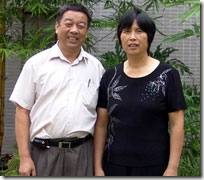
1950: A Farming Family in Fangcheng, His Grandfather's Faith, and a Secret Baptism in 1969
For Zhang Rongliang's birth, the only solid primary basis is one document: the household-registration block of the Xinmi City Public Security Bureau's Suggestions on Prosecution of 2005 (document no. Xinmi Gong Xing Su (2005) 056), released in full English translation by ChinaAid on 8 July 2006. It records: Zhang Rongliang, male, born 15 July 1950, birthplace Fangcheng County, Henan Province, Han ethnicity, elementary-school education, occupation peasant, registered domicile in the Chengguan Township area of Wancheng County, Nanyang City (the full street address is not reproduced on this page, for the reason given in the Verification Note), with an actual residential address in Zhengzhou also listed. The document that convicted him is thus also the hardest source for his date and place of birth, and this page adopts 15 July 1950, Fangcheng County. The age reporting must be archived alongside: in December 2004 ChinaAid and the parliamentary record called him 53 (on the July 1950 date he would have been 54); in April–July 2006 Compass Direct and ChinaAid called him 55, and Charisma magazine placed his 56th birthday in the week of the verdict (which fits 15 July 1950 exactly). The press ages run a year early and a year late in different places; this page archives them in parallel and does not use them to unsettle the prosecution paper's date of birth.
His family and childhood are known mainly from material derived from his own memoir, a lower evidential grade than the institutional record, and this page grades each item accordingly. The Polish-language Wikipedia article on Zhang Rongliang, compiled mainly from his memoir and ChinaAid material, records that he was born into a farming family, that his father died in the famine of the Great Leap Forward period, and that he came to faith under the influence of his grandfather, a Christian. He was converted in 1963, at thirteen (Charisma's long 2006 account gives 1963, age 13), and was secretly baptised in 1969, at the height of the Cultural Revolution (ChinaAid, Amnesty International and Christianity Today agree). Conversion and baptism are two different years and two different events: 1963 marks his inner conversion and the start of his attendance at secret rural meetings; 1969 marks his formal baptism. This page records them separately and does not compress them into "he became a Christian in 1969." The marketing material for his English-language memoir I Stand with Christ (published 2015) further describes him as a former member of the Chinese Communist Party who was targeted for his faith; the Polish article goes further and says he was expelled from the Party for refusing to renounce his faith. Party membership and expulsion rest on the memoir lineage alone: the prosecution paper's registration block lists him simply as a "peasant," and no official document corroborates either claim. This page archives them as memoir-lineage assertions (unverified), neither building on them nor denying them.
In the China of 1969, every place of religious activity had been closed or seized in the Cultural Revolution, and rural Christians could meet only at night, in farmhouses, in secret — the meeting itself could be classified as "counter-revolutionary activity under the guise of religion." The first line of Zhang Rongliang's lifelong punishment record begins with exactly that classification. He was baptised at nineteen, with little schooling (the prosecution paper records elementary education), and his theology and his gifts for church organisation were formed in meetings, in hiding and in prison cells. That starting point is the key to everything that followed: to the authorities he was always the organiser of an unregistered religious network; to himself, registration meant handing the church to an institution led by a party whose programme is atheist. He held that line from nineteen to sixty-one, and he was still holding it when he walked out of prison.
The Fangcheng Mother Church: From Li Tianen to Zhang Rongliang, and the "Ten Million" Figure
The Fangcheng Fellowship (also called the Fangcheng Mother Church; in Chinese, Fangcheng Tuanqi / Fangcheng Muhui) takes its name from Fangcheng in Henan. The English Wikipedia article "Fangcheng Fellowship," citing Hughes Oliphant Old's 2010 work and a 2023 China Source article, records that the fellowship was established in the early 1970s by Li Tianen and grew greatly in the 1980s. That point has to be stated plainly, because many reports call Zhang Rongliang the fellowship's "founder," which the encyclopaedia-grade record does not support: the fellowship's founder was Li Tianen; Zhang grew into its core leadership and in time became the recognised head of the whole network. Charisma's version is that after his release in 1980 he "founded the Chinese for Christ movement" — booking the formation of the China for Christ network to his name. The two accounts can be read together in one way only: the Fangcheng Fellowship came first (early 1970s, Li Tianen); Zhang became its leader across the 1980s and 1990s and built the cross-provincial China for Christ Church network on that base; and in October 2004 he formally renamed the movement "China for Christ" (Compass Direct, April 2006: the movement was formerly known as Fangcheng and was renamed by Zhang in October 2004). Two months after the renaming, he was arrested.
Membership figures are layered by source on this page and never written as exact counts. ChinaAid's bulletins of 2004, 2006 and 2011 consistently describe the network as one of the largest house-church networks, "estimated to have more than 10 million members"; Zhang himself told Open Doors in 2002 that the fellowship had ten million members (reported by Christianity Today in 2005); and estimates of the Fangcheng Fellowship's size around 2010 likewise run to ten million (English Wikipedia, citing Mark Shaw's 2010 book). But Compass Direct's April 2006 report records the other side in the same breath: at a 2005 hearing Zhang said the movement was now ten million strong, "though other estimates put the number at 1 million." Ten million and one million differ by a factor of ten, and a house-church network keeps no membership rolls; no figure of this kind can be verified to any precision. This page's record is: the China for Christ Church was one of the largest house-church networks in China at the time, estimated by ChinaAid and by the network itself at more than ten million members, with a contemporary alternative estimate as low as one million; the "more than ten million (ChinaAid estimate)" formulation is used, with the estimate's nature stated. The British parliamentary debate of 2005 and the European Parliament's 2005 resolution likewise used the language of "estimated at about ten million," which corroborates the framing.
The network's position also has to be seen inside the official religious system. Lawful Christian activity in China takes place in venues that are registered and administered under the Three-Self Patriotic Movement and the China Christian Council (the "two organisations"); unregistered gatherings are called house churches and exist in a state of permanent exposure to suppression. The Fangcheng network never registered. Zhang's international profile came through a series of nodes: former TIME journalist David Aikman's 2003 book Jesus in Beijing wrote about him; TIME, Newsweek (issue of 12 May 2004), Christianity Today and Charisma all reported on him (as listed in ChinaAid's December 2004 bulletin). A peasant of elementary education who had served seven years became, in foreign journalists' writing, one of the "patriarchs" of China's house churches. That international image both won him parliamentary and diplomatic advocacy after 2004 and ensured that the police handling of him was never a township-station matter: the prosecution paper states in so many words that the case was commissioned by the domestic security team of the Henan Provincial Public Security Department and investigated by the domestic security team of the Zhengzhou PSB.
1974: Handcuffs, a Beating with Sticks, and the Wancheng County Court's Seven-Year Sentence
The timeline of Zhang Rongliang's first loss of freedom has to be taken apart before it can be put together. Christianity Today's 2005 report states that in 1974 he was charged with "engaging in counter-revolution under the guise of religion." Charisma magazine's long 2006 account supplies the scene: in 1974 public security officers handcuffed him and beat him with sticks to force him to reveal information about his Christian activities; he refused to deny his faith and refused to betray his colleagues, and was then sent to the Xi Hua labour camp for seven years (the camp's exact name and location cannot be verified against any public record; this page understands the reference as pointing to a labour facility at Xihua, Henan, and grades it accordingly). The Xinmi prosecution paper records the judicial end of the sequence: in 1976 the People's Court of Wancheng County, Nanyang City, sentenced him to seven years' imprisonment for counter-revolution, and he was released after serving the sentence. Put together, the chain is: arrested, charged and beaten in 1974; formally sentenced to seven years in 1976; release in about 1980–81 if the term ran from the 1974 custody, or around 1983 if it ran from the 1976 judgment — Charisma and the Polish Wikipedia article both give release in 1980 (the Polish article says early 1980). This page's record is: arrest and ill-treatment in 1974 (two sources), sentence in 1976 (the police document) and a seven-year term (all three sources) as the verifiable core; his exact release date is a matter of no public record, recorded only as "about 1980, on church-lineage material."
The wording of the charge also needs layering. The prosecution paper (in translation) says only that he was sentenced in 1976 for "counter revolution." Christianity Today's 1974 formulation, "counter-revolution under the guise of religion," is the era's characteristic formula for charges against religious activists. The Polish Wikipedia article describes a sentence of seven years' re-education through labour for "spreading counter-revolutionary propaganda," giving the punishment as labour reform rather than imprisonment. The three formulations point at different links of one chain — the language of the accusation, the name of the conviction, and the form of the punishment's execution. This page takes the police document's version as its spine — sentenced by the Wancheng County People's Court in 1976 to seven years' imprisonment for counter-revolution — and archives the other two alongside with their sources named. As for the 1974 beating, its details rest on a single lineage, Charisma's church-background account of his life; this page grades them as church-lineage material: handcuffs, sticks, interrogation under beating, refusal to inform on companions. They point in the same direction as the multiply-sourced record of torture across his detentions (see the next section), but the 1974 episode itself has no independent corroboration, and this page does not write it up as multiply verified.
After the seven years came more than a decade of blankness and growth. In the 1980s the house churches of the Fangcheng area expanded rapidly through the countryside, and Zhang became the network's leader. There is no year-by-year public record for this period: which year he took over the Fangcheng Mother Church and how the network crossed provincial lines survive only in the general narratives of church-history material (see the previous section). This page does not fill that blank; it records only the two coordinates that can be pinned: release about 1980 (church-lineage material) and detention again in 1994 (corroborated by both an Amnesty International document and the police paper, see below). The fourteen years between are the years in which a released prisoner became the leader of a network counted in the millions. The archive holds the result and not the process — which is the normal condition of house-church history: their activities leave no paperwork, and the paperwork that exists sits mostly in the files of the organs that arrest them.
"Five Detentions, Twelve Years": What the Ledger Can Reconcile, and What It Cannot
"Since his secret baptism in 1969 he had been detained on five separate occasions and had spent a total of twelve years in prison for his faith, suffering harsh torture including electric shocks." Versions of that sentence appear in ChinaAid's bulletins of 10 December 2004 and 8 July 2006, in Amnesty International's December 2004 material, in Christianity Today's 2005 report (which gives the span as "since 1974, held in detention five times, serving between 40 days and 7 years," twelve years in all, tortured with electric shocks according to ChinaAid), and in the British parliamentary record of the 13 July 2005 debate. Four independent sources, stable in their figures across twelve years of reporting: this page adopts that ledger as the total for the first half of his life. The torture item needs its own layering: electric shocks appear in ChinaAid and in Christianity Today's relaying of it; the parliamentary record says "severe torture"; Amnesty says he had been severely tortured. Which year, and in which prison, the electric shocks occurred is given by no source in verifiable detail; this page records only that multiple sources agree he suffered torture including electric shocks during his detentions, with no public record of the specific occasions.
Which five detentions were they? The public material can pin down only three, one by one. The first: arrested in 1974, sentenced to seven years in 1976 (see the previous section). The second: February 1994. Amnesty International's further information on Urgent Action 47/94 (ASA 17/14/94, 9 March 1994) records that Zhang Rongliang — his name corrected in the follow-up — was detained in Henan together with Tian Mingge, Zheng Xintai and seven foreign Christians; Tian and Zheng were released during the week beginning 27 February 1994, and Zhang the week before. The Xinmi prosecution paper corroborates the detention from the official side: on 11 February 1994 he was detained and interrogated for disturbing social order. The police paper says 11 February, the Amnesty file points to detention from 10 February; the one-day difference is archived in parallel. The detention lasted roughly two to several weeks, and no sanction resulting from it is in any public record. The third: 1999. The prosecution paper records that on 20 November 1999 the Re-education Through Labour Committee of the Nanyang City People's Government sentenced him to three years' re-education through labour for disturbing social order, and that on 2 February 2000 he was put on medical parole. ChinaAid's bulletins say he had been "wanted since his last imprisonment in August 1999." The August and November nodes can be read together — seized in August, RTL decision in November — but no published document states what happened in August, and this page records August as ChinaAid's wanted-from date and 20 November 1999 as the RTL decision date on the police paper, with the interval between them a matter of no public record.
The remaining two detentions cannot be pinned down in any public source. Within the twelve-year total, the seven-year sentence accounts for seven years; the 1999 RTL ran only a little over two months from decision to medical parole (about half a year if counted from an August seizure); the 1994 detention lasted weeks. The three documented items together come to roughly seven and a half years, leaving more than four years of the twelve unaccounted for. The detentions that make up the difference must fall before 1974 (between his baptism and the first recorded arrest), in the 1980s, or in the 1990s — but every source this page has found gives the total and none gives an itemised list. The record here is therefore: five detentions and twelve years archived as a multiply-sourced total; an itemised list of only the three that can be pinned; the years, places and durations of the other two recorded as matters of no public record, not to be filled by conjecture. That gap deserves a plain explanation for the reader: it is not that this page failed to look. It is that the first half of this man's life exists archivally only in church oral tradition and in the internal files of the organs that detained him — and the internal files have never been published.
One further piece of background about the wanted years belongs in the record. After the 1999 RTL and his medical parole, Zhang remained a wanted man (ChinaAid's 2004 and 2006 bulletins both describe him as wanted for many years since 1999) — yet between 2000 and 2004 he left China fifteen times on documents in other names (on the prosecution paper's own count, next section). In the official file he was a religious-network chief who had been on the run for years; in the church's narrative he was a leader carrying on cross-border mission travel as normal. The same man, two realities — and on 1 December 2004 they collided in a rented room in Xuzhai Village. That collision is also a key to why the prosecution pursued the document case so hard: the documents were not what they really wanted to prosecute. The documents were what they could finally prosecute.
November 1998: The Confession of Faith of House Churches in China and Its Companion Declaration
The most important text of Zhang Rongliang's life is not one he wrote about himself. In November 1998, in an unnamed location in north China, key leaders of several major house-church movements met together to pray, to study the Bible, and jointly to draft the Confession of Faith of House Churches in China (on the drafting account given in the preface of the confession's archived English text). The preface states four purposes: to establish a common, legitimate standard of faith for China's house churches; to lay a foundation on which overseas churches could have fellowship with them in unity; to help the government and the people understand their faith; and to draw a clear line between themselves and heresies and cults (the confession's own preface, cited here in summary, well within this page's quotation limits). In the context of 1998 the fourth purpose was the urgent one: the authorities were then suppressing a series of religious groups in the name of fighting cults, and house-church leaders needed a document in black and white proving that what they believed was historic, orthodox Christianity, not the "cult" of official propaganda. Zhang Rongliang is recorded by ChinaAid and other sources as one of the confession's co-authors (ChinaAid's bulletin of 15 September 2011 describes him as a co-author of the historic 1998 Confession of Faith of House Churches in China, and mentions a companion declaration setting out the house churches' attitudes toward the government, the Three-Self Patriotic Movement and the government's religious policy).
The year needs layering. Most reporting from 2004 to 2006 (ChinaAid's December 2004 bulletin, Christianity Today, the Christian Post) dates the published document to 1999, as "the House Churches of China's Confession of Faith and Declaration, 1999"; the confession's own text and ChinaAid's 2011 retrospective place the Confession itself in 1998. The two years do not necessarily conflict: drafted in November 1998, published and circulated in 1999 is the most natural reading — but no published material sets out the full drafting-to-publication sequence, and this page therefore layers them: drafting in November 1998 (the confession text's own account; single-document source); publication and wide circulation in 1999 (multiple contemporary reports); co-authorship as recorded by ChinaAid. Zhang's individual drafting share and the full list of those present are matters of no public record; this page names no signatory list and guesses at no pen.
The confession's historical position is a piece of the background needed to understand what happened to its co-author in 2004. Its posture was explanatory and self-certifying: this is what we believe; we are not a cult; we want the government to understand us. Its companion declaration addressed the state and the Three-Self movement in the same petitionary register. Six years later, one of the men who wrote it was sentenced to seven and a half years over a passport. What changed in between was not the confession but the logic of case-handling: in 1998 they believed the problem was that "the government does not understand us"; the 2006 verdict answered a different question — not understanding, but registration and obedience. The commentary returns to this point. Here the confession is simply archived: it is the closest thing to a "house-church constitution" that this elementary-educated peasant leader ever helped to write, and it is the only proactive document of his life that carries his name as a co-author. Every other page of his archive was produced by other people arresting him, sentencing him or pleading for him.
Passports: Three Rounds of Documents and Fifteen Journeys Abroad, 2000–2004
The "criminal facts" of the 2004 case are set out in full in the Xinmi City PSB's Suggestions on Prosecution. This section relays them item by item from that document, noting throughout that it is a one-sided prosecution instrument, not a court's findings. The paper alleges that between 2000 and 2004 Zhang three times obtained household registers and identity documents from public security organs by deception and used them to apply for passports. First: on 25 May 2000 he allegedly deceived the Zhengjia Police Station of the Dongchangfu Branch of the Liaocheng City PSB, Shandong, into issuing two household records and identity cards in the names of Gao Xianchen and Gao Jingyi (romanisations as in the prosecution paper's translation; no public record gives the Chinese characters); on 29 June that year he used them to obtain two passports from the Liaocheng PSB's border-control office; and from 6 June 2001 to 1 January 2004 he travelled abroad eleven times on the passport in the name of Gao Xianchen. Second: between 6 September and 18 October 2003 he allegedly obtained, from the Chengguan Police Station of the Xinmi City PSB, three household booklets covering eleven persons, with their identity cards; between 6 January and 17 May 2004 he applied, in several of those names, for nine passports and two Hong Kong–Macao travel passes; from February to May 2004 he travelled abroad three times on the passport in the name of Sun Rongming, and his son and daughter-in-law travelled abroad once on related documents. Third: on 27 August 2004 he allegedly obtained, from the Malou Police Station of Lushan County, Pingdingshan, a household booklet covering five persons with their identity cards; on 21 September 2004 he and his wife applied to the Pingdingshan PSB for two passports in the names of Li De'en and Li Aihua; and in November 2004 he travelled abroad once on the passport in the name of Li De'en. The evidence listed consists of the fraudulently obtained household documents, witnesses' testimony about the applications, the border-control authorities' enquiry results, the exit-entry records supplied by the Henan Provincial Public Security Department's border-control office, and Zhang Rongliang's own confessions. The prosecution paper prints the individual passport numbers in full; this page does not reproduce document numbers, for the reason given in the Verification Note. The aliases listed number four: Sun Rongming, Sun Yuewu, Gao Xianchen and Li De'en, all in romanisation.
What the journeys were for is consistent across sources: attending world mission conferences. ChinaAid's formulation is that he travelled on those documents to the United States, Australia, Egypt and Singapore for world mission conferences (bulletin of 8 July 2006). The itineraries of the fifteen journeys — the name and organiser of each conference — are a matter of no public record beyond those four countries, and this page does not invent them journey by journey. Why would a Chinese citizen use other people's passports to attend conferences abroad? This section must supply the half the prosecution paper does not write, because that half is also supported by public sources. First: the Chinese authorities routinely deny passports to well-known house-church leaders — Compass Direct's April 2006 report states it in so many words, and ChinaAid president Bob Fu's comment on the verdict was that the authorities "often deny passports and other travel documents to well-known religious leaders like Pastor Zhang." Second: a parallel case in the same milieu. The house-church historian Zhang Yinan was sentenced in September 2003 to two years for "attempting to subvert the national government" for documenting the house churches; released in September 2005, he was invited to the National Prayer Breakfast in Washington, applied for a passport, was refused, and had an estimated fifty to sixty police officers take turns guarding his apartment for three weeks, until the day before the prayer breakfast (Compass Direct). Third: Zhang Rongliang's co-worker Han Yongqin described how, when her daughter applied for a passport to study abroad, the police required the mother to be brought in for questioning; her recorded words ask why, when she and Pastor Zhang had been on the blacklist for years, the police would pick on their children (Compass Direct, same report; the quotation is relayed in substance here — see the quotation policy in the Verification Note). In the Henan of those years, in other words, the channel by which a blacklisted house-church leader could obtain a passport in his own name was closed. Every mission conference he attended, he attended by going around the closure. That the way around it constituted a crime is a fact. That the channel was closed is also a fact. This page writes both, and leaves the weighing to the commentary.
The level at which the case was run is also written into the paper. It states that, commissioned by the domestic security team of the Henan Provincial Public Security Department, the domestic security team of the Zhengzhou PSB reviewed the matter and opened an investigation on 22 July 2004; that Zhang was seized on 1 December 2004; that the case was transferred to the Xinmi PSB on 25 December; and that, investigation closed, it was submitted to the Xinmi City People's Procuratorate for prosecution review under document no. Xinmi Gong Xing Su (2005) 056, alleging a violation of Article 319 of the Criminal Law (obtaining passports, visas and other exit-entry documents by deception). Note the chronology: when the investigation opened in July 2004, the third round of documents (August 2004) had not yet happened. The police opened their file and then watched him obtain documents in August, apply for passports in September and travel in November, before closing the net on 1 December. This page simply arrays that sequence as fact: it can be read as the ordinary rhythm of evidence-gathering, and it can be read as letting the line run; the public material does not establish investigative intent, and this page draws no conclusion for either side. One thing is certain: this was no chance discovery by a station officer checking household registers. It was a special case, commissioned by the provincial department's domestic security apparatus and tracked for months.
1 December 2004: The Rented Room in Xuzhai Village and the Raids Before Christmas
At about 1 p.m. on 1 December 2004, Zhang Rongliang was arrested in a rented room in Xuzhai Village, Zhengzhou (ChinaAid bulletin, 10 December 2004). The room was searched, and all of his Christian DVDs, materials and photographs revealing his relationships with foreigners and foreign agencies were confiscated (ChinaAid, July 2006 bulletin; Amnesty International UK's account is the same: the publicly stated occasion of the detention involved his possession of Christian DVDs, photographs and other materials revealing his "connection with foreigners, foreign agencies and overseas organisations"). His wife and their two sons escaped and went into hiding (Voice of the Martyrs, 15 December 2004; the British parliamentary debate records that "his family all fled into hiding"). Where he was first held was not clear to the outside world: Christian Solidarity Worldwide and Voice of the Martyrs then had information that he was being held incommunicado somewhere in Zhengzhou's Jinshui District (Christian Post, 10 December 2004, synthesising the reports); the prosecution paper later stated formally that he was held at Zhengzhou No. 3 Detention Center. No public material aligns the two records in time, and this page archives them side by side: place unknown at first, incommunicado detention in the Jinshui area on the church side's contemporary information; No. 3 Detention Center on the police document's formal record.
The arrest was not an isolated closing of a file but the opening of a fresh sweep. The headline of ChinaAid's 10 December 2004 bulletin itself reads "More Churches Raided Before Christmas": within a week of Zhang's arrest, at least three house churches in the Fangcheng area were raided, including the home of the parents of Xiao Min — the author of the Canaan Hymns, herself being sought by the authorities for her prolific writing of Chinese worship songs (same bulletin). Amnesty International UK supplied the larger frame: in September 2004 more than one hundred pastors of underground churches in Henan had been imprisoned; a crackdown on underground churches had been under way since March 2003, and the authorities had demolished many unauthorised places of worship used by Protestants and Catholics (Amnesty International UK press release, 23 December 2004). Arranged together, the 1 December arrest was the heaviest single decapitation in a province-wide sequence: take the network's leader first, then raid the network's nodes. On 1 March 2005 the new Regulations on Religious Affairs came into force, tightening the registration framework further (background in the British parliamentary debate of July 2005) — by which time he had already been in a detention centre for three months.
The procedural nodes, from the documents: on 1 December 2004 he was detained by the Zhengzhou PSB on suspicion of obtaining exit documents by deception; on 31 December his arrest was approved by the Xinmi City People's Procuratorate (prosecution paper). A full month ran between seizure and approved arrest; through it, his family's situation was hiding, and all the outside world could do was advocate. On 22 December, ChinaAid called for peaceful protests at Chinese embassies and consulates worldwide (bulletin of 10 December 2004). His diabetes was a core advocacy theme from the moment of arrest: ChinaAid reported that he had suffered from serious diabetes for five years and feared he would be unable to withstand the mistreatment that could be expected; Amnesty International noted his diabetes and the risk he might not receive the treatment he needed, issued an urgent action the same December, assessed him to be at grave risk of torture, and called for his immediate and unconditional release (Amnesty International UK press release, 23 December 2004, summarising the urgent action). The stated duration of his diabetes differs across sources — five, six and seven years all appear (see the Verification Note) — and the text of this page therefore records only the common core, "diabetes of many years' standing."
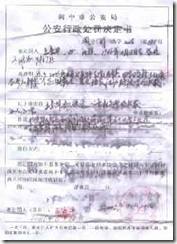
Two Hearings and a Transfer: The Xinmi Court, Zhongmu, and the Zhengzhou Political and Legal Committee
The fullest public reconstruction of the judicial handling of this case comes from Compass Direct's investigative report of 5 April 2006. This section takes that report as its spine, and wherever an episode rests on that single lineage it says so, without mixing it into the police documents or the multiply-sourced record. On that account: the case was heard three times. The first and second hearings took place at the Xinmi City People's Court, on 6 June and 2 August 2005; a few of his relatives and church members were allowed to attend; and the chief judge at those hearings (named in the report as Xu Zhijun; no public record gives the Chinese characters) afterwards told the family that he bore Zhang no personal grudge and would judge the case fairly according to the law. The same report preserves a sentence Zhang spoke at a 2005 hearing: he told the court the movement he led was now ten million strong (for the layering of that figure, see above). By December 2005 he had been in custody for twelve months with no verdict issued; the report relays the church side's point that by then his time in custody had already reached the maximum sentence normally served by anyone convicted of using a false passport — in other words, whatever the court eventually decided, custody itself had already executed a full punishment in advance.
The turn came in December 2005. According to Compass Direct, relaying an official described as sympathetic to the plight of house-church members, the Zhengzhou City Political and Legal Committee was displeased with an impending decision by the Xinmi court to dismiss all charges and release Zhang, and therefore asked the Zhongmu court to re-examine the case; in December 2005 the authorities suddenly transferred Zhang to a place of detention in Zhongmu, about sixty kilometres from Xinmi. That episode rests on a single lineage — Compass Direct, with an anonymous official as its source — and this page archives it expressly as a single-source report (no official account verified). It cannot be written up as an intervention established by documents. But three surrounding facts, each independently recorded, mesh with it: first, the verdict was in the end delivered not by the Xinmi court but by the Zhongmu County People's Court (the sentencing court as recorded in ChinaAid's July 2006 bulletin); second, the transfer did occur in about December 2005, at the same time as his critical hospitalisation (next section); third, Compass also records that the Zhongmu side at first refused to accept him, fearing he might die in their custody — a detail found only in that report and archived here in parallel. A defendant on the verge of release, re-tried by a different court and finally sentenced there to seven and a half years: that is the fact at the level of procedural outcome. For the Political and Legal Committee link in the middle, this page labels the source grade and leaves the weighing to the reader.
The third hearing was set for 6 April 2006 in Zhongmu. An unnamed co-worker told Compass Direct that this would be his third hearing, and expressed the hope that the court could this time make an independent decision based on truth and justice. When it opened, he had been in police custody for sixteen months (Compass Direct, 5 April 2006). No public record exists of any verdict announced at that hearing; the next word the outside world heard was the sentence itself, three months later. The openness of the hearings, the identity of his defence lawyer, and the content of the defence are all matters of no public record — another blank in this case's archive: a case debated in two foreign parliaments, yet of its Chinese lawyer, and of anything said in court on his behalf, the public world knows nothing at all. This page searched Chinese- and English-language reporting and human-rights archives and found no information about his defence counsel; it is recorded as no public record.
Chained to a Hospital Bed: Critical Illness and Hospitalisation, December 2005 to March 2006
Zhang Rongliang's body was the first link of the case chain to give way. ChinaAid's July 2006 bulletin records that his diabetes became so serious in pre-trial custody that he was taken from the detention centre to Xinmi City People's Hospital for emergency treatment, from 19 December 2005 to 23 January 2006 — more than a month — and that he was seen handcuffed and chained to his hospital bed. Compass Direct's report corroborates this and supplies the periods before and after: after the Zhongmu side refused to accept him, he was admitted to Xinmi City People's Hospital on 19 December, staying until 23 January, with one witness reporting him handcuffed and chained to the bed; he was then transferred to a hospital in Zhongmu, where he spent most of February and March 2006, with doctors advising that he remain there for treatment; hospital staff confirmed the diabetes and high blood pressure and diagnosed four further chronic health problems (whose names are a matter of no public record). The stated durations of the illnesses conflict: Compass (April 2006) gives diabetes of six years and high blood pressure of four; ChinaAid gave diabetes of five years in December 2004 and seven years in July 2006. The three figures cannot all be true; this page adopts only the common core — diabetes of many years, with hypertension — and records the conflict in the Verification Note.
His wife left, in that period, the most direct family testimony in the whole case. Compass Direct's April 2006 report published an interview with her (the report names her as Chen Hongxian and carries her photograph): she said she was deeply concerned about her husband's health, that the affair was deeply unfair, and asked why house-church Christians were treated as second-class citizens in their own country (relayed here in substance from the English-language report, not as a verbatim quotation — see the quotation policy in the Verification Note); her only hope for the 6 April hearing was that her husband could come home soon, so that she could take proper care of his health. The timing of that interview deserves note: it was published when the case had already been transferred to Zhongmu and her husband had just been taken from a hospital bed back into the trial process, and the person she was speaking to was a foreign journalist. Inside China, no channel existed that would have printed those few sentences from a detainee's wife. That the family's voice entered the archive at all, it owes entirely to foreign media and human-rights organisations — and that fact is itself part of the "family impact" of this case.
One contrast of custodial forms should also be recorded. At the start, in December 2004, the church side said he was held incommunicado. Through 2005 he moved between Zhengzhou No. 3 Detention Center and the courts of Xinmi and Zhongmu. And when his illness turned critical, he spent the turn of 2005 into 2006 chained to a hospital bed. These are not rhetoric but the joining of three sourced points: incommunicado detention (church sources); sixteen months in custody (Compass); chained to a hospital bed (ChinaAid and Compass, two sources). When the British Parliament asked after his condition in July 2006, the Chinese government would not even confirm the sentencing reports (see the international response section) — a man chained to a hospital bed, processed in diplomatic language into "no information available." This page archives that juxtaposition as it stands.
4 July 2006: Seven Years and Six Months, and the Verdict Paper the Family Never Saw
The manner of the sentence's announcement is itself a piece of news. ChinaAid confirmed on 8 July 2006 that Zhang Rongliang had been sentenced to seven and a half years in prison, the sentence announced on 4 July 2006; the verdict paper had been issued by the Zhongmu County People's Court on 29 June, but neither his wife nor any member of his immediate family had received it. The two date layers must be kept apart: 29 June is the verdict document's issue date (ChinaAid); 4 July is the announcement date (ChinaAid, Charisma and the Christian newswires agree). The Polish Wikipedia article misdates the sentencing to "4 July 2005," which collides head-on with the entire chronology — he was still being heard in Xinmi in 2005 and faced his third hearing in April 2006 — and this page treats that year as the article's error: not adopted, and registered in the Verification Note only. Radio Free Asia's 2011 release report gives the term as "seven years," a rounding of seven years and six months; this page takes seven years and six months as the correct figure. The charges as reported are "attaining a passport through cheating" and "illegal border crossing" (ChinaAid; BosNewsLife); at the prosecution-paper stage the alleged offence was the Article 319 crime of obtaining exit-entry documents by deception. How the verdict combined the counts, how the term was computed, and whether it engaged with the defence that the journeys' purpose was attendance at mission conferences — none of this can be known: the full verdict has never been published, the family say they never received the paper, and all such detail is a matter of no public record.
The arithmetic of term and custody can, however, be done in the open. A term of seven years and six months, counted from the seizure on 1 December 2004, would expire around the end of May 2012; he was in fact released on 31 August 2011, nine months early (ChinaAid's 2011 bulletin), and the arithmetic is consistent. This page therefore records: the start of his term, on the usual practice of crediting custody, reconciles with the release date — but the verdict paper's own words on the term's start and end are a matter of no public record, and this page does not write "the verdict states" where it cannot read the verdict. Whether he appealed is likewise a matter of no public record: no source records an appeal or a second-instance change, and a family that never received the verdict paper had nothing to appeal from in practice. This page's formulation is "whether an appeal was filed is a matter of no public record" — not "he did not appeal."
The sharpest contemporary comment on the verdict came from ChinaAid's president, Bob Fu. In the bulletin he said ChinaAid was deeply disappointed at the extraordinarily harsh verdict, given that the Chinese authorities often deny passports and other travel documents to well-known religious leaders like Pastor Zhang, and that this was yet another case showing the Chinese government's new tactic of religious persecution conducted in the name of criminal charges (ChinaAid bulletin, 8 July 2006; quoted in extract, within this page's quotation limits). Taken apart, the sentence contains one verifiable factual claim — that the passport channel was closed to people of his kind, supported by parallel cases such as Zhang Yinan's (see above) — and one characterisation. This page gives its own judgement in the commentary; here the advocacy organisation's words are archived as spoken, with its position stated: ChinaAid was this case's advocate and a principal source, not a neutral recorder. Many of the case's primary nodes were published by it alone, and this page has labelled them item by item as it went; the discipline is restated in the Verification Note.
Five Years Inside: Kaifeng, the 2007 Stroke, and Release Nine Months Early
For the place of imprisonment after sentence, the public record has a single source: Radio Free Asia's September 2011 release report, which states that he was released from a prison in Kaifeng (the report's wording is to that effect; it does not give the prison's exact name). Kaifeng is a prefecture-level city in Henan with several prisons; which of them held him, and when he was transferred there from detention, are matters of no public record, and this page records only "imprisoned at Kaifeng (per Radio Free Asia)." In prison his health broke again: the same RFA report states that he suffered a stroke in 2007 and was chronically ill with diabetes (its source was ChinaAid). The severity of the stroke and its after-effects are reported inconsistently. ChinaAid's 2011 release bulletin relayed the family as saying he was in good spirits and, apart from serious diabetes, in good health; an article in an academic journal in 2025, citing second-hand material in its footnotes, speaks of a "paralysing stroke." The two versions are far apart, and this page archives both in parallel: the 2007 stroke itself is recorded on RFA's reporting (a single lineage, labelled); the degree of its consequences is a matter of no verifiable record, and this page writes neither "paralysed" nor "unaffected."
The release itself was simple to the point of silence. On 31 August 2011 Zhang Rongliang was released nine months before the end of his term and allowed to return to his home near Zhengzhou (ChinaAid bulletin, 15 September 2011). The legal form of the early release — sentence reduction, parole or medical parole — is stated by no source; ChinaAid's bulletin applauded the humanitarian spirit of the early release, and RFA's reporter noted that attempts to reach him by phone that week had failed. The family's words, as relayed in reporting, were that he was in good spirits, and that they thanked everyone in the international community who had worked for his release since 2006 (family remarks as published by BosNewsLife, 19 September 2011; the "since 2006" of the original sits oddly with a December 2004 arrest, and this page archives it as printed, with the discrepancy noted). Christian Solidarity Worldwide, at the release, remained concerned: he suffered from diabetes, and he had been tortured and ill-treated during previous detentions, leaving him in a poor state of health (CSW statement as quoted by BosNewsLife). He was sixty-one years old. Behind him lay the five detentions and twelve years counted from 1969, and, in the final case, six years and nine months of custody and imprisonment.
The ledger can be totalled once, here. On the main chain, the time of his life taken by confinement is: the seven-year sentence from 1974; several weeks in 1994; several months of labour camp in 1999–2000; and the six years and nine months from December 2004 to August 2011 — with an unreconciled gap between the first three items and the church ledger's "five detentions, twelve years" (see the dedicated section). On any arithmetic, between his baptism at nineteen and his release at sixty-one — forty-two years — close to half his life was spent either in prison or on the run and in hiding. That sentence is not rhetoric. It is what the dates in the sections above add up to when they are laid end to end.
Impact on the Family and on the Church Network
The impact on the family is documented at four concrete points. First, on the day of the arrest his wife and two sons escaped and went into hiding (multiple sources, above): from the afternoon of 1 December 2004 the family had no normal address — first hiding, then prison visits and waiting for news. Second, the prosecution paper writes the family into the "criminal facts" themselves: from February to May 2004 he travelled abroad three times on an alias passport and "his son and daughter-in-law" travelled abroad once on related documents; in September 2004 he and his wife jointly applied for passports under aliases. In the structure of the prosecution's document, in other words, the wife, the son and the daughter-in-law are not bystanders but participants in the same document chain. Whether they were ever dealt with in separate cases is a matter of no public record, and this page speculates on nothing — but what such a document means for a family needs no gloss. Third, his wife Chen Hongxian (romanisation per Compass Direct), while her husband lay critically ill in hospital, gave a foreign reporter the "second-class citizens" question (above), and throughout the pre-trial period voiced deep concern for his health (ChinaAid's 2006 bulletin carries that concern in its very headline). Fourth, after the verdict, the family never received the verdict paper: they learned that the father of the family had been sentenced to seven and a half years from the bulletins of an American advocacy organisation and from foreign journalists. This page lists that fact separately because it says more about how procedure looked from inside this family than any adjective could.
On the church network's side, the record is equally concrete. Within a week of the arrest, at least three house churches in the Fangcheng area were raided, including the home of Xiao Min's parents, with Xiao Min herself being sought (ChinaAid bulletin, 10 December 2004). The network's leader had renamed the movement "China for Christ" in October 2004; two months later the leader was taken and the nodes were raided — the sequence of decapitation and sweep is plain in the dates. In the seven years that followed, this network, estimated in its millions, almost ceases to speak in the public record in its own voice: its size figures remain frozen in the estimates of 2002–2010, its leader has no public activity on record after his 2011 release (see below), and its form of existence after the new Regulations on Religious Affairs of 2018 is documented by no verifiable public material. This page's record of the church's present state stops there: whether the network still operates, in what form, and whether Zhang is still revered as its leader are all matters of no public record. This page declines to fill the section with any unattributed "reportedly still active" relaying.
The collateral ring reaches co-workers and the next generation. Han Yongqin had worked with Zhang since the 1980s; when her daughter applied for a student passport, the police required the mother to be brought in for questioning (Compass Direct) — the pressure of the blacklist travelled one generation down the bloodline. Zhang Yinan was imprisoned for documenting the house churches, then refused a passport on release, his apartment watched in shifts by police (same source): the man who recorded persecution and the man persecuted were, in the same report, sealed off from exit by the same method. None of this is the "facts of the case" in the narrow sense, but it is the ecosystem in which the case sat: in the Henan of about 2004, the passport was the domestic security system's handiest tool against the house-church networks — for those who could not get out, a wall; for those who went around it, a charge.
The International Response: Diplomacy Within Three Days, Two Parliamentary Records, and Seven Years of Dialogue Without an Answer
The international response to this case was, for a case of its kind, unusually dense and unusually fast, and it left an official record that can be checked day by day. This section follows the dates. He was arrested on 1 December 2004. On 4 December the British embassy in Beijing raised his case with the Chinese Ministry of Foreign Affairs and registered concern about his health; on 22 December the Dutch presidency wrote to the MFA on behalf of the European Union; on 23 December the British embassy raised the case again (House of Commons written answers, 13 January 2005, minister Bill Rammell). In the same period Amnesty International issued its urgent action calling for immediate and unconditional release (press release, 23 December 2004), and Christian Solidarity Worldwide and Voice of the Martyrs published statements of concern (synthesising report, 10 December 2004). From arrest to three diplomatic channels speaking at once took three weeks — a speed explained by the profile he had built in international church and media circles since the publication of Jesus in Beijing in 2003.
In 2005 the advocacy rose to foreign-minister level. The record of the Westminster Hall debate of 13 July 2005 states that the British Foreign Secretary and Chinese Foreign Minister Li Zhaoxing had spoken about Zhang Rongliang's case during the Foreign Secretary's visit to China in January (the debate was initiated by David Drew MP, with contributions from several members and a ministerial reply). That debate's record pins the factual base of the case down once more: he was the leader of the China for Christ Church, estimated at about ten million members, and had been featured in TIME and Newsweek; he was arrested on 1 December 2004 in Xuzhai village, Zhengzhou (the debate record spells the village "Xuhai"; this page follows ChinaAid's Xuzhai and notes the parliamentary spelling here); the arrest was followed by wide-ranging raids on other churches in the area, and his family all fled into hiding; he was 53, suffered from serious diabetes, had already spent twelve years in prison for his faith across five detentions, had suffered severe torture, and was last reported held incommunicado in the Jinshui area of Zhengzhou. On 8 September 2005 the European Parliament adopted its resolution on breaches of human rights in China, in particular as regards freedom of religion (P6_TA(2005)0339, published in the Official Journal, C 193 E, 2006): operative paragraph 4 named him — Pastor Zhang Rongliang (53), one of the founders of the China for Christ Church, a group comprising more than ten million Christians, arrested on 1 December 2004 and still imprisoned without any legal process — and demanded information about his situation, his unconditional release, the release of all other Chinese Christians incarcerated for their religious convictions, and the immediate cessation of all violence against them. The "resolution passed last year demanding Pastor Zhang's release" in ChinaAid's 2006 bulletin is this resolution.
After the verdict, the advocacy continued — and the answer was zero. A new round of the UK–China Human Rights Dialogue was held on 3 July 2006, and the British side raised Zhang's case in it. The House of Commons written answer of 19 July 2006 (minister Ian McCartney, replying to David Drew) records: the Government had raised the case of Pastor Zhang Rongliang with the Chinese Government on a number of occasions, including at the latest round of the UK–China Human Rights Dialogue on 3 July; the Chinese Government gave no new information about Pastor Zhang, and the British side had received no official confirmation of the recent reports of his sentencing; it would continue to raise its concerns and to monitor the case closely. A further written answer of 30 October 2006 (minister Kim Howells) confirmed that Zhang's case had been included on a list of individual cases handed over to the Chinese authorities at the July dialogue in Beijing. That is to say: in the same month the sentence was announced, his case lay on the table of the two countries' human-rights dialogue, and the Chinese response was "no new information." In later years, the US State Department's International Religious Freedom Reports and the US Commission on International Religious Freedom's coverage of Henan's house churches form the broad background of the case (his arrest fell within their reporting cycles), but this page's searches found no later instance of a foreign government raising Zhang Rongliang's individual case in public after 2006. The curve of diplomatic advocacy falls silent, like his term itself, around his 2011 release — and the news of that release reached the world through advocacy and media channels, ChinaAid and Radio Free Asia, not through any diplomatic bulletin.
The line can be closed in one archival sentence. This is one of the few cases that can prove that "international attention" really existed and lasted for years — embassy representations, a foreign minister raising it in person, two parliamentary records, a European Parliament resolution, a human-rights-dialogue case list: all five channels were used. It is equally a case that proves the limits of that attention's effect: the sentence was imposed as planned, the term was served as imposed, and no source attributes the nine-month early release to diplomatic pressure. This page writes both conclusions and does not select the comfortable one.
After 2011: A Public Record Thin to the Point of Transparency
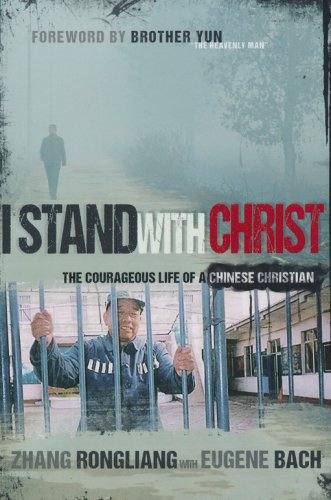
The method of this section precedes its content. On 6 November 2026 this page searched the public web systematically, using "Zhang Rongliang" and his Chinese name together with multiple sets of Chinese and English keywords — pastor, Fangcheng, China for Christ, release, memoir — with the aim of finding any verifiable record of the man himself after his release in 2011. The results, in chronological order, have exactly two landing points. First: on 1 July 2015 his English-language memoir I Stand with Christ (co-authored with Eugene Bach, issued through overseas Christian publishing channels) was published; its publisher's description presents the book as the first-person account of the leader of one of China's largest underground church networks, spanning the time of Mao's regime "to today," and observes that revealing its contents is dangerous but that these are stories that need to be told. The memoir's existence is itself a significant item of status information: it establishes at least that, around 2015, a narrative by him or authorised by him entered overseas publication. Second: on 28 December 2017, G. Wright Doyle of the China Institute published a review discussing the memoir — the latest public text about him that this page has been able to find. After that, to November 2026, there are no further landing points: an academic journal article of 2025 cites his life as an example in a discussion of the theology of suffering (with second-hand material in its footnotes), which is scholarly citation, not reporting on his situation.
The list of things not found must be written out item by item, so that no reader mistakes the silence for any particular conclusion. After 2011: whether he preached publicly or led gatherings — no public record. Whether he still holds leadership of the Fangcheng Mother Church or the China for Christ Church — no public record. His state of health after 2011, including the course of his diabetes and the aftermath of the 2007 stroke — no public record. Whether he was ever interviewed by foreign media again, or travelled abroad — no public record. Whether he is alive: this page found no obituary in public sources, and no direct proof that he is living either; the only honest record is that, as of 6 November 2026, both his survival and his death are unverifiable from public sources. The memoir's publisher describing his story as running "to today" cannot be rewritten by this page as "in 2015 he was still active in church work" — publisher's copy is not reporting on a person's current state. The discipline looks severe; it is the boundary between archive and rumour.
For the silence's causes this page offers no speculative explanation, only structural facts. At his release he was sixty-one and in poor health. His network does not register, holds no press conferences and has no official website or spokesman. After the new Regulations on Religious Affairs took effect in 2018, the public visibility of house churches fell further across the board. And overseas advocacy organisations' tracking of individual cases ordinarily ends at release. Those facts are enough to explain the thinness of the record; they are not enough to support a single assertive sentence about his present state. Every word in this page's Current Status field stops between 31 August 2011 and the book of 2015.
Two Ledgers: Why "Five Detentions, Twelve Years" and "Six Occasions, More Than Eighteen Years" Must Not Be Merged
The item of this case's source record most often garbled in relaying is the total of imprisonments and years, and it gets its own section. One ledger is the main chain: five detentions, twelve years in all (before the 2004 case), sourced to ChinaAid's bulletins of 2004 and 2006, Amnesty International's 2004 material, Christianity Today's 2005 report and the British parliamentary record of 2005 — four or more sources, independent of one another, with the twelve-year figure stable throughout. The other appeared at his release: BosNewsLife's report of 19 September 2011 states that, Christians said, he had been jailed on six separate occasions and had spent more than eighteen years in prison. The difference between the two ledgers is, to within a small margin, exactly the custody and sentence of the final case: twelve years plus the six years and nine months from December 2004 to August 2011 comes to about eighteen years and nine months; and the main chain's five occasions plus the final case make six. This page therefore regards the most reasonable reading of BosNewsLife's "six occasions, more than eighteen years" as a whole-life total that counts the final case in — not a contradiction of the main chain, but a different accounting perimeter: the main chain runs to the moment of the 2004 arrest, the other to the 2011 release. That, however, is this page's analysis from the structure of the numbers, not any source's explicit statement: BosNewsLife's sentence sits in a release context, is attributed to "Christians," and comes with no itemised list. This page's treatment is: the narrative runs on the main chain (five detentions, twelve years, the final case counted separately); the whole-life total appears in the release section as "about eighteen years and nine months (computed from the main chain and the final case's custody period)," labelled as a computation; and "six occasions, more than eighteen years" is archived in parallel as an independent source's formulation, with the perimeter analysis attached. Any rendering that kneads the two ledgers into a single sentence — "six detentions totalling twelve years," or "five detentions totalling eighteen years" — is a contamination of this case's archive, and this page refuses it.
The gap in the itemised list, connected to this, is pinned down once more (in full in the earlier dedicated section): the detentions that can be fixed are those of 1974 (seven-year sentence), February 1994 (several weeks), 1999–2000 (re-education through labour) and 2004–2011 (the final case); the years of the remaining detentions counted in the "five" have no public record. Why can the total be sound while the list is incomplete? Because the total comes from the church network's collective memory of its leader's life and from advocacy organisations' long tracking — four independent sources that did not change their figure across twelve years — while an itemised list requires documents, and Chinese labour-camp and detention documents are never published on the authorities' own initiative, while the church side's oral tradition preserved no itemised record. That is the normal condition of archival work: some totals are firm and some details are empty. Writing the empty parts as empty is harder than filling them, and it matters more.
Timeline
15 July 1950: born in Fangcheng County, Henan (household-registration block of the prosecution paper). 1963: converted to Christianity at thirteen and begins attending secret rural meetings (Charisma; church-lineage material). 1969: secretly baptised during the Cultural Revolution (multiple sources agree). 1974: charged with "counter-revolution under the guise of religion"; handcuffed and beaten with sticks under interrogation (charge per Christianity Today; beating detail per Charisma). 1976: sentenced by the People's Court of Wancheng County, Nanyang, to seven years' imprisonment for counter-revolution (prosecution paper). About 1980: released on completion of the sentence (church-lineage material; exact date of no public record). Thereafter leader of the Fangcheng Mother Church, as the network develops into the cross-provincial China for Christ Church.
10–11 February 1994 (the two dates archived in parallel): detained and interrogated in Henan, in a case that also involved Tian Mingge, Zheng Xintai and seven foreign Christians; released after roughly two weeks (Amnesty International urgent-action follow-up; the detention corroborated by the prosecution paper). November 1998: co-drafts the Confession of Faith of House Churches in China and its companion declaration (the confession text dates its drafting to November 1998; multiple reports date publication to 1999). From August 1999: wanted (ChinaAid). 20 November 1999: sentenced by the Nanyang RTL Committee to three years' re-education through labour for disturbing social order; 2 February 2000: released on medical parole (prosecution paper).
25 May 2000: first alleged deceptive obtaining of household documents; 29 June 2000: passport applications; June 2001 to January 2004: eleven journeys abroad on an alias passport (all as alleged in the prosecution paper). September 2003 to May 2004: second alleged round — nine passports and two Hong Kong–Macao passes applied for; three journeys abroad on an alias passport (prosecution paper). 22 July 2004: the Zhengzhou PSB's domestic security team opens an investigation, commissioned by the provincial department (prosecution paper). 27 August 2004: third alleged round of documents; 21 September 2004: passport applications with his wife under aliases; November 2004: one journey abroad on an alias passport (prosecution paper). October 2004: the Fangcheng movement is formally renamed "China for Christ" (Compass Direct).
1 December 2004, about 1 p.m.: arrested in a rented room in Xuzhai Village, Zhengzhou; the room searched, Christian materials and photographs confiscated; his wife and two sons escape into hiding; at least three Fangcheng house churches raided in the following days (ChinaAid and others). 4 and 23 December 2004: the British embassy raises the case with the Chinese MFA twice; 22 December: the EU presidency writes; Amnesty International issues its urgent action (parliamentary record; Amnesty). 31 December 2004: arrest approved by the Xinmi City People's Procuratorate (prosecution paper). January 2005: the British Foreign Secretary raises the case with China's foreign minister during his visit to China (parliamentary debate record). 24 February 2005: the Xinmi City PSB issues its Suggestions on Prosecution (Xinmi Gong Xing Su (2005) 056), submitting the case for prosecution review. 6 June and 2 August 2005: two hearings at the Xinmi City People's Court (Compass Direct). 8 September 2005: the European Parliament adopts its resolution naming him and demanding his release (Official Journal). December 2005: the case is transferred to Zhongmu (Compass Direct, on an anonymous official's account — layered); 19 December: hospitalised in critical condition at Xinmi City People's Hospital, remaining until 23 January 2006, chained to his hospital bed (ChinaAid; Compass Direct). February–March 2006: treated at a hospital in Zhongmu (Compass Direct). 6 April 2006: third hearing (Compass Direct).
29 June 2006: the Zhongmu County People's Court issues its verdict; 4 July 2006: a sentence of seven years and six months is announced; the family say they never received the verdict paper (ChinaAid). 3 July 2006: the case is raised at the UK–China Human Rights Dialogue; the Chinese side provides no new information (parliamentary written answer). 2007: a stroke in prison (Radio Free Asia, citing ChinaAid — layered). Imprisoned at Kaifeng (Radio Free Asia). 31 August 2011: released nine months early and returns to his home near Zhengzhou (ChinaAid; Radio Free Asia). 1 July 2015: the English-language memoir I Stand with Christ is published overseas. 28 December 2017: an overseas academic review discusses the memoir. From then until this page's searches of 6 November 2026: no verifiable public record of his personal situation.
Our Take
This page's commentary is tied to this case's facts, and to nothing else. First, the structure of the passport charge deserves to be taken apart word by word. The chain of conduct for which Zhang Rongliang was sentenced to seven and a half years — false household registration, false passport, travel on a false passport, attendance at mission conferences — is real at every link, and the prosecution paper's evidence on it is genuinely solid. But the chain's starting point is that the state had first welded shut the door through which he could travel under his own name: what happened to a blacklisted house-church leader who applied for a passport can be read off his co-worker Zhang Yinan's case — refusal, and a police guard on his apartment in shifts for three weeks. Weld the door shut, then define climbing through the window as a grave crime, then — when the first court leans toward letting the man go — move the case to another court by a force outside that court, and there impose seven and a half years, far beyond what church sources at sixteen months' custody already identified as the offence's usual maximum. Bob Fu called it religious persecution in the name of criminal charges. This page's judgement agrees with his, and the reason is proportion, not allegiance: the same document conduct by an ordinary businessman would have drawn no provincial domestic-security investigation, no Political and Legal Committee transfer, no foreign parliamentary debates, and no seven and a half years. What was heavily sentenced was never the passport. It was the ten million people standing behind the passport.
Second, the heaviest entry in this case is not the sentence but the moment the procedure was moved. On Compass Direct's investigation, the Xinmi judge told the family he would judge fairly according to the law, and the case was moving toward dismissal of the charges; then the case was taken away. This page has labelled that episode's source grade exactly as it stands — single source, anonymous official. But readers should attend to the hard facts at the level of outcome: the court that sentenced him was not the court that had heard him twice, but another court that had never seen him in the Xinmi courtroom; the verdict paper was issued, and the family never received it; and while he lay chained to a hospital bed, the process rolled on. A system confident in its own verdicts does not need to change courts, does not need to withhold the verdict paper, and does not need chains on a hospital bed. Change of court, withheld document, chained patient: each can be dressed in a procedural formula on its own. Together they state the system's real attitude to this case — the conclusion came first, and the procedure was the paperwork that followed.
Third, on international advocacy, this page says one unflattering thing plainly. Zhang Rongliang was among the most internationally attended individual cases in the house-church world: embassy representations within three days, a European Parliament resolution within a year, a foreign minister raising it in person, a place on a human-rights-dialogue case list — every available channel was used, and he still served six years and nine months, released just nine months early. That is not to say the advocacy was useless. Without that attention, it is an open question whether anyone would have seen him chained to the bed of the Xinmi hospital, or whether a British minister would have left the sentence "the Chinese Government gave no new information" in the parliamentary record; the record itself is what the advocacy forced into the open, and most of the material used on this page is precisely the public record those years of advocacy produced. But this page refuses to write the case as a story of successful international rescue. He left prison because his term was nearly spent, not because pressure worked, and no document anywhere gives a reason for the nine months. To write the release up as a victory would be a dishonesty toward the next house-church leader still inside.
Fourth, the man himself. Baptised in secret at nineteen; beaten with sticks at twenty-four; a stroke in prison at fifty-seven; released at sixty-one. Across forty-two years, everything he ever "did" can be summed up in the verdict papers' own terms in one sentence: he would not dissolve the church that would not register. The China of 1969 called that counter-revolution; the court of 1976 called it the crime of counter-revolution; the RTL committee of 1999 called it disturbing social order; the court of 2006 called it obtaining a passport by deception. The charge changed four times; the paper grew steadily more law-like; the words steadily stopped mentioning faith. But the man imprisoned, and the reason he was imprisoned, did not change in forty years. This page exists to keep that line joined up in the archive — so that the next time a clean document case is used to lock away a church leader, anyone who looks up the precedent will not believe it was only ever about a document.
Verification Note
This page was last verified on 6 November 2026. Evidence is graded in four tiers. Tier A — official and quasi-official primary documents: the Xinmi City PSB's Suggestions on Prosecution (Xinmi Gong Xing Su (2005) 056), in the full English translation released by ChinaAid on 8 July 2006 (a one-sided prosecution instrument, and always cited as such on this page); the British parliamentary record (written answers of 13 January 2005, 19 July 2006 and 30 October 2006, and the Westminster Hall debate of 13 July 2005); and the European Parliament's resolution of 8 September 2005 (Official Journal text). Tier B — contemporary reporting by international human-rights organisations and reliable media: Amnesty International's urgent-action documents (the 1994 follow-up ASA 17/14/94 to UA 47/94; the December 2004 urgent action and the Amnesty International UK press release); Compass Direct's investigative report of 5 April 2006; Radio Free Asia's September 2011 report (archived via ecoi.net); Christianity Today's 2005 report. Tier C — advocacy organisations' bulletins: ChinaAid's bulletins of 10 December 2004, 8 July 2006 and 15 September 2011 (ChinaAid was this case's advocate; nodes resting on it alone are labelled item by item in the text), BosNewsLife's report of 19 September 2011, and the contemporary statements of Voice of the Martyrs and Christian Solidarity Worldwide. Tier D — the subject's memoir and material derived from it (the publisher's description of I Stand with Christ, 2015; the Polish Wikipedia article compiled largely from the memoir; Charisma magazine's 2006 narrative account), used only for early-life detail and graded item by item. Key facts are given two or more independent sources wherever possible; single-source assertions are labelled in the text, and anything unverifiable is recorded as a matter of no public record.
Known conflicts of account, and this page's treatment of each, are listed in full. (1) The imprisonment totals: the main chain "five detentions, twelve years" (before 2004; ChinaAid, Amnesty International, Christianity Today, the parliamentary record) and BosNewsLife's 2011 "six occasions, more than eighteen years" are archived in parallel; this page analyses the latter as a whole-life figure counting the final case, runs its narrative on the main chain with the final case counted separately, and does not merge them. (2) Birth and age: the date of birth follows the prosecution paper (15 July 1950); reported ages include 53 in 2004 (54 on that date), 55 in 2006, and a 56th-birthday week — archived in parallel. (3) The confession's year: drafting in November 1998 (the confession text's own account) and publication in 1999 (multiple reports) are layered. (4) Duration of diabetes: five years (ChinaAid, 2004), six years (Compass Direct, April 2006), seven years (ChinaAid, July 2006) — all three archived; the text adopts only "many years." (5) Verdict dates: the verdict paper's issue on 29 June 2006 and the announcement on 4 July 2006 are layered; the Polish Wikipedia article's "4 July 2005" conflicts with the entire chronology and is treated as a year error, not adopted. (6) The 1999 nodes: a wanted-from date of August 1999 (ChinaAid) and the RTL decision of 20 November 1999 (prosecution paper) are archived in parallel, the interval between them being a matter of no public record. (7) The February 1994 detention date: 10 February (Amnesty International) and 11 February (prosecution paper) in parallel. (8) The church-lineage release dates (early 1980, Polish Wikipedia; 1980, Charisma) cannot be precisely reconciled with a seven-year term imposed in 1976; this page records release only as "about 1980." (9) The term: seven years and six months is the correct figure (ChinaAid); Radio Free Asia's "seven years" is a rounding. (10) The consequences of the 2007 stroke: the family's account via ChinaAid (good spirits, healthy apart from serious diabetes) and the 2025 academic article's relayed "paralysing" formulation are archived in parallel, neither adjudicated. (11) The Fangcheng Fellowship's founder: encyclopaedia-grade sources give Li Tianen (early 1970s); church publications credit Zhang with building the "for Christ" movement after 1980; both are recorded in parallel, and this page does not call Zhang the Fangcheng Mother Church's founder. (12) The parliamentary debate record spells the arrest village "Xuhai"; this page follows the multiple other sources' Xuzhai and notes the discrepancy.
Quotation and privacy policy: direct quotations on this page are held, in extract or close relay, to no more than fifty words from any single source. The prosecution paper as published prints Zhang Rongliang's identity-card number, the numbers of multiple passports, and the full street addresses of his registered domicile and residence; this page reproduces none of them, recording only document categories, counts and district-level locations — the completeness of an archive is not paid for with a man's identity-document numbers. Matters of no public record: the years, places and durations of the two detentions, beyond those of 1974, 1994 and 1999, that make up the "five detentions" total; the 1974 detention's facility documents and exact release date; the Xi Hua camp's exact name and location; his defence lawyer's identity and the defence's submissions; the full text of the verdict and the computation combining its counts; whether an appeal was filed; the prison's exact name and the date of his transfer to it; the legal form of, and reasons for, the nine-month early release; the Chinese characters of his wife's name and of several co-workers' names; his activities, health, survival and church office after his 2011 release; and the organisational survival of the China for Christ Church network after 2011. Each of these is recorded on this page as a matter of no public record, and none is filled in by conjecture.
Sources
- Xinmi City Public Security Bureau, Suggestions on Prosecution (Xinmi Gong Xing Su (2005) 056, 24 February 2005), full English translation released by ChinaAid on 8 July 2006 (date and place of birth; the 1976 sentence; the 1994 detention; the 1999 RTL and 2000 medical parole; the three alleged rounds of document fraud; the opening of the investigation and the place of custody): https://chinaaid.org/news/caa-released-prosecution-paper-of-zhang/
- China Aid Association, "Prominent House Church Leader Zhang Rongliang Sentenced to Seven and a Half Years in Prison; Family Members Concerned his Heath; CAA Released Prosecution Paper," 8 July 2006 (the two verdict date layers; hospitalisation 19 December 2005 – 23 January 2006 and the chaining to the hospital bed; the family's non-receipt of the verdict paper; Bob Fu's comment): https://chinaaid.org/news/prominent-house-church-leader-zhang-2/
- China Aid Association, "Prominent House Church Leader Zhang Rongliang Released Early from Prison," 15 September 2011 (release on 31 August 2011, nine months early; co-authorship of the 1998 Confession; the five-detentions, twelve-years ledger): https://chinaaid.org/news/prominent-house-church-leader-zhang/
- China Aid Association bulletin of 10 December 2004, archived via SermonIndex, "Senior Chinese House Church Leader Arrested; More Churches Raided Before Christmas" (the 1 December afternoon arrest in Xuzhai Village; raids on three Fangcheng churches; Xiao Min's parents' home; five years' diabetes; wanted since 1999): https://sermonindex.net/forums/d/4041-senior-chinese-house-church-leader-arrested/
- Compass Direct, "Court Hearing Set for Ailing Pastor Zhang Rongliang," 5 April 2006, republished by ChinaAid (the two Xinmi hearing dates and the chief judge; the Political and Legal Committee transfer account on an anonymous official's say-so; Zhongmu's refusal; the two hospitalisations; the interview with his wife; the passport experiences of Zhang Yinan and Han Yongqin; the third hearing): https://chinaaid.org/news/compass-direct-china-court-hearing-set/
- Amnesty International, Further Information on Urgent Action 47/94, ASA 17/14/94, 9 March 1994 (the February 1994 detention and releases; the correction of his name): https://www.amnesty.org/es/wp-content/uploads/2021/06/asa170141994en.pdf
- Amnesty International UK, "China: Christian Church Leader Arrested and at Risk of Torture For Possession of Religious DVDs," 23 December 2004 (the urgent action; diabetes and treatment concerns; more than one hundred Henan pastors imprisoned in September 2004; the crackdown since March 2003; five detentions, twelve years): https://www.amnesty.org.uk/knowledge-hub/all-resources/china-christian-church-leader-arrested-and-risk-torture-possession-religious-dvds/
- House of Commons, Written Answers, 13 January 2005 (the embassy's representations of 4 and 23 December 2004 and the EU presidency's letter of 22 December): https://publications.parliament.uk/pa/cm200405/cmhansrd/vo050113/text/50113w16.htm
- House of Commons, Westminster Hall debate, 13 July 2005 (the Foreign Secretary raising the case in January; the Xuzhai arrest and the family's flight; age 53 and diabetes; five detentions, twelve years and torture; incommunicado detention in Jinshui): https://hansard.parliament.uk/Commons/2005-07-13/debates/cc29bdcf-f7c1-4d54-a721-a7aa76c17922/WestminsterHall
- European Parliament resolution P6_TA(2005)0339 on breaches of human rights in China, in particular as regards freedom of religion, adopted 8 September 2005 (Official Journal C 193 E, 2006; naming him and demanding information and unconditional release): https://eur-lex.europa.eu/LexUriServ/LexUriServ.do?uri=OJ:C:2006:193E:0347:0349:EN:PDF
- House of Commons, Written Answers, 19 July 2006 (repeated representations; the case raised at the UK–China Human Rights Dialogue of 3 July 2006; no new information from the Chinese side; no official confirmation of the sentencing): https://publications.parliament.uk/pa/cm200506/cmhansrd/vo060719/text/60719w1828.htm
- House of Commons, Written Answers, 30 October 2006 (Zhang's case included on the list of individual cases handed over at the July dialogue in Beijing): https://publications.parliament.uk/pa/cm200506/cmhansrd/vo061030/text/61030w0057.htm
- Radio Free Asia, "Pastor Freed, Others Still Held," September 2011, archived via ecoi.net (the Kaifeng prison; the 2007 stroke; diabetes; the failed attempt to reach him by phone): https://www.ecoi.net/en/document/1154841.html
- BosNewsLife, "China Frees Prominent House Church Leader; Others Detained," 19 September 2011 (the family's thanks; the "six occasions, more than eighteen years" formulation; Christian Solidarity Worldwide's health concerns): https://bosnewslife.com/2011/09/19/news-alert-china-frees-prominent-house-church-leader-others-detained/
- Christianity Today, "House-Church Leader Arrested," 2005 (the 1974 charge of "counter-revolution under the guise of religion"; five detentions ranging from 40 days to 7 years; twelve years in all; the 1999 declaration; his wife and children in hiding): https://www.christianitytoday.com/2005/01/house-church-leader-arrested/
- Christian Post, "Prominent House Church Leader Arrested; VOM, CSW Express Concern," 10 December 2004 (incommunicado detention in Jinshui; the Fangcheng raids; Xiao Min; the 1999 document): https://www.christianpost.com/news/prominent-house-church-leader-arrested-vom-csw-express-concern.html
- Charisma Magazine, "China's 'Brother Z': A Christian Hero Needs Our Support," 12 July 2006, republished by ChinaAid (conversion in 1963; the 1974 handcuffs, beating and seven years at the Xi Hua camp; release in 1980; the 56th-birthday week; the concern of his wife and two sons): https://chinaaid.org/news/charisma-magazine-online-china-z/
- English Wikipedia, "Fangcheng Fellowship" (foundation by Li Tianen in the early 1970s; growth in the 1980s; the estimate of ten million members as of 2010 and the academic sources cited): https://en.wikipedia.org/wiki/Fangcheng_Fellowship
- Statement of Faith of the House Churches in China, archived English text (its own account of the November 1998 drafting in north China by key leaders of several major movements, and its four stated purposes): http://christcenteredchristianity.com/wp-content/uploads/2017/08/64_statementoffaith.pdf
- Polish Wikipedia, "Zhang Rongliang" (the farming family; his father's death in the famine; his grandfather's influence; the 1994 and 1999 nodes; its "4 July 2005" sentencing year checked by this page and found to be an error — not adopted; see the Verification Note): https://pl.wikipedia.org/wiki/Zhang_Rongliang
- Zhang Rongliang with Eugene Bach, I Stand with Christ, published 1 July 2015 (the memoir; the publisher's description — the "former Party member" assertion derives from this lineage and is recorded as unverified); G. Wright Doyle, "Zhang Rongliang's 'Stand with Christ,'" China Institute, 28 December 2017 (as cited in the academic literature).