
第158案 | 孙大午Case 158 | Sun Dawu
孙大午,河北徐水的农民企业家,1985年与妻子刘会茹以一千只鸡、五十头猪起家,三十五年间在盐碱地上建起二十八家子公司、近万员工的大午集团,连同一所学校、一所千床医院和一座「大午城」;他两次进中南海谈三农,在大学讲台上讲饥荒,2003年因非法吸收公众存款被判缓刑后,又用十七年公开声援维权律师、指控地方政府瞒报猪瘟。2020年6月与8月,大午集团与国营徐水农场因七百四十亩租约与二千多亩占地的老账两度冲突,员工强拆后上访;11月11日凌晨,特警以六辆大巴突袭,夫妇、两子、两媳与整个管理层共二十八人被带走,他先被指定居所监视居住逾五个月,再经十四天名义公开、实际封闭的庭审,2021年7月28日在高碑店以八项罪名获刑十八年,儿子与两个弟弟同获重刑,集团被责令退赔十亿余元,次年被拍卖给一家成立三天的公司。他如今在河北隆尧监狱服刑,手写申诉递到省高院,无人审理。Sun Dawu, a farmer-turned-entrepreneur from Xushui, Hebei, started in 1985 with his wife Liu Huiru on 1,000 chickens and 50 pigs and over thirty-five years built the Dawu Group — 28 subsidiaries and some ten thousand employees on former saline land — together with a school, a 1,000-bed hospital and a company town known as Dawu City. He briefed China's leaders at Zhongnanhai on rural policy, lectured university students about the famine, survived a suspended sentence for illegal deposit-taking in 2003, and then spent seventeen years openly supporting rights lawyers and accusing local government of covering up a swine fever epidemic. In June and August 2020 his group clashed twice with the state-run Xushui Farm over an old land ledger — a lease of some 740 mu against more than 2,000 mu actually occupied — and his employees petitioned after a forced demolition. In the early hours of 11 November 2020 special police arrived in six busloads and took away 28 people: the couple, their two sons and daughters-in-law and the entire management. After more than five months of incommunicado residential surveillance and a fourteen-day trial that was public in name only, he was sentenced at Gaobeidian on 28 July 2021 to eighteen years on eight counts; his son and two brothers drew heavy terms in the same case, the group was ordered to repay over one billion yuan, and the next year it was auctioned to a company incorporated three days before the sale. He is now serving his sentence in Hebei's Longyao Prison, his handwritten petition to the provincial high court unheard.
1. Fixing the man in place: a soldier, a bank clerk, a farmer — and 1,000 chickens and 50 pigs
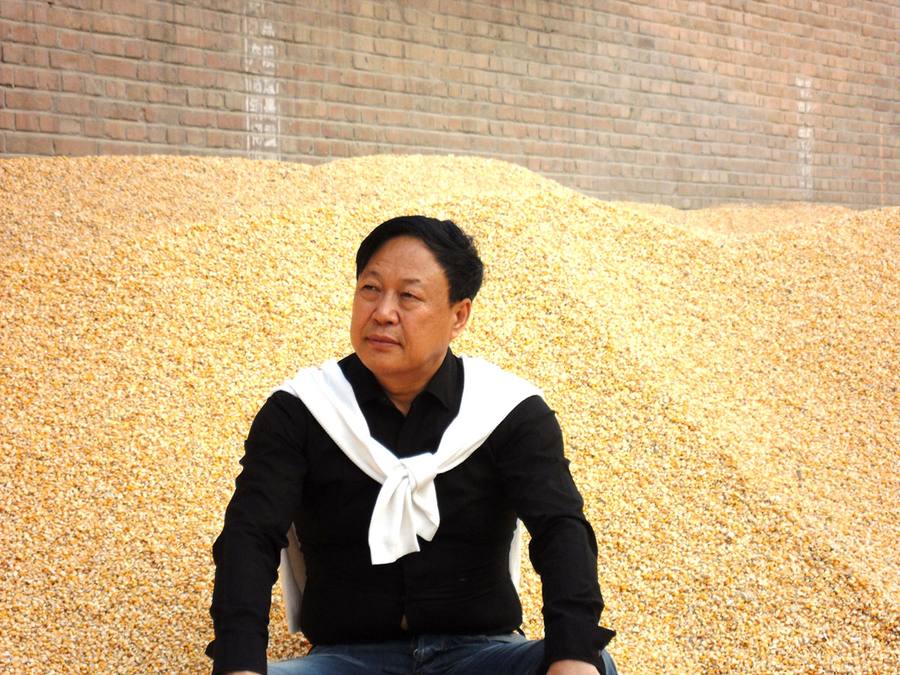
Sun Dawu was born in June 1954 in Langwuzhuang Village, Xushui County (now Xushui District), Baoding, Hebei — a county southwest of Beijing that had been loudly promoted as a model during the 1958 Great Leap Forward, and whose famine years he would retell for decades in his speeches: people in Xushui were so hungry, he told a university audience, that they ate corncobs, cotton stalks and cotton husks soaked in lime water. He finished only junior high school, served in Linfen, Shanxi, with the 82nd Division of the PLA's 28th Group Army, and after demobilisation worked at the Agricultural Bank of Xushui County. In 1985 he and his wife Liu Huiru started out with 1,000 chickens and 50 pigs — the founding figure he repeated in speeches, interviews and finally in his 2021 closing statement to the court, and on which all reporting agrees. Ten years later, in 1995, the Dawu Group stood among China's top 500 private enterprises; that year he was elected a deputy to the Baoding Municipal People's Congress, in 2001 he became principal of the Dawu School while remaining group chairman, and in October 2002 he was appointed a senior researcher at China Agricultural University's Institute of Farmer Issues. In 2005 he stepped down as chairman to head the supervisory board, and his eldest son Sun Meng took the chairmanship — a detail worth fixing now, because in the November 2020 raid father and son were taken away on the same night.
His fame was never only about business. Reuters' 2024 investigation, quoting people who know him, describes a frugal man in the cheap slacks, casual shirts and cloth shoes of a middle-aged man in rural north China — "if you saw him, you would not think he was rich" — whose tongue gave him away: twice invited into Zhongnanhai to brief the leadership on rural policy (December 1998 and April 2003, by his own account), he used lecture halls at Peking University and China Agricultural University to say that state monopolies were keeping farmers poor. He was also a Communist Party member: at his trial he called himself an "outstanding Communist Party member" and insisted the Dawu Group was "wholly socialist, everyone on the road to common prosperity." This page records how a man of that background — insider by biography, employer of some ten thousand people — was uprooted in a single case, on eight counts, over a land dispute and a lifetime of refusing to keep quiet.
2. Dawu City: the small city he built on saline land
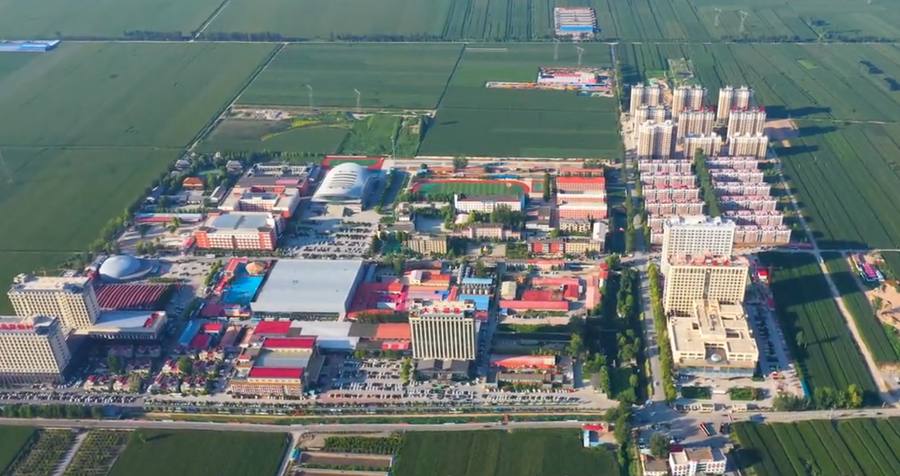
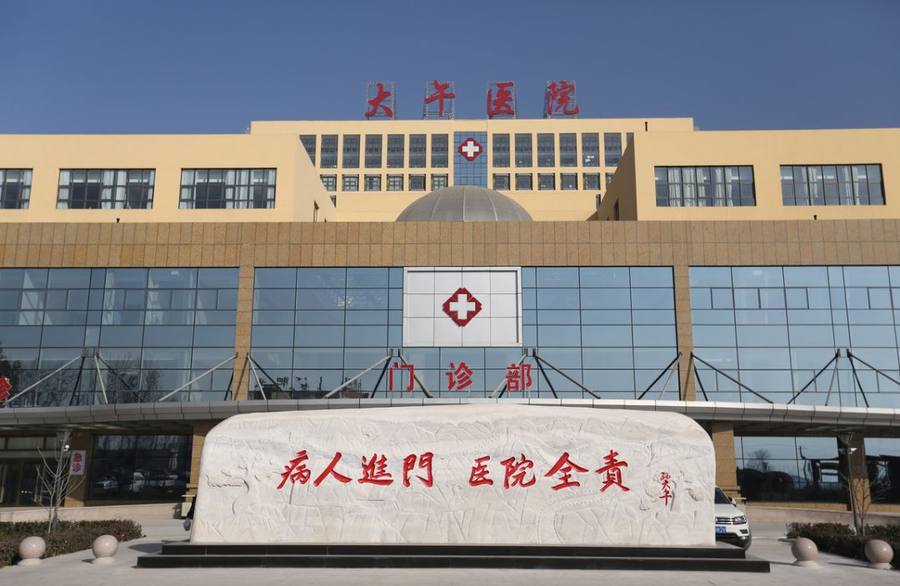
To understand the Dawu case you first have to understand what the Dawu Group actually was, because what was liquidated was not just a man but a self-contained way of life. According to the Dawu legal team's public Q&A of April 2021, the group turned a remote tract of saline land at Langwuzhuang into a modern community combining production, a conference centre, education, healthcare, leisure, tourism and retirement care; its headquarters covered about 5,000 mu (more than 800 acres), it ran 28 subsidiaries and employed nearly 10,000 people. At the community's core stood a school and a hospital. The Dawu School, founded in 1998, had more than 2,000 enrolled students on the legal team's and most media accounts; but in a court document seen by Reuters, Sun Dawu stated that the Dawu school had over 10,000 students and teachers, drawn mostly from more than a dozen surrounding villages — the two figures diverge sharply and are archived in parallel (see section 17). The Dawu Hospital had 1,000 beds and more than 30 departments, ran as a non-profit, and charged employees and villagers very little; one account relays internal prices of about US$0.15 a month for medical care for residents and employees and about US$1.50 for a comprehensive check-up — a price detail found in a single relayed account, marked here as single-source and unverified. The group also built a stadium said to seat 20,000 (per Voice of America-related reporting).
This model was his ideal made concrete. In his closing statement to the court he traced the group back to his wife raising 50 pigs and 1,000 chickens (dating the group's formal founding to 1988 in that telling, alongside the standard 1985 start). What he set out to prove was that a private company could, out of its own profits and without fleecing farmers, give its people housing, schooling and healthcare. Reuters quotes his friend Anna Wang Ruiqin spelling out how that looked from the other side of the fence: it was a threat to the authorities, she said, "because it shows that the Communist Party isn't as good at providing benefits as the private sector." This site does not endorse that sentence, but it records it — because what happened after November 2020 was precisely the dismantling of the model itself: first the school and hospital were taken over, then the whole group was auctioned.
3. 2003: the first arrest, 158 days, and "I am not guilty, but I will submit to the law"
Sun Dawu first saw the inside of a detention centre in 2003. That spring he had spoken at Peking University and China Agricultural University criticising excessive restrictions on farmers' business activities; in April the Dawu Group's website carried three articles critical of current politics (one of them commemorating the liberal elder Li Shenzhi), and the Xushui County Public Security Bureau ruled that the articles "seriously damaged the image of state organs," ordering the website shut for rectification for six months with a fine of 15,000 yuan. A month later came the real arrest. On the morning of 27 May 2003, during the school board's regular Tuesday meeting at the Dawu School, he took a call from a deputy chairman of the county People's Political Consultative Conference: the new county Party secretary wished to invite him to lunch. He went, and did not come back. Forty-eight hours later his family was notified by the Public Security Bureau: suspected illegal absorption of public deposits. His two younger brothers, Sun Zhihua and Sun Dehua, and the group's finance chief were detained with him.
The prosecution's arithmetic ran like this: since the 1990s the group had borrowed from more than 3,000 farmers, with cumulative transactions of 181.167 million yuan — illegal absorption of public deposits. The defence — Xu Zhiyong, Zhu Jiuhu and Zhang Xingshui of the Open Constitution Initiative — visited dozens of farming households across seven or eight villages and concluded that the lenders were overwhelmingly employees, relatives, customers and others in a specific relationship with the group, not the "unspecified public," and that the 180 million figure was a decade's cumulative turnover, not a deposit balance. The case drew unprecedented attention: the economist Mao Yushi and other scholars, journalists and local farmers spoke up for him, and President Hu Jintao and Vice-Premier Hui Liangyu were reported to have instructed local officials to handle the case with care — an instruction attested only in media retelling, marked here as archived reporting. Tried on 30 October 2003, he was convicted of illegally absorbing just over 13 million yuan from 611 farmers and sentenced to three years' imprisonment, suspended for four years, with a fine of 100,000 yuan; the group was fined 300,000 yuan. He accepted the outcome and did not appeal, leaving the court a sentence quoted ever since: "I am not guilty, but I will submit to the law." (a short quotation of his courtroom words as reported) He walked out the next day, after 158 days in detention. He remembered the lesson for 17 years: when they came for him again in 2020, people around him say, he still believed the law and public opinion would save him a second time.
4. The man who bankrolled the lawyers: from the rescued of 2003 to a funder after the 709 crackdown
The 2003 case left Sun Dawu with a second ledger: seventeen years of open support for China's rights lawyers — the core of the case that Chinese Human Rights Defenders (CHRD) made in 2021 that his prosecution was political retaliation. The public record shows at least these entries. He repeatedly praised Xu Zhiyong, the lawyer who had defended him. After the nationwide "709" crackdown on lawyers began in July 2015, he published an essay on 24 July 2015, "What can you do in the face of terror," writing that without the three lawyers of 2003 he did not know whether the Dawu Group would still exist, and pledging 100,000 yuan to fund the next lawyer who stepped up to defend the detained lawyer Yang Jinzhu. According to the Associated Press and other reporting, he hosted rights lawyers at the Dawu Group and paid legal costs for lawyers under political pressure. In May 2020 he posted on social media praising rights lawyers again, saying they had let victims see a little light, kept alive a little faith in the law and lit their hope of survival — words quoted by ChinaAid in November 2020, which also quoted the exiled former Central Party School professor Cai Xia calling him a thoughtful entrepreneur who firmly pursued constitutional democracy and was once again facing political oppression. Liu Xiaobo had earlier said Sun posed a "tremendous challenge" to the current system (as quoted by the English Wikipedia; recorded here as a relayed attribution). None of these acts was unlawful on its own. Laid end to end, they are the backdrop to the 2020 raid: a rich man, a famous man, a man with ten thousand employees, who openly channelled money and prestige to dissident lawyers.
5. The swine fever fight: in 2019 he posted the dead pigs online
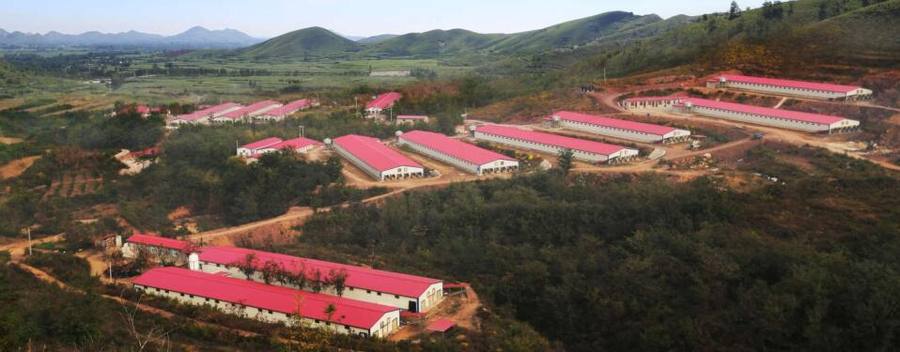
There was more than one last straw. During the African swine fever epidemic of 2018–2019, which by many accounts cost China more than a hundred million pigs, Sun Dawu was one of the very few industry figures to publicly accuse the government of concealing the scale of the outbreak — he posted photographs of masses of dead pigs online and forced the Hebei authorities to respond. The year is given differently: Reuters reported in 2024 that his legal advisers considered a catalyst of the arrests to be his social-media accusations that Hebei provincial authorities had mishandled a major 2018 outbreak, and that in one post he said 15,000 pigs had died at the Dawu Group; The New York Times and others tie his cover-up accusations to the 2019 epidemic. Both versions are archived without forcing a choice (see section 17). What is certain is this: a man who made his fortune raising pigs publicly said the local government was lying about an epidemic, and in a system that prizes "stability" above all else, that goes on the ledger. His last public appearance was on 30 October 2020, at a training meeting for the group's cadre backbone (per The Paper, as relayed in later summaries). Twelve days later, the raid came in the small hours.
6. The land: a 740-mu lease, more than 2,000 mu occupied, and the two clashes of summer 2020
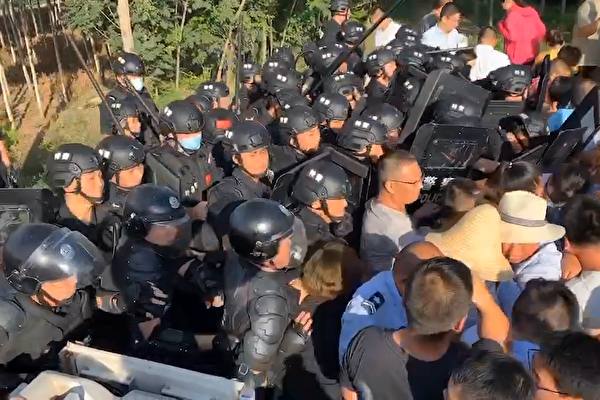
In the judicial paperwork, this case begins with a land ledger many years old. According to the Dawu legal team's "Ten Questions and Answers on the Dawu Case" of April 2021, Langwuzhuang Village long ago leased more than 740 mu of farmland to the state-run Xushui Farm, but the farm in fact occupied more than 2,000 mu of the village's land; the two sides argued over the rights for years, and eventually the village leased the land to the Dawu Group's seed company. On 21 June 2020 the Dawu side and the Xushui Farm clashed over forcible tilling and planting. In the early morning of 4 August 2020, the farm demolished a temporary Dawu building; Dawu employees and Langwuzhuang villagers came out to defend their rights and blocked the vehicle of the farm's director, Zhang Hongsheng, from leaving; the Xushui District Public Security Bureau intervened and many people were injured — Voice of America-related reporting says dozens of Dawu employees and villagers were hurt, while a claim of hundreds injured appears in some retellings; this site archives the legal team's and VOA's accounts as primary and the rest in parallel.
After 4 August, Dawu employees went to petition the local authorities over the demolition — and in the legal team's analysis, every charge in the case except illegal absorption of public deposits grows out of the land disputes and this "4 August forced-demolition petition incident." NPR's verdict-day report ran the same line: a minor property dispute turned violent in the summer, Dawu employees tried to petition local regulators for help, and then the detentions came. Fixing this line matters, because the heaviest count in the eventual judgment — "gathering a crowd to attack state organs" — rests not on anything in Beijing or at any political gathering, but on a plot of land in Xushui, a demolition and a petition. And the other party to the land was not another private firm but a state farm. Sun Dawu himself told the media after the clashes that the police sided with the farm simply because it carried the state's name (as quoted in VOA reporting). A private entrepreneur disputed land with a state unit, and at the end of the dispute the private side's owner, his family and his entire management were in detention cells.
7. 11 November 2020, about 1 a.m.: six busloads, ladders, police dogs — and a grandchild left at home
The raid is described with striking consistency across sources. At about 1 a.m. on 11 November 2020, six busloads of special police entered the residential compound the Dawu Group had built for itself; according to Southern Weekend (as relayed by China Change and Reuters), the officers carried ladders, submachine guns and police dogs, and Sun Dawu and his wife, their two sons and two daughters-in-law, and group executives were taken away one by one, leaving a young grandchild alone at home under police watch. Reuters, citing lawyers involved in the case, says the police also scooped up the entire management team — 28 people taken into custody in all; the Dawu legal team's Q&A puts those held at 25, including the wife, the two sons and the daughters-in-law; the group's general manager Liu Ping, away on business in Hainan, was also seized the same day (per China Change's long-form profile). Early Chinese media reports said only "more than a dozen," and the English Wikipedia's lead says 20 relatives and business associates. Why the numbers run from a dozen to 28 is best explained by two waves of arrests and progressively fuller disclosure; all four figures are archived in parallel (see section 17), and this page uses the lawyers' 28 for those taken away and 20 for the defendants who ultimately stood trial. An employee testified that several hundred police took part, some reports estimating about 300 officers (per ChinaAid's reporting).
The same day, the Gaobeidian City Public Security Bureau issued a terse announcement: Sun Dawu and others of the Hebei Dawu Agricultural and Animal Husbandry Group were suspected of picking quarrels and provoking trouble, sabotaging production and other crimes; on 11 November 2020 the public security organ had criminally detained Sun Dawu and others according to law, and the case was under further investigation. Two features of that notice deserve fixing. It never mentioned the land dispute. And the case was in Gaobeidian — the Dawu Group sits in Xushui, yet investigation, prosecution and trial were all placed in another county-level city under the same Baoding prefecture, a transfer the authorities have never publicly explained. After the raid the group's bank accounts were frozen — reportedly down to the cash the staff canteens used to buy food — and the Baoding city government promptly sent in a "work group" of local officials and state-enterprise managers to take over the group; the Dawu Hospital was placed under the "help and support" of Baoding No. 1 Central Hospital, the Dawu School likewise, and construction projects stopped. A company of some ten thousand people changed management hands on the same day its owner was taken away.
8. RSDL: more than five months cut off from the world, and the hunger strike and torture allegations
Those taken away did not go to a detention centre. They went into "residential surveillance at a designated location" — confinement at an undisclosed site, with families not told where, and lawyer access close to impossible. NPR reported that more than two dozen relatives and employees were held in this form of secret house arrest for more than five months before being formally arrested; CHRD notes that RSDL holds people incommunicado, carries a higher risk of torture, and is a treatment often meted out in political cases. The public timeline runs: criminal detention on 11 November 2020; formal arrest only on 21 April 2021 at 7 p.m., when the Gaobeidian police arrest notice listed nine suspected offences — illegal absorption of public deposits, picking quarrels, illegal mining, gathering a crowd to attack state organs, illegal occupation of farmland, coerced transactions, sabotage of production, obstructing public service, and fraud. The investigation period had been extended at one point (the legal team's Q&A gives an extension to 16 May 2021), and in late April the Gaobeidian police announced the investigation was complete and the case transferred to the Gaobeidian People's Procuratorate for prosecution (the announcement is dated to April, with Chinese News Weekly and other reporting giving 26 April).
What happened inside RSDL survives only in fragments. Before the trial, CHRD relayed unconfirmed reports that Sun Dawu alleged torture or mistreatment under RSDL as police tried to force a confession. According to the South China Morning Post (as cited by the English Wikipedia), the defence team argued at trial that police had extorted testimony through torture, that Sun had suffered "cruel and inhuman treatment" producing forced and false confessions, and asked the court to exclude the evidence; the court rejected the request. Defence briefings also record that Sun told the court he had gone on hunger strike in protest at his treatment in detention and described that period as "misery beyond words" (per a courtroom witness account relayed by the legal team). These allegations have no independent channel of verification, and this site archives them exactly as what they are — raised by the defence, rejected as an exclusion motion by the court, independently unverified — neither upgrading them to established fact nor deleting them, because in a procedure where lawyers could not see their clients for over five months, "unverifiable" is itself part of the record. The defendants, the defence stated at the trial's opening, were in generally poor health.
9. The trial: nominally public, practically sealed — fourteen days, and a 25-year sentencing request
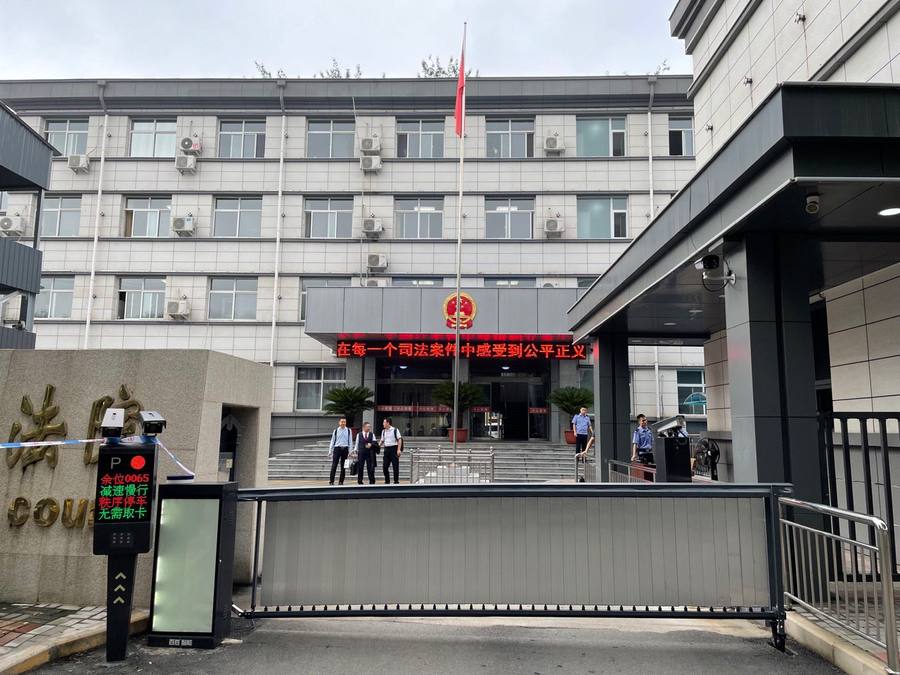
On 15 July 2021 at 9 a.m., the Dawu case opened at the Gaobeidian Municipal People's Court. It was public in name only. According to the defence statement, citing epidemic controls, each defendant was allowed a single family spectator and the company ten; the defence request to livestream the trial was refused; the defence team numbered about 50 lawyers on Radio Free Asia's account and about 30 assembled by Li Jinxing on Reuters' — both versions archived. Outside the courthouse stood masses of police and plainclothes officers, and video shot by lawyers showed convoys under tight security (AFP and other reporting). The veteran defence lawyer Ran Tong observed that censors were deleting online information about the trial on a large scale, suggesting the case was regarded as highly sensitive (per RFA). The pace was punishing: fourteen consecutive days, sessions running over twelve hours, with the defence team's daily briefings published by China Change recording that the 18 July session — the trial's fourth day — did not adjourn until 11:42 p.m.; most defendants were held at the Baoding Municipal Detention Center, a long transfer away. The defence team's conclusion was blunt: this was "not a normal legal trial."
What was contested inside? Prosecutors alleged the Dawu Group had deceived its employees, "seriously interfered with local orderly administrative management" and "endangered national grassroots political stability" (per the courtroom witness account relayed by the defence). The prosecution's sentencing recommendation for Sun Dawu was 25 years (CHRD and RFA concur). Sun's own line of defence was to nail himself to the system's own language: he called himself an "outstanding Communist Party member," admitted mistakes such as posting messages online, and denied many of the accusations; according to the witness account he told the court the Dawu Group was "wholly socialist, everyone is on the road to common prosperity, and Dawu employees live very well." Fifty-odd (or thirty-odd) defence lawyers and the prosecutors were, in the defence statement's words, in "great disputes" over evidence and law — but the details of those disputes stayed behind the wall the trial's closure built. At 4 p.m. on 28 July, at the end of the fourteenth straight day, the court pronounced judgment in the courtroom. From gavel to verdict: fourteen days, not one day more.
10. The verdict: eighteen years, a 3.11-million-yuan fine, and a sentencing list headed by his own family
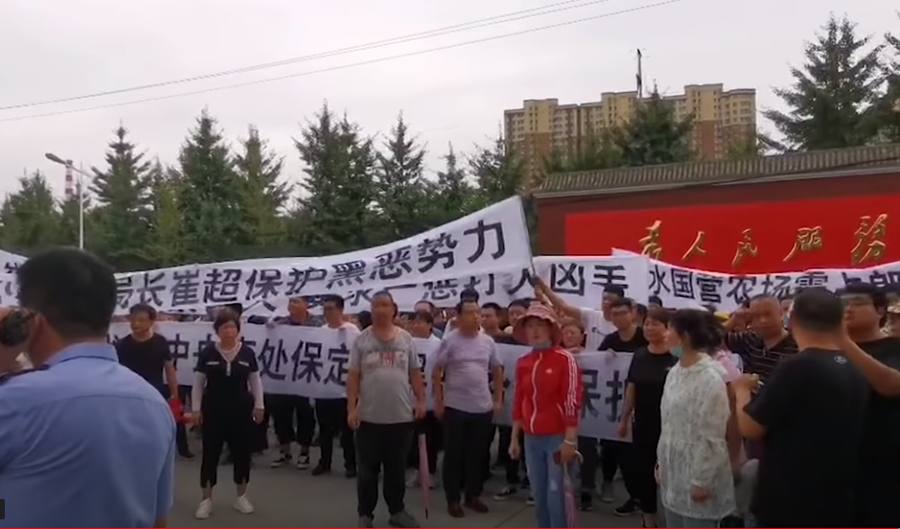
On the afternoon of 28 July 2021 the Gaobeidian Municipal People's Court delivered its verdict in court. Eight counts stood against Sun Dawu: gathering a crowd to attack state organs, obstructing public service, picking quarrels and provoking trouble, sabotaging production and business operations, coerced transactions, illegal mining, illegal occupation of farmland, and illegally absorbing public deposits — combined into a sentence of 18 years' imprisonment and a fine of 3.11 million yuan. The ninth charged offence, fraud, was the only one the trial struck off. The defendant company, the Dawu Group, was fined 30.5 million yuan, had 14,475,400 yuan of unlawful gains confiscated, and was ordered to repay 1.037 billion yuan of so-called illegally raised funds (per the verdict summary published by the Weiquanwang network; the defence team's statement summarised it as fines, confiscation and repayment of "illegal financing" totalling more than one billion yuan). One widely circulated error deserves correcting here: NPR and other English reports said "the group was fined $480,000" — $480,000 is in fact the dollar conversion of Sun Dawu's personal 3.11-million-yuan fine; the orders against the group were far larger, and the confusion came from wire-copy transcription.
The other 19 defendants received fixed-term sentences of one to twelve years; six of the twenty defendants (excluding the company) received suspended sentences and fourteen, Sun included, real prison time (per the verdict summary). The heaviest sentences after Sun Dawu all fell on his family: his eldest son Sun Meng, the group's chairman, twelve years and a fine of 1.9 million yuan; his brother Sun Dehua, twelve years and a fine of 510,000 yuan; his brother Sun Zhihua, nine years and a fine of 550,000 yuan. The excerpted list also records Zhang Ping at four years six months, Liu Ping at three years six months, Lu Zhiying at four years five months, Xu Laifu at two years three months, Li Dahong at two years, Zhang Yanhui at one year nine months, Ji Weilian at one year five months, and suspended terms including Jin Fengyu at one year seven months suspended for two years, Ma Fuchang at one year suspended for two years and Bai Xuesong at one year suspended for two years — but the excerpt does not list all nineteen dispositions in full, and the individual sentences of his wife Liu Huiru and second son Sun Fushuo are not in the visible excerpt; this site records them as no public record and does not guess (see section 17). Germany's Federal Office for Migration and Refugees briefing summarised it as four family members sentenced to between eighteen months and twelve years, broadly consistent with the list. In his closing statement Sun Dawu had asked that all responsibility be laid on him alone and pleaded for the other defendants to be acquitted; the Associated Press quoted his offer to take the charges upon himself, "even if they're severe, in exchange for the release of others." The court did not accept the exchange.
11. Appeal and petition: the first appeal rejected within a month, and the handwritten plea from Longyao Prison
What followed the verdict was quieter than the trial. According to Reuters' investigation of 10 September 2024 (by David Lague, based on previously unreported legal and court documents and interviews with lawyers, dissidents and fellow entrepreneurs), Sun Dawu's first appeal was swiftly rejected by a Hebei local court in the month after his sentencing — Reuters saw a copy of that decision; the court did not respond to Reuters' questions. He then turned to petitioning. From Longyao Prison, where he is serving his sentence, he sent a handwritten submission dated 16 November (Reuters did not state the year, and this site records the date as given, without supplying one) imploring the court to hear his case. In it he argued that some evidence at his trial was fabricated, some exaggerated, and other allegations involved no illegal conduct at all; that the valuation of his company and its auction were illegal and violated his property rights; and he warned that if his appeal was delayed, "the enterprise will be completely wrecked" (a short quotation from the document as seen by Reuters), adding that he did not think that was what the leaders of the court, Party committees and governments at all levels wanted to see. He also conceded an error of judgment: forwarding an article accusing police leadership of sheltering organised crime — the article was true, he wrote, but forwarding it had been a mistake. As of the Reuters report, the Hebei Provincial High People's Court had still not agreed to hear his appeal, his legal advisers said; the High Court likewise did not respond to Reuters. His lawyers put it plainly: at the age at which he was sentenced, eighteen years effectively spells life in prison.
The latest status this site's November 2026 check can confirm ends there. After September 2024 there is no public reporting that the Hebei High Court has taken up his petition, no published sentence-reduction or parole notice, and no news of release. If the term is counted from his detention on 11 November 2020, eighteen years would run to about November 2038, when he would be 84 — this is this site's arithmetic from the public sentence, not an officially published release date, and it is labelled as such. He remains in prison, and the case is carried on this site's Ongoing list.
12. The auction: a three-day-old company buys "Dawu City" for about 686 million yuan
With the man inside, came the disposal of the assets. On the afternoon of 15 April 2022, without prior notice, the Gaobeidian Municipal People's Court continued the auction by verbal announcement and declared the result: the Dawu Group had been sold to Baoding Ruixi Technology Co. for 686.1 million yuan, matching the official appraisal price (per ChinaAid's May 2022 report). Reuters, citing family members and legal advisers, gives the price as 681.6 million yuan — the two figures differ by 4.5 million yuan and are archived in parallel (see section 17). Either way, the comparison is with the family's figure: the Dawu Group was valued at about 10 billion yuan. And the buyer's birthday is the sharpest detail of all: Baoding Ruixi Technology was incorporated on 12 April 2022 — three days before it won the auction for a company built over 37 years, employing some ten thousand people, and valued by the family at ten billion. The news was confirmed that afternoon at 4 p.m. by the second son, Sun Fushuo, in a WeChat Moments post. Ruixi Technology did not respond to Reuters' request for comment, and Reuters could not independently verify the group's current financial health. The 1.037 billion yuan in repayments ordered against the group, together with the fines and confiscation, formed the enforcement backdrop to the sale: convict first, order repayment second, auction third — thirty-seven years of enterprise changed owners without a single procedural step missing.
13. The family's bill: three generations inside one case file
The hardest thing about this case is that it was never one man's case. Taken away in the small hours of 11 November 2020 were a husband and wife, two sons, two daughters-in-law and an entire management team; left behind at home was a young grandchild, with police standing watch (per Southern Weekend). Liu Huiru had started the business with him in 1985, a co-founder with 1,000 chickens and 50 pigs; thirty-five years later she was a co-defendant — and her individual sentence is absent from the publicly excerpted verdict list, a blank this site leaves exactly as it is. Of the two sons: the elder, Sun Meng, chairman of the group, drew twelve years; the younger, Sun Fushuo, was still posting confirmation of the auction in April 2022, his own disposition unclear in the public record. The two brothers, Sun Dehua and Sun Zhihua, had already shared a detention centre with him in 2003; in 2021 they drew twelve and nine years. In court Sun Dawu tried to trade "all responsibility on me" for his family's freedom, and failed; on the sentencing list his family are precisely the three heaviest sentences after his own. Beyond the list lie the costs with no names attached: the livelihoods of some ten thousand employees, the two-thousand-plus students (or, on the other count, ten thousand students and teachers) of the school, the surrounding villagers who relied on the hospital's near-free care — work-group takeover, "help and support," halted projects, auction, each step landing on real people's rice bowls, with no complete public figures, which this site will not invent.
14. The official line: one court announcement, and "China is a country ruled by law"
The official account of this case has never amounted to more than a few procedural pages: the Gaobeidian police detention announcement of 11 November 2020 (suspected picking quarrels, sabotaging production and other crimes); the late-April 2021 announcement that the investigation was complete and the case transferred for prosecution; and the Gaobeidian court's verdict announcement of 28 July 2021, published on its official WeChat account, listing the eight counts, the eighteen years and the 3.11-million-yuan fine. To the defence's torture allegations, the complaints about the sealed trial, and the questions about the transferred venue, there has been no public official response at all; the Baoding and Hebei courts did not answer Reuters' 2024 requests for comment either. A Chinese government official told Reuters that the government "attaches great importance to the private sector," that suggestions of a crackdown on business are false and contrary to China's stated policy of developing private enterprise, and that "China is a country ruled by law" — the fullest official statement on the case's character that this check could find, archived here in its own terms. The other half of the official narrative sits in the judgment's enforcement: more than a billion yuan in repayments and the auction of the group — in the official telling, not the liquidation of a private enterprise but the asset disposal of an "illegal fundraising" case. This site records only one observation: from the detention notice to the verdict announcement, no official text ever mentioned Sun Dawu's support for rights lawyers or his accusations of an epidemic cover-up — nor the difference between 740 mu and more than 2,000 mu at the heart of the land dispute.
15. International reaction: CHRD's "blatant reprisal," Human Rights Watch's World Report 2022, and two generations of New York Times pens
The international reaction arrived on the trial's eve. On 13 July 2021 (released that day and reported on the 14th), Chinese Human Rights Defenders issued a statement condemning the prosecution of Sun and the others as "a blatant attempt to punish Sun for his support of human rights defenders" and urging the Chinese government to end the reprisals and release Sun Dawu along with his family members and employees. CHRD's senior researcher Ramona Li said Sun Dawu had made extraordinary contributions to improving the lives of Chinese citizens in rural China, and that his support of rights defenders was an extension of his concern for people on the margins of the economy; CHRD's research and advocacy coordinator William Nee pointed to his association with the detained democracy activist Xu Zhiyong as one reason he was targeted. The statement also fixed the shape of the case: eight charges including "picking quarrels," the charge authorities routinely use against peaceful advocacy; a prosecutorial request of up to 25 years; and Sun and his family held incommunicado under RSDL. After the verdict, Human Rights Watch's World Report 2022 entered the case twice in its China chapter: once noting that in July 2021 courts imposed 18 years on Sun Dawu, an agricultural tycoon supportive of rights activists, "for vague crimes," after a similarly harsh sentence on the outspoken real-estate mogul Ren Zhiqiang; and once, in its human rights defenders section, recording that a Hebei court sentenced the outspoken agricultural mogul on charges including "picking quarrels and provoking trouble" and "assembling a crowd to attack state agencies," and that he was a longtime supporter of human rights activists and lawyers. CHRD's annual report on human rights defenders for 2021 likewise carried the case, recording the 19 co-defendants sentenced alongside him and fines against the company of nearly US$130 million on its conversion.
On the media side the bylines cover nearly every major international outlet: the Associated Press, the BBC, The Guardian, AFP (widely syndicated), NPR, The New York Times, the South China Morning Post, Radio Free Asia and Voice of America all filed on the trial or verdict days; the BBC's headline quoted "provoking trouble" as the charge itself, and The Guardian called him a "billionaire pig farmer." Earlier still was The New York Times: Li Yuan's column of 12 February 2021 set his two arrests side by side — in 2003, scholars, lawyers and a national press won him a suspended sentence; in 2021 the same conduct met silence and eighteen years — and the paper reported the formal charges on 24 April 2021. The weightiest after-the-fact investigation is Reuters' long report of 10 September 2024: drawing on previously unreported legal and court documents and interviews with lawyers, dissidents and fellow entrepreneurs, it reconstructed the handwritten petition from Longyao Prison and the sale of the group to a three-day-old company at a fraction of its value, and quoted Li Jinxing, the lawyer who assembled his defence team, on the identical sentences handed to Wu Xiaohui, Ren Zhiqiang and Sun Dawu — three men, different places, different charges, the same eighteen years: "This isn't a coincidence. The authorities want them to die in jail." Inside China, the reaction was cut off at the root: defence lawyers noted that information about the trial was being deleted online at scale, and the public-opinion arena that had rallied around him in 2003 did not reappear in 2021.
16. Full timeline
June 1954: born in Langwuzhuang Village, Xushui, Hebei; serves in the PLA at Linfen, Shanxi, in his youth, then works at the Agricultural Bank of Xushui County. 1985: starts the business with his wife Liu Huiru on 1,000 chickens and 50 pigs (his court statement dates the group's founding to 1988 — both versions archived). 1995: the group joins China's top 500 private enterprises; he is elected a Baoding municipal people's congress deputy. 1998: the Dawu School is founded; in December he briefs leaders at Zhongnanhai for the first time (by his own account). 2001: serves as principal of the Dawu School. October 2002: appointed senior researcher at China Agricultural University's Institute of Farmer Issues. April 2003: the group website is shut for six months and fined 15,000 yuan over three articles; he briefs officials at Zhongnanhai a second time (by his own account). 27 May 2003: arrested for suspected illegal absorption of public deposits, his two brothers and the group's finance chief detained the same day. 30 October 2003: the Xushui County Court sentences him to three years suspended for four, with a 100,000-yuan fine; he is released the next day after 158 days in detention. 2005: he moves to head the supervisory board and his eldest son Sun Meng becomes chairman. 24 July 2015: after the 709 crackdown he publishes "What can you do in the face of terror," pledging money in support of rights lawyers. 2018–2019: during the African swine fever epidemic he publicly accuses local government of covering up the outbreak (the year is given differently by source). May 2020: he posts praise of rights lawyers on social media. 21 June 2020: the Dawu Group and the state-run Xushui Farm clash over forcible tilling in the land dispute. Early on 4 August 2020: the farm demolishes a temporary Dawu building; employees and villagers block a vehicle in protest; police intervene and many are injured; employees petition afterwards. 30 October 2020: his last public appearance, at a group cadre training meeting. About 1 a.m. on 11 November 2020: six busloads of special police raid the Dawu residential compound; 28 people are taken away, including Sun Dawu and his wife, their two sons and two daughters-in-law and the executives (headcount versions archived in parallel); accounts are frozen and a government work group takes over the group; the Gaobeidian police announce the criminal detentions the same day. Thereafter more than twenty people are held under RSDL for over five months. 7 p.m., 21 April 2021: Sun Dawu is formally arrested, the arrest notice listing nine suspected offences. Late April 2021: the case is transferred to the Gaobeidian People's Procuratorate. 13 July 2021: CHRD issues its statement condemning the prosecution as reprisal. 15 July 2021: the Dawu case opens at the Gaobeidian court, nominally public with attendance tightly restricted; the trial runs fourteen consecutive days, many sessions past twelve hours. 28 July 2021: judgment in court — Sun Dawu, 18 years on eight counts and a fine of 3.11 million yuan; the 19 co-defendants, one to twelve years with six suspended sentences; the group fined 30.5 million yuan and ordered to repay 1.037 billion yuan. Within a month: his first appeal is rejected (per Reuters, which saw the decision). 12 April 2022: Baoding Ruixi Technology is incorporated. 15 April 2022: the group's assets are auctioned to that company for about 686 million yuan; his second son Sun Fushuo confirms the sale on WeChat Moments. Thereafter: serving his sentence at Longyao Prison, Hebei, he submits a handwritten petition (dated 16 November, year not publicly stated) alleging fabricated and exaggerated evidence and an unlawful auction. 10 September 2024: Reuters publishes its investigation — the Hebei High Court has not agreed to hear his petition; his lawyers say eighteen years at his age is effectively a life sentence. November 2026: this site's check finds no public record of release, sentence reduction or an accepted retrial petition; the sentence is still being served.
17. Archived in parallel: discrepancies between sources and unverified matters
First, the founding year: the standard account has the business starting in 1985 with 1,000 chickens and 50 pigs, while Sun Dawu's 2021 closing statement says he founded the Dawu Group with his wife in 1988 — plausibly 1985 for the start and 1988 for the formal founding; both versions archived. Second, the number taken away: lawyers and Reuters say 28, the legal team's Q&A says 25 held, early Chinese media said more than a dozen, and the English Wikipedia's lead says 20; the number of defendants ultimately tried, 20, is consistent across sources. Third, the group's scale: employees are put at about 9,000 (verdict-day reporting) or more than 10,000 (Reuters, citing his documents and reporting); the family's valuation of about 10 billion yuan stands against an older figure of 2 billion yuan in fixed assets and over 3 billion in annual output — all are the parties' own figures with no audited data, and this site adopts none as settled. Fourth, the auction price: ChinaAid gives 686.1 million yuan, Reuters (citing family and legal advisers) 681.6 million — a 4.5 million yuan gap, archived in parallel. Fifth, the year of the swine-fever accusations: Reuters gives his charge that Hebei mishandled the 2018 outbreak, with 15,000 Dawu pigs dead, while The New York Times and others tie the cover-up dispute to 2019; archived in parallel. Sixth, the Dawu School's size: the legal team and most reporting give more than 2,000 enrolled students, while the court document seen by Reuters gives over 10,000 students and teachers — possibly differing statistical scopes; archived in parallel. Seventh, the hospital's rock-bottom prices (about US$0.15 a month for care, US$1.50 for a full check-up) appear in a single relayed account and are marked single-source. Eighth, the individual sentences of Liu Huiru and Sun Fushuo: the Weiquanwang verdict excerpt does not include them; Reuters states the 19 co-defendants jailed "included his wife, two sons and senior executives," and the German BAMF briefing gives four family members sentenced to between eighteen months and twelve years — that both were defendants is not in doubt, but their individual terms and whether they were suspended have no precise public record, and are recorded here as no public record. Ninth, the year of his handwritten petition: Reuters records only "Nov. 16," without a year; this site does not supply one. Tenth, the reported instruction by Hu Jintao and Hui Liangyu in 2003 to handle the case with care appears only in media retelling, with no official document; archived as reporting. Eleventh, the torture allegations from the RSDL period rest solely on the defence's statements and unconfirmed reports; the court rejected the motion to exclude the resulting evidence, and there is no independent verification; marked unverified. Twelfth, his current place of imprisonment rests on Reuters' 2024 record of Longyao Prison as the latest public source; whether he has been transferred since has no public record.
18. Verification and sources
The sources actually consulted in this check are as follows. First rank, the parties and judicial documents as published: the Dawu legal team's "Ten Questions and Answers on the Dawu Case" (4 April 2021, published in full by China Change — the source for the land ledger, the numbers held and the takeover arrangements); the legal team's daily trial briefings and verdict-day statement (published by China Change — the source for the fourteen-day trial, the repayments of over one billion yuan, and the 18 July session running to 11:42 p.m.); Sun Dawu's closing statement of 28 July 2021 (published in English translation by China Change — the source for his own account of the group's history); the Gaobeidian Public Security Bureau's 11 November 2020 announcement and the arrest notice (checked against multiple reports and the Chinese Wikipedia's citations); and the Gaobeidian court's verdict announcement (cross-checked across Xinhua-system reporting, BBC Chinese and the Weiquanwang verdict excerpt — the eight counts, eighteen years, the 3.11-million-yuan fine and the principal co-defendant sentences agree). Second rank, investigations and long-form reporting: Reuters' investigation of 10 September 2024 by David Lague (read in full in republication — the principal basis for the present-status sections: Longyao Prison, the handwritten petition, the first appeal rejected within a month, the 681.6-million-yuan auction figure, and the Li Jinxing and Anna Wang interviews); The New York Times, Li Yuan's column of 12 February 2021 and its 24 April 2021 report (consulted via the Chinese edition and citations); and Yaxue Cao's two-part China Change profile of Sun Dawu (March–April 2021 — the source for 2003-case detail, the raid narrative and the takeover detail). Third rank, trial and verdict wires: the Associated Press, BBC, AFP (in syndication), NPR, The Guardian and the South China Morning Post, 15–29 July 2021, checked item by item for charges, sentences and defendant numbers — noting that NPR's "the group was fined $480,000" misplaces Sun Dawu's personal fine onto the group, corrected in section 10. Fourth rank, rights organisations: CHRD's statement of 13 July 2021 and its annual report on human rights defenders for 2021 (full text on its website); Human Rights Watch, World Report 2022, China chapter (full text on its website; two mentions of this case); the German Federal Office for Migration and Refugees briefing of 2 August 2021; and ChinaAid's reports of November 2020 and May 2022 (the source for the police-strength estimate, Cai Xia's comment, the 686.1-million-yuan auction figure and Ruixi's incorporation date). Fifth rank, comparison and background only: the English and Chinese Wikipedia entries on Sun Dawu, used solely for cross-checking versions and logging discrepancies, never as the sole basis for a fact. Not obtainable: the full text of the Gaobeidian court's judgment (not public), which is why the sentences of Liu Huiru and Sun Fushuo cannot be verified, as flagged in section 17.
19. Our Take
The judgment in the Dawu case lists eight crimes. It nowhere lists the real one. Lay the facts out in order: a farmer-born entrepreneur spends thirty-five years building, on a patch of saline land, a school, a thousand-bed hospital and the livelihoods of some ten thousand people, where employees pay next to nothing for medical care and children have a school to go to — all of it carried by one private company's profits, with no state funding and no franchised licence. To a regime that proclaims "common prosperity," Dawu City should have been a showcase. Instead it was a thorn. A showcase must come from the Party's own hand; welfare must leave people remembering who gave it. When a Party-member entrepreneur built common prosperity himself — in a form the official version has never managed — the achievement itself became a demolition of the monopoly narrative. Add thirty years of refusing to shut up: arguing back at Zhongnanhai, lecturing students about the famine, paying for arrested lawyers and writing for them, pointing at the local government during a pig epidemic and saying you are covering this up. When he was first arrested in 2003, scholars, lawyers and a national press still spoke for him, and he came out on a suspended sentence. When they came again in 2020, the public arena had been cleaned out in advance — a first batch of the lawyers already arrested, the rest unable to get even trial news past the censors — and so the same charge of "illegally absorbing public deposits" that was worth three suspended years in 2003 became one strand of eighteen real years in 2021. What changed was not his conduct. It was the state's remaining tolerance for him.
And look at the method: every step aims at the roots. Six busloads at one in the morning, and not the boss alone — wife, two sons, two daughters-in-law, the entire management, lifted in one sweep, a small grandchild left in a house watched by police. No detention centre at first: five-plus months of residential surveillance at a designated location, where lawyers cannot find you and family cannot know where you are. The charges swell from two to nine, as a business biography is translated line by line into the criminal code — land dispute, petition, deposits, mining, farmland. The appeal is rejected within a month of the verdict, and before the man has cooled, the company is appraised at a sliver of its worth and sold to a company three days old. In court Sun Dawu called himself an "outstanding Communist Party member" and his group "wholly socialist" — to the very end he tried to prove his innocence in the system's own language, but what the court wanted was not his declarations. It was his assets, his name, and the sky his ten thousand employees had held up over their own heads. Every Chinese entrepreneur who has built something big and still wants to say a few true sentences should read this verdict as a price list: you may be rich, but you may not have a territory of your own, a welfare system of your own, a voice of your own. Hold all three, and the price is eighteen years. He is seventy-two now, writing petitions by hand in Longyao Prison, and the provincial high court will not even hear them. On the sentence as written, he walks out at eighty-four — if everything proceeds "according to law."