
第141案 | 帕尔哈提·吐尔逊Case 141 | Perhat Tursun
帕尔哈提·吐尔逊,1969年1月生于新疆阿图什附近乡村,维吾尔族,新疆人民艺术中心研究员,当代最具影响力的维吾尔语小说家与诗人之一,著有诗集《一百首情诗》(1998)、《弥赛亚沙漠》(年份有1998与1991两说)与长篇小说《自杀的艺术》(1999)。1999年小说风波中,他被本民族保守派斥为异端,遭焚书与死亡威胁,第一任妻子离去,新疆国营出版系统此后十六年拒绝出版他的任何作品。2018年1月,他在乌鲁木齐被当局带走,消息以「住院了」的暗号漏出,译者达伦·拜勒于1月30日收到确认;此后八年,中国官方从未就本案发表任何确认,罪名、审判法院、判刑日期与关押地点全部无公开记录——美国国际宗教自由委员会数据库明载其指控性质为「不详」。2020年2月初,十六年判刑的报道首次滤出(此后各来源对消息首出年份有2018、2019、2020、2024四种互相冲突的说法,本站逐一存档并判定2020年2月说证据链最完整)。他消失时正同时写作五部未完成的小说,手稿下落不明;与他合译《后街》的维吾尔译者「A」已于2017年先行消失。2022年9月,《后街》英译本由哥伦比亚大学出版社出版,成为第一部以英文出版的维吾尔语长篇小说,同年瑞典笔会授予他图霍尔斯基奖。他的妻子与一子一女留在新疆境内,自2018年以来无任何公开声明见诸记录;为他持续发声的是流亡海外的挚友塔希尔·哈穆特与译者拜勒。截至2026年11月,美国笔会与美国国际宗教自由委员会现行条目仍分别记其为「在押」与「未获释」,人权观察《世界报告2025》仍将他列入新疆长期服刑者名单,其下落与健康无一字公开记录。本站任务简报所载「煽动民族仇恨」罪名、「新疆人民艺术杂志」单位、中文名「吐逊」与书名《自杀之乡》,经核查均与可查来源不符或查无出处,已在正文逐项纠正存档。Perhat Tursun, born in January 1969 in a village near Artush, Xinjiang, is an ethnic Uyghur, a researcher at the Xinjiang People's Arts Centre, and one of the most influential Uyghur-language novelists and poets of his generation, author of the poetry collection One Hundred Love Lyrics (1998), Messiah Desert (dated 1998 in some sources, 1991 in others) and the novel The Art of Suicide (1999). In the storm over that novel in 1999 he was denounced as a heretic by conservatives within his own community, faced book burnings and death threats, was left by his first wife, and was refused publication by Xinjiang's state-run publishers for the next sixteen years. In January 2018 he was seized by the authorities in Urumqi; the news leaked out in the coded word "hospitalized," and his translator Darren Byler received confirmation on 30 January. In the eight years since, the Chinese authorities have never made any public confirmation of any kind in this case: the charge, the sentencing court, the date of sentencing and his place of imprisonment are all matters of no public record — USCIRF's database states expressly that the nature of his charges is "Unknown." In early February 2020, reports of a sixteen-year sentence first filtered out (later sources conflict across four different years — 2018, 2019, 2020 and 2024 — for the first surfacing of that news; this archive records each and finds the February 2020 account the best-evidenced). When he was taken he was at work on five unfinished novels at once; the manuscripts' whereabouts are unknown, and the Uyghur co-translator of The Backstreets, "A," had already disappeared a year before him, in 2017. In September 2022 Columbia University Press published The Backstreets in English — the first Uyghur novel ever published in English — and Swedish PEN awarded him that year's Tucholsky Prize. His wife, son and daughter remained inside Xinjiang, and no public statement by them exists in the record since 2018; those who have spoken for him without pause are his exiled friend Tahir Hamut Izgil and his translator Byler. As of November 2026 the current PEN America and USCIRF entries still record him as "Imprisoned" and "Not Released" respectively, Human Rights Watch's World Report 2025 still names him among those serving long sentences in Xinjiang, and not one word about his whereabouts or health is a matter of public record. Four claims carried in the brief for this entry — a charge of "inciting ethnic hatred," a "Xinjiang People's Arts Magazine," the Chinese name 吐逊 and the book title "The Land of Suicide" — were each found on verification to conflict with the checkable sources or to appear in none of them, and each has been corrected and archived in the body of this entry.
1. The man: a writer whose name must first be spelled right
Perhat Tursun, born in January 1969 near Artush in Xinjiang, is an ethnic Uyghur and one of the most influential Uyghur-language writers and poets of his generation. His name in Uyghur is پەرھات تۇرسۇن. A discrepancy in the Chinese rendering of his name must be archived at the outset: the U.S. Commission on International Religious Freedom (USCIRF) database, Columbia University Press and the standard Chinese-language literature all write 帕尔哈提·吐尔逊 (Tǔ'ěrxùn), while the brief supplied for this entry and some Chinese retellings write 帕尔哈提·吐逊. The difference is one character, but in a database it is the difference between finding a man and losing him; this archive follows the institutional rendering, Tursun — in Chinese 吐尔逊 — and preserves the variant here so that researchers searching under either spelling can reach this file. Artush — spelled Atush in some sources — is the seat of the Kizilsu Kyrgyz Autonomous Prefecture, north of Kashgar in Xinjiang's far southwest; according to the New York Times, citing the introduction Darren Byler wrote for The Backstreets, he spent his childhood in a village near the city.
Inside Uyghur literature, his standing needs no outside institution to certify it. In the 1990s he and the poet Tahir Hamut were leaders of a Uyghur avant-garde poetry movement, and his poetry, essays and fiction used modernist techniques to treat subjects that were close to taboo in Uyghur writing of the time: suicide, sexuality, mental illness, alcohol and urban loneliness. Foreign Policy magazine's long 2015 profile called him "China's Salman Rushdie" — a label that refers to the religious firestorm set off by his 1999 novel (see section 6), not to his literary lineage. His friend and translator Byler records that Perhat himself disliked comparisons such as "the Uyghur Kafka": he held that Uyghur writers should be recognized as world-class intellectuals on their own terms, not as footnotes to Western authors. A Korean scholar's study of his poetry summarizes his life on the eve of his seizure in one sentence: with his wife and children, he lived in the old city in the south of Urumqi, the Xinjiang capital's Uyghur quarter, until he was arrested in early 2018 and imprisoned in a so-called re-education centre. That is the starting point of this file: a man who supported his writing with a research job inside the state system, living in the old city, who after January 2018 vanished from every public record.
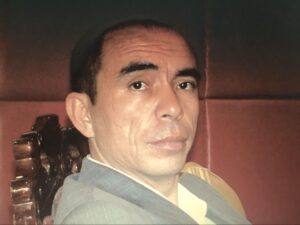
2. Birth: named by a father who was in prison
One detail of his birth rests on a single detailed source — Foreign Policy's 2015 profile, based on face-to-face interviews — and this archive records it as single-source, without embellishment: on the day Perhat was born, his father was being held in prison as a suspected insurgent, and from his cell the father sent out the name he wished for his newborn son: Perhat, meaning "hero." The year was 1969, the height of the Cultural Revolution, when Xinjiang, like the rest of China, was swept by mass political detention. It must be stated plainly that no second source records the father's detention; the father's name, place of imprisonment, its length and his release are all matters of no public record. This archive preserves the detail because it forms a bleak symmetry at the two ends of one life: in 1969 he was born while his father sat in a cell; in 2018 he himself disappeared into the same machinery of detention without any publicly stated charge, and his own two children — a son and a daughter (see section 13) — have received no public word about him since. Nearly half a century separates the father's generation from the son's; in both cases, the reason for the detention was never shown to the family. The symmetry is produced by the factual timeline itself; this archive records it and draws no conclusion beyond it.
Of his childhood and youth, the public record holds only a skeleton. He began writing poetry in middle school before turning to prose and fiction. According to the New York Times, citing Byler's introduction, at the age of fourteen he joined one of the early cohorts of Uyghur students enrolled at Minzu University in Beijing — an institution whose functions included training students from minority regions to become party cadres and professionals. A fourteen-year-old leaving home for the capital, to study for years in an overwhelmingly Han environment, is the biographical root of his fiction: the unnamed protagonist of The Backstreets is precisely such a young man, arrived from a small place in southern Xinjiang to the regional capital, holding a temporary "minority quota" job in a government office. To understand the writing, one first has to understand that trajectory — from a village near Artush, to Beijing, and back to Urumqi. Almost everything he wrote is an account of what happens along that trajectory to a Uyghur who is watched, mocked, pushed aside and ground down inside a Han-dominated state and city.
3. Beijing: learning Chinese in order to read Faulkner
His Beijing education is the stretch of biography on which the sources agree most completely. Foreign Policy and multiple academic and publishing sources concur that he studied at the nationalities university in Beijing on a government scholarship, and that he deliberately mastered Chinese in order to read, in translation, Western novelists and philosophers such as William Faulkner and Arthur Schopenhauer. For a Uyghur-language poet, Chinese was not his mother tongue; it was his tool for opening world literature. His reading also took in Rumi and Franz Kafka, and the traces are visible in his work: Sufi poetic imagery and modernist absurdity coexist in his Uyghur writing. Even at university, his poems and short stories were treating controversial subjects in a self-consciously modernist style. He graduated in 1989 and returned to Urumqi. That year would become the heaviest in modern Chinese political history, but no public material connects his personal trajectory to the events of that year, and this archive makes no unsupported association; it records the year, on which the sources agree: he graduated and went home in 1989.
Back in Urumqi, he quickly became one of the most sought-after conversation partners in the local Uyghur intellectual world; Foreign Policy's profile describes a young returnee whose knowledge and reading were rare in the region, courted by local writers and intellectuals. His close friend Tahir Hamut Izgil — the two had known each other since their university days in the 1980s — later told the New York Times that The Backstreets grew directly out of Perhat's own experience as a student and then a government worker in Han-dominated environments. The Beijing years matter to this archive for a further reason: they explain a key condition of the 2018 detention. Perhat was not a secluded vernacular writer. He was one of the most active interfaces between the Uyghur intellectual world and the world outside it — reading foreign literature in translation, receiving foreign researchers, having his own work translated into English. And Xinjiang after 2017 was a place where "connections abroad" were themselves treated as a danger signal in screening. When Byler met him during fieldwork in 2014 and began co-translating The Backstreets, that scholarly connection later became the only channel through which news of his disappearance reached the outside world (see section 10) — which itself proves the point: after he vanished, the only people left who could carry the news out were foreigners and exiles.
4. A bureaucrat's desk in Urumqi: the job that left him time to write
His workplace, too, requires a correction of the brief. The brief supplied for this entry states that he worked at a "Xinjiang People's Arts Magazine." No source checked by this archive says any such thing. Uyghur PEN, the Fairbank Center blog at Harvard, multiple academic sources and publisher biographies agree that after graduation he worked as a researcher at the Xinjiang People's Arts Centre in Urumqi; the New York Times describes a government institute where he researched ethnic arts, and his friend Tahir adds that what he liked most about the job was the ample time it left him for literary pursuits. This archive accordingly records his post as researcher at the Xinjiang People's Arts Centre, and archives the brief's "magazine" as an error not adopted. The correction is not pedantry: a person's work unit is a basic archival field, and a wrong unit makes it impossible for future researchers to trace him through institutional records, personnel files and his last employment history.
By day, then, he was a researcher inside the state system; by night, he was one of the central figures of Urumqi's Uyghur literary world. Byler's essay for the Columbia University Press blog uses the comparison the author himself resisted: until 2018, Perhat, like Kafka, was a pencil-pushing bureaucrat by day and an observer of urban machinery and madness by night. He never left the country of his birth, and his many novels and collections of poetry remained largely unread outside northwest China — Byler's sentence, written in 2022, identifies a structural fact: Perhat's entire reputation rested inside the Uyghur-language world. His readers were his own people, and his publishing ran through Xinjiang's largely state-run publishing system. That is why the sixteen-year publishing ban that followed the 1999 storm (see section 6) was an existential blow: a writer who could publish only in his mother tongue, and only inside his home region, shut out by that region's entire publishing system, had been handed a death sentence for his literary life in advance — and that was only 1999. What arrived in 2018 was more thorough than a ban.
5. The books: three in print, and a fourth that took twenty-four years
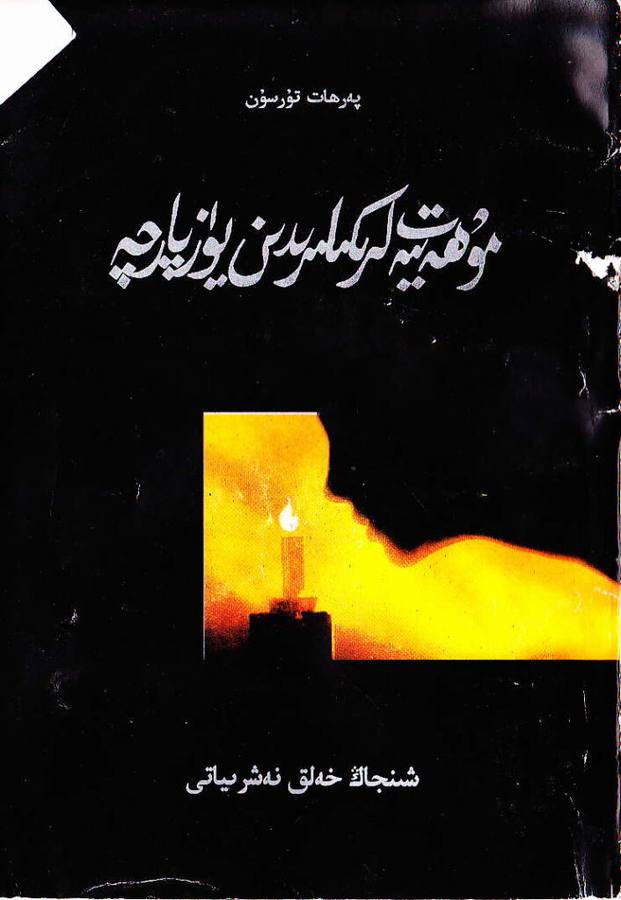
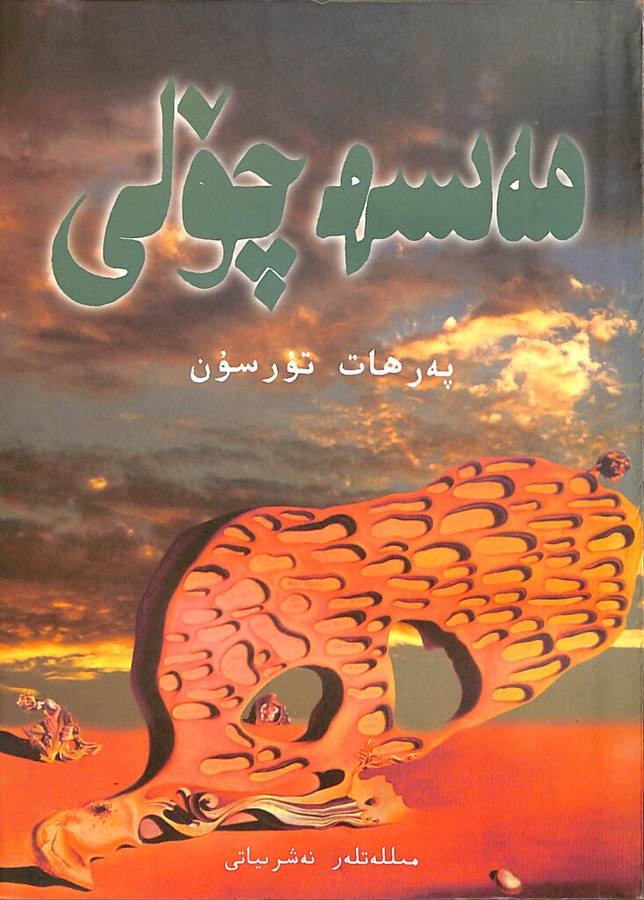
The standard bibliography lists three published books, plus a fourth long work that reached the world only after — precisely, only because — its author had disappeared. First, the poetry collection One Hundred Love Lyrics (1998), which was well received. Second, Messiah Desert, whose date is an explicit point of conflict in this file: one line of sources (the Fairbank Center blog; the Wikipedia entry) describes it as a 1998 collection of novellas that drew controversy for its unconventional themes and imagery, including explicit sexual content, while the New York Times (2022) describes Messiah Desert as a novella published in 1991 in which he explored the teachings of Jesus. The two accounts differ in both form (collection versus single novella) and year (1998 versus 1991); whether the same work first appeared singly and was later collected, or one report is simply mistaken, cannot be determined from public materials, and the two are archived in parallel, unmerged (see section 16). Third, the long novel The Art of Suicide (1999) — the brief for this entry renders its title as "The Land of Suicide" (自杀之乡); no source supports that title, every source gives The Art of Suicide (自杀的艺术), and the error is corrected and archived here. The novel became one of the most widely discussed books ever published in Uyghur, with frank passages about sex, mental illness and suicidal thought.
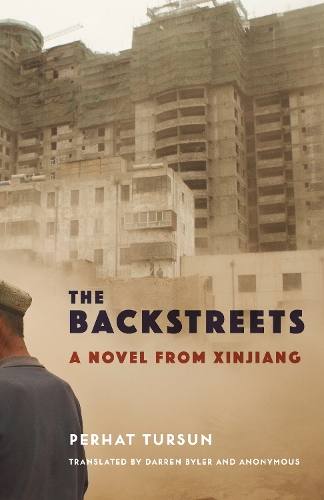
The fourth work is The Backstreets. Its compositional chronology, printed on the translation's final page, is a miniature publishing history in itself: written in Urumqi in 1990–91; revised in Urumqi in 2005; typed in Beijing and finished at 9 p.m. on 15 February 2006; and revised a final time in Urumqi at 12:30 a.m. on 7 March 2015 — by which time the "Strike Hard" campaign had already begun. A novel rewritten across twenty-four years and two cities never found a publisher inside China; it first reached readers in 2013, serialized on a Uyghur literary forum online. It follows an unnamed young Uyghur who flees rural poverty and domestic violence for the capital, lands a temporary job in a government office, and then wanders a smog-choked city through a single night in search of nothing more than a place to sleep, while his boss, his colleagues, the janitors and strangers in the street mock his Mandarin, his appearance and his very existence. J.M. Coetzee's commendation of the translation appears on the publisher's page. In September 2022 Columbia University Press published the English translation, by Darren Byler and an anonymous Uyghur co-translator — by the publisher's account and widespread agreement among reviewers, the first Uyghur novel ever published in English. Perhat had eagerly awaited its American publication (per the New York Times). When the book appeared, he had been disappeared for four and a half years.
6. 1999: book burnings, death threats, and a wife who left
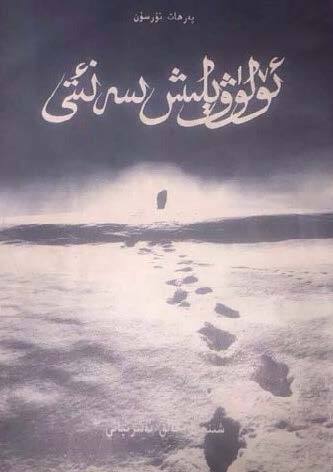
The storm that followed The Art of Suicide in 1999 is the key event of Perhat's first half-life, and the sources agree closely. According to Foreign Policy's profile and its many retellings: Uyghur conservatives in Xinjiang denounced the book as heretical and anti-Islamic; a school in Kucha, in southern Xinjiang, staged a book burning; Perhat received anonymous phone calls threatening his life; his first wife left him; and Xinjiang's largely state-run publishers collectively refused to publish any of his work thereafter. PEN America's current entry matches this exactly: his work, addressing suicide, sexuality and mental illness, led to accusations of being anti-Islamic in the late 1990s, resulting in death threats. The composition of the pressure in 1999 must be recorded in layers, because it differs in kind from 2018: the first pressure came from religious conservatives within his own community and from the inertia of cultural censorship, while the publishing ban issued from the state-run publishing system. That is not the same thing as detention executed directly by the state machine in 2018, and this archive does not conflate them. But the two episodes stack into one whole fact: a Uyghur writer was first convicted in the court of his own community for his thought, and then convicted by the state's camps and prisons for his identity — on two grounds that contradict each other. The first time, he was too un-Islamic. The second time, on the logic of the detention era, he was a Muslim Uyghur as such.
Of his life after the storm, the public record again holds only a skeleton. Foreign Policy's 2015 profile reports that he remarried and had two children, a boy and a girl. The Korean scholar's abstract adds the geography: with his wife and children he lived in the old city in southern Urumqi, the capital's traditional Uyghur quarter. The July 2009 violence in Urumqi, in which at least 197 civilians were killed (the figure given by Foreign Policy) and the city was placed under a military lockdown lasting months, reshaped everything around him; how exactly it struck his own life and writing is discussed only in general academic terms — one study links the turn in tone of his 2000s poetry to that crisis — with no account specific to him personally, and this archive records that as scholarly interpretation, not personal fact. In 2014 the anthropologist Darren Byler, doing fieldwork in Xinjiang, encountered The Backstreets and met its author; the two began translating it together. By 2015 the translation text was ready, but as the crackdown on Uyghurs intensified, Byler feared that publishing it in English might endanger the author and the Uyghur co-translator, and held back (per the New York Times). That hesitation later became the heaviest sentence in everyone's account: if the book had appeared while he was still free, would the world have learned his name sooner? There is no answer. This archive records the hesitation and the outcome, and nothing more.
7. Sixteen years, twice: a number that appears two times in one file
This file contains a numerical coincidence that must be written down squarely, because it is composed of two independently checkable facts and requires no inference of any kind. According to Foreign Policy's 2015 profile and virtually every retelling since, after the 1999 storm Xinjiang's publishers refused to publish any of Perhat Tursun's work for sixteen years. And according to the reports that filtered out in February 2020, the prison sentence imposed on him was also sixteen years. This archive asserts no causal connection between the two numbers — no source records one, and the reason for the sentence cannot be verified at all (see section 11). But an archive's duty is to pin the two appearances of the number side by side: the first sixteen years took from a writer the right to publish — years in which he could only serialize work on an online forum, write in the spare hours of a state research job, and push forward five unfinished novels at once (per Byler). The second sixteen years, if the reports are true and the term is served in full, will take his life from the age of forty-nine to sixty-five. Between the two sixteens lies the whole passage of his most important work: The Backstreets circulating online, discovered by a foreign scholar, and translated into English. The identity of the numbers is a coincidence — if it is a coincidence. What an archive can do is preserve the coincidence exactly as found, and leave judgement to time and to readers; what it must not do is either inflate a coincidence into a conspiracy or delete it as if it did not exist.
The five unfinished novels are a further fact to be pinned down. Byler's article of February 2020 records that at the moment of his disappearance Perhat was working on five uncompleted novels simultaneously. The detail has been repeated by Uyghur PEN, the New York Times and many reviewers in consistent terms, and this archive adopts it: when he was taken, five novels were in progress. The fate of those five manuscripts — seized, kept by his family, or lost with his disappearance — is a matter of no public record. Nor is there any public record of the state of his complete manuscripts, private library and work files. That the entire unpublished oeuvre of a major writer vanished overnight, unaccounted for, is itself part of the cultural loss in this case, and it is recorded here on its own line: as of November 2026, not one word of the five unfinished novels has been published, and no source has ever reported their preservation.
8. Background: the mass detention from 2017, and the collective disappearance of Uyghur intellectuals
Perhat Tursun did not disappear alone. He was one of the Uyghur intellectuals taken in batches in 2017 and 2018. According to Human Rights Watch's World Report 2025 and multiple institutional sources, from the "Strike Hard Campaign against Violent Terrorism" of 2014 — and in particular from the escalation of mass detention in April 2017 — large numbers of Uyghurs and other Turkic Muslims were sent into detention camps, and large numbers were later given long prison terms after secret trials; Human Rights Watch estimates that some half a million people were sentenced to long terms without due process in the campaign, and a 2022 Columbia University Press blog essay likewise puts the number formally prosecuted in the Uyghur homeland over five years at more than five hundred thousand. The roll of cultural figures taken is dizzyingly long: the anthropologist Rahile Dawut, the poet and publisher Qurban Mamut, the linguist Abduqadir Jalalidin, and many more. PEN International's statement of 10 May 2021 describes the pattern most precisely: many Uyghur writers and scholars were first held extrajudicially for years in the "re-education" camps, and more recently the authorities have begun draping a veneer of legality over that system — secret trials and heavy sentences. The statement names Perhat as reportedly serving a sixteen-year term, and calls the targeting of Uyghur writers part of a broader effort to erase Uyghur culture.
The screening logic of that detention is essential to this file. USCIRF's database gives exactly one phrase as the reason for his persecution: ethnoreligious identity. He organized no political activity. He made no public statement against the government. The only act in the public record that comes anywhere near petitioning authority is the suggestion that he may have signed a petition asking the Chinese government to respect the Uyghur language (see section 11; that suggestion appears in a single PEN/Opp article, is framed there as speculation, and is marked unverified here). In other words, the documented "record" on which the detention system took him consists of this: he was Uyghur; he was one of his people's most important modern writers; he read world literature; he associated with foreign scholars; he wrote books about suicide, sexuality and the ethnic condition. In the Xinjiang of 2017–18, that curriculum vitae was itself enough to put a name on a screening list. This is why his case is cited again and again in accounts of cultural erasure: what the detention targeted was not anything he had done, but what he represented — a people's capacity to think about its own condition in its own language.
9. Co-translator "A": the man who disappeared a year earlier
This file holds a second disappeared person, who must have his own section, because the two men's fates are the two faces of one book. The English translation of The Backstreets was produced jointly by Byler and a Uyghur translator who appears in every public publication only under the anonymity of "A." The New York Times reported in 2022 that it had confirmed the co-translator's identity with Byler and with the publisher, and was withholding his name to protect him from retaliation by the state. According to Byler's long essay in Words Without Borders: in 2017, "A" contacted Byler to say he could no longer remain in direct contact with him and other foreigners as he had before; several months later, Byler learned from a friend of A's home village that A had been taken to a camp near that village in southern Xinjiang; and years later, A's friends still did not know where exactly he was, or why he had been taken. Columbia University Press's official author note is briefer: the anonymous co-translator disappeared in 2017 and is presumed to be in the re-education camp system in northwest China. A novel's author and translator disappeared in successive years, 2017 and 2018, into the same detention system, while the book itself crossed the ocean and was published in 2022 — the New York Times headline for the story carried the whole meaning in one line: the author and the translator were detained, and now their novel speaks for them. This archive records "A" to exactly this extent: his name is not unknown to this archive because of any failure of research — every public channel withholds it consistently for his safety, and this archive follows that protective convention, making no guesses and no reconstructions. His current condition, like Perhat's, is a matter of no public record.
10. January 2018: the disappearance — a coded word, "hospitalized"
His disappearance has no exact date, only a month and the date of one confirming message — the first point at which this file's timeline must be fixed in layers. The consistent position across sources is that in January 2018 he was seized by the Chinese authorities in Urumqi: PEN America records detention "since January 2018"; Uyghur PEN records detention "around January 2018"; USCIRF records that he "disappeared" in early 2018 with reports of detention by the Xinjiang authorities. The manner in which the news reached the outside world is described most concretely in Byler's article of 5 February 2020 in SupChina, whose substance — not its wording — is summarized here: the news leaked out in coded messages. A mutual acquaintance told one of Perhat's closest friends, the poet Tahir Hamut, that Perhat had been "hospitalized." In the Urumqi of 2018, everyone in that circle understood what the word meant. Byler records: on 30 January 2018, he received confirmation that Perhat Tursun had been disappeared. This archive therefore takes January 2018 as the event point and 30 January 2018 as the date the disappearance was confirmed to the outside world, archived side by side. The precise date of his seizure, the unit that carried it out — public security police, state security or another organ — whether any legal process was shown, and whether he was taken from his home or his workplace are all matters of no public record. The Chinese authorities have never issued any statement of any kind about his seizure: no arrest notice, no public record of family notification, and no organ of government or justice at any level has ever acknowledged, in any forum, that this man is in custody.
His circumstances at the moment he was taken can be assembled in outline from the sources: he was living with his wife and children in the old city in southern Urumqi (the Korean scholar's abstract); he was still working his research job at the Xinjiang People's Arts Centre (no source records any suspension or sanction before his seizure); he was writing five unfinished novels at once; and the English publication of The Backstreets sat suspended in hesitation. From the day he was taken, his name vanished from both the Chinese internet and Uyghur-language public print — not in the form of any reported delisting, but so completely that not even the delisting itself left a checkable public record. The subsequent eight years of his wife's and children's lives — whether they were themselves sanctioned, whether they were ever permitted a visit, whether they ever received a single official document — have not produced one line of public record (see section 13). That total silence is why USCIRF records his status with the word "disappeared" and PEN International calls his treatment an enforced disappearance: a man is taken by the state in the city where he lives, the state makes no record-acknowledgement of it whatsoever, and his family is left unable to learn whether he is alive, where he is, or what his legal status is — the defining features of enforced disappearance under international law.
11. The charge: a field that must be written as "no public record"
The charge field of this case is where this archive's discipline faced its hardest test, because the brief supplied for this entry offered a specific charge — "inciting ethnic hatred" — and this archive's verification conclusion is that the charge appears in no checkable reliable source whatsoever. It must be corrected expressly and not adopted. The verification results are itemized as follows. First, USCIRF's current prisoners-of-conscience entry states "Unknown" in the Nature of Charges field, lists no sentence at all, and says only that there are unconfirmed reports he was sentenced to prison. Second, Uyghur PEN's case page of 9 February 2021, relaying the CECC record, states expressly that the February 2020 sentencing reports "were not confirmed, and further details, including the charges against Tursun, the trial court, and the date of sentencing, were unavailable." Third, PEN America's current entry says only that details of his trial and current condition remain unclear. Fourth, PEN International's 2021 statement speaks of writers detained on "groundless charges of extremism and separatism" — a general characterization of a batch of cases, not a charge record for Perhat personally. Fifth, Human Rights Watch's World Report 2025 lists him among those serving long sentences and names no charge. Sixth, the only individualized speculation about a reason anywhere in the sources comes from a PEN/Opp article of November 2019, which reports the suggestion that his detention might be connected to his having signed a petition asking the Chinese government to respect the Uyghur language; the article itself frames this with "it has been suggested," no document supports it, and this archive marks it unverified speculation. A 2022 Columbia University Press blog essay describes him, in terms of the era's classifications, as detained in a purge of Uyghur cultural figures deemed part of the "three forces" — ethnic separatism, religious extremism and violent terrorism; that is a characterization of the campaign as a whole, likewise not a charge record against him personally.
The archival statement for this case can therefore only be: charge, no public record; sentencing court, no public record; date of sentencing, no public record; whether any trial took place, whether he had counsel, whether there was an appeal — all no public record. The only sentence that may enter the file is "reportedly sentenced to sixteen years," with the word "reportedly" attached (see section 12). This treatment may look like a gap in the page; in fact it is the central fact of the case itself. A writer acknowledged as his people's most important modern author has been held by the state for eight years, and the state has never shown the world a single charge against him. To record the blank as a blank is not the archive's failure; it is the archive's honesty. To fill the blank with an unverified charge from a brief would be the archive's fabrication. This archive leaves the field empty, and preserves the whole verification process for those who come after.
12. The maze of the sixteen years: 2018, 2019, 2020 and 2024
The date on which the news of the "sixteen-year sentence" entered the public record is given by different sources in years that conflict startlingly, and each must be pinned down, because this is the second most important disagreement in the file. First, the February 2020 account, which carries the most complete evidence chain and which this archive adopts: Byler's SupChina article of 5 February 2020 records that in the previous week the news had "filtered out" that Perhat had reportedly been given a sixteen-year sentence. Uyghur PEN's 2021 case page and the relayed CECC record agree: in February 2020, reports emerged that the authorities had sentenced him to sixteen years, and the reports were not confirmed. The New York Times (2022) records that in 2020 Uyghur advocacy groups and news outlets reported the sixteen-year sentence; NPR's 2022 coverage likewise dates the reported sentence to 2020. In other words, two years after he vanished, the outside world first heard that he had already been sentenced, and the form of the news was seepage — no judgment, no court, no date. Second, the 2019 account: another Byler essay, on the Columbia University Press blog in 2022, states that "a year later he was reportedly sentenced to sixteen years" — a year later meaning 2019. That is not necessarily incompatible with the February 2020 seepage (a sentence imposed in 2019 could have leaked only in early 2020), but no source can confirm when any sentencing actually occurred, and the two are archived in parallel. Third, the February 2018 account, which is plainly wrong: the English Wikipedia entry states that he disappeared in January 2018 and that "the following month, reports claimed that he was sentenced to 16 years in prison." That contradicts Byler's 2020 article on its face — had a sentence been reported in February 2018, a February 2020 article could not present the news "filtered out last week" as news — and none of the entry's own cited sources (the USCIRF entry, Byler's 2020 article, the New York Times) supports a February 2018 date. This archive judges it an editing error, archives the correction, and does not adopt it. Fourth, the 2024 account: PEN America's current entry states that "in 2024, reports revealed" the sixteen-year sentence — in flat conflict with the extensive reporting of 2020–2022, and most plausibly explained as the database entry having been updated in 2024 on the basis of that year's coverage. It is archived in parallel, with that explanation flagged as inference, and is not taken as the first appearance of the sentencing news.
Walking the maze to its end, only three sentences can be nailed down. First: the claim that he was sentenced to sixteen years was in public circulation by early February 2020 at the latest, sourced to seepage relayed by Byler, Uyghur PEN and the CECC record. Second: the claim has never received any Chinese official confirmation or denial, no judgment has ever surfaced, and USCIRF still classifies it as unconfirmed reporting. Third: sixteen years counted from January 2018 would expire around 2034 — and that is arithmetic performed by this archive on a reported term and a detention date, not an official expiry date published by anyone; the two must be kept strictly apart. PEN International's 2021 statement supplies the frame that fits: the authorities' recent method of draping legality over extrajudicial detention has been precisely this — secret trials and heavy sentences. If Perhat's sixteen years are real, their procedural shape matches that frame exactly: a "trial" of which no one knows the time, the place or the judges, from which only a number escaped over the wall. That is the whole of the judicial archive in this case: one number, and around the number, complete blankness.
13. Whereabouts, health and family: eight years without one line of public record
Where he is being held is the second great blank after the charge. No public source can name the prison in which he is serving his reported sentence. What can be confirmed is only the shape of the first phase: the Korean scholar's abstract states that after his arrest in early 2018 he was imprisoned in a so-called re-education centre; Byler's writing calls him a victim of the re-education campaign; the Columbia University Press note describes author and co-translator alike as having disappeared into the camp system. Those descriptions point to the common trajectory of the Uyghur intellectuals taken in 2017–18 — camp first, then, reportedly, transfer into formal imprisonment — but for Perhat personally the camp's name, the prison's name, any transfer and its date are all matters of no public record, and this archive records the trajectory as multi-source description, not as personal established fact: initial detention described across sources as re-education detention; specific place, no public record. His health is likewise a matter of no public record: no source reports any illness, injury, treatment or mental state. The suicide and mental illness that run through his writing are literary themes, not a medical history, and this archive strictly refuses to reverse-engineer a man's health from his fiction.
The family record is thinner still, in a way that demands explanation rather than decoration. Unlike the case of Dr. Gulshan Abbas, filed in the same daily batch series — a family half of which lives in the United States and has campaigned publicly for eight years — Perhat's family remained entirely inside Xinjiang, and the public record contains no public statement by his wife or children, and no interview with them, of any kind. That is not a family that "has not spoken." It is the absence of any safe public channel through which a family inside Xinjiang after 2018 could speak. This archive can record only the following: according to Foreign Policy's 2015 profile, he remarried and had a son and a daughter; according to the Korean scholar, before he was taken he lived with his wife and children in the old city in southern Urumqi; after January 2018, the family's condition is a matter of no public record. The voices raised for him continuously have been those of friends and colleagues in exile: his close friend the poet Tahir Hamut Izgil, in exile in the United States, has recounted his writing and character in repeated reporting; his translator Byler has kept his name before the public through articles, the translation and academic platforms; Uyghur PEN, PEN International and PEN America carry him on their writers-in-prison lists, updated year after year. A writer's family silent inside the wall, his friends speaking outside it — that configuration is itself the standard portrait of a Uyghur family's situation after 2018, and this archive preserves it whole: it does not read attitudes into the family's silence, and it does not fill the silence with invented quotations of the "the family said" kind.
14. International response: PEN, a prize, and a name in the human rights reports
Every international response to this case has travelled down two channels, the literary and the human-rights channel, and every intervention has carried the same premise: those speaking out hold no more information about him than the general public does. The literary timeline runs as follows. In November 2019 PEN/Opp published its discussion of the dangers of teaching Uyghur, noting his seizure and the petition speculation (see section 11). On 5 February 2020 Byler's long SupChina essay, "The disappearance of Perhat Tursun, one of the Uyghur world's greatest authors," became the first systematic public account of the case. On 8 February 2021 PEN International's Creative Witnesses solidarity series devoted its Asia-Pacific episode to him, describing him as a Uyghur author forcibly disappeared in Xinjiang in 2018; Uyghur PEN published its case page on 9 February 2021 demanding his immediate release. On 10 May 2021 PEN International issued its statement expressing alarm at the severe sentences handed to Uyghur writers and scholars, naming him as reportedly serving sixteen years, and calling on the Chinese government to dismantle the re-education camp system and unconditionally release all those held on groundless charges of extremism and separatism. On 30 September 2022 Swedish PEN announced the 2022 Tucholsky Prize for Perhat Tursun — an award given annually to a writer or publisher who faces persecution or has been forced into exile; he could not, of course, accept it, and Columbia University Press prints "Winner, 2022 Tucholsky Prize, PEN Sweden" in the front matter of The Backstreets. On World Poetry Day in March 2024, Uyghur PEN listed him alongside poets such as Abduqadir Jalalidin, saying of the imprisoned poets that their only offence was the courageous act of sharing their voices through verse.
The human-rights channel's record lives in databases and annual reports. USCIRF carries him on the Frank R. Wolf Freedom of Religion or Belief Victims List, with the reason for persecution recorded as ethnoreligious identity and the status as not released, where his name remains. The CECC Political Prisoner Database holds his case (its position known through Uyghur PEN's relay). PEN America's Writers at Risk database marks his case active and his status imprisoned, with active years running from 2019 through 2025. Human Rights Watch's World Report 2025, in its Xinjiang section, names him expressly: many people, including Rahile Dawut, Gulshan Abbas, Perhat Tursun and others, remain imprisoned on long sentences imposed in the Strike Hard Campaign, and an estimated half a million people were sentenced to long prison terms without due process. The US State Department's annual human rights reports document the detention of Uyghur intellectuals as background (this archive has found no naming of him individually in those reports, and records them here as background only, inventing no listing). The cumulative real-world effect of all of this must be written down honestly: in eight years, not one international intervention has produced even one new item of information about him — no visit, no photograph, no official reply, no "under review" follow-up. The entirety of the "progress" in the international record is that his name has never been struck from the lists.
15. The Backstreets in print: one book speaking for two men
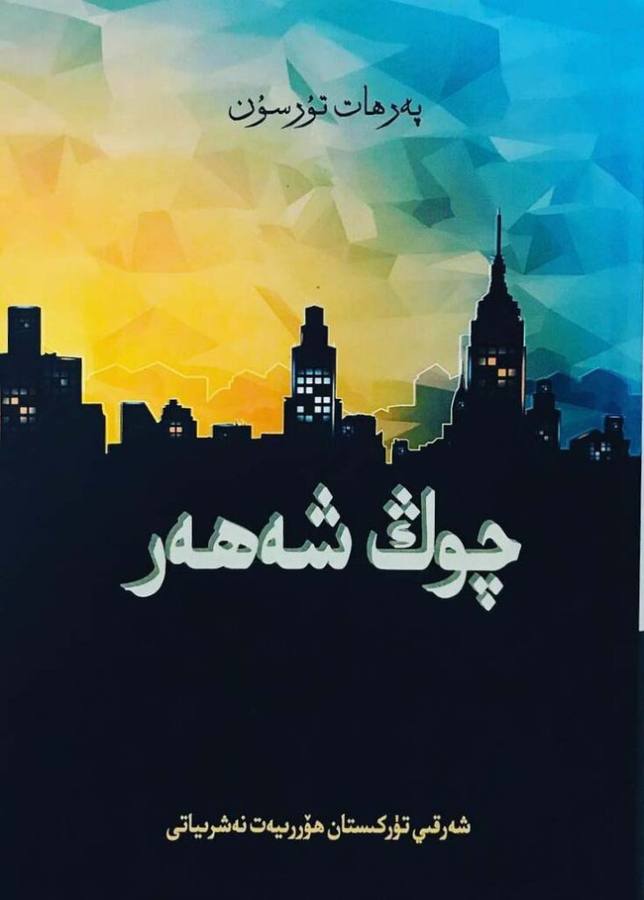
The publication of The Backstreets in English by Columbia University Press in September 2022 is the most substantial public event of the case's second half, and its significance must be set out layer by layer. The first layer is publishing history: this was the first Uyghur novel ever published in English (the publisher's account, widely agreed by reviewers). A writer banned for sixteen years by his own country's publishing system and then swallowed by its detention system reached world literature at last through a novel written in the early 1990s and revised for twenty-four years. The second layer is the intertext of book and fate: the novel's protagonist wanders a smog-bound city all night unable to find a place to sleep, watched, mocked and pushed away by everyone he meets — while its author, at the moment of publication, sat in a prison whose name nobody knows. Reviewers observed almost unanimously that the novel describes the very machinery of exclusion and dehumanization that would later disappear its author; the publisher itself writes that, given his disappearance, the book will inevitably be received as a totem to the Uyghurs. The third layer is the translator's fate: the Uyghur co-translator "A" had disappeared a year before the author (see section 9), and only after both men were in detention did Byler resolve to publish; the New York Times reported that Perhat himself had eagerly awaited the American publication and considered the book among his most consequential works. The fourth layer is reception: J.M. Coetzee contributed a commendation carried by the publisher; The Economist, NPR and World Literature Today, among others, reviewed or reported it; and in January 2023 the American Scholar's podcast opened its episode on the book with the tersest possible summary of his situation: in 2018 he disappeared into a detention centre, and he is now serving a sixteen-year sentence for an unspecified offence.
One further contrast must be archived, because it is easily missed: the fate of The Backstreets inside China. Its only public appearance before Chinese readers was its 2013 serialization on a Uyghur literary forum. Whether it was later deleted, whether his other works were removed, and how his name is handled in publications inside China today are all matters of no public record. Outside the wall, the same book sits in an American university press catalogue, in the citation of a Swedish PEN prize, and in a Nobel laureate's commendation. One book, two worlds: in one of them it does not exist; in the other, it speaks for a man who cannot speak. That is one reason this archive files Perhat Tursun in its Xinjiang line: his case file and his work's file are text and footnote to each other. Read the young man in The Backstreets who cannot find a place to sleep all night, and you understand why his author's name was on the detention lists of 2018; and finding his name on those lists turns The Backstreets into something more than a novel.
16. Archived in parallel: where the sources disagree
Under this archive's rules, disagreements among sources are recorded unmerged. (1) The Chinese name: institutional sources and the standard literature write 帕尔哈提·吐尔逊 (USCIRF's Chinese name; Columbia University Press); the brief for this entry writes 帕尔哈提·吐逊; this archive follows 吐尔逊 and preserves the variant. (2) Birth: January 1969 in Artush (the Wikipedia entry; an East Turkistan exile publication) versus only "born in 1969 in a village near Artush" (the New York Times, citing Byler's introduction) — the month rests on part of the sources, and this archive records it as "January 1969 (the month per Wikipedia and the exile publication; the introduction-derived account gives the year only)." (3) Workplace: all sources agree on researcher at the Xinjiang People's Arts Centre (Uyghur PEN; the Fairbank Center blog; others); the brief's "People's Arts Magazine" is supported by no source and is judged an error; the New York Times' "researcher of ethnic arts at a government institute" points in the same direction as the Centre. (4) The famous novel's title: The Art of Suicide in every source; the brief's "Land of Suicide" is supported by none and is judged a misremembering. (5) Messiah Desert: the 1998 novella-collection account (Fairbank Center blog; Wikipedia) and the 1991 single-novella account (New York Times) are archived in parallel, unmerged. (6) The charge: no reliable source records any specific charge — USCIRF gives "Unknown," the relayed CECC record gives "unavailable"; the brief's "inciting ethnic hatred" is found nowhere and is not adopted; the PEN/Opp petition suggestion and the press blog's "three forces" characterization are speculation and era-characterization respectively, not personal charge records. (7) First surfacing of the sentencing news: early February 2020 (Byler's SupChina essay; Uyghur PEN; the relayed CECC record; the New York Times; NPR — adopted by this archive); the 2019 account (the Columbia University Press blog's "a year later"); the "sentenced in 2020" account (some reviews, conflating imposition with first report); the February 2018 account (the Wikipedia entry, contradicting its own cited sources — judged an error); the 2024-revelation account (PEN America's current entry, suspected to be a database-update artifact). The actual date of sentencing is a matter of no public record. (8) Expiry of the term: no official figure exists; 2034 is this archive's arithmetic from "January 2018 plus sixteen years," not official information. (9) Form and place of detention: re-education detention is reported by the Korean scholar's abstract and multiple retellings, without any place name; the name of any prison of sentence is a matter of no public record. (10) Family details: the remarriage and the son and daughter rest on Foreign Policy's 2015 profile (a single detailed report); life with his wife and children in the southern old city rests on the Korean scholar's abstract; the first wife's departure after the 1999 storm and the father's imprisonment at his birth each rest on Foreign Policy alone and are archived as single-source. (11) Date of seizure: all sources agree on January 2018 with no exact day; 30 January 2018 is the date Byler received confirmation, not a confirmed seizure date, and the two must not be conflated. (12) Matters of no public record: the arrest process and executing unit; the charge; the sentencing court and date; counsel and appeal; places of detention and imprisonment; health; family visits and contact; the whereabouts of the five unfinished novels' manuscripts; and any official statement of any kind.
17. Verification and sources
The core facts of this entry were cross-checked across the following independent sources, with at least two sources for each key fact and single-source items flagged in the text and in section 16. Institutional databases: PEN America's Writers at Risk entry for Perhat Tursun (status: Imprisoned; in detention since January 2018; details of trial and current condition unclear — its "revealed in 2024" framing conflicts with the earlier reporting, see section 16); USCIRF's Frank R. Wolf FoRB Victims List entry (nature of charges: Unknown; status: Not Released; disappeared in early 2018); and the CECC Political Prisoner Database position as relayed by Uyghur PEN's case page of 9 February 2021 (the February 2020 sentencing reports unconfirmed; charges, court and date unavailable). The PEN system: PEN International's statement of 10 May 2021 (carried by IFEX); Uyghur PEN's case page of 9 February 2021 and its World Poetry Day statement of March 2024; PEN International's Creative Witnesses episode of 8 February 2021; Swedish PEN's 2022 Tucholsky Prize announcement (as cited by Wikipedia and Columbia University Press); and the PEN/Opp article of November 2019 (the sole source of the petition speculation). Academic and publishing sources: Darren Byler's SupChina essay of 5 February 2020 (the coded "hospitalized" message and the 30 January 2018 confirmation; the five unfinished novels; the first-hand account of the sentencing news filtering out in early February 2020), his Words Without Borders translation essay of 2022 (co-translator "A"'s disappearance in 2017), and his Columbia University Press blog essay of 2022 (the "three forces" characterization and the "a year later" sentencing framing); Columbia University Press's book page for The Backstreets (September 2022 publication; the Tucholsky Prize; the co-translator's 2017 disappearance); and Columbia University's news report of 2022. Media: the New York Times, 14 September 2022 (the birth village; enrolment at fourteen; the 1991 dating of Messiah Desert; the translation ready in 2015 and held back); Foreign Policy, 1 October 2015 (the father naming him from prison; the 1999 book burning and death threats; the sixteen-year publishing ban; the first wife's departure; the remarriage and two children — the sole source for several personal details, all archived as single-source); NPR, September 2022 (the 2020 reported sentence); The Economist, 2022; Axios, 18 May 2021; Human Rights Watch, World Report 2025 (named as still serving; the estimate of some half a million long sentences); and a Korean scholar's academic study of his poetry (life with his wife and children in the southern old city; arrest in early 2018 into a re-education centre; the sixteen-year sentence reported in early 2020). Evidence grading used in this entry: Grade A — formal documents of the detaining state: this case has none; the Chinese authorities have never published any document or statement on this case at all, and that non-existence is itself an archival fact. Grade B — international-organization and government databases: PEN America; USCIRF; the relayed CECC record. Grade C — accounts by friends and the translator, and advocacy-organization material: Byler's essays; Uyghur PEN's case page — every fact resting on Grade C alone (the coded message; the five manuscripts) is identified as the account of those closest to him. Grade D — single-outlet details: Foreign Policy's family and birth details and PEN/Opp's petition speculation, all marked single-source or unverified. On the four claims carried in the brief for this entry — the Chinese name 吐逊, the "People's Arts Magazine," the charge of "inciting ethnic hatred," and the book title "The Land of Suicide" — this archive's verification conclusion is that each conflicts with the checkable sources or is found in none of them; each has been corrected and archived in the relevant section above. This entry was last verified on 10 November 2026 against the then-current PEN America and USCIRF entries.
18. Our Take
This site's commentary is confined strictly to the facts of this case. First, the most glaring fact here is a blank: a writer recognized as his people's foremost modern author has been held by the state for eight years, and the state has never published his charge, his court, his sentencing date or his place of imprisonment — not once. To fill this field, this archive searched the Chinese- and English-language institutional databases and found, in USCIRF's entry, a single word: Unknown. A regime that can imprison a writer for sixteen years without owing anyone an explanation of why is not displaying a procedural oversight; it is displaying a procedural design — the charge need not be published, because what this detention punishes was never an act. It is a form of existence. Second, spread his curriculum vitae out and read it: he read Faulkner and Schopenhauer; he wrote about suicide, sexuality and ethnic humiliation in the city; in his own community's conservative court he earned the name of heretic, book burnings and death threats; the state publishing system banned him for sixteen years. A man who spent his life fighting censorship and conservatism on every side was finally swallowed by the state through a procedure that does not even exhibit a charge — and the template of charges the era keeps ready for writers of his generation, on PEN International's general account, is "extremism": for a man hunted for twenty years by his own community's conservatives as anti-Islamic, a conviction for religious extremism, if that is what it was, would be the template's most absurd application. Because the charge was never published, even that absurdity can only be archived as a conditional. Third, the number: a sixteen-year ban, and a sixteen-year sentence. This archive claims no connection between them — and insists on printing them side by side, because an archive's duty is to let later readers see both numbers on the same page and think for themselves: the most gifted storyteller of a people was first deprived of sixteen years of publishing his stories, and then deprived of sixteen years of being alive to write them. Fourth, the manuscripts: five unfinished novels disappeared with him, and not one word of them has been seen; his masterpiece had to rely on a foreign scholar and an equally disappeared translator to be published, across an ocean, in another language. When a regime can make a writer's author, translator and manuscripts vanish simultaneously, what it is abolishing is not a few books. It is a people's ability to narrate itself in its own tongue. This archive preserves the case — and leaves the charge field empty, exactly as found. That empty field records the shape of this persecution more accurately than any filling could.