
第130案 | 李必丰Case 130 | Li Bifeng
李必丰(1964年生,四川绵阳诗人、小说家、劳工权利活动者,基督徒,1989年前为绵阳税务局公务员)。1989年他在成都、绵阳组织抗议,逃亡约半年后被捕,以反革命宣传煽动罪判刑五年,1994年出狱,与廖亦武同关四川省第三监狱。出狱后他加入非官方教会、参与创立良心关怀组织调查下岗工人处境,1997年就绵阳三家纺织厂倒闭引发的大规模工人抗争向国际媒体与中共中央写公开信(抗争规模数字为联合国意见书所引单源,未核)。1998年3月8日他在收费站被无证带走,4月6日被正式逮捕,8月24日经一天庭审以诈骗罪判刑七年(中国政府给联合国的回复作4月28日判刑,与同文书时点自相矛盾,并列存档);国际特赦组织1999年认定其为良心犯,联合国任意拘留问题工作组2003年第12/2003号意见认定其拘留为任意拘留。2005年出狱。2011年7月廖亦武出走德国,两个月后,9月12日(国际笔会所载确切日期)他在绵阳被警方以所谓「经济问题」传唤后逮捕,被拘九个月尚未被起诉;2012年11月19日,射洪县人民法院以合同诈骗罪判处有期徒刑十二年、并处罚金三万元——指控源于一份代销海南房产的酒业公司协议,辩方称合同早已过期、根本没有受害人,当局的真实怀疑是他资助廖亦武出逃(廖本人否认)。刑期后来减为十年(China Change 2015年记载,减刑文书无公开记录),2020年4月7日他提前出狱、随即被「强制隔离」于不明地点(美国笔会档案);截至2023年仍受警察限制,不能自由说话与出行。其妻姜霞(美联社拼写作Zhan Xia)在宣判当天未获法院通知,儿子当时十七岁;「妻子被施压离婚」一说经检索无任何公开来源,记为无公开记录。Li Bifeng (born 1964 in Mianyang, Sichuan; poet, novelist and labour-rights activist; a Christian; before 1989 a civil servant at the Mianyang tax office) organised protests in Chengdu and Mianyang in 1989, was caught after about six months on the run, and was sentenced to five years for counterrevolutionary propaganda and incitement, sharing Sichuan No. 3 Prison with Liao Yiwu; he was released in 1994. He then joined an unofficial church, helped found a conscience-care organisation investigating laid-off workers' conditions, and in 1997 wrote open letters to the international press and to the CCP Central Committee about the mass workers' protests that followed the collapse of three Mianyang textile factories (the protests' scale figures rest on a single source chain inside the UN opinion and are unverified). On 8 March 1998 he was seized without a warrant at a tollbooth, formally arrested on 6 April, and on 24 August 1998, after a one-day trial, sentenced to seven years for fraud (the Chinese government's reply to the UN dates the sentence to 28 April 1998, contradicting the chronology of the same document — both archived); Amnesty International named him a prisoner of conscience in 1999, and UN Working Group Opinion No. 12/2003 found his detention arbitrary. Released in 2005, he was arrested again in Mianyang on 12 September 2011 — the exact date given by PEN International — two months after Liao Yiwu's flight to Germany, summoned over alleged 'economic problems' and held nine months without charge. On 19 November 2012 the Shehong County People's Court sentenced him to twelve years for contract fraud plus a RMB 30,000 fine, over an agreement to sell a liquor company's apartments in Hainan which the defence said had long expired and had no victim at all; the authorities' real suspicion, denied by Liao himself, was that Li had financed Liao's escape. The term was later reduced to ten years (China Change, 2015; no reduction document is public). On 7 April 2020 he was released early into 'enforced quarantine' at an unknown location (PEN America file); as of 2023 he remained under police restrictions, unable to speak or travel freely. His wife Jiang Xia (spelled Zhan Xia by the AP) was never notified of the verdict by the court; their son was seventeen. The claim that his wife was pressured into a divorce appears in no public source found and is recorded as no public record.
What Happened
Li Bifeng's life can be measured with three judgments: five years, seven years, twelve years — twenty-four years in total. Born in Mianyang, Sichuan, in 1964, the poet was twenty-five when 1989 came; he organised protests in Chengdu and Mianyang and received the first five. At thirty-four, he wrote up the Mianyang textile workers who had blockaded a motorway and sent the report to human rights organisations abroad; he received the second seven, and the charge had quietly changed from "counterrevolutionary" to the apolitical word "fraud." At forty-eight, two months after his old prison-mate, the writer Liao Yiwu, slipped out of China, state security police phoned him for one of their routine cups of "tea" — and, by Liao's account, five officers seized him in front of onlookers, handcuffed him and drove him away. Fourteen months later, on 19 November 2012, four days after the close of the Communist Party's 18th Congress, the Shehong County People's Court sentenced him to twelve years for "contract fraud." Each term sits further from politics on paper, and closer in time to the last occasion on which he "told the outside world." This page lays the three terms out one by one: which year, which court, which charge, what evidence, what his family paid, what the world said, and where the sources contradict each other — everything layered by provenance, never smoothed into a single clean story.
The page's biggest numerical trap should be named at the outset. The first-instance sentence of 19 November 2012 was twelve years; multiple independent contemporaneous sources agree on that. The term was later reduced to ten years, at a date and by a procedure that were never made public. Human Rights Watch's 2019 profile and CHRD's 2019 list simply write "ten years" — and HRW even misdates the sentencing to 2013 — refilling the verdict column with a post-reduction figure. Any account that says he "was sentenced to ten years in 2012" has compressed two moments into one. This page keeps the twelve-year verdict as the main line and archives the reduction to ten in its own section; the two are never merged.
A second thread is geography. Li is a Mianyang man; all three of his cases began in Mianyang; yet the third was tried by the Shehong County People's Court. Shehong is a county under Suining, a different prefecture-level city from Mianyang. Why a Mianyang resident's "contract" case was heard in Shehong, no public report explains: what jurisdictional link the sales agreement with a liquor company — concerning apartments in Hainan — had to Shehong is not in the public record. That unanswered jurisdictional oddity is part of this case's file, and this page records it as a question, not an oversight.
The third thread is the tool itself: the "economic crime." Two of his three terms rest on fraud-type charges. In the 1998 case, the material before the UN Working Group described the whole of the evidence as a single IOU slip, with no witness willing to testify against him and his lawyer warned not to defend him properly. In the 2012 case, defence lawyer Ma Xiaopeng said his client's actions "in no way add up to a crime" and that the only contracts he had signed had long since expired; Huang Qi said the alleged fraud did not even have a victim. The advantage of trying a political case as an economic one was spelled out in 2012 by Huang Qi himself: concerned about China's human rights image abroad, the authorities "dress it up as something else." The sections below first establish the facts, then settle that account.
A Tax Official and a Poet: Mianyang, 1964 to 1989
Li Bifeng was born in 1964 in Mianyang, Sichuan — the year supported by two independent age anchors in the sources (forty-eight at his November 2012 sentencing; twenty-five in 1989, per China Change). The UN Working Group on Arbitrary Detention's 2003 opinion gives 1965, one year off both anchors; this page uses 1964 and archives the 1965 version alongside. His early occupation is rarely noticed: Amnesty International's 1999 file records that before 1989 he was a civil servant at the Mianyang tax office — not a professional dissident, but a salaried man inside the system who wrote poetry on the side. The UN Working Group's opinion adds that in the mid-1980s he edited a dissident magazine. The pre-1989 portrait, assembled from these pieces, is: tax official, poet, underground editor. That combination set the course of the next three decades — he was never a man who adopted a position and then looked for something to do; he was a man who stood at a scene and then wrote the scene down.
His Christian faith appears across several sources. After his first release in 1994, he joined an unofficial church and, with fellow Christians, helped found a conscience-based care organisation — given in English-language materials as the Chinese Conscience and Care Action — which investigated and published the living conditions of laid-off workers, women and children, providing information and acting at both domestic and international levels (UN Working Group opinion, paragraph 10; Amnesty International's 1999 file describes him as a spokesperson for an unofficial Christian group that investigated the situation of laid-off workers in Sichuan). This page notes the evidence limit: no source gives the organisation's name in Chinese, and this page does not invent one. One item in this page's commissioning brief — that he funded or commemorated prisoners' families — could not be matched to Li Bifeng in any public source this page searched. What is documented is his investigation, reporting and care-organisation work concerning laid-off workers, and his 1997 letter to the CCP Central Committee demanding the release of political prisoners (see below). Attaching another man's deeds to his name would be the same archival error as erasing his own; this page does neither.
1989: The First Five Years
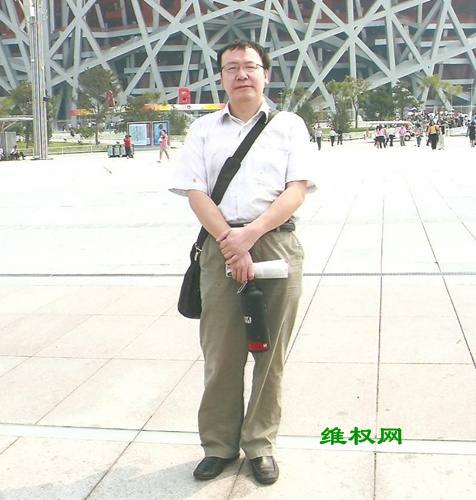
In the spring of 1989 Li Bifeng was twenty-five. China Change's 2015 "Torchbearers" series records that he was elected president of the Chengdu Youth Autonomous Committee, organised protests and mobilised residents in Chengdu and Mianyang in support of the nationwide democracy movement, and was subsequently sentenced to five years for "counterrevolutionary propaganda and incitement." The specific office of committee president rests on China Change alone; this page archives it as a single-source item, unverified. The layer beneath it — that he organised protests in Sichuan, was sentenced to five years, and that the charge was counterrevolutionary propaganda and incitement — is supported by CHRD, Human Rights Watch, PEN International and China Change together, and can stand. Human Rights Watch's 2019 profile puts it most briefly: in 1989 he was a poet in Chengdu who organised protests in support of the Beijing students and was given five years on "counterrevolutionary" charges.
The arrest itself carries the colour of his whole life: flight and manuscripts. By Liao Yiwu's account, after the crackdown he fled under a blanket arrest warrant, passed checkpoint after checkpoint from Sichuan to Yunnan, slipped through virgin forest past the border guards and reached the Myanmar side — this passage comes from Liao's 2012 award speech and appeal letter, a close friend's literary testimony, archived here as a third-tier source and never upgraded into cross-verified fact. The verifiable skeleton is narrower: he was caught after roughly six months on the run (the Berlin International Literature Festival materials and the English-language encyclopaedia entry both give six months), sentenced, and sent to Sichuan No. 3 Prison. There he met Liao Yiwu, likewise imprisoned for 1989 — among the twenty-odd June Fourth political prisoners in that prison, the two of them bonded over literature (Liao's appeal letter). That prison friendship is the key to the 2011 case: when the authorities finally came for him a third time, the charge sheet said "contract," but the first line of the real file was this relationship, then twenty-two years old.
The first term's fixed points are these: five years, release in 1994 (PEN International dates his cumulative imprisonment "since 1990"; Liao likewise gives the first term as five years). The sentencing court, the judgment date and the exact arrest date are not in the public record. Some secondary materials — including one English passage in the Berlin festival's materials and the paraphrase chain behind the English encyclopaedia entry — misstate the first term as "economic crimes," in one place even as "twelve years," in direct conflict with the multi-source record of counterrevolutionary propaganda and incitement and five years; this page does not adopt those versions and lists the conflict in the Verification Note. When he walked out in 1994 he was thirty, and the last years of his twenties were gone.
1997: The Mianyang Textile Workers and Two Open Letters
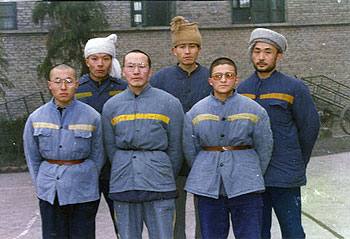
After his release, Li did not go quiet. He turned to the rawest nerve in 1990s Sichuan: the layoffs. In 1997, three state-owned silk and textile factories in Mianyang failed; factory cadres were accused of embezzling the laid-off workers' unemployment-relief money, and strikes and mass demonstrations followed (Amnesty International, 1999 file). The version in the source material before the UN Working Group is more detailed: in June 1997 Li wrote an open letter to the international press describing a demonstration by 100,000 laid-off workers from the three bankrupt textile factories against the managers' embezzlement of their relief money, ending in a crackdown by the army in which more than one hundred workers were wounded and more than eighty arrested (UN Working Group opinion, paragraph 11). This page must mark the evidence tier plainly: the figures of 100,000 workers, one hundred wounded and eighty arrested rest on that single source chain inside the UN opinion and are corroborated by no independent source; they are archived verbatim and marked unverified, not written as verified statistics. Amnesty's file is more restrained and confirms only the skeleton: three failed factories, the embezzlement allegations, strikes and mass demonstrations.
The same year, he did something else whose weight is easy to miss now: he wrote to the Central Committee of the Chinese Communist Party urging it "to free all political prisoners … and end one-party rule" (UN Working Group opinion, paragraph 12; the letter's full text was never published, and this page paraphrases the opinion's quotation of it). In 1998 he published a survey reporting that 98 per cent of the redundant workers surveyed felt the layoffs had not been implemented equitably and that the government needed to reform the social security system (same source) — the 98 per cent figure is likewise a single-source survey number, archived unverified. Also in 1998, he wrote a piece of reportage about the Mianyang textile workers' sit-in and their blockade of a motorway, and provided it to human rights organisations overseas (Liao Yiwu's appeal letter; PEN materials describe him reporting on the Mianyang workers' protest to human rights organisations abroad). One layering point: the UN opinion dates the open letter to the international press to June 1997, while Liao and PEN date the workers' reportage to 1998. The two may be consecutive steps — first the letter, then the reportage — or a memory discrepancy; this page archives both datings side by side and does not force them together. What is certain is the result: the police were alarmed, and he went on the run.
8 March 1998: The Taxi at the Tollbooth
Even the length of that flight is disputed: Amnesty International gives eight months on the run; Liao Yiwu's appeal letter gives six. Both are archived. During the flight, his then girlfriend Zhang Jiang (the name as romanised in Amnesty's file; no source gives it in Chinese characters) was detained by police on several occasions and questioned about his whereabouts (Amnesty International, 1999 file — a single-source detail). Pressure on the people closest to him arrived before his own arrest did; the pattern recurs in every one of his cases.
On 8 March 1998, on his way to Mianyang to visit his two-year-old daughter and other family, the taxi carrying him was stopped at a tollbooth, and officers of the Mianyang City State Security Bureau took him away without showing identification and without a warrant (Amnesty International, 1999 file; UN Working Group opinion, paragraph 13). The police initially refused to give his family any information about what had happened or where he was (Amnesty file). He was formally arrested on 6 April 1998 (both sources agree). His first place of detention, in the source material before the Working Group, was the Jiangyou City Detention Centre (opinion, paragraph 16). And the charge, according to both Amnesty and the Working Group, was "fraud" apparently relating to the sale of a safe deposit box from his place of work. Hold that detail: the alleged object of the 1998 "fraud" was, on these two files, an office safe. It has nothing whatever to do with the Hainan apartment sales agreement of the case fourteen years later. The only common element between the two "frauds" is the defendant.
A One-Day Trial and Seven Years for "Fraud": The Second Term
In August 1998 the case was tried, in a single day. The source-side version before the UN Working Group runs: on 24 August 1998, after a one-day trial, he was sentenced to seven years' imprisonment for fraud, under Article 193(3) of the Criminal Law; the court could not find a single witness to testify against him; the only evidence was an "IOU slip" allegedly linking him to a suspect transaction; and his lawyer was strongly advised not to defend him (opinion, paragraphs 14–15). Amnesty's file matches: sentenced in August to seven years after a trial lasting one day; the court was unable to find a single witness willing to testify against him; his lawyer was warned against making a proper defence. This page archives the citation to Article 193(3) as a transcription only — in the current Criminal Law that article concerns loan fraud and does not fit the safe-deposit-box narrative; the article number was likely garbled somewhere along the relay chain, and this page builds nothing on it.
The Chinese government's reply to the Working Group tells a different story: that he was arrested by the Beijing city public security authorities (inconsistent with the Mianyang state security account in both agency and place), that the Mianyang City People's Court sentenced him to seven years for fraud on 28 April 1998, and that he was serving the sentence at Ya'an Prison (the government's reply as quoted in the opinion, paragraph 17). That version contains a hard chronological defect: a sentence imposed on 28 April precedes by four months the 24 August charging and trial dates given by the source side of the same document — within the four corners of the opinion itself, the government's date cannot stand. This page's handling: both versions archived, the government's together with its internal contradiction; accordingly the prison of the second term also has two versions — Chuandong Prison on the source side (with Jiangyou Detention Centre before it), Ya'an Prison on the government side — archived side by side. The seven-year term and the fraud charge are common to both versions and are the parts that can be confirmed.
The international characterisation came quickly. In 1999 Amnesty International considered Li Bifeng a prisoner of conscience, imprisoned solely for the non-violent expression of his beliefs in publicising the plight of workers in Sichuan, and launched a solidarity action (Amnesty International file ASA 17/10/99). The U.S. State Department's Country Report on Human Rights Practices for 2000, released on 26 February 2001, listed his name among those remaining imprisoned for the peaceful expression of political, social or religious views. In 2003 the UN Working Group on Arbitrary Detention issued Opinion No. 12/2003, holding his detention — and Liu Xianbin's — arbitrary, in contravention of Article 19 of the Universal Declaration of Human Rights and within its Category II, and noting that the government had failed to adduce any convincing argument to refute the allegation that he had been found guilty of fraud without evidence and without a fair trial because he had investigated the laying-off of 20,000 workers in Sichuan, written an open letter and published information about disturbances in the province (opinion, paragraphs 20–24). In other words, the "fraud" packaging had been stripped off, to his face, by a UN procedure as early as 2003. Nine years later, the same packaging was used on the same man.
The second term expired in 2005; PEN dates the seven years to 1998–2005. He was forty-one when he came out, with twelve of his years spent in prison. In 2005 Liao Yiwu conducted a long interview with him, later included in Liao's "Bullets and Opium" (Berlin International Literature Festival, 2013 worldwide reading materials). Beyond that, his public footprint between 2005 and 2011 is faint: Liao's appeal letter leaves only a summary line — over the years, the authorities confiscated a large trove of his writings. What the mass confiscation of a writer's manuscripts means is asked plainly in that letter: is taking a writer's work not enough — why must the man himself be put in prison? In 2011, that question received its answer.
September 2011: Seized After a Cup of "Tea"
In July 2011 Liao Yiwu, after being refused permission to leave China sixteen times, crossed the China–Vietnam border on his own and reached Germany via Vietnam (Liao's 2012 award speech). Two months later, it was the turn of the friend who had stayed. According to Liao's appeal letter of 25 November 2012: one mid-autumn afternoon, local state security police phoned Li Bifeng as usual and invited him to "have a cup of tea" — such summonses were routine for him, and he went as he always did — whereupon, in front of everyone, he was seized by five policemen, handcuffed and taken away in a police car. The detail comes at Liao's tier of testimony and is archived here as third-tier; the skeleton corroborated by independent sources is that he was detained in Mianyang after being summoned by police over alleged "economic problems" (Radio Free Asia and PEN International agree). The date is another point this page must layer carefully: PEN International's Rapid Action Network RAN 31/12 of 20 June 2012 and its update of 23 November 2012 give the only exact date in any institutional source — arrested on 12 September 2011, after being summoned for questioning by police in Mianyang city over alleged "economic crimes." This page adopts 12 September 2011 as the case's sort date. A version circulating at the commissioning level — "detained on 9 September in Suining" — was searched for in English and Chinese across multiple query sets, and no organisation or outlet records that date or that place; it is not adopted and is archived here only for the record. Suining is the prefecture-level city administering Shehong County; the likely origin of the error is the confusion of the trial venue with the place of arrest. Arrest in Mianyang, trial in Shehong under Suining: the two must not be conflated.
What the authorities suspected is consistent across every source: that he had helped finance, or otherwise assisted, Liao Yiwu's escape (CHRD, PEN International, the Associated Press and Radio Free Asia all agree). Liao himself denied it on repeated occasions: he reached Germany and did not learn of Li's arrest until May 2012, and Li had had nothing to do with his flight (Liao's appeal letter and award speech). The letter preserves one more detail: before leaving, Li had invited Liao to dinner and asked whether he needed "help to go," and Liao had said he was going nowhere — on Liao's own telling, that conversation is itself proof the financing suspicion was baseless. This page stays at the level of the sources: financing the escape was "the authorities' suspicion," and it never appeared in any public indictment. The judgment eventually handed down in November 2012 convicted him of contract fraud and had nothing to do with Liao Yiwu at all. A man is seized in September because his friend left the country; fourteen months later he is sentenced over an apartment-sales agreement in Hainan. No public document connects the two stories. That disconnection is the heart of this case's characterisation.
The procedural black hole that followed is also documented. When PEN International issued its appeal on 20 June 2012, Li had been held for nine months; Freedom House's China Media Bulletin, summarising the appeal, stated plainly that he had been detained in September 2011 for alleged economic crimes "but has yet to be charged." From September 2011 to at least June 2012, then, he was held with no public charge at all, and the outside world could describe the accusation only as his so-called "economic problems." Those nine months, set against a sentencing hearing of barely over one hour in November 2012, form the two ends of this case's procedure: detention stretched without limit at one end, adjudication compressed to almost nothing at the other.
2012: The Shehong Trial, the Postponements and a Verdict After the Party Congress
The trial venue was the Shehong County People's Court. Three fragments about the hearings survive, and this page sets them out by evidence tier. First: Taiwan's Apple Daily reported on 10 May 2012 that news of Li Bifeng being tried on 8 May in Shehong County, Sichuan, on "economic crimes" had reached the international community, whereupon the Berlin International Literature Festival launched a global writers' campaign and the scheduled trial was postponed (the report, preserved through a Taiwanese commentary site, was read by this page on 7 November 2026). That fragment rests on a single-source chain and is marked unverified, though its broad direction matches Liao's appeal letter, which describes a trial lasting several months with repeated adjournments. Second: the Associated Press reported in November 2012, quoting his wife, that since his detention in September 2011 she had seen her husband only once — at his trial in July — and that he was then in poor mental health and suffering from high blood pressure (AP, carried by The Guardian). Third: the sentencing itself, on 19 November 2012, at a hearing that lawyer Ma Xiaopeng told Radio Free Asia lasted just over one hour. Together the fragments outline a case that ran from at least May to November 2012, with hearings held and adjourned, a wife's single sighting of her husband in July, and a verdict delivered in little more than an hour. Whether the trial was open, who attended, and what the indictment said are not in the public record.
The timing of the verdict deserves its own marker: 19 November 2012 fell days after the close of the 18th National Congress of the Chinese Communist Party and days after the new leadership had been presented. Liao's appeal letter drew attention to exactly this — the sentence was pronounced, it noted, just as the decennial power transition was completed, in the small Sichuan town of Shehong, several thousand kilometres from Beijing. This page does not speculate about the motive behind the timing; it records the timing itself and Liao's observation, together with one confirmable background fact: in the same week, on 15 November, the Day of the Imprisoned Writer, the Independent Chinese PEN Centre had named Li Bifeng a new honorary member (ICPC statement of 15 November 2012). In the very days the international literary world's solidarity arrived, the Shehong court brought down twelve years.
The Verdict: Twelve Years, a RMB 30,000 Fine and a Contract with "No Victim"
On 19 November 2012 the Shehong County People's Court sentenced Li Bifeng to twelve years' imprisonment for contract fraud (CHRD's China Human Rights Briefing of 19 November 2012; PEN International's update of 23 November 2012; Radio Free Asia's November 2012 report; the Associated Press report of the same day; Front Line Defenders' case history — five sources in agreement). Radio Free Asia adds the fine of RMB 30,000 and Ma Xiaopeng's account that the sentencing hearing lasted just over one hour. The surface facts of the accusation were these: he had signed an agreement with an alcohol company to help sell apartments the company held on Hainan island; the company claimed he owed it more than two million yuan, nearly US$320,000 (CHRD briefing). The company's name, the date of the agreement and the composition of the alleged debt are not in the public record.
The defence side is archived here just as fully. Zhao Jianwei told the Associated Press that the defence would appeal, that the verdict was not based on the facts, and that the prosecutors and the court had violated procedural law and regulations. Ma Xiaopeng told Radio Free Asia that whatever the sentence, it was unacceptable; that his client's actions in no way added up to a crime; that nothing in his affairs had anything to do with contracts and the only contracts he had signed had long since expired; and, after visiting Li following the sentence, that Li was "disappointed." Huang Qi's formulation was the bluntest: in this so-called contract fraud there were not even any victims. The protest Liao's appeal letter attributes to the defence lawyer points the same way: the evidence is dubious, and there is no victim in the so-called fraud. This page's handling of these claims is symmetrical: they are the public statements of the defence and of supporters on the day of the verdict, consistently on record across several sources — but the judgment itself was never published, and which evidence the court credited, or how it arrived at a figure of more than two million yuan, cannot be checked. "No victim" is archived as the defence's contention, not upgraded into a finding of this page; "owes more than two million yuan" is archived as the prosecution's contention on the same terms. What the record does establish is the gulf between the two contentions — and that the gulf was never confronted in any public proceeding.
On the appeal, three accounts stand side by side and this page does not reconcile them: first, the AP, quoting Zhao Jianwei, that the defence would appeal; second, CHRD's briefing, that Li himself said he would appeal; third, Radio Free Asia, quoting Ma Xiaopeng, that after visiting Li he felt Li probably did not want to appeal, because he thought it would do little good — Li said it would be better to use the next twelve years to produce some serious writing. The three may correspond to different moments and different conversations on the same day. Whether an appeal was formally lodged, which court heard it (by jurisdiction it would have been the Suining Intermediate People's Court — that is this page's procedural inference, not a record), and the date and outcome of any ruling, are all absent from the public record. This page confirms only this: no source has ever reported a second-instance document in this case, whether amending or upholding the verdict; and the one change to the term that is on record came later, by reduction — the subject of the next section.
How Twelve Years Became Ten: The Reduction
The easiest figure in this case to get wrong is the length of the sentence, so the timeline is laid straight here. On 19 November 2012 the first-instance court imposed twelve years; that is the figure in the verdict column. Thereafter, the term was reduced to ten years. The explicit record of the reduction is Wang Yaqiu's "Torchbearers" article on China Change, published 4 June 2015: Li was given a twelve-year sentence for contract fraud in 2012, which his lawyer and family believed was groundless; "the sentence was later reduced to 10 years"; and he was then imprisoned at Chuanbei Prison in Sichuan. The date of the reduction, the court that granted it and the reasoning are not in the public record — China Change does not give them, and this page's searches found no other source supplying them. The Chuanbei Prison location is likewise archived as single-source: it appears only in that 2015 article, and no later source has ever updated his place of imprisonment.
Corroboration that a reduction occurred exists, but in a form that itself demonstrates the record's disorder. Human Rights Watch's profile of 30 May 2019, published for the thirtieth anniversary of 1989, states: "In 2013, a Sichuan court sentenced him to 10 years in prison on dubious 'contract fraud' charges." The year is wrong — the sentencing was in 2012 — but the figure is the post-reduction ten. CHRD's list of 30 May 2019 likewise describes him flatly as "serving a 10-year sentence since 2012." Two major organisations using "ten years" in parallel in 2019 indicates that a reduction had occurred before 2019 and had entered the human rights community's working figures; neither organisation documents the reduction itself. This page therefore writes it as follows: the twelve-year first-instance sentence (five contemporaneous sources, 2012) is the main line; the reduction to ten years (stated explicitly by China Change in 2015, corroborated in effect by the 2019 usage of two organisations) is archived separately; Human Rights Watch's misdating of the sentencing to 2013 is flagged here and not adopted. This is also the true origin of the "ten years versus twelve years" discrepancy in this page's commissioning brief: those are not two verdicts but two moments in one term — twelve imposed, later reduced to ten. To take either number alone and call it "the sentence" is an error.
One further sum is left open for a later section. Even on the reduced ten-year figure, counted from his seizure in September 2011, the term would not have expired until September 2021. He in fact left prison on 7 April 2020 — some seventeen months before even the reduced term expired. Whether there was a second reduction, parole, medical release or some recalculation of custody credit is not in the public record. This page leaves that gap exactly where it lies, unfilled by conjecture.
The Family: Jiang Xia, a Seventeen-Year-Old Son and "Seen Only Once"
The family's names must first pass a spelling check. Radio Free Asia's November 2012 report gives his wife's name as Jiang Xia; the Associated Press report carried by The Guardian gives it as Zhan Xia. The two spellings plainly refer to the same person — the same verdict, the same remarks about the Hainan apartment agreement. This page uses Radio Free Asia's Jiang Xia as its main form and archives the AP's Zhan Xia alongside. No public source gives her name in Chinese characters, and this page does not guess at them; she is referred to by the romanisation and as his wife. Likewise, the claim in this page's commissioning brief that his wife was pressured into a divorce was searched for, in English and Chinese across multiple query sets, in PEN, CHRD, Radio Free Asia, the Associated Press, ChinaAid and every other relevant source: no source records a divorce, and no source records pressure to divorce. This page records the claim as not in the public record and unverified — it is not written as fact, and it is flagged here precisely so that it does not harden, in retelling, into something "the archive says."
The family facts that are documented are these. On the day of sentencing, 19 November 2012, his wife was unable to attend, and the court had not informed the family of the sentence (Radio Free Asia, quoting her). She said she was very surprised, because she had thought the only thing the court could do that day was release him; she hoped he would appeal, because the charges did not stand up, and she thought there must be some other factors involved. Their son was seventeen that year, and cried when he heard the news (RFA, November 2012). The AP's account adds: since his detention in September 2011 she had seen her husband only once, at his trial in July 2012, and he was not in good mental health and was suffering from high blood pressure. The children's two timelines complete the picture: when he was seized in 1998, his daughter was two; when he was sentenced in 2012, his son was seventeen. At least two children each grew up inside one of their father's terms — the daughter's childhood against the second seven years, the son's adolescence against the third twelve. The children's names and the family's life after 2012 are not in the public record. This page's writing about the family stops at what the sources support: a wife who could not get the court even to notify her of the verdict; a seventeen-year-old son crying at the other end of the news; a two-year-old daughter who lost her father for seven years from the day of the tollbooth. That is already enough to show the reach of what was filed as a "contract fraud case."
One item from 1998 belongs here because it establishes the pattern: during his second flight from arrest, his then girlfriend Zhang Jiang was repeatedly detained and questioned about his whereabouts (Amnesty International, 1999 file). From the girlfriend interrogated in 1998 to the wife left unnotified in 2012 — pressure applied to the people closest to him before and around his own punishment, and a family left to wait in an information vacuum, run as accompaniments through all three prosecutions. This page states that judgment on the basis of the two sourced moments and draws no inference beyond the record.
International Reaction: From Prisoner of Conscience to a Worldwide Reading
International engagement with Li Bifeng's case spans more than two decades and is unusually dense for a provincial case, because he stands at the crossing of three lines: the 1989 generation, labour rights, and imprisoned writers. In chronological order. During the second term: in 1999 Amnesty International named him a prisoner of conscience and launched a solidarity action (see above); in 2000 the U.S. State Department's human rights report listed him among those in prison; in 2003 the UN Working Group on Arbitrary Detention, in Opinion No. 12/2003, found his detention arbitrary. Those three are records at the level of formal institutional documents, not gestures of support.
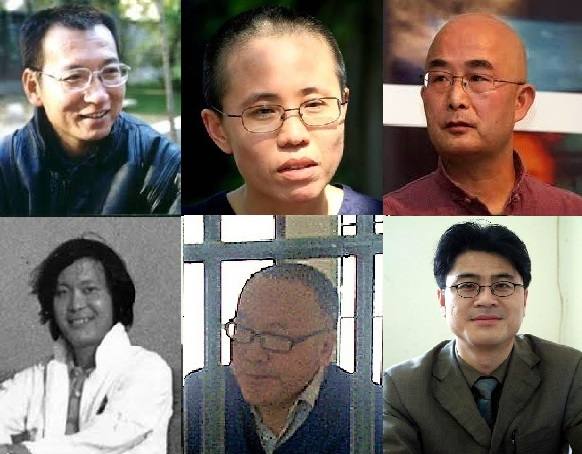
The reaction to the third term ran on PEN's axis. On 20 June 2012 PEN International's Writers in Prison Committee issued Rapid Action Network RAN 31/12 for a man then held for nine months and not yet charged. On 11 May 2012 Liao Yiwu, in his acceptance speech for the Kapuściński Award in Warsaw, spoke at length about Li Bifeng's plight and closed by reading Li's poem "In This Country, We Can Only Hibernate" (the speech text as published by Human Rights in China). On 15 November 2012 the Independent Chinese PEN Centre named him a new honorary member. After the 19 November sentence, PEN International's update of 23 November protested the harsh sentence, held his detention to violate Article 19 of the International Covenant on Civil and Political Rights and Article 35 of the Chinese constitution, both protecting freedom of expression, and called for his immediate and unconditional release. On 25 November 2012 Liao Yiwu, Ai Weiwei and others launched the international writers' appeal "The Peril of Creating State Enemies," signed by more than three hundred intellectuals worldwide, among them Nobel literature laureate Herta Müller and U.S. National Book Award winner Ha Jin (AP report and the appeal text). On 4 June 2013 the Berlin International Literature Festival organised a Worldwide Reading for Li Bifeng, at venues around the world on the twenty-fourth anniversary of the Tiananmen crackdown, reading his poems and prose and demanding his release (Berlin festival and Berliner Festspiele materials). Front Line Defenders' case history also carries the case, in terms consistent with the above: sentenced on 19 November 2012 by the Shehong County People's Court to twelve years for contract fraud.
This page must also record two absences, because half an archive's value lies in its documented gaps. First: Human Rights Watch issued no standalone statement on the 2012 sentence that this page could find — the organisation's text concerning Li is its 2019 thirtieth-anniversary group profile, whose year and sentence figures are wrong in the ways detailed in the reduction section above; to write that "Human Rights Watch condemned the verdict" would be a claim without a source. Second: no standalone U.S. government statement on the 2012 sentence could be found — the American official text touching Li is the 2000 State Department report's prisoner list, concerning the second term. And a caution of attribution: Amnesty International's 2012 public page on this case, on its UK section's website, republishes CHRD's briefing; it is not an Amnesty urgent action of its own, and citation must not confuse the two. Three hundred writers signed; a UN opinion was written; a worldwide reading was held; and the Shehong judgment did not change by a single character. This section's conclusion can only be written this way: the international reaction reached the ceiling of what literary solidarity can do — and its concrete effect was that this sentence was at least not served in silence.
7 April 2020: An Early Release into "Enforced Quarantine" at an Unknown Location
For his release, the public record holds exactly one precise date: PEN America's Writers at Risk file states that on 7 April 2020, after over eight years in prison, he was released into "enforced quarantine" at an unknown location; the file lists his status as "Conditional Release" and his case as still active. The year of release and the fact of quarantine receive broad support from a second source: on 4 September 2020 ChinaAid published a Chinese-language report by Yang Qi under the headline "Sichuan dissident writer Li Bifeng quarantined in a hotel after being released from prison." But this page must mark the limit: the report appeared in September 2020, and how the quarantine it describes relates to PEN America's 7 April release date cannot be confirmed — whether his quarantine state continued from April into September, whether the report lagged, or whether there was some further movement, the public sources provide no timeline that locks together. Both accounts are archived side by side. What this page confirms is only this: within 2020 he was out of prison, and for a period after release he was held under hotel-based or otherwise unspecified quarantine-style control. In the year of the pandemic, "quarantine" placed one more layer — one no visitor could penetrate — over a released prisoner; that is the general background of the time, and this page records only the part that touches him directly.
The release date conceals this case's last unanswered piece of arithmetic. Twelve years imposed, reduced to ten; ten years counted from September 2011 expire in September 2021; he actually left prison on 7 April 2020, some seventeen months early. The legal form of that early release — a further reduction, parole, medical release or something else — is not in the public record. The "released September 2021" date in this page's commissioning brief coincides exactly with the theoretical expiry of the reduced ten-year term; it is sentence arithmetic, not a release fact. The actual release date in this page's main line is PEN America's 7 April 2020, and the September 2021 version is corrected here and not adopted. A man walking out of prison seventeen months early ought to be the brightest line in this file; because no document explains how he came out, or on what conditions, the brightness can be recorded no further than this.
The conditions were real. PEN America's file states that as of 2023 he remained under police restrictions, unable to speak or travel freely, with friends confirming that he was still closely monitored and not fully free; the file accordingly treats his release as conditional. After 2023 the public record breaks off again: for 2024 to 2026 this page found no independent reporting on his health, residence, writing or movements. As of this page's verification date, 7 November 2026, he is sixty-two if the 1964 birth year holds, and more than twenty of his years have been spent in prison and under control. Whether he is still writing poetry is not in the public record; what became of his confiscated manuscripts is not in the public record; and no public record exists of any of his three convictions being overturned, quashed or compensated by the state.
Our Take
To judge the Li Bifeng case, the table of charges is enough. In 1989 the authorities still said it straight: counterrevolutionary propaganda and incitement, five years. In 1998 the language began to detour: fraud, seven years — on evidence consisting, in the material before the UN, of one IOU slip, zero witnesses, and a lawyer warned to keep quiet; five years later the United Nations stripped that packaging off to his face and called the detention arbitrary. In 2012 the packaging reached its most refined form: contract fraud, twelve years, with a company cast in the role of victim — while the defence lawyer said the contracts had long expired and Huang Qi said there was no victim at all. Across the three terms, the only thing that changed was the rhetoric of the charge. What never changed was the rhythm: every time he carried something from inside the wall to outside it — a protest, a report on workers, a friendship with an exile — the hand from inside the wall reached out once more. In those twenty-four years, the one skill the authorities perfected was making a political case's paperwork look ever more like a commercial dispute; and the three judgments, laid side by side, preserve the full development of that craft as an archive in itself.
The second account is kept in the word "contract." A sales agreement was signed, the apartments were sold, the company turned and sued — in any society under the rule of law that is the shape of a civil lawsuit: argue it in court, settle the accounts, pay what is owed. In Shehong it grew into twelve years' imprisonment plus a RMB 30,000 fine, pronounced at a hearing of barely an hour, while the real background of the defendant's seizure — a close friend's escape two months earlier, nine months held without charge, a trial strung out over half a year — appears nowhere in the charge the judgment names. To handle a civil dispute as a grave criminal case is absurd enough; the selective absurdity is worse. In China's marketplaces, thousands of disputed contracts are performed every day, and not one of them begins with the signatory being summoned by state security over "economic problems" and held for nine months before anyone says what the charge is. What was selected was not the contract. It was the man. The contract was merely the last sheet of paper handed to the judge; the list had been settled in September 2011, in the phone call inviting him to tea.
The third account is kept in years and in a life. He went to prison at twenty-five and came out at thirty; went in again at thirty-four and came out at forty-one; went in a third time at forty-seven and came out at fifty-six. The three terms join almost seamlessly, cutting away, with something close to precision, the whole prime of a writer's life. Liao Yiwu records that the authorities confiscated a large trove of his manuscripts; the poet wrote long poems, novels and diaries in prison — what became of those texts is still not in the public record. Nor is release the end of the line: out in 2020 straight into quarantine; in 2023 still under police restrictions — terms have ends, control has none. That is the common ending of case after case on this site; this case merely stretches it beyond a third term. This page files the case as No. 130, sorted at 12 September 2011, and will keep watching two things: whether the documents of the reduction and the early release ever surface, and whether any verifiable record of his condition after 2023 appears. Until then, the last word of this page belongs to arithmetic: five, seven, twelve — twenty-four years spent by a poet proving something the authorities would rather not admit. They could lock up the man; they could not lock up the title of the poem he left them: in this country, we can only hibernate. Hibernation means staying alive, and waiting for spring.
Verification Note
Last verified: 7 November 2026. Evidence tiers: Tier A, UN institutional documents (UN Working Group on Arbitrary Detention Opinion No. 12/2003, containing both the source's account and the Chinese government's reply — this page distinguishes between the two at every citation); Tier B, contemporaneous files and appeals of international human rights and writers' organisations (Amnesty International file ASA 17/10/99, 1999; PEN International RAN 31/12, 20 June 2012 and update of 23 November 2012; Independent Chinese PEN Centre statement, 15 November 2012; CHRD briefing of 19 November 2012 and list of 30 May 2019; Front Line Defenders case history; PEN America Writers at Risk file, including the 2020 release and 2023 status; Human Rights Watch profile of 30 May 2019, used only as corroboration of the reduction and with its year error flagged); Tier C, public statements of the person concerned, his family and counsel (Liao Yiwu's Kapuściński Award speech of 11 May 2012 and appeal letter of 25 November 2012, and the Berlin International Literature Festival's 2013 worldwide reading materials; statements by lawyers Zhao Jianwei and Ma Xiaopeng to the AP and RFA; his wife's statements to both outlets; Huang Qi's comments); Tier D, single-source media and reposted items (Taiwan Apple Daily, 10 May 2012, on the 8 May Shehong hearing and postponement, preserved via a Taiwanese commentary site; ChinaAid, Yang Qi, 4 September 2020, on the post-release hotel quarantine). Key facts carry two or more independent sources wherever possible; single-source claims are attributed at the point of use and marked unverified.
Known conflicts and this page's handling, item by item: (1) Birth year — two age anchors (forty-eight in 2012; twenty-five in 1989) point to 1964, used as the main line; the UN Working Group opinion gives 1965, archived alongside. (2) First-term charge — the multi-source record gives counterrevolutionary propaganda and incitement, five years, used as the main line; one English passage in the Berlin festival materials and the encyclopaedia paraphrase chain give "economic crimes," in one place "twelve years," in conflict with that record — not adopted. (3) The office of "president of the Chengdu Youth Autonomous Committee" — stated explicitly by China Change alone; single-source, unverified; the skeleton of organising protests and a five-year sentence is multi-source. (4) The scale figures for the 1997 Mianyang protests (100,000 workers, over one hundred wounded, over eighty arrested) and the "98 per cent" of the 1998 survey — both rest on the single source chain inside the UN opinion; archived unverified; the skeleton of three failed factories, embezzlement allegations and mass demonstrations is supported by Amnesty International's file. (5) Length of the 1997–98 flight — Amnesty gives eight months, Liao's appeal letter six (for the 1998 episode); both archived. (6) Second-term sentencing date and prison — source side: one-day trial and sentence on 24 August 1998, Chuandong Prison (Jiangyou Detention Centre before it); government reply: sentence on 28 April 1998 by the Mianyang City People's Court, Ya'an Prison, arrest by Beijing public security — the government's date precedes the source-side charging date by four months, an internal contradiction archived as it stands; both versions kept, with the seven-year term and the fraud charge as their common, confirmable part. (7) The Criminal Law article for the second "fraud" — the UN opinion gives Article 193(3), which does not fit the charge narrative and was likely garbled in relay; quoted only, never built upon. (8) Third-case seizure date — PEN International gives 12 September 2011, Mianyang, after a summons; adopted as the main line and as the sort date; the "9 September in Suining" version is supported by no public source found and is not adopted, its likely origin being the confusion of the trial venue, Shehong (under Suining), with the place of arrest. (9) Third-term length — the twelve-year first-instance sentence (five contemporaneous sources, 2012) is the main line; the reduction to ten years (stated explicitly by China Change, 2015) is archived separately; Human Rights Watch's "sentenced to 10 years in 2013" combines a wrong year with the post-reduction figure, and its year is not adopted; CHRD's 2019 "ten years" usage is consistent with the reduction corroboration. (10) Appeal — Zhao Jianwei said the defence would appeal; CHRD said Li himself said he would appeal; Ma Xiaopeng said Li was hesitating; all three archived; the appeal's outcome is not in the public record. (11) The wife's name — RFA gives Jiang Xia, adopted as the main form; the AP gives Zhan Xia, archived alongside; no source gives the name in Chinese characters. (12) Release date — PEN America's file gives 7 April 2020, adopted as the main line; ChinaAid's 4 September 2020 report of hotel quarantine after release cannot be locked to that date and is archived alongside; the "September 2021 release" version is the theoretical expiry of the reduced term and is not adopted. (13) The early-release arithmetic gap — release on 7 April 2020 precedes the expiry of even the reduced ten-year term by some seventeen months; the legal form of the early release is not in the public record and is not conjectured here.
Items with no public record: the sentencing court, judgment date and exact arrest date of the first term; the full text of the 1997 letter to the CCP Central Committee; the original judgment of the second term and a definitive conclusion on its prison; the name of the alcohol company in the third case, the text of the agreement and the composition of the alleged debt of over two million yuan; the Shehong court's publicly stated basis of jurisdiction over a Mianyang resident; the full texts of the third case's indictment and judgment; whether an appeal was lodged, its court and its ruling; the date, court and ruling of the sentence reduction; the legal form of the early release; the location and duration of the 2020 "enforced quarantine"; the claim that his wife was pressured into a divorce (searched under multiple English and Chinese query sets; no public source records either a divorce or pressure to divorce — recorded as no public record, the claim unverified); the names of his children and the family's circumstances after 2012; the whereabouts of his confiscated manuscripts; his health, residence, writing and movements for 2024–2026. Each of these is recorded here as "no public record," and none is filled in by conjecture.
Sources
UN Working Group on Arbitrary Detention: Opinion No. 12/2003 (China), concerning Liu Xianbin and Li Bifeng — including the source's account of the 1965 birth-year version (flagged on this page against the age anchors), the Chinese Conscience and Care Action, the 1997 open letter and Mianyang protest figures (single-source, unverified), the 8 March 1998 tollbooth seizure, the 6 April formal arrest, the 24 August 1998 one-day trial, seven-year sentence and state of the evidence, and the Chinese government's reply asserting a 28 April 1998 sentence, Ya'an Prison and arrest by Beijing public security (whose internal contradiction this page flags).
Amnesty International: "Stop the repression of workers' rights," solidarity file, AI Index ASA 17/10/99, 1999 — the Mianyang tax-office civil service post, the unofficial Christian group's spokesperson role, the 1997 collapse of three textile factories and the protests, eight months on the run (one version), girlfriend Zhang Jiang detained and questioned, the 8 March 1998 tollbooth seizure, the 6 April formal arrest, the one-day trial with no witnesses, and the prisoner-of-conscience determination.
PEN International, Writers in Prison Committee: RAN 31/12, appeal of 20 June 2012 and update of 23 November 2012 (carried by IFEX and Uyghur PEN) — arrest on 12 September 2011 in Mianyang after a summons; conviction by the Shehong County People's Court on 19 November 2012 and the twelve-year sentence for contract fraud; the Article 19 ICCPR and Article 35 constitutional characterisation; the call for immediate and unconditional release. Independent Chinese PEN Centre statement, 15 November 2012 (naming him a new honorary member).
Chinese Human Rights Defenders (CHRD): "Dissident Poet Li Bifeng Given 12 Years on Concocted Fraud Charge," China Human Rights Briefing, 19 November 2012 — the twelve-year term, the alcohol company's Hainan apartment sales agreement, the prosecution-side claim of over two million yuan owed, the not-guilty positions of Zhao Jianwei and Ma Xiaopeng, the suspicion of financing Liao Yiwu's escape and Liao's denial, and the first term of five years for counterrevolutionary propaganda and incitement and the second of seven years; and CHRD's list "Former 1989 Pro-Democracy Figures Currently Incarcerated," 30 May 2019 (the "ten years" usage, used on this page as corroboration of the reduction).
Radio Free Asia (RFA): "Poet Jailed For 12 Years," November 2012 (archived at ecoi.net) — twelve years at the Shehong County People's Court, the RMB 30,000 fine, the sentencing hearing of just over one hour, Ma Xiaopeng on the hesitation over an appeal and on using "the next 12 years to produce some serious writing," his wife Jiang Xia unable to attend, the court not notifying the family, the seventeen-year-old son, the September 2011 Mianyang summons over "economic problems," and Huang Qi's "no victims" comment.
Associated Press: "Chinese poet Li Bifeng jailed for 12 years," 19 November 2012 (carried by The Guardian; preserved by ChinaAid) — Zhao Jianwei on the defence's intention to appeal and on prosecutorial and court violations of procedure, Liao Yiwu's denial of the financing suspicion, Herta Müller and Ha Jin joining the appeal, and his wife (spelled Zhan Xia in that report) having seen her husband only once since detention, at the July 2012 trial, and his state of health.
Liao Yiwu: Kapuściński Award acceptance speech, "Writing for the Freedom of Others," Warsaw, 11 May 2012 (published by Human Rights in China) — the shared prison years, the five-plus-seven terms, the poem "In This Country, We Can Only Hibernate," the confiscated manuscripts and the Chung Ying Street bag episode (literary testimony, archived at Tier C); and "The Peril of Creating State Enemies — Release Li Bifeng," the international writers' appeal co-initiated with Ai Weiwei and others and signed by more than three hundred people, 25 November 2012 (published by the Berlin International Literature Festival and Authors for Peace) — the "cup of tea" seizure, the trial's repeated adjournments, and the five-plus-seven-plus-twelve total of twenty-four years.
China Change: Wang Yaqiu, "The Torchbearers — Participants in the 1989 Democracy Movement Who Are Currently in Prison," 4 June 2015 — president of the Chengdu Youth Autonomous Committee (single source), organising in Chengdu and Mianyang, the twelve-year contract-fraud sentence later reduced to ten years, Chuanbei Prison (single source). Human Rights Watch: "China: Tiananmen Injustice Fuels Repression 30 Years On," 30 May 2019 — the 1989 Chengdu organising and five-year term, the 1998–2005 seven years, and the erroneous "sentenced to 10 years in 2013" formulation (flagged on this page; its year not adopted). Front Line Defenders: case history of Li Bifeng (sentenced on 19 November 2012 by the Shehong County People's Court to twelve years for contract fraud). Freedom House: China Media Bulletin No. 62 (28 June 2012; summary of the PEN appeal — held nine months, not yet charged) and No. 75 (November 2012; sentencing and financing-suspicion summary).
PEN America: Writers at Risk file "Li Bifeng" — the judgment that the 2012 contract-fraud conviction was retaliatory; release on 7 April 2020 after over eight years in prison into "enforced quarantine" at an unknown location; as of 2023 still under police restrictions, unable to speak or travel freely; status listed as Conditional Release. U.S. Department of State: Country Reports on Human Rights Practices for 2000 (released 26 February 2001), whose China section lists his name among those in prison (concerning the second term). Berlin International Literature Festival and Berliner Festspiele: "Worldwide Reading for Li Bifeng," 4 June 2013.
Taiwan Apple Daily: report of 10 May 2012 on Li Bifeng's 8 May trial in Shehong on "economic crimes" and the postponement following international support (preserved via a Taiwanese commentary site; single-source chain, marked unverified on this page). ChinaAid: Yang Qi, "Sichuan dissident writer Li Bifeng quarantined in a hotel after being released from prison," 4 September 2020 (in Chinese; post-release hotel quarantine; its relation to the 7 April 2020 release date cannot be confirmed, and both are archived side by side on this page). No more than fifty words have been quoted from any single source on this page; facts are presented by paraphrase with attribution.