
第137案 | 古丽先·阿巴斯Case 137 | Gulshan Abbas
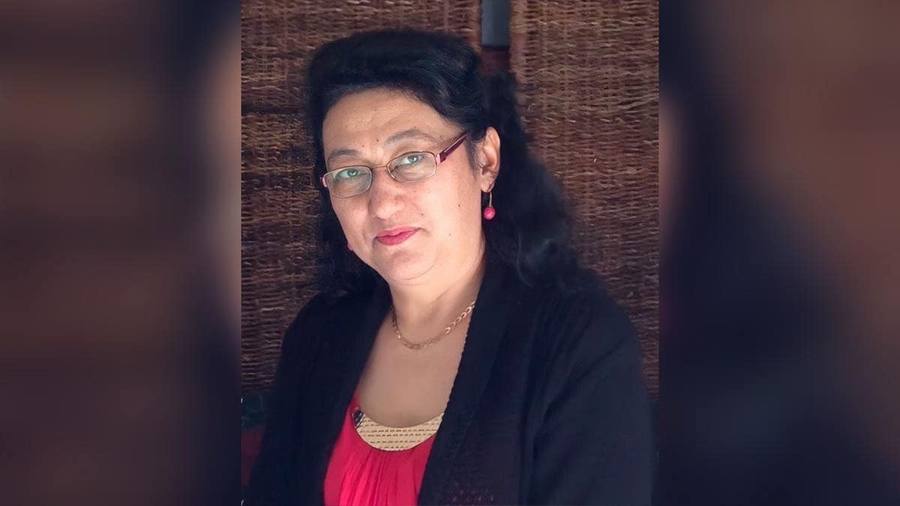
古丽先·阿巴斯,1962年6月12日生于乌鲁木齐,维吾尔族,新疆油田公司明园职工医院的退休医生,因健康原因提前退休,从未从事任何政治活动。其妹茹仙·阿巴斯是在美国的维吾尔人权活动人士、「维吾尔运动」创始人。2018年9月5日,茹仙在华盛顿哈德逊研究所就新疆大规模拘押公开演讲;五到六天之后,2018年9月10日晚古丽先与女儿最后一次通话,9月11日失联——与她同日被带走的还有住在一千四百公里外阿图什的姨妈玛依努尔·阿布利兹。此后二十七个月,家属得不到任何官方信息,只有新疆亲戚一句她在「学习」的转述、2019年9月女儿为她上线的寻人网站,以及2020年6月自由亚洲电台经其原单位员工证实她已被关押;而《环球时报》2019年12月还指控茹仙「编造」姐姐——按中方后来自己的披露,此时古丽先早已在2019年3月被秘密判处有期徒刑二十年。2020年12月25日家属经可信来源获知判刑,12月30日与美国国会及行政部门中国委员会联合举行记者会,12月31日中国外交部发言人汪文斌首次公开确认她因参加恐怖组织、帮助恐怖活动、聚众扰乱社会秩序被判刑。判决书、证据与审判法院从未公开,直到2024年8月中国政府回复联合国时才披露:判刑法院是阿图什市人民法院,刑期自2018年9月11日至2038年9月10日,她自2021年5月7日起在喀什女子监狱服刑——而在此之前她关在哪里,无公开记录。联合国任意拘留问题工作组第88/2022号意见认定其拘押属任意拘押(第一、三、五类)并构成强迫失踪,要求立即释放;美国国务院将其列入「无正当理由」名单,欧洲议会2024年10月10日以540票对23票通过专门决议要求立即无条件释放。她患有高血压、骨质疏松、严重背痛等多病,家属称自2018年起从未与她联系、无人探视;中方2024年回复则称已依法通知家属并安排了2023—2024年三次各十五分钟的通话,两种说法正面冲突。截至2026年11月,她仍在服刑,未获释,官方刑期届满时她将七十六岁。Dr. Gulshan Abbas, born 12 June 1962 in Urumqi, is an ethnic Uyghur and a retired physician of the Xinjiang Oil Field Company Ming Yuan Workers Hospital who retired early for health reasons and never engaged in any political activity. Her younger sister Rushan Abbas is a US-based Uyghur human rights defender and the founder of Campaign for Uyghurs. On 5 September 2018 Rushan spoke publicly at the Hudson Institute in Washington about the mass detention of Uyghurs; five to six days later, after a last phone call with her daughter on the evening of 10 September, Gulshan was reported missing on 11 September 2018 — seized on the same day as her aunt Mayinur Abliz, who lived 1,400 kilometres away in Artush. For twenty-seven months her family received no official information at all: only a relayed word from relatives in Xinjiang that she was 'studying,' a search website her daughter launched in September 2019, and, in June 2020, Radio Free Asia's confirmation through an employee of her former hospital that she had been detained — while in December 2019 the Global Times was accusing Rushan of fabricating her sister, although, by China's own later disclosure, Gulshan had by then already been secretly sentenced in March 2019 to twenty years in prison. The family learned of the sentence from a trusted source on 25 December 2020, announced it with the Congressional-Executive Commission on China on 30 December, and on 31 December 2020 Foreign Ministry spokesperson Wang Wenbin publicly confirmed for the first time that she had been imprisoned for participating in a terrorist organization, aiding terrorist activities and assembling crowds to disrupt social order. No judgment, evidence or sentencing court was ever made public until China's August 2024 reply to the United Nations disclosed that the court was the Artush Municipal People's Court, that the term runs from 11 September 2018 to 10 September 2038, and that she has been serving at Kashgar Women's Prison since 7 May 2021 — where she was held before that date is a matter of no public record. UN Working Group Opinion No. 88/2022 found her detention arbitrary (Categories I, III and V) and an enforced disappearance and demanded her immediate release; the US State Department featured her in its #WithoutJustCause initiative; and on 10 October 2024 the European Parliament adopted a dedicated resolution by 540 votes to 23 demanding her immediate and unconditional release. She suffers from hypertension, osteoporosis, severe back pain and other chronic conditions; her family states it has had no contact with her since 2018 and that no one has visited her, while China's 2024 reply states that the family was lawfully notified and that three 15-minute calls were arranged in 2023–2024 — the two accounts conflict directly. As of November 2026 she remains imprisoned and unreleased; if she serves her term in full she will be seventy-six at its end.
1. The woman: a doctor who retired early because of her health
Gulshan Abbas was born on 12 June 1962 in Urumqi, Xinjiang, an ethnic Uyghur. Her name as written on her Chinese citizen ID card and passport is 古丽先·阿巴斯 — her sister Rushan Abbas gives that exact rendering in her witness statement to the Uyghur Tribunal, together with her work unit's address — and the databases of the U.S. Commission on International Religious Freedom (USCIRF) and the urgent-action files of Amnesty International use the same characters, as does the Chinese government's own 2024 reply to the United Nations, whose romanization "Gulixian Abasi" corresponds to Gulixian, not Gulixian's near-homophone. Some Chinese-language retellings, including the brief supplied for this entry, write her given name with a different character (仙 instead of 先); this archive follows the ID-card rendering, Gulshan — in Chinese 古丽先 — and records the variant here so that future researchers searching under either spelling can find her. Her name is also spelled "Gulshen Abbas" in the Xinjiang Victims Database; both spellings are archived.
Her working life was a doctor's life. Amnesty International, the UN Working Group on Arbitrary Detention and multiple institutional sources agree that she worked as a physician at the Xinjiang Oil Field Company Ming Yuan Workers Hospital in Urumqi and retired early because of ill health; her sister's testimony gives the hospital's address on North Youhao Road and confirms the early, health-driven retirement. Her education is thinner in the record: only Bitter Winter reports that she graduated from Xinjiang Medical University in 1985. That detail rests on a single source and is marked unverified in this archive. Radio Free Asia's 2020 reporting, meanwhile, names her former workplace as the "Nurbagh Petroleum Hospital" — a different name from Ming Yuan Workers Hospital. Whether the two names denote the same institution under different designations, a translation difference, or a reporting error cannot be determined from public materials; both names are archived in parallel and neither is silently preferred (see section 16).
Everyone who knows her — family, US officials, human rights organizations — agrees on one point without exception: she was not a political person. The UN special rapporteurs' joint letter of 2024 states that she "was not engaged in political or human rights activism." Her daughter Ziba Murat calls her mother "a medical professional, a non-political, kind person who has spent her life helping people." Her sister, testifying under oath-like conditions at the Uyghur Tribunal, describes her as "quiet and non-political," "a very law-abiding person, living a simple ordinary life," and "a warmhearted, loving, caring and kind mother." She lived with multiple chronic conditions (see section 10), had visited family in the United States many times over the previous decade on a US visa — most recently in 2016, according to her sister — and when she was taken in September 2018 she was fifty-six years old: a retired grandmother, mother of two daughters and grandmother of four (per her sister's 2026 interview). This unremarkable biography has to be set down in full, because the label the state eventually fixed on her was "terrorist."
2. Her family: half in Urumqi, half in America
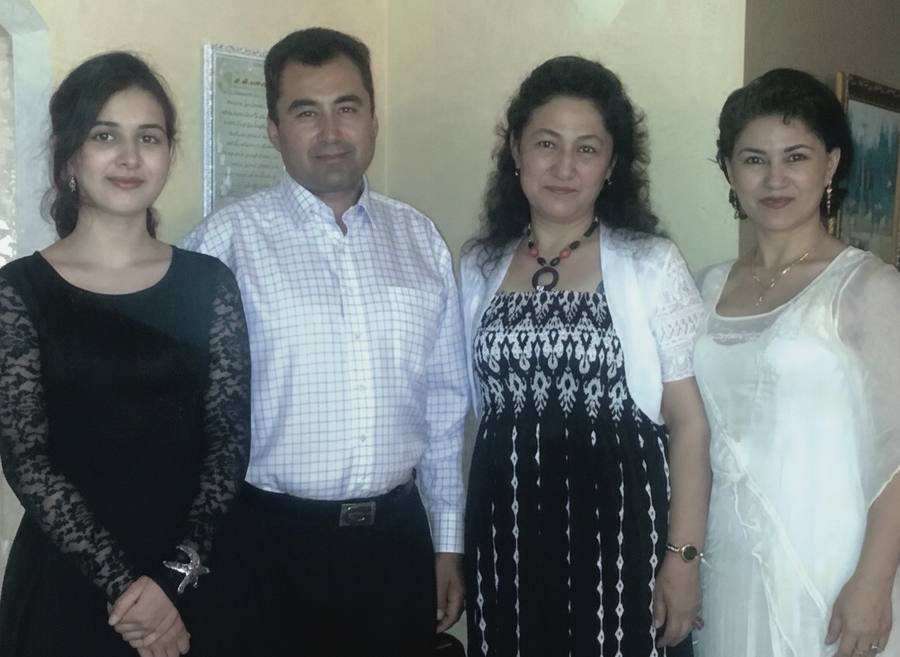
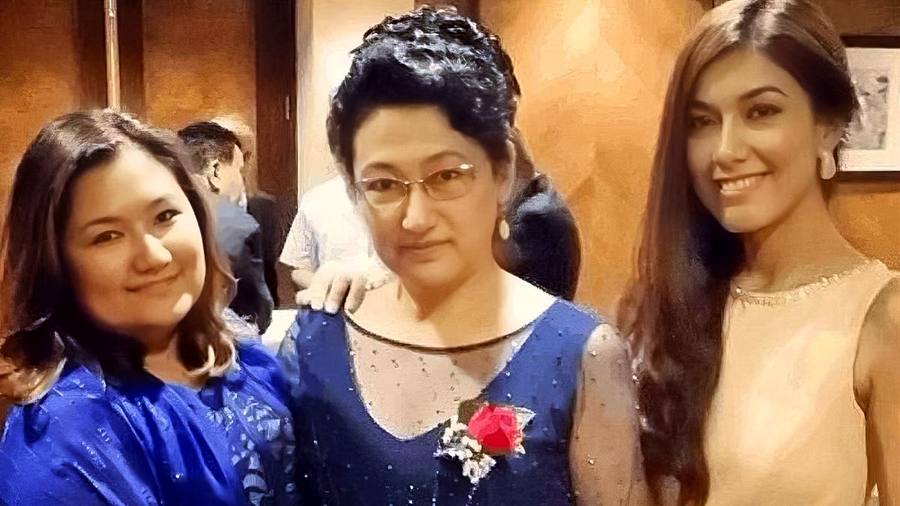
To understand this case, first picture a family cut in two by a border. The half that remained in Xinjiang: Gulshan herself, living in Urumqi; and her aunt Mayinur Abliz, born in 1955, living in Artush, some 1,400 kilometres away — a housewife according to Rushan's testimony (one relayed account calls her a retired schoolteacher; that version is single-sourced and marked unverified). After the Abbas sisters' parents died, the aunt was the only older relative either of them still had in China. The half in the United States: her younger sister Rushan Abbas, born 14 June 1967 in Urumqi, who had organized pro-democracy student demonstrations at Xinjiang University in the 1980s, left for the United States in 1989, worked as a journalist for Radio Free Asia's Uyghur Service, and in 2017 founded Campaign for Uyghurs (CFU); and her brother, Dr. Rishat Abbas. Both of Gulshan's daughters live in the United States, among them Ziba Murat in Virginia. According to a 2026 Hudson Institute policy paper and congressional sources, more than twenty-four of Gulshan Abbas's relatives are American citizens — her two daughters, her siblings, and a number of grandchildren. That number is the direct source of this case's weight in American politics: Gulshan is not a US citizen, but more than two dozen of her closest relatives are.
What happened to Rushan's husband's family in Hotan is the immediate context of the September 2018 speech and of the retaliation chain that followed. According to Rushan's testimony, her husband Abdulhakim Idris's family lost contact in April 2017; his brother was sentenced to twenty-one years, his sisters were sent to detention camps, twenty-four members of the family in all disappeared, and the family home was found locked and sealed. When Rushan walked to the Hudson Institute podium on 5 September 2018, that was what she talked about. She did not yet know that within a week, the list of the missing would gain her own sister and her own aunt. After her sister was taken, Rushan quit her job in 2019 and became a full-time advocate. One family's private catastrophe became an eight-year transnational campaign for one woman's freedom.
3. Background: the mass detention of Uyghurs from April 2017
Gulshan Abbas did not disappear alone; she disappeared inside a wave of detention that swept an entire people. According to Radio Free Asia and the European Parliament's 2024 resolution, from April 2017 the authorities in Xinjiang, in the name of "de-extremification" and counter-terrorism, sent large numbers of Uyghurs and other predominantly Muslim minorities into detention camps officially styled "vocational education and training centres." Estimates of the scale differ by source: the European Parliament's resolution speaks of "over one million" people arbitrarily detained; Radio Free Asia and CECC chairman Jim McGovern, speaking in December 2020, used the figure of up to 1.8 million people held in the camps; the Hudson Institute's 2026 paper also uses 1.8 million. This archive records both estimates with their sources and adopts neither as settled. The UN Office of the High Commissioner for Human Rights, in its Xinjiang assessment of 31 August 2022, recorded that the widespread arbitrary deprivation of liberty of Uyghurs and other predominantly Muslim communities was "often shrouded in secrecy," leaving families separated and ignorant of their loved ones' whereabouts — especially families in the diaspora — and noted allegations of reprisals and intimidation against those who sought information about detained relatives. The sentence reads like a footnote written for the Abbas case in advance; her fate would go on to illustrate it line by line.
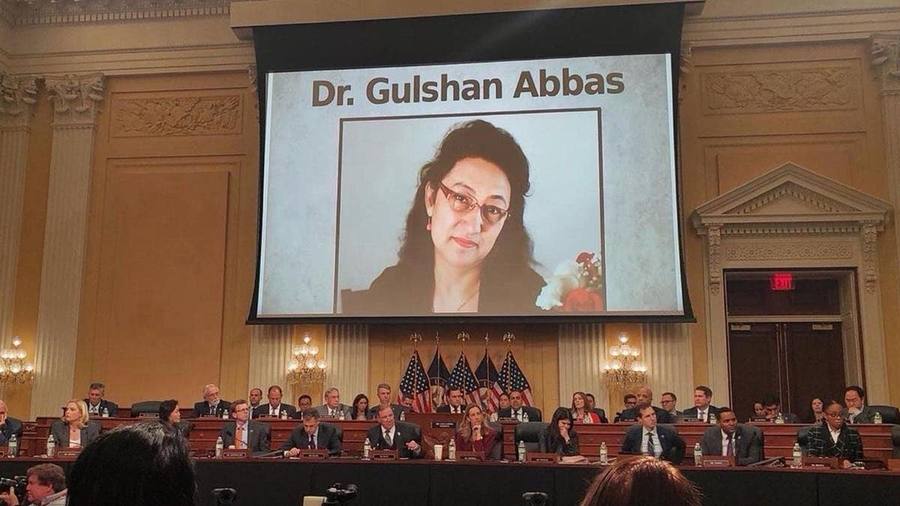
One mechanism of that system matters above all here: overseas connections themselves became incriminating. The UN Working Group on Arbitrary Detention records the source's submission that the authorities monitor Uyghurs abroad and target people tied to them, and that many diaspora activists and journalists have had family members detained in an attempt to stop their work. Gulshan Abbas had more than two dozen American-citizen relatives, had repeatedly travelled to the United States, and had a sister who was among the most visible Uyghur advocates in Washington. Under the logic of that mechanism, she belonged in 2018 to the highest-risk category of people in Xinjiang — although she herself had never made a political statement of any kind. Her case went on to become one of the most frequently cited examples of "kin punishment" and "transnational repression"; when the US House of Representatives held a hearing on transnational repression in December 2023, Rushan Abbas was a witness.
4. 5 September 2018: a speech in Washington
On 5 September 2018, the Hudson Institute in Washington, D.C., hosted a panel titled "China's 'War on Terrorism' and the Xinjiang Emergency." Rushan Abbas was one of the speakers. It was, by her own account, her first public speech ever: she described the mass detentions and what she called China's genocidal policies against the Uyghurs, and she laid out the fate of her husband's family. Video of the event was posted publicly. A small arithmetical discrepancy in the family's telling must be archived: in some accounts Rushan says her sister disappeared "five days later" (so to Military.com in 2026), while her Uyghur Tribunal testimony, her congressional testimony and the UN documents citing the family use "six days later" (5 September plus six days is 11 September). Both versions point at the same fact: within a week of the speech, her sister and her aunt vanished on the same day, in two places 1,400 kilometres apart. UN Special Rapporteur Mary Lawlor, in her statement of 19 June 2024, used the six-days formulation and said she was "appalled by the continued imprisonment of Gulshan Abbas in apparent retaliation for her sister's criticism of the Chinese authorities' treatment of Uyghurs."
Retaliation is not merely the family's characterization; it is the convergent conclusion of every institution that has examined the case independently. The US State Department placed her on its #WithoutJustCause list of people detained without just cause. CECC chairman McGovern called punishing an innocent family member to silence free expression "morally reprehensible." The UN special procedures described her imprisonment as retaliation for her sister's human rights activism in the USA. The European Parliament called her twenty-year sentence the product of "fallacious terrorism-related charges relating to activities of her sister." The Chinese authorities have never acknowledged retaliation: the Foreign Ministry's line is that she was lawfully sentenced for terrorism crimes (see section 8), and state media attacked Rushan herself as a "separatist" and a spreader of rumours. This archive does not reconcile the two narratives; it records, item by item, who said what, and when.
5. 10–11 September 2018: the last phone call, and an aunt taken on the same day
The date of Gulshan Abbas's seizure exists in the sources as two dates, 10 and 11 September 2018, and the two must be kept apart, because they record two different moments. First, the last-contact date: her daughter Ziba Murat told Radio Free Asia that the evening of 10 September 2018 was the last time she spoke with her mother. Both of Amnesty International's urgent actions date her disappearance from 10 September 2018 — she "has not been seen or heard from since" that day. Paragraph 36 of the UN Working Group's opinion records the source's account that she "was last heard from on 10 September 2018" and that her arrest is believed to have occurred on or around that date, carried out by Public Security Bureau officials in Xinjiang, possibly from Urumqi. Second, the loss-of-contact date and the official start date: the UN special rapporteurs' 2024 letter states that on 11 September 2018 the family reported it could no longer reach her, while recording the belief that she was arrested on 10 September. USCIRF, the CECC Political Prisoner Database and the Tom Lantos Human Rights Commission all give 11 September 2018 as the "detained since" date. And decisively, China's own accounting agrees on the 11th: the Chinese government's 2024 reply to the United Nations states that her twenty-year term runs "from 11 September 2018 to 10 September 2038." This archive therefore sorts the case by 11 September 2018, while preserving the evening of 10 September — the last phone call — as the eve of the disappearance. Rushan Abbas herself gives both dates in different texts: her Tribunal statement says her sister "disappeared on September 10, 2018," while her account carried by Bitter Winter says sister and aunt "were abducted on September 11th, 2018." A one-day discrepancy in a single witness's own accounts is archived here unmerged, exactly as found.
The aunt, Mayinur Abliz, was taken on the very same day. She lived in Artush, some 1,400 kilometres (about 900 miles) from Urumqi, and after the sisters' parents died she was the only older relative they had left in China. Rushan's testimony and Military.com's 2026 reporting agree that aunt and niece were seized on the identical day. Rushan has said that the simultaneity, across that distance, was itself the message. Of the aunt's subsequent fate, only the family's account exists: in her Tribunal testimony Rushan states that "several months after my sister's abduction, my aunt was released," while her sister remained unaccounted for. The date of the aunt's release, where she was held, and on what conditions she was freed are matters of no public record; beyond the family account there is no second source, and this archive says so. One coincidence of judicial geography is recorded here without inference: the sentencing court disclosed by China in 2024, the Artush Municipal People's Court, sits in the aunt's own city of Artush. Why a defendant who lived in Urumqi was sentenced by a court more than a thousand kilometres from her home has never been explained by any official source.
6. Twenty-seven months of silence, I: "studying," a hospital confirms, state media denies she exists
From September 2018 to December 2020 — twenty-seven months — Gulshan Abbas's family received no official information about her at all: no arrest notice, no place of detention, no charge, no lawyer's visit, not even confirmation that she was alive. The UN Working Group would later find that the fate and whereabouts of all three Uyghurs in its joint opinion had been concealed from the moment of detention, amounting to enforced disappearance and placing them outside the protection of the law. In those twenty-seven months the family collected exactly three fragments. First, according to Amnesty International's urgent action of 27 May 2020, relatives in Xinjiang told the family at the end of 2018 that Gulshan was "studying" — from which the family inferred that she might have been sent to a "transformation-through-education" facility, that is, a detention camp. That inference was later hardened by the Tom Lantos Commission's entry into the flat statement that she was "sent to a reeducation camp." It must be stated plainly: it remained an inference from a single relayed word. No official document and no eyewitness account has ever confirmed that she passed through a camp, and where exactly she was held between September 2018 and 7 May 2021 is a matter of no public record. Second, on 11 September 2019, the first anniversary of the disappearance, her daughter Ziba Murat launched the website all4mom.org to campaign for her. Third, on 2 June 2020, Radio Free Asia's Uyghur Service telephoned her former hospital and reached a Han Chinese employee of the hospital's Communist Party Cadres Office, who confirmed that Gulshan Abbas had been detained: her office, she said, had been notified of the detention in an announcement circulated from above, though she did not know which department had taken her, where she was held, or whether she was in a camp. It was the first and only confirmation from inside China, from a non-family source, in twenty-seven months.
Running parallel to the silence was a state-media campaign against the sister. In December 2019 the Global Times published an article accusing Rushan Abbas of being an "East Turkistan separatist," of stealing other people's photographs and fabricating stories of missing relatives; CGTN, the international arm of China's state broadcaster, carried similar material, which Rushan in a 2026 interview summarized as denying her sister existed and accusing her of making up cases. Campaign for Uyghurs answered with a point-by-point rebuttal on 29 December 2019. At the Uyghur Tribunal, Rushan drew attention to the sequence that makes this episode the most damning timeline in the file: when state media accused her in December 2019 of inventing her sister, Gulshan Abbas had — by China's own later disclosure — already been secretly sentenced, in March 2019, to twenty years. Sentence first; denial of her existence second. That ordering is established entirely by the Chinese side's own statements (the Foreign Ministry's December 2020 confirmation and the 2024 reply fixing the sentencing in March 2019) set against the publication date of the state-media article. It requires no inference, and this archive preserves it in full.
7. March 2019: a secret trial and twenty years
The trial of Gulshan Abbas is the blackest stretch of this file. The confirmable facts form only a skeleton: in March 2019 she was sentenced to twenty years' imprisonment. That month and that term are agreed by four independent points of reference — Amnesty International, the USCIRF database, the CECC database, and the Chinese government's own 2024 reply. The family received no notice of any hearing. No one attended. There is no judgment, no information about counsel — and for five and a half years, the world did not even know the name of the court that sentenced her. On 7 August 2024, replying to the UN special procedures, the Chinese government disclosed it for the first time: the Artush Municipal People's Court, with the term running from 11 September 2018 to 10 September 2038. It remains the only judicial detail the Chinese side has ever supplied about this case. Artush is the seat of the Kizilsu Kyrgyz Autonomous Prefecture, north of Kashgar and more than a thousand kilometres from Urumqi, where the defendant lived. Why a Urumqi resident was tried in Artush, how jurisdiction was fixed, whether the proceeding was public, whether she had a lawyer, how long it lasted, and what evidence was presented are all matters of no public record; the Chinese reply says nothing about any of them, and every human rights source's description remains what it has been since 2020: a secret trial.
The family has one account of what the trial was about, and it is archived here with its provenance attached. According to Radio Free Asia's report of 30 December 2020, the family told the CECC press conference that they had learned Gulshan was tried for associating with her sister's organization, Campaign for Uyghurs, which Beijing had labelled a "terrorist organization." That is the family's relayed understanding of the charge's real content. No judgment or court document supports or refutes it, and this archive records it as the family's account, not as a verified description of the proceedings. What can be weighed is the outcome itself: twenty years. A fifty-six-year-old retired doctor, in poor health, with no public evidence and no public trial record against her, received a sentence in the range of serious violent crime; if she serves it in full she will be seventy-six when she walks out. The UN Working Group observed of the three Uyghurs in its joint opinion that "it is unclear if they have indeed stood trial at all" — a sentence that applies with full force to the supposed trial of March 2019, which, beyond a month, a term, and a court name supplied five years later, barely exists in the public record.
8. December 2020: the family learns, the Foreign Ministry confirms, Washington responds
The break came at Christmas 2020. On 25 December, the family received word from a trusted source with inside knowledge that Gulshan Abbas had been sentenced to twenty years. Her daughter Ziba Murat stated publicly that the source's identity could not be revealed, for the source's protection. On 30 December, Campaign for Uyghurs and the Congressional-Executive Commission on China held a joint press conference in Washington to announce the news. Speaking were CECC chairman Rep. Jim McGovern, Reps. Tom Suozzi and Chris Smith, Ambassador Kelley Currie of the State Department's Office of Global Women's Issues, Assistant Secretary of State for Democracy, Human Rights and Labor Robert Destro, and USCIRF Commissioner Nury Turkel. McGovern said that the Chinese government's punishment of innocent people in an attempt to silence their family members' free expression was "morally reprehensible," and called for her immediate and unconditional release. Destro wrote that her forcible disappearance, detention and harsh sentencing showed a family suffering the consequences of speaking out against a government with no respect for human rights, and demanded her release. Reuters' same-day report recorded the full exchange and noted that the Chinese Embassy in Washington did not respond to a request for comment.
The next day, 31 December 2020, Foreign Ministry spokesperson Wang Wenbin confirmed the sentence publicly for the first time at a regular press conference, stating that Gulshan Abbas had been imprisoned for crimes of participating in a terrorist organization, aiding terrorist activities and assembling crowds to disrupt social order, describing China as a country ruled by law where unlawful and criminal activity must be punished, and telling US politicians to respect the court's decision. The historical place of that confirmation must be stated exactly: twenty-seven months after she vanished, it was the first time the Chinese state acknowledged that Gulshan Abbas was in its judicial hands, and the first time it named any charge — and it was delivered not as a notification to her family, but as an answer to a journalist's question at a press briefing. Ambassador Currie responded that the reality was that Gulshan Abbas had been sentenced to twenty years in a March 2019 sham trial because her American family members were telling the truth about the CCP's gulags in Xinjiang. On 12 January 2021 Amnesty International updated its urgent action, recording that the sentence had by then been confirmed with the Chinese authorities, and continued to campaign on the case on health grounds. From that point the public record had an official Chinese version of the case — and still no judgment, no evidence, and no place of imprisonment.
9. Anatomy of the charges: three counts and an empty evidence file
The three charges laid against Gulshan Abbas are rendered with small but real variations across sources, and they are layered here rather than blended. The Foreign Ministry's 31 December 2020 formulation, as quoted in UN documents from the official press-conference record, is: participating in a terrorist organization, aiding terrorist activities, and assembling crowds to disrupt social order. The Chinese government's 2024 reply, in the UN's English translation, reads: participating in a terrorist organization, aiding terrorist activities and gathering a crowd to disturb public order. The standard English rendering used by Amnesty International, Reuters and others is "taking part in organized terrorism, aiding terrorist activities and seriously disrupting social order." Paragraph 39 of the Working Group's opinion, paraphrasing the Foreign Ministry statement, produces yet another variant — participating in terrorist activities, aiding a terrorist organization, disrupting public order. Even the official charge-sheet drifts as it is copied. This archive takes the two formal Chinese statements (the Foreign Ministry in 2020 and the government reply in 2024) as the baseline text — participation in a terrorist organization; aiding (in some translations, helping or financing) terrorist activities; and gathering a crowd to disrupt social order — and archives all variants in parallel. Mapped onto China's Criminal Law by name, the three would ordinarily engage Article 120 (organizing, leading or participating in a terrorist organization), Article 120-1 (aiding terrorist activities) and Article 290 (gathering a crowd to disrupt social order); that mapping is this archive's general legal cross-reference from the charge names, is flagged as such, and has never been confirmed by any Chinese statement on this case.
More important than the charges is the evidence. None has ever been made public — not one item. Amnesty International states that no concrete evidence against Gulshan Abbas has been made public. The UN special rapporteurs recorded in 2024 that her family had received no information about the evidence used to convict her, the verdict, whether she was represented by legal counsel, the prison holding her, or her state of health. The Working Group, faced with the government's refusal to reply, treated the source's account — that as a retired physician she had never been involved in any activity connected to terrorism — as credible. A case in which a state claims to have lawfully imposed twenty years, and in which the entire public answer to the question "on what evidence?" consists of one sentence at a press conference and, four years later, a one-page reply to the United Nations, is archived here in exactly that state. The family and the institutions call the charges fabricated; the Chinese side calls the process lawful. Both wordings are preserved — alongside the verifiable fact that, as of November 2026, the evidence section of this case in the public record is blank.
10. Health: three lists, archived side by side
Gulshan Abbas's health has been her family's most persistent worry for eight years, and the public sources do not give identical lists of her conditions. This archive therefore records each list under its own source and does not fuse them into a single master list. List one, the Tom Lantos Human Rights Commission and USCIRF database (derived from the CECC record): high blood pressure; severe back pain that often leads to immobilization; osteoporosis; recurring migraines. List two, the joint letter of four UN special rapporteurs dated 7 June 2024: high blood pressure, migraines, back pain, visual impairment and acid reflux. List three, Rushan Abbas's Uyghur Tribunal testimony: multiple health ailments, including osteoporosis that often leads to immobilization; multiple surgeries on both of her eyes; conditions requiring constant monitoring and medical attention, on account of which she retired early; during her visits to the United States the family took her to doctors for these problems. A 2026 Hudson Institute paper adds one further item beyond these lists: an eye condition requiring annual monitoring to prevent permanent blindness. That item points in the same direction as the testimony's eye surgeries and the UN letter's visual impairment, but its specific formulation — annual monitoring against blindness — appears in that paper alone and is archived as a single-source detail.
The common direction of the lists is unambiguous: a woman who entered prison at fifty-six and is now sixty-four, with a bone disease that can leave her unable to move, eyes that have been operated on repeatedly, and cardiovascular risk factors, spent years in a place her family was not permitted to know, let alone verify her treatment in. China's 2024 reply states that her rights in prison, "including access to regular medical examinations and appropriate medical treatment, have been fully guaranteed." That sentence is, on the public record, neither verifiable nor falsifiable: no independent visit, medical record or family confirmation stands behind it, and Rushan Abbas said as recently as October 2026: "We have no picture or video of her. No one has been able to visit her and we have received no independent report on her health or wellbeing." In March 2026 her daughter and sister told reporters that both her health and her morale were deteriorating — a family account based on such information as they have, and archived here as such. Her actual state of health, at this entry's last verification, cannot be confirmed from any public record; what can be confirmed is that the worry has never paused. On 12 June 2021, her fifty-ninth birthday, US Secretary of State Antony Blinken said publicly that it was the third birthday she had spent unjustly imprisoned in Xinjiang, that her loved ones deserved to celebrate with her, and that she should be reunited with her family.
11. The geography of secrecy: from a presumed camp to Kashgar Women's Prison
Where Gulshan Abbas is held was the case's second great unknown, and it took nearly six years to crack even partly. The timeline is this. From September 2018 to 7 May 2021 there was no official information about her place of detention at all; the family's inference was a "transformation-through-education" camp (see section 6), the Tom Lantos Commission's entry states flatly that she was sent to a reeducation camp, and the UN Working Group wrote cautiously that she was "believed" to have been sent to a re-education centre while noting that it remained unknown whether she had been. The three formulations carry three different levels of certainty; this archive follows the Working Group's caution: a camp phase is an unverified presumption, marked accordingly. As late as 19 June 2024, when Special Rapporteur Mary Lawlor issued her public statement, the family still did not know which prison held her. The turn came on 7 August 2024: the Chinese government's reply to the UN joint letter disclosed for the first time that "since 7 May 2021, she has been serving her sentence at Kashgar Women's Prison." It is the only statement of her place of imprisonment ever made by the detaining state. Its source is single — an official government reply — but its character is a formal answer to the United Nations, and this archive records it as official position, while noting that the family has never independently confirmed the location and that no visit record corroborates it. Where she was before 7 May 2021, and why the record of her imprisonment surfaces at Kashgar only more than two years after the March 2019 sentencing — whether the intervening years were spent in a camp, a detention centre or another prison — the reply does not say, and there is no public record.
Kashgar Women's Prison adds a geographic fact of its own: Kashgar lies in Xinjiang's far southwest, more than 1,300 kilometres from Urumqi, but close to Artush, the city of her sentencing court. Her entire known judicial geography — sentenced in Artush, imprisoned near Kashgar — sits at the opposite end of Xinjiang from her home in Urumqi, and no official has ever offered a word of explanation. The Hudson Institute's 2026 paper goes further, suggesting that she was later held in a prison adjacent to a factory where she likely was subjected to forced labour. The paper itself uses the language of likelihood, offers no evidence specific to her, and this archive marks that suggestion as unverified speculation and adopts none of it: whether a sixty-four-year-old woman whose osteoporosis often leaves her unable to move has been subjected to forced labour is a matter of no public record, and this archive asserts nothing about it. What can be asserted is narrower and damning enough: until August 2024, where a woman sentenced to twenty years was being held was, for the state that held her, a secret it kept for six years.
12. The contact dispute: three phone calls, or no contact at all
The sharpest single conflict in this file concerns whether her family has heard from her at all. The two accounts collide head-on, and under this archive's rules they are neither merged nor adjudicated; each side's exact position is fixed here with its dates. The family's and the US institutions' position: the Tom Lantos Human Rights Commission's current entry, still updated through 2026, states that "her family have not had contact with her since she was detained in 2018." The USCIRF and CECC records, Amnesty International's files and the UN joint letter of June 2024 all proceed on that premise — the joint letter records that the family had received no information on the evidence, the verdict, counsel, the prison or her health. Rushan Abbas's October 2026 interview still states that no one has been able to visit her and that there is no independent report on her health; the September 2026 eighth-anniversary statement likewise describes her as still separated from her family. The Chinese position: the government's reply of August 2024 states that basic information on her crime, sentencing, imprisonment and health "has been notified to her family members in accordance with the law, and there has been no situation whereby her family members 'have not received information'," and that, in a humanitarian spirit, China arranged three telephone calls between her and a relative abroad — on 4 February 2023, 12 June 2023 (her birthday) and 28 June 2024, each lasting fifteen minutes — and had repeatedly expressed willingness to facilitate a relative's return to visit her face-to-face at Kashgar Women's Prison. In the reply's English translation, the names and locations of the relatives involved are redacted.
Why the conflict cannot be resolved on present evidence deserves to be set out item by item. First, the three calls China describes (2023–2024) postdate the formation of the family's "no contact" position — yet the Tom Lantos Commission's entry, updated after 2024, did not alter the "no contact" wording, and the family has never publicly confirmed any call. Second, because the reply redacts the relatives' names, outsiders cannot tell whether the calls were with her daughters or sister in the United States or with some other relative. Third, China says the family was lawfully notified, but has never stated to whom, when or how, while the family's submissions to the United Nations and the US government consistently state that nothing was received. Possible reconciliations — for instance, that calls were held with a relative other than the US-based immediate family, or that notification reached relatives inside Xinjiang — are speculation; the public material supports none of them, and this archive adopts none. What can be confirmed is this: as of November 2026, not one phone call between Gulshan Abbas and her family has been confirmed by both sides; no photograph or video of her since her imprisonment has ever been published (per her sister's 2026 interview); and the last time her daughters heard her voice, on the family's account, was the evening of 10 September 2018.
13. International response I: the United Nations — an arbitrary-detention opinion and the special rapporteurs
The United Nations system's engagement with this case proceeded on three levels, each with a formal document number that can be checked. Level one: Opinion No. 88/2022 of the Working Group on Arbitrary Detention. The Working Group transmitted its communication to the Chinese government on 29 June 2022; China did not reply. The opinion, adopted at the Working Group's ninety-fifth session (14–18 November 2022) and issued on 24 March 2023, treats Gulshan Abbas jointly with Qurban Mamut and Ekpar Asat. It finds that the deprivation of liberty of all three contravenes articles 2, 3, 6, 7, 9 and 10 of the Universal Declaration of Human Rights and is arbitrary under Category I (no legal basis — all three were subjected to enforced disappearance and placed outside the protection of the law), Category III (fair-trial guarantees so completely disregarded — proceedings so opaque that it was unclear whether the three had even stood trial — as to render the detention arbitrary), and Category V (discrimination on the basis of Uyghur ethnicity and Muslim faith). The appropriate remedy, it held, is immediate release with an enforceable right to compensation and other reparations; the case was referred to the Working Group on Enforced or Involuntary Disappearances, the Special Rapporteur on minority issues and the Special Rapporteur on freedom of religion or belief. The opinion further noted that in thirty years the Working Group had found China in violation of its international obligations in over one hundred cases, and that systematic arbitrary detention may in certain circumstances constitute crimes against humanity. Level two: the OHCHR's 2022 Xinjiang assessment (see section 3), which supplied the pattern finding of reprisals against diaspora families seeking news of detainees. Level three: joint communication AL CHN 9/2024, dated 7 June 2024, in which four mandate-holders — Mary Lawlor (human rights defenders), Irene Khan (freedom of opinion and expression), Tlaleng Mofokeng (the right to health) and Margaret Satterthwaite (independence of judges and lawyers) — wrote to the Chinese government expressing serious concern at a conviction without due process, at the near-total absence of information, and at the retaliatory character of the imprisonment, and requesting her location, the basis of her conviction and the state of her health; Lawlor followed with a public statement on 19 June 2024. China replied on 7 August 2024 — and it is that reply which disclosed the Artush court, Kashgar Women's Prison and the claimed phone calls (see sections 7, 11 and 12). In other words, the most consequential official facts in this case were extracted only after six years of UN questioning; and the same reply denied that the family had been left uninformed, leaving the central conflict formally unresolved.
14. International response II: the United States and Europe — from a State Department list to a European Parliament resolution
The American record runs almost year by year. The December 2020 press conference and diplomatic exchange are in section 8. Thereafter: on 11 January 2023 the State Department launched its #WithoutJustCause initiative, with Gulshan Abbas among the first cases featured; her Defending Freedoms Project advocate at the Tom Lantos Human Rights Commission is Rep. Ro Khanna (Campaign for Uyghurs records her addition to that project's prisoners-of-conscience list in January 2024); the State Department's 2023 Country Reports on Human Rights Practices, released 22 April 2024, carried her case; on 8 March 2024 Reps. Mike Waltz, Michael McCaul and Ro Khanna led a letter signed by forty-three members of Congress to Secretary of State Antony Blinken and Ambassador Linda Thomas-Greenfield urging continued advocacy for arbitrarily detained people in China including Dr. Abbas; on 10 September 2024 then-Senator Marco Rubio, Sen. Dick Durbin, Sen. Jim Risch and colleagues issued a joint statement for the sixth anniversary renewing the call for her release. Into 2026: in February, House Speaker Mike Johnson invited her daughter Ziba Murat as his guest to the State of the Union address; on 9 March 2026 Rushan Abbas attended the State Department's event for US Hostage and Wrongful Detainee Day and called for her sister's release; on 13 May 2026 the Senate agreed to a bipartisan Durbin–Cruz resolution urging the President to prioritize the cases of political prisoners in China including Abbas, to obtain verifiable proof of life, and to secure access to independent legal counsel, family communication and medical care; on 14 September 2026 USCIRF urged the President to raise her release at his summit with Xi Jinping; on 21 September 2026 Select Committee on China chairman John Moolenaar and Rep. Tom Suozzi led a resolution marking the eighth anniversary of her forcible disappearance and demanding her immediate release; and back on 23 October 2025 Reps. Chris Smith, John Moolenaar and Sen. Dan Sullivan had called on the President to raise her case and Ekpar Asat's ahead of a meeting with Xi Jinping. On the European side: the European Union named her in its statements at the 55th session (20 March 2024) and the 63rd session (22 September 2026) of the UN Human Rights Council, calling for her immediate and unconditional release; at the 39th EU–China Human Rights Dialogue on 16 June 2024 the EU delegation raised her release face-to-face; on 10 October 2024 the European Parliament in Strasbourg adopted an urgent resolution devoted to Ilham Tohti and Gulshan Abbas by 540 votes to 23, with 47 abstentions, demanding the immediate and unconditional release of both and of all arbitrarily detained persons, denouncing policies against the Uyghurs as amounting to crimes against humanity and a serious risk of genocide, and calling for her regular contact with family and lawyers and for medical care; and on 7 October 2026 the European Parliament's recommendation on EU–China political relations again listed her among the prisoners whose unconditional release it demands. Every one of these appeals has the same sequel: none. She remains in prison.
15. The family's eight years: from all4mom to the State of the Union
The second through-line of this file is a family that has never stopped searching or speaking. Her daughter Ziba Murat launched all4mom.org in September 2019; moved from Florida to Virginia to be closer to Washington and campaign more effectively for her mother (per her aunt's testimony); stood at the CECC press conference on 30 December 2020 and said her mother's arrest, detention, trial and sentencing proved the lies of a government that claims to respect the rule of law and human rights; recorded a video appeal on her mother's birthday in June 2021; in February 2026 sat in the House chamber as Speaker Johnson's guest at the State of the Union; and on 10 September 2026 published an op-ed calling on the President to advocate for her mother's release. Her sister Rushan Abbas quit her job in 2019 to advocate full-time; testified about her sister's case in full detail before the Uyghur Tribunal in London on 6 June 2021; testified on 13 December 2023 before the House Select Committee on the Chinese Communist Party at its hearing on transnational repression; told her sister's story in her 2025 memoir Unbroken; attended the State Department's wrongful-detainee event on 9 March 2026 and spoke for her sister at the CSW70 forum in New York on 21 March 2026. Her testimony preserves the cost in one place that this archive will not paraphrase away: the burden of her sister's detention, she said, pains her every moment of every day; her nieces must face every day without their mother and without any news of her; and one of the daughters has herself suffered health complaints from the distress of her mother's detention. Her brother Rishat Abbas's advocacy is invoked by both sides — by the family, as part of the American speech for which the terrorism charges are the punishment, and by Chinese state media, which brands the siblings' organization and activities as separatist and terror-linked. Two daughters, four grandchildren and more than two dozen American-citizen relatives on one side; a sixty-four-year-old woman serving her sentence (on China's account) at Kashgar Women's Prison on the other; and between them, eight years of silence and a distance of some ten thousand kilometres.
16. Archived in parallel: where the sources disagree
Under this archive's rules, disagreements among sources are recorded unmerged. (1) The name: her ID card and passport write 古丽先·阿巴斯 (Rushan's testimony; USCIRF; Amnesty International agree), while the brief for this entry and some retellings write 古丽仙; this archive follows the ID rendering. The English name is spelled both Gulshan and Gulshen. (2) Date of seizure: last phone call and last sighting on the evening of 10 September 2018 (Ziba Murat; Amnesty International; the source cited by the Working Group); loss of contact reported, and the "detained since" date in the CECC, USCIRF and Tom Lantos records, on 11 September; China's own term runs from 11 September. This archive sorts by 11 September and preserves the 10th. (3) Days after the speech: "five days" (Rushan to Military.com) versus "six days" (Tribunal and congressional testimony; the UN statement). (4) Workplace name: "Xinjiang Oil Field Company Ming Yuan Workers Hospital" (Amnesty International; Rushan's testimony) versus "Nurbagh Petroleum Hospital" (Radio Free Asia); whether these are the same institution cannot be determined and they are not merged. (5) The aunt: a housewife per Rushan's testimony, a retired teacher in one relayed account — the latter single-sourced and marked unverified; her release several months later is attested only by the family, with no second source. (6) Charge wording: the Foreign Ministry's 2020 text gives "aiding terrorist activities" and "assembling crowds to disrupt social order"; the 2024 reply's translation gives "aiding terrorist activities" and "gathering a crowd to disturb public order"; Amnesty and others give "seriously disrupting social order"; the Working Group's paraphrase gives "disrupting public order." The Chinese texts govern; variants are parallel. (7) The Foreign Ministry spokesperson's name is Wang Wenbin; some retellings (e.g. Bitter Winter) miswrite it; this archive follows the press-conference record. (8) Detention form and place: whether she passed through a camp in 2018–2021 rests on family inference and a commission entry's assertion, unconfirmed — marked unverified; Kashgar Women's Prison from 7 May 2021 rests solely on China's 2024 reply and has not been independently confirmed by the family. (9) Family contact: family and US institutions say no contact since 2018 and no visits; China says the family was lawfully notified and three calls were arranged in 2023–2024 — a head-on conflict, confirmed by neither side jointly (see section 12). (10) Health lists: the Tom Lantos version (hypertension, severe back pain, osteoporosis, migraines), the UN joint-letter version (hypertension, migraines, back pain, visual impairment, acid reflux) and Rushan's testimony version (immobilizing osteoporosis, multiple eye surgeries) are archived in parallel, unmerged; "annual monitoring to prevent blindness" appears only in the Hudson paper and is marked single-source. (11) Scale of the wider detention: "over one million" (European Parliament) versus "up to 1.8 million" (Radio Free Asia; CECC), archived in parallel. (12) Matters of no public record: the judgment and indictment; the specific acts and evidence alleged; the trial procedure and counsel; her whereabouts from September 2018 to May 2021; any image of her since imprisonment; any independently verified state of health; the details of her aunt's release; and her university (the 1985 Xinjiang Medical University graduation appears only in Bitter Winter and is marked unverified).
17. Verification and sources
The core facts of this entry were cross-checked across the following independent sources, with at least two sources for each key fact and single-source items flagged in the text and in section 16. United Nations documents: Opinion No. 88/2022 of the Working Group on Arbitrary Detention (A/HRC/WGAD/2022/88, 24 March 2023), including paragraphs 8, 36–49 and 59–75 on this case; the joint communication AL CHN 9/2024 of four special rapporteurs (7 June 2024) and the summary published by the Special Rapporteur on Human Rights Defenders; the Chinese government's reply to that communication (7 August 2024; UN special procedures database translation, HRC/NONE/2024/SP/32) — the sole source for the Artush court, the term dates 11 September 2018 to 10 September 2038, Kashgar Women's Prison from 7 May 2021 and the claimed phone calls; OHCHR's press release of 19 June 2024 and its Xinjiang assessment of 31 August 2022. US institutional sources: USCIRF's Religious Prisoners of Conscience database entry; the CECC Political Prisoner Database entry (record 2021-00002, as cited by USCIRF and the Hudson Institute); the Tom Lantos Human Rights Commission's Defending Freedoms Project entry and its 2018–2026 advocacy chronology; the Hudson Institute's 2026 policy paper on the case. Human rights organizations and media: Amnesty International Urgent Action UA 88/20 and its update of 12 January 2021 (ASA 17/3508/2021); Reuters, 30 December 2020; Radio Free Asia, June and December 2020; Rushan Abbas's witness statement to the Uyghur Tribunal (6 June 2021) — the source for the birth date, the ID-card name spelling, the work unit and the aunt (her sister's ID and passport numbers appear in that statement and are withheld here as personal data); Campaign for Uyghurs statements of 29 December 2019, 25, 30 and 31 December 2020 and 2024–2026; the European Parliament's resolution of 10 October 2024 (B10-0118/2024 and companion texts; adopted 540–23 with 47 abstentions); CSW's record of Secretary Blinken's birthday statement of 12 June 2021; Military.com's March 2026 interview (carried by Rep. Chris Smith's office); and Rushan Abbas's October 2026 CIVICUS/Global Issues interview. Evidence grading used in this entry: Grade A — formal documents of the detaining state or adjudicating bodies (China's 2024 reply; the Foreign Ministry's 2020 press-conference record): these prove what China states, not that the statements are true. Grade B — international-organization and government databases (the UN opinion and joint letter; USCIRF; CECC; the Tom Lantos Commission). Grade C — family testimony and advocacy-organization material (the Tribunal statement; Campaign for Uyghurs releases): every fact resting on Grade C alone — the aunt's release, the camp inference, the family's account of the trial's CFU connection — is flagged as such. Grade D — single-outlet details (the university graduation, the annual eye monitoring, the aunt's teaching career): all marked unverified. This entry was last verified on 9 November 2026 against the then-current USCIRF and Tom Lantos Commission entries.
18. Our Take
This site's commentary is confined strictly to the facts of this case. First, the causal chain here is short enough to need no inference: a public speech in the capital of the United States, protected by that country's constitution; and five to six days later, the speaker's sister and aunt disappearing on the same day in two places 1,400 kilometres apart. Every institution that has examined the case since — the UN Working Group on Arbitrary Detention, the special rapporteurs, the US State Department, the European Parliament — has used the same word for it: retaliation. Second, the procedure of this case is characterized at every joint by absence: no notification to the family, no published judgment, no published evidence, no known lawyer, no visitable prison, and a sentencing court whose name surfaced only in the sixth year, inside a one-page reply to a UN letter. When state media accused the sister in December 2019 of fabricating Gulshan Abbas, Gulshan Abbas had already been serving a secret twenty-year sentence for nine months — sentenced first, denied as a fiction second, acknowledged at a Foreign Ministry podium third. That sequence, assembled entirely from the Chinese side's own statements, is its own archive-grade commentary on the phrase "country ruled by law." Third, the proportion of charge to person: a fifty-six-year-old retired doctor, in poor health, with no record of any political activity, sentenced to twenty years for terrorism on zero public evidence — whose documented offence, in the records of her family, of the US government and of the United Nations alike, is that she has a sister overseas who speaks. Fourth, the radius of the punishment: two daughters who have not heard their mother's voice in eight years, four grandchildren growing up without their grandmother, and more than two dozen American citizens informed by a foreign regime that their freedom of speech is priced at twenty years of their relative's life. This archive preserves the case as a complete specimen of kin punishment as a method: it requires the defendant to have done nothing at all — only to be loved by someone who, somewhere else, opened her mouth. And the retaliation was calculated on the scale of a lifetime from the start: if she serves her term to 2038, Gulshan Abbas will be seventy-six years old, and her sister seventy-one.
视频证据Video Evidence
《维吾尔医生古丽仙·阿巴斯——遭中国关押六年》(自由亚洲电台)|2024年|英文原声Uyghur doctor Gulshan Abbas — six years imprisoned by China (Radio Free Asia) | 2024 | English