
Yao Wenyuan (1931–2005)
A Shanghai literary critic and member of the Gang of Four: son of the writer and publisher Yao Pengzi, he emerged in the 1955 Hu Feng campaign as a young, fierce Party polemicist, won fame and Mao Zedong's attention with his June 1957 attack on Wenhuibao, and from about 1963 aligned himself, alongside Zhang Chunqiao, with Jiang Qing. On 10 November 1965 Wenhuibao published his signed 'On the New Historical Play "Hai Rui Dismissed from Office"' — commissioned by Jiang Qing, organised by Zhang Chunqiao, written by Yao and read three times by Mao — which reclassified Wu Han's historical play as an anti-Party, anti-socialist 'poisonous weed' and is conventionally the opening shot of the Cultural Revolution: Wu Han died in prison on 11 October 1969, Deng Tuo killed himself, Beijing mayor Peng Zhen fell and the Beijing Party committee was reorganised. Yao became a Central Cultural Revolution Group member in May 1966, vice-chairman of the Shanghai Revolutionary Committee in February 1967 and later Shanghai second secretary, and a Politburo member in charge of propaganda from 28 April 1969 to 21 July 1977. His 1966 attack on the 'Three-Family Village' pinned Deng Tuo, Wu Han and Liao Mosha as an anti-Party target; his 1975 'On the Social Basis of the Lin Biao Anti-Party Clique' (Red Flag No. 3, 1975; People's Daily, 1 March 1975) paired with Zhang Chunqiao's 'On Exercising All-Round Dictatorship over the Bourgeoisie'; in spring 1976 he co-orchestrated the nationwide media campaign against Deng Xiaoping. Arrested on 6 October 1976 and expelled from the Party in July 1977, he was tried in 1980–81, when the prosecution's indictment charged the two cliques with persecuting 729,511 people, 34,800 of them to death (prosecution figures; a 750,000 / 34,375 variant is filed in parallel); in January 1981 he received twenty years plus five years' deprivation of political rights (25 January the common verdict date, 23 January a variant), the lightest of the four. Released in 1996 (four versions: 5 October, 23 October, January, and medical parole in 1994), he lived in Shanghai writing unfinished memoirs and died of diabetes on 23 December 2005, his death announced by Xinhua only on 6 January 2006 — the last of the Gang of Four to die. His birth is given three ways: 12 January 1931, 11 December 1931, Zhuji or Shanghai. No foreign designation is on record (he died before the modern sanctions mechanisms). The signed, systemic and no-public-record ledgers are kept apart.
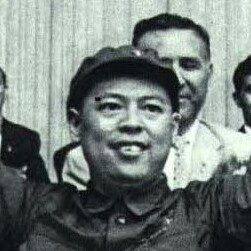
1. Three versions of the birth entry: 12 January, 11 December, Zhuji or Shanghai
The first cell of Yao Wenyuan's file cannot be pinned down, and that is itself a piece of information. This site's rule is to file a disagreement as it stands rather than pick the version that reads best. What the sources agree on can be stated first: he was born in 1931; he died on 23 December 2005, aged 74; his father was Yao Pengzi, a writer, translator and publisher; his ancestral home was Zhuji in Zhejiang. The Chinese Wikipedia, the English biographical reference works, The New York Times obituary and the accounts of his background do not conflict on those four points, and this file records them as settled. The day of birth is where they part. The World Biographical Encyclopedia entry carried by Prabook, and the Japanese and German Wikipedias, give 12 January 1931. The current Chinese Wikipedia entry gives 11 December 1931, with a precise birthplace: Yaogongbu village, Zhibu township, Zhuji county, Zhejiang. The two dates differ only in the arrangement of the month and the day — 12 January against 11 December — which looks very much like a transposition error somewhere in the chain of copying. But neither side produces an original birth record or household registration that a reader can check, and this file therefore files both dates in parallel and adjudicates neither.
The birthplace has the same two-version structure. The mainline version is Zhuji: the Chinese and Russian Wikipedias and the Yao Wenyuan archive at the Marxists Internet Archive all give Zhuji. The other version is Shanghai: relayed accounts report that Yao called himself "half a Shanghainese", of Zhuji ancestry but Shanghai-born, and a schoolmate's recollections treat Shanghai as the city he grew up in. The practical stakes are small — every source agrees that he was raised and educated in Shanghai, made his career in the Shanghai press, and returned to Shanghai to die — but an archive does not smooth a disagreement away merely because its stakes are small. Born in Zhuji or in Shanghai remains, on present evidence, an unsettled item, and this file's title and information box give only "1931–2005" for exactly that reason.
His father, by contrast, is among the least disputed background facts on the page. Yao Pengzi was a left-wing man of letters and translator who ran the progressive publishing house Writers' Book House and moved in the orbit of Lu Xun and the left-wing literary world. A classmate from Yao Wenyuan's Nankai middle-school years recalled that the family home and the father's publishing business made the boy precocious in literature: he edited the class wall newspaper and serialised a long novel, "The People in the War of Resistance", in it. This file records that detail because it explains the shape of everything that followed. Yao Wenyuan had no military record, no administrative apprenticeship, no scholarly achievement. The only capital he ever accumulated, from boyhood on, was words — the craft of turning words into weapons, learned in a publisher's household. It was the whole reason Jiang Qing and Zhang Chunqiao later picked him to hold the pen. An archive has to state a man's one weapon plainly before it weighs what he did with it.
Sources: Chinese Wikipedia, "Yao Wenyuan" (born 11 December 1931 in Yaogongbu village, Zhibu, Zhuji; Politburo tenure 28 April 1969 – 21 July 1977; joined the CCP in 1948; sentenced in 1981 to twenty years plus five years' deprivation of political rights); World Biographical Encyclopedia, "Yao Wenyuan", via Prabook (12 January 1931; father Yao Pengzi a writer, translator and art critic); Marxists Internet Archive, Yao Wenyuan archive (born 1931 in Zhuji, Shaoxing, Zhejiang; died 23 December 2005 in Shanghai); recollections of a Nankai schoolmate (the father's Writers' Book House; the wall-newspaper novel; his wife's death date and the joint burial — a single-source memoir, cited at memoir grade); The New York Times, 7 January 2006, obituary by David Barboza (aged 74; died 23 December; Xinhua report).
2. A Shanghai polemicist's pen: the Hu Feng campaign of 1955 and the Wenhuibao battle of 1957
Yao Wenyuan's debut was a rehearsal for his whole career: he made his name by writing attack articles in a political campaign. In 1955 the campaign against Hu Feng swept the literary world. Hu Feng, a leading left-wing theorist of literature, and his circle were reclassified as a "counter-revolutionary clique", and writers in large numbers were arrested or investigated. The English biographical entry states his emergence precisely: during that campaign Yao came forward as a representative of a new breed of young and fierce Party polemicists and literary critics. Two words in that description carry the weight — "young" and "fierce". In 1955 Yao was twenty-four, without fame or position. In a purge, he wrote against the fallen with exceptional ferocity, and the system noticed him. That was the first lesson of his curriculum vitae, and every later promotion followed the same path: a movement needs hatchet men, and the pen was his letter of introduction.
Over the following years his relentless attacks on writers and works labelled bourgeois, revisionist or decadent appeared frequently in Shanghai's Wenhuibao and Liberation Daily and in major national literary journals (the same entry). By March 1957 his essays had attracted Mao Zedong's attention; Mao found them, in the entry's words, "quite convincing". This file cites that sentence at biographical grade, as a relayed account — but it fits the later record without a seam: the channel by which a young Shanghai critic entered the supreme leader's field of vision was not any administrative post but the lethality of his polemics, noticed from above. In June 1957 he published his attack on Wenhuibao itself. The newspaper had carried relatively critical material during the spring's "Hundred Flowers" opening; when the movement turned into the Anti-Rightist Campaign, the paper became a target for liquidation, and Yao won his reputation as a man unsparing toward his own colleagues (English Wikipedia's Yao Wenyuan entry, synthesising). The irony deserves one line of record: eight years later, his attack on "Hai Rui Dismissed from Office" would be published in that same Wenhuibao. The same newspaper served him first as target and then as artillery platform — the instrument character of the press in that system, demonstrated twice in one man's career.
The bookkeeping rule for these 1950s polemics must be stated here so that later sections are not misread. The victims of the Hu Feng case and of 1957 were counted in the tens of thousands and more, and Yao Wenyuan decided none of it: the decisions sat with Mao and the Party centre, and at the time he held no significant post even in Shanghai. His role in both campaigns was at the executing end of one particular instrument — public-opinion hatchet work. This file nevertheless books both episodes to his responsibility record, for two reasons. First, his attacks were not routine assigned copy; the biographical record is consistent that he distinguished himself by their ferocity — ferocity was a personal brand he cultivated. Second, without the calling cards of 1955 and 1957 there is no selection by Jiang Qing after 1963: every link in his chain of ascent was bought with the previous polemic. An archive that books only the last link of such a chain has not understood the man.
Sources: World Biographical Encyclopedia, "Yao Wenyuan", via Prabook (emergence in the 1955 Hu Feng campaign as a young, fierce Party polemicist; frequent attacks in Wenhuibao, Liberation Daily and national literary journals; Mao's attention by March 1957 and his "quite convincing" verdict; alignment with Jiang Qing alongside Zhang Chunqiao from about 1963); English Wikipedia, "Yao Wenyuan" (the June 1957 attack on Wenhuibao and his reputation for sharp attacks on colleagues); English Wikipedia background on the Hu Feng case (the 1955 designation and scale).
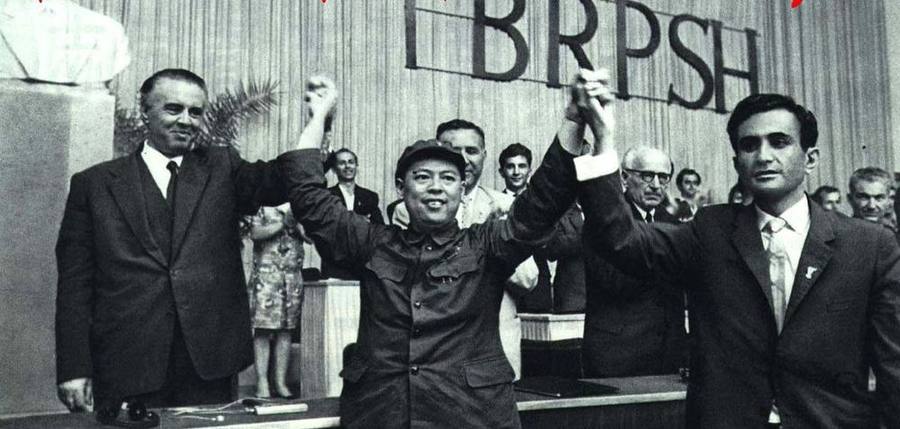
3. The alignment with Jiang Qing and Zhang Chunqiao: the commissioning chain of one article (c. 1963–1965)
In the early 1960s Yao continued to publish on literary criticism, theory and aesthetics, and the biographical entry notes that several ideas he developed then later became cornerstones of Cultural Revolutionary literary orthodoxy. From about 1963 the nature of his work changed. Together with Zhang Chunqiao he drew close to Jiang Qing, Mao's wife. Jiang was then building her own arts base in Shanghai around the reform of traditional opera; Shanghai was her ground, Zhang Chunqiao was the Shanghai Party committee's propaganda chief, and Yao Wenyuan was the sharpest pen under Zhang. Those three, with Wang Hongwen added later, are the Shanghai prototype of what would be called the Gang of Four — and the point must be fixed before 1965: the "Hai Rui" article was not one critic's independent choice of an academic subject. It was the first collective operation of a political faction in formation.
The commissioning chain is registered link by link from the public historical record. Jiang Qing came to Shanghai in February 1965 and planned the attack on "Hai Rui Dismissed from Office" together with Zhang Chunqiao and Yao Wenyuan (Party-history accounts carried by Tongji University's history materials agree on this). Who introduced Yao to Jiang is specified in the Chinese Wikipedia's article on the polemic: in March 1965 Zhang Chunqiao introduced Yao Wenyuan to Jiang Qing and entrusted him with writing the critique, and Zhang himself took a deep part in the writing. Before publication Mao Zedong read Yao's draft three times (the same entry, citing the research in its notes); Party-history accounts phrase it as Mao approving the article for publication after review, in one version as Mao reading it three times and finding it "basically acceptable". The choice of Wenhuibao rather than a Party paper as the place of publication was Zhang Chunqiao's suggestion — publish first in a non-Party paper and watch the reaction — and Jiang Qing agreed (the same entry). The whole chain — Jiang Qing set the subject, Zhang Chunqiao organised, Yao Wenyuan wrote, Mao reviewed — is filed here as the sources give it, because it also distributes the responsibility: the subject and the review belong to Jiang Qing and Mao, the organisation to Zhang, the text to Yao. Writing to order explains where an article came from; it does not cancel the signatory's account. Ten years later, in the dock, Yao's own defence was precisely that many things had been arranged from above. The court, and this file after it, decline to let that sentence wipe the ledger clean, for the same reason: nobody else on that chain became a Politburo member for writing the article. He did.
One detail usually skipped belongs in the record. Before publication, on 5 and 7 November 1965, Wenhuibao convened two symposia, nominally to invite scholars to discuss the still-unpublished article. Most of those present sympathised with Wu Han and criticised the article; Li Peinan, president of the Shanghai Academy of Social Sciences, and the Fudan professors Zhou Gucheng and Zhou Yutong spoke in Wu Han's support (Chinese Wikipedia, article on the polemic). In other words, before the article appeared, the organisers had heard the scholarly verdict to their faces: the piece did not stand up as scholarship. It was published on 10 November anyway. From the very beginning, therefore, this was not a discussion that argument could have settled; it was a political action whose decision had already been taken. The symposia were a temperature check before the operation, and the temperature changed nothing. This file records those two meetings so that Wu Han's fate does not read, later, as a misunderstanding: people did warn them. The warning was useless.
Sources: Chinese Wikipedia, article on "On the New Historical Play 'Hai Rui Dismissed from Office'" (secretly organised in Shanghai by Jiang Qing and Zhang Chunqiao with Mao's support; Mao's three readings of the draft; Zhang's March 1965 introduction of Yao to Jiang Qing and his own deep part in the writing; the Wenhuibao placement as Zhang's suggestion approved by Jiang; the symposia of 5 and 7 November 1965 and the pro-Wu Han interventions of Li Peinan, Zhou Gucheng and Zhou Yutong); Tongji University Party-history materials (Jiang Qing's February 1965 arrival in Shanghai and joint planning with Zhang and Yao; Mao's review and approval); World Biographical Encyclopedia, "Yao Wenyuan" (the c. 1963 alignment with Jiang Qing, who was using Shanghai as her base for opera reform, and Yao's part in the preparations for what became the Cultural Revolution).
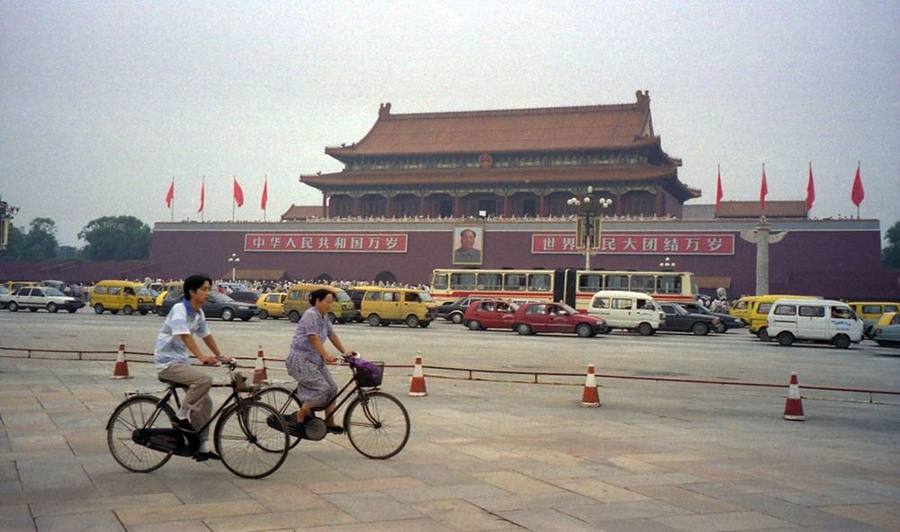
4. 10 November 1965: "On the New Historical Play 'Hai Rui Dismissed from Office'", taken apart
First, the object of the attack. Wu Han was a Ming-dynasty historian and a deputy mayor of Beijing. In 1959 Mao Zedong had called for study of the upright Ming official Hai Rui and his spirit of outspoken remonstrance; Wu Han responded with two essays, "Hai Rui Scolds the Emperor" and "On Hai Rui". Ma Lianliang, head of the Beijing Peking Opera Troupe and its most famous actor, read them and commissioned Wu to write a Hai Rui play. Wu revised the script seven times, completed "Hai Rui Dismissed from Office" at the end of 1960, and the troupe staged it in 1961 (Chinese Wikipedia, "Hai Rui Dismissed from Office"). The play tells how Hai Rui, as governor of Yingtian, returned fields to the people and redressed wrongful cases — "returning the fields" and "reversing unjust verdicts" — and was dismissed for it. The play was thus, at its origin, a product commissioned by the leader's own call, written by a senior scholar-official inside the system. Four years later the same system reclassified it as an anti-Party poisonous weed, and its author died in prison. The play's fate is the first key to the polemic that destroyed it.
Yao's argument, as the original text and later historians dissect it, moves in three steps. Step one, seize the plot: "returning the fields" is read as a demand to hand the people's communes' land back to landlords and rich peasants and to pull down the communes themselves; "reversing unjust verdicts" is read as a demand to rehabilitate the suppressed. Step two, attach it to the current line struggle: both points are hooked to the "winds" condemned since 1962 — the "individual-farming wind", the "darkness wind" and the "verdict-reversal wind" — and the play is accused of pleading, by historical allegory, for enemies at home and abroad. Step three, fix the nature of the thing: the play is declared "not a fragrant flower but a poisonous weed", an anti-Party, anti-socialist work, and a scholarly discussion about a historical drama is promoted, in one move, into class struggle and a question of friend and foe (the Chinese Wikipedia article on the polemic and the Party-history accounts agree). The third step is the operative one. The first two, however strained, still belong to the genre of interpretation. Once the third step lands, the author is no longer an opponent in a discussion but an enemy, and every instrument of persecution that follows draws its warrant from that reclassification. This file sets the three steps out in detail because Yao's entire working method for the next ten years was their repetition — distort, hook, reclassify — and the "Hai Rui" article is the work in which the method was perfected.
On the Peng Dehuai link, the sources differ in a fine point, and this file files the difference rather than flattening it. The standard account runs: Yao insinuated that Hai Rui's dismissal stood for Peng Dehuai's. Peng, at the 1959 Lushan Conference, had criticised the Great Leap Forward and was purged as head of an "anti-Party clique" and dismissed as Minister of Defence; Hai Rui's "dismissal" maps onto Peng's, Wu Han is accused of pleading for Peng's rehabilitation, and Mao himself is cast, by implication, as the Jiajing Emperor who dismissed a loyal official. The English Wikipedia's Wu Han and Cultural Revolution entries record the matter in those terms, and note that in December 1965 Mao himself identified "dismissed" as the crux: the Jiajing Emperor dismissed Hai Rui, and "we" in 1959 dismissed Peng Dehuai. The Japanese Wikipedia's article on the polemic enters a textual reservation: Yao's article itself did not explicitly argue the Hai Rui–Peng Dehuai connection; the figure who explicitly made the connection was Mao. The two accounts do not necessarily contradict each other — an insinuating structure in the article and an explicit decoding afterwards by Mao can coexist — but an archive must keep the levels apart. What the article says in black and white — the verdict-reversal insinuation and the "poisonous weed" verdict — is a textual fact. The Peng Dehuai hook, established through Mao's review and pronouncements, is a political fact. To credit the whole hook to Yao's pen alone is a simplification; to claim the article had nothing to do with the Peng case is an evasion. This file takes neither side of that false choice.
Sources: Chinese Wikipedia, article on the polemic (the hooking of "returning the fields" and "reversing unjust verdicts" to the three "winds" of 1962; the "poisonous weed" verdict; the raising of an academic and historical question to the level of class struggle); Chinese Wikipedia, "Hai Rui Dismissed from Office" (Wu Han's 1959 essays; Ma Lianliang's commission; completion at the end of 1960; the People's Daily reprint of 30 November 1965; the Party-history analysis that the blow was aimed through Wu Han at Peng Zhen and beyond him at Liu Shaoqi); English Wikipedia, "Wu Han" and "Cultural Revolution" (the Hai Rui–Peng Dehuai allegory structure; Mao on "dismissed" as the crux; the account of Mao secretly commissioning Jiang Qing and Yao Wenyuan in February 1965); Japanese Wikipedia, article on the polemic (the reservation that Yao's text did not itself explicitly link Hai Rui's dismissal to Peng Dehuai's, and that Mao made the link); Tongji University Party-history materials (the article's charge that the play would pull down the communes and plead for the verdict-reversal wind, and the Party-history verdict that the charges against Wu Han were fabricated).
5. What the article set in motion: Beijing's refusal, Wu Han's death and Peng Zhen's fall (November 1965 – May 1966)
The first act after publication was Beijing's silence. For eighteen days after Yao's article appeared, not one Beijing newspaper reprinted it (Tongji Party-history materials). The Beijing Party committee under Peng Zhen tried to handle the matter as scholarship: in February 1966 the "Group of Five" on cultural revolution, which Peng headed, issued the February Outline, arguing that discussion of the play should be confined to academic bounds and opposing the politicisation of academic questions (English Wikipedia, "Five Man Group"). Peng also attacked Yao and the other Maoist writers for treating a purely academic question in political terms (the same entry). This passage must be recorded exactly: Peng Zhen was not defending freedom of expression. He was a senior official of the system using the system's own method — drawing a boundary around a discussion — to block a polemic of the same system. Even that mild a resistance Mao judged to be protection of a protégé. Only at the end of November, once the Central Secretariat had learned Mao's attitude to Yao's article, did the Beijing papers reprint it; and when the People's Daily reprinted it on 30 November, Peng's side still tried, through its editor's note, to pull the discussion back toward scholarship (Chinese Wikipedia and Party-history accounts). Eighteen days of silence and one outline were the whole of the Beijing committee's resistance. Their failure fixed the rule for the decade that followed: an article the leader has reviewed cannot be stopped by any organisation at any level.
Then the human accounts fell due, one by one. Wu Han was first: as the campaign escalated he was stripped of his posts, his home was ransacked, he was struggled against, and he was imprisoned. His wife Yuan Zhen died first, on 18 March 1969; Wu Han himself died in prison on 11 October 1969, aged sixty (English Wikipedia, "Wu Han": died in prison; the same entry records that suicide was reported, that fellow prisoners later said he had been beaten in prison about a year before his death, and that a recurrence of tuberculosis has also been suggested, so that the exact manner of his death cannot be established — this file files those accounts in parallel and pins down only the layer that is certain: he died in custody, under persecution). Deng Tuo, named with him in the "Three-Family Village", killed himself in May 1966; Liao Mosha spent years in prison. Peng Zhen himself fell in May 1966: Mao dissolved the Group of Five and its apparatus, the Central Committee issued the May 16 Circular naming and condemning Peng, the Cultural Revolution Group replaced the Group of Five, the Beijing Party committee was reorganised, and Peng became the first heavyweight casualty of the Cultural Revolution (English Wikipedia, "Five Man Group", and the standard histories). The consequence chain of one article is now complete: a historian dead in prison, a municipal Party secretary dead by his own hand, a Politburo-level mayor of the capital brought down, a capital city's Party committee replaced wholesale — while its author, Yao Wenyuan, entered the newly created Central Cultural Revolution Group at the same moment. The consequences and the reward sit on the same timetable. That is why this site takes 1965 as the tag year of his life.
Historiography's verdict on the article is recorded here in the consensus form: it is generally regarded as the fuse, the opening shot, of the Cultural Revolution (the Chinese Wikipedia article on the polemic; The New York Times obituary's "opening salvo" and "first shot"; the Party-history formula that it "unveiled the prelude" — three traditions in agreement). But "fuse" must not be read as "accident". Before the article lay Jiang Qing's Shanghai operation, Mao's intention to settle accounts with the Liu Shaoqi line, and the groundwork of the Socialist Education Movement; after it came Mao's own pronouncement and the collision with the Group of Five. Yao's place in that causal chain is the finger on the trigger. He did not build the trigger or the gun, but the finger was extended voluntarily — and the whole of his ascent over the following ten years rested on the credit of that one shot. This file books him exactly there: not inflated into the "author" of the Cultural Revolution, and not shrunk into a negligible mouthpiece.
Sources: English Wikipedia, "Wu Han" (died in prison 11 October 1969, aged 60; his wife Yuan Zhen died 18 March 1969; the suicide report, the beating report and the tuberculosis suggestion filed in parallel; the manner of death not establishable); English Wikipedia, "Five Man Group" (the February Outline's position that the play was not political; Peng Zhen's criticism of Yao and others for politicising an academic question; the group's dissolution in May 1966 and its replacement by the Cultural Revolution Group; Peng's purge); Chinese Wikipedia, "Hai Rui Dismissed from Office" (the Party-history analysis that the attack was aimed through Wu Han at Peng Zhen and at Liu Shaoqi's position); Tongji University Party-history materials (Beijing's eighteen days without a reprint; the reprints that followed once the Secretariat learned Mao's attitude in late November; the verdict that the charges in Yao's article were fabricated); The New York Times, 7 January 2006 (the article as the first shot of the Cultural Revolution).
6. The Central Cultural Revolution Group and Shanghai's January Storm: from pen to power (1966–1969)
In May 1966 Yao Wenyuan entered the Central Cultural Revolution Group. The biographical entry puts it thus: in May 1966 he was made a member of the CCP Politburo's Central Cultural Revolution Group, of which Jiang Qing and Zhang Chunqiao were deputy heads. In the early Cultural Revolution that group in practice displaced the Politburo and the Secretariat as the seat of day-to-day power; it was the movement's command organ. A man who three years earlier had been writing reviews in a newspaper office thereby sat down inside the innermost circle of national power — and the step was earned, still, by that one article alone. This file flags the archival meaning of the promotion explicitly: it demonstrated to every pen-pusher in the Party and the country that a polemic written to the leader's satisfaction could be exchanged directly for supreme power. The writing teams that sprang up everywhere over the following decade, rising by attack articles, trace their origin to this appointment.
In January 1967 Shanghai underwent the "January Storm", also styled the January Revolution: between 5 January and 23 February 1967, Shanghai rebel factions, acting under the directives of the Central Cultural Revolution Group and with Mao's backing, seized power from the Shanghai Party committee; the committee of First Secretary Chen Pixian and Mayor Cao Diqiu was overthrown, and on 5 February the Shanghai People's Commune was proclaimed (English Wikipedia, "January Storm": lead figures listed as Zhang Chunqiao, Yao Wenyuan and Wang Hongwen; the coup launched through those Maoist leaders under CRG directives). In the course of it, Shanghai workers' rebel organisations telegraphed the Central Committee demanding that Zhang Chunqiao and Yao Wenyuan be appointed mayor and deputy mayor of Shanghai (the same entry; Zhang did not endorse the attempt). Between 12 and 18 February Zhang and Yao returned to Beijing to consult Mao, who withdrew his own suggestion of the "commune" form, and the Shanghai People's Commune was accordingly renamed the Shanghai Revolutionary Committee (the same entry). Yao then became a vice-chairman of that committee, an office the biographical entry dates to February 1967. The honorific "standard-bearer of the Cultural Revolution" (文革旗手) attached itself to him in this period. One caution is required: this file found the title only in later synthetic usage; no contemporaneous document conferring it was located in the sources checked, and it is therefore registered as "later common usage; contemporaneous source unverified", not as an honour formally bestowed at the time.
From this section on, Yao's ledger changes its form. Before 1966 he was a pen, and his account can be cited article by article. After 1966 he was a member of an organ of power, and what passed through his hands was no longer only signed articles but seizures of power, new institutions and appointments. In Shanghai's January Storm the municipal committee was overthrown, cadres were struggled against, and factories and offices were taken over by rebel factions; the direct executors numbered in the thousands, and the decision level included Mao, the Central Cultural Revolution Group and Zhang Chunqiao. The share that the public record supports for Yao personally is this: he was one of the CRG leaders sent to Shanghai, a vice-chairman of the new power that followed the seizure, and later second secretary of the Shanghai Party committee. To book the whole of Shanghai's account to him alone has no basis; to write him as a bystander contradicts the record. This file's measure, applied through the rest of the page, is: where his office was present, book the office; where his personal act is documented, book the man; and where the space between the two is grey, mark it plainly as no public record.
Sources: World Biographical Encyclopedia, "Yao Wenyuan" (member of the Central Cultural Revolution Group from May 1966, Jiang Qing and Zhang Chunqiao deputy heads; vice-chairman of the Shanghai Revolutionary Committee from February 1967; ranked eighth among Party and state leaders at the 1968 National Day celebrations); English Wikipedia, "January Storm" (5 January – 23 February 1967; lead figures including Zhang Chunqiao, Yao Wenyuan and Wang Hongwen; CRG direction and Mao's backing; the overthrow of Chen Pixian and Cao Diqiu; the Shanghai People's Commune of 5 February; the rebels' telegram demanding Zhang and Yao as mayor and deputy mayor; the 12–18 February Beijing consultations and the renaming as a Revolutionary Committee).
7. A decade in the Politburo: propaganda gatekeeping, the "Three-Family Village", and the campaign against Deng (1969–1976)
In April 1969, at the Ninth Party Congress, Yao Wenyuan entered the Central Committee and was elected to the Politburo, working on official propaganda (the English Wikipedia and the biographical entry agree; the Chinese Wikipedia gives his Politburo tenure as 28 April 1969 to 21 July 1977 — the later date being his expulsion from the Party, whereas his actual power ended with his arrest in October 1976). At the Tenth Congress in August 1973 he was re-elected to the Politburo. At the centre he was also a member of the Central Organisation and Propaganda Group (Chinese Wikipedia). The biographical entry summarises his function in these years exactly: backed by Mao, he became one of the Party centre's chief ideological watchdogs, and he exercised power principally in his capacities as censor and ghostwriter for the Central Committee. "Watchdog" is the right word. Across that decade, what the nation's newspapers printed, what its publishers issued, and which work of art was a fragrant flower and which a poisonous weed, passed in the last instance through the gate of the system he helped command. In Shanghai he kept his base at Liberation Daily, the Shanghai Party committee's organ, where he had served as an editorial-board member — the Marxists Internet Archive describes him as an editor of the paper — so that the Shanghai opinion base and the Beijing gatekeeping power met in one man.
His individually signed polemics of the period include one that can be cited with unusual completeness: the 1966 attack on the "Three-Family Village". The "Three-Family Village" was the joint pen-name "Wu Nanxing" under which Deng Tuo, Wu Han and Liao Mosha wrote the essay column "Notes from a Three-Family Village" for the journal Frontline, alongside Deng Tuo's "Evening Chats at Yanshan". Yao's article "On the 'Three-Family Village' — the Reactionary Nature of 'Evening Chats at Yenshan' and 'Notes from a Three-Family Village'" (catalogued in the Yao Wenyuan bibliography at the Marxists Internet Archive, 1966) reclassified a set of collectively signed occasional essays by three insider men of letters as the opinion position of an organised anti-Party clique. The consequences were half-booked in Section 5: Deng Tuo killed himself in May 1966, Wu Han died in prison in 1969, and Liao Mosha was imprisoned for years. This article and the "Hai Rui" article form a pair — the first destroyed the Beijing committee's system of pens, the second its mayor and the committee itself — in that order: opinion first, organisation second, the same sequence he presided over in every later campaign. This file singles the piece out because it is the one in which the three elements of his personal responsibility are most completely documented together: his signature, named targets, and lethal consequences. Its evidential grade is higher than that of any collective editorial of his tenure.
The spring 1976 campaign against Deng Xiaoping was the last great operation of his Politburo years. After Zhou Enlai's death in January 1976 the criticism of Deng escalated; the biographical entry records that in the spring of 1976 Yao, together with Jiang Qing and Zhang Chunqiao, was largely responsible for orchestrating the nationwide media campaign to disgrace Deng. After the Tiananmen Incident of April 1976 the campaign reached its climax and Deng was stripped of all his posts. The bookkeeping is layered as before: the decision to remove Deng was Mao's and the Politburo's, not one Yao could have taken alone; but the opinion operation that systematically blackened a vice-premier in every newspaper in the country as the representative of the "capitalist road" has his name on its list of orchestrators, on biographical authority, and this file books it at the grade of "co-orchestration, an account of office". On 9 September 1976 Mao died. On 6 October, Hua Guofeng, Ye Jianying and their allies ordered the arrest of Jiang Qing, Zhang Chunqiao, Wang Hongwen and Yao Wenyuan — Yao being, in the standard account, one of the three detained at Huairentang under the pretence of a meeting; the arrest date, 6 October 1976, is consistent across sources. The man who rose by the pen was closed down by a single arrest order. Between the two lay ten years of persecution in which he had taken part.
Sources: Chinese Wikipedia, "Yao Wenyuan" (Politburo tenure 28 April 1969 – 21 July 1977; member of the Central Organisation and Propaganda Group); World Biographical Encyclopedia, "Yao Wenyuan" (entered the Politburo at the Ninth Congress in April 1969 in charge of propaganda; re-elected August 1973; exercised power chiefly as censor and Central Committee ghostwriter; in spring 1976 largely responsible, with Jiang Qing and Zhang Chunqiao, for the nationwide media campaign against Deng Xiaoping; arrested 6 October 1976); Marxists Internet Archive, Yao Wenyuan bibliography (the 1966 "Three-Family Village" article; the 1965 "Hai Rui" article; the 1975 "Social Basis" article; his editorship at Liberation Daily); English Wikipedia, "Yao Wenyuan" (Liberation Daily as the Shanghai Party committee's organ).
8. The theory campaign of 1974–75: "On the Social Basis of the Lin Biao Anti-Party Clique" and the doctrine of all-round dictatorship
At the end of 1974 and into 1975 Mao called for the theory of the dictatorship of the proletariat to be "made clear", and the campaign to study that theory and guard against revisionism followed. The campaign's heavy artillery was two signed long essays, issued as a pair: Yao Wenyuan's "On the Social Basis of the Lin Biao Anti-Party Clique" and Zhang Chunqiao's "On Exercising All-Round Dictatorship over the Bourgeoisie". Yao's piece is catalogued as follows: written in early 1975, first published in the theoretical journal Red Flag, No. 3 of 1975; the biographical entry dates its appearance in the People's Daily to 1 March 1975; the English translation ran in Peking Review No. 10 of 1975 (7 March), and the Foreign Languages Press issued it as a pamphlet the same year (Marxists Internet Archive catalogue). The three records do not conflict; they are the staggered appearances of one article in the Party journal, the Party newspaper and the foreign-language press, and this file registers the stagger rather than forcing a single day.
The article's structure, as the original text allows it to be checked, runs thus. Yao opens with Mao's dictum that if people like Lin Biao came to power, restoring the capitalist system would be quite easy, and asks after the class nature and social basis of such figures. His conclusion: the Lin Biao clique represented the interests and restoration hopes of the overthrown landlord and capitalist classes, and socialist society continually engenders new bourgeois elements through channels such as "bourgeois right", including among a section of the workers and of Party members (the original, checked against the Peking Review translation and the Marxists Internet Archive text). The article's real function was not scholarly. It supplied an official answer to the question why, more than twenty years after the revolution's victory and long after public ownership was established, enemies should still keep appearing inside the Party: because the bourgeoisie is engendered every hour, struggle must continue every hour, and anyone named can be explained as a newly engendered bourgeois element. Zhang Chunqiao's companion piece, first published in Red Flag No. 4 of 1975 (scholarly syntheses and the Foreign Languages Press catalogue agree), pushed the same logic to the slogan of all-round dictatorship over the bourgeoisie. Together the two essays formed what came to be called the "bourgeois right" and "all-round dictatorship" theory campaign, whose practical target was prepared in advance: it stocked the theoretical ammunition for the 1976 campaign against Deng and against the "right-deviationist wind". Yao's role in it was not that of a commentator but of a maker of official theory — the closest he came, in his ten Politburo years, to drafting the line itself — and this file books it at the grade of "signed text, personal account", undiminished by its theoretical costume.
One line of proportion belongs here. In 1975 the two essays were studied in organised sessions across the country and printed as pamphlets in vast numbers. Their language reads as empty today, but an archive must not substitute today's reading experience for their contemporary effect: they were the "theory" that hundreds of millions were organised to study, and the authority cited in countless work-unit criticism meetings to fix a label on a colleague. A man whose articles could fix a person's fate had, late in his career, promoted the method into theory, and the field of victims widened accordingly: a polemic has a specific target, but a theory prepares the charge in advance for every future target. This section is placed between the "Three-Family Village" and the anti-Deng campaign so that the reader can see the line of escalation plainly — in 1965 he fixed the guilt of one play, in 1966 of three writers, and in 1975 of an entire category of people.
Sources: Marxists Internet Archive, Yao Wenyuan archive (the "Social Basis" article written in early 1975, first in Red Flag No. 3 of 1975; English translation in Peking Review No. 10, 7 March 1975; Foreign Languages Press pamphlet, 1975); World Biographical Encyclopedia, "Yao Wenyuan" (the People's Daily publication dated 1 March 1975; the article as an explanation, in the ideological language of the time, of the correctness of the politics pursued since the start of the Cultural Revolution); the English translation of Yao's article (the Lin Biao clique as representing the overthrown landlord and capitalist classes; bourgeois right and the engendering of new bourgeois elements — checked against the Peking Review text preserved at massline.org); scholarly syntheses (Raymond Lotta (ed.), And Mao Makes 5, documentary collection, and University of California Press research: the campaign to study the theory of the dictatorship of the proletariat launched by Mao around the Fourth National People's Congress; the Yao and Zhang essays as the campaign's heavy artillery; Zhang's essay first in Red Flag No. 4 of 1975).
9. Three ledgers, kept apart: his own pen, his system's output, and what is not on record
Yao Wenyuan's account is the easiest of all to muddle, because his form of power was double: he was an author, and he was the keeper of a propaganda machine's gate. This file gathers the decade into three ledgers, item by item. The first is the personal, signed ledger — pieces for which the contemporary text, the signature and the publication record are all in hand: the attack articles of the 1955 Hu Feng campaign (published as a group; no complete personal bibliography survives, and that absence is stated here rather than covered); the June 1957 attack on Wenhuibao; "On the New Historical Play 'Hai Rui Dismissed from Office'" of 10 November 1965; the 1966 attack on the "Three-Family Village"; and "On the Social Basis of the Lin Biao Anti-Party Clique" of 1975. Those five are what his own pen wrote, and the correspondence between the last three and their targets, their consequences and his promotions has been pinned section by section above. The second ledger is that of office and system — acts whose subject is the apparatus he helped lead, under the premise of his posts: between 1966 and 1976, under the Central Cultural Revolution Group and his Politburo propaganda watch, the general line by which the nation's press and publishing system disposed of works of art and scholarship under the fragrant-flower / poisonous-weed binary; his leadership share in the 1967 Shanghai seizure of power and the building of the new regime; the propaganda system's general deployment in the 1974 campaign to criticise Lin Biao and Confucius; and his co-orchestration of the 1976 anti-Deng opinion campaign. The weight of this ledger comes from office, not from handwriting: he did not write every editorial of that decade, but every editorial of that decade passed out through a gate he helped keep.
The third ledger is the column of the not-on-record and the not-attributable, listed together so that imagination does not fill it. First: the mass of criticism articles published in those years under collective pen-names such as Liang Xiao and Luo Siding — which specific pieces he reviewed and passed, and which the writing groups produced on their own momentum, has no piece-by-piece review archive in the public record. This file does not book them to him one by one; it books only the institutional fact that the writing groups belonged to the propaganda system under his watch. Second: apart from the named cases of Wu Han, Deng Tuo, Liao Mosha and Peng Zhen, public sources contain few checkable texts in which he personally named or ordered the persecution of a specific individual between 1966 and 1976, and this file does not register individuals on the strength of the vague claims of later memoirs. Third: his specific utterances in internal Politburo meetings are, apart from the fragments the prosecution produced at his trial (the diary and statement extracts read out in court; see the next section), not on public record. Fourth: the detail of the division of labour between him, Jiang Qing and Zhang Chunqiao is thickly covered in later accounts of mixed reliability; this file uses only what can be cross-checked. Read the three ledgers side by side and the man's complete portrait stands: one pen wrote the single most consequential polemic of contemporary Chinese history, and then, for ten years, held a gate through which countless pens were made to write in his format. The personal evil and the systemic evil are, in his case, the same thing at two scales.
Sources: this section is this site's classification of the sources already cited in Sections 1–8 — the five signed items rest respectively on the biographical entry, the Marxists Internet Archive bibliography and the Chinese Wikipedia articles; the system ledger's items rest on the English Wikipedia's "January Storm" entry and the biographical entry; each not-on-record entry is a negative result or a statement of evidential limits within the range of this site's searches of 6 November 2026, whose method is set out in the Verification Note.
10. The Special Court of 1980–81: whose figures the indictment's were, how he behaved in the dock, and the two dates of the verdict
After his arrest on 6 October 1976 Yao was held in isolation under investigation. In July 1977 the Third Plenary Session of the Tenth Central Committee resolved to expel him from the Party for ever and strip him of all posts inside and outside it (Party-history accounts, corroborated by the Chinese Wikipedia's closing date for his Politburo tenure, 21 July 1977). In September 1980 the NPC Standing Committee decided to establish a Special Prosecution Office and a Special Court of the Supreme People's Court to try the cases of the Lin Biao and Jiang Qing counter-revolutionary cliques. On 20 November 1980 the Special Court opened and the indictment was read (Alexander C. Cook, The Cultural Revolution on Trial: the indictment was delivered on the opening day, 20 November 1980). Ten principal defendants stood together, the four of the Jiang Qing clique among them. The trial ran about six weeks, heard forty-nine witnesses and weighed several hundred items of evidence (Cook's introduction, synthesising). The character of the proceeding is registered here in the consensus of scholarship: it was at once a criminal trial and the political ceremony by which the new leadership cut itself off from the history of the Cultural Revolution. Its complete record has never been published (the English Wikipedia's Gang of Four entry notes that the official records of the trial have not been released), and everything this section reports about it is therefore qualified as the prosecution alleged it or the court produced it — never as neutrally established fact.
The indictment's numbers must be written under their attribution; that is this site's iron rule for this set of figures. The finalised indictment charged the two cliques with "persecuting 729,511 people, of whom 34,800 were persecuted to death" — the figures Cook gives from the indictment's text, noting that the final indictment went through thirty revisions before settling on them. Alongside them, a second set circulates far more widely in English: some 750,000 persecuted, of whom 34,375 died, as carried by the Library of Congress country study and the English Wikipedia's Gang of Four entry. The two sets are plainly of one origin with different tails — 750,000 looks like a rounding of 729,511, while 34,375 and 34,800 diverge in a way no source chain lets this file resolve. The registration adopted here is: the indictment's own figures, 729,511 and 34,800, as the main line, with the circulating 750,000 and 34,375 filed in parallel, all of them under the attribution "as charged in the prosecution's indictment". One more layer must be nailed down: those figures are the joint total for two cliques across ten years — the Lin Biao clique and the Jiang Qing clique together — not Yao Wenyuan's personal tally. Any account that books 729,511 persecutions to Yao alone misreads the indictment, and this file expressly does not do so. Yao's own share of the indictment concerned chiefly the framing and persecution of Party, state and army leaders and the direction of opinion persecution — corresponding exactly to his former occupation. The prosecution even produced in court a text attributed to him asking why a few counter-revolutionary elements could not be shot, since dictatorship was not like embroidering flowers — a passage relayed by The New York Times obituary. This file registers it as an item produced by the prosecution in court; its authenticity cannot be independently verified.
His conduct at the trial is recorded consistently in outline and differently in detail, and the versions are filed together. The English Wikipedia's Gang of Four entry states that Jiang Qing defended herself vehemently, Zhang Chunqiao refused to admit wrongdoing, and Yao Wenyuan and Wang Hongwen expressed repentance and confessed their alleged crimes. Cook's study divides the defendants' courtroom strategies into four types and places Yao in the "contestation" type: sparring over words and concepts. The eyewitness tradition, in Ye Yonglie's account, has Yao in court forever splitting hairs over wording, evading the weighty and dwelling on the light, admitting at most to having committed "errors" and never to crimes (Ye Yonglie, checked against the text carried by Aisixiang). The safest synthesis of the three is this: he admitted a part of the facts and of his "errors", and contested the characterisation of crimes with verbal manoeuvres — in pointed contrast to Jiang Qing's frontal defiance and Zhang Chunqiao's total silence. A man who had lived by words, in the dock, still trusted only words to save him. The verdict's date comes in two versions. Most sources give 25 January 1981 as the day the Special Court pronounced sentence (the French Wikipedia; Ye Yonglie's "on the morning of 25 January"; Caravan magazine's synthesis). The biographical entry carried by Prabook gives 23 January; and in Ye Yonglie's account the written judgment on Wang Hongwen itself bears the date 23 January. A reasonable explanation is that the individual judgments were signed on one date and pronounced together on another, but this file has no judgment original to check, and it files both dates in parallel, taking 25 January (pronouncement) as the common account and 23 January as the variant. The sentence itself is consistent across sources: twenty years' imprisonment, plus five years' deprivation of political rights (the Chinese, Finnish, Japanese and Russian Wikipedias agree) — the lightest of the four, Jiang Qing and Zhang Chunqiao receiving suspended death sentences later commuted to life, and Wang Hongwen life imprisonment. Ye Yonglie relays an internal explanation for the leniency: Yao's propaganda activities had in large part been carried out on instructions from above, so a heavy sentence would have been unfair. This file files that sentence at the grade of a relayed account — but it forms an exact footnote to the commissioning chain of Section 3: even those who sentenced him acknowledged that the chain existed. In court the chain was a reason for leniency; in an archive it is the basis for dividing the account.
Sources: Alexander C. Cook, The Cultural Revolution on Trial (the indictment's thirty revisions and its final figures of 729,511 persecuted and 34,800 dead; the opening and reading of the indictment on 20 November 1980; a trial of about six weeks with forty-nine witnesses and 651 items of evidence; Yao's contestation strategy — checked against the Cambridge University Press introduction excerpt and the MCLC review at Ohio State University); English Wikipedia, "Gang of Four" (the circulating figures of some 750,000 persecuted and 34,375 dead; the trial records unreleased; Yao's and Wang's repentance and confessions; the sentences and the four death years); the Library of Congress country study, via Facts and Details (the 750,000 / 34,375 set); Ye Yonglie, "The Last Moments of the Gang of Four Clique" (sentence pronounced 25 January 1981; Wang Hongwen's judgment dated 23 January; Yao's hair-splitting and admission of "errors" only; the relayed internal explanation for leniency — checked against the Aisixiang text); World Biographical Encyclopedia, "Yao Wenyuan" (the 23 January 1981 sentencing variant); The New York Times, 7 January 2006 (the "shoot a few counter-revolutionary elements" passage produced by the prosecution in court); Chinese Wikipedia, "Yao Wenyuan" (twenty years plus five years' deprivation of political rights; Politburo tenure ending 21 July 1977).
11. Four dates for one release, and the Shanghai last years (1994–2005)
Yao Wenyuan's release date is the most densely disputed cell on this page, and the four versions are filed in parallel, each with its grade of source. Version one: 5 October 1996 — the current text of the English Wikipedia's "Yao Wenyuan" entry gives his release as 5 October 1996, and the Arabic and Polish Wikipedias give the same day. Version two: 23 October 1996 — the Marxists Internet Archive's Yao page and the biography carried by Alchetron give 23 October 1996. Version three: January 1996 — a range of Chinese popular accounts give "released in January 1996 on completion of his sentence" (the release section of the Japanese Wikipedia and Chinese web biographies carry this version). Version four: medical parole in 1994 — the older English biography preserved by Fact-Index states that he had been writing and studying "since his release on medical parole in 1994"; this version rests on that single source and is marked unverified in this file. The arithmetic behind the four is worth doing for the reader. Yao was arrested on 6 October 1976; a twenty-year term counted from the start of that custody expires in early October 1996. Versions one and two fit the arithmetic of the sentence, differing only in the day. Version three, January 1996, falls nine months short of it and cannot stand unless there was a remission of sentence — of which there is no public record — and this file registers it as "widely circulated but inconsistent with the arithmetic of the sentence". Version four, if true, would mean he left prison on medical parole before formal release and would not necessarily conflict with versions one and two — but it is single-source and unverified, and this file does not adopt it as fact. One supporting datum may help the reader judge: the Russian Wikipedia states that he was the only member of the Gang of Four to serve his full term. If that is right, it fits the two October versions and tells against both the January version and the 1994 parole version. This file files all of it in parallel and adjudicates none of it.
His life after release is thin in the public record, in disproportion to the noise of his first half. The sources agree on the outline: he returned to live in Shanghai, wrote his memoirs and studied history (the Marxists Internet Archive page and The New York Times obituary both give the Shanghai writing). The memoirs were never finished, and no published edition is on record — no public record. His schoolmate's recollections supply a set of family details: his wife died on 19 August 1996, some two months before his release; he was buried with her in a Shanghai cemetery, on a grave bearing only her name, erected in the children's names (the schoolmate's memoir, single source). The writer Ye Yonglie likewise records a Shanghai burial together with his wife (as relayed in the schoolmate's memoir, citing Ye). This file's registration of that cluster is: the joint Shanghai burial is carried by two relayed accounts and is filed as "on record"; the exact date of his wife's death and the detail of the grave inscription rest on the schoolmate's memoir alone and are marked single-source, not promoted. As for any systematic contact in his last years with former subordinates or researchers, fragmentary claims circulate online without checkable texts, and this file adopts none of them. The outline it certifies is only this: back in Shanghai, writing memoirs, unpublished, no public activity on record.
Sources: English Wikipedia, "Yao Wenyuan" (the 5 October 1996 release version); Marxists Internet Archive, Yao Wenyuan archive, and the Alchetron biography (the 23 October 1996 version); Japanese Wikipedia, "Yao Wenyuan", release section, and Chinese popular accounts (the January 1996 version); Fact-Index, older English biography (the 1994 medical-parole version — single source, unverified); Russian Wikipedia, "Yao Wenyuan" (the only Gang member to serve his full term; twenty years plus five years' deprivation of political rights); the Nankai schoolmate's recollections (his wife's death on 19 August 1996; the joint Shanghai burial and the grave detail; citing Ye Yonglie — a single-source memoir); The New York Times, 7 January 2006 (released in 1996; living in Shanghai and writing).
12. 23 December 2005: the death of the last of the Gang of Four, and a note on the sanctions entry
On 23 December 2005 Yao Wenyuan died of diabetes in Shanghai, aged seventy-four. Xinhua did not announce the death abroad until 6 January 2006; The New York Times carried David Barboza's obituary the next day, headlined simply with his membership of the Gang of Four and his age, and noting that he was the last surviving member of the four. The four endings were thereby complete: Jiang Qing killed herself in custody in 1991, Wang Hongwen died in prison in 1992, Zhang Chunqiao died in April 2005 after his release, and Yao followed him eight months later. The reason for the two-week delay in announcing the death was never officially explained; international media speculated, and this file adopts none of the speculation. It registers the interval itself — death on 23 December, announcement on 6 January — and nothing more. A man for whose article the nation's newspapers once made way died, and his death needed a fortnight's permission to appear in print. The contrast requires no commentary from this file. Forty years exactly had passed since the "Hai Rui" article; its first victim, Wu Han, had been dead for thirty-six of them.
The sanctions entry closes under this site's discipline. Yao died in 2005. The United States' Global Magnitsky Act (2016) and the kindred targeted-sanctions mechanisms of other states did not yet exist, and he could not have entered any modern sanctions list. Within the range this site consulted, no current American, British, European or Canadian list carries his name, and the complete wording of the entry is: "no foreign designation on record (he died before the modern sanctions mechanisms existed)". That is a different statement from "the world never called him to account". In the obituaries of The New York Times, The Guardian and their peers his name is bound directly to the persecutions of the Cultural Revolution; The Guardian's obituary, as catalogued by ProQuest, calls him the Gang's chief propagandist, nicknamed "the killer with a pen". On the domestic side, his accounting stopped with the single trial of 1981: twenty years, served in full or nearly so (see the versions in the preceding section), then nine quiet years to his death, with no subsequent civil claim, no victims' action and no official re-evaluation on public record — no public record. The victims and families of the articles of 1955, 1957 and 1965 never received, in any court, an accounting under his name. That blank, like the birth-date disagreement of Section 1, is one of the facts this page exists to file — with the difference that this blank is not a defect of the sources. It is a choice of the system.
Sources: Xinhua announcement of 6 January 2006 (relayed by the Associated Press, Reuters and Agence France-Presse wires of 6 January 2006 and by The New York Times obituary of 7 January 2006: died 23 December of diabetes, aged 74, the last surviving member of the Gang of Four, living in Shanghai and writing after his release); The Guardian obituary, as catalogued by ProQuest ("the killer with a pen"; the Gang's chief propagandist; the 1965 article as the prelude to the Cultural Revolution); English Wikipedia, "Gang of Four" (the four death years: Jiang Qing 1991, Wang Hongwen 1992, Zhang Chunqiao and Yao Wenyuan 2005).
13. Verification Note
Verified on 6 November 2026. The facts of this page are graded in four tiers. Tier one — contemporary texts and original cataloguing: the titles, publication dates and carriers of Yao's signed articles — the "Hai Rui" article in Wenhuibao on 10 November 1965; "On the Social Basis of the Lin Biao Anti-Party Clique" in Red Flag No. 3 of 1975 and in the People's Daily of 1 March 1975; Zhang Chunqiao's "On Exercising All-Round Dictatorship over the Bourgeoisie" in Red Flag No. 4 of 1975 — checked three ways, against the Chinese Wikipedia's special articles, the Marxists Internet Archive bibliography and the original English translation of the article itself. Tier two — authoritative media and scholarly monographs: The New York Times obituary of 7 January 2006 (the death, the age, the last-of-the-four status, the material produced by the prosecution in court); Alexander C. Cook's The Cultural Revolution on Trial for the final indictment's figures of 729,511 and 34,800 and for the trial's structure of forty-nine witnesses, checked against the Cambridge University Press excerpt and the MCLC review. Tier three — reference works and encyclopaedia syntheses: the career sequence, the opening and closing dates of the Politburo tenure, the sentence and its supplementary penalty, cross-checked between the Chinese Wikipedia and the Wikipedias in several languages and the World Biographical Encyclopedia entry. Tier four — memoirs and relayed accounts: the schoolmate's recollections (his wife's death date, the burial details), Ye Yonglie's account (courtroom behaviour, the internal explanation for leniency), and the Fact-Index older biography (the 1994 medical-parole version) — all marked at their grade in the text and never mixed with the first three tiers.
Five disagreements are registered, all filed in parallel in the text and none adjudicated. One, the birth date: 12 January 1931 (the English reference works and the Japanese and German Wikipedias) against 11 December 1931 (the current Chinese Wikipedia entry and the Russian Wikipedia), probably a month–day transposition in copying, with no original record to settle it. Two, the birthplace: Zhuji (the Chinese and Russian Wikipedias and the Archive) against Shanghai (the relayed self-description and some English biographies), with Zhuji ancestry agreed by all. Three, the verdict date: 25 January 1981 as the common account of the pronouncement, with the biographical entry giving 23 January and Wang Hongwen's written judgment in Ye Yonglie's account also dated 23 January — probably a signature-versus-pronouncement difference, uncheckable without the originals. Four, the release date: 5 October 1996, 23 October 1996, January 1996, and medical parole in 1994 — annotated in the text against the arithmetic of the sentence, the January version being inconsistent with that arithmetic and the 1994 version single-source and unverified. Five, the indictment's figures: the final text's 729,511 and 34,800 (Cook) against the circulating 750,000 and 34,375 (the Library of Congress and the English Wikipedia) — all quoted under prosecution attribution, and all a joint total for two cliques, not Yao Wenyuan's personal tally. Two corrections of common simplifications are also registered: first, on the Peng Dehuai hook — at the textual level Yao's article argued by insinuation about the verdict-reversal wind, while the explicit Peng Dehuai connection was established by Mao's pronouncements; the Japanese Wikipedia's reservation is filed in parallel, and this file does not simply credit the hook to Yao's original text. Second, the honorific "standard-bearer of the Cultural Revolution" was found in no contemporaneous document in the sources checked and is registered as later common usage, unverified. Material not used: the Yao Wenyuan interviews, memoir fragments and explanations of the delayed death announcement circulating online were all found to lack checkable provenance and were uniformly rejected. Under this site's convention for the People section, this page carries no commentary section: evaluation gives way to the division of ledgers and the grading of evidence, and the reader judges.
Sources
- The New York Times, 7 January 2006, obituary by David Barboza, "Yao Wenyuan, 74, Member of Gang of 4" (died 23 December; Xinhua report; diabetes; last surviving member of the Gang of Four; the 1965 article as the Cultural Revolution's first shot; the text produced by the prosecution in court): https://RichGibson.com/gangof4.htm (full-text reproduction of the obituary)
- Chinese Wikipedia, "Yao Wenyuan" (born 11 December 1931 in Zhuji; Politburo member 28 April 1969 – 21 July 1977; member of the Central Organisation and Propaganda Group; sentenced in 1981 to twenty years plus five years' deprivation of political rights): https://zh.wikipedia.org/wiki/%E5%A7%9A%E6%96%87%E5%85%83
- Chinese Wikipedia, article on "On the New Historical Play 'Hai Rui Dismissed from Office'" (published in Wenhuibao on 10 November 1965; secretly organised by Jiang Qing and Zhang Chunqiao; Mao's three readings; Zhang's introduction of Yao and the placement suggestion; the two symposia; the "poisonous weed" verdict and the hooking to the three "winds"): https://zh.wikipedia.org/wiki/%E8%AF%84%E6%96%B0%E7%BC%96%E5%8E%86%E5%8F%B2%E5%89%A7%E3%80%8A%E6%B5%B7%E7%91%9E%E7%BD%A2%E5%AE%98%E3%80%8B
- Chinese Wikipedia, "Hai Rui Dismissed from Office" (the play's creation; Ma Lianliang's commission; the People's Daily reprint of 30 November 1965; the analysis that the blow was aimed at Peng Zhen): https://zh.wikipedia.org/zh-hans/%E6%B5%B7%E7%91%9E%E7%BD%A2%E5%AE%98
- World Biographical Encyclopedia, "Yao Wenyuan", via Prabook (12 January 1931; his father Yao Pengzi; the 1955 Hu Feng emergence; Mao's attention in 1957; the c. 1963 alignment with Jiang Qing; the Central Cultural Revolution Group from May 1966; Shanghai Revolutionary Committee vice-chairman from February 1967; Politburo 1969 and 1973; the People's Daily publication of the "Social Basis" article on 1 March 1975; co-orchestration of the 1976 anti-Deng campaign; arrested 6 October 1976; the 23 January 1981 sentencing variant): https://prabook.com/web/yao.wenyuan/1315631
- English Wikipedia, "Yao Wenyuan" (the June 1957 attack on Wenhuibao; the Liberation Daily editorship; the 5 October 1996 release version): https://alchetron.com/Yao-Wenyuan (Alchetron mirror synthesis) and the English Wikipedia entry itself
- Marxists Internet Archive, Yao Wenyuan archive (born 1931 in Zhuji; died 23 December 2005 in Shanghai; the 23 October 1996 release version; bibliography: the 1965 "Hai Rui" article, the 1966 "Three-Family Village" article, the 1975 "Social Basis" article first in Red Flag No. 3 with its translation in Peking Review No. 10): https://www.marxists.org/archive/yao-wenyuan/index.htm
- English Wikipedia, "Wu Han" (Wu Han 1909 – died in prison 11 October 1969; his wife Yuan Zhen died 18 March 1969; the competing accounts of his death; Yao's article of 10 November 1965 and the Peng Dehuai allegory structure): https://en.wikipedia.org/wiki/Wu_Han_%28historian%29
- English Wikipedia, "Five Man Group" (the February Outline; Peng Zhen's criticism of Yao and others; the group's dissolution in May 1966 and replacement by the Cultural Revolution Group; Peng's purge): https://en.wikipedia.org/wiki/Five_Man_Group
- English Wikipedia, "January Storm" (the Shanghai seizure of power, 5 January – 23 February 1967; Zhang Chunqiao, Yao Wenyuan and Wang Hongwen as lead figures; the Shanghai People's Commune; Zhang's and Yao's Beijing consultations with Mao): https://en.wikipedia.org/wiki/January_Storm
- English Wikipedia, "Gang of Four" (the circulating indictment figures of some 750,000 persecuted and 34,375 dead; the trial records unreleased; Yao's and Wang's repentance and confessions; the four sentences and death years): https://en.wikipedia.org/wiki/Gang_of_Four
- Alexander C. Cook, The Cultural Revolution on Trial, introduction and reviews (the indictment's thirty revisions and final figures of 729,511 and 34,800; the opening on 20 November 1980; forty-nine witnesses; Yao's contestation strategy): https://assets.cambridge.org/97805217/61116/excerpt/9780521761116_excerpt.pdf and https://u.osu.edu/mclc/book-reviews/manhe/
- Ye Yonglie, "The Last Moments of the 'Gang of Four' Clique" (sentence pronounced 25 January 1981; Wang Hongwen's judgment dated 23 January; Yao's courtroom behaviour; the relayed explanation for leniency): https://www.aisixiang.com/data/58209.html
- Yao Wenyuan, "On the Social Basis of the Lin Biao Anti-Party Clique", English translation (Peking Review No. 10, 1975, 7 March): https://www.Marxists.org/subject/china/peking-review/1975/PR1975-10a.htm
- Recollections of a Nankai schoolmate of Yao Wenyuan (the father's Writers' Book House; the wall-newspaper novel; his wife's death on 19 August 1996; the joint Shanghai burial and the grave — a single-source memoir): https://dyhsieh-website.github.io/H18.pdf
- Fact-Index, "Yao Wenyuan", older biography (the 5 October 1996 release and the 1994 medical-parole version — single source, unverified): http://www.fact-index.com/y/ya/yao_wenyuan.html
- Tongji University Party-history materials (the February 1965 Shanghai planning; Beijing's eighteen days without a reprint; the verdict that the article's charges were fabricated): https://mednew.tongji.edu.cn/ggw/Web/Show/5483
- Associated Press, Reuters and Agence France-Presse wires, 6 January 2006 (Xinhua's announcement of the death; the last surviving member of the Gang of Four): https://www.mail-archive.com/ppiindia@yahoogroups.com/msg35877.html
Contact: endccpworld@proton.me