
Wang Jun, CITIC and Poly: Wang Zhen's Son and His Twenty-Seven Years at CITIC, from Founding Member to Third Chairman
The finance strand of the Red Families series, in a single-person piece: the family profile covers the three sons of Wang Zhen as a whole, while this piece excavates only Wang Jun's own state-enterprise line — entering CITIC in 1979 and climbing, over twenty-seven years, the internal ladder from general manager of a business department to chairman; a line whose other end reaches the founding phase of Poly, whose founding team contained a son of Wang Zhen and a son-in-law of Deng Xiaoping at the same time. This piece and the Wang Zhen family profile are two sides of one record: the family piece carries the genealogy, this piece carries the appointment line itself — the year of every step, the two storms of 1996, the Hong Kong platforms of his retirement, and the endpoint in 2019, each with its evidence grade and its conflicting formulations stated.
Contents
- One: Identity and starting point — second son of Wang Zhen, an engineer who entered CITIC in 1979
- Two: The internal CITIC ladder — from general manager of a business department to third chairman
- Three: The chairmanship, 1995–2006 — the phase of expansion into a financial holding group
- Four: The 1996 sale of an 18 per cent stake in CITIC Pacific — appreciation and loss of state assets, two accounts side by side
- Five: The Poly line — general manager in the founding phase, and four formulations of his post
- Six: Operation Dragon Fire, 1996 — Poly personnel in America implicated, Wang Jun himself never indicted
- Seven: The White House coffee meeting — a Senate report found the admission inappropriate, Wang Jun himself never sued
- Eight: Hong Kong platforms and sport after retirement — Kingsway, Poly Hong Kong and Orient Sports
- Nine: Death and posthumous status — 10 June 2019, aged 78
- Ten: Separating out the USD 1.6 trillion — combined assets of three men's state enterprises, not personal wealth
- Eleven: The boundary of the evidence — what this piece can and cannot prove
- Material gaps (stated as found)
- Sources
The name Wang Jun is attached in the public record to two enterprises of unusual origin at the same time: one is China International Trust and Investment Corporation, later CITIC Group, the window through which China first drew in foreign capital and technology at the start of reform and opening; the other is Poly, a company co-founded by the General Staff's equipment department and CITIC, which began in the trade in military goods. That a single person appears on the founding lists of both houses is itself an appointment line worth a piece of its own. This piece does not repeat the three-son genealogy of the family profile. It follows one man: born in 1941, trained as an engineer, entering CITIC in 1979, reaching the chairman's seat in 1995 and holding it for eleven years; on the Poly line, only the founding phase and the quarrel over the formulation of his post; and in 1996, a year in which his name entered American public documents twice — once at the periphery of an arms-smuggling investigation, once in the visitor records of the White House — without either occasion becoming an indictment of him personally. To write this line accurately matters more than to write it long.
Identity first, nailed down: Wang Jun was the second son of Wang Zhen. The 2019 obituaries in Sina Finance and Jiemian News both state explicitly that Wang Jun was the son of Wang Zhen, former vice president of China and founding general (Sources 1, 2), and the Caixin obituary gives the same relationship together with his complete career (Source 3). Wang Zhen had three sons — the eldest Wang Bing, the second Wang Jun, the youngest Wang Zhi — and that order is consistent across mainstream sources; an early reposted article that scrambled the order of all three has been registered in the family dossier as a specimen of error and is not used here. Wang Jun was born on 11 April 1941 and died on 10 June 2019, at the age of 78 (Sources 3, 4). The age of 78 is used consistently by multiple obituaries, and this piece follows them.
| Date | Event |
|---|---|
| 11 April 1941 | Wang Jun born, second son of Wang Zhen (Sources 3, 4) |
| 1960–1966 | Studied at the Harbin Military Engineering Institute; afterwards engineer at Jiangnan Shipyard and Wuchang Shipyard, and service in the navy (Source 3) |
| 1979 | Joined Rong Yiren in founding China International Trust and Investment Corporation, as a founding member and general manager of the business department (Sources 1, 3) |
| February 1984 | Poly Technologies formally founded, co-established by the General Staff equipment department and CITIC; Wang Jun was one of Poly's founders (Sources 10, 11) |
| 1986–1993 | Vice general manager of CITIC; concurrently chairman of CITIC Hong Kong and chairman of CITIC Shenzhen in the course of this period (Sources 1, 3) |
| 1993–1994 | General manager of CITIC (Sources 1, 3) |
| 1994–1995 | Vice chairman and general manager (Sources 1, 3) |
| 1995–2006 | Chairman of CITIC Group, the third chairman after Rong Yiren and Wei Mingyi; succeeded in 2006 by Kong Dan (Sources 1, 2, 3) |
| 1996 | The CITIC Pacific 18 per cent stake sale; in the same year Operation Dragon Fire and the White House coffee meeting occurred, in neither of which was Wang Jun himself indicted (Sources 8, 12, 13, 14) |
| From April 2007 | Chairman and executive director of Kingsway Capital Holdings, thereafter holding Hong Kong listed-platform posts for many years (Source 9) |
| 10 June 2019 | Died in Guangzhou at 22:56, aged 78 (Sources 3, 4) |
One: Identity and starting point — second son of Wang Zhen, an engineer who entered CITIC in 1979
Before he entered business, Wang Jun's record was a standard military-industrial technical cadre's path. From 1960 to 1966 he studied at the Harbin Military Engineering Institute; after graduation he served as an engineer at Jiangnan Shipyard and then at Wuchang Shipyard, and from 1977 to 1978 he served in the navy (Source 3). The path connects to his father's military career, but it is not a path of political appointment — a shipyard engineer's post is technical in nature. The year 1979 was the turning point: Rong Yiren founded China International Trust and Investment Corporation that year, Wang Jun entered in the same year as general manager of the business department, and Bloomberg describes him as one of those who helped Rong Yiren found CITIC (Source 6). On what basis the step from shipyard to trust and investment company was taken — technical background, his father's standing, or Rong Yiren's own choice — the available sources provide no record of the appointment process, and this piece's registration stops at "entered in 1979, founding member, general manager of the business department". One step further would be speculation.
CITIC's starting point fixes the coordinates for understanding Wang Jun. Founded by Rong Yiren in 1979, the company was China's window enterprise for drawing in foreign funds and technology at the start of reform and opening, and from its first day its business spanned trust, investment, trade and industry. Wang Jun began as general manager of the business department and never left the CITIC system in the following twenty-seven years: vice general manager, general manager, vice chairman-cum-general manager, chairman — a complete ladder, with no parachuting in and no transfer out (Sources 1, 3). That internal ladder is the spine of this piece, and it indicates a form different from "landing in the top seat in one step": a man who grows from the middle of the same enterprise to its summit has an influence that grows together with the enterprise itself. His later capital map unfolded consistently inside the CITIC system and its peripheral platforms — Poly's founding contained the element of CITIC co-sponsorship, and his post-retirement Hong Kong posts were mostly connected with CITIC and Poly — rather than founding a private enterprise of his own from scratch. That trait runs through the whole piece, and every later section can be checked against this coordinate.
One material detail of his early record must be corrected on the spot: the Kingsway annual report, in presenting his biography, gives his university as "Harbin Institute of Technology", which does not match the "Harbin Military Engineering Institute" recorded consistently in the obituaries (Sources 3, 9). The Military Engineering Institute — the famous Harbin military engineering school, ancestor of today's Harbin Engineering University line — and Harbin Institute of Technology are two different institutions. This is an error written into a listed company's own annual report. This piece follows the obituaries, and notes the annual report's mistake here: when citing listed-company filings, registering their errors along with their facts is the normal practice of archival work. A document's high grade does not mean that every line in it is correct.
Two: The internal CITIC ladder — from general manager of a business department to third chairman
The rungs of the ladder, on which the obituaries agree to a high degree, are recorded here as published: general manager of the business department in 1979; thereafter chairman of CITIC Hong Kong and chairman of CITIC Shenzhen; vice general manager of CITIC from 1986 to 1993; general manager from 1993 to 1994; vice chairman and general manager from 1994 to 1995; and chairman of CITIC Group from 1995 until his retirement in 2006 (Sources 1, 2, 3). The two chairmanships of CITIC Hong Kong and CITIC Shenzhen deserve a pause: they were the group's two forward platforms, one facing the Hong Kong capital market and the other facing the Shenzhen special economic zone. That a man chaired both platforms before rising to general manager of the group shows that his path of promotion passed through the two most market-facing segments of the CITIC system. The exact start and end years of those two chairmanships are not itemised in the obituaries, and this piece does not supply years for them; it registers only that he held the posts.
When he succeeded to the chairmanship in 1995, his two predecessors were Rong Yiren and Wei Mingyi; he was the third chairman (Sources 1, 3). That order itself carries information: CITIC's first chairman was its founder in person, its second was a transition, and only the third chairmanship reached the generation of founding members who had joined in 1979. His chairmanship ran from 1995 to 2006, eleven years; together with the preceding sixteen years, his total service at CITIC was twenty-seven years (Source 3). In 2006 Kong Dan succeeded him as chairman (Sources 3, 4). No source connects his retirement to the questioning over the 1996 stake sale or to the American episodes — those events lay a full decade before the retirement and cannot, in time, form a direct causal chain, and this piece makes no insinuating linkage.
What does not appear in this ladder is equally worth registering: he never held a government post, and his public record contains no administrative appointment in a ministry, a locality or the military — his naval service in the 1970s was a period of military service, not part of an appointment line — nor did he shuttle between state enterprises and political office as some of his contemporaries did. His entire public career is a single enterprise line. That purity makes him a typical specimen for observing the form of "a revolutionary family's child completing a professional promotion inside a state enterprise" — where "professional" describes only the shape of the promotion, and is not an endorsement of the fairness of his appointments. The internal record of those appointment processes is not public, and this piece states its positions on shape and fairness separately: the shape can be proved; on fairness there is no evidence to judge.
Three: The chairmanship, 1995–2006 — the phase of expansion into a financial holding group
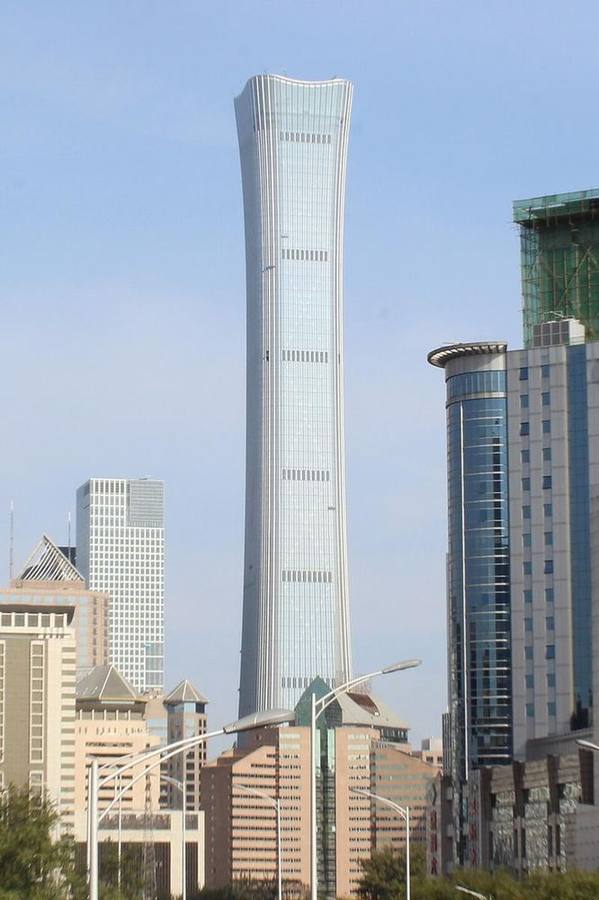
The dossier's summary of Wang Jun's chairmanship fits in one sentence: under him, CITIC completed its expansion into a comprehensive financial holding group (Source 1). The structural change behind that sentence can be described through CITIC's own business form: from a single trust and investment company in 1979 to a comprehensive financial holding group in which banking, securities, insurance, funds and industry coexisted, the principal phase of the transformation fell within his tenure. This piece does not enumerate the names of CITIC subsidiaries or their asset figures — those numbers are not within this piece's dossier sources, and to list them would be groundless. This section confirms only the directional fact of the transformation, and notes its archival significance: as a window-type company became a financial holding group under one chairman, the nature of the chairman's power changed with it, from the head of a single business to the helmsman of a group spanning multiple financial licences.
The event of his tenure most often re-examined by the media is the 1996 decision to sell an 18 per cent stake in CITIC Pacific; the dossier registers it both in its finance section and in the family dossier, and the details are in the next section. Here, only its position on the tenure line is marked: it occurred in the second year of his chairmanship, the questioning continued until around the outbreak of the Asian financial crisis, and he then remained in office for about nine more years. Marking that time relationship prevents two misreadings: writing the 1996 event as the cause of his departure — he served nine further years before retiring — and writing his continued service as proof that the event was "cleared" — the outcome of the internal talks and questioning was never published, and nothing can be proved from it. This piece's rule for that event is that both sides' accounts are presented together and, absent any judicial document, no characterisation is imposed; the next section executes that rule strictly.
The endpoint of the tenure is equally plain and definite: he retired in 2006 and Kong Dan succeeded him (Source 3). No obituary or report records a retirement ceremony, an honorary-post arrangement or a continuing engagement with CITIC; but he long continued to hold Hong Kong platform posts connected with CITIC after retirement, as Section Eight shows. Eleven years as chairman and twenty-seven years of service are Caixin's summary figures (Source 3), and this piece follows them. The complete archive of a state-enterprise appointment line is sometimes composed of just a few numbers of this kind: the year of entry, every rung, the beginning and end of the summit, and the name of the successor. This section and the last together supply the whole skeleton of that line; the sections that follow are the three joints on the skeleton most easily written crooked.
Four: The 1996 sale of an 18 per cent stake in CITIC Pacific — appreciation and loss of state assets, two accounts side by side
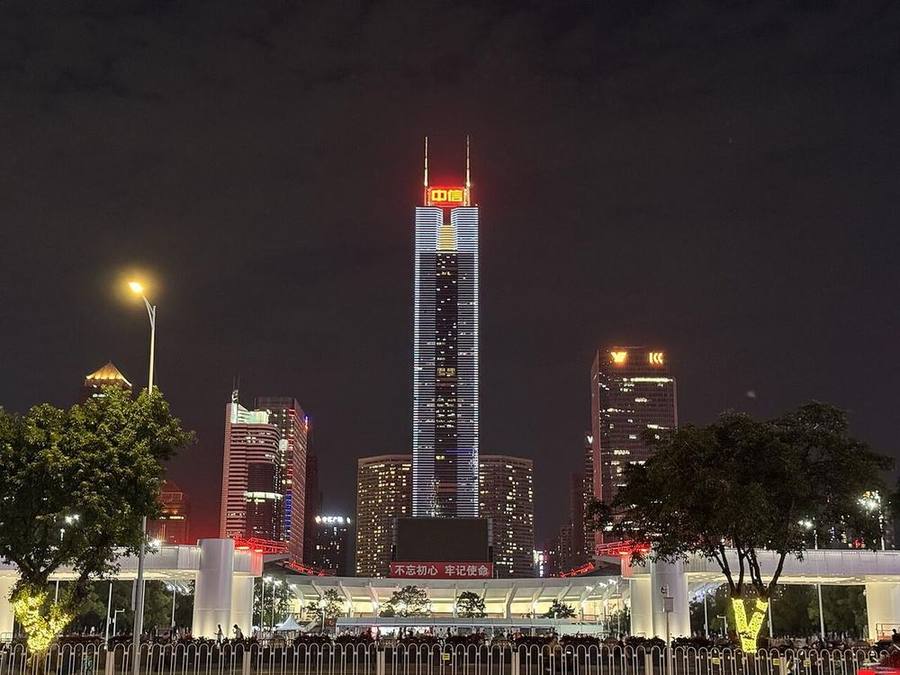
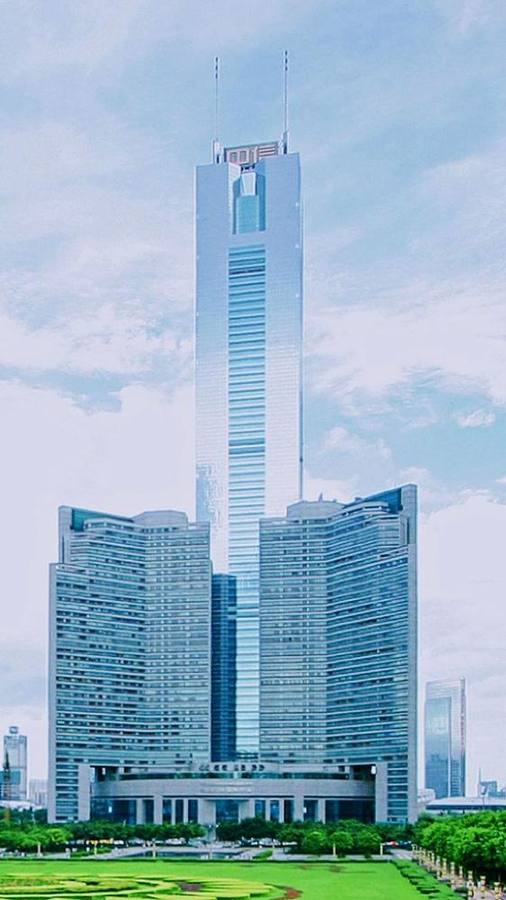
The basic outline of the event comes from a long Caijing magazine article (Source 8): in 1996, without reporting the matter to the State Council, Wang Jun sold CITIC's 18 per cent holding in CITIC Pacific to a management group led by Larry Yung (Rong Zhijian) at HK$33 per share, recovering HK$10.8 billion for CITIC. The share price of CITIC Pacific subsequently rose to HK$58, and an opinion emerged which, calculating from the difference between the contract price and the price at completion, alleged a "loss of RMB 3.6 billion of state assets". Zhu Rongji, commissioned by the central leadership, held a talk with Wang Jun. Wang Jun acknowledged that he had failed to report in time and was willing to bear responsibility, but argued that CITIC's original investment in CITIC Pacific had been only HK$250 million, that it had recovered HK$10.8 billion while retaining control, and that this was appreciation rather than loss; the funds, moreover, had helped CITIC through the Asian financial crisis. Before the crisis broke out he was still under questioning by the relevant State Council departments (Source 8). The Jiemian obituary carries a condensed version of the affair consistent with the long article (Source 2).
This piece observes three rules in handling the event. First, both accounts must be presented together: the accusers' core is procedural — a large block of state equity was disposed of without being reported to the State Council — and a matter of price, the difference created by the sharp rise in the share price after signing; the defence's core is outcome — an original investment of HK$250 million, HK$10.8 billion recovered, control retained, and funds that carried CITIC through a crisis. A version that prints only one side is not an archive. Second, without a judicial document there is no characterisation: this verification found no public record of any criminal or administrative punishment arising from the affair, which was closed by internal talk and questioning (Source 8). "Loss of state assets" was an opinion expressed at the time, not a finding by an authorised organ, and this piece retains the qualifier "an opinion held that" whenever it quotes the phrase. Third, no consequences are inferred: that he continued as chairman for about ten years afterwards is a fact of timing that may be registered, but it cannot be reverse-engineered into "the organisation found him blameless", because the organisation's finding was never published in any text.
The weight of this event in this piece lies not in the figure of 3.6 billion itself — the basis of that calculation, the price point against which it is measured, is itself contested, and this piece endorses neither basis — but in what it shows about the actual boundary of a state-enterprise chairman's authority in the mid-1990s: a disposal of an 18 per cent stake in a listed company for a consideration of HK$10.8 billion could be signed first, without report to the State Council, and enter a process of talks and questioning only afterwards. The distance between how authority actually operated and what the institutional text prescribed is the real information this event leaves to the archive. This piece measures that distance as it is, and leaves the conclusion about responsibility to the historical documents of the authorised organs — if they are ever published.
Five: The Poly line — general manager in the founding phase, and four formulations of his post


Poly's origin must be set out first. In early 1983 the equipment department of the General Staff applied to the Central Military Commission to establish an import-export company; in February 1984 Poly Technologies was formally founded, co-established by the General Staff equipment department and CITIC, principally to handle imports and exports of special equipment and military materiel and to conduct diversified business (Sources 10, 11). In February 1993 China Poly Group Corporation was formed on the basis of Poly Technologies; in March 1999 it moved into the sequence administered by the central large-enterprise work commission, and later came under SASAC (Sources 10, 11). Two dates and two entities must be kept apart: Poly Technologies of 1984 and China Poly Group Corporation of 1993 are not the same legal person at the same moment; the former is the core predecessor of the latter. Second-hand English-language material habitually merges the two into a single "Poly", and most of the quarrel over the formulation of Wang Jun's Poly post arises from exactly that merger. Wang Jun's connection to Poly lies at the CITIC end: Poly was co-sponsored by CITIC, he was then serving at CITIC, and he was one of Poly's founders (Sources 6, 10). He Ping — husband of Deng Xiaoping's daughter Deng Rong — was the first chairman of Poly Group, served until he stepped down as chairman in 2010 and became honorary chairman, a point corroborated by SASAC appointment information and the Poly website, and the key anchor for judging the formulations of Wang Jun's post.
Wang Jun's actual post inside the Poly system is given in four formulations by four kinds of source, and this piece sets them side by side without merging. First, the mainland obituary formulation: Caixin and Jiemian both say that he served as general manager of China Poly Group Corporation (Sources 2, 3), and the state-enterprise dossier likewise records "general manager in the founding phase", with the explicit note that published sources disagree about the exact start and end years of his Poly general managership, so that only the founding phase is written and no years are fixed. Second, the Hong Kong exchange filing formulation: the Kingsway annual report records him as chairman of Poly (Hong Kong) Investments Limited — the only Poly post attributed to Wang Jun in a filing that can be tied to a specific legal person, its object being Poly's Hong Kong investment platform (Source 9). Third, the United States Senate report formulation: the report of the Senate Governmental Affairs Committee established after the 1996 Dragon Fire case calls Wang Jun "reportedly chairman" of Poly Technologies — the original text uses the word "reportedly" (Source 12). But the testimony on which the report relies is itself doubtful: a former military aide, Robert L. Suettinger, testified that he had consulted officials of the Defense Intelligence Agency and the Central Intelligence Agency about Wang Jun's actual role at Poly Technologies, that they said they were not very clear, and that he estimated the title was mostly a nominal one, because the man was Wang Zhen's son. Fourth, the Bloomberg formulation: the chairman of Poly Group was He Ping; Wang Jun was a co-founder of Poly Technologies, and He Ping became a major shareholder and chairman through co-operation with Wang Jun (Source 6).
With the four formulations side by side, the formulation this piece adopts is: Wang Jun was a co-founder of Poly Technologies; his post within the Poly system is given in the mainland formulation as general manager of Poly Group, confined to the founding phase, with no years fixed; Hong Kong exchange filings attest that he chaired Poly (Hong Kong) Investments; and the formulation "chairman of Poly Group" has no Grade A or Grade B source behind it, while the Poly Group chairman recorded by Bloomberg was He Ping. Any text that writes Wang Jun directly as "chairman of Poly Group" crosses the boundary that all four formulations together draw. That a son of Wang Zhen and a son-in-law of Deng Xiaoping appear simultaneously in Poly's founding senior team is the key fact for understanding Poly's origin; but "simultaneously" describes the composition of the founding team, not a ranking of the two men's posts — the division of labour between a general manager and a chairman follows the side-by-side formulations, and this piece does not draw an organisational chart on history's behalf.
Six: Operation Dragon Fire, 1996 — Poly personnel in America implicated, Wang Jun himself never indicted
The conclusion belongs at the head of the section: in the 1996 American enforcement action codenamed Operation Dragon Fire, Wang Jun himself was never indicted. His name is not in the published grand jury indictment list, and no Grade A source shows that he was wanted, convicted in absentia or subjected to any criminal charge. Everything narrated in this section must be understood inside the boundary of that conclusion: those implicated were Poly's personnel and affiliated entities in America, and what was questioned was the phenomenon that the company's senior leadership was not pursued — not Wang Jun's personal criminal responsibility. The commissioning instructions for this site impose a hard requirement on this point, and this piece states it again expressly here: no wording may imply that Wang Jun was implicated in the case.
The official version of the case comes from the Bureau of Alcohol, Tobacco, Firearms and Explosives (ATF): in the 1996 action codenamed Dragon Fire, a federal grand jury indicted thirteen individuals and one company on charges involving federal firearms law and money laundering, and in the end three conspirators were convicted (Source 13). A more detailed media version diverges from the official figures in its numbers, and the two are registered side by side: the Miami Herald reported that the action seized, in Oakland, 2,000 AK-47 rifles and USD 700,000 in cash connected with an arms dealer's smuggling, and brought in Hammond Ku and Robert Ma, who ran "Dynasty Holding" in the Oakland case; Ku's employer as stated in the indictment was precisely Poly Technologies; the report further said that Poly Technologies was indicted together with Norinco, Dynasty Holding and other co-defendants; Ku subsequently pleaded guilty in 1997 (Source 14). The two sets of figures — the ATF's thirteen individuals and one company, and the newspaper's seizure quantities and co-defendant counts — come from different sources; this piece attributes each to its source and does not splice them into a single version.
As to whether Poly Technologies itself was indicted, one sentence must be registered verbatim. Pentagon spokesman Kenneth Bacon said publicly at the time that they had been quite careful: they did not indict Poly Technology as such; they indicted persons who worked for, or were related to, or were affiliated with Poly Technology (as transmitted in Source 14). That statement and the Miami Herald's account of Poly Technologies being indicted together with others stand in discrepancy, and this piece archives both without adjudicating. But whichever account is taken, the conclusion does not move: Wang Jun's name is not on the indictment list. Vanity Fair once described Wang Jun as one of the persons of interest in the American investigation — media suspicion resting on the second-hand statements of investigators, at the level of "worth noting"; it is not an indictment, not a warrant and still less a conviction. The final formulation of this section on the relationship between Wang Jun and the Dragon Fire case is therefore: Poly personnel and entities in America were caught up in an arms-smuggling case in which some were indicted and convicted; the company's senior leadership was not pursued; and Wang Jun himself was never indicted.
Seven: The White House coffee meeting — a Senate report found the admission inappropriate, Wang Jun himself never sued
The second storm of 1996 took place at the White House. Chapter 31 of the report of the Senate Governmental Affairs Committee — the Thompson Committee — on the 1996 campaign finance scandal (S. Rept. 105-167) quotes a National Security Council memorandum describing Wang Jun as the head of "the significant Chinese weapons manufacturer Poly Technologies"; on 6 February 1996, introduced by Democratic fundraiser Charlie Trie, he met President Bill Clinton for about fifty minutes, in what became known as the White House coffee meeting; the National Security Council approved his entry without a background check, the report found his admission to the White House "manifestly inappropriate", and the president of the day and the Democratic National Committee also acknowledged as much (Source 15). That is the part a Grade A document can establish: the son of Wang Zhen, then a senior executive in the CITIC and Poly systems, entered the White House and met a president without undergoing a background check, and the committee found the admission procedure improper.
The boundaries must be written with equal clarity. First, what was found improper was the "admission" procedure, not any unlawful act by Wang Jun; the report did not accuse him personally of bribery or unlawful donation. Second, no record has been found of Wang Jun himself being sued in America over the donations affair — the person sued was the introducer, Charlie Trie, who pleaded guilty in 1999, on a media-transmitted account. Third, a sentence of Clinton's transmitted in Senate documents — to the effect that it would be a big mistake to take a contribution from somebody connected to the arms merchants in China — was aimed at the question of donations itself, not at naming Wang Jun as a lawbreaker (Source 15). Fourth, the Hong Kong businessman Ernest Green said that the small company accompanying the visit at the time had since folded, and that "no donation ever happened". Taken together, this piece's formulation stops where the committee's documents can carry it: the meeting happened, the admission was found inappropriate, and Wang Jun himself was never indicted and never convicted. Any text that writes the coffee meeting up as "Wang Jun bribed Clinton" or "Wang Jun was investigated in the campaign donations case" goes beyond the Senate report itself.
The coffee meeting and Operation Dragon Fire both belong to 1996 in time, and in second-hand narration they are often welded into a single storyline of "an arms dealer penetrating the White House". This piece treats the two affairs in separate sections precisely in order to dismantle that weld: the defendants of Dragon Fire were Poly personnel in America, and the object of accountability in the coffee affair was the White House visitor-vetting procedure; not one public document in either affair lists Wang Jun as a defendant. To solder the two lines together on Wang Jun's person as personal guilt is narration, not archive. This piece acknowledges that the two affairs together constitute a reputational storm for him in 1996 — the name of the head of a house appearing simultaneously at the periphery of arms-investigation reporting and in a Senate campaign-finance report is itself a public fact worth recording — but between a reputational storm and criminal responsibility, this piece does not take one step across.
Eight: Hong Kong platforms and sport after retirement — Kingsway, Poly Hong Kong and Orient Sports
Retiring as chairman of CITIC in 2006 did not mean leaving business. Hong Kong exchange filings supply a set of posts that can be pinned down: the 2006/07, 2011/12 and 2015/16 annual reports of Kingsway Capital Holdings (Hong Kong stock code 0172) record that Wang Jun served as Kingsway's chairman and executive director from April 2007, concurrently holding the chairmanship of Poly (Hong Kong) Investments Limited, the chairmanship of CITIC 21CN, the honorary chairmanship of Hong Kong Construction (Holdings) and an independent non-executive directorship of China Communications Services (Source 9). Wikipedia and some obituaries date his Kingsway chairmanship from 2013, which conflicts with the annual report's "from April 2007"; this piece follows the annual report. The common trait of this group of posts is that the platforms are all in Hong Kong and mostly connected with the old CITIC and Poly lines: his post-retirement career was a shift from helmsman of a mainland financial group to a set of chairmanships and directorships on Hong Kong listed platforms, not a complete withdrawal.
Kingsway's own later fate must be separated from his person. Kingsway was suspended from trading from 28 June 2019, failed to resume trading by 28 December 2020, and was delisted by the Hong Kong Stock Exchange on 2 August 2021. Wang Jun had died on 10 June 2019; the suspension fell about half a month after his death, and the delisting more than two years later. This verification found no record of any disciplinary action by the exchange against Wang Jun personally, and the delisting is therefore an event at company level which must not be attributed to personal misconduct by Wang Jun. This piece registers the delisting in order to complete the final outcome of a company whose board he once chaired, not to append a sanction to his record.
There is also a sports line after retirement. Bloomberg reported in 2012 that in 2008 Wang Jun chaired Shenzhen Orient Sports Management, a joint venture established five years earlier by a CITIC subsidiary; he had acquired a 20 per cent stake in that joint venture from CITIC, while one of the venture's principal clients was CITIC Group itself (Sources 6, 7). That arrangement — a retired chairman personally holding shares in a joint venture of his old house, which in turn provides services to that house — is a record of an interest structure with original-text detail, of a kind rarely found in Bloomberg's princeling reporting. This piece cites it with a note: the matter rests on Bloomberg's one-sided reporting, no public response from CITIC has been seen, and its grade is that of a first-tier media investigation, not to be weighed equally with the obituary facts. He also held sports posts as an invited vice president of the China Golf Association and president of the China Professional Golf Association, recorded in obituaries with no record of controversy, registered here only for completeness of the career record (Source 3).
Nine: Death and posthumous status — 10 June 2019, aged 78
Wang Jun's endpoint is consistent across reports: he died in Guangzhou at 22:56 on 10 June 2019, aged 78, and the news was published on 11 June by Caixin, The Paper, the Beijing News, Sina Finance and Jiemian News in succession (Sources 1, 2, 3, 4). The common structure of the obituaries is worth noting: they accomplish three things at once — confirming the fact of death, confirming the father-son relationship, and restating the complete appointment career — which makes the 2019 obituary group the common source for the two core facts of this piece, his appointment line and his parentage. Caixin Global's memorial piece of 26 June presented his CITIC career to English-language readers (Source 4). The timeline, the chronology table and the identity finding of this piece rest for the most part on this group of obituaries, cited item by item, without dressing the obituaries' summaries up as archival originals.
The same obituary group exposes a gap: this search found no obituary of Wang Jun from Reuters, the Associated Press or the New York Times, and no obituary or funeral-committee list on the CITIC Group website was retrieved; mainland reports mostly say that the media "learned the news from CITIC insiders", and no formal obituary text has been published. In other words, a chairman who ran CITIC for eleven years left behind no official obituary that an archive can cite. His posthumous status can therefore be written only this far: he died on 10 June 2019 and no new public activity of his is recorded thereafter. The state of the public record on his spouse and children is addressed in the gaps; his daughter Wang Jingjing appears only in a limited record that Bloomberg drew from company documents, and the rest has no reliable public record, and this piece does not expand material already handled in the family profile.
Ten: Separating out the USD 1.6 trillion — combined assets of three men's state enterprises, not personal wealth
This is the most important corrective section of the piece, because this figure is the item attached to Wang Jun's name that circulates most widely in Chinese online writing, and the one that is furthest wrong. The original formulation in Bloomberg's investigation of December 2012 is that Bloomberg calculated that the state-owned companies controlled by three people — Wang Jun at CITIC Group, He Ping of the Poly Group and Chen Yuan of China Development Bank — had combined assets of about USD 1.6 trillion in 2011, more than a fifth of China's economic output that year (Source 6). The subject is three people; the object is the assets of three state enterprises; the year is 2011; the nature of the quantity is the total assets on corporate balance sheets. Retelling it as "the Wang Zhen family holds USD 1.6 trillion" or "Wang Jun is worth 1.6 trillion" is a triple misreading: the headcount is wrong, because three people are not one person and the other two shares belong respectively to He Ping's Poly and Chen Yuan's CDB; the nature is wrong, because the assets of a state-owned enterprise are the total assets of an enterprise under state ownership, not any individual's wealth, equity or disposable property; and the object is wrong, because the arms-trade share is reckoned on the Poly that He Ping ran, with no direct correspondence to Wang Jun personally. Whenever this piece quotes the figure, it attaches all four qualifiers every time: three people, three state enterprises, 2011, combined assets.
The same Bloomberg report contains another figure of a wholly different magnitude, registered here in passing to prevent confusion: the report also describes a tourism complex project priced in billions, an amount at the level of USD 1.6 billion — a thousand times smaller than USD 1.6 trillion — and a kinship relation mentioned in that passage appears only in Bloomberg, without corroboration from a second source. This piece does not develop that project; it merely reminds readers that before quoting any figure from that Bloomberg report, they should distinguish whether it speaks of the combined assets of three state enterprises or of the amount of a single project. Once the unit and object of a figure are written wrongly, the factual basis of an entire article is wrong — which is exactly why this site repeats the separation of this same figure in three places: the Chen Yuan piece, the Wang Zhen family profile and this piece.
After the separation, what meaning does the figure retain? It speaks to the scale of a system, not to the riches of a person: three members of the second generation, in the same year 2011, sat respectively in the top seats of a comprehensive financial group, an arms-trade-born central enterprise group and a policy bank, and the combined assets of the three institutions reached more than a fifth of that year's economic output. That is a fact about the distribution of appointments, usable in discussing the family dimension of senior appointments in state enterprises; it cannot be used to discuss any individual's property, because it was never a property figure from the beginning. On Wang Jun's personal wealth this piece has exactly one conclusion: there is no reliable public record. The only personal shareholding of his with original-text detail is the 20 per cent stake in Orient Sports, in Section Eight, and that rests on Bloomberg's one-sided reporting.
Eleven: The boundary of the evidence — what this piece can and cannot prove
What can be proved is gathered here: Wang Jun, born 11 April 1941, second son of Wang Zhen, the relationship stated explicitly in multiple obituaries (Sources 1, 2, 3); studied at the Harbin Military Engineering Institute from 1960 to 1966, afterwards a shipyard engineer and naval service (Source 3); took part in founding CITIC in 1979, serving successively as general manager of the business department, chairman of CITIC Hong Kong, chairman of CITIC Shenzhen, vice general manager (1986–1993), general manager (1993–1994) and vice chairman-cum-general manager (1994–1995), and as chairman of CITIC Group from 1995 to 2006, the third chairman, succeeded in 2006 by Kong Dan (Sources 1, 3); a co-founder of Poly Technologies, his general managership of Poly Group appearing in the mainland obituary formulation and confined to the founding phase, and his chairmanship of Poly (Hong Kong) Investments appearing in Hong Kong exchange filings (Sources 2, 3, 9); the procedure and price controversy of the 1996 CITIC Pacific 18 per cent stake sale, with both sides' accounts and its closure by internal questioning, in the Caijing long article (Source 8); the objects of indictment and conviction in Operation Dragon Fire not including Wang Jun (Sources 13, 14); the coffee meeting and the Senate report's finding of manifestly inappropriate admission, in the Senate report (Source 15); his post-retirement chairmanship and executive directorship of Kingsway from April 2007 and other Hong Kong posts (Source 9); and his death in Guangzhou on 10 June 2019, aged 78 (Sources 3, 4). Every item above carries a source number.
What cannot be proved is likewise stated item by item: that Wang Jun was chairman of Poly Group — no Grade A or Grade B source supports it, and it conflicts with Bloomberg's record that He Ping chaired Poly Group until 2010; it is not adopted. That Wang Jun bore personal criminal responsibility in Operation Dragon Fire or the campaign donations affair — he was never indicted, and there is no record. That USD 1.6 trillion was the wealth of Wang Jun or the Wang family — it was the combined 2011 assets of three men's state enterprises, and of his personal wealth there is no reliable public record. The exact start and end years of his Poly general managership — the sources disagree and no years are fixed. That the CITIC Pacific sale constituted a loss of state assets — that was an opinion of the time, with no finding by an authorised organ in any text. That his entry into CITIC in 1979 came about because of his father's status — the appointment process has no public record. The posts and assets of the spouses of the three sons and of most members of the third generation likewise mostly lack reliable public records, and this piece does not supply them.
A single concluding sentence. In the public archive, Wang Jun's state-enterprise line presents a rare completeness: entry, promotion, summit, controversies, retirement and death are each supported by a verifiable text, and the three most controversial points — the Poly post, the Dragon Fire case and the USD 1.6 trillion — are precisely the three points whose formulations are most easily twisted by second-hand retelling. This piece sets the four formulations of his post side by side, draws the boundary of the indictment list clearly, and nails down the four qualifiers of the asset figure; the remaining judgement is left to the reader. The archive comes before the standpoint — that is the only responsible way this site can treat the four words "red aristocracy".
<!--正文结束-->
Sources
- Sina Finance, "Former CITIC Group chairman Wang Jun has died, aged 78", 11 June 2019 — the obituary states explicitly that Wang Jun was the son of Wang Zhen, former vice president and founding general, and records his complete CITIC career and his 1995–2006 chairmanship: https://finance.sina.cn/2019-06-11/detail-ihvhiqay4845109.d.html?vt=4 — mainstream media obituary (Grade A).
- Jiemian News, "The Departed: Wang Jun, the helmsman of CITIC Group", 2019 — the obituary records his parentage, his CITIC appointment line and the mainland formulation of "general manager of China Poly Group", with a condensed account of the CITIC Pacific stake sale: https://www.jiemian.com/article/3205379_toutiao.html — mainstream media obituary (Grade A).
- Caixin, Wu Hongyuran, "Former CITIC chairman Wang Jun dies aged 78", 11 June 2019 — birth and death, the Harbin Military Engineering Institute and shipyard engineer years, the complete twenty-seven-year CITIC ascent, third chairman and succession by Kong Dan, and the time and place of death: https://m.caixin.com/m/2019-06-11/101426079.html — mainstream financial media obituary (Grade A).
- Caixin Global, "Wang Jun, Ex-Chairman of China's Citic Group, Dies Aged 78", 26 June 2019 — the English-language obituary, corroborating the Chinese obituaries on birth, death and the CITIC chairmanship: https://www.caixinglobal.com/2019-06-26/wang-jun-ex-chairman-of-chinas-citic-group-dies-aged-78-101431913.html — mainstream financial media (Grade A).
- Sina Finance, republishing the Beijing News and The Paper, "Former CITIC Group chairman and former CITIC Pacific director Wang Jun has died, aged 78", 11 June 2019 — another published version of the obituary, corroborating the Caixin and Sina formulations: http://finance.sina.com.cn/chanjing/gsnews/2019-06-11/doc-ihvhiews8206386.shtml — mainstream media obituary (Grade A).
- Bloomberg News, "Heirs of Mao's Comrades Rise as New Capitalist Nobility", 26 December 2012 — Wang Jun helped Rong Yiren found CITIC, was a co-founder of Poly Technologies, He Ping chaired Poly Group, and the original formulation that the state enterprises run by Wang Jun, He Ping and Chen Yuan had combined assets of about USD 1.6 trillion in 2011 (full-text republication): https://tibet.net/wp-content/uploads/2016/11/Bloomberg-part-1.pdf — first-tier media investigation (Grade A).
- South China Morning Post (blog digest), "China's Princelings: The Tale of Three Families", 24 December 2013 — transmitting Bloomberg's CITIC Pacific stake passage and its Orient Sports shareholding passage, corroborating the Bloomberg original: https://www.scmp.com/comment/blogs/article/1390419/chinas-princelings-tale-three-families — mainstream media transmission (Grade A).
- Caijing magazine long article, "Wang Jun and CITIC Pacific" (republished by Sina Finance), 22 June 2019 — the 1996 sale of the 18 per cent CITIC Pacific stake at HK$33 per share, HK$10.8 billion recovered, an original investment of HK$250 million, the "RMB 3.6 billion loss" opinion, the talk with Zhu Rongji and State Council questioning, with both sides' accounts: https://finance.sina.com.cn/roll/2019-06-22/doc-ihytcerk8713157.shtml — mainstream financial media long-form (Grade A).
- Kingsway Capital Holdings Limited, Annual Report 2015/16 (Hong Kong exchange filing) — Wang Jun served as Kingsway chairman and executive director from April 2007, concurrently chairman of Poly (Hong Kong) Investments Limited and chairman of CITIC 21CN, among other posts; the annual report erroneously gives his university as Harbin Institute of Technology, as noted in this piece: https://www1.hkexnews.hk/listedco/listconews/sehk/2016/1117/ltn20161117047.pdf — listed company disclosure document (Grade A).
- China Poly Group Corporation website, "Company Overview" — Poly Technologies founded in February 1984, co-established by the General Staff equipment department and CITIC, and Poly Group formed in 1993: https://www.poly.com.cn/poly/about/introduction/index.html — institutional website (Grade A).
- State-owned Assets Supervision and Administration Commission website, group introduction to China Poly Group Corporation — Poly Group's lineage and administrative subordination, corroborating the Poly website: http://www.sasac.gov.cn/n2588045/n2593540/n2593547/c3809320/content.html — official institution (Grade A).
- United States Senate Report S. Rept. 105-167, Part 13 — the Poly Technologies section: Wang Jun as "reportedly chairman" of Poly Technologies, with Suettinger's testimony that his actual role was unclear and possibly a nominal title: https://www.govinfo.gov/content/pkg/CRPT-105srpt167/html/CRPT-105srpt167-pt13.htm — United States congressional document (Grade A).
- Bureau of Alcohol, Tobacco, Firearms and Explosives (ATF) website, Operation Dragon Fire case page — in the 1996 Dragon Fire action thirteen individuals and one company were indicted and three conspirators were ultimately convicted; the indictment list does not include Wang Jun: https://www.atf.gov/our-history/famous-atf-investigations — United States law-enforcement agency (Grade A).
- The Miami Herald, reporting on the Oakland seizure of 2,000 AK-47 rifles and the Poly Technologies connection (preserved by envirosagainstwar.org) — the seizure quantities, Hammond Ku as a Poly Technologies employee, his 1997 guilty plea, and Pentagon spokesman Kenneth Bacon's statement that Poly Technology as such was not indicted: https://www.envirosagainstwar.org/know/arms_sub.html — mainstream media (Grade A).
- United States Senate Report S. Rept. 105-167, Chapter 31 — the White House coffee meeting: the National Security Council memorandum, the meeting of about fifty minutes on 6 February 1996 arranged through Charlie Trie, and the committee's finding that the admission was "manifestly inappropriate"; Wang Jun himself was never sued: https://www.govinfo.gov/content/pkg/CRPT-105srpt167/html/CRPT-105srpt167-pt11-8.htm — United States congressional document (Grade A).
Material gaps (stated as found)
- The formal obituary original: No CITIC Group website obituary or funeral-committee list was retrieved, and no obituary from Reuters, the Associated Press or the New York Times was found; mainland reports mostly say the media learned the news from CITIC insiders, and no public record exists.
- Start and end years of the Poly general managership: Mainland obituaries give only "general manager of China Poly Group" without exact start and end years, the sources disagree, and this piece writes only the founding phase without fixing years.
- Years of the CITIC Hong Kong and CITIC Shenzhen chairmanships: The obituaries record only that he held both posts, without itemised start and end dates, and no public record could be verified within the sources of this piece.
- The organisational conclusion on the CITIC Pacific sale: How the talks and questioning were closed has no published text from an authorised organ; "loss of state assets" was only an opinion of the time, with no finding document; no public record.
- Personal wealth: No reliable public record exists of Wang Jun's personal assets or total shareholdings; the only detail at original-text level, the 20 per cent stake in Orient Sports, rests on Bloomberg's one-sided reporting, with no public response from CITIC seen.
- Family members' records: The name and life of his spouse, the education and posts of his son Wang Jingjun, and the Hong Kong posts of his daughter Wang Jingjing are corroborated by no Grade A or Grade B source; no public record, and this piece does not adopt genealogy-site claims.
- The divergent dating of the Kingsway chairmanship: Wikipedia and some obituaries give 2013, conflicting with the annual report's "from April 2007"; this piece follows the Hong Kong exchange annual report, and the divergent version is registered here.
- The appointment process of his entry into CITIC: By whom he was proposed in 1979, and through what procedure he entered CITIC as general manager of the business department, has no public record; whether he was appointed because of his father's status is a question on which this piece draws no inference.
Contact: endccpworld@proton.me