
Jiang Mianheng, China Netcom and Shanghai Lianhe: The Second Generation on a State-Capital Platform
The first piece of the Red Families series' reopened deep-dive, and the flagship of its state-enterprise line: the second generation entered state enterprises not through a chairman's appointment but through the chairmanship of a municipal state-capital investment platform — and from that one seat, telecoms, automobiles, airports, semiconductors and television opened up in sequence.
Contents
- I. Another Way In for the Second Generation
- II. Shanghai Lianhe Investment: A Municipal Government's Investment Platform, 1994
- III. China Netcom: A New Carrier Formed in 1999
- IV. 2008: Absorbed into China Unicom — the End of an Era
- V. A Parallel CV: Vice President of the Chinese Academy of Sciences
- VI. The Sector Comparison: No Second Case Among the Big Three Carriers
- VII. The Boundary of the Evidence: What This Piece Can and Cannot Prove
- Material Gaps (stated faithfully)
- Source List
Any account of state enterprises in this series runs into one question: by what route, exactly, did the children of the red elite enter central and large state enterprises? Earlier pieces offered several forms — Li Peng's children sat directly in the top seats of an industry for decades; Zhou Yongkang's son never held a state-enterprise post at all, yet a court judgment proved he took nearly a billion yuan out of state-enterprise transactions on the strength of his father's office. This piece records a third form, structurally the one most worth a piece of its own: the man in question sat in no state enterprise's top chair. He sat in the chairman's seat of a local state-capital investment platform — and then entered the shareholder registers and boardrooms of enterprise after enterprise in the capacity of an investor. His position was not inside the enterprises. It was upstream of them.
The man is Jiang Mianheng, son of Jiang Zemin. The Jiang Zemin family piece has already set out the family's three-generation outline: the first generation stood at the apex of power, the second converted position into a state-capital platform and a technocratic CV, and the third converted a surname into a dollar fund's fundraising power. This piece takes the second generation's segment apart and magnifies it — because only with this segment in focus can one understand where the money and the network behind the third generation's fund actually grew from. The timeline runs from 1994 to 2008, when China Netcom was absorbed into China Unicom — exactly the formation period in which China's telecom industry went from a single incumbent to a field of rivals.
I. Another Way In for the Second Generation
First, the kinship and its evidentiary strength, nailed down. Jiang Mianheng is Jiang Zemin's son — a point on which the public record has never been ambiguous: the Shenzhen Special Zone Daily's 2014 profile and the Wall Street Journal's 1999 reporting both identify him in those terms, as does the compilation of public CVs used in this series' Jiang family piece. Every post recorded in this piece can be checked against a published text; in the series' grading, these are A-grade materials. (Sources 1, 2, 3)
The difference in the route in needs stating in advance. The chairmen and general managers of China's basic telecom carriers have always risen through the ranks as career cadres from inside the system — Section VI will record that this site checked the successive top officers of all three carriers one by one and found no second direct descendant of the red elite on those lists. Jiang Mianheng is not on them. He was never China Netcom's chairman or general manager; where his name appears is among the board's members, as a vice chairman, and as chairman of an investment company. The distance between those two kinds of seat is what this piece measures: operating authority belonged to professional managers, but the gateway for capital and personnel could belong to a platform.
One coincidence of timing must also be registered — registered, not explained. Shanghai Lianhe Investment was founded in 1994 and China Netcom formed in 1999; across those fourteen years Jiang Zemin served successively as general secretary of the Party, president of the state and chairman of the Central Military Commission, at the highest stretch of his power cycle. A municipal investment platform entering the formation of a national telecom carrier in those years, with the paramount leader's son at its head — each of these two facts has its own published provenance, and setting them side by side is an archive's duty; whether a causal line runs between them, and of what kind, no document records, and this piece does not write one.
II. Shanghai Lianhe Investment: A Municipal Government's Investment Platform, 1994
Shanghai Lianhe Investment Co., Ltd. was founded in 1994, by Jiang Mianheng, who served as its chairman and legal representative. The Shenzhen Special Zone Daily's 2014 report characterised the company as the Shanghai municipal government's private-equity and venture-capital platform, and named Jiang as its chairman and CEO — that is, as late as 2014 the published record still carried him in that post. A municipal government's investment and financing platform, headed for twenty years by a former paramount leader's son, has no second comparable instance in China's state-capital system. (Source 1)
The platform's investment map is the key to this piece. According to compilations of published reporting, the enterprises Shanghai Lianhe invested into include at least: China Netcom, the Shanghai Automotive Industry Corporation (Group), the Shanghai Airport Group, Grace Semiconductor, and Phoenix Satellite Television. Set side by side, the structure is plain: telecoms, automobiles, aviation infrastructure, semiconductors, media — not one consumer or light-industry name among them; all are basic, strategic, state-controlled sectors, and all were the fields where state-asset restructuring and investment intake ran hottest from the late 1990s into the early 2000s. At two of them — SAIC and the Shanghai Airport Group — Jiang also sat on the board in his own name: the platform's reach was not only financial shareholding; in individual enterprises it landed directly on a director's seat. (Source 3)
This series' state-enterprise research dossier characterised the structure in one line, which this piece adopts: it is the classic structure of "a municipal state-capital investment platform used as a lever, spanning multiple central and local state enterprises." A lever means: the principal was municipal state capital, the fulcrum was a chairman's seat, and what was moved were national carriers and industry leaders. Set against the series' other forms — Li Xiaopeng and Li Xiaolin, one person to one enterprise, deep in a single industry; Shanghai Lianhe is one person to one platform, spanning many industries. The first is inheritance; the second is a hub. Which form had the larger radius of influence, the public record does not answer; but the hub form has one property the inheritance form lacks: it naturally produces contacts and information, and those two things can be inherited directly by the next generation — and the Boyu Capital piece that follows this one in the series is precisely the story of that inheritance.
One blank must be registered at the end of this section: Shanghai Lianhe Investment's registered-capital composition, its successive changes of equity, and Jiang Mianheng's personal shareholding in it — within the range this series has checked, there is no public record. Published reporting can establish only his posts as chairman, legal representative and CEO. The various accounts in circulation of how he personally obtained his interest in the company have no support in business-registration, audit or judicial documents; this piece adopts none of them and notes only that the cell is empty.
III. China Netcom: A New Carrier Formed in 1999
China Netcom's full name was China Netcom Corporation Limited (CNC). In August 1999 it was formed with state approval — a specimen of the formation period on China's telecom timeline: a new carrier, focused on broadband data networks, built from nothing, whose shareholder and board composition set its course for nearly a decade. Jiang Mianheng's name appears on that board: member of the board of directors, and vice chairman. (Sources 1, 3)
The post was noticed by international media at the time. The Wall Street Journal's reporting of November 1999 — three months after Netcom's formation — already counted Jiang Mianheng among the new carrier's leading figures. This is the earliest external record on this piece's timeline, and its value lies in its date: not a retrospective excavation but reporting from the formation year itself, which shows that the weight of this directorship was open industry knowledge at the time, not a secret dug up years later. (Source 2)
Lay the Netcom segment over the Shanghai Lianhe segment and the full chain reads: in 1994 Jiang founded the Shanghai government's investment platform and chaired it; the platform invested into China Netcom, formed in 1999; he himself entered Netcom's board as member and vice chairman. The platform stood at the shareholder layer, he stood at the governance layer, and the two lines pointed at the same enterprise. This piece does not hold the complete text of Netcom's successive shareholder registers; Shanghai Lianhe's exact stake in Netcom is, within the range this series has checked, a matter of no public record — that cell, too, is left empty as it stands. But the double-line structure of "platform shareholding plus the platform's head on the board" is checkable in published reporting, and it is enough.
Netcom's subsequent near-decade of operating history — the expansion of its broadband business and its wholesale absorption in the 2008 telecom restructuring — is corporate history, not this piece's subject. Only one point belongs to the personnel archive: in that near-decade, no published record shows any mid-course change in Jiang's Netcom directorship; and when the 2014 report reviewed his CV, its wording was that he had "previously been a member of China Netcom's board" — the word "previously" marks that this post's endpoint lies not in a removal document but in a company's extinction.
IV. 2008: Absorbed into China Unicom — the End of an Era


The endpoint of this archive is not a removal notice but an industry restructuring. In 2008 China Netcom was absorbed wholesale into China Unicom — as the Shenzhen Special Zone Daily's 2014 report put it in retrospect: Jiang Mianheng "had previously been a member of China Netcom's board; the company was merged into China Unicom in 2008." The enterprise ceased to exist and the director's seat vanished with it; this series' state-enterprise dossier accordingly records Jiang's state-enterprise tenure as 1994–2008, opening with the founding of Shanghai Lianhe and closing with Netcom's extinction. (Source 1)
This manner of ending is the mirror image of this piece's manner of entry. For a man who entered an industry in a top executive's chair, the end of tenure is written in personnel notices, checkable year by year; for a man who entered through a platform and a board seat, the start and end of tenure rarely rest in any single document — the start is a name appearing on a formation list, the end is an enterprise merged into another. The thinness of the archive at this point is not the subject's deliberate concealment; it is the trace this form of power itself leaves. This piece states the point so that readers understand why its timeline can be precise only to the year, while the Li Peng family pieces elsewhere in this series can be precise to the month and to the date of an announcement.
After 2008, Jiang's published trace on the state-enterprise side narrows to Shanghai Lianhe alone: the 2014 report still named him that company's chairman and CEO. Whether the post changed thereafter is, within the range this series has checked, a matter of no public record. How the former Netcom assets and staff were placed inside the new Unicom is restructuring history, unrelated to this piece's personnel archive, and is not pursued.
V. A Parallel CV: Vice President of the Chinese Academy of Sciences
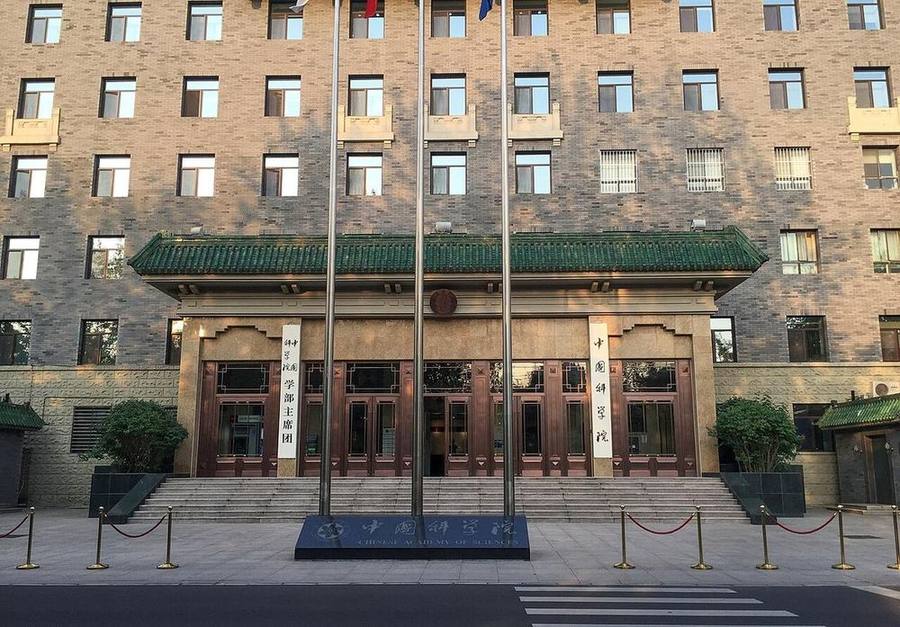

Alongside the state-enterprise line, Jiang Mianheng carried a parallel official CV: from November 1999 he served as a vice president of the Chinese Academy of Sciences, stepping down in 2011 — twelve years. The Academy is a research institution, so this post is not a state-enterprise post; this piece registers it as background only and does not count it in the state-enterprise timeline. But it cannot be omitted from an understanding of this piece: 1999 is also the year of Netcom's formation — within a single year he entered the board of a new national carrier and the leadership of the state's highest research institution. Platform, carrier, academy: three tables set in the same year — that is what the term "second generation" concretely meant in China's business and technology worlds at the end of the 1990s. (Source 3)
The boundary must be registered here too: the Academy vice presidency is an official post and its CV is checkable; but how his work was divided among the investment platform, the carrier's board and the research institution — how one man distributed his roles across the three — cannot be reconstructed from any published material. This piece does not speculate.
VI. The Sector Comparison: No Second Case Among the Big Three Carriers
To fix Jiang Mianheng's place in his industry, this series' state-enterprise dossier ran a systematic list-check of the basic telecom sector: the successive chairmen and general managers of China Mobile, China Telecom and China Unicom were compared one by one against published lists and CVs — and the conclusion is that all were technical and managerial cadres who rose step by step inside the postal-and-telecom system, with no verifiable case of a direct descendant of the red elite among them. The verifiable traces of red descendants in China's telecom industry concentrate in the formation period of China Netcom at the end of the 1990s — the case this piece records.
This "none found" carries two meanings for this piece. First, it disposes of the loose claim that red descendants crowd the top of the telecom industry: at the level of the basic carriers' top chairs, at least, the picture the evidence gives is professional rather than hereditary, and an archive site must write that side down as well. Second, it marks the true nature of the Netcom case in reverse: Jiang's appearance is not in the appointment sequence but on a formation list; not at a carrier's daily operating layer but at the gateway of capital and governance. Checked against a list of top executives, he is simply not there — which is precisely why this hub form is the easiest for a whole round of checking to miss, and why this piece had to be written separately.
The same round of checking found one other verifiable case in the telecom sector, whose form makes the contrast with this piece: Wen Jiabao's son Wen Yunsong moved into the China Satellite Communications Group in 2010 and in February 2012 was elected its chairman by its board. China Satcom had been one of the original six basic telecom carriers and from 2009 was folded into the China Aerospace Science and Technology Corporation — his post came through the standard top-executive appointment procedure, with appointment reports and official website records to check, a different road from this piece's platform-hub form. Set side by side, the telecom picture is complete: one case on a formation-period board list, one case in a chairmanship inside a group absorbed by the defence-industrial system; beyond those two, no third case at the top of the big three carriers. (Source 4)
VII. The Boundary of the Evidence: What This Piece Can and Cannot Prove

Gather what this piece can pin down, and it is only this: Jiang Mianheng, son of Jiang Zemin, founded Shanghai Lianhe Investment Co., Ltd. in 1994 and served as its chairman and legal representative (published reporting in 2014 still named him the company's chairman and CEO); Shanghai Lianhe was the Shanghai municipal government's private-equity and venture-capital platform, and its investments entered China Netcom, SAIC, the Shanghai Airport Group, Grace Semiconductor and Phoenix Satellite Television, while he himself sat on the boards of SAIC Group and the Shanghai Airport Group; China Netcom was formed with state approval in August 1999, focused on broadband data networks, and he served as a member and vice chairman of its board, with the Wall Street Journal in November 1999 calling him one of the company's leading figures; Netcom was absorbed into China Unicom in 2008, and that tenure ended with it; on the parallel CV, he served as a vice president of the Chinese Academy of Sciences from November 1999 to 2011. Every one of these statements carries its source.
What cannot be proved is likewise itemised. Stronger accusations circulate in overseas commentary and partisan media: that he "actually controlled" China Netcom, that Netcom's formation was a redistribution of existing telecom assets by paternal power, and specific figures for his personal wealth. These claims have no support in company documents, regulatory documents, audits or judicial instruments, and their figures disagree from version to version — under this series' evidence rules they belong to the inadmissible tier, and this piece adopts none of them, noting only their existence and the reason for their exclusion here. This piece records only his checkable directorship and platform posts; it does not use the expression "actual controller."
One sentence by way of conclusion. The most completely documented form in which red privilege entered state enterprises, in the public record, is neither a top executive's appointment nor a court judgment's transactions, but Jiang Mianheng's form: one local state-capital platform, one chairman's seat, and a string of national enterprises' shareholder registers and board lists. It was lawful, public, low-profile — and inheritable: fourteen years on, when his son Jiang Zhicheng founded Boyu Capital, the people worth knowing in that industry and the rules worth understanding had already been laid out once across his father's table. That fund's story is told in this series' platform flagship, the Boyu Capital piece. A Boyu-affiliated fund's landing point in an industrial company's prospectus is documented in CATL and Boyu Phase II. Separately, claims tying "Lianhe" to the Ye Jianying family were checked and found unsupported; the exclusion register is in The Ye Jianying Family.
<!--正文结束-->
Source List
- Shenzhen Special Zone Daily (People's Daily system), Jiang Mianheng to lead new university, 2014-02-24 — states expressly that Jiang Mianheng "had previously been a member of China Netcom's board; the company was merged into China Unicom in 2008," and names him chairman and CEO of Shanghai Lianhe Investment (the Shanghai municipal government's private-equity / venture-capital platform): http://www.szdaily.com/content/2014-02/24/content_9135835.htm — official-media system (profile reporting; the principal source for the posts and the platform's characterisation in this piece).
- The Wall Street Journal, 1999-11-01 — reporting from Netcom's formation year, counting Jiang Mianheng among the new carrier's leading figures (checked via secondary citation) — authoritative media (contemporaneous reporting).
- Wikipedia entry "Jiang Mianheng" and the public CVs it cites, in compilation — Shanghai Lianhe Investment founded 1994, chairman and legal representative; concurrent board seats at the Shanghai Automotive Industry Corporation (Group) and the Shanghai Airport Group; Shanghai Lianhe's investments into Grace Semiconductor, Phoenix Satellite Television and others; vice president of the Chinese Academy of Sciences, November 1999 to 2011 (used for CV cross-checking only, not as a standalone grading basis) — compilation of public CVs.
- China News Service, 2012-02-21, and China Satcom official website notices — Wen Yunsong elected chairman of the China Satellite Communications Group by its board on 15 February 2012 (cross-reference source for the sector comparison in Section VI) — official news agency.
Material Gaps (stated faithfully)
- Shanghai Lianhe Investment's equity structure: its registered-capital composition, successive equity changes and Jiang Mianheng's personal shareholding are, within the range this series has checked, matters of no public record; accounts of how he personally obtained his interest in the company have no business-registration, audit or judicial support and are not adopted.
- Shanghai Lianhe's exact stake in Netcom: the complete text of Netcom's successive shareholder registers is not public; this piece can establish only the double-line structure of "platform investment in, and the platform's head on the board," leaving the percentage cell empty.
- The exact start and end dates of the Netcom directorship: what can be established is only the formation year (1999) and the merger year (2008); no public document gives appointment or removal dates.
- "Actual control" accusations: claims that Jiang Mianheng actually controlled Netcom or obtained existing telecom assets through his father's power appear in overseas commentary and partisan media without company or regulatory documentation; this piece does not adopt them (see Section VII).
- Personal wealth figures: no adoptable public documentary record exists; the circulating figures disagree among themselves and are not registered.
- State-enterprise post changes after 2014: reporting in 2014 still named him Shanghai Lianhe's chairman and CEO; whether the post changed thereafter is a matter of no public record.
Contact: endccpworld@proton.me