
The Ye Jianying Family: One House, Many Lines, Rooted in Guangdong
A family piece in the Red Families series. Ye Jianying had six children: the eldest son governed Guangdong, the second son ran the General Political Department's Liaison Department and chaired Kaili, the eldest daughter worked in the machine-building ministry, the second daughter became a film director, and the youngest son and daughter built their documented careers in Shenzhen and Hong Kong business. This piece checks, person by person, only what official obituaries, Hong Kong exchange filings, major-media profiles and policy documents can support, and keeps strictly apart what is proven, what is merely said without a filing, and what has already been shown to be a cross-attribution error — above all Ye Xuanning's major-general rank and Kaili post, Ye Xuanlian's Guoye and Asia Coal posts, and Ye Wenshan's Heng Cheng and CITIC Guangzhou posts, so that two brothers and two different systems never borrow each other's CVs.
Contents
- I. The Source of the Family: Ye Jianying and Six Children
- II. Ye Xuanping: Governor of Guangdong and Vice Chairman of the CPPCC
- III. Ye Xuanning: Head of the General Political Department Liaison Department, Major General, and the Kaili Line
- IV. Ye Chumei and Ye Xiangzhen: The Industry System and the Arts
- V. Ye Xuanlian: Guoye Holdings and Asia Coal
- VI. Ye Wenshan: Heng Cheng Construction and CITIC Property (Guangzhou)
- VII. The Third Generation, and a Name-List Clarification
- VIII. Key Check One: Kaili and the 1998 Military-Business Decoupling
- IX. Key Check Two: The "Lianhe" Exclusion and the Two ICIJ Findings
- X. The Anti-Confusion Table
- XI. Guangdong Roots, and This Piece's Characterisation
- Source List
- Material Gaps (stated faithfully)
With the Ye Jianying family, the commonest error is not a shortage of material but the borrowing of one sibling's record by another: an elder brother's company attached to a younger brother, a General Political Department company described as a General Staff company, a nephew described as a son, an adopted daughter counted among the biological children. This piece is written in exactly the opposite way. It first fixes the list of six children, the commonly circulated account of their mothers, and the disagreements over birth years; it then gives, for each person, only the one line that filings or major reporting can support for that person. The reader should be able to see clearly that the second generation's spread of exits is unusually complete — provincial government, the military liaison system, an industrial ministry, the arts, and Shenzhen-Hong Kong business each have one sibling — while the thickness of the evidence differs sharply from line to line: Ye Xuanping's CPPCC tenure is anchored directly by a Xinhua obituary, Ye Xuanning's Kaili post is supported by a Caixin-carried obituary and a China Newsweek profile confirmed by his secretary, and Ye Xuanlian's and Ye Wenshan's business posts are anchored directly by Hong Kong exchange filings, whereas a number of popular claims rest on a single old article or a self-media post and are downgraded or entered in the exclusion register, never written up as fact.
I. The Source of the Family: Ye Jianying and Six Children
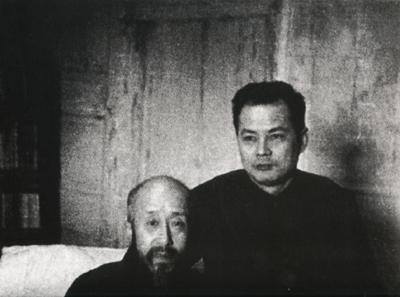
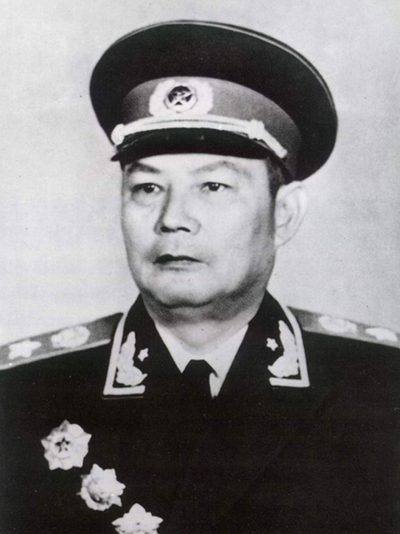
Ye Jianying (born 28 April 1897 at Yanyangbao, Meixian, Guangdong — died 22 October 1986 in Beijing) was trained at the Yunnan Military Academy, followed Sun Yat-sen, helped found the Whampoa Military Academy, served as a Red Army chief of staff, helped resolve the Xi'an Incident peacefully, and served during the wars as Eighth Route Army chief of staff, Central Military Commission chief of staff and mayor of Beiping. After 1949 he governed South China — secretary of the South China Sub-bureau, governor of Guangdong and acting chairman of the Central-South Military and Political Committee — and later served for many years as a vice chairman of the Military Commission and as minister of national defence. He was made a marshal in 1955, directed the Military Commission's daily work in 1975, was a key figure in the 1976 arrest of the Gang of Four, and chaired the Standing Committee of the National People's Congress from 1978 to 1983. He is counted among the Party's "Eight Elders". (Source 33) His own career is background here; the point of this piece is the children's distribution, because that distribution creates the checking difficulty: under one surname, one sibling has only an official CV, another only exchange filings, another only interview statements, and the three kinds of material cannot be written in the same way.
The verified conclusion on the children is this: Ye Jianying had six children — three sons, Ye Xuanping, Ye Xuanning and Ye Xuanlian, and three daughters, Ye Chumei, Ye Xiangzhen and Ye Wenshan. The list and the birth order — Xuanping, Chumei, Xuanning, Xiangzhen, Xuanlian, Wenshan — are stated consistently in the Chinese Wikipedia infobox and in Ye Xuanning's obituary reporting; Xuanning was third of the six, called himself "Ye San" and signed his calligraphy "Ye San of Yanyang", a detail the China Newsweek profile also gives, in mutual corroboration, at grade B+. (Sources 4, 5) One in-law coordinate is worth adding: among the six children's spouses, Ye Chumei's husband Zou Jiahua, who rose to vice premier of the State Council, held the highest office of any in-law of this house. The English Wikipedia infobox's "seven children" version names no seventh person while its own text gives six, and most plausibly folds in the adopted daughter Dai Qing — a writer whose father died a revolutionary martyr and who was raised by the Ye family, but who was not a biological child — so this piece excludes the "seven children" version; Dai Qing appears only in Section VII as a name-list clarification and is never counted among the six. (Source 33) A close-kin misattribution must also be corrected: Ye Xuanji was the son of Ye Daoying, Ye Jianying's younger brother — that is, a nephew, not a son — a correction several sources make expressly, and this piece follows it. (Source 31)
The account of which mother bore which child exists only in a commonly circulated version, with no official genealogy published, at grade B, and must never be upgraded into a settled conclusion in the writing: Xuanping and Chumei were the children of Feng Hua, married in Guangzhou in 1924; Xuanning was the son of Zeng Xianzhi, a descendant of Zeng Guoquan, brother of Zeng Guofan; Xiangzhen was the daughter of Wu Bo; and Xuanlian and Wenshan were the children of Li Gang, a student at the North China Military and Political University who married Ye Jianying at the end of 1948 and divorced him in 1955. (Source 22) That last date matters directly to the dispute over Ye Wenshan's birth year below, and the reader should hold the 1955 divorce in mind to understand why her birth year cannot simply be picked and written as settled. On the number of wives, the commonly circulated list is a childhood arranged marriage (no children) plus five wives with standing — Feng Hua, Zeng Xianzhi, Wei Gongzhi (no children; the marriage year is given both as 1932 and as 1937, itself disputed), Wu Bo and Li Gang; a loose count of "six marriages" obtains only by counting the arranged marriage, and the wording must stay precise, as this piece keeps it. Each child's provable main line can be summarised in one sentence before the sections unfold: Ye Xuanping was governor of Guangdong and a vice chairman of the CPPCC National Committee; Ye Chumei was a deputy director of the Machine Tool Bureau of the Ministry of Machine-Building Industry; Ye Xuanning was head of the General Political Department Liaison Department, a major general, and chairman and president of Kaili; Ye Xiangzhen was the director Ling Zi; Ye Xuanlian was chairman of Guoye Holdings and a non-executive director of Asia Coal; and Ye Wenshan was a non-executive director of Heng Cheng Construction and the legal representative of CITIC Property (Guangzhou). Each section below writes only that person's own line.
II. Ye Xuanping: Governor of Guangdong and Vice Chairman of the CPPCC
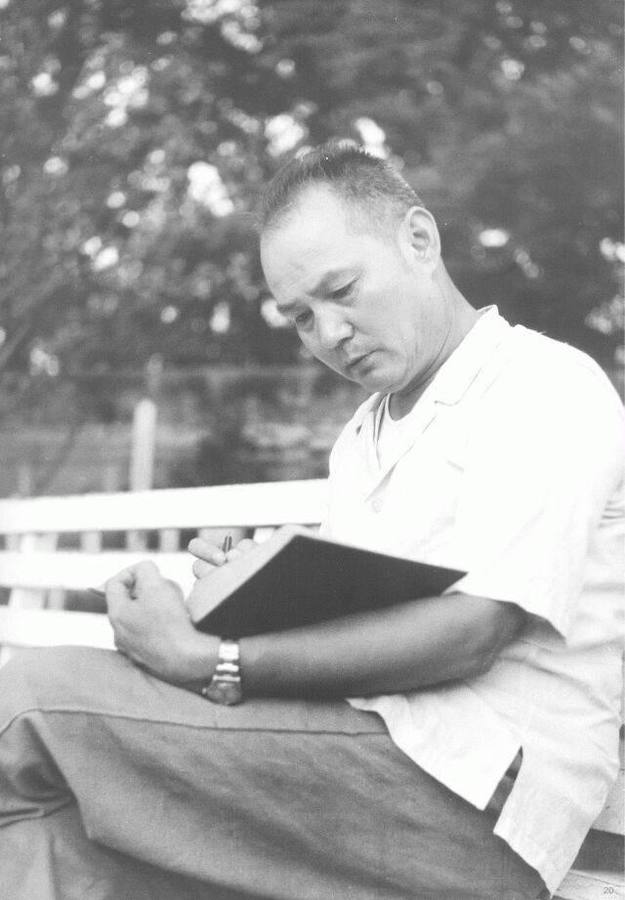
Ye Xuanping, the eldest son, was born in 1924; the Xinhua obituary gives "born in 1924", and the year is A-grade. His birth month and day are disputed — one page gives 20 December, a Sina survey gives November 1924 — and remain unsettled, so this piece writes the year only and does not pin down a month or day. (Sources 1, 21) He worked in Guangdong for eleven years, serving successively as a vice governor of Guangdong and director of the provincial science commission, mayor of Guangzhou, and governor of Guangdong, all checkable in the Xinhua obituary as preserved by the Sichuan local gazetteer. (Sources 1, 2) His tenure as governor, from August 1985 to May 1991, is consistent across sources, at grade B+; the starting year of his Guangzhou mayoralty is given both as 1980 and as 1983, the Chinese and English pages disagreeing with each other, and remains unsettled, so this piece registers both and adopts neither. The handling of this section is a sample of the piece's method: where an obituary anchors a year, it is written as solid; where sources fight over a starting year, the disagreement is stated openly rather than papered over with a precise-looking date.
The CPPCC line is the highest-grade and most complete segment of Ye Xuanping's record: in April 1991 he was added, at the fourth session of the seventh CPPCC National Committee, as a vice chairman, and from 1993 to March 2003 he served again as a vice chairman of the eighth and ninth committees, ranked first. (Source 1) His death is anchored at the same grade: he died of illness in Guangzhou, Guangdong, at 12:50 on 17 September 2019; the official age was given as 95 by traditional reckoning, 94 in full years — a difference of counting method, not a contradiction — and this piece therefore uses birth and death years. (Sources 1, 3) His wife Wu Xiaolan was a machinery specialist who served as a deputy general manager of the China National Machinery Import and Export Corporation, a vice mayor of Shenzhen and a vice chair of the Shenzhen people's congress standing committee; she was the granddaughter — through her mother — of Wu Yuzhang, at grade B. (Source 32) A popular error must be corrected here: some self-media call Wu Yuzhang her father; that is wrong, she was his granddaughter, and the error is entered again in the exclusion register. The material on Ye Xuanping's own children is thin and mutually conflicting, and is dealt with in Section VII and the gaps section; this section does not merge two warring versions in advance.
III. Ye Xuanning: Head of the General Political Department Liaison Department, Major General, and the Kaili Line
Ye Xuanning, the second son, was born in Hong Kong in 1938, the year at grade B+; his birth month is written both as 17 September and as October in different pages, while major profiles confirm only the year, so the month remains unsettled and this piece writes the year only. (Sources 4, 5, 33) He is, alongside Ye Xuanping, the child with the thickest material in this piece, and the family's only documented "military-business" line. The main line of his career runs: in 1984 he became a vice president of the China International Friendship Liaison Association and in the same year joined the army as a deputy head of the Liaison Department of the General Political Department; in September 1988 he was granted the rank of major general; in 1990 he became head of the Liaison Department; he retired in 1997; and he later served as a member of the eighth CPPCC National Committee and a standing committee member of the ninth. (Sources 4, 6) His secretary Li Weiping confirmed to China Newsweek that Ye Xuanning was already a person in charge of the Liaison Department in 1985 and that Li served as his secretary in the department in 1990; several major outlets agree, at grade B+, while the formal CV text on a military official site was not found in this check and is entered as a gap. (Source 5) One particularity deserves to be stated plainly: he had no prior military service, "joined the army" at 46 in a civilian capacity straight into the deputy headship of the Liaison Department, was made a major general four years later and head of the department six years later — a trajectory that is itself a direct function of his father's standing, a fact this piece states without embellishment.
The rank correction must be written as settled, because the wrong version circulates very widely: princeling lists, a Wikiversity compilation and many self-media accounts call him a lieutenant general. That is wrong. His rank was major general, consistent with the Liaison Department headship at corps grade, and the text of this piece gives major general throughout; the "lieutenant general" version enters only the exclusion register, as an adjudicated error rather than a disagreement between accounts. (Sources 4, 6) The Kaili post is stated at grade B+, never upgraded into an A-grade assertion: from 1993 he served concurrently as chairman and president of China Kaili Industrial Co., Ltd., on the basis of the Caixin-carried obituary and the China Newsweek profile as confirmed by his secretary Li Weiping; publicly he usually appeared in the Kaili chairman-and-president capacity, the forms of address "boss" and "Boss Yue" derive from it, and his working name was Yue Feng. (Sources 5, 6, 10) A United States publication, relaying intelligence monitoring, wrote that China Kaili was owned and operated by the General Political Department and that its president was Ye Xuanning, listing Kaili alongside the General Staff's Poly, the General Logistics Department's Xinxing and a navy company as military business arms; that material is a 1997 publication relaying monitoring content, not the monitoring original, at grade B. (Source 13) Where Kaili went in the 1998 military-business decoupling, no named record was found, as Section VIII sets out; this section draws no conclusion in advance.
On the arm injury and the calligraphy, the two datings must stand side by side. The common CV and obituary version gives 1974: feeding a grinder at a farm to which he had been sent down, his right arm was crushed, was reattached, and lost all function, with Zhou Enlai ordering emergency treatment. (Source 7) The most detailed version gives about 1970: the China Newsweek profile states expressly that in May or June 1970 he was sent down to the Junliangcheng military farm in Tianjin, and quotes a contemporary family letter of Ye Jianying — to the effect that the father should go to Shanghai to join the consultation on the son's operation — in support. (Source 5) Ye Xuanning's own statement, published by the Guangdong Museum of Art, is "at 31, I injured my right arm and it lost all function"; born in 1938, he was about 31 in 1969 to 1970, which fits the 1970 version, whereas on the 1974 dating he would already have been 35 or 36. (Source 11) This piece therefore sets the two versions side by side, notes that his own stated age and the weekly's detail give stronger support to about 1970, and leaves the point unsettled rather than pinning one version down. About ten years after the injury he began practising calligraphy with his left hand, often signing "Ye San of Yanyang" — Yanyang being his father's home place, Yanyangbao in Meixian, and Ye San his place in the family order; in 2014 he held a calligraphy-practice exhibition and published a collection of his practice works, and the calligrapher Qi Gong praised the writing, as did Huang Yongyu, all in the profile and farewell-ceremony reporting, at grade B+. (Sources 5, 9) His death: he died of illness in Guangzhou at 01:10 on 10 July 2016, his farewell ceremony was held on 14 July at the Yinhe funeral home in Guangzhou, and Xi Jinping and others sent wreaths; official reporting gave his age as 79 by traditional reckoning, 77 in full years; the formal Xinhua obituary text was not found in this check and is entered as a gap. (Sources 6, 9) His wife Qian Ningge — a variant written form of the name is a miswriting — was the daughter of Qian Yimin and a painter, at grade B; the claim that Qian Ningge was a co-owner or shareholder of a Macao casino appears only on Wikipedia and family-tree sites, with no A- or B-grade support, and is excluded at grade C. (Source 8)
IV. Ye Chumei and Ye Xiangzhen: The Industry System and the Arts
Ye Chumei, the eldest daughter, was born in Hong Kong in 1928, went to Yan'an in 1945, went to study in the Soviet Union in 1948, and after returning served, among other posts, as a deputy director of the Machine Tool Bureau of the former Ministry of Machine-Building Industry. Her husband Zou Jiahua, son of Zou Taofen, served as a vice premier of the State Council and a vice chairman of the NPC Standing Committee. She died of illness in Beijing on 18 September 2024, aged 96, as reported by The Paper via Southern Plus, at grade B+. (Source 19) A divergent version is registered strictly: older articles call her a deputy head of the defence science and technology commission and a graduate of a Moscow finance institute, which does not fully match The Paper's machine-tool bureau and Soviet-study account; the detail follows The Paper, and the rest is registered at grade C only, never stated as fact. Ye Chumei has no business line to write, and this piece writes her short, faithfully: she was an industrial-ministry cadre of the planned-economy era, and her section's length obeys the thickness of her material rather than being filled out with her husband's CV.
Ye Xiangzhen, the second daughter, renamed herself Ling Zi — her pen name is also written Lingzi — was a director at the Beijing Film Studio and a member of the eleventh CPPCC National Committee; during the Cultural Revolution she was one of the rebel leaders at the Central Academy of Drama and, after 1967, was imprisoned for nearly four years, in several sources, at grade B. (Sources 20, 33) Her birth year is the most disputed of the six children: a Huaxia Times survey gives 1940, the Ling Zi entry gives 30 January 1941, and a 2017 Sina interview calling her "now 76" points back to 1940 or 1941; moreover her mother Wu Bo married in Chongqing in 1940, so a 1940 birth sits awkwardly against the marriage year and is itself doubtful — this piece writes "about 1941" and pins nothing down. (Sources 20, 22) Her film line is comparatively checkable: in 1979 she returned to the arts under her pen name, first making documentaries for the China News Service; in about 1981 she directed the film adaptation of Cao Yu's celebrated play The Wilderness, with cinematographer Luo Dan, which won the Hundred Flowers Award for best feature, with a further reported honour of a Venice film festival recommendation among the world's finest films; she also directed two further features. (Source 20) The award detail rests mainly on her own interview statements, the Venice honour has no direct support in the festival's official archive and is entered as a gap, at grade B. Her marriages: her first husband was the pianist Liu Shikun, married in 1962 and divorced during the Cultural Revolution, in several agreeing sources including Liu Shikun's own recollection to China Newsweek, at grade B+; her second husband was the cinematographer Luo Dan, whose descent is checkable as a grandson of Qian Zhuangfei and son of Li Lili, although his full name is written three ways across sources — Luo Dan, Luo De'an and Luo Kangsheng — and remains unsettled, so this piece writes "Luo Dan (cinematographer, grandson of Qian Zhuangfei)" as the steadiest form. (Sources 20, 33)
Ye Xiangzhen's business line must be written to the grading conclusion, not copied from survey articles. After her father's death in 1986 she left the film world in 1987 and went to Hong Kong with Luo Dan, returning to the mainland in 2009 to promote Confucian learning — but the Sina interview says only that she "left the film world and went to Hong Kong", and does not describe her as doing business; older articles and surveys do say "did business in Hong Kong", yet no company or line of business for her was found in any business registry in this check, and the post of "chairman and general manager of a Beijing technology-and-trade company" appears only on a forum list. The conclusion has two layers: the move to live in Hong Kong is writable at grade B; the business detail is unproven, and the company post is excluded at grade C from the facts of the text. (Source 20) The handling is the deliberate counterpart of the Ye Xuanning section: two second-generation business claims, one supported by a Caixin-carried obituary and a secretary's confirmation and therefore writable at grade B+, the other supported only by surveys and a forum list and therefore writable only as far as the move to Hong Kong. Different grades demand different writing; that is this series' baseline against cross-attribution and padding.
V. Ye Xuanlian: Guoye Holdings and Asia Coal
Ye Xuanlian, the youngest son, was born on 28 November 1952; a 2009 Hong Kong exchange filing gives his age then as 57, which points back consistently to that date, at grade A-, supported by a document. (Source 16) All of his verifiable posts are anchored in that single exchange filing: the Asia Coal (0835) announcement records that Ye Xuanlian served as a non-executive director from 1 October 2009; that he graduated from a Hebei aviation school; that he had worked in aviation administration in China's civil aviation system for more than fourteen years; and that in 1990 he founded Guoye Holdings and served as its chairman, conducting investment and investment-advisory business on the mainland and in Hong Kong, involving resource industries. (Source 16) That filing is the hardest anchor of this section, and the factual statements of the text stop at what the filing contains, without expanding beyond it. The Shenzhen Guoye line can only be written downgraded: a Shenzhen Guoye company founded in 1992, with Ye Xuanlian as legal representative and chairman and a state-enterprise character, aggregator pages giving registered capital and an import-export scope, and further claims that he was a shareholder of a listed company and registered a Shenzhen Guoye technology company in 2007 — aggregator and encyclopaedia accounts at grade C+ to B-, with no original from the official disclosure system seen directly, registered here only in downgraded form and never used at the same grade as the exchange filing.
Three popular claims attach to Ye Xuanlian's name, and this piece gives a grading conclusion for each, without vagueness. First, the Poly line is claim only, without a document: several sources call him "one of the persons in charge of Poly" under the General Staff, but the trail runs to a leadership list relayed in the Poly entry and to 1990s articles, with no Poly annual report or exchange filing naming him in any post; the only writable form is "the claim circulates, with no regulatory document confirming it", at grade C+. (Source 33) Second, the Kaili misattribution is a key correction: a report calling Ye Xuanlian "chairman and president of Kaili, a Poly subsidiary" is wrong twice over — Kaili belonged to the General Political Department, not to Poly under the General Staff, and Kaili's verifiable chairman and president was his elder brother Ye Xuanning, from 1993; the claim looks like a brother cross-attribution compounded by a system cross-attribution, is an error at grade C, and is excluded. (Source 30) Third, on a China Merchants or shipping line, no verifiable record was found: a targeted search combining his name with China Merchants, shipping, ocean transport and seafaring produced no report or document connecting him to the China Merchants Group or to any shipping company; the likely sources of the association are a listed shipping company once held under Poly and an old-article rumour that another son of Ye Xuanping was an ocean-going seaman, neither of which is a record of Ye Xuanlian himself, and neither is attached to his name here. His early career is also in conflict: the exchange filing gives more than fourteen years of civil-aviation administration, older articles give air-force pilot versions, and an encyclopaedia account gives a General Political Department pilot version; the company filing governs, and the rest stand side by side at grade C in doubt. (Source 16) His family material is thin: his wife Su Dandan, originally an announcer with the General Political Department song-and-dance troupe who later did business and studied painting, lived from 1953 to 2012; his daughter Ye Mingzi is a fashion designer and Ye Qingqing a singer, at grade B- to C+, with the third generation not deeply checked here, as Section VII notes.
VI. Ye Wenshan: Heng Cheng Construction and CITIC Property (Guangzhou)
Ye Wenshan, the youngest daughter, has her verifiable posts anchored in exchange filings in the same way, at grade A: the filing of Heng Cheng Construction Holdings (0994) dated 26 April 2019 records that Ye Wenshan served as a non-executive director, states expressly in the filing that she is "a daughter of Mr Ye Jianying", and records that she was at the time the legal representative of CITIC Property (Guangzhou) Co., Ltd., in property investment and management; a filing dated 16 July 2019 still listed her as a non-executive director. (Sources 17, 18) One footnote deserves to be made plain: CITIC Property is the property arm of the CITIC Group, a central state enterprise, and the Ye family's youngest daughter serving as legal representative of its Guangzhou company is the one post in this family that a regulatory document anchors directly between the family and a central-enterprise property system; the record stops at the post itself, and this piece draws out no business detail from it, because no published material supplies any. Her other claimed posts are handled downgraded: a vice chairmanship of a Hainan overseas-Chinese investment company and a chairmanship of a Hong Kong company, from a Sina survey, at grade B-, with no business-registry or exchange document seen directly, registered here only in downgraded form. (Source 21)
Ye Wenshan's birth year is the single largest contradiction in this whole piece, and must stand in both versions, marked unresolved, never pinned down. The Sina survey of 2015 states expressly that "Ye Wenshan was born in 1961, a sister by the same mother as Ye Xuanlian"; but the Heng Cheng Construction exchange filing of 26 April 2019 gives her age as 66, which points back to a birth in 1952 or 1953. (Sources 17, 21) The two versions differ by eight to nine years and cannot both be true; and her mother Li Gang had already divorced Ye Jianying in 1955, so the version in which Li Gang bore another daughter in 1961 carries an audible note of incredulity in its own retelling. This piece's handling is: both versions side by side, awaiting adjudication by another listed-company document of hers or by obituary-grade material; until adjudicating material appears, any writing that presents either version as settled is not adopted by this site. Her marriage is also disputed: several sources give her husband as Yu Fangfang, son of Yu Qiuli, an officer who served as an assistant to the military attaché at the embassy in Switzerland — a Sina survey, an older article and a family-tree account pointing the same way, at grade B-; (Sources 21, 31) another version names her husband as Wang Jun, second son of Wang Zhen, on the strength of a single polemical post, most plausibly crossed from the true line "Ye Jingzi married Wang Jingyang, eldest grandson of Wang Zhen", tending to a grade-C error, and excluded. Placing these two problems in one section is deliberate: Ye Wenshan's name concentrates this piece's two most typical risks — two documents for one fact differing by nearly a decade, and an in-law relationship crossed by second-hand writing onto a person of another family — and the site's remedy is the same in both cases: set the versions side by side, mark the grade, wait for adjudicating material, and reach no verdict early.
VII. The Third Generation, and a Name-List Clarification
Third-generation material is generally thin, and this section writes each person as thinly as the record is, without holding the third generation to the second generation's standard of length. The line of Ye Xin Fu, son of Ye Xuanping, comes from a South China Morning Post obituary as relayed: he founded a Hong Kong brokerage in 1992, served as a director of at least eleven companies including a jewellery chain, and chaired a Guangdong golf club; his son Ye Zhonghao held a post connected with a Yunfu high-technology zone management committee in 2017. (Source 33) The Post's original text was not opened directly in this check, the grade is B+ to B, and the item is entered as this branch's largest gap. The conflicting version is a 1990s article naming an elder son in a Guangzhou military-region technical post and later a Shenzhen special-zone development company, another son as an ocean-going seaman, and a grandson who presented flowers to the visiting British queen in Guangzhou in 1986; that set is a single old source at grade C, its ordering against the Ye Xin Fu and Ye Zhonghao line is inconsistent across sources, and until the two are reconciled they can only be registered side by side — the two versions must never be stitched into one complete list of children. (Source 31) The adjudicating material should be the Post's obituary original, the Hong Kong companies-registry record of the brokerage, or a listed-company filing naming Ye Xin Fu as a director; until one of them is obtained, this piece can write only that "at least one son, Ye Xin Fu, has a major-paper record, while the remaining children's records are weak and mutually conflicting".
Ye Jingzi, daughter of Ye Xuanning, born in 1975, was a managing director of a Hong Kong culture group, served as manager to the diver Fu Mingxia, and planned a Tibet treasures exhibition in 2001; her husband Wang Jingyang, eldest grandson of Wang Zhen and son of Wang Bing, married her in 2005 — a marriage that is an in-law link between the Wang and Ye houses, and also one link in the confusion chain below, because the "Wang Jun" version of Ye Wenshan's husband most plausibly crossed over from this genuine in-law line. (Source 8) Of Ye Hong, son of Ye Xuanning, no verifiable record beyond the name was found, and this piece records the name only. Ye Mingzi, daughter of Ye Xuanlian, is a fashion designer with a public professional life, and Ye Qingqing is a singer; neither was deeply checked on this occasion, at grade B- to C+, and any expansion requires fresh checking. No A- or B-grade public record was found for the children of Ye Chumei or Ye Xiangzhen, and none is written. The section closes with the name-list clarification: Dai Qing, the writer, was the daughter of a revolutionary who was killed, was raised by Ye Jianying and lived with the Ye children as family, but was not Ye Jianying's biological child; the English Wikipedia "seven children" error most plausibly arises from counting her in. She is set out separately here precisely so that no version of this piece ever writes her into the list of six children, or mixes her writing career or any business line with those of the Ye children. (Source 33)
VIII. Key Check One: Kaili and the 1998 Military-Business Decoupling
The Kaili line is the one military-business line in the whole Ye family that major-media support reaches, and this section writes what can be proven and what cannot in separate layers. Three layers can be proven. First, Ye Xuanning served from 1993 as chairman and president of China Kaili Industrial Co., Ltd., on the Caixin-carried obituary and the China Newsweek profile as confirmed by his secretary Li Weiping, including the working name Yue Feng, stated at grade B+. (Sources 5, 10) Second, Kaili's system affiliation was the General Political Department's liaison system, its English names given as China Carrie Enterprises or China Kaili Corporation; a United States publication relaying monitoring wrote that the General Political Department owned and operated the company and that Ye Xuanning was its president, listing it alongside the General Staff's Poly, the General Logistics Department's Xinxing and a navy company, at grade B, a second-hand relay rather than the monitoring original. (Source 13) Third, the Kaili entities at the business-aggregator level conflict with each other and cannot be chained together: a business directory lists a China Kaili group company in Beijing, an aggregator separately shows a China Kaili industrial company in Shenzhen with Wang Lizheng as legal representative, and there are further same-name entities in Hong Kong and overseas; aggregator pages are not originals from the national enterprise-credit disclosure system, sit at grade C+, and cannot support a finding that the Beijing and Shenzhen entities form one legal-person chain. (Source 33) A lead is registered in passing: the Wang Lizheng legal-representative item cross-refers to the Kaili registration material noted in the Deng Xiaoping family piece in connection with Wu Jianchang, husband of Deng Lin; it is registered as a lead only, with no assertion of a connection.
What cannot be proven is stated item by item in the same way. First, the claim that "Kaili earned funds for the Liaison Department and handled Taiwan intelligence work" comes from entry citations and overseas media, with no official document, at grade C+ to B-, and can be written only as "the claim is in public circulation, with no A-grade document confirming it". Second, the 1998 decoupling destination is this section's most important blank: at the level of national policy the record is solid — on 22 July 1998 Jiang Zemin announced that the military would stop doing business, on 15 December 1998 the armed forces and armed police completed their decoupling from commercial enterprises, transferring 2,937 enterprises and abolishing 3,928, checkable in a Congressional Research Service report and in Caixin's account of the military leaving the commercial sea, at grade A- to B+. (Sources 14, 15) But into which unit Kaili itself was transferred in the decoupling, and how it was restructured or retained, no official or major-paper record naming Kaili was found in this check, and the finding is written faithfully as no verifiable record found. Ye Xuanning himself had already retired in 1997, before the ban; the claim that he "continued to control Kaili behind the scenes after retirement" appears only in self-media, at grade C, and is excluded from the text. Separating the policy background from the individual case's destination is a step this section may not skip: that the policy is real does not mean Kaili's destination has an answer; an archive site can write only that the policy is documented and the individual case is blank.
IX. Key Check Two: The "Lianhe" Exclusion and the Two ICIJ Findings
The "Lianhe" line must be written as an exclusion, because it is the line most easily crossed by word association. A targeted search combining "Lianhe" with Ye Xuanning, the Ye family and the General Political Department Liaison Department returned only Kaili-and-liaison results: no company named "Lianhe" was found in any post, shareholding or kinship connection with the Ye family. The large company named "Lianhe" that can be proven is Shanghai Lianhe Investment Co., Ltd., and its provable associated person is Jiang Mianheng: founded in September 1994, with Jiang Mianheng as legal representative and chairman and Yang Xiong — later mayor of Shanghai — as its first general manager, wholly owned by the Shanghai state-assets commission, it invested in China Netcom, Shanghai Automotive, Shanghai Airport, Phoenix Television and others; a Shanghai Stock Exchange bond document of 2025 records its current controlling shareholder still as the Shanghai state-assets commission, the exchange document at grade A- and Jiang's tenure history at grade B+. (Sources 28, 29) Jiang Mianheng's full record with Lianhe is in this site's piece on Jiang Mianheng, Netcom and Lianhe Investment, and is not repeated here. The confusion path is an assessment, not a fact, and is labelled as such in this piece: first, a word association between the "lian" of "Liaison Department" and "Lianhe"; second, Jiang Mianheng's Shanghai Lianhe and Ye Xuanning's Kaili belong to the same narrative template of princeling military-political-business companies, and second-hand articles crossed them. The conclusion is written as settled: for the Ye family and any company or institution named "Lianhe", no verifiable record was found, and any mention of "Lianhe" in this piece is as an exclusion only.
The ICIJ offshore-leaks line yields a negative finding, and its wording boundary must follow the dossier exactly. In the 2014 China offshore leaks, the ICIJ original text of 21 January 2014 named, among the highest-level relatives, Deng Jiagui, Wen Yunsong, Liu Chunhang, Li Xiaolin, Hu Yishi, Wu Jianchang and Fu Liang, across nearly 22,000 mainland and Hong Kong clients; the original was read through and checked, and its text names no child of Ye Jianying, at grade A. (Sources 23, 24) In the 2016 Panama Papers, the ICIJ China piece of 6 April 2016 named Deng Jiagui, Li Xiaolin and her husband, Jia Qinglin's granddaughter, Zhang Gaoli's son-in-law, Liu Yunshan's daughter-in-law, Zeng Qinghong's younger brother Zeng Qinghuai, Hu Yaobang's son Hu Dehua, and Mao Zedong's grandson-in-law Chen Dongsheng, among others; the original was read through and checked, and it names no member of the Ye Jianying family, at grade A. (Sources 25, 26) The conclusion can be written only as "neither of the two rounds of published ICIJ reporting, in 2014 or 2016, was seen to name a direct child of Ye Jianying"; the database contains many same-name entries, the ICIJ itself states that a shared name does not mean the same person, and this check did not complete a one-by-one database verification of the romanised names of Ye Xuanping, Ye Xuanning, Ye Xuanlian or Ye Xuanji, so it must never be written that "the database holds absolutely no record". The one near-match must be handled with care: a second-hand summary site, relaying the ICIJ list, contains one romanised line with no Chinese name, no company name and no corresponding passage in the ICIJ original, which in romanisation could correspond to Ye Xuanji, Ye Jianying's nephew; but no checkable corresponding record was found in the ICIJ original or its public database pages, so it cannot be identified as Ye Xuanji, still less written up as "the ICIJ named the Ye family", and it is entered as a gap awaiting verification. (Source 27) Claiming an identity from a romanised name alone is exactly how such second-hand errors are produced, and this piece does not commit it.
X. The Anti-Confusion Table
The business lines of the brothers Ye Xuanning and Ye Xuanlian are the part of this whole piece most easily crossed by second-hand articles, and the table below is the checklist against which the draft was rechecked before publication. Four contrasts matter most, and are first nailed down in words. One: the version making Ye Xuanlian "chairman of Kaili" is a double cross-attribution error — Kaili belonged to the General Political Department system, not the Poly system, and its officeholder was Ye Xuanning, while Ye Xuanlian himself has no verifiable Kaili post of any kind. Two: Ye Xuanlian's own solid record is of one kind only, the Hong Kong exchange filing — non-executive director of Asia Coal and chairman of Guoye Holdings, both in the same 2009 filing. Three: Ye Wenshan's solid record is of the same one kind — non-executive director of Heng Cheng Construction plus legal representative of CITIC Property (Guangzhou), both in the Heng Cheng filings. Four: Ye Xuanning's solid record is obituary reporting in several sources plus a secretary's confirmation — head of the Liaison Department and major general, plus chairman and president of Kaili from 1993, written at grade B+. Hold those four contrasts in mind, and most of the Ye-family cross-attribution articles in circulation can be seen through at a glance. (Sources 16, 17, 30)
| Item | Ye Xuanning (second son) | Ye Xuanlian (youngest son) |
|---|---|---|
| System | General Political Department (Liaison Department) | Civil-aviation background; no military-system post document |
| Verifiable posts | Head of the Liaison Department, major general (several obituary sources); chairman and president of Kaili Industrial from 1993 (Caixin plus the weekly's secretary confirmation, B+) | Chairman of Guoye Holdings, founded 1990; non-executive director of Asia Coal, 2009 (exchange filing) |
| Claim only, no document | Kaili "earned funds for the Liaison Department / handled Taiwan intelligence" (C+ to B-) | "One of the persons in charge of Poly" (C+, no annual report or filing naming him) |
| Clear misattribution | The "lieutenant general" rank (wrong; major general is correct) | "Chairman of Kaili" (wrong; the company belonged to the General Political Department, not Poly, and the officeholder was his brother Xuanning) |
The recheck conclusion is one sentence: the Ye family's "military business line" that reaches the level of documents and major media is Ye Xuanning and Kaili alone; Ye Xuanlian's line is a private and state-enterprise investment-platform line, the Guoye line, and the two differ in system, in period and in evidentiary grade. Any writing that bundles "Poly plus Kaili" onto a single person's name is a cross-attribution and should be discarded outright. The same anti-confusion logic applies to Ye Wenshan: her Heng Cheng non-executive directorship and her CITIC Property (Guangzhou) legal-representative post are anchored by exchange filings (Sources 17, 18), her other claimed posts rest only at survey grade, and the "Wang Jun" version of her marriage most plausibly crossed over from the genuine marriage of Ye Jingzi and Wang Jingyang — three matters handled separately, none borrowing from another. This section answers the opening statement: this piece spends so much space on anti-confusion not because readers cannot remember names, but because the errors in the Ye family's second-hand material occur precisely between names and systems, and only once the comparison table stands does every fact that follows it stand firm.
XI. Guangdong Roots, and This Piece's Characterisation
The Ye family is the family in this series bound most deeply to a single province, and its Guangdong network is assembled entirely from facts already checked above, with nothing new added here: Ye Jianying was born in Meixian, Guangdong, governed South China in the early People's Republic and served as governor of Guangdong; the eldest son Ye Xuanping worked in Guangdong for eleven years, rose to governor, and died in Guangzhou in 2019; the second son Ye Xuanning lived in Guangzhou in his later years, died there in 2016 and had his farewell ceremony held there; the youngest son Ye Xuanlian's company line sits in Shenzhen — the Guoye companies — and in Hong Kong; and the youngest daughter Ye Wenshan's legal-representative post sits at CITIC Property (Guangzhou). (Sources 1, 6, 9, 16, 17) In other words, the family's political, military and business lines had still not left Guangdong in the second generation — a contrast with the Deng family's multi-point spread and the Wang family's concentration in Beijing's central state enterprises, and the single most worth-stating structural fact about this house. The boundary must be written at the same time: geographic concentration is a summary of facts, not evidence of a unified "family Guangdong interest network" in operation, for which no published material was found, and no such inference is drawn.
Return, finally, to this piece's characterisation, and audit it person by person. "One house, many lines": the six children fill, between them, the principal exits of power, capital and culture, and every line has at least one checkable item of material — Ye Xuanping's obituary, Ye Xuanning's obituary reporting and profile, the exchange filings of Ye Xuanlian and Ye Wenshan, the death reporting for Ye Chumei, the interview record for Ye Xiangzhen — not one of them held up by rumour. "Uneven thickness": the thickest line is Ye Xuanning's, complete with rank, department tenure, the Kaili post, the two datings of the arm injury, calligraphy and death; the thinnest are the third generation and the children of Ye Chumei and Ye Xiangzhen, and the thin places are written thin here, faithfully. "The most crossed lines": Kaili crossed onto Ye Xuanlian, "Lianhe" crossed onto the Ye family, Dai Qing crossed into the list of children, Ye Xuanji crossed into a son, and Wang Jun crossed into Ye Wenshan's husband — five high-frequency errors, each taken apart in this piece, each with its correct attribution and evidentiary grade given. A single closing conclusion: in the public archive the Ye Jianying family presents as one house whose members took six different exits while its roots stayed in Guangdong; what the archive can prove is each person's own one line, and what it cannot prove is a family-network narrative that twists the six lines into one rope — no such narrative was found in the published material, and this piece does not write it. This piece ends here: everything that was found is here, and everything that was not found is here as well.
Source List
- Xinhua obituary of Ye Xuanping, CPPCC website, 17 September 2019 (CPPCC vice-chair tenure, Guangdong posts, time of death). http://www.cppcc.gov.cn/zxww/2019/09/18/ARTI1568765558842125.shtml — Official obituary (Grade A).
- Sichuan Local Gazetteer, reposting the Xinhua obituary: Ye Xuanping "worked in Guangdong for eleven years" and his successive posts. http://scdfz.sc.gov.cn/gzdt/zyhy/content_24969 — Official repost (Grade A).
- China Economic Net, reposting the report of Ye Xuanping's death, 17 September 2019. http://www.ce.cn/xwzx/gnsz/szyw/201909/17/t20190917_33168382.shtml — Official-media repost (Grade B+).
- Jiemian News, obituary of Ye Xuanning (the list and birth order of the six children; Liaison Department career), 2016. https://www.jiemian.com/article/737184.html — Major-media obituary (Grade B+).
- Jiemian News, reposting the China Newsweek profile (the c.1970 dating of the arm injury; the Kaili chairmanship; confirmation by secretary Li Weiping), 2016. https://www.jiemian.com/article/747832.html — Major-media profile (Grade B+).
- Sina News, reposting the Caixin / Legal Evening News obituary of Ye Xuanning, 10 July 2016. https://news.sina.cn/gn/2016-07-10/detail-ifxtwiht3476074.d.html?vt=4 — Caixin-grade obituary relayed (Grade B+).
- Sina News, reposting the Beijing Daily "Chang'an Street Knows" column (the 1974 dating of the arm injury), 11 July 2016. https://news.sina.cn/2016-07-11/detail-ifxtwitr1898874.d.html?vt=4 — Official-media column relayed (Grade B).
- Sina "Zhengshier", the Ye Xuanning family (wife Qian Ningge; daughter Ye Jingzi and Wang Jingyang), 10 July 2016. https://news.sina.cn/gn/2016-07-10/detail-ifxtwihp9943166.d.html?vt=4 — Major-media column (Grade B).
- China News Service, report of Ye Xuanning's farewell ceremony, 14 July 2016. https://www.chinanews.com.cn/m/gn/2016/07-14/7939600.shtml — Official news-agency report (Grade B+).
- Kan New York, reposting the Caixin obituary: Ye Xuanning concurrently chairman and president of Kaili, 10 July 2016. https://www.kannewyork.com/news/2016/07/10/38247.html — Caixin obituary relayed (Grade B+).
- Guangdong Museum of Art, page for Ye Xuanning's calligraphy-practice exhibition (his own statement: "at 31, I injured my right arm"), 2015. https://www.gdmoa.org/Exhibition/Exhibitions/2015/xgwd_2015/201504/t20150402_12001.shtml — Official-institution page, own statement (Grade B+).
- Chinese Political Elites Database, National Chengchi University, Taiwan, CV page for Ye Xuanning (arm-injury year index). https://cped.nccu.edu.tw/eliteDetail.aspx?pid=1187061 — Academic database index (Grade B).
- Multinational Monitor, reporting on the PLA business empire (relaying monitoring: the General Political Department owns and operates China Carrie; Ye Xuanning its president), June 1997. https://rrojas.powweb.com/china10.htm — Publication relaying monitoring (Grade B, not the original).
- Congressional Research Service Report 98-197, military business and the background to the 1998 decoupling. https://congressionalresearch.com/98-197/document.php — Policy research document (Grade A-).
- Caixin, "The Chinese Military Sails Out of the Commercial Sea" (the 1998 decoupling process), 5 January 1999. https://magazine.caixin.com/1999-01-05/100079757.html — Caixin reporting (Grade B+).
- HKEX disclosure, Asia Coal (0835) announcement: Ye Xuanlian as non-executive director, with CV, 30 September 2009. https://www.hkexnews.hk/listedco/listconews/sehk/2009/0930/ltn20090930454_c.pdf — Regulatory filing (Grade A).
- HKEX disclosure, Heng Cheng Construction Holdings (0994) announcement: Ye Wenshan as non-executive director, stated expressly as "a daughter of Mr Ye Jianying", legal representative of CITIC Property (Guangzhou), 26 April 2019. https://www.hkexnews.hk/listedco/listconews/sehk/2019/0426/ltn201904261906_c.pdf — Regulatory filing (Grade A).
- HKEX disclosure, Heng Cheng Construction Holdings (0994) announcement (Ye Wenshan still a non-executive director), 16 July 2019. https://www1.hkexnews.hk/listedco/listconews/sehk/2019/0716/ltn20190716581_c.pdf — Regulatory filing (Grade A).
- The Paper via Southern Plus, report of Ye Chumei's death (born 1928; deputy director of the Machine Tool Bureau; husband Zou Jiahua; died 2024), 22 September 2024. https://static.nfnews.com/content/202409/22/c9941654.html — Major-media reporting (Grade B+).
- Sina News, in-depth interview with Ling Zi (Ye Xiangzhen), 28 April 2017. https://news.sina.cn/gn/2017-04-28/detail-ifyetwtf8851641.d.html?vt=4 — Major-media interview (Grade B).
- Sina News, red-families survey (the 1961 birth-year version for Ye Wenshan; Ye Xuanping's birth month; Ye Wenshan's other posts), 30 November 2015. https://news.sina.cn/gn/2015-11-30/detail-ifxmazpa0519799.d.html?vt=4 — Survey reporting (Grade B-).
- Huaxia Times, reposting a survey (the six children and the account of their mothers; the 1940 version for Ye Xiangzhen), 28 November 2022. https://www.hxdsb.com/html/content/wl/HDB2022112815605.shtml — Survey reposted (Grade B).
- ICIJ, Leaked Records Reveal Offshore Holdings of China's Elite, 21 January 2014 (original read through; no Ye child named). https://www.icij.org/inside-icij/2014/01/chinas-elite-linked-secret-offshore-entities/ — ICIJ original (Grade A).
- ICIJ archived PDF, full China Leaks text, 2014. https://2015.sopawards.com/wp-content/uploads/2012/11/People-s-Republic-of-Offshore-or-China-Leaks.pdf — ICIJ archive (Grade A).
- ICIJ, Panama Papers China piece, 6 April 2016 (original read through; no Ye family member named). https://www.icij.org/investigations/panama-papers/20160406-china-red-nobility-offshore-dealings/ — ICIJ original (Grade A).
- Associated Press-derived list survey, Panama Papers naming prominent Chinese political families, 2016. https://insurancenewsnet.com/oarticle/panama-papers-leaks-name-prominent-china-political-families — Wire-service survey (Grade B+).
- corruption.net second-hand summary (containing one romanised line with no Chinese name and no company name; the item awaiting verification in this piece), 25 June 2014. https://corruption.net/china-elites-wealth-in-offshore-tax-havens/ — Second-hand summary (Grade C; registered for checking only).
- Shanghai Stock Exchange, Shanghai Lianhe Investment bond document (current controlling shareholder is the Shanghai state-assets commission), 29 August 2025. https://static.sse.com.cn/disclosure/bond/announcement/company/c/new/2025-08-29/115265_20250829_75NP.pdf — Exchange document (Grade A-).
- He Qinglian, via a Beijing youth-paper site, on Jiang Mianheng and Shanghai Lianhe Investment (founded 1994; Jiang as chairman), 19 January 2015. https://heqinglian.net/2015/02/08/jiangmianheng/ — Research commentary relayed (Grade B+).
- Sound of Hope, the "Ye Xuanlian as Kaili chairman" claim (the double cross-attribution this piece corrects). https://www.sohfrance.org/68255.html/ — Object of correction (Grade C error; not used as fact).
- Beijing Spring old article (the correction that Ye Xuanji was a nephew; the old-article version of Ye Xuanping's children), archived copy. https://beijingspring.com/bjs2020/bjs/zc/107/78.txt — Old article archived (Grade C; registration and correction leads only).
- Creaders, reposting a mainland survey (Ye Xuanping's death; Wu Xiaolan as Wu Yuzhang's granddaughter), 17 September 2019. https://news.creaders.net/china/2019/09/17/2136154.html — Reporting relayed (Grade B).
- Wikipedia lead pages (used only to cross-check leads, never as a sole source): the entries for Ye Jianying, Ye Xuanping, Ye Xuanning, Ye Chumei, Ling Zi, Ye Xuanlian, Ye Wenshan and Ye Jingzi, and the English Ye Jianying entry, consulted November 2026. Example entry: https://zh.wikipedia.org/wiki/%E5%8F%B6%E5%89%91%E8%8B%B1 — Lead compilation (not separately graded).
Material Gaps (stated faithfully)
- Ye Wenshan's birth year unresolved (not pinned down): the 1961 version (Sina survey) and the c.1952/53 version (back-calculated from the age in the Heng Cheng HKEX filing) differ by eight to nine years and bear directly on the account that her mother Li Gang had already divorced in 1955; adjudicating material — another listed-company document of hers or obituary-grade material — has not been obtained, and the text sets both versions side by side.
- The dating of Ye Xuanning's arm injury unresolved: the c.1970 version (China Newsweek profile, family letter and his own stated age in support) stands beside the 1974 version (the common CV version); a still earlier dating has no source at all and is excluded.
- Kaili's decoupling destination blank: the 1998 national policy of military-business decoupling is documented (Sources 14, 15), but the unit to which Kaili was transferred and how it was restructured or retained were found in no record naming Kaili; nor was an original for a Kaili entity obtained from the national enterprise-credit disclosure system, the aggregator entities conflict with each other and cannot be chained.
- Ye Xuanning's official CV and obituary original: the formal Xinhua or military obituary text and an official CV page giving the start and end of his department tenure were not found in this check; the Kaili post is stated at grade B+ and is not upgraded to grade A.
- Ye Xuanping's children: two versions unreconciled: the Ye Xin Fu / Ye Zhonghao line (South China Morning Post obituary as relayed, the original not opened directly) and the 1990s old-article line (a military-technical son, a seaman son, and a flower-presenting grandson) cannot be matched in ordering or correspondence, and the text does not merge them.
- Other unresolved disagreements: the starting year of Ye Xuanping's Guangzhou mayoralty (1980 / 1983) and his birth month (November / 20 December); Ye Xiangzhen's birth year (1940 / about 1941) and the three written forms of her husband Luo Dan's name; Ye Xuanlian's early career (the filing's civil-aviation administration version against the older pilot versions); and Ye Xuanning's birth month (17 September / October).
- Records not found: the film-festival official archive for The Wilderness's Venice honour; the identity and corresponding record of the second-hand romanised line in the ICIJ material (the one-by-one romanised-name database check was not completed, so only "not named in the published reporting" may be written); any annual-report or filing-grade document for Ye Xuanlian holding a Poly post (the claim stays at claim grade); and public records for Ye Hong and for the children of Ye Chumei and Ye Xiangzhen.
- Grade-C exclusion register (about 15 items, none used as fact in the text): Ye Xuanning's "lieutenant general" rank; claims that Ye Xuanning "continued to control the Liaison Department / Kaili behind the scenes after retirement"; the "Ye Xuanlian as chairman of Kaili, a Poly subsidiary" claim (a double cross-attribution error); the "Wang Jun" version of Ye Wenshan's husband (suspected cross-attribution); the "Wu Xiaolan as daughter of Wu Yuzhang" claim (she was his granddaughter); the "Qian Ningge as casino co-owner / shareholder" claim; the "Ye Xiangzhen as chairman and general manager of a Beijing technology-and-trade company" claim and the specific company business of her "doing business in Hong Kong"; the old-article version of Ye Xuanping's children, registered only until reconciled; the English Wikipedia "seven children" version (suspected of folding in the adopted daughter Dai Qing); details unique to family-tree sites (including a precise birthday for Ye Xiangzhen and a variant form of a Ye Wenshan post); long-form claims that the Ye family manipulated another leader's rise or ran transnational criminal networks (no first-hand document; the whole class excluded); the second-hand romanised line in the ICIJ list and forum "ten great families" posts; palace-intrigue narratives about Ye Jingzi's in-law family; and self-media claims such as that Jiang Zemin forced Ye Xuanning to retire.
Contact: endccpworld@proton.me