CATL and Boyu Phase II: The 1.18 Per Cent in the Prospectus
A case piece in the Red Families series' audit of the rich list for princeling capital. This piece has a single factual thread, and it is the cleanest thread in the entire audit in evidentiary form: it rests on no retelling and no unnamed sourcing, only on a regulatory disclosure document - the draft ChiNext prospectus of Contemporary Amperex Technology Co., Limited (CATL), disclosed by the China Securities Regulatory Commission. In that document's complete table of pre-IPO shareholders sits one name: Boyu Phase II, holding 1.18 per cent. This piece unpacks that line item by item - its round, its price, its companions and its boundaries - and cuts away, item by item, everything that does not belong to it: neither founder is a red descendant, and the company is nobody's controlled enterprise.
Contents
- I. One Line in the Prospectus: The Full Pre-IPO Table and the 1.18 Per Cent
- II. The RMB 8 Billion Round: How the Stake Was Bought in November-December 2016
- III. The Three Separations: The Fund's Nature, the Partner List and Control
- IV. The Boyu Axis: A Second Documented Landing Point Beyond Alibaba and Ant
- V. Zeng Yuqun: An Engineer from a Farming Family
- VI. Huang Shilin: A Complete Founding-Subscription Paper Chain, and One Honest Gap
- VII. Checking the Whole Table: Yunfeng in the Same Round; CMB, SDIC Innovation and Ping An on the Register
- VIII. Separating the Peers: Hillhouse, Sequoia and the CITIC Industrial Fund System Did Not Enter Before the IPO
- IX. The Finding, Closed Down: A Small Financial Stake Bought on the Eve of Listing
- Material Gaps (stated faithfully)
- Source List
The rich-list audit in this series works by a laborious method: no claims are listened to; only documents are opened. For each company that made a rich-list fortune, the prospectus is pulled and the complete table of pre-IPO shareholders is checked name by name, to see whether a red second- or third-generation person, or a capital vehicle of theirs, is on the register, and in what proportion. For most companies the table, once checked, comes back as family holdings, industrial capital, state platforms and professional institutions. For CATL, the table came back with one extra line. The weight of that line lies not in its size - 1.18 per cent ranks nowhere near the top of any shareholder table - but in two things: first, it appears in a regulator-disclosed prospectus, in black and white, requiring no intermediary's retelling; and second, it extends the Boyu axis - previously pinned down only at Alibaba and Ant Group - to a leading manufacturing company. This piece opens a file on that single line: which round it came in on, how much money it paid, whom it sat beside, what the fund itself is, whether the founders are clean at the personal level, and who else is, and is not, on the same table and in the same peer group, section by section.
The conclusion, shaped to the evidence, is set down first and audited section by section below. The furthest step this piece can prove is this: in November-December 2016, in CATL's RMB 8 billion capital increase, a renminbi fund managed by a Boyu-affiliated management institution, in cooperation with the China Development Bank system, subscribed RMB 1 billion; by the time the prospectus draft was filed, it held 1.18 per cent of the pre-IPO shares. What this piece does not prove, and does not claim, includes any contribution or decision-making role by Jiang Zhicheng personally in this investment; any suggestion that the investment bought CATL access, orders or policy favours; and control in any sense. The manufacturing structure in the background - admission to the power-battery subsidy catalogue - is registered in Section IX as structural context only, and no causal line is drawn between it and this investment. Read with that map in hand: every figure below can be traced to a document in the source list.
I. One Line in the Prospectus: The Full Pre-IPO Table and the 1.18 Per Cent
The anchor document of this piece is a single file, and it is introduced in full first: the Draft Prospectus for the Initial Public Offering and ChiNext Listing of Contemporary Amperex Technology Co., Limited, pre-disclosed by the China Securities Regulatory Commission and submitted on 12 March 2018. The draft sets out CATL's complete shareholding structure before the offering, a table of roughly forty-nine shareholders; the checking method was to take those forty-nine names one by one and compare them against the known list of princeling persons and capital vehicles. The comparison reduces to one line: "Boyu Phase II" - CDB-Boyu Phase II (Shanghai) Equity Investment Partnership - held 22,999,575 shares of CATL, or 1.18 per cent of the total share capital before the offering. (Source 1) Share count and percentage both stand in a regulatory disclosure document: that is the form of A-grade evidence - no press retelling required, no confirmation or denial by any party required, the document itself is the fact.
Why that line deserves a piece of its own begins with the company it sits in. CATL is a power-battery manufacturer, founded in Ningde, Fujian, in 2011; its two founders, Zeng Yuqun and Huang Shilin, stand near the top of the Hurun rich list - Zeng third, with a fortune of RMB 385 billion, and Huang fifteenth, with RMB 175 billion - and in both cases the fortune is CATL founding equity. (Sources 1, 2) A princeling-linked fund appearing on the register of a manufacturing champion is checked by exactly the same method as one appearing on a platform company's register: first confirm whether it is on the table at all; then confirm in what capacity it is there; then confirm how far its proportion and its rights extend. The sections below follow that order and skip no step.
The line's position on the table must also be written to scale. At the head of the pre-IPO register stand the founding and industrial holdings: Zeng Yuqun holds indirectly through Xiamen Ruiting Investment, which held 29.23 per cent before the offering, with Zeng holding 100 per cent of Ruiting; Huang Shilin held 13.34 per cent directly, the second-largest shareholder and the largest individual shareholder. (Sources 1, 2) Boyu Phase II's 1.18 per cent sits in the later reaches of the table, at the scale of a single position of a professional financial investor. It is written into this piece not because it is large, but because the surname of its management institution is unusual; and it is written as 1.18 per cent only, never magnified into any narrative of control, because the documents support that scale and no other. Both restraints are applied together, from beginning to end.
The checking scope and limits of the anchor document should also be stated. The draft prospectus discloses the shareholding structure at the pre-IPO point and the partner information of the fund in question; it can answer "who is on the table, and how much do they hold", and it can answer "is Jiang Zhicheng in the disclosed partner list of that fund" - the answer is recorded in Section III. What it cannot answer is equally clear: the detailed contribution proportions of the fund's partners, the internal process of its investment decisions, and the course of the subscription negotiations are all outside the prospectus's disclosure scope, and this piece fills none of them with reporting or inference. The boundary of the document is the boundary of this narrative.
II. The RMB 8 Billion Round: How the Stake Was Bought in November-December 2016
Boyu Phase II was not a founding shareholder; its entry point and its price are pinned by a second A-grade document: the Statement on the Evolution of the Share Capital of CATL, disclosed through Cninfo and published on 22 May 2018. That document records, round by round, the capital history of CATL in its limited-company phase. In November-December 2016 the company carried out a capital increase totalling RMB 8 billion; in that round Boyu Phase II subscribed for 7,666,525 shares, contributing RMB 1 billion, at a subscription price of RMB 130.4372 per share. (Source 2) From the RMB 1 billion subscription and the 7.66 million shares of the round, to the 22,999,575 shares and 1.18 per cent recorded at prospectus filing, the chain of figures reconciles across the two documents: round, unit price, amount contributed and final holding - all four present.
The round's companion structure is the most informative detail in this piece. The audit confirms that subscribing in the same round was Shanghai Yunfeng - Yunfeng Fund - whose subscribed shares, contributed amount and resulting proportion were the same round, the same amount and the same proportion as Boyu Phase II: the same RMB 1 billion, the same 7,666,525 shares. (Source 2) Those six words describe the transaction's nature plainly: this was a market capital increase opened to multiple institutional investors, in which Boyu Phase II was one participant, entering side by side, on identical terms, with another well-known institution. It was not a transaction arranged specially for one particular shareholder - at least, at the level of the terms as presented in the prospectus and the capital-history statement, no differentiated arrangement of any kind can be seen. Any narrative of a "special channel" must first explain why the documented terms differ from the same-round companion's by not one cent; this piece can find no such explanation, and does not adopt the special-channel account.
The entry timing must likewise be written structurally. Entry in November-December 2016; the prospectus draft submitted in March 2018 and the company listed on ChiNext in 2018 - Boyu Phase II's entry sits on the eve of listing: the company was already large, the listing path already clear, and the round was priced at more than RMB 130 per share, with RMB 1 billion buying 1.18 per cent. The shape is isomorphic with what this series recorded at Alibaba: in September 2012 Boyu entered through Alibaba's buyback of Yahoo's shares, a full two years before Alibaba's listing, and Alibaba itself confirmed Boyu's holding as 0.55 per cent. (Sources 4, 5) The common shape of the two entries is: no founding, no control - a small stake bought as a financial investor in the window when a leading company approaches listing. That the pattern repeats is itself a fact worth filing; as to the reasons behind the pattern, the documents do not say, and this piece does not answer for them.
One detail that retellings easily lose is registered at the end of this section: Boyu Phase II subscribed for newly issued shares in the limited company's capital increase, paying RMB 1 billion into the company, rather than acquiring existing shares from the founders or early shareholders. The distinction between an increase and a transfer is where the money went: increase proceeds enter the company itself. The capital-history document records this unambiguously. (Source 2) The point bears directly on the characterisation of the deal - it was a capital injection on documented terms, at a documented price, in a documented round; to describe it as any form of gifted equity or transfer of benefits contradicts the documents.
III. The Three Separations: The Fund's Nature, the Partner List and Control
This section writes out, in full and for the case itself, the three separations fixed in the opening statement - because this is the part of the piece most likely to be deleted when it is quoted or excerpted, and deleting any one of the three deforms everything that remains. First, the fund's nature: Boyu Phase II's full name is CDB-Boyu Phase II (Shanghai) Equity Investment Partnership, and its composition is visible in the name itself - it is a renminbi fund run by Boyu in cooperation with the China Development Bank system; on the audit's findings, the fund's general partner and manager is Boyu's mainland investment management company, and its partners are mainly institutional contributors. (Sources 1, 2) What appears on CATL's register, in other words, is a renminbi fund product, not the direct shareholding of Boyu Capital's US-dollar fund body; the precise landing point of the word "Boyu" in this investment is the management institution.
Second, the partner list: Jiang Zhicheng himself does not appear in the partner list of Boyu Phase II as disclosed in the prospectus. (Source 1) That sentence is the dividing line between this piece and every magnified narrative. Jiang Zhicheng is one of Boyu Capital's founding partners - supported by Reuters' special report, as set out in Section IV - but "founded the brand to which the management institution belongs" and "is personally a partner of this fund" are propositions at two different levels, and the prospectus supports the link at the first level only. The strongest formulation available for this investment is therefore "a Boyu-affiliated management link": the link lands at the institutional level, not in Jiang Zhicheng's personal name. Any account that books the 1.18 per cent directly to Jiang Zhicheng personally has crossed the documentary boundary of the prospectus.
Third, proportion and rights: 1.18 per cent is a small financial stake, and in the prospectus and the capital-history statement there is no disclosure of a board seat for Boyu Phase II and no record of control. (Sources 1, 2) Its scale is visible against the same table: the founding side's Ruiting held 29.23 per cent, Huang Shilin personally 13.34 per cent, the CMB-affiliated vehicles 7.32 per cent in aggregate and the SDIC Innovation vehicles 2.57 per cent - Boyu Phase II's 1.18 per cent is not even the largest institutional position on the register. A narrative of control over a company needs at least one prop among shareholding, board seats and contractual arrangements; the documents record none of the three. The characterisation therefore closes into one verifiable sentence: a princeling-linked fund bought 1.18 per cent of CATL on the eve of its listing, and that is all; the converse - "CATL is a princeling company" - is expressly not established and not adopted by this piece.
The separations also serve to fix this line's grading in the series. The dossier's grading for both the Zeng Yuqun and the Huang Shilin entries is the same: the grade lands only on the single enterprise-level capital fact of Boyu Phase II's 1.18 per cent, while the personal level and the control level are both recorded as nothing found. This piece keeps that grading and casts it in a form readers can verify with their own hands: open the prospectus, find the shareholder table, find the Boyu Phase II line, then turn to the fund's partner disclosure and confirm that Jiang Zhicheng's name is not in it - in three steps, the core fact and the core boundary of this piece can both be checked first-hand. A line that survives that test earns its place in the archive; whatever cannot survive it has been cut away in advance by this piece itself.
IV. The Boyu Axis: A Second Documented Landing Point Beyond Alibaba and Ant
To understand why the Boyu Phase II line belongs in the Red Families series, the Boyu axis itself must be set out; its full file is this site's piece on Boyu Capital and Jiang Zhicheng, and this section excerpts only the facts relevant to the present case. Boyu Capital was founded in 2010; Reuters' special report of 10 April 2014, "The princeling of private equity", identifies Jiang Zhicheng - a grandson of Jiang Zemin and a son of Jiang Mianheng, Harvard-educated and formerly at Goldman Sachs - as one of Boyu's founding partners. (Source 3) One generation up, his father Jiang Mianheng founded the Shanghai municipal government's investment platform Shanghai Lianhe in 1994, invested it into companies including Netcom and sat on Netcom's board himself; his file is this site's piece on Jiang Mianheng and Netcom. The three generations' instruments differ - from a state-capital platform to a US-dollar private equity fund to a renminbi cooperation fund - but all three appear at the entrance to large companies' capital operations, which is why this series tracks the axis.
The station where the Boyu axis was previously pinned down hardest in documents is Alibaba. In September 2012 Alibaba bought back roughly half of Yahoo's stake in it for US$7.6 billion, and a Boyu subsidiary put in about US$400 million; on 21 July 2014 Alibaba issued an official statement responding to the New York Times investigation in which, while denying that it had developed "on the back of connections", it confirmed in its own words that Boyu held 0.55 per cent of Alibaba as at the end of June 2014. (Sources 4, 5) Confirmation of a stake by the investee company itself is the highest grade of evidence available in this kind of audit. Thereafter, Reuters reported on 24 February 2021 that Boyu had taken part in Ant Group's two financing rounds, of US$4.5 billion in 2016 and US$14 billion in 2018. (Source 6) Alibaba and Ant together formed the Boyu axis's complete landing in the platform economy: e-commerce and payment finance, once each, small stakes, both on the eve of a listing or intended listing.
The significance of the CATL station is precisely that it is a second documented landing point of this axis beyond Alibaba and Ant - and its evidentiary grade matches the Alibaba station's: not press retelling, but a regulatory disclosure document recording it directly. The two landings are strikingly similar in structure: in each case the target is a leading company of its era, the entry is on the eve of listing, the proportion is around one per cent, and the capacity is that of a financial investor. The differences must be written with equal clarity: at Alibaba the entrant was a subsidiary within the US-dollar fund system; at CATL it is a renminbi fund in cooperation with the China Development Bank system, and Jiang Zhicheng personally stands further from the fund in this station - his name does not enter even the fund's partner list. Written with similarities and differences side by side, the axis's true scale cannot warp in retelling.
This section closes by limiting the axis itself, lest readers stretch the word "axis" without bound. Across this series' company-by-company audits of platforms and rich-list enterprises, Boyu landings supported by documents currently number three: Alibaba, Ant and CATL. At the other audited companies - including several leading companies checked in the same round as CATL - no Boyu vehicle was found on the register, as recorded in the respective pieces of this series. The axis is real, and its boundary is real: one management institution buying roughly one per cent, on the eve of listing, in three leading companies across a decade is neither "everywhere at once", nor a distribution that "pure coincidence" can wave away. This piece is responsible for pinning down one of the three landings - this one; for the other two, readers are directed to the Boyu piece for cross-reference.
V. Zeng Yuqun: An Engineer from a Farming Family
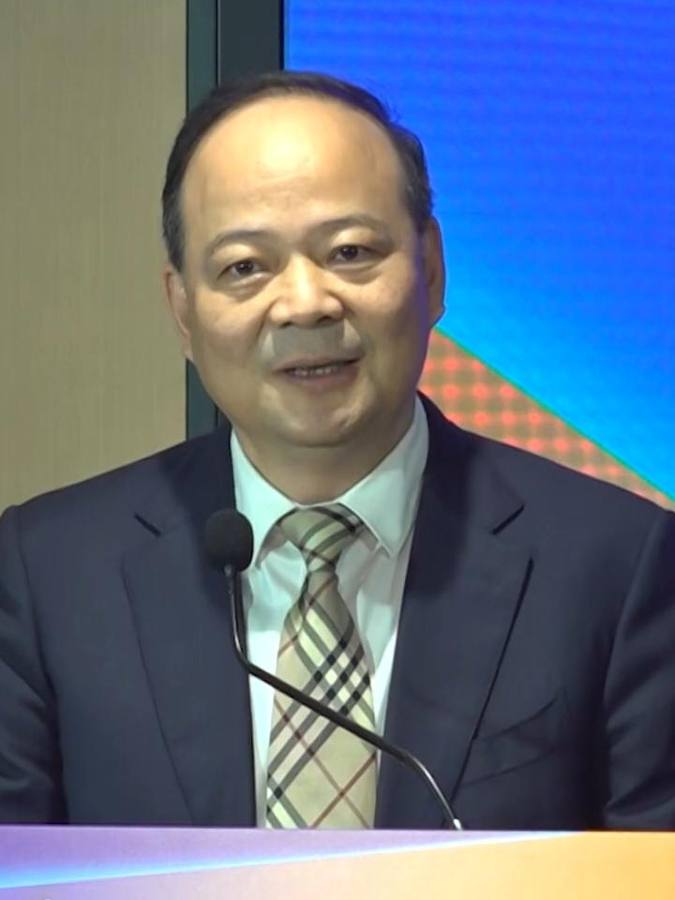
The other half of the case is the investee company's two founders. This section takes Zeng Yuqun first, conclusion first: Zeng Yuqun is not himself a red descendant, there is no factual basis for any military or political origin, and his personal level is clean. On the published record and reporting: Zeng was born in 1968 into an ordinary farming family in rural Ningde, Fujian; after graduating from Shanghai Jiao Tong University he worked for about ten years as an engineer at Dongguan Xinke Magnetics, an enterprise under TDK; and in 1999 he took part in founding ATL (Amperex Technology Limited) in Hong Kong. (Source 8) Every link of that trajectory has a published source: farming family, engineering education, engineer at a foreign-invested factory, founder - a classic engineer's path into entrepreneurship, with no link pointing to a senior-cadre family or to a post inside the system. TDK's acquisition of 100 per cent of ATL for US$100 million in 2005 is checkable in TDK's own SEC filing, which provides a regulatory document corroborating the ATL chapter. (Source 7)
The source of Zeng's wealth in CATL is likewise complete on paper, and unconnected to Boyu. His holding is indirect, through Xiamen Ruiting Investment: before the offering Ruiting held 29.23 per cent, Zeng holds 100 per cent of Ruiting, and he stands at the controlling-shareholder line of the company. (Sources 1, 2) The origin of that holding chain is founding equity - the industrial accumulation of ATL, founded in 1999, and CATL, founded in 2011, comes first; the entry of outside institutional investors comes later, and the entrants' combined proportions are far smaller than the founding holding. At the documentary level there is no landing point at all for a "white glove" narrative about Zeng Yuqun: his family origin is a matter of reporting, his shareholding a matter of the prospectus, and every link of his career is checkable - and all three are unconnected to princeling capital. The grade for Zeng therefore lands at the enterprise level only: the company he founded was bought into, at 1.18 per cent on the eve of listing, by a Boyu-affiliated fund; that fact is recorded under the company's name, not under his.
One layer of structural background concerning Zeng must be registered separately from the capital level. CATL was set up in 2011 in a localised separation from the ATL system, against the industrial-policy background of foreign-invested power batteries being excluded from the subsidy catalogue - a question of manufacturing access structure, belonging to industry background, and not any shareholder's personal arrangement. (Source 1) This piece's treatment is structural annotation only: the background's existence is recorded, and no causal connection is built between it and Boyu Phase II's entry in 2016. The entry came five years after the company's founding, on the eve of listing, and its documentary form is a same-terms subscription in a market capital increase; subsidy-catalogue admission belongs to the company's founding moment and takes the form of industry policy. The two matters intersect at neither point in time nor in documents, and to write them together would be fabrication, which this piece does not do.
This section ends by stating the checking method behind the words "clean at the personal level", so that readers can judge their weight. The personal-level check has three items: whether the family origin carries any senior-cadre record; whether the career carries any military or political post; and whether the source of the person's own shareholding carries any document of external gift or nominee holding. The three were checked one by one: the family is a Ningde farming family, on media reporting; the career is an engineer's and a founder's, with no military or political post on record; and the shareholding, held wholly through Ruiting, originates in founding equity and is fully disclosed in the prospectus. (Sources 1, 2, 8) Within the publicly checkable range, none of the three carries a princeling trace. "Nothing found" is archive language: it means checked, and not found - not unchecked. This piece's formulation stops at that level and goes no step further.
VI. Huang Shilin: A Complete Founding-Subscription Paper Chain, and One Honest Gap
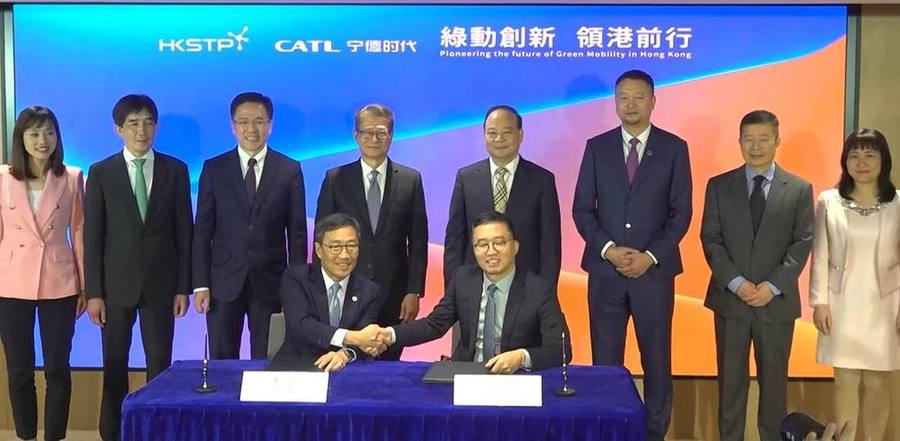
Huang Shilin, CATL's co-founder, carries the same conclusion as Zeng Yuqun: he is not himself a red descendant, there is no factual basis for any military or political origin, his personal level is clean, and any grade lands on the enterprise's capital structure, not on him personally. On the prospectus and reporting: Huang was born in 1967 in Ningde, Fujian, and graduated from Hefei University of Technology; before the offering he held 13.34 per cent directly - CATL's second-largest shareholder and its largest individual shareholder. (Source 1) In the ATL period he served as research and development director, a technical partner; his standing as CATL's co-founder, on a technical background, is the first layer of explanation for his shareholding. (Source 2) Social posts he took on after 2022, such as counsellor to the Fujian provincial government, arrived many years after the fortune was made; the sequence runs the wrong way for any background narrative, and this piece registers the point expressly: later social posts must not be run backwards as the resources behind his early entrepreneurship.
The source of Huang's shareholding is the most complete paper chain in this piece, and it is set out link by link because it answers directly the core question of any white-glove audit - where did his shares come from. Ningde Juyou Investment, an entity he controlled, entered CATL Limited by way of a capital increase of RMB 49 million; on 23 October 2015 Juyou transferred its 25 per cent holding in CATL Limited to Huang Shilin personally, at par, for RMB 50 million; when the company was converted into a joint-stock company, Huang was a promoter subscribing 25 per cent; and after successive rounds of dilution his holding stood at 13.34 per cent at prospectus filing. (Source 2) Increase, at-par transfer, promoter subscription, dilution - every link carries a date, an amount and a documentary source. The chain's nature is founding contribution plus technical-partner standing, unconnected to any gift of outside capital; and no link of it features Boyu or any princeling vehicle. The dossier's audit conclusion agrees: no relationship of any kind between Huang Shilin personally and Boyu Phase II is disclosed. (Sources 1, 2)
One gap must be registered faithfully in this section; doing so is part of this piece's discipline. Multiple media accounts agree that after university Huang returned to Ningde and worked as a civil servant, resigning at about 1991 to go to Dongguan Xinke; but the specific unit and post of that pre-entrepreneurship civil service cannot be found: the formal curriculum vitae in CATL's prospectus is listed from 2004 onwards, and published reporting says only, in general terms, "civil servant", with no source anywhere giving the unit's name or the post's title. (Sources 1, 9) This piece's treatment is to write it as it stands: the experience is recorded as "an ordinary local civil-service post in Ningde, unit and title without published source", characterised no further and extrapolated no further - he is neither written up, on the strength of the words "civil servant", as a man of inside-the-system background, nor is the gap pretended away. Which speaks louder to the source of his shares - one unfindable early posting, or a complete founding-subscription paper chain - is for readers to judge; the archive's duty is to set out both, and to mark the unfindable cell plainly empty.
The two founders, set side by side, close the section: Zeng Yuqun is an engineer from a farming family; Huang Shilin is a technical partner with a complete founding-subscription chain; one holds indirectly through a wholly owned holding company, the other holds directly in second place. Their common point is that the personal-level checks - origin, career, source of shareholding - are all clean, and all supported by documents or reliable reporting rather than by denial alone. The correct reading of the CATL case has therefore been fenced in by the two men's own files from the start: this is the story of "a princeling-linked fund bought 1.18 per cent of a company with clean founders", not the story of "this company is a princeling company". The next section looks at the other shareholders on the same table; together with Section III's three separations and this section's founders' files, it completes the evidentiary shape of the piece.
VII. Checking the Whole Table: Yunfeng in the Same Round; CMB, SDIC Innovation and Ping An on the Register
A shareholder table should not be read by staring at a single highlighted line: the composition of the other institutions on the same table supplies that line's frame of reference. This section registers, class by class, the identifiable institutional holders on the pre-IPO register. Vehicles of the CMB system held 7.32 per cent in aggregate; vehicles of the SDIC Innovation system held 2.57 per cent; and Ping An Zhiye held 0.59 per cent. (Source 1) The dossier's characterisation of the three classes is explicit: the CMB and SDIC Innovation systems are state-background professional investment platforms, and Ping An Zhiye is a professional institution - and under the rule this series applies throughout, holdings by state organs and state professional platforms do not count as princeling capital, which is recognised only in the persons of red second- or third-generation descendants or their family capital vehicles. Cut those three classes away first, and only then do Yunfeng and Boyu Phase II, among the well-known institutions remaining on the table, come up for separate examination.
Yunfeng Fund's position was written in Section II and is nailed down once more here, from the frame-of-reference angle: Shanghai Yunfeng entered in the same round of November-December 2016 as Boyu Phase II, for the same amount and the same proportion, contributing RMB 1 billion. (Source 2) Yunfeng is a fund in whose founding Ma Yun took part - a background that gives the same-round structure still more reference value: in the same round there sat side by side a market-reputation institution and a princeling-linked institution, on terms that did not differ by a hair. That structure establishes at least two things: first, that the round's pricing and terms were a uniform arrangement addressed to institutional investors; and second, that in documentary form Boyu Phase II's way of being on this table does not differ from an ordinary well-known institution's way of being there. The only difference lies one level up, in the surname background of the management institution - and that level has already been narrowed to its minimum by Section III's three separations. For any reader weighing the nature of this investment, the same-round, same-terms structure is the hardest reference object available, with more weight than any commentary.
The other face of checking the whole table is confirming that no second princeling vehicle is on it. The dossier's name-by-name check of the roughly forty-nine pre-IPO shareholders reaches this result: apart from the single Boyu Phase II line, the remaining shareholders are founding and industrial capital, state professional platforms and professional institutions, and no second princeling link was found. (Source 1) That sentence - "no second one found" - and the sentence "Boyu Phase II was found" are two faces of one and the same round of checking, and they must be published together: to print only the first would turn the case into freakish curiosity; to print only the second would leave readers supposing the table is full of links. The archive's complete shape is this: a table of about forty-nine names, one princeling-linked line, at 1.18 per cent, and every other name in its own class. It is the same standard this series applies to every audited company - what is found is written, what is not found is written as not found, and what was checked and came back clean is registered as clean.
This section ends by registering one post-listing comparison, so that readers do not confuse the time points. After CATL's listing its register changed over many rounds, and the most watched entry is Hillhouse Capital's - but that belongs to 2020, a placement after listing, and it sits on an entirely different table from this section's pre-IPO register; the separation is made in the next section. (Source 10) Before the IPO and after it, prospectus and placement announcement, are different documents, different time points and different natures; to pour a post-listing institution list back into a pre-listing audit conclusion is the commonest error in material of this kind, and this piece marks the point in advance here, before treating it head-on in the next section.
VIII. Separating the Peers: Hillhouse, Sequoia and the CITIC Industrial Fund System Did Not Enter Before the IPO
This section handles a preventive question. A reader who sees "a well-known fund appears on CATL's register" may easily generalise across all famous institutions, as though Sequoia, Hillhouse and the CITIC system had all entered before listing. The dossier's item-by-item finding is the opposite, and it must be written as the original states it: Hillhouse Capital, Sequoia and the CITIC Industrial Fund system did not enter CATL before its IPO. (Source 1) None of the three names appears anywhere in the complete table of roughly forty-nine pre-IPO shareholders. Writing "not on the table" plainly is the same archival act as writing "Boyu Phase II is on the table": the first prevents a wrong, the second prevents an omission, and both are faithful registrations of a name-by-name check.
Hillhouse's time point is the easiest to misremember, and it is nailed down on its own. Hillhouse entered CATL after the company was listed: in 2020 Hillhouse subscribed RMB 10 billion in a non-public placement, and only then became a CATL shareholder. (Source 10) The 2016 capital increase, the 2018 prospectus and the 2020 placement are three documents at three time points, and Hillhouse appears only at the third. Any account that writes Hillhouse as a pre-IPO shareholder of CATL collides head-on with the complete prospectus table; and the fact that "Hillhouse entered in 2020 with a RMB 10 billion placement" itself calibrates, in reverse, the time-point character of Boyu Phase II's investment - the true eve-of-listing entrants form a short list, and Boyu Phase II is on it, which is exactly why it merits a file; Hillhouse is not on it, and that too is registered as found.
For Sequoia and the CITIC Industrial Fund system, the dossier's registration is briefer still: no entry before the IPO, and no names in the complete prospectus table. (Source 1) This piece registers them on that basis and adds no explanation of why the two did not enter - documents can prove presence and absence, not motives. One point of naming discipline must be added for the CITIC Industrial Fund system, lest it be confused with other pieces in this series: the dossier's original wording is "the CITIC Industrial Fund system", and this piece quotes that name as written, without converting or merging it with the other CITIC-system platforms that appear in the Alibaba piece; institutional names in different pieces and different documents are each registered in their original formulation, which is itself part of the name-by-name discipline.
The peer separation's significance closes into one methodological sentence: recognising a princeling link is work done name by name, table by table and round by round, and its reverse is name-by-name work too. Who is on a company's eve-of-listing register, who is not, and who arrived only after listing - all three established, and that company's case is checked to the end. CATL's audit result finally presents a very narrow shape: among roughly forty-nine shareholders, one princeling-linked fund, groups of well-known professional institutions in the same round or on the table, several state platforms, founding holdings at the head - and three of the most commonly misreported famous institutions confirmed absent. That narrow shape is the whole context of the 1.18 per cent in this piece's title.
IX. The Finding, Closed Down: A Small Financial Stake Bought on the Eve of Listing
The piece's facts are now gathered and restated in layers, by evidentiary grade. At the A-grade document level: the CSRC-disclosed prospectus draft records Boyu Phase II holding 22,999,575 shares before the offering, or 1.18 per cent; and the Cninfo capital-history statement records that in the RMB 8 billion capital increase of November-December 2016 it contributed RMB 1 billion for 7,666,525 shares at RMB 130.4372 per share, in the same round, for the same amount and the same proportion as Shanghai Yunfeng. (Sources 1, 2) At the institutional-identity level: Boyu Capital was founded in 2010 by Jiang Zhicheng and others, on Reuters' special report; Alibaba's 2014 statement confirmed Boyu's 0.55 per cent in its own words, and Reuters confirmed Boyu's participation in Ant's two rounds - the Boyu axis's other two landing points both carry A-grade sourcing. (Sources 3, 4, 5, 6) At the personal level: Zeng Yuqun is an engineer from a Ningde farming family, Huang Shilin's shareholding carries a complete founding-subscription paper chain, and both men's personal levels are clean. (Sources 1, 2, 8, 9)
The boundary layer carries the same weight as the A-grade layer, and is restated with it: Boyu Phase II is a renminbi fund run by Boyu in cooperation with the China Development Bank system, managed by Boyu's mainland investment management company; Jiang Zhicheng himself does not appear in the fund's partner list as disclosed in the prospectus; the 1.18 per cent carries no disclosure of a board seat or of control; Hillhouse entered only in the 2020 placement, and Sequoia and the CITIC Industrial Fund system did not enter before the IPO; and the specific unit and post of Huang Shilin's pre-entrepreneurship civil service cannot be found. (Sources 1, 2, 9, 10) Every one of those boundaries is a limit on the core fact, not a weakening of it - a fact is truly preserved by an archive only when it is stated together with its boundaries. The piece's characterisation finally rests on the dossier's original sentence: a princeling fund bought 1.18 per cent of this company on the eve of its listing; it is not that this company is a princeling company.
Set back into the full panorama of the Boyu axis, this piece and the piece on Boyu Capital and Jiang Zhicheng annotate each other: Alibaba's 0.55 per cent, Ant's two financing rounds, and CATL's 1.18 per cent share one common shape across the three landing points - a financial entry, at roughly one per cent, into a leading asset of its era, on the eve of its listing. That pattern itself - rather than any single "white glove" accusation - is what this series judges most worth recording over the long term: it needs no control and no majority stake, only a seat at the table when the financing window closes. Where that seat comes from, and whether it has ever been repaid in any currency, the existing documents do not answer; this piece leaves the question on file exactly as it stands, and answers it for neither side.
One closing sentence: the CATL case is the cleanest-evidenced and the narrowest-concluded case in the whole rich-list audit. Clean, because its core fact stands independently on two regulatory documents and depends on no sourcing of any kind; narrow, because the same documents lock the conclusion inside 1.18 per cent, a management-institution link, and the absence of control. With the founders clean, the peer separations clear and the same-table frame complete - with everything that had to be cut, cut - the one line still stands in the prospectus, and that is exactly why it deserved to be written into a file of its own. This piece ends here: everything that was found is here, and everything that was not found is here too.
<!--正文结束-->
Source List
- Draft Prospectus for the Initial Public Offering and ChiNext Listing of Contemporary Amperex Technology Co., Limited, pre-disclosed by the China Securities Regulatory Commission, submitted 12 March 2018 - complete table of roughly 49 pre-IPO shareholders: Boyu Phase II (CDB-Boyu Phase II (Shanghai) Equity Investment Partnership) holding 22,999,575 shares, 1.18 per cent; Ruiting 29.23 per cent, Huang Shilin 13.34 per cent, CMB-system vehicles 7.32 per cent, SDIC Innovation-system vehicles 2.57 per cent, Ping An Zhiye 0.59 per cent; Jiang Zhicheng not present in the fund's disclosed partner list. https://www.csrc.gov.cn/csrc/c101803/c1006097/1006097/files/ - regulatory disclosure document (A-grade anchor).
- Statement on the Evolution of the Share Capital of Contemporary Amperex Technology Co., Limited, Cninfo, 22 May 2018 - the RMB 8 billion capital increase of November-December 2016: Boyu Phase II subscribed 7,666,525 shares for RMB 1 billion at RMB 130.4372 per share, in the same round, for the same amount and the same proportion as Shanghai Yunfeng; and Huang Shilin's shareholding paper chain (Juyou's RMB 49 million capital increase; the 23 October 2015 at-par transfer of 25 per cent to Huang personally for RMB 50 million; a 25 per cent promoter subscription on conversion; dilution to 13.34 per cent). https://static.cninfo.com.cn/finalpage/2018-05-22/1204979992.PDF - disclosure document (A grade).
- Reuters, "The princeling of private equity", 10 April 2014 - Boyu Capital founded in 2010, Jiang Zhicheng one of its founding partners. http://graphics.thomsonreuters.com/14/03/CHINA-PRINCELING.pdf - major-media special investigation (A grade).
- Alibaba Group official statement, 21 July 2014 (carried by Gadgets360, 22 July 2014) - confirming Boyu at 0.55 per cent, CITIC Capital at 1.1 per cent and CDB Capital at 0.47 per cent as at the end of June 2014, and denying that the company developed "on the back of connections". https://www.gadgets360.com/internet/news/alibaba-says-it-relies-on-markets-not-connections-563000 - statement by the party concerned (A grade).
- The New York Times, "Alibaba's I.P.O. Could Be a Bonanza for the Scions of Chinese Leaders", 20 July 2014 - a Boyu subsidiary's investment of about US$400 million in the September 2012 buyback transaction (excerpt archived; see the source list of the Boyu piece) - major-media investigation (A grade; its inferences denied by Alibaba).
- Reuters (Kane Wu), "Exclusive: Ant investor Boyu Capital targets $6 billion for new private equity fund - sources", 24 February 2021 - Boyu's participation in Ant's 2016 US$4.5 billion and 2018 US$14 billion financing rounds. https://www.globalbankingandfinance.com/exclusive-ant-investor-boyu-capital-targets-6-billion-for-new-private-equity-fund-sources/ - major media (A grade).
- TDK Corporation, SEC Form 6-K, 1 June 2005 - TDK's acquisition of 100 per cent of ATL for US$100 million. https://www.sec.gov/Archives/edgar/data/203383/000119163805000967/tdk200506016k.txt - regulatory filing (A grade).
- "The Largest Donation in Shanghai Jiao Tong University's History Is Born", Sina Finance, 4 December 2021 - Zeng Yuqun's Ningde farming-family origin, Shanghai Jiao Tong graduation, about ten years as an engineer at Dongguan Xinke, and his part in founding ATL in 1999. https://finance.sina.cn/2021-12-04/detail-ikyamrmy6822247.d.html - reliable reporting (B grade).
- "What Followed Ningde's 'Number Two Boss' Resigning Bare...", OFweek Lithium Battery, September 2023; and Titanium Media's August 2022 timeline reporting - Huang Shilin's return to Ningde as a civil servant and resignation about two years later (specific unit and post without source). https://libattery.ofweek.com/2023-09/ART-36000-8500-30610033.html - reliable reporting (B grade).
- "The Capital Feast Opens: Top-Tier Global Money 'Crowds Into' CATL", Yemacaijing, May 2025 - Hillhouse Capital's RMB 10 billion subscription in CATL's 2020 non-public placement (after listing). https://www.yemacaijing.com/Index/view/id/85429.html - reliable reporting (B grade).
Material Gaps (stated faithfully)
- Jiang Zhicheng's personal relation to Boyu Phase II: his name does not appear in the fund's partner list as disclosed in the prospectus; no published document covers any contribution by him to, or decision-making participation in, the fund, and the finding stops at "a Boyu-affiliated management link" - it cannot be written as Jiang Zhicheng personally holding shares directly (Source 1).
- Huang Shilin's pre-entrepreneurship civil service: the specific unit and post cannot be found - the prospectus's formal curriculum vitae is listed from 2004 onwards and media accounts say only "civil servant" in general terms; this piece has not invented them and marks the gap as it stands (Sources 1, 9).
- Detail of Boyu Phase II's partner contribution structure: the partners' actual contribution proportions, the fund's investment decision process and the course of the subscription negotiations fall outside the prospectus's disclosure scope, and no public record of them exists.
- Any return relationship between the investment and the company's operations: no document proves or disproves a causal link between this investment and CATL's access, orders or policy treatment; the subsidy catalogue is industry-structure background, and this piece builds no causality on it.
- Boyu Phase II's holding changes after listing: this piece's checking scope is the pre-IPO register and the entry round; the fund's post-listing increases, reductions and exit are outside the material scope of this piece and are not registered here.
Contact: endccpworld@proton.me