
The Deng Xiaoping Family: Positions Held, Little Empire Built
A family piece in the Red Families series. Each of Deng Xiaoping's five children held a real position inside the system, yet not one of them left behind a business empire that a court judgment or a listing prospectus can pin down. This piece checks their public CVs, business traces and latest verifiable status person by person, and tests the characterisation "positions held, little empire built" against each individual record — rather than reaching the verdict first and assembling the material afterwards.
Contents
- I. The Source of the Family: Deng Xiaoping, Zhuo Lin and Five Children
- II. Deng Lin: A Painter's Life, No Business Record
- III. Deng Pufang: Thirty-Five Years at the Disabled Persons' Federation, and Kanghua
- IV. Deng Nan: A Complete CV Inside the Science System
- V. Deng Rong: The Family Historian, and He Ping's Poly Line
- VI. Deng Zhifang: From a Quantum Physics Doctorate to Sifang and the Shougang-Linked Companies
- VII. The Third Generation (1): Deng Zhuorui, Wu Xiaohui and the Anbang Case
- VIII. The Third Generation (2): Deng Zhuoshu, Zhuo Yue and Deng Zhuodi
- IX. Testing the Characterisation: Positions Held, Little Empire Built — and the Boundary of the Evidence
- Material Gaps (stated faithfully)
- Source List
For most families in this series, the difficulty is an excess of material of mixed reliability. For the Deng Xiaoping family the difficulty is the reverse: the first generation's standing needs no proof, the second generation's positions can all be checked against official CVs — and yet the moment one asks where the money is, whose name is on the companies, and whose name appears in a judgment, the archive thins out quickly. That thinness is itself the most important fact in this piece. Rather than filling the thin places with rumour, this piece sets out, for each person, the institutions, exact dates, turning points, official and international reactions and latest verifiable status that can actually be found, so that readers can see for themselves how solid this family's place on the map of power is, and how faint its traces on the map of business are. Person by person, then, beginning at the source.
I. The Source of the Family: Deng Xiaoping, Zhuo Lin and Five Children
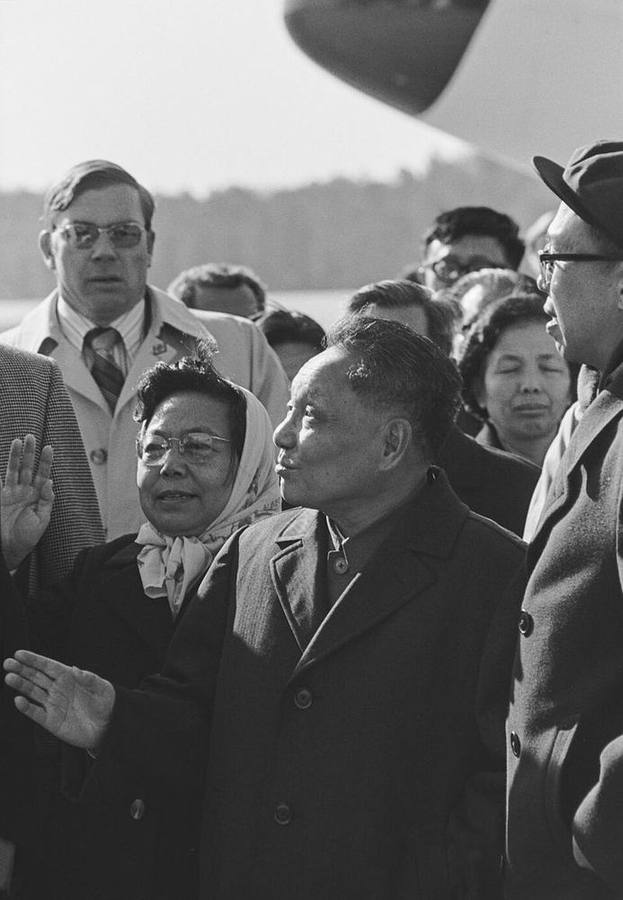
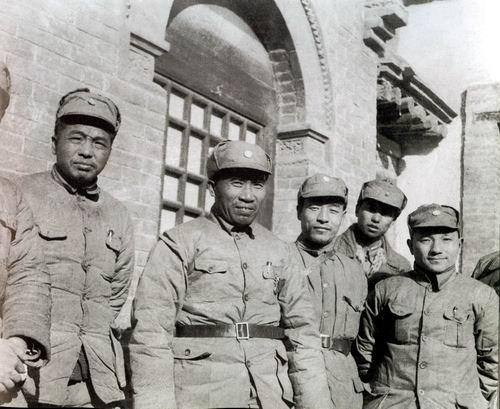
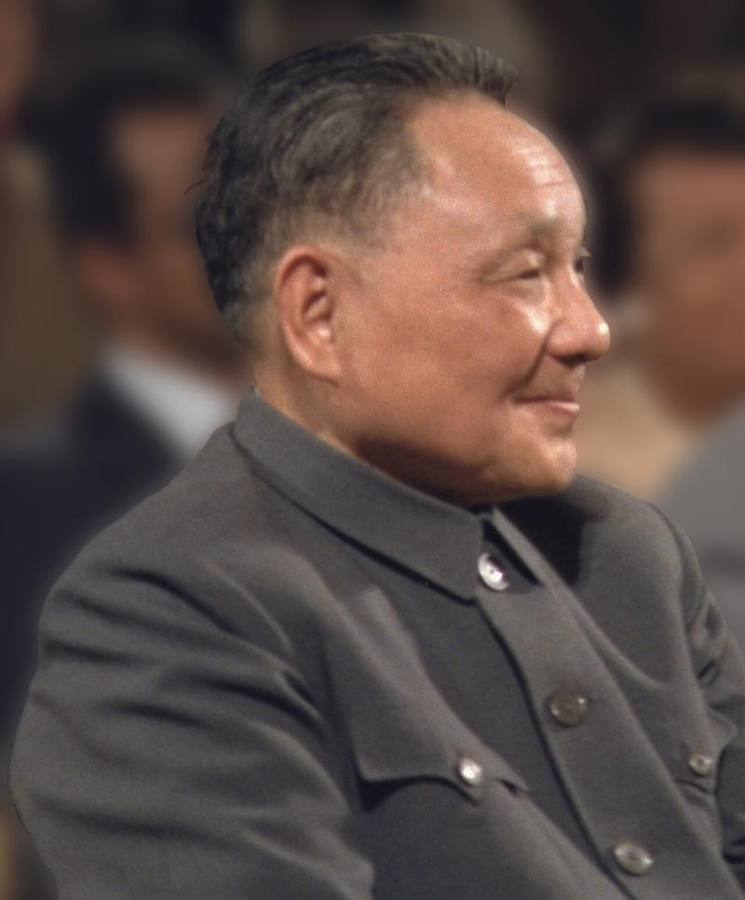
Deng Xiaoping (22 August 1904 – 19 February 1997), a native of Guang'an, Sichuan, became the Party's de facto paramount leader after 1978 and directed reform and opening up; he served as a vice chairman of the Party, a vice premier of the State Council and chairman of the Central Military Commission, among other posts, retained decisive influence after stepping down as CMC chairman in 1989, and died in Beijing on 19 February 1997; the official obituary gave his age as 93 by traditional reckoning, 92 in full years. (Source 1) His wife Zhuo Lin (6 April 1916 – 29 July 2009), born Pu Qiongying in Xuanwei, Yunnan, married Deng in Yan'an in 1939, served as an adviser to the General Office of the Central Military Commission, and died in Beijing on 29 July 2009, aged 93, leaving instructions that her corneas be donated and her ashes scattered at sea; some secondary material gives her birthday as 25 April, which conflicts with the Xinhua obituary's 6 April, and this piece follows the obituary while recording the disagreement. (Source 2)
The couple had five children: the eldest daughter Deng Lin, the eldest son Deng Pufang, the second daughter Deng Nan, the third daughter Deng Rong, and the youngest son Deng Zhifang. (Sources 7, 8) There are four grandchildren — Deng Pufang has no children: Deng Nan's daughter Deng Zhuorui, Deng Lin's son Deng Zhuoshu, Deng Rong's daughter Zhuo Yue, and Deng Zhifang's son Deng Zhuodi; according to multiple reports, the second character of each grandchild's name takes the "Zhuo" from Zhuo Lin's name. The five children's latest jointly verifiable status is a single scene: on 22 August 2024, Deng Lin, Deng Pufang, Deng Nan, Deng Rong and Deng Zhifang attended the symposium at the Great Hall of the People marking the 120th anniversary of Deng Xiaoping's birth, seated together or near the front, checkable in CCTV news footage. (Source 29) The sections below take them in birth order, with spouses treated separately within or after each section, and the third generation gathered in Sections VII and VIII.
II. Deng Lin: A Painter's Life, No Business Record
Deng Lin, the eldest daughter, was born in September 1941 in the She County area of Hebei; the exact day is disputed — different pages give 11 September and 12 September, and no official CV settles the point, so this piece records "September 1941 (the 11th and the 12th both reported)". Her public trajectory is a complete artist's CV: she graduated from the high school attached to the Central Academy of Fine Arts in 1962 and entered the Academy's Chinese painting department the same year, graduating in 1967; in 1973 she was assigned to the Beijing Painting Academy as a full-time painter and deputy head of its flower-and-bird studio; in 1986 she moved to the China Academy of Art (now the China National Academy of Painting) as a professional painter; she holds the rank of national first-class artist, is a member of the China Artists Association, a vice president of the China International Friendship Promotion Association and president of the Oriental Art Exchange Association, and receives a special State Council government allowance. (Source 9) Every segment of that CV has an institutional source, and not one segment points to running a business.
On business and wealth, the record must be written as thin as it is: there is no public record of Deng Lin operating any enterprise. Public discussion has mainly concerned the prices of her paintings and the posts of her husband Wu Jianchang. A claim that Hong Kong tycoons paid high prices for her paintings in the late 1980s appears only in political commentary, without independent corroboration; its evidentiary grade is low, and this piece registers it only as a rumour-grade lead, not as fact. On controversy: there is no public record of any official investigation, litigation or sanction directed at Deng Lin herself. Her latest verifiable status is the 22 August 2024 symposium appearance noted above. (Source 29)
Her husband Wu Jianchang (2 June 1939 – 19 November 2018) is treated separately: a native of Changsha, Hunan, he graduated in non-ferrous metallurgy from the Hengyang Mining and Metallurgy Engineering Institute in 1964 and was assigned to the Beijing General Research Institute for Non-ferrous Metals; in April 1984 he moved to the China Non-Ferrous Metals Industry Corporation as a deputy general manager; he later served as a vice minister of metallurgical industry, vice chairman and Party secretary of the China Iron and Steel Association, honorary chairman of the China Non-Ferrous Metals Industry Association and an independent director of Taiyuan Iron and Steel Stainless; he married Deng Lin in 1973. The offshore line is this section's only A-grade business anchor: the ICIJ's January 2014 "China Offshore Leaks" listed Wu Jianchang among the relatives of leaders linked to offshore companies — identified as Deng Xiaoping's son-in-law. (Sources 15, 16) The ICIJ stated at the same time that offshore companies are themselves lawful and that the files show almost nothing about what the companies were used for after incorporation; this piece therefore records only that he was "named on the ICIJ database's list of linked persons", and draws no inference about sums or purposes — the public ICIJ reporting did not itemise company names or shareholding percentages for Wu Jianchang, and those details cannot be found. A claim that he chaired the boards of three Hong Kong listed companies appears only in political commentary, without Hong Kong exchange filings to support it, and is marked unverified and not stated as fact.
III. Deng Pufang: Thirty-Five Years at the Disabled Persons' Federation, and Kanghua
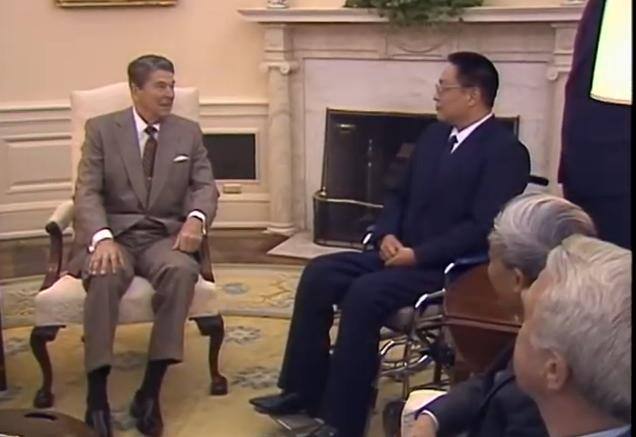
Deng Pufang, the eldest son, was born on 16 April 1944 in Guang'an, Sichuan; from 1962 to 1968 he studied nuclear physics in Peking University's Department of Technical Physics; in May 1968 he was persecuted during the Cultural Revolution and left disabled (high-level paraplegia); from 1975 to 1984 he served as a cadre in the service office of the General Staff's administration bureau. (Source 3) His career in disability work follows the official CV throughout: in 1984 he became a vice chairman of the China Welfare Fund for the Handicapped; from 1985 to 1988 he was the Fund's Party secretary and chairman; from 1988 to November 2008 he chaired the presidium of the China Disabled Persons' Federation (the Federation was founded in 1988); from 2004 to 2008 he was an executive president of the Beijing Olympic organising committee; from March 2008 to March 2013 he was a vice chairman of the 11th CPPCC National Committee, at the same time moving to honorary chairman of the Federation's presidium; he was an alternate member of the 15th and 16th Party Central Committees. (Sources 3, 4) The end of that tenure is precisely dated: on 20 September 2023 the Federation's eighth national congress closed with Yang Xiaodu as its eighth honorary chairman, and Deng Pufang stepped down as honorary chairman — closing 35 years, from 1988, at the head of the disability system in name and in fact. (Sources 5, 6) On 22 August 2024 he still attended the 120th-birthday symposium. (Source 29) His wife Gao Suning is an orthopaedic surgeon; the couple have no children; beyond that there is no public record.
On enterprises there is only the Kanghua line, and it must be written in layers. In March 1984 the China Fund for the Handicapped (later renamed the China Welfare Fund for the Handicapped) was founded. In September 1984 China Kanghua Industrial Co., Ltd. ("small Kanghua") was established with approval: the Fund invested 6 million yuan, the State Planning Commission allocated a foreign-exchange quota of 5 million US dollars, and the company enjoyed import-export rights and tax exemptions; its first chairman was Deng Pufang. Compiled figures give its profits as 9.97 million yuan in 1985, 17.56 million in 1986 and 22 million in 1987, with 8.25 million yuan actually paid over to the Fund across the three years, while figures for tax exempted differ from source to source; one compiled account says Deng Pufang resigned as small Kanghua's chairman in 1986. In March 1988 the State Council approved the China Kanghua Development Corporation ("big Kanghua"), derived from the Fund, with Tang Ke as chairman, Gao Yangwen as vice chairman and Han Boping as president; from October 1988 it was decoupled from the Fund and no longer enjoyed tax exemptions; a second account says approval came in June 1987 with registered capital of 200 million yuan and 120 million actually invested — the approval year and the capital figures are recorded side by side, neither adopted. What specific post, shareholding or signing authority Deng Pufang held in "big Kanghua" cannot be settled from any public record, and this piece draws no inference.
Kanghua's end and the controversy around it are layered the same way: on 16 August 1989 the National Audit Office published penalties against five major companies for violations, and the list included the Kanghua Development Corporation alongside CITIC, Guangda, the Industrial and Commercial Development company and the China Agricultural Development Trust. (Sources 11, 14) The dissolution is stated three ways — revoked in 1989, ordered dissolved by the State Council in February 1989, and a 7 February 1990 State Council General Office document approving the plan for merging, transferring and closing its subsidiaries — and this piece adopts the most cautious framing: "penalised by audit and set on the path to revocation in 1989, with the subsidiary wind-up plan approved in February 1990", noting that the original document has not been seen first-hand. In academic and research accounts, Wing-Chung Ho (Journal of Contemporary China, 2013) wrote that Kanghua, founded in 1984 ostensibly to operate for the disabled, became a gathering place for princeling networks; Yang Jianli and Han Lianchao (Project 2049, 2019) wrote that it used political connections to trade in approvals for profit; and Bloomberg's 2012 reporting cited 1989 protest leaflets accusing Kanghua. (Sources 13, 14, 11) All of these are accusation-grade research and reporting; no court judgment has found Kanghua or Deng Pufang personally guilty of any crime, and any citation must carry the "alleged / according to" framing. There is no public record of any judicial organ opening a case against, prosecuting or judging Deng Pufang himself; nor is there any archived point-by-point public response by him to the Kanghua controversy — recorded here, faithfully, as no public record. On wealth, there is no authoritative disclosure of Deng Pufang's personal assets; Bloomberg's 2012 investigation of the descendants of the "Eight Elders" mapped 103 descendants and spouses as a whole and published no personal wealth figure for Deng Pufang. (Sources 11, 12)
The section closes with the Kaili conclusion announced in the opening statement, now entered formally: China Kaili Industrial Co., Ltd. — public business-registration aggregations show it was founded on 12 June 1998 with registered capital of 169 million yuan and Wang Lizheng as legal representative. (Source 34) In official CVs, court and regulatory documents, and Bloomberg, Reuters, New York Times and Caixin-grade reporting, no record of any link between Kaili Industrial and Deng Pufang or Kanghua can be found — the conclusion is no public record, and no inference of a connection is drawn. If that line is ever to be used, a first-hand registration-change record or a major-media investigation must be produced first; until then, any account that writes Kaili up as a Deng Pufang-linked company is not adopted by this site.
IV. Deng Nan: A Complete CV Inside the Science System
Deng Nan, the second daughter, was born on 15 October 1945 in the dependents' compound of the 129th Division headquarters at She County, Hebei; she graduated from the girls' high school attached to Beijing Normal University in 1964 and from Peking University's physics department in 1970, and performed labour in Hanzhong, Shaanxi, during the Cultural Revolution. Her tenure record is the most complete, and the most purely technocratic, of the five children: she worked as a research intern at the Chinese Academy of Sciences' institutes of automation and of semiconductors; she was a deputy director of the State Science and Technology Commission's policy bureau and director of its social development department; in November 1991 she became a vice minister of the State Science and Technology Commission; in April 1998 she became a vice minister of science and technology; in 2003 she was elected to the 10th CPPCC; in October 2004 she became Party secretary of the China Association for Science and Technology, in November its first-ranked secretary of the secretariat, and in 2005/2006 its executive vice president; in October 2007 she was elected to the 17th Party Central Committee; in April 2011 she left her Association posts; in June 2011 she was added to the 11th CPPCC and made a vice chair of its education, science, culture, health and sports committee; and in 2013 she became a standing committee member of the 12th CPPCC and a vice chair of the same committee. An English-language page gives her tenure as vice minister of science and technology as "1998 to November 2004", which broadly matches the Chinese CV's "April 1998 appointment, October 2004 move to the Association"; the difference is one of wording, not substance.
On business and wealth, the line must be cut cleanly from the next generation's: there is no public reporting of Deng Nan operating any enterprise or of any figure for her personal wealth. All public discussion of her family's wealth arrives through her son-in-law Wu Xiaohui and Anbang Insurance (see Section VII), and the Deng family's public position has been to separate itself from Anbang. On controversy: there is no public record of any official investigation or sanction directed at Deng Nan herself. Her latest verifiable status is her attendance at the 120th-birthday symposium on 22 August 2024; no public post has been reported since. (Source 29) Her husband Zhang Hong is publicly identified only as a former director of the Academy's science and technology development bureau; the rest of his CV, any business activity and his current status are matters of no public record, and the material is extremely thin; a columnist's claim that he has been "missing for years" rests on a single commentary source with no corroboration from any official or major-media source, and this piece expressly does not adopt it as fact, noting only that the rumour exists and is unverified.
V. Deng Rong: The Family Historian, and He Ping's Poly Line
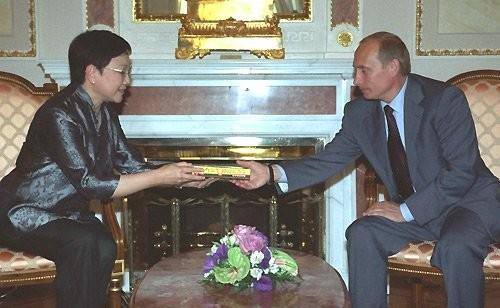
Deng Rong, the third daughter, was born on 25 January 1950 in Chongqing; her childhood name was Maomao and her pen name Xiao Rong. (Source 8) She graduated from Beijing Medical College (now Peking University Health Science Center) in 1976; in the 1980s she served as an attaché and third secretary at the Chinese embassy in the United States; she later became a deputy director of the research office of the General Office of the NPC Standing Committee (a second account gives a deputy-division post in the PLA General Political Department's organisation department; the two accounts stand side by side in this piece); she was a deputy to the 8th National People's Congress; and she has served as vice president of the China International Friendship Liaison Association, vice chair of the Sino-Russian Committee for Friendship, Peace and Development, a council member of the Chinese People's Association for Friendship with Foreign Countries and of the Soong Ching Ling Foundation, and executive chair of the Beijing International Music Festival's organising committee. (Source 8) Her books are her most solid public identity: My Father Deng Xiaoping (two volumes, 1993, Central Party Literature Press), My Father Deng Xiaoping: The Cultural Revolution Years (2000), and a three-volume reissue (2010); English-language scholarship notes that the third volume she originally planned remained unpublished as of 2024. She is the family's public "family historian" and its most frequent speaker. (Source 7) There is no public record of Deng Rong operating any enterprise; her latest verifiable status is the symposium of 22 August 2024. (Source 29)
Her husband He Ping is treated separately, because the Poly line is one of the few substantial in-law business nodes in this piece. He Ping was born in April 1946 in Jiangling, Hubei; his father He Biao was a founding major general; He Ping himself was a major general in the PLA General Staff's equipment department; he served as chairman, deputy Party secretary and general manager of the China Poly Group Corporation; in 2008 he was elected to the 11th CPPCC (economics sector); on 29 April 2010 he ceased to serve as Poly Group's chairman and as a director; he now holds the title of honorary chairman of Poly Group, and the Group's official "leadership team" page still lists his name. (Source 10) His relation to Poly's founding is stated in two accounts, which operate at different levels and do not contradict each other, and which must stand side by side: (a) the institutional-history account — in 1983 the General Staff and CITIC formed Poly Technologies to conduct equipment import and export; in 1992, with State Council and Central Military Commission approval, the China Poly Group Corporation was formed, with Wang Jun and He Ping among its founders; in March 1999 it was transferred from the military to central civilian administration; and (b) Bloomberg's 2012 investigation account — the state enterprises headed by Wang Zhen's son Wang Jun, Deng Xiaoping's son-in-law He Ping and Chen Yun's son Chen Yuan held combined assets of about 1.6 trillion US dollars in 2011, roughly a fifth of China's economic output that year. (Sources 11, 12) Note carefully: that figure is the combined assets of three enterprises, not He Ping's personal wealth, and it must never be converted into the latter in citation. For Wang Jun's line, see The Wang Zhen Family; for Chen Yuan's, see Chen Yuan and China Development Bank. On controversy: claims linking 1990s Poly arms-smuggling cases causally to He Ping's own post changes appear only in political commentary; no judicial document names He Ping himself as a defendant, so the claims are marked unverified; and there is no public record of He Ping being investigated or sentenced.
VI. Deng Zhifang: From a Quantum Physics Doctorate to Sifang and the Shougang-Linked Companies
Deng Zhifang, the youngest son, is where disputed material concentrates — and where the late-years material is thinnest. His birth year must be stated in parallel: his own entry gives 26 August 1951, while the Deng Xiaoping and Zhuo Lin entries and Wikidata give 26 August 1952; neither year can be settled from any official CV text, and this piece writes "26 August 1951/1952 (two accounts)". In 1968, aged about 16, he went to Qicun brigade in Xin County, Shanxi, for about seven years of rusticated labour; after 1975 he entered Peking University's physics department; in the early 1980s he went to the United States, to the University of Rochester in New York State, where he studied under the quantum-optics theorist Joseph Eberly and took a doctorate in quantum physics; his wife Liu Xiaoyuan took a doctorate in biophysics at the same university. The year of departure is given both as a state-sponsored departure in January 1980 and as a 1983 move with his wife; the two accounts stand side by side. Beyond her attendance at the August 2024 symposium, there is no public record concerning Liu Xiaoyuan. (Source 29)
His return and business line are graded explicitly. His first post on returning in the late 1980s: at Rong Yiren's invitation he joined CITIC Industrial Bank's parent structure — CITIC Xingye, a company directly under the China International Trust and Investment Corporation — as a deputy chief engineer, with later accounts giving deputy general manager and concurrent chief engineer, and chairman; the sequence of promotions cannot be checked against any company document and is recorded as a second-hand account. The Sifang / Shougang-linked line from 1993 is comparatively checkable: in early 1993 he formally joined the "Sifang Group" as general manager of Shanghai Sifang, and is reported second-hand to have taken over Shanghai Sifang Real Estate, Dalian Ligang Real Estate and other units; in May 1993 Shougang Concord acquired the Hong Kong listed company Kai Da Investment, renamed Shougang Concord Grand after restructuring ("Shougang Sifang"); within 1993 the Shougang-linked group completed five acquisitions in all, and compiled material records their actual controllers as Deng Zhifang and Zhou Beifang. A second-hand political essay claims Deng Zhifang, Shougang and Li Ka-shing acquired the Kai Da group for 580 million Hong Kong dollars — that figure has no corroboration in any Hong Kong exchange announcement, is of low evidentiary grade, and is recorded only as a rumour-grade figure, not a finding. Details of cheap land acquisition in Shenzhen, Shanghai and elsewhere after the 1992 southern tour appear only in anonymous political essays, without corroboration from any court, audit or major-media investigation, and this piece expressly marks them as unverified allegations, not statements of fact. (Source 33)
The boundary around the connected case is a line this section may not cross. Zhou Beifang — son of Zhou Guanwu, chairman of the Shougang Corporation, and chairman of Shougang Concord International — was placed under investigation by the Beijing procuratorate for bribery in February 1995 and on 25 October 1996 was sentenced by the Beijing No. 1 Intermediate People's Court to death with a two-year reprieve: that is a judicial fact. Multiple second-hand reports say Deng Zhifang was investigated in connection with that case and with the later "Qiongminyuan affair", and gradually faded from Shougang Sifang; the New York Times reported in 1995 that Deng Zhifang was an executive of two Hong Kong subsidiaries of Shougang, that the parent company's chairman had been forced to retire and his son arrested on unspecified "economic crimes", and that the company had been obliged to issue a statement denying that Deng Zhifang was under investigation — a statement whose wording was reserved. (Source 18) The key boundary: no court judgment or official notice has ever named Deng Zhifang himself as guilty of anything — "investigated" and "convicted" must be kept separate, and this piece does not blur them; the Qiongminyuan connection rests on a single sentence in compiled material, with nothing to expand it, and is marked thin. His status thereafter: from the late 1990s he kept an extremely low profile. A second-hand online claim that he "lives in the United States and has never returned" is directly contradicted by CCTV footage showing Deng Zhifang in Beijing at the symposium on 22 August 2024 — this piece follows the 2024 CCTV footage, rejects the claim, and records the disagreement. His current post, assets and residence are matters of no public record.
VII. The Third Generation (1): Deng Zhuorui, Wu Xiaohui and the Anbang Case
Names first, narrative second. Deng Zhuorui (also written Zhuorui / Zhuo Ran; English name Ran Anne Zhuo) is Deng Nan's daughter and the eldest granddaughter, born on 14 November 1972 in Jiangxi, childhood name Mianmian; her name is written in several variant forms across reports, and the New York Times renders it Zhuo Ran in English. She had been a colleague of Wu Xiaohui at the Shanghai Standard Infrastructure Investment Group under Chen Yi's son Chen Xiaolu, and was introduced to Wu by Chen; in 2004 she married Wu Xiaohui (his third marriage), and in the same year Wu founded Anbang Insurance and served as its chairman and general manager; they have one son. (Sources 20, 19) Wu Xiaohui was born in 1966 in Pingyang, Zhejiang (Wenzhou), and worked early on at Chen Xiaolu's company and at SAIC. In October 2014 Anbang bought New York's Waldorf Astoria hotel for 1.95 billion US dollars, drawing international attention.
The state of the marriage is one of this piece's core disagreements, set out side by side and not adjudicated: Caixin reported in February 2015 that the couple's "marital relationship has been confirmed to have ended", and cited persons close to the Deng family saying the family had held a small meeting at the end of 2014 to discuss Anbang and had confirmed that no Deng family member was connected to Anbang; (Sources 20, 21) persons close to the family told Hong Kong media the couple had not divorced but were separated, the marriage existing in name only; Wu Xiaohui and Anbang denied the reports forcefully twice, in 2015 and 2017 — in 2015 compelling the Southern Weekend to publish an apology on 1 February, and in May 2017 Anbang's legal department declaring it would sue Caixin; (Source 24) an English-language page records them as "separated in 2015"; and BBC Chinese cited an anonymous informed source saying the two signed a divorce agreement around the time Wu was taken away in 2017. To this day no civil-affairs or court document settles the legal position, and this piece simply arrays the accounts. On shareholding: the New York Times' September 2016 investigation found that at least 35 of Anbang's 39 shareholder companies, together holding over 92 per cent, could be traced to relatives of Wu Xiaohui, relatives of Zhuo Rui, or Chen Xiaolu; Chen Xiaolu told Caixin in early 2015 that he was not Anbang's actual controller and served only as an adviser. (Sources 19, 21) That is a shareholding-tracing account in reporting, not a court finding; the judgment did not list Zhuorui as a party. Zhuorui's own posts, shareholding details and current status are matters of no public record; she did not appear at the August 2024 symposium, and there is no public explanation for her absence, on which this piece does not speculate. (Source 29)
The judicial timeline of the Anbang case is the hardest A-grade anchor in the whole piece, registered day by day: in June 2017 Wu Xiaohui was taken away, and Anbang announced that he was "unable to perform his duties for personal reasons"; on 23 February 2018 the former insurance regulator announced a one-year takeover of the Anbang Group, and Wu was prosecuted; on 28 March 2018 the Shanghai No. 1 Intermediate People's Court opened Wu's trial for fund-raising fraud and embezzlement, at which Wu first denied the charges and then admitted guilt and expressed remorse; on 10 May 2018 judgment was given: 15 years for fund-raising fraud, deprivation of political rights for 4 years and confiscation of 9.5 billion yuan of personal property, and 10 years for embezzlement with confiscation of 1 billion yuan — combined, 18 years' imprisonment, deprivation of political rights for 4 years and confiscation of 10.5 billion yuan of personal property, with unlawful gains to be recovered; the court found that from 2011 Wu had used falsified financial statements and promotional materials to win regulatory approvals and public trust, unlawfully absorbing 65.2 billion yuan of funds, and had used his position to embezzle 10 billion yuan of Anbang funds. (Sources 23, 22) The bases of the sums must be kept distinct: the prosecution's indictment spoke of Anbang's property-insurer over-raising funds of more than 723.6 billion yuan — a "total sales" allegation basis — which is a different statistical level from the judgment's finding of 65.2 billion yuan unlawfully absorbed; whenever the two figures stand side by side, their bases must be stated, and they must not be conflated. (Source 21) Afterwards: Wu lodged an appeal, whose outcome has no public reporting that can be found; and in August 2024 the financial regulator approved Anbang Group and Anbang Property Insurance entering bankruptcy proceedings. The Deng family's relation to Anbang closes with the three positions side by side — the New York Times line emphasising the political connections the marriage brought and the shareholding traced to Zhuo Rui's relatives; Caixin citing persons close to the Deng family emphasising the family meeting that cut ties and that no member was connected to Anbang; and Wu and Anbang's official position denying that the marriage had ended and denying the truth of Caixin's reporting — while the court judgment itself found no Deng family member to have participated in Anbang's crimes. That is a factual boundary this account may not cross.
VIII. The Third Generation (2): Deng Zhuoshu, Zhuo Yue and Deng Zhuodi
Deng Zhuoshu (Zhuoshu), Deng Lin's son, was born on 30 April 1974, childhood name Mengmeng; he is reported in second-hand compilations to have chaired Yijian Investment Co., Ltd. and to have been involved in overseas mineral investment; on 26 March 2014 he died of myocarditis, aged about 40. His education, investment details and asset figures are matters of no public record, and no major-media profile of him exists; this section is marked thin, faithfully.
Zhuo Yue (He Zhuoyue), Deng Rong's only daughter, was born in 1980, childhood name Yangyang — and it is emphasised again: there is no public record of any marital or business relation between Zhuo Yue and Wu Xiaohui or Anbang; the correct subject of the Anbang line is her cousin Deng Zhuorui. Zhuo Yue went to the United States at 16 in 1996 for seven years of study, graduated in psychology from Wellesley College, and returned to China in 2003. (Source 32) Her charitable trajectory is checkable: from 2003 she initiated the "Jishan Carnival" charity events (hosted by the China Welfare Fund for the Handicapped), and in 2009 she founded the China Art Foundation and served as its vice chair. Her family: she and her husband have one son, who appeared publicly with her at about nine months old in 2010; her husband's name is given in one account as Feng Bo, and whether he is the same person as Feng Bo the founder of Ceyuan Ventures and an OKC shareholder has never been expressly confirmed in public reporting, so this piece does not merge the two; a claim that the family emigrated to Canada has no second source and is marked unverified. Her wealth line is one of the few hard disclosures of this generation: according to a January 2019 transaction disclosure by the Hong Kong listed Forward Holdings, Zhuo Yue held, through two British Virgin Islands companies, a combined 5.08 per cent of OKC Holdings, the parent of the OK Group; the same table lists Xu Mingxing at 23.06 per cent, Shi Jing at 13 per cent, Feng Bo at 9.86 per cent, Tang Yue at 7.89 per cent, Mai Gang also at 5.08 per cent and Shen Guojun at 1.09 per cent; OKC Holdings controls the digital-currency exchange OKCoin and the remittance network OKLink. (Sources 30, 31) Whether her holding has changed since is a matter of no public record. Her latest verifiable status: she attended the symposium on 22 August 2024, seated in the same row as Deng Zhuodi. (Source 29)
Deng Zhuodi is Deng Zhifang's son and Deng Xiaoping's only grandson. His birth year and date must be stated in parallel: a Chinese-language page gives 17 October 1986, born in the United States (while his parents were studying at Rochester), while several second-hand profiles give 1985 and one gives 1984; this piece writes "born in the United States in 1985/1986 (17 October in one account)" and adopts neither. Discussion of his citizenship has continued since his post was exposed in 2013; China has never published any citizenship document for him, and a claim that a Chinese passport was obtained for him through a Chinese embassy at the first opportunity has no official documentary support and is recorded as unverified. His education: he graduated from Peking University Law School (in 2007, in one account), then took an LL.M. at Duke University School of Law in 2008, and is unverifiably reported to have worked at the New York firm White & Case. His political trajectory is checkable in official and major-media sources: on 2 May 2013 he became a deputy county head of Pingguo County, Baise, Guangxi, in charge of development and reform, prices, government legal affairs, agriculture, poverty alleviation and major projects; in 2014 he concurrently became Party secretary of Xin'an Town, Pingguo; and on 15 March 2016 he appeared publicly as a deputy secretary of the Pingguo county Party committee and Party secretary of Xin'an Town. (Source 25) Coverage of the Pingguo appointment often linked the choice to Baise as the place where Deng Xiaoping led the 1929 Baise Uprising. His course after 2016 must be marked as thin as it is: in April 2016 he ceased to be Xin'an Town Party secretary; the new county committee leadership list issued at the county Party congress on 15 July 2016 no longer contained his name; (Source 26) in March 2017 he was reported as a council member of the ninth council of the Beijing Bridge Association; and in April 2024 Sing Tao Daily reported, from business-registry platform data, that he was a supervisor at CITIC Finance Co., Ltd., a subsidiary of the CITIC Group, with the Lianhe Zaobao morning edition carrying the report — that post rests only on Hong Kong media citing a commercial registry platform, with no CITIC official announcement to support it, and its evidentiary grade is stated accordingly. (Sources 27, 28) His formal postings between 2016 and 2024 are a matter of no public record; no official explanation for his departure exists, and all readings of it are commentary, not fact. His latest appearance was the symposium of 22 August 2024. (Source 29) Of the fourth generation, only fragments are public: the sons of Zhuorui and Wu Xiaohui, and of Zhuo Yue, appear in reporting, with no reliable public record of names or current status; Deng Zhuodi's children are a matter of no public record — this piece marks the section a blank, faithfully, and does not expand it.
IX. Testing the Characterisation: Positions Held, Little Empire Built — and the Boundary of the Evidence
Return now to this piece's characterisation, and audit it person by person. "Positions held": Deng Lin held the professional posts of painter at the national academy and national first-class artist; Deng Pufang held the Federation presidium chairmanship for 35 years and a CPPCC vice chairmanship; Deng Nan held a vice ministership of science and technology and the executive vice presidency of the science association; Deng Rong held an NPC deputyship and vice presidencies of several friendship bodies; Deng Zhifang, after his doctorate, held posts at CITIC Xingye and in the Sifang and Shougang-linked companies; and the third generation's Deng Zhuodi held a county Party deputy secretaryship — every one of them checkable in a published text, not one of them rumour. "Little empire built": among the five children, not one has a personal business empire pinned down by a court judgment, a regulatory penalty or a listed-company announcement; there is no public record of Deng Lin or Deng Rong operating an enterprise at all, and none of Deng Nan doing business; Deng Pufang's Kanghua line stops at a 1980s foundation enterprise with no court conviction; and Deng Zhifang's Shougang-linked posts are supported by compilations and contemporaneous New York Times reporting, yet no judgment has ever landed on his own name. The family's only modern financial judgment fell on an in-law, Wu Xiaohui — and the judgment itself found no Deng family member to have participated in the crime; and the family's two hardest shareholding disclosures are Zhuo Yue's 5.08 per cent of OKC Holdings (carried in reporting of a 2019 Hong Kong exchange transaction disclosure) and Wu Jianchang merely being named on the ICIJ list, with the details unfindable. That is the whole of the support for "positions held, little empire built": it is not a verdict reached in advance, but the shape that remains after the individual records are added up.
What cannot be proved is itemised in the same way: Deng Pufang's personal asset figure and his specific post and shareholding in "big Kanghua" are matters of no public record; the link between Deng Pufang and China Kaili has no public evidence and no inference is drawn; the names and shareholdings of Wu Jianchang's offshore companies are listed by the ICIJ by name only and cannot be found in detail; Deng Zhifang's posts and assets after 1997 and the details of the Qiongminyuan connection are matters of no public record; Zhang Hong's CV and status beyond the Academy bureau directorship are matters of no public record; and the investment details of Deng Zhuoshu, Zhuorui's own posts and current status, changes in Zhuo Yue's OKC holding, Deng Zhuodi's formal postings from 2016 to 2024 and his citizenship documents, the outcome of Wu Xiaohui's appeal, and everything about the fourth generation are all matters of no public record. Bloomberg's 1.6 trillion dollars is the combined assets of the enterprises headed by Wang Jun, He Ping and Chen Yuan, and is routinely converted into personal wealth in second-hand retelling; this piece has guarded against that error in citing it. Stronger accusations about this family in overseas commentary — specific wealth figures and conviction-style narratives without a judgment behind them — belong, under this series' evidence rules, to the inadmissible tier; this piece adopts none of them, noting only their form and the reason for their exclusion.
One sentence by way of conclusion. The form the Deng Xiaoping family presents in the public archive differs from the hereditary form, the hub form and the transactional form written elsewhere in this series: after the first generation left the stage, what the second generation kept were institutional and professional positions, not assets that could be conveyed; and of the third generation's two real entries into capital markets, one ended in an 18-year sentence while remaining legally cut off from the family, and the other survives only as a 5.08 per cent line in a disclosure table. Positions end with their tenures; the empire was never drawn. That is at once the footnote to this family's relative restraint, and the archive's reminder to those who come later: what cannot be found is not thereby proved not to exist — but an archive site can only write what can be found. This piece ends here: everything that could be found is here, and everything that could not be found is here too.
<!--正文结束-->
Source List
- Xinhua, Announcement to the Whole Party, the Whole Army and the People of All Nationalities (obituary of Deng Xiaoping), 1997-02-19. Archived at: https://www.cmcarchive.org/zh/events/death-of-deng-xiaoping-1997 — official obituary (A-grade).
- Xinhua, news of the death of Comrade Zhuo Lin, 2009-07-29. Carried at: https://www.guandian.cn/article/20090729/84918.html — official news agency (A-grade).
- CPPCC official website, CV of Deng Pufang, 2011. http://www.cppcc.gov.cn/2011/12/16/ARTI1513309129043558.shtml — official CV (A-grade).
- Gov.cn, Deng Pufang post page, 2008. https://www.gov.cn/gjjg/2008-03/14/content_919941.htm — official record (A-grade).
- Xinhua, closing list of the China Disabled Persons' Federation's eighth national congress, 2023-09-20. Carried at: https://www.crexpo.cn/media/news/industry/1935 — official news agency (A-grade).
- Lianhe Zaobao, Deng Xiaoping's eldest son Deng Pufang steps down as honorary chairman of the Disabled Persons' Federation, 2023-09-21. https://www.zaochenbao.com/news/china/202309/213457.html — reliable reporting (B-grade).
- China News / Sina, The Deng Xiaoping extended family, 2008-11-26. https://news.sina.cn/sa/2008-11-26/detail-ikftssap3086929.d.html — official-media-system reporting (B-grade).
- China Writers' Association website, member page for Deng Rong, 2016. http://www.chinawriter.com.cn/n1/2016/0627/c404931-28487277.html — official institution page (A-grade).
- China National Academy of Painting, artist profile (Deng Lin), 2020. http://www.cnap.org.cn/cnap/czdt/202009/1277cc10ed5841eb8f2057e8f19b0190.shtml — official institution page (A-grade).
- Poly Group official website, leadership team (He Ping: honorary chairman of the Group), consulted 2026. https://inv.poly.com.cn/poly/gywm/ldtd/A044002003Gone1.html — company official site (A-grade).
- Bloomberg News, Heirs of Mao's Comrades Rise as New Capitalist Nobility, 2012-12-27/28. Carried at: https://guanyu9.blogspot.com/2012/12/expose-reveals-ascent-to-riches-by.html — major-paper investigation (A-grade).
- Bloomberg News, the same, republished by fnvaworld, 2012-12-28. https://fnvaworld.org/chinas-princelings-build-the-wrong-kind-of-capitalism-2/ — major-paper investigation, republished (A-grade).
- Wing-Chung Ho, The New 'Comprador Class', Journal of Contemporary China 22:83, 2013. https://www.researchgate.net/publication/262965548 — academic research (B-grade).
- Yang Jianli & Han Lianchao, Regime Resilience and Civil Resistance in Post-Tiananmen China, Project 2049 Institute, 2019-06-04. http://project2049.net/wp-content/uploads/2019/06/RegimeResilience_CivilResistance_PostTiananmen_China_Yang_Han_P2049_060419-1.pdf — research report (B-grade).
- ICIJ, Leaked Records Reveal Offshore Holdings of China's Elite, 2014-01-21. https://www.icij.org/inside-icij/2014/01/chinas-elite-linked-secret-offshore-entities/ — ICIJ leak investigation (A-grade).
- The Guardian, China's princelings storing riches in Caribbean offshore haven, 2014-01-21. Carried at: https://tibet.net/chinas-princelings-storing-riches-in-caribbean-offshore-haven/ — major newspaper (A-grade).
- ICIJ, Panama Papers: China Red Nobility Offshore Dealings, 2016-04-06. https://www.icij.org/investigations/panama-papers/20160406-china-red-nobility-offshore-dealings/ — ICIJ leak investigation (A-grade).
- The New York Times, China's First Family Comes Under Growing Scrutiny, 1995 (ProQuest archive abstract). https://www.mbrl.ae/web/guest/asset-details?documentId=summon____FETCH-proquest_newspapers_4302171463 — major-paper contemporaneous reporting (A-grade).
- The New York Times, Anbang shareholding-tracing investigation, 2016-09; and the Kushner–Anbang report, 2017-01-07. Carried at: https://www.mail-archive.com/marxism@lists.csbs.utah.edu/msg20827.html — major-paper investigation (A-grade).
- Caixin, Anbang investigation and the 'marital relationship confirmed ended' report, 2015-02. Carried at: https://www.kannewyork.com/news/2015/02/02/4393.html — Caixin-grade investigation (A-grade reporting; one side of a disagreement).
- Caixin Global, The Warning Shot: How Anbang Founder Fell, 2018-04-25. https://www.caixinglobal.com/2018-04-25/the-warning-shot-how-anbang-founder-fell-101239235.html — Caixin English edition (A-grade).
- Caixin Global, An Era Ends at Anbang as Founder Sentenced to Prison, 2018-05-11. https://www.caixinglobal.com/2018-05-11/quick-take-anbang-founder-wu-xiaohui-sentenced-to-18-years-in-prison-101246873.html — Caixin English edition (A-grade).
- Xinhua / People's Daily Online English edition, Former Anbang chairman sentenced to 18 years in prison (Shanghai No. 1 Intermediate Court judgment), 2018-05-10. https://en.people.cn/n3/2018/0510/c90000-9458661.html — official release of a court judgment (A-grade anchor).
- He Qinglian, commentary on Anbang's suit against Caixin and the Southern Weekend apology, 2017-05-07. https://heqinglian.net/2017/05/07/anban-caixin/ — commentary carrying Anbang's statement (B-grade).
- China National Radio (CNR), Deng Xiaoping's grandson Deng Zhuodi becomes deputy secretary of the Pingguo county committee, Guangxi, 2016-03-19. http://m.cnr.cn/news/20160319/t20160319_521656635.html — official media (A-grade).
- Shanghai Observer (Jiefang Daily; Xinjingbao 'Political Affairs'), After Deng Zhuodi stepped down as county committee deputy secretary, 2016. https://www.shobserver.cn/wx/detail.do?id=46854 — reliable reporting (B-grade).
- Sing Tao Daily / Sina Finance, Latest news of Deng Zhuodi (supervisor at CITIC Finance), 2024-04-18 / 2024-05-23. https://finance.sina.cn/cj/2024-05-23/detail-inawemww2545546.d.html — Hong Kong media citing a business-registry platform (B-grade).
- Lianhe Zaobao morning edition, report of Deng Zhuodi as a CITIC Finance supervisor, 2024-04-19. https://www.zaochenbao.com/news/china/202404/1916416.html — reliable reporting, carried (B-grade).
- Creaders, The Deng descendants appear together (120th-birthday symposium), 2024-08-22. https://news.creaders.net/china/2024/08/22/2766112.html — reporting carrying CCTV footage (B-grade).
- ChainNews / Lingyi Finance, OK Group shareholders revealed (Forward Holdings disclosure; Zhuo Yue holding 5.08%), 2019-01-24. http://www.lianmenhu.com/blockchain-8702-1 — reporting of a Hong Kong exchange transaction disclosure (B-grade).
- Ikanchai, Behind-the-scenes shareholders of the OK Group, 2019. https://m.ikanchai.com/pcarticle/265360 — restatement of disclosure reporting (B-grade).
- Sina carrying China News Service, First photos of Deng Xiaoping's great-grandchild (Zhuo Yue and the Jishan Carnival), 2010-11-25. https://news.sina.cn/sa/2010-11-25/detail-ikmyaawa3223748.d.html — official news agency, carried (B-grade).
- Beijing Spring, The children of China's high cadres in the United States (Deng Zhifang's studies and the Sifang Group), 2006. http://beijingspring.com/c7/xw/wlwz/20061228203846.htm — second-hand compilation, leads only (lower B-grade; downgraded in the text).
- Qichacha aggregation page, business-registration information for China Kaili Industrial Co., Ltd. (founded 1998-06-12; legal representative Wang Lizheng). https://top.qcc.com/tc/aa76bdab3996.html — registration aggregation (proves Kaili's own registration only; proves no link to anyone).
- Wikipedia lead pages (cross-checking of leads only, never a sole source): the entries for Deng Xiaoping, Zhuo Lin, Deng Pufang, Deng Nan, Deng Rong, Deng Zhifang, Deng Zhuodi, He Ping, Wu Jianchang, Wu Xiaohui, China Kanghua Development Corporation and Shougang Concord, consulted November 2026. Example entry point: https://zh.wikipedia.org/wiki/%E9%82%93%E5%B0%8F%E5%B9%B3 — lead compilation (not graded on its own).
Material Gaps (stated faithfully)
- China Kaili and Deng Pufang: no public evidence can be found — official CVs, court and regulatory documents, major-paper and Caixin-grade reporting contain no record of any link; the text states only "no public evidence, no inference drawn" (see Section III, Source 34).
- Deng Pufang's personal assets and his "big Kanghua" post: no authoritative disclosure of a personal asset figure exists; his specific post, shareholding and signing authority in "big Kanghua" are matters of no public record.
- Wu Jianchang's offshore details: the ICIJ names him only; company names, shareholding percentages and purposes cannot be found in detail (Source 15).
- Deng Zhifang after 1997: post, assets and residence are matters of no public record; the Qiongminyuan connection rests on a single sentence in compiled material, with nothing to expand it.
- Zhang Hong: beyond the single account of the Academy bureau directorship, CV and current status are matters of no public record.
- Multiple third-generation blanks: Deng Zhuoshu's investment details, Zhuorui's own posts and current status, later changes in Zhuo Yue's OKC holding, official confirmation of whether Zhuo Yue's husband is the same person as Ceyuan Ventures' Feng Bo, Deng Zhuodi's formal postings from 2016 to 2024 and his citizenship documents, the outcome of Wu Xiaohui's appeal, and everything about the fourth generation are all matters of no public record.
- Unresolved date disagreements: Deng Lin's birthday (the 11th / the 12th), Deng Zhifang's birth year (1951 / 1952) and Deng Zhuodi's birth year (1985 / 1986) cannot be settled from any official CV text, and are stated side by side in the text.
Contact: endccpworld@proton.me