
Chen Yuan and China Development Bank: Fifteen Years Running the World's Largest Development Bank
The policy-bank piece of this series' state-enterprise line: after ten years at the central bank, Chen Yun's eldest son took over a policy bank with a non-performing loan ratio above thirty percent in 1998, and in fifteen years built it into an institution with more than six trillion yuan in assets that had overtaken the World Bank as the largest development finance institution on earth. The Wuhu model, local-government financing vehicles, land finance and the first shantytown-redevelopment loans — the financing machine that reshaped Chinese urbanisation — all originate in this one governor's and chairman's tenure. This piece is the companion to the Chen Yun family piece: that piece records all five children; this one digs into the CDB line alone.
Contents
- I. The Takeover: A Bank with an NPL Ratio Above Thirty Percent, 1998
- II. "Two Foundations and One Pillar" and Development Finance: Running a Policy Bank as "a Real Bank"
- III. The Wuhu Model (1998): The Source of Local-Government Financing Vehicles and Land Finance
- IV. From Urban Construction to Livelihood: The Origin of Shantytown Loans and the Expanding Map
- V. The 2008 Conversion and the Subsidiary Platforms: CDB Capital, CDB Securities, the China-Africa Fund
- VI. The World's Largest Development Finance Institution: Scale, Overseas Lending and International Reaction
- VII. Family Entanglement: The Children's Employers and the Conflict-of-Interest Questions
- VIII. Departure and Aftermath: The CPPCC Vice-Chairmanship, the Inspection, the Archway and Three Cases Separated
- IX. Public Status After CDB: The Silk Road Planning Centre, CAIFC and the Latest Checkable Record
- X. The Boundary of the Evidence: What This Piece Can and Cannot Prove
- Material Gaps (stated faithfully)
- Source List
Most pieces in this series' state-enterprise line are about a man taking the top seat of one enterprise. The weight of this piece lies not in the seat itself but in the size of the machine underneath it. When China Development Bank was founded in 1994 it was one of three policy banks, charged with medium- and long-term lending for the state's priority construction projects; when Chen Yuan took it over in 1998 it carried non-performing loans above thirty percent and was described by insiders as a lending machine that lent "on orders". Fifteen years later, when he stepped down, the bank held more than six trillion yuan in assets, its loan book had passed the World Bank's, and it stood as the largest development finance institution in the world by assets — with its loan contracts behind almost every city's investment platform, every expressway and every shantytown-redevelopment site in China. (Sources 11, 12)
Chen Yuan's identity must be fixed first: he is Chen Yun's eldest son. Chen Yun and Yu Ruomu had five children — eldest daughter Chen Weili, eldest son Chen Yuan, second daughter Chen Weihua, youngest daughter Chen Weilan and youngest son Chen Fang — a list doubly attested by the Party-history academy's family-conduct materials and by Beijing News reporting (Sources 2, 3). Chen Yun, a founder of the Party's economic administration, was called an "economic tsar" of the Mao era by foreign media; his eldest son spent twenty-five years on a purely financial career track — ten at the central bank, fifteen at CDB — and was the only member of the second generation to reach vice-national rank. This piece does not repeat the family piece's full account of the five children — see the Chen Yun family piece — it answers one question only: what happened to this bank once this man sat down inside it, and what those changes left behind in China's land, debt and cities.
| Date | Event |
|---|---|
| January 1945 | Chen Yuan born in Qingpu, Jiangsu (now Qingpu District, Shanghai), eldest son of Chen Yun (Sources 1, 3) |
| 1964–1970 | Studies automatic control at Tsinghua University; on graduation assigned as worker and technician to Factory 703 in Xinshao, Hunan, then to an aerospace-ministry plant research office (Sources 3, 4) |
| 1981 | Master's degree in business management, Graduate School of the Chinese Academy of Social Sciences (Sources 1, 3) |
| 1982–1988 | Beijing posts: Xicheng District party deputy secretary and secretary; municipal party standing committee member; head of the municipal commerce and foreign trade department; deputy head of the municipal reform commission (Source 1) |
| 1988–1998 | Vice governor and deputy party secretary of the People's Bank of China, ten years (Source 1) |
| 17 March 1994 | China Development Bank founded; Yao Zhenyan its first governor (Sources 12, 20) |
| March 1998 | Chen Yuan becomes CDB governor and party secretary (CPPCC CV dating; CDB institutional histories date his arrival to April 1998) (Source 1) |
| August 1998 | Chen proposes bank–government cooperation to Anhui; that winter CDB signs a 1.08-billion-yuan ten-year loan with Wuhu Construction Investment Co. — the "Wuhu model" is born (Sources 4, 7) |
| March 2005 | CDB makes the first 3-billion-yuan loan to Liaoning's shantytown-redevelopment programme; shantytown financing starts in Liaoning (Source 9) |
| September 2008 | Chen moves from governor to chairman and party secretary; Jiang Chaoliang becomes vice chairman and governor (Sources 1, 10) |
| 11 December 2008 | CDB is converted wholesale into China Development Bank Corporation, sponsored by the Ministry of Finance and Central Huijin; the corporation is inaugurated on 16 December (Source 13) |
| August 2009 | CDB Capital Co., Ltd. is established; CDB Securities and other subsidiaries follow (Sources 13, 18) |
| September 2012 | Chen's book Between Government and Market — China's Exploration of Development Finance is published, with a preface by central bank governor Zhou Xiaochuan (Source 3) |
| 26 December 2012 | Bloomberg publishes its investigation of the heirs of the "Eight Elders", raising conflict-of-interest questions about his children's employers; CDB replies item by item by fax (Source 11) |
| 11 March 2013 | Chen is elected a vice chairman of the 12th CPPCC National Committee; in April he leaves the CDB chairmanship and Hu Huaibang succeeds him (Sources 1, 10) |
| 17 March 2016 | The Silk Road Planning Research Center is founded in Beijing; Chen chairs its first council (Source 17) |
| 31 May 2016 | Chen becomes president of the fifth council of the China Association for International Friendly Contact (Source 22) |
| 14 March 2018 | Chen steps down as CPPCC vice chairman and retires (Source 1) |
I. The Takeover: A Bank with an NPL Ratio Above Thirty Percent, 1998
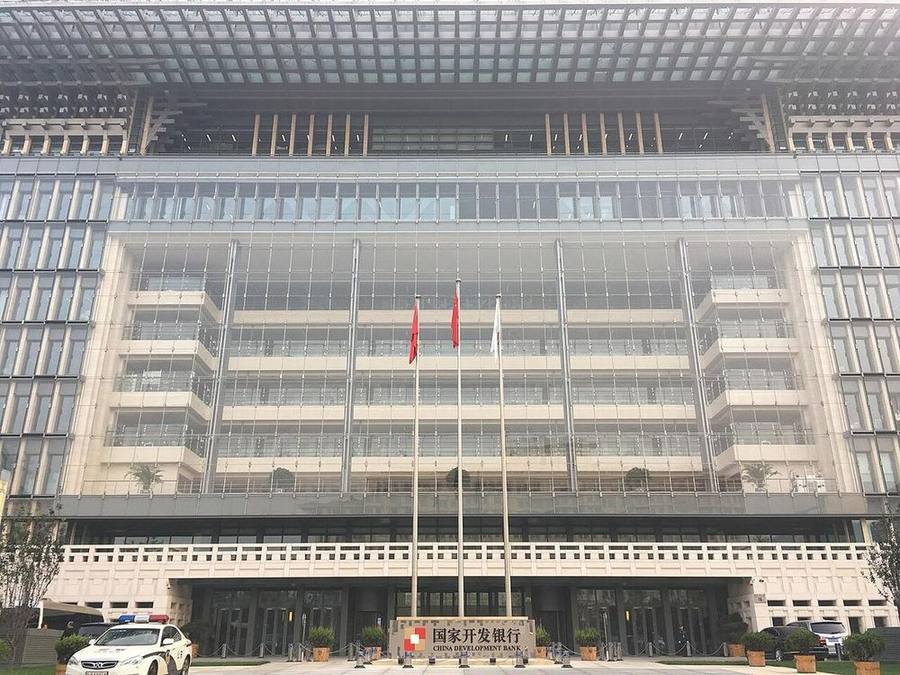
Chen Yuan's early life stood a generation away from his father's financial world. He entered Tsinghua's automatic control department in 1964 and later said his greatest ambition at the time was to be an engineer; graduating in 1970, he was assigned to a factory in Hunan as a worker and technician, moving later to a research office of an aerospace-ministry plant. After the Cultural Revolution he entered the Graduate School of the Chinese Academy of Social Sciences, taking a master's degree in economics in 1981 under establishment economists. Six years in Beijing followed, from Xicheng District party secretary to the municipal standing committee; in 1988 he entered the People's Bank of China as a vice governor and stayed ten years. One detail of that decade is worth registering: he supervised financial markets and bond business and, with his colleague Gao Jian, drove a series of bond-market innovations — the very market-based bond issuance channel on which CDB would later depend for its funding. (Sources 1, 3, 4)
In March 1998 Chen Yuan became CDB's governor and party secretary. By his own account, Premier Zhu Rongji spoke with him and asked him to go to CDB and "get the country's key infrastructure construction done properly" (Source 3). What he inherited is described consistently in CDB's own institutional histories and multiple reports: a bank founded in 1994 that had taken on masses of policy lending with lax management — loans "on orders" and loans "on connections" were endemic, and the non-performing loan ratio stood at 32.6 percent, the figure used jointly by Beijing News and Tsinghua alumni materials (Sources 3, 5). Some CV compilations use a higher figure of around 40 percent from a different statistical date; this piece uses 32.6 percent and registers the divergence. A case study of CDB by the London School of Economics and Columbia University researchers puts it more starkly: in its first four years the bank came close to insolvency (Source 20). A policy bank in that condition had neither a commercial bank's risk discipline nor the finance ministry's budget discipline — only the word "policy" as a fig leaf for bad loans.
Chen's answer was to set rules first. He declared that CDB must "become a real bank, not a government lending machine", and spent the following years delivering that sentence through credit-system reform: professionalised appraisal, project approval only by collective vote of independent committee members, and a governor who held a veto but no power to designate projects — an institutional detail documented in Peking University National School of Development research on development finance (Source 19). By about 2002 CDB's main operating indicators had approached or reached the level of advanced international banks; the NPL ratio was pressed below one percent and held there, and Asia Finance named CDB "Asia's most profitable bank" in both 2003 and 2004 (Sources 3, 19). In archival terms this is the least contested segment of Chen's tenure: the numbers have published provenance and the institutions have research literature behind them. What critics attack was never this segment — it is the thing that grew alongside it: the scale and manner of this bank's lending.
II. "Two Foundations and One Pillar" and Development Finance: Running a Policy Bank as "a Real Bank"
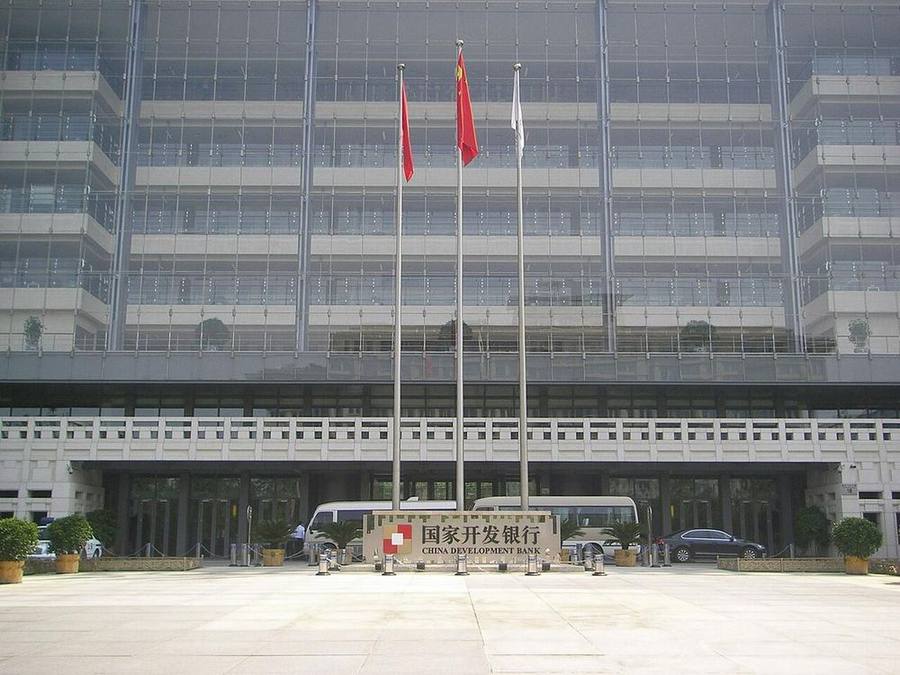
CDB's statutory mission at its founding was compressed into six Chinese words — "two foundations and one pillar": infrastructure, basic industries and pillar industries. Those words confined its lending to the sectors commercial banks would not touch because of long cycles and low returns — power stations, railways, highways, water works, strategic oil reserves. Under Chen Yuan, CDB's project list reads like a register of national engineering: the state petroleum reserve, the South–North Water Transfer, the Beijing Olympics and the Shanghai Expo all appear on it (Source 5). To understand this piece, the machine's basic construction must be clear: CDB takes no public deposits; it funds itself by issuing financial bonds in the interbank market, bonds that carry sovereign credit; it lends the proceeds in the directions "policy" dictates, and uses market-style appraisal and recovery discipline to make sure the bonds can be repaid. Chen gave this construction a name — "development finance" — and systematised it in his 2012 book Between Government and Market: between government and market there exists a method that uses the government's organisational strength to enhance credit while financing and recovering through the market (Sources 3, 7).
The heart of the theory, in his own words, is "converting the government's organisational advantage into a credit advantage". In operational language: a bank facing individual urban projects finds no collateral and no cash flow, so the loans cannot be made; but if a local government bundles the projects, designates a platform to borrow and repay as one, and stands behind repayment with fiscal resources and land, credit is created out of organisation. The Communist Party's own institutional history of CDB states the turn plainly: in 1998 Chen proposed the new idea of running a policy bank "within a market environment and a banking framework", and three successive credit reforms followed, gradually opening the road of development finance (Source 6). The positive achievement of that road is real: China in the late 1990s did face an enormous market failure in infrastructure finance, and CDB filled it. The cost is equally real and equally on the public record: once repayment ultimately rests on land-sale revenue, the bank's asset quality is tied to land prices by a single rope — which is the story of the next section, the Wuhu model.
The year 2003 marks a turn in the business map. From that year CDB moved into livelihood fields: with the World Bank it launched a sustainable micro- and small-enterprise lending project, shifting from a single pole of large "two foundations and one pillar" projects toward small loans supporting people's livelihoods and incomes (Source 21). Agriculture, county economies, small firms and student loans entered its book in succession. In the official narrative this turn is development finance fulfilling its meaning; in the archive it marks something else: the bank's boundary was no longer drawn by the six words of its founding mission, but by its own reading of "national strategy". A bank with trillions in assets had acquired the space to define its own scope — the institutional premise of the expansion of the following decade.
III. The Wuhu Model (1998): The Source of Local-Government Financing Vehicles and Land Finance
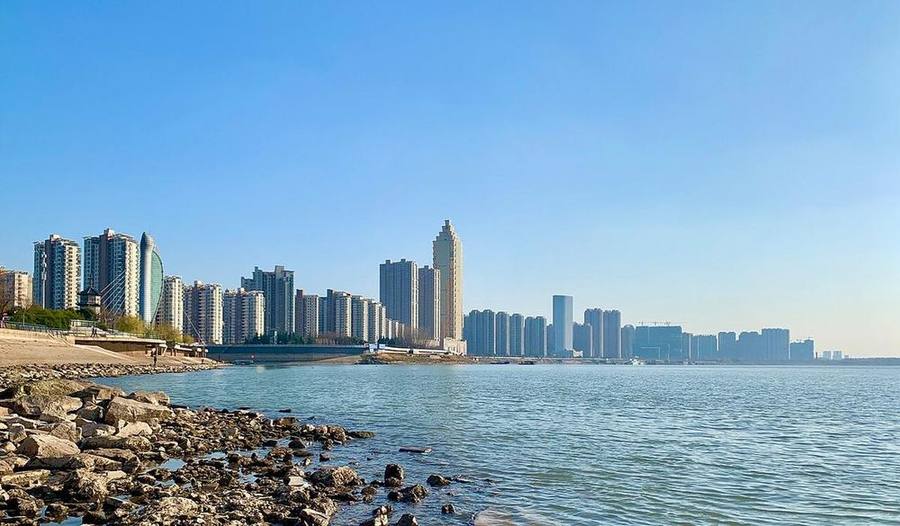
In August 1998, less than half a year into the job, Chen Yuan proposed to Anhui governor Hui Liangyu that CDB's financing strength be combined with local government's organisational strength. That winter CDB signed a ten-year loan agreement of 1.08 billion yuan with Wuhu Construction Investment Co. (the Tsinghua interview materials give 1.08 billion; CV compilations mostly give 1 billion — this piece follows the Tsinghua figure and registers the divergence), covering six Wuhu infrastructure projects, with the city's finances guaranteeing the loan and standing behind repayment in full (Sources 4, 7). It was the Chinese banking system's first entry into urban construction finance. Chen himself summarised its operating structure: urban projects are bundled; a financing platform designated by the municipal government borrows and repays as a single legal borrower; and the finances establish a debt-service reserve fund as the repayment source (Source 7).
The structure soon had a name — the "Wuhu model" — and became the principal financing form of Chinese urbanisation. Its speed of replication is visible in CDB's own telling: after Wuhu came the Tianjin urban-infrastructure financing platform, Shanghai Chengtou, Jiushi and other cooperation models, forming a full process of "government entry — development-finance incubation — market exit" (Source 5). Bloomberg journalists Henry Sanderson and Michael Forsythe, in their book China's Superbank, reconstructed the model's operating diagram from CDB's own presentation materials: the single platform designated by the city, Wuhu Construction Investment, was both borrower and land bank — land expropriation, the transfer of land rights and land-sale revenue were the machine's core components, and the income produced as land prices rose formed the second repayment source (Source 12). Wuhu Construction Investment's assets grew from 319 million yuan to 21.4 billion, and among the companies it held was Chery Automobile, later a global exporter (Source 12). The species known as the local-government financing vehicle — the city investment platform — was born here, and within a decade had reproduced into every prefecture and county in the country.
Criticism of the Wuhu model appeared in step with its spread and is equally on the public record. It has three layers. First, project quality control: credit was built not on project cash flow but on government credit and land expectations, and no appraisal discipline, however strict, can appraise away the risk of falling land prices. Second, aggressive local debt expansion: the platform structure of unified borrowing and repayment naturally encourages local governments to spend future land revenue in advance. Third, dependence on land sales for repayment pushed land expropriation to the front end of the financial chain — a Cato Institute commentary notes that local financing platforms relied on land sales and expropriation, and that payment difficulties surfaced after land prices fell in 2011 (Source 19 — cited as commentary and analysis, not as a judicial or audit finding). Chen's and CDB's public reply never varied in substance: the government's organisational advantage is converted into credit advantage, while every loan's credit structure is strictly examined (Source 7). This piece registers the three layers — operating facts, criticism, defence — separately and merges none of them into a verdict. But one thing the archive can confirm: the local financing-platform debt that ballooned after 2008 in response to the financial crisis had its institutional prototype, and its first contract, in Wuhu in 1998.
IV. From Urban Construction to Livelihood: The Origin of Shantytown Loans and the Expanding Map
If the Wuhu model answered the question "with what does a city borrow?", shantytown-redevelopment lending answered the same question in its livelihood version — and its origin, too, falls within Chen Yuan's tenure, at a precise time and place. In early 2005 Liaoning province launched China's first large-scale shantytown redevelopment; in March that year CDB made the first loan of 3 billion yuan to Liaoning's programme (Source 9). Yicai's retrospective gives the weight of that money: over the following four years, in the single city of Fushun, CDB provided 2.818 billion yuan in low-interest loans, 57.96 percent of the city's direct shantytown investment, and local officials said plainly that without the loan the programme could not have started at all (Source 9). Liaoning thereby became the starting ground of CDB's shantytown support, and its method — government-led, long-term bank loans, costs shared among finances and residents — became the template for national shantytown financing (Source 8).
The time boundary of this thread must be drawn clearly, because its largest part does not belong to Chen Yuan's tenure: nationwide shantytown redevelopment expanded after 2008; in 2013 the State Council issued its opinion accelerating the work; in 2014 the central bank created Pledged Supplementary Lending (PSL) to supply long-term funds and CDB set up a dedicated housing-finance division — all of this after Chen left in April 2013. By the end of the 13th Five-Year Plan period CDB had made a cumulative 4.54 trillion yuan in shantytown loans, helping some one hundred million people move "out of shanties and into buildings" (Source 8). Of that total, what belongs to Chen's tenure is the first phase, from Liaoning in 2005 to 2013. This piece credits the origin to Chen and the explosion of scale to the institution's continuation, and does not conflate the two — which is precisely the difference between an archive and a eulogy.
Alongside shantytown lending ran the expansion of the whole business map. Beyond energy, transport, agriculture, water and industry, CDB's loans entered student aid, health care and county economies — fields no bank had been willing to fund long-term. Its overseas business spread in parallel: financing for Chinese firms such as Huawei "going out", a Hong Kong branch, and the first renminbi bonds issued in Hong Kong, making it a pioneer of the offshore renminbi market (Source 7). By the end of Chen's tenure CDB no longer described itself as a "policy bank" but as an integrated financial group combining investment, lending, bonds, leasing and securities. The next section, on the conversion and the subsidiaries, is that group's legal shell.
V. The 2008 Conversion and the Subsidiary Platforms: CDB Capital, CDB Securities, the China-Africa Fund
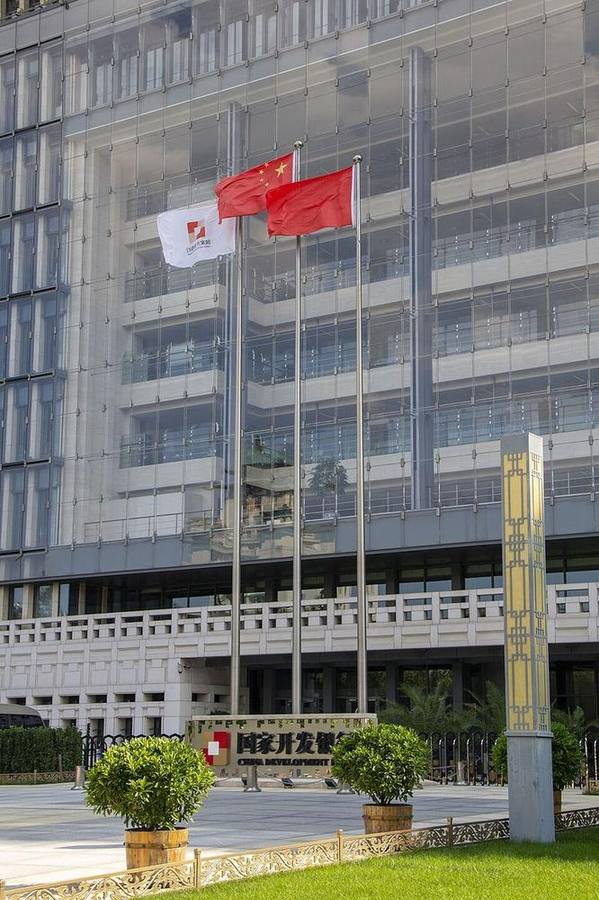
The year 2008 is the watershed of CDB's institutional form. In September Chen Yuan moved from governor to chairman and party secretary, with Jiang Chaoliang as vice chairman and governor; on 11 December, with State Council approval, CDB was converted wholesale into China Development Bank Corporation, sponsored jointly by the Ministry of Finance and Central Huijin Investment, and the corporation was formally inaugurated on 16 December (Sources 1, 13). The conversion was widely read at the time as a policy bank turning commercial; whether that reading was right has its own sequel — in March 2015 the State Council redefined CDB's positioning as a "development finance institution", neither a pure policy bank nor a commercial bank, but the institutionalisation of Chen's own "between government and market" theory. That positioning dispute ran for seven years; it begins with the 2008 conversion and ends after Chen's departure, and this piece registers the timeline without ruling for either side (Sources 12, 20).
After the conversion CDB quickly grew a ring of subsidiary platforms. In August 2009 CDB Capital Co., Ltd. was established as a wholly owned subsidiary for equity investment, with registered capital reaching 77.475 billion yuan in later annual reports; CDB Securities followed, taking over the former investment-banking business; a leasing platform, CDB Financial Leasing, was assembled; and the China-Africa Development Fund — set up under CDB's leadership as early as 2007 — became the main channel for investment into Africa. Chen himself summarised the pattern in interviews as a "one-plus-two" architecture and integrated operations across "investment, lending, bonds, leasing and securities" (Sources 21, 13). One transaction among the subsidiaries deserves separate registration: in 2012 CDB Capital invested in Alibaba together with China Investment Corporation — the same time-and-space background as the transaction structure in this series' platform flagship, the Boyu Capital piece: CDB Capital was the state team's direct-investment platform, Boyu a dollar fund, and the two capital channels appeared simultaneously in China's internet consolidation of 2012. This piece registers only CDB Capital's published investment and does not pursue the deal's details, which belong to the platform piece.
The subsidiary system matters for understanding the Chen era because it changed the shape of the bank's power: the governor's (chairman's) authority expanded from "lending" to "lending plus shareholding plus underwriting plus leasing", and the bank became a shareholder of the enterprises it served. Development-finance theory had a ready account of this — equity investment as a means of incubating markets. The critics' question followed at once: when one bank is at once an enterprise's creditor and shareholder, at once the executor of the rules and a participant in the market, who draws the line around conflicts of interest? That question returns in the next section's discussion of scale, and in Section VII it lands, in its sharpest form, on Chen Yuan's own family.
VI. The World's Largest Development Finance Institution: Scale, Overseas Lending and International Reaction
Scale first, with the figures registered in the terms the published record gives them. When Chen Yuan took over in 1998, CDB's total assets stood at about 381.1 billion yuan (CV-compilation figure); by 2011–2012, around his departure, total assets exceeded six trillion yuan and the loan book had passed the World Bank's (Sources 11, 12). Bloomberg's 2012 investigation offered a more intuitive juxtaposition: the state enterprises headed by just three men — Chen Yuan, Wang Zhen's son Wang Jun, and Deng Xiaoping's son-in-law He Ping — held combined assets of about 1.6 trillion US dollars in 2011 (Source 11). Wang Jun's CITIC, Poly and Hong Kong-listed lines are documented in The Wang Zhen Family. The NPL ratio, meanwhile, fell from 32.6 percent at the takeover to below one percent for many consecutive years (Source 3). The statistical bases of these figures — total assets versus loan balance, and the exact dates — differ somewhat between reports, so this piece treats them as the reports' own summarised characterisations, not as audited numbers. The order of magnitude itself is not in dispute: a policy bank founded only in 1994 became, within fifteen years, the largest single development finance institution in the world — a growth rate without precedent in the century-long or decades-long histories of the World Bank, Germany's KfW or the European Investment Bank.
The other face of scale was overseas. Under Chen Yuan, CDB's overseas lending grew from scattered projects into a system: resource-linked loans across Latin America and Africa, credit lines in the tens of billions of dollars for China's telecom-equipment champions to support their global bids, and equity investment channelled through the China-Africa Development Fund (Source 12). Sanderson and Forsythe's book places the bank as the "engine room" of China's state-led development model: at home the financing engine of urbanisation; abroad, an alternative source of finance that attached no political conditions but did attach equipment-purchase and resource-repayment terms (Source 12). International reaction was therefore double-sided. On one side, development-finance scholarship took CDB as the leading specimen of the revival of national development banks — case studies from SOAS and Columbia University alike take CDB as their object, discussing how national development banks came to hold a quarter of global banking assets, with CDB the largest of them (Source 20). On the other side, critics observe that the local debt and land dependence the model left at home, and the resource-collateralised lending it left abroad, are two faces of a single risk appetite. This piece records both sides.
Honours and positioning arrived together at the tenure's end: in the 2008 selection of "Thirty People Who Influenced Thirty Years of China's Reform", Chen Yuan was the only figure chosen from finance; in September 2012 his book appeared with a preface by central bank governor Zhou Xiaochuan (Source 3). In December the same year, Bloomberg's investigation of the heirs of the Eight Elders made him one of its core specimens, under a headline pointing at a "new capitalist nobility" (Source 11). The same man, in the same year, crowned by the official narrative as a reformer and dissected by international media as a specimen of red aristocracy — that juxtaposition is itself the best entry point to Chen Yuan's public image, and the starting point of the next section.
VII. Family Entanglement: The Children's Employers and the Conflict-of-Interest Questions
This section is the interface with the Chen Yun family piece: where the family piece gives Chen Yuan only a summary treatment, this section expands the part that touches CDB directly. Chen Yuan has two children in the reliable public record — son Chen Xiaoxin (Charles Chen) and daughter Chen Xiaodan (Sabrina Chen) — and almost everything known of their careers comes from Bloomberg's December 2012 investigation, written from school records, company documents and interviews (Source 11). Their trajectories first: Chen Xiaoxin attended Concord Academy in Massachusetts, Cornell University and Stanford's business school, worked at Citigroup in Hong Kong, and then joined the private-equity firm Abax Global Capital. Chen Xiaodan attended Tabor Academy, Duke University and Harvard Business School (graduating in 2012), worked at Morgan Stanley in New York, and in 2012 was hired by the European private-equity firm Permira to work in Hong Kong (Source 11).
Bloomberg's questions were not about the children's schooling or hiring as such, but about two moments of head-on collision with CDB. First: in the 2011 take-private of Harbin Electric, Abax participated in part of the financing, Chen Xiaoxin was a director of several entities connected with the deal, and a loan of about 400 million US dollars was provided by CDB; an investor shorting the related stock told Bloomberg that had he known of Abax's family connection to CDB he would have bet the other way, and that the connection "should have been disclosed". Second: Permira had, the year before, signed a partnership agreement with CDB to look jointly for investment opportunities in China and support Chinese companies expanding into Europe — and Chen Xiaodan then joined Permira in Hong Kong. The two questions are of one kind: the bank their father ran was the counterparty or partner of the children's employers (Source 11).
The most important part of this section is the replies, because this is one of the rare complete "question-and-reply" loops in this series; the replies are reproduced as given, without adjudication. Abax partner Donald Yang declined to comment; Harbin Electric did not reply to Bloomberg's email; the US Securities and Exchange Commission declined to comment; Chen Xiaoxin himself did not reply to a message left at his Beijing home. CDB replied to Bloomberg by fax that Chen Xiaoxin had already left Abax and had never participated in business constituting a conflict of interest. Permira's London spokesman replied by email that Chen Xiaodan's employment "did not constitute a conflict of interest" and that if a conflict arose the firm would manage it in investors' best interests. CDB further replied by fax dated 14 December 2012 that it had not yet done any business with Permira and that Chen Xiaodan, "having been in the job only a month, could not possibly have participated in activities constituting a conflict of interest"; Chen Xiaodan herself did not return calls to her office (Source 11). After the replies, no follow-up investigation and no regulatory conclusion appeared in the public record — the material stops in 2012. Any text that writes this section as "benefit transfer established" exceeds the public evidence; equally, any text that deletes the questions and keeps only the denials is not an archive. This piece keeps both.
One earlier record, different in grade and kind, is registered separately: Bloomberg reported that around 1989, when Chen Xiaoxin went to study in the United States, his father — then a central bank vice governor — sought help with a visa and a boarding-school place through Douglas Paal, the National Security Council's Asia official at the White House; Paal confirmed on the record to Bloomberg that he agreed to help and contacted Ambassador James Lilley, who warned that the matter would cause resentment among the embassy's Chinese staff (Source 11). It is one of the few third-generation items with a named participant's testimony, but it remains a single report, and this piece cites it in the form "according to Bloomberg's 2012 reporting, with Paal interviewed on the record". Chen Yuan's children's current posts, assets, spouses and nationalities are matters of no reliable public record; the Chinese Wikipedia infobox claim of "three sons and one daughter" leaves a gap against Bloomberg's two traced children, and if further children exist they too are of no public record. This piece does not fill the gap.
VIII. Departure and Aftermath: The CPPCC Vice-Chairmanship, the Inspection, the Archway and Three Cases Separated
On 11 March 2013 Chen Yuan was elected a vice chairman of the 12th CPPCC National Committee, reaching vice-national rank; in April he left the CDB chairmanship and Hu Huaibang succeeded him (Sources 1, 10). The official trajectory of his departure is the normal announcement of age and rotation. A widely circulated inference attached itself to the departure: after Bo Xilai's fall in 2012, the Financial Times discussed the scale of CDB lending to Chongqing's local financing platforms, and commentary built on this to infer that Chen was "the money man behind the Chongqing model" and that his exit was connected to a Chongqing ledger. This piece's checking conclusion is: no complete verifiable text of the Financial Times item was found, no official document links Chen's departure to Chongqing lending, and the specific Chongqing platform balances in circulation (such as CDB holding 25 percent of the total) come from commentary citation without original statistics — the claim is registered as commentary inference, not fact (see Material Gaps). A related sequel: in April 2013 some media reported Chen would represent China in preparing the BRICS development bank; he ultimately took no post at that bank. The Paper explained that China had not held the dominant position in the preparations, while some foreign media offered the Chongqing reading above — the two explanations are registered side by side, and this piece chooses neither (Source 10).
Three things that happened to CDB after his departure are routinely spliced onto Chen Yuan's name by partisan media; this piece separates them one by one. First, the inspection and the archway: in 2015 a central inspection covered CDB, and on 27 February 2016 the ceremonial archway before CDB's headquarters was demolished overnight; CDB's public explanation was rectification in accordance with the inspection group's feedback and the unified streetscape and lighting requirements along Chang'an Avenue. Only these two points are verifiable: the inspection came after Chen's departure, and CDB demolished the archway as a rectification. The claims that the archway was Chen's personal symbol and the inspection aimed at him come from Hong Kong and partisan-media retelling, with no inspection-feedback text behind them, and are not adopted. Second, the Wang Yi case: Wang Yi, a CDB vice governor from 1999 whose tenure overlapped Chen's, was sentenced on 15 April 2010 by Beijing's No. 1 Intermediate Court to death with a two-year reprieve for taking 11.96 million yuan in bribes — neither the judgment nor the notices mention Chen Yuan (Source 23). Third, the Yao Zhongmin case: Yao, CDB's former deputy party secretary and supervisory board chairman, was found by the National Audit Office to have used loan business to benefit relatives between 2005 and 2014 (Source 16), and on 4 August 2017 Baoding Intermediate Court sentenced him to fourteen years and a 3.5-million-yuan fine for taking 36.19 million yuan (Source 14) — Yao's service spanned both Chen's tenure and his successor's, and the judgment likewise does not mention Chen Yuan. One timeline error must be corrected expressly: Hu Huaibang, sentenced to life imprisonment on 7 January 2021 for taking 85.52 million yuan (Source 15), was Chen Yuan's successor, not his subordinate; writing the Hu case as "a Chen-era subordinate falling" misplaces a succession as a hierarchy, and this piece expressly does not.
This section's conclusion is one sentence, and it must stand as written: no reliable published reporting accuses Chen Yuan himself of taking bribes, being placed under investigation or being convicted; this family's controversies lie entirely at the institutional level (the CDB model) and the third-generation level (the conflict-of-interest questions), and writing subordinates' or a successor's cases as Chen's own involvement is a splicing technique of partisan media, not an archive.
IX. Public Status After CDB: The Silk Road Planning Centre, CAIFC and the Latest Checkable Record
Chen Yuan's public posts after CDB run along three lines, each with official or institutional records. The first is the CPPCC vice-chairmanship (11 March 2013 – 14 March 2018), during which he spoke publicly and repeatedly on government–business relations and the private economy, writing in 2016 of a new type of government–business relationship summed up in the two characters "closeness" and "cleanliness" (Source 3). In the list of the 13th CPPCC National Committee published in January 2018, Chen Yuan was absent, together with a group of red descendants including Li Xiaolin, Deng Nan and Zhu Yanlai; Singapore's Lianhe Zaobao analysed the omissions as a signal of the leadership "reducing political privilege" — the omission is fact, the "signal" is the newspaper's commentary, and this piece registers them separately (Source 24). On 14 March 2018 Chen stepped down as vice chairman and retired, aged 73 (Source 1).
The second line is the Silk Road Planning Research Center. Founded in Beijing on 17 March 2016, supervised by the CPPCC general office and co-sponsored by CDB, Tsinghua University, the Silk Road Fund and others to serve Belt and Road research, it elected Chen Yuan chairman of its first council (Source 17). This line has not broken: the Center's official website, at its tenth anniversary in 2026, still styles Chen its founding chairman and carries an interview with him — the most recent checkable record of his public identity available to this piece at drafting (Source 17). The third line is the China Association for International Friendly Contact: from 31 May 2016 Chen has been president of its fifth council, and the association's website carries a dedicated page for him (Source 22). Concerning CAIFC, the US–China Economic and Security Review Commission's 2018 report describes the association as an organisation with a dual role in intelligence collection and influence activities — that is the characterisation of a US body; no itemised public reply by Chen or the association was found in this checking, and this piece registers it only in the form "the US report describes it thus", not as this site's conclusion (Source 22).
The latest checkable status, gathered: Chen Yuan was born in January 1945 and is 81 in 2026; no new official post has been announced since his 2018 retirement; his public appearances centre on the Silk Road Planning Research Center and CAIFC; and there is no public record of investigation, discipline or involvement in any case. His spouse's name and the circumstances of any other children are recorded in no reliable official or mainstream source — the Chinese Wikipedia "family" section's details about two wives rest on a single source without independent corroboration and are placed in Material Gaps, not stated as fact. In 2026 a US student newspaper raised the conjecture that a Stanford donor named "Chen Yuan" was "most likely" this Chen Yuan; the Hoover Institution publicly stated the report had identified the wrong person and demanded a retraction — the donor's identity remains unconfirmed, and this piece registers only that the dispute exists, without assigning the donation to Chen Yuan (see the two-sided account in the Chen Yun family piece, Section IV).
X. The Boundary of the Evidence: What This Piece Can and Cannot Prove
What can be proved, gathered: Chen Yuan, eldest son of Chen Yun, born January 1945; vice governor of the People's Bank of China, 1988–1998; took over CDB as governor in March 1998, when its NPL ratio stood at 32.6 percent (with a divergent figure of about 40 percent in some compilations); on his watch the development-finance line was established within the "two foundations and one pillar" framework; in August 1998 he created the Wuhu model (a 1.08-billion-yuan ten-year loan, fiscal backing, platform borrowing and repayment as one), from which local financing vehicles and land finance descend; in March 2005 CDB made Liaoning's first 3-billion-yuan shantytown loan, and shantytown financing began in Liaoning; in September 2008 he became chairman, on 11 December 2008 CDB was converted into a joint-stock corporation, and from August 2009 CDB Capital, CDB Securities and the other subsidiary platforms were established in succession; on his watch CDB's total assets grew from about 381.1 billion yuan to more than six trillion, passing the World Bank to become the world's largest development finance institution; in 2012 Bloomberg raised two conflict-of-interest questions about his children's employers, and CDB and Permira both denied in writing that any actual conflict existed, with no regulatory conclusion thereafter; in March 2013 he was elected a CPPCC vice chairman and in April left the CDB chairmanship, retiring in March 2018; after CDB he chaired the Silk Road Planning Research Center (March 2016) and became CAIFC president (May 2016), and the Center's tenth-anniversary materials in 2026 still style him founding chairman. Every item carries a source number.
What cannot be proved is likewise itemised: that Chen Yuan personally profited from any CDB transaction — no judgment, notice, audit or investigative report supports it; that his children's deals profited because of his office — Bloomberg asked the question, the institutions concerned denied it in writing, regulators reached no conclusion, and the evidence stops there; that he left office because of Chongqing lending — commentary inference only, without official documents; the exact balance of CDB lending to Chongqing platforms — the figures in circulation have no original statistics behind them; his spouse's name and family details — mainstream sources are silent and a single Wikipedia source is not adopted; that the 2025 Stanford donation's donor was he — the disclosure documents contain only the three characters "Chen Yuan", the Hoover Institution publicly denies the identification, and the identity is unconfirmed. On each of these this piece registers only the form in which the claim circulates and the reason for not adopting it (or for leaving it undecided).
One sentence by way of conclusion. Chen Yuan's fifteen years at CDB left, in the public archive, the most complete working model of China's state-led development pattern: it proved that sovereign credit and land expectations could build the world's largest development bank in fifteen years, and it left behind, growing from the same machine, local debt, land dependence and the conflict-of-interest question. Judgements of that machine may take any position, but the archive precedes position: this piece pins every checkable bolt onto the timeline by year and leaves every uncheckable cell empty — the only responsible way this site has of handling the words "red aristocracy".
<!--正文结束-->
Source List
- CPPCC National Committee official website, "Vice Chairman Chen Yuan of the 12th CPPCC National Committee" (official CV), 2013-03-11 — Chen's complete CV: central bank vice governor (1988–1998), CDB governor (1998–2008), chairman (2008–2013), CPPCC vice-chairmanship: http://www.cppcc.gov.cn/zxww/2013/03/11/ARTI1363006256362905.shtml — official record (A-grade).
- Institute of Party History and Literature, "The Family Conduct of Chen Yun", 2020-07-14 — "Chen Yun had five children: eldest daughter Chen Weili, eldest son Chen Yuan, second daughter Chen Weihua, youngest daughter Chen Weilan, youngest son Chen Fang": https://www.dswxyjy.org.cn/n1/2020/0714/c423731-31783172.html — official Party-history institution (A-grade).
- Beijing News "Zhengshi'er" (Wang Shu), "The Career and Views on Government and Business of Chen Yuan, the 'Second-Generation' Leader at Vice-National Rank", 2016-05-03/04 — full career, the 32.6% NPL figure, the Zhu Rongji conversation in Chen's own account, the Asia Finance ratings, the book and Zhou Xiaochuan's preface, CPPCC-era statements: https://m.bjnews.com.cn/detail/155150432614319.html — mainstream long-form reporting (A-grade).
- Tsinghua University Department of Computer Science interview, "Chen Yuan: The Road Is Very Narrow, but Walked Well It Is Beautiful" — the August 1998 Wuhu proposal, the 1.08-billion-yuan ten-year loan, the Tsinghua and central-bank career: https://www.cs.tsinghua.edu.cn/info/1146/3736.htm — institutional interview (A-grade).
- Tsinghua Alumni Association, "Chen Yuan: Dancing Long-Sleeved at CDB" — loans to the state petroleum reserve, the South–North Water Transfer, the Olympics and the Expo; replication of the Tianjin and Shanghai Chengtou platform models: https://www.tsinghua.org.cn/info/1014/10397.htm — institutional material (A-grade).
- 12371.cn (Communist Party members' network), "China Development Bank: Financial Innovation in the Service of National Strategy", 2012-10-26 — the 1998 idea of running a policy bank "within a market environment and a banking framework", three credit reforms, the Wuhu model as the starting point of bank–government cooperation: https://www.12371.cn/2012/10/26/ARTI1351221750711653.shtml — official media (A-grade).
- Economic Observer, "Between Government and Market", 2013-03-04 — development-finance theory, the Wuhu model's operating structure (bundled loans, platform borrowing and repayment, fiscal debt-service reserves), the creation of CDB Capital and CDB Securities, CDB Capital's 2012 joint investment in Alibaba with CIC: http://www.eeo.com.cn/gcj/2013/0304/240723.shtml — mainstream financial media (A-grade).
- Xinhua / CDB official website, "Helping Realise 'a Home for Every Resident': CDB's 4.5 Trillion Yuan in Loans Helped One Hundred Million People Out of Shanties and into Buildings", 2021-05-26 — cumulative shantytown loans of 4.54 trillion yuan; Liaoning as the starting ground of CDB shantytown support; shantytown work in thirteen Liaoning cities since 2005: https://www.cdb.com.cn/ep/202105/t20210526_8586.html — official news agency / institutional website (A-grade).
- Yicai, "Looking Back at Li Keqiang's Liaoning Shantytown Programme: Loans plus Finances plus Residents' Own Funds" — CDB's first 3-billion-yuan Liaoning shantytown loan in March 2005; Fushun's 2.818 billion yuan in CDB loans, 57.96% of direct investment: https://www.yicai.com/news/2843690.html — mainstream financial media (A-grade).
- China Securities Journal, "CDB Chairman Chen Yuan May Leave Office, to Take Part in Preparing the BRICS Development Bank", 2013-04-12 — Chen's CV and departure timing; the BRICS bank preparation reports: https://cs.com.cn/xwzx/jr/201304/t20130412_3943953.html — mainstream financial media (A-grade).
- Bloomberg News, "Heirs of Mao's Comrades Rise as New Capitalist Nobility", 2012-12-26 — the Eight Elders heirs investigation: the careers of Chen Xiaoxin and Chen Xiaodan; the Abax/Harbin Electric and Permira conflict-of-interest questions and the itemised replies of CDB and Permira; the three men's state enterprises holding about US$1.6 trillion in combined assets in 2011; CDB assets above six trillion yuan, passing the World Bank (full text as republished): https://tibet.net/heirs-of-maos-comrades-rise-as-new-capitalist-nobility/ — first-tier media investigation (A-grade; the "Chongqing money man" inference does not come from this article and is separately downgraded in this piece).
- Henry Sanderson & Michael Forsythe, China's Superbank: Debt, Oil and Influence — How China Development Bank Is Rewriting the Rules of Finance, Wiley/Bloomberg Press, 2012 — the Wuhu model's operating structure (from CDB's own 2008 presentation), Wuhu Construction Investment's assets growing from 319 million to 21.4 billion yuan, the overseas lending system, the positioning dispute: https://catalogimages.wiley.com/images/db/pdf/9781118176368.excerpt.pdf (publisher's public excerpt) — journalists' book (A-grade).
- China Development Bank Corporation bond announcements / annual report (Shanghai Stock Exchange disclosure), 2022-04-29 — the wholesale conversion into a joint-stock corporation on 11 December 2008, sponsored by the Ministry of Finance and Central Huijin; CDB Capital founded in August 2009 with registered capital of 77.475 billion yuan: https://static.sse.com.cn/disclosure/bond/announcement/common/c/new/2022-04-29/0000_20220429_1_O4qnDKRy.pdf — exchange disclosure document (A-grade).
- Supreme People's Court website, "Authoritative Release: First-Instance Judgment in the Yao Zhongmin Bribery Case", 2017-08-04 — Baoding Intermediate Court found Yao took 36.19 million yuan between 2000 and 2012; fourteen years and a 3.5-million-yuan fine; the judgment does not mention Chen Yuan: https://www.court.gov.cn/fabu/xiangqing/55322.html — court document (A-grade).
- Supreme People's Procuratorate website, "Public Sentencing in the Bribery Case of Hu Huaibang, Former CDB Party Secretary and Chairman", 2021-01-07 — Chengde Intermediate Court found Hu took 85.52 million yuan (2009–2019); life imprisonment; Hu was Chen Yuan's successor: https://www.spp.gov.cn/spp/zdgz/202101/t20210107_505755.shtml — procuratorial document (A-grade).
- National Audit Office Announcement No. 31 of 2016 (handled discipline and illegality referrals) — Yao Zhongmin found to have used loan business to benefit relatives, 2005–2014 (full text republished on the Enping municipal government website): http://www.enping.gov.cn/zwgk/xxgkml/epssjj/qt/sjjggg/content/post_273082.html — official audit announcement (A-grade).
- Tsinghua University News (from People's Daily), "Silk Road Planning Research Center Founded in Beijing", 2016-03-18 — the Center founded on 17 March 2016 with Chen as council chairman; and the Center's official website, whose 2026 tenth-anniversary materials still style Chen founding chairman: https://www.tsinghua.edu.cn/info/1182/43172.htm; https://www.siluguihua.com/ — official media / institutional website (A-grade).
- People's Bank of China financial-stability reporting — CDB's reforms since the corporation's establishment on 16 December 2008; CDB Capital formally established at the end of August 2009: http://www.pbc.gov.cn/eportal/fileDir/image_public/UserFiles/chubanwu/upload/File/11.pdf — official document (A-grade).
- Peking University National School of Development research, "Development Finance as an Instrument of Industrial Policy", and Cato Institute commentary, "China's Statist Turn II: The 'Development' Bank" — the professionalised appraisal system and the governor's veto; local financing platforms' reliance on land sales and expropriation and the payment difficulties after 2011 (the latter is commentary and analysis): https://www.cato.org/commentary/chinas-statist-turn-ii-development-bank — academic research (A-grade) / think-tank commentary (B-grade).
- SOAS Development Leadership Dialogue / Columbia University IPD case study of CDB — CDB founded 17 March 1994, close to insolvency in its first four years, total assets on the order of US$2.6 trillion (2022 basis), global development-bank comparisons: https://ipdcolumbia.org/wp-content/uploads/2024/08/Future_of_National_Development_Banks_-_China.pdf — academic-institution case study (A-grade).
- "China's Exploration of Development Finance — An Interview with CDB Chairman Chen Yuan" (via the Chinese Academy of Social Sciences network), 2012-10-18 — the 2003 livelihood turn and the World Bank micro-enterprise project; the "one-plus-two" architecture and the creation of CDB Capital and CDB Securities: https://www.sinoss.net/c/2012-10-18/534467.shtml — academic-platform interview (A-grade).
- China Association for International Friendly Contact official website, Chen Yuan president page; and the US–China Economic and Security Review Commission's 2018 report — Chen president of CAIFC's fifth council from 31 May 2016; the USCC's characterisation of CAIFC is a US-body characterisation, with no itemised public reply from Chen or the association found (the president page checked via the citation in the English Wikipedia entry on Chen Yuan) — institutional website (A-grade, the post) / US body report (B-grade, the characterisation).
- Xinhua wire report: first-instance judgment in the Wang Yi bribery case, 2010-04-15 — Beijing No. 1 Intermediate Court found Wang Yi took 11.96 million yuan; death sentence with a two-year reprieve; neither the wire report nor the judgment mentions Chen Yuan — official news agency (A-grade).
- Lianhe Zaobao, Yu Zeyuan, "Why Have the Red Descendants Left the CPPCC?", 2018-01-29 — Chen Yuan absent from the 13th CPPCC list together with Li Xiaolin, Deng Nan, Zhu Yanlai and other red descendants (the list is the factual part); the "reducing political privilege" reading is the newspaper's analysis: https://www.zaobao.com/forum/zaodian/ji-yan-chun-qiu/story20180129-830830 — regional major newspaper (fact A-grade / analysis B-grade).
Material Gaps (stated faithfully)
- Divergent NPL figures at the takeover: Beijing News and Tsinghua materials give 32.6%; some CV compilations give about 40%, from a different statistical date. This piece uses 32.6% and registers the divergence without merging them.
- Divergent Wuhu loan figures: the Tsinghua interview gives 1.08 billion yuan; CV compilations mostly give 1 billion. This piece follows the Tsinghua figure and registers the divergence.
- Statistical bases of the asset figures: 381.1 billion yuan (at takeover) and more than six trillion yuan (around departure) are the summarised figures of published reporting and CV compilations; total-assets versus loan-balance bases and dates differ between reports, and this piece does not state them as audited numbers.
- CDB's Chongqing platform balances and the "Chongqing ledger caused the departure" claim: found only as commentary inference and second-hand figures, with no complete verifiable Financial Times text, no official document and no original statistics; not adopted as fact in this piece.
- Chen Yuan's spouse and family details: the Chinese Wikipedia "family" section's account of two wives — names, marriage years, a death — rests on a single source without official or mainstream corroboration; the "three sons and one daughter" infobox claim leaves a gap against Bloomberg's two traced children. None of it is stated as fact here; only the gap is registered.
- The children's later status: Chen Xiaoxin's and Chen Xiaodan's posts, assets, spouses and nationalities after 2012 are matters of no reliable public record; the Stanford Review's 2026 single-source report of a donation by Chen Xiaoxin has not been item-by-item confirmed by the university and is not upgraded to fact.
- The identity of the donor of the 2025 Stanford/Hoover donation: the disclosure documents contain only the name "Chen Yuan"; the Hoover Institution publicly denies the identification and has demanded a retraction; the identity is unconfirmed, and this piece does not assign the donation.
- Any connection between Chen Yuan and the Ling Jihua or other cases: cross-checking his name against published judgments and notices finds no reliable record mentioning him; the conclusion is "no public record", and this piece does not speculate.
- The end date of the CAIFC presidency: the association's website still carries Chen Yuan's president page; whether the presidency has since changed hands is, at drafting, a matter of no public record — stated as such.
Contact: endccpworld@proton.me