Boyu Capital and Jiang Zhicheng: A Dollar Fund's Well-Timed Investments
The second piece of the Red Families series' reopened deep-dive, the flagship of its platform line: after checking all seven of China's top platform companies, verifiable red-capital links concentrate in a single fund and a single man — Boyu Capital and its founding partner Jiang Zhicheng, grandson of Jiang Zemin. This piece writes only what filings and disclosures can pin down: small stakes, bought early, as a financial investor. What cannot be pinned down is itemised as such.

Contents
- I. 2010: A Fund Raised on a Surname
- II. The Originating Transaction: Alibaba's Buyback from Yahoo, September 2012
- III. 2014: The New York Times Investigation and Alibaba's Statement
- IV. The Batch's Other Three: CITIC Capital, CDB Capital and New Horizon
- V. On to Ant: Two Financing Rounds and an Absence in the Prospectus
- VI. DiDi: A Board Seat
- VII. Meituan: One Small, Sub-Disclosure Line
- VIII. The Era's Backdrop: JPMorgan's $264 Million "Sons and Daughters" Settlement
- IX. The Upper Bound of the Evidence: Small Stakes, Pre-IPO, Financial Investments
- Material Gaps (stated faithfully)
- Source List
This series' platform research dossier checked seven companies: Alibaba, JD.com, Pinduoduo, Tencent, Meituan, DiDi and ByteDance. The method was laborious — turn through each company's prospectus shareholder tables, early-investor lists, and executive and board lists layer by layer, admitting only one thing: a verifiable red second- or third-generation person, or a capital vehicle they control. The conclusion first: none of the seven founders is a red descendant; the verifiable links concentrate heavily on one company — Alibaba and its spun-off sibling Ant Group; and the axis of the link is a single one, Boyu Capital and its founding partner Jiang Zhicheng. JD.com, Pinduoduo, Tencent and ByteDance yielded no verifiable link after item-by-item checks, recorded as such in Section IX; DiDi and Meituan each carry one Boyu line, in Sections VI and VII. Fixing this distribution first gives every proportion in this piece its reference point: this is not a story of links everywhere, but one highly concentrated specimen.
One proportion discipline, observed throughout, must also be set down first. The way red capital entered the platforms was never by founding them and never by controlling them; it was by buying small stakes as a financial investor once a company had grown large and was nearing an IPO or a major refinancing — in Alibaba's case, Boyu's holding was 0.55%. To write 0.55% as "puppet-mastery," "white glove" or "control" is to exceed the evidence; to write 0.55% off as an irrelevant passing investment is equally false — because Boyu was not alone in that batch, because the partners of those institutions were named across a full page of the New York Times in 2014, and because the entry window sat exactly on the eve of a record-setting IPO. What this piece preserves is that un-magnified, un-shrunk original.
I. 2010: A Fund Raised on a Surname
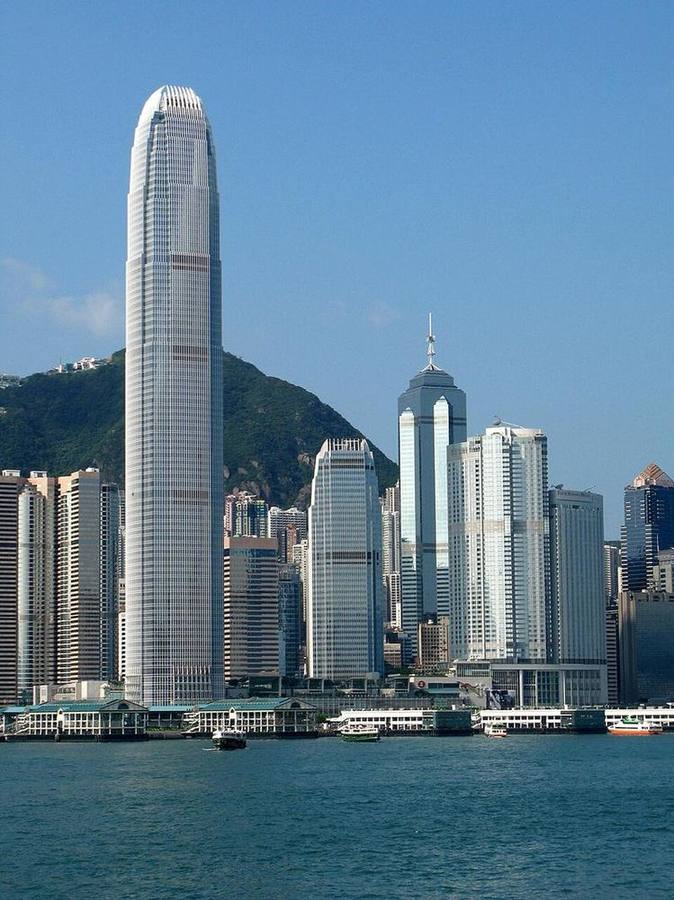
Boyu Capital was founded in 2010. Reuters' reporting — the special report Princeling of Private Equity of 2014 and its follow-up of 24 February 2021 — is consistent: Boyu was "founded in 2010 by, among others, Alvin Jiang"; Jiang Zhicheng is a grandson of former president Jiang Zemin and a son of Jiang Mianheng, Harvard-educated and formerly at Goldman Sachs. Boyu has never denied Jiang's status as a founding partner; that status and the kinship are the foundation under every fact in this piece, A-grade material. (Sources 1, 2)
The family line connects to the series' earlier pages: grandfather Jiang Zemin is the first generation; father Jiang Mianheng is the second — as the preceding piece records, in 1994 Jiang Mianheng founded the Shanghai municipal government's investment platform Shanghai Lianhe, invested it into Netcom, SAIC, the Shanghai Airport Group and others, and sat on Netcom's board himself. In the third generation, Jiang Zhicheng's instrument is no longer a state-capital platform but a US-dollar fund run by international private-equity rules. The tool changed; the position did not: still standing at the entrance to large companies' capital operations, only the entrance has moved from the formation list to the financing list.
One more of Boyu's early deals deserves a single line: in 2011 Boyu acquired a controlling stake in Sunrise Duty Free — duty-free retail is a quintessentially regulated industry, and Reuters' 2014 special report used it as the case study of princeling capital entering regulated sectors. It has nothing to do with platform companies, and this piece records it only as background to Boyu's beginnings. (Source 1)
II. The Originating Transaction: Alibaba's Buyback from Yahoo, September 2012
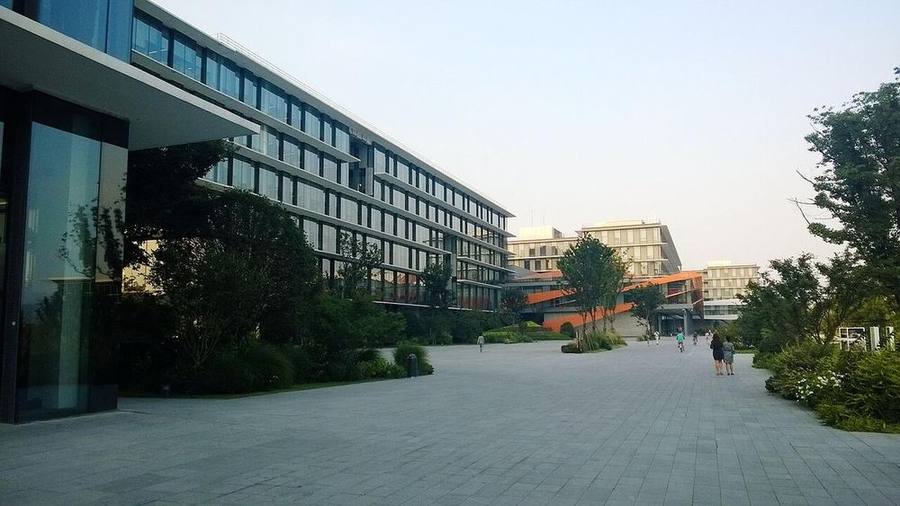
The story originates in a transaction. In September 2012 Alibaba completed the buyback of half of Yahoo's stake in Alibaba for US$7.6 billion — the largest capital operation Alibaba undertook before its 2014 US listing. Part of the funding for the deal came from selling shares to CIC, China's sovereign wealth fund, and three Chinese investment institutions. Two years later the New York Times' investigation named the three one by one: Boyu Capital, CITIC Capital and CDB Capital (the capital arm of China Development Bank), noting that each institution's senior ranks held princeling figures; documents the Times reviewed further showed a fourth institution buying in the same month — New Horizon Capital, co-founded by Wen Jiabao's son Wen Yunsong, a claim of a different evidentiary grade and handled separately in Section IV. (Source 3)
Boyu's place in the deal: a Boyu subsidiary invested roughly US$400 million in Alibaba. The Times estimated, on Alibaba's listing valuation, that the investment's paper gain exceeded US$1 billion. The evidentiary form of these two numbers must be stated plainly: the roughly US$400 million investment and the billion-dollar paper-gain estimate come from the Times' document-based investigation and its own calculation; Boyu's final holding percentage has a higher-grade provenance — confirmation by the reported party itself, in the next section. (Sources 3, 4)
The last piece of this section is the timing. In in September 2012; listed on the New York Stock Exchange in September 2014, in what was then the largest IPO in history. The window in which these institutional shareholders entered was exactly two years before the listing, and not a day removed from the buyback itself: they were not investors chasing the stock after listing but participants in the buyback — boarding, at insider prices and positions, at precisely the juncture when Alibaba was escorting half of its foreign shareholder Yahoo out and cleaning its shareholding structure for the IPO. That timing structure is the exact meaning of this piece's title: well-timed investments.
III. 2014: The New York Times Investigation and Alibaba's Statement
On 20 July 2014 the New York Times published its investigation, Alibaba's I.P.O. Could Be a Bonanza for the Scions of Chinese Leaders, laying out the princeling backgrounds of the 2012 institutional shareholders as a group. Alibaba responded at once with a forceful statement on Weibo. This piece handles that exchange by splitting the statement in two, because the two halves carry opposite evidentiary grades: Alibaba denied the Times' inference — that its development had benefited from these shareholders' backgrounds — but Alibaba at the same time confirmed the three institutions' holdings: as of the end of June 2014, Boyu held 0.55% of Alibaba's ordinary shares, CITIC Capital 1.1%, and CDB Capital 0.47%. The shareholding facts were thereby pinned by the reported party itself; the motive inference remains to this day in the standoff of "the Times so inferred, Alibaba so denied." In this piece's text, holdings are written on the confirmed wording; motives give both sides and no verdict. (Sources 3, 4)
The other side of the proportions is measured against the prospectus. Alibaba's final prospectus filed with the SEC on 18 September 2014 (Form 424B4) disclosed its principal pre-listing shareholders: SoftBank 34.3–34.4%, Yahoo 22.5–22.6%, Jack Ma 8.9% and Joe Tsai 3.6%. Boyu's 0.55% does not appear in that table — it sits below the disclosure line. Read side by side, the two documents permit only the dossier's sentence: the red-capital link is not in the principal-shareholder table but in a transaction that must be tracked separately; its magnitude is a financial investment, not a controlling stake. Nor did Alibaba's own senior management (Jack Ma, Joe Tsai and the others on the prospectus board list) include any red descendant. (Source 5)
This section closes by registering a detail that retellings often distort: among Alibaba's independent directors sat Tung Chee-hwa, Hong Kong's former chief executive and a vice chairman of the CPPCC. That is a political figure on a board, a different matter from red capital buying shares; this piece does not count it as a capital link, and marks the distinction here so readers do not merge two separate lines into one.
IV. The Batch's Other Three: CITIC Capital, CDB Capital and New Horizon
Of the institutions that entered in September 2012, the three besides Boyu have different evidentiary forms, and must be written separately.
CITIC Capital and CDB Capital: the investments are A-grade; the matching of persons is B-grade. The two institutions' investments in Alibaba and their percentages (1.1% and 0.47%) were confirmed by Alibaba's own statement — the same grade as Boyu's. But as to "which princeling sat in which institution, and in what relation to the Alibaba investment," the reports' versions do not fully agree: the Times' 2014 investigation and later analyses named He Jinlei (also rendered He Jinlei / He Jinlei), then a CDB Capital vice president, as a son of Politburo Standing Committee member and discipline chief He Guoqiang; Liu Lefei, son of Liu Yunshan, was associated with the CITIC system's private-equity platform, having headed CITIC Private Equity Funds Management; and other analyses linked Zeng Zhijie, son of Zeng Peiyan, with CITIC Capital. The divergence is this: "CITIC Capital Holdings" and "CITIC Private Equity / CITIC Industrial Fund" are different platforms, and the reports' attributions differ; exactly which platform Liu Lefei and Zeng Zhijie correspond to, and whether either was directly responsible for the Alibaba investment, cannot be pinned one-to-one; the institutions concerned either declined to comment to the Times or said the individuals were not responsible for that investment. This piece writes the institutional investments as fact, the personal matches as "per the New York Times investigation," preserving the divergence in platform attribution rather than writing a one-person-one-deal certainty. (Source 3)
New Horizon Capital: B-grade only. New Horizon was co-founded by Wen Yunsong, son of then-premier Wen Jiabao. The Times said documents it reviewed showed New Horizon also bought Alibaba shares in September 2012, and one analysis put the value of its holding by late 2013 at 3.73 times the initial investment. But unlike the first three, Alibaba's statement confirmed only Boyu, CITIC Capital and CDB Capital — not New Horizon; and New Horizon's holding does not appear in Alibaba's prospectus disclosures of principal shareholders. This piece therefore registers the New Horizon line at a grade below the others: document-based reporting by a top-tier paper, unconfirmed by the reported party and unsupported by any disclosure filing — stated with its source, not stated as a conclusion. (Source 3)
V. On to Ant: Two Financing Rounds and an Absence in the Prospectus
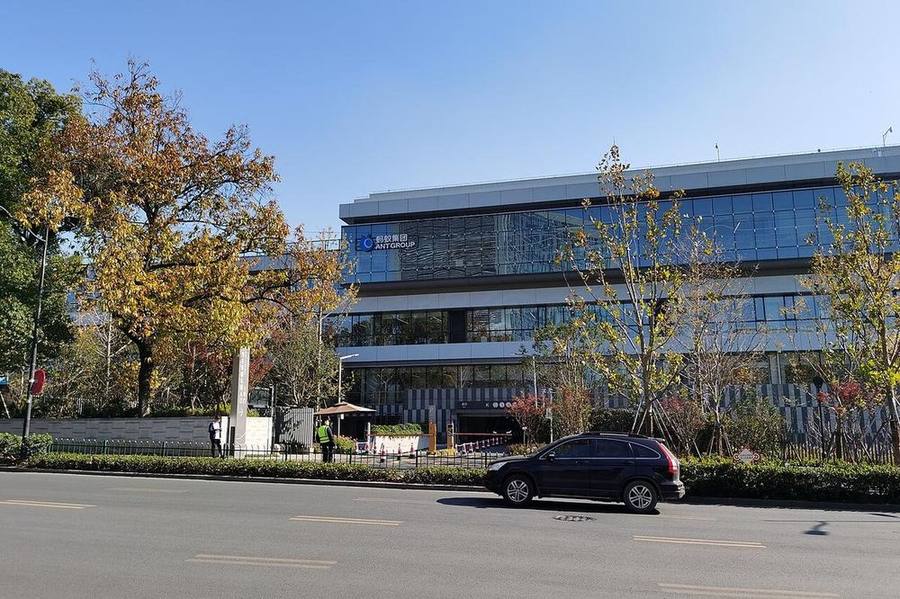
After the Alibaba page, Boyu's trail continues to Ant Group. Reuters reported on 24 February 2021 that Boyu invested in Ant's US$4.5 billion financing round of 2016 and its US$14 billion round of 2018. The sizes of the two rounds and Boyu's participation are checkable in Reuters' text — A-grade. (Source 2)
The next document, however, draws the line around this trail. Ant's 2020 prospectus disclosed its principal shareholders as Hangzhou Junhan at 29.86%, Hangzhou Junao at 20.66%, Alibaba at 32.65% and the National Social Security Fund at 2.94% — Boyu's name is not among them. The structure is identical to the Alibaba section: Boyu's holding sat below the 5% disclosure line, or was held indirectly through partnership vehicles. The two documents corroborate and limit each other: participation in the financings is real, and not being a principal shareholder is equally real. (Source 11)
One level deeper lies B-grade territory, and it must be written with all its qualifications attached. On 16 February 2021 the Wall Street Journal reported that a previously unreported central-government inquiry had found that Ant's prospectus masked the complexity of its shareholding: because of foreign-ownership restrictions on the payments business, Boyu had set up a Shanghai subsidiary and invested through multiple layers of vehicles into Beijing Jingguan, a private-equity fund holding nearly 1% of Ant, without the prospectus mentioning Boyu's layer of participation; the same report named Beijing Zhaode Investment Group and its controller Li Botan — son-in-law of former Standing Committee member Jia Qinglin — as another princeling-linked Ant shareholder. This piece's treatment is downgraded registration, with its reasons stated: the report's sources were more than a dozen anonymous Chinese officials and government advisers; neither Boyu nor Ant publicly confirmed the layered structure; and the report's sentence attributing Xi Jinping's halt of the Ant IPO in part to these families' prospective windfall is an attribution built on anonymous sources, not the conclusion of any official document. This piece registers only that "the Wall Street Journal so reported, on anonymous sources, unconfirmed by the parties" — it does not write the layered structure as established fact. (Source 6)
VI. DiDi: A Board Seat
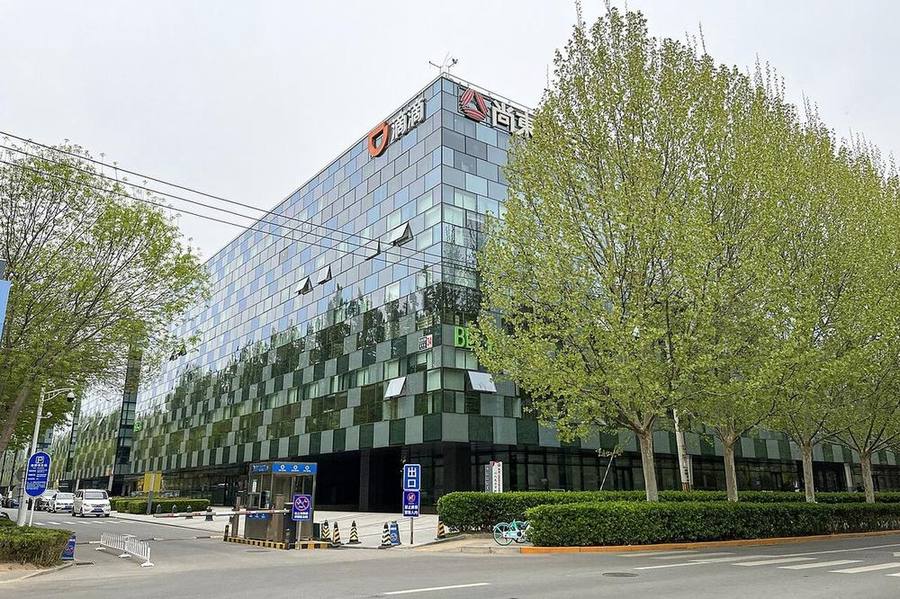
DiDi's evidentiary structure differs from Alibaba's: the shareholding is hearsay, but the board seat is in a filing. The filing first. DiDi's Form F-1 filed with the SEC on 10 June 2021 and its board list disclosed that Zhiyi Chen, a managing director of Boyu Capital, served as a DiDi director before the listing and resigned after the IPO (SoftBank's board appointees exited in the same round). A board seat is a harder grade of evidence than "reported to hold shares": it proves Boyu was indeed an institutional investor in DiDi, at a stake or under an agreement sufficient to seat a director — yet the prospectus never disclosed Boyu's exact percentage. This item is A-grade. (Source 7)
The shareholding itself can be written only to B-grade: Reuters reported on 23 November 2018, citing people familiar with the matter, that Boyu had in recent years invested in DiDi Chuxing; Reuters' 2021 reporting likewise listed DiDi among Boyu's portfolio companies, in its own wording "per media reports and public information." DiDi's F-1 principal-shareholder table — SoftBank Vision Fund 21.5%, Uber 12.8%, Tencent 6.8%, Cheng Wei 7%, Jean Liu 1.7% — contains no Boyu, so its stake sat below the disclosure line. (Sources 7, 8)
This section also performs a cut this series makes repeatedly. DiDi president Jean Liu is a daughter of Lenovo founder Liu Chuanzhi — and Liu Chuanzhi is an entrepreneur, not a revolutionary veteran or a Party-state official; Jean Liu is a "founder's second generation," not a red descendant. Counting her as DiDi's red-capital link is the most common mislabel in Chinese-language self-media, and this piece expressly excludes it. DiDi's red-capital link is Boyu's line alone: a small stake, an undisclosed percentage, anchored by one board seat.
VII. Meituan: One Small, Sub-Disclosure Line
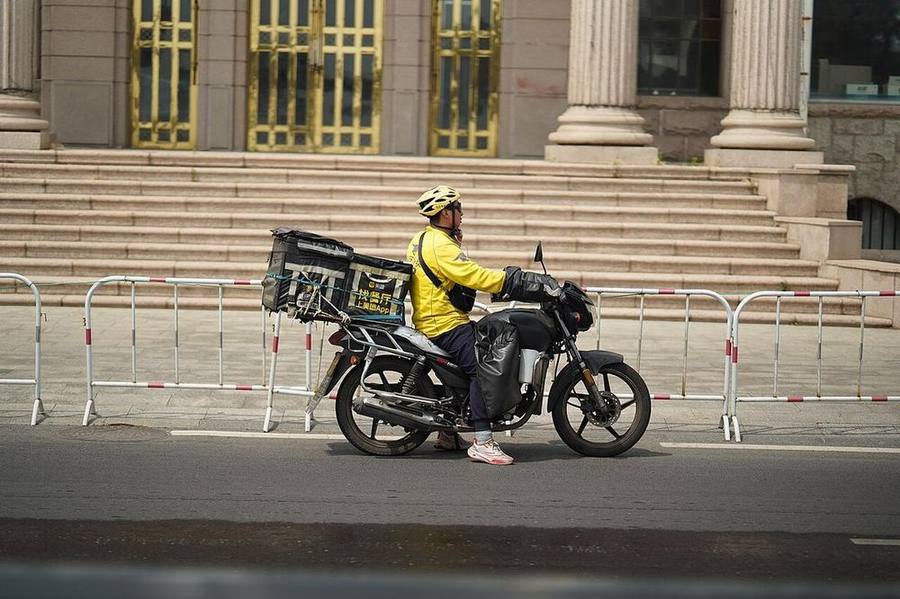
Meituan has a single line, and it must be written with all its qualifications. Two mutually independent B-grade materials point the same way: first, Wang Xing's internal letter on the 2015 Meituan–Dianping merger listing the shareholders supporting the merger included Boyu Capital, alongside Alibaba, Tencent, Sequoia and Hillhouse; second, Reuters reported on 23 November 2018, citing people familiar with the matter, that Boyu had in recent years actively invested in Chinese technology start-ups including DiDi Chuxing, Meituan Dianping and Ant Financial. The two sources corroborate "presence," but neither amount, round nor percentage appears in any disclosure filing; and Meituan's 2018 HKEX prospectus principal-shareholder list — Tencent 20.1%, Sequoia 11.4% and others — has no Boyu, so its holding sat below the disclosure threshold, most plausibly as a small early shareholder of Dianping or Meituan before the merger. (Sources 8, 9)
That is the full weight of the Meituan section: not "nothing found," but a single small, indirect, sub-disclosure record of presence. The series' accounting for the companies that were checked and found clean follows the next sections.
VIII. The Era's Backdrop: JPMorgan's $264 Million "Sons and Daughters" Settlement
To understand the era in which vehicles like Boyu appeared, one regulatory document serves as backdrop. On 17 November 2016 the US SEC, the Department of Justice and the Federal Reserve settled with JPMorgan Chase for a total of roughly US$264 million over its "Sons and Daughters" programme. The SEC's administrative order (Release No. 79335) found that from 2006 to 2013 JPMorgan's Asia-Pacific (Hong Kong) subsidiary ran an informal client-referral hiring programme offering jobs and internships to relatives and friends of clients and foreign officials in order to obtain or retain investment-banking business, in violation of the FCPA's anti-bribery, books-and-records and internal-controls provisions; over seven years it hired roughly 100 interns and full-time employees at officials' request (about 200 people on the wider connected-persons count), generating more than US$100 million in business revenue. The settlement's composition: roughly US$130.5 million in SEC disgorgement and interest, a US$72 million DOJ criminal penalty, and a US$61.9 million Federal Reserve civil penalty. (Source 10)
The use of this section must be narrowed, and this piece nails it down: the SEC order described the clients involved anonymously and named neither Alibaba nor any company in this piece; "JPMorgan was one of the six lead underwriters of Alibaba's 2014 IPO" is a prospectus-checkable fact, but "the Sons and Daughters hiring was tied to the Alibaba IPO mandate" has no A-grade documentary support, and the common retelling that connects the two directly is inference, which this piece does not adopt. The settlement's place in the series is context: it proves that "hiring the well-connected in exchange for business" was, in the Hong Kong investment-banking world of 2006–2013, a systemic practice established by US regulatory documents — and it is against that backdrop, not on the strength of any individual accusation, that readers can understand how the Boyus of that era came to hold seats at financing tables.
IX. The Upper Bound of the Evidence: Small Stakes, Pre-IPO, Financial Investments
Gather what this piece can pin down: in 2010 Jiang Zhicheng — grandson of Jiang Zemin, son of Jiang Mianheng — co-founded Boyu Capital as a founding partner; in 2011 Boyu acquired a controlling stake in Sunrise Duty Free; in September 2012 a Boyu subsidiary invested roughly US$400 million in Alibaba as part of Alibaba's US$7.6 billion buyback of Yahoo's shares, with Alibaba confirming Boyu's holding at 0.55%, alongside CITIC Capital's 1.1% and CDB Capital's 0.47% in the same batch; in 2016 and 2018 Boyu participated in Ant's US$4.5 billion and US$14 billion financing rounds; and in 2021 Boyu's managing director Zhiyi Chen was listed as a pre-IPO DiDi director, resigning after the listing. The latest checkable state stops in February 2021: Reuters reported Boyu was raising a new private-equity fund with a target of US$6 billion; beyond that, within the range this series has checked, there is no updated public record of Boyu or Jiang Zhicheng. (Sources 1, 2, 3, 4, 7)
What cannot be pinned down is gathered as well: the inference that Alibaba benefited from these shareholders' backgrounds was denied in Alibaba's statement and has never been proved by an A-grade document; New Horizon's same-month purchase of Alibaba shares rests on the Times' document-based reporting alone, unconfirmed; the layered structure by which Boyu supposedly held nearly 1% of Ant indirectly comes from the Wall Street Journal's anonymously sourced report, unconfirmed by the parties; and the matching of CITIC Capital and CDB Capital to specific princeling individuals differs across reports. As for the wider amplified versions in circulation — "red families control the platforms," "such-and-such platform is such-and-such family's white glove" — they conflict directly with the upper bound of all the evidence above; this piece does not register them as fact, only notes here that they exceed the evidence.
Finally, the accounting for the four "clean" companies, which is equally part of this piece's conclusion. JD.com: its pre-IPO capital history runs through Capital Today, Hillhouse, Tiger Global and Tencent's strategic investment — professional institutions and corporate investors, checked item by item with no verifiable link found. Pinduoduo: principal shareholders were Colin Huang, Tencent, Banyan and Sequoia; Duan Yongping was the founder's mentor and an early individual investor — mentorship is not blood — and no verifiable link was found. Tencent: its early capital was IDG and Richard Li's PCCW — Richard Li is a son of Hong Kong tycoon Li Ka-shing, a businessman's son, not a red descendant, and PCCW exited in 2001 — no verifiable link found. ByteDance: unlisted, with no full prospectus table; its known investors are all professional institutions and no verifiable link was found, though the conclusion carries the reservation that the full shareholder register is not public; its 2021 state "golden share" arrangements are direct state holdings, a different line from red-family capital, and are not conflated here. The four companies share one property: they were checked, and this piece states that they were checked — that itself is an archive's duty to its readers. (See the platform dossier's sections and Source 12.)
Return to the preface's question: in the machine that turns privilege into capital, private equity is the quietest unit. It needs no appointment, no licence approval, not even a majority stake — it needs only a surname, a face that can sit at the table when a financing closes, and a channel that shuts on the eve of an IPO. The Boyu and Jiang Zhicheng archive is the platform line's flagship not because its amounts are the largest, but because every link in it happened to leave a document behind: the founding has a Reuters special report, the investment has the reported party's own confirmation, the continuation has two financing rounds on record, and the boundary is attested by two prospectuses' absence. The furthest step this archive can prove is 0.55% and the admission ticket behind it; what it cannot prove has likewise been written down, item by item, in this piece. A Boyu-affiliated fund's other documentary landing point, in an industrial company's prospectus, is traced in CATL and Boyu Phase II; for a person-by-person documentary check of the Hurun rich list's top twenty, see The Rich-List White-Glove Audit.
<!--正文结束-->
Source List
- Reuters special report (Stephen Aldred, Irene Jay Liu), Princeling of Private Equity, 2014-04-10 — Boyu founded in 2010, Jiang Zhicheng a founding partner, the 2011 acquisition of a controlling stake in Sunrise Duty Free: http://graphics.thomsonreuters.com/14/03/CHINA-PRINCELING.pdf — authoritative media investigation.
- Reuters, Exclusive: Ant investor Boyu Capital targets $6 billion for new private equity fund, 2021-02-24 (carried by Global Banking & Finance) — restates Boyu's 2010 founding by Jiang Zhicheng and others, records expressly Boyu's investment in Ant's 2016 US$4.5 billion and 2018 US$14 billion rounds, and Boyu's US$6 billion fundraising target: https://www.globalbankingandfinance.com/exclusive-ant-investor-boyu-capital-targets-6-billion-for-new-private-equity-fund-sources/ — authoritative media.
- The New York Times (Michael Forsythe), Alibaba's I.P.O. Could Be a Bonanza for the Scions of Chinese Leaders, 2014-07-20 — the three institutions' entry in the September 2012 buyback, Boyu subsidiary's roughly US$400 million investment and paper-gain estimate, the naming of princeling figures in the three institutions' senior ranks, and New Horizon's same-month purchase (based on documents the paper reviewed); excerpt and Alibaba's response archived at: http://blog.feichangdao.com/2014/07/sina-weibo-censors-searches-about.html — authoritative media investigation (inference portion denied by Alibaba, see Source 4).
- Alibaba Group official statement, 2014-07-21 (Reuters wire carried by Gadgets360, 2014-07-22) — denies reliance on connections, while confirming that as of the end of June 2014 Boyu held 0.55%, CITIC Capital 1.1% and CDB Capital 0.47%: https://www.gadgets360.com/internet/news/alibaba-says-it-relies-on-markets-not-connections-563000 — the reported party's statement (governing source for the percentages).
- Alibaba Group final prospectus, SEC Form 424B4, 2014-09-18 — principal pre-listing shareholders: SoftBank 34.3–34.4%, Yahoo 22.5–22.6%, Jack Ma 8.9%, Joe Tsai 3.6%: https://www.sec.gov/Archives/edgar/data/1577552/000119312514347620/d709111d424b4.htm — regulatory disclosure filing.
- The Wall Street Journal, Ant IPO investigation, 2021-02-16 (detailed account via SinoInsider) — Boyu's layered route via a Shanghai subsidiary into Beijing Jingguan, indirectly holding nearly 1% of Ant, and the Beijing Zhaode / Li Botan item; sources anonymous officials and advisers, unconfirmed by the parties, the IPO-halt attribution being the paper's inference: https://sinoinsider.com/2021/02/in-jack-mas-ant-ipo-political-and-economic-problems-intertwine-for-xi/ — authoritative media investigation (B-grade; qualifications in Section V).
- DiDi Global Form F-1 filed with the SEC on 2021-06-10 (archived at S1 Directory) and the updated prospectus board list (EqualOcean, 2021-06-25) — principal-shareholder percentages and Boyu Capital managing director Zhiyi Chen's pre-IPO directorship and post-IPO resignation: https://files.s1directory.com/didi-global-inc.pdf — regulatory disclosure filing.
- Reuters (Kane Wu, Julie Zhu), Chinese PE firm Boyu Capital raising at least $3 bln new fund, 2018-11-23 (carried on the London Stock Exchange site) — citing people familiar with the matter, Boyu invested in DiDi Chuxing, Meituan Dianping and Ant Financial: https://www.lse.co.uk/news/chinese-pe-firm-boyu-capital-raising-at-least-3-bln-new-fund-sources-byetv6o78t9rboj.html — authoritative media (sourced-to-informants wording).
- Wang Xing's 2015 internal letter on the Meituan–Dianping merger (published by TMTPost) — the list of shareholders supporting the merger includes Boyu Capital: https://www.tmtpost.com/1446270.html — a party document carried by media.
- US SEC administrative order, In the Matter of JPMorgan Chase & Co., Release No. 79335 / File No. 3-17684, 2016-11-17, and the US Department of Justice press release of the same day — the "Sons and Daughters" findings and the roughly US$264 million settlement composition; the order names no platform company: https://files.skadden.com/sites%2Fdefault%2Ffiles%2Fckeditorfiles%2FJPMorgan_Chase_SEC_Order.pdf — regulatory and judicial documents.
- Caixin Global, Revealed: Jack Ma Controls Majority of Ant Group, 2020-08-26 — Ant prospectus shareholder structure: Hangzhou Junhan 29.86%, Hangzhou Junao 20.66%, Alibaba 32.65%, National Social Security Fund 2.94%, no Boyu: https://www.caixinglobal.com/2020-08-26/revealed-jack-ma-only-owns-88-ant-group-but-controls-majority-of-company-101597315.html — authoritative financial media (prospectus account).
- This series' platform research dossier (2026-11-05), the JD.com, Pinduoduo, Tencent and ByteDance sections and their prospectus and financing-history sources — Tencent's early financing history (Global Venturing, 2011), JD.com's pre-IPO financing history (Silicon Dragon Ventures, 2016), Pinduoduo's final prospectus (SEC, 2018-07-25) and others, supporting Section IX's registration of four companies with no verifiable link found — research compilation (itemised sources in the dossier).
Material Gaps (stated faithfully)
- Boyu's entry price and full terms in Alibaba: the roughly US$400 million figure is the New York Times' document-based reporting; the full agreement text is not public. What can be pinned is only Alibaba's self-confirmed 0.55%.
- The matching of CITIC Capital and CDB Capital to specific individuals: the correspondences of He Jinlei, Liu Lefei and Zeng Zhijie to the two institutions and the Alibaba deal differ across reports; the institutions concerned declined comment or said the individuals were not responsible for the investment. This piece writes only "per the New York Times investigation," making no definitive match.
- New Horizon's purchase of Alibaba shares: supported only by the Times' document-based reporting; unconfirmed by Alibaba's statement and absent from prospectus disclosures; held at B-grade registration, not upgraded.
- Boyu's layered structure and exact percentage in Ant: the Wall Street Journal's multi-vehicle account rests on anonymous sources, unconfirmed publicly by Boyu or Ant; at prospectus level it can only be established that Boyu is not among the principal shareholders, and the exact percentage has no public record.
- Boyu's percentages in DiDi and Meituan: neither prospectus discloses them; the DiDi line is anchored by a board seat establishing institutional-investor status, the Meituan line only by an internal-letter list and informed-source reporting; the percentage cells are left blank.
- The latest state of Boyu and Jiang Zhicheng: the checkable public record stops with Reuters' February 2021 fundraising report; within the range this series has checked, there is no updated record of its fundraising progress, portfolio changes or Jiang Zhicheng's own movements.
- ByteDance's full shareholder register: the company is unlisted and the full register is not public; the "no link found" conclusion for ByteDance carries this reservation and must be rechecked if a listing disclosure ever appears.
Contact: endccpworld@proton.me