The Rich-List White-Glove Audit: A Documentary Check of the Hurun Top Twenty
An audit overview in the Red Families series. A popular saying runs: “Most of China's richest men are white gloves — fronts for princeling families.” This piece neither accepts that saying nor dismisses it in advance. It breaks it into a question that can be tested name by name: taking the top twenty of the 2026 Hurun Rich List (released by the Hurun Research Institute on 27 October 2026, with wealth measured as of 1 September 2026), it checks each person's share registers, financing rounds and listing documents, and asks whether a red second-generation individual — or a fund vehicle that such an individual controls or fronts — ever actually entered the process by which that fortune was made. After twenty names, the answer is much narrower than the saying, and much harder.
Contents
- I. The Overall Judgment: The Saying Fails; a Narrower Axis Holds
- II. The Twenty-Person Table (by era of rise, earliest first)
- III. The Graded Findings: Four Documented, One Reporting-Grade, Fifteen Not Found
- IV. The Hardest Line: Jack Ma, Alibaba, Ant and the Boyu Record
- V. The Other Hits: CATL, Midea and Liang Wenfeng (with full qualifications)
- VI. Four Assumptions Overturned by the Actual Check
- VII. The “Not Found” Group: the Hardest Evidence, Name by Name
- VIII. The Grade C Rumour Exclusion Table (fourteen items)
- Material Gaps (stated faithfully)
- Source List
I. The Overall Judgment: The Saying Fails; a Narrower Axis Holds
The overall judgment goes first, in the most prominent place, without hedging: “Most of the richest are white gloves” does not hold at the documentary level. After all twenty names were checked one by one, the red-family capital entry that filings can pin down amounts to a single Boyu Capital axis — Alibaba, Ant Group and CATL — plus one cornerstone subscription by CPE in Midea's Hong Kong listing amounting to just 0.09 per cent of the enlarged share capital. In the fortune-forming registers of the other sixteen, what appears instead is a mix of family individuals, industrial capital, local state platforms, foreign capital and professional investment institutions, with no seat for a red-family personal vehicle. (Sources 1, 4, 11, 14)
What does hold is a narrower pattern, and one more worth recording: red-family funds specialise in taking stakes of around one per cent, on the eve of listing, in the era's single most prominent asset. Boyu entered Alibaba at 0.55 per cent and CATL at 1.18 per cent; the reported DeepSeek second round works out at about 0.57 per cent. The stakes are always small, carry no disclosed board seat or control, and yet keep appearing on the shareholder list of whichever company stands at the very top of its era. The significance lies not in control but in position: this kind of capital does not build a fortune for anyone — it buys a small ticket at the moment a winner is about to be priced. To write a small financial stake of that kind up as “this tycoon is that family's white glove” conflates two different levels of fact, and this site expressly does not adopt that formulation.
The ordering of this piece serves the same judgment. The master table is not arranged by Hurun rank but by the year each fortune began, from the Chow Tai Fook predecessor house of 1929 and Li Ka-shing's plastics factory of 1950 through to Binance in 2017. Spread out in time, a structural point becomes visible: the earlier a fortune was made, the more completely its formative years predate the very existence of vehicles such as Boyu (founded in 2010) and CPE (set up in 2008), so that entry by them was structurally impossible. Every actual hit is concentrated in a headline asset that listed or raised money after 2010. That is not a coincidence; it is how the axis works.
II. The Twenty-Person Table (by era of rise, earliest first)
The table below is the skeleton of the whole piece. Hurun ranks and wealth figures follow the official 2026 Hurun Rich List (wealth in renminbi billions), and the grade in the last column is the overall grade after the three-layer check. Only three formulations are used — “documented red-family capital entry”, “reporting-grade link only” and “not found” — and where a grade carries a qualification in brackets, the qualification is part of the grade: any quotation of this table that strips the qualification out is a quotation this site does not stand behind. (Source 1)
| Start | Person | Hurun rank / wealth | Overall grade |
|---|---|---|---|
| 1929 | Cheng Yu-tung family | 18 / RMB 165 bn | Not found |
| 1950 | Li Ka-shing & Victor Li | 9 / RMB 253 bn | Not found (reverse LP only, not counted) |
| 1968 | He Xiangjian | 5 / RMB 310 bn | Documented (one 2024 cornerstone stake only, 0.09%) |
| 1972 | Zhang Gang family | 20 / RMB 155 bn | Not found (qualified: shareholder list not public) |
| 1986 | Li Shufu family | 14 / RMB 180 bn | Not found |
| 1992 | Qin Yinglin & Qian Ying | 19 / RMB 155 bn | Not found |
| 1993 | Zhong Shanshan | 2 / RMB 410 bn | Not found |
| 1994 | Chen Jianhua & Fan Hongwei | 6 / RMB 302 bn | Not found |
| 1995 | Lü Xiangyang & Zhang Changhong | 16 / RMB 170 bn | Not found |
| 1997 | Ding Lei (William Ding) | 8 / RMB 275 bn | Not found |
| 1998 | Ma Huateng (Pony Ma) | 4 / RMB 346 bn | Not found |
| 1999 | Jack Ma family | 13 / RMB 185 bn | Documented (Boyu 0.55% etc.; the hardest line on the list) |
| 1999 | Robin Zeng (Zeng Yuqun) | 3 / RMB 385 bn | Documented (company level: Boyu Phase II, 1.18%) |
| 2010 | Lei Jun | 17 / RMB 169 bn | Not found |
| 2011 | Huang Shilin | 15 / RMB 175 bn | Documented (company level, same event as Zeng); personal level not found |
| 2012 | Zhang Yiming | 1 / RMB 670 bn | Not found (full register not public; qualified) |
| 2015 | Colin Huang (Huang Zheng) | 11 / RMB 202 bn | Not found |
| 2015 | Liang Wenfeng | 7 / RMB 280 bn | Reporting-grade link only (Grade B) |
| 2016 | Chen Tianshi | 10 / RMB 205 bn | Not found |
| 2017 | Zhao Changpeng (CZ) | 12 / RMB 186 bn | Not found (register never disclosed; qualified) |
Three reading notes. First, the “documented” grades of Robin Zeng and Huang Shilin are one and the same event — Boyu Phase II's 1.18 per cent in the CATL prospectus — and the grade sits at company level; both founders are clean at the personal level, and a company-level grade must not be read as a characterisation of either man. Second, He Xiangjian's “documented” grade refers solely to a cornerstone subscription in 2024, at Midea's second listing, more than two decades after the fortune-forming period that ran from the founding in 1968 to the management buyout of 2001. Third, the “not found” grades of the Zhang Gang family and of Zhao Changpeng carry the qualifications “shareholder list not public” and “register never disclosed” respectively; they are the two shallowest cells in the table, for the reasons set out in the material gaps section.
III. The Graded Findings: Four Documented, One Reporting-Grade, Fifteen Not Found
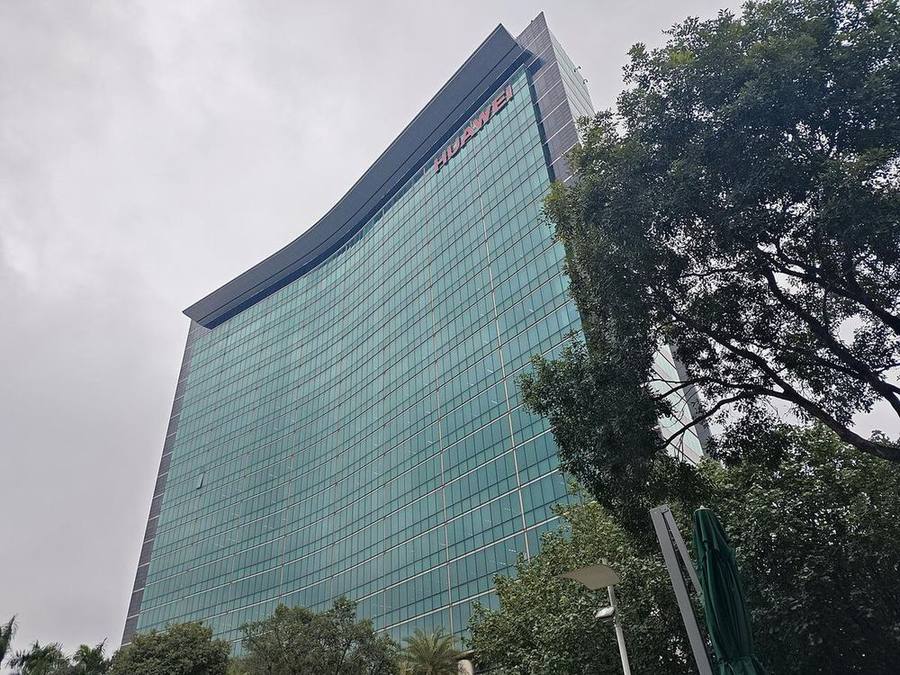
The first tier — documented red-family capital entry: four people, three independent events. First, the Jack Ma family: Alibaba's own official statement of 2014 admitted Boyu Capital's 0.55 per cent holding, and Boyu went on to take part in Ant Group's 2016 and 2018 financing rounds — the hardest line on the whole list, set out in full in the next section. Second and third, Robin Zeng and Huang Shilin: a single event, namely the 1.18 per cent pre-IPO holding of Boyu Phase II recorded in CATL's ChiNext prospectus submission draft. Fourth, He Xiangjian: in the cornerstone investor list for Midea Group's 2024 Hong Kong listing, CPE subscribed for a stake amounting to only 0.09 per cent of the enlarged capital — exchange-documented, but an extremely marginal item outside the fortune-forming period. (Sources 4, 6, 11, 14)
The second tier — reporting-grade link only: one person. Liang Wenfeng: reporting in October 2026 held that Boyu Capital put RMB 3.5 billion, about 0.57 per cent, into DeepSeek's second financing round. The story appeared across major papers and financial media, but every element of it rests on anonymous sources, with no company announcement, registry change or prospectus to check against. The grade is capped at B: it may be written as a reporting-grade link, and not as fact. (Sources 18, 19)
The third tier — not found: fifteen people. The Cheng Yu-tung family; Li Ka-shing and Victor Li; the Li Shufu family; Qin Yinglin and Qian Ying; Zhong Shanshan; Chen Jianhua and Fan Hongwei; Lü Xiangyang and Zhang Changhong; Ding Lei; Ma Huateng; Lei Jun; Zhang Yiming; Colin Huang; and Chen Tianshi — together with the Zhang Gang family under its restricted statement and Zhao Changpeng under his reservation, while Zhang Yiming's entry likewise carries the “full register not public” qualification. For each of the fifteen, Section VII gives the single hardest piece of supporting evidence — a full prospectus register, the counterparty record of a key transaction, or an official disclosure — because “not found” is only worth printing when the reader can see what the search actually rested on.
IV. The Hardest Line: Jack Ma, Alibaba, Ant and the Boyu Record
This line is the hardest on the list because it needs no chain of inference: the invested company itself confirmed a red-family vehicle's shareholding percentage in an official statement. The chain of fact runs as follows. Boyu Capital was founded in 2010, and a Reuters special report of 2014 identified Jiang Zhicheng, a grandson of Jiang Zemin, as one of its founding partners. (Source 2) In September 2012 Alibaba completed its US$7.6 billion repurchase of part of Yahoo's stake, and Alibaba's official announcement named the lead subscribers to the new shares as China Investment Corporation, Boyu Capital, CITIC Capital and CDB Capital; the New York Times later reported that a Boyu subsidiary had put in about US$400 million. (Sources 3, 5) On 21 July 2014 Alibaba issued an official statement responding to the Times, confirming in its own words the three holdings as of the end of June 2014: Boyu Capital 0.55 per cent, CITIC Capital 1.1 per cent, CDB Capital 0.47 per cent. (Source 4) Together the three come to about 2.1 per cent: the entry is a fact, and so are the small size and the absence of control — and this piece writes both facts together.
The line then extended into a core financial asset: Reuters reported that Boyu took part in Ant Group's US$4.5 billion financing of 2016 and its US$14 billion financing of 2018. (Source 6) Ant is a financial platform holding a full suite of licences — payments, banking, funds, insurance, credit reporting — so the weight of this line lies not in the percentage but in the nature of the target. The complete Boyu–Alibaba record has its own piece on this site, “Boyu Capital and Alibaba”, and the CATL line its own at “CATL and Boyu Phase II”; this overview fixes only the position of the line within the list as a whole.
The denial stands beside the fact, as this series' iron rule requires: in the same statement in which it admitted the three holdings, Alibaba expressly denied that the company had developed by relying on its investors' backgrounds, saying it relied on the market, not on connections. (Source 4) The strongest formulation this site therefore supports stops at: “Boyu, co-founded by Jiang Zhicheng, entered Alibaba at 0.55 per cent and followed into both of Ant's rounds.” Peripheral claims — that New Horizon Capital, co-founded by Wen Yunsong, bought into Alibaba in the same month of 2012; that Boyu indirectly held nearly one per cent of Ant through “Beijing Jingguan”; that Beijing Zhaode, controlled by Li Botan, a son-in-law of Jia Qinglin, was an Ant-linked investor — rest respectively on the Times' review of documents and on the Wall Street Journal's anonymous sources; Alibaba, Ant and Boyu have either not confirmed or not verified them, and they are carried here at Grade B only, never blended into the Grade A facts. (Sources 3, 7) “Jack Ma is the Jiang family's white glove” is a Grade C amplification, and it sits in the exclusion table in Section VIII.
V. The Other Hits: CATL, Midea and Liang Wenfeng (with full qualifications)
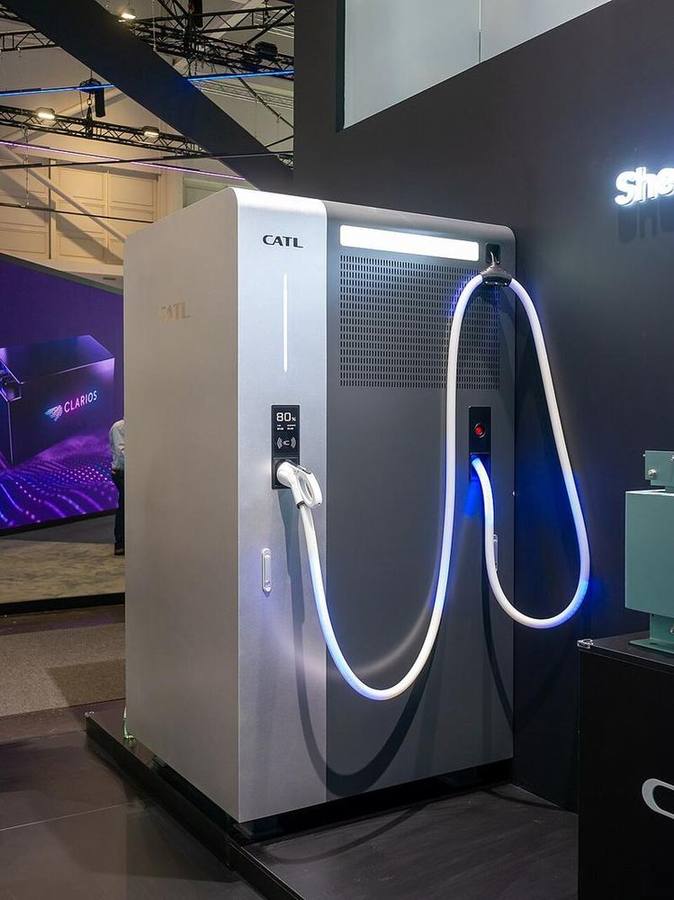
The CATL line (Grade A, with a threefold cut). CATL's prospectus submission draft, disclosed by the CSRC, prints the full pre-IPO register of some 49 shareholders, among them “Boyu Phase II” — the Guokai Boyu Phase II (Shanghai) Equity Investment Partnership — holding 22,999,575 shares, or 1.18 per cent, subscribed in the RMB 8 billion capital increase of November–December 2016 for RMB 1 billion, in the same round, for the same sum and at the same percentage as Jack Ma's Yunfeng Fund. (Sources 11, 12) The threefold cut must be published with it: first, the fund is a renminbi fund run in cooperation between Boyu and the China Development Bank system, managed by Boyu's onshore investment management company; second, Jiang Zhicheng's own name does not appear in the partner list for that fund disclosed in the prospectus, so the characterisation stops at “affiliation through the Boyu management organisation”, and cannot be written as a direct personal holding by Jiang Zhicheng; third, 1.18 per cent is a small financial stake with no disclosed board seat or control. The rest of the register consists of state platforms and professional institutions such as the CMB-affiliated and SDIC Innovation vehicles; Hillhouse, Sequoia and the CITIC industrial fund family did not enter before the IPO at all — Hillhouse arrived only with the RMB 10 billion private placement of 2020. (Sources 11, 13) Both founders are clean at the personal level: Robin Zeng is an engineer from a Ningde farming family, and Huang Shilin's holding has a complete documentary chain of founding subscriptions. The correct reading of this line is “a red-family fund bought 1.18 per cent of this company on the eve of its listing”, not “this company belongs to the red families”.
The Midea line (Grade A document, extremely marginal). Midea Group's Hong Kong allotment results announcement of 16 September 2024 records that, among eighteen cornerstone investors, CPE Investment XVI Limited subscribed for 7,113,800 shares, about HK$390 million — 1.26 per cent of the shares on offer and only 0.09 per cent of the enlarged share capital after listing. (Source 14) CPE began in 2008 as the CITIC industrial fund under CITIC Securities and became independent in 2018; Liu Lefei, the eldest son of Liu Yunshan, serves as its chairman and chief executive, though public documents prove only that representative role and do not disclose his personal shareholding percentage. (Source 16) The timing cut matters just as much: Midea's fortune-forming period runs from 1968 to 2001, and the counterparty in the 2001 management buyout was a local township asset company, nothing to do with any red-family vehicle; (Source 15) the CPE subscription came in 2024, at the company's second, Hong Kong listing, and has nothing to do with how the fortune was made. This piece states it flatly: to write that “Midea was built on red second-generation capital” would be fabrication — wrong on timing and wrong on scale. The value of the item is that it calibrates the whole axis: red-family vehicles do appear on the shareholder lists of tycoons' companies, and in most cases the magnitude at which they appear is of the order of 0.09 per cent.
The Liang Wenfeng line (capped at Grade B). The background facts are fixed first: both of Liang Wenfeng's parents were primary-school teachers in Wuchuan, Guangdong; (Source 17) from its founding in 2023 DeepSeek was funded entirely from High-Flyer's own money, with no external capital, and the RMB 1 billion direct investment by the national artificial intelligence industry investment fund that appeared in the first external round of June 2026 is state institutional capital, which under this audit's rules is not red-family capital. (Sources 17, 18) The change came with the second round in October 2026: the 21st Century Business Herald's itemised account of 30 October put the round at RMB 105.5 billion raised, a post-money valuation of RMB 615.5 billion and nearly thirty participating institutions, among them Boyu Capital with RMB 3.5 billion, about 0.57 per cent; Reuters, Bloomberg and the Wall Street Journal carried reporting on the same round from 22 October. (Sources 18, 19) But every element comes from anonymous sources — no company announcement, no registry change, no prospectus — and the reports differ on closing status, so the grade is capped at B. If the reporting is true, Boyu's targets will have extended from e-commerce, finance and batteries to foundational AI models: always the headline asset of the era, always at around one per cent. That pattern is itself worth more than any single accusation. And if DeepSeek moves towards a listing, its pre-IPO prospectus will be the decisive document for re-checking this item.
VI. Four Assumptions Overturned by the Actual Check
This audit began with four assumptions drawn from popular narrative or from the commissioning brief, and the actual check overturned all four. They are set out in their own section because an overturned assumption is among the most valuable outputs of audit work: it marks exactly how far received wisdom sits from the documents.
First, Liang Wenfeng cannot be marked “not found”. At the outset it was widely assumed that DeepSeek had never taken external capital and that its register was clean. The check found the first half true — no external capital from 2023 to May 2026 — but the October 2026 reporting of Boyu's RMB 3.5 billion in the second round moves the cell from “not found” up to a Grade B reporting-grade link. The lesson: a young company's register changes, and an old finding has to be re-run after every new financing round.
Second, CATL's register does contain a red-family vehicle. Batteries are manufacturing and the founder is an engineer by training, so it was tempting to assume the register would be clean. The prospectus submission draft says otherwise: Boyu Phase II's 1.18 per cent is printed in black and white in the full pre-IPO shareholder table. The lesson: neither the industry nor the founder's background can substitute for reading the register page by page; a Grade A conclusion can only grow out of Grade A documents.
Third, the Chen Jianhua “Macau gambling in 2006” story cannot be found at all. That lead, carried in the commissioning assumptions, returned zero hits across multiple keyword searches, with no document or major-paper report behind it; it is treated as a probable garbled transmission and is expressly not credited. The checkable neighbouring event belongs to 2016: after the fall of Wang Min, Caixin and other outlets reported that Chen Jianhua had been taken away and was out of contact; Hengli responded that he held no post in the listed company and that Fan Hongwei was fully in charge of operations; Chen reappeared in public in September 2016, and no indictment or judgment has followed. That event is registered at Grade B — and it is not evidence of red-family capital entry, and has nothing to do with this audit's subject. (Source 27)
Fourth, Xiaomi's car-making qualification did not come by acquiring Bowow. The popular account has Xiaomi obtaining its vehicle qualification by buying Bowow (Borgward). The Ministry of Industry and Information Technology's announcements say the opposite: Bowow's production qualification was cancelled by MIIT announcement in June 2023, so there was nothing left to acquire; Xiaomi's SU7 was first filed under the qualification of BAIC Off-road, a wholly owned BAIC Group company, and only in July 2024 did an MIIT announcement change the producing enterprise to Xiaomi Automobile Technology, giving Xiaomi its own independent qualification. (Source 24) The real path was “borrow a state carmaker's qualification, then win an independent one” — with no connection to red-family capital at all. The lesson: licence-layer stories are the ones most easily rewritten by second-hand retelling, and must be taken back to the competent ministry's original announcements.
VII. The “Not Found” Group: the Hardest Evidence, Name by Name
“Not found” is not an empty phrase. What follows gives, for each name, the single hardest piece of evidence underpinning it, every item drawn from a prospectus, an exchange disclosure or an official document, so that readers can retrace the check themselves.
The Cheng Yu-tung family: before Chow Tai Fook's 2011 Hong Kong listing the company was controlled by the Cheng family through Chow Tai Fook Capital, and the underwriting syndicate consisted of foreign and Hong Kong houses — HSBC, Deutsche Bank, JPMorgan, Goldman Sachs and UBS; moreover Boyu was founded only in 2010, wholly out of alignment with the Cheng fortune-forming decades of the 1940s to 1980s, so that entry by it was structurally impossible as founding capital. (Source 30) Li Ka-shing and Victor Li: no documentary record exists of any red-family capital entering the CK group; the one checkable cross-relation runs the other way — the Li Ka-shing Foundation is a limited-partner investor in a Boyu fund, which is Li's money going into a red-family fund, and is not counted under the rules. (Source 31) The Li Shufu family: the US$1.8 billion funding package for the 2010 Volvo acquisition consisted of more than RMB 3 billion of equity from Daqing's state capital, RMB 1 billion from Shanghai Jiaerwo, a RMB 3 billion syndicated loan guaranteed through Chengdu's investment arm, and Geely's own funds — local state capital plus a bank syndicate; and the 2009 investor in Geely Automobile was Goldman Sachs Capital Partners, foreign professional capital. (Source 33) Qin Yinglin and Qian Ying: Muyuan's share evolution runs entirely through Qin and Qian family individuals, with the couple at 90.15 per cent before the offering, and the sole external institutional shareholder is the International Finance Corporation of the World Bank Group, which subscribed for 5.66 per cent in 2010 — a multilateral international institution, not a red-family vehicle. (Source 25)
Zhong Shanshan: on the Nongfu Spring Hong Kong prospectus basis, Zhong held a combined 87.44 per cent before the IPO, the remainder being relatives and individual employee shareholders, with zero external institutional investors before listing; and Wantai's 95 per cent stake was acquired by Yangshengtang in 2001 for RMB 17.1 million from Hong Kong Xinwei, a privately held Hong Kong company, Xiamen University being a research partner and not a shareholder. (Source 26) Chen Jianhua and Fan Hongwei: the shell in Hengli's backdoor listing, Dalian Rubber & Plastics, was the acquired Dalian local state company, and control remained with the Chen–Fan couple throughout; the RMB 31 billion plus US$1.2 billion behind the two-million-tonne refining complex was a CDB-led syndicated loan, not equity, and no red-family individual or vehicle appears at the equity layer. (Source 27) Lü Xiangyang and Zhang Changhong: the direction is the reverse of “being entered” — Lü was himself the money: he put RMB 2.5 million into founding BYD in 1995 alongside his cousin Wang Chuanfu, and BYD's 2002 Hong Kong prospectus records Guangzhou Rongjie at 21.45 per cent, Lü Xiangyang at 8.72 per cent and Zhang Changhong at 5 per cent. (Source 28) Ding Lei: NetEase's start-up funds were his personal software income, and its only pre-listing institutional round was Baring Asia's roughly US$5 million in 1999, run by Kathy Xu — foreign professional private equity; at the 2000 Nasdaq listing Ding held 58.5 per cent. (Source 29)
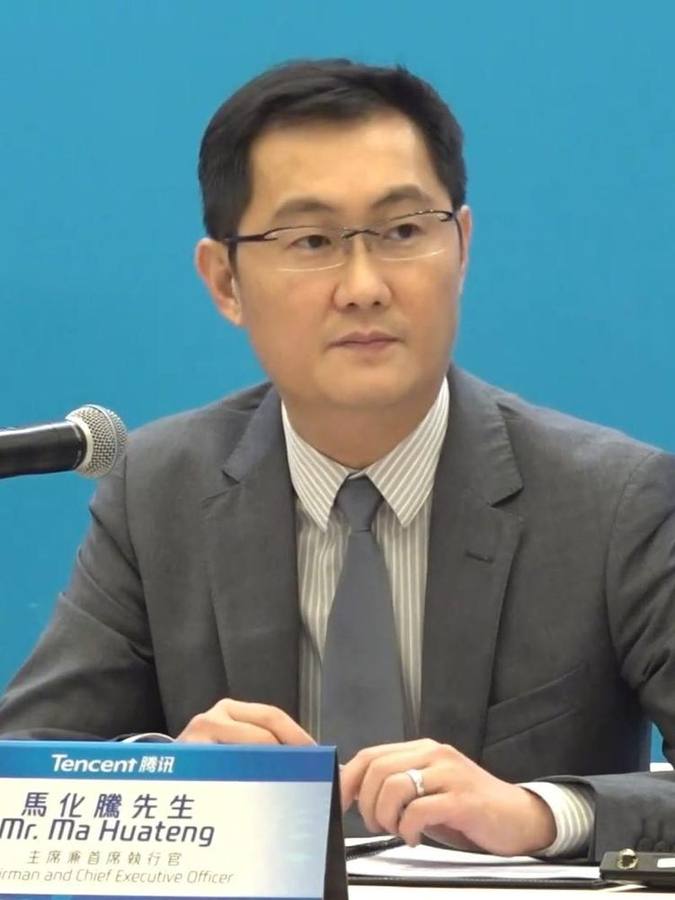
Ma Huateng: on Tencent's 2004 Hong Kong prospectus, the early shareholders were IDG and PCCW at about 20 per cent each, with South Africa's MIH later building to 46.5 per cent — all professional institutions and foreign capital; Richard Li is the son of a Hong Kong businessman, not a Communist red second generation. (Source 8) Lei Jun: Xiaomi's 2018 prospectus lists its main institutional holders as Morningside, DST, Qiming, Shunwei, IDG and Singapore's GIC — professional and foreign capital — and a full-text search of the CDR prospectus for “Boyu” returns zero hits; Shunwei, moreover, is a fund Lei himself co-founded, investing alongside its founder, which is not entry by anyone else. (Source 23) Zhang Yiming: ByteDance's early holders were professional institutions such as SIG Asia, Sequoia and Shunwei; the roughly one per cent “golden share” taken in Beijing Douyin Information Service in 2021 by the China Internet Investment Fund, under the cyberspace administration, together with a board seat, was held by a state institution and is expressly cut apart from red-family personal vehicles — though ByteDance is unlisted and its full register is not public, so the finding carries its qualification. (Source 10) Colin Huang: Pinduoduo's SEC Form F-1 records its pre-listing holders as Banyan, Sequoia China, Tencent and other professional and industrial capital, with no red-family vehicle. (Source 9) Chen Tianshi: the full table of Cambricon's 32 promoters in its STAR Market prospectus was checked name by name — Chinese Academy of Sciences state platforms, Alibaba's venture arm and professional institutions appear; no Boyu- or CPE-type red-family fund appears. (Source 20) The Zhang Gang family: Xinfa Group is unlisted and has issued no bonds; the checkable registry position shows the holding platform Chiping Xinyou owning 100 per cent, with Zhang Gang holding 51.04 per cent of that platform and his mother Song Chuanying 19.62 per cent, while the remaining roughly 29.4 per cent of holders are unnamed — so the only honest formulation is “not found within the checkable range”, never “excluded”. (Source 34) Zhao Changpeng: Binance's funding came from its 2017 initial coin offering, which raised about US$15 million; Sequoia Capital's proposed investment is documented in the Hong Kong High Court litigation files of 2018, but the transaction never closed, and Sequoia is in any case a professional institution; Binance's shareholder register has never been publicly disclosed, and the finding carries that reservation. (Source 35)
VIII. The Grade C Rumour Exclusion Table (fourteen items)
The fourteen named claims below are all in circulation. Each is registered, and each is given the reason for its exclusion or downgrading. They appear in this table only, and in no finding in the text; the purpose of registering them is that a reader who searches for one of these claims should find, on this same page, a statement of its evidentiary status.
- C-1, “Jack Ma is the Jiang family's white glove”: a self-media amplification with no document behind it; the text's strongest supported formulation stops at Boyu's 0.55 per cent entry into Alibaba and its two Ant rounds. Not adopted.
- C-2, Colin Huang's “ministerial family / godson of a Standing Committee member” story: a document-free self-media claim, inconsistent with his published CV. Excluded.
- C-3, Zhang Yiming's “a Standing Committee family stands behind him” story: a document-free self-media claim. Excluded; ByteDance's early register consists of professional institutions.
- C-4, Zhong Shanshan's “an uncle by marriage was a vice minister of the United Front Work Department, a cousin a deputy commander of the Navy” story: found only in a column article, inconsistent with the obituary record and supported by no document or major paper; collateral relatives' posts would not in any case make the man himself red second generation, and there is no stake record. Excluded.
- C-5, the story that Zhong Shanshan's grandfather was “an early CCP branch secretary in Zhuji”: recollected material relayed in a profile, with no archival document; even if true it would concern a local early Party member, and it is not used as a basis for any characterisation.
- C-6, the claim that Lü Xiangyang “rose to president of a People's Bank branch in 1993”: found only in a wiki entry and plainly inconsistent with his age and timeline. Not credited; only his employment at the PBC's Anhui branch is registered, as a CV point still to be verified.
- C-7, the Chen Jianhua “Macau gambling / assisted an investigation in 2006” story: zero hits across multiple keyword searches, treated as a probable garbled transmission and expressly not credited; the checkable event is the 2016 disappearance reporting, registered at Grade B.
- C-8, “Li Shufu is Xi Jinping's brother-in-law; his wife Peng Lijuan is Peng Liyuan's sister”: refuted by a document — Geely Automobile's October 2018 Hong Kong rights disclosure records Li Shufu's spouse as Wang Li, a Geely spokesman stated the correction expressly to Reuters, and Bloomberg reported the same at the time. (Source 32)
- C-9, “60 per cent of Li Ka-shing's holding belongs to the Jiang family; he is only a white glove”: sourced to a Guo Wengui-network post, with no document of any kind behind it. Excluded.
- C-10, the claim that Li Ka-shing was an early CITIC director channelling ports through PLA-linked companies: relayed from 1990s American political and intelligence-circle literature, with no filing of any stake in Cheung Kong or Hutchison; the partner in question denied the PLA link at the time. Registered, not adopted.
- C-11, “Jiang Zhicheng controls US$500 billion”: sourced to a New Federal State of China network short video, and out of all proportion to Boyu's publicly reported scale. Excluded.
- C-12, the DeepSeek “Zhejiang state capital / national team stake” story (2025–26 version): unsupported at the time it circulated; the national AI fund's direct investment that appeared in June 2026 is a later institutional state-capital fact and must not be backfilled into an “always had the national team” narrative.
- C-13, insinuations that DeepSeek “has the national team behind it / is close to the government”: commentary-grade insinuation with no capital-layer fact. Excluded; the capital layer is judged only on financing documents and graded reporting.
- C-14, embellished posts giving Zhao Changpeng a “state security system / red background” family history: second-hand fabrication posts running directly against the major-paper account of his origins — his father was branded a “capitalist roader” during the Cultural Revolution, sent down, and the family emigrated to Canada. Excluded. (Source 35)
One honest “no hit” is also registered: cross-searching the names of Cheng Yu-tung, He Xiangjian and Zhang Gang against red-family vehicles produced no formed, named rumour for any of the three, and no entries have been invented to fill the table. Claims of the Cambricon “national team orders” type concern business structure rather than the shareholder layer, and are likewise not registered.
Material Gaps (stated faithfully)
- Xinfa's unnamed holders: Xinfa is unlisted and has issued no bonds; only about 70.6 per cent of its shareholder structure can be checked through registry relays, and the remaining roughly 29.4 per cent of holders are unnamed and unfindable — the weakest check on the whole list. The Zhang Gang finding carries its restricted statement and must not be written as an exclusion.
- ByteDance and Binance registers are not public in full: the Zhang Yiming and Zhao Changpeng findings are limited to “not found within the publicly checkable range”, and Zhao's entry additionally carries the “register never disclosed” reservation.
- DeepSeek's second round has no documents: the Boyu RMB 3.5 billion figure and all related detail come from anonymous-source financial reporting, with no company announcement, registry change or prospectus; closing status, holding vehicle and voting arrangements are all unstated — the grade is capped at B, pending the pre-IPO prospectus.
- Liu Lefei's personal stake in CPE is undisclosed: public documents prove only that Liu Lefei is CPE's chairman and chief executive; his personal shareholding and control percentage in CPE have not been publicly disclosed, so “Liu Lefei controls CPE” can be characterised only at the level of the fronting figure, with the personal-equity layer in doubt.
- The ceiling on the Boyu Phase II characterisation: Jiang Zhicheng's own name does not appear in the fund partner list disclosed in CATL's prospectus, so the characterisation stops at “affiliation through the Boyu management organisation” and cannot be written as a direct personal holding by Jiang Zhicheng.
- Huang Shilin's pre-entrepreneurship service: the specific unit and post of his civil-service period cannot be found — the prospectus's formal CV begins in 2004 and media accounts say only “civil servant” — and nothing has been invented to fill it.
- NetEase's early register: the original 2000 Form F-1 shareholder table was not retrieved page by page; the pre-listing rounds are cross-supported by consistent multi-outlet reporting and the listing-date holding structure.
- Minor discrepancy register: one relayed list puts Zhang Gang at rank 19, against the Hurun official and full-list rank of 20; this piece follows the official rank 20. The year of Cheng Yu-tung's arrival in Hong Kong and takeover of Chow Tai Fook is given as both 1943 and 1946; neither affects any finding.
Source List
- Hurun Research Institute, release of the 2026 Hurun Rich List, 27 October 2026 (wealth as of 1 September 2026) — the list basis (Grade A).
- Reuters, “The princeling of private equity” (Boyu Capital / Jiang Zhicheng), 10 April 2014 — major-paper investigation (Grade A).
- The New York Times, “Alibaba's I.P.O. Could Be a Bonanza for the Scions of Chinese Leaders”, 20 July 2014 — major-paper investigation (Grade A).
- Alibaba Group statement of 21 July 2014 (confirming Boyu 0.55%, CITIC Capital 1.1%, CDB Capital 0.47%, and denying development by connections), carried 22 July 2014 — the company's own admission (Grade A).
- Alibaba Group, “Alibaba Closes US$7.6 Billion Share Repurchase…”, 18 September 2012 — company announcement (Grade A).
- Reuters (Kane Wu), “Exclusive: Ant investor Boyu Capital targets $6 billion…”, 24 February 2021 (Boyu in Ant's 2016 US$4.5 bn and 2018 US$14 bn rounds) — major paper (Grade A).
- Euromoney, “Spinning Ant's IPO”, 19 February 2021 (relaying the Wall Street Journal on Beijing Jingguan / Beijing Zhaode) — reporting grade (Grade B).
- Tencent Holdings 2004 Hong Kong prospectus (IDG / PCCW / MIH structure) — exchange filing (Grade A).
- Pinduoduo Inc., SEC Form F-1, 2018 — regulatory filing (Grade A).
- Beijing Douyin Information Service shareholding / CAC “golden share” arrangements, announcements and reporting, 2021 (Grades A/B).
- CATL prospectus (submission draft), disclosed by the CSRC, filed 12 March 2018 (Boyu Phase II at 1.18% pre-IPO) — regulatory filing (Grade A).
- Statement on CATL's share-capital evolution, CNINFO, 22 May 2018 (Boyu Phase II subscribed RMB 1 bn in the 2016 round) — disclosure document (Grade A).
- Yemacaijing, May 2025 (Hillhouse entered only via the 2020 private placement) — financial reporting (Grade B).
- Midea Group allotment results announcement, Hong Kong Exchange, 16 September 2024 (CPE subscribed 7,113,800 shares) — exchange filing (Grade A).
- Midea Group 2020 ultra-short-term financing bill prospectus (carrying the 2001 MBO history) — disclosure document (Grade A).
- CPE institutional profile and Liu Lefei's chairmanship / CEO role (CPE official site and related profiles) — institutional material (Grade A).
- 36Kr / Waves, the “Liang Wenfeng's ledger” series (2023; 27 May 2026) (High-Flyer self-funding, no external capital); Wuchuan government site / Zhanjiang Daily profile (both parents primary-school teachers) (Grades A/B).
- 21st Century Business Herald, 1 June 2026 and 30 October 2026 (DeepSeek's two rounds; Boyu's RMB 3.5 bn in round two) — financial reporting, anonymous sources (Grade B).
- Reuters / Bloomberg / Wall Street Journal reporting on the DeepSeek round involving Boyu, from 22 October 2026 — major papers, anonymous sources (Grade B).
- Cambricon prospectus, Shanghai Stock Exchange, 2020 (the full table of 32 promoters) — regulatory filing (Grade A).
- “Chen Tianshi: writing a life with intelligence”, Chinese Academy of Sciences official profile — official institutional piece (Grade A).
- Cambricon 2023 annual report (disclosing the December 2022 US Entity List inclusion) — company annual report (Grade A).
- Xiaomi CDR prospectus (submission draft), CSRC, filed 14 June 2018 (full-text search: no “Boyu”) — regulatory filing (Grade A).
- MIIT announcement reporting: BAIC licence cancelled (June 2023), SU7 filed under BAIC Off-road (November 2023), Xiaomi's independent qualification (July 2024) (Grades A/B).
- Muyuan Foods H-share prospectus, Hong Kong Exchange, 29 January 2026; IFC project material (2010 subscription, 5.66%) — exchange filing (Grade A).
- Wantai BioPharm prospectus (Yangshengtang's 2001 acquisition of 95% of Wantai); Nongfu Spring pre-IPO holding of 87.44% with zero external institutions (Economic Observer, 30 April 2020) (Grades A/B).
- Hengli Group bond disclosure documents, Shanghai Stock Exchange (backdoor structure, controller history); CDB-led syndicate reporting (RMB 31 bn + US$1.2 bn in loans) — disclosure documents (Grade A).
- Junhou law firm legal opinion on Luxiang's asset purchase, CNINFO, 29 January 2013; BYD 2002 Hong Kong prospectus — legal and exchange filings (Grade A).
- “Ding Lei: a NetEase believer with attitude”, Cyberspace Administration of China official site, 31 August 2016; Pedaily, “Ding Lei and NetEase's 23 years”, June 2020 (Baring Asia, c. US$5 m in 1999) (Grades A/B).
- Chow Tai Fook 2011 Hong Kong prospectus and IPO reporting; Boyu Capital's 2010 founding reporting (Grades A/B).
- “The Li Ka-shing Foundation becomes a Boyu Capital investor”, HK01, 14 July 2025 (the reverse LP relation) — reporting (Grade B).
- Geely Automobile October 2018 Hong Kong rights disclosure (Li Shufu's spouse is Wang Li) and Geely spokesman's correction to Reuters; Bloomberg reporting of the same period — exchange disclosure (Grade A).
- “Li Shufu discloses the funding mix of the Volvo acquisition”, Sina Finance / Securities Times, August 2010 (local state capital stakes plus syndicated loans) — reporting (Grade B).
- Xinfa Group official corporate history; central environmental inspection feedback and Shandong notices, 2017 (53 Mt of non-compliant capacity); Chiping Xinyou registry summaries (Zhang Gang 51.04%, Song Chuanying 19.62%) (Grades A/B).
- Wall Street Journal 2023 reporting on Zhao Changpeng's origins (father branded a “capitalist roader” and sent down); Sequoia–Binance dispute, Hong Kong High Court documents, 2018; US Department of Justice Binance plea announcement, November 2023 — major paper, court and official documents (Grade A).
Contact: endccpworld@proton.me