
第171案 | 邹家成Case 171 | Owen Chow Ka-shing
邹家成,1997年2月10日生,香港护理学生、藏传佛教徒,2019年反修例运动前线参加者;2019年7月1日他随示威者进入立法会会议厅,其后承认暴动罪,2024年3月16日被判监61个月零15天;2020年他与张可森、梁晃维等共同发起《墨落无悔 坚定抗争》声明,并在民主派初选中于新界东得16,758票排第五取得提名;2021年1月6日清晨国安处上门拘捕,2月28日他与另外46人同被控串谋颠覆国家政权,高等法院法官杜丽冰同年6月22日特许保释让他读完护理学位,其姐以五万港元人事担保;2022年1月12日他到北角警署报到时因保释期间的社交媒体帖文再被拘捕,次日保释被撤销,自此一直羁押;47人案审讯历时118天,他自辩五天,2024年5月30日罪名成立,11月19日高等法院判刑理由[2024] HKCFI 3298认定他为「积极参与者」、以其发起《墨落无悔》声明为加刑因素,量刑起点八年、仅扣减三个月,判监七年九个月,与暴动刑期分期执行,合计十二年零十个月又十五天,是47人中实际服刑最长一人,推算2032年11月才可获释;2026年2月23日上诉庭驳回其定罪与刑期上诉,6月12日联合国任意拘留问题工作组第26/2026号意见认定其拘留属任意拘留、要求立即释放及赔偿,8月10日上诉庭批出终审上诉证书,他仍在服刑,据其自述曾单独囚禁约三年。Owen Chow Ka-shing, born 10 February 1997, is a Hong Kong nursing student and Tibetan Buddhist who was on the front lines of the 2019 protests; on 1 July 2019 he entered the Legislative Council chamber during its storming, later pleaded guilty to riot, and on 16 March 2024 was sentenced to 61 months and 15 days. In 2020 he co-authored the 'Ink Without Regrets' declaration with Sam Cheung, Fergus Leung and others, and won 16,758 votes — fifth place in New Territories East — in the pro-democracy primaries. Arrested by the National Security Department at dawn on 6 January 2021 and charged on 28 February 2021 with conspiracy to commit subversion alongside 46 others, he was granted High Court bail on 22 June 2021 by Esther Toh J so he could finish his nursing degree, his sister standing a HK$50,000 surety; on 12 January 2022 he was re-arrested while reporting to North Point Police Station over social-media posts made on bail, his bail was revoked the next day, and he has been in custody ever since. After a 118-day trial in which he testified for five days, he was convicted on 30 May 2024, and on 19 November 2024 the Reasons for Sentence [2024] HKCFI 3298 placed him as an 'active participant', treated his initiation of the Ink Without Regrets declaration as an aggravating factor, set an eight-year starting point reduced by three months only, and jailed him for seven years and nine months, consecutive to the riot term — a combined twelve years, ten months and fifteen days, the longest total of any of the 47, with release projected for November 2032. The Court of Appeal dismissed his appeals on 23 February 2026; UN WGAD Opinion No. 26/2026 of 12 June 2026 held his detention arbitrary and called for his immediate release and compensation; on 10 August 2026 the Court of Appeal granted a certificate for a final appeal, and he remains in prison, having by his own account spent about three years in solitary confinement.
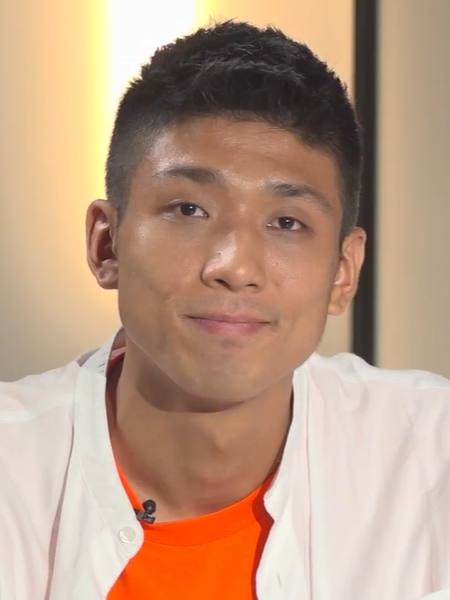
1. First, correct three things: his name, New Territories East — not West — and a re-arrest in 2022, not 2023
Three facts in this file are the ones most easily got wrong, and the brief for this page got all three wrong, so they are fixed here at the top. First, the name: he is Chow Ka-shing, 鄒家成 in Chinese — so he appears in the defendant list of the Reasons for Sentence [2024] HKCFI 3298, in UN WGAD Opinion No. 26/2026, and in every Hong Kong newsroom’s style. The name in the commissioning brief matches no public record for this man and is treated here as an error; the page uses Chow Ka-shing throughout and leaves this note as the trace. Second, the constituency: he stood in the 2020 primaries in New Territories East, not New Territories West — the sentencing summary groups him expressly with the New Territories East candidates, and the primary results give him 16,758 votes and fifth place there. Third, the bail story: he was not re-arrested in January 2023. He was granted bail on 22 June 2021, re-arrested on the evening of 12 January 2022 while reporting to a police station, and had his bail revoked by a court the next day, 13 January 2022. He has been in custody continuously since. Move that year and the whole chronology of the case collapses, which is why this page begins with it.
One more piece of arithmetic belongs at the front, because it is the most striking number in the case. Chow carries two sentences, not one. For the 2019 Legislative Council riot, on 16 March 2024: 61 months and 15 days. For the Hong Kong 47 subversion conspiracy, on 19 November 2024: seven years and nine months, recorded in the sentencing table as consecutive to the earlier term. Together: twelve years, ten months and fifteen days — the longest total time to be served by any of the 47, longer in calendar terms than the ten years given to Benny Tai, whom the court called the mastermind. Supporters and Amnesty International converge on the same projection: the earliest he can leave prison is November 2032, and even that assumes no further tightening under the Safeguarding National Security Ordinance of 2024, which has already made the customary one-third good-behaviour remission hard for national-security prisoners to obtain. A nursing student born in February 1997 went in at 24. On paper, he comes out at 35. This page is the record of how those twelve years were assembled, step by step.
2. A nursing student and a Buddhist: born 1997, on the marches at fifteen
Owen Chow Ka-shing was born on 10 February 1997 in Hong Kong — the date recorded in the UN Working Group’s opinion, in material submitted on his behalf and answered by the Hong Kong government. He grew up in post-handover Hong Kong and joined his first pro-democracy march at fifteen, according to Amnesty International’s 2026 case material. He studied nursing — a fact that later entered a court judgment, because in June 2021 a High Court judge granted him bail substantially so that he could finish that degree. He is a practising Tibetan Buddhist. On 27 February 2021, the day before he was due to report to a police station to be charged with subversion, he had the six-syllable mantra tattooed on his arm — a detail preserved by the translators of his prison writings, its date locking exactly against the charge date. He is a voracious reader: inside prison he has fought the Correctional Services Department over books in at least three separate proceedings, set out in Section 11. He has always wanted a dog, Amnesty’s material notes. None of this is decoration. In a file otherwise made of courtrooms and cellblocks, the man has to be put on the record first, or the numbers that follow have nothing to weigh against.
The 2019 anti-extradition movement was his generation’s coming of age. He has said he was on the very front line. In the District Council elections of November 2019 he stood in Tai Wai — one of the few seats where two pro-democracy candidates ran against each other — and lost a four-way race with 748 votes, behind the DAB incumbent Kelly Tung and the Democratic Party’s Ng Ting-lam. Losing did not end his run: in 2020 he entered the pro-democracy primaries for the Legislative Council election. In retrospect, those two steps — the street and the ballot box — map precisely onto the two criminal cases that would later be built against him: the Legislative Council riot case from 2019, and the Hong Kong 47 case from the primaries. Very few of his generation were prosecuted down both tracks at once. None of the 47 was given more total time than he was.
3. 1 July 2019: the night inside the Legislative Council, and 61 months and 15 days
1 July 2019 was the twenty-second anniversary of the handover. After a march of a million people failed to move the government to withdraw the extradition bill, hundreds of protesters broke into the Legislative Council Complex that night, smashing glass, entering the chamber and defacing the emblem and the walls. Chow was there, and he went into the chamber. His own characterisation of that night borrowed Martin Luther King Jr.’s line that a riot is “the language of the unheard”; in mitigation in the riot case he argued that when citizens suddenly turn radical, it is a cry of desperation when every path has been blocked, and that the government’s refusal to withdraw the bill after a million people marched was the immediate cause of the incident. The court heard all of that. It is on the record, and this page keeps it there.
Procedurally, he pleaded guilty to riot. On 16 March 2024 District Judge Ernest Lin sentenced twelve defendants in the case to terms between four and a half years and six years and ten months. Chow, on his guilty plea, received 61 months and 15 days — five years, one month and fifteen days — at the heavier end for those who pleaded; the actor Gregory Wong, who had pleaded not guilty, received six years and two months, and Ventus Lau, who pleaded guilty, 54 months and 20 days. The judge described the storming of the legislature as a direct challenge to the government with far-reaching effects. This page’s filing position is narrow: his presence in the chamber is established by his own plea, and no factual dispute is manufactured here. The live dispute is over characterisation and scale — a five-year-plus riot sentence for an occupation in which no one was charged with injuring anyone sits far above Hong Kong’s pre-2019 scales for comparable conduct, and that gap remains contested in Hong Kong legal debate. When sentence was passed, the 47 trial had just ended and its verdict was still pending: Chow became a convicted prisoner on the riot count before the subversion court had even ruled.
4. The 2020 primaries: fifth in New Territories East, and the declaration that cost him a year
In 2020 the legal scholar Benny Tai proposed the “35+” plan: the pro-democracy camp would hold primaries to coordinate its candidates, seek a majority in the 70-seat Legislative Council, and then use the Basic Law power to veto the government’s budget to press for the “five demands” of the 2019 movement. The primaries, organised by Power for Democracy and allied platforms, were held on 11–12 July 2020 and drew more than 600,000 voters. Chow stood in New Territories East under a strongly localist slogan — “reject colonisers, national resistance against tyranny” in the usual rendering. After the National Security Law came into force on 30 June 2020, he deleted the words “Hong Kong nation” and “colonial” from his campaign materials; High Court judge Esther Toh would later record, in granting him bail, her belief that he had not explicitly advocated Hong Kong independence during the primaries — a finding that mattered, because it was one of the two stated reasons he was allowed out at all. In the primary he won 16,758 votes, fifth in New Territories East, and with it a nomination for the general election.
What lifted his sentence above every other candidate’s was a document from before the vote. Around 10 June 2020, Chow, Sam Cheung, Fergus Leung and other young candidates authored an online declaration — “Ink Without Regrets” — in which signatories pledged that, if elected, they would use a legislator’s powers, including the budget veto, to force the government to answer the five demands: withdrawal of the extradition bill, release of arrested protesters, an independent inquiry into police violence, and the rest. In the language the prosecution and the court later used, the declaration was designed to “bind” the participants so none could defect after election. In its authors’ language, it was a public covenant with the voters. At sentencing in 2024 the court held expressly that the declaration was an aggravating factor in his case: as one of its initiators, he had been “putting every effort in binding the participants to ensure its success”. The price can be measured precisely. The starting point for most New Territories East candidates was seven years; his was eight. The extra year is the declaration.
5. 6 January 2021: the 6 a.m. knock, and the charge sheet of 28 February
On 31 July 2020 the government postponed the Legislative Council election for a year, citing the pandemic. None of the primary winners ever contested the general election. The other machinery did not stop. In the early morning of 6 January 2021, the police National Security Department carried out the largest arrest operation since the NSL took effect, detaining more than fifty organisers and candidates in a single sweep. The UN Working Group’s opinion records the source’s account of Chow’s arrest: at about 6 a.m. officers knocked on his apartment door and threatened to break in if he did not open it immediately; he let them in, and was arrested without being shown a warrant and without being told the reason at the time. This page files that passage at its true grade — it is the petitioning source’s account as transmitted by the Working Group; the Hong Kong government’s late response did not confirm it item by item. On 7 January he was released on police bail.
On 28 February 2021 he reported as directed to Tsing Yi Police Station and was charged — with 46 others that same day — with one count of conspiracy to commit subversion, the charge period running from 1 July 2020 to 7 January 2021 (Reasons for Sentence, para. 1). The 47 were produced at West Kowloon Magistrates’ Courts the next day in a hearing that ran for days; almost all were refused bail. Chow was remanded to Lai Chi Kok Reception Centre. The day before he reported, he had had the mantra tattooed on his arm: a 24-year-old nursing student walked into the police station with his faith newly inked on his skin. Of the nearly four years that followed, he would spend only about six months outside a cell — the bail period in the next section.
6. 22 June 2021: bail, granted so he could finish a nursing degree
Bail in national-security cases runs against a statutory wall: under NSL Article 42(2), a judge must not grant bail unless there are sufficient grounds to believe the defendant will not continue to commit acts endangering national security. Of the 47, only a minority ever cleared it at the High Court. Chow did, on 22 June 2021, before Esther Toh J. Her written reasons, released on 12 August 2021, were concrete: bail was granted to enable him to finish his nursing degree, and because the judge believed he had not explicitly called for Hong Kong independence during the primaries. The money was HK$50,000 cash, with his elder sister standing a further HK$50,000 surety. The conditions were the standard stringent national-security set: a curfew; reporting to a police station daily in a set evening window; surrender of travel documents and no departure from Hong Kong; no statements or acts that could reasonably be regarded as endangering national security; no social-media posts or interviews about the case or politics; no part in organising or assisting any election; no contact with foreign government personnel. He went back to his studies and graduated in December 2021 — the one thing the bail was for, completed on schedule. It was also, in effect, the last ordinary thing in his life on the public record.
7. 12–13 January 2022: arrested at the report desk, bail revoked — the line was drawn around “posts”
On the evening of 12 January 2022, Chow reported to North Point Police Station as his conditions required — and was arrested there. His Facebook page carried a short post that night: he had been told he had breached his bail conditions, a video interview was being arranged, and he would appear at West Kowloon Magistrates’ Courts the next afternoon. The South China Morning Post reported, citing sources, that he was accused of making remarks and committing acts during his bail that could reasonably be regarded as endangering national security. On 13 January 2022, Acting Chief Magistrate Peter Law agreed with the prosecution that Chow had breached the stringent conditions, which covered speech, participation in elections and contact with foreign personnel; the details of the breach were subject to reporting restrictions. The public record of the wider case, and multiple reports since, identify the posts in question as commentary on two of the most sensitive episodes of 2019: the Prince Edward station incident of 31 August 2019 and the Yuen Long mob attack of 21 July 2019. He was handcuffed in court, waved to the public gallery, and was answered by shouts of encouragement from dozens of supporters. He reserved the right to reapply for bail on 19 January. He never got it. From 13 January 2022 he has remained in custody — on remand, then as a convicted prisoner — for close to five years as this page is filed.
The UN Working Group’s 2026 opinion belongs beside this section. It criticised bail conditions framed in the catch-all language of national security because such conditions make it “difficult, if not impossible” for a person on bail to regulate his own conduct so as to be sure of keeping his liberty: the line is drawn in fog, and whether it was crossed is decided afterwards, by the enforcing authority. Chow’s case is the concrete footnote to that criticism. He did not abscond. He did not miss a report. He did not approach a witness. He lost his liberty over posts about two public events — events that hundreds of thousands of Hongkongers had marched about. This page files both layers side by side: the court’s finding of breach stands on the record; the clarity and proportionality of the conditions breached have been formally questioned by the UN’s specialist mechanism. The reader can hold both.
8. The 118-day trial: no jury, three designated judges, and five days in the witness box
The Hong Kong 47 prosecution is the largest brought under the National Security Law. Thirty-one defendants pleaded guilty. Sixteen pleaded not guilty and stood trial — Chow among them; in a statement dated 28 August 2022 and later published on his social media, he explained why he would not plead guilty. The trial opened on 6 February 2023 in the High Court, sitting in the West Kowloon court building, before a three-judge panel — Andrew Chan, Alex Lee and Johnny Chan, all NSL designated judges — and without a jury, under the NSL arrangement that substitutes a judicial panel for jury trial. The prosecution case was carried in part by organisers turned prosecution witnesses, including Au Nok-hin and Andrew Chiu. The trial ran for 118 days; closing submissions began on 29 November 2023 and the hearing concluded that December. Chow elected to testify. From 4 to 10 August 2023 — days 99 to 103 of the trial — he spent five days in the witness box, among the longest testimonies of any defendant, denying the conspiracy and the prosecution’s reading of the primaries agreement under cross-examination. Public reporting preserves only fragments of those five days, and this page does not reconstruct a defence from fragments; what is fixed is the procedural fact: he denied the charge on oath and was cross-examined for five days.
On 30 May 2024 the panel delivered its verdict: fourteen of the sixteen were convicted; barrister Lawrence Lau and social worker Lee Yue-shun were acquitted — the first acquittals in a national-security trial — and the Department of Justice at once announced an appeal against the acquittals, which the Court of Appeal dismissed in February 2026. The verdict reasons held that, had the plan been carried out, it would have created a “constitutional crisis” for Hong Kong and seriously interfered with the government’s performance of its functions. Reuters recorded Chow, then 27, listening stone-faced in the dock. By verdict day he had spent two years and four months in pre-trial detention since the January 2022 revocation; by sentencing day, close to two years and ten months. This page files the length of that pre-trial detention where it belongs — inside the procedural-justice ledger of the case, where UN experts and human-rights organisations have repeatedly entered it as far beyond the norm for comparable cases.
9. Mitigation: he said he never imagined standing for election could endanger national security
Mitigation in the 47 case was heard in batches from June 2024. The New Territories East group, Chow’s group, addressed the court on 2 September 2024. Chow submitted a handwritten mitigation letter dated 15 July 2024, later published in full on his social media. In it he said he could never have imagined that taking part in an election could endanger national security, and he wrote of his years in detention and of a nursing career interrupted before it began. The letter moved nothing on the question that decided his number: the court held to its finding that he was an initiator of the IWR Declaration, treated the declaration as an aggravating factor, and allowed him three months, and three months only, for ignorance of the law. On the morning of sentencing day, a statement he had prepared was published on his social media — a prisoner addressing the public on the day of his sentence by the only channel left to him. This page files the mitigation at the level of text and procedure: the letter is one of the few first-person documents in this file that does not reach the reader through a court’s paraphrase. Full translations of it, of his August 2022 statement on pleading not guilty, and of his sentencing-day statement have been published by the translator Brian Kern and others; this page registers their existence and dates rather than reprinting them.
10. Sentencing, 19 November 2024: how seven years and nine months was built — checked line by line against the judgment
On 19 November 2024 the Court of First Instance handed down its Reasons for Sentence, [2024] HKCFI 3298. This page checks Chow’s part — defendant D37 — against the judgment itself, not against any secondary summary, and sets out the build item by item. The case summary’s paragraph 65, reflecting paragraphs 282–283 and 285–286 of the Reasons, records: first, he was convicted after trial and placed in the “active participant” category — the court’s framework ran from “principal offender” through “active participant” to lesser participants, with primary candidates falling in principle into the active band. Second, he was one of the initiators of the IWR Declaration, which showed, in the court’s words, that he was putting every effort into binding the participants to ensure the scheme’s success; the declaration “did constitute an aggravating factor”. Third, the notional starting point was therefore set at eight years (96 months) — above the seven-year starting point of most of his New Territories East co-defendants, and level with Alvin Yeung’s eight years. Fourth, having been convicted after trial he received no one-third guilty-plea discount; the only reduction was three months for ignorance of the law — the possibility that he had been misled about the scheme’s lawfulness. Fifth, the result: seven years and nine months (93 months). It was the second-longest sentence of the 45, behind only Benny Tai’s ten years, and longer than the seven years and three months given to Gordon Ng, whom the court treated as an organiser-side figure.
How the term stacks with the riot sentence is the detail most accounts drop. The sentencing table compiled from the judgment by Columbia University’s Global Freedom of Expression project records Chow’s 93 months as “consecutive to prior sentence”. His co-defendant Ventus Lau was expressly sentenced consecutively in the Reasons’ summary as well. The arithmetic is therefore not seven years and nine months but 61 months and 15 days plus 93 months — 154 months and 15 days, twelve years, ten months and a fortnight. Allowing for time on remand and the roughly six months he spent on bail, supporters project release in November 2032. One institutional caveat completes the picture: since the Safeguarding National Security Ordinance took effect in March 2024, early release for good conduct has been restricted for national-security prisoners, and Amnesty International’s February 2026 statement recorded that at least eight of the 47 had reportedly been denied early release on vague new national-security grounds. The year 2032 is itself built on the assumption of no further tightening.
11. Three small cases inside the big one: two Buddhist books, a Botticelli, and one complaint form
Inside prison, Chow did not go quiet. The public record holds at least three fights, all about paper. The first was about books. His family tried to deliver two books on Chinese Buddhism to him; the Correctional Services Department banned them. He wanted to complain to the Ombudsman — but a prisoner’s complaint normally travels through CSD screening. On 2 May 2023, during a legal visit at Lai Chi Kok Reception Centre, he handed the complaint form to his solicitor, Phyllis Woo, and asked her to deliver it directly. Both were prosecuted for carrying an unauthorised article out of prison. In July 2024 both were convicted after trial. On 14 August 2024 Principal Magistrate Ivy Chui sentenced Chow to three days’ imprisonment and fined Woo HK$1,800, calling the bypassing of security procedures “reckless and foolish” when legitimate channels existed; defence counsel Jeffrey Tam announced an appeal at once. Chow’s mitigation letter in that case argued the problem was systemic: he listed repeated book bans and punishments, saying that after he insisted on complaining his cell was searched seven times, that on the last occasion he was punished over a Portuguese egg tart in his possession, placed in solitary confinement, made to exercise and shower alone, with neighbouring inmates moved away. This page files that passage as his own account, given in mitigation; the CSD has not answered it item by item.
The second fight was also about a book. He applied to the High Court for judicial review of the CSD’s refusal of a book sent by a friend — refused, on the translators’ account of his prison writings, because it contained a reproduction of Botticelli’s “The Birth of Venus” and therefore “nudity”. Six further books were reportedly refused on political grounds, touching on China, the Umbrella Movement, Taiwan’s Sunflower Movement and self-censorship in Hong Kong’s press. The third front is the writing itself. From 2025 his prison essays have been published through his social media. In a piece dated 10 February 2025 — his twenty-eighth birthday — and published on 24 September 2025, he wrote that he had been trapped in a solitary cell since he was 24: roughly three years of solitary confinement. Amnesty International’s 2026 campaign material adopts the same figure: “at least three years in solitary confinement”. Whether the solitary confinement was imposed as punishment, and whether it continues, has no itemised public answer from the CSD, and this page records the gap rather than filling it. A nursing student’s most sustained campaign in prison has been for the right to read and to complain. In the ledger of this case, that weighs no less than anything that happened in a courtroom.
12. The family page: a sister’s HK$50,000 surety, and books that never got in
The public record about Chow’s family is exceptionally thin, and this page writes it thin rather than padding it. Three points can be fixed. First, his elder sister stood his HK$50,000 surety in June 2021. A surety in a national-security case is not a formality: the surety pledges her own money and her obligation to the court for the defendant’s conduct, and when bail was revoked she faced the legal exposure that attaches to a forfeited recognizance. How the surety was dealt with after revocation has no public record. Second, his family were the people who tried to send the two banned books on Chinese Buddhism into the prison — the starting point of the complaint-form prosecution: a Buddhist’s family, carrying Buddhist books to a prison gate, and being turned away. Third, since his remand his social-media accounts have been run by others, publishing his prison writings and statements — the family-and-supporters’ main visible presence in the record. His parents’ names and occupations, the family’s home and finances, the frequency and content of prison visits: no public record, and each is marked here as such. One structural fact may stand in place of the missing detail. A family that takes a 24-year-old into a courtroom in 2021 is being asked to reorganise its life in units of a decade — sureties, visits, books at a gate, a social-media page kept alive by other hands. Those small, stubborn actions are the whole of this family’s resistance that the public record preserves.
13. Appeals: dismissed in February 2026, a final-appeal certificate in August
Chow appealed against both conviction and sentence. The Human Rights Foundation’s October 2025 petition material dates his appeal to 14 July 2025; this page files that date at the Foundation’s grade. On 23 February 2026 the Court of Appeal — Chief Judge Jeremy Poon, Justice Kevin Zervos and Justice Maggie Poon — dismissed the appeals of all twelve appellants, leaving sentences from four years and five months to seven years and nine months standing; his term sits at the top of that range. The same day, the Department of Justice’s appeal against Lawrence Lau’s acquittal was also dismissed. The appeal court held that the primary scheme was aimed at forcing the Chief Executive’s resignation and paralysing the government, and that the original seven-year sentencing benchmark was not manifestly excessive. Amnesty International answered the same day: none of the twelve had committed an internationally recognised crime; they were serving long sentences for exercising the rights to expression, association and participation in public affairs, and the court had missed a critical opportunity to start restoring justice.
The road is not yet closed. On 10 August 2026 the Court of Appeal granted a certificate to eleven convicted defendants — Chow among them, alongside Clarisse Yeung, Helena Wong, Winnie Yu, Gwyneth Ho, Lam Cheuk-ting, Gordon Ng, Cheng Tat-hung, Kalvin Ho, Raymond Chan and Leung Kwok-hung — certifying that the five questions of law raised by the defence involve points of law of great and general importance fit for the Court of Final Appeal, and allowing them to apply for leave for a final appeal. As of this page’s check on 17 November 2026, whether the Court of Final Appeal has taken up the leave application, and any hearing date, have no public record located by this check, and are filed as such. His present legal position is therefore exact: both convictions and both sentences are in force, and a leave application to the final court is the only judicial proceeding still alive.
14. The international record: from sentencing-day condemnation to a UN finding of arbitrary detention
The reaction to the 19 November 2024 sentences arrived within hours. The U.S. State Department “strongly condemned” them, called for the immediate and unconditional release of the 45 and of similarly detained political prisoners, and announced new visa restrictions on Hong Kong officials responsible for implementing the National Security Law; the U.S. Consulate in Hong Kong said the defendants had been prosecuted for normal political activity protected by the Basic Law. The European Union’s spokesperson Peter Stano called the sentencing “another unprecedented blow against fundamental freedoms, democratic participation and pluralism in Hong Kong”. Jeremy Laurence, for the UN Human Rights Office, said the office was gravely concerned at the use of security laws to criminalise conduct protected by the rights to expression, peaceful assembly and association. Britain’s Indo-Pacific minister Catherine West and Australia’s foreign minister Penny Wong (for the Australian defendant Gordon Ng) issued statements; the bipartisan chairs of the U.S. Congressional-Executive Commission on China called for sanctions on the judges, police and prosecutors involved; Amnesty International and Human Rights Watch condemned the sentences the same day. China’s foreign ministry spokesman Lin Jian replied that no country may interfere in China’s internal affairs or smear Hong Kong’s rule of law in the name of democracy. Both registers are filed here, as this site files them in every case.
The international procedure addressed to Chow personally ran its course in 2025–26. In October 2025 the Human Rights Foundation petitioned the UN Working Group on Arbitrary Detention on his behalf. The Working Group transmitted the allegations to the Hong Kong government on 27 October 2025; the government replied late, on 6 January 2026. In Opinion No. 26/2026, adopted at the Working Group’s 105th session (23 March–1 April 2026) and dated 12 June 2026, the Working Group held his detention arbitrary and in violation of international law: his statements “reflected his political opinions and agenda, not a scheme, but rather a commitment to advance the protestors’ demands using the constitutional powers of lawmakers”; there was “no evidence that the Hong Kong 47 attempted to violently overthrow the government”; and his detention flowed from the peaceful exercise of rights protected under international law. The Working Group called on the Hong Kong government to release him immediately and to provide compensation and other reparations, and it criticised bail conditions so framed that a person cannot know in advance where the line of liberty runs. The Foundation publicised the opinion on 27 July 2026. An itemised public response by the Hong Kong government to the opinion was not located in this check and is filed as no public record. In 2026 Amnesty International also made Chow one of the nine global faces of its Write for Rights campaign, asking supporters worldwide to write to the Hong Kong authorities demanding his immediate and unconditional release — a Hong Kong nursing student, carried by a letter-writing campaign on every continent.
15. Full timeline
10 February 1997: born in Hong Kong. Around 2012, aged fifteen: first pro-democracy march. 2019: takes part in the anti-extradition movement, by his account on the front line; 1 July 2019, enters the Legislative Council chamber during the storming of the complex; November 2019, loses in Tai Wai in the District Council elections with 748 votes. Around 10 June 2020: co-authors the “Ink Without Regrets” declaration with Sam Cheung, Fergus Leung and others; 30 June 2020, the National Security Law takes effect and he edits sensitive wording from his campaign materials; 11–12 July 2020, wins 16,758 votes, fifth in New Territories East, and a nomination; 31 July 2020, the Legislative Council election is postponed. 6 January 2021, early morning: arrested by the National Security Department; 7 January, released on police bail; 27 February, has the mantra tattooed; 28 February, charged with conspiracy to commit subversion at Tsing Yi Police Station and remanded; 22 June 2021, granted High Court bail by Esther Toh J to finish his nursing degree; December 2021, graduates. Evening of 12 January 2022: re-arrested while reporting at North Point Police Station; 13 January 2022, bail revoked at West Kowloon Magistrates’ Courts; in custody continuously from that date. 6 February 2023: the 47 trial opens; 2 May 2023, hands the Ombudsman complaint form to his solicitor during a legal visit at Lai Chi Kok; 4–10 August 2023, testifies for five days. 16 March 2024: sentenced for riot to 61 months and 15 days; 30 May 2024, convicted in the 47 case; July 2024, convicted in the unauthorised-article case; 15 July 2024, dates his mitigation letter; 14 August 2024, sentenced to three days in the article case; 2 September 2024, mitigation heard in the 47 case; 19 November 2024, sentenced to seven years and nine months, consecutive to the riot term. 10 February 2025: writes his prison account of three years in solitary confinement (published 24 September 2025); 14 July 2025, appeals conviction and sentence (per the Human Rights Foundation); October 2025, the Foundation petitions the UN Working Group for him. 23 February 2026: the Court of Appeal dismisses the appeals; 12 June 2026, WGAD Opinion No. 26/2026 holds his detention arbitrary; 10 August 2026, the Court of Appeal grants the final-appeal certificate. As of 17 November 2026 he remains in prison, with release projected for November 2032.
16. The official case, on the record
As in every file on this site, the prosecution and official position is set out in full in one place. The prosecution case was that the 47 conspired, through the primaries, to win a Legislative Council majority and then to veto budgets indiscriminately, forcing the Chief Executive to dissolve the legislature and ultimately to resign, paralysing the government — subversion of state power; the IWR Declaration was tendered as key evidence of the agreement and of the intent to be bound by it. The trial panel accepted that framework, holding that success would have produced a “constitutional crisis”. The sentencing logic in the Reasons was that the NSL Article 22 penalty bands are of reference value only for a conspiracy charge, that seriousness is assessed holistically by role and conduct, that primary candidates were active participants with a seven-year starting point, and that Chow’s initiation of the declaration raised his starting point to eight years, from which three months — and only three months — came off for ignorance of the law. No prosecution application to review his sentence appears in the public record located by this check. China’s foreign ministry answered the sentencing as a matter of sovereignty and law: the case was tried according to law, and foreign states have no right to interfere. An itemised public response by the Hong Kong government to the UN Working Group’s opinion on Chow was not located in this check: no public record. This site’s handling is the same as throughout: the official position is registered in full, not adopted as conclusion, and filed alongside the defendant’s own statements and the findings of international mechanisms.
Our Take
What deserves to be fixed in the archive about Owen Chow is how the sentence was stacked. He was never accused of injuring anyone, of carrying a weapon, or of colluding with any foreign power. He did two things. In 2019 he walked into an occupied legislature. In 2020 he stood in a primary in which more than 600,000 people voted, and he helped write — and signed — a public pledge telling voters what he would do with the seat if he won it. The first was priced at five years, one month and fifteen days. The second at seven years and nine months, to run consecutively: twelve years, ten months and a fortnight in total — nearly three years more than the law professor the court called the mastermind, for the simple reasons that the professor pleaded guilty and carried no second case. A public promise to voters about how one would vote became, in the court’s language, the aggravating act of “binding the participants”. Posts about the Prince Edward station and Yuen Long became the reason a nursing student lost his bail and went back to a cell before any trial. A complaint form addressed to the Ombudsman became three more days and a fine for his lawyer. Each step, looked at alone, arrives dressed in legal authority. Stacked together, they are the whole of a young man’s life from 24 to 35. The duty of an archive is to write the stacking down without skipping a step. The UN Working Group said his words were “not a scheme, but a commitment”. This site’s judgement is colder and close beside it: what this case punishes was never violence. It punishes taking things seriously — standing seriously, pledging seriously, complaining seriously, reading seriously. When a system prices seriousness at twelve years, it is not pricing one man’s crime. It is pricing the cost of imitation for everyone who comes after him. That is why this case belongs in the persecution archive.