
第121案 | 李旺阳Case 121 | Li Wangyang
李旺阳(1950年11月12日—2012年6月6日),湖南邵阳陶瓷、玻璃、水泥厂工人,1983年组织邵阳市工人互助会,1989年组织邵阳市工人自治联合会,6月4日当天在邵阳人民广场张贴号召总罢工的大字报,10月25日被邵阳市中级人民法院以反革命宣传煽动罪判刑十三年(政府致联合国回复同以此日系年;「初判十年、上诉加至十三年」一链并列)。狱中酷刑与强劳使他失明、几近失聪、身高缩了九厘米,2000年6月8日提前获释。出狱后他为讨狱中致病的医疗费请愿、绝食二十二天,2001年再被以煽动颠覆国家政权罪判刑十年,2011年5月刑满。2012年5月他受访讲述酷刑、称「砍头也不后悔」,6月6日清晨被发现死于大祥区人民医院病房:官方结论为自缢,家属拒绝接受;遗体在三天内被尸检、火化,国际特赦与联合国特别程序要求的独立调查从未发生。本站对死因不作认定。Li Wangyang (12 November 1950 – 6 June 2012), a Shaoyang ceramics, glass and cement worker, organised the Shaoyang Workers' Mutual Aid Association in 1983 and the Shaoyang Workers Autonomous Federation in 1989; on 4 June 1989 itself he pasted a general-strike poster in Shaoyang's People's Square, and on 25 October 1989 the Shaoyang Intermediate People's Court sentenced him to thirteen years for 'counter-revolutionary propaganda and incitement' (the government's reply to the UN dates the case to the same day; a separate chain reports ten years raised to thirteen on appeal). Prison torture and hard labour left him blind, nearly deaf and nine centimetres shorter; he was released early on 8 June 2000. Petitioning for the medical costs of his prison-made conditions, and hunger-striking for twenty-two days, he was sentenced in 2001 to ten more years for 'inciting subversion' and released in May 2011. In May 2012 he described his torture on Hong Kong television and said he would not regret his stand even if beheaded; on the morning of 6 June 2012 he was found dead in his Daxiang District hospital ward. The official conclusion is suicide by hanging; his family rejects it; his body was autopsied and cremated within three days, and the independent investigation demanded by Amnesty International and UN special procedures has never taken place. This site makes no finding on the cause of death.
What Happened
Three markers frame Li Wangyang's life. In 1983, aged thirty-three, he organised a workers' mutual-aid association in the factories of Shaoyang that stood outside the official union system. Between 1989 and 2011 he served two prison terms totalling about twenty-one years. And on 6 June 2012, just over a year after his final release, he was found dead in a ward of Shaoyang's Daxiang District People's Hospital, a cotton strip around his neck tied to a window frame. The authorities say he hanged himself. His sister Li Wangling and brother-in-law Zhao Baozhu say that when they reached the ward his feet were still flat on the floor. More than a decade later, those two statements still stand side by side, with no independent investigation ever held to test either of them. That is the first thing this archive must state plainly: the cause of Li Wangyang's death has no settled finding — there is an official conclusion, there is the family's position, and there is the investigation that was repeatedly demanded and never took place.
He began as a worker. Li Wangyang was born on 12 November 1950 in Shaoyang, Hunan, and from the late 1960s worked in the city's ceramics, glass and cement plants; he never married (Laogai archive compilation; the Chinese government's reply to UN special procedures). Inspired by the Democracy Wall period, he began advocating independent unions in the early 1980s, helped produce the unofficial newspaper Zijiang Minbao, and in 1983 organised the Shaoyang Workers' Mutual Aid Association; before 1989 he was called in for police interrogation on several occasions (Amnesty International, Open Letter ASA 17/015/2012, 12 June 2012). The price of 1983 is stated precisely in his 1989 judgment: the Shaoyang Public Security Bureau decided not to pursue criminal responsibility and recommended administrative discipline by his work unit — punishment, but not prison. A claim in some secondary chains that he was briefly jailed in 1983 contradicts the judgment text and is not adopted here (see Verification Note).
In the spring and summer of 1989 he founded the Shaoyang Workers Autonomous Federation, which organised strikes and demonstrations; its members gave speeches, distributed leaflets and put up big-character posters demanding better protection for workers' rights (Amnesty International; Human Rights in China prisoner profile). On 4 June 1989, the day of the Beijing crackdown, he pasted a poster calling for a general strike onto a traffic sign in Shaoyang's People's Square; on 6 June he joined members of other independent organisations in a public memorial for the Beijing dead (Human Rights in China). He was detained on 9 June and formally arrested on 17 June. On 25 October 1989 the Shaoyang Intermediate People's Court, in judgment (1989) Xing Yi Chu Zi No. 113, sentenced him to thirteen years' imprisonment and four years' deprivation of political rights for 'counter-revolutionary propaganda and incitement' (judgment text; Human Rights in China). The Chinese government's later reply to the UN also dates the case to 25 October 1989, but its wording makes that day double as the date of 'arrest', which contradicts the judgment's June detention and arrest dates; this site follows the judgment and archives the discrepancy. A separate chain reports an initial ten-year sentence raised to thirteen after he appealed; the surviving judgment imposes thirteen years directly. Both are archived in parallel (see the dedicated section below).
Of the thirteen years he served about eleven, in Longxi Prison (Hunan No. 6 Prison) and Yuanjiang Prison (Hunan No. 1 Prison, also known as Chishan Prison). He was repeatedly held in solitary confinement, reportedly beaten by prison guards and subjected to hard labour, and he lost most of his hearing and was rendered nearly blind (Amnesty International; Human Rights in China). In his last interview he said he could think of no explanation for his blindness other than nerve damage from being repeatedly beaten about the head. A medical examination after his release recorded that his height had fallen from 182 centimetres before prison to 173 centimetres, alongside heart disease and damage to his neck and lower back (Human Rights in China). In June 1996 he was moved to a hospital for treatment of heart disease and returned to prison in March 1997; on 8 June 2000 he was released early, on health grounds (Human Rights in China; Amnesty International).
Release brought no income and no health insurance, only a body wrecked in prison. He petitioned the Shaoyang city government repeatedly to pay for treatment of the conditions he had developed inside. In January 2001 he wrote to the city demanding to be taken to hospital; the authorities paid for only 2,000 yuan of treatment and then stopped; on 2 February 2001 he began a hunger strike that lasted twenty-two days (Human Rights in China's full chain; Amnesty International). On 6 May 2001, officers of the Shaoyang Public Security Bureau apprehended him at Daxiang Hospital; his sister and brother-in-law were taken from their home for questioning the same day, and his sister was then sentenced to three years of re-education through labour for helping publicise his case (Human Rights in China). He was charged on 11 June 2001 with 'inciting subversion of state power' and convicted by the Shaoyang Intermediate People's Court on 5 September 2001, in proceedings his family and friends were barred from attending. The date of the ten-year sentence comes in three parallel versions: 20 September 2001 (Amnesty International), 11 September 2001 (the Chinese government's reply), and a separate closed hearing about two weeks after conviction (Human Rights in China). He served the full ten years, mainly in Chishan Prison; in 2002 the UN Special Rapporteur on Torture issued an urgent appeal over the denial of medical treatment to him there. He was released in May 2011 — one chain gives 5 May, another 29 May, archived in parallel. Across both terms he actually served about twenty-one years; multiple human-rights reports and Wikipedia describe him as the longest-serving prisoner of the 1989 generation of pro-democracy activists, while some sources give the total as twenty-two years (see Verification Note on the counting difference).
In his final year he lived at Daxiang District People's Hospital, treated for heart disease and advanced diabetes, his sister bringing him meals twice a day, and he lived under watch. On 22 May 2012 he gave an interview to Hong Kong media (Amnesty's dating) in which he spoke openly about the torture that had blinded and nearly deafened him, encouraged Ding Zilin of the Tiananmen Mothers to persevere in seeking justice for the victims of the 1989 crackdown, and said that for democracy in China he would not regret his actions even if he were beheaded. The interview was broadcast by Hong Kong's i-Cable on 2 June 2012 (Amnesty statement; multiple reports) — the interview date and the broadcast date are archived as separate layers. A single reporting chain carried by later compilations (Apple Daily) states that after the broadcast he was kept under round-the-clock surveillance by about ten police officers, that a donation account opened for his medical fees was blocked, and that he was severely impeded from travelling to Beijing to see a specialist. At about 6 a.m. on 6 June 2012, the hospital telephoned his brother-in-law Zhao Baozhu with news of his death; about an hour later the couple reached the ward and found him with a cotton strip tied around his neck and connected to a window frame. The family said his feet were still firmly on the ground, and asked how a man who was blind, nearly deaf, unable to walk without assistance and whose hands shook too much to hold a bowl steadily could have hanged himself; they confirmed he had shown no sign of suicidal intent on their routine visit the day before (the family's account as recorded by Amnesty International). When and in whose presence the body was removed is in head-on conflict between the family's account (taken away at about 10 a.m. against objections) and the Chinese government's reply (report received 6:29 a.m., police on scene 7:23 a.m., morgue staff removed the body at 8:45 a.m., relatives present throughout). Both are archived in full below and never reconciled.
The next three days were a fight over the body. The family said they would consent to an autopsy only in the presence of their chosen lawyer, Tang Jingling. On 7 June, Li Wangling, Zhao Baozhu and at least two other relatives and friends were taken away and held in a Shaoyang hotel, after which all attempts to contact them failed (Amnesty International). On the afternoon of 8 June, four forensic experts from Sun Yat-sen University performed an autopsy; the government reply states it was filmed, witnessed by local deputies and journalists, and approved by the couple, while the family's side of the record is that it proceeded with their lawyer absent and the family in detention (Chinese government reply; Amnesty International). The body was cremated on 9 June: the government reply states that the couple submitted a cremation request at 9:00 a.m. and that cremation took place at 9:38 a.m. in their presence, and that the same day the hospital signed a People's Mediation Agreement admitting a duty nurse's failure of care and agreeing compensation; the family's and supporters' record is of a rushed cremation against the family's wishes (both versions archived in the dedicated section). The official cause-of-death findings then accumulated: Shaoyang authorities first said suicide, and several reports record that after the autopsy the wording was briefly changed to 'accidental death' (a reporting layer); on 19 June the Sun Yat-sen University Forensic Identification Center concluded suicide by hanging, on 21 June a Chinese Forensic Association panel concurred, and a Hunan provincial investigation announced on 12 July upheld the same conclusion (Chinese government reply; Radio Free Asia). The family never accepted it. In late July 2012, ten lawyers from the mainland and Hong Kong wrote jointly to the National People's Congress Standing Committee demanding a reinvestigation, arguing that the official report credited a nearly blind, extremely frail man with performing the 'complicated movements' suicide would have required (Radio Free Asia, 23 July 2012).
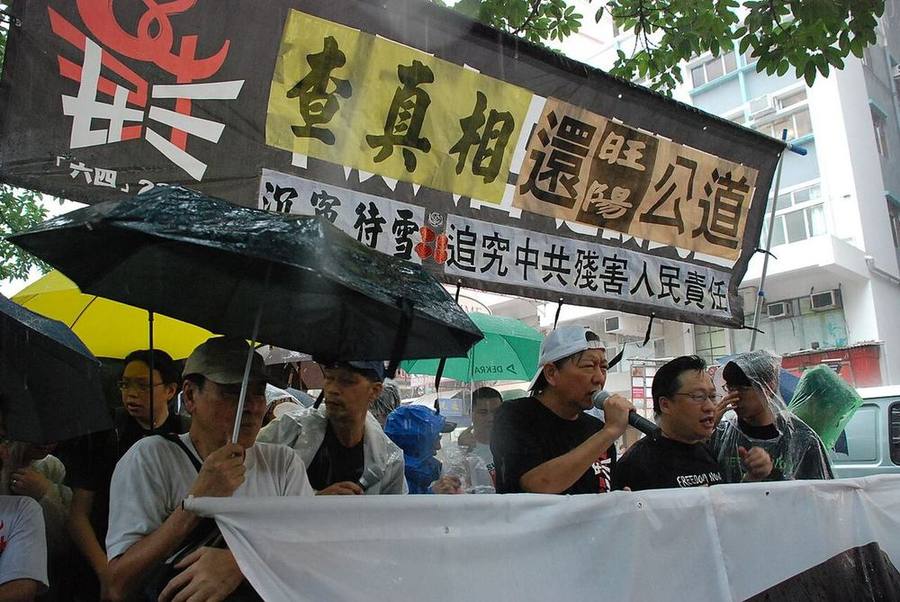
Hong Kong's reaction was the peak of the case's aftershock: a march on 10 June 2012 demanding a thorough investigation drew 25,000 people by the organisers' count and 5,400 by the police estimate; about 1,500 attended a candlelight vigil on 13 June; Food and Health Secretary York Chow was the first minister to question the suicide claim publicly, Chief Executive Donald Tsang expressed doubts nine days after the death, and several NPC deputies and CPPCC members pressed Beijing to intervene (Hong Kong media compilations, June 2012). An online petition gathered more than 2,700 signatures within a day and 8,000 by 12 June (Reuters; Radio Free Asia). Amnesty International issued a statement on 7 June and, on 12 June, Open Letter ASA 17/015/2012 demanding a prompt, thorough and independent investigation and protection for the family. On 11 July 2012 several UN special rapporteurs jointly sent Urgent Appeal UA CHN 6/2012; the Chinese government's reply upheld suicide, stated that Li had received no inhuman treatment in prison, and stated that his relatives enjoyed freedom of movement and had not been arrested — in direct conflict with Amnesty International's and the US Congressional-Executive Commission on China's (CECC) records of soft detention and coerced undertakings not to pursue the case. Both versions are preserved side by side in the UN file and on this page. The demands were voiced for years; the independent investigation itself never happened. Each June, commemoration in Hunan remains under stability-maintenance control (Radio Free Asia, tenth-anniversary reporting, 2022), while overseas memorials include the 2018 statue in California's Liberty Sculpture Park and the 2022 bust in Béziers, France. Of Li Wangling's and Zhao Baozhu's circumstances after 2012 there is, as of this site's verification on 5 November 2026, no public record.
Early Years: The Factories, Zijiang Minbao and the 1983 Mutual Aid Association
Li Wangyang's identity as a worker is the key to everything that followed. The Laogai archive compilation records that from 1966 to 1988 he worked successively in Shaoyang's ceramics, glass and cement plants, with a high-school education; the 1989 judgment instead lists him as a worker in the cement plant's subsidiary workshop, living on Daxin Street, with a middle-school education — the schooling entries differ and are archived in parallel. The government reply gives his origin as Huashi New Village, Daxiang District, Shaoyang, and records that he never married; the judgment's defendant column gives Shuangfeng County. Both layers are kept.
His political awakening came in the Democracy Wall period of 1978–79 (the English Wikipedia chain traces his 1983 union organising to that inspiration). Amnesty International's open letter adds two details often missed: before 1989 he took part in publishing the unofficial newspaper Zijiang Minbao, and he was called in for police interrogation on several occasions (Amnesty International, ASA 17/015/2012). The Shaoyang police, in other words, knew this name well before 1989. In 1983 he organised the Shaoyang Workers' Mutual Aid Association — the Laogai compilation counts him among the earliest activists of China's independent union movement, and a Hong Kong labour-rights memorial text records that he took the step of founding an independent union while working at a glass factory in 1983. The association's name follows the judgment and the Laogai compilation.
The outcome of 1983 must be stated against a circulating error. Some secondary chains claim a brief imprisonment in 1983. The 1989 judgment text says the opposite, in so many words: for his participation in the 'illegal organisation' the Shaoyang Public Security Bureau decided in 1983 not to pursue criminal responsibility, recommending administrative discipline by his work unit and strengthened education. That is the hardest primary document this case has on 1983, and this site follows it: the price in 1983 was administrative discipline, not a prison term, and the contrary chain is flagged as conflicting and not adopted (see Verification Note). A worker who organised his workmates was first 'strengthened in education'; six years later, for organising them again, he received thirteen years. That escalation curve is itself a page of the history of independent labour organising in 1980s China.
1989: The Shaoyang Workers Autonomous Federation, the Poster of 4 June and the Memorial of 6 June
In April and May 1989, as the national movement spread, Shaoyang's workers acquired an organisation of their own. The 1989 judgment's findings state that Li, as ringleader, gathered others to establish the 'illegal organisation' it names the Shaoyang Workers' United Autonomous Federation, gave speeches, and printed, distributed and posted big-character posters, including material reposted in the Federation's name (1989 judgment). Amnesty International and Human Rights in China give the parallel civilian account: he founded the Shaoyang Workers Autonomous Federation, which organised labour strikes and demonstrations, its members speaking, distributing materials and posting posters advocating better protection of Chinese workers' rights. The organisation's name follows common usage in the text; the judgment's variant wording is preserved in quotations.
On 4 June 1989, the very day of the Beijing crackdown, he glued a big-character poster to a traffic sign in Shaoyang's People's Square appealing to local workers to strike and to 'give their lives to the cause for love of country' (Human Rights in China). On 6 June he joined members of Shaoyang's other independent organisations in a public memorial for the Beijing victims (Human Rights in China). The timing deserves its own line: the crackdown had happened, arrests nationwide had begun, and he still pasted the poster and held the memorial. The 1989 judgment later folded all of this into 'counter-revolutionary propaganda and incitement'. He was detained on 9 June and arrested on 17 June (1989 judgment; Human Rights in China). The Shaoyang People's Procuratorate indicted him on 26 September 1989 (judgment). Five days took him from the square to a cell; four and a half months from the cell to a verdict.
The First Trial: Thirteen Years, the Ten-Year Chain and the Appeal Chain
On 25 October 1989, the First Criminal Division of the Shaoyang Intermediate People's Court delivered its verdict — presiding judge Zhou Yanhui, with judges Hu Qili and Fan Caiyou: Li Wangyang was guilty of counter-revolutionary propaganda and incitement, sentenced to thirteen years' imprisonment and four years' deprivation of political rights (judgment (1989) Xing Yi Chu Zi No. 113, archived in the Laogai database). Human Rights in China's profile agrees exactly: convicted and sentenced on 25 October 1989 to thirteen years plus four years' deprivation of political rights, then transferred to Hunan No. 1 Prison. This is the highest-grade fact set in the case: a judgment text, cross-checked against a human-rights archive.
Two divergent items are archived alongside it, unmerged. First, the English Wikipedia chain on his death reports that he was first sentenced to ten years, with the sentence increased to thirteen when he appealed, and that he was also sentenced to hard labour. The publicly available 1989 judgment is a first-instance judgment imposing thirteen years directly; no ten-year judgment has been published. The 'ten, then thirteen on appeal' account is therefore kept as a separate chain, not blended with the judgment chain. Second, the Chinese government's reply to UN special procedures phrases 25 October 1989 as the day Li was both arrested on the charge and sentenced to thirteen years — a wording that collides with the judgment's own record of detention on 9 June and arrest on 17 June. This page's sort date takes 25 October 1989 because it is the judgment date and the government's own dating of the case; the government's 'arrested on 25 October' phrasing is flagged as inconsistent with its own court's judgment and is not adopted. An archive preserves such discrepancies rather than smoothing them over.
Eleven Years Inside: Solitary Confinement, Beatings, Hard Labour and a Ruined Body
The geography of the first term, assembled from all sources, is a transfer line: Amnesty International names Longxi Prison (Hunan No. 6 Prison) and Yuanjiang Prison (Hunan No. 1 Prison) — Amnesty's text spells the latter 'Yuanjian', a transcription slip; Human Rights in China records his transfer to Hunan No. 1 Prison; and the Chinese government's reply, defending prison conditions, mentions treatment arranged at the Longxi prison hospital and medical parole from July 1996 to March 1997 (government reply, point 4). Yuanjiang Prison is also known as Chishan Prison, where he later served his second term.
On treatment inside, Li's own account and the human-rights record corroborate each other. Amnesty International writes that during his imprisonment in Longxi and Yuanjiang he lost most of his hearing and was rendered nearly blind, allegedly as a result of torture — Amnesty's own hedge is preserved in this site's grading. Amnesty's 7 June 2012 statement adds that he was reportedly severely beaten by prison guards while held in solitary confinement. Human Rights in China records the allegation that he was tortured in custody, losing his sight and hearing. His own explanation, given in his final interview in 2012, was that the only explanation for his blindness was nerve damage from being repeatedly beaten about the head (Li Wangyang's interview statement, as relayed by Human Rights in China). Hard labour is recorded in the English Wikipedia chain's account of the sentence's execution and is archived at compilation grade.
The quantified damage comes from Human Rights in China's record of his post-release examination: 182 centimetres tall before prison, 173 centimetres eleven years later — nine centimetres lost, attributed to beatings and years confined in a cramped cell — together with heart disease and neck problems. Amnesty International lists his conditions at release as heart disease, hyperthyroidism, neck and lower-back pain, and advancing blindness. The Chinese government's reply offers the counter-record: that he had been diagnosed with hepatitis in May 1980 and hyperthyroidism in June 1989, that an intake examination showed left-eye vision of only 0.1, and that prison management ensured humane treatment and arranged repeated hospital care (government reply, point 4). This site archives both records side by side: the reply pushes the causes back before his imprisonment, while the height loss, his own account of head beatings, and — decisively — the reply's own description of his 2001 intake state (see the second-term section) together give readers the material to judge.
In June 1996 he was moved to a hospital for treatment of heart disease; in March 1997 he was returned to prison (Human Rights in China). The government reply dates the medical parole July 1996 to March 1997. A further item in the English Wikipedia chain holds that his medical release was cancelled after Deng Xiaoping's death in February 1997 amid fears of calls to hold officials responsible for the 4 June crackdown — a causal claim found in that chain alone, archived at single-chain grade. On 8 June 2000 he was released early, about two years short of the thirteen-year term, on health grounds (Human Rights in China; Amnesty International). The official phrasing in the 2001 judgment, however, describes the 2000 release as release 'on completion of sentence' — one more internal inconsistency of official wording, archived in parallel.
Release, Petition and the Twenty-Two-Day Hunger Strike: Asking Who Pays for a Prison-Made Body
When Li Wangyang walked out in June 2000 he was fifty-one, with no income and no health insurance, carrying heart disease, hyperthyroidism, neck and back damage, and failing sight and hearing. He petitioned the Shaoyang city government repeatedly to take responsibility for the cost of treating illnesses he said the inhumane treatment in prison had caused (Human Rights in China; Amnesty International records that on release he began petitioning for compensation to cover his medical treatment). Human Rights in China's profile preserves the fullest chain, and this page follows it node by node: on 5 January 2001 he wrote to the city government demanding that the authorities, in a spirit of decency and morality, escort him to hospital, warning that he would bring his case to the international community and was willing to lay down his life if necessary. On 9 January officials escorted him to hospital but arranged to pay for only 2,000 yuan of treatment. On 2 February he began a hunger strike to protest the city's decision to stop paying, while also expressing opposition to political repression in general (Human Rights in China).
The fast lasted twenty-two days (Amnesty International and Human Rights in China agree; Amnesty frames it as a protest at the authorities' lack of response to his appeals). Officials from the local government and from the state security and public security bureaus visited him in hospital; one official demanded that he stop pressuring the government. He told relatives he would end the fast but would continue petitioning for his medical costs (Human Rights in China). One further item circulates with the fast: the English Wikipedia chain records that while guards attempted to force-feed him during the hunger strike, they knocked out his front teeth; Global Voices' 2012 report instead says prison guards pulled out his teeth and forced him to eat. The details differ (knocked out / pulled out) while pointing to the same category of force-feeding injury; both are archived in parallel, unmerged. What this hunger strike was about must be stated plainly: a concrete bill. He was asking the state to pay for treating disabilities acquired in its prisons. The charge that followed — inciting subversion — grew directly out of that petition: Human Rights in China's summary is that he was accused of subversion for demanding the government pay for treatment of conditions developed during eleven years in prison.
The Second Trial: Ten More Years in 2001
On 6 May 2001, agents of the Shaoyang City Public Security Bureau arrested Li Wangyang at Daxiang Hospital (Amnesty International; Human Rights in China). The same day, his sister (the HRIC English text romanises her name Li Wanglin) and his brother-in-law Zhao Baozhu were taken from their home into police custody for questioning. Zhao was later released; his sister was sentenced to three years of re-education through labour for helping her brother publicise his situation and his hunger strike (Human Rights in China) — the first entry in the family's ledger of costs, taken up in the next section. On 11 June 2001 he was charged with 'inciting subversion of state power' (Amnesty International).
The trial's procedure and dates are the most finely layered point in the case, and each layer is given separately. Conviction date: Amnesty International and Human Rights in China agree on 5 September 2001, when the Shaoyang Intermediate People's Court found the charge established. Access: Human Rights in China records that Zhao Baozhu and many friends were denied access to the proceedings. Sentencing date, three versions: Amnesty International gives 20 September 2001 for the ten-year sentence (Amnesty open letter; the HRIC profile's lead gives the same date); the Chinese government's UN reply gives 11 September 2001; and Human Rights in China's main text records conviction on 5 September followed, about two weeks later, by sentencing to ten years in another closed hearing — a timing (around 19 September) broadly consistent with Amnesty's 20 September and nine days away from the government's 11 September. This site anchors the outcome on the existence of judgment (2001) Shao Zhong Xing Chu Zi No. 116 (its text is archived in the Laogai database, and its recital of his prior conviction matches all sources), treats ten years plus four years' deprivation of political rights as settled, and archives the three sentencing dates in parallel, never merged. The UN Special Rapporteur on Torture's 2003 report also records the sentence as imposed on 20 September 2001 (report of Special Rapporteur Theo van Boven, para. 291), in line with the human-rights chain.
He served the second term at Chishan Prison (Yuanjiang). On 22 July 2002 the UN Special Rapporteur on Torture sent an urgent appeal concerning Li Wangyang, who was said to be denied medical treatment while detained in Chishan Prison and to be suffering from heart disease and goitre (2003 report, para. 346). The Chinese government's reply supplies its own medical record for the second term: an intake examination in September 2001 showed both eyes protruding, severe myopia, an ability only barely to distinguish human contours in bright light, walking possible only by following a wall or guided by another person, the right ear having lost hearing entirely and the left able to hear only loud sounds, and a swollen thyroid; Chishan Prison, it says, arranged treatment at the prison hospital and several consultations in Yiyang, with diagnoses of hyperthyroidism, thyrotoxic heart disease, secondary blindness in both eyes and deafness (government reply, point 4). The official record, though written by the defending side, thus describes his disability more concretely than most human-rights reporting: it denies that abuse existed, but never denies how ruined this body was. Of the daily conditions of the second term, beyond the denied-treatment allegation and the official treatment record, there is no further public record.
The Family's Price: His Sister's Three Years of Labour Camp and a Family's Silence
Li Wangyang had no wife or children. His sister Li Wangling and brother-in-law Zhao Baozhu were his closest family, and they paid the heaviest price alongside him. On the day of his second arrest, 6 May 2001, his sister was taken for questioning and then sentenced to three years of re-education through labour for helping her brother publicise his situation and hunger strike to the outside world (Human Rights in China). A sister who raised her voice for a jailed brother received three years of labour camp for it — an entry dated 2001 that already rehearses 2012, when, on her brother's death, the first people taken away and held in a hotel, cut off from the world, were again this couple (Amnesty International, 2012 open letter).
After his second release in 2011, his sister lived about seven kilometres from Daxiang District People's Hospital and brought him meals twice a day (reporting compilations). On 6 June 2012 it was they who took the hospital's call and saw his body; they who insisted an autopsy required their chosen lawyer's presence; they who were taken away on 7 June and held in a hotel, during whose detention the autopsy and cremation were completed. After 9 June, per the government's account, his sister signed a mediation agreement with the hospital and submitted the cremation application; per Amnesty International and the CECC, family members and supporters spent the following months under soft detention, surveillance and incommunicado conditions, some pressured to sign pledges not to pursue an investigation, others threatened with imprisonment or labour camp (CECC analysis, drawing on CHRD and RFA records). On 26 November 2012 Radio Free Asia reported that about twenty supporters in Shaoyang had been released from house arrest after the 18th Party Congress, while his sister and brother-in-law remained incommunicado and unaccounted for (RFA, 26 November 2012, via CECC). From then until this site's verification on 5 November 2026, the public circumstances of Li Wangling and Zhao Baozhu have no reliable record — a matter of no public record.
The Final Year and the Last Interview: The Hospital, the Watchers and 'Even If I Was Beheaded'
After his release in May 2011, Li Wangyang was admitted to Daxiang District People's Hospital in Shaoyang for heart disease and advanced diabetes, and remained there until his death (Amnesty International). The release date's variants are archived here: Global Voices (2012) and the Cantonese Wikipedia chain give 5 May 2011 (the latter dating the second term 6 May 2001 to 5 May 2011); another chain checked for this page gives 29 May; the government reply and Amnesty International give only May 2011. The text of this page accordingly writes 'May 2011'.
He did not go quiet. He continued to demand vindication of the Tiananmen protesters (multiple reports). In May 2012, i-Cable reporter Lam Kin-shing interviewed him. The interview's date and broadcast date are layered separately: Amnesty International's open letter dates the interview to 22 May 2012, recording that he spoke openly about the torture that had left him blind and almost deaf, encouraged Tiananmen Mothers leader Ding Zilin to persevere in seeking justice for the victims of the 1989 crackdown, and said that for democracy in China, even if he was beheaded he would not regret his actions (Amnesty open letter, quoting the interview). Amnesty's 7 June statement and multiple outlets date the broadcast to 2 June 2012, the eve of the 23rd anniversary, when he said the souls of the martyrs deserved finally to find some peace (Amnesty statement; Reuters). He also gave an interview to French radio, broadcast on the eve of the anniversary, appealing to compatriots to observe 6-4 (reporting compilations). Apple Daily reported that he had no minders before the interviews (Apple Daily, via Wikipedia compilation). What changed after broadcast, per the same chain: he was kept under round-the-clock surveillance by a team of about ten police officers; an account opened to receive donations from supporters at home and abroad for his medical fees was inexplicably blocked; and he was severely impeded from going to Beijing to see a specialist physician (Apple Daily, 7 June 2012, via Wikipedia compilation — a single reporting chain, graded as such). On 4 June 2012 the Independent Federation of Chinese Students and Scholars awarded him its Spirit of Freedom Award (Cantonese Wikipedia chain, single-source, archived as an unverified note). Two days later he was dead in his ward.
6 June 2012: The Body in the Ward and Two Timelines
What happened on the morning of 6 June 2012 is set out here in two source systems, because they conflict on decisive details and any merger would be fabrication. The family and human-rights system (Amnesty International open letter; Reuters, Associated Press and Los Angeles Times reporting at the time): at about 6 a.m., Zhao Baozhu received the hospital's call reporting Li's death; about an hour later the couple reached the ward and found Li with a cotton strip tied around his neck and connected to a window frame, the body standing beside the bed with its feet flat on the ground. The family was refused permission to take photographs, though some stills and one video reached the internet; police took the body away at about 10 a.m. despite objections from family and friends; i-Cable reported that officials had been trying to persuade the family to cremate the body immediately. The official system (the Chinese government's reply to the UN; Shaoyang authorities' statements): at 6:29 a.m. the Daxiang police branch received the report; at 7:23 a.m. the branch chief arrived with numerous officers and began on-site procedures; the relatives were present throughout; at 8:45 a.m. morgue personnel removed the body. The authorities further stated that wardmates had seen Li 'acting strangely' by the window at about 3 a.m., that surveillance footage showed no suspicious person entering the ward that night apart from wardmates and staff, and that the ward door had not been forced.
The two timelines collide on at least three points: the time the body was removed (about 10 a.m. / 8:45 a.m.); whether the family was present throughout and consented to the procedures (the family says removal was against objections / the official account says present throughout); and the body's first-recorded state (feet flat on the ground in the family's account / not addressed in the official narrative). This site's position concerns evidence, not conclusions: both records come from named sources with contemporaneous reporting behind them, and the archive preserves them side by side. As to how Li Wangyang died — the official conclusion and the family's position are set out in the next section — this site makes no factual finding: no investigation independent of the parties has ever examined the case, and that absence is the core of the whole dispute.
Autopsy, Cremation and the Official Conclusion: Three Days, Four Documents, Two Versions
On 7 June, Li Wangling, Zhao Baozhu and at least two other relatives and friends were taken away and held in a Shaoyang hotel, an unofficial place of detention; thereafter every attempt by friends, relatives and media to contact them failed (Amnesty International). The family had already stated publicly that they would consent to an autopsy only in the presence of their chosen lawyer, Tang Jingling (Amnesty International). On the afternoon of 8 June, four forensic experts from the Sun Yat-sen University Forensic Identification Center performed the autopsy at the Shenglong morgue in Shaoyang. The official account states that the process was videotaped, witnessed by Shaoyang NPC deputies, CPPCC members and journalists, and carried out with the family's consent; that on the morning of 8 June the Daxiang police delivered an autopsy notice to Li Wangling advising that her unjustified absence would not halt the autopsy; and that sampling was completed after the couple's approval (government reply, point 2; Shaoyang authorities' statements). The family's side of the record is entirely different: the autopsy was carried out while the family was detained and their lawyer Tang Jingling was not present (Amnesty International), and the Information Centre for Human Rights and Democracy conveyed that the family had been prepared to consent only with a lawyer from outside Shaoyang present (ICHRD, via compilations).
On 9 June the body was cremated, and time and consent are again in two versions. Officially: at 9:00 a.m. Li Wangling and Zhao Baozhu submitted a cremation request to the Shaoyang crematorium and completed the registration form, and at 9:38 a.m. the body was cremated in their presence; the same morning, through the Beishaoyang Street People's Mediation Committee, the couple and Daxiang District People's Hospital signed a People's Mediation Agreement under which the hospital admitted that its duty nurse had failed to discover the death in time and to provide appropriate care, and agreed compensation (government reply, points 2–3). On the family's and supporters' side: the cremation was rushed and against the family's wishes; ICHRD relayed that one funeral-parlour staff member implied the government had ordered the cremation while another told Cable TV that the sister and brother-in-law had signed consent (ICHRD, via compilations); and three pro-democracy Macao legislators, Chan Wai Chi, Au Kam San and Ng Kuok Cheong, wrote to Premier Wen Jiabao accusing the Shaoyang public security authorities of 'destroying the evidence' by cremating the body (Macao media, 12 June 2012). After cremation, any possibility of re-examining the body ceased to exist — the one fact neither side can alter.
The documentary chain of the cause of death, each item labelled by the position it comes from, runs as follows. The Sun Yat-sen University Forensic Identification Center's report of 19 June 2012 concluded that Li Wangyang died by suicide by hanging (government reply). A Chinese Forensic Association expert panel, arriving on 21 June, reviewed the case and concluded death by self-inflicted hanging (government reply). A Hunan provincial joint investigation team — including forensic, legal and investigation experts and criminal-law and evidence experts of the China Law Society — then reviewed the procedures and evidence and reached the same conclusion (government reply); Radio Free Asia separately records the provincial public security investigation as running from 19 June to 9 July, with its conclusion published on 12 July upholding suicide (RFA, 23 July 2012). In parallel there is a wording layer: multiple reports record that after the autopsy the authorities briefly restated the cause as 'accidental death' (RFA; Wikipedia compilation), while their public statements of 11 June continued to assert suicide (The Standard, 11 June 2012). The family's and supporters' position has never changed: they reject the hanging conclusion and demand an independent investigation, on stated grounds — how a man blind, nearly deaf, unable to walk unassisted and barely able to hold a bowl could have hanged himself unaided; feet flat on the ground when found; no suicidal sign the day before; and his being under police surveillance (family statements via Amnesty International; Reuters and Guardian reporting). In July 2012 ten mainland and Hong Kong lawyers jointly demanded a reinvestigation and the release of his sister and brother-in-law from extralegal custody (RFA, 23 July 2012). None of those demands was ever met.
Hong Kong's Shock: The Petition, the March and the Officials' Statements
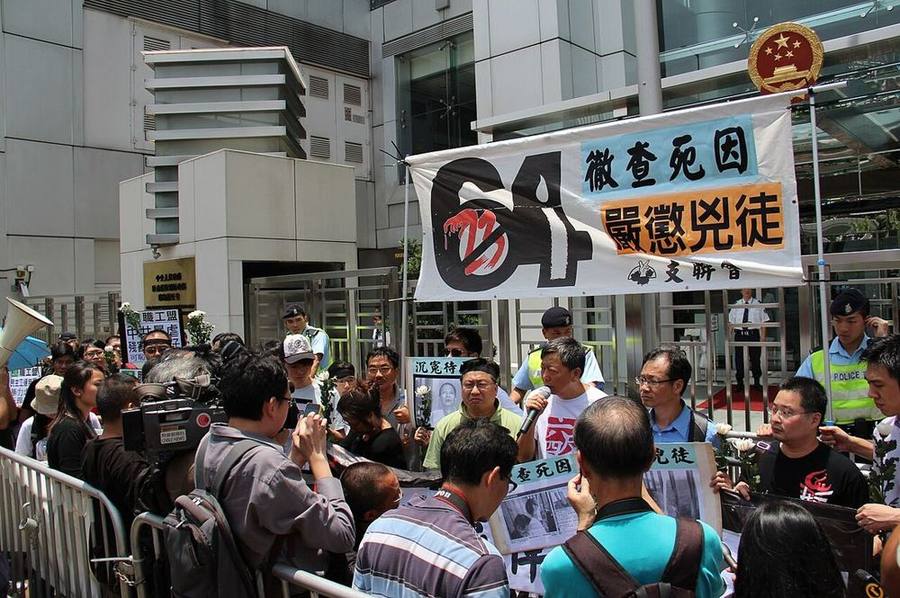
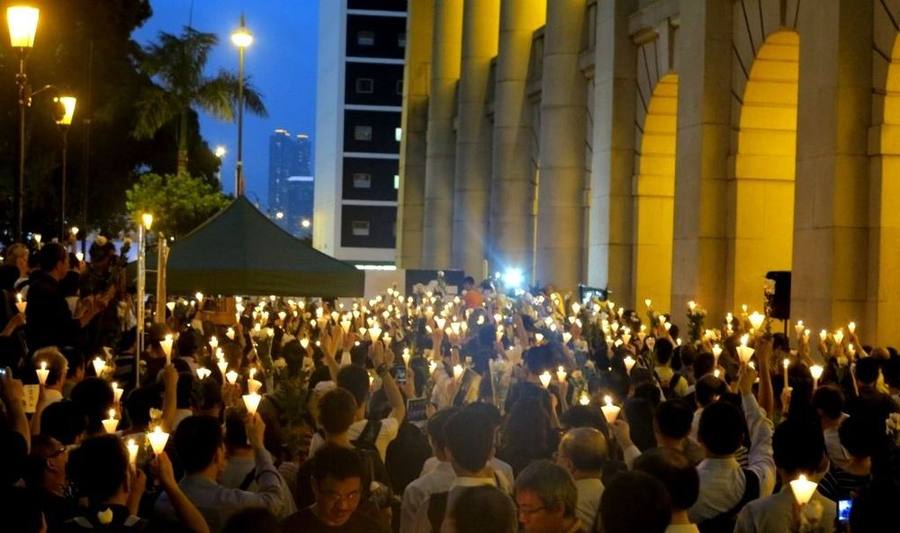
The scale of Hong Kong's reaction to Li Wangyang's death was rare in the cross-border politics of 2012. By the day after the news broke, more than 2,700 people, including the artist Ai Weiwei, had signed an online petition for an independent investigation (Reuters, 7 June 2012); by 12 June the petition totalled 8,000 signatures, including signatures collected on Hong Kong streets (Radio Free Asia, 13 June 2012). On 7 June several Hong Kong organisations protested outside the Central Government Liaison Office (compilations). On 10 June the march demanding a thorough investigation drew 25,000 people by the organisers' count — described as the largest protest ever at the Liaison Office's main entrance — against a police estimate of 5,400 (both figures as compiled; ENInews of 11 June 2012 likewise reported about 25,000 marchers, with the Catholic Justice and Peace Commission among the co-organisers). On 13 June about 1,500 people held a candlelight vigil outside the former Legislative Council building for the seventh day after his death (reporting compilations). Editorials in Hong Kong's main newspapers uniformly called the death 'suspicious' and argued that a transparent investigation served China's own interests (South China Morning Post and others, via compilations).
Official voices crossed the usual lines. Secretary for Food and Health York Chow was the first minister to question the suicide claim publicly, arguing from Li's physical condition that self-hanging was hard to credit (Hong Kong media compilations). Rita Fan of the NPC Standing Committee and several NPC deputies and CPPCC members followed; Liberal Party chair Miriam Lau, Maria Tam and Michael Tien all said they had raised the case with central authorities (South China Morning Post compilations, June 2012). Chief Executive Donald Tsang, nine days after the death, said publicly that he had doubts about the case; Chief Executive-elect C. Y. Leung declined direct comment but observed a minute's silence for Li on 16 June (RTHK; South China Morning Post). Li Gang, deputy director of the Liaison Office, later announced that the Hunan Public Security Bureau had ordered a criminal investigation into the death — an announcement carried by the semi-official Hong Kong China News Agency rather than Xinhua, which the South China Morning Post read as aimed at calming Hong Kong opinion; commentators widely noted that the Hong Kong outcry coincided with CCP General Secretary Hu Jintao's impending visit for the fifteenth anniversary of the handover (South China Morning Post, 16 June 2012). The Hunan 'investigation' ended, as recorded above, by upholding suicide. The independent investigation Hong Kong had demanded never materialised.
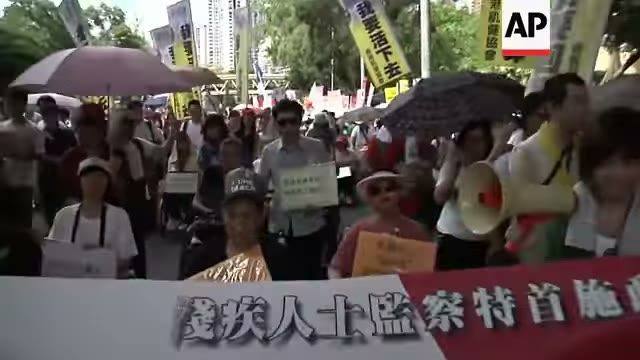
视频证据Video Evidence
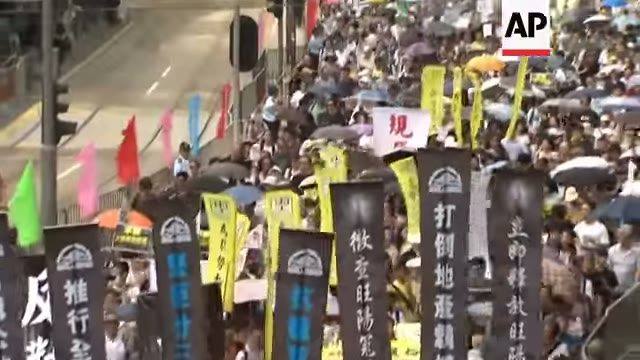
以下为李旺阳之死引发的香港悼念游行影像。Hong Kong's memorial marches after Li Wangyang's death.
2012年6月10日,香港二万五千人游行悼念李旺阳(市民实拍)|2012年|粤语原声,无字幕轨25,000 march in Hong Kong in memory of Li Wangyang, 10 June 2012 (citizen footage) | 2012 | In Cantonese; no subtitle track
2012年7月1日胡锦涛访港当日,香港大游行高喊彻查李旺阳之死(美联社)|2012年|英文原声,仅自动英文字幕(无中文字幕)Hong Kong's July 1 march during Hu Jintao's visit demands answers over Li Wangyang's death (AP) | 2012 | In English, auto-generated English captions only (no Chinese subtitles)
The Crackdown After Death: Zhu Chengzhi, Xiao Yong and Some Twenty Supporters
The repression radius of the death expanded from the family to everyone who tried to preserve evidence or speak. Li Wangyang's friend Zhu Chengzhi had photographed and filmed the death scene and posted material online. Amnesty International's follow-up urgent-action file records that Zhu was detained by state security personnel in Shaoyang on 8 June 2012 (the CECC records 9 June — a one-day layer archived in parallel) and sentenced first to ten days' administrative detention; when his family expected his release on 18 June he was instead transferred to a detention facility, and on 25 July 2012 the Shaoyang police arrested him on suspicion of 'inciting subversion of state power', in connection with his dissemination of the death-scene photographs. On 25 December 2012 his wife was informed the case had been transferred to the Shaoyang procuratorate (Amnesty International, follow-up on UA 191/12, ASA 17/010/2013, 20 March 2013). On 4 January 2013 he was placed under 'residential surveillance'; on 15 March 2013 he was moved from his home to an unknown location (same Amnesty file). Rights activist Xiao Yong was detained on 6 June and sentenced in July to eighteen months of re-education through labour, a case the CECC connects to his criticism of the handling of Li's death (CECC analysis).
The more general instrument was 'soft detention'. The CECC's analysis, compiling Chinese Human Rights Defenders and Radio Free Asia records, states that after June 2012 the authorities subjected many of Li's family members and supporters to soft detention — home confinement, surveillance, restricted movement and limited contact; that some were pressured while detained to sign pledges not to pursue an investigation into his death; and that others were threatened with imprisonment or re-education through labour if they spoke publicly about the case (CECC analysis, citing CHRD records of July 2012 and RFA of 24 September 2012). On 26 November 2012, RFA reported that about twenty supporters in Shaoyang had been released from house arrest following the 18th Party Congress — they had been held at home or in unspecified locations since June 2012 — while those released still faced communications restrictions and other supporters, including his sister and brother-in-law, remained incommunicado (RFA, 26 November 2012, via CECC). Zhu Chengzhi's later trajectory extends the same line: detained in 2018 after visiting the grave of Mao-era dissident Lin Zhao, he was sentenced to three years and nine months for 'picking quarrels and provoking trouble', released from Jiangsu's Dingshan Prison on 26 January 2022; in May 2022, people who had met him in Changsha were each summoned to 'drink tea' with state security police (RFA, 31 May 2022).
International Reaction and the UN Procedures
The international reaction, in sequence. On 7 June 2012 Amnesty International issued a statement urging the Chinese government to thoroughly investigate the circumstances of the death and to take seriously the claims of family and friends that it was not suicide; at the Hong Kong Confederation of Trade Unions' request, LabourStart launched a global online campaign for an investigation (Amnesty statement; compilations). On 12 June, Amnesty addressed Open Letter ASA 17/015/2012 to the Chairperson of the NPC Standing Committee, calling on the Standing Committee to order a prompt, thorough and independent investigation with publicly available results, prosecution in fair proceedings and family compensation if unlawful acts were found, and protection of Li Wangling, Zhao Baozhu and other relatives and friends against arbitrary detention and unlawful restrictions (Amnesty open letter). On 11 July 2012, the Chair-Rapporteur of the Working Group on Arbitrary Detention together with the special rapporteurs on freedom of opinion and expression, on freedom of peaceful assembly and association, on human rights defenders, on the independence of judges and lawyers, and on extrajudicial, summary or arbitrary executions jointly sent Urgent Appeal UA CHN 6/2012 (as cited in the Chinese government's reply).
The Chinese government's reply has five points, archived here in full because it is the complete official position and the text against which the civilian record can be checked: first, that Li Wangyang committed suicide by hanging, restating the Sun Yat-sen identification, the Forensic Association review and the joint team's concurrence; second, that the death was handled lawfully, with the official timeline (6:29 a.m. report, 7:23 a.m. arrival, 8:45 a.m. removal of the body, autopsy with the couple's approval, cremation on the family's application); third, that the couple signed a People's Mediation Agreement with the hospital, which admitted a duty nurse's failure of care and paid compensation; fourth, that Li received no inhuman treatment in prison and that prisons arranged repeated medical care; and fifth, that his relatives enjoy freedom of movement and have not been arrested or incarcerated, quoting a written statement by the relatives that they did not wish to interact with the outside world and had changed their mobile numbers of their own will (full text of the government reply). Amnesty International's and the CECC's contemporaneous records conflict head-on with points four and five (see the preceding sections). In the UN file the reply sits beside the appeal; no independent investigative mechanism was ever set in motion afterwards. The CECC subsequently carried the case in its thematic analysis and annual records.
Anniversaries, Memorials and the Policing of Memory
After Li Wangyang's death, commemoration itself became something that had to be re-won every year. On 6 June 2018, the sixth anniversary, a six-metre statue of him was unveiled at the Liberty Sculpture Park in Yermo, California (RFA Cantonese, 7 June 2018). On 27 May 2022 his bust was unveiled in Béziers, France (RFA, 2022). In Hunan, RFA's report of 31 May 2022 described the approach of the tenth anniversary: activists in Shaoyang, Changsha, Hengyang and Zhuzhou planned to mark the day at least in private, but whether anyone would get through depended on official obstacles — 'it is possible that none of them will be allowed to come', activist Ouyang Jinghua told RFA; the report carried a photograph of his grave. The two dates, 6 June beside 4 June, mark the most heavily policed days of early June in Hunan (RFA, 31 May 2022).
The other half of remembrance is how his standing as 'longest-serving' is told. Multiple human-rights reports and Wikipedia describe him as the 1989 pro-democracy activist who spent the longest time in prison: the two nominal sentences total twenty-three years, the time actually served about twenty-one (roughly eleven years, 1989–2000, plus ten years, 2001–2011). The English Wikipedia lead gives 'twenty-one years'; the Cantonese Wikipedia and some Chinese reporting give 'twenty-two years'; a Hong Kong labour-rights memorial text speaks of 'two decades' (each archived in parallel). The differences come from counting conventions, set out in the Verification Note; the text uses only the cross-verifiable formulation, about twenty-one years actually served, with the 'longest of the 1989 generation' judgement attributed to the reports that make it. On any count, the constant is this: a worker who organised his fellow workers paid with twenty-three nominal years of sentences, twenty-one actual years of freedom, his eyes and his ears.
Timeline
12 November 1950: Li Wangyang is born (Chinese government reply; Amnesty International). 1966–1988: works in Shaoyang's ceramics, glass and cement plants and subsidiary workshops (Laogai archive compilation). 1983: organises the Shaoyang Workers' Mutual Aid Association; around this period takes part in the unofficial Zijiang Minbao (Amnesty International); the Shaoyang Public Security Bureau decides not to pursue criminal responsibility and recommends administrative discipline (1989 judgment). Before 1989: called in for police interrogation several times (Amnesty International). April–May 1989: founds the Shaoyang Workers Autonomous Federation; strikes, demonstrations, speeches, leaflets and posters (1989 judgment; Amnesty International; Human Rights in China). 4 June 1989: pastes a general-strike poster on a People's Square traffic sign (Human Rights in China). 6 June 1989: public memorial for the Beijing victims (Human Rights in China). 9 June 1989: detained; 17 June: arrested; 26 September: indicted; 25 October 1989: Shaoyang Intermediate People's Court judgment (1989) Xing Yi Chu Zi No. 113 — counter-revolutionary propaganda and incitement, 13 years plus 4 years' deprivation of political rights (full chain from the judgment text). The 'first 10 years, raised to 13 on appeal' version is a separate chain (English Wikipedia line), archived in parallel; the government reply dates the case to 25 October, its 'arrested on that day' wording conflicting with the judgment.
1989–2000, first term: Longxi Prison (Hunan No. 6) and Yuanjiang Prison (Hunan No. 1 / Chishan); repeated solitary confinement, reported beatings, hard labour; severe loss of sight and hearing (Amnesty International; Human Rights in China; his own account). June 1996: hospitalised for heart disease (Human Rights in China); medical parole July 1996–March 1997 (government reply); March 1997: returned to prison. 8 June 2000: released early on health grounds after about 11 years; post-release examination records height down from 182 to 173 cm (Human Rights in China; Amnesty International). 5 January 2001: letter to the city government demanding hospital treatment; 9 January: taken to hospital, only 2,000 yuan covered; 2 February: payments stop and he begins a hunger strike lasting 22 days, with force-feeding injury to his teeth in two variant accounts (Human Rights in China; Amnesty International). 6 May 2001: arrested at Daxiang Hospital; his sister and brother-in-law taken the same day, his sister later sentenced to three years' re-education through labour (Human Rights in China). 11 June 2001: charged with inciting subversion (Amnesty International). 5 September 2001: convicted, family barred from the proceedings; the ten-year sentencing date in three versions — 11 September (government reply) / 20 September (Amnesty International, HRIC lead, UN Torture Rapporteur's report) / a closed hearing about two weeks after conviction (HRIC main text). 22 July 2002: UN Special Rapporteur on Torture's urgent appeal over denied treatment at Chishan Prison. May 2011: released on completion of sentence, the date given as 5 May by one chain and 29 May by another; thereafter resident at Daxiang District People's Hospital for heart disease and advanced diabetes (Amnesty International; government reply).
22 May 2012: interview with Hong Kong media (Amnesty's dating); 2 June 2012: i-Cable broadcasts it (Amnesty statement and other chains); afterwards, round-the-clock surveillance by about ten police, a blocked donation account and obstruction of Beijing medical travel (single Apple Daily chain). About 6 a.m., 6 June 2012: the hospital telephones his brother-in-law; about an hour later the family finds the body with a cotton strip at its neck, feet flat on the ground (family account via Amnesty International); the official timeline gives a 6:29 a.m. report, 7:23 a.m. arrival and 8:45 a.m. removal by morgue staff (government reply), against the family's account of removal at about 10 a.m. against objections. 7 June 2012: Amnesty's statement demands an investigation; the same day his sister, brother-in-law and at least two others are taken away and held in a Shaoyang hotel. 8 June 2012: Zhu Chengzhi detained by state security (Amnesty follow-up file; CECC gives 9 June); that afternoon, autopsy by four Sun Yat-sen University experts, the family's lawyer Tang Jingling absent, consent in two opposing versions. 9 June 2012: cremation, application and consent in two opposing versions; the same day the hospital signs a mediation agreement admitting a duty nurse's failure of care and paying compensation (government reply). 10 June 2012: Hong Kong march — organisers 25,000 / police 5,400. 12 June 2012: Amnesty Open Letter ASA 17/015/2012; petition signatures reach 8,000 (RFA). 13 June 2012: about 1,500 at the seventh-day vigil in Hong Kong. 19 June 2012: Sun Yat-sen forensic report concludes suicide by hanging; the Hunan provincial investigation opens the same day; 21 June: Chinese Forensic Association review upholds hanging (government reply; RFA). 11 July 2012: UN special procedures UA CHN 6/2012. 12 July 2012: Hunan investigation conclusion published, upholding suicide. Late July 2012: ten mainland and Hong Kong lawyers jointly demand a reinvestigation (RFA, 23 July). 25 July 2012: Zhu Chengzhi arrested on suspicion of inciting subversion (Amnesty follow-up file). 26 November 2012: about twenty supporters released from house arrest after the 18th Party Congress; his sister and brother-in-law remain incommunicado (RFA, via CECC). 4 January 2013: Zhu Chengzhi placed under residential surveillance; 15 March 2013: moved to an unknown location (Amnesty International, ASA 17/010/2013). 6 June 2018: statue unveiled at the Liberty Sculpture Park, California; 27 May 2022: bust unveiled in Béziers, France; 31 May 2022: RFA reports the tenth anniversary marked under obstruction in Hunan. From then until verification on 5 November 2026: no independent investigation; no reliable public record of his sister's and brother-in-law's circumstances.
Our Take
Two documented facts frame this case: a worker was beaten in prison until he was blind in both eyes, nearly deaf and nine centimetres shorter, and when he hunger-struck for twenty-two days to make the state pay for the treatment of that prison-made damage, the answer was ten more years; and when, one year after serving those years in full, he died in a ward under police watch, his body was autopsied and cremated within three days while his family was detained and their lawyer absent, and the independent investigation that Amnesty International and the UN special procedures demanded has still never taken place. A regime that will neither answer for a body destroyed in its prisons nor allow outsiders to establish how that body finally died has written its own definition of 'handled according to law' into this file.
Verification Note
This page was verified on 5 November 2026. Evidence grading: Tier 1 (primary documents and institutional files) — Shaoyang Intermediate People's Court judgment (1989) Xing Yi Chu Zi No. 113 (archived in the Laogai database) and the prior-conviction recital of judgment (2001) Shao Zhong Xing Chu Zi No. 116; Amnesty International Open Letter ASA 17/015/2012, statement of 7 June 2012, and the Zhu Chengzhi follow-up file ASA 17/010/2013; UN special-procedures Urgent Appeal UA CHN 6/2012 and the full text of the Chinese government's reply; the 2003 report of UN Special Rapporteur on Torture Theo van Boven, paras. 291 and 346; the Human Rights in China (HRIC) prisoner profile; the US Congressional-Executive Commission on China (CECC) analysis of the detention and harassment of family members and supporters. Tier 2 (contemporaneous reporting) — Reuters, Associated Press, BBC, The Guardian and the Los Angeles Times (June 2012); Radio Free Asia series (2012–2022); Hong Kong's South China Morning Post, The Standard, Apple Daily and RTHK (June 2012); Global Voices (7 June 2012). Tier 3 (compilations) — the English Wikipedia article 'Death of Li Wangyang', the Cantonese Wikipedia article, the Laogai archive biographical compilation, and Hong Kong Labour Rights memorial texts; compilation-grade facts are flagged in line wherever used.
Conflicts are archived item by item, in parallel, never merged. (1) Date of arrest, 1989: the government reply dates the case to 25 October 1989 in wording covering both arrest and sentencing; the judgment records detention on 9 June, arrest on 17 June and sentencing on 25 October. This site follows the judgment; the sort date takes 25 October (the judgment date, matching the government's dating), and the government's 'arrest' wording is flagged as inconsistent. (2) Formation of the 13-year term: the judgment imposes 13 years directly; a separate chain reports an initial 10 years raised to 13 on appeal, with no 10-year judgment published. (3) 1983: some secondary chains report a brief imprisonment; the 1989 judgment text records a Public Security Bureau decision not to pursue criminal responsibility, with administrative discipline recommended — this site follows the judgment. (4) 1996 hospitalisation: HRIC gives hospitalisation in June 1996 and return in March 1997; the government reply gives medical parole July 1996–March 1997. (5) The 2000 release: the 2001 judgment calls it release 'on completion of sentence'; human-rights sources record early release on health grounds with about two years unserved — this site follows the latter and notes the former. (6) Force-feeding injury: teeth knocked out during force-feeding / teeth pulled out, two versions. (7) The 2001 sentencing date: 11 September (government reply) / 20 September (Amnesty International, HRIC lead, the UN Torture Rapporteur's report) / a closed hearing about two weeks after the 5 September conviction (HRIC main text) — three versions in parallel. (8) His sister's romanised name: Li Wangling (Amnesty International, UN) / Li Wanglin (HRIC English text); the Chinese name is Li Wangling. (9) The 2011 release date: May (both institutions) / 5 May (one chain) / 29 May (another chain). (10) The 2012 interview: interview on 22 May (Amnesty open letter) and broadcast on 2 June (Amnesty statement and others) belong to two different stages and are recorded in layers. (11) The 6 June timeline: the family's system (body removed at about 10 a.m. against objections) and the government reply (removed 8:45 a.m., family present throughout) conflict head-on. (12) Autopsy and cremation consent: official version (family consent, family cremation application) against the family's version (conducted during their detention; rushed cremation), in parallel. (13) Official cause-of-death wording: suicide, then briefly 'accidental death' after the autopsy (reporting layer), then public statements of 11 June again asserting suicide, then forensic documents uniformly giving hanging — recorded in layers. (14) Total years served: about 21 years actually served (this site's calculation) / 22 years (some sources) / 23 years nominal — counting conventions in parallel. (15) Hong Kong march numbers: organisers 25,000 / police 5,400. (16) Zhu Chengzhi's detention date: 8 June (Amnesty International) / 9 June (CECC). (17) Minor items: origin given as Huashi New Village, Daxiang, Shaoyang (government reply) and as Shuangfeng County (1989 judgment); schooling as high school (Laogai compilation) and middle school (judgment); the government reply's English text garbles the start year of his factory work, and this site follows the Laogai compilation's 1966–1988. Single-source items — the post-interview police team, blocked donation account and obstructed Beijing trip (Apple Daily chain); the 2012 Spirit of Freedom Award (Cantonese Wikipedia chain); cell and shackle details (French Wikipedia compilation) — are flagged by grade in the text, not stated as established fact.
The evidentiary position on the cause of death is stated separately. In the public record there are exactly two opposing statements: the Chinese official system (the Shaoyang authorities; the Sun Yat-sen University report of 19 June 2012; the Chinese Forensic Association review of 21 June 2012; the Hunan joint investigation conclusion of 12 July 2012; the government's UN reply) finds suicide by hanging; his family, many supporters and ten co-signing lawyers publicly reject that finding and demand an independent investigation. This site adopts neither as fact: the body was cremated on 9 June 2012, no independent autopsy or investigation ever took place, and any assertion beyond the two attributed positions would exceed the state of the evidence. The text therefore uses attributable formulations only: 'was found dead', 'the official conclusion is', 'the family rejects'. The government reply's claims that he received no inhuman treatment in prison and that his relatives were never arrested conflict head-on with the contemporaneous records of Amnesty International and the CECC; they are archived as the official position and are not adopted as fact. The post-2012 circumstances of Li Wangling and Zhao Baozhu, the daily detail of the second prison term, and the existence or otherwise of a ten-year first-instance judgment in 1989 are matters of no public record. No single source is quoted for more than 50 words.
Sources
Amnesty International: Open Letter, 'Amnesty International calls for a prompt, thorough and independent investigation into Li Wangyang's death', AI Index ASA 17/015/2012, 12 June 2012; statement, 'China must investigate veteran dissident's death', 7 June 2012; urgent-action follow-up, 'Chinese activist's whereabouts unknown: Zhu Chengzhi', ASA 17/010/2013, 20 March 2013. United Nations: special-procedures Urgent Appeal UA CHN 6/2012 (11 July 2012) and the reply of the Government of China (special-procedures communications database); report of Special Rapporteur on Torture Theo van Boven (2003), paras. 291 and 346. Court documents: Shaoyang Intermediate People's Court criminal judgments (1989) Xing Yi Chu Zi No. 113 and (2001) Shao Zhong Xing Chu Zi No. 116 (Laogai archive database). Human Rights in China (HRIC): 'Prisoner Profile: Li Wangyang'. US Congressional-Executive Commission on China (CECC): 'Family Members and Supporters of Li Wangyang Detained and Harassed'. Contemporaneous reporting: Reuters, Associated Press, BBC, The Guardian, Los Angeles Times (June 2012); Radio Free Asia (June–November 2012; 31 May 2022); Global Voices (7 June 2012); South China Morning Post, The Standard, Apple Daily, RTHK and Macao media (June 2012). Compilations and memorials: English Wikipedia, 'Death of Li Wangyang'; Cantonese Wikipedia; Laogai archive compilation; Hong Kong Labour Rights memorial text; ENInews (11 June 2012). Verified 5 November 2026.