
Han Zhubin (1932- )
An administrator raised by the railways for forty-six years who spent his last five years in office at the top of the state's highest prosecution organ: station clerk at Guxiangtun, Harbin Railway Bureau, from April 1946; more than thirty years at the Liuzhou Railway Bureau and director of the Shanghai Railway Bureau; Minister of Railways from September 1992; CCDI deputy secretary from September 1997; Procurator-General of the Supreme People's Procuratorate from 17 March 1998 to 16 March 2003 (predecessor Zhang Siqing, successor Jia Chunwang), concurrently a deputy director of the Central Comprehensive Management Commission; president of the China Law Society from November 2003 to November 2013. This site tags him with 22 July 1999, the day Falun Gong was banned: the ban decision is booked to Jiang Zemin, while the arrest-approval and prosecution gates are booked to the procuratorial system he headed — the at least 111 formal arrests officially confirmed on 8 November 1999 had already passed his gate, and the SPP co-issued the October 1999 interpretations encouraging harsh application of the law; in the nationwide Strike Hard of April 2001 the arrest-approval and prosecution segment lay wholly inside his system, in which Amnesty recorded at least 2,960 death sentences and 1,781 executions in the first three months. His valedictory report of 11 March 2003 gave the five-year totals in his own voice: 3,601,375 arrests approved and 3,666,142 prosecutions, with 3,402 arrests approved and 3,550 prosecutions for crimes endangering state security; in March 2000 he had also personally admitted that torture to extort confessions and other abuses remained serious (recorded by the US State Department). The personal, post and no-public-record ledgers are kept apart: of his taking part in the ban decision, of any personal speech on Falun Gong, and of any order in an individual case there is no public record. The briefing's 'CPPCC vice-chairman' line was checked, found baseless, and deleted. Sanctions: checked on 5 November 2026 against the SDN list as published 28 October 2026 (19,484 records; the sole 'Zhubin' hit is a Tehran street address) and the UK list of 27 October 2026 — no designation on record; domestic accountability is likewise a matter of no public record. No appearance or obituary is on record after 2013; the encyclopaedias still list him as living, aged 94 in 2026.
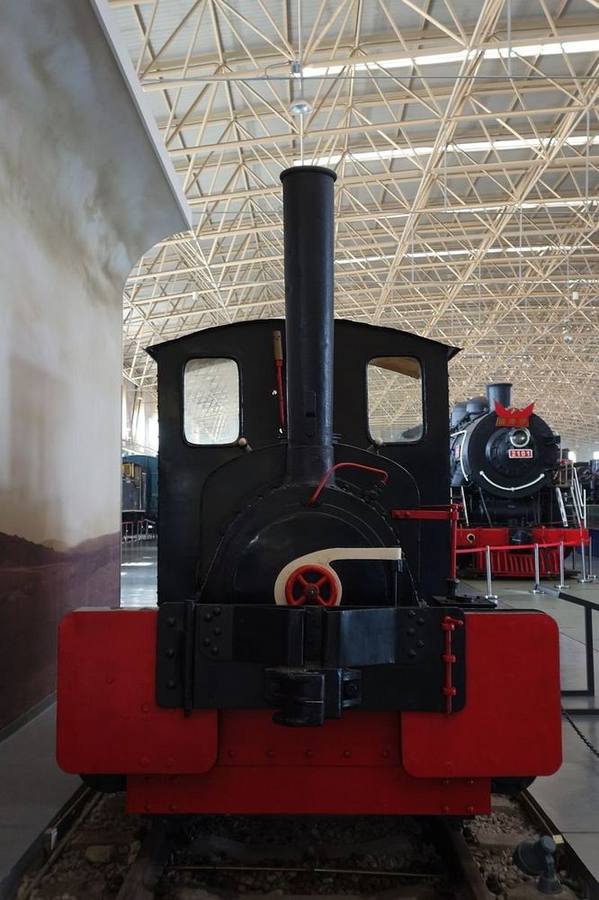
1. February 1932, Harbin: the start of a railway life, and the evidential limits of the birth entry
What the public record can pin down about Han Zhubin's birth is only a month, a year and a city: February 1932, Harbin. Two independently edited encyclopaedia entries, the English and Chinese Wikipedias, agree on exactly that. His official biographical sources — the People's Daily / People's Daily Online profile materials and the China Vitae database — likewise give only the month and year, never a day. This file therefore writes February 1932 and nothing more precise: any source elsewhere that gives an exact day of birth is offering a precision the archive cannot support.
Harbin in 1932 needs one line of context. Manchukuo, the Japanese-sponsored state, had just been proclaimed, and Harbin sat at the junction of Japanese power and the older Russian-built Chinese Eastern Railway sphere. A child born that year into a Harbin railway world, who walked into a station at fourteen to work as a clerk, was not making a career choice in the modern sense: Harbin was a city the railway had built, and the railway was the city's largest employer, school system and social world combined. This file records that not as colour but because it explains the first line of his curriculum vitae — why a boy from Harbin in 1946 starts at a station desk, and why he was still in the same system forty-six years later.
Of his family background, his parents and his schooling before 1946, the public record is blank — no public record. Every curriculum vitae this site found begins in April 1946, with his post as a station clerk at Guxiangtun station of the Harbin Railway Bureau. The fourteen years before that have no reliable material at all. This file follows the rule it applies to every figure on this site: a blank stays blank. An archive that invents a childhood has stopped being an archive, and the reader is entitled to know exactly where the documented life begins.
Sources: English Wikipedia, "Han Zhubin" (born February 1932 in Harbin; joined the CCP in 1950; in the railway system since 1946); Chinese Wikipedia, "韩杼滨" (born February 1932 in Harbin under Manchukuo; education and complete office sequence); People's Daily profile materials and China Vitae, as cited in the English Wikipedia's notes.
2. Forty years on the railways: from a Guxiangtun station desk to the directorships of Liuzhou and Shanghai (1946–1992)
Han Zhubin spent forty-six years in the railway system before he became Minister of Railways in 1992, and a further five and a half years as minister. The railway is the base metal of his professional identity; the Procurator-Generalship was only the last five years of a very long career. That proportion matters for everything that follows in this file. He was not a procurator raised by the legal system. He was an administrator raised by the railways, placed at the top of the state's highest prosecution organ — and his documented personal trace in prosecution work is correspondingly thin, while his institutional trace is enormous. This file books him accordingly.
The career, stage by stage, cross-checked between the complete office sequence in the Chinese Wikipedia and the official biographies. In April 1946 he became a station clerk at Guxiangtun station, Harbin Railway Bureau, and later a train conductor with the Harbin train crews. In 1949 he went south with a railway-troops cadre column from Heilongjiang, serving in military-transport sections at Changsha, Hengyang and Guilin. In 1950 he joined the Chinese Communist Party and became a Youth League secretary in the Guilin area of the Liuzhou Railway Bureau — and Liuzhou was where he stayed for more than thirty years: League secretary of the Liuzhou sub-bureau, section chief and deputy head in the bureau political department's youth-work office, deputy secretary and then secretary of the bureau Youth League committee, deputy secretary and secretary of the Guilin area Party work committee, director of the political department's general office, deputy director of the Revolutionary Committee of the Duyu'nan railway sub-bureau, standing committee member of the bureau Party committee, deputy director of its Revolutionary Committee and of its political department, and finally director of the Liuzhou Railway Bureau from 1978 to 1983. From 1984 to 1990 he directed the Shanghai Railway Bureau. From 1990 to 1992 he was deputy Party secretary of the Ministry of Railways and director of its political department — inside the ministerial leadership at last.
The shape of that career deserves a second look, because it explains why he, of all people, was chosen to run the procuratorate in 1998. Across his forty-six railway years, Youth League, political-department and Party-committee posts bulk far larger than operating posts. He had held a conductor's job as a young man, but what he actually practised for decades was political work and cadre management inside a huge, quasi-military, self-contained system. When the centre put such a man at the head of the Supreme People's Procuratorate in 1998, what it was plainly buying first was organisational and political control, not professional judgement in public prosecution. That is not this site's disparagement; it is the structural fact his own curriculum vitae states. His record contains no legal education, no court, procuratorate or police service at all. Before 17 March 1998, his entire intersection with the judicial system consisted of the deputy secretaryship of the Central Commission for Discipline Inspection he had taken up in September 1997 — the subject of the next section.
One comparison belongs in the record. His eleven years as a bureau director — Liuzhou 1978–1983, Shanghai 1984–1990 — were spent running two of the system's great bureaus: Liuzhou commanding the southwest corridors, Shanghai the heart of the east China network. A railway bureau director in those years governed a small society — tens of thousands of employees, family compounds, schools and hospitals — and was in effect the highest authority of an administrative territory. The Supreme People's Procuratorate he later headed was far smaller in headcount but wholly different in kind: not a transport undertaking but the machine that decides whether a person is arrested and put on trial. Of how he crossed that line, or what he thought of the crossing, the public record contains nothing — no public record — and this file does not write that inner chapter for him.
Sources: Chinese Wikipedia, "韩杼滨", office sequence (Guxiangtun station clerk, April 1946; Harbin train conductor; south in 1949 and military-transport posts; Liuzhou Railway Bureau posts in sequence; bureau director 1978–1983; Shanghai Railway Bureau director 1984–1990; Ministry of Railways deputy Party secretary and political-department director 1990–1992; Beijing Economic Correspondence University associate degree in economic management); English Wikipedia, "Han Zhubin" (in the railway system since 1946; joined the CCP in 1950 — corroborating).
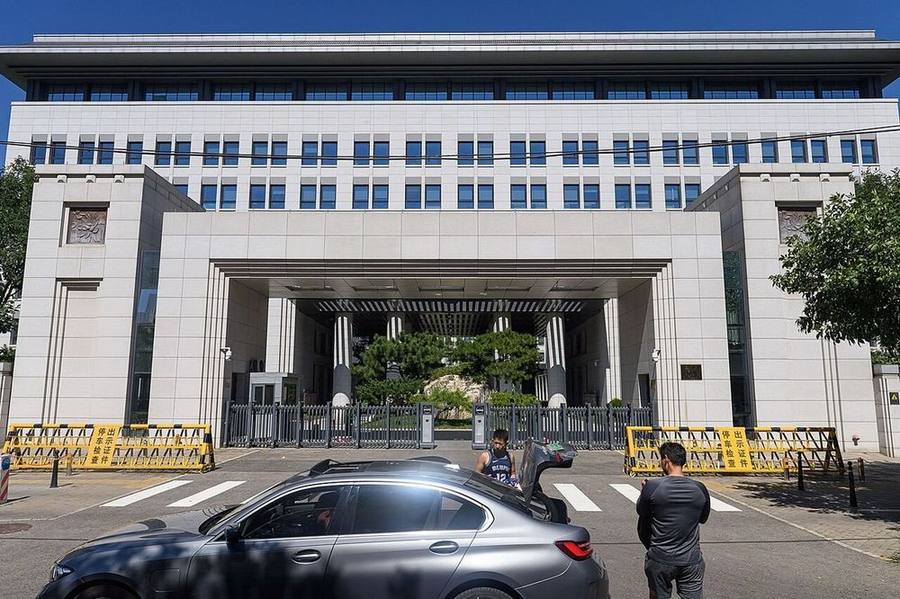
3. Minister of Railways, discipline-inspection deputy, and the cross-system appointment of 1998 (1992–1998)
On 4 September 1992 Han Zhubin was appointed Minister of Railways (the Chinese Wikipedia, citing the appointment record of the Seventh NPC Standing Committee; the English Wikipedia's infobox gives September 1992 to March 1998, predecessor Li Senmao, successor Fu Zhihuan, under Premier Li Peng). Several large items from his ministry are staples of the official record: the Beijing–Kowloon and Nanning–Kunming trunk lines were completed and opened; from 1996, pilot reforms at the Nanchang and Hohhot bureaus let railway bureaus direct their stations and depots directly, loosening the decades-old four-tier structure of ministry–bureau–sub-bureau–station, with Hohhot becoming the first existing bureau to abolish the sub-bureau tier; in 1997 the first nationwide speed increase was carried out, and the direct-management pilot was extended to the Kunming and Liuzhou bureaus (Chinese Wikipedia, synthesising official reporting). This file records those items at the grade of the official record, for the same reason it records them on every figure's page: a complete file does not erase a tenure's construction side merely because the page exists to book its responsibility side. But the limit is stated in the same breath. Those were the ministry's institutional achievements, not a personal decoration, and they offset nothing — not one item — in the procuratorial ledger that follows. Each ledger is kept in its own book.
In September 1997 he became a deputy secretary of the Central Commission for Discipline Inspection and a member of its 15th Standing Committee, serving to 2002 (English Wikipedia, citing People's Daily Online). That step was the direct runway to 1998: the CCDI deputy secretaryship is an entry point into the ranks the Chinese system calls state-level deputy leaders. On 17 March 1998 he became Procurator-General of the Supreme People's Procuratorate and Chief Grand Procurator of the People's Republic of China, concurrently CCDI deputy secretary; Fu Zhihuan took over the railways ministry the next day, 18 March 1998 (Chinese Wikipedia). In May 1998 he additionally became a deputy director of the Central Comprehensive Management of Public Security Commission. That last concurrent post is one readers tend to skip, and this file deliberately pins it here: comprehensive management of public security was precisely the Party-side coordinating home of Strike Hard and the successive special campaigns, and from the very start of his procuratorial tenure Han sat in two seats at once — head of the procuratorial system, and deputy head of the public-order comprehensive-management system. The Strike Hard section below should be read with that second seat in mind.
The nature of the cross-system appointment itself was already stated in Section 2, and its evidence is pinned one layer harder here: his only recorded education is an in-service correspondence associate degree in economic management, unrelated to law (per the record cited by the Chinese Wikipedia). In the China of 1998 this was not exceptional — the Procurator-Generalship had long been held by Party and administrative cadres, and a legal-professional background was never a condition of the office. But an archive must state the fact plainly: during the two campaigns of 1999 and 2001, the man at the top of the state's highest prosecution organ was a railway administrator formed by political work. Every arrest-approval policy issued under his authority, and every number he read out to the National People's Congress, came from such a Procurator-General. That is not an accusation. It is the structural fact of his qualification, and it determines how heavily this file can book "personal professional judgement" against how heavily it must book institutional and post responsibility.
Sources: Chinese Wikipedia, "韩杼滨" (appointed 4 September 1992; tenure pilots and the 1997 speed increase; Beijing–Kowloon and Nanning–Kunming openings; Procurator-General from 17 March 1998, concurrently CCDI deputy secretary; railways ministry handed to Fu Zhihuan on 18 March 1998; Comprehensive Management deputy director, May 1998; China Law Society president 2003–2013); English Wikipedia, "Han Zhubin", infobox (Minister of Railways September 1992 – March 1998, predecessor Li Senmao, successor Fu Zhihuan; Procurator-General 17 March 1998 – 16 March 2003, predecessor Zhang Siqing, successor Jia Chunwang; CCDI deputy secretary and 15th CCDI Standing Committee member 1997–2002).
4. The SPP under him: what machine it was, and the five-year totals he read out himself (1998–2003)
First, the procuratorate's place in the machine, because every later entry in this file hangs on it. Under the Criminal Procedure Law then in force, the public security organs were responsible for investigation, detention and the execution of arrests; the people's procuratorates were responsible for approving arrests, reviewing cases and bringing public prosecutions, and were charged by law with exercising legal supervision over criminal proceedings (Criminal Procedure Law, 1996 revision, Articles 3 and 8). In plain terms: whether a person the police had seized was formally arrested, and whether that person was sent into a courtroom at all, were gates the procuratorate kept. And when something went wrong inside investigation and detention — extended custody, confessions extorted by torture, illegally obtained evidence — the organ charged by law with supervising and correcting it was also the procuratorate. The Supreme People's Procuratorate is the top of that machine, and its Procurator-General its highest responsible officer. Han Zhubin took that seat on 17 March 1998, served one full five-year term, and handed it to Jia Chunwang on 16 March 2003.
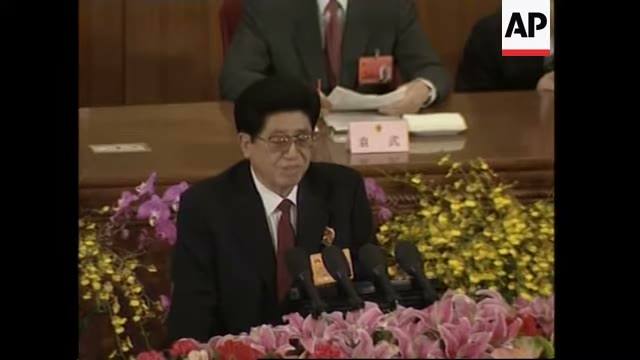
The hardest material he left the archive is the series of work reports he delivered in person to the National People's Congress — above all his valedictory report of 11 March 2003. That day, at the First Session of the Tenth NPC, he read out the SPP's five-year totals, and the People's Daily's English service recorded the figures from his report the same day: in five years, procuratorates across the country had approved the arrest of 3,601,375 criminal suspects and prosecuted 3,666,142 people. Within that total, giving top priority as they always did to safeguarding social stability, they had approved the arrest of 3,402 suspects and prosecuted 3,550 for crimes endangering state security, and he singled out for severe punishment the explosions, murders and arson committed by terrorist forces, ethnic separatist forces and religious extremist forces (People's Daily Online, 11 March 2003, reporting his report). The same report gave the legal-supervision side of the ledger: over five years the procuratorates had supervised and urged the police to file 36,955 cases according to law, approved the arrest of 50,863 suspects and prosecuted 25,297 suspects who had previously escaped punishment; and 466,357 people proven innocent had been spared arrest and a further 106,715 innocent people spared prosecution (Xinhua, 11 March 2003, as carried by CNTV, cross-checked against the People's Daily reporting).
How those figures are to be read must be stated on the spot, so that no side's editing carries the reader away. First, the 3,402 and 3,550 state-security figures are numbers his own institution published and he himself read out — the highest evidential grade there is — and this file takes them as its anchor. They prove that, in his five years, more than three thousand people were approved for arrest and more than three and a half thousand sent to court on the single category of crimes endangering state security — the category under which, after 1999, Falun Gong cases were in large part prosecuted as "using a cult organisation to undermine the implementation of the law", alongside political cases and cases from the ethnic regions. Second, the 3,601,375 and 3,666,142 are the all-crime totals for arrest approvals and prosecutions, and they state the machine's scale: on average, well over seven hundred thousand people a year were approved for arrest by the system he headed. Third, the "innocent spared" figures are also recorded, uncut — they are his system's self-description of its corrective face. But this file notes, in the same paragraph, that those self-descriptive figures had no external verification mechanism whatsoever and that their statistical definitions were set by the reporting institution itself. They are to be read alongside the contemporaneous State Department and human-rights record of torture and wrongful cases in Section 7, not as a conclusion standing alone.
His annual reports pin his public line year by year. In March 2000, reporting to the Third Session of the Ninth NPC, he defined the procuratorates' most important task for 2000 as "to maintain social stability", and said the procuratorates would adhere to the "strike-hard" policy — swift and harsh punishment of criminal offences (People's Daily Online, 11 March 2000, reporting his report). Note the date: that line was laid down a full year before the nationwide Strike Hard of April 2001 was launched. In Han's mouth, Strike Hard was already a standing policy, not an emergency campaign. In March 2001, reporting to the Fourth Session of the Ninth NPC, he stated that in 2000 the country's procuratorates had approved 715,833 arrests and prosecuted 708,836 suspects, and he reported in particular that the procuratorates had taken an active part in the struggle against organised crime and mafia-type gangs and in dealing with the criminal activities of the "evil cult" Falun Gong, and in specially organised anti-crime campaigns (People's Daily Online, 10 March 2001, reporting his report). That is the one place this site has found where Han, in a formal report in his own name, directly names the handling of Falun Gong cases — its character is an institutional work report, not a personal directive, and the next section books it at exactly that grade. In December 2001, setting out the work of 2002, he said the investigation and prevention of corruption and dereliction would remain a primary task; more than 43,000 cases of graft and dereliction had been probed in the first eleven months of that year, recovering 3.4 billion yuan (People's Daily Online, 26 December 2001). Read together, the five reports give a complete picture of his SPP: one hand holding the stability-and-Strike-Hard totals, the other the anti-corruption case totals — both of them institutional ledgers, and both of them read out, answered for and finally signed by the same man.
Sources: Criminal Procedure Law (1996 revision), Articles 3 and 8 (division of labour among police, procuratorate and courts; the procuratorates' legal-supervision power — AsianLII archived text); People's Daily Online, 11 March 2003 (the valedictory report: 3,601,375 arrests approved and 3,666,142 prosecutions in five years; 3,402 arrests approved and 3,550 prosecutions for crimes endangering state security; "top priority to safeguarding social stability"); Xinhua, 11 March 2003, via CNTV (supervision figures: 36,955 filings supervised; 50,863 belated arrests approved; 25,297 belated prosecutions; 466,357 innocent people spared arrest; 106,715 spared prosecution); People's Daily Online, 11 March 2000 (the 2000 report: the most important task is to maintain social stability; adherence to the strike-hard policy); People's Daily Online, 10 March 2001 (the 2001 report: 715,833 arrests approved and 708,836 prosecutions in 2000; active part in dealing with the Falun Gong "evil cult" criminal activities); People's Daily Online, 26 December 2001 (the 2002 line and the figure of more than 43,000 duty-crime cases).
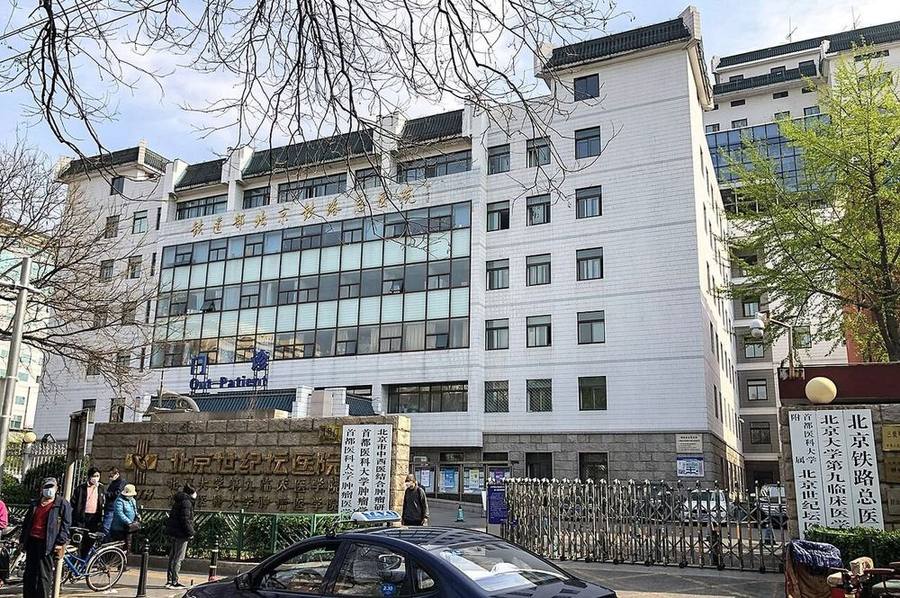
5. 22 July 1999: the ban was not his decision — but the prosecution gate was in his hands
This file pins the decision level first and the execution level second. That is attribution discipline, not rhetoric. On 25 April 1999 more than ten thousand Falun Gong practitioners appealed peacefully near Zhongnanhai in Beijing. The decision to ban that followed was made by Jiang Zemin, then General Secretary of the CCP; on 10 June the centre set up the Leading Group for Handling the Falun Gong Issue and its 610 Office to coordinate the campaign. In the early hours of 20 July 1999 a nationwide roundup began; on 22 July the Ministry of Civil Affairs announced the banning of the Falun Dafa Research Association and the Ministry of Public Security issued its prohibitory notices — and this site's tag date for Han Zhubin is that day. Han's place in that decision chain, on everything the public record supports, is one sentence long: there is no public record that he took part in the decision to ban Falun Gong. He was not a Politburo member, and no decision meeting or submission in the record carries his name. This file does not book Jiang Zemin's decision to him — not one word of it.
After the decision, however, a case could only become a verdict by passing the procuratorate's gate. From July 1999 onward, any Falun Gong practitioner who entered the criminal process had to have his or her arrest approved by a procuratorate and prosecution brought by a procuratorate — and the national master gate of that system sat in the SPP he headed. On 8 November 1999 the State Council confirmed that at least 111 Falun Gong members had been formally arrested, on charges including gathering illegally to disturb social order and stealing state secrets, while many others had been administratively sentenced, without trial, to re-education through labour (Human Rights Watch press release, 9 November 1999, checked against the text as reproduced on Minghui). "Formally arrested" had a precise procedural meaning at the time: the arrest had already been approved by a procuratorate. The first three-digit arrest figure of the ban was therefore, by construction, a figure that had passed through his system's gate.
In October 1999 the gate's rules were rewritten once more. On or about 9 October the Supreme People's Court and the Supreme People's Procuratorate issued judicial interpretations that encouraged the authorities to apply existing laws harshly to Falun Gong members (Human Rights Watch, November 1999 release). On 30 October the NPC Standing Committee adopted its Decision on banning cult organisations and preventing and punishing cult activities. This file books the three layers separately: the NPC Decision belongs to the legislative ledger, in the name of the NPC Standing Committee; the two-supremes interpretations belong to the judicial-interpretation ledger, and the SPP's half of them is booked to the SPP's institutional account — interpretations issue in the institution's name, and an institution's head bears post responsibility for documents issued in his institution's name. That is post responsibility. It is not a claim that every clause came from his pen; this site has no such evidence and makes no such statement. And as for any directive speech on Falun Gong by Han personally, this site's searches found no publicly attributable, verifiable text in his own name at all — personal public statements: no public record. That blank must stay conspicuous. Anyone in future who puts a sentence about Falun Gong into Han Zhubin's mouth should first be asked for its source; within the range this site searched, there is none.
The scale side is registered by source and date, never merged. The US State Department's International Religious Freedom Report for 2000 recorded that on 22 July 1999 the government officially declared Falun Gong illegal and began a nationwide repression of the movement (the report, as quoted in the Australian Refugee Review Tribunal's research response). From the handling side, Han's own March 2001 report supplies the counterpart: the procuratorates in 2000 "took an active part" in the struggle against the Falun Gong "evil cult" criminal activities, reported in the same breath as the fight against organised crime (People's Daily Online, 10 March 2001). That is direct textual evidence that Falun Gong case-handling was presented, in a report he delivered, as an achievement of the procuratorates under him — booked here at the grade of "institutional report, delivered by him in person". As for a separate statistical series for Falun Gong arrests approved and prosecutions brought between 1999 and 2003, the SPP never published one, and this file does not estimate or assemble one. What can be pinned is the procedural structure — every formal arrest and every prosecution necessarily passed through his system — and the characterisation in his own report. The individual cases themselves are filed in this site's Persecution section.
Sources: Human Rights Watch press release, 9 November 1999 (State Council confirmation on 8 November 1999 of at least 111 formal arrests; parallel labour-camp sentences; the SPC/SPP interpretations of 9 October 1999; the NPC Standing Committee Decision of 30 October 1999 — checked against the HRW text as reproduced on Minghui, a Falun Gong-affiliated site; the text is HRW's release and is cited at that grade, with the reproduction chain stated); US State Department, International Religious Freedom Report 2000, China (22 July 1999 declaration and nationwide repression, as quoted in RRT Research Response CHN34304, archived on ecoi.net); People's Daily Online, 10 March 2001 (the Falun Gong passage in his 2001 report).
6. Strike Hard, April 2001: arrest approval and prosecution sat inside his system; the death figures are queued by Amnesty's own calibres
In April 2001 a nationwide "Strike Hard" campaign was launched again. Scholarship records how it began: a national conference on public order was convened, the heads of the police, procuratorate and courts attended, and — for the first time in a Strike Hard campaign — the entire Politburo attended, placing the campaign at the very top of the state's priorities for 2001. Jiang Zemin delivered the keynote and urged the criminal-justice organs to open the campaign with an explosion of publicity and momentum — criminals gathered in batches, punished severely, and the punishment propagated through public rallies and the media (Murray Scot Tanner and co-authors, "Courts on the Campaign Path", Asian Survey 2002, archived via FES). The campaign was set to run for two years and was the largest since 1983 (the "Yanda 2001" study in the Australian and New Zealand Journal of Criminology). The launch and the line belong to the Party centre and to Jiang Zemin; that decision ledger is not booked to Han Zhubin. But the campaign's executing structure was the police, procuratorate and courts in parallel, and the arrest-approval and prosecution segment lay wholly inside the procuratorial system he headed. More than that: he had been a deputy director of the Central Comprehensive Management of Public Security Commission since the start of his tenure, and in his March 2000 report he had personally set "adherence to the strike-hard policy, swift and harsh punishment" as his system's standing line (Section 4). When the campaign arrived, his system's posture was not that of a bystander swept in; it had taken up its position a year in advance, on his own words.
The human cost of the campaign is registered only in figures with a stated source and a stated counting period. The scholarly and Amnesty records are set side by side. Academic work records that in the campaign's first five months, April to the end of August 2001, more than 3,000 people had already been executed (the "Yanda 2001" study, citing contemporary tallies). Amnesty International's release of 6 July 2001 (AI Index ASA 17/022/2001) used a more restrained calibre and a transparent method: monitoring public reports, it had recorded at least 2,960 death sentences and 1,781 executions in the campaign's first three months, and it stated plainly that those figures fell far below the real numbers, because only a fraction of China's death sentences and executions are publicly reported and national death-penalty statistics are a state secret. Amnesty's Report 2002, covering the whole of 2001, updated the count: on the limited and incomplete records available, at least 4,015 people were sentenced to death and 2,468 executed in the year, the true figures believed far higher, many of the sentences passed after apparently summary trials, for offences ranging across bribery, pimping, embezzlement, tax fraud and the sale of harmful foodstuffs as well as violent crime (Amnesty International Report 2002, archived on Refworld). The three figures rest on different calibres — the study's "more than 3,000 in five months" and Amnesty's "1,781 in three months, at least 2,468 in the year" — and they may not be added together, nor may the largest be taken as the total. This file shelves them side by side, each with its counter, its period and its method, for the reader to judge.
The procuratorate's concrete part in the campaign can also be seen in one local instruction, which shows its daily form. Human Rights Watch's report "Devastating Blows" (2005) recorded the instruction given by Xinjiang Party secretary Wang Lequan at the outset of the 2001 Strike Hard there: as long as the basic facts were clear and the basic evidence verified, prompt approval of arrest, prompt prosecution and prompt court decisions were required (HRW, citing the Xinjiang official instruction). In April 2001 the Minister of Public Security publicly stated that he had instructed Xinjiang to carry out a two-year Strike Hard aimed at "eliminating separatism and illegal religious activities" (Agence France-Presse, 27 April 2001, as cited by HRW). "Prompt approval of arrest and prompt prosecution" names, precisely, the procuratorate's two acts: to speed approval and prosecution up is to compress review, and review is the procuratorate's reason for existing. This file books that instruction to the procuratorial system's institutional account — the instruction was Wang Lequan's, the public statement the public security minister's, neither of them Han's — but it describes exactly how his system actually ran during the campaign, and there is no public record of Han, as the system's highest head, raising any objection to or correction of such speed requirements. No public record; this file writes it exactly so.
The campaign's tail must also be pinned. In July 2002 the authorities called for Strike Hard to be intensified ahead of the 16th Party Congress; Amnesty recorded about 50 death sentences and 25 executions in the weeks after the 8 July call, and restated that the campaign had begun in April 2001 against serious and organised crime and had been expanded by regional authorities to cover, among other things, "illegal religious activities" in Xinjiang (Amnesty International release, 23 July 2002). In other words, across the last two years of Han's five-year tenure Strike Hard was not an episode but the normal state of affairs — and his valedictory report of March 2003 presents the period entirely through arrest-approval and prosecution totals as achievements, without one word about the scale of executions under the campaign. The missing column in that self-account — the human column — is one this file supplies for the archive: in his own ledger, Strike Hard has only "results", and no row for lives.
Sources: "Courts on the Campaign Path: Criminal Court Work in the 'Yanda 2001' Anti-Crime Campaign", Asian Survey (2002) (national conference; full Politburo attendance; Jiang Zemin's keynote and the demand for momentum — FES library archived text); "Yanda 2001: Form and Strategy in a Chinese Anti-Crime Campaign", Australian and New Zealand Journal of Criminology (two-year campaign; largest since 1983; more than 3,000 executed in the first five months — vLex archived abstract); Amnesty International, 6 July 2001, ASA 17/022/2001 (at least 2,960 death sentences and 1,781 executions in the first three months; counting method and the state-secret status of death-penalty statistics); Amnesty International Report 2002, China (at least 4,015 death sentences and 2,468 executions in 2001; summary trials and non-violent offences — Refworld archive); Human Rights Watch, "Devastating Blows" (2005) (Wang Lequan's prompt-arrest prompt-prosecution instruction; the public security minister's April 2001 Xinjiang instruction — hrw.org text); Amnesty International release, 23 July 2002 (the pre-Congress intensification and the campaign's expansion of scope).
7. The supervisor's other face: detention, torture, and his own admission of March 2000
The procuratorate in this system has a double identity. The first six sections described its prosecution face; this section describes its supervision face — and it is here that this file's bookkeeping bites hardest. Under Article 8 of the Criminal Procedure Law, the procuratorates exercise legal supervision over criminal proceedings in accordance with law; under Article 18, crimes that infringe citizens' personal rights — illegal detention, extortion of confessions by torture, retaliation and frame-ups — are themselves investigated by the procuratorates. That is to say: if police beat a confession out of a detainee in a detention centre, the organ charged with investigating those police officers is the procuratorate; and if a procuratorate waves an arrest through with its eyes shut, the word "supervision" has failed. What that supervision was actually worth across Han's five years is documented by two mutually interlocking kinds of material: his own admission, and the contemporaneous external record.
His own admission was recorded, in substance, by the United States Department of State. The State Department's Country Report on Human Rights Practices for 2001 (published 2002) recorded that police and prosecutorial officials often ignored the due-process provisions of law and constitution; that police and prosecutors could subject prisoners to severe psychological pressure to confess, and that coerced confessions were frequently introduced as evidence; and that in March 2000 the top prosecutor, Procurator-General Han Zhubin, himself admitted that abuses such as using torture to extort confessions, extorting favours from suspects and nepotism remained serious problems. The same report recorded that in 1999 Han's office received 812,821 complaints, of which 342,017 were related to prosecutors (US State Department report, archived on Refworld). The evidential structure of that passage deserves attention: the admission came from his own mouth; the recorder was the US State Department; and the report also carried his own system's complaint statistics. This is not an opponent's accusation. It is the supervisor himself confirming how deep the disease he supervised ran. This file books that item on his personal ledger — not as an indictment, but as a fact he personally confirmed: in March 2000 he knew that torture to extort confessions remained serious. In the three years that followed, his system's arrest-approval and prosecution totals were published every year; whether torture to extort confessions diminished in consequence was never externally verified in any statistic — no public record.
The external record's other face is the scholarly and official analysis of the detention structure of those years. Ira Belkin's study of torture in Chinese criminal investigations (Columbia Journal of Asian Law, 2011) argued that even under the 1996 Criminal Procedure Law, the purpose of detention in practice remained the creation of the most favourable conditions for obtaining a confession, and that a confession in hand made prosecution and conviction far simpler. The same study recorded that the SPP itself, in its late-1997 volume The Crime of Tortured Confession, had published China's first official statistics on criminal cases of tortured confession — statistics showing, among other things, that 241 people had been tortured to death over the two years 1993–1994 (Belkin, citing the SPP publication). Those figures predate Han's tenure and are not booked to him. This file registers them because they establish a background no reader should miss: death by torture in custody was not a secret in China; the SPP's own publishing house had recorded three-digit deaths. By Han's tenure, no such itemised statistics appear in his work reports. His reports carry the arrest and prosecution totals, and the self-descriptive "innocent spared" figures. A supervisor who stops publishing the figures for the disease is himself part of the record of supervision, and the archive is right to note the silence.
One case exhumed years later shows what a failed gate looked like in his tenure. The case of Zhao Zuohai is the most cited: in 1999, Zhao, a Henan farmer, was tortured by police — the scholarly record describes beatings sustained over more than a month — until he confessed to a murder that had never happened; only in 2010, when the supposed victim returned alive, was the conviction undone (Belkin, citing the case record). The year Zhao was approved for arrest, prosecuted and sentenced was the second year of Han Zhubin's Procurator-Generalship. This file's treatment of that case is precise: the arrest approval in Zhao's case issued from the Shangqiu-level procuratorate in Henan, and no material connects the handling of the individual case to Han personally — of a personal order there is no public record. But a case built on a month of torture passed through four successive gates — investigation, arrest approval, prosecution and trial — and two of those gates, arrest approval and prosecution, belonged to the system he headed. That is what "institutional responsibility" means most concretely on this page. This file does not use an individual case to convict an individual man. It uses the case to weigh the word "supervision": in March 2000 he admitted the problem was serious — and in the year before that admission, a case of exactly that kind had already passed through his system's gates.
Sources: US Department of State, Country Report on Human Rights Practices 2001, China (police and prosecutors ignoring due process; coerced confessions frequently used as evidence; Han Zhubin's March 2000 admission that torture to extort confessions and other abuses remained serious; 812,821 complaints received in 1999, 342,017 of them concerning prosecutors; 715,833 arrests and 708,836 prosecutions in 2000 — Refworld archived text); Ira Belkin, "China's Tortuous Path toward Ending Torture in Criminal Investigations", Columbia Journal of Asian Law, vol. 24, no. 2 (2011) (detention structured around obtaining confessions; the SPP's 1997 volume and its figure of 241 people tortured to death in 1993–1994; the Zhao Zuohai case, tortured for over a month in 1999); Criminal Procedure Law, Articles 8 and 18 (legal supervision; procuratorial investigation of confession-by-torture crimes).
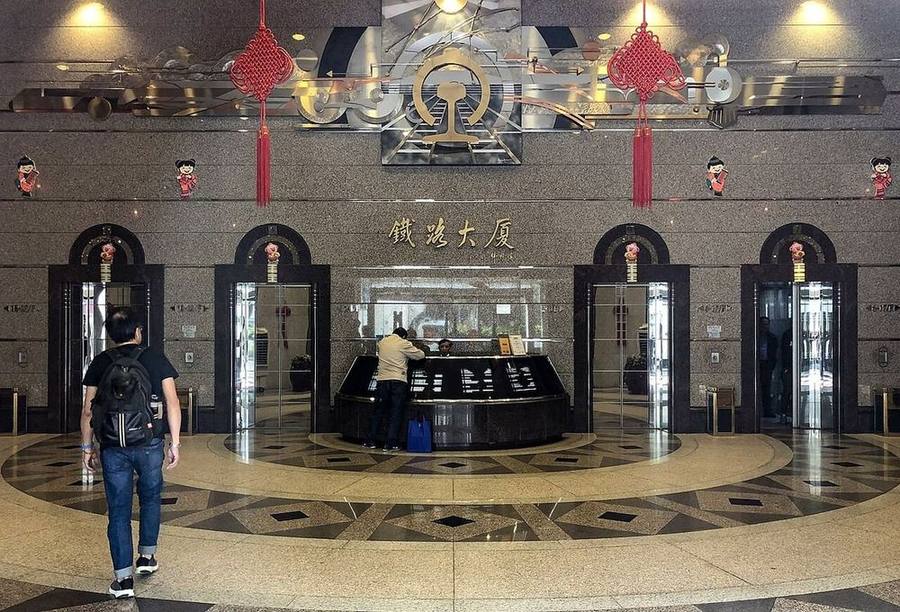
8. Three ledgers, kept apart: the personal, the post, and the no-public-record
Everything this file has booked on Han Zhubin is gathered here into three ledgers, item by item, with no item allowed to wander between columns. The first is the personal ledger — matters the contemporaneous record proves came from his own mouth, his own reports, his own conduct of office. One: in his March 2000 report to the NPC he set the procuratorates' most important task for 2000 as "maintaining social stability" and declared adherence to the strike-hard policy of swift and harsh punishment (People's Daily reporting of his report). Two: in his March 2001 report he presented the procuratorates' active part in dealing with the criminal activities of the Falun Gong "evil cult" as an achievement of his system (People's Daily reporting of his report). Three: in his valedictory report of 11 March 2003 he read out in person the five-year totals — 3,601,375 arrests approved, 3,666,142 prosecutions, 3,402 arrests approved and 3,550 prosecutions for crimes endangering state security — and stated that the procuratorates had always given top priority to safeguarding social stability (People's Daily reporting of his report). Four: in March 2000 he publicly admitted that torture to extort confessions, extorting favours from suspects, nepotism and like abuses remained serious problems (recorded in the US State Department's human-rights report). Five: early in his tenure he introduced the practice of procurator-generals personally receiving complainants into the SPP, and on the first working day of 2000 he personally received appeals; official reporting stated that he and his deputies had together received 204 appeal cases over two years (People's Daily Online, 4 January 2000). That fifth item is a documented gesture of accessibility on his personal account, and this file records it as faithfully as the other four — the personal ledger is not edited for effect. The personal ledger ends there. Beyond those five items, this site has found no source for any specific utterance attributed to him.
The second ledger is the post and institutional ledger — acts whose subject is the institution he headed, under the premise of his office. After the July 1999 ban, the arrests and prosecutions in Falun Gong criminal cases all passed through the procuratorial system he headed, including the at least 111 formal arrests officially confirmed on 8 November 1999, which had by definition cleared the approval gate. The October 1999 judicial interpretations encouraging harsh application of the law to Falun Gong members issued in part in the SPP's name. In the nationwide Strike Hard launched in April 2001, his system's arrest-approval and prosecution links were committed to the campaign as a whole; "prompt approval of arrest and prompt prosecution" became the operative local formula, while he had already set Strike Hard as his system's standing policy and concurrently sat as a deputy director of the Central Comprehensive Management Commission. And across the five years, the worth of his system's legal supervision — no externally verifiable improvement statistics for torture after his admission, and Zhao Zuohai-type confession cases passing the arrest-approval and prosecution gates in the second year of his tenure — is booked as the institution's failure, not as his personal directive. The weight of this ledger comes not from any single case but from the totals: more than 3.6 million arrest approvals, more than 3.6 million prosecutions, more than three thousand state-security cases — every one of them stamped by his system, every one of them with him as its highest responsible officer.
The third ledger is the column of no-public-record entries, listed together here so that no side's imagination fills them in. Whether he took part in the 1999 decision to ban Falun Gong: no public record — and the public record supports Jiang Zemin as the decision-maker, on which basis this file does not book the decision to him. Whether he gave any directive speech of his own on the Falun Gong question: personal public statements, no public record. Whether he approved or intervened in any individual Falun Gong case, Strike Hard case or death-penalty prosecution: no public record. Whether he ever expressed any objection to, or correction of, the 2001 campaign's speed requirements or the scale of its executions: no public record. The itemised statistics for Falun Gong arrests approved and prosecutions brought between 1999 and 2003: never published, no public record. Conviction rates, sentence distributions and later outcomes for those prosecuted in his tenure: no public record. Read the three ledgers side by side and the portrait is complete: an administrator who left no record of personal extreme utterances, who headed a prosecution machine counted in millions for five years; the machine ran at full speed in his hands; its direction was set by others; its throttle and its gates were under his feet — and the supervisory function those gates existed to perform was, on his own admission, never fully performed.
Sources: this section is this site's classification of the sources already cited in Sections 1–7 — the personal ledger's five items rest respectively on People's Daily Online reports of 11 March 2000, 10 March 2001 and 11 March 2003, the report of 4 January 2000, and the US State Department's Country Report for 2001; the institutional ledger's items rest on the Human Rights Watch release of November 1999, Human Rights Watch's "Devastating Blows" (2005) and the Amnesty documents cited in Section 6; each no-public-record entry is a negative result within the range of this site's searches of 5 November 2026, whose scope and method are stated in the Verification Note.
9. After the SPP: ten years at the China Law Society, and a blank on the sanctions lists (2003–2013 and after)
On 16 March 2003 Jia Chunwang succeeded Han Zhubin as Procurator-General, and Han's procuratorial tenure closed. In November of that year he succeeded Ren Jianxin as president of the China Law Society, serving ten years until Wang Lequan succeeded him in November 2013 (the English and Chinese Wikipedia infoboxes agree: November 2003 – November 2013; predecessor Ren Jianxin, successor Wang Lequan). The China Law Society is the official scholarly association of the legal world, and its presidency was conventionally held by a retired senior figure of the politico-legal system — his predecessor Ren Jianxin was himself a former president of the Supreme People's Court and former secretary of the Central Political and Legal Commission. Of Han's public activity across those ten years, this site's searches found only the opening and closing dates of the office itself: scattered reports of his attending events in the society's name during the 2000s, none of them connected to the responsibility events of 1999 or 2001, and this file does not catalogue them one by one. The office and its term are what the archive keeps. The China Law Society decade was the coda of his political life: an honorary scholarly presidency, holding no power of arrest approval, prosecution, or any other coercion.
The sanctions entry is written out in full, under this site's checking discipline. The check was performed by this site's coordinator on 5 November 2026, with method and limits as follows. From the US Treasury's Office of Foreign Assets Control, the Specially Designated Nationals (SDN) list as published on 28 October 2026 was searched in full text across all 19,484 records: the English string "Zhubin" occurs exactly once in the entire list, at a Tehran address — "Zhubin Alley" — in the entry of an Iranian steel company; it is a street name, not a person. A search under the full name "Han Zhubin" returned no hit. From the UK Sanctions List as of 27 October 2026, a full-text search for "Zhubin" returned no hit. The conclusion is: no record in the lists checked — as of those lists' publication dates, Han Zhubin has no US or UK sanctions designation. This file also states the natural limit of the check: the conclusion covers the two lists in the versions named; within the range this site consulted, the EU and Canadian lists likewise carry no designation of him; but the words "no record" are always bounded by the lists and dates actually checked and are never written here as an unqualified claim that he has never been designated anywhere by anyone.
The accountability entry is shorter still. Inside China, Han Zhubin has never been investigated, prosecuted or held accountable in any form for anything in his procuratorial tenure — not for the Falun Gong prosecutions after 1999, not for the scale of executions in the 2001 Strike Hard, not for the failures of supervision: no public record. This site found no reliable report of any state, international body or private group bringing a criminal complaint against him personally; where his successor as Procurator-General, Jia Chunwang, was the subject of a private complaint abroad (see this site's Jia Chunwang page), even that category of private pursuit has no record for Han — no public record. His five years closed, in the official narrative, with the totals of his 2003 work report, and were followed by ten honorary years at the Law Society. At no point in that sequence was he ever required to explain any single case of those five years. That blank is itself one of the facts this page exists to archive.
Sources: English Wikipedia, "Han Zhubin", infobox (China Law Society presidency November 2003 – November 2013, predecessor Ren Jianxin, successor Wang Lequan; procuratorial term ending 16 March 2003, succeeded by Jia Chunwang); Chinese Wikipedia, "韩杼滨" (succeeding Ren Jianxin at the Law Society in 2003; leaving the post in 2013); sanctions check record: this site's coordinator's memorandum of 5 November 2026 (full-text search of the SDN list as published 28 October 2026, 19,484 records — the sole "Zhubin" hit being the Tehran Zhubin Alley address; UK Sanctions List of 27 October 2026, no hit — method and file versions held in this site's check archive for that day).
10. Current status: no public record after 2013; living status recorded only on the encyclopaedias' word
Of Han Zhubin's current status, this site can write only three documented lines. First: after he left the China Law Society presidency in November 2013, there is no public record of his holding any further office; his retirement is clear. Second: in this site's check of 5 November 2026, open searches under his name found no reliable report of a public appearance, attendance at an event, or interview by him after 2013, and no obituary of any kind — the negative result is registered as "no public record", and is not dressed up as speculation about a secluded life. Third: the English and Chinese Wikipedia entries, as of this site's check, still list him as a living person, their infoboxes giving "born February 1932 (age 94)"; born in February 1932, he turned 94 in February 2026 and will turn 95 in February 2027.
That is all, and there is no more. A man who entered the railways at fourteen, became a minister at sixty and headed the state's highest prosecution organ for five years at sixty-six has, in his nineties, vanished entirely from the public record: no memoir, no interview, no word of defence or explanation of his five years, and no institution that ever required such a word from him. This file archives that status exactly as found, and asks the reader to notice the symmetry across it: of the more than three thousand "state security" suspects and the millions of ordinary suspects whose arrests his system approved and whose prosecutions it brought in 1999 and 2001, a great many names, files and outcomes are likewise matters of no public record today. In this system, the disappearance of the record was never a one-way street. What archival work can do is pin every line that can still be found to its original place — including this blank one.
Sources: English and Chinese Wikipedia, "Han Zhubin / 韩杼滨" (Law Society presidency ending November 2013; no later office on record; entries listing him as a living person; born February 1932); this site's open-search negative results of 5 November 2026 (no post-2013 appearance reports and no obituary — search scope in the Verification Note).
11. Verification Note
Verification date: 5 November 2026. This page's facts are fixed at three grades. Grade one (contemporaneous official texts and the subject's own statements): the figures and lines in his NPC work reports of 2000, 2001 and 2003, all checked against the People's Daily / People's Daily Online reporting of the day — the valedictory report's five-year totals (3,601,375 arrests approved; 3,666,142 prosecutions; 3,402 arrests approved and 3,550 prosecutions for crimes endangering state security) as carried in the People's Daily Online report of 11 March 2003, the supervision sub-figures cross-checked against the Xinhua dispatch as carried by CNTV, and the 2001 report's figures for the year 2000 (715,833 arrests approved; 708,836 prosecutions) and its Falun Gong passage as carried on 10 March 2001. Grade two (contemporaneous records of independent institutions): the US State Department's Country Report for 2001 (his March 2000 admission on torture; the complaint statistics); Human Rights Watch's release of November 1999 (the 111 formal arrests and the timeline of the two-supremes interpretations — read by this site in the text as reproduced on Minghui, a reproduction chain stated in the body of this page, the text itself being HRW's release); Amnesty International's release of July 2001 and its Report 2002 (the Strike Hard death figures and their counting method); Human Rights Watch's "Devastating Blows" (2005) (the Xinjiang prompt-approval instruction); and scholarship (the Asian Survey Yanda study of 2002; Belkin's 2011 study of torture). Grade three (reference works and syntheses): his full railway career, the Law Society term and the opening and closing dates of each office rest on the mutual corroboration of the Chinese Wikipedia's complete office sequence and the English Wikipedia's infobox, with People's Daily Online profile materials and China Vitae as the official-biography sources cited in the English entry's notes.
Corrections and discrepancies registered: four items. Correction one (to the task briefing): the briefing carried a line "CPPCC vice-chairman (2003–2008), to be verified" — this site checked his complete office sequence (the Chinese Wikipedia's career column and the English Wikipedia's infobox, in agreement) and found no CPPCC office of any kind in it; he never held a CPPCC vice-chairmanship; the line is deleted, and the negative result is registered in the Career Outline above and here so that the error is not passed on. Correction two: the Law Society presidency, carried in the briefing as "from 2003, end year to be verified", is fixed on verification as November 2003 to November 2013, predecessor Ren Jianxin, successor Wang Lequan, both encyclopaedias in agreement. Correction three: the procuratorial term's dates — the Chinese Wikipedia's text gives "March 1998 – March 2003" while the English infobox gives the precise dates 17 March 1998 to 16 March 2003 (meshing with Jia Chunwang's accession on 16 March 2003); this file adopts the precise dates and records both calibres. Discrepancy registered: the execution figures for the Strike Hard's first months — the scholarly study's cited tally of "more than 3,000 in the first five months" against Amnesty's monitored count of "1,781 in the first three months, at least 2,468 in the year" — rest on different calibres and periods; Section 6 shelves them side by side, neither merged nor maximised. Material not used: various speeches on the Falun Gong question circulating online under his personal name were searched and none could be traced to a verifiable source; none is used, and Sections 5 and 8 treat the matter as "personal public statements: no public record". Material on his family and private life has no reliable source and no bearing on the responsibility events, and this page has no family section. The sanctions section rests wholly on this site's coordinator's list check of 5 November 2026, whose list versions, record counts and search results are set out in Section 9, with the conclusion bounded by the lists actually checked.
视频证据Video Evidence
以下为与本页人物直接相关的机构新闻影像与档案影像。Institutional news and archival footage directly related to this page's subject.
《最高检检察长韩杼滨在全国人大作报告》(AP)|2003年影像|原声:普通话、英语报道Procurator-General Han Zhubin addresses the National People's Congress (AP) | footage 2003 | Audio: Mandarin and English
Sources
- English Wikipedia, "Han Zhubin" (born February 1932 in Harbin; joined the CCP in 1950; railway system from 1946; Minister of Railways 1992–1998; Procurator-General 17 March 1998 – 16 March 2003; CCDI deputy secretary 1997–2002; China Law Society president November 2003 – November 2013; notes citing People's Daily Online profile materials and China Vitae): https://en.wikipedia.org/wiki/Han_Zhubin
- Chinese Wikipedia, "韩杼滨" (complete office sequence: Guxiangtun station clerk to the Liuzhou and Shanghai bureau directorships; deputy Party secretary of the Ministry of Railways; appointed Minister of Railways on 4 September 1992; tenure pilots and speed increase; Procurator-General from 17 March 1998; Comprehensive Management deputy director; China Law Society president 2003–2013; Beijing Economic Correspondence University education): https://zh.wikipedia.org/wiki/%E9%9F%A9%E6%9D%BC%E6%BB%A8
- People's Daily Online, 11 March 2003 (the valedictory report: 3,601,375 arrests approved and 3,666,142 prosecutions in five years; 3,402 arrests approved and 3,550 prosecutions for crimes endangering state security; the top-priority-to-stability line): http://en.people.cn/200303/11/eng20030311_113111.shtml
- CNTV, carrying Xinhua, 11 March 2003 (supervision figures: 36,955 filings supervised; 50,863 belated arrests approved; 25,297 belated prosecutions; 466,357 innocent people spared arrest; 106,715 spared prosecution): https://www.cntv.cn/lm/980/79/84114.html
- People's Daily Online, 11 March 2000 (the 2000 report: the most important task is to maintain social stability; adherence to the strike-hard policy, swift and harsh): http://en.people.cn/english/200003/11/print20000311N115.html
- People's Daily Online, 10 March 2001 (the 2001 report: 715,833 arrests approved and 708,836 prosecutions in 2000; the procuratorates' active part against the Falun Gong "evil cult" criminal activities; 45,113 duty-crime cases): http://en.people.cn/english/200103/10/eng20010310_64654.html
- People's Daily Online, 26 December 2001 (the 2002 line: more than 43,000 duty-crime cases probed in the first eleven months, 3.4 billion yuan recovered): http://en.people.cn/200112/26/eng20011226_87498.shtml
- People's Daily Online, 4 January 2000 (procurator-generals receiving complainants: introduced into the SPP after Han took office; 204 appeal cases received by him and his deputies over two years): http://en.people.cn/english/200001/04/eng20000104N102.html
- Human Rights Watch press release, 9 November 1999 (State Council confirmation on 8 November 1999 of at least 111 formal arrests of Falun Gong members; the SPC/SPP interpretations of 9 October 1999; the NPC Standing Committee Decision of 30 October 1999 — checked against the text as reproduced on Minghui): http://en.minghui.org/eng/response/hrw1111.html
- US Department of State, International Religious Freedom Report 2000, China (Falun Gong declared illegal on 22 July 1999 and nationwide repression begun, as quoted in RRT Research Response CHN34304): https://www.ecoi.net/en/file/local/1190612/2107_1311749777_chn34304.pdf
- US Department of State, Country Report on Human Rights Practices 2001, China (due process ignored; coerced confessions used as evidence; Han Zhubin's March 2000 admission that torture to extort confessions and other abuses remained serious; 812,821 complaints in 1999, 342,017 concerning prosecutors — Refworld archive): https://www.refworld.org/reference/annualreport/usdos/2002/en/91715
- Amnesty International, 6 July 2001, ASA 17/022/2001 (at least 2,960 death sentences and 1,781 executions in the Strike Hard's first three months; counting method and the state-secret status of death-penalty statistics): https://www.amnesty.org/ru/wp-content/uploads/2021/06/asa170222001en.pdf
- Amnesty International Report 2002, China (at least 4,015 death sentences and 2,468 executions in 2001; summary trials and non-violent offences — Refworld archive): https://www.refworld.org/reference/annualreport/amnesty/2002/en/92785
- Amnesty International release, 23 July 2002 (the pre-Congress Strike Hard intensification; about 50 death sentences and 25 executions after the call; the campaign's April 2001 start and expanded scope): https://www.amnesty.org/fr/wp-content/uploads/2021/06/asa170292002en.pdf
- "Courts on the Campaign Path: Criminal Court Work in the 'Yanda 2001' Anti-Crime Campaign", Asian Survey (2002) (national public-order conference; full Politburo attendance; Jiang Zemin's keynote and momentum demand — FES library archive): https://library.fes.de/libalt/journals/swetsfulltext/15596759.pdf
- Human Rights Watch, "Devastating Blows: Religious Repression of Uighurs in Xinjiang" (2005) (Wang Lequan's prompt-arrest prompt-prosecution instruction; the public security minister's April 2001 two-year Xinjiang Strike Hard instruction): https://www.hrw.org/reports/2005/china0405/9.htm
- Ira Belkin, "China's Tortuous Path toward Ending Torture in Criminal Investigations", Columbia Journal of Asian Law, vol. 24, no. 2 (2011) (detention structured around confessions; the SPP's 1997 volume and its figure of 241 people tortured to death in 1993–1994; the Zhao Zuohai case): http://carrels.distantreader.org/journal-columbiaJournalOfAsianLaw-ojsoai/cache/cjal-3308.pdf
- Criminal Procedure Law of the PRC (1996 revision) (Article 3 division of labour; Article 8 legal supervision; Article 18 procuratorial investigation of confession-by-torture crimes — AsianLII archive): http://www.asianlii.org/cn/legis/cen/laws/cplotproc457
- This site's coordinator's sanctions-check memorandum of 5 November 2026 (full-text search of the OFAC SDN list as published 28 October 2026, 19,484 records: the sole "Zhubin" hit being the Tehran Zhubin Alley address; UK Sanctions List of 27 October 2026, no hit) — internal check file; method and results set out in Section 9 above.
Contact: endccpworld@proton.me