
第140案 | 王爱忠Case 140 | Wang Aizhong
王爱忠,1976年生,祖籍浙江金华,广州医疗产品商人,南方街头运动主要推动者之一。2013年1月南方周末事件中他是广州街头抗议的关键活动者;2014年5月29日在六四二十五周年前夕被广州警方以涉嫌寻衅滋事刑事拘留,关押约二十八天后取保候审;2018年12月其推特账号遭攻击,数千条推文与一千多名关注者被清空,他仍继续发声。2021年5月28日,六四三十二周年前夕,他被以「汽车被剐蹭」为名骗下楼带走,九名警察抄家抄走书籍、两台笔记本电脑与手机,5月29日被广州市公安局天河区分局刑事拘留,7月6日被批准逮捕,关押在天河区看守所近两年。2023年5月18日,广州市天河区人民法院第30法庭开庭并当庭以寻衅滋事罪判处其有期徒刑三年,法院认定其引用、转发境外媒体关于中国政治制度的「虚假报道」并添加不实信息,严重损害国家形象、造成公共秩序严重混乱;其妻王贺楠被国保专车送去旁听,称该刑期是「一个笑话」。服刑期间朋友寄给他的许多明信片未送达,服刑监狱无公开记录;原为深圳航空空乘的王贺楠被停飞、被劝退,独自抚养两个女儿。2024年5月,王爱忠刑满获释(其妻5月27日对外宣布,另有5月26日出监之说,并列存档),出狱后动态无公开记录。Wang Aizhong, born in 1976 to a family from Jinhua, Zhejiang, was a Guangzhou medical-products trader and a leading promoter of the Southern Street Movement. He was a key activist in the January 2013 Southern Weekend street protests in Guangzhou; on 29 May 2014, on the eve of the twenty-fifth anniversary of June 4, Guangzhou police criminally detained him for picking quarrels and held him for some twenty-eight days before releasing him on bail; in December 2018 his Twitter account was attacked and several thousand tweets and more than a thousand followed accounts were wiped, yet he kept posting. On 28 May 2021, a week before the thirty-second anniversary of June 4, he was lured downstairs by a claim that his car had been scratched and seized; nine officers searched his home and took books, two laptops and a phone; he was criminally detained by the Tianhe District branch on 29 May and formally arrested on 6 July, then held in the Tianhe District Detention Center for nearly two years. On 18 May 2023, in Courtroom 30 of the Tianhe District People's Court, he was tried and sentenced on the spot to three years for picking quarrels, the court finding that he had quoted and reposted foreign media's 'false reports' about China's political system and added false information, seriously damaging China's image and causing serious public disorder; his wife Wang Henan, brought to court in a state security car, called the sentence 'a joke.' In prison, many postcards sent by friends never reached him, and the prison's name is a matter of no public record; Wang Henan, a Shenzhen Airlines flight attendant, was grounded and pressed to quit while raising their two daughters alone. In May 2024 Wang was released at the end of his full term (his wife announced it on 27 May; a 26 May release date also circulates and is archived in parallel); there is no public record of his life since.
1. The man: a medical-products trader who promoted a street movement
Wang Aizhong was born in 1976; his family's ancestral home is Jinhua, in Zhejiang province. According to the case summary carried by the rights-monitoring site Minsheng Guancha (Civil Rights and Livelihood Watch), he came to Guangzhou for university in the 1990s, stayed after graduation, and built a living trading in medical products. He married and had two daughters. On paper it is the biography of an unremarkable small businessman, one of millions of migrants who settled in Guangzhou. What brought him to the attention of the police, and eventually cost him three years of freedom, was his second identity: a leading promoter of the Southern Street Movement, and an online commentator who posted on Twitter for more than a decade and refused, when ordered, to delete his posts.
One correction must be made at the outset to the case brief supplied for this archive and to some retellings: Wang's wife is named Wang Henan (王贺楠). Radio Free Asia's February 2024 report, ChinaAid's March 2024 bulletin and the spouse field of the Chinese Wikipedia entry agree on this name. The "Wang Helin" given in the brief matches no source found; this archive corrects it and uses Wang Henan throughout. She was a flight attendant with Shenzhen Airlines — an occupational detail that later became the center of this case's story of collective punishment.
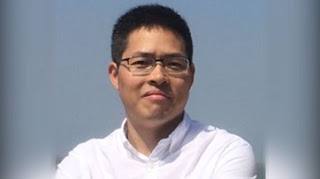
Wang's public image rests on two mutually confirming bodies of material: an Agence France-Presse interview photograph taken in Guangzhou in December 2013, captioned identifying him as a Guangzhou dissident and reused by international media ever since; and his own 2013 interview explanations of the Southern Street Movement, quoted repeatedly in overseas reporting. He was not a scholar, not a lawyer, not a professional activist. He was a man who ran a small business and, in his spare time, stood in the street and wrote on the internet. That such a man received three years is precisely what makes this case worth archiving: it measures how low the threshold for speech crime has fallen.
2. January 2013: the Southern Weekend incident and the turn to the street
Wang entered public view in January 2013, in the Southern Weekend New Year editorial affair. The Guangzhou-based newspaper Southern Weekend, part of the Southern Media Group, had prepared a New Year editorial calling for constitutional government; Guangdong propaganda officials intervened and rewrote it into a tribute to the ruling party. When the interference was exposed, journalists, academics and ordinary citizens gathered for days outside the Southern Media Group building in Guangzhou to demand press freedom and political reform. Radio Free Asia and the South China Morning Post agree that Wang was one of the key activists in that protest, which was widely regarded as one of the first open public calls for political freedom in China since the 1989 Tiananmen crackdown.
After the protest subsided, Wang and fellow activists including Xie Wenfei and Wang Mo turned that street expression into a continuing practice, which became known as the Southern Street Movement. The movement had no charter and no headquarters; its platform can be reconstructed from its participants' statements and banners. As the South China Morning Post summarized it, the movement called for an end to one-party rule, greater political freedoms, and public disclosure of officials' assets. By 2014, the Post noted, most of the movement's active members had been imprisoned or placed under close surveillance, and the movement effectively ended. Wang Mo was later sentenced in Nanjing to three years for picking quarrels; Xie Wenfei stood trial in Hunan on the same charge. Those parallel fates were cited again in 2021, when Wang Aizhong was seized — because the charge used against him was, word for word, the same charge used against his comrades a decade earlier.
3. 29 May 2014: the first criminal detention
Wang first lost his freedom in 2014. On 29 May 2014, on the eve of the twenty-fifth anniversary of the June 4 crackdown, Guangzhou police took him from his home and criminally detained him on suspicion of picking quarrels and provoking trouble; he was held at the Tianhe District Detention Center in Guangzhou. On 25 June 2014 he was released on bail pending trial, after roughly twenty-eight days. The Chinese Wikipedia entry's sourced chronology and English-language reporting corroborate one another: he was detained in 2014 on the same charge, shortly before the twenty-fifth anniversary of Tiananmen. The two seizures, seven years apart, fall at almost the same point on the calendar — late May, just before June 4. The sensitive calendar is itself a policing logic: in the authorities' classification, Wang belonged to the category of people to be controlled in advance whenever a "sensitive period" approached. It was true in 2014, and it was true again in 2021.
The 2014 bail release brought no withdrawal of suspicion and no clarification; it was a rehearsal of "lock him up first." Wang did not fall silent afterward. He continued posting on Twitter, commenting on social justice, rights cases and public affairs. Police had ordered him to delete tweets critical of the government, and he refused — a detail confirmed in the later reporting of the 2018 attack on his account, to which we now turn.
4. December 2018: the account is emptied — thousands of tweets deleted
Around 15 December 2018, Wang's Twitter account was attacked: the tweets he had posted disappeared in bulk, and the more than one thousand accounts he followed were wiped as well. As he told the Australian Broadcasting Corporation at the time, all of the tweets he had posted were gone, and the users he followed had vanished too. China Digital Times and other trackers recorded the episode as a marker of an escalation in Chinese censorship directed at overseas platforms: for the first time so visibly, the censor's hand had reached inside a platform that sits outside China and is itself blocked by the Great Firewall, and had "deleted" a man's entire body of expression on his behalf.
This episode is archived separately because, together with the 2021 prosecution, it forms a complete chain. First, in 2014, detention and an order to delete posts, which he refused. Then, in 2018, the technical emptying of his account. Finally, in 2021, the seizure of his person and a three-year sentence. The means used against expression escalated step by step — delete the posts, delete the account, imprison the man — each step taken after the previous one "failed." After the 2018 wiping, Wang went back to posting. His account remained active until 27 May 2021, the day before he was taken.
5. 28 May 2021: lured downstairs by a story about a scratched car
On Friday, 28 May 2021, one week before the thirty-second anniversary of June 4, Wang received a telephone call in the afternoon from someone who said his car had been damaged. He went downstairs to look — and was taken away by waiting police. Nine officers then searched his home, seizing books, two laptops and a mobile phone. His wife Wang Henan was summoned to a police station and questioned about her husband's contacts and personal views; at the station, police told her plainly that Wang had been seized because of comments he had posted online and interviews he had given to foreign media. This account of the seizure, drawn from family and lawyer sources and reported in detail by the South China Morning Post and relayed by other outlets, is internally consistent, and this archive adopts it.
One procedural discrepancy of a single day must be recorded in parallel. Family accounts and most reporting date the seizure to 28 May. Minsheng Guancha's case summary, however, gives 29 May 2021 as the date on which the Tianhe District branch of the Guangzhou Public Security Bureau formally criminally detained him on suspicion of picking quarrels. This archive uses 28 May 2021 — the day he was taken — as the case's sort date, and notes the formal detention instrument's date of 29 May alongside it, without merging the two.
Wang was held at the Tianhe District Detention Center. According to his family and lawyer at the time, the detention center barred in-person meetings with counsel and family, citing Guangzhou's COVID-19 outbreak. On 31 May 2021 Wang Henan wrote publicly that the main reason for her husband's seizure was his speech and his interviews with foreign media. In early June, the South China Morning Post honestly left one question open: it was not clear whether a particular tweet had triggered the detention, or whether the seizure was a preventive warning ahead of the Tiananmen anniversary. The indictment and judgment later answered that question in substance: what was prosecuted was not any single tweet but the accumulated record of his online expression over many years — quoting and reposting foreign media reports, adding his own comments, and accepting foreign media interviews. The conduct charged was not an act; it was a decade-long habit of speaking.
One more detail from before the seizure deserves record. In early May 2021 Wang had been invited to a dinner in neighboring Zhongshan with a group of private businesspeople; police warned him beforehand to stay home and not go. The warning preceded the seizure by weeks, which indicates that by early May the detention was already on an operational track, and the June 4 anniversary was a footnote on the calendar rather than the cause.
6. Arrest and the long pre-trial detention: July 2021 to May 2023
On 6 July 2021, after thirty-seven days in custody, the Tianhe District procuratorate approved Wang's formal arrest on suspicion of picking quarrels and provoking trouble. Nearly two years of pre-trial detention followed. On the timing of the indictment, PEN America's Writers at Risk database records that he was formally charged in July 2022; that specific month currently rests on that single source, and this archive marks it accordingly — "indicted July 2022 (PEN America, unverified)." What multiple sources establish is the overall span: from his arrest in July 2021 to his trial on 18 May 2023, Wang spent almost twenty-two months in the Tianhe District Detention Center waiting to be tried, most of it while the case cycled through investigation and prosecutorial review, and at no point was he released on bail.
During pre-trial detention the family's contact with the outside world was compressed to a minimum. In its March 2024 bulletin, ChinaAid reported Wang Henan's account that many postcards sent by friends to her husband had never reached him — the correspondence rights of prisoners of conscience are systematically restricted in China's detention system, and Wang Aizhong was one of the named examples. The number of family visits and lawyer meetings, and the state of his health in the detention center, are not systematically recorded in public reporting; this archive states plainly: no public record, and no speculation.
In this period another man was seized for speaking up for him. The Dui Hua Foundation's 2024 prisoner update records that the Hubei activist Chen Jianxiong (also known as Chen Jinxin) was detained in May 2022 in part for publicly voicing support for Wang Aizhong, and that on 8 April 2024 Chen was sentenced in Hubei to four years for picking quarrels. The man who spoke for Wang received four years; Wang himself received three. That solidarity itself was written into a charge sheet is part of this case's archival record, and it is archived here in parallel.
7. The substance of the charge: reposting, quoting, "adding false information"
The core of the accusation must be archived in the court's own terms. After the May 2023 verdict, Radio Free Asia quoted the court's findings: Wang had "used social media platforms to quote and repost false reports in the foreign media about China's political system"; the forty-six-year-old was also accused of "adding false information that seriously damaged China's image" and of causing "serious public disorder." PEN America's summary corresponds: his detention was likely because of his tweets regarding social justice and pandemic control. Minsheng Guancha adds that for years he had followed the cases of petitioners and vulnerable groups and posted commentary on current affairs, and that his Twitter speech had long been closely monitored by the authorities.
As for the "roughly 20,000 tweets" figure given in the case brief as the alleged scale of the charge, this archive's verification conclusion is: unverified. We searched the reporting and databases of Chinese Human Rights Defenders' network, Radio Free Asia, Voice of America, Minsheng Guancha, the South China Morning Post as relayed, PEN America and ChinaAid, and found no indictment or judgment that counts his tweets at "about 20,000" or at any specific number. The only countable figure in the record is from 2018, when "several thousand tweets" were deleted in the attack on his account. The 20,000 figure is therefore marked unverified and is not written into the facts of the charge; it is preserved in this section for the record only. This handling is itself the archive's citation standard: a key number, without a primary or institutional source, is left blank rather than filled in.
Assembled from its verifiable parts, the case against Wang Aizhong looked like this: a man, on a platform outside the wall, quoted reports by media outside the wall, reposted them with his own comments, and occasionally gave those media interviews. No violence. No organized action. No money. No victim came forward to identify any concrete harm done to them. The "harm" the court found was abstract — damage to the national image, disorder in the public order. Harm of that kind cannot be measured, and therefore cannot be refuted; it requires no evidence, only a finding.
8. 18 May 2023: trial and sentence on the same day
At 9:30 a.m. on 18 May 2023, Wang Aizhong's picking-quarrels case was heard in public session in Courtroom 30 of the Tianhe District People's Court in Guangzhou; his defense lawyer was Ge Wenxiu. When the hearing ended, the court pronounced judgment on the spot: three years' imprisonment. The date and procedure are confirmed jointly by Minsheng Guancha's bulletin and the Chinese Wikipedia entry; Radio Free Asia's report likewise places the sentencing on a "Thursday" — and 18 May 2023 was a Thursday. Three sources converge. PEN America's database gives 19 May 2023 as the sentencing date, one day later; this archive adopts 18 May and preserves the PEN date in parallel.
The scene inside and outside the court survives in Wang Henan's account to Radio Free Asia. Police threw a security cordon around the court building, with uniformed and plainclothes officers patrolling nearby streets. Wang Henan was "brought" to the hearing by state security police: one man and two women from the state security police, she said, sent a special car to meet her downstairs from her apartment and took her to the court. A wife who had not seen her husband in two years could not even travel to his trial except in a state security car. She also said she had been prevented from attending the pretrial conference between her husband and his defense team — despite not having seen him in two years. After the verdict she told Radio Free Asia that the sentence handed to her husband was "a joke." The family indicated that it supported Wang in appealing the sentence.
On the outcome of any appeal, this archive must state plainly: no public record. Whether Wang formally lodged an appeal, and whether the Guangzhou Intermediate People's Court upheld the verdict, is reported by no institutional source within our search. What is certain is that he in fact served the whole of his sentence through to May 2024; whatever the appellate procedure was, it did not alter the execution of the three-year term. This archive does not fill that blank with conjecture.
The sentencing date carries one further coincidence worth recording. From the day he was taken, 28 May 2021, to the day of sentencing, 18 May 2023, Wang had already been confined for some 720 days, very nearly two years — two-thirds of the three-year sentence was served before the verdict existed. By the time the court pronounced judgment, most of what the "trial" was supposed to decide had already been carried out in advance by detention.
9. Serving the sentence: a prison with no name, and postcards that never arrived
Where Wang was sent to serve his sentence after sentencing, public reporting does not say. Within the scope of our search, neither Radio Free Asia, Voice of America, Minsheng Guancha, PEN America nor ChinaAid names his prison. This archive records the fact as it stands: prison of service, no public record. That blank is itself a notable archival fact — in a case reported by international media, which prison a sentenced man was sent to was something his family and the public had no way to learn from open sources; reporting could anchor his existence only to the formula "expected to be released in May 2024."
Two facts about the term itself can be confirmed. The first is correspondence: as noted above, Wang Henan said in early 2024 that many of the postcards friends sent to her husband had not been received; learning that other prisoners of conscience's families described the same restrictions, she said her husband's situation was the same. The second concerns visits and health: there is no systematic public record, and this archive invents no prison detail. The absence of news is the truest description of this phase of such cases: a man inside the wall, and the people outside able to confirm that he is still there only indirectly, by whether a postcard gets through.
10. Collective punishment: the flight-attendant wife, grounded
The full weight this case placed on the family became visible only after sentencing. Wang Henan was a flight attendant with Shenzhen Airlines — she named the employer herself on her social media account. In February 2024 she told Radio Free Asia what had happened to her: the company had tried to force her to quit, and had grounded her — the "no-fly" of the report's headline — so that she no longer received any cabin-crew shifts. The employer, she said, had asked her to come back and work as ground crew; if she could fly, she could earn up to 10,000 yuan a month. Grounding meant a cliff-edge fall in income. Her question, preserved in the reporting in substance, was this: my husband is my husband and I am me — why should I lose my job because of what they think of him?
Assemble the timeline and the picture completes itself. After her husband was seized in May 2021, Wang Henan raised their two daughters alone. By March 2024, ChinaAid reported, she was staying at home to care for the children because of her husband's imprisonment and faced unemployment, no longer able to work as a flight attendant. Grounding, pressure to resign, a collapsed income, two children raised alone — none of it appears in the judgment, yet it is half of the true price list of this three-year sentence. The judgment names one man's three years; in execution, it was the whole family's three years: a wife's lost career, two daughters growing up for three years without a father, and a morning on which a wife was driven to her husband's trial in a state security car.
The other side of the collective punishment is the wife's own public resistance. Wang Henan did not stay silent. Three days after the seizure she wrote publicly that the reason for it was his speech and his foreign media interviews. She gave interviews to Radio Free Asia describing the grounding and the pressure to quit. She named her employer on social media. She told the outside world about the postcards that never arrived. During the three years of her husband's imprisonment, nearly the whole of the family's information channel to the outside world was maintained by her alone. The news of his release in May 2024 was likewise announced by her.
11. May 2024: release at the end of the full term, and a one-day discrepancy
The three-year term, credited from the day of his seizure on 28 May 2021, expired in late May 2024. Wang's release is confirmed by two sources, with a one-day difference between them. PEN America's database records that on 27 May 2024 his wife announced that Wang had been released from prison. The Chinese Wikipedia entry states that he "walked out of the small prison into the large prison" on 26 May 2024. This archive records 27 May 2024 as the date of his wife's public announcement of the release, preserves the 26 May date in parallel, and does not merge them: the difference may reflect the gap between the actual day of release and the day it was announced, or a difference in reporting convention. What is certain is that he served the three years in full, to the day — there is no public record of any sentence reduction or parole.
The Wikipedia phrase about walking "out of the small prison into the large prison" is an editor's gloss, not a fact, and this archive does not cite it as one; it is preserved here only as a circulating summary. Of Wang's actual condition after release — whether he must report regularly to police, whether he is barred from leaving the country, whether he has returned to work, whether he has resumed posting on social media — there is no public record within our search, and this archive says so. His Twitter account was last active on 27 May 2021, the day before he was taken. Since his release, no sustained public record of his own voice has appeared. As with many speech offenders who serve their full terms, his case closes in the archive with silence — not because anything has ended, but because those outside the wall cannot hear those inside it, and a man who has come out does not necessarily still wish, or still dare, to speak.
12. The international record and response
The international record of this case is solid, even though it changed nothing about its course. The South China Morning Post reported the seizure in detail in June 2021, drawing on family and lawyer sources. Radio Free Asia followed the May 2023 sentencing and, in February 2024, Wang Henan's grounding. Voice of America and Minsheng Guancha preserved the case reporting and trial information in the Chinese-language world. The Australian Broadcasting Corporation preserved Wang's own account of the 2018 attack on his account. AFP's 2013 photograph became his most widely circulated image. PEN America carried him in its Writers at Risk database and updated his status through to his release. The Dui Hua Foundation recorded, in its prisoner updates, the knock-on case of Chen Jianxiong, sentenced for supporting him. ChinaAid named his case in a special bulletin on prisoners of conscience's correspondence rights.
The limits of that response must be archived with equal honesty. Within our search there is no public statement on this case by any United Nations body, no record of any public démarche by a foreign government, and no urgent-action appeal issued for him by an international human rights organization. Compared with famous cases that attract dedicated campaigns, what Wang Aizhong's case received was continuous documentation by front-line media and professional databases, not diplomatic intervention. This archive does not exaggerate what such documentation does: it did not shorten his sentence by a single day. Its function operates on a longer timescale — when domestic reporting has vanished entirely, when the judgment is not published online and the prison has no name, these external records are the evidence that the case existed at all.
13. Discrepancies and unverified items, archived in parallel
Under this archive's rules, the discrepancies among sources in this case are listed without merging. (1) The wife's name: multiple sources agree on Wang Henan (王贺楠); the case brief's "Wang Helin" matches no source and has been corrected. (2) Seizure and detention dates in 2021: he was taken on 28 May; Minsheng Guancha gives 29 May as the date of the Tianhe branch's criminal detention instrument; this archive sorts by 28 May and notes the difference. (3) Sentencing date: Minsheng Guancha, Wikipedia and Radio Free Asia's "Thursday" all point to 18 May 2023; PEN America gives 19 May; this archive adopts 18 May. (4) Release date: PEN records the wife's announcement on 27 May 2024; Wikipedia gives release on 26 May; both are preserved. (5) Indictment timing: PEN's July 2022 date is single-source and marked unverified. (6) Scale of the charge: the brief's "roughly 20,000 tweets" appears in no source searched; marked unverified and excluded from the facts of the charge; the only verifiable figure is the "several thousand tweets" deleted in 2018. (7) Appeal outcome and prison of service: no public record for either. (8) Year of birth: most sources give 1976; sentencing coverage described him as forty-six, broadly consistent with a 1976 birth in the year before his forty-seventh birthday; no public record of his exact birth date exists, and this archive records the year only.
14. Verification and sources
The core facts of this entry were cross-checked against the following independent sources: Radio Free Asia's May 2023 sentencing report (the court's findings in its own words, Wang Henan's escorted attendance, her exclusion from the pretrial conference, her "a joke" assessment) and its February 2024 report on her grounding (Shenzhen Airlines, the grounding and pressure to resign, income and her own words); Minsheng Guancha's case bulletin (the 9:30 a.m. hearing on 18 May 2023 in Courtroom 30 of the Tianhe District Court, lawyer Ge Wenxiu, the 29 May detention date, the 6 July arrest approval, his personal history); the South China Morning Post's June 2021 reporting as relayed by other outlets (the seizure, the Tianhe detention center, COVID cited to bar in-person meetings, the Zhongshan dinner warning, the Southern Street Movement's platform and end); ChinaAid's bulletin of 26 March 2024 (undelivered postcards; Wang Henan at home caring for the children and facing unemployment); PEN America's Writers at Risk database (the July 2022 charge date, and its sentencing and release-announcement dates); the Dui Hua Foundation's 2024 prisoner update (Chen Jianxiong's four-year sentence for, in part, supporting Wang); the Australian Broadcasting Corporation's reporting on the 2018 attack on his Twitter account (several thousand tweets and more than a thousand followed accounts wiped; Wang interviewed); and the Chinese Wikipedia entry on Wang Aizhong (the 2014 detention and bail dates, the 2018 deletion episode, a release date), used for leads and comparison only, its unsourced formulations never serving as the sole basis for a key fact. Evidence grading: the seizure, criminal detention, arrest approval, hearing, sentencing and release are each corroborated by two or more sources and are graded verified; the indictment month and the tweet count are single-source or sourceless and are marked unverified in the text; the prison's name, the appeal outcome and his post-release condition are graded no public record. No single source is quoted at more than fifty words; the text is a synthesis in this archive's own words.
15. Our Take
Our comment on this case is confined strictly to its own facts. First, the material of conviction, peeled to the bottom, is reposting and comment. The court's own findings say it plainly: quoting and reposting foreign media reports, and adding his own words, were characterized as damaging the national image and disturbing public order, and priced at three years. There was no identifiable victim, no sum of money lost, no offline gathering that any of these posts ever produced. Abstract "image" and "order" are the most convenient materials a speech charge can use, precisely because they cannot be measured and therefore cannot be argued against. Second, the procedural timetable contains the answers: seized a week before a sensitive date, arrested after thirty-seven days, held nearly two years before trial, sentenced on the day of the hearing, with two-thirds of the sentence served in advance. In that timetable the trial is not the stage at which his fate was decided; it is the paperwork retroactively issued for a detention already executed. Third, the manner of the seizure deserves its own line in the record: a man was lured downstairs by the fiction that his car had been scratched. When the law-enforcement apparatus of a state must use a street trick on an ordinary small businessman, it knows itself how little light its business can bear. Fourth, the collective punishment is the judgment outside the judgment: a flight-attendant wife grounded and pressed to resign, raising two daughters alone; postcards that never reached the prison; a wife driven to court in a state security car. The sentence named one person; it was executed on a whole family. Fifth, the quietest fact in this case is Wang Aizhong himself: not a celebrity, with no organization and no funding, detained once in 2014 and stripped of his account once in 2018, who did not fall silent either time, until in 2021 he was locked away for a full three years. A regime that needs three years of prison to deal with a medical-products trader who reposted news on Twitter is not afraid of the man. It is afraid of every ordinary person behind him who might learn to open their mouth. This archive preserves his name, his wife's name, the prison that has no name, and a sentence its recipient's wife called a joke — together, in the record.