
Yuan Jiajun (1962– )
Yuan Jiajun, born in Tonghua, Jilin, on 27 September 1962, Han, a doctor of engineering formed as an aerospace engineer: he entered the Beijing Institute of Aeronautics and Astronautics in 1980 to study aircraft design and applied mechanics, joined the 501 Design Department of the Fifth Academy of the Ministry of Aerospace Industry on graduating in 1984, became the department's deputy director in 1994 and assistant director of the Academy in 1995, when Academy director Qi Faren named him deputy commander of the Shenzhou spacecraft system; from April 2000 he was commander of the Shenzhou spacecraft system, heading Shenzhou 2 to Shenzhou 5, including China's first crewed spaceflight on 15 October 2003; in November 2007 he became a vice-president of the China Aerospace Science and Technology Corporation. This page first corrects a circulating error: the Shenzhou chief designer was Qi Faren; Yuan was its commander, as the official appointment wording also states. He moved into territorial politics in 2012, serving as Ningxia Standing Committee member and regional vice-chairman, then from August 2014 as Zhejiang Standing Committee member and executive vice-governor, his portfolio reported by Caixin and the South China Morning Post as covering energy, policing, religious policy, taxation and national security; from November 2016 he was Zhejiang deputy Party secretary and Political and Legal Affairs Commission secretary; he became acting governor on 28 April 2017 and governor in full on 7 July 2017; a central decision of 31 August 2020, announced on 1 September, made him Party secretary of Zhejiang, a post he held until 7 December 2022; elected to the Politburo on 23 October 2022, he became Party secretary of Chongqing on 8 December 2022, succeeding Chen Min'er, and remains incumbent at this page's verification date. This page keeps his ledger in three parts, each with its level marked: Zhejiang's cross-removal campaign was launched and set in tone in 2013 under the then Party secretary Xia Baolong, and Yuan did not reach Zhejiang until August 2014, so its origin is not charged to him — but the campaign's peak, from the second half of 2014 through 2016, falls inside his executive vice-governorship holding the police and religious-policy portfolios, after which he served in turn as Political and Legal Affairs Commission secretary, governor and Party secretary, and this page records portfolio and institutional responsibility, with personal removal orders registered as no public record found; Zhejiang's execution of dynamic zero-COVID (province-wide promotion of the health code, his January 2022 inspections of sealed Hangzhou communities, the 72-hour testing cycle) falls entirely inside his governorship and secretaryship, with Zhejiang's avoidance of a Shanghai-style citywide lockdown recorded with equal plainness; and in Chongqing, Minghui.org reports batches of Falun Gong sentences inside his tenure (at least a dozen by the Jiulongpo District Court since 2023, and the Zhang Hua and Dong Daoqun cases), registered at single-source-system level, with no evidence connecting any case to an instruction by him personally, so that only the municipal secretary's institutional responsibility is recorded. Sanctions checked list by list: the US OFAC lists, the EU's China-related human rights list, and the UK and Canadian consolidated lists contain no entry for Yuan Jiajun; as of November 2026 he has not been personally designated by any jurisdiction, and no CCDI case against him is on public record.
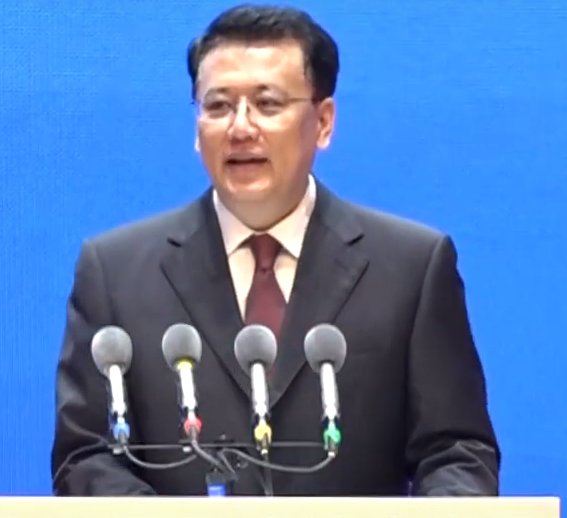
1. A Tonghua boy and Beihang: the making of an aerospace engineer (1962–1995)
Yuan Jiajun was born in September 1962 in Tonghua, Jilin, an old industrial city on the southern slopes of the Changbai mountains. In September 1980 he entered the Beijing Institute of Aeronautics and Astronautics — later renamed Beihang University — to study aircraft design and applied mechanics in its aircraft design department. On graduating in July 1984 he was assigned to the 501 Design Department of the Fifth Academy of the Ministry of Aerospace Industry as a spacecraft design researcher. The Fifth Academy is the China Academy of Space Technology, China's general-assembly house for satellites and spacecraft; its 501 Department is its systems design department. To walk through that door was to enter the innermost room of Chinese spaceflight.
He rose steadily inside the Academy: a master's degree taken in-house, Communist Party membership in November 1992, deputy director of the 501 Department in August 1994, and within a year assistant director of the Fifth Academy. In 1995 the Academy's director, Qi Faren, named the thirty-three-year-old Yuan deputy commander of the Shenzhou spacecraft system, in charge of the spacecraft system — his own background was satellites, the spacecraft was a new assignment, and Qi chose him for systems coordination and engineering organisation. He also took part in organising the construction of the Beijing Aerospace City. This section is written in detail because Yuan cannot be understood without his formation: he is not a political-legal cadre, not a propaganda cadre, and not an administrator raised in local government; he is an engineering commander produced over more than two decades inside the military-industrial space system. The commander's habits of mind — systems, milestones, indicators, obedience to the overall design — would show through again and again when he later governed a province and a municipality.
One distinction of office must be nailed down here, because reporting in several languages, and even the lead of his Wikipedia entry, repeatedly gets it wrong: the "chief designer" of the Shenzhou spacecraft was Qi Faren, responsible for the spacecraft's technical design; Yuan served as its "commander," responsible for the engineering's organisation, scheduling and execution. The official wording used by the Zhejiang People's Congress Standing Committee when it appointed him acting governor in 2017 is likewise "commander of the Shenzhou spacecraft system." Chief designer and commander are the two lines of Chinese aerospace's "two chiefs" system, one owning the technical state, the other owning execution. This page records him throughout as commander; renderings of him as the Shenzhou "chief designer" are registered as errors and not adopted. The distinction is not pedantry: in a responsibility archive, an office misstated by one grade is a responsibility recorded at the wrong level.
2. Commander of Shenzhou: from deputy on Shenzhou 1 to Shenzhou 5 (1995–2007)
On 20 November 1999 the uncrewed Shenzhou 1 spacecraft was launched successfully, with Yuan, on the public record, as the spacecraft system's deputy commander. In April 2000 he rose to commander of the Shenzhou spacecraft system. Shenzhou 2 (January 2001), Shenzhou 3 (March 2002) and Shenzhou 4 (December 2002) followed, and on 15 October 2003 Shenzhou 5 carried Yang Liwei on China's first crewed spaceflight, with Yuan heading the spacecraft-system side of that mission chain as its commander. He also took a doctorate of engineering in this period. To have commanded, at forty-one, the engineering of a country's first crewed flight was the foundation of everything that followed in his career: he is one of the very few Politburo members who have actually run a national mega-project.
This page's treatment of this period in relation to a persecution archive must be honest and restrained. China's crewed space programme was from its inception a military-civil fusion state programme: it was administered through the manned space engineering office of the PLA's armaments system, its spacecraft and launch vehicles were built by the China Aerospace Science and Technology Corporation, its astronaut corps belongs to the military, and its launches fly from the Jiuquan Satellite Launch Centre — the whole enterprise sits inside the military-industrial and armed-forces system. Yuan's place in it was on the civilian development side, as an engineering commander; no public record shows him commanding a weapons programme. This page characterises the period, accordingly, as leadership service inside the military-industrial space system: it explains why he was counted an "aerospace marshal," and why he later entered the Politburo in its contingent of military-industrial-formed members, but it does not in itself constitute a persecution charge, and this page does not write the crewed space programme up as a persecution event. An archive's credibility is built precisely at such points — ledger where there is a ledger, the system's position written plainly where there is not, and then a stop.
In November 2007 Yuan became a vice-president of the China Aerospace Science and Technology Corporation, taking part in the lunar exploration programme and in work connected with the joint Chinese-Russian Mars mission — the Yinghuo-1 probe that was lost with its Russian carrier in 2011, a failure that postdates and does not belong to his command. By 2012 he had spent twenty-eight years in the space system. That year, aged fifty, his career changed tracks.
3. Changing tracks: two years in Ningxia and the Zhejiang entrance (2012–2014)
In March 2012 Yuan became a member of the Ningxia Hui Autonomous Region's Party Standing Committee, and in 2013 a vice-chairman of the regional government, with responsibility for the Ningdong Energy and Chemical Industry Base, Ningxia's largest energy and chemicals complex. To set a spacecraft commander over an energy-chemicals base was the organisation's standard way of giving him a local-government apprenticeship. The two Ningxia years were short and complete: Standing Committee seat, vice-chairmanship, one large industrial base. In August 2014 he was transferred to Zhejiang as a provincial Standing Committee member and promptly made executive vice-governor.
The timing and the portfolio of that Zhejiang entrance are the first foundation stone of this page's ledger, and both must be fixed exactly. The timing: August 2014. By then Zhejiang's "Three Rectifications and One Demolition" campaign had been running for over a year, and the cross-removal drive stood on the eve of its province-wide peak. The portfolio: according to Caixin and the South China Morning Post in August 2014, as executive vice-governor he was responsible for energy, policing, religious policy, taxation and national security, and was the province's liaison to the PLA garrison and the People's Armed Police. The executive vice-governor is the provincial government's number two; with policing and religious policy written on his portfolio sheet, the province's religious-affairs administration and police coordination passed through his level. This page records that portfolio sheet at its source level — contemporary financial and Hong Kong reporting, consistent with the official division of work — because, read three years later, it decides exactly which entry can be made against him in the cross-removal campaign: not its originator, but the executive vice-governor holding the religion and police portfolios through its peak years.
4. The cross-removal campaign: not his campaign, but its peak two years sat on his portfolio (2013–2017)
The campaign's own ledger must be written before any man's. "Three Rectifications and One Demolition" was a three-year Zhejiang provincial government campaign launched in 2013, nominally to renovate old residential districts, old factory districts and urban villages and to demolish illegal structures. From early 2014 its edge turned visibly toward church buildings: in February 2014 the cross of Huanghu Church in Yuhang, Hangzhou, was forcibly removed; in April 2014 the entire Sanjiang Church in Wenzhou was demolished; thereafter cross-removal orders spread across the province. The figures come in several counts: the New York Times' on-the-ground reporting of May 2016, citing officials and residents, put the churches stripped of crosses over two years at between 1,200 and 1,700; China Aid's count runs to about 2,000; the US Commission on International Religious Freedom's 2015 report recorded more than 400 churches whose crosses were removed or destroyed in a single year. Wenzhou, dense with churches and known as "China's Jerusalem," was the campaign's centre. This page adopts the New York Times' 1,200–1,700 as its principal range and registers the other counts alongside. The campaign's provincial tone-setter was the then Party secretary Xia Baolong (in office 2012–2017), with governors Li Qiang and then Che Jun as the government-side executives — that level of origination and direction is written here plainly, neither shifted up nor pushed down.
Yuan's place in the period is next. He arrived as executive vice-governor in August 2014 holding the policing and religious-policy portfolios; the second half of 2014 through 2016 is precisely when removals reached their highest numbers and when confrontations between congregations guarding their churches and demolition teams in Wenzhou and elsewhere were densest. In 2015 Zhejiang also issued draft rules on religious buildings proposing that crosses be affixed flat to a building's facade and rise no higher than one tenth of the facade's height — pushing cross removal from campaign toward code. In November 2016 he rose to deputy Party secretary and secretary of the provincial Political and Legal Affairs Commission, the Party's supervisor of the province's whole political-legal machine, serving until his elevation to governor in April 2017. After 2016 the campaign wound down and Zhejiang's religious control passed into a routine phase of venue registration, personnel control and "Sinicisation of religion," while he sat for a further five and a half years in the province's number-two and number-one chairs, as governor and then as Party secretary.
This page's characterisation of the period is written on both sides, and both are final. On one side: no public evidence shows Yuan originating, setting the tone for, or naming the cross-removal campaign; when it began he was still in Ningxia, and to charge him with its origin would be a false entry, which this page does not make. On the other side: through the campaign's two peak years the executive vice-governor holding the province's religious-policy and police portfolios was Yuan Jiajun, and through its wind-down and codification the province's Political and Legal Affairs Commission secretary and governor were Yuan Jiajun — portfolio responsibility and institutional responsibility are the archive's proper entries, at a different level from personal-order responsibility. No public record shows him signing a document ordering the removal of a particular cross or the demolition of a particular church, and no public record shows him either defending the campaign in his own voice or dissenting from it; both searches are registered as negative. Anyone citing this page must cite that level distinction with it.
5. Six years as governor: political-legal affairs, the platform economy and a governing style (2017–2020)
On 28 April 2017 the Standing Committee of the Zhejiang People's Congress appointed Yuan vice-governor and acting governor; on 7 July the provincial People's Congress elected him governor in full, succeeding Che Jun, who had risen to Party secretary. In his three-plus years as governor, Zhejiang's public record runs mainly to economics and digitalisation: digital government, mobile public services, and the technical base of the health code all date from this period. In 2018, after weighted scoring in the province's Gaokao English examination provoked protests by candidates and parents across Zhejiang, he headed the inquiry committee, whose findings held that the provincial education department had made a wrong policy decision distorting large numbers of students' scores, with officials disciplined — the most closely watched public-crisis handling of his governorship, recorded here because it shows his governing method: responsibility fixed by an engineering-style investigation, closure by an organisational conclusion.
The line that bears on this page's subject is the maturing of an instrument of control. On 11 February 2020 Hangzhou pioneered China's health code, a red-yellow-green label assigned by big data to determine each person's right to move; on 12 February the provincial epidemic authorities issued notice promoting a unified health-code system across the province. When the health code was born Yuan was governor of Zhejiang, and the provincial government was the promoting executive. The code began as an epidemic tool, but its technical construction — an administrative big-data label attached to every citizen, with access to public space conditional on scanning — later became the infrastructure of nationwide routine control. This page records the entry without over-extension: the code's birthplace was Hangzhou and its promotion order issued from a provincial government headed by Yuan — that is the checkable institutional fact; how the instrument was later generalised is a national-level ledger, not charged in full to one province.
On 1 September 2020 Xinhua announced the central decision, made on 31 August, appointing Yuan Party secretary of Zhejiang in succession to Che Jun, concurrently chairman of the provincial People's Congress Standing Committee. From that day he was the province's undisputed number one. Every major matter of the following two years — zero-COVID, the platform-economy rectification, the common-prosperity demonstration zone — carried him as its first responsible person.
6. Party secretary and zero-COVID: Zhejiang's two years (2020–2022)
In his two years as Party secretary the epidemic was the overriding line, and his formal position was written plainly: first head of the Zhejiang provincial leading group for COVID-19 prevention and control. Zhejiang's zero-COVID execution had a method of its own: the health code and venue codes as its base, high-frequency testing and localised sealing as its instruments. In January 2022, as Hangzhou's Omicron outbreak produced cases in Fuyang and Shangcheng districts, he went in the rain on 28 January to sealed communities such as Runzeyuan in Fuyang and the Pufujiayuan South compound in Shangcheng and to centralised isolation sites, stressing that isolation was the top priority for achieving community clearance and demanding strict implementation of the sealing measures. In April 2022 Hangzhou announced that testing frequency in its main districts would tighten from once every seven days to once every seventy-two hours, with residents required to show a negative result within seventy-two hours and to scan codes to enter public places and ride public transport. That apparatus — people governed by codes, screened by testing cycles — was dynamic zero-COVID in its characteristic form in a rich province: no citywide standstill, but every resident's daily movement held under continuous code-and-test control.
The boundary must be recorded with equal honesty: under Yuan, Zhejiang had no prolonged citywide lockdown of the Shanghai spring-2022 kind, and no publicly erupting supply or medical-access crisis on the Xi'an or Shanghai scale; Zhejiang's zero-COVID intensity was lower than Shanghai's, and this page writes that down as fact. Zero-COVID's national policy was set by the centre; a province's responsibility lies in its manner of execution and its local additions — Zhejiang's additions lay chiefly in pioneering the health-code system and in testing frequency, and this page's ledger stops at that level. One coincidence of timing is also registered, as fact without inference: on 7 December 2022 the centre issued the "new ten measures" that in substance ended dynamic zero-COVID; on the same day Yuan relinquished the Zhejiang Party secretaryship, taking up his Chongqing post the next day. His last day in Zhejiang and zero-COVID's last day were the same day.
The other fully reported major matter of those two years was the platform-economy rectification. In December 2020 he chaired a provincial Standing Committee meeting conveying the centre's directives on strengthening anti-monopoly work and curbing the disorderly expansion of capital, requiring the platform economy to be brought under regulation; in April 2021, around the 18.2-billion-yuan fine imposed on Alibaba by the market regulator, he chaired another Standing Committee meeting pledging to "supervise and guide" the rectification of platform enterprises including Alibaba. Alibaba is headquartered in Hangzhou and is a Zhejiang company; the decisions belonged to the centre, and the province's role was alignment and cooperative execution. This entry's purpose is to complete his position, as first-in-command, inside a campaign-style economic rectification: not the decision-maker, but the territorial first responsible person's co-operator and executor — the same level structure as in the cross-removal section. That is the general rule for reading such territorial chiefs: the strategy of great matters is not made in the province, but the province's number one is never a bystander.
7. Chongqing: a Politburo member's municipality (December 2022 to date)
On 22 October 2022 the first plenum of the 20th Central Committee produced the new Politburo, and Yuan entered it — one of several members of that Politburo formed in the aerospace system, and the one among them holding a territorial post. On 8 December 2022 the centre decided that Chen Min'er would no longer serve concurrently as Chongqing Party secretary and that Yuan Jiajun would serve as member, Standing Committee member and secretary of the Chongqing Municipal Party Committee. Xinhua issued the announcement the same day, and the date is explicit; this page's sort date is taken from it. Chongqing is a direct-administered municipality whose Party secretary is by convention a Politburo member and the first responsible person of the whole municipal Party, political-legal and stability-maintenance system: the municipal Political and Legal Affairs Commission, the public security bureau, state security, and the Party leadership lines of the courts and procuratorate all converge on the municipal committee, whose head is him.
His public activity in Chongqing has run on economic and technological lines: the Digital Chongqing programme, intelligent connected new-energy vehicles, cooperation with firms including Alibaba, a meeting with a China Association for Science and Technology delegation during the World Smart Industry Expo in September 2025, a July 2023 visit to Singapore where he called on Prime Minister Lee Hsien Loong, and a May 2023 meeting with Hong Kong Chief Executive John Lee Ka-chiu to advance Chongqing-Hong Kong cooperation. These are the routine public face of a Politburo member doubling as a municipal secretary, and are registered as such. What bears directly on a persecution archive is the daily operation of Chongqing's political-legal machine in the same period — the subject of the next section.
One further public thread of his Chongqing tenure is registered only in its checkable part: reports and self-media claims concerning the later personnel fate of his deputy, Mayor Hu Henghua, and other municipal figures vary widely in their accounts and are heavily rumoured; this page adopts no fall-from-grace or disappearance claim that lacks authoritative sourcing. As of this page's verification date, the official and mainstream public record contains no case, sanction or change of office touching Yuan Jiajun himself; he remains Chongqing Party secretary and Politburo member, with public activity reported continuously. Keeping rumour and fact apart is this page's standing rule for serving senior officials.
8. The persecution record of the Chongqing tenure: the machine turns, personal orders unproven (2022–2026)
The method of this section is declared in advance: every case below comes from Minghui.org reporting. Minghui is a Falun Gong-affiliated overseas website; its case reports carry names, districts, courts and sentence lengths in concrete detail, but the judgments are not available through Chinese official channels, and this page registers them as single-source-system reporting, to be cited only with that level attached. This site's position is that such reporting is usable evidence that sentences of this kind occurred within his jurisdiction during his tenure, and is not proof of any personal instruction.
The cases, in time order. Zhang Hua, of Tongnan District, Chongqing, was arrested on 7 August 2023 by officers of the district's Domestic Security office, later sentenced to one year and ten months, admitted to the Chongqing Women's Prison in August 2024, and released at term on 6 June 2025 — arrest, sentence and imprisonment all inside Yuan's Chongqing tenure. Dong Daoqun, in her seventies, a retired machinery-factory worker, was arrested in January 2024 and later sentenced to five years, news of the sentence emerging only in January 2025, with the dates of indictment and trial unclear. Yang Zuolin was arrested on 30 April 2024 after being reported for distributing Falun Gong materials, sentenced in October 2024 to one year and two months, and sent to Yongchuan Prison in mid-January 2025. Zou Bin, forty-seven, was arrested on 22 May 2024 by officers of the Huayuan Road police station, held at the Nan'an District detention centre, tried in the Jiulongpo District Court on 19 December 2024, and sentenced in February 2025 to two years and six months. A further Minghui compilation of April 2025 states that since 2023 the Jiulongpo District Court alone had sentenced at least twelve other Falun Gong practitioners, to terms from nine months to four years and six months, their arrests mostly dating from 2020 to 2024 and their sentences mostly falling after 2023.
Set back into the institution, these cases are what they are: the persecution of Falun Gong has been continuous nationwide policy since 1999, and Chongqing's domestic security police, courts and prisons operate on a uniform national line; the machine would not stop whoever sat in the municipal secretary's chair. This page therefore confines this section's characterisation strictly to institutional responsibility: since 8 December 2022 Yuan Jiajun has been Chongqing's Party secretary, the Party's first responsible person for the municipality's political-legal and stability-maintenance system, and the sentences above occurred within his tenure and jurisdiction — an archive should record that fact of time and office; but no public document, report or testimony shows him ordering, annotating or intervening in any one of these cases, and this page states expressly: personal instruction, no public record found. Anyone who cites this section as "Yuan Jiajun ordered the sentences" is misciting it.
The same rule governs his Zhejiang years: during his governorship and Party secretaryship, arrests and sentences of Falun Gong practitioners and house-church members across Zhejiang are likewise reported by overseas human rights and religious organisations; this page does not expand them case by case because it could not obtain a body of case material as concrete, and as clearly dated inside his tenure, as the Chongqing set, and registers the gap as to-be-supplemented rather than filling it with generalities. An archive page leaves a labelled blank sooner than it fills space with adjectives.
9. Sanctions, list by list: no entry in any of the four jurisdictions
This section sets out its conclusions jurisdiction by jurisdiction, without blur. The headline first: as of this page's verification date (November 2026), Yuan Jiajun has not been placed on a personal sanctions list by the United States, the European Union, the United Kingdom or Canada. The checking path of that negative conclusion is as follows. United States: the Office of Foreign Assets Control's Specially Designated Nationals list was searched under both his Chinese name and "Yuan Jiajun," with no entry; nor does his name appear in the individual lists of the successive Xinjiang-, Hong Kong- and China-related human rights designation releases — the Zhejiang- and Chongqing-connected persons designated are other people, unconnected with him. European Union: under the EU Global Human Rights Sanctions Regime, the China-related individual entries since the list's creation in March 2021 consist of the fixed Xinjiang names and their later additions, checked entry by entry, with no Yuan Jiajun. United Kingdom: the China-related part of the UK's global human rights sanctions and consolidated lists runs broadly in step with the EU's, checked entry by entry, without him. Canada: Canada's consolidated autonomous sanctions list and the schedule to the Special Economic Measures (People's Republic of China) Regulations, checked entry by entry, without him.
The result forms an exact contrast with this site's Sun Jinlong page: Sun was personally designated by the United States for his Corps tenure, while Yuan appears on no list at all. The reason can only be stated structurally, without speculative attribution: the four jurisdictions' China-related personal designations have concentrated on the direct responsibility levels of specific dossiers — Xinjiang, Hong Kong and the like — and Yuan's career track, through aerospace, Zhejiang and Chongqing, lies outside the dossier range of every round to date. This page also reminds its citers: absence from the lists is not absence of a responsibility record, just as presence on them is not the whole of responsibility; a list is the product of a jurisdiction's policy instruments, and this page records lists only to keep the record true — the responsibility ledger stands in the facts of sections four, six and eight, and the two must never be substituted for one another. On the CCDI side, no public record of any case or investigation against him exists; after the 20th Congress he sits in the Politburo as a member of the serving leadership.
10. Disputes, unverified items and sources
Unverified items and corrections, registered one by one. One, the error of office: the tasking brief and much foreign-language reporting call Yuan the Shenzhou spacecraft's "chief designer"; checked against the official appointment wording and the "two chiefs" division of the space system, the Shenzhou chief designer was Qi Faren and Yuan served as deputy commander and then commander of the spacecraft system — this page follows commander, and the brief's wording is not adopted. Two, the Zhejiang appointment date: the central decision was made on 31 August 2020 and announced by Xinhua on 1 September 2020, and reference tables date his tenure from 1 September; this page records both days and discards neither. Three, the Chongqing start date: Xinhua announced the central decision on 8 December 2022 and most tables give 8 December, while an occasional English page gives 9 December as the assumption-of-office date; this page takes the Xinhua announcement date, 8 December, as its sort date and registers the minor discrepancy. Four, birth date: the official biography records only September 1962; the precise day, 27 September, comes from the English Wikipedia and is recorded with its level marked. Five, the start-of-work discrepancy: the official biography gives July 1987 as when he began work, while Wikipedia, on space-system sources, has him entering the Fifth Academy on graduating in 1984 — the difference turns on whether the graduate-study years count toward service, and this page records both without adjudicating. Six, the cross-removal figures: the New York Times' 1,200–1,700, China Aid's roughly 2,000, and USCIRF's more than 400 for a single year differ in scope and period, are registered in parallel, and are not fused into a single number. Seven, the source level of the Chongqing cases: every case in section eight comes from Minghui.org, with no judgment publicly available through official channels — single-source-system reporting, marked throughout. Eight, the boundary of the sanctions search: section nine's conclusions rest on entry-by-entry checking of the four jurisdictions' public lists and designation releases as of this page's verification date, and will be revised if any list is later supplemented. Nine, tenure rumours: in the second half of 2026 self-media carried disappearance and fall-from-grace claims touching Yuan himself and the Chongqing leadership; none is confirmed by any authoritative source, none is adopted, and all are registered as unverified rumour, his incumbency being taken from official public activity and office listings. Principal sources for this page: Yuan Jiajun's official biographies (the Xinhua Politburo-member biography carried by the Chinese government portal in October 2022, and the CCTV biography series); the Chinese and English Wikipedia entries for Yuan Jiajun and the Xinhua, The Paper, Caixin and South China Morning Post reporting they cite (the 2014 portfolio, the 2017 appointment, the 2020 and 2022 changes of office); the South China Morning Post's report of 8 December 2022 on the Chongqing appointment; the New York Times' 2016 field reporting on the Zhejiang cross removals; the US Commission on International Religious Freedom's 2015 report; China Aid's counts; Zhejiang Daily's report of 28 January 2022 on Yuan's epidemic-control inspections in Hangzhou; People's Daily overseas-edition reporting of 2022 on Hangzhou's testing frequency; Minghui.org's Chongqing Falun Gong case reports of 2025–2026; and the China Association for Science and Technology's report of its September 2025 Chongqing meeting. This page will be revised as new archives become public.
11. This site's commentary
The hardest thing to write on Yuan Jiajun's page, and the thing most worth writing, is proportion. He did not originate the cross-removal campaign, he did not design zero-COVID policy, and no Chongqing case can be traced to an annotation in his hand — to charge those ledgers to him personally would be archival fabrication. But the other side is equally plain: through the two years when the cross removals burned hottest, the executive vice-governor holding Zhejiang's police and religious-policy portfolios was him; through the two years when zero-COVID was executed at its most granular, the provincial Party secretary and first head of the provincial epidemic leading group was him; and through his Chongqing tenure the municipality's domestic security police and courts have gone on sending believers to prison, with the Party's first responsible person for the city's political-legal machine being him. China's persecution system is hard to hold to account precisely because it is designed this way: strategy issues from the centre, orders issue from the system, and by the time the ledger reaches any territorial chief, what remains is "portfolio" and "tenure" — and portfolio and tenure are exactly what an archive can nail down, and must.
There is one more layer, his space formation. A man who commanded a crewed-spacecraft programme believes in the overall design, in milestones, in zero failure; set such a man in a provincial or municipal secretary's chair and his way of governing society carries the engineering imprint: the health code is engineering, zero-COVID is engineering, stability maintenance is engineering — and in the language of engineering, people are units to be scheduled, not bearers of rights. This page makes no psychological speculation; it records only the observable sequence of facts: from Shenzhou commander to the executive vice-governor holding the religion portfolio, from promoter of the health code to the Chongqing chief sitting in the Politburo, every step Yuan Jiajun has taken has landed on a gear at the very core of this system. The archive writes each item only to the level its evidence reaches: origination is not his, and is not charged to him; portfolio responsibility, tenure responsibility and institutional responsibility are recorded here, not one entry short.
Contact: endccpworld@proton.me