
Luo Ruiqing (1906–1978)
A product of the Red Army's political-protection system who built the new regime's public-security machine: director of the Political Protection Bureau of the Red 1st Army Corps from 1933; director of education at Kangda in the Yan'an period, taking part in the purges of Wang Ming's supporters and Zhang Guotao's faction; picked by Mao Zedong and Zhou Enlai in June 1949 to build the Ministry of Public Security, and appointed its first minister on 19 October 1949 (concurrently Beijing public security chief), concurrently commander and political commissar of the Public Security Forces, his ministry running in the mainstream dating to September 1959 (the Boorman entry gives 1949–1958, registered here as a discrepancy). This site tags him with 10 October 1950, the Zhenfan 'Double Ten Directive': the decision to launch the Campaign to Suppress Counterrevolutionaries and its execution ratios were Mao Zedong's, delivered to Luo in person with the words 'do not miss this opportunity'; the man who turned the decision into nationwide operating procedure was Luo — on 16 October 1950, at the Second National Public Security Conference, he himself laid down 'kill, imprison, control: kill a batch, imprison a batch, place a batch under control', and on 10 May 1951 it was he who announced that executions had reached one per thousand of the population and that a contraction was needed. The ministry's own totals (Vice-Minister Xu Zirong's January 1954 report, via Yang Kuisong's 2008 article): over 2.62 million arrested, over 712,000 executed, over 1.29 million imprisoned, 1.2 million placed under control; scholarly estimates run from 500,000 to 2 million and are queued on this page by source and method, never merged. His tenure also carried the policing links of the Three-Anti/Five-Anti campaigns, the 1955 Sufan (he sat on the enlarged Hu Feng case team) and the 1957 Anti-Rightist campaign; of personal orders by him in Three-Anti/Five-Anti or Anti-Rightist there is no public record, and the page leaves that blank visible. Made a General of the Army in 1955; Chief of the General Staff from September 1959 to December 1965, with the 1962 Sino-Indian war in his tenure. Brought down in December 1965 and branded in May 1966 as part of the 'Peng–Luo–Lu–Yang anti-Party clique'; the date of his suicide attempt is given as 18 March 1966 (MacFarquhar and Schoenhals) and as 16 March in encyclopaedia-derived texts; both legs were broken and his left leg was amputated in 1969. Rehabilitation ran in two stages: Mao loosened the verdict at a CMC meeting in 1975, and he was formally restored, as CMC Secretary-General among other posts, in August 1977. He died on 3 August 1978 in Heidelberg, West Germany, after an operation on his leg, aged 72. The sanctions cell is inapplicable as a category: he died in 1978, decades before every modern targeted-sanctions regime; inside China he was never held accountable for anything in his ministry, Zhenfan included. Birth-year discrepancy registered: 31 May 1906 in the mainstream record, 1907 in the Boorman entry.
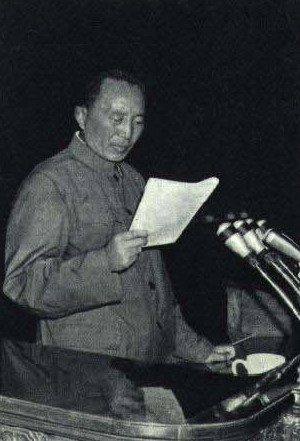
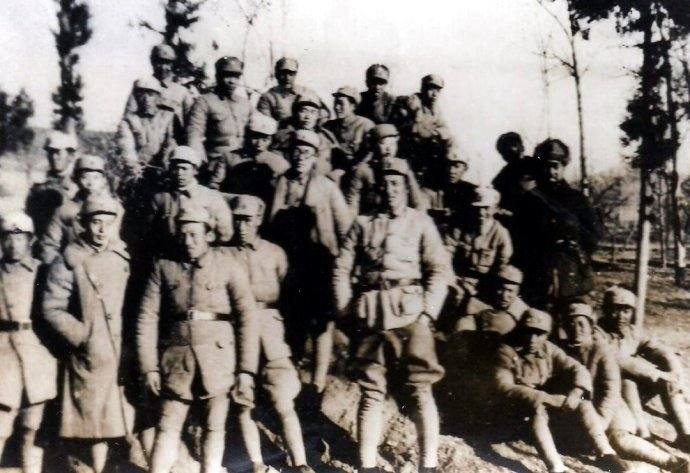
1. 31 May 1906, Nanchong: a landlord's son, and one reference-work discrepancy over the birth year
The mainstream record of Luo Ruiqing's birth and death is unusually consistent: born 31 May 1906 in Nanchong, Sichuan; died 3 August 1978 in Heidelberg, West Germany. The infoboxes of the English and Chinese Wikipedia entries, and Xinhua's official biography (linked from the English Wikipedia article), all agree. His original name was Qirong, and because of his height the army nicknamed him "Luo the Tall" (Chinese Wikipedia). He was the eldest of the six children of a wealthy landlord, Luo Chunting; his father was an opium addict who dissipated the family fortune, and the household came to depend on his mother, whose surname was Xian (English Wikipedia, synthesising biographical materials). That background was long written out of his official record: the English Wikipedia states plainly that his early life was deliberately ignored in official Chinese records until the 1990s, because his petty-bourgeois origins did not fit the political environment — and during the Cultural Revolution the Red Guards attacked him precisely over his family background and the cost of his education. The archive's first lesson sits in that entry: even this man's own birth and family were, in the system he served, something to be hidden.
The single discrepancy must still be registered. The Luo Ruiqing entry in Howard L. Boorman's Biographical Dictionary of Republican China — the classic reference work of Western China studies, checked here in the X-Boorman online edition — heads the entry "Lo Jui-ch'ing (1907–)", giving 1907 as his birth year, one year later than the 1906 of every other source. The dictionary was compiled in the late 1960s from the Hong Kong, Taiwan and Western intelligence materials then available, and the 1907 figure is very likely an early intelligence error. But this site's rule is fixed: a variant in a classic reference work is not deleted, not silently corrected, and not pretended away. It is registered here, side by side with the correct 1906. A reader who meets "Luo Ruiqing, born 1907" in older Western literature now knows where that figure comes from. His party dates, by contrast, are undisputed: he joined the Communist Youth League in 1926 — the year he passed the entrance examination of the Wuhan Central Military and Political School, the Whampoa Academy's Wuhan branch, at Chengdu — transferred to the Party in 1928, and joined the Red Army in Fujian in 1929 (Xinhua-line biographical materials, checked against Chinese web reproductions).
One further element of the pre-Red-Army record matters. He had been trained in the Nationalists' academy system and served in the Northern Expedition armies before going underground and into the Red Army after the 1927 split (Chinese Wikipedia's synthesis). This is not colour. A man trained successively by the Nationalist military schools and the Communist Red Army, who was put onto political-protection work in the 1930s and onto the top of a national police machine in 1949, had as his professional base metal "politics and security inside an army" — not criminal investigation, and not modern civil policing. Everything this file books on him should be read against that base metal.
Sources: English Wikipedia, "Luo Ruiqing" (born 31 May 1906 in Nanchong; died 3 August 1978 in Heidelberg; the landlord family and the father's opium addiction; the early life ignored in official records until the 1990s; joined the CCP in 1928); Chinese Wikipedia, "罗瑞卿" (original name Qirong; the "Luo the Tall" nickname; 31 May 1906, Nanchong; 3 August 1978, Heidelberg); X-Boorman online edition, "Lo Jui-ch'ing" entry (gives 1907 — the registered variant); Xinhua biography of Luo Ruiqing (linked from the English Wikipedia article).
2. Chief of political protection: from the Red 1st Army Corps to Yan'an — his purge record and the limits of the evidence (1929–1949)
Luo's rise in the Red Army did not run along a pure battlefield-command line. Joining the Red Fourth Army in western Fujian in 1929, he served in sequence as Party representative of a guerrilla detachment, chief of staff of the 59th Regiment, political commissar of a column, of a division and of an army corps (the Public Security Museum's official MPS biographical materials, checked against Chinese web reproductions). In 1931, in the second counter-encirclement campaign, he was gravely wounded in the head and was at one point reported dead; he recovered with partial facial paralysis — the Boorman entry records that wounds received in 1931 left him with partial facial paralysis and a rather sinister appearance, a detail this file registers as reference-work hearsay and does not build on. By March 1932 he was political commissar of the Red 4th Army (commander Wang Liang). The appointment that fixed the direction of his life came in 1933: director of the Political Protection Bureau of the Red 1st Army Corps, in charge of the Red Army's internal political protection — internal investigation, vetting and the elimination of spies (multiple Chinese biographical accounts agree; a minority give the bureau at First Front Army level, and both namings are recorded). The political protection bureaux were the army counterpart of the Soviet-area purge machine. To put a corps political commissar in his early thirties into that seat was to mark the kind of trust Mao and the army command placed in him: not that he could fight, but that he could "protect" — keep secrets, vet cadres, and enforce internal discipline.
On the Long March and after its end, the line continued. After the Zunyi Conference of 1935, Mao and Zhou Enlai frequently travelled with the Red 1st Army, and their security was Luo's responsibility (Chinese biographical materials). In November 1935 he became director of the Political Protection Bureau of the First Front Army and took part in the Eastern Expedition. In 1936 the Central Committee planned a Red Army university: at the Politburo Standing Committee meeting of 20 May 1936 that discussed the school and its staffing, Mao proposed that the director of education be a cadre "shrewd, strong and resolute" in the manner of Deng Yanda, and named Luo Ruiqing. On 1 June 1936 the Chinese Anti-Japanese Red Army University opened at Wayaobao with Luo as director of education; in February 1937 the school moved to Yan'an with the Central Committee and was renamed the Anti-Japanese Military and Political University — Kangda — with Lin Biao as president and Luo continuing as director of education, later vice-president (Kangda institutional-history materials, cross-checked in Chinese web reproductions). The director of education controlled the school's teaching and its discipline — and in an institution like Kangda, which was simultaneously a school and a cadre-vetting ground, that post itself carried a vetting function: the political records and historical problems of the students passed through the education and organisation systems' sieve.
His purge role in the Yan'an period is stated more bluntly in the English-language record than in Chinese official biography, and the evidential grades must therefore be separated with care. The English Wikipedia's text records that he was transferred to Shaanxi to oversee the training of young cadres, that he led several purges of supporters of former General Secretary Wang Ming, and that after Zhang Guotao's defeat in his power struggle with Mao he was put in charge of eliminating the faction loyal to Zhang inside the Fourth Front Army. The Italian Wikipedia, citing a strongly critical Time magazine article of 5 March 1956, relays Zhang Guotao's own charge that that purge was conducted with — in Time's rendering of Zhang — extreme cruelty, ferocity and malice. That is a hostile 1956 magazine report relaying an interested party's accusation: this file grades it third-class evidence, registers its existence and its provenance, and draws from it no conclusion whatever about the scale or methods of the purge. Chinese official biography, for its part, passes over the whole episode in silence or in a single line. With both sides laid out, the conclusion can only be written this far: that Luo Ruiqing performed an executing role in intra-Party factional purges in the Yan'an period is a post fact consistently supported by the English-language synthetic record; as to the specific targets, methods and death tolls of each purge, this site found no archivally checkable material within the range it searched — that cell is a matter of no public record. Whoever writes the detailed account of that period in future must first produce archives, not Time magazine's adjectives.
In the war against Japan and the civil war, his posts returned to the army's political-work main line: director of the Eighth Route Army's Field Political Department from 1940, in a senior position inside Peng Dehuai's forward headquarters system; then deputy political commissar and political-department director of the Jin-Cha-Ji Military Region, political-department director of the North China Military Region, and first political commissar of the 19th Army Group, with which he took part in the Taiyuan campaign of March 1949 (Chinese official biographical materials). When the centre picked its man to build the Ministry of Public Security in mid-1949, the composition of his record was this: political-protection bureau chief, Kangda director of education, front-army political-department director, army-group political commissar — protection, vetting and political work, all three, and not one day of local police administration or criminal justice. Unlike a Han Zhubin-style outsider parachuted in, Luo was no outsider: he was one of the prototype operators of this machine in its Red Army form. The Ministry of Public Security of 1949 was precisely the Soviet-area and Yan'an political-protection system scaled up to a whole country — and that is why Mao and Zhou chose him, as the next section sets out.
Sources: English Wikipedia, "Luo Ruiqing" (the Long March and security posts; the purges of Wang Ming's supporters; the elimination of Zhang Guotao's Fourth Front Army faction); X-Boorman, "Lo Jui-ch'ing" (the 1931 wound and partial facial paralysis); Italian Wikipedia, "Luo Ruiqing" (Zhang Guotao's charge as relayed by Time, 5 March 1956 — third-class evidence, provenance and grade registered); the China Police Museum's official MPS biographical materials (the western Fujian Red Army posts; the Da Jiang rank and medals, checked against Chinese web reproductions); Kangda institutional-history materials (the 20 May 1936 Standing Committee staffing discussion; the 1 June 1936 opening and his education directorship; the 1937 Kangda continuation, cross-checked in Chinese web reproductions).
3. Picked in June 1949: first Minister of Public Security, and the three datings of his tenure
The accounts of his appointment differ in detail but agree in skeleton. In June 1949 — after the Taiyuan campaign — Mao Zedong personally named him and recalled him from Shanxi to Beijing to prepare the Ministry of Public Security (Chinese biographical materials: one version has Mao naming him in June; another has Zhou Enlai, in late June, speaking with him near the 19th Army Group's positions around Pingyao, telling him the Centre intended him for public-security work, Luo asking to go south with the army to fight, Zhou replying that this was the Centre's decision, and Mao receiving him that evening at Xishan, after which Luo no longer raised the southward march). He himself proposed Li Kenong, head of the Central Social Affairs Department, as minister instead (multiple Chinese biographical accounts agree) — the Centre did not take the suggestion. The point of the anecdote is structural, not decorative: the MPS's predecessor was precisely Li Kenong's Central Social Affairs Department, the intelligence and spy-elimination system, and in July 1949 a CMC Ministry of Public Security was first split off from the SAD as a transitional body (English Wikipedia, MPS article: the CMC ministry was created in July 1949 by removing the security remit from the SAD); on the founding of the Central People's Government it became the MPS of the Central People's Government. In choosing Luo over Li Kenong to head the new machine, the Centre chose a man with the seniority of an army-group political commissar, able to command police and public-security armed forces together — public security was an army–police unity from its first day, and the choice of the man was itself the design.
The start of the tenure is pinned by three documents. On 19 October 1949 the Third Session of the Central People's Government Council appointed Luo Ruiqing Minister of Public Security of the Central People's Government, concurrently director of the Beijing Public Security Bureau, with Yang Qiqing as vice-minister (Chinese Wikipedia, MPS article, citing the session record). From 15 October to 1 November 1949 the First National Conference of Senior Public Security Cadres — the First National Public Security Conference — met in Beijing and fixed the general task of the public-security organs: to learn thoroughly how to struggle covertly against the enemy, to suppress the enemy's every disturbance and sabotage at home and abroad, to establish the revolutionary order, and to consolidate the people's democratic dictatorship; it also unified the organisational structure of public-security organs nationwide (same source). The ministry put its seal into use on 1 November 1949 and held its founding ceremony on 5 November, at which Luo spoke (same source). The English Wikipedia's MPS article dates the start of operations to 1 November 1949, at the end of the two-week conference, with an initial staff of fewer than 500 cadres drawn mostly from the North China social-affairs system. The structure set in November 1949 comprised a general office and six bureaux, the First Bureau being Political Protection (Chinese Wikipedia, MPS article), with technical and guard bureaux added in 1950. That the Political Protection Bureau stood first in the table is itself a statement of what the machine was for.
The end of the tenure carries three datings, which this file records together rather than forcing into one. The mainstream dating runs to 1959: the English Wikipedia's text and infobox both give first Minister of Public Security 1949–1959, as does the Chinese Wikipedia's list of MPS ministers. The precise dating: the Italian Wikipedia's infobox gives 19 October 1949 to 17 September 1959 (his successor was Xie Fuzhi, on which all sources agree) — and September 1959 is exactly the month he took over as Chief of the General Staff, so the two handovers close in the same month and the timeline is self-consistent. The variant: the Boorman entry gives the ministry as 1949–1958. Boorman was compiled in the 1960s from limited sources, and the 1958 figure may reflect the fact that from 1956 Luo's public centre of gravity had visibly shifted toward the CMC and the Central Secretariat (he was CMC Secretary-General from 1956, and president of the Central People's Public Security Institute in 1955–1958, per the Boorman entry), leading outside observers to misdate his departure from the ministry. This file's adopted dating: appointed 19 October 1949, relieved in September 1959, with the Boorman 1958 variant registered as a discrepancy. Ten full years — he remains the longest-serving of the ministry's first holders of the office, and the organisation, personnel system, institutional habits and working style of the machine were shaped, in its first decade, by his hand.
His concurrent seats must also be pinned, because the bookkeeping below depends on them: from the founding he sat on the People's Revolutionary Military Council (Boorman records that in October 1949 he simultaneously took membership of the Government Administration Council, the People's Revolutionary Military Council, a post in the Procurator-General's office system and the executive board of the Sino-Soviet Friendship Association, holding them to 1954); after the 1954 reorganisation he continued as minister of the renamed Ministry of Public Security of the PRC, with State Council political-legal office responsibilities (official biographical synthesis). In other words, through the whole of the 1950s one man sat at the junction of four lines at once: Party (Central Secretariat, from 1956), government (Vice-Premier from 1959, and the Government Administration Council system before that), army (CMC member, then CMC Secretary-General), and police (Minister of Public Security, commander of the Public Security Forces). The public-security links of all four campaigns of the decade — Zhenfan, Three-Anti/Five-Anti, Sufan, Anti-Rightist — lay inside his remit, every one of them. That is a fact of office, not an inference.
Sources: Chinese Wikipedia, "中华人民共和国公安部" [Ministry of Public Security of the PRC] (the 19 October 1949 appointment as minister and concurrent Beijing PSB director; Yang Qiqing as vice-minister; the First National Public Security Conference, 15 October – 1 November 1949, and its general task; the seal in use from 1 November and the founding ceremony of 5 November; the six-bureau structure); English Wikipedia, "Ministry of Public Security of the People's Republic of China" (the July 1949 CMC ministry split from the Central Social Affairs Department; operations from 1 November 1949; initial staff under 500; Luo as first minister); English Wikipedia, "Luo Ruiqing" (minister 1949–1959); Italian Wikipedia, "Luo Ruiqing", infobox (tenure 19 October 1949 – 17 September 1959); X-Boorman, "Lo Jui-ch'ing" (the ministry given as 1949–1958 — registered discrepancy; the October 1949 concurrent posts to 1954; president of the Central People's Public Security Institute 1955–1958); Chinese biographical materials (the June 1949 naming; Zhou Enlai's conversation and the refused request to go south; the unaccepted proposal of Li Kenong, cross-checked in Chinese web reproductions).
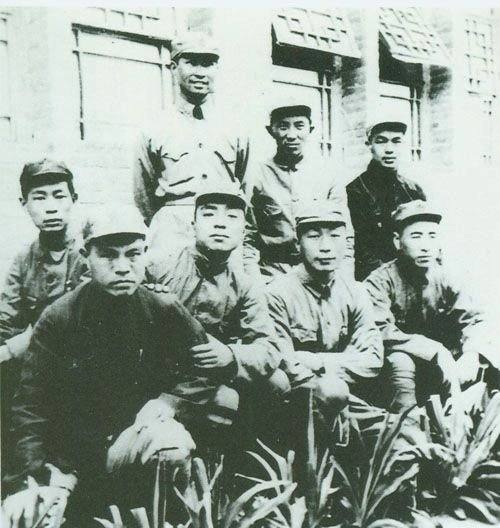
4. The gun in his hand: the public-security armed forces from the Central Column to the Public Security Army (1949–1955)
Luo's ministry differed from every other ministry in one respect: he directly commanded an army. The build-up is set out stage by stage in the Chinese Wikipedia's People's Armed Police article and its official lineage. On 6 July 1949 the Central Military Commission formally decided to establish an MPS under Luo Ruiqing as minister, exercising command over the public-security forces throughout the country; Mao directed that troops be drawn from the Fourth Field Army together with the Central Guard Regiment and the Beiping picket detachments to form them. On 31 August 1949 the Chinese People's Public Security Central Column was established, with Wu Lie as commander and Zou Yan as political commissar, comprising two divisions and a Central Guard Regiment, tasked with protecting the Party Centre, the Central Government and state leaders and with maintaining order in the capital; in the small hours of 1 October 1949 the Central Column carried the security of the founding ceremony. The First National Public Security Conference of December 1949 adopted a plan for reorganising the public-security armed forces, and between January and May 1950 the local public-security armed units were uniformly reorganised as the "Chinese People's Public Security Forces", subordinate to the public-security organs at each level. On 14 April 1950 a Politburo Standing Committee meeting chaired by Mao discussed the forces' direction and decided that the PLA would be reorganised into a National Defence Army and the Public Security Forces: the latter charged with eliminating remnant bandits, defending the regime and maintaining social order; Mao laid down that the Public Security Forces should be "not large in number but elite in quality", and appointed Luo Ruiqing their commander (the article, citing the meeting record).
The formal constitution of the force carries a Chinese dating of November 1950: the PLA Public Security Forces were established directly under the CMC, with Luo Ruiqing as commander and political commissar (Chinese biographical materials). The English-language record phrases it differently: the English Wikipedia's Luo article records that in 1950, at a conference in Beijing, he supported the establishment of a paramilitary force under his ministry similar to the Soviet MVD's internal troops; the Boorman entry states that "in 1953 he became head of the Public Security Forces, a newly created branch of the People's Liberation Army". Read side by side, the three datings do not in fact conflict in substance: he was appointed commander of the public-security forces in 1950 (the April Politburo decision), the forces became a formation directly under the CMC in November 1950, and in 1953 — renamed the Public Security Army in 1955 — their status as a service arm was further formalised. What differs is only which node each record calls the "founding". This file records all three layers, and no single date is allowed to impersonate the whole. In the Zhenfan and bandit-suppression years the force expanded rapidly into the hundreds of thousands (period strengths vary by source and no single checkable unified figure exists; this file does not estimate), and it served simultaneously as border guard, internal guard and custodial force, and as the direct armed instrument of arrests, escorts and cordons in the suppression campaign.
The bookkeeping point of this section must be made explicit: in every later campaign, the words "public-security organs" denote not merely uniformed police stations but a composite of police, political-protection intelligence, and a paramilitary army — and the founder and first commander of that composite was Luo Ruiqing himself. That he advocated in 1950 for a paramilitary force on the Soviet MVD model (as the English Wikipedia records) was not passive execution of another man's design: it was an institutional choice he actively supported and personally built. This file therefore books the creation of the public-security armed forces at the junction of his personal advocacy and his post responsibility: the advocacy is supported by the English record, the building and the command by the Chinese official lineage, and the two bodies of evidence close on each other in this section.
Sources: Chinese Wikipedia, "中国人民武装警察部队" [People's Armed Police], historical lineage (the CMC decision of 6 July 1949; the Public Security Central Column of 31 August 1949 and its composition; the December 1949 reorganisation plan; the 1950 reorganisation as the Chinese People's Public Security Forces; the Politburo Standing Committee meeting of 14 April 1950 appointing Luo commander of the Public Security Forces and Mao's "not large but elite" instruction); English Wikipedia, "Luo Ruiqing" (the 1950 Beijing conference support for an MVD-model paramilitary force under the ministry); X-Boorman entry (head of the Public Security Forces in 1953, a newly created service branch — registered founding-node discrepancy); Chinese biographical materials (the PLA Public Security Forces established directly under the CMC in November 1950, Luo as commander and political commissar).
5. Zhenfan (I): the "Double Ten Directive", "kill, imprison, control", and what Mao said to him (October 1950 – February 1951)
The Campaign to Suppress Counterrevolutionaries was the People's Republic's first nationwide campaign of political suppression, and it is the heaviest page of Luo Ruiqing's ministry. First, the timeline. In March 1950 the Central Committee had already issued directives on eliminating bandits and establishing a new revolutionary order, and Liu Shaoqi, then running the Centre's work, required the public-security departments to list all Kuomintang personnel and to suppress heavily whoever opposed CCP rule (English Wikipedia, Zhenfan article, citing Yang Kuisong's research). On 10 October 1950 the Central Committee issued its "Directive on Correcting the Rightist Deviation in Suppressing Counterrevolutionary Activities" — the "Double Ten Directive" — requiring that primary, incorrigible counterrevolutionaries who deserved death be sentenced to death at once; from that point the campaign escalated across the board (Chronicles of Modern China / cmcarchive Zhenfan chronology page, synthesising Yang Kuisong). This site's sort date for Luo is that day: not his birthday and not his appointment day, but the hinge date of his life's responsibility.
Luo's own contemporaneous text in the launching of the campaign is the highest-grade evidence on this page. The Second National Public Security Conference met from 16 to 21 October 1950 to transmit and implement the Centre's Zhenfan directive (Chinese Wikipedia, MPS article). His report to that conference — a transcript, not reviewed by him, now preserved in the Laogai Research Foundation archive and published in full online — can be checked word by word. He transmitted the Centre's decision that counterrevolutionaries "must be resolutely suppressed", criticised his own ministry for past "insufficient suppression" and "boundless leniency", and compressed the means of suppression on the spot into three characters. The report states that the means of dictatorship over counterrevolutionaries should be three characters — kill, imprison, control (sha, guan, guan): that is, kill a batch, imprison a batch, place a batch under control; killing meaning execution, imprisonment meaning sentence and forced labour, control meaning supervised control (the report transcript; the sentence quoted here falls within this site's quotation limits). The attribution of that sentence must be stated precisely: the policy came from the Centre and from Mao; Luo was its transmitter. But the three-character formula "kill, imprison, control", which thereafter ran through the entire public-security system, issued from the text of his report — he was the formulator and deployer of that language, not its postman. The same report contains a detail worth shelving in the archive: criticising the past for having "killed too few ringleaders", he instanced Qingdao, where only four people had been killed, of whom only two were counterrevolutionaries, and Suiyuan, where no one at all had been killed before June. In the internal language of the public-security system in October 1950, killing too few was the error under self-criticism. The reader of this page should know the occasion and the author of that sentence: it is not a later writer's summary; it is the campaign's chief executor, in his own deployment-conference report.
Mao's own setting of the campaign's tone includes one passage addressed directly to Luo Ruiqing, and its attribution must be equally precise. Yang Kuisong's research (via the English Wikipedia's Zhenfan article and the China Change reproduction) records Mao instructing the Minister of Public Security: the opportunity must not be missed; this was probably the only operation for suppressing counterrevolutionaries, a golden opportunity that would not come again, and full advantage must be taken of it; the purpose was not merely to kill several counterrevolutionaries but, more importantly, to mobilise the masses (Mao's words in substance, paraphrased here rather than quoted in full). The Chronicles of Modern China chronology adds Yang's quotation of Mao's explanation: the financial problems had previously been unresolved, but now the war to Resist America and Aid Korea had begun — "don't waste this opportunity". With the two reproductions closed together, the decision-level ledger is pinned: the launching and the tone were Mao Zedong's, and the man to whom he delivered them in person was Luo Ruiqing. Luo's place in the campaign is therefore neither that of its inventor nor that of an innocent bystander-executor: he was the man the supreme decision-maker told, face to face, not to miss the opportunity — and who then turned that sentence into a national public-security conference report, into the kill–imprison–control procedure, and into the execution figures reported upward province by province. This file's method is to pin both layers to the paper, and to let neither swallow the other.
The campaign's legal dress was completed in February 1951: on 20–21 February the Central People's Government Council adopted the Regulations on the Punishment of Counterrevolutionaries, prescribing death or life imprisonment for offences including colluding with imperialism to betray the motherland, armed rebellion, espionage and using secret societies for counterrevolutionary ends, with unlisted offences punishable by analogy (cmcarchive chronology synthesis). From around the 1951 Spring Festival, mass arrests and public executions unfolded nationwide, and mass-mobilisation public trials, parading and collective executions became the campaign's standard scenes (same source). The machinery of that stage — arrest lists, case review, the tiered upward reporting of execution approvals — ran entirely inside the public-security system, with the MPS as its national hub. In the first half of 1951 Luo also carried a second charge: the Korean War had begun, and the ministry simultaneously bore rear-area suppression and counter-espionage duties. Mao's sentence to him — the war to Resist America and Aid Korea has begun, do not waste the opportunity — was exactly the weld joining the external war and the internal suppression in time.
Sources: Luo Ruiqing, "Report to the Second National Public Security Conference" (transcript, 16 October 1950), Laogai Research Foundation archive, full text ("kill, imprison, control — kill a batch, imprison a batch, place a batch under control"; "too few ringleaders killed"; the Qingdao and Suiyuan instances): the B501016 file; Chinese Wikipedia, MPS article (the Second National Public Security Conference, 16–21 October 1950, transmitting the Zhenfan directive); English Wikipedia, "Campaign to Suppress Counterrevolutionaries" (the March 1950 bandit-elimination directive; Mao's "do not miss this opportunity" instruction to Luo Ruiqing, via Yang Kuisong's research); Yang Kuisong, "Reconsidering the Campaign to Suppress Counterrevolutionaries", The China Quarterly 193 (2008), as reproduced by China Change and the cmcarchive chronology page (the Double Ten Directive of 10 October 1950; Mao's "don't waste this opportunity"; the February 1951 Regulations on the Punishment of Counterrevolutionaries).
6. Zhenfan (II): one per thousand, the contraction, and five number-ledgers that are never merged (May 1951 – January 1954)
By the spring of 1951 the killing had reached a scale at which even the men who had launched it began to brake — and the braking words, too, were spoken by Luo Ruiqing in a public-security conference. On 10 May 1951, opening the Third National Public Security Conference, Luo stated that the total number of counterrevolutionaries executed nationwide had now reached one per thousand of the national population, that some areas had exceeded that ratio, and that an appropriate contraction was needed (cmcarchive chronology, citing his speech as quoted by Yang Kuisong). He relayed Mao's instructions at the same time: executions in the countryside should generally not exceed one per thousand of the population, in the cities should fall below that figure with 0.5 per thousand appropriate, and those who deserved death but had not aroused great popular anger could receive a death sentence with a two-year reprieve and forced labour (same source). The conference resolution took the power to approve arrests back up to the prefectural level and the power to approve executions back to the provincial level, and laid down that anyone between deserving and not deserving execution must not be executed (same source). The shape of these facts deserves attention: the ratios were Mao's; the announcement that the ratio had been reached, the announcement of the contraction, and the announcement of the withdrawal of approval powers were Luo's — the entire public-security system learned from his mouth where the killing was to stop. That is part of his executing ledger, and it is also where his complexity, as distinct from a mere executioner, lies: at the Fourth National Public Security Conference in September 1951 he acknowledged deviations and errors in the campaign's later stage, a very small number of them errors of indiscriminate arrest and killing (his report language, via cmcarchive). This file records that layer as found — it neither inflates it for him nor deletes it: the contraction was real, and so were the people killed to a one-per-thousand ratio before it. Both entries stand on the same page.
The number-ledgers are now queued one by one. Ledger one: the Ministry of Public Security's own totals — Vice-Minister Xu Zirong's report of January 1954, quoted in Yang Kuisong's 2008 China Quarterly article: since the campaign began, more than 2.62 million people had been arrested nationwide, of whom more than 712,000 were executed, more than 1.29 million imprisoned, and 1.2 million placed under control at one time or another, with more than 380,000 released after education; against a population of somewhat over 500 million, the execution rate works out at about 1.24 per thousand — already above the one-per-thousand Mao had set (Yang's article and the cmcarchive chronology agree). This ledger carries the highest evidential grade: it is the executing system's own internal statistical report upward, and the top of its reporting chain was Luo Ruiqing's ministry. Ledger two: Yang Kuisong's scholarly judgement — resting on that same report, he argues that because localities concealed executions after the 1951 contraction, the actual number executed may have been higher than 712,000 (Yang's article, via the China Change reproduction). Yang's contribution, note, is to pin the official figure down and identify it as a floor — not to substitute a larger number of his own. Ledger three: other scholars' estimate ranges — Roderick MacFarquhar estimates 500,000 to 800,000 executed; the research of Frank Dikötter, Lucian Pye and Julia Strauss, among others, gives a range of 1 million to 2 million (synthesised in The Handbook of Homicide, 2017, and in the notes to the English Wikipedia's Zhenfan article); Yinghong Cheng's archival count gives 753,275 (Cheng's article, via the wadeinchina source page); Li Changyu gives 2 million (as cited in the English Wikipedia article — a single-source reproduction, registered here as a low-grade estimate). Ledger four: the provincial evidence of ratio-breaking — Fujian province executed roughly 2.5 per thousand of its population (Yang's article, via China Change), and East China alone executed nearly 40,000 more people between May and October 1951, after the contraction order (cmcarchive, citing Yang) — two entries proving that in many places one per thousand was never a ceiling but a floor. Ledger five, which must be kept separate from Zhenfan: the landlords killed in the land reform that overlapped the campaign in time are estimated by scholars, in their own varying calibres, anywhere from one million to several million — that is land reform's ledger, and it may not be folded into Zhenfan's 712,000, nor used to pad it. This file keeps the two ledgers apart precisely so that neither side can make propaganda out of a merged figure.
What the five ledgers share is this: on any of them, the executions were state killing counted in the hundreds of thousands, and the killing's dosage was prescribed, counted and reported upward as a ratio of population. And the national executing hub of that ratio system — deploying kill–imprison–control in October 1950, announcing in May 1951 that one per thousand had been reached and contracting the campaign, and receiving in January 1954 the consolidated report of 2.62 million arrests and 712,000 executions from its own vice-minister's hand — was the Ministry of Public Security under Luo Ruiqing. His personal place in this ledger is pinned by this file in three sentences. He did not invent Zhenfan: its inventor was Mao Zedong and the Party Centre, on the evidence of Section 5. He was not a bystander swept passively in: the deployment text of kill–imprison–control, the announcement that the one-per-thousand mark had been reached, and the transmission of the contraction resolution are his own contemporaneous words and acts. And of any personal order by him in any individual execution there is no public record: the campaign's paper chain ran on collective and tiered approvals, and what the archive can pin is the system and the post, not the signatory of any one bullet. Read the three sentences side by side and the portrait on this page is complete.
Sources: Yang Kuisong, "Reconsidering the Campaign to Suppress Counterrevolutionaries", The China Quarterly 193 (2008) (Xu Zirong's January 1954 report: over 2.62 million arrested, over 712,000 executed, over 1.29 million imprisoned, 1.2 million controlled, over 380,000 released after education, execution rate about 1.24 per thousand; post-contraction local concealment and the likelihood that the real number was higher), checked against the cmcarchive chronology page and the China Change reproduction; Luo Ruiqing's speech to the Third National Public Security Conference, 10 May 1951 (executions at one per thousand, contraction needed; Mao's ratios of one per thousand in the countryside, 0.5 per thousand in the cities, and death sentences with reprieve; the withdrawal of approval powers and "no execution between deserving and not deserving"), via the cmcarchive chronology citing Yang; Maguire, Brookman & Maguire (eds.), The Handbook of Homicide (Wiley, 2017), p. 470 (other scholars' estimates of 1–2 million: Dikötter 2013, Pye 1991, Strauss 2002); English Wikipedia, Zhenfan article (MacFarquhar's estimate of 500,000–800,000; Li Changyu's figure of 2 million; the notes to Xu Zirong's figures); Yinghong Cheng's archival count of 753,275 (via the wadeinchina source page); Fujian's 2.5 per thousand and East China's nearly 40,000 executions of May–October 1951 (Yang's article, via China Change and cmcarchive).
7. Three more campaigns of his ministry: Three-Anti/Five-Anti, Sufan and the Anti-Rightist campaign — the police role and the limits of the evidence (1951–1957)
Zhenfan had not ended before the next campaigns were layered over it. The Three-Anti campaign (against corruption, waste and bureaucratism) was launched in Northeast China at the end of 1951 and then nationwide, and from January 1952 the Five-Anti campaign (against bribery, tax evasion, theft of state property, cheating on government contracts and stealing state economic intelligence) was directed at private businesspeople across the country (English Wikipedia, Three-Anti and Five-Anti article). The public-security system's place in the two campaigns was the enforcement and custody link: the surveillance, arrest and detention of those under investigation, and the judicial handling of the campaigns' later stages, all passed through the public-security organs — and under Five-Anti pressure large numbers of businesspeople killed themselves in struggle and investigation sessions (Philip Short's observation, reproduced in the English Wikipedia's Zhenfan article: the hundreds of thousands driven to suicide in the Three-Anti/Five-Anti struggle sessions are not counted in the Zhenfan figures); accounts from Shanghai and elsewhere even describe police patrolling to prevent hangings (a low-grade synthesis in English study materials; this file registers the phenomenon and adopts none of its numbers). But attribution discipline must be strictest exactly here: in this round of searching, this site found no checkable record of any personal directive, deployment speech or case instruction by Luo Ruiqing in the Three-Anti or Five-Anti campaigns — of a personal direct order there is no public record. What can be written is the post level only: the campaigns took place while he was Minister of Public Security, and the custody-and-enforcement machine of the public-security system ran under his ministry. The blank in this cell stands in exact contrast to the dense verbatim text of the Zhenfan section: the same minister left a deployment report checkable word by word in one campaign, and in another left only his presence in office. The archive writes by evidence, not by impression.
For the Sufan purge of 1955, the evidential chain is one link firmer than for Three-Anti/Five-Anti. Sufan — the purge of hidden counterrevolutionaries — was detonated by the Hu Feng affair of the first half of 1955: a literary-theoretical dispute was reclassified between January and June 1955 as the case of a "Hu Feng counter-revolutionary clique", implicating more than 2,100 people; on 1 July 1955 the Central Committee issued its directive launching the struggle to cleanse out hidden counterrevolutionary elements, and Sufan ran through the Party, government, military and public institutions nationwide until October 1957 (English Wikipedia, Sufan article, and this site's event file, synthesised). Luo Ruiqing's name stands in the execution chain in his own person: the Hu Feng case team formed in early May 1955 from Propaganda Department and MPS personnel under Lu Dingyi was expanded on 1 July 1955, and the expanded roster includes the Minister of Public Security, Luo Ruiqing (the case-team roster carried in this site's event file "The Anti-Hu Feng Campaign and the 1955 Sufan" — this site's internal archive, graded by that file's own verification record). The Sufan totals: about 214,000 people arrested and about 53,000 dead (figures cited in the English Wikipedia's Sufan article from secondary syntheses, registered at that grade); more than 18 million people were investigated in all, with a further 11 to 12 million still awaiting investigation when the campaign was wound up (same source). One widely circulated story must be graded as this site's own event file grades it: that public security established the complete innocence of certain framed victims (such as the Qichun teachers in Hubei), reported it to the Sufan ten-person group, and that Luo Ruiqing and Lu Dingyi decided to "bury it and not report it to Mao" — the event file itself marks this story unverified, and this page keeps the same grade: unverified, a single-chain circulation, not stated as fact, registered only as existing under this site's doubt. Sufan also cut into his own house: the public-security bureaux of the MPS were themselves a particular target of the purge, as the leadership tightened Party control over the security apparatus (English Wikipedia, Sufan article, citing research) — the campaign he executed was simultaneously purging his own ranks.
The public-security role in the Anti-Rightist campaign of 1957 was the executing end of arrest and reform-through-labour: of those labelled Rightists, a portion were arrested and prosecuted through the public-security organs, and a larger number were sent to re-education through labour (laojiao) — a system itself created by a State Council decision of August 1957, whose executing organ was precisely the public-security apparatus, under Minister of Public Security Luo Ruiqing (the institutional lineage of laojiao is standard historical record, registered here through his ministry's chain of office). But as against his named seat on the Sufan case team, this site found within its search range no checkable text of any personal deployment speech, ratio instruction or case instruction by Luo Ruiqing in the Anti-Rightist campaign — of a personal direct order there is no public record. His other 1957 identity was that of a secretary of the Central Secretariat (elected at the Eighth Congress in 1956), a collective member of the campaign's decision level; but collective membership is not a personal instruction record, and this file books the post and does not invent the words. In September 1955 he had been made a General of the Army, with the first-class Orders of Bayi, of Independence and Freedom, and of Liberation (official biographical materials) — the conferral and Sufan fell in the same season, and this file registers the juxtaposition as found: in the list of those receiving the new state's highest military rank, the Minister of Public Security and the campaign executor were the same man.
Sources: English Wikipedia, "Three-anti and Five-anti Campaigns" (Three-Anti launched at the end of 1951; Five-Anti, January–April 1952; the five counts; the campaigns' machinery of cadres and workers monitoring businesspeople); English Wikipedia, Zhenfan article (Philip Short on suicides in Three-Anti/Five-Anti struggle sessions not being counted in the Zhenfan figures); English Wikipedia, "Sufan movement" (1955–1957; the Hu Feng origin; the Central directive of 1 July 1955; about 214,000 arrested and about 53,000 dead; more than 18 million investigated; the public-security bureaux as a particular Sufan target); this site's event file "The Anti-Hu Feng Campaign and the 1955 Sufan" (the expanded case-team roster of 1 July 1955 including Luo Ruiqing; the "bury it, not report" story marked unverified in that file); the China Police Museum's official MPS biographical materials (the Da Jiang conferral of 1955 and the three first-class orders).
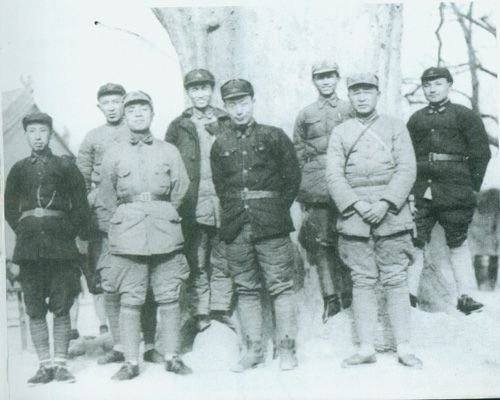
8. Six years as Chief of the General Staff: Da Jiang, CMC Secretary-General, and the 1962 border war (1955–1965)
After Peng Dehuai and Huang Kecheng were brought down at the Lushan Conference of 1959, Luo Ruiqing made a triple jump that year: Vice-Premier of the State Council, Vice-Minister of National Defence, and, in September 1959, successor to Huang Kecheng as Chief of the General Staff of the PLA (the Chinese Wikipedia's infobox dates his chief-of-staff tenure September 1959 – December 1965; the English Wikipedia records his 1959 succession to Huang as chief of the Joint Staff). He had already been elected, at the Eighth Congress in 1956, to the Central Committee and its Secretariat and as Secretary-General of the CMC (English Wikipedia). The Boorman entry fills in the detail: secretary-general of the Party's Military Affairs Commission by appointment in 1961, secretary of the Central Secretariat in 1962, vice-chairmanships of the National Defence Council and the National People's Congress in 1965 — by 1965 Luo held thirteen important positions within the PLA (Yang Jisheng's The World Turned Upside Down, as cited in the notes to the English Wikipedia's Luo article: by 1965 Luo Ruiqing occupied thirteen important positions in the PLA). Concentration of power on that scale itself became one of the fuses of his 1965 fall: the English Wikipedia's causal chain runs that he drifted away from Lin Biao, drew closer to He Long, and leaned toward Liu Shaoqi, whom Mao increasingly distrusted; that to remove Liu, Mao first had to wrest the military from Liu's supporters, and exploited other military leaders' dissatisfaction with a distribution of power favouring Luo. That passage is an English-language synthetic narrative, and this file registers it at synthesis grade, not as archival text.
The firmest military record of his chief-of-staff tenure is the Sino-Indian border war of 1962: in October–November 1962 the PLA attacked and defeated Indian forces on the eastern and western sectors of the disputed border, and Luo Ruiqing was the Chief of the General Staff of the day, the staff command system running through his hands (English Wikipedia, Luo article: in his tenure as chief of staff he "achiev[ed] military victory in the Sino-Indian War"; the article's conflicts list includes the Sino-Indian War). This file's treatment of that episode keeps this page's proportions: the Sino-Indian war was a border military conflict, not one of the internal persecutions this page exists to book, and it enters the career record to pin his presence in post in 1959–1965 — the same hands that held public security and Zhenfan in the 1950s held the PLA's whole staff system in the first half of the 1960s. His rift with Lin Biao also opened along this line: he was reluctant to follow Mao's idea of emphasising political education in the army and insisted on military training and professionalism (English Wikipedia: his reluctance to follow Mao's emphasis on political education, and his rifts with Lin Biao, led to his dismissal in December 1965; the Boorman entry records Western observers' speculation that he was removed for advocating professionalism, at odds with Mao and Lin Biao, confirmed in the summer of 1967). The professionalism-versus-politics dispute was a real policy conflict, but this file enters a caution: neither side of it stood on a position of opposition to political persecution. What Lin Biao and Luo Ruiqing contested was whose army it was and how it should be built — not whether Zhenfan should have happened. To read Luo's later victimhood backwards into an early liberalism is a common error of Chinese web writing, and this page does not adopt it.
Sources: Chinese Wikipedia, "罗瑞卿", infobox (Chief of the General Staff, September 1959 – December 1965; succeeded in acting capacity by Yang Chengwu); English Wikipedia, "Luo Ruiqing" (Da Jiang in 1955; Central Committee, Secretariat and CMC Secretary-General at the Eighth Congress of 1956; Vice-Premier in 1959 and succession to Huang Kecheng as chief of staff; the Sino-Indian War; the rift with Lin Biao and the December 1965 dismissal; the note citing Yang Jisheng on the thirteen military posts); X-Boorman entry (CMC secretary-general in 1961; Central Secretariat secretary in 1962; the 1965 vice-chairmanships; the professionalism advocacy and the removal speculation; the public denunciation of summer 1967 as a follower of Peng Dehuai and Huang Kecheng).
9. The fall: the Shanghai meeting of December 1965, Peng–Luo–Lu–Yang, and the two dates for the jump (1965–1966)
The record of Luo Ruiqing's fall becomes complete only when the accounts in several languages are pieced together. In December 1965 Lin Biao's wife Ye Qun came forward with accusations against Luo; the accusations were accepted and Luo was placed under house arrest. From 8 to 15 December an enlarged meeting of the Politburo Standing Committee in Shanghai found that Luo had "opposed giving prominence to politics, sought to usurp military power, and opposed the Party" (Japanese Wikipedia's synthesis, citing research literature). The English Wikipedia phrases it as his dismissal in December 1965, while he nominally remained a Vice-Premier. In May 1966 the enlarged Politburo meeting bundled him with Peng Zhen, Lu Dingyi and Yang Shangkun into a single "Peng–Luo–Lu–Yang anti-Party clique" — the Japanese Wikipedia points out expressly that the four had each become targets over separate matters, and that it was Lin Biao who forcibly welded them into a conspiring "anti-Party clique"; a meeting of 23 May suspended his secretaryship of the Central Secretariat, and the four became the first senior figures the Party Centre brought down in the Cultural Revolution (same source). This file pins that layer down because it determines the nature of the later rehabilitation: his case was a fabricated composite from the first day it was made, as even the later rehabilitation narrative concedes — but the machine that fabricated his case, and the political-protection and campaign machine he himself had helped to build and run, were the same machine. This file arrays the contrast and does not gloss it; the facts speak for themselves.
The jump carries two dates, and this file treats them as one of its most important registered discrepancies. Dating A: 18 March 1966 — the date given by the historians Roderick MacFarquhar and Michael Schoenhals in Mao's Last Revolution (2006), relayed by Jonathan D. Spence's review in The New York Review of Books: on 18 March 1966 General Luo Ruiqing, then Chief of Staff of the PLA, tried to kill himself by jumping from the top of a three-storey building; the attempt failed, his legs were shattered, and he ended up paralysed, unable to walk. Dating B: 16 March 1966 — a number of encyclopaedia-derived texts (such as Alchetron's copy of an older English Wikipedia version) give 16 March, with the jump from the third floor of the Jingxi Hotel and both legs broken. Variant C (place): the Japanese Wikipedia gives March 1966 and a jump at his home; the current English Wikipedia text gives the third floor of the Jingxi Hotel, and records that he left a suicide note declaring the correctness of the Party (citing Yang Jisheng's The World Turned Upside Down, pp. 55–56). The Swedish Wikipedia even gives April 1966. This file's handling: the scholarly monograph dating (A, 18 March) is registered first as the relatively strongest evidence; dating B and the Jingxi Hotel are recorded beside it; the place is recorded in both its Jingxi Hotel and home versions; and no single assertion is made about the exact date and place until the archives are fully open — the status of this cell is "discrepancy archived", not "settled by this site". On the consequences all sources agree: both legs fractured (in one account shattered), followed by long hospitalisation and life in a wheelchair; and the suicide attempt itself was treated as proof of guilt — in the English Wikipedia's words, it was seen as proof of his guilt, and he received further public criticism after he recovered. In the summer of 1967 he was publicly denounced as a follower of Peng Dehuai and Huang Kecheng (Boorman entry). In October 1968 he was relieved of all his posts (English Wikipedia, citing Xiaobing Li, The Cold War in East Asia, p. 147). In 1969 his left leg was amputated (English Wikipedia). The Japanese Wikipedia further records that after May 1966 he was imprisoned in Qincheng Prison — the prison for senior political prisoners, run by the very public-security system he had created; this entry is registered at the Japanese Wikipedia's synthesis grade. That the man was held by the custodial machine he had helped to build is a fact whose symbolism needs no adjective from this site.
Sources: Japanese Wikipedia, "羅瑞卿" (Ye Qun's December 1965 accusation and the house arrest; the Shanghai enlarged Standing Committee meeting of 8–15 December and its findings; the composite character of the Peng–Luo–Lu–Yang clique; the 23 May suspension from the Secretariat secretaryship; Qincheng Prison; the August 1977 restoration of reputation); English Wikipedia, "Luo Ruiqing" (the December 1965 dismissal; the Peng–Luo–Lu–Yang anti-Party clique; the Jingxi Hotel third-floor jump and the suicide note; the treatment of the attempt as proof of guilt and the further public criticism; relieved of all posts in October 1968, citing Xiaobing Li at p. 147; the 1969 left-leg amputation); MacFarquhar & Schoenhals, Mao's Last Revolution (2006), as relayed in Jonathan D. Spence's review (The New York Review of Books, 21 September 2006) (the jump of 18 March 1966; the shattered legs and paralysis); Alchetron's copy of an older English Wikipedia version (16 March 1966 — registered discrepancy); X-Boorman entry (the public denunciation of summer 1967).
10. Ten Cultural Revolution years, and rehabilitation in two stages: the 1975 turn and the formal restoration of 1977 (1966–1977)
From 1966 to 1976 the public record of Luo Ruiqing shrinks to fragments of struggle sessions, hospitalisations and an amputation, and this file registers them as found, without narrative padding: repeated hospitalisation (English Wikipedia); the amputation of his left leg in 1969; thereafter life with a prosthesis and a wheelchair. On the family side, his son Luo Yu's later defection to the West belongs to a family member's personal history and has no direct bearing on this page's responsibility events; this file registers one line only: that Luo Yu, the eldest son, left in 1989, was expelled from the army and the Party in 1992, and died in the United States in October 2020 (Chinese biographical materials). How the system to which the father gave lifelong loyalty finally treated this family is a judgement the reader will form unaided; this file draws no conclusion for anyone. One common simplification — of the kind a task briefing might carry — must be corrected here: the habit of booking Luo's rehabilitation wholesale to "1977–1978, after Mao's death". The actual process ran in two stages. Stage one fell within Mao's lifetime: in 1975, at a meeting of the Central Military Commission, Mao rehabilitated Luo Ruiqing — Mao had realised that Lin Biao had fabricated the case against the former general (English Wikipedia's text: Luo was rehabilitated by Mao at a CMC meeting in 1975, when Mao realised Lin Biao had fabricated the case). That entry rests on the English Wikipedia's synthesis and is registered at synthesis grade: it shows that after Lin Biao's death in 1971, and still in Mao's lifetime, Luo's political verdict had begun to loosen — but in 1975 he recovered no post at all. Stage two fell after Mao's death: in August 1977, at the First Plenary Session of the 11th Central Committee, he was elected to the Central Committee and restored as Secretary-General of the CMC (Chinese biographical materials date the CMC secretary-general appointment to the First Plenary Session of 12 August 1977; the Japanese Wikipedia gives August 1977 for the restoration of his reputation after the Cultural Revolution). In 1977 he also appears in the record of Mao commemorations: on 18 September 1976, against advice, he insisted on attending Mao's memorial ceremony in Tiananmen Square (Chinese biographical materials) — a man whose legs the machine had broken, standing in the crowd to see the machine's master off. This file registers that entry as found, neither mocking nor praising it: it is an indispensable fact for understanding the man — he never, to his death, broke with the Party he had helped to build.
The nature of the rehabilitation must be stated with equal clarity: the rehabilitation of 1975–1977 overturned only the "anti-Party" charges fabricated against him in 1965–1966. Not one word of it touched his responsibility events as Minister of Public Security in 1949–1959 — Zhenfan, Sufan and the rest; in the rehabilitation documents and the official biographies, his role in Zhenfan is still narrated positively. In other words, the only error this man's lifetime ever saw the system "correct" was the error the system had committed against him; the ledger he himself ran up against hundreds of thousands of people was never, in the official narrative, an error at all. This page exists precisely against that asymmetry: the fabricated Peng–Luo–Lu–Yang case deserved its rehabilitation, and the account of 712,000 executions deserves to be written down from the archive with equal care. This file keeps both ledgers.
Sources: English Wikipedia, "Luo Ruiqing" (the 1975 CMC-meeting rehabilitation by Mao and the Lin Biao fabrication; election to the 11th Central Committee and restoration as CMC Secretary-General in 1977; the repeated hospitalisations and the 1969 amputation); Japanese Wikipedia, "羅瑞卿" (the restoration of reputation in August 1977); Chinese biographical materials (the CMC secretary-general appointment at the First Plenary Session of 12 August 1977; his insistence on attending Mao's memorial on 18 September 1976; Luo Yu's departure and his death in the United States in 2020, checked against Chinese web reproductions).
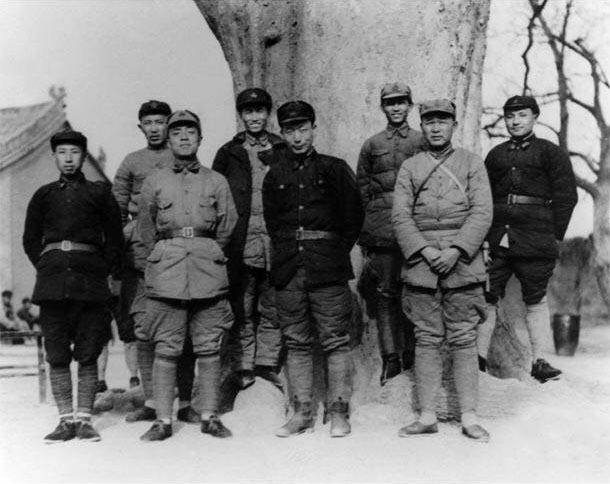
11. The operating table in Heidelberg: death on 3 August 1978, and the correction of a misrecorded place (1978)
The last year of Luo Ruiqing's life was spent chasing treatment for his leg. In the spring of 1978 he and his wife Hao Zhiping were both in hospital (Chinese biographical materials: a shadow found on his wife's lung at a check-up was confirmed by surgery as a malignant tumour); he resolved to go abroad for his leg, took Deng Xiaoping's advice, and determined that whatever effort it took, the leg must be cured (same source). On 18 July 1978 he landed at Cologne airport in West Germany and was admitted to the Orthopaedic University Hospital in Heidelberg; on 1 August he and his wife Hao Zhiping posed for their last photograph together in the ward (Chinese biographical materials). On 2 August he was taken into the operating theatre; the operation went smoothly and the doctors told him it had succeeded and that he would soon walk again; shortly after the operation he suffered sudden cardiac distress and difficulty breathing, and he died at 02:40 on 3 August 1978, aged 72 (same source; the time of death rests on a single account and is registered at that grade). The English and Chinese Wikipedias agree on the place and date: Heidelberg, West Germany, 3 August 1978, dying while in West Germany for medical treatment.
One circulating place-name error is corrected here. The opening paragraph of the Italian Wikipedia's article gives his place of death as "Berna" — Bern, the Swiss capital, in a different country from Heidelberg; the rest of that article and the records in every other language give Heidelberg, and the Bern reading is an editing error in that article's lead, registered here as corrected: the place of death is Heidelberg, West Germany, not Bern. The chain of the cause of death must also be layered: the immediate cause was the cardiac and respiratory failure that followed the leg operation of 2 August (Chinese biographical materials); and the leg that required the operation had been injured in the jump of 1966 and amputated in part in 1969 — in causal terms, he died in the course of treating the disability left by that jump twelve years earlier. A Chinese biographical headline compresses it as: disabled by a suicide attempt twelve years before, he finally died abroad risking surgery to treat the leg (headline language of a Chinese web biography). This file's registration stops there: a man who in the 1950s deployed a nationwide suppression under the formula "kill, imprison, control" was brought down in 1966 by the same campaign logic, broke his legs in a jump, and died in 1978 after an operation to treat that leg — every link of that causal chain is sourced, and this file adds no language of retribution to it. The chain is complete enough on its own.
Sources: English Wikipedia, "Luo Ruiqing" (died 3 August 1978 in Heidelberg, West Germany, while there for medical treatment); Chinese Wikipedia, "罗瑞卿" (3 August 1978, Heidelberg, West Germany, aged 72); Chinese biographical materials (arrival at Cologne on 18 July 1978 and admission to the Heidelberg Orthopaedic University Hospital; the last photograph of 1 August; the operation of 2 August; death at 02:40 on 3 August; his wife Hao Zhiping's concurrent illness, checked against Chinese web reproductions — the time of death is single-source); Italian Wikipedia, "Luo Ruiqing", lead paragraph (place of death misgiven as Bern — corrected and registered by this site).
12. Three ledgers: the personal, the post, and the no-public-record
Everything this file has booked on Luo Ruiqing is gathered here into three ledgers, item by item, with no item allowed to wander between columns. The first is the personal ledger — matters the contemporaneous text or a reliable record proves came from his own words and acts. One: the report to the Second National Public Security Conference of 16 October 1950, in which he personally transmitted and deployed the suppression, criticised his own ministry for "insufficient suppression", proposed "kill, imprison, control — kill a batch, imprison a batch, place a batch under control", and used Qingdao and Suiyuan to instance "too few ringleaders killed" (the report transcript itself, Laogai Research Foundation archive). Two: his public support in 1950 for building a paramilitary force for the ministry on the Soviet MVD model (the English Wikipedia's record of his 1950 Beijing conference position). Three: at the Third National Public Security Conference on 10 May 1951, his announcement that executions had reached one per thousand of the population and that a contraction was needed, and his relaying of Mao's ratio instructions and the withdrawal of approval powers (his speech as quoted by Yang Kuisong). Four: at the Fourth National Public Security Conference in September 1951, his acknowledgment of deviations and errors in the campaign's later stage, a very small number of them indiscriminate arrests and killings (his report language, via cmcarchive). Five: on 1 July 1955, his entry, as Minister of Public Security, into the enlarged Hu Feng case team (this site's event-file roster). Six: the suicide note of 1966 declaring the correctness of the Party, left before his jump (English Wikipedia, citing Yang Jisheng) — entered on the personal ledger not as an offence but as an archival fact for understanding his political character.
The second ledger is the post and institutional ledger — acts whose subject is the institution he headed, under the premise of his office: the nationwide public-security execution system of the whole Zhenfan campaign (the MPS system's own consolidated totals of more than 2.62 million arrested, more than 712,000 executed, more than 1.29 million imprisoned and 1.2 million controlled); the building and command of the public-security armed forces from the Central Column to the Public Security Army; the custody-and-enforcement links of the public-security system during the Three-Anti and Five-Anti campaigns; the public-security execution of the Sufan purge of 1955–1957 and its system totals of about 214,000 arrested (for the grades of those figures see Section 7); the chain of office under which, after 1957, the laojiao system was executed by the public-security organs; and the Yan'an-period purge execution against the supporters of Wang Ming and the faction of Zhang Guotao (post level, at English-synthesis grade). The weight of this ledger is structural: for ten full years, 1949–1959, China's police, political protection, public-security armed forces and laojiao custody all issued from one ministry and one minister. The third ledger is the column of no-public-record entries, listed together so that no imagination fills them: of any personal order by him in any individual Zhenfan execution — no public record. Of any personal deployment statement or case instruction by him in the Three-Anti/Five-Anti or Anti-Rightist campaigns — no public record. Of any personal order by him disposing of a named individual in the Yan'an purges — no public record. Of the part concerning him personally in the Sufan "bury it and do not report it" story — unverified, a single-chain circulation, not adopted by this file as fact. Of the degree to which he knew, within the Zhenfan reporting chain, of local concealment — no public record. Finally, the sanctions cell is fixed in this form: he died in 1978, and every modern targeted-sanctions regime (the US Global Magnitsky Act of 2016, the EU Global Human Rights Sanctions Regime of 2020, and the rest) postdates his death by decades; "whether he was ever placed on a sanctions list" is, for him, a question that does not arise, and this file records the non-arising itself rather than fabricating a checking action. The domestic-accountability cell is likewise a matter of no public record — and the official narrative still presents his ministry positively to this day. The blank of accountability and the energy of rehabilitation are two faces of one and the same narrative.
Sources: this section is this site's classification of the sources already cited in Sections 1–11 — the personal ledger's items rest respectively on Luo Ruiqing's report transcript of 16 October 1950 (Laogai Research Foundation archive), the English Wikipedia's Luo article, Yang Kuisong's 2008 article and this site's Sufan event file; the institutional ledger's items rest on Xu Zirong's January 1954 report (as quoted by Yang Kuisong), the public-security forces lineage (Chinese Wikipedia, People's Armed Police article) and the English Wikipedia's Sufan article; each no-public-record entry is a negative result within the range of this site's searches of 6 November 2026, whose scope is stated in the Verification Note.
13. Verification Note
Verification date: 6 November 2026. This page's facts are pinned at three grades. Grade one (contemporaneous text): the full transcript of Luo Ruiqing's report to the Second National Public Security Conference of 16 October 1950 (Laogai Research Foundation archive, file B501016), containing the original "kill, imprison, control" sentence and the "too few ringleaders killed" criticism — direct evidence of his personal deployment words and acts. Grade two (scholarship and authoritative syntheses): Yang Kuisong, "Reconsidering the Campaign to Suppress Counterrevolutionaries", The China Quarterly 193 (2008) — Xu Zirong's 1954 report figures, Mao's instruction to Luo, the May 1951 contraction and ratios, and the provincial ratio-breaking, cross-checked against the cmcarchive chronology page and the China Change reproduction; MacFarquhar and Schoenhals, Mao's Last Revolution (2006), on the 18 March 1966 dating of the jump, checked through Spence's New York Review of Books review; Yang Jisheng, The World Turned Upside Down, on the thirteen military posts and the suicide note, via the English Wikipedia's notes. Grade three (reference works and encyclopaedia syntheses): the birth, death and career skeleton cross-checked between the English and Chinese Wikipedias and Xinhua's official biography; the MPS and public-security-forces lineages taken from the official histories cited by the Chinese Wikipedia's MPS and People's Armed Police articles; the Boorman Biographical Dictionary entry checked in the original in the X-Boorman online edition; the Three-Anti/Five-Anti and Sufan totals taken, with their grades marked, from the syntheses cited in the English Wikipedia's campaign articles.
Six discrepancies and corrections are registered. Discrepancy one, the birth year: the mainstream record gives 31 May 1906; the Boorman entry gives 1907; the text takes 1906 as correct and archives 1907 (Section 1). Discrepancy two, the end of the ministry: the mainstream dating is 1959; the Italian Wikipedia gives the precise 17 September 1959; Boorman gives 1958; the text takes September 1959 as correct and records the variants (Section 3). Discrepancy three, the founding node of the public-security forces: appointment as commander in April 1950, constitution directly under the CMC in November 1950, and Boorman's 1953 newly-created-service-branch dating — all three layers recorded (Section 4). Discrepancy four, the date and place of the jump: 18 March (MacFarquhar and Schoenhals) against 16 March (encyclopaedia-derived texts), and the Jingxi Hotel against the home as place; the text makes no single assertion and archives the discrepancy (Section 9); the Swedish Wikipedia's April 1966 is of still lower grade and is registered here only. Correction five, the timing of rehabilitation: the briefing-style simplification "rehabilitated in 1977–1978, after Mao's death" was checked and the process ran in two stages — the loosening of the verdict by Mao at a CMC meeting in 1975 (English Wikipedia synthesis) and the formal restoration of posts in August 1977; the text is written in the two stages (Section 10). Correction six, the place of death: the Italian Wikipedia's lead misgives Bern; the correct place is Heidelberg, West Germany (Section 11). Number discipline: Zhenfan's five ledgers (the MPS's own 712,000; Yang Kuisong's "the real number was higher" floor judgement; MacFarquhar's 500,000–800,000; Dikötter and others' 1–2 million; Cheng Yinghong's 753,275; Li Changyu's single-source low-grade 2 million) are all shelved side by side — never merged, never maximised, never minimised; land-reform death figures are kept in a separate ledger from Zhenfan and not folded in. Materials not adopted are registered: Zhang Guotao's charge on the Yan'an purge, relayed by Time in 1956, is registered for provenance and third-class grade only and is not used quantitatively; the Sufan "bury it and do not report it" story is marked unverified and not adopted as fact; the time of Luo's death (02:40) is a single-source Chinese biographical reproduction and is registered at single-source grade. The sanctions section is fixed as "category inapplicable": the man died in 1978, before every modern targeted-sanctions regime, and this site performed no, and fabricates no, list-search action in respect of him.
Sources
- Luo Ruiqing, "Report to the Second National Public Security Conference" (transcript, 16 October 1950), Laogai Research Foundation archive, full text: https://laogairesearch.org/wp-content/uploads/2019/06/B501016Luo-RQ.pdf
- Yang Kuisong, "Reconsidering the Campaign to Suppress Counterrevolutionaries", The China Quarterly 193 (2008), pp. 102–121 (Xu Zirong's January 1954 report figures; Mao's instruction to Luo Ruiqing; the May 1951 contraction and the one-per-thousand ratio; Fujian's ratio-breaking), checked against the China Change reproduction and synthesis: https://chinachange.org/2011/11/28/reconsidering-the-campaign-to-suppress-counterrevolutionaries/
- Chronicles of Modern China, "Campaign to Suppress Counterrevolutionaries (1950)", chronology page (the Double Ten Directive; the Regulations on the Punishment of Counterrevolutionaries; Luo Ruiqing's speeches of 10 May and September 1951; Xu Zirong's figures): https://www.cmcarchive.org/events/campaign-to-suppress-counterrevolutionaries-1950
- English Wikipedia, "Luo Ruiqing" (birth and death; Minister of Public Security 1949–1959; the Yan'an purges; the paramilitary-force advocacy; Da Jiang and Chief of the General Staff; Peng–Luo–Lu–Yang; the Jingxi Hotel jump and the suicide note; relieved of all posts in October 1968, citing Xiaobing Li; the 1969 amputation; the 1975 rehabilitation turn; the 1977 restoration; the Xinhua biography link): https://en.wikipedia.org/wiki/Luo_Ruiqing
- Chinese Wikipedia, "罗瑞卿" [Luo Ruiqing] (original name Qirong; Chief of the General Staff, September 1959 – December 1965; birth, death and the Heidelberg place of death): https://zh.wikipedia.org/wiki/罗瑞卿
- X-Boorman online edition, "Lo Jui-ch'ing" entry (gives 1907 as the birth year; the ministry as 1949–1958; head of the Public Security Forces in 1953; the 1931 wound and facial paralysis; the public denunciation of summer 1967): https://xboorman.enpchina.eu/biographie/luo-ruiqing/
- Chinese Wikipedia, "中华人民共和国公安部" [Ministry of Public Security of the PRC] (the 19 October 1949 appointment; the First and Second National Public Security Conferences; the seal in use and the founding ceremony of November 1949; the bureau structure): https://zh.wikipedia.org/wiki/中华人民共和国公安部
- English Wikipedia, "Ministry of Public Security of the People's Republic of China" (the July 1949 CMC ministry split from the Central Social Affairs Department; operations from 1 November 1949; initial staff under 500): https://en.wikipedia.org/wiki/Ministry_of_Public_Security_of_the_People%27s_Republic_of_China
- Chinese Wikipedia, "中国人民武装警察部队" [People's Armed Police], historical lineage (the CMC decision of 6 July 1949; the Public Security Central Column; the Politburo Standing Committee meeting of 14 April 1950 appointing Luo Ruiqing commander of the Public Security Forces): https://zh.wikipedia.org/wiki/中国人民武装警察部队
- English Wikipedia, "Campaign to Suppress Counterrevolutionaries" (the March 1950 directive; the provenance of Mao's instruction to Luo Ruiqing; the MacFarquhar and Li Changyu estimates; the perpetrator list including Luo Ruiqing and Xu Zirong): https://en.wikipedia.org/wiki/Campaign_to_Suppress_Counterrevolutionaries
- Maguire, Brookman & Maguire (eds.), The Handbook of Homicide (Wiley, 2017), p. 470 (other scholars' execution estimates of 1–2 million: Dikötter 2013, Pye 1991, Strauss 2002)
- English Wikipedia, "Sufan movement" (1955–1957; about 214,000 arrested and about 53,000 dead; more than 18 million investigated; the public-security bureaux as a Sufan target): https://en.wikipedia.org/wiki/Sufan_movement
- English Wikipedia, "Three-anti and Five-anti Campaigns" (Three-Anti from late 1951; Five-Anti in 1952; the five counts and the campaigns' machinery): https://en.wikipedia.org/wiki/Three-anti_and_Five-anti_Campaigns
- Roderick MacFarquhar & Michael Schoenhals, Mao's Last Revolution (Harvard University Press, 2006), as relayed in Jonathan D. Spence's review (the jump of 18 March 1966; the shattered legs and paralysis), The New York Review of Books, 21 September 2006: https://www.nybooks.com/articles/2006/09/21/chinas-great-terror/
- Japanese Wikipedia, "羅瑞卿" [Luo Ruiqing] (the Shanghai meeting findings of December 1965; the composite character of the Peng–Luo–Lu–Yang clique; Qincheng Prison; the restoration of reputation in August 1977): https://ja.wikipedia.org/wiki/羅瑞卿
- Italian Wikipedia, "Luo Ruiqing" (the ministry dated 19 October 1949 – 17 September 1959; the lead's misgiving of the place of death as Bern, corrected by this site; Zhang Guotao's charge as relayed by Time): https://it.wikipedia.org/wiki/Luo_Ruiqing
- This site's event file, "The Anti-Hu Feng Campaign and the 1955 Sufan" (the expanded case-team roster of 1 July 1955 including Luo Ruiqing; the "bury it, do not report it" story marked unverified in that file): endccpworld.com event archive
Contact: endccpworld@proton.me