
Erick Tsang Kwok-wai (1963– )
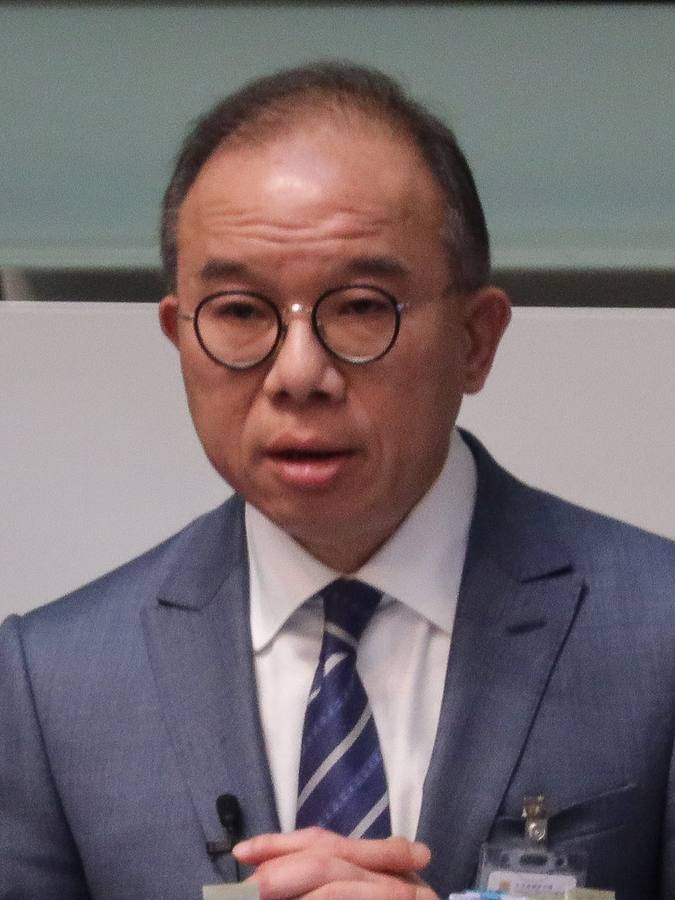
Erick Tsang Kwok-wai, born in Hong Kong on 1 September 1963 and a journalism and communication graduate of the Chinese University of Hong Kong, joined the Immigration Department in 1987, became its Director on 5 April 2016, and on 22 April 2020 — days after his predecessor Patrick Nip apologized over the Liaison Office status row — was appointed by the State Council as Secretary for Constitutional and Mainland Affairs, the first holder of that office not drawn from the Administrative Officer grade. Within two months he had steered the National Anthem Ordinance through the Legislative Council (passed 4 June 2020), and after the National Security Law was imposed he became one of its chief defenders at the constitutional level. On 30 July 2020 returning officers invalidated the nominations of twelve Legislative Council candidates and the government publicly endorsed the rulings, his bureau being the policy bureau for elections — this page layers the evidence: the rulings were signed case by case by returning officers, and his responsibility lies in policy-bureau superintendence and government endorsement, not in personal adjudication of each case. On 11 November 2020 the NPC Standing Committee's decision on legislators' qualifications removed sitting members Alvin Yeung, Dennis Kwok, Kwok Ka-ki and Kenneth Leung with immediate effect, and fifteen remaining pro-democracy legislators resigned en masse. In 2021 he publicly warned that the pro-democracy primaries might breach the National Security Law and, after the arrests in the Hong Kong 47 case, said those involved had crossed a red line and must pay the price; the public-offices oath legislation steered by his bureau extended loyalty oaths to district councillors — he stated publicly that a patriot cannot fail to love and respect the leadership of the Chinese Communist Party — and that autumn fifty-five councillors were ruled to have taken invalid oaths while more than 250 had already resigned; he drove the local legislation and publicity of the 'patriots administering Hong Kong' electoral overhaul and from 6 July 2021 sat as an official member of the Candidate Eligibility Review Committee, which vets candidates on the national security committee's binding, judicially unreviewable opinion; turnout at the first post-overhaul Legislative Council election fell to a record-low 30.2 percent, and in 2023 directly elected District Council seats were cut from 452 to 88 with turnout falling again to 27.54 percent. His sanctions status was verified name by name: he is on the US Treasury's 7 August 2020 list of eleven officials sanctioned under Executive Order 13936 (sixth on the list) and in the State Department's 14 October 2020 Hong Kong Autonomy Act report of ten; the four officials added on 9 November 2020 — Deng Zhonghua, Li Jiangzhou, Edwina Lau and Steve Li — do not include him, and accounts placing him in the November batch are wrong. On 27 January 2026 he left office, having resigned on health grounds, the State Council approving his removal on Chief Executive John Lee's recommendation; he stated that his prostate-specific antigen level had remained persistently high, above 11, despite various treatments, and that he had decided to resign after completing the December 2025 Legislative Council election. This page also corrects a standing confusion: the Director of Immigration of 2011–2016 who became Director of the Chief Executive's Office (2017–2022) was Eric Chan Kwok-ki, not Erick Tsang.
1. A Journalism Graduate in British Hong Kong (1963–1986)
Erick Tsang Kwok-wai was born on 1 September 1963 in British Hong Kong. Public records say little about his family background, and this page records only the verifiable line of his education: Buddhist Tai Hung College, from which he graduated in 1980; New Asia College of the Chinese University of Hong Kong, which he entered in 1982; and a social-science bachelor's degree in 1986, in journalism and communication. His university training, in other words, was in the media — not in law, not in public administration, and not in a disciplined service. That matters for understanding his career. In a government system where the Administrative Officer grade is the orthodox fast stream to the top, Tsang reached principal-official rank without it, on the strength of almost thirty years of step-by-step promotion inside a disciplined department, and of being the right kind of executor at the moment Beijing changed its governing line for Hong Kong. This page applies the people section's standing rule: where an appointment instrument, a legislative record or a public statement can be checked, the entry is written as his decision or his words; where an action was executed by a subordinate agency or a sister bureau with no document showing his personal order, it is written as his bureau's policy responsibility or as an association of his tenure, with the layer stated. Tsang's archival through-line is precisely this: his power never came from votes or personal legislative standing, but from a vetting machine he helped to design and then personally operated.
2. Rising Through Immigration; a Security Bureau Secondment (1987–2016)
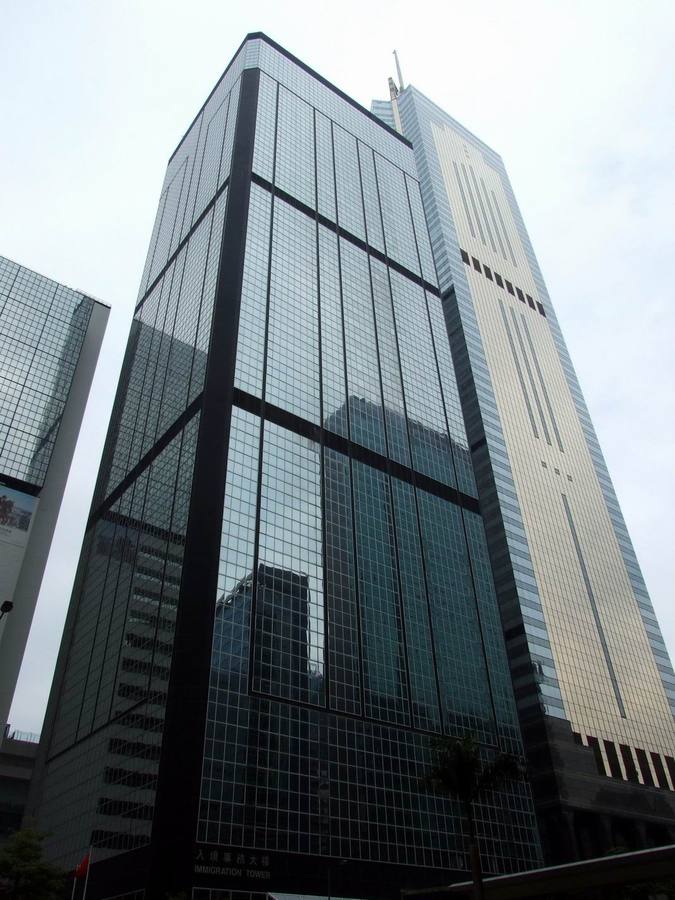
Tsang joined the Immigration Department in 1987 as an Assistant Immigration Officer. Immigration is the disciplined service most deeply concerned with Hong Kong's boundary: entry and exit control, identity cards and passports, visas, removals, and the screening of torture and non-refoulement claims all sit within its remit, and after the handover it took on an ever larger role in the mainland-facing machinery of ports and people flows. Tsang spent twenty-nine years in that department: Principal Immigration Officer in 2009, Assistant Director in 2012, Deputy Director in 2014. Between 2003 and 2006 he was seconded to the Security Bureau — the Immigration Department's policy superior — as an Assistant Secretary, a posting that taught him the language of a policy bureau earlier than most uniformed officers learn it. One confusion must be cleared away at the start, because the two men's English names are near-identical. Eric Chan Kwok-ki (陳國基) was Tsang's predecessor as Director of Immigration (2011–2016), and it was Eric Chan, not Erick Tsang, who became Director of the Chief Executive's Office in 2017 and served there to 2022. Tsang never held the Chief Executive's Office post. Any account that gives him an immigration directorship of 2011–2016 followed by the Chief Executive's Office has transplanted Eric Chan's record onto him; this page corrects that error and does not use it.
On 5 April 2016 the State Council, on the nomination of Chief Executive Leung Chun-ying, appointed Tsang to succeed Eric Chan — who was proceeding on pre-retirement leave — as Director of Immigration, at the age of fifty-two. The government announcement that day stressed his twenty-nine years in the department. The directorship placed him one step below the principal officials: since the handover the Director of Immigration has been appointed by the Central People's Government, and it is among the disciplined-service posts carrying the highest requirement of political trust. The timing of his accession also needs to be stated exactly. The Causeway Bay Books affair — five men disappearing between October and December 2015, Lee Bo vanishing inside Hong Kong with no exit record — belonged to his predecessor's tenure; the Immigration Department's control records and responses of that period are Eric Chan-era responsibilities. Tsang took over only in April 2016, and this page does not assign him the border responsibility for the booksellers affair. The distinction follows the same layering rule this site applied to Leung Chun-ying's page: simultaneity with a tenure is not personal responsibility.
3. The Immigration Directorship: the Diamond Princess and the Year of Protest (2016–2020)
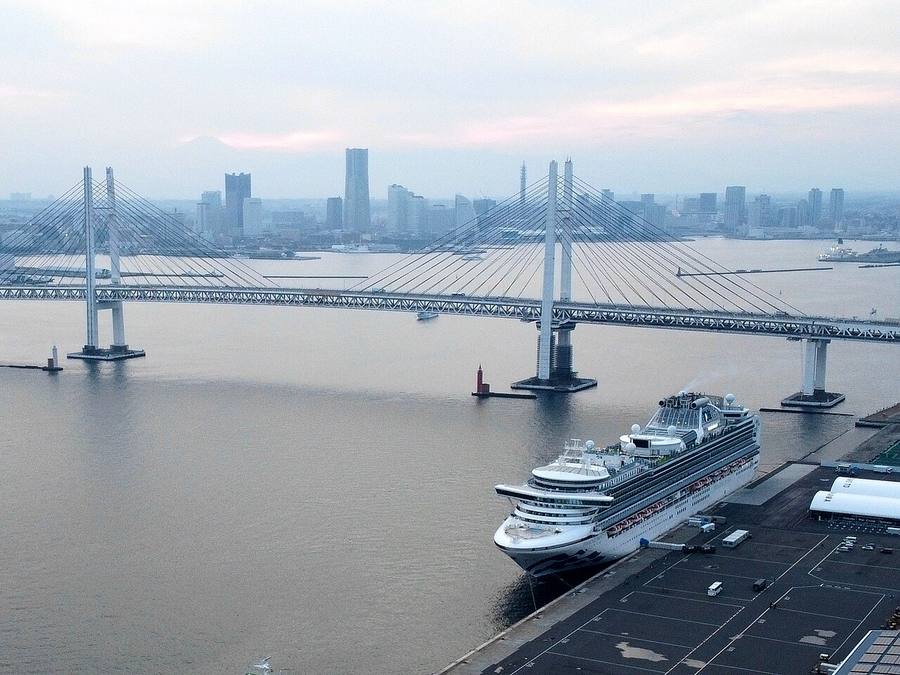
Of Tsang's four years as Director of Immigration, the episode official publicity cites most often came in February 2020, in the first weeks of the COVID-19 pandemic, when he personally led a team to Japan to coordinate the repatriation of Hong Kong passengers stranded aboard the Diamond Princess at Yokohama — an operation involving chartered flights and quarantine arrangements, executed by the Immigration Department. Pro-establishment media have cited it ever since as proof that he could get things done, and this page archives it on that basis, from official and multiple media reports. The other face of the tenure is the department's position during the 2019 anti-extradition movement. Immigration was not a front-line suppression force; its functions were port control and documents. But there were repeated reports of activists being stopped and questioned at boundary checkpoints during the movement, and the level at which those decisions were taken — front-line officers, the director's office, or higher — is established by no public document. This page therefore archives them at the level of tenure association, not as his personal orders. In August 2019, when an online rumour claimed he would join a general strike by taking leave on 5 August, the department issued a statement clarifying that he had been in hospital for treatment and had resumed duty — the earliest entry of his health in the public record, a distant foreshadowing of the health grounds on which he would resign seven years later. This page records the fact and draws no medical inference from it.
What changed his career was a personnel earthquake in April 2020. On 13 April 2020 the Hong Kong and Macao Affairs Office and the Liaison Office issued statements condemning legislator Dennis Kwok for filibustering the Legislative Council's House Committee. In the days that followed, the Constitutional and Mainland Affairs Bureau issued and then revised — including one overnight rewrite — its statements on whether the Liaison Office was bound by Article 22 of the Basic Law, ending with the position that the Liaison Office was not among the mainland departments covered by that article; the bureau's secretary, Patrick Nip, apologized publicly. Within the week, Carrie Lam reshuffled her cabinet. On 22 April 2020 the State Council appointed five new principal officials, and Tsang moved across from the Immigration Department to become Secretary for Constitutional and Mainland Affairs, with Nip transferred sideways to the Civil Service Bureau. Tsang thereby became the first secretary for constitutional affairs not drawn from the Administrative Officer grade. Hong Kong commentary and international media read the signal the same way: on the eve of the National Security Law, Beijing did not want a career administrator steeped in constitutional convention in that chair; it wanted a disciplined-services officer of unquestioned execution and loyalty to run the three most sensitive portfolios in the government — elections, the Basic Law, and relations with the mainland. Two months later his first signature task arrived.
4. The Anthem Law, and Defending the National Security Law (May–July 2020)
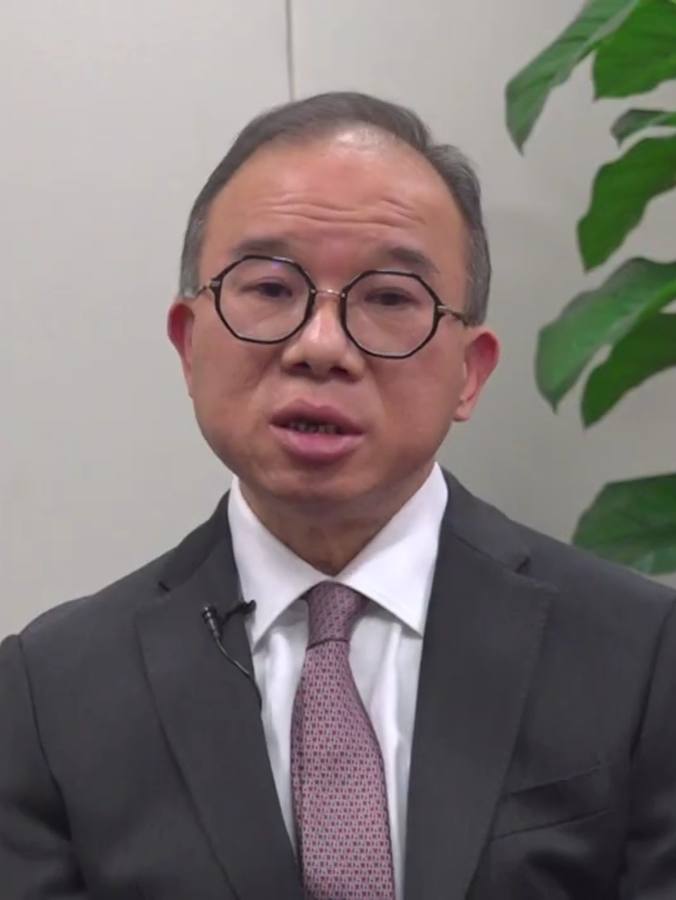
On Tsang's desk when he arrived sat a bill that had been stalled for more than a year: the National Anthem Bill. The mainland's National Anthem Law had taken effect in 2017 and been added to Annex III of the Basic Law; Hong Kong's local legislation, introduced in 2019, had been frozen by House Committee filibustering and the anti-extradition storm. Tsang took the bill forward, and on 4 June 2020 — the thirty-first anniversary of the Tiananmen crackdown — the Legislative Council passed the National Anthem Ordinance at third reading by forty-one votes to one, criminalizing insults to the anthem with up to three years' imprisonment; it took effect on 12 June. After the vote Tsang publicly urged residents to respect the anthem and commit no insulting acts. This page records the episode not only for its date. The anthem law was the first statute under his charge to draw the boundary of "respect for state symbols" in criminal penalties, and its legislative logic — a national law listed in Annex III, local enactment to follow, dissenting space compressed by procedure inside the chamber — became the fixed template with which he handled elections and oaths for the next five years.
On 30 June 2020 the NPC Standing Committee enacted the Hong Kong National Security Law and applied it the same day. From then on Tsang was one of the law's principal defenders at the constitutional level of the Hong Kong government. He said repeatedly in public that the law targeted only "an extremely small minority," that it had restored stability, and he supplied the same narrative frame for every measure that followed it — candidate vetting, oath requirements, electoral overhaul: first the "turmoil" of 2019, then the centre's restoration of order, then the SAR's duty to implement. In July 2022, appearing with the Hong Kong delegation before the United Nations Human Rights Committee as it reviewed Hong Kong's compliance with the International Covenant on Civil and Political Rights, he stated publicly that Hong Kong's democracy had taken "a quantum leap forward" since the handover — a sentence widely reported by Hong Kong Free Press and others, and now a standard exhibit in the international record of how Hong Kong officials describe the system to UN treaty bodies. The layering on his National Security Law role must be exact: he did not draft the law; it was drafted and imposed in Beijing. He was one of its chief interpreters and executors inside Hong Kong's constitutional machinery. That layer is not a small one, and this page does not shrink it.
5. Twelve Candidates Barred: the Vetting of July 2020
On 30 July 2020, one day before nominations closed for the seventh Legislative Council election, returning officers invalidated the nominations of twelve pro-democracy candidates: sitting legislators Alvin Yeung, Dennis Kwok, Kwok Ka-ki and Kenneth Leung; activists Joshua Wong and Ventus Lau; former journalist Gwyneth Ho; and district councillors Lester Shum, Tiffany Yuen, Fergus Leung, Cheng Tat-hung and Cheng Kam-mun. The returning officers' stated grounds included objection in principle to the newly imposed National Security Law, soliciting foreign interference in Hong Kong's affairs, refusing to accept China's exercise of sovereignty over Hong Kong, and pledging — should the pro-democracy camp win a legislative majority — to vote down government budgets and bills indiscriminately in order to force concessions. The Hong Kong government issued a statement the same day agreeing with and supporting the returning officers' decisions, and said it did not rule out further invalidations. The next day, 31 July, Carrie Lam announced that she was invoking emergency regulations to postpone the election for a full year, citing the pandemic.
This section contains the page's most important act of layering. Returning officers are nominally independent civil servants who sign their own rulings; they belong to the Registration and Electoral Office, which sits administratively under the Constitutional and Mainland Affairs Bureau, and the bureau is the policy bureau for elections. Tsang was the policy chief of the entire apparatus that made the July rulings function. But the public evidence supports the layer of "government endorsement plus policy-bureau superintendence," not the layer of "Tsang personally adjudicated each case": every ruling bears a named returning officer's signature and its own stated reasons. What can also be archived is the expansion of his role's practical reach. In earlier years, candidacy disqualifications had been episodic — Leung Tin-kei in 2016, Agnes Chow in 2018. In July 2020, twelve people were barred at once, four of them sitting legislators, and the grounds had widened from "supporting independence" to "opposing the National Security Law" and "pledging to veto budgets." That expansion of the screening boundary happened in the third month of his tenure. The following year it stopped being a matter of returning officers feeling their way case by case, and was written into a system — the subject of the oath and overhaul sections below.
6. The NPCSC Decision and Four Sitting Legislators Removed (November 2020)
After the election was postponed, an NPC Standing Committee decision of August 2020 allowed the sixth Legislative Council to sit on for at least a year, and the four barred incumbents initially kept their seats. On 11 November 2020 the NPC Standing Committee, acting at the Chief Executive's request, adopted its decision on the qualifications of Legislative Council members: a member who advocates or supports Hong Kong independence, refuses to recognize the state's sovereignty over Hong Kong, seeks foreign interference, or commits other acts endangering national security fails the legal requirements of upholding the Basic Law and bearing allegiance to the SAR, and — once so determined according to law — immediately loses the seat. The decision was applied the same day to Alvin Yeung, Dennis Kwok, Kwok Ka-ki and Kenneth Leung, and the Hong Kong government announced their immediate disqualification. Of the nineteen remaining pro-democracy legislators, fifteen announced their resignations in protest; Pierre Chan and Cheng Chung-tai stayed. From that point the Legislative Council had, in substance, no opposition.
Tsang's place in this episode must be written to the evidence. The decision was made by the NPC Standing Committee; the request was made by the Chief Executive; the announcement was the Hong Kong government's as a whole. No public document shows the decision's text emerging from his bureau. But the Constitutional and Mainland Affairs Bureau is the policy bureau for the Basic Law and for legislators' qualifications; Tsang defended the decision in public, and in the legislative work that followed he converted its qualification logic into standing law. The chain of 11 November 2020 therefore reads: Beijing set the rule, the Chief Executive requested it, the government announced it, and the constitutional bureau took over the task of turning a one-off decision into daily machinery. Hong Kong never again saw the drama of members elected and then expelled, and the reason was not leniency: screening had been moved forward to the nomination stage, so that anyone liable to expulsion would, under the new system, never reach a ballot paper at all. Tsang's name stands in the first few lines of the list of that machine's designers.
7. Warnings Over the Primaries, and "Pay the Price": the Case of the 47 (2020–2021)
On 11 and 12 July 2020 the pro-democracy camp held primary elections for the Legislative Council, in which more than 600,000 people voted; the plan was to win a legislative majority and use the power to veto the budget to press the government over the movement's five demands. Around the primaries, Tsang warned publicly that organizing or taking part in them could breach the National Security Law — in particular, that the goal of paralysing the government by rejecting its budget could amount to subversion under the law. On 6 January 2021 the police National Security Department arrested fifty-three primary organizers and candidates for suspected conspiracy to subvert state power; forty-seven of them were later charged, in the case that drew worldwide attention as the Hong Kong 47. In the days after the arrests Tsang said publicly that those involved had crossed a red line and had to pay the price for it — a remark recorded by RTHK and other outlets. The layering for this thread is as follows. The arrests and prosecutions were decisions of the police National Security Department and the Department of Justice, not of the Constitutional and Mainland Affairs Bureau. Tsang's personal record is that, months before the arrests, he had used his office to characterize the primaries as potentially criminal under the National Security Law, supplying the constitutional-level public rationale in advance of enforcement; and that after the arrests he underwrote the operation in the language of red lines and prices. The warning before and the endorsement after both came from his own mouth, on the public record. Neither is inference.
8. The Oath Machine: the Public Offices Bill, District Councillors, and Fifty-Five Seats Lost (2021)
In 2021 Tsang's bureau brought the Public Offices (Candidacy and Taking Up Offices) (Miscellaneous Amendments) Bill to the Legislative Council. It wrote Article 6 of the National Security Law into local law: the oath obligation was extended from the Chief Executive, principal officials, judges and legislators to district councillors, and the bill introduced positive and negative lists — the negative list specifying conduct whose presence meant a person could not be treated as genuinely upholding the Basic Law and bearing allegiance to the SAR. During the council's scrutiny of the bill he made the statement for which this legislation is remembered internationally: a person cannot say that he is patriotic while not loving, or not respecting, the leadership of the Chinese Communist Party — it does not make sense. Spoken publicly in February 2021, it was the first time a Hong Kong official had stated the test of "patriotism" expressly in terms of love for the Communist Party's leadership, and CNN and other international outlets built analysis around it. The bill passed the Legislative Council in May 2021 and took effect. The oath administrator for district councillors was the Secretary for Home Affairs, Caspar Tsui, not Tsang himself — this page states the division of labour as it was. But the bill's design, the lists' standards and the policy exposition were his bureau's work and his voice.
Before and around the oath arrangements, large numbers of the district councillors elected in the democratic landslide of 2019 chose to resign. In that election the pro-democracy camp had won more than 380 of the 452 seats. By July 2021, amid reports that councillors whose oaths were ruled invalid might be made to repay their salaries and allowances back to the start of their terms, resignations came in a wave within a single week. Tsang said publicly at the time that the government was studying whether those who resigned should also have to return public funds — a statement that was itself one of the pressures behind the wave, as contemporaneous reporting noted. Between September and October 2021, district councillors were sworn in four batches. The oath administrator doubted the validity of a number of oaths, sought further information, and in the end a total of fifty-five district councillors were ruled to have taken invalid oaths and lost their seats immediately. Britain's foreign secretary, Liz Truss, in a statement in October 2021, used exactly these figures — fifty-five district councillors disqualified and over 250 pressured to resign — and noted that this was the first time such action had been taken against democratically elected district councillors in Hong Kong. The District Councils returned by a 71 percent turnout in 2019 were thereby reduced, on the pro-democracy side, to almost nothing. The archival conclusion runs on two layers: the individual oath rulings were made by the oath administrator; but turning the oath into a clearing machine — complete with salary-clawback deterrence, a resignation wave and batch disqualifications — was a matter of legal design and policy responsibility belonging to the Constitutional and Mainland Affairs Bureau and to Erick Tsang.
9. The 2021 Electoral Overhaul: Design, the Vetting Committee, and Blank Ballots (March–December 2021)
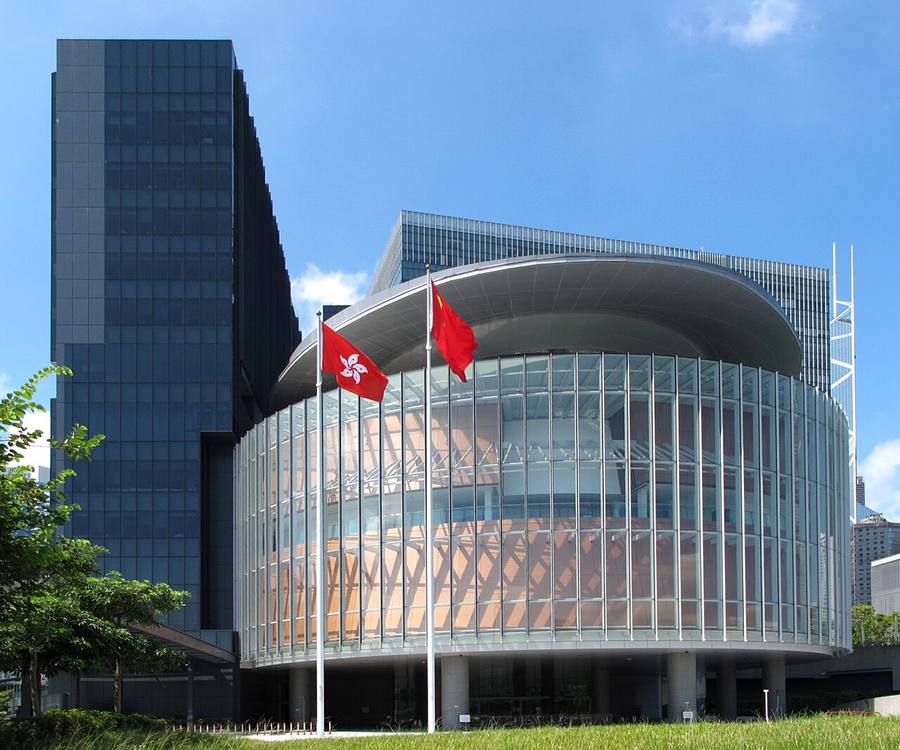
On 11 March 2021 the National People's Congress adopted the decision on improving Hong Kong's electoral system; on 30 March the NPC Standing Committee amended Annexes I and II of the Basic Law. The core numbers were these: the Legislative Council grew from 70 to 90 seats, but directly elected geographical seats were cut from 35 to 20; forty new seats were returned by a 1,500-member Election Committee; the functional constituencies kept 30. Every candidate now had to pass a new Candidate Eligibility Review Committee (CERC), which decides on the basis of an opinion issued by the national security committee founded on the police National Security Department's review — an opinion expressly placed beyond judicial review. The local legislation, the Improving Electoral System (Consolidated Amendments) Ordinance 2021, passed the Legislative Council on 27 May 2021 and took effect on 31 May: eighty-one days from Beijing's decision to completed local law, with the responsible bureau being Tsang's. He meanwhile led a "full-scale" publicity campaign for the overhaul, spending about HK$2.5 million on promotional videos in under two weeks. He and the Secretary for Justice also publicly explored legislating against blank ballots; the provision that finally landed made it a criminal offence, punishable by up to three years' imprisonment, to incite others to cast blank or invalid votes or to boycott an election.
On 6 July 2021 the first CERC was appointed: Chief Secretary John Lee as chairman; three official members — Tsang, Secretary for Home Affairs Caspar Tsui and Secretary for Security Chris Tang; and non-official members Elsie Leung, Rita Fan and Lawrence Lau. Tsang thus became not merely the overhaul's legislative promoter but a member of the vetting body itself. Whether a candidate's name could appear on a ballot now passed through a committee on which he sat, behind which stood a national-security opinion that could neither be published nor appealed. The machine's output became visible through the rest of the year: the Election Committee subsector elections of 19 September and the Legislative Council election of 19 December, in which no major pro-democracy party stood, and in which the effective boundary of the candidate lists was drawn by those screened out and those who judged the attempt hopeless. Before the December poll he also wrote, as secretary, to The Wall Street Journal, warning that an editorial urging Hong Kong voters to cast blank ballots in protest might itself incite offences under the new law — a Hong Kong minister's letter to an American newspaper, displaying the new statute's extraterritorial deterrent posture to the international press. This page does not dilute his responsibility for the overhaul by layering: the decision and the annex amendments were made in Beijing, and that is a fact; but the drafting and passage of the local law, the publicity machine, the incitement provision on blank votes, and a seat on the vetting committee all bear his name, and that is equally a fact.
10. Thirty Point Two Percent: the Post-Overhaul Elections and the Defence of Turnout (2021–2022)
On 19 December 2021 the first Legislative Council election under the new system was held. Just over 1.35 million electors voted; turnout in the geographical constituencies was 30.2 percent, the lowest since direct elections to the legislature began — this despite an unprecedented government mobilization that included free public transport and polling stations at the border. Pro-establishment candidates took eighty-nine of the ninety seats; the exception was Tik Chi-yuen, who described himself as non-establishment. The turnout was barely half of 2016's 58.28 percent. Tsang's public response after the election was that figures alone should not be the measure of an election and that the legislature under the new system was more representative; on other occasions he insisted that Hong Kong's democratic development under the new system was not a retreat. On 8 May 2022 John Lee, the sole candidate, was elected sixth Chief Executive by the Election Committee with 1,416 votes, in an election whose administration likewise sat with Tsang's bureau. Within two years he had run three elections under the new rules — Election Committee, Legislative Council, Chief Executive — and "patriots administering Hong Kong" had passed from slogan to routine procedure.
The turnout line is archived here by numbers, not by anyone's rhetoric. Geographical-constituency turnout at Legislative Council elections: 58.28 percent in 2016, 30.2 percent in 2021. District Council turnout: 71.2 percent in 2019, 27.54 percent in 2023 — later officially revised to 27.59 percent. Every election of Tsang's tenure landed at or below the low thirties, and at no point in public did he acknowledge any connection between the turnout collapse and the vetting system; his fixed position was that the new system delivered better-quality democracy and better governance. This page records his defence as he made it and the figures as they stand; the tension between the two is the archive's own conclusion and needs no adjectives from us. Two smaller entries complete the official portrait of the tenure. On 25 November 2020, during the Chief Executive's Policy Address, cameras caught him asleep in the Legislative Council chamber; two days later he explained that medication had made him drowsy. And in an interview with the pro-Beijing Bauhinia Magazine after he became secretary, a photograph of Xi Jinping occupied a prominent place in his office in the published photographs; he denied that the portrait was a deliberate display of loyalty. Neither episode is of great weight; both belong to the construction of a "patriot" public persona, and both are archived here from public reporting.
11. The District Councils Remade, and the Late Tenure (2023–2025)
In May 2023 the government announced the District Council overhaul, again with the Constitutional and Mainland Affairs Bureau among the responsible bureaux. Of the councils' 470 seats, directly elected seats were cut from the 452 of 2019 — when nearly all were directly elected — to 88; the remainder were filled by 179 members appointed by the Chief Executive, 176 returned by district-committee electoral colleges, and 27 ex-officio members. Candidates additionally needed nominations from district-committee members and had to pass eligibility vetting. Promoting the legislation, Tsang said publicly that in 2019 anti-China forces bent on destabilizing Hong Kong had used loopholes in the system to "swindle" their way to election, and he rejected the description of the new system as democratic backsliding. The amendment ordinance passed in July 2023. On 10 December 2023 the first District Council election under the new system drew a turnout of 27.54 percent — the lowest in District Council history, more than forty-three points below 2019's 71.2 percent — on a day when the electronic poll-register system failed and polling had to be extended by an hour and a half. In the same period he brought forward legislation criminalizing insults to the regional flag, including insults published online, introduced in July 2023 on the stated ground that citizens should consciously respect and cherish the flag.
In his tenure's last two years the bureau's centre of gravity shifted toward Greater Bay Area integration and mainland-facing liaison, and Tsang led repeated delegations to Beijing and promotion visits abroad for the Bay Area. His final notable piece of legislation ran in the opposite direction from the rest of his record: to comply with the Court of Final Appeal's judgment in the Sham Tsz Kit case, his bureau introduced a framework bill for the registration of same-sex partnerships. On 10 September 2025 the bill was voted down by a large margin in the "patriots-only" Legislative Council — the first government bill the overhauled legislature had ever rejected — and a pro-establishment union leader said publicly that Tsang had privately begged for his support. This page records the episode because it marks his position from the reverse side: he was the faithful operator of an executive machine, and even the minimum compliance a court judgment required had to be carried, and lost, by him before the establishment camp. On 7 December 2025 he ran his last election — the eighth Legislative Council election, held on schedule eleven days after the Wang Fuk Court fire in Tai Po of 26 November, which killed 159 people. Geographical turnout was 31.9 percent, and the registered electorate had fallen for a fourth consecutive year, to 4.13 million. He later explained that it was after completing this election's "mission" that he decided to tender his resignation.
12. Leaving on Health Grounds: 27 January 2026
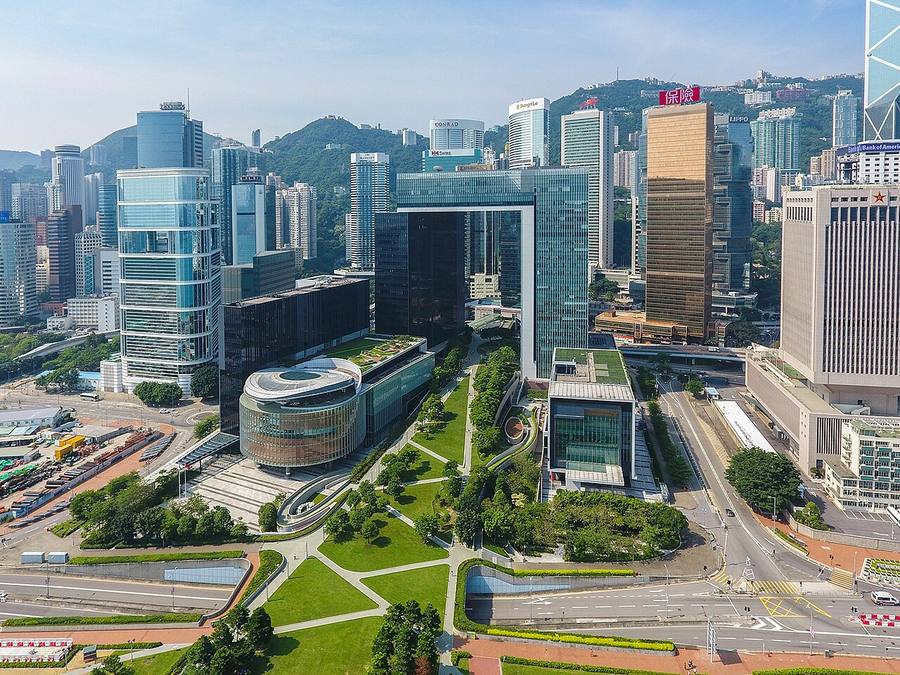
In January 2026 Ming Pao reported on its front page that Tsang might leave his post, and the rumours ran for weeks. On the morning of 27 January 2026 Xinhua carried the State Council's decision: on the recommendation of Chief Executive John Lee, Erick Tsang was removed from the post of Secretary for Constitutional and Mainland Affairs. Lee and Tsang then met the media together. Lee said Tsang had earlier tendered his resignation on health grounds; that after discussion he had recommended the removal to the central authorities; and he thanked Tsang for almost forty years of service, crediting his bureau with the successful conduct of multiple elections. Tsang explained his own position: his prostate-specific antigen level had remained persistently high — above 11 — and had not improved despite ultrasound examinations, a biopsy and medication; after consulting his family and doctors he had decided to stop work, reduce stress and rest; and he had reached the decision after completing the Legislative Council election of December 2025. Under Secretary Clement Woo acted as secretary from that day. Speculation that "health reasons" might not be the whole story circulated, then as always in Hong Kong politics. This page's position is: the medical detail he stated publicly is specific, and the fact of his statement is verifiable; the official procedure — resignation tendered, Chief Executive's recommendation, State Council removal — is fully documented; and as to whether any other political factor was involved, this page found no reliable public evidence as of verification, records the matter as no public record, adopts no rumour, and puts no ironic quotation marks around the words "health reasons."
His position since leaving is likewise recorded as it stands. As of this page's verification in November 2026, Tsang has taken no new public office or public-body post, and there has been no public reporting of a further deterioration in his health. A public career of almost forty years — Immigration Department in 1987, its director in 2016, secretary in 2020 — closed on that January day. One family fact belongs in the archive: his wife, Louise Ho Pui-shan, was appointed Commissioner of Customs and Excise in October 2021, the first woman to head Hong Kong Customs; husband and wife stood simultaneously at the top of the disciplined services and the principal officials, a pairing uncommon in post-handover Hong Kong.
13. Sanctions Status, Verified: He Was on the First List, of 7 August 2020
This section verifies, name by name, the fact most often garbled in accounts of him. On 14 July 2020 the US President signed Executive Order 13936. On 7 August 2020 the Treasury Department's Office of Foreign Assets Control sanctioned eleven Chinese and Hong Kong officials for undermining Hong Kong's autonomy and restricting its people's freedoms of expression and assembly. The eleven were Carrie Lam, Chris Tang, Stephen Lo, John Lee Ka-chiu, Teresa Cheng, Erick Tsang, Xia Baolong, Zhang Xiaoming, Luo Huining, Zheng Yanxiong and Eric Chan. Tsang is on that list; the Treasury release identifies him as Secretary for Constitutional and Mainland Affairs, the office maintaining relations between the HKSAR government and the mainland, and notes that he had assumed the post in April. The legal effect of designation is that his assets within US jurisdiction are blocked and US persons are prohibited from dealing with him. His public response at the time, as reported by The Standard and other Hong Kong media, was that he felt "nothing at all" about the sanctions. On 14 October 2020 the State Department, in its report to Congress under section 5(a) of the Hong Kong Autonomy Act, named ten persons as materially contributing to China's failure to meet its obligations under the Joint Declaration and the Basic Law; Tsang was among them again — the ten being the August eleven minus former police commissioner Stephen Lo.
One specific correction is required, because the two batches are often conflated: Tsang is sometimes assigned to the additional designations of 9 November 2020. Checked name by name, the four officials added on 9 November 2020 were Deng Zhonghua, deputy director of the Hong Kong and Macao Affairs Office; Li Jiangzhou, deputy director of the Office for Safeguarding National Security; Edwina Lau, head of the police National Security Department; and Steve Li Kwai-wah, a senior superintendent of that department. None of the four is Erick Tsang. Blurring the two batches matters: it would move his designation three months later than it happened, and it would erase the salient fact that he was named a mere week after the twelve candidacy disqualifications of 30 July and five weeks after the National Security Law took effect, with the stated grounds tied directly to his tenure of the bureau responsible for elections and constitutional affairs. As of this page's verification he remains on the US sanctions list, with no public record of delisting; the United Kingdom and the European Union have not imposed equivalent personal sanctions on him, and this page records the two positions separately.
14. Verification and Sources
The facts on this page were cross-checked across multiple sources. Life and posts: the English Wikipedia entry on Erick Tsang — born 1 September 1963; New Asia College, Chinese University of Hong Kong, journalism and communication, class of 1986; joined the Immigration Department in 1987; Director of Immigration from 5 April 2016; Secretary for Constitutional and Mainland Affairs from 22 April 2020 — together with the Hong Kong government announcement of 5 April 2016 of the Director of Immigration appointment and the Chinese University New Asia College's 2022 profile of alumni in office, which gives the sequence assistant director 2012, deputy director 2014, director 2016; the three agree. One point must be stated expressly: the original brief for this page assigned Tsang a directorship of immigration in 2011–2016 and the directorship of the Chief Executive's Office in 2017–2020. Checked against the record, both posts belong to Eric Chan Kwok-ki — Director of Immigration from March 2011 to April 2016, and Director of the Chief Executive's Office from July 2017. Tsang never held the Chief Executive's Office post; this page rewrites the career accordingly and flags the correction in section 2. The anthem law: Xinhua and State Council Information Office reporting of 4 June 2020 — forty-one votes in favour, one against, Tsang stating a 12 June commencement — and the National Anthem Ordinance's legislative record. The twelve disqualifications: the English Wikipedia entry on the 2020 Legislative Council candidates' disqualification controversy, for the date of 30 July 2020, the twelve names and the grounds, together with the Xinhua report and the Hong Kong government statement of the same day. The four legislators and the resignations: the full text of the NPC Standing Committee decision of 11 November 2020, published by the Hong Kong government the same day, and Human Rights Watch's statement of 12 November 2020, for the four removals and the fifteen announced resignations. The primaries and the Hong Kong 47: RTHK's report of Tsang's statement that those involved must pay the price for crossing the red line, and the South China Morning Post's reporting of the January 2021 arrests. Oaths and district councillors: the South China Morning Post's 2021 reporting on the Public Offices Bill's scrutiny — Tsang on immediate determinations by oath administrators and on the study of repayment by those resigning; the Hong Kong government's September–October 2021 announcements of invalid oaths; the UK Foreign Office statement of October 2021, for fifty-five disqualified and over 250 pressured to resign; and CNN's February 2021 analysis of the loyalty oath's requirement of love for the Communist Party's leadership. The electoral overhaul: the NPC decision of 11 March 2021 and the amended Annexes; the Hong Kong government's announcement of 6 July 2021 of the Candidate Eligibility Review Committee — John Lee as chairman, Tsang among the three official members; Electoral Affairs Commission and Legislative Council figures for December 2021 — turnout of 30.2 percent and some 1.35 million voters; and Reuters' report of 20 December 2021. The District Council overhaul: Agence France-Presse's December 2023 reporting — directly elected seats cut from 452 to 88, turnout of 27.54 percent — and Hong Kong Watch's statement of December 2023. The 2025 Legislative Council election: the Hong Kong government's announcement of 8 December 2025 of a 31.9 percent turnout, and Reuters reporting, carried by financial media, on the election proceeding after the Tai Po fire. The departure: Hong Kong government news of 27 January 2026 — State Council approval of the removal, John Lee's statement that Tsang had resigned on health grounds, Clement Woo acting — and the business-radio reporting of Tsang's own account of persistently high PSA values and of his decision, taken after completing the December 2025 Legislative Council election, to tender his resignation. Sanctions: the US Treasury press release of 7 August 2020, with the complete list of eleven, Tsang sixth, also preserved in the Federal Reserve's archival copy; the Federal Register record of the State and Treasury actions of 9 November 2020 for the four additional designees — Deng Zhonghua, Li Jiangzhou, Edwina Lau and Steve Li; and law-firm client alerts by Morgan Lewis and Hogan Lovells on the State Department's Hong Kong Autonomy Act report of 14 October 2020 naming ten persons.
Two corrections and one unverified item are recorded against the original brief. First, the career correction: the immigration directorship ran from 5 April 2016 to 22 April 2020, not 2011–2016; the Chief Executive's Office directorship belongs to Eric Chan and has been removed from Tsang's record, with the distinction flagged in the text. Second, the departure-date correction: the brief's "removed in July 2025" is not borne out; checked against the government news service and multiple media, Tsang was removed with State Council approval on 27 January 2026, having resigned on health grounds, the stated reason — his own — being prostate health indicators; this page writes 27 January 2026. Third, the unverified item: the English Wikipedia entry names Janice Tse as his successor as secretary, while the government's 27 January 2026 announcement records Clement Woo as acting secretary and the Chief Executive as seeking a successor; the two may be sequential, but this page could not independently verify a substantive appointment gazette, and the item is therefore marked single-source and unverified in the data box. The following were not supported by sufficient public evidence and are not stated as fact anywhere on this page: that Tsang personally adjudicated each of the twelve candidacy disqualifications — the public evidence reaches returning officers' individual rulings, the government's public endorsement, and his bureau's policy responsibility, and no further; that any political factor beyond the stated health grounds lay behind his removal — no public evidence; and that the Immigration Department, under his personal direction, intercepted named activists — no public document. Each is flagged at its place in the text with its evidential grade. This page will be revised as new archives and new lists are published.
Contact: endccpworld@proton.me