
The Chen Yun Family: The Public Record of Five Children — Three Ordinary Careers and One Finance Line
A family piece in the Red Families series: Chen Yun and Yu Ruomu had five children — Chen Weili, Chen Yuan, Chen Weihua, Chen Weilan and Chen Fang. One reached vice-state rank and ran the China Development Bank for fifteen years; the other four's public traces run through venture capital and a human-resources state enterprise, a middle-school classroom, a national school of administration, and an industrial company. This piece checks the public record person by person: first the list is nailed down, then the controversies and the responses are written separately.
Contents
- I. The List First: Five Children and Two Misattributions That Must Be Excluded
- II. Family Background: Chen Yun and Yu Ruomu (background only)
- III. Eldest Daughter Chen Weili: From Venture Capital to the CIIC Group
- IV. Eldest Son Chen Yuan: The Finance Line in Brief (details in the CDB deep-dive)
- V. Second Daughter Chen Weihua: A Lifelong Middle-School Teacher
- VI. Third Daughter Chen Weilan: Vice President of the National Academy of Governance
- VII. Youngest Son Chen Fang: General Manager of Zhongshan Industrial
- VIII. The Third Generation: Only One Son and One Daughter of Chen Yuan Entered Published Reporting
- IX. Controversies and Responses: Institutional Disputes, Subordinates' Cases and Conflict-of-Interest Questions
- X. The Boundary of the Evidence: What This Piece Can and Cannot Prove
- Material Gaps (stated faithfully)
- Source List
To write about the Chen Yun family, the first task is not storytelling but checking the list. At least four outsiders have been stuffed into this family in online genealogies and social-media articles: Chen Xiaolu, Chen Xiaotong, Liu Yuan, and even a "Chen Yifan" for whom no record exists. A name one character off, a generation one step off, and the pieces assemble into a false family tree. This piece follows the practice of the other family pieces in this series: first the five children's list is nailed down from official Party-history material and mainstream reporting, the misattributions are excluded one by one, and only then is each person's public career recorded. Readers will find a marked gap between this family's public picture and the blanket label of "red nobility": one vice-state-level finance official, one state-enterprise general manager, one middle-school teacher, one vice-ministerial-rank academy administrator, and one industrial-company general manager — of five lines, only the finance line grew to great scale. This piece writes all five lines in full: the thick ones thick, the thin ones honestly thin.
I. The List First: Five Children and Two Misattributions That Must Be Excluded
The confirmed finding: Chen Yun and Yu Ruomu had five children, three daughters and two sons — eldest daughter Chen Weili, eldest son Chen Yuan, second daughter Chen Weihua, third (youngest) daughter Chen Weilan, and youngest son Chen Fang. The Central Party History and Literature Research Institute's Chen Yun's Family Style (2020) opens with the sentence: "Chen Yun had five children: eldest daughter Chen Weili, eldest son Chen Yuan, second daughter Chen Weihua, youngest daughter Chen Weilan, second son Chen Fang." The Beijing News' "Political Affairs" column in its long 2016 profile, China News Service's 2010 family report, and the family-style material republished by the Hunan discipline-inspection authorities' Sanxiang Fengji site give an identical list in identical order — four sources in mutual corroboration. (Sources 1, 5, 13, 14)
Exclusion one: Chen Xiaolu was not Chen Yun's son. Chen Xiaolu (1946–2018) was the third son of Marshal Chen Yi and served as a director of institutions including Anbang Insurance. Circulating accounts that write his name as "Chen Xiaolu" in a variant form and hang it on Chen Yun are a same-surname, same-generation misattribution; the family section of the Chen Yi entry is explicit, and this piece draws a clean line, adopting none of his material as Chen Yun family fact. (Source 36) Exclusion two: Chen Xiaotong was not Chen Yun's son. Chen Xiaotong was a son of Chen Xitong, the former Beijing Party secretary; he held posts including deputy general manager of the Beijing New Century Hotel, and in the 1990s was sentenced to twelve years' imprisonment for bribery and embezzlement of public funds. Chen Xitong and Chen Yun differ by a single character — the most common source of confusion — and attaching Chen Xiaotong's criminal record to the Chen Yun family is a landmine this piece defuses first. (Source 38) Further exclusions: no reliable source supports "Chen Yifan was a child of Chen Yun" — the namesakes found in this check are a sculptor, a former vice minister of light industry, and a contemporary scholar, none connected to the family; Liu Yuan was a son of Liu Shaoqi and is unrelated; and "Chen Xiaozhen was Chen Yuan's son" has no record at all — Chen Yuan's son in reliable reporting is Chen Xiaoxin / Chen Xiao Xin (Section VIII), and the two names must not be conflated.
Two institutional misattributions are also corrected in advance. The president of the China Association for International Friendly Contact is Chen Yuan, not Chen Weili: Chen Yuan has held the association's fifth-term presidency since May 2016, while Chen Weili's institutions were the China New Technology Venture Investment Corporation and the China International Intellectech Corporation (CIIC) — two similarly named organisations, and the source of the mix-up. The claim that "Chen Yuan served as a vice chairman of the Boao Forum for Asia" found no reliable record in this check: his name does not appear on the forum's published lists of past and present chairmen and vice chairmen, and reporting establishes only that he attended Boao events in other capacities. That claim is not written as fact and is registered in the material gaps.
II. Family Background: Chen Yun and Yu Ruomu (background only)
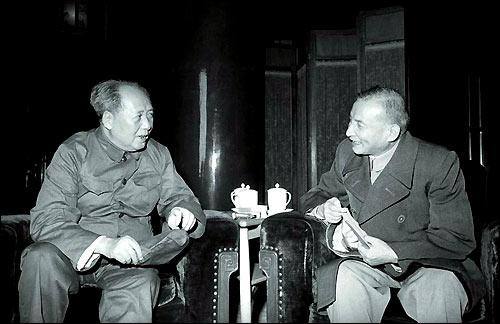
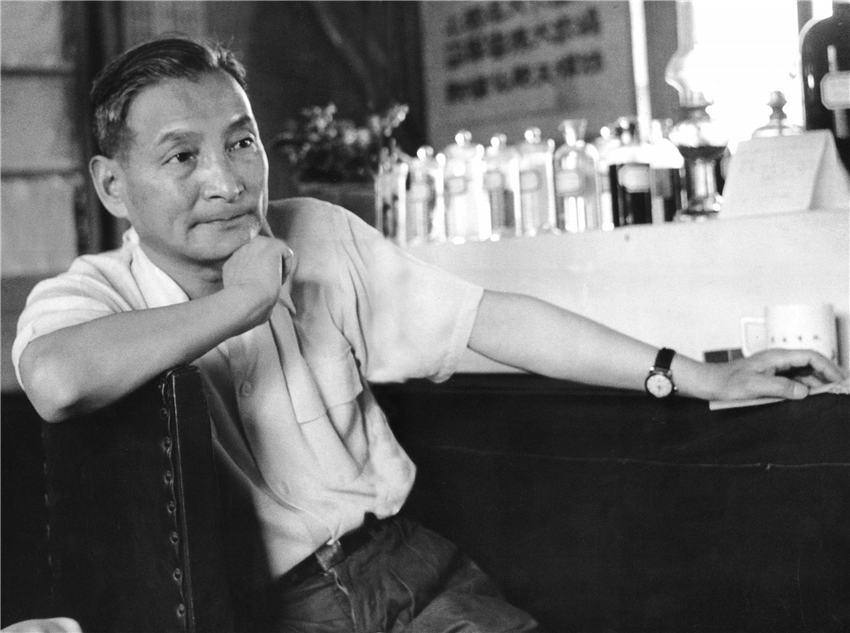
Chen Yun (13 June 1905 – 10 April 1995), born in Qingpu, Jiangsu (now Qingpu, Shanghai), is officially characterised as one of the founders of China's socialist economic construction; he served successively as vice premier of the Government Administration Council and head of its Finance and Economics Commission, vice chairman of the Party Central Committee, first secretary of the Central Commission for Discipline Inspection, and chairman of the Central Advisory Commission, and Bloomberg and other foreign media called him the Mao era's "economic tsar." His wife Yu Ruomu (1919–2006) married him in 1938, worked in nutrition after 1949, and was known as a noted nutritionist; the couple had five children (Sources 2, 3, 16, 19). This piece gives only that much background: to understand the five children's destinations, one structural fact suffices — they entered the finance-and-economics system and its periphery, not the military or the diplomatic service. The eldest son's long tenure at a policy bank, the eldest daughter's move into the earliest venture-capital firm and a human-resources state enterprise, and the youngest son's industrial company all lie on that line. Official family-style materials repeatedly record Chen Yun's house rules for his children — never ride in his car, never touch the documents he read, "not one cent of public money may be touched" (Sources 1, 5). Those words are part of the official commemorative narrative; this piece reproduces them with their nature stated, and treats them as neither proof nor disproof of the children's actual conduct. Official material is largely silent on the operating details of the institutions the children worked in, and that silence is recorded as it stands.
III. Eldest Daughter Chen Weili: From Venture Capital to the CIIC Group
Chen Weili is Chen Yun's eldest daughter. Her birth year appears only on low-authority aggregator sites and is not adopted as fact here; only her position as eldest daughter is stated (Source 1). Her verifiable career has only two stations, both in mainstream sources: first, deputy general manager of the China New Technology Venture Investment Corporation (Zhongchuang) — one of China's earliest venture-capital institutions, founded in the 1980s; second, general manager and Party secretary of the China International Intellectech Corporation (CIIC) (Source 5). The "Development History" page of the CIIC Group's official website preserves several contemporaneous entries in corroboration: Chen Weili appears in a 1989 photograph of CIIC's second leadership team; a 1991 entry records "Comrade Chen Yun inscribing a book for Comrade Chen Weili, then a CIIC leader"; a 1992 entry records "CIIC General Manager Comrade Chen Weili visiting ICI in Britain"; and in 2003 she signed an agreement on CIIC's behalf (Source 9). The Wikipedia entry on Chen Yun also calls her "chairman of the CIIC Group," which does not fully match the Beijing News and CIIC website wording of "general manager." This piece follows the Beijing News plus CIIC website wording — general manager and Party secretary — and marks the "chairman" version as a divergence of wording, not a settled fact.
After retirement, Chen Weili's public activity has consisted mainly of commemorative work for her father, all of it on official record: in a June 2015 interview she spoke of how her father's "not one cent of public money may be touched" had shaped her company management (Source 5); on 19 December 2019 she spoke, as "Chen Yun's eldest daughter and an adviser to the Chen Yun Thought and Life Research Society," at the "Chen Yun and the Commercial Press" seminar and the opening of the "Chen Yun's Reading Life" photographic exhibition (Source 10); on 24 May 2014 she travelled with her brother Chen Fang to Guang'an, Sichuan (Source 5); and in June 2025, at the flower-basket ceremony marking the 120th anniversary of Chen Yun's birth at the Chen Yun Memorial Hall in Qingpu, Shanghai, official reporting listed "Chen Yun's relative Chen Weili" stepping forward to straighten the basket's ribbons — her most recent verifiable public record (Source 11). Of Chen Weili's spouse and children there is no reliable public record. Circulating claims such as "Chen Weili's daughter Chen Yixuan" and "Chen Xiaodan was Chen Weili's daughter" are either sourceless or conflict with Bloomberg's reporting and Tatler's profile page (Chen Xiaodan was Chen Yuan's daughter); none is adopted, and all are registered in the material gaps. The further claims that she studied economics at Stanford from 1983 and co-founded the new-technology investment company in 1986 appear in this check only in blog-repost material of low authority, with no mainstream corroboration, and are likewise not written as fact.
IV. Eldest Son Chen Yuan: The Finance Line in Brief
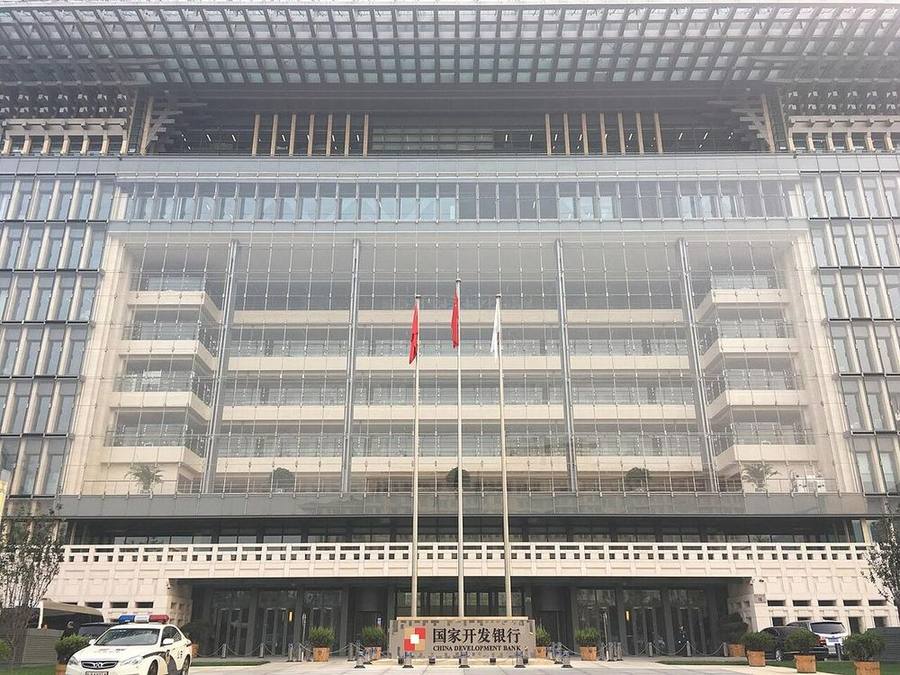
Chen Yuan, born in January 1945 in Qingpu, Jiangsu (now Shanghai), is Chen Yun's eldest son, the only one of the five children to reach vice-state rank, and the member of this family with by far the thickest record (Sources 4, 5). His main line, in brief: he studied in the Automatic Control Department of Tsinghua University from 1964 to 1970, then worked as a technician at the No. 703 Factory in Hunan and in units of the aerospace ministry; he graduated in 1981 from the Graduate School of the Chinese Academy of Social Sciences with a master's degree in economics; from 1982 to 1988 he worked in Beijing, including as Party secretary of Xicheng District and as a member of the Beijing Municipal Party Standing Committee; from 1988 to 1998 he spent ten years as a deputy governor of the People's Bank of China; in March 1998 he moved to the China Development Bank as its president, becoming its chairman after the bank's 2008 shareholding reform, and stepped down in April 2013 — fifteen years at the CDB's head in all; from March 2013 to March 2018 he was a vice chairman of the 12th National Committee of the CPPCC; from March 2016 he has chaired the Silk Road Planning and Research Center, and from May 2016 he has been president of the China Association for International Friendly Contact (Sources 4, 5, 8, 26, 27). His twenty-five years in the financial system — ten at the central bank and fifteen at the CDB — made him a core sample of Bloomberg's 2012 investigation of the descendants of the "Eight Elders": Bloomberg reported that the state enterprises run by just three men — Wang Zhen's son Wang Jun, Deng Xiaoping's son-in-law He Ping, and Chen Yuan — held combined assets of about US$1.6 trillion in 2011 (Source 19).
The detail of those fifteen CDB years — the affirmative narrative of a non-performing loan ratio cut from 32.6 percent to below 1 percent, the controversy over the "Wuhu model" and local-government financing vehicles, the reporting that the bank's assets overtook the World Bank's, and the time-line separation of subordinates' and successors' cases — is extensive, and this piece deliberately gives it in brief only. The full archive is this series' companion deep-dive, "Chen Yuan and the China Development Bank", and is not repeated at length here. Only two points directly bearing on the family piece are pinned down. First, every step of Chen Yuan's career is checkable against his official CV (Source 4). Second, the 2018 report of the U.S.–China Economic and Security Review Commission described the China Association for International Friendly Contact, of which he is president, as an organisation with a dual intelligence-collection and influence role — that is a U.S. government body's characterisation; no point-by-point public response from Chen Yuan or the association was found in this check, so this piece can cite it only as "so described in a U.S. report," never as this site's own conclusion.
V. Second Daughter Chen Weihua: A Lifelong Middle-School Teacher
Chen Weihua, Chen Yun's second daughter, followed the most "ordinary career" of the five children, and her record is relatively complete, drawn throughout from Party-history and discipline-inspection family-style materials (Sources 12, 13, 14, 15). During the Cultural Revolution she taught for about ten years as a primary-school teacher in rural Huairou, Beijing; she joined the Party in October 1974 and was named an outstanding teacher by the Huairou County Education Bureau in 1975. After the college entrance examination was restored in 1977 she entered the History Department of Beijing Normal University — when she asked her mother to find her a tutor for the examination preparations, her father wrote back that this was called "using the back door" and was not permitted, a detail on which multiple sources agree. On graduating in 1982 she was assigned to the Ministry of Personnel, then seconded to the Radio and Television Ministry for Party rectification work, by which time she was already a deputy-division-rank cadre. In 1985 she returned to her alma mater, the Experimental High School attached to Beijing Normal University, as a history teacher, and stayed until retirement. The materials give the reason concretely: her father, learning that primary and secondary schools lacked teachers and that normal universities struggled to recruit, urged his normal-university-graduate daughter to "return to the ranks" of teaching, and she herself learned from her old school's principal that its history section was short-handed; at the school she taught successive graduating senior classes, and her students called her "Teacher Chen" (Sources 12, 13).
After retirement she has appeared occasionally at commemorative events: reporting of the April 2021 launch of the audiobook Chen Yun and Qingpu listed "Chen Yun's daughter Chen Weihua" as attending and speaking — a comparatively recent verifiable record (Source 18). Her anti-corruption remark quoted by discipline-inspection media — "I think corrupt elements are no different from traitors" is the headline of the Sanxiang Fengji feature — belongs to the family-style publicity context; this piece reproduces it with its provenance and does not extrapolate it into case material (Source 13). The claim that she served on the ninth and tenth Beijing Municipal CPPCC committees appears only in aggregator republication, with no CPPCC list found in this check to corroborate it; it is marked as unverified and not written as fact. Of Chen Weihua's spouse and children there is no public record: official family-style and commemorative reporting has never mentioned her family members, and that silence is recorded as it stands. That an elder statesman's daughter stood at a middle-school lectern until retirement is itself a page this family's archive cannot omit: it shows that the five children's destinations did not uniformly lead toward power and capital.
VI. Third Daughter Chen Weilan: Vice President of the National Academy of Governance
Chen Weilan, Chen Yun's third (youngest) daughter, was born in 1949 in Shanghai and graduated in industrial automation from the Beijing Institute of Chemical Technology (Source 35, citing National People's Congress deputy records — of the five children, hers is the only birth year supported by deputy-record material). Her career falls into three segments: she first worked in radio and technical posts; she then transferred into the organisation system, working in the Organisation Department of the Beijing Municipal Party Committee — in an interview she recalled that she had originally done radio technology before moving into organisation work, and that her father encouraged her, saying technical cadres entering the organisation system had their advantages too (Source 5); and from November 2000 to May 2009 she served as a vice president and Party committee member of the National Academy of Governance (the former China National School of Administration), the peak of her career (Source 35, citing the academy's list of past leaders). In 2008 she was elected a deputy to the 11th National People's Congress for Shanghai, serving as a member of its Standing Committee and of its Overseas Chinese Affairs Committee (Source 35).
Beyond those three segments, Chen Weilan's public material is thin: no long-form interview, no surviving personal page on an institutional website, and no reporting of any business activity. Her most recent verifiable status stops with the academy and Congress records above; no later reporting tracks her. Of her spouse and children there is no public record. Aggregator claims that she was "a prominent Red Guard leader in the early Cultural Revolution" or "holds U.S. citizenship" are sourceless patchworks — that class of genealogy mixes several people's information together — and this piece expressly denies them evidentiary standing, citing them as fact in no respect and registering them in the material gaps. Where the material is thin, it is written short, honestly: the complete public archive of a vice-ministerial-rank academy administrator can be a single page.
VII. Youngest Son Chen Fang: General Manager of Zhongshan Industrial
Chen Fang is Chen Yun's youngest son. Aggregator sites disagree on his birth year and no reliable source settles it, so this piece gives no specific year. Only one career line is verifiable: general manager of the China Zhongshan Industrial Company (Guangdong Zhongshan Industrial Company). The Party History Institute's Chen Yun's Family Style (2020) writes of what happened "later, when he was general manager of the China Zhongshan Industrial Company," and the Beijing News in 2016 likewise called him "currently general manager of the Zhongshan Industrial Company" (Sources 1, 5). It must be stated faithfully that no announcement-type source establishes when that tenure began or ended; this piece can write only that "as late as reporting in the 2010s he was still described as Zhongshan Industrial's general manager; the start and end dates are a matter of no public record." Of Zhongshan Industrial's business registration, operations and projects, this check found no listed-company announcement or court document directly connected to Chen Fang personally, and none is invented.
The family-style materials carry more anecdotal detail about Chen Fang: as a schoolboy he used his father's wages to buy swim fins and was rebuked — "saving one cent is saving the people's money"; and in the 1980s his father called him into his office after work one day to warn him that some children of senior cadres were taking part in economic crimes, to bad effect, and that he "must not go and do such things with them" (Sources 1, 5). These are commemorative recollections, reproduced here with their nature stated. On 24 May 2014 he travelled with his sister Chen Weili to Guang'an — a comparatively recent public-activity record (Source 5). On marriage: the Wikipedia entry on Chen Yun states that Chen Fang "was married to Song Zhenzhen, a daughter of Song Renqiong," citing a second-hand source; this check found no independent corroboration in Song-family or Chen-family official material or in mainstream reporting. This piece therefore downgrades the claim to "such an account exists, uncorroborated by mainstream or official sources," and treats the circulating details — marriage year, divorce, children, citizenship — as unverified in full. Of Chen Fang's children and any other business activity there is no public record.
VIII. The Third Generation: Only One Son and One Daughter of Chen Yuan Entered Published Reporting
Third-generation material concentrates heavily on Chen Yuan's two children, and almost all of it comes from a single Bloomberg investigation at the end of 2012. The children of the other four second-generation members are a matter of no reliable public record at all. That distribution is itself a fact: it is not that the third generation has only two people, but that only these two entered checkable published reporting. Public visibility narrowing sharply with each generation is this family's most marked difference from others in this series.
Chen Xiaoxin (Charles Chen), son of Chen Yuan. The Chinese characters of his name diverge across sources — Bloomberg's English reporting writes "Chen Xiaoxin," the Chinese Wikipedia entry on Chen Yuan writes one form, and the Stanford Review in 2026 another; the three point to the same man, and no first-hand document settles the characters, so this piece writes "Chen Xiaoxin." What can be stated as fact (Source 19, citing school records, company documents and interviews): he attended Concord Academy in Massachusetts, then Cornell University, then an MBA at Stanford; he worked at Citigroup in Hong Kong and later at the private-equity firm Abax Global Capital. The episode of his U.S. school visa around 1989 has a named source: Bloomberg reported that Chen Yuan, then a deputy governor of the central bank, sought help through Douglas Paal, the National Security Council's Asia official at the White House, to obtain a visa and a boarding-school place for his son, and that Paal confirmed to Bloomberg that he agreed to help and contacted the then ambassador to China, James Lilley — to be cited as "reported by Bloomberg in 2012, with Paal interviewed on the record." In the 2011 Harbin Electric privatisation, Bloomberg reported that part of the deal's financing came from Abax, that Chen Xiaoxin was a director of several deal-related entities, and that a loan of about US$400 million was provided by the China Development Bank. The parties' responses are recorded in full: Abax partner Donald Yang declined to comment; the CDB replied to Bloomberg by fax that Chen Xiaoxin had already left Abax and had never taken part in business constituting a conflict of interest; Harbin Electric did not reply; and Chen Xiaoxin himself did not respond to a message left at his Beijing home (Source 19). This piece goes no further: there is a complete standoff of "a reported connection plus a CDB denial of any conflict of interest," and no conclusion that any transfer of benefits took place. Of Chen Xiaoxin's current post, assets, spouse, children and citizenship there is no reliable public record.
Chen Xiaodan (Sabrina Chen), daughter of Chen Yuan and granddaughter of Chen Yun. Her identity is separated first: Bloomberg writes expressly "His sister, Chen Xiaodan" — Chen Xiaoxin's sister and Chen Yuan's daughter — and Tatler's Chinese site likewise calls her "daughter of China Development Bank chairman Chen Yuan; her grandfather was the late founding elder Chen Yun" (Sources 19, 21). Genealogies and aggregators calling Chen Xiaodan a daughter of Chen Weili conflict with both sources and are excluded. What can be stated as fact: she attended Tabor Academy in Massachusetts, then Duke University, then an MBA at Harvard Business School, graduating in 2012; she worked at Morgan Stanley in New York and in 2012 was hired by the European private-equity firm Permira Advisers to work in Hong Kong (Source 19). In 2006 she attended the Paris debutante ball (Le Bal des Débutantes) at the Hôtel de Crillon in an Oscar de la Renta gown, alongside a Belgian princess and an Italian countess — her earliest appearance in public view (Sources 19, 22). Her relationship around 2010–2011 with Bo Guagua, son of Bo Xilai, and the photographs of their summer 2010 trip to Tibet that circulated online, were recorded by several mainstream reports (Source 19 and the reports cited in the English Wikipedia entry on Bo Guagua, including the Wall Street Journal); that is a private-relationship matter, and this piece registers it in one line only, without elaboration or embellishment, and writes it as no business fact of any kind. Of Chen Xiaodan's post after 2012, marriage and assets there is no reliable public record: after Permira, no mainstream reporting tracks her, and the material breaks off there.
The third generation's conflict-of-interest exchange is the only fully closed question-and-response loop among this family's business controversies, and its three statements must be reproduced as given. Bloomberg pointed out that Permira had, the previous year, signed a partnership agreement with the China Development Bank — then run by Chen Xiaodan's father — to seek investment opportunities in China together. A Permira spokesman in London replied to Bloomberg by email that Chen Xiaodan's employment "did not constitute a conflict of interest" and that, should a conflict arise, the firm would manage it in investors' best interests. The CDB replied to Bloomberg by fax on 14 December 2012 that it had not yet done any business with Permira and that Chen Xiaodan, "having been in the post only a month, could not have taken part in any activity constituting a conflict of interest." Chen Xiaodan herself did not return a call to her office (Source 19). All three statements are reproduced without adjudication. After those responses, no follow-up investigation and no regulatory conclusion appears in published reporting; the material stops in 2012. The remaining third-generation members — the children of Chen Weili, Chen Weihua, Chen Weilan and Chen Fang — are all a matter of no public record: official family-style material, commemorative reporting and mainstream media mention no names, schools or occupations, and this piece neither guesses nor assembles. The Chinese Wikipedia infobox's claim of "three sons and one daughter" for Chen Yuan leaves a gap against the one son and one daughter Bloomberg traced; if other children exist, their names and careers are likewise unrecorded, and the gap is registered in the material gaps.
IX. Controversies and Responses: Institutional Disputes, Subordinates' Cases and Conflict-of-Interest Questions
The overall judgment first, then the items one by one: no reliable published reporting accuses any of Chen Yun's children personally of accepting bribes, being placed under investigation, or being convicted. None of Chen Yuan, Chen Weili, Chen Weihua, Chen Weilan or Chen Fang appears as a named party in any court judgment, discipline-inspection notice or regulatory penalty found in this check of court, prosecutorial and disciplinary sources. This family's "controversies" are all of two other kinds: institutional disputes, and conflict-of-interest questions raised about the third generation's employment. To write a subordinate's fall directly as "Chen Yuan was implicated," or to write a student newspaper's identity inference as settled fact, are both expressly forbidden moves in this piece.
The institutional dispute: the "Wuhu model" and local-government financing vehicles. The factual layer: in August 1998 Chen Yuan proposed to Anhui that the CDB's financing advantages be combined with local governments' organisational advantages, and that year the CDB signed a ten-year loan of about one billion yuan with the Wuhu Municipal Construction Investment Company, guaranteed by Wuhu's municipal finances (Sources 6, 28; CDB detail in the CDB deep-dive). That model — bundled loans, financing platforms borrowing and repaying as one, and fiscal repayment reserves — later became known as the "Wuhu model" and the principal form of urbanisation financing. The critical layer: some studies and commentary hold that the model loosened project-quality control and fuelled aggressive local-debt expansion, with platform repayment heavily dependent on land-sale revenue (Source 29, a Cato Institute commentary — commentary and analysis, not adjudicated fact). The defence layer: Chen Yuan's and the CDB's public formulation throughout was "converting governments' organisational advantage into a credit advantage, plus strict review of every loan's credit structure" (Source 28). The three layers are written separately and not merged into a conclusion. The claim that "the Chongqing ledger caused Chen Yuan's departure" is separately downgraded: after 2012, commentary drawing on Financial Times discussion of CDB lending to Chongqing platforms inferred that Chen Yuan was "the money man behind the Chongqing model" and that his 2013 departure was connected. This check found no official document linking his departure to Chongqing lending; his official trajectory — election as a CPPCC vice chairman in March 2013, CDB chairmanship ending in April — is a normal age-and-term transition, so the claim is registered as commentators' inference only, never as fact.
Subordinates' and the successor's cases: real judgments, whose time relation to Chen Yuan must be written correctly. Wang Yi, a CDB vice president from 1999 whose tenure overlapped Chen Yuan's, was sentenced on 15 April 2010 by the Beijing No. 1 Intermediate People's Court to death with a two-year reprieve for bribery of more than 11.96 million yuan — neither the judgment nor the notices mention Chen Yuan. Yao Zhongmin, the CDB's deputy Party secretary and supervisory-board chairman, was found by the National Audit Office to have used loan business to benefit relatives between 2005 and 2014 (Source 25); on 4 August 2017 the Baoding Intermediate People's Court sentenced him to fourteen years' imprisonment and a 3.5-million-yuan fine for bribery totalling more than 36.19 million yuan between 2000 and 2012 (Source 23) — his tenure spanned both Chen Yuan's period and his successor's, and the judgment does not mention Chen Yuan. Hu Huaibang succeeded Chen Yuan as CDB chairman in 2013 and on 7 January 2021 was sentenced by the Chengde Intermediate People's Court to life imprisonment for bribery of more than 85.52 million yuan (Source 24) — Hu was Chen Yuan's successor, and to write his case as "a Chen Yuan old subordinate brought down" is a timeline error, which this piece expressly corrects. In 2015 a central inspection round covered the CDB, and on 27 February 2016 the paifang archway before the CDB headquarters was demolished overnight; the bank's public explanation was rectification in line with the inspection team's feedback and streetscape requirements along Chang'an Avenue. What is verifiable is only two points — the inspection came after Chen Yuan's departure, and the bank demolished the archway as rectification on feedback; "the inspection was aimed at Chen Yuan" has no inspection-feedback text behind it and is not written. Social-media articles stringing these cases together and insinuating Chen Yuan by rhetorical question themselves concede that he "has still not been held to account"; their grade is commentary and insinuation, and this piece adopts none of them as fact.
An ongoing single-source dispute: the 2026 Stanford donation identity question, with both sides stated in parallel. The accusing side: the Stanford Review, Stanford University's student newspaper, reported on 1 June 2026, on the basis of whistleblower-leaked Stanford foreign-funding disclosures, a 2025 restricted donation of at least US$3 million from a Chinese donor named "Chen Yuan," designated for directed research at the Hoover Institution; the report conceded that the disclosure documents "did not say which Chen Yuan," but argued that name, nationality and means "most likely" matched the Friendly Contact association president (Source 30). The same report also claimed that Chen Xiaoxin donated US$1.02 million to Stanford in 2024 and that Chen Weili had spent two years at Stanford as a visiting scholar — likewise resting solely on that batch of undisclosed documents, with no item-by-item confirmation from Stanford. The denying side: Hoover Institution director Condoleezza Rice published a statement on the institution's website saying the report had misidentified the donor through "insinuation and speculation," that Hoover scholars had told the paper before publication that the identity was wrong, and demanding retraction; Voice of America reporting cited Stanford's response that it does not disclose donors' names or details without their authorisation (Sources 31, 32). This piece's treatment: the donor's identity is unconfirmed. Only the dispute itself, both sides' own words, and the key limitation — "the documents gave only the three words 'Chen Yuan'" — are registered; any writing that books this donation directly to Chen Yuan at this stage is an unverified accusation and is prohibited. Finally, the circulating suggestion of an "edge connection to the Ling Jihua case": this check cross-searched the five children's names against the published judgment and notices in the Ling Jihua case and found no reliable published reporting connecting them; the finding is no public record, with no speculation and no insinuation.
X. The Boundary of the Evidence: What This Piece Can and Cannot Prove
Gather what this piece can pin down: Chen Yun and Yu Ruomu had five children, whose list and order are corroborated by official Party-history material and multiple mainstream reports; Chen Weili was deputy general manager of Zhongchuang and general manager and Party secretary of CIIC, and in June 2025 still appeared as a family representative at the 120th-anniversary ceremony for Chen Yun's birth; Chen Yuan spent ten years as a central-bank deputy governor, fifteen as the CDB's president and chairman, and five as a CPPCC vice chairman, and from 2016 has chaired the Silk Road Planning and Research Center and presided over the China Association for International Friendly Contact; Chen Weihua returned in 1985 to the Experimental High School attached to Beijing Normal University as a history teacher and stayed until retirement; Chen Weilan was vice president of the National Academy of Governance from November 2000 to May 2009 and was elected to the NPC Standing Committee in 2008; Chen Fang was general manager of Zhongshan Industrial, with start and end dates unrecorded; and in the third generation only Chen Yuan's son Chen Xiaoxin and daughter Chen Xiaodan carry reliable published reporting, whose material stops with Bloomberg's 2012 investigation. Every one of these statements carries its source.
What cannot be proved is likewise itemised. That any of the five children personally took bribes or was investigated: there is no reliable reporting and no judicial document; this piece's checked finding is "none found," a statement of the search result only, extended neither into an endorsement of anyone nor into an accusation. The names and marital history of Chen Yuan's spouse or spouses, Chen Fang's reported marriage to Song Zhenzhen, and whether Chen Yuan has further children rest on single-source or second-hand accounts and are all downgraded and registered here, not written as fact. The identity of the 2025 Stanford donor is unconfirmed, with both sides stated in parallel. "The Chongqing ledger caused his departure" and "the inspection was aimed at Chen Yuan" are commentators' inferences with no official document behind them and are not adopted. One sentence by way of conclusion: in the public archive, the Chen Yun family presents a profile of sharply uneven scale — one finance line reaching vice-state rank and the world's largest development-finance institution, the other four lines resting at the ordinary professional level of a state-enterprise general manager, a middle-school teacher, a vice-ministerial-rank academy administrator and an industrial-company general manager, and a third generation whose public visibility narrows abruptly to two people. An archive's duty is to write the thick and the thin exactly as they stand, to exclude the names that belong to other families first, and to leave controversies without conclusions standing where controversies stand.
<!--正文结束-->
Source List
- Chen Yun's Family Style — Central Party History and Literature Research Institute, 2020-07-14 — the five children's list and order, Chen Fang at Zhongshan Industrial, house rules and family-style detail (A-grade · official Party-history body): https://www.dswxyjy.org.cn/n1/2020/0714/c423731-31783172.html
- Obituary of Chen Yun issued by the CCP Central Committee and four other organs, 1995-04-10 — Chen Yun's life dates and posts (A-grade · official obituary, archived on Wikisource): Wikisource link
- Chen Yun research section — Central Party History and Literature Research Institute (no single-article date) — Chen Yun's biography and official characterisation (A-grade · official Party-history body): https://www.dswxyjy.org.cn/GB/423724/423731/index5.html
- Official CV of Chen Yuan, Vice Chairman of the 12th CPPCC National Committee — CPPCC official website, 2013-03-11 — Chen Yuan's Beijing, central-bank, CDB and CPPCC career in full (A-grade · official CV): http://www.cppcc.gov.cn/zxww/2013/03/11/ARTI1363006256362905.shtml
- "The Career and Statecraft-Business Views of Chen Yuan, a Vice-State-Level 'Second-Generation' Leader" — The Beijing News, "Political Affairs" column (Wang Shu), 2016-05-03/04 — the five children's list, Chen Weili's two posts, Chen Weilan in the organisation system, Chen Fang at Zhongshan Industrial, the CDB narrative (A-grade · mainstream long-form reporting): https://m.bjnews.com.cn/detail/155150432614319.html
- "Chen Yuan: The Road Is Very Narrow, but Walked Well It Is Beautiful" — Tsinghua University Computer Science Department interview (undated) — Chen Yuan at Tsinghua and the Wuhu loan of about 1.08 billion yuan (A-grade · institutional interview): https://www.cs.tsinghua.edu.cn/info/1146/3736.htm
- "Chen Yuan: A Long Sleeve Dancing at the CDB" — Tsinghua Alumni Association (undated) — corroboration of the non-performing-loan narrative (B-grade · institutional publication): https://www.tsinghua.org.cn/info/1014/10397.htm
- "CDB Chairman Chen Yuan May Depart" — China Securities Journal, 2013-04-12 — the timing of Chen Yuan's 2013 CDB departure (A-grade · official financial media): https://cs.com.cn/xwzx/jr/201304/t20130412_3943953.html
- "Development History" — CIIC Group official website — contemporaneous 1989/1991/1992/2003 entries on Chen Weili as a CIIC leader (A-grade · institutional website): http://www.ciic.com.cn/ciic/gyzz10/fzlc/index.html
- "Speech by Chen Weili, Chen Yun's Eldest Daughter" — Commercial Press official website, 2019-12-19 — Chen Weili appearing as an adviser to the Chen Yun research society (A-grade · institutional website): https://www.cp.com.cn/Content/2019/12-19/0953225013.html
- "Flower-Basket Ceremony in Qingpu Marking the 120th Anniversary of Chen Yun's Birth" — Shanghai Municipal Government website, via Jiefang Daily, 2025-06-11 — Chen Weili straightening the basket ribbons; her most recent verifiable record (A-grade · official media): https://www.shanghai.gov.cn/nw4411/20250611/6a06586f08d64b628c688d8a54f43aa9.html
- "Chen Yun's Family Style (Part Two)" — Jiangsu Party History (undated) — Chen Weihua's 1985 return to her alma mater and the "back door" family letter (A-grade · Party-history body material): http://www.jsdsw.org.cn/web/detail/detail.html?id=5123
- "Chen Yun's Daughter Chen Weihua: I Think Corrupt Elements Are No Different from Traitors" — Sanxiang Fengji (Hunan discipline-inspection authorities, undated) — Chen Weihua's teaching career and remarks (A-grade · discipline-inspection media): https://www.sxfj.gov.cn/jing_cai_zhuan_ti/267e63/10913312.shtml
- "Chen Yun's View of Love" — China News Service, 2010-06-13 — "Chen Yun and Yu Ruomu had five children, three daughters and two sons" (A-grade · official news-agency system): https://www.chinanews.com.cn/cul/news/2010/06-13/2342095.shtml
- "The True Revolutionary Heroes Are the People of the Whole Country — Chen Yun's Family Letters" — Central Party History and Literature Research Institute, 2023-02-10 — family-letter material on Chen Weihua's Party membership and teaching (A-grade · official Party-history body): https://www.dswxyjy.org.cn/n1/2023/0210/c423731-32621414.html
- "Symposium in Beijing Marking the Centenary of Yu Ruomu's Birth" — China Youth Net, 2019-04-12 — Yu Ruomu's life and nutrition work (A-grade · official media): https://news.youth.cn/wztt/201904/t20190412_11925100.htm
- "Introduction to Yu Ruomu" — Yu Ruomu memorial institution (undated) — corroboration of Yu Ruomu's career (B-grade · memorial institution): http://www.yrmcf.org.cn/html/zoujinyuruomu/yrmjj/
- "Audiobook 'Chen Yun and Qingpu' Launched in Qingpu" — Qingpu District Government website, Shanghai, 2021-04-29 — Chen Weihua attending and speaking (A-grade · local government website): https://www.shqp.gov.cn/shqp/zwgk/shgy/whty/20210429/833632.html
- "Heirs of Mao's Comrades Rise as New Capitalist Nobility" — Bloomberg News, 2012-12-26 — Chen Xiaoxin's and Chen Xiaodan's education and employment, the three-party Abax and Permira conflict-of-interest exchanges, the US$1.6 trillion combined-assets figure (A-grade · major-newspaper investigation): https://tibet.net/heirs-of-maos-comrades-rise-as-new-capitalist-nobility/
- Bloomberg News 2012 investigation, PDF archive — Bloomberg, 2012 — the original archive of the "Eight Elders' descendants" investigation (A-grade · major-newspaper investigation): PDF link
- "Chen Xiaodan" profile page — Tatler (Chinese site, 2018 list page) — Chen Xiaodan as Chen Yuan's daughter and Chen Yun's granddaughter (B-grade · established-media profile page): http://www.shangliutatler.com/tatler-list/300list/Chen-Xiaodan-2018
- "Le Bal des Débutantes" entry — Wikipedia (undated) — the 2006 record of Chen Xiaodan at the Paris ball (B-grade · public compilation, corroborating Bloomberg): Wikipedia link
- "Authoritative Release: Yao Zhongmin Bribery Case, First-Instance Judgment" — Supreme People's Court website, 2017-08-04 — Yao Zhongmin's fourteen-year sentence and 36.19 million yuan (A-grade · court-document system): https://www.court.gov.cn/fabu/xiangqing/55322.html
- "Hu Huaibang Bribery Case Publicly Sentenced" — Supreme People's Procuratorate website, 2021-01-07 — Hu Huaibang's life sentence and 85.52 million yuan (A-grade · prosecutorial organ): https://www.spp.gov.cn/spp/zdgz/202101/t20210107_505755.shtml
- "Announcement No. 31 of 2016" — National Audit Office announcement (republished by the Enping municipal government site), 2016 — Yao Zhongmin benefiting relatives through loan business (A-grade · audit-organ document): Republication link
- "Silk Road Planning and Research Center Founded in Beijing" — Tsinghua University News, via People's Daily, 2016-03-18 — Chen Yuan as the center's chairman (A-grade · official media): https://www.tsinghua.edu.cn/info/1182/43172.htm
- Silk Road Planning and Research Center official website, 2026 — its tenth-anniversary interview still calls Chen Yuan founding chairman; latest-status corroboration (A-grade · institutional website): https://www.siluguihua.com/
- "Between Government and Market" (on the Wuhu model) — Economic Observer, 2013-03-04 — the Wuhu model and Chen Yuan's own formulation (B-grade · established financial media): http://www.eeo.com.cn/gcj/2013/0304/240723.shtml
- "China's Statist Turn II: The 'Development' Bank" — Cato Institute (undated) — criticism of financing platforms' dependence on land sales (B-grade · think-tank commentary, nature stated): https://www.cato.org/commentary/chinas-statist-turn-ii-development-bank
- "INVESTIGATION: Stanford Receives Chinese State-linked Donations" — The Stanford Review, 2026-06-01 — the accusing side's single-source report on the "Chen Yuan" US$3 million donation; identity unconfirmed (B-grade · student newspaper, single source, both sides stated): https://stanfordreview.org/investigation-stanford-receives-chinese-state-linked-donations-2/
- "Stanford Accused of Receiving CCP-Linked Donations; Hoover Institution Denies the 'Chen Yuan' Identification" — People News, relaying Voice of America, 2026-06-03 — the Hoover denial and Stanford's response (B-grade · mainstream-media relay): https://www.peoplenewstoday.com/news/en/2026/06/03/1143748.html
- "China's Money at Stanford" — CrossCurrents, 2026-06 — a compilation of both sides' statements in the Stanford donation dispute (B-grade · compilation reporting): https://www.crosscurrents.us/p/chinas-money-at-stanford-whistleblower
- "Chen Yun" entry — Wikipedia (undated) — cross-corroboration of the five children's list and posts; provenance of the second-hand Chen Fang marriage account (B-grade · public compilation, downgraded in the text): Wikipedia link
- "Chen Yuan" entry — Wikipedia (undated) — cross-corroboration of tenures; the family-section details are single-source and downgraded in the text (B-grade · public compilation): Wikipedia link
- "Chen Weilan" entry — Wikipedia (undated, citing NPC deputy records and the National Academy of Governance's list of past leaders) — born 1949, Beijing Institute of Chemical Technology, vice-presidency dates, NPC Standing Committee (B-grade · public compilation citing official records): Wikipedia link
- "Chen Yi" entry (family section) — Wikipedia (undated) — Chen Xiaolu as Chen Yi's third son; the exclusion's basis (B-grade · public compilation): Wikipedia link
- "Liu Chaoying" entry and the family section of the "Liu Huaqing" entry — Wikipedia (undated) — Liu Chaoying's spouse was Pan Yue; the basis for rejecting the "Chen Yuan's spouse was Liu Chaoying" claim (B-grade · public compilation): Wikipedia link
- "Beijing Faction" entry — Wikipedia (undated) — Chen Xiaotong as Chen Xitong's son, sentenced to twelve years; the exclusion's basis (B-grade · public compilation): Wikipedia link
Material Gaps (stated faithfully)
- Chen Yuan's spouse(s) and marital history: the Chinese Wikipedia family section names a first wife, Sun Wangli (married 1972, died of illness in 1980), and a second wife described as a Shanghai-born doctor; no mainstream or official source independently corroborates either, so both are single-source and unverified, and the text reaches no conclusion. The claim that "Chen Yuan's spouse was Liu Chaoying" conflicts with Liu Chaoying's own record (spouse: Pan Yue), is highly suspect, and is not adopted (Source 37).
- Whether Chen Yuan has further children: the Wikipedia infobox's "three sons and one daughter" leaves a gap against the one son and one daughter Bloomberg traced; any others have no recorded names or careers.
- Chen Fang's marriage: "was married to Song Zhenzhen" rests only on a second-hand source cited by Wikipedia, with no mainstream or official corroboration; the circulating details of divorce, children and citizenship come from sourceless genealogies and are not adopted.
- The spouses and children of Chen Weili, Chen Weihua, Chen Weilan and Chen Fang: all a matter of no reliable public record; "Chen Weili's daughter Chen Yixuan" appears on a single low-authority aggregator and is not adopted.
- Tenure start-and-end gaps: no announcement establishes the start and end dates of Chen Weili's posts at Zhongchuang and CIIC, and the "chairman / general manager" wording diverges (the text follows "general manager"); Chen Fang's Zhongshan Industrial tenure dates are unrecorded; Chen Weihua's reported Beijing CPPCC membership remains unverified.
- Birth years: the birth years of Chen Weili, Chen Weihua and Chen Fang rest mostly on single aggregator sources and are not pinned down in the text; Chen Weilan's 1949 is supported by deputy records and graded higher.
- Chen Weili's Stanford connection: the "studied economics at Stanford from 1983" version and the Stanford Review's 2026 "two years as a visiting scholar" version are inconsistent with each other and both single-source; they cannot corroborate each other and remain unverified.
- The 2026 Stanford donations: both the "Chen Yuan" US$3 million donation and "Chen Xiaoxin's US$1.02 million donation in 2024" rest solely on the Stanford Review's leaked-document disclosure; the donor's identity is unconfirmed and the Hoover Institution has publicly denied a mistaken identification. Unverified (see Section IX).
- "Chen Yuan was a Boao Forum vice chairman": his name does not appear on the forum's lists of past leaders; unverified and not written as fact.
- "The Chongqing ledger caused Chen Yuan's departure" and "the archway was aimed at Chen Yuan": both are commentators' inferences or Hong Kong-media and social-media relays, with no official document or inspection-feedback text behind them; not adopted.
- A Ling Jihua case connection: cross-searching the five children's names against the Ling Jihua judgment and notices found no reliable published reporting connecting them; the finding is no public record.
- Claims that Chen Weilan was a Red Guard leader or holds U.S. citizenship: sourceless patchworks, expressly denied evidentiary standing and cited as fact in no respect.
Contact: endccpworld@proton.me