
Chen Tonghai and Sinopec: The Son of Chen Weida Who Ran a Petrochemical Giant and Took RMB 195.73 Million in Bribes
The state-enterprise strand of the Red Families series, petroleum and petrochemicals, in a single-person piece: Chen Tonghai is not a case defined by commentary but a case pinned down by a court judgment — court, date, posts, subject matters and total amount are all in the public record. Unlike the family profiles elsewhere in this series, this piece follows one line only: how the son of Chen Weida reached the core posts of Sinopec Group and Sinopec Corp., how he left every post in June 2007, and how in 2009 the Beijing No. 2 Intermediate People's Court sentenced him to a suspended death sentence for taking more than RMB 195.73 million in bribes. What the judgment did not find, this piece does not supply on its behalf; what the internet has garbled, this piece corrects first.
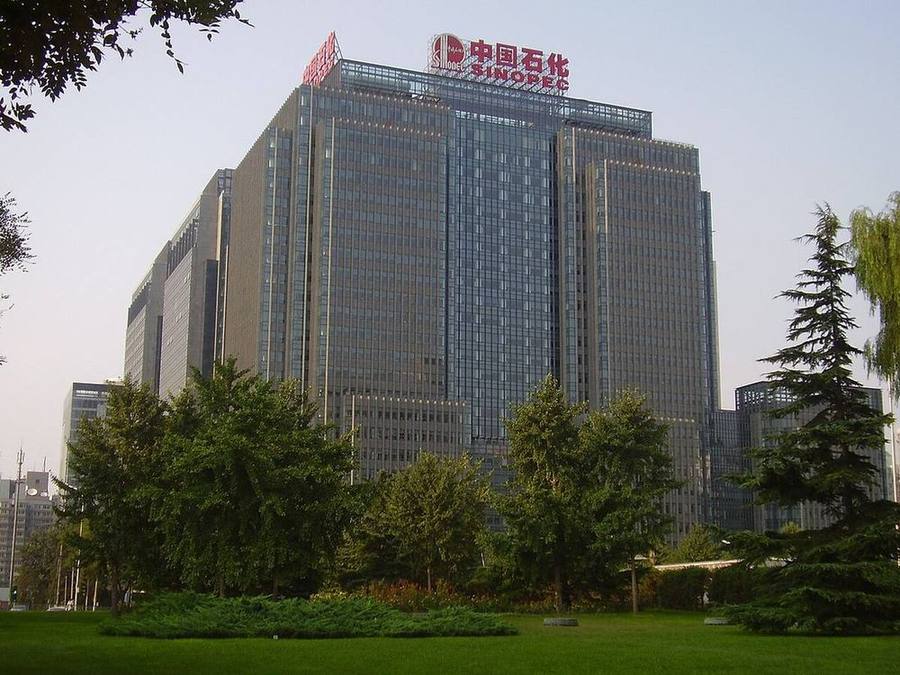
Contents
- One: Get the father right first — Chen Weida, not Chen Yun
- Two: The enterprise and the posts — the two-tier structure of Sinopec Group and the listed company
- Three: The appointment timeline — vice general manager, general manager, vice chairman, chairman
- Four: June 2007 — shuanggui, resignation and the end of his posts
- Five: The bribery facts as the court found them — 1999 to June 2007
- Six: How to read RMB 195.73 million — total, period, subject matters and the largest single payment
- Seven: The suspended death sentence — surrender, informing and full restitution, and confiscation of all personal property
- Eight: Where this case sits inside the petroleum and petrochemical system
- Nine: The boundary of the evidence — what this piece can and cannot prove
- Material gaps (stated as found)
- Sources
Most figures in the state-enterprise strand of this series leave behind appointment records but no judicial conclusion. Chen Tonghai is one of the rare exceptions: the second half of his story is not a media summary but a court judgment. The court of first instance, the date of sentencing, the period of the offences, the posts he used, the subject matters in which he secured benefits for others, the total amount of bribes, the mitigating factors and the category of punishment are all written in Xinhua's dispatch of 15 July 2009 (Source 1). Precisely because the core facts are so concentrated, this piece must be written tightly: first get the identity right, then separate the tiers of the enterprise, then follow only the timeline the judgment itself supplies. Appointment intrigues, family wealth and project details that lie outside the judgment have no verifiable text in the sources available, and this piece would rather leave those spaces empty than stretch a case that is already clear enough into a long article built on imagination.
One fact that is most often written wrongly must be nailed down first: Chen Tonghai's father was Chen Weida, not Chen Yun. Xinhua-system reporting states explicitly that his father Chen Weida was a veteran proletarian revolutionary who after 1949 served as secretary of the Zhejiang provincial party committee, first secretary of the Tianjin municipal party committee and deputy secretary of the Central Political and Legal Affairs Commission, among other senior posts (Source 3). Chen Weida was born in 1916 and died in 1990, and he sat on the Eleventh and Twelfth Central Committees — these are the points about the father that the research dossier verified against published sources. The internet claim that Chen Tonghai was a son of Chen Yun has no basis whatsoever: Chen Yun's son is Chen Yuan, whose tenure at China Development Bank is treated in a separate piece in this series. Two men, two fathers, two state-enterprise lines — they must not be merged, and the first task of this piece is to remove that widespread misattribution from the archive.
| Date | Event |
|---|---|
| 1916–1990 | Life dates of his father Chen Weida, who after 1949 served as Zhejiang party secretary, Tianjin first secretary and deputy secretary of the Central Political and Legal Affairs Commission, and sat on the Eleventh and Twelfth Central Committees (Source 3) |
| 1999 | Start of the bribery period as found by the court; from this year Chen Tonghai used the convenience of his posts in the Sinopec system to secure benefits for others and accepted money (Source 1) |
| 2003–2007 | The dossier's summary of his peak appointment period: general manager of Sinopec Group and chairman of Sinopec Corp., holding the group and listed-company tiers at the same time (Sources 1, 3) |
| June 2007 | Placed under shuanggui and resigned all posts; the bribery period found by the court also ends in June 2007 (Source 1) |
| 15 July 2009 | First-instance judgment by the Beijing No. 2 Intermediate People's Court: bribes totalling more than RMB 195.73 million; death sentence with a two-year reprieve, deprivation of political rights for life, and confiscation of all personal property (Sources 1, 2) |
One: Get the father right first — Chen Weida, not Chen Yun
Why does a single-person piece about a state-enterprise executive spend its first section on his father? Because admission to this series has never rested on a surname; it rests on a verifiable direct family relationship. Chen Tonghai belongs in this series because two facts hold at the same time: he himself reached the core executive posts of a central state-owned enterprise, and his father's identity is stated explicitly in Xinhua-system reporting. The dossier therefore carried out a dedicated identity check, and its conclusion fits in one sentence: Chen Tonghai's father was Chen Weida (1916–1990), not Chen Yun (Source 3). If that sentence were written wrongly, everything after it would be displaced — attaching him to the Chen Yun family would corrupt the family list in the Chen Yun piece, and it would invite readers to imagine a documented line of inheritance from Chen Yun's financial system into Sinopec for which the sources provide no evidence at all. This piece draws no such connection.
Chen Weida's own career appears in the sources as background to his son: a veteran proletarian revolutionary who after 1949 served as Zhejiang party secretary, Tianjin first secretary and deputy secretary of the Central Political and Legal Affairs Commission (Source 3). Those posts belong respectively to provincial party work, municipal party work in a directly administered municipality, and the central political-legal system, which marks Chen Weida as a senior cadre of the founding generation rather than a technocrat of the financial system. The dossier also records his membership of the Eleventh and Twelfth Central Committees. This material is included not to write the father's biography — his full life is outside the scope of this piece and the sources assembled here would not support it — but to give the son's identity a verifiable coordinate: Chen Tonghai was the son of a senior cadre, and that much has an official news agency text behind it. Beyond that point, whether the father ever intervened in any appointment, transfer or promotion of the son is a question the available sources do not mention at all, and the only honest conclusion is that there is no public record.
The route by which the error spreads deserves a note of its own. Calling Chen Tonghai a son of Chen Yun circulates widely in reposted material, and its origin is not hard to guess: a shared surname, a shared generational label, and the coincidence that Chen Yun's actual son Chen Yuan also ran a very large financial institution, so that two state-enterprise lines get merged in second-hand retelling. Archival writing cannot accept that merger. Chen Yuan's father was Chen Yun; Chen Tonghai's father was Chen Weida. The Chen Yuan line is supported by an official biography on the CPPCC website and by Chen Yun family materials; the Chen Tonghai line is supported by Xinhua-system reporting that names his father and his father's posts in so many words. In this series the two lines are written as separate pieces, with separate numbering and separate source lists, and any conflation between them would be this site's own error. This correction is therefore repeated in the title material, the introduction and this section — not out of verbosity, but because the error has already entered the public chain of reposting and will be amplified again by the next round of copying if it is not corrected at the source.
One finer boundary also needs drawing: proving that he was the son of Chen Weida is not the same as proving that he rose because of his father. The first is a fact of kinship with a Grade A text behind it. The second is an accusation about the appointment mechanism, and it would require personnel files, contemporaneous appointment records or at least a first-tier media investigation; not one of the three sources in this piece touches the process by which Chen Tonghai was appointed to anything. This piece therefore uses the word "son" only at the level of kinship, and at the level of office it records only the posts themselves and their outcomes. It does not write verbs such as "through his father's influence" or "by family arrangement", for which no document has been produced. The discipline is the same as in every other piece in this series: family connection explains why a person is included; it does not complete, in advance and on behalf of a court or a discipline commission, a finding about how he was promoted.
Two: The enterprise and the posts — the two-tier structure of Sinopec Group and the listed company
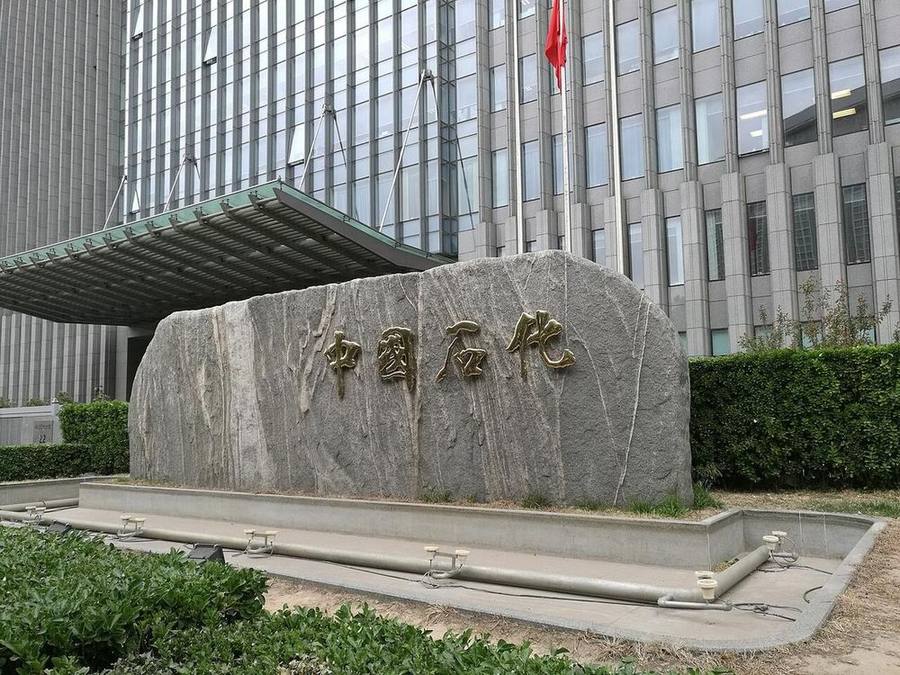
To understand Chen Tonghai's posts, two similarly named but legally distinct entities must be kept apart: China Petrochemical Corporation, the Sinopec Group at parent level, and China Petroleum and Chemical Corporation, Sinopec Corp., at the level of the incorporated company. The dossier states his posts as a pair — vice general manager and general manager of the group, vice chairman and chairman of Sinopec Corp. (Sources 1, 3). The judgment, in finding the "convenience of his posts", lists the two sets in the same way: the convenience afforded by his service as vice general manager and general manager of Sinopec Group and as vice chairman and chairman of Sinopec Corp. (Source 1). The pairing is not rhetoric. It reflects a governance structure common among central enterprises at the time, in which the same individual held an administrative post in the group company and a board post in the incorporated company at once, so that operational decisions, personnel influence and listed-company power were stacked on a single signatory.
Why does the two-tier structure matter? Because the subject matters in which the judgment found he secured benefits for others — business operations, land transfers and project contracting — straddle exactly those two tiers. A business-operations matter might arise at the group's level of overall coordination or in a specific line of the incorporated company's business; land transfers and project contracts involve asset disposal and the awarding of projects, both of which require the leverage of senior office before they can be moved at all. The dispatch does not break down, item by item, which sum of money corresponded to which tier of office or which project, and this piece cannot perform that breakdown on the judgment's behalf. What this section can confirm is the structure itself: Chen Tonghai was not the head of some subsidiary, nor a marginal deputy inside the group. He stood at the summit of both tiers at once, as group general manager and chairman of the listed company. The dossier summarises his peak period as 2003 to 2007, as general manager of the group and chairman of Sinopec Corp. (Sources 1, 3) — precisely the period in which the second half of the bribery period overlaps with the peak of his power.
The research dossier for the petroleum section also carried out a reverse check, and it belongs in this piece as background: among the successive chairmen and general managers of PetroChina and Sinopec, figures such as Fu Chengyu, Jiang Jiemin, Su Shulin, Dai Houliang and Zhang Yuzhuo were all, on examination, cadres who had grown up inside the petroleum system, with no verified identity as children of the revolutionary generation. In other words, Chen Tonghai is an exception in this section, not a representative sample. The leadership of the petroleum and petrochemical system was in general a professional cadre corps promoted from within the industry, and Chen Tonghai is the one member of it who was proved by judgment to have taken bribes and whose father's identity is stated in a published text. Stating that background plainly protects readers against reading an individual case as a generalisation about where the whole system's leaders came from, and against merging two different questions — corruption by cadres promoted from inside a system, and appointment of the children of senior cadres — into a single question. This piece answers for Chen Tonghai alone, and its conclusions reach no further than him.
The two-tier structure has one further consequence, visible in the scope of his resignation. The sources say that in June 2007 he "resigned all his posts" (Sources 1, 3). The word "all" corresponds exactly to this stacking of posts: he exited the group posts and the incorporated company's posts together, rather than retiring from only one tier. The dispatch does not enumerate the resignation list item by item, and this piece does not invent one; but the phrase "all posts", read against the two-tier structure, confirms that his departure was not the normal rotation of an expiring term. It was a wholesale exit synchronised with an investigation. The timeline in the next section and the endpoint in the section after it both rest on that structural reading.
Three: The appointment timeline — vice general manager, general manager, vice chairman, chairman
The nodes of Chen Tonghai's appointment line that the available sources can pin down are, frankly, unevenly distributed, and this piece presents that unevenness as it is: the names of the posts are complete, while their year-by-year start and end dates are not. The sequence on which the sources agree is vice general manager and general manager of China Petrochemical Corporation, and vice chairman and chairman of Sinopec Corp. (Sources 1, 3). The dossier's headline summary of his peak period is 2003 to 2007, meaning the stage at which he was group general manager and chairman of Sinopec Corp. As for the year in which he became group vice general manager, the year he rose to general manager, and the years in which he took up the vice chairmanship and chairmanship of the incorporated company, none of the three Grade A sources gives itemised dates, and this piece records that absence in the material gaps rather than dressing up dates from encyclopaedia compilations as Grade A fact.
The other end of the timeline is unusually precise, because the judgment draws it: the bribery period found by the court runs from 1999 to June 2007 (Source 1). The starting year, 1999, precedes the dossier's summary start for his peak period, 2003, which tells us that the "convenience of his posts" found by the court covered his earlier tenure in posts such as group vice general manager, and was not confined to his years as general manager and chairman. Anyone reading the timeline must keep two lines apart: an appointment line, recording which chairs he sat in, and an offence-period line, recording from when the court found that he had used the convenience of his posts to take money. The two lines converge at their endpoint in June 2007 — the posts end there, and the taking of bribes is found to end there — and that convergence is itself the central fact of the case narrative. This was not a matter of old conduct unearthed years after retirement; the end of the tenure and the end of the offence period fall in the same month, with shuanggui as the hinge between them.
From 1999 to June 2007 is a span of roughly eight and a half years. Placing the total of more than RMB 195.73 million back inside that span prevents two opposite misreadings. The total cannot be read as the price of a single transaction, because the judgment expressly treats it as an accumulation over many years and several categories of subject matter. Nor should the length of the span be allowed to dilute the amount: on the contrary, taking money continuously over a long period, across operations, land and contracting matters, is exactly the pattern of conduct that the judgment's narrative presents. This piece does not compute derived figures such as an annual average in order to manufacture impact. An archive needs only to set three original facts side by side — total, period and subject matters — and let readers form their own judgement. Derived arithmetic is not evidence; the original findings are.
The appointment line also contains a gap that cannot be talked away: his early life. His university, the date he entered the petroleum system, the ladder of posts beneath group level, and his specific positions before he became vice general manager are supplied by none of the three sources. Figures elsewhere in this series often have complete official biographies to rely on; Chen Tonghai, within the Grade A source limits of this piece, does not. That is not an oversight by the author but a direct consequence of the evidence rules of this piece: better for the timeline to begin with the offence period in 1999 and with the group vice general manager post than to import biographical details that the dossier never verified. The timeline the reader sees here therefore has a distinctive shape — the summit and the fall are written in fine detail, while the ascent is almost blank. That shape is itself information: it tells later researchers that completing the story of his rise will require personnel archives and company annals, not another round of internet reposting.
Four: June 2007 — shuanggui, resignation and the end of his posts
June 2007 is the watershed of Chen Tonghai's life, and the available sources attach two actions to that month: he was placed under shuanggui, and he resigned all his posts (Source 3). Shuanggui is the term used in the discipline-inspection context for a measure requiring a person to account for himself at a designated time and place. Whether the measure preceded or followed the resignations, and whether the resignations were volunteered or submitted under the pressure of investigation, is a sequence the dispatch and the background reporting do not spell out, and this piece records only that the two actions occurred in the same month, which is also the final month of the offence period found by the court. Setting those three things side by side — investigation, resignation, end of period — is the only work this section undertakes. Any account of specific dates within the month, of conversations held, or of internal procedure lies outside the available sources, and this piece does not write it.
Between June 2007 and sentencing on 15 July 2009 lie roughly two years, and in the public record those two years are close to blank. How the investigation was transferred to the judicial authorities, on what charges the procuratorate indicted him, whether the trial was public, and what the defence argued — the Xinhua dispatch moves directly from the court's findings to the result, offering no procedural detail. This piece registers that blank honestly and does not fill this case's procedure with the procedural template of other fallen officials' cases. The only procedural nodes that can be confirmed are at the end: the court of first instance was the Beijing No. 2 Intermediate People's Court, the date of judgment was 15 July 2009, and the judgment was a first-instance judgment (Sources 1, 2). The words "first instance" imply that an appeal was procedurally possible, but the available sources contain no record of whether he appealed or whether a second-instance court upheld the verdict, and that absence is registered in the gaps rather than resolved by assumption.
Between resignation and sentencing, his designation in print changes as well. Before June 2007, reporting calls him group general manager and chairman of Sinopec; in the judgment dispatch he is the "former general manager of Sinopec" — the China Youth Daily's Xinhua article of 16 July 2009 is headlined, in translation, "Former Sinopec general manager Chen Tonghai sentenced to suspended death penalty at first instance" (Source 2). A single word, "former", marks the complete transformation of status from the head of a central enterprise to a criminal defendant. This piece observes the same discipline of designation: after June 2007 he is referred to by his former posts or by name alone, while in narrating the offences it uses the posts he held at the time, exactly as the judgment does, because what the judgment found was precisely the use of "the convenience of his posts as" those offices.
The source grade behind this section also needs stating. The facts of shuanggui and resignation are recorded in the dossier from Xinhua-system background reporting (Source 3), which stands alongside the judgment dispatch (Source 1) within the same official news agency system, at Grade A. But the two texts prove different objects. The judgment dispatch proves the criminal facts and the punishment found by the court; it does not itself narrate the shuanggui process. The shuanggui and resignation facts come from the background reporting. Only when the two kinds of text are placed together does the full chain — investigation, exit, trial — emerge. This piece marks, at each point, which kind of text a fact comes from, so that readers can see what supports each link of the chain instead of attributing the whole chain loosely to "the judgment".
Five: The bribery facts as the court found them — 1999 to June 2007
This section writes only what the judgment found, broken into its elements. The first element is the subject and his posts: Chen Tonghai used the convenience of his posts as vice general manager and general manager of Sinopec Group and as vice chairman and chairman of Sinopec Corp. (Source 1). The second element is the mode of conduct: securing benefits for others. The third is the range of subject matters: business operations, the transfer of land, and the contracting of projects (Source 1). The fourth is the consideration: he accepted money totalling, in converted terms, more than RMB 195.73 million (Source 1). The fifth is the period: from 1999 to June 2007 (Source 1). With those five elements present, the judgment's basic finding of bribery is complete. The narration of this piece stops there. Which payer sent which sum, which business matter, which parcel of land and which project each sum corresponded to — the dispatch does not publish item by item, and this piece does not guess, supplement or splice from other reporting.
Who the "others" were, in the phrase "securing benefits for others", is likewise outside the published scope of the dispatch, and that fact must be stated plainly to readers, because it marks the boundary between this piece and much second-hand writing. Second-hand accounts frequently attach the names of particular companies and businessmen directly to the Chen Tonghai case as a settled list of bribe-givers. In the three Grade A sources used here, no payer's name and no implicated company's name is given in the judgment dispatch at all. This piece therefore names no payer. If the full text of the judgment is one day published, or new authoritative disclosure appears, this site will revise in accordance with the new evidence; until then, naming names would be groundless. That is the fundamental difference between an archive site and a rumour site, and it is a line this piece holds even at the cost of appearing to offer "insufficient information".
The three phrases that define the subject matters — business operations, land transfers, project contracting — each deserve a pause. They are not the author's summary; they are the categories of subject matter found in the judgment. Business operations correspond to his influence over the operating decisions of the group and the incorporated company; land transfers to his influence over approval and pricing in asset disposal; project contracting to his influence over the awarding of projects. What the three categories share is that all of them lie within the fields that the convenience of a top leader's posts can cover directly or indirectly, and all of them characteristically involve large sums, wide discretionary space, and consideration that is difficult to trace item by item after the event. By assigning eight and a half years of money-taking to these three categories, the judgment indicates that the conduct it found was not an occasional transaction in a single field, but continuous conduct across the principal fields of his authority. This piece's analysis stops at the categories themselves and does not extend to speculation about any specific parcel of land, project or company.
The word "converted", in "accepted money totalling, in converted terms, more than RMB 195.73 million", indicates that the total includes amounts received in other currencies or in kind and converted into renminbi for the reckoning; the dispatch gives no breakdown of that conversion, and this piece does not split it. The character rendered "more than" indicates that RMB 195.73 million is stated as a floor: one hundred ninety-five million, seven hundred and thirty-odd thousand yuan, and more. Among judgments of its period it is an exceptionally large bribery figure — an assessment this piece bases on the magnitude of the number itself, without importing the figures of other cases for horizontal ranking, because the data for such comparisons lie outside this piece's sources. In archival writing, a comparison needs a source of its own; where there is none, only the figure of this case is stated.
Six: How to read RMB 195.73 million — total, period, subject matters and the largest single payment
One detail attached to this total is often amplified in second-hand retelling, and it needs to be returned to its source level for clarification: the largest single bribe is said to have exceeded RMB 160 million. The dossier annotates this detail with unusual care — it comes from media reporting of the details of the judgment, not from the body of the Xinhua judgment dispatch itself (see the dossier note to Source 1). In other words, the total of more than RMB 195.73 million is a Grade A fact confirmed by the dispatch, while the single payment of more than RMB 160 million is a figure given by media in reporting the judgment's details, one grade lower. This piece therefore treats the total as its organising figure, and presents the single-payment figure here with its provenance labelled, rather than placing the two side by side as findings of equal weight. If a reader remembers only one number, it should be the total; if the single-payment figure is quoted, its status as a media-reported detail of the judgment should be quoted with it.
The relationship between the single payment and the total is also worth working out — where "working out" means arithmetic inside the sources and nothing imported from outside: if the largest single payment did exceed RMB 160 million, that one payment would account for more than four fifths of the total of RMB 195.73 million, and all his other receipts across eight years would come to less than RMB 40 million combined. That would make the amount structure of this case highly concentrated, and wholly unlike a pattern of long-term small accumulation. But precisely because that structure is so unusual, this piece insists on its evidence grade: it depends on media transmission of the judgment's details, which the dispatch itself does not confirm. Until the full judgment is public, that structure can only be registered as "so the reported details run", and cannot serve as the foundation for analysing the whole case. This section prints the figure in order to show readers exactly what evidence the most eye-catching number in second-hand accounts actually stands on; printing it while labelling its grade is the complete archival treatment, whereas repeating it without a label is no different from rumour.
Reading the total also raises a question about the completeness of the period. The span from 1999 to June 2007 is the period "as found" by the court — the time range of the receiving conduct that the procuratorate charged and the court confirmed. It is not necessarily the true date of the first money he ever accepted: if the true date were earlier than 1999, conduct that was not charged or not found would not enter the judgment. The judgment's period answers to legal evaluation, not to a universal claim about historical truth. Throughout this piece, every reference to the period therefore carries the prefix "as found by the court" or "found in the judgment", in order to hold that boundary. By the same token, whether he engaged in any unfound conduct after June 2007 is a matter on which the judgment and the reporting are silent; the conclusion is that there is no public record, not that there was none.
Finally, the discipline of denominations. Every amount in this piece follows the renminbi terms of the judgment dispatch: a total converted to more than RMB 195.73 million, and confiscation of all his personal property (Source 1). The scope of the confiscated property, whether the amount of restitution corresponded exactly to the total, and where the illicit proceeds went are matters on which the dispatch gives only the sentencing circumstance of "returned all the illicit proceeds" (Source 1), without an execution-level schedule of figures. This piece does not rewrite "returned all the illicit proceeds" as a specific sum, and does not speculate about the composition of his personal property. The distance between the wording of a sentencing circumstance and the figures of its execution is exactly the distance between an archive and an invention.
Seven: The suspended death sentence — surrender, informing and full restitution, and confiscation of all personal property
The sentence is registered item by item: death, with a two-year reprieve; deprivation of political rights for life; and confiscation of all personal property (Sources 1, 2). The principal penalty is death, qualified by the institutional arrangement of a two-year reprieve; the supplementary penalties are deprivation of political rights for life and confiscation of the whole of his personal property. The dispatch also gives the decisive mitigating circumstances in the same breath: he surrendered himself, informed on others, and returned all the illicit proceeds (Source 1). As the dossier puts it, it was because of these three circumstances that, at a bribery magnitude approaching RMB 200 million, the court imposed a suspended death sentence rather than immediate execution. The three circumstances appear in parallel in the dispatch, and this piece does not rank their weight: which of them mattered most to the sentence is something the dispatch does not say, and until the full judgment is published, any analysis of weight is commentary, not archive.
Each circumstance is registered in the dispatch's own terms. Surrender means that he voluntarily disclosed the facts of his offences before coercive measures were taken against him, or in the course of investigation — the timing and manner are not in the dispatch. Informing means that he reported matters concerning others which were verified — the persons and matters reported are not in the dispatch, and this piece takes particular care not to attach the content of his informing to any specific individual, since every version of that story circulating online lacks a Grade A source and none is adopted here. Return of all the illicit proceeds means that the bribery proceeds as found were returned in full — the timing and manner are not in the dispatch. The three circumstances share a common shape: the conclusions are clear, the processes are blank. This piece fixes the conclusions firmly, leaves the processes empty, and registers each of them in the gaps.
The suspended death sentence attracted public discussion at the time, but no commentary text is included in the sources of this piece, and so this piece neither relays nor evaluates that reaction. It makes only two archival points. First, the judgment was a first-instance judgment, delivered by the Beijing No. 2 Intermediate People's Court on 15 July 2009 (Sources 1, 2). Second, everything after the judgment — whether he appealed, the outcome of any second instance, commutation after the reprieve period expired, the place of imprisonment and his present condition — is covered by no follow-up reporting in the three sources, and can only be registered here as no public record. A man who once ran one of China's largest petrochemical enterprises disappears from the public record after his sentencing. That is the heaviest gap in this piece, and the line of the archive breaks there not because the author stopped, but because the published sources genuinely stop.
One further element of the judgment is easily overlooked: deprivation of political rights for life. Set beside confiscation of all personal property, it completes, within a single judgment, the stripping of a defendant of senior-cadre origin at every level of status — political rights, personal property and personal liberty, the last in the form of a suspended death sentence, are dealt with together. This piece registers the element not because it is rare in comparable judgments, but because it answers to the theme of the piece: Chen Tonghai enters the archive by the path of "son of a senior cadre plus head of a central enterprise", and he leaves the public stage by a judgment that removes his political and property status item by item. Archival completeness requires both ends to be written; the father and the posts at the front, the judgment and the deprivations at the back — omit either end and the figure is deformed.
Eight: Where this case sits inside the petroleum and petrochemical system
Placing an individual case back inside its system requires two sets of background that the dossier has already verified. The first is the reverse check: the successive principal leaders of the petroleum and petrochemical system were for the most part cadres who had grown up inside the system, without verified identity as children of the revolutionary generation (see Section Two). That background establishes that the Chen Tonghai case cannot be read as evidence that "the petroleum system was held by family power" — the structure of recruitment to the system's top posts and the family background of an individual case are two different things. What this case proves is that a man with a senior-cadre family background took bribes approaching RMB 200 million at the summit of the system, not that appointment across the whole system was determined by family background. The second set of background is the judicial weight of the case itself: among all the cases in the state-enterprise strand of this series, Chen Tonghai is one of the few whose core facts were found directly by a court judgment, and the amount found and the suspended death sentence make his case a specimen for observing the complete chain of appointment, bribery and trial. Other pieces mostly stop at appointment and controversy; this one has a complete judicial endpoint.
Comparison with the Zhou Bin case in the same section clarifies the two different forms that the petroleum section contains. Zhou Bin never held a post in a central enterprise; he was a shareholder in private companies who profited from transactions with the PetroChina system through the influence of his father Zhou Yongkang's office, as found by judgment of the Yichang Intermediate People's Court. Chen Tonghai is the mirror image: he was himself the top leader of a central enterprise, and the court found that he had used the convenience of his own posts to take bribes directly. One man profited at the periphery in the capacity of a relative; the other took bribes inside the system in the capacity of its head. One judgment was delivered in Yichang, Hubei; the other in Beijing. What the two share is only the petroleum system and a family background. This piece and the Zhou Bin piece are written separately, with separate source lists, precisely because their forms and their evidence structures differ. To merge the two forms into a generic tale of "petroleum gang corruption" would be a disservice to both judgments.
The last system-level question is this: after the judgment, did the Sinopec system issue any public internal circular, rectification programme or personnel statement concerning the case? Within the three sources of this piece, no citable text of that kind was found. This piece therefore does not write phrases such as "the system was shaken" or "an internal rectification followed", for which no source exists. The position of this case inside its system is marked here only with verifiable coordinates: the time runs from 1999 to 2009, from the offence period to sentencing; the place is the two-tier summit of group and listed company; the manner is the three categories of benefit-seeking subject matter found in the judgment; the outcome is a suspended death sentence. Beyond those four coordinates, every system narrative requires new sources before it can enter this site's pages.
Nine: The boundary of the evidence — what this piece can and cannot prove
What can be proved is gathered here: Chen Tonghai was the son of Chen Weida, who was born in 1916 and died in 1990, served after 1949 as Zhejiang party secretary, Tianjin first secretary and deputy secretary of the Central Political and Legal Affairs Commission, and sat on the Eleventh and Twelfth Central Committees; the claim that he was a son of Chen Yun has no basis whatsoever (Source 3). Chen Tonghai served as vice general manager and general manager of Sinopec Group and as vice chairman and chairman of Sinopec Corp., with a peak period from 2003 to 2007 (Sources 1, 3). In June 2007 he was placed under shuanggui and resigned all his posts (Source 3). On 15 July 2009 the Beijing No. 2 Intermediate People's Court found at first instance that between 1999 and June 2007 he used the convenience of those posts to secure benefits for others in business operations, land transfers and project contracting, accepting money totalling more than RMB 195.73 million (Sources 1, 2). Because he surrendered himself, informed on others and returned all the illicit proceeds, he was sentenced to death with a two-year reprieve, deprived of political rights for life, and subjected to confiscation of all his personal property (Source 1). Every item above carries a source number, and all of them come from the Xinhua dispatch or Xinhua-system reporting.
What cannot be proved is likewise stated item by item: who promoted his appointments, and whether they were connected to his father's status — no source addresses the question; the payer, intermediary and corresponding project behind each bribe — the judgment dispatch does not publish item by item, and this piece names no payer; the largest single payment of more than RMB 160 million — a detail from media reporting of the judgment, graded below the body of the dispatch and registered here only with its grade attached; the timing and content of his surrender and informing — the dispatch gives conclusions, not processes; his appeal, any second-instance outcome, commutation and present custodial condition after judgment — no public record; and the names, posts and assets of his spouse and children — none of the three sources touches them, and this piece does not write them. On all six points, this piece registers a gap and draws no inference in either direction.
A single concluding sentence. In the public archive, the Chen Tonghai case is a line that is clear at both ends and broken in the middle: at one end, the identity of a senior cadre's son and the two-tier summit of a central enterprise; at the other, a bribery finding approaching RMB 200 million and a suspended death sentence; and in the middle, the appointment process, the itemised transactions and the life after judgment, for which the published sources provide no verifiable text. To write the two clear ends as solidly as possible, and to leave the broken middle honestly empty rather than joining the line with rumour — that is the only responsible way this site can treat this case.
<!--正文结束-->
Sources
- Xinhua dispatch (republished by the Ministry of Agriculture and Rural Affairs website), "First-instance judgment in the Chen Tonghai bribery case", 15 July 2009 — the Beijing No. 2 Intermediate People's Court found at first instance that from 1999 to June 2007 Chen Tonghai used the convenience of his posts as vice general manager and general manager of Sinopec Group and vice chairman and chairman of Sinopec Corp. to secure benefits for others in business operations, land transfers and project contracting, accepting money totalling more than RMB 195.73 million; because he surrendered himself, informed on others and returned all the illicit proceeds, he was sentenced to death with a two-year reprieve, deprived of political rights for life, and subjected to confiscation of all personal property: https://jcj.moa.gov.cn/jzcm/200907/t20090715_1823378.htm — official news agency / court judgment dispatch (Grade A).
- China Youth Daily, Xinhua article "Former Sinopec general manager Chen Tonghai sentenced to suspended death penalty at first instance", 16 July 2009 — the newspaper publication of the Xinhua judgment report, corroborating the date, the court and the sentence: https://zqb.cyol.com/content/2009-07/16/content_2759386.htm — mainstream media / Xinhua article (Grade A).
- Sina Finance (Xinhua Economic Reference-system article), "Former Sinopec general manager sentenced to suspended death at first instance for bribes approaching RMB 200 million", 15 July 2009 — containing the explicit statement of his father's identity, that his father Chen Weida was a veteran proletarian revolutionary who after 1949 served as Zhejiang party secretary, Tianjin party secretary and deputy secretary of the Central Political and Legal Affairs Commission, and recording his shuanggui and resignation from all posts: https://m.cj.sina.cn/page/aHR0cDovL2ZpbmFuY2Uuc2luYS5jb20uY24vZy8yMDA5MDcxNS8xMTI2NjQ4MzAwMC5zaHRtbA?from=redirect — Xinhua-system media (Grade A).
Material gaps (stated as found)
- Year-by-year appointment dates: The available Grade A sources give only the sequence of posts and a summary peak period of 2003–2007; they do not give the exact start and end dates of the vice general manager, general manager, vice chairman and chairman posts, and no public record could be verified within the source limits of this piece.
- Early career: His university, the date he entered the petroleum system and his promotion path before the vice general manager post are provided by none of the three sources; no public record.
- Itemised bribery details: The judgment dispatch does not publish, item by item, the payer, intermediary, business matter, land parcel or project behind each sum; this piece names no payer; no public record.
- Grade of the largest-single-payment figure: The largest single payment of more than RMB 160 million comes from media reporting of the judgment's details and does not appear in the body of the Xinhua judgment dispatch; its grade is below that of the total, the full judgment has not been published, and it cannot be further verified.
- Details of surrender and informing: The timing and manner of his surrender, the persons and matters he informed on, and the timing and manner of restitution are given in the dispatch as conclusions only, without process; no public record.
- Investigation and litigation procedure: Between the shuanggui of June 2007 and sentencing in July 2009, the procedural details of transfer, indictment, trial and defence are not provided by the available sources; no public record.
- Status after judgment: Whether he appealed, any second-instance outcome, commutation after the reprieve period, place of imprisonment and present condition are covered by no follow-up reporting in the three sources; no public record.
- Other family members: The names, posts and assets of his spouse and children are touched on by none of the available sources; no public record. Whether his appointments were affected by his father's status is likewise attested by no source.
Contact: endccpworld@proton.me