
第136案 | 热伊莱·吾马尔Case 136 | Rahile Omer
热伊莱·吾马尔,维吾尔族,2003年4月25日出生于新疆喀什地区疏附县兰干乡苏鲁克村,父亲曾是当地政府干部。2017年父母被拘押后,14岁的她于同年9月28日被当局拘押,送入所谓"职业技能教育培训中心"接受政治再教育。2019年,她因被认定"教育无效"——拒绝交代他人、在宿舍做礼拜——被转入看守所;2021年10月,刚满18岁的她被以扰乱社会秩序类罪名判处有期徒刑12年,转往喀什地区伽师县一所女子监狱服刑。2026年秋,她在狱中死亡,年仅23岁。2026年11月6日,自由亚洲电台记者致电疏附县警方与司法部门,多名工作人员证实其死讯;一名警员称她"突然死亡,看起来是心脏有问题",但拒绝透露死亡地点与任何细节。中国官方至今没有就她的死亡发布任何公开通报。从14岁被带走,到23岁死在狱中,她人生的最后九年全部在关押中度过。Rahile Omer, an Uyghur born on 25 April 2003 in Suluk Village, Langar Township, Shufu (Konasheher) County in Xinjiang's Kashgar Prefecture, was the daughter of a local government cadre. After her parents were detained in 2017, she was taken into custody on 28 September that year, aged fourteen, and sent into a so-called Vocational Skills Education and Training Centre for political re-education. In 2019, judged to have 'failed to transform' — she refused to implicate others and performed prayers in her dormitory — she was transferred into a pre-trial detention centre. In October 2021, just past eighteen, she was sentenced to twelve years for a public-order offence and sent to a women's prison in Payzawat (Jiashi) County. In the autumn of 2026 she died in custody, aged twenty-three. On 6 November 2026 a Radio Free Asia journalist telephoned police and judicial offices in Shufu County; several officials confirmed her death, and one officer said she 'suddenly died — it looks like she had heart problems', while refusing to disclose where she died or any further detail. Chinese authorities have issued no public announcement of her death. From the day she was taken at fourteen to the day she died in prison at twenty-three, the last nine years of her life were spent entirely in custody.
1. First, remember who she was
Rahile Omer was born on 25 April 2003 in Suluk Village, Langar Township, Shufu County — Konasheher in Uyghur — a county west of Kashgar city that became one of the most densely interned counties in the mass detention campaign that began in 2017. When she was taken, she was a schoolgirl of fourteen. Her father had been a local government cadre; her mother's occupation is not in any public record. Of the family's life before 2017 — which school she attended, how she did there, what she hoped for — no public material exists at all. That blank has to be stated first, because it structures everything on this page: nearly every surviving record of this ordinary Uyghur girl was produced by the system that detained her — police registries, camp rosters, and one custody photograph. She became known to the world because the machinery that held her kept paperwork, and because that paperwork later leaked. Where this page relies on the leaked files and on researchers' reconstruction from them, it says so item by item; what the files do not contain and reporting has not established, this page does not invent for her.
In the spring and summer of 2017, Xinjiang's internment campaign rolled out in full. Large numbers of Uyghurs and Kazakhs were sent, in the name of 'de-extremisation', into newly built or converted 'Vocational Skills Education and Training Centres' — 'schools' in official language, re-education camps to detainees, families and international media. The UN Office of the High Commissioner for Human Rights, in its assessment of 31 August 2022, confirmed mass arbitrary detention in this period and found that the violations 'may constitute international crimes, in particular crimes against humanity'. What happened to the Omer family unfolded in the first months of that campaign: the parents first, then the daughter. The first key to this case is sequence. It was not anything she did that came first; it was her family's appearance on a list.
2. Summer 2017: her parents were taken first
According to the timeline reconstructed in November 2026 by the Kashgar Times from leaked police files, research by the German scholar Adrian Zenz, and statements by local judicial personnel, Rahile's parents were both detained in Shufu County on 3 July 2017. Her father was placed in the 'strict management' section of the Shufu Industrial Park Vocational Skills Education and Training Centre under a status recorded as a 'provisional sentence'; her mother was sentenced to six years on a generic charge of 'disturbing the social order'. The evidential grade must be stated plainly: the same-day detention of both parents and their respective destinations currently rest on this single reconstruction chain, with no second independent source confirming them item by item, and this page archives them as a single-source chain, marked unverified. Two points do, however, converge across sources: that her father was detained before her, and that he had been a government cadre — both appear in the China Democracy Party's focus material of 7 November 2026 as well.
The daughter was not taken immediately. On the same reconstruction, she was flagged by the Integrated Joint Operations Platform (IJOP) — the surveillance system that pooled monitoring data and sorted residents into categories — as a 'Type 12 person', a designation for individuals linked to existing police cases. In plain terms, she was on the list not because she was accused of anything herself, but because her father had become a case and she was his daughter. Internal documents also recorded that she was initially spared immediate detention for one reason: she was 'only a 14-year-old, non-adult student'. That line deserves a pause in the archive. It shows that the officers handling her file knew exactly that she was a minor and a student, and that on that basis a decision to hold off was once made. On 28 September 2017 the decision was reversed, and fourteen-year-old Rahile Omer was formally taken into custody. Less than three months separate the two decisions, and no public material explains the reversal.
3. Two years in the camps: after 28 September 2017
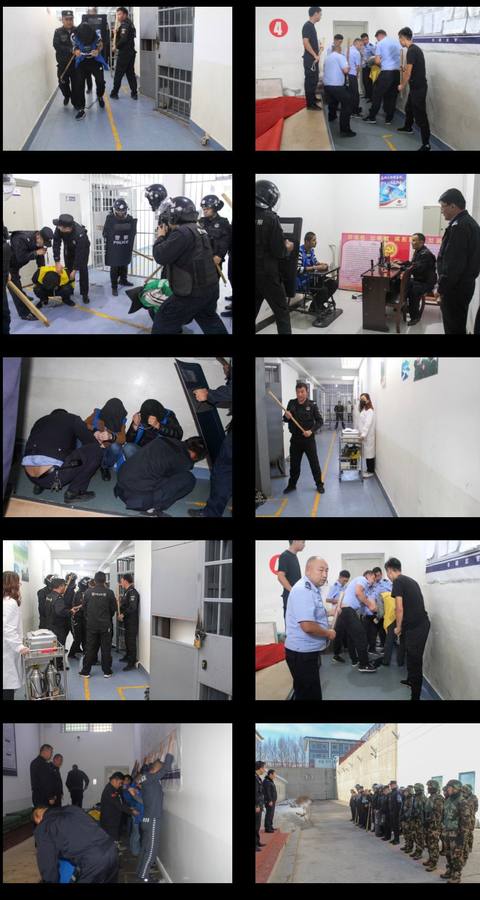
Once detained, she was sent into Shufu County's re-education camp system. The Kashgar Times reconstruction, based on her detention records, places her from 2017 to 2019 at the Opal Legal Education Transformation School (re-education centre) in Shufu County, and records also place her at the Shufu Industrial Park Vocational Skills Education and Training Centre — the same facility whose strict-management section held her father. Whether father and daughter ever saw each other inside that system, or even knew where the other was held, is a matter of no public record, and this page offers no imaginative filling. Camp daily life — political study, singing red songs, writing confessions, being required to break with 'extremist' ideas — has been systematically described by former detainees and by the UN assessment, and is documented in this site's event archive on the Xinjiang camps; but not one first-hand account describes this particular girl's days, and this page does not transfer other people's experiences into hers.
Only one camp node can be fixed to her personally, and it is decisive. In 2019 the camp authorities assessed her as having 'failed to transform' — in the Chinese material, 'education ineffective' (教育无效). On the convergent accounts of the China Democracy Party material and the Kashgar Times reconstruction, the grounds were two: she refused to confess or to implicate other people connected with the case, and she prayed in her dormitory — the Kashgar Times account specifies that guards reported her performing 'gesture prayers'. Open prayer is strictly prohibited under camp rules; a teenage girl praying silently by gesture in a dormitory was recorded as resistance to reform. Together, the two 'offences' moved her out of the camp system and into formal criminal custody: she was transferred to the Toqquzaq pre-trial detention centre to await handling. She was sixteen that year. Under China's own law, juvenile offenders are covered by special procedures and mitigation principles; but her two years in the camp had never passed before any court, and an administrative verdict of four characters — education ineffective — sufficed to convert her from 'trainee' to criminal suspect. That conversion involved no judgment, no hearing, and no lawyer: only the camp's assessment.
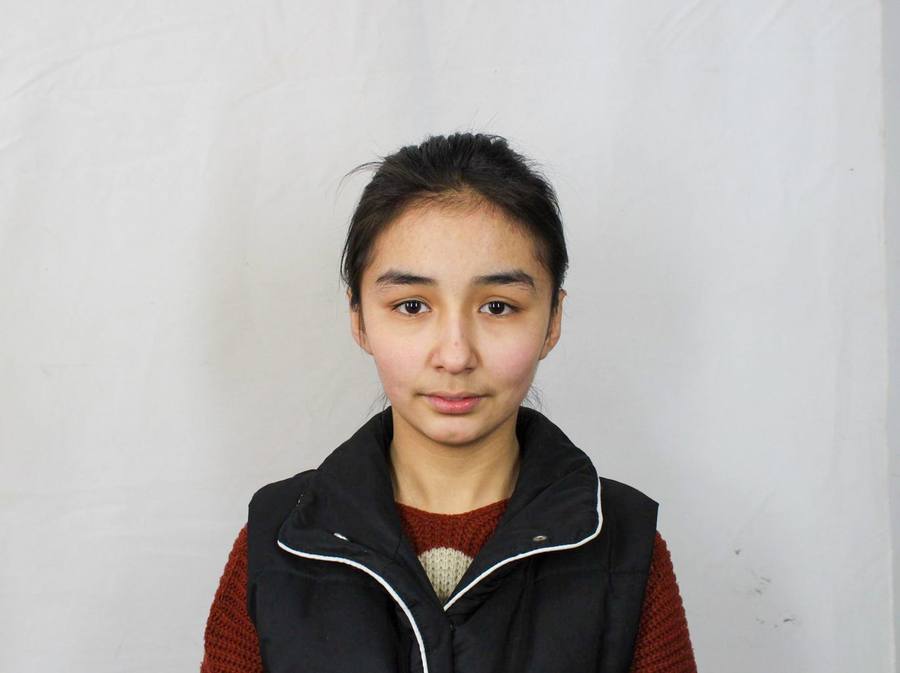
4. The photograph: the youngest face in the Xinjiang Police Files
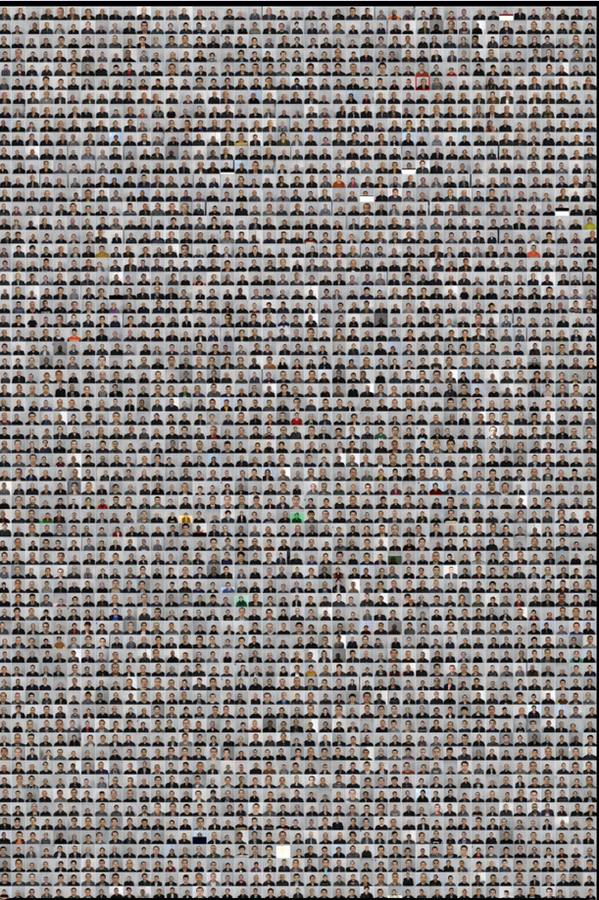
On 20 March 2018, Rahile was photographed by police for the record at a village police station in Toqquzaq Township — the wide-angle registration portrait of a frightened girl standing before the camera. By her birth date she was a month short of fifteen when the photograph was taken, still fourteen years old in full years; the Kashgar Times caption gives her age as fifteen, and both are noted here. That image later reached readers worldwide through the leak known as the Xinjiang Police Files: a large cache of internal Xinjiang public security material from 2017–2018, including thousands of detainee photographs, internal speeches, detention rosters and handling directives, published in May 2022 by an international media consortium, with the files drawn mainly from the police systems of Shufu and Tekes counties. Shufu is her home county. Reviewing the cache, the Kashgar Times identified her as among the youngest photographed detainees documented in it, and her portrait as one of the defining faces of the leak.
The significance of the photograph needs to be stated precisely. It was not taken by a journalist or supplied by her family; it is a product of the detention system's own workflow — every detainee was registered and photographed at a police station, the image filed with their personal data in a database. Precisely because it is an internal document, its evidential force depends on no one's narrative: it proves that on 20 March 2018 this girl was in custody and on the police register. Her age, her expression, and the officers standing behind her make up the single least rebuttable page of public material in this case. This page prints no literary description of the image; it fixes only three checkable facts — the date, 20 March 2018; the place, the Village No. 5 police station in Toqquzaq Township; and the source, the leaked Xinjiang Police Files. Any speculation about her state of mind that day is deliberately absent here.
5. Detention centre and verdict: 2019–2021
From 2019 to 2021, on the Kashgar Times reconstruction, she was held at the Toqquzaq pre-trial detention centre — roughly two years of awaiting handling. A minor spending her sixteenth to eighteenth years in a detention centre: whether a lawyer ever visited her, whether her family received any legal document, when the case was transferred for prosecution — all of it is a matter of no public record. China's Criminal Procedure Law sets out a series of special protections for juvenile defendants, from notifying legal guardians to legal aid and social inquiries; whether any of them were performed in her case, this page can find no material whatsoever, and records the blank as such.
In October 2021 she was sentenced to twelve years' imprisonment. She had turned eighteen about half a year earlier. The charge exists in two formulations, archived here in parallel: the China Democracy Party's November 2026 material gives the suspected charges as 'illegal gathering, disturbing social order' and similar; the Kashgar Times reconstruction, from the files and local personnel, gives in English 'gathering a crowd to disturb social order'. The two point to the same family of public-order offences, but without the judgment itself the exact charge and statutory basis cannot be determined, and this page neither merges nor chooses between them. Equally unrecorded in public sources: the name of the sentencing court, whether the trial was open, anything she said in court, and the specific circumstances weighed in sentencing. A person administratively detained at fourteen and held for four years without trial was, upon reaching adulthood, prosecuted in one stroke and given twelve years — for 'criminal conduct' that, on all public material available, traces back to the identity for which she was detained and to her refusal to implicate others and her persistence in praying while in the camp. After sentencing she was transferred to a women's prison in Payzawat (Jiashi) County, Kashgar, to serve the term. Twelve years from 2021 would have run to 2033; counting from her first detention in 2017, the system would have held her from the age of fourteen to the age of thirty — the whole of her youth.
6. Autumn 2026: how her death was confirmed
In the autumn of 2026, Rahile Omer died in the prison in Payzawat County, aged twenty-three. Her death was announced through no official channel: no statement from the prison administration, no word from a court or procuratorate, no public statement from family — her parents' whereabouts and condition remain a matter of no public record, and whether any other relative was notified cannot be established. That the outside world learned of her death at all is owed to a telephone investigation. In early November 2026, Shohret Hoshur, a veteran journalist with Radio Free Asia's Uyghur Service, worked through the police stations and judicial offices of Shufu County by phone, asking after her fate. On 6 November, RFA reported and confirmed her death. The Kashgar Times subsequently published a transcript of one of those calls, from which this page fixes the following exchange. The officer said she had died 'a month ago'. Asked where she died, he answered: 'I cannot reveal this' — confirming that he knew, and adding, 'We are responsible for security'. Asked about her condition, he said: 'She died from a disease.' Pressed on the cause: 'She suddenly died; it looks like she had heart problems.'
Those sentences are, at present, the entirety of the first-hand information about her death, and their limits must be drawn item by item. First, the time of death: the officer said one month earlier; the accounts of other officials together amount to roughly one to two months before early November — the autumn of 2026 — and no greater precision is publicly available; the exact date is a matter of no public record. Second, the place: the officer expressly refused to disclose it. That she died in the Payzawat prison where she was serving her sentence is a reasonable attribution based on her place of imprisonment and the confirmation that she died in custody, but whether she died inside the prison, in a hospital, or in transit is not publicly recorded. Third, the cause: 'heart problems' was a speculative remark in a phone call — the original wording itself carries 'it looks like' — not a medical conclusion. No death certificate, medical file or autopsy record has been shown to anyone outside; when she fell ill, what treatment she received, and what nine years of confinement did to her health, the authorities have explained none of it. Fourth, the body and the family: whether relatives were notified, whether the body was returned, and where she is buried are all matters of no public record. This section is written at this granularity deliberately, because in this case what is not known is as much a part of the archive as what is: a twenty-three-year-old died in state custody, and the sum of the state's account of it is fewer than four sentences from an officer on a telephone.
7. Responses
Public reaction followed the confirmation. On 8 November 2026, Asian News International (ANI) reported a statement by Dr Mamtimin Ala, president of the East Turkistan Government in Exile, who said Rahile was believed to be among the youngest known Uyghur detainees, that her detention at fourteen and her death at twenty-three had now been confirmed, and that the case again underscored longstanding concerns over arbitrary detention, enforced disappearance and deaths in custody. One day earlier, on 7 November, the China Democracy Party had placed her case at No. 29 of its weekly focus list, with material compiled and posted by Hao Fangfang that matches the RFA reporting; this page archives that material as corroboration only, with RFA's investigation remaining the public source of record. As of the writing of this page, Chinese officials have made no public response to the RFA reporting or to these reactions; no government or prison authority at any level in Xinjiang, Kashgar or Shufu has issued any statement on the death of Rahile Omer. No statement by the UN human rights system or by any government addressed to this case specifically has been found in public records; should one appear, this page will be updated.
Set in its wider frame: the UN human rights office's 2022 Xinjiang assessment confirmed large-scale arbitrary detention of Uyghurs and documented a pattern that includes deaths in custody; researchers and victim databases such as the Xinjiang Victims Database have for years recorded individual custodial deaths. Her case stands out in that series for three reasons. The age at which she was taken is among the youngest documented — and is proven by the police's own photograph. The grounds for escalating her case — refusing to implicate others, and praying in a dormitory — are traceable through a documentary chain. And the manner in which her death came to light was wholly passive: not an official announcement, not a family's disclosure, but an exiled journalist telephoning police stations one by one until someone answered. Together, the three make this case a complete specimen of how the detention system treated minors: entering it required no crime; remaining in it required no judgment; leaving it — by dying — required no explanation.
8. Verification and sources
The verification path for this page's key facts is as follows. The fact and frame of her death (died in custody in autumn 2026, aged twenty-three, while serving a twelve-year sentence): Radio Free Asia, 6 November 2026, whose journalist telephoned multiple police stations and judicial offices in Shufu County and received confirmations from several officials; the call transcript published by the Kashgar Times matches; the China Democracy Party material of 7 November agrees with RFA; ANI's 8 November report on exile-community reaction proceeds from the same confirmation. No source conflicts with another on the core facts. The officer's own words on the cause ('she died from a disease'; 'she suddenly died; it looks like she had heart problems') and his refusal to disclose the place of death are archived from the Kashgar Times transcript of the RFA call, and are marked for what they are: a telephone remark, not a medical finding.
Her date and place of birth, family composition, the detention date of 28 September 2017, the two grounds for the 'education ineffective' assessment (refusing to implicate others; praying in the dormitory), the transfer to a detention centre, the twelve-year sentence of October 2021, and the transfer to the Payzawat prison: these agree across the China Democracy Party material and the Kashgar Times reconstruction, and are adopted on that basis. The same-day detention of both parents on 3 July 2017, the father's place of internment and 'provisional sentence' status, and the mother's six-year sentence appear only in the Kashgar Times reconstruction from the leaked files and Adrian Zenz's research — a single source chain, marked unverified in the main text. The IJOP 'Type 12 person' flag and the internal note deferring her detention because she was a minor student, the two camp placements (Opal and the Industrial Park centre), the Toqquzaq detention-centre period, and the 20 March 2018 photograph all belong to the same reconstruction chain — with the exception of the photograph itself, which can be checked directly against the leaked Xinjiang Police Files (xinjiangpolicefiles.org) and therefore carries a higher evidential grade than the other reconstructed items; the main text notes each accordingly. The two formulations of the charge are archived in parallel and not adjudicated, for the reasons given in Section 5.
Material not used, and why, is likewise stated. In late October 2026, before RFA's verification was published, a claim circulated on social media that her parents had also died in prison; it has no reliable sourcing whatsoever, and this page does not use it — her parents' status is recorded as a matter of no public record. Every detailed account of her illness, of the day she died, or of the handling of her body, from whatever channel, lacks any checkable source and is excluded in full. Items of no public record, in summary: the exact date and place of death; the medical cause of death; any death certificate or autopsy; family notification and the disposition of her body; the sentencing court and the full text of the judgment; defence counsel and any record of visits; and her parents' current status. The spelling of her name in Uyghur script and the name of her school are not given with certainty in public sources, and this page does not guess at them.
Our Take
This site's commentary rests only on the facts fixed above. What is most striking in this case is not any single link but the completeness of the chain. A fourteen-year-old girl was first flagged by a system because of her father's case, then sent into a camp; inside the camp she would not inform on others and would not give up praying, so she was 'education-ineffective' and was sent to a detention centre; in the detention centre she waited until she was an adult, and what arrived was a twelve-year sentence; then in prison she waited until death, and what arrived was four sentences' worth of explanation on a telephone. At no point in the chain did anyone have to show her, her family, or the public a single proper document. Every step of the state's handling of her — flagging, detention, transformation assessment, escalation, sentencing, death — was completed as an internal procedure: each has its handlers, its records, its files. The one thing missing throughout is an account given to the person concerned and to her family.
Second, the four words 'prayed in the dormitory' deserve their place in this record. A minor in custody, praying silently by gesture, was performing the smallest unit of human persistence in a desperate place; in the ledger of this system it was written down as disobedience, as failed transformation, as the first step on the stairway from a camp bunk to a twelve-year prison term. When prayer itself becomes an offence, what the 'education and training' was teaching no longer needs its own self-description to be understood. Third, her registration photograph at fifteen — fourteen in full years — is now the only image by which the world knows her. It was taken for the detention system's internal management, yet after the leak it became that system's most conclusive self-testimony: proof, from its own camera, that minors were indeed in the camps, indeed registered by the police, and indeed not 'voluntary students'. Preserved on the same page as that photograph, this site archives a plain sequence of facts — born 2003; taken in 2017; sentenced in 2021; dead in custody in 2026. She never saw the day she walked out of the high walls. To remember her is to keep that sequence from surviving only in a police station's telephone log.
Sources
- Radio Free Asia (RFA), Uyghur Service — investigation by Shohret Hoshur, 6 November 2026: telephone inquiries to police stations and judicial offices in Shufu County, Xinjiang, where several officials confirmed that Rahile Omer had died in custody roughly one to two months earlier while serving a twelve-year sentence; one officer said she 'suddenly died — it looks like she had heart problems' and refused to disclose where she died
- Kashgar Times, November 2026, 'Detained at 14, Killed at 23: Rahile Omer': full transcript of the RFA call, and a 2017–2026 detention timeline reconstructed from leaked police registry files, research by Adrian Zenz, and the Xinjiang Police Files (the parents' detention details, the IJOP flag, the sequence of facilities, and the photograph date rest on this reconstruction chain and are marked on this page as a single source chain)
- Xinjiang Police Files (xinjiangpolicefiles.org): detainee registration photograph taken on 20 March 2018 at the Village No. 5 police station, Toqquzaq Township, Shufu County, and related internal documents (published May 2022 by an international media consortium; files drawn mainly from the Shufu and Tekes county police systems)
- Asian News International (ANI), 8 November 2026: statement by Dr Mamtimin Ala, president of the East Turkistan Government in Exile, on the death of Rahile Omer, describing her as among the youngest known Uyghur detainees
- China Democracy Party, Weekly Focus No. 29 material (compiled and posted by Hao Fangfang, 7 November 2026): date and place of birth, detention on 28 September 2017, the 'education ineffective' sequence, the twelve-year sentence of October 2021, imprisonment in Payzawat (Jiashi) County, and death in custody in autumn 2026 — consistent with RFA's reporting and archived here as corroboration
- UN Office of the High Commissioner for Human Rights, 'OHCHR Assessment of human rights concerns in the Xinjiang Uyghur Autonomous Region' (31 August 2022): background findings on mass arbitrary detention from 2017, patterns of deaths in custody, and the impact on minors