
第146案 | 黄益梓Case 146 | Huang Yizi
黄益梓,1974年生,第四代基督徒,浙江省温州市平阳县凤卧堂牧师,原在官方三自教会侍奉,强拆十字架运动后带教会脱离三自体系。本站先纠正一处流传甚广的误植:他不是救恩堂牧师——救恩堂是平阳县水头镇的教堂,2014年7月21日凌晨其十字架遭强拆、守堂信徒被警察以铁棍电棍殴打约十人送医(警力一百与四百两说、伤者逾百与住院约十两说并列存档),他是赶去组织唱诗祷告、参与谈判并被当局认定为抵抗带头者的人。2014年7月24日他带领信徒在公安局门外唱诗祷告,8月2日被平阳警方从家中带走(8月3日说并列),8月28日经平阳县检察院批准以涉嫌聚众扰乱社会秩序逮捕。北京律师张凯组十一人律师团为他打了看守所读经案等数个诉讼,当局曾开价「解聘张凯、一个月放人」又亲手毁约,诉讼被法院驳回。2015年3月24日,平阳县法院以聚众扰乱社会秩序罪判他有期徒刑一年,约六百名支持者在法院外守候,妻子林爱丽当天在北京上访缺席庭审;美联社定性他为浙江强拆十字架运动中第一个因此入狱的人。他2015年8月服满一年获释,不到一个月,9月12日即被以涉嫌为境外窃取、刺探、收买、非法提供国家秘密和情报指定居所监视居住,关在不能洗脸洗澡刷牙理发的小黑屋约五个月——任务简报所称「2016年第二次判刑」经核查并不存在:此轮无起诉、无审判、无判决(获释时点2016年春节前与12月27日两说冲突,并列待核)。此后六年他被持续监控、传唤、删帖与传话威胁,2018年联署王怡发起的牧者联署声明,2021年初发代祷信预感第三次入狱。2025年6月26日,平阳警方强行入户搜家将他第三次带走(妻子拍摄据报遭殴打,单链转述),同案牵连温州、台州、宁波等地共五至六名信徒;7月29日以涉嫌非法经营罪批准逮捕——批捕结果在他本人与代理方被告知之前已挂上最高人民检察院官网,指控核心据报道是向信徒分发装有其讲道的圣经播放机,承办检察官为孙斌(对华援助记名)。关押中他寄出的五封信家属一封未收到,妻子与孩子8月8日的两张明信片他亦未收到,看守所据报限制其读圣经——与2014年同一细节重演。CSW与中国人权律师团公开谴责并要求释放,本站本轮未在CECC与USCIRF公开数据库检索到其具名条目,如实记为未检索到而非无反应。2026年4月20日庭前会议、4月24日至25日平阳县法院公开开庭,同案其余四人已全部获释或解除强制措施,只剩他一人;庭审之后是否宣判、判刑几何,截至2026年11月无公开记录,平阳县法院从未作公开说明。浙江全省背景:2014至2016年「三改一拆」名义下,据《纽约时报》核计约1200至1700个十字架被拆、数十座教堂被整体拆毁(逾2000说单源存档),2014年4月28日三江教堂被拆为标志事件。Huang Yizi, born in 1974, is a fourth-generation Christian and the pastor of Fengwo Church in Pingyang County, Wenzhou, Zhejiang. He formerly served in the state-sanctioned Three-Self church and took his congregation out of that system after the cross-removal campaign. This archive first corrects a mislabel in wide circulation: he was not the pastor of Salvation Church. Salvation Church stands in Shuitou township, Pingyang; in the small hours of 21 July 2014 police moved on its cross and beat the Christians guarding it with iron and electric batons, about ten hospitalised (police numbers of about 100 and about 400, and injury counts of 'more than 100' and 'about ten hospitalised,' are filed in parallel); Huang was the man who organised hymn-singing and prayer, joined the negotiations, and was designated by the authorities as the resistance's leader. On 24 July 2014 he led believers in hymns and prayer outside a public security bureau; on 2 August 2014 Pingyang police took him from his home (a 3 August date is filed in parallel), and on 28 August he was formally arrested with procuratorial approval on suspicion of gathering a crowd to disrupt social order. Beijing lawyer Zhang Kai built a team of more than eleven lawyers who sued, among other things, over the detention centre's refusal to let him read the Bible; the authorities offered release within a month if Zhang was dismissed, then broke the bargain themselves, and the court rejected the ensuing lawsuit. On 24 March 2015 the Pingyang County Court sentenced him to one year for gathering a crowd to disrupt social order, as some 600 supporters waited outside and his wife Lin Aili, away petitioning in Beijing, missed the trial; the Associated Press recorded him as the first person jailed for opposing Zhejiang's cross-removal campaign. He served the year in full and was released in August 2015; less than a month later, on 12 September 2015, he was placed under residential surveillance at a designated location on suspicion of stealing, spying for, buying or illegally providing state secrets or intelligence to foreign entities, and held for about five months in a small dark room where he could not wash his face, shower, brush his teeth or cut his hair. The brief's claim of a 'second sentencing in 2016' does not survive checking: that round involved no indictment, no trial and no judgment (the release point — before Chinese New Year 2016 against a bare 'December 27' — is disputed and filed unresolved). Six years of surveillance, summonses, deleted sermons and relayed threats followed; in 2018 he signed Pastor Wang Yi's Joint Statement by Pastors; in early 2021 he wrote a prayer letter saying he had no freedom and sensed a third imprisonment coming. On 26 June 2025 Pingyang police forced entry, searched his home and took him a third time (his wife was reportedly assaulted while filming, on a single relay chain), in a case implicating five to six Christians across Wenzhou, Taizhou and Ningbo; on 29 July 2025 his arrest was approved on suspicion of illegal business operations — the approval appearing on the Supreme People's Procuratorate's portal before he or his representative were notified — the alleged facts reportedly consisting of distributing audio Bible players loaded with his sermons, with procurator Sun Bin named by ChinaAid as handling the case. In detention, five letters he sent never reached his family, two postcards from his wife and child of 8 August never reached him, and the detention centre reportedly restricted his reading of the Bible — the identical detail from 2014 repeated. CSW and the Chinese Human Rights Lawyers Group condemned the arrest and demanded his release; this archive's searches did not retrieve a named entry for him in the public CECC or USCIRF databases in this round, filed as not retrieved rather than as no response. After a pretrial conference on 20 April 2026, he was tried publicly at the Pingyang County Court on 24–25 April 2026, by then the only defendant left, the other four having been released or freed of compulsory measures. Whether that trial produced a verdict, and what sentence if any followed, is a matter of no public record as of November 2026, and the Pingyang court has never commented. The provincial backdrop: under the 'Three Rectifications, One Demolition' banner in 2014–2016, some 1,200 to 1,700 crosses were removed and dozens of churches demolished outright on the New York Times' count (a figure above 2,000 rests on one stream), the demolition of Sanjiang Church on 28 April 2014 being the emblematic event.
1. The man: a fourth-generation Christian pastoring Fengwo Church — and a correction to an error in wide circulation
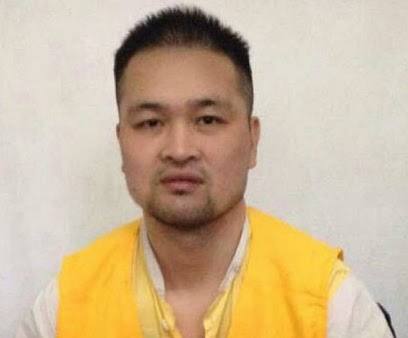
Huang Yizi was born in 1974 — the year given expressly in ChinaAid's August 2025 reporting, consistent with the age of 40 reported when he was seized in 2014 and the age of 51 reported in 2026 — and this archive files it on that basis. He is a fourth-generation Christian from Wenzhou, the coastal city whose dense Christian population and churches have earned it the name "China's Jerusalem," and the church he pastored was Fengwo Church in Pingyang County. ChinaAid's April 2026 assessment is that he is "not only a pastor but also a symbol of resistance against the government's cross-removal campaigns." One correction must come first, because the error appears in this page's own commissioning brief and in part of the English-language record: Huang Yizi was not the pastor of Salvation Church. Salvation Church stands in Shuitou township, Pingyang County; the fight over its cross in July 2014 is what set this case in motion, and Huang was the man who went to support its congregation, to negotiate and to organise prayer — and whom the authorities then designated the leader of that resistance. His own congregation was Fengwo. A long Initium Media profile of his lawyer, carried by China Change, mislabels him as a Salvation Church pastor, and the label has travelled; but the Associated Press, WORLD News Group, UCA News and ChinaAid's reporting consistently identify him as the Fengwo pastor, and this archive follows the multi-source consensus while filing the mislabel's origin alongside. A second layer of identity matters just as much. Before the cross campaign, he had served in an officially recognised Three-Self Patriotic Movement church, and his congregation belonged to that state-sanctioned system; after the campaign, he took his church out of the Three-Self system and became an unregistered house-church pastor — a sequence the Christian Post's 2025 reporting states expressly. That departure is the key to the twelve years that followed: a pastor from inside the system who, in the months when crosses were coming down under cutting torches, crossed to the other side of it.
2. The background: "Three Rectifications, One Demolition" and 1,200 to 1,700 crosses
The institutional background is Zhejiang's forced cross-removal campaign of 2014 to 2016. Its official wrapper was the provincial government's "Three Rectifications, One Demolition" drive launched in 2013 — rectifying old residential areas, old factory districts and urban villages, and demolishing illegal structures. Multiple media and scholarly accounts agree that, in the religious field, enforcement converged rapidly on a single object: the cross on the church roof. Several religious-media accounts report that Xia Baolong, then Zhejiang's Party secretary, touring Zhoushan in early 2014, objected that a church cross was "too conspicuous" and ordered rectification; this archive files that detail as "consistently reported by religious media, with no official text." What is certain is that from January 2014 churches across Zhejiang began receiving orders to remove or lower their rooftop crosses, that the cross of a church in Huanghu township, Hangzhou, was taken down on 27 February 2014 in the first reported removal, and that on 28 April 2014 the Sanjiang Church complex outside Wenzhou was demolished outright after weeks of confrontation — the campaign's emblematic event. The numbers must be filed in layers. The New York Times' on-the-ground reporting of May 2016, citing officials and residents, put the crosses torn down over two years at between 1,200 and 1,700. A scholarly article in the Review of Religion and Chinese Society (2018), citing 2015 reporting, put whole churches demolished at between 35 and 50. An April 2016 report by International Christian Concern claimed a total above 2,000; that figure rests on that one stream and is filed here as "a claim that exists," not as a finding. This archive's formulation is accordingly: on the count of the New York Times and other mainstream outlets, some 1,200 to 1,700 crosses were removed and dozens of churches demolished outright, before the campaign quietly ended in April 2016. Crucially, most of the churches stripped of crosses belonged not to the unregistered house-church world but to the official Three-Self system — which is precisely why Wenzhou was shaken: even the compliant could not protect themselves. Huang Yizi's case belongs to the campaign's fiercest summer, 2014, and the Associated Press recorded at his sentencing that he was the first person jailed for opposing the campaign in Zhejiang.
3. The night of 21 July 2014: blood at Shuitou Salvation Church
In the small hours of 21 July 2014, at about 3 a.m., the cross of the Salvation Church in Shuitou township, Pingyang County, became a target. Believers had been keeping watch inside and at the gate, forming a human wall through the night. The sources disagree sharply on the size of the police force that night: WORLD News Group's on-the-scene reporting says about 100 officers with electric batons; the Telegraph's account, relayed through the South China Morning Post stream, says some 400 police came at 3 a.m. to move the rooftop cross. This archive prints both figures without merging them. Where the sources converge is on what happened next: police beat the Christians guarding the church with iron and electric batons, the crowd included believers of all ages, and about ten people were hospitalised — WORLD records "about 10 people" hospitalised, among them, according to ChinaAid, a 78-year-old man with a fractured skull and a bruised head. ChinaAid's 2026 retrospective, by contrast, speaks of more than 100 believers injured; "more than a hundred injured" and "about ten hospitalised" may measure different things — all injuries against injuries needing admission — and both are filed in parallel. Video from the night shows the crowd singing hymns and praying before the beating began. Huang Yizi's role that night, in every account this archive could find, was organisational, not violent: he organised the Christians to sing hymns and pray to calm the atmosphere, and he took part in negotiations with the government after the clash. He has maintained from 2014 to the reporting of 2026, without a single recorded variation, that he had no involvement in the violence. The Salvation Church cross came down in the end regardless: the New York Times, returning in 2016, described workers using blowtorches to cut the ten-foot cross from the church's 120-foot steeple in Shuitou (the exact date of that final removal differs between accounts and is not fixed here). The night of 21 July is the origin point of everything that followed in this file: a pastor watched elderly church-guards beaten into hospital, and his next move was not to disperse but to take the prayer meeting to the door of the public security bureau.

4. The prayer of 24 July, and the seizure of 2 August
On 24 July 2014, Huang Yizi led a group of believers to the local public security organ, where they sang hymns and prayed on behalf of the Christians beaten on 21 July. That step is the act the prosecution ultimately fastened on: his defence lawyer Zhang Kai told WORLD after the verdict, in terms, that what the government was punishing was Huang's leading church members in singing hymns and praying outside the public security bureau on July 24. Huang had also criticised the police violence on his blog; the Telegraph reported that his arrest was attributed in part to encouraging resistance and to that blog criticism. Before his arrest he had told the South China Morning Post, in a sentence widely re-quoted, that he knew he would be put in jail one day. On the morning of 2 August 2014 officials took him from his home. (Professor Fenggang Yang's scholarly reconstruction dates his detention to 3 August, on suspicion of "gathering a crowd to assault a state organ"; this archive counts from 2 August, which carries the arrest-notice chain and the multi-source consensus, and files the 3 August date in parallel.) The initial accusation shifted as it travelled: "gathering a crowd to assault a state organ" in one account; prosecutors originally charging assault on state officials and later altering the charge, in Catholic-media reporting. The paper trail settles on 28 August 2014: the arrest notice of the Pingyang County Public Security Bureau, published in translation by the Voice of the Martyrs network, records that with the approval of the Pingyang County People's Procuratorate the bureau arrested Huang Yizi that day on suspicion of "gathering a crowd to disrupt public order" and held him at the Pingyang County Detention Centre. From keeping watch at a church door at 3 a.m., to hymns outside a police station, to a blog post — every step in the chain was open and peaceful speech or assembly. The offence printed on the arrest notice has nothing to do with violence and everything to do with "order."
5. Zhang Kai's legal team: a defence that was bargained over
Huang's family and friends retained Zhang Kai, a Christian human-rights lawyer from Beijing's Xinqiao Law Firm, then 37. Zhang built a team of more than eleven lawyers and broke the rights-defence work into separate lawsuits — the detail comes from Initium Media's long profile, filed here at that grade: the rules entitled a suspect to see a lawyer within 48 hours, but more than 70 hours passed before Huang saw one, so the team sued for compensation; the detention centre would not let Huang read the Bible in custody, so the team sued over that too, a case Zhang called China's first detention-centre scripture case; when the Zhejiang provincial government's "governor's mailbox" webpage carried a reply conceding that a defender's letter had shown Huang wrongly imprisoned, the team sued again, arguing conviction without trial and defamation of their client; and after his arrest the lawyers collected more than 1,000 signatures and applied to hold a protest march. The fate of the lawsuits is recorded by WORLD in one flat sentence: in January 2015 Zhang sued the county government for violating Huang's rights and for tricking him into dismissing his lawyers, and the court rejected the suit outright. The bargain behind that dismissal is the centre of this section. Zhang told Initium that about three months after he took the case, the Wenzhou authorities proposed a deal: if Huang Yizi dismissed Zhang Kai as his counsel, he would be free within a month. The defence was duly dismissed; a month passed, then two, and Huang stayed in detention; when his friends pressed the police about the broken promise, officials assured them he would be out by Christmas, and Christmas passed too. That account comes from Zhang himself through Initium, with no official response text on record, and is filed as the defence side's published account; but it locks exactly into the documented sequence around it — lawsuits rejected, sentence served to the last day. During the year inside, Huang was, according to a Christian Today report relaying ChinaAid, interrogated more than 100 times, each session lasting about six hours; that detail rests on that single relay chain and is filed with its provenance attached. And the lawyer who ran this defence was himself taken: Zhang Kai was seized by police in Wenzhou on 25 August 2015, held under RSDL for about six months, shown "confessing" on television on 25 February 2016, then criminally detained on charges including endangering state secrets, and released after roughly seven months. A lawyer imprisoned for defending this case belongs in this file, because it measures the climate in which Zhejiang's church cases were fought in 2015.
6. 24 March 2015: a verdict waited for by 600 people — and Zhejiang's first
On 24 March 2015 the Pingyang County People's Court tried Huang Yizi. UCA News and WORLD report that some 600 supporters gathered outside the courthouse to wait; Huang's wife was not among them — she had travelled to Beijing to petition the central government over his case and missed the trial. WORLD's account of the hearing records that the judge refused to admit several key pieces of defence evidence and would not let Zhang Kai argue the illegality of the police's own conduct — the beating of the church-guards and the forced removal of the Salvation Church cross. Zhang called the whole proceeding unlawful and said he would appeal. At 8 p.m. Zhang came out and announced the result to Christians who had travelled from across the region: Huang Yizi, 40, pastor of Fengwo Church, was guilty of "gathering a crowd to disturb social order" and sentenced to one year in prison. The Associated Press, reporting the same day, supplied the framing this archive has already noted: he was the first person jailed for opposing Zhejiang's intense campaign to remove crosses from churches. The term ran from the day of his seizure, 2 August 2014; Baptist Press, carrying WORLD's report, noted he was slated for release on 2 August 2015. As to the appeal Zhang announced in the courthouse doorway — whether it was rejected, upheld on review, or never accepted — this archive searched with multiple keyword sets and found no public reporting at all; the text of the judgment itself is likewise not on public record. The appeal's outcome is filed as: no public record. He served the full year and was released in August 2015. After his release an Asia Weekly journalist interviewed him, and ChinaAid's 2022 retrospective quotes what he said: he had studied the Criminal Law inside and shared the gospel with fellow inmates; for Christians, he said, the body is confined but the soul is free, because they had committed no sin. The quotation is his own, relayed by ChinaAid, and is filed at that grade. A man was imprisoned for a prayer meeting of which video exists for anyone to see; the judgment that imprisoned him has never been published. That contrast is itself part of this case's evidence.
7. 12 September 2015: out less than a month — then "state secrets"
The commissioning brief's claim of a "second sentencing in 2016" does not survive checking, and this page corrects it as its second correction to the brief: the second round of detention involved no indictment, no hearing and no judgment at all. He was held for about five months inside a measure more opaque than prison. On 12 September 2015 — less than a month after his release at the end of the one-year term, as Church in Chains states expressly — the authorities placed him under residential surveillance at a designated location on suspicion of "stealing, spying on, buying or illegally providing state secrets or intelligence for an organisation, institution or individual outside the country": that is, secret detention at an undisclosed location outside the detention-centre system, with no family notification of the place and no access to a lawyer. Contemporary Christian Post reporting added the umbrella label of "endangering national security." What that place was like he disclosed years later to independent media, in ChinaAid's report of January 2022: he was held in a small, dark, secret room; he could not wash his face, shower, brush his teeth or cut his hair. He said the five months were spent investigating him for fraud, embezzlement of public funds and foreign infiltration, and that "none of these were real"; even the officer who investigated the case finally told him, in his telling, that he admired Christians and their regard for justice and did not understand why the government harmed them. That last detail is Huang's own relayed account and is filed as such. The release date is a genuine conflict in the record and is printed in parallel: ChinaAid's 2022 retrospective says he "was released on December 27" without giving the year in that sentence — if 27 December 2015, the detention from 12 September would have lasted only three and a half months, contradicting the same article's own "five months"; the contemporary report carried by the Christian Daily/Christian Today stream on 11 February 2016 states that he had been held for five months in a "black jail" and was allowed home the previous week, in time for Chinese New Year — which yields early February 2016 and a duration that fits "five months" exactly. This archive files the duration on the multi-source consensus of about five months, takes the contemporary "before Chinese New Year 2016" as its primary release point, files the "December 27" date alongside as unresolved, and records the exact date as not publicly settled. Whichever date is right, the skeleton of fact does not move: a man who had just served a full year was taken again within a month, held in a black room for nearly half a year on a state-secrets suspicion, and then sent home never having been charged — released, as he had been seized, without a single published page explaining why.
8. 2016 to 2025: six years under a magnifying glass, and a premonition that came true
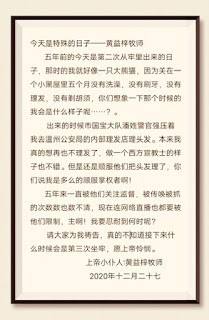
After the second release, Huang Yizi did not regain freedom in any ordinary sense. ChinaAid's report of 31 January 2022 is headlined by six years of harassment after his release, and its content is his own disclosure to independent media: departments intimidated him regularly; a police officer surnamed Zheng repeatedly had people pass him threats, warning he would be imprisoned again; an official of Fengwo township's religious affairs office came to his church and told the congregation that, having been in prison, he was no longer qualified to preach — a claim the congregants and his co-workers rebutted to the official's face. (The official's name is garbled in ChinaAid's English transliteration, and this archive records only the office, not a guessed name.) His sermons were deleted online and his online preaching repeatedly interrupted. In 2018, despite his standing with the authorities, he signed the "Joint Statement by Pastors: A Declaration for the Sake of the Christian Faith" launched by Pastor Wang Yi of Chengdu's Early Rain Covenant Church; totals for the signatory pastors run from over 430 to over 450 in different reports, and this archive records only that more than four hundred pastors signed and that he was one of them. In early 2021 he sent out a prayer request, as ChinaAid records it: he said that although he had been released five years earlier he had no freedom, that he was constantly surveilled and summoned, that he sensed he would be imprisoned a third time, and he asked God for mercy and Christians for intercession. The letter was written in 2021; the premonition was fulfilled four years later. This archive notes the shape of those six years with care: no warrant, no case number — a pastor in his own home and at his own pulpit, summoned, deleted and warned, serving a sentence outside any sentence. Of his health across those years there is no systematic public record, and this archive does not invent one; what exists is the RSDL account of a man forbidden to wash, and the fact that two fellow detainees released in 2025 emerged visibly thinner — their bodies, not his, and not transferred onto his file.
9. 26 June 2025: the third time — a house search, five believers, and a sixth
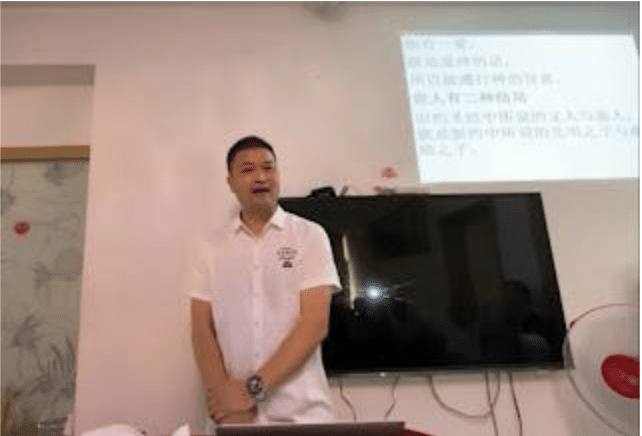
On 26 June 2025 officers of the Pingyang County Public Security Bureau entered Huang Yizi's home. Witnesses, as reported by ChinaAid, said police forced entry, searched the home without prior notice and took him away, confiscating items; Bitter Winter, relayed by Church in Chains, reported that when his wife tried to film the arrest, police assaulted her — a detail resting on that single relay chain and marked as such. Other Zhejiang believers were taken the same day: Christian Solidarity Worldwide reported five people in all, Huang included, drawn from Ningbo, Quzhou and Taizhou as well as Wenzhou, all administratively detained the following day; ChinaAid's report of 31 July 2025 put six Christians from the Wenzhou, Taizhou and Ningbo areas inside the case in total, naming alongside Huang a Li Yongfeng of Taizhou, a Ding Liqing of Wenling and a Shao Haiyan of Ningbo; the Christianity Daily stream adds that a sixth church member was detained separately on 17 July. The headcount floats between five and six according to the date counted and whether the later arrest is included, and both figures are filed. Lawyers who tried to visit him after the seizure were refused access by the detention centre and told to return in 48 hours, and a complaint was filed alleging violation of his right to legal representation. The alleged "facts of the crime," according to ChinaAid's April 2026 account drawn from the case's legal documents, consisted mainly of distributing to church members audio Bible players loaded with his sermons — simple devices preloaded with hymns and sermon recordings, made for elderly believers with failing eyesight and for those unable to attend services; the church's position, relayed by ChinaAid, is that promoting the players was non-profit ministry work, not a business. ChinaAid named the Pingyang County procurator handling the case as Sun Bin. In the early hours of 26 July, Ding Liqing and Shao Haiyan were released on bail; Lin Aili's account of that rainy morning — believers waiting outside the detention centre, families sent to a highway entrance to collect two visibly thinner women — is the family's own record, filed as such. Four people, Huang among them, stayed inside.
10. 29 July 2025: an arrest that was "already approved," and the letters that vanished
The approval of his arrest in late July 2025 is documented by CSW with unusual procedural precision, and this archive files it item by item. Under the Criminal Procedure Law, public security must ask the procuratorate to approve arrest within thirty days of detention; Huang's representative believed the case had been transferred for review only on 25 July, the last permitted day, with an outcome still days away — but discovered that on that same day Huang's name was already listed as "arrest approved" on the official portal of the Supreme People's Procuratorate, without prior notice and without any public-security paperwork. Huang himself was told of the arrest only on 30 July; he was informed the review had been completed on 28 July and the arrest approved on 29 July. His representative expressed concern to CSW about the speed of the processing and what it implied about the depth and transparency of the review. The Chinese Human Rights Lawyers Group condemned the authorities' habitual use of vague charges such as "illegal business operations" against religious communities — a public statement relayed by CSW and the Christian Post. CSW's Founder President Mervyn Thomas condemned the formal arrest, called for Huang's immediate and unconditional release, and insisted that the authorities uphold the rule of law in cases involving religious community members, including counsel of their choosing and fair proceedings. In August the detention centre cut his remaining thread to his family: his wife Lin Aili disclosed to ChinaAid that Huang had sent five letters out of the detention centre and his family had not received a single one, and that two postcards she and their child sent him on 8 August had likewise disappeared without trace. In the postcard that never arrived she had written — in ChinaAid's quotation — that had she known, she would have given him a big hug before he stepped out of the door that day and made him a breakfast he liked, so that no indebtedness or regret would be left; she wrote that she did not understand why it was him again, and that she could only think God was letting him retire in another way. Lawyer Fang Xiangui, who had been involved in the earlier Wenzhou cross cases, stated publicly that a detention centre has no right to strip a detainee of basic correspondence rights. Voice of the Martyrs' October 2025 reporting added that the pastor held since 30 July was being denied access to a Bible and to the postcards from his wife and children — in 2014 the detention centre would not let him read the Bible; in 2025 it still would not; eleven years changed nothing on that line. For completeness of the international record: this archive's searches of the public databases of the U.S. Congressional-Executive Commission on China and of USCIRF did not retrieve a named entry for Huang Yizi in this round of checking. Not retrieved is not the same as non-existent, and the fact is filed as "not found in this round of searching," not as "no international response"; the documented institutional responses are those of CSW, the Chinese Human Rights Lawyers Group, ChinaAid and the Voice of the Martyrs network.
11. 24–25 April 2026: a second trial, eleven years on — and a verdict with no public record
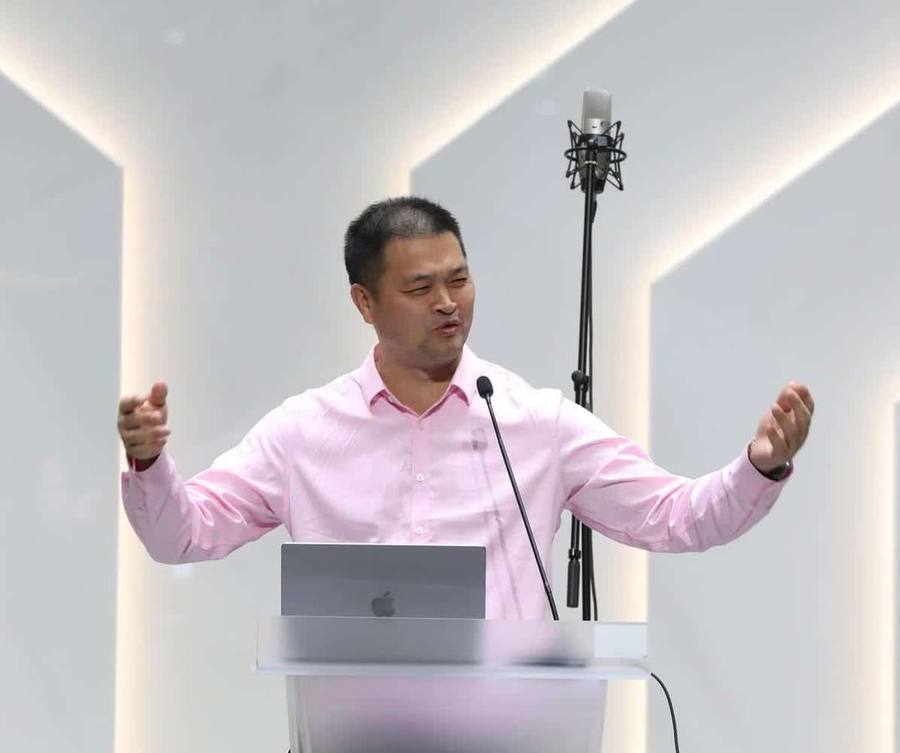
The case of Huang Yizi came to trial at the Pingyang County People's Court on 24–25 April 2026, after a pretrial conference on 20 April. ChinaAid's reports of 16 and 22 April 2026, drawn from legal documents and the court's own notice, record that the hearing was designated public and that the charge remained illegal business operations. One change in the cast matters: by then, according to ChinaAid, the other four people in the case had all been released or had their compulsory measures lifted, so that the prosecutorial pressure was concentrated on Huang Yizi alone — a configuration observers read as an intention to secure his conviction first, filed here as observer opinion relayed by ChinaAid. Before trial he was still permitted to meet his lawyer, but his correspondence remained strictly restricted, he could receive no letters from his family, and the detention centre reportedly continued to limit his reading of the Bible. The Pingyang County Court issued no public comment on the case. Then comes the last blank in this file, which this archive is obliged to print as found: after the trial of 24–25 April 2026 — whether judgment was pronounced in court, what any verdict was, what sentence if any followed, whether he appealed, and how his health stands — this archive searched ChinaAid, CSW, church media and news databases with multiple keyword sets in both languages and, as of November 2026, found no public reporting whatsoever. The absence of news of a verdict is not evidence that there was no verdict; it means only that a pastor for whom 600 people once waited outside a courthouse until 8 p.m. has, after his 2026 trial, no public sequel at all. His status can therefore only be written as it stands at the head of this page: in custody, tried in April 2026, the outcome a matter of no public record, last verified against the April 2026 trial reporting.
12. The family's twelve years: from a Beijing petition to a postcard that never arrived
What this case has cost the family has three scenes. The first is 24 March 2015: her husband on trial in Pingyang, Lin Aili absent from the crowd outside the court because she had gone to Beijing to petition for him — UCA News recorded the fact. Six hundred believers waited and got their answer that night; she got the news of a one-year sentence from the capital, where her petition changed nothing. The second scene is the broken bargain of 2014: dismiss the lawyer, and he is home in a month. The family complied; the release never came. The people who made that decision, and who then waited out a month, two months and a Christmas of assurances, were the family. The third scene is 2025: police in her home, her phone raised to film and — on the Bitter Winter account — police hands on her; then, her husband gone, she became the case's window to the world — the arrest-approval irregularities, the bail releases, the prosecutor's name all reached ChinaAid through her — and she wrote postcards to a detention centre, about a hug and a breakfast and "why is it you again," and the postcards vanished, as did all five of his letters coming the other way. The 2014 reporting records two children, the elder then thirteen; eleven years on, those children have grown up in a house where their father was imprisoned three times and watched for six years in between. Anything more specific about the family's present circumstances is a matter of no public record, and this archive neither enquires nor speculates. A family's twelve years are, after the judgments themselves, the most complete document this case contains.
13. Filed in parallel: where the sources diverge, and the corrections made
Under this archive's rules, the divergences are listed, not merged. (1) Church affiliation: the Initium stream mislabels him a Salvation Church pastor; the Associated Press, WORLD, ChinaAid and others consistently make him pastor of Fengwo Church — the latter is adopted, the mislabel filed. (2) Police numbers on the night of 21 July 2014: about 100 in WORLD, about 400 in the Telegraph stream — in parallel. (3) Injuries that night: about ten hospitalised, including a 78-year-old with a fractured skull, against the "more than 100 injured" of ChinaAid's 2026 retrospective — in parallel, the difference plausibly one of severity counted. (4) Date of the first seizure: 2 August, carrying the arrest-notice chain and the consensus, against 3 August in Fenggang Yang's reconstruction — 2 August adopted, the sentence counted from it. (5) The drift of the original accusation: "gathering a crowd to assault a state organ," "assaulting state officials," and the final "gathering a crowd to disrupt social order" — the drift itself is the record, and is not harmonised. (6) The 2015 appeal: announced in the courthouse doorway; its outcome is a matter of no public record. (7) The nature of the second detention: RSDL without indictment or trial — not the "second sentencing" of the brief; the suspicion's full form is stealing, spying for, buying or illegally providing state secrets or intelligence to foreign entities, with the looser "endangering national security" label filed alongside. (8) The second release date: before Chinese New Year 2016, in contemporary reporting consistent with five months, against "December 27" in the 2022 retrospective with its year unstated — in parallel, unresolved. (9) The cross-removal total: 1,200 to 1,700 on the New York Times' count adopted as primary; the "over 2,000" figure filed as a single-stream claim. (10) The 2025 headcount: five taken on the day in CSW's account, six implicated in the case in ChinaAid's — a difference of counting date, filed in parallel. (11) The 2018 joint statement's signatories: totals from over 430 to over 450 in parallel. (12) The 2026 verdict: no public record, and no conjecture offered.
14. Verification and sources
The core facts of this entry were cross-checked against the following, graded as follows. Grade A, wire services and mainstream media: the Associated Press report of March 2015 (the first person jailed for opposing the cross removals; the one-year sentence; Zhang Kai's defence points); the New York Times' May 2016 field report (1,200 to 1,700 crosses; the cutting of the Shuitou Salvation Church cross); the Telegraph's 2014 reporting as relayed (some 400 police; the blog criticism among the grounds of arrest); WORLD News Group's report of 25 March 2015 (the 24 March trial, the 600 supporters, Zhang Kai announcing the verdict and an appeal, the 24 July prayer as the act punished, the bargain and the rejected lawsuit, release due 2 August 2015). Grade B, human-rights and church organisations, usable where mutually corroborating: ChinaAid's series from 2016 to 2026 (the January 2022 six-years-of-harassment disclosure; the July 2025 arrest-stage reporting and Lin Aili's account; the August 2025 correspondence reporting; the April 2026 pretrial and trial arrangements; Fengwo affiliation and fourth-generation background); Christian Solidarity Worldwide's August 2025 statement (the arrest-approval irregularities, Mervyn Thomas's statement, the Chinese Human Rights Lawyers Group's condemnation); Church in Chains Ireland's April 2026 survey (Fengwo Church, the audio-player allegation, the wife-filming report); Voice of the Martyrs Canada and Australia reporting of 2025 (the 26 June seizure; Bible and postcard denials); the Christian Post's August 2025 report (the Three-Self departure; the arrest timeline). Grade C, scholarship and specialist writing: Mark McLeister's 2018 article in the Review of Religion and Chinese Society and Fenggang Yang's reconstructions of the Zhejiang campaign (the Three Rectifications framework; the 35–50 demolished churches of 2015 estimates; Sanjiang's demolition on 28 April 2014; the campaign's end in April 2016); Initium Media's long Zhang Kai profile (the four-lawsuit detail, the governor's-mailbox reply, the dismissal bargain — filed at the grade of a defence-side account). Not obtained: the text of the 2015 judgment or any appeal ruling, the 2015 RSDL decision document, the 2025 indictment, and the 2026 judgment; neither the Pingyang County Court nor the Wenzhou authorities have ever published an account of this case. No single source is quoted at more than fifty words; every conflict is layered rather than merged, and every gap is written as what it is — no public record.
15. Our Take
This archive's assessment is tied to the facts of this case alone. First: three detentions under three different labels, and not one of them aimed at violence. The act punished with a year in prison in 2014 was singing hymns and praying outside a police station. The suspicion that bought five months in a black room in 2015 was a state-secrets pocket that was never charged. The conduct seized on in 2025 was handing elderly believers a player that reads sermons aloud. When one man is processed in turn under "order," "secrets" and "business operations" for doing, across twelve years, exactly the same things — preaching, praying, and defending his cross — it is not the man who keeps changing; it is the label. Second: procedure in this file has never once protected him. His name appeared as "arrest approved" on the Supreme People's Procuratorate's website before he or his lawyer were told anything; five letters he wrote from a detention centre vanished entire, which in any system calling itself rule-of-law has a name — deprivation of correspondence — and requires no explanation from anyone; and the lawyer who sued on his behalf was himself taken and confessed on television. Any one of these would be a scandal standing alone. In this file they are routine. Third: the bargain offered in 2014 is the most revealing document of all — release in a month if you sack your lawyer — offered by the authorities, broken by the authorities, and then immunised by a court that threw out the lawsuit complaining of the breach. What was being purchased was never a guilty plea; it was the absence, at his side, of a man who could draft a complaint. Fourth: from the Bible refused in a detention centre in 2014 to the Bible refused, and the wife's and child's postcards refused, in 2025, the technology around this case changed several times over while the one measure aimed at the faith itself did not move at all — which marks it as part of the punishment, not a requirement of the investigation. Fifth: the silence after the 2026 trial. In 2015, six hundred people stood outside a county courthouse until eight in the evening to hear one sentence. In 2026, the notice of trial was published and no news of any verdict ever followed. A fourth-generation Christian, the pastor of a Wenzhou church, walked into the Pingyang County Detention Centre for the third time, and the public record simply stops. This archive files the broken line exactly as found: it is itself part of the sentence — not the one written on paper, but the one written for everyone still guarding a cross to read.