
第152案 | 何桂藍Case 152 | Gwyneth Ho
前《立场新闻》记者何桂蓝,2019年在元朗站直播袭击时被打伤成名,2020年转身参选并在民主派初选新界东得票第一,却被控串谋颠覆国家政权,不认罪受审罪成,拒绝求情,2024年11月19日被判监七年,上诉被驳回后正寻求终审上诉。Gwyneth Ho, the former Stand News reporter beaten on camera at Yuen Long station in 2019, quit journalism in 2020, topped the New Territories East pro-democracy primary — and was charged with conspiracy to commit subversion, convicted after trial, and sentenced to seven years on 19 November 2024 after offering no plea in mitigation; her conviction appeal was dismissed in February 2026 and she is now seeking a final appeal.
1. "Sister Stand News": the reporter who was beaten on camera and kept filming
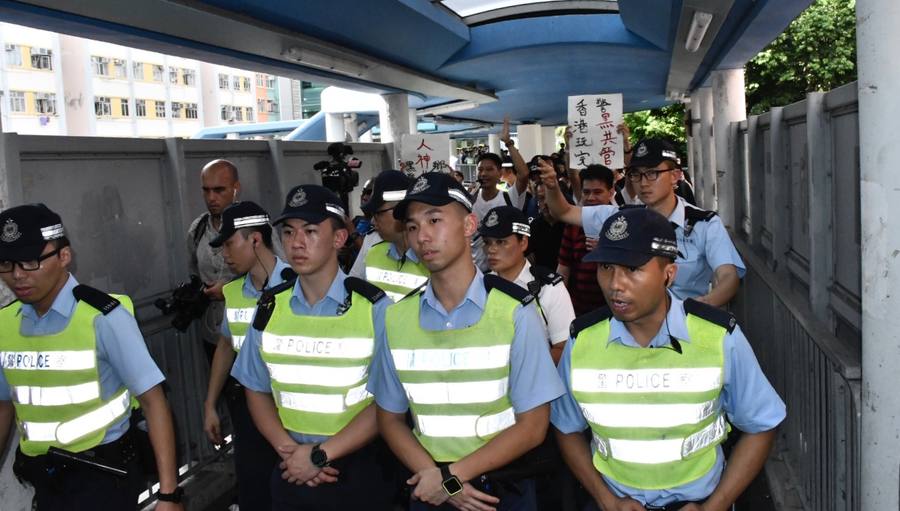
Gwyneth Ho Kwai-lam was born in Hong Kong on 24 August 1990. She attended Ho Fung College and then went to Beijing to study at Tsinghua University — where, according to the biographical note in the scholars' 2022 Nobel Peace Prize nomination letter, she saw at first hand how an authoritarian government restricts speech and induces self-censorship. Returning to Hong Kong in 2012, she worked at House News, the online outlet that later regrouped as Stand News. She interned at RTHK in 2011, worked for BBC Chinese, contributed to Taiwan's The Reporter, joined BBC Chinese in July 2017, and later took a master's degree in journalism at the University of Amsterdam through the Erasmus Mundus programme. In 2019, as the anti-extradition-bill movement filled Hong Kong's streets, she came home and joined Stand News as a frontline reporter. That training matters for the record: she was not an activist invented by a movement, but a fully credentialed professional journalist who had worked for outlets in Hong Kong, Taiwan, Britain and the Netherlands. Every step she later took was taken from inside that professional identity.
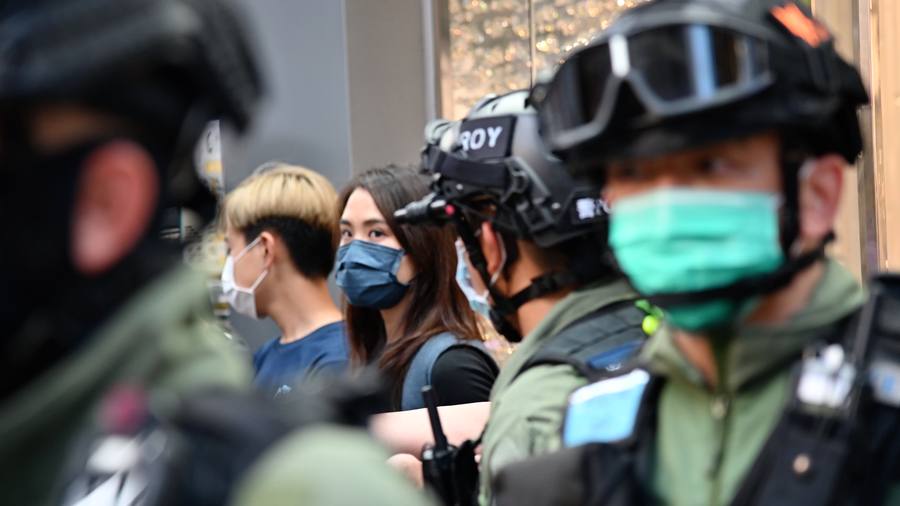
Two nights in the summer of 2019 made her famous. On 1 July 2019 she was among the reporters inside the Legislative Council Complex when protesters stormed it, and her interview with a young protester vowing that they would "leave together" travelled widely. On 21 July, at Yuen Long MTR station, white-clad men were indiscriminately attacking passengers and protesters while she live-streamed the scene. An assailant charged across the paid-area barrier striking people, then turned on her. She was knocked to the ground — and the camera never stopped. She got up and kept filming as paramedics treated the injured. She was taken to hospital with injuries to her head, hand and shoulder. The footage went around the world, and Hong Kong gave her a nickname: 立場姐姐, "Sister Stand News." This archive records that night not for colour but because it explains everything that follows. A journalist was beaten while doing her job, on camera, in a station full of witnesses. The accountability that followed, in the years afterwards, fell with infinitely greater weight on her — for standing in an election — than on the men who beat her. Who did the hitting and who went to prison is an order of facts an archive must not allow to be reversed.
2. Stepping out from behind the camera: the decision of June 2020
On 18 June 2020, Ho announced that she was quitting journalism to run in the Legislative Council elections then scheduled for September. Her decision was partly motivated by the Yuen Long attack of 21 July 2019: she had stood at the scene with a press pass while institutions did nothing about the violence, and she chose to step in front of the camera instead. The timing deserves to be fixed precisely. When she announced her candidacy, the National Security Law did not yet exist. It was passed by the Standing Committee of the National People's Congress on 30 June 2020, promulgated in Hong Kong that same night without ever passing through the local legislature, and took effect the next day. On the day she decided to run, everything she intended to do — contest a primary, take a seat, vote against government bills — was lawful and indeed written into the Basic Law as the ordinary work of a legislator. Twelve days later a new law existed. Six months after that, the same set of acts had been retrospectively assembled into a conspiracy charge carrying up to life imprisonment. The prosecution's answer to the timing problem was to date the alleged conspiracy from 1 July 2020, the law's first day; the primaries were held eleven days after that. The whole case grows out of that eleven-day gap.
Her platform and her public words later became prosecution evidence, and the judgment quoted them. She signed the "Resolute Resistance, Inked Without Regret" declaration, launched by localist candidates, committing signatories to use the legislature's powers to press the movement's "five demands." She spoke at election forums and press conferences about using the election to create political tension and trigger a constitutional crisis; the trial court described her and Owen Chow, among the declaration's signatories, as holding radical positions, and found that she sought, in the court's words, "a completely new political system and structure," the existing one being in her view dysfunctional (the judgment's key sentence on her is archived verbatim in section 11, within the fifty-word quotation limit). Her own account at trial, as summarised in post-verdict reporting of the judgment, was that she had taken part to encourage a turnout the world could not ignore. None of the words attributed to her — in court, on stage, in print — concerned violence, weapons or any practical seizure of power. The prosecution and the court read "veto the budget without regard to its contents" as a subversive method; she read the same act as a legislator's constitutional power exercised under a mandate from voters. Which reading is right is, as of 2026, a question certified for Hong Kong's highest court (see section 12).
3. The primaries: 610,000 people voted, and she came first in New Territories East
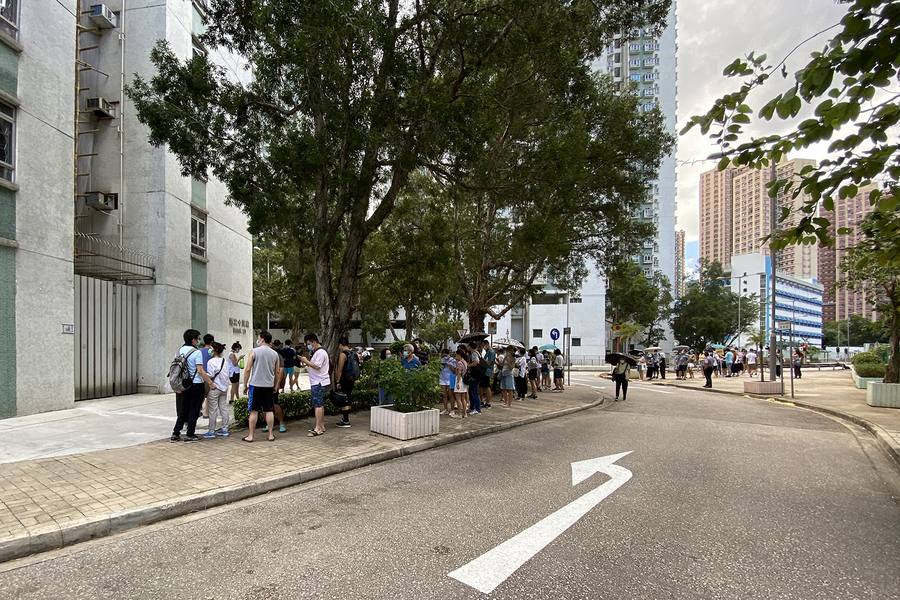
On 11–12 July 2020 the pro-democracy camp held its "35+" primaries to coordinate candidacies for the September Legislative Council election. The exercise was initiated by Benny Tai, coordinated by Au Nok-hin and others, run by Power for Democracy, and used an electronic voting system designed by the Hong Kong Public Opinion Research Institute. About 250 polling stations operated across the city. It was held under explicit official threat: the Secretary for Constitutional and Mainland Affairs, Erick Tsang, publicly warned beforehand that the primaries might breach the new National Security Law, and police raided the Public Opinion Research Institute's offices on the eve of voting. People voted anyway. By the close of polling on the Sunday night, more than 580,000 had cast ballots, as Radio Free Asia reported that evening; the organisers' final figures, widely reported thereafter, put the turnout above 610,000. Masked against a resurgent virus, voters queued, verified their identities with volunteers and voted on their phones. The goal was printed on every leaflet: coordinate the camp's lists and win at least 35 of the Legislative Council's 70 seats.
Ho stood in New Territories East. When Hong Kong Free Press published the full primary results on 16 July 2020, she had 26,802 votes — the highest tally of any candidate in the constituency — and with it a nomination ticket for the general election. A 29-year-old ex-journalist, one month into a political career, had outpolled sitting legislators and veteran politicians in her own camp. That number is the key to the weight of her case: she was not a marginal figure swept along by events but the electorate's first choice, chosen by name, in a verified vote, by twenty-six thousand people. On 30 July 2020, returning officers disqualified her and a string of other pro-democracy candidates from standing. The next day the government postponed the election itself for a year, citing the pandemic. Within the following year Beijing rewrote Hong Kong's electoral system wholesale, introducing patriots-only vetting of candidates. From first place in the primary to disqualification took eighteen days; from disqualification to arrest took five months. What the court would later call a conspiracy had been conducted entirely in public — publicly proposed, publicly voted, publicly counted, and reported in the press from start to finish. An archive has to write that down plainly.
4. 6 January 2021: the dawn operation and the arrest of 53
In the early morning of 6 January 2021, the Hong Kong Police Force's National Security Department deployed roughly a thousand officers across the city and arrested 53 pro-democracy figures — the organisers and candidates of the primaries — on suspicion of subversion under the National Security Law. Ho was one of them. It was the largest single operation under the law since its imposition, reported by the BBC the same day as "National Security Law: Hong Kong rounds up 53 pro-democracy activists." Those arrested were released on bail in batches; Ho was bailed on 7 January. One detail from that month fixes her state of mind before it happened: Amnesty International's Northern Ireland programme later disclosed that about four weeks before her arrest she had delivered its annual lecture and told the audience that she "lived under a constant threat of being arrested." On 6 January, half of that prediction came true. On 28 February, the rest of it did.
The morphology of that morning belongs in the record. The arrests did not occur at the scene of any act in progress. They took place nearly six months after the primaries had ended, after the election had been postponed and after the candidates had already been disqualified — that is, after the political "threat" the arrests supposedly answered had already been administratively extinguished by the authorities themselves. Fifty-three people were taken from their homes at dawn on the same morning, in different districts, for the same public event. The net caught several generations of Hong Kong's democracy movement at once: academics, sitting and former legislators, district councillors, social workers, trade unionists and one journalist who had topped her primary poll. The legal instrument that made a coordinated dawn sweep of an entire opposition camp possible was Article 22 of a law that had existed for six months. Ho's seven weeks on bail were the last freedom she has had from that day to this.
5. 28 February 2021: charged with 46 others — and she never came out again
On 28 February 2021 the national security police charged 47 of those arrested with one count of conspiracy to commit subversion, kept them in custody overnight, and produced them before the West Kowloon Magistrates' Courts on 1 March. The first appearance ran for four days, until 4 March — the "marathon remand hearing" that became an emblem of the new era: defendants held in the dock for extreme hours, one collapsing and being taken to hospital, lawyers arguing bail applications through the night. The reason bail was a near-impossibility lies in Article 42 of the National Security Law, which provides that no bail shall be granted unless the judge has sufficient grounds to believe the accused will not continue to endanger national security. The ordinary presumption was inverted: the prosecution did not have to show why a defendant should be locked up; the defendant had to show why she should be let out. Of the 47, only 13 ever obtained bail. Gwyneth Ho was not among them. From 28 February 2021 she was remanded in custody — for almost two years awaiting trial, then through trial, verdict, sentence and appeal, to this day, without a single day of freedom in between.
The legal architecture of the charge should be stated exactly. The alleged "unlawful means" in the conspiracy was this: once elected and holding a majority, the defendants would indiscriminately veto the government's budget and other funding bills; under Articles 50 to 52 of the Basic Law, the Chief Executive would first dissolve the legislature, and if a re-elected legislature again refused the budget, she would have to resign. The prosecution presented this sequence — every step of which is written into Hong Kong's mini-constitution — as a plan to paralyse and overthrow the government. Benny Tai had written provocatively about the strategy as a "constitutional mass destruction weapon," and the phrase haunted the case from indictment to the Court of Appeal's 2026 judgment. The defence answer never changed: powers conferred by the Basic Law cannot become "unlawful means" merely because they are used in concert and with intent to pressure the government. That question, after five years, was certified in August 2026 as one of great and general importance for the Court of Final Appeal (see section 12). Within that vast legal argument, Ho's individual position was almost starkly simple: defendant D33, a candidate who had never been elected, never attended a single sitting of the council she supposedly conspired to capture, and never cast the veto the case was about.
6. Three years on remand: a prison without clocks, and the letters
Between the charge on 28 February 2021 and the opening of the trial on 6 February 2023 lay 707 days. In that time the case passed through mention hearings, committal to the High Court, pre-trial reviews and a long fight over reporting restrictions; 31 of the 47 indicated guilty pleas, and 16, Ho among them, held out for trial. A 2024 study in the LSE's Rule of Law Journal, analysing the published letters of the remanded Hong Kong 47 defendants, observed that there are no clocks in Hong Kong's prisons, and examined how indefinite waiting itself functions as a form of discipline. The study quotes Ho's long Facebook essay of 2 May 2021, in which she wrote that the very existence of imprisoned dissidents like her was a manifestation of the whole city being entrapped by authoritarianism. Friends maintained her social media pages and published her letters from custody — letters in which, as the Washington Post described them in June 2021, she wove together her political stance, pop culture and the future of the pro-democracy movement. Every one of those letters passed through the hands of correctional officers before it reached the outside world. They were her only public voice for three years.
She also fought one procedural battle of her own during remand, and it is worth a full paragraph because it shows exactly how she intended to behave inside this system. On 8 September 2021 she applied for bail at the High Court. Her counsel's written submissions argued that because the Criminal Procedure Ordinance forbids reporting almost everything said in bail proceedings, such hearings are effectively held behind closed doors; Ho applied to have the reporting restrictions lifted for her own application, arguing that her interests could only be protected by full publicity. Judge Esther Toh refused. The day had a further twist that belongs in Hong Kong's history, not just hers: her original counsel, the barrister Chow Hang-tung, had been arrested that very morning in a separate national security case and could not appear; other counsel had to step in. Judge Toh, in a brief written judgment, dismissed the "closed door" characterisation as inaccurate and unfounded and held that the court must protect the integrity of future proceedings. Ho then withdrew her bail application altogether and went back into custody. In a Facebook post afterwards she asked, in substance, how open a hearing could be called when its contents were known only to the hundred or so people in the room. This archive records both facts side by side: only 13 of the 47 were ever bailed — an institutional fact; and Ho preferred to withdraw her application rather than proceed under a reporting ban — her choice.
7. The smaller case: six months for a candle
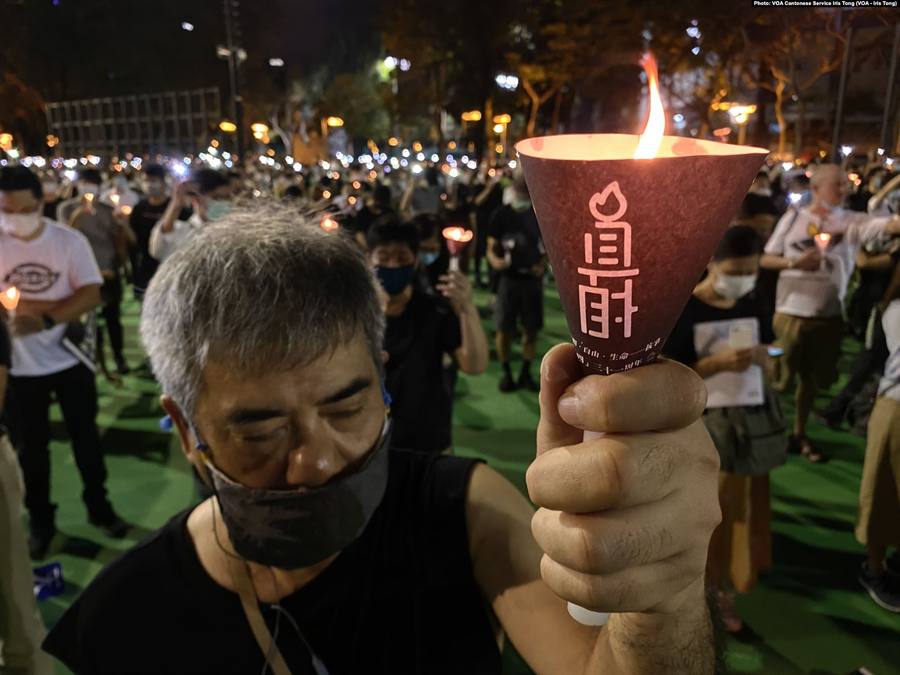
Alongside the great national security case, Ho carried a smaller prosecution, and it deserves its own section because it measures the temperature of Hong Kong in 2021 better than any statistic. On 4 June 2020 — the thirty-first anniversary of the Tiananmen crackdown — the Hong Kong Alliance's candlelight vigil in Victoria Park was banned by police on pandemic grounds, for the first time in the vigil's thirty-year history. Large numbers of citizens entered the park anyway, candles in hand. Ho was among them, holding flowers and a candle. She was charged, with Jimmy Lai, Chow Hang-tung and others, over the banned assembly; like Lai and Chow, she pleaded not guilty and stood trial. As Hong Kong Free Press reported her evidence, she told the court she had gone to the park not to take part in the vigil but to protest the police ban — to test, in person, what difference remained between Hong Kong and mainland China. The flowers and the candle were part of the test. District Judge Amanda Woodcock rejected the argument, dismissing it, in the words widely reported from her judgment, as "frankly non-sensical."
On 9 December 2021 Ho was convicted. Amnesty International's statement on the verdicts draws the distinctions precisely: Lai and Chow were convicted of inciting others to join the unauthorised assembly, Chow also of taking part; Ho was convicted of taking part in an unauthorised assembly. On 13 December 2021 she was sentenced to six months in prison. Amnesty International's Deputy Secretary General Kyle Ward responded that the convictions were an affront to human rights and international law, noting that all three were simultaneously held in prolonged pre-trial detention in the national security case. The six months ran inside her remand on the main case and were long ago absorbed by it; archivally, however, the case stands on its own. A journalist stood in a park holding a candle on the anniversary of a massacre, at an event that had been held peacefully in the same park for three decades, and the sentence was six months. The stated ground of the ban was public health; the people actually prosecuted over that night were, to a person, prominent dissidents. The small case is the footnote that explains the large one.
8. The trial: 118 days, no jury, three designated judges
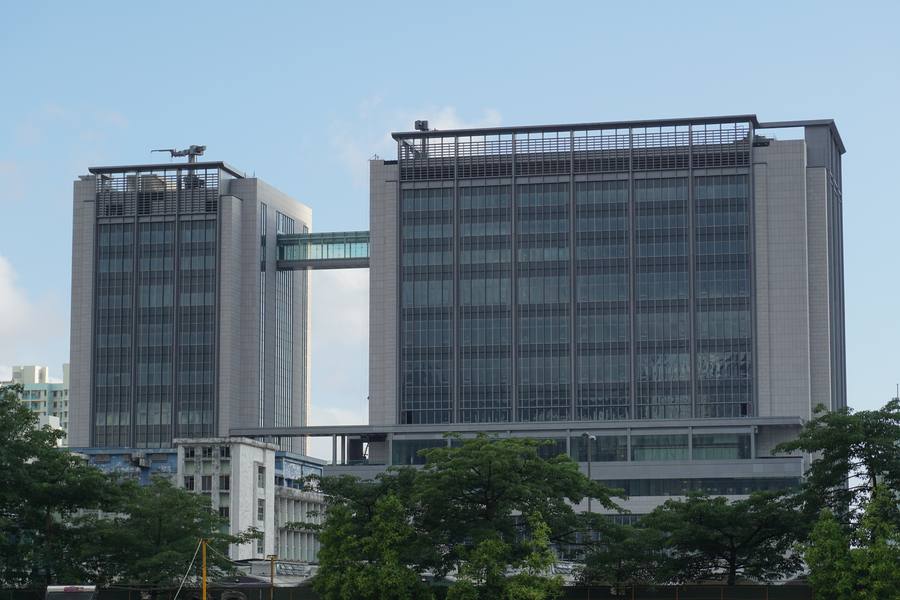
The trial opened on 6 February 2023 in the Court of First Instance, sitting at the West Kowloon Law Courts Building. Its structure must be fixed before its content. Under a certificate issued by the Secretary for Justice pursuant to Article 46 of the National Security Law, the case was tried without a jury — the stated grounds included the involvement of foreign factors and the protection of jurors and their families. In its place sat a panel of three judges designated by the Chief Executive from the pool of national security judges: Andrew Chan, Alex Lee and Johnny Chan. Jury trial in serious criminal cases had been a feature of Hong Kong's courts for more than 170 years; in national security cases it was removed wholesale, a fact recorded by international media and human rights organisations throughout the trial. Sixteen defendants stood trial; the 31 who had pleaded guilty waited for sentence. Four of the original 47, including coordinator Au Nok-hin, appeared as prosecution witnesses. The proceedings, including closing submissions that began on 29 November 2023, lasted 118 days and concluded on 4 December 2023; the court then adjourned for nearly six months to consider its verdict.
The prosecution's case was an act of assembly: a set of entirely public materials — Benny Tai's articles about his "ten steps" to mutual destruction, speeches at primary election forums, candidates' platforms, the "Inked Without Regret" declaration, records of coordination meetings, and documents and messages seized from homes and devices at the January 2021 arrests — arranged into the shape of a single conspiracy. On Ho, the verdict, as unpacked by the South China Morning Post, reasoned as follows: the court did not accept that she had merely sought a large turnout; it found that she had repeatedly described the existing system as dysfunctional and unable to serve Hongkongers, that she wanted "a completely new political system and structure," and that she sought election in order to "resist and to break the deadlock"; it cited her statements about using the election to create political tension or trigger a constitutional crisis. The judgment's sentence on her political stance is archived verbatim in section 11. One countervailing fact must stand beside the verdict in any honest record: at no point did the prosecution allege that Ho had committed, planned or contemplated any act of violence, handled any weapon or money, or taken any instruction from abroad. Her conviction rests entirely on her candidacy, her signature on a declaration, her speeches and her platform. Among the 14 convicted after trial, she was the most prominent defendant whose entire career had been in journalism.
9. Verdict — and the mitigation she refused to make: 30 May and 2 September 2024
On 30 May 2024 the three judges convicted 14 of the 16 defendants who had stood trial and acquitted two, barrister Lawrence Lau and former district councillor Lee Yue-shun, who walked free from court; the Department of Justice appealed the acquittals, and Lau's was ultimately upheld by the Court of Appeal in February 2026. Reuters described Ho and Owen Chow in the dock as stony-faced as the verdicts were read to a packed courtroom. Human Rights Watch demanded the same day that the convictions be quashed, its acting China director Maya Wang calling the proceedings a product of contempt for fundamental freedoms (the statement is quoted in section 11). Amnesty International's China Director Sarah Brooks called the mass conviction the most ruthless illustration yet of the National Security Law being weaponised to silence dissent, and said none of those convicted had committed an internationally recognised crime.
Mitigation hearings began on 25 June 2024 and proceeded constituency by constituency. When the New Territories East group came up on 2 September 2024, Ho's contribution to the process took less than a minute and made the day's headlines. Her barrister, Trevor Beel, confirmed her criminal record to the court and then stated, in the words recorded by trial reporters, "other than that, no plea in mitigation put forward to the Court." Ho, in the dock, looked down at her computer and showed no particular reaction. In the same batch, other defendants read letters from spouses, partners, parents and former employers, described illnesses, expressed remorse. She submitted nothing: no letter, no plea, no apology, no explanation. The Reasons for Sentence later recorded the fact in the flat prose of the bench, noting that defendant D33 "did not address the Court on mitigation." This archive records the choice as fact without ventriloquising her reasons, which she has never publicly spelled out in the sources checked. It notes only the pattern it completes: the woman who in 2021 withdrew a bail application rather than accept a secretive process, and who at trial insisted she had done nothing but encourage voting, declined at the end to ask the court that was about to sentence her for leniency. In the trial reporting available, no other defendant among the 45 matched that completeness of refusal.
10. Sentencing: seven years, with a discount of exactly zero
On 19 November 2024, at the West Kowloon Law Courts Building, the Court of First Instance sentenced all 45 convicted defendants, to terms ranging from four years and two months to ten years. Benny Tai, classified as a principal offender, received the maximum in the case, ten years. Those who had pleaded guilty generally received the standard one-third discount. Ho's arithmetic is set out at paragraphs 262 to 264 of the Reasons for Sentence ([2024] HKCFI 3298) with unusual starkness: D33, aged 34, a former journalist, with one criminal conviction from 2021; for her role in the scheme, a notional starting point of seven years (84 months); convicted after trial; no mitigation put forward; therefore no reduction of any description; sentence, seven years' imprisonment — not a day more, not a day less. Among the candidates in the case, the court's standard classification was "active participant" with a seven-year starting point; guilty pleas pulled most of them down into the four-to-five-year range. Ho and a handful of others who had contested the charge stayed at the starting point itself. Set the sentence beside the conduct it punishes and the archival point makes itself: she never sat in the legislature, never cast a veto, never blocked a single budget line. What was punished was an intention attributed to her about a power she never held.
On sentencing day, an essay by Ho was published through her social media page. Reuters and other outlets quoted its defining sentence, archived in section 11: "Our true crime for Beijing is that we were not content with playing along in manipulated elections." The same essay, as reported, said the defendants had dared to put to the regime the question whether democracy would ever be possible within such a structure — and that the answer had been a crackdown on every front of society. Outside the court, consular staff from Western missions queued for seats in the public gallery and police mounted a heavy security operation around the building. The international reaction that day is detailed in section 14: the United States "strongly" condemned the sentences, demanded the immediate and unconditional release of all 45, and announced new visa restrictions on Hong Kong officials responsible for implementing the National Security Law; Britain's Indo-Pacific minister Catherine West said the sentencing demonstrated the authorities' use of the law to criminalise political dissent; the European Union called it another unprecedented blow to fundamental freedoms; the UN human rights office expressed grave concern. Beijing and the Hong Kong government replied that the case had been handled according to law and foreign interference was to be condemned. The practical effect of every one of those statements, recorded here as plainly as the statements themselves, was zero days deducted from any sentence, hers included.
11. The words themselves: court and defendant, archived side by side
This section gathers the case's key primary texts concerning Ho, each quotation held within fifty words and attributed. First, the trial court's verdict on her political stance, as quoted from the judgment by the South China Morning Post: "[Ho] in our view was one of those participants who held the most radical political view which was manifested by her utterances and conducts" — a sentence in which a court converts the radicalism of a defendant's views, manifested in speech, into an element of criminal liability. Second, the sentencing court's entry for her, from the official Reasons for Sentence, [2024] HKCFI 3298: "D33 did not address the Court on mitigation. For the role that D33 participated in the Scheme, 7 years (84 months) was adopted as the notional starting point… D33 was sentenced to 7 years' (84 months) imprisonment." Third, her own words on sentencing day, as quoted by Reuters: "Our true crime for Beijing is that we were not content with playing along in manipulated elections." Fourth, Human Rights Watch on verdict day, 30 May 2024: "Hong Kong's mass show trial lays bare Beijing's utter contempt for fundamental freedoms and democratic political processes." Fifth, Amnesty International on the dismissal of the appeals, 23 February 2026, through its Hong Kong Overseas spokesperson Fernando Cheung: "None of these 12 defendants committed an internationally recognized crime," and "Peaceful opposition to a government is not a crime." Sixth, the European External Action Service on sentencing day, 19 November 2024, calling the outcome "another unprecedented blow against fundamental freedoms, democratic participation and pluralism in Hong Kong." Placed together, these six texts are the documentary shape of the case from its opposing sides: a court writing opinions into a conviction, and a defendant writing the conviction back into an opinion.
12. The appeals: dismissed in February 2026 — and a ticket to the top court in August
After sentencing, 13 of the 45 announced appeals: twelve of those convicted after trial against their convictions (some also against sentence), and Tam Tak-chi, who had pleaded guilty, against sentence alone. Ho's appeal had a distinctive shape. Reuters, reporting the Court of Appeal's ruling on 23 February 2026, noted expressly that she was the exception among the conviction appellants: she challenged her conviction only, not her sentence. Her stance, translated out of legal form, was not "my punishment is too heavy" but "I committed no offence." The appeals were heard on 14–17 July 2025 (CACC 253/2024; Ho was listed as the fifth applicant) and judgment was reserved for seven months. On 23 February 2026 the Court of Appeal handed down its judgment ([2026] HKCA 284) dismissing all twelve appeals, upholding every conviction and sentence, and also upholding Lawrence Lau's acquittal against the prosecution's cross-appeal. The appellate court described the primary scheme as a "constitutional mass destruction weapon" conceived, advocated and pursued by Benny Tai to topple Hong Kong's constitutional order. Amnesty International responded the same day that the dismissal was a missed opportunity to start restoring justice, and added a fact with direct bearing on everyone still inside: at least eight of the Hong Kong 47 defendants had reportedly been denied early release under vague new national security justifications introduced by the Safeguarding National Security Ordinance of March 2024 — the "Article 23" law — where the old Prison Rules had made release after two-thirds of a sentence, for good conduct, a normal expectation.
The case did not end in February 2026. On 10 August 2026 the Court of Appeal issued certificates allowing eleven of the convicted defendants, Ho among them, to apply to the Court of Final Appeal for leave to bring a final appeal. According to Hong Kong Watch's August 2026 monthly briefing, the three appellate judges, led by Chief Judge of the High Court Jeremy Poon, certified five issues as points of law of great and general importance — most concerning the elements of the subversion offence under Article 22 of the National Security Law, and in particular whether a plan by legislators to veto the budget indiscriminately, using the very mechanism set out in Articles 50 to 52 of the Basic Law, in order to force the Chief Executive's resignation, can in law constitute the "other unlawful means" the offence requires. This will be the first occasion on which the substantive elements of subversion under the National Security Law are examined by Hong Kong's highest court. As of November 2026, no hearing date before the Court of Final Appeal had been announced; her final appeal is pending and she remains in custody while she waits. This archive's statement of her appeal status stops exactly there: conviction appeal dismissed; the road to the Court of Final Appeal opened by certificate on 10 August 2026; hearing unscheduled; still imprisoned. It offers no prediction of the outcome.
13. Family and the world outside: what the record holds — and what it does not
Unlike many cases in this archive's series, Ho's family circumstances are almost entirely absent from the public record. The names, occupations and prison-visiting arrangements of her parents and relatives appear in none of the sources checked for this entry — Hong Kong Free Press, Reuters, the BBC, Amnesty International or the court documents — and this archive fabricates no "family reaction." Three facts, each with a source, are what the record holds. First, her letters from custody have been published by friends on her social media pages (recorded by Wikipedia's entry and by the Washington Post's June 2021 account of letters from Hong Kong's jails): political essays mixing Hong Kong's future with popular culture, and for years the only public voice she had. Second, on 28 January 2022 a group of prominent scholars formally nominated five Hong Kong pro-democracy figures for the 2022 Nobel Peace Prize — Gwyneth Ho, Chow Hang-tung, Jimmy Lai, Lee Cheuk-yan and Joshua Wong — in a nomination letter published by Chinese Human Rights Defenders, which described the five as prisoners of conscience. Third, Reporters Without Borders, on sentencing day 2024, named her as one of three press-freedom defenders given heavy sentences in the case, alongside media founder Frankie Fung and former legislator and journalist Claudia Mo. As to a partner, the sources checked contain no reliable public information, and this entry records the matter as one of no public record; as to prison visits, Hong Kong's correctional system permits visits by family and friends in general, but her personal visiting arrangements have never been reported, and this archive does not fill the gap. There is a symmetry here that an archivist is entitled to note once: the defendant who refused to lay her private life before the court in mitigation is matched by an archive that will not invent a private life for her.
14. The international response: from sentencing-day visa bans to a Nobel nomination
The international reaction to her case, fixed chronologically, runs as follows. After the January 2021 arrests, Amnesty International publicised the detail that she had predicted her own arrest in its Northern Ireland annual lecture four weeks earlier (section 4). After her December 2021 vigil conviction, Amnesty International's Deputy Secretary General condemned the verdicts. In January 2022 came the scholars' Nobel Peace Prize nomination naming her among five Hong Kong prisoners of conscience (section 13). On verdict day, 30 May 2024, Human Rights Watch demanded the convictions be quashed (quoted in section 11) and Amnesty International's China Director said none of the convicted had committed an internationally recognised crime. On sentencing day, 19 November 2024, the US State Department strongly condemned the sentences, called for the immediate and unconditional release of all 45 and of similarly detained political prisoners, said the harsh sentences eroded confidence in Hong Kong's judicial system, and announced steps to impose new visa restrictions on multiple Hong Kong officials responsible for implementing the National Security Law; the US Consulate in Hong Kong said the defendants had been aggressively prosecuted and jailed for normal political activity protected by the Basic Law. The co-chairs of the US Congressional-Executive Commission on China called for sanctions against the judges and prosecutors involved. Britain's Indo-Pacific minister Catherine West said the sentencing was a clear demonstration of the authorities using the security law to criminalise political dissent, and that those sentenced had been exercising rights of speech, assembly and political participation. The European Union's External Action Service called the outcome another unprecedented blow against fundamental freedoms, democratic participation and pluralism, and said it was deeply concerned at the politically motivated prosecution of people for peaceful political activity. The UN Office of the High Commissioner for Human Rights said it was gravely concerned at the use of the security law to criminalise conduct protected by the rights to expression, peaceful assembly and association. Australia's foreign minister, Penny Wong, issued a statement of deep concern (per Radio Free Asia's sentencing-day roundup). Hong Kong's last British governor, Chris Patten, called the sentences an affront to the people of Hong Kong and to all who value rights and freedoms. On 23 February 2026, after the appeals were dismissed, Amnesty International's Hong Kong Overseas spokesperson Fernando Cheung said none of the twelve had committed an internationally recognised crime, that peaceful opposition to a government is not a crime, and that all remaining jailed members of the Hong Kong 47 should be released immediately and unconditionally.
One clarification about the "prisoner of conscience" label is required, and this archive makes it deliberately. Amnesty International's formal position across its statements on this case is that none of the 45 committed an internationally recognised crime, that they were jailed solely for exercising their human rights, and that they should be released immediately and unconditionally; this archive did not find an Amnesty instrument designating Ho individually, by name, a prisoner of conscience, and does not so describe her on Amnesty's authority. The document that expressly calls her a prisoner of conscience is the scholars' Nobel nomination letter of January 2022. The two are archived separately and not conflated. The bleaker ledger line must also be written: from 2021 to today, none of these statements, nominations or visa bans has shortened her imprisonment by a single day. Her case advances only on the Hong Kong judiciary's timetable — next, in the Court of Final Appeal.
15. Her place in the Hong Kong 47: the coordinates of one file among forty-seven
Set back inside the whole case, Ho's file has several coordinates that can be fixed exactly. First, she is one of the case's journalists: Reporters Without Borders counted her with Claudia Mo, a former news anchor turned legislator, and Frankie Fung, an online-media founder, as the three press-freedom defenders sentenced in the case — a neat index of how the prosecution swept the profession that had covered the 2019 movement into the dock alongside the politicians. Second, she was the top-polling candidate in her primary constituency — 26,802 votes in New Territories East — who was then disqualified from the real election and never entered the legislature at all: the subversion for which she is serving seven years never advanced beyond plan and intention, and never had the chance to become a single parliamentary vote. Third, she is one of the 16 who pleaded not guilty and one of the 14 convicted after trial — and, within that group, the one who offered no mitigation at all and appealed her conviction without touching her sentence; the trial reporting available records no identical combination among the 45. Fourth, her sentencing entry is the cleanest specimen in the case of how the National Security Law's framework treats the uncooperative defendant: a seven-year starting point, a discount column of zeros, a seven-year result, disposed of in two paragraphs. Fifth, she is one of the eleven certificate-holders of August 2026: her name will appear on the case list when Hong Kong's highest court examines, for the first time, what the subversion offence actually requires. Whatever the outcome, that list is already a historical document.
The other side of the picture is the fanning-out of the 47 fates. By February 2026, 18 of the 45 sentenced defendants — mostly those who had pleaded guilty and received terms of a little over four years — had completed their sentences and been released; by September 2026 the number released had reached 22. Ho is not on that list, and will not be soon: a seven-year term counted from remand in late February 2021 runs, if served in full, into early 2028 (this archive states the year only, as the authorities have published no completion date). During her imprisonment, Stand News — the newsroom that made her famous — was raided, closed, and saw its former editor convicted in a separate sedition case; the primary system she won a poll under has been abolished; the legislature she sought to enter has been reconstituted on patriots-only lines. To list these facts side by side is not lyricism; it is measurement. In the years of her sentence, the entire world she belonged to has been dismantled item by item, while she has watched — insofar as she has been permitted to watch anything — from inside.
16. Verification and sources
The core facts of this entry were cross-checked against the following sources; key facts rest on at least two, and single-source items are flagged in the text. Court documents (Grade A): the Reasons for Sentence in HKSAR v Ng Gordon Ching-hang and Others, [2024] HKCFI 3298 (19 November 2024), paragraphs 262–264 for Ho — listed as D33, aged 34, former journalist, one conviction from 2021, no address on mitigation, seven-year (84-month) starting point, seven years' imprisonment — and the Hong Kong judiciary's annotated National Security Law case summary for the charge particulars (conspiracy period 1 July 2020 to 7 January 2021; Article 22(3) of the National Security Law with sections 159A and 159C of the Crimes Ordinance); the Court of Appeal judgment [2026] HKCA 284 in CACC 253/2024 (heard 14–17 July 2025, judgment 23 February 2026). Wire services and press (Grade B): Reuters, 30 May 2024 (verdict), 19–20 November 2024 (sentencing, including the quotation from her sentencing-day essay) and 23 February 2026 (appeals dismissed; Ho the exception in appealing conviction only); the Associated Press sentencing-day roundup of international reactions; the BBC, 6 January 2021 (the mass arrests) and on the vigil case; Hong Kong Free Press, 16 July 2020 (full primary results: 26,802 votes, first in New Territories East) and its vigil-trial reporting (her evidence about testing the ban); the South China Morning Post's unpacking of the verdict (source of the "most radical political view" quotation); Radio Free Asia on the primary turnout and the sentencing-day reactions; the Washington Post on her prison letters; and detailed trial reporting of the 2 September 2024 mitigation hearing (Trevor Beel's "no plea in mitigation" statement). Institutional documents (Grades B–C): Amnesty International's statements of December 2021 (vigil convictions), 30 May 2024 (convictions) and 23 February 2026 (appeals dismissed; early-release denials under the 2024 Ordinance); Human Rights Watch's statements of 30 May and 20 November 2024; the European External Action Service statement of 19 November 2024; Reporters Without Borders, 19 November 2024; Hong Kong Watch's August 2026 monthly briefing (the Court of Final Appeal certificates); the Chinese Human Rights Defenders publication of the scholars' 2022 Nobel Peace Prize nomination letter (biography; "prisoners of conscience" wording); and the LSE Rule of Law Journal's 2024 study of remand in the Hong Kong 47 case (the "no clocks" study and her May 2021 essay). Biographical sources: the English Wikipedia entry "Gwyneth Ho" (born 24 August 1990; Ho Fung College; Tsinghua University; University of Amsterdam master's; RTHK internship in 2011; House News; BBC Chinese; Yuen Long injuries and hospitalisation; candidacy announced 18 June 2020; disqualified 30 July 2020; bailed 7 January 2021; her vigil-trial testimony) — a secondary compilation, used only where corroborated by press or institutional sources. Negative checks: searches under her Chinese and English names retrieved no Amnesty International instrument designating her individually a prisoner of conscience (see section 14 for the distinction drawn); no reliable public source was found for the name of the facility where she is held, or for her family or partner, all recorded as matters of no public record; no freely licensed photograph of her was found on Wikimedia Commons (see the image note in the entry metadata). Grading: A, court judgments and official case summaries; B, wire services, Hong Kong and international press, and statements of established human rights organisations; C, trial-reporting sites and academic work. Single-source items (the Tsinghua detail in the Nobel letter; the Amnesty Northern Ireland lecture detail) are attributed in the text. This entry was last verified on 12 November 2026; its status fields rest on the Court of Appeal judgment, the Hong Kong Watch briefing and the Amnesty statement retrievable on that date.
17. Our Take
This archive's assessment is confined strictly to the facts of this case. First, the "offence" should be stated without decoration. Gwyneth Ho is serving seven years for the following acts, and no others were ever alleged in court: announcing a candidacy, winning a public primary in her constituency, signing a declaration, and speaking at forums. No violence, no weapons, no money, no foreign direction — and not even a vote cast in the legislature, because she was never allowed to become a legislator. The trial punished a hypothesis: if she had been elected, if they had won a majority, if they had vetoed the budget. Stack three "ifs" and the tariff, in Hong Kong in 2024, is seven years. A system that can imprison a citizen for seven years on a hypothesis has in substance announced that elections are legitimate only when they return the people it permits. Second, study the sentencing arithmetic, the cleanest in the case: starting point seven years, mitigation nil, discount nil, result seven years. Her refusal to mitigate was not an oversight; it was a refusal to play the penitent in a script whose ending was already written, and the court obliged by converting her silence into exactly zero credit. Both sides did their sums openly, and the archive preserves the ledger as found. Third, the procedure: no jury, judges designated by the Chief Executive, bail available only to defendants who can prove a negative, bail hearings that the press may not report, almost three years of pre-trial detention, and, after the Court of Appeal's dismissal, a certificate as the remaining door to the highest court. In 2021 she asked how open a hearing can be called when only a hundred people in the room may know what was said in it. Five years later the question has not been answered; it has been promoted, into part of what the Court of Final Appeal must now decide about "unlawful means." Fourth, the person herself. On 21 July 2019 she was beaten to the ground in Yuen Long station and the camera stayed on. In July 2020 twenty-six thousand voters put her first. In September 2024 she sat in the dock looking down at a computer while her lawyer told the court she had nothing to ask for. Between the camera and the dock there is no crime scene; there is a city whose rules were replaced wholesale around her. She is thirty-six years old, and will be nearly thirty-eight if the sentence runs its course. This archive records her case because it converts a slogan into a precedent, and the precedent should be readable by anyone: in Hong Kong today, taking part in an election in earnest can be worth seven years.
视频证据Video Evidence
《蒙面施袭者在元朗殴打市民》(香港自由新闻 HKFP)|2019|现场实拍,现场原声Masked assailants beat protesters in Yuen Long, Hong Kong (Hong Kong Free Press) | 2019 | On-the-scene footage, natural sound
《香港「47人案」宣判:首宗颠覆国家政权案》(BBC News 中文)|2024|中文新闻报道,含法院外景与资料画面Hong Kong's '47' case sentencing: the first subversion case (BBC News Chinese) | 2024 | Chinese-language news report with court exteriors and file footage