
第142案 | 高蓉蓉Case 142 | Gao Rongrong
高蓉蓉,约1967/68年生,沈阳鲁迅美术学院财务处会计,法轮功学员。1999年她因坚持信仰并向同事散发法轮功材料被免职;2003年6月22日被警察以「扰乱社会秩序」拘留,7月8日由公安决定送沈阳龙山劳动教养院劳教三年——无法官、无审判、无律师。国际特赦2005年6月28日呼吁文件(ASA 17/014/2005)记载:2004年5月7日,她因在院内阅读法轮功材料被管教人员施以七小时酷刑,电棍电击面部与颈部,造成严重起泡与视力困难;法轮功方面来源指名施刑者为二大队副大队长唐玉宝与队长姜兆华,当日下午三时至晚九时以后,约六至七小时。她同日跳窗逃生,脚、腿与骨盆多处骨折送医;医院与龙山方面一度声称其面颈伤系跳窗所致,非官方来源坚持系电击所致。住院期间家人拍下她受刑十天后的照片——满脸焦黑电灼伤、双眼肿成细缝——照片传出后震动国际社会。2004年8月30日,联合国酷刑问题特别报告员就其个案向中国政府发出紧急呼吁,转述她尿血、不能进食、医生多次下病危通知及沈阳市司法局官员「死了也不许回家」的说法;须更正的是,该呼吁由时任特别报告员范博芬任内发出,诺瓦克2004年12月才上任,其真实关联是2005年访华与2006年报告「中国酷刑指控约三分之二涉及法轮功学员」的整体结论,本站未在诺瓦克访华报告正文中检索到她的具名个案。2004年10月5日她被友人从医院救走;2005年3月6日与据报营救她的冯刚、王娟、刘庆明、孙世友一同再被抓,下落被隐瞒三个多月,父母屡赴马三家询问被否认。任务简报所称她曾关押张士教养院系归属错误——张士关的是营救者,其父母去张士打听时被明确告知未收押她;她本人的关押地只有龙山与再抓后的马三家系统。2005年6月12日家属才被告知她在医院,据家属说她只剩皮包骨、失去意识、靠呼吸机维持;6月16日她在中国医科大学附属第一医院急诊室死亡,时年37岁。家属据报被施压尽快火化遗体。曾管辖龙山的沈阳市司法局原局长韩广生出逃后对澳大利亚媒体称此案为「重大丑闻」,是本案罕见的体制内旁证。国际特赦正式呼吁全面、独立、公正调查并将责任人绳之以法;她死后六天,案件进入美国国会—行政当局中国委员会听证记录,此后又见于英国议会书面证据与国际特赦2006年度报告。截至2026年11月,没有任何公开记录显示中国当局调查过、公布过结论或处理过任何一人——追责状态:无。Gao Rongrong, born around 1967/68, was an accountant in the finance office of the Luxun Academy of Fine Arts in Shenyang and a Falun Gong practitioner. In 1999 she was dismissed, reportedly for her adherence to Falun Gong and for distributing Falun Gong materials to colleagues. On 22 June 2003 police detained her for 'disturbing social order,' and on 8 July 2003 the police sent her to Shenyang's Longshan Re-education Through Labour facility for three years — no judge, no trial, no lawyer. Amnesty International's appeal document of 28 June 2005 (ASA 17/014/2005) records that on 7 May 2004, after she was discovered reading Falun Gong material inside Longshan, officials subjected her to seven hours of torture, using electric-shock batons on her face and neck, causing severe blistering and difficulties with her eyesight; Falun Gong sources name the men as Tang Yubao, deputy head of the No. 2 Brigade, and team leader Jiang Zhaohua, working from about 3 p.m. until after 9 p.m., some six to seven hours. That day she jumped from a window and fractured bones in her foot, leg and pelvis; hospital and Longshan officials at one point attributed her facial injuries to the jump, while unofficial sources insisted they were the work of the batons. During a family visit, relatives photographed her face ten days after the session — blackened electrical burns, eyes swollen to slits — and the photograph, once carried abroad, shocked international opinion. On 30 August 2004 the UN Special Rapporteur on torture sent an urgent appeal on her case to the Chinese government, relaying that she was urinating blood, could take no food or water, that doctors had repeatedly issued terminally-ill notices, and that a Shenyang Judicial Bureau official had refused her release in terms amounting to 'don't let her go home even if she dies.' One correction matters: that appeal was sent under Special Rapporteur Theo van Boven; Manfred Nowak took office only in December 2004, and his genuine connection to the file is the aggregate conclusion of his 2005 China mission and 2006 report — that roughly two-thirds of the torture allegations from China received by his office involved Falun Gong practitioners. This archive did not find her named individually in Nowak's mission report; her named UN appearance is the Special Rapporteur case compilation. On 5 October 2004 acquaintances got her out of the hospital. On 6 March 2005 she was re-apprehended together with Feng Gang, Wang Juan, Liu Qingming and Sun Shiyou, the people reported to have helped her escape; her whereabouts were then concealed for more than three months while her parents repeatedly asked at Masanjia and were told she was not there. The claim in this page's commissioning brief that Gao herself was held at Zhangshi RTL is an attribution error — Zhangshi held her rescuers, and her parents were expressly told there that she had never been taken in; her own documented places of detention are Longshan and, after recapture, the Masanjia system. Only on 12 June 2005 was the family told she was in hospital, where, by the family's account, she was little more than skin and bones, unconscious and on a respirator; on 16 June 2005 she died in the emergency room of the No. 1 Hospital Affiliated to China Medical University, aged 37. Her family was reportedly pressed to cremate her body quickly. Han Guansheng, the former Shenyang Judicial Bureau director who had once had authority over Longshan and later defected, called the case a major scandal on Australian television — a rare corroboration from inside the system. Amnesty International formally called for a full, independent and impartial investigation with a view to bringing those responsible to justice; six days after her death the case entered the record of a U.S. Congressional-Executive Commission on China hearing, and it later appeared in British parliamentary written evidence and Amnesty's 2006 annual report. As of November 2026, no public record shows that China ever investigated her death, published findings, or disciplined or prosecuted anyone. Accountability: none.
1. The woman: an accountant in the finance office of an art academy
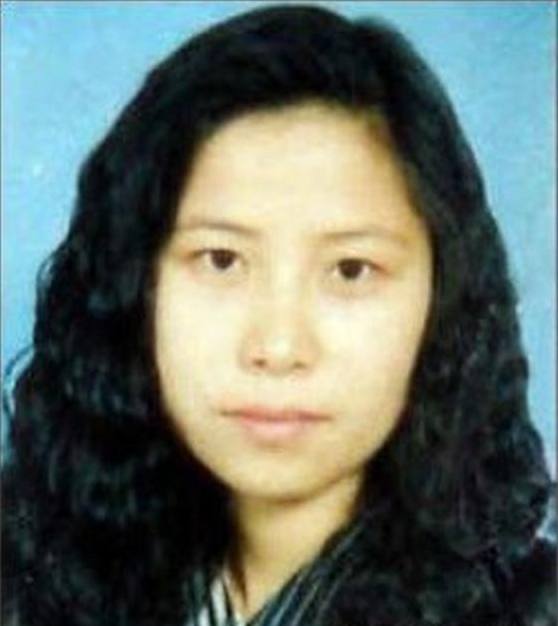
Gao Rongrong was born around 1967 or 1968 — public sources give only two age anchors, 36 at the time of the May 2004 torture and 37 at her death, and no exact date of birth is on public record, so this archive does not invent one; a birthplace in Jilin appears only in wiki-type compilations and is marked unverified. She worked as an accountant in the finance department of the Luxun Academy of Fine Arts in Shenyang. It is as ordinary a résumé as exists: an art college, a finance desk, a woman in her mid-thirties. When she took up Falun Gong is not precisely dated in public sources; what is certain is that after July 1999, when Falun Gong was labelled a "heretical organisation" and banned outright, she did not give it up. Amnesty International's appeal document of 28 June 2005 (AI Index ASA 17/014/2005) records her first turning point: in 1999 she was dismissed from her post as an accountant in the academy's finance department, reportedly both because of her adherence to Falun Gong and because she had distributed Falun Gong materials to colleagues. Losing a job is not a criminal punishment, but it was a signal: in post-1999 Shenyang, a work-unit employee who openly refused to abandon Falun Gong was marked, level by level. Falun Gong sources add that she travelled to Beijing to petition for an end to the persecution and was arrested and detained several times in consequence; that strand rests on Falun Gong sources alone and is archived at that grade, though it runs in the same direction as Amnesty's background judgment linking her 2003 detention to petitioning and to circulating accounts of abuse. Dismissed in 1999, in and out of detention in the years after, sent to a labour camp in 2003 — that trajectory was not unusual among practitioners of the time. What was unusual is what happened next, and the fact that a photograph fixed it in the world's field of vision.
2. The system behind the case: three years without a judge
To read this case, first read four Chinese words: laodong jiaoyang, re-education through labour. Amnesty International's explanation in that same 2005 document remains the accurate frame. RTL had been used since the mid-1950s as a form of administrative detention. People given RTL have no right of access to a lawyer and no hearing at which to defend themselves; assignment to RTL is usually decided by the police alone, without judicial supervision or review; terms run up to three years and can be extended by a further year when deemed "necessary." RTL sits outside the criminal justice system: whether a given act is sent to RTL or prosecuted in court rests on a subjective police assessment. An official legal newspaper once described RTL as punishment for acts falling "somewhere between crime and error." Amnesty accordingly called for decades for its abolition, as arbitrary detention imposed without charge or trial. What RTL meant concretely for Falun Gong practitioners was this: no evidence had to meet a prosecutorial standard, no judge had to sign, no court had to sit — one police decision could lock a person up for three years, inside a facility whose daily management goal was "transformation," meaning a signed renunciation of belief, and where refusing transformation invited escalating punishment. Gao Rongrong entered Longshan in 2003, was disfigured at Longshan in 2004, and died in custody in 2005, entirely inside that judge-free system. That her case later became one of the most-cited individual cases in international criticism of RTL is no accident: it demonstrates every link of the chain — police sentencing, torture inside the camp, no avenue of complaint, and no investigation after death. RTL itself was abolished only in 2013, eight years after she died.
3. 22 June 2003: detained; 8 July: into Longshan
According to Amnesty International, Gao Rongrong was detained by police on 22 June 2003 for "disturbing social order," and on 8 July 2003 she was sent to the Longshan Re-education Through Labour facility in Shenyang. Falun Gong sources — the investigative report of the World Organization to Investigate the Persecution of Falun Gong (WOIPFG) and Minghui reporting — add that the Heping District Public Security Bureau in Shenyang imposed a three-year RTL term, effective the same day. The three-year figure matches the statutory ceiling of the system, but the decision document itself is not on public record, and this archive files the term as "recorded by Falun Gong sources, consistent with the system's ceiling." On the immediate trigger for the 2003 arrest, the sources diverge. Amnesty's background section says her detention was believed to be linked to petitioning the authorities to end the crackdown and to distributing materials publicising abuse suffered by other detained practitioners. A Minghui memorial text of 2008 offers a more specific version: in July 2003 she spoke to a graduate student at the academy about Falun Gong; the student's wife reported her; academy leaders and Party officials called in the Shenyang police and the "610 Office" to arrest her. That version rests on Minghui alone and is marked unverified; only the fact that the version exists is asserted here. What both versions share is the absence of everything else: no violence, no victim, no property dispute — the trigger was speech and printed material. Longshan stood southeast of Shenyang; Falun Gong sources say it held more than a hundred practitioners and was notorious for the cruelty of its methods. Han Guansheng, a former director of Shenyang's Judicial Bureau who fled to Canada in 2001, later told Australian journalists that Longshan had been one of the facilities under his authority, that the men who ran it after his departure had once been under his control — and that Gao Rongrong's case, which happened after he left, was a major scandal. Han's testimony, checked and broadcast by Australia's SBS Dateline programme, is one of the few corroborations of this case from inside the system, and Section 10 returns to it.
4. Inside Longshan: the rehearsal of 22 March 2004
The documented violence of Gao Rongrong's last year at Longshan escalated in steps. According to Minghui and WOIPFG: in early 2004, Shenyang's "610" apparatus organised a so-called "assistance and education" team that toured prisons and camps running "transformation" classes; Longshan selected more than twenty practitioners to attend, and Gao Rongrong was among them — a detail resting on Falun Gong sources alone. On 22 March 2004, after she refused to attend a meeting slandering Falun Gong, Tang Yubao, deputy head of the No. 2 Brigade, dragged her from her bunk and beat her; Tang then ordered two team leaders to handcuff her to a heating pipe, where they beat her and shocked her hair, face, neck, hands and legs with electric batons for about half an hour. The particulars of that day — date, place, the officials' names, the body parts, the duration — come entirely from Falun Gong sources, with no independent source checking them item by item. But the names they give are exactly the names attached to the second, far worse session two months later, the one backed by Amnesty International and UN documents, and it was the same staff acting against the same prisoner who refused to be "transformed." This archive therefore files 22 March at the grade of "recorded by Falun Gong sources," without promotion — and records its place in the sequence: it shows that 7 May was not a loss of control or a one-off, but the second and massively escalated application of the same method, by the same men, in the same camp, to the same woman.
A further strand of Longshan background belongs here, carefully graded. Minghui reports that another practitioner at Longshan, Wang Xiuyuan, had her term extended and was abused in April 2004, and that both she and Wang Hong died within days of release. Wang Hong's death carries an independent check — Han Guansheng's testimony and Australian reporting, in Section 10. Wang Xiuyuan's rests on Falun Gong sources alone. The three women's files are archived side by side at three different grades of evidence, which is how an archive should hold them.
5. 7 May 2004: seven hours of electric batons
The afternoon of 7 May 2004 is the core of this case, and its best-evidenced passage. Three streams of sources converge on the core fact. Amnesty International records that on that day Gao Rongrong was discovered reading Falun Gong material inside Longshan RTL facility and was subjected to seven hours of torture by officials demanding to know where she had acquired the material, the prolonged torture allegedly involving electric-shock batons used on her face and neck and reportedly causing severe blistering and difficulties with her eyesight. The urgent appeal sent to the Chinese government by the UN Special Rapporteur on torture on 30 August 2004 (Section 8) relays the same allegation: in May 2004 her face was severely disfigured by an electric baton. Written evidence before the British Parliament's Foreign Affairs Committee for its 2006–07 report quotes Amnesty's account verbatim and points readers to the photographs of her before detention and ten days after the session. Falun Gong sources supply the granular version: at about 3 p.m. that day, Tang Yubao, deputy head of the No. 2 Brigade, and team leader Jiang Zhaohua called her to the duty office — another version says the brigade office — and shocked her face continuously with electric batons from 3 p.m. until after 9 p.m., some six to seven hours. The "six to seven hours" and "seven hours" formulations coexist in the record; Amnesty and the UN use seven, and this archive files both. The WOIPFG report adds that three batons were used in rotation; that detail has that one source only and is graded as Falun Gong-source reporting. On motive the sources also differ in emphasis: Amnesty gives the interrogation about the source of her reading material; Minghui says those called in that day were practitioners who refused forced labour and refused to write repentance statements, and that she was one of them. The two are not mutually exclusive — a prisoner who would not be transformed, found holding material, on the same afternoon — and this archive prints both without merging them on anyone's behalf. What the session produced was photographed, and that is what separates this file from thousands of nameless ones; the next section is devoted to the photograph.
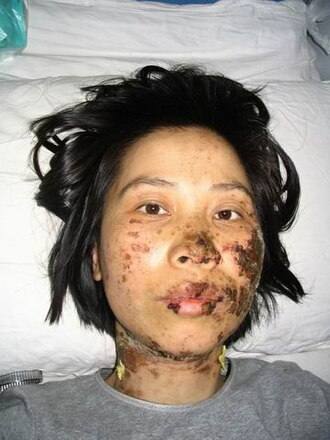
One more event of that evening is recorded by all streams, with small divergences: Gao Rongrong tried to escape by jumping from the window of the room where she was held, breaking several bones. The floor is given as the second floor in Chinese and Falun Gong sources and as the "first floor" in Amnesty's English text — the British and Chinese counting conventions may well describe the same storey. The injuries, in Amnesty, are fractures to foot, leg and pelvis; in Minghui, to pelvis, thigh and legs — broadly consistent. She was taken to hospital. The jump itself is evidence of something: a woman who had just endured hours of electric shocks chose to jump out of a window and take her chances with broken bones rather than remain in that duty office. More contested is the official rewriting of her facial injuries. Amnesty records expressly that officials at the hospital and from Longshan claimed that the injuries to her face and neck — on both the left and the right sides — were sustained in the jump; unofficial sources maintained they were the product of the torture described above. Common sense and the photograph stand with the latter: a fall that breaks a pelvis and legs does not produce symmetrically distributed electrical blistering across a face and neck, and the UN appeal, in relaying the case, attributes the disfigurement to the baton outright. This archive preserves the dispute and both positions, because the episode previews everything that followed: the authorities' first response was not to investigate the men with the batons, but to reattribute the wounds.
6. The photograph: a face, ten days later
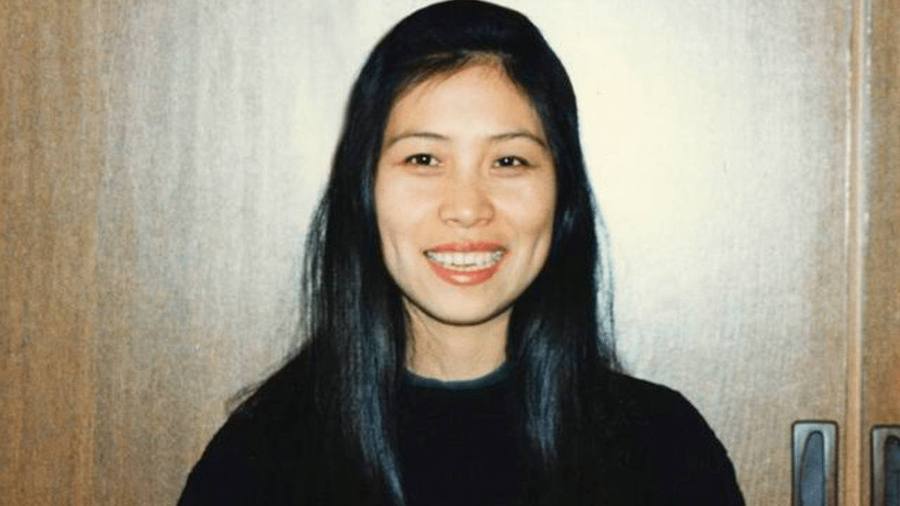
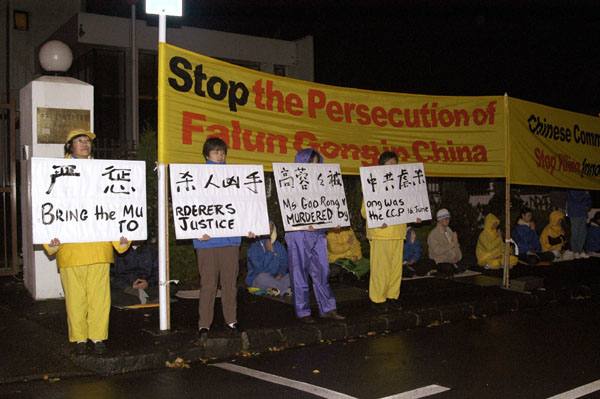
Half of why this became a landmark case is a photograph. Falun Gong sources record that during a family visit in May 2004, her relatives photographed her face in hospital. The picture was taken ten days after the torture; Amnesty International reproduced it alongside a photograph of her before detention, captioned "Gao Rongrong prior to her detention" and "Gao Rongrong ten days after she was hospitalized in May 2004," both credited as privately supplied. In the image, a once-unmarked face is covered in blackened electrical burns and blisters, hair matted into the bloody scabs of the wounds, the eyes swollen to slits. The photograph was then carried out and published abroad: Minghui carried the story with photographs on 7 July 2004, and her case was compiled by the Falun Gong Human Rights Working Group into its volume of 2004 UN reports on the persecution — Falun Gong sources say her case stood first in that compilation, a claim archived here as theirs. The photograph's twenty-year itinerary is itself a file: it appears in the case material the UN Special Rapporteur transmitted to the Chinese government; in the written evidence of the British Parliament's Foreign Affairs Committee; in testimony at the U.S. Congressional-Executive Commission on China's roundtable on forced labour in China on 22 June 2005; in an Australian television documentary; and on the placards carried at protests around the world — an Australian reporter in Toronto first recognised the face from a placard, and only then went looking for Han Guansheng. This archive's position on the photograph is a documentary one: it is not propaganda material, it is this case's physical evidence. It proves that the injuries existed, that their pattern matches electrical burning, and that they were photographed in May 2004 while she was under official control. What it cannot prove by itself is the names of the men or the length of the session; those rest on the layered text sources. That the photograph of one destroyed face has circulated for twenty years is explained by a bleak arithmetic: in the great majority of comparable cases, the victim left no photograph at all.
7. Five months in hospital: critical notices and "don't let her go home even if she dies"
From May to October 2004 Gao Rongrong lay in the No. 1 Hospital Affiliated to China Medical University in Shenyang, in an orthopaedics ward, treated for her fractures and her face. Her family's account, published through Minghui, says she was moved first to a military general hospital and a police hospital and then to the university hospital; that Longshan guards took turns watching her ward in shifts; and that on 1 July 2004 officials of the Shenyang City Procuratorate came to the hospital to investigate, with doctors of the Liaoning Provincial Procuratorate examining and documenting her injuries on 8 July. That procuratorial episode rests on the family's text alone, with no procuratorial document on public record to check it against, and is marked accordingly: family account, not independently verified. What is certain is the outcome — no findings were ever published and no one was ever dealt with. By August 2004 her body was failing. The UN urgent appeal relays that from 9 August 2004 she began to urinate blood and could take neither food nor water; her eye sockets were sunken, her eyelids could not close, and she was emaciated; doctors at the university hospital judged her life to be in danger and repeatedly issued "terminally ill notices." The same appeal relays what a Shenyang Judicial Bureau official allegedly said in refusing her release — in substance: if there is danger, let the hospital treat her; do not let her go home even if she dies. The grading of that sentence must be exact: it is an allegation received by the Special Rapporteur's office and formally transmitted to the Chinese government in a UN document. It is not a recording. But it sits in a UN file, and no clarification of it appears anywhere in China's public responses — a grade above ordinary internet rumour, and this archive files it at exactly that grade. A fragment of her own voice survives from those months: in a video transcript preserved by Falun Gong sources, she states the date — 25 May 2004 — and that she is severely injured and lying in the orthopaedics department of the university hospital. The recording was published by Minghui and is cited at that grade. Five months in the best hospital in the provincial capital: a fracture patient in a bed, guards at the door, doctors signing critical notices, and a justice bureau saying she would not go home even if she died. There are no electric batons in this section, and it is still among the heaviest passages in the file.
8. The international track (I): the UN urgent appeal, and what Manfred Nowak actually did
Her entry into the UN system is documented in formal texts, and it comes in three layers that must be kept apart. Layer one is the individual urgent appeal. Paragraph 293 of the addendum to the annual report of the UN Special Rapporteur on torture dated 30 March 2005 — the volume recording cases transmitted to governments between December 2003 and November 2004 — records that on 30 August 2004 the Special Rapporteur sent an urgent appeal concerning Gao Rongrong to the Chinese government, relaying in full the allegations of detention at Longshan, the May disfigurement by electric baton, the blood in her urine and inability to eat or drink from 9 August, the doctors' repeated terminal notices, and the judicial bureau official's refusal to release her. A correction is owed here to a widely repeated attribution error: in August 2004 the Special Rapporteur on torture was Theo van Boven; Manfred Nowak succeeded him in December 2004. Crediting the urgent appeal to Nowak personally is inaccurate, and this archive corrects it by the dates of tenure. Layer two is Nowak's own work. In November–December 2005 he conducted the first official visit to China by a UN Special Rapporteur on torture in a decade, and his 2006 mission report concluded that torture remained widespread in Chinese places of detention and that roughly two-thirds of the torture allegations from China received by his office involved Falun Gong practitioners. That aggregate conclusion is the UN-grade backing for the proposition that Falun Gong practitioners formed the majority of reported torture victims. But precision matters: this archive did not find Gao Rongrong named individually in the text of Nowak's China mission report — her named UN appearance is the Special Rapporteur case compilation in layer one. Conflating "Nowak reported that two-thirds of China's torture allegations involved Falun Gong" with "Nowak took up Gao Rongrong's case by name" is the commonest inflation in the retelling of this case; the two propositions are filed separately here, and each stands on its own. Layer three is the later UN paper trail: her sisters' family account and her photograph continued to enter the materials the Falun Gong Human Rights Working Group submitted to UN special procedures, and her case was restated in the group's 2008 shadow report to the UN Committee Against Torture as a paradigmatic instance of retaliatory persecution — a shadow report is an NGO submission, graded as such.
9. 5 October 2004: taken out of the hospital
On 5 October 2004 a group of acquaintances got Gao Rongrong out of the hospital. Amnesty International's verb is "smuggled out." Falun Gong sources say the rescuers were fellow practitioners who took her past the guards, after which she remained in hiding for about five months. The nature of the act must be stated precisely: this was not a release at the end of a term, and not medical parole — she was an RTL detainee who left state custody without permission. For the authorities it was not a patient walking out but the escape of a detainee. For her and for the rescuers it was the foreseeable sequel to a destroyed face and repeated critical notices, in a hospital room whose only exit led back to Longshan — and by then her face was already circulating worldwide. Falun Gong sources say that after she got out, the Ministry of Public Security treated the matter as a priority case, that Shenyang police tapped the telephones of local practitioners, and that they hunted the people who had publicised her photographs and organised the rescue. The case-number detail that circulates with this strand — "Priority Case No. 26" — appears only in Falun Gong sources and is marked unverified; but the scale of the hunt is independently attested by the named arrests of her rescuers in Amnesty's document, taken up in Section 11. Testimony at the U.S. congressional hearing of 22 June 2005 — given by practitioner Gregory Xu, relaying Falun Dafa Information Center material — asserted that her case had even involved directives from Luo Gan, then the Politburo Standing Committee member overseeing the political-legal apparatus and the anti-Falun Gong "610" system. That assertion is a Falun Gong-side allegation entered into the congressional record, with no independent source behind it, and this archive files it at exactly that grade — an allegation on record, not an established fact — the same treatment this archive gives comparable assertions in other cases. Of her five months in hiding, public sources record almost nothing about where she was or how her body fared. There is no public record, and this archive does not fill the gap.
10. A witness from inside: Han Guansheng, and Longshan's other dead
This case holds a rare piece of corroboration, from a man who once sat near the top of the machine. Han Guansheng was director of the Shenyang Municipal Judicial Bureau; from 1999 he had authority over two prisons and four labour camps in Shenyang, Longshan among them. In 2001 he fled to Canada and sought asylum — his asylum claim was refused by Canada's refugee board in April 2005, a fact filed here alongside his testimony. In the SBS Dateline and Age documentary Inside the Lao Gai, Han describes a 15-year-old girl at a camp under his authority who refused to renounce Falun Gong and was shocked with an electric baton by his subordinates; he says he stopped it and punished them when he found out, and that the torture continued regardless. The programme's reporter independently confirmed two further cases of torture at Longshan: Wang Hong, 39, severely beaten while Han was still in charge, who later died of renal failure in 2001; and, after Han's defection, the case of Gao Rongrong — in the reporter's words, brutally tortured at Longshan by the same men who were once under Han's control. Han's own verdict, on camera: the Gao Rongrong incident was a major scandal; she was tortured with electric shock and died as a result, after he had left China. Both the value and the limit of this testimony must be written down. Han is not a witness to Gao Rongrong's case — he had been out of China since 2001. What he establishes is the institutional continuity of Longshan: that baton-shocking practitioners who refused to renounce their belief was not one guard's aberration but a practice running across years and across his own departure, in a facility whose personnel carried over into her case. Wang Hong's death is independently checked by Australian journalism; Wang Xiuyuan's rests on Falun Gong sources; Gao Rongrong's is backed by Amnesty and the UN. Three women of one camp, held at three grades of evidence, side by side — which is precisely how an archive should hold them. One further strand of Han's account belongs in the file: he describes an atmosphere of instructions from above that no measure was too excessive against Falun Gong. That is the institutional footnote to why Longshan's officers dared spend seven hours on one woman's face — but it comes from an asylum seeker's own account, and is cited at that grade, not as an independent finding.
11. 6 March 2005: recaptured — and the people taken with her
On 6 March 2005 police seized Gao Rongrong again in Shenyang. The date is consistent across Amnesty International, wiki-type compilations and Falun Gong sources. Taken with her, according to Amnesty, were the people reported to have helped her escape: Feng Gang, Wang Juan, Liu Qingming and Sun Shiyou, all four named in Amnesty's appeal, which further records that Feng Gang was detained and later hospitalised after a thirteen-day hunger strike against his detention, and that Sun Shiyou had reportedly been tortured, including by electric shocks to his genitals — the Sun Shiyou allegation is relayed by Amnesty itself, at the grade of a reported allegation. Falun Gong sources add that she was seized near the United States consulate in Shenyang's Heping District, with Sun Shiyou taken at the same time; that in late February and early March 2005 everyone involved in the rescue was rounded up and held in a "transformation class" at the Zhangshi RTL facility before transfer to Masanjia and elsewhere. A correction is required here, because an error on this point circulates — including in this archive's own commissioning brief for this page. Zhangshi held her rescuers, not Gao Rongrong. Falun Gong sources themselves record that when her parents went to Zhangshi in March 2005 to ask after their daughter, the official in charge of "transformation" there, Shi Fengyou, told them plainly that Zhangshi had not taken Gao Rongrong in, and that he had seen her at the Masanjia hospital. This archive corrects the record accordingly: the places where Gao Rongrong herself is documented as held are two — Longshan in 2003–2004, and the Masanjia system after her recapture, in the next section. Writing Zhangshi into her own detention history transfers her rescuers' suffering onto her file, and this archive will not do it. After the recapture, the authorities imposed a total information blackout on her whereabouts: from 6 March to 12 June, for more than three months, her family did not know where she was held or whether she was alive. Falun Gong sources record her parents going again and again to Masanjia to ask, and the camp's leadership at first flatly denying she was there. That strand rests on Falun Gong sources alone — but its endpoint locks exactly into Amnesty's record: only on 12 June was the family told she was in a hospital.
12. The last three months: Masanjia, a hunger strike, and a concealed collapse
The detention of March to June 2005 is the blackest stretch of the public record in this case, and what is known must be separated cleanly from what is not. According to Falun Gong sources — Minghui's supplementary report of 2 July 2005 and the WOIPFG investigation — after her recapture she was held in secret at the Masanjia RTL facility, where she went on hunger strike; on 6 June she was taken for emergency treatment to the No. 1 Hospital Affiliated to China Medical University, by some accounts via the Dabei Prison Hospital. The transfer route rests on Falun Gong sources alone. Amnesty's record joins the same chain: her whereabouts after recapture were not disclosed until 12 June 2005, when her family was informed that she was being held at Masanjia Hospital; according to the family who visited her there, she was little more than skin and bones, had lost consciousness, and was on a respirator; she was then transferred to the China Medical University hospital, where she died four days later. Falun Gong sources give the hospital scene of 12 June in finer grain: the parents, notified that morning, rushed in to find her comatose and unresponsive, with more than twenty people posted to watch the ward, and the family's request for her medical records from the Masanjia transfer onward was rudely refused. Those scene details are Falun Gong-source only and are labelled as such. What was actually done to her in those three months has never been documented by any independent source: no autopsy report has been published, no medical file released, no official account given. Amnesty's call for investigation deliberately extends to "allegations that she was tortured … again after her recapture in March 2005" — a sentence that itself marks the character of the gap: even Amnesty, in June 2005, could write only of allegations and of a whereabouts undisclosed. A patient whose name the whole world knew disappeared into state custody for three months and reappeared on a respirator. This archive preserves that blank exactly as found, unfilled by conjecture; set beside the previous section's record of her parents being turned away at the gates, the blank is the whole of the archive those three months can honestly hold.
13. 16 June 2005: death, and the pressure to cremate
On 16 June 2005 Gao Rongrong died in the emergency room of the No. 1 Hospital Affiliated to China Medical University, aged 37. The date and place agree across Amnesty International, the U.S. congressional hearing record, wiki-type compilations and Falun Gong sources — among the best-attested facts in this file. Minghui's first report, on 19 June 2005, counted her as the 54th Falun Gong practitioner persecuted to death in Shenyang; that number is Minghui's own running tally and is archived with its provenance attached, not adopted as an independent statistic. Falun Gong sources add that her body was held at Shenyang's Wenguantun Funeral Home. What happened to the body next is the last key fact of the case. Amnesty records that her family was reportedly being pressured to cremate her body quickly — which, Amnesty noted, would undermine any possibility of a full, independent investigation of the cause of her death and of the evidence of torture. Falun Gong sources add that after her death, local "610 Office" personnel, Masanjia staff and Party officials of the Luxun Academy came to the family home to coerce immediate cremation, and that family members were obstructed from paying their respects at the funeral home. The details are Falun Gong-grade; the core fact — pressure for a rapid cremation — carries Amnesty's backing. The date on which cremation eventually took place, and the cause of death entered on her medical death certificate, are not on public record. Six days after she died, on 22 June 2005, her name entered the formal record of the U.S. Congressional-Executive Commission on China, at its roundtable on forced labour in China: Harry Wu, founder of the Laogai Research Foundation, and practitioner-witness Gregory Xu both testified, and Xu's written statement devoted its first section — headed "the latest casualty of a detainee at a forced labour camp" — to her case, recounting the 1999 dismissal, the July 2003 transfer to Longshan, and the 7 May 2004 baton session by Tang Yubao and Jiang Zhaohua. The testimony's sourcing was the Falun Dafa Information Center, and its grade is therefore "Falun Gong-side material entered into the congressional record," stated plainly. But that an accountant who died in a Shenyang labour-camp system became, six days after her death, a named case in a United States congressional hearing is a fact of transmission that depends on no one's standpoint.
14. The family's bill: parents turned away, sisters' testimony, twenty years of commemoration
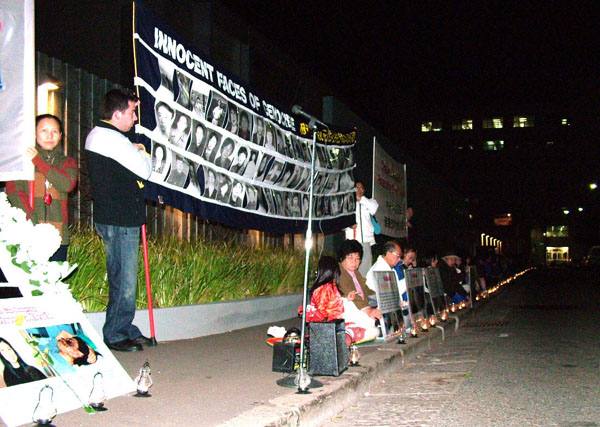
What this case cost her family has a concrete shape. Her parents were elderly. From March to June 2005 they went again and again to the Masanjia camp to ask where their daughter was, and were denied, stalled, and told that the government was investigating and that even the camp could not see her. When they finally saw her on 12 June, she lay on a respirator; four days later she was dead; and after her death officials came to the door to hurry the cremation. Her sisters left the longest family text in the file: a four-part serial published by Minghui in 2014, "Tortured to Death: Our Younger Sister Gao Rongrong," narrating in the family's first person the thirteen months from 14 May 2004, when the family learned of the torture, to 16 June 2005 — including the family's complaint to the Shenyang City Procuratorate, the procuratorial visit to the hospital on 1 July 2004, the injury examination by provincial procuratorial doctors on 8 July, and the family's being told to keep the examination results confidential. The family text's grade is "testimony of close relatives, published on a Falun Gong platform": where it overlaps Amnesty and the UN documents — dates, hospital, injuries, death — the strands corroborate each other; where it stands alone — the procuratorial details, the dialogues with agencies — it has no second source, and this archive files it as family testimony without promotion. The same text records that after the complaint vanished without result, what the family received was not action against the men with the batons but harassment and surveillance of the whole family; that too is the family's account alone. Commemoration then took over where remedy stopped. In late June 2005 practitioners held candlelight vigils for her in front of Chinese consulates and in parks from Bern to Yunlin in Taiwan, demanding that those responsible be punished. Across the twenty years since, her photograph and name have recurred on protest placards worldwide, in Minghui's anniversary pieces, and in documentaries on the labour-camp system. One side of the commemoration deserves explicit note: every public memorial to her has taken place outside mainland China. Her family remained inside it. Of their lives over these twenty years there is no public record, and this archive does not go looking and does not speculate.
15. The international track (II): from the British Parliament to the abolition of RTL — and an accountability column reading "none"
After her death, the case's path through official texts abroad is fully traceable. In the written evidence volume of the British Parliament Foreign Affairs Committee's seventh report of session 2005–06, a memorandum by SOAS researcher Sarah Cook devoted a section to her case, quoting Amnesty's account of the seven hours of 7 May 2004 verbatim and pointing to the sources of her before-and-after photographs — her entry into the formal record of the British Parliament. Amnesty International's 2006 annual report, covering 2005, named her again in its China chapter: Gao Rongrong, a Falun Gong practitioner, died in custody in June after being detained in the Longshan RTL facility in Shenyang, Liaoning; officials had reportedly beaten her in 2004, including by using electro-shock batons on her face and neck, causing severe blistering and eyesight problems, after she was discovered reading Falun Gong materials in the facility. The U.S. State Department's annual human rights and religious freedom reports of those years documented the general pattern of torture and deaths of Falun Gong practitioners in RTL facilities; this archive searched with multiple keyword sets and could not confirm that any State Department report named Gao Rongrong individually. The American official texts that do name her are the congressional hearing record and Congressional-Executive Commission materials. This archive does not dress up "documentation of the pattern" as "naming of the person" — the same distinction it applied to Nowak in Section 8. In 2013 China announced the abolition of re-education through labour: the system that swallowed her ended eight years after her death, and her name appears nowhere in the official narrative of its ending — just as it appeared in no Longshan investigation findings. Human rights organisations citing the evils of RTL still reach for her photograph among their first case images. As for accountability: in the public record, not one of the men named by Falun Gong sources — Tang Yubao, Jiang Zhaohua, or any other — has ever been recorded as investigated, disciplined or prosecuted in connection with her case. Falun Gong sources have separately published a "culprits" report naming former Longshan director Li Fengshi, Shenyang Judicial Bureau deputy director Zhang Xiansheng and former Masanjia deputy director Wang Wei; that list is a one-sided Falun Gong-side accusation, and this archive records only that the list exists, without treating any person on it as an established responsible party. As of November 2026, the accountability column of this file can carry only one word: none.
16. Archived in parallel: where the sources disagree, and the corrections made
Under this archive's rules, the disagreements are listed, not merged. (1) Duration of the shocks: seven hours in Amnesty and the UN documents; "six to seven hours" or "about seven hours" in parts of Minghui's reporting — both filed. (2) The window's floor: second floor in Chinese and Falun Gong sources; "first floor" in Amnesty's English text — plausibly a counting-convention difference; the fracture accounts broadly agree. (3) The cause of the facial injuries: hospital and Longshan officials at one point attributed them to the jump; unofficial sources insist on the batons; Amnesty prints both, the UN appeal adopts the baton account. (4) Attribution of the UN appeal: the urgent appeal of 30 August 2004 was sent under Special Rapporteur Theo van Boven; Nowak took office in December 2004. The circulating claim that "Nowak appealed for Gao Rongrong" is an attribution error, corrected here; Nowak's real connection is the aggregate conclusion of his 2005 mission and 2006 report. (5) The trigger of the 2003 arrest: petitioning and circulating abuse material, per Amnesty; the graduate-student episode, in Minghui's later memorial text — single-source, unverified. (6) The RTL term: three years, per Falun Gong sources; Amnesty does not state the term; the decision document is not public. (7) Zhangshi RTL: the commissioning brief for this page and several retellings place Gao Rongrong herself in Zhangshi; Falun Gong sources' own record contradicts it — Zhangshi held her rescuers, and her parents were expressly told there that she had not been taken in. Her documented places of detention are Longshan and Masanjia. (8) The claim of Luo Gan's personal direction: it appears only in Falun Gong-side testimony in the U.S. congressional record, with no independent source — archived as an allegation. (9) The death tally: Minghui's "54th in Shenyang" is that outlet's own count. (10) Birth year and birthplace: 1967/68 and age 37 are the consensus anchors; no exact birth date is on public record, and the Jilin birthplace rests on wiki-type compilations only — unverified.
17. Verification and sources
The core facts of this entry were cross-checked against the following, graded as follows. Grade A, international bodies and mainstream media: Amnesty International's appeal document of 28 June 2005, "Abolishing 'Re-education through Labour': Appeal Cases" (ASA 17/014/2005), Gao Rongrong section — the 1999 dismissal, the 22 June 2003 detention, the 8 July transfer to Longshan, the seven hours of 7 May 2004 and the disfigurement, the window jump and fractures, the 5 October 2004 removal from hospital, the 6 March 2005 recapture together with Feng Gang, Wang Juan, Liu Qingming and Sun Shiyou, the concealment of her whereabouts until 12 June, the death on 16 June, the pressure on the family to cremate quickly, and the call for a full, independent investigation; Amnesty International's 2006 annual report, China chapter, restating her death and the shocking by name; the addendum to the annual report of the UN Special Rapporteur on torture dated 30 March 2005, paragraph 293, carrying the full text of the urgent appeal of 30 August 2004; the aggregate conclusions of Special Rapporteur Manfred Nowak's 2005 China mission and 2006 report (Falun Gong practitioners forming roughly two-thirds of the torture allegations from China received by his office — an aggregate conclusion, not a named case); the written evidence to the British Parliament's Foreign Affairs Committee, session 2005–06 (the Cook memorandum, naming her and quoting Amnesty); the record of the U.S. Congressional-Executive Commission on China roundtable of 22 June 2005 (testimony of Harry Wu and Gregory Xu, sourced to the Falun Dafa Information Center and graded as such in the text); and the SBS Dateline / The Age documentary Inside the Lao Gai (Han Guansheng's testimony and the independently checked Wang Hong case). Grade B, Falun Gong-system sources, usable where mutually consistent and flagged where alone: Minghui's photographed report of 7 July 2004, its death report of 19 June 2005, its supplementary report of 2 July 2005, its 2008 memorial text, and the family's four-part serial of 2014; the WOIPFG investigative report; Falun Dafa Information Center materials. Grade C, single-source or compilation-grade: the English and Chinese Wikipedia entries (used only for age and birthplace anchors, their content itself resting mainly on Amnesty); the graduate-student allegation; the three-batons detail; the "Priority Case No. 26" claim. Not obtained: any Chinese official investigation finding, the RTL decision, her medical records, any autopsy report, and the text of her death certificate; China has never published any official response to this case. No single source is quoted at more than fifty words; every conflict is layered rather than merged, and every gap is written as what it is — no public record.
18. Our Take
This archive's commentary is confined to the facts of this case. First, the road that took her into Longshan was paved by a system that needed no judge: one police decision, three years, no lawyer, no hearing. On the parts of the record all sources share, what she was taken in for was speech, petitioning and printed material — no victim, no violence. Second, the seven hours at Longshan were aimed at a face. That is not the geography of ordinary interrogation-beating: the face is the part of a person that meets the world, and holding an electric baton to a 36-year-old woman's face for hours destroyed more than skin — it destroyed her ability to appear before others as herself. The men who did it never had to leave their names in any file; the photograph left their result instead. Third, the official handling of the case deserves to be archived in its exact sequence: first, reattribute the wounds to the window jump; then refuse release — don't let her go home even if she dies; when she was got out, spend the state's energy hunting her rescuers and sealing her whereabouts rather than examining those seven hours; and when she died, press the family to cremate. In four steps, not one pointed toward the question of who did that to her. Fourth, her last three months were the state's total erasure of a named patient: parents turned away from camp gates and told she was not there, a next meeting on a respirator, a death notice four days later. Fifth, there is the accountability column, twenty years on: Amnesty International's written call for an investigation in 2005, a UN urgent appeal transmitted to the government, congressional hearings and parliamentary records — and the public answer, in total, is zero. This archive keeps her case not because it is the cruellest — the silent deaths outnumber the documented ones — but because its evidence is the most complete of its kind: a photograph, a numbered paragraph in a UN document, an Amnesty file number, and corroboration from an official who defected. With evidence that complete, the outcome is still that no one was ever held responsible. That is the conclusion this page exists to record.