
Wang Lijun (born 1959)
Wang Lijun, born 26 December 1959, an ethnic Mongol with no police-academy training, rose from a traffic-police post in Tiefa, Liaoning, in 1984 to fame as a gang-buster: police chief of Tieling (2000) and of Jinzhou (2003), then parachuted into Chongqing in June 2008 as police chief and chief enforcer of Party secretary Bo Xilai. On 10 July 2009 he took overall command of Chongqing's Strike Black campaign, which on the official accounting arrested 5,789 people; the campaign was accompanied by systematic torture allegations at unofficial detention sites such as Tieshanping, the eighteen-month imprisonment and lifetime disbarment of defence lawyer Li Zhuang for relaying his client's torture complaint, and the execution of defendant Fan Qihang on 26 September 2010 even after video of his torture account was published in July 2010 and put before the Supreme People's Court. In the same years he built Chongqing's merged traffic-patrol police, its 42-patent street police platforms and a vast technical-surveillance apparatus, and was himself later convicted of unlawfully using technical reconnaissance measures. A second thread runs through Jinzhou: he founded a police-run On-Site Psychological Research Center, which in 2006 won a Guanghua Innovation Special Contribution Award for organ-transplant research on lethal-injection donors, with Wang himself claiming thousands of on-site cases; whether donors included Falun Gong practitioners rests on WOIPFG allegations, independently unverified. After Gu Kailai poisoned Neil Heywood in November 2011, Wang first shielded her — assigning a friendly deputy to manufacture an 'excessive drinking' conclusion and handing her the hotel surveillance footage — while secretly preserving a sample of Heywood's heart blood as insurance; reported to Bo on 28 January 2012, slapped the next morning, stripped of the police chief post on 2 February, he entered the U.S. Consulate General in Chengdu on 6 February 2012 and stayed over twenty-four hours, detonating Bo's downfall. On 24 September 2012 a Chengdu court gave him seven years for bending the law, nine for bribe-taking (RMB 3.05 million), two for defection and two for abuse of power, combined into fifteen years — a judgment that never touched the torture and wrongful cases of Strike Black. He is serving his term at Qincheng Prison in Beijing; Hong Kong media reported in 2019 that he practices calligraphy, reads and studies English in prison, and as of verification there is no public record of his release.
1. A Boy from Arxan and the Road into the Police (1959–1984)
Wang Lijun was born on 26 December 1959, with the Mongolian name Ünenbaɡatur, "true hero." His birthplace comes in two versions in the open record: English-language references, including the China Vitae biographical database, give Arxan in Inner Mongolia, while the Chinese Wikipedia gives Taonan in Jilin Province, born there and raised in Arxan. The parentage on which sources agree is this: his father was a Mongol railway worker, his mother, Liang Shuxia, a Han textile worker. He attended No. 1 Middle School in Hailar, where he boxed, and after school he was sent down to farm in rural Arxan. In April 1978 he joined the People's Liberation Army as a driver and document handler on a coal-mine construction project near Tiefa in Liaoning. In 1981 he returned to Arxan as a forestry worker, and in 1982 he followed his fiancée, Xiao Suli, into a job as a driver at a state food-processing company. A railway worker's son, with no police academy and no legal training of any kind — that was the starting point of everything that followed, and it is one key to his method throughout his career: his capital was never credentials or legal craft, but a reputation for daring, for charging in first, for producing "results," and for attaching himself to a more powerful patron.
In August 1984 the Tiefa public security bureau recruited traffic police, and Wang joined the force. Biographical accounts say he was at first judged unfit and got in only on the recommendation of an official he had worked for on the mine project; once in, he was soon leading a twenty-man team, then serving as deputy chief and chief of a local police station, winning national-level commendations for aggressive crime-fighting. In 1991 he finally took professional training at the People's Public Security University of China. Official propaganda turned this record into an "iron-blooded police spirit" hero narrative, later even dramatized in the television series Iron-Blooded Police Spirits. Archivally, that narrative is the same machine that would later sell the Chongqing campaign: first manufacture an incorruptible hero who fears no gangster, then use the hero's prestige to underwrite every procedural abuse of the campaign he leads. Wang understood the machine perfectly. He was both its product and its most skilled operator.
2. A Name Made in Liaoning: Tieling and Panjin (1994–2003)
In June 1994 Wang became deputy police commissioner of Tieling, in charge of criminal investigation and gang suppression. Widely retold accounts say an explosion near his office left him gravely injured and in a coma for some twenty days; over the following two years his teams destroyed the gangs of nearly a dozen bosses, among them Yang Fu, a former provincial boxing champion. In August 2000 he became police chief of Tieling. In early 2001 he was ordered to lead more than a hundred criminal police in a secret sweep against five syndicates in Panjin; local gangs reportedly put a five-million-yuan bounty on his head. His Liaoning fame peaked there, crowned with a national medal presented by the minister of public security himself. These figures and episodes come mostly from official publicity and admiring biography, and this page grades them accordingly — "widely circulated, heavy with propaganda color" — but the structural fact is not in dispute: by the early 2000s Wang Lijun was the Liaoning police system's best-known professional gang-buster.
The Liaoning years also carry a shadow line that must be archived beside the hero story. First, the Tieling police under and after Wang later produced a corruption nest case, and Wang's own Tieling-era conduct reportedly became a Central Commission for Discipline Inspection line of inquiry in early 2012 — analysis by the University of Hong Kong's China Media Project identifies the pressure of that investigation as one of the fuses that blew apart his relationship with Bo Xilai. But the Tieling inquiry never produced a public finding, and his eventual judgment contains no Tieling bribery count; this page records it as "reported investigation, no public determination." Second, it was in Liaoning that he attached himself to Bo Xilai, then governor of the province — son of the revolutionary veteran Bo Yibo and a rising political star. Every decisive promotion of Wang's later career — Jinzhou, Chongqing, the vice-mayoralty — happened along that patronage line. His file must therefore be double-written from this point on: he was an enforcer and a dependent at once, and Strike Black was both his achievement and his tribute to his patron.
3. Five Years in Jinzhou and the "On-Site Psychological Research Center" (2003–2008): The Evidence in Layers
In 2003 Wang was transferred to become police chief of Jinzhou, later concurrently its vice-mayor. The most controversial item of the Jinzhou tenure is not a gang case but an institution he founded: the Jinzhou Public Security Bureau's "On-Site Psychological Research Center." According to the center's own institutional description on a Chinese Ministry of Commerce website of the period — preserved and cited by the World Organization to Investigate the Persecution of Falun Gong (WOIPFG) and by the China Organ Harvest Research Center — the center sat under the Jinzhou police and cooperated with more than ten universities and medical institutions, among them the China Criminal Police College, Peking University, China Medical University and PLA Hospital No. 205, on research that included organ transplantation after lethal-injection execution and trauma anatomy. On 17 September 2006 Wang, as the center's director, received the China Guanghua Science and Technology Foundation's "Guanghua Innovation Special Contribution Award," with a two-million-yuan research grant, for a project on organ transplantation from drug-injected donors. The foundation's secretary-general, Ren Jinyang, spelled out the work in his presentation speech: solving the problem of rejection in organs taken after lethal injection, through animal experiments, in-vitro experiments and clinical application.
Wang's own acceptance speech is the core text of the affair. The findings, he said, were "the crystallization of thousands of intensive on-site cases"; and he added that for a veteran policeman, to watch a person walk to the execution ground and see that person's life, within minutes, "transformed and extended into the lives of other people" was profoundly stirring. The speech was published on Guanghua Foundation pages at the time; after Wang's fall in 2012, WOIPFG dug it out and circulated it worldwide. The evidence must be cut into three layers. Layer one, facts anchored in contemporaneous public texts: the center existed; the award existed; the award project was transplantation research using lethal-injection donors; Wang himself claimed thousands of on-site cases. Layer two, inference: thousands of donors can only have been executed prisoners, and researchers and journalists have questioned whether Jinzhou's executed population could plausibly supply "thousands" of cases; no official answer exists. Layer three, allegation: WOIPFG holds that Falun Gong practitioners were among the donors and has published an investigative recording of a Hospital No. 205 surgeon, Chen Rongshan, said to admit as much; the recording has never been independently authenticated, no Chinese authority has ever acknowledged it, and Wang's own judgment never touched the matter. This page marks layer three expressly as "one-side allegation, unverified," and does not write it as fact. But layer one is heavy enough on the official record alone: a prefectural police chief ran, under his police bureau, drug research on the organs of executed prisoners, and accepted a national prize for it in public.
4. Parachuted into Chongqing: The Launch of Strike Black (2008–2009)
In 2007 Bo Xilai became Party secretary of Chongqing and entered the Politburo. In June 2008 Wang was transferred to Chongqing as its police chief and first political commissar of the municipal People's Armed Police contingent — Bo's number-one enforcer in a directly administered municipality of more than thirty million people, where the entanglement of gangs and officialdom had been rumored for years. On 10 July 2009 Bo launched the "Strike Black and Eliminate Evil" special campaign, code-named the "091" task force, with Wang as its on-the-ground commander. The campaign's design was never ordinary criminal investigation: Bo needed a city-shaking case-load to build authority and bid for higher power, and Wang needed results to repay his patron and rebuild his hero brand. The city was mobilized — tip-offs solicited, rewards offered, task-force teams working cases in concentration, arrests rolling forward in waves. Command of the police, and the tempo of prosecutors and courts, were all folded into the task-force system: results decided first, evidence assembled after, lawyers and families kept outside the door.
The numbers differ by source and are archived here side by side. Chongqing's official accounting — municipal police figures as cited by the Chinese Wikipedia — claims 375 criminal gangs investigated, 5,789 people arrested and 4,944 criminal cases cleared, plus 1,109 backlogged homicides solved. The English Wikipedia's Chongqing gang-trials article gives 4,781 suspects arrested, including 19 alleged crime bosses, hundreds of syndicate members, and allegedly corrupt officials including six district police chiefs and the former deputy commissioner Wen Qiang; its Chongqing model article estimates roughly 5,700 arrests and cites an estimate that about 1,000 people were sent to re-education through labor. The accountings differ but the magnitude agrees: this was among the largest single-city anti-gang campaigns in the history of the People's Republic. Its other face existed from the first day. Among the arrested, beside genuine syndicate figures, were large numbers of private entrepreneurs, swept-up policemen, judges and Bo's political adversaries — because inside a task-force system, the "gangster" label can be pinned on anyone.
5. The Procedural Black Box: Tieshanping, the Li Zhuang Case and the Fan Qihang Case (2009–2010)
The detention stage was the campaign's darkest part. Large numbers of suspects were held at unofficial sites, the most notorious being the task-force base at Tieshanping, on a mountainside in Chongqing's suburbs. There detainees were registered under code numbers rather than names, so families and lawyers could not find them; access was cut off; interrogation proceeded in round-the-clock relays with sleep deprivation, suspension by handcuffs and beatings. These details do not come from the campaign's enemies inventing them: they come from lawyers' videos later made public, from open letters by Chinese legal scholars, and from international human-rights documentation. A University of California, Berkeley research survey notes that secret code-number detention, with families and counsel unable even to locate the detained, closely resembled the mass-movement case-handling of the Cultural Revolution. The man in overall command was Wang Lijun. The task-force bases, the interrogation tempo and the uses to which confessions were put all sat inside the police system he headed. This page therefore records the Tieshanping detention-and-torture system as the most direct layer of Wang's Strike Black responsibility — not a case of subordinates slipping control, but the operating model he designed and drove.
The Li Zhuang case is the emblem of what that model did to the legal profession. Li Zhuang, a Beijing lawyer, defended the alleged gang boss Gong Gangmo. Gong told him in a meeting that he had been tortured at Tieshanping, and Li relayed the complaint. In December 2009 Chongqing police arrested Li himself, accusing him of coaching his client to fabricate evidence and invent torture claims. In early 2010 Li was sentenced to eighteen months in prison and barred from practicing law for life. The case convulsed China's legal community: a lawyer jailed for conveying his client's torture allegation told every Strike Black defence lawyer that whoever cries injustice for a client becomes the next suspect. Chongqing's defence space froze in practice. Li's theatrical guilty plea at second instance raised further questions, and legal scholars wrote openly that Chongqing's authorities had intervened in the judiciary. This page lists the Li Zhuang case as a procedural persecution case manufactured directly by the police organ Wang led: the decision to charge him came from his system, and the police who seized him reported to him.
The Fan Qihang case put a human life under the same model. Fan, a Chongqing construction entrepreneur, was seized by Jiangbei district police on 26 June 2009 and accused of heading a criminal syndicate. On 10 February 2010 the Chongqing No. 1 Intermediate People's Court sentenced him to death for organizing and leading a syndicate, intentional homicide and other charges; the sentence was upheld on 31 May. While the Supreme People's Court conducted its mandatory death-penalty review, Fan's lawyer Zhu Mingyong, on 27 July 2010, released secretly recorded meeting videos: Fan said he had been held at Tieshanping for nearly six months and tortured almost daily — his hands cuffed behind his back and hung from an iron window grille for as long as five days and five nights at a stretch, the cuffs cutting into his wrists; beaten, deprived of sleep, held in stress positions for long periods; after he tried to kill himself and to bite off his own tongue, medical treatment was delayed two days. His confession, he said, was produced that way. The U.S. Congressional-Executive Commission on China, Chinese Human Rights Defenders and Amnesty International all documented the case, noting that in June 2010 five central judicial organs had just issued illegal-evidence rules barring torture confessions — making Fan's case the new rules' first test. The result: the Supreme People's Court's review made no mention of the torture claims, and on 26 September 2010 Fan Qihang was executed. A man who had described his torture item by item on public video was put to death two months after the video appeared. The chain of fact is complete and multiply sourced; it belongs to Wang Lijun's tenure and his system, and it is the heaviest single stone in this page's reckoning of his torture responsibility.
6. The Death of Wen Qiang, the Internal Purge and the "Black Strike" Dispute (2009–2012)
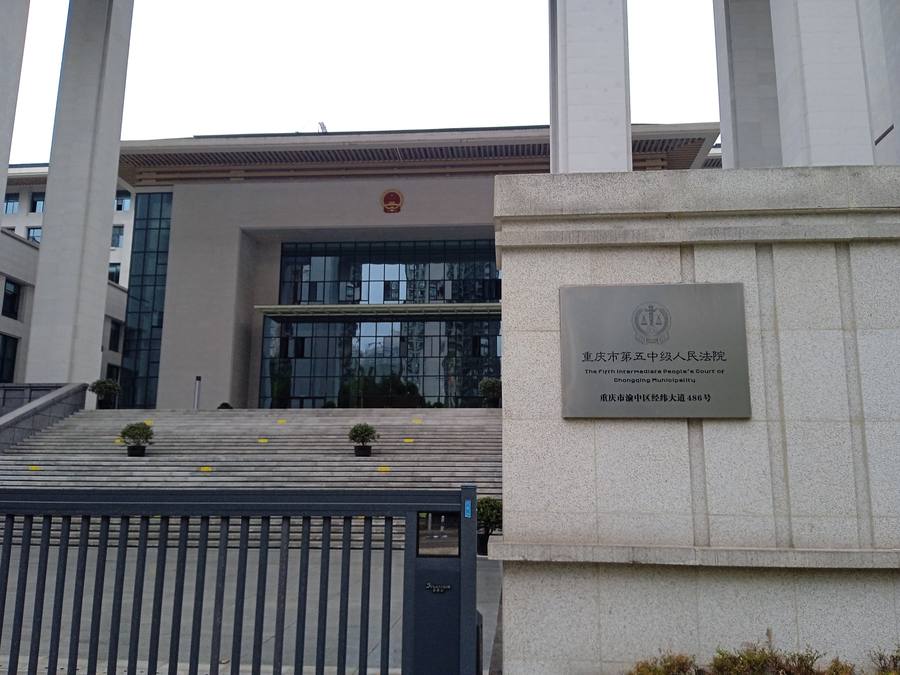
The campaign's most spectacular prey was inside the state itself. Wen Qiang, former executive deputy commissioner of the Chongqing police and by then director of the municipal Bureau of Justice, had run Chongqing's police world for years. He was seized by the task force in August 2009; the gambling syndicate of his sister-in-law Xie Caiping was tried in the same season. On 14 April 2010 the Chongqing No. 5 Intermediate People's Court sentenced Wen to death for bribery, rape and holding assets of unexplained origin; the appeal failed in May, and on 7 July 2010 Wen Qiang was executed. The public evidence of Wen's long corruption is strong, and this page does not rehabilitate him. But archivally, his case too was processed inside the task-force machine and staged as a public ritual demonstrating the campaign's resolve — and the man operating the machine was Wen's successor, Wang Lijun. The purge inside the police was on a startling scale as well: the Chinese Wikipedia, citing reported figures, says some 5,600 Chongqing police were "dealt with" during Wang's tenure, hundreds of officers branded as gang "protective umbrellas," and that after Wang's fall about 900 wrongly handled officers were rehabilitated with reputation and pay restored. The figure is single-chain reporting and is marked here as "reported, to be further verified" — but the internal purge itself is undisputed. Strike Black struck society's gangs and the police force's own factions alike, and the second strike was how Wang truly secured the chief's chair.
Asset disposal was the campaign's third line. Property of alleged syndicate-linked entrepreneurs was seized and auctioned before or around conviction, in procedures whose destinations were opaque; it remained a source of petitions and litigation for years. The fugitive businessman Li Jun told the Financial Times in 2012 that after refusing to yield a parcel of land to the government he was arrested in the 2009 campaign, strapped to a tiger bench and shocked with electric batons, and that his real-estate business, worth some US$700 million, was confiscated; his account could not be independently verified and is archived at the grade of his own testimony. Chongqing property developer and local people's congress deputy Zhang Mingyu posted in March 2012 that he held evidence of senior officials' gang ties, and on 7 March was taken from his Beijing home by Chongqing officers; he also claimed to possess a recording of Wang Lijun threatening him to stop — likewise unverified — though the cross-jurisdiction seizure itself was reported internationally. After Bo and Wang fell in 2012, families and entrepreneurs petitioned in batches and Chongqing opened a review of gang cases, but a general reversal never came: the great majority of Strike Black judgments stand today, Li Zhuang's lifetime ban has never been lifted, and Fan Qihang is dead. That tail is the hardest entry to strike from Wang Lijun's ledger: nothing in his own conviction concerns Strike Black, and no one has settled Strike Black's account for him.
7. The Police-State Machine: Traffic-Patrol Police, Street Platforms and Technical Reconnaissance (2010–2012)
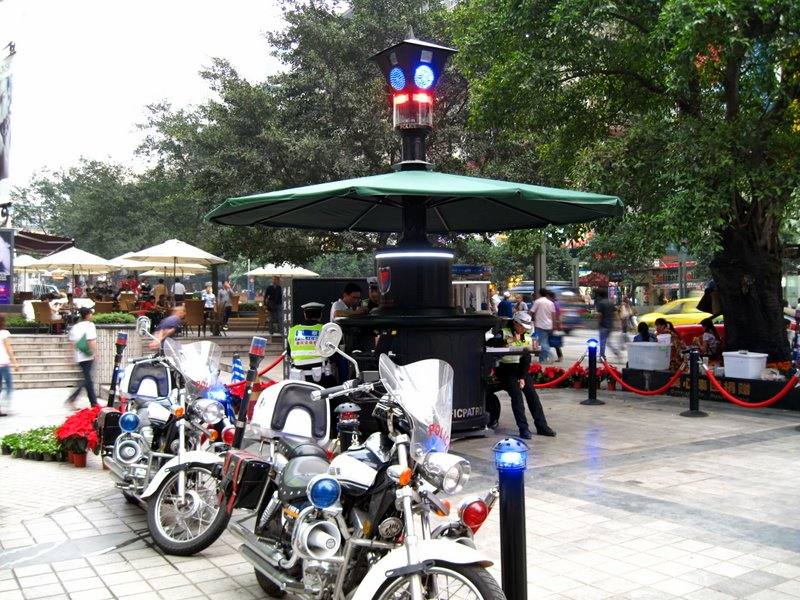
Beyond the campaign, Wang's other Chongqing legacy was a routinized police-state apparatus. In 2010, under his direction, Chongqing merged its traffic police and patrol police into a single "traffic-patrol police" (jiaoxunjing), a force type unique to Chongqing, blanketing the central districts. He personally designed the "traffic-patrol platforms" — multifunctional police posts fixed at street corners; the Chongqing Daily reported that the fixed and mobile platform types held 42 national patents between them, with Wang Lijun listed first among the inventors in filings that began in March 2010. The duality is typical: at once a convenience for citizens, and a node that bolts police manpower, cameras and stop-and-question power permanently into the street grid. Traffic-patrol vehicles and platforms visible on Chongqing streets by spring 2010 mark the turn from campaign-style striking to grid-style permanent presence — and the designer of the turn was Wang Lijun.
Deeper still lay electronic surveillance and technical reconnaissance. Scholarship on the "Chongqing model" records Wang as the principal architect of the city's lavishly funded electronic surveillance project, described in official media as a protective web for a "Safe Chongqing." After his fall in 2012, the abuse-of-power charge dragged the machine's underside into daylight: the indictment accused him of "using technical reconnaissance measures without approval or on forged approval documents" — that is, unlawful wiretapping. Hong Kong, Taiwan and overseas media reported around the trial that his apparatus had tapped even senior central leaders visiting Chongqing, and had recorded a conversation involving President Hu Jintao himself. The distinction must be kept: the Chengdu court's public trial summary never named any target of the tapping, and the "he bugged Zhongnanhai" version rests on media citation of informed sources — this page marks it "media reporting, not found by the court." What stands as structural fact is enough: a municipal police chief could run technical reconnaissance so deep that a court later had to convict him of abusing it, and his final rupture with Bo Xilai was bound up with a machine that had recorded too much that should never have been recorded.
8. The Heywood Murder: From Cover-Up to Rupture (November 2011 – January 2012)
In November 2011 the death of British businessman Neil Heywood put Wang Lijun on the road to his end. Heywood had been a business partner and intimate of Bo Xilai and his wife Gu Kailai (formally Bogu Kailai) for fifteen years, and had fallen out with the family over money. According to the official trial records in Wang's case and Gu's case: around 12 November 2011 Gu and Wang discussed detaining Heywood on a fabricated drug charge; on the night of 13 November Gu and the family orderly Zhang Xiaojun poisoned Heywood with cyanide at the Nanshan Lijing Holiday Hotel in Chongqing; the body was found on 15 November. On 14 November Gu described the killing in detail to Wang at her residence, and Wang secretly recorded her. On 15 November Wang assigned Guo Weiguo, a deputy police chief personally close to Gu, to handle the case; Guo and officers Li Yang, Wang Pengfei and Wang Zhi promptly concluded that Heywood had died of excessive drinking, and the body was cremated without adequate examination. On 17 November Wang handed Gu the hotel surveillance footage, extracted from the scene by Guo's team, showing her entering and leaving the hotel. This chain comes from the Chengdu court's official trial account and the Gu Kailai judgment — the highest evidence grade in the whole affair: Wang's first reflex after a murder was to use a police chief's powers to erase its traces for the murderer. That is exactly what the later seven-year "bending the law" sentence was for.
The cover-up bought him no safety, and Wang began keeping insurance: he had the case quietly re-examined and preserved key physical evidence, among it a sample of Heywood's heart blood — evidence that later became central to convicting Gu, and Wang's chief bargaining chip for leniency at his own trial. His relations with Gu had already soured: the official account records frictions from August 2011, including her son's failed attempt to meet him; in December Gu banqueted the officers who had erased the traces while four of Wang's close staff were unlawfully investigated, and the conflict was out in the open. On 28 January 2012 Wang reported to Bo Xilai that Gu was under grave suspicion. On the morning of 29 January, according to witness testimony in Wang's trial as carried by Xinhua, Bo angrily rebuked him and slapped his face — a slap Bo himself later acknowledged at his Jinan trial. Thereafter several of Wang's closest subordinates were arrested. A man who had protected himself by erasing traces for the powerful found, once the erasure was complete, that the powerful intended to erase him — the coldest archival layer of the entire case.
9. The Flight to the Chengdu Consulate and the Fall of Bo Xilai (February 2012)
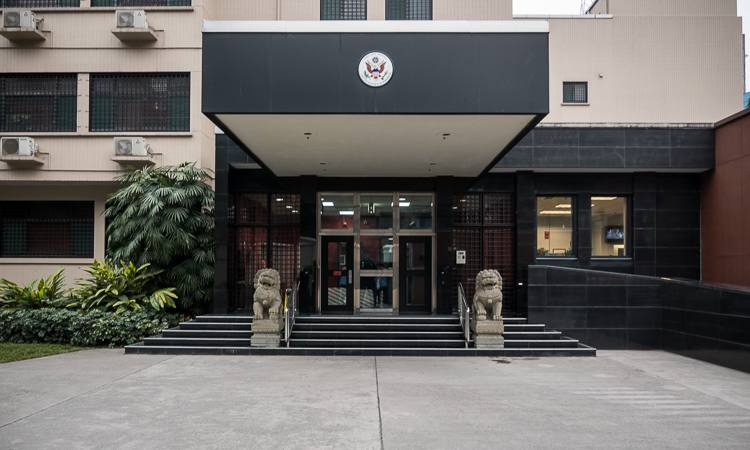
On 2 February 2012 the Chongqing government announced that Wang no longer served as police chief and would instead oversee education, science, environmental protection and similar portfolios, remaining a vice-mayor — which in bureaucratic language was an unmistakable signal of disgrace, a slide from senior vice-mayor to the bottom of the vice-mayoral order. On 5 February he still appeared in public at Chongqing Normal University to discuss his new duties. On 6 February he slipped out of Chongqing, drove some three hundred kilometers to Chengdu, and entered the U.S. Consulate General. In the widely circulated account that U.S. officials described as largely accurate, he entered that afternoon, spoke first of environmental protection, education and science, then requested political asylum, claiming Bo Xilai meant to kill him; the consulate, the U.S. Embassy in Beijing and the White House communicated through the night, and asylum was ultimately refused. He remained inside for more than twenty-four hours — many reports say about thirty. On the night of 7–8 February he left "of his own volition" in the company of Qiu Jin, a vice-minister of state security, and was flown to Beijing for investigation. Meanwhile Chongqing police dispatched by Bo had surrounded the consulate — the figure of "seventy police vehicles including armored cars" comes from overseas Chinese-language websites and Falun Gong-affiliated outlets and is marked here as "reported, number unverified," though the fact that Chongqing armed police crossed their jurisdiction to besiege a foreign consulate in Chengdu is borne out by multiple international reports and later side-confirmations.
The political aftershock was the most public high-level rupture in the history of the People's Republic. On 8 February the Chongqing government information office announced on Weibo that Wang, "owing to long-term overwork and intense mental stress, and being seriously indisposed, has been authorized to undergo vacation-style medical treatment" — a phrase, "vacation-style treatment," that has lived on as a byword for official lying in Chinese political language. On 9 February the U.S. State Department confirmed Wang's visit and voluntary departure, and China's Foreign Ministry was forced to acknowledge it. On 15 March Bo Xilai was removed as Chongqing Party secretary; on 10 April he was suspended and placed under investigation, and the authorities announced the same day that Gu was suspected of Heywood's intentional homicide; on 20 August Gu received a suspended death sentence and Zhang Xiaojun nine years; the four cover-up officers, Guo Weiguo and the others, were sentenced in August to terms between five and eleven years. In September 2013 Bo was sentenced to life imprisonment at Jinan, with Wang testifying against him. One police chief's flight had brought down a Politburo member — but it was not a victory of law; it was the product of an internal fight. Wang walked into the consulate not to expose the torture of Strike Black but because he feared for his life; the material he handed over contained the Heywood murder, and it contained nothing about Tieshanping.
10. The Chengdu Trial: Four Counts and Fifteen Years (September 2012)
On 5 September 2012 the Chengdu People's Procuratorate indicted Wang Lijun. On 17 September the Chengdu Intermediate People's Court heard the defection and abuse-of-power counts in closed session, on stated state-secrets grounds; on 18 September it heard the bending-the-law and bribery counts in open session, with relatives, people's congress and consultative conference delegates and journalists present — foreign media excluded. Wang "raised no objection" to any charge. The bribery total alleged was RMB 3.05 million: principally, funds from Dalian businessman Xu Ming that paid for housing in Dalian and Chongqing and arrangements for Wang's relatives, in exchange for Wang's orders releasing three detainees, and a second businessman's "rental" payments for Wang's vacation home in exchange for releasing another suspect. His defence argued that some transactions had in fact been arranged by Gu Kailai and that Wang had not personally performed the favors; the court rejected the argument. In the factual architecture of the four counts, Strike Black torture has no place: bending the law meant the Heywood case alone, abuse of power meant the unlawful wiretapping alone, bribery meant the 3.05 million alone, and defection meant those twenty-four hours alone.
On 24 September 2012 the Chengdu Intermediate People's Court delivered its verdict: nine years for bribe-taking, seven years for bending the law for selfish ends, two years for defection with one year's deprivation of political rights, and two years for abuse of power — combined, under the rules for multiple offences, into fifteen years' imprisonment and one year's deprivation of political rights. Wang stated in court that he would not appeal. The court found mitigation in his surrender and confession on the defection count, in his preservation of the key Heywood evidence, and in his major role in solving Gu's case — "meritorious service." Outside observers widely read fifteen years — against a prosecutorial architecture that could have reached twenty — as a lenient bargain for the murder evidence he delivered. In November 2012 Wang was expelled from the Communist Party, as recorded in the Chinese Wikipedia. The trial's archival meaning is two-sided. On one side, it is among the very few Chinese cases in which the power crimes of a police chief were publicly accounted in unusual factual detail. On the other, its boundary was drawn politically: the trial settled Wang as "Bo Xilai's accomplice and betrayer," while exempting wholesale his five years as Strike Black's commander. The court tried the police chief who shielded a murderer. It never tried the police chief who ordered the torture regime.
11. Qincheng, Testimony at Jinan, and His Present State (2012– )
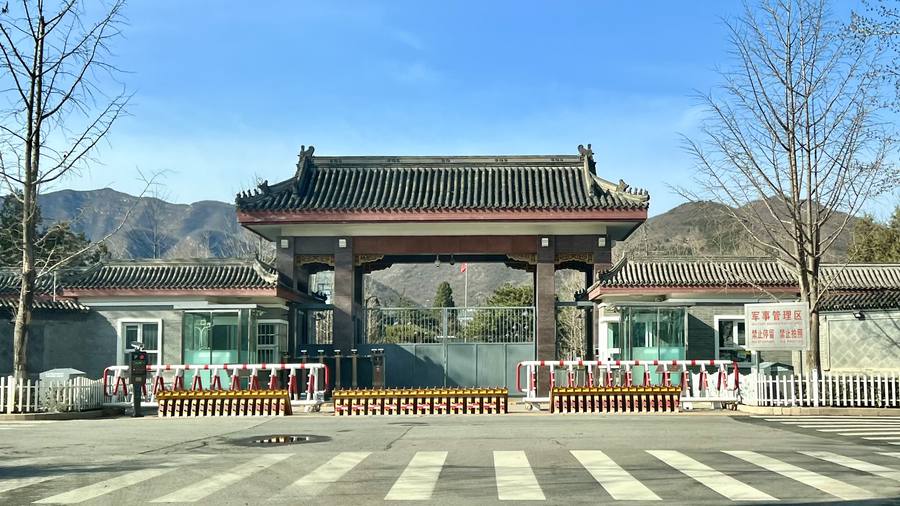
After sentencing, Wang was imprisoned at Qincheng Prison in Beijing — the facility reserved for fallen senior officials, which itself marks the grade of his case. At Bo Xilai's trial in Jinan in August 2013, Wang appeared as the prosecution's key witness, by video and written testimony, confronting Bo over the Heywood case and the slap — one of the public climaxes of that unusually open trial. Thereafter his public existence thinned to almost nothing. The South China Morning Post reported in 2019 that Wang had always liked Chinese calligraphy in prison, read a great deal, and spent his time studying English. Such reports rest on informed-source relay and have no official channel of confirmation; this page archives them at the grade of "media reporting." Beyond that, there is no public record of sentence reduction, parole or medical release for Wang, and no reliable public reporting on his family's circumstances; this page records both as "no public record."
The arithmetic of his term can only be handled with care: fifteen years counted continuously from custody in February 2012 would expire around early 2027, but no official information on reductions or credit has ever been published, and this page does not write arithmetic as fact. It confirms two points only: as of this page's verification in 2026, no public report indicates that Wang Lijun has been released; and he has appeared in no official footage or attendance list. He is sixty-six years old. A policeman whose name once terrified a metropolis of thirty million now exists in the record as a rumor about calligraphy — a different kind of silence from the single line that retired elders of Jia Qinglin's generation occupy in official lists, because his silence is compulsory. One more entry belongs in the archive: serving his sentence is not the closing of Strike Black. Behind him, Chongqing still holds thousands of Strike Black judgments, confiscated properties, an unrestored law license and one executed man, and no official document has ever rendered a general account of any of it.
12. A Layered Table of Responsibility: What Was Convicted, What Is Documented, What Was Never Tried
This page closes by gathering Wang Lijun's responsibility by evidentiary strength, enforcing this site's rule for people pages: what a court found must not be inflated, and what never entered a courtroom must not be treated as nonexistent. Level one, facts found by a court — the Chengdu judgment of 2012 and the official trial account: knowing Gu Kailai was gravely suspected of murdering Heywood, he bent the law to shield her, assigned a friendly deputy to manufacture the "excessive drinking" conclusion and handed her the hotel surveillance footage (bending the law, seven years); he took RMB 3.05 million in bribes in exchange for releasing four detainees (bribery, nine years); he used technical reconnaissance measures without approval or on forged approvals (abuse of power, two years); he abandoned his post and entered the U.S. Consulate General in Chengdu (defection, two years); combined, fifteen years. Level two, office responsibility borne out by multiple public records, requiring no personal order to stand: his overall command of Strike Black in 2009–2011 — the torture system at unofficial detention sites such as Tieshanping, Li Zhuang arrested and convicted by the police system Wang led for relaying a torture complaint, and Fan Qihang approved for execution and executed even after his torture video went public — all of it in his tenure and by his apparatus, cross-attested by lawyers' video, international human-rights documentation and the reports of the U.S. Congressional-Executive Commission on China; the mass arrests of the campaign (5,789 people on the official accounting), the disposal of "gang-related" assets and the large internal police purge belong at the same level. Level three, documented in public texts but unresolved in characterization: the Jinzhou center's lethal-injection organ-transplant research — the institution, the award and his own "thousands of cases" claim stand in contemporaneous public texts; whether donors included Falun Gong practitioners, and whether the investigative recording attributed to a cooperating surgeon is authentic, is independently unverified and is marked unverified. Level four, media reporting: the specific claims that tapping targets included central leaders, the "seventy vehicles" figure for the consulate siege, the Tieling corruption inquiry, the disguise details of his escape — reported, never officially found, and archived here only in that status. Level five, matters no proceeding has ever examined: a general review of Strike Black's wrongful cases, restitution of confiscated property, restoration of Li Zhuang's license. Those blanks are themselves part of the most accurate historical verdict on Wang Lijun: he was punished for betraying his patron, not for what he did to ordinary people.
13. Verification and Sources
The facts on this page were cross-checked across multiple sources. Life and postings: the English Wikipedia's Wang Lijun article (citing the China Vitae database) checked against the Chinese Wikipedia, with the two birthplace versions recorded side by side; the Tieling and Panjin gang-fighting detail derives largely from official publicity and biography and is graded as such. The Jinzhou center: the China Organ Harvest Research Center's report, citing the Guanghua Foundation's 2006 award texts, Ren Jinyang's presentation speech and the text of Wang's acceptance speech, together with Epoch Times and WOIPFG investigative materials; the latter two are Falun Gong-affiliated one-side sources, used here only for the contemporaneous public texts they reproduce — the institution and the award — while the donor-identity allegations are marked unverified. Chongqing Strike Black: the English Wikipedia's "Chongqing gang trials" and "Chongqing model" articles (4,781 arrests, roughly 5,700 arrests, the labor-camp estimate, with their own citations), the official Chongqing figures (375 gangs, 5,789 arrested) as carried by the Chinese Wikipedia, and the University of California, Berkeley APEC Study Center survey of the campaign (code-number secret detention, procedural violations, the Li Zhuang case). The torture cases: the Congressional-Executive Commission on China's analysis of the Fan Qihang execution (detention on 26 June 2009, Tieshanping, the video's release, execution on 26 September 2010 after the Supreme People's Court review ignored the torture claims), Chinese Human Rights Defenders' August 2010 appeal, and Amnesty International's Urgent Action UA 171/10 — three-way cross-attestation. The Wen Qiang case: the judgment and execution dates as cited in the gang-trials article (death sentence 14 April 2010, execution 7 July 2010). The Heywood case and the rupture: Xinhua's official account of Wang's trial, carried in full by outlets including the Shenzhen Daily (the 12 November detention discussion, the 14 November recording, the 15 November assignment to Guo Weiguo, the 17 November footage handover, the 28 January report and the 29 January slap), checked against the public records of the Gu Kailai and Bo Xilai cases. The consulate incident: the U.S. State Department's confirmation of 9 February 2012, the Chinese Foreign Ministry's acknowledgment, East Asia Forum and multiple international reports; details such as the number of encircling police vehicles derive from overseas Chinese-language websites and are marked unverified. Trial and sentence: Xinhua and the Chengdu court's account (the per-count breakdown — nine, seven, two and two years combined into fifteen; the RMB 3.05 million bribery total), the New York Times of 23 September 2012 and the Economic Observer's trial reporting; a figure of "RMB 305 million" appearing in one English-language relay is a transcription error, and this page follows Xinhua's RMB 3.05 million. Imprisonment and present state: the South China Morning Post's 2019 report (Qincheng Prison, calligraphy and English study), a single media source, graded as such. Matters lacking reliable sourcing — the donor-identity allegations, the specific claims about tapping central leaders, Li Jun's account of his own torture and asset seizure, and Zhang Mingyu's recording claim — are marked "unverified" or recorded expressly as the claimant's own account, and nothing has been written in to fill them. This page will be revised as new archival material becomes public.
Contact: endccpworld@proton.me