
Meng Hongwei (born 1953)
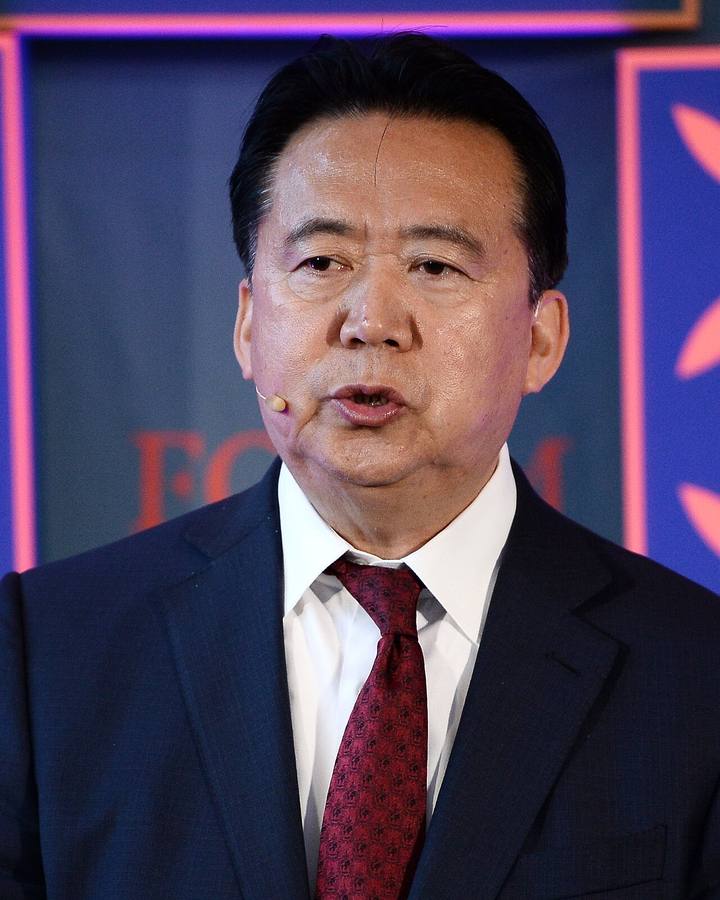
Meng Hongwei, born in Harbin in November 1953 and a Peking University law graduate, served as a Vice Minister of Public Security for fourteen years, from 10 April 2004 to 7 October 2018, under four successive ministers — Zhou Yongkang, Meng Jianzhu, Guo Shengkun and Zhao Kezhi. He headed Interpol's National Central Bureau for China from 2004, directed the office of the National Counter-Terrorism Coordination Group from 2011, and was the founding director of the China Coast Guard from 2013 to 2017. His portfolios covered counter-terrorism, border control, international cooperation and legal affairs: the Liu Xiaobo case (2008–2017), the nationwide '709' roundup of July 2015, and the overseas pursuit system built from 2014 — Fox Hunt, Sky Net and the 2015 list of '100 most wanted' red-notice fugitives — all belong to the police system of his tenure, and this page assigns institutional leadership responsibility, there being no public document of a specific arrest order in his own hand. On 10 November 2016 he was elected Interpol's first Chinese president, over same-day warnings from human rights groups that China had long used red notices to pursue dissidents and refugees; in September 2017 he presided over the 86th General Assembly in Beijing. On 25 September 2018, after returning to China, he vanished, sending his wife only a knife emoji; on 7 October the CCDI and National Supervisory Commission announced he was under investigation, and Interpol announced the same day that it had received his 'resignation.' Expelled from the Party and public office on 27 March 2019, he was sentenced by the Tianjin No. 1 Intermediate People's Court on 21 January 2020 to thirteen years and six months for bribe-taking, with a RMB 2 million fine (bribes of more than RMB 14.46 million, 2005–2017), and said he would not appeal. Bribery was his only conviction; the repression record of his tenure was never charged. He is on no sanctions list. Since the judgment there has been no public appearance and no report of release, and the prison holding him has never been named.
1. Harbin origins and a Peking University law degree (1953–1983)

Meng Hongwei was born in Harbin, Heilongjiang, in November 1953. Official biographical databases give his early life only a few lines: entered the workforce in 1972, joined the Chinese Communist Party in 1975, graduated from Peking University's law department in 1983 with a bachelor's degree in law. He belonged to the first cohorts of law graduates produced after the Cultural Revolution — the generation that went on to fill the middle and upper ranks of China's political-legal system for thirty years. Meng rose higher in that system, and fell harder, than almost any of them. Of his family background and his work between 1972 and 1983, reliable public records are almost entirely blank; this page records the gap as a gap and does not fill a biography with rumour.
To understand Meng, first understand the machine he served. The Ministry of Public Security is nominally a ministry of the State Council; in substance it is the core executive organ of the Communist Party's political-legal system. It commands the country's police, and at the time also border defence, exit-entry administration, household registration, traffic, narcotics control, cyber security and the domestic-security protection apparatus, with local bureaus answering both to higher police organs and to Party committees. A man who sits as a vice minister of that ministry for fourteen consecutive years is not the temporary executor of a single campaign. He is part of the permanent leadership of the machine — and every nationwide operation the machine ran falls inside his tenure and passed, at leadership level, through the collective he belonged to. That distinction, between institutional responsibility and a personal order, is the measuring rule of this entire page.
2. From the Central Political and Legal Affairs Commission to vice minister (1983–2004)
After graduating in August 1983, Meng joined the staff of the Central Political and Legal Affairs Commission, the Party organ that directly oversees the police, prosecutors, courts and justice administration. Starting there meant he took the bureaucrat's track from the beginning — the commission-and-ministry line, not the beat policeman's line. From August 1992 he served inside the MPS itself: a division head in the Public Order Administration, then deputy director and director of the Cultural Security Bureau, the office responsible for internal security at universities, cultural institutions and major protected sites — in the political climate after 1989, a post concerned precisely with watching campuses and the intellectual world. In August 1998 he became director of the Traffic Management Bureau; in January 2001 he joined the ministry's Party committee as an assistant minister, entering the ministerial leadership tier.
On 10 April 2004 Meng was promoted to Vice Minister of Public Security. The minister who appointed him was Zhou Yongkang — State Councillor, Minister of Public Security and deputy secretary of the Central Political and Legal Affairs Commission, later the highest-ranking "political-legal tsar" to fall in Xi Jinping's anti-corruption campaign, sentenced to life imprisonment in 2015. In July 2004, at a ceremony conferring the rank of Deputy Chief Police Commissioner, it was Zhou who personally handed Meng his rank certificate. That August Meng also became head of Interpol's National Central Bureau for China — the office through which every notice, inquiry and fugitive file between China and Interpol would pass for the next fourteen years, with him as gatekeeper. When Meng fell in 2018, the MPS Party committee met overnight and framed his case in the language of "completely removing the pernicious influence of Zhou Yongkang," noting that Zhou had promoted him. Patronage is not charged here as his offence; it is an archival fact. He was a senior member, hand-raised, of Zhou Yongkang's political-legal kingdom — and one who outlived its master's fall by more than three years.
3. Fourteen years as vice minister: portfolios, the counter-terrorism office and the Coast Guard (2004–2018)
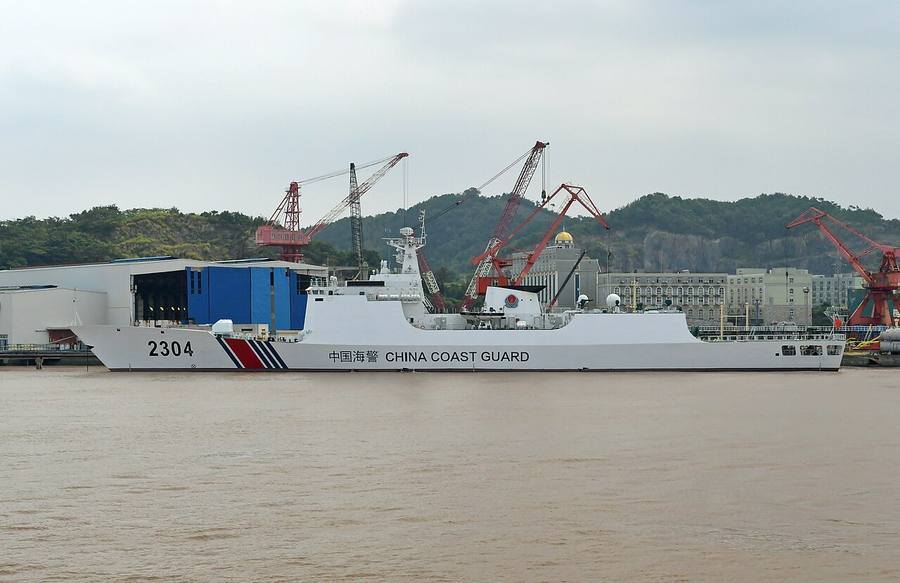
The MPS has several vice ministers with divided portfolios. Drawing together Interpol's official biography of its president and the Associated Press and Reuters profiles, Meng's areas of responsibility or deep involvement included legal affairs, narcotics control, counter-terrorism, border control, immigration, and international cooperation, alongside public-order and traffic administration. Reuters put it more bluntly: he was entrusted with a number of sensitive portfolios including the counter-terrorism division, and was in charge of the response to major incidents in Xinjiang. In August 2011 he took the concurrent post of director of the office of the National Counter-Terrorism Coordination Group — the day-to-day coordination hub of nationwide "counter-terrorism" work, housed in the MPS, through which policing deployments, intelligence collation and special operations for the Xinjiang and Tibet directions passed. His later concurrent posts widened the same arc: on 18 March 2013, as the State Oceanic Administration was reorganised and the China Coast Guard Bureau created, Meng became deputy director of the Administration, deputy Party secretary, and the Coast Guard's first director, explicitly at full ministerial rank, serving until 8 December 2017. The Coast Guard then belonged to the public-security border-defence family and was a paramilitary maritime law-enforcement force; handing its founding directorship to a vice minister known for counter-terrorism and international cooperation itself marked his weight inside the system.
Across those fourteen years he served under four successive ministers — Zhou Yongkang, Meng Jianzhu, Guo Shengkun and Zhao Kezhi — and survived them all. He survived because he sat exactly at the crossroads where the ministry faces inward and outward at once: inward, director of the counter-terrorism coordination office; outward, head of China's National Central Bureau and eventually president of Interpol itself. For years, every door between Chinese policing and the world's police systems had him standing beside it. That is also why human rights organisations reacted to his 2016 election with such alarm: the fear was never the ceremonial presidency alone, but a gatekeeper drawn from the pursuing side.
4. The big-case years of his tenure: Liu Xiaobo and "709" (2008–2017)
Cut the evidence layers first. The executing organ in every case in this section was the public security apparatus — attested by court judgments, human rights documentation and international reporting. No document showing Meng personally ordering a specific case has ever been made public. This page therefore assigns him institutional leadership responsibility: he was the vice minister responsible for relevant portfolios throughout (in office 2004–2018), and nationwide police operations carry the responsibility of the ministry's leadership. Wherever personal orders are unproven, the text says "the police during his tenure," and does not dress inference up as a signature.
The case of Liu Xiaobo spans the middle of his tenure. In December 2008 Liu was taken away by Beijing police for his part in drafting Charter 08; in December 2009 he was sentenced to eleven years for "inciting subversion"; on 13 July 2017 he died of liver cancer in a Shenyang hospital under heavy police guard, aged sixty-one — the only Nobel Peace Prize laureate (2010) to die in custody, never free. Arrest, investigation and custodial guarding were all public-security functions, performed during Meng's tenure and while he held portfolios including legal affairs. Then, around 9 July 2015, came "709": a synchronised nationwide operation in which police in more than twenty provinces summoned, placed under residential surveillance, arrested or disappeared more than three hundred rights lawyers, law-firm staff and activists; Wang Yu, Zhou Shifeng and others of the Fengrui law firm were imprisoned on subversion and picking-quarrels charges. An operation of that scale and simultaneity can only be a nationwide MPS deployment — an institutional-level judgement this page records as responsibility of the ministry's leadership, Meng included as a senior vice minister of the day. With equal honesty: public indictments and judgments name other command figures, and multiple reports identify then–vice minister Fu Zhenghua as 709's operational commander (a media-reporting layer); no public document assigns command of 709 to Meng Hongwei alone.
5. Xinjiang and Tibet: the policing line under the name of counter-terrorism (2009–2018)
Xinjiang and Tibet are the two directions where Meng's responsibility is most directly legible, because counter-terrorism was his declared portfolio. After the grave violence in Ürümqi on 5 July 2009, Xinjiang entered a long era of high-pressure "stability maintenance." From 2011, with Meng directing the office of the National Counter-Terrorism Coordination Group, the day-to-day national coordination hub for counter-terrorism sat in an office he headed. After a series of violent attacks in 2013–2014, a nationwide "Strike Hard against violent terrorism" special operation began in May 2014 with the police as its absolute main force. After Chen Quanguo became Xinjiang Party secretary in August 2016, control escalated sharply: mass checkpoints, grid policing, passport confiscation and biometric collection were rolled out across the region, and from 2017 a vast internment-camp system was built — credible reports cited by the UN Committee on the Elimination of Racial Discrimination in 2018 put the detained at around a million. The camp system's decision level was the regional Party committee and the central political-legal system; its executive level included police arrests, transfers and the police-station grid. Meng's coordinates on this line are: vice minister of public security and director of the counter-terrorism coordination office (in the ministry's leadership until April 2018; concurrently Coast Guard chief until the end of 2017). This page assigns him ministerial institutional leadership responsibility. The specific orders at regional level issued from Xinjiang's own Party and government system; assigning every entry in the camp ledger to him personally would equally lack public evidence, and this page does not do it.
The Tibet direction runs the same way. The March 2008 Lhasa unrest and the protests that spread across the Tibetan plateau, and the wave of more than a hundred self-immolations from 2009 onward, all fall within his tenure, with police and domestic-security organs as the backbone of the response. His border-control portfolio also maps directly onto Tibet and Xinjiang: preventing flight and intercepting cross-border movement are statutory border-police tasks, which in periods of political pressure meant in practice sealing the exits against Tibetans and Uyghurs travelling for pilgrimage or family visits. The individual consequences of that sealing — Tibetans intercepted and returned while fleeing, for example — are documented year by year in human rights reporting; this page fixes the institutional and portfolio coordinates, and leaves case detail to the persecution case files where it belongs.
6. Fox Hunt, Sky Net and the "100 most wanted": extending the manhunt overseas (2014–2018)
Meng's most direct institutional interface with exiles overseas was the fugitive-pursuit system. In July 2014 the MPS launched Operation Fox Hunt, a standing campaign to capture economic-crime fugitives abroad, with its command apparatus inside the ministry. In March 2015 the central anti-corruption coordination machinery launched Operation Sky Net, with Fox Hunt as a component; that April, Interpol's National Central Bureau for China published the list of the "100 most wanted" — one hundred fugitive state employees and major corruption suspects, each with a red notice attached. The publishing organ was the very bureau Meng had headed since 2004, and he was the vice minister responsible for international cooperation. This is one of the few nodes on this page where an institutional act and his specific concurrent post correspond directly: the red-notice list went out in his bureau's name.
The system's problem was never only that its lists mixed the genuine with the doubtful; it was procedural. Human Rights Watch's September 2017 letter to Interpol Secretary General Jürgen Stock catalogued it: under Fox Hunt and Sky Net, China had brought back large numbers of people from states with weak legal systems, in processes that routinely bypassed judicial extradition review; in 2016 Kenyan police forcibly returned dozens of Taiwanese fraud suspects to China without any chance to contest the transfer before a competent court; in 2015 the Swedish bookseller Gui Minhai disappeared in Thailand and resurfaced in Chinese custody, where he remains. Such methods — "persuasion to return," cross-border seizures, pressure on family members — were later investigated by several countries' courts and law-enforcement agencies under the heading of transnational repression; the United States Department of Justice's 2020 Fox Hunt prosecution charged operatives with surveilling and coercing Chinese nationals in America into returning. Throughout Meng's years as vice minister and National Central Bureau chief, that bureau was the system's international interface; once he became Interpol president in 2016, interface and gatekeeper merged into one person. The personal-order layer must stay honest: the command chains of the Gui Minhai and Kenya cases have never been made public, so this page assigns institutional and positional responsibility only, and does not accuse him of personally ordering any single cross-border operation.
7. Elected president of Interpol: a coronation over warnings (10 November 2016)
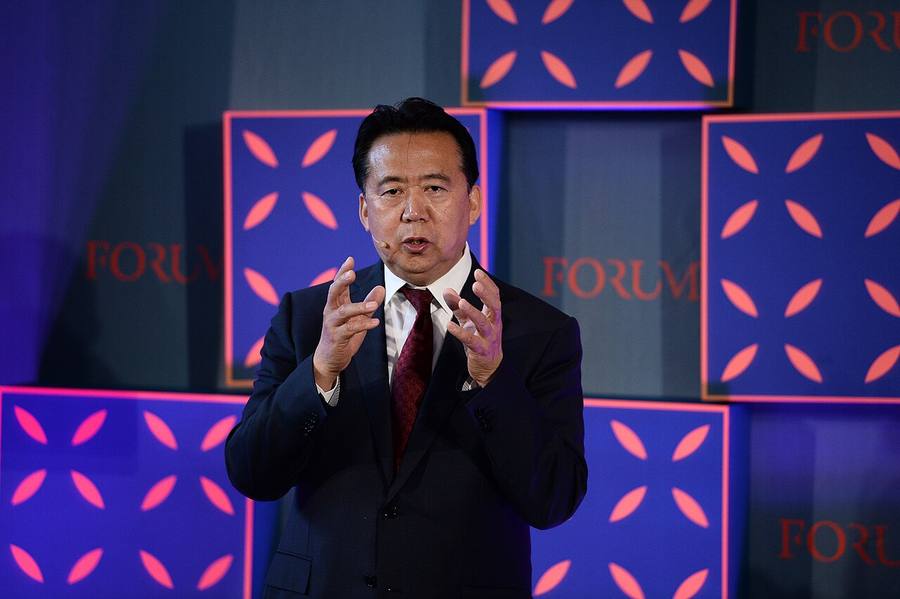
On 10 November 2016, at Interpol's 85th General Assembly in Bali, Indonesia, Meng Hongwei was elected president, succeeding Mireille Ballestrazzi of France and becoming the first Chinese president in the organisation's history since 1923. His term was four years, to 2020; the Secretary General was Jürgen Stock of Germany. The official narrative called it international recognition of China's law-enforcement standing, and Xinhua issued its release the same day. The warnings that day were just as specific. Amnesty International's East Asia director Nicholas Bequelin called the election extraordinarily worrying given China's longstanding practice of trying to use Interpol to arrest dissidents and refugees abroad. Human Rights Watch researcher Maya Wang said the appointment could embolden abuses within the system. Lawyers acting for Tibetan exiles put it more acidly: it was like putting a fox to mind the geese. The dissidents' fear had a name attached: Dolkun Isa, president of the World Uyghur Congress, had travelled for years under a Chinese-requested red notice, repeatedly detained at borders — a man China's foreign ministry still publicly described in 2017 as a red-notice terrorist.
Why the warnings carried weight requires an honest account of what the presidency is — this page's lesson in not inflating one man's power. Interpol's president is a part-time, unpaid office: he chairs the General Assembly and the Executive Committee and gives the organisation direction, while daily operations belong to the Secretary General and the General Secretariat, and red notices are issued or deleted by the General Secretariat under the organisation's rules, subject to the Commission for the Control of Interpol's Files. The president cannot personally issue or cancel a single notice. Claims that Meng's election handed him a personal warrant book are false, and this page does not use them. The warnings' real weight lay elsewhere: when a state that was massively using red notices and Fox Hunt to pursue people overseas placed its own vice minister of public security in the president's chair, the neutrality of every reviewer downstream came under an unsupervisable pressure — would reviewers hesitate a fraction longer over applications from Beijing, and spare a fraction less patience for appellants? No one outside could watch. In September 2017, ahead of the Beijing assembly, Human Rights Watch wrote to Stock itemising red-notice abuse cases and the Fox Hunt problem, demanding the organisation prove its human rights obligations would not be discounted for the president's nationality. That letter's existence is itself one of the most important documents of his presidency.
8. The Beijing assembly and the Dolkun Isa deletion: two pages of the presidency (2017–2018)
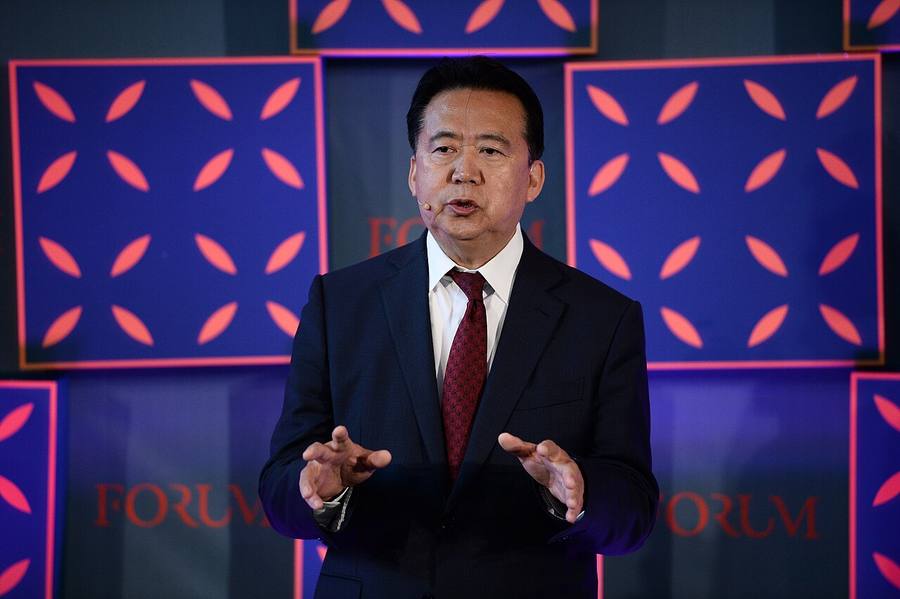
From 26 to 29 September 2017, Interpol's 86th General Assembly met in Beijing. Xi Jinping personally opened it, pledging greater Chinese support for the organisation. Meng presided, telling delegates that cooperation was in the organisation's genes and neutrality its lifeline (as published in his opening address on Interpol's official site). Nearly a thousand delegates from 156 countries attended. It was the summit of his life: the flag he had received in Bali a year earlier unfurled in Beijing, with the country's supreme leader seated beside him. Archivally, every unit of that symbolic capital later reversed: thirteen months on, the man who had hosted the assembly "resigned" from inside secret detention in his own country, and the organisation did not publicly utter one complete sentence asking where he was.
His presidency contains one further page that must be recorded exactly, because it is counter-evidence to any simple narrative. In February 2018 Interpol deleted the red notice against Dolkun Isa — a notice that had stood for some twenty years and was human rights groups' exhibit number one for Chinese red-notice abuse. Fair Trials confirmed the deletion on 23 February 2018. China reacted with formal displeasure and protest, and in United Nations settings attributed the cancellation to the Secretary General and the legal department acting on their own initiative. That is: during his presidency, the organisation decided China's most sensitive red notice against Beijing's wishes, and Beijing itself credited the secretariat, not the president. Two archival conclusions follow. First, there is no public evidence that Meng used the presidency to preserve or to add any political red notice for China; accusations against him stop at institutional identity and system responsibility, and claims beyond that line — that he personally manipulated the notice lists — are unsupported and are not used here. Second, the counter-evidence does not cancel his institutional responsibility: the neutral machinery he asked the world to trust proved credible in his tenure precisely because it at least once stood up to his own government — while he himself never publicly said one word for that deletion, or for the appeal rights of anyone pursued by a red notice.
9. Falling signals, a knife emoji, and a "resignation" (December 2017 – October 2018)
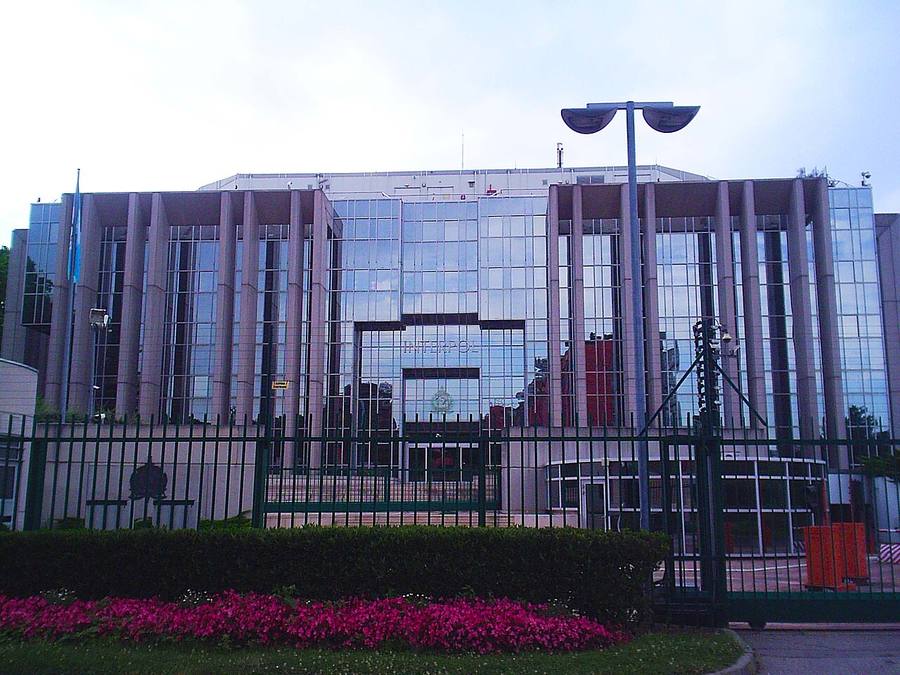
The fall lit its signals in stages. On 8 December 2017 he left the State Oceanic Administration and the Coast Guard directorship — explicable on the surface by institutional reform (the Coast Guard moved to the People's Armed Police the following year), but the shedding of a full-ministerial concurrent post was still a demotion in substance. In January 2018 he became a member of the 13th Chinese People's Political Consultative Conference, on its foreign affairs committee — for a serving vice minister, often the antechamber of sidelining. In April 2018 he was removed from the MPS Party committee, keeping only the administrative title of vice minister: stripping the Party post first is the standard preliminary procedure for disposing of a senior cadre, and Hong Kong media noted it at the time as an ominous sign.
In September 2018 he travelled back to China from Lyon and vanished. The timeline differs slightly between sources and is recorded here in parallel: English Wikipedia's synthesis has him leaving Sweden on 18 September and landing in China on 19 September, while Human Rights Watch and the wire services anchor on his last contact with his wife on 25 September. The undisputed chain is this: on 25 September he sent his wife Gao Ge two messages — first "wait for my call," then, four minutes later, a knife emoji, which she understood as a danger signal. On 4 October she reported him missing to French police in Lyon and, after threats by phone and online, received French police protection. On 6 October Interpol publicly demanded that the Chinese government account for its president's status. On 7 October the CCDI and National Supervisory Commission announced that Meng was under investigation for suspected violations; the same day Interpol announced it had received his resignation, effective immediately, with senior vice president Kim Jong Yang of South Korea as acting president. A resignation letter written by a man in secret detention has never been independently verified as voluntary, and Gao Ge later said she would take legal action against Interpol over it. In the early hours of 8 October the MPS Party committee met and announced that Meng was suspected of taking bribes, demanding the complete removal of Zhou Yongkang's pernicious influence — while headquarters in Lyon, four thousand miles away, issued a one-paragraph notice that asked nothing about his whereabouts. Human Rights Watch's 8 October commentary named the full absurdity of his position: the president was in all likelihood being held in liuzhi, the Party-controlled secret detention that isolates a detainee from lawyers and family for up to six months — the same species of incommunicado custody into which the system he had helped lead for fourteen years had delivered countless activists.
10. Liuzhi, double expulsion and the Tianjin prosecution (October 2018 – June 2019)
On 26 October 2018 Meng was stripped of his CPPCC membership. For nearly five months his name then appeared only in procedural notices. On 27 March 2019 the CCDI and the National Supervisory Commission issued the double-expulsion notice, whose wording is archived here item by item because it is the official verdict text on him: investigation had found that Meng had "no Party principles whatsoever," had failed to report personal matters as required, and had "refused to implement decisions of the Party Central Committee"; that he had misused his office and "squandered national assets" so his family could live extravagantly; that he had used his power to obtain posts and special treatment for his wife; and that he had used his office and influence to benefit others and illegally accepted property, constituting suspected bribery. He was expelled from the Party and from public office, his illicit gains confiscated, and his case transferred to prosecutors. On 24 April 2019 the Supreme People's Procuratorate announced his formal arrest on suspicion of bribe-taking; in May, Tianjin prosecutors indicted him before the Tianjin No. 1 Intermediate People's Court. On 2 May 2019 France granted asylum to Gao Ge and the twin children; foreign ministry spokesman Geng Shuang responded publicly that any asylum claim by Meng's wife would be an abuse of French legal process. The family had by then cut itself off from China entirely.
On 20 June 2019 the Tianjin court opened his trial. Meng appeared in public for the only time in the nine months since his disappearance — visibly thinner, in a dark jacket, in the official photographs. Prosecutors charged that between 2005 and 2017 he had used the convenience of his posts as MPS vice minister and Coast Guard director, and the influence attaching to them, to benefit companies and individuals in business operations and personnel promotions, illegally accepting money and property totalling more than RMB 14.46 million. He pleaded guilty and expressed remorse. The hearing lasted one day; judgment was reserved — and then took another seven months to arrive.
11. Thirteen and a half years, and the family account kept in its layer (21 January 2020)
On 21 January 2020 the Tianjin No. 1 Intermediate People's Court delivered judgment: Meng Hongwei was convicted of bribe-taking and sentenced to thirteen years and six months in prison, with a fine of RMB 2 million; the proceeds were to be recovered and paid into the state treasury, with shortfalls still to be pursued. The court credited his truthful confession and remorse as grounds for leniency. He stated in court that he accepted the verdict and would not appeal. One confusion in English-language headlines needs correcting here: bribery was the sole offence of conviction; "abuse of power" in some headlines describes the conduct within the bribery charge, not a second, separately punished offence — this page follows the Tianjin court's judgment and the Xinhua and Caixin accounts (bribes of more than RMB 14.46 million; thirteen years and six months; a RMB 2 million fine). Since the judgment, nothing has been published about the prison where he serves, his health, or any sentence reduction. If the term runs in full from his September 2018 detention, it would expire in the first half of 2032 — arithmetic, again, not an official date.
The family's account must be kept in its own layer; sympathy for his fate is no licence to swallow it whole. In November 2021 Gao Ge gave the Associated Press her first on-camera interview, calling the charges against her husband trumped up, saying he had in truth been purged for using his high position to push for change, and calling the government a monster that eats its own children (her published words, quoted here in paraphrase within quotation limits). These claims come from the closest family member, with her emotional and material position attached — including that, on the CCDI's findings, she was herself a beneficiary of the posts and special treatment her husband's power obtained, and that her own Shandong CPPCC seat had been revoked in January 2019. This page's position is stated on the record: that Meng was secretly detained, made to "resign" while incommunicado, and convicted in a process without independent defence counsel or public testing of the evidence are established procedural facts, and they stand as an indictment of the judicial system he served. But procedural injustice cannot be run backwards into factual innocence, and still less into absolution for fourteen years at the top of the public security machine. A man can be both a long-serving senior officer of a secret-police system and, later, an object of that same system's secret detention. Both pages of that file must stand at once, and this page refuses to let the second cover the first.
12. Responsibility, layered: institutional, positional, and unsupported
Level one — responsibility directly matching his posts, supported by official appointment records and institutional documents: head of Interpol's National Central Bureau for China from August 2004 for fourteen years, the responsible official for China's red-notice applications and international police cooperation; the "100 most wanted" list of April 2015 was issued by that bureau; director of the office of the National Counter-Terrorism Coordination Group from August 2011, the ministerial coordination official for counter-terrorism policing toward Xinjiang and Tibet; founding director of the China Coast Guard, 2013–2017. Level two — institutional leadership responsibility, where the acts were the police's, occurred within his portfolios or leadership tenure, and no personal order is public: the arrest, investigation and custodial guarding of Liu Xiaobo (2008–2017); the nationwide 709 roundup (2015); Fox Hunt and Sky Net overseas pursuit operations from 2014, including pressure on families and returns that bypassed extradition review, as documented year by year by Human Rights Watch; the police executive layer of Xinjiang's Strike Hard and of the post-2017 internment system; high-pressure policing and border sealing in Tibet. Level three — symbolic and systemic responsibility of the presidency (2016–2018): taking Interpol's presidency while remaining a serving MPS vice minister, after public warnings, presiding over the Beijing assembly and lending China's police an international imprimatur; with no public evidence that he personally issued, preserved or deleted any red notice — Dolkun Isa's notice was deleted by the secretariat during his term, archived here as counter-evidence, credited neither to him nor against him personally. Level four — unsupported, not used: online accounts of his precise 1989 postings, of specific deals behind his promotions, and of the "real political reasons" for his fall have no reliable sourcing and are excluded entirely. Level five — the actual scope of his own punishment: one bribery case of RMB 14.46 million, thirteen and a half years. None of the repression in levels two and three, whatever its evidence, ever entered a charge sheet against him. The structure is identical to Wang Lijun's case: when this system settles accounts with its own, it counts loyalty and money — never what they did to ordinary people.
视频证据Video Evidence
以下为与本页人物直接相关的机构新闻影像与档案影像。Institutional news and archival footage directly related to this page's subject.
《中国指控前国际刑警组织主席孟宏伟受贿腐败》(Al Jazeera English)|2018|原声:英语报道China accuses ex-Interpol chief Meng of bribery and corruption (Al Jazeera English) | 2018 | Audio: English report
13. Verification and sources
The facts on this page were cross-checked across multiple sources. Posts and dates: Interpol's official site (the election notice, the 2017 Beijing General Assembly pages and the published text of Meng's opening address), the Chinese- and English-language Wikipedia entries on Meng Hongwei cross-checked against each other (vice minister 10 April 2004 – 7 October 2018; Coast Guard and Oceanic Administration 18 March 2013 – 8 December 2017; counter-terrorism coordination office from 2011; National Central Bureau head from 2004 — all from the official career record those entries cite), and State Council appointment notices. Portfolios and counter-terrorism duties: Interpol's official presidential biography; Reuters and Associated Press profiles (the counter-terrorism division; responsibility for major-incident response in Xinjiang). Election and warnings: Interpol's 10 November 2016 notice; Xinhua's same-day release; Amnesty International and Human Rights Watch public statements of November 2016 (Bequelin and Maya Wang); the Georgetown Security Studies Review analysis and the November 2016 statement by Tibet-support legal teams. Red notices and Fox Hunt: Human Rights Watch's letter of 24 September 2017 to Secretary General Stock (red-notice abuse, Fox Hunt and Sky Net, the Gui Minhai and Kenya cases, the Dolkun Isa notice); Fair Trials' notice of 23 February 2018 confirming the Isa deletion; Dolkun Isa's Uyghur Tribunal testimony (deletion date 21 February 2018). Disappearance and resignation: Reuters, AP, the New York Times and BBC reporting of October 2018 (the knife emoji, the report to police on 4 October, Interpol's demand on 6 October, the investigation announcement and resignation on 7 October); Human Rights Watch commentaries of 8 and 9 October 2018 (the liuzhi analysis). Official Chinese handling: the CCDI/National Supervisory Commission investigation notice of 7 October 2018 and double-expulsion notice of 27 March 2019 (full text as carried by Xinhua and the Global Times English edition); the MPS Party committee's October 2018 meeting notice ("removing Zhou Yongkang's pernicious influence"); the Supreme People's Procuratorate arrest decision of 24 April 2019. Trial and sentence: the Tianjin No. 1 Intermediate People's Court hearing of 20 June 2019 and judgment of 21 January 2020, as reported by Xinhua, Caixin and Reuters (bribes of more than RMB 14.46 million; thirteen years and six months; RMB 2 million fine; no appeal); some English-language aggregator reports garbled his age, the amount and the period ("56 years old," "2015 to 2017"), and this page follows the court figures throughout and notes the correction here. Family developments: BBC and AFP reporting on Gao Ge's asylum application and its grant on 2 May 2019; the Associated Press interview of November 2021 (her "trumped up" claim and "monster" remarks archived as a family statement). Sanctions check: public searches of United States Treasury and State Department, European Union and United Kingdom sanctions lists return no designation for Meng Hongwei, recorded as "none." Matters without reliable sourcing — the precise-1989-postings account, personal manipulation of red notices, insider accounts of his fall — were not used. This page will be revised as new records become public.
Contact: endccpworld@proton.me