王容芬(1947—)Wang Rongfen (1947– )
Wang Rongfen, born in 1947 in Haidian, Beijing, a graduate of Beijing No. 101 Middle School, entered the German programme of the Beijing Foreign Languages Institute in 1962 and had joined the Communist Youth League. On 18 August 1966, aged nineteen, she attended the Tiananmen rally at which Mao Zedong first received the Red Guards and came home convinced the scene was indistinguishable from a Nazi mass rally. On 24 September she mailed Mao a letter — what are you doing, what does all this mean, where are you leading China — declaring that the Cultural Revolution was not a mass movement but one man moving the masses with the barrel of a gun, and solemnly resigning from the Youth League. Carrying a German version of the letter, she then swallowed four bottles of dichlorvos (one account says DDT) near the Soviet embassy in Beijing, meaning the world to learn what was happening in China; saved at a public security hospital, she was arrested at once, held nearly ten years without sentence, given life imprisonment in January 1976, and rehabilitated and released as innocent in March 1979 — twelve and a half years in all. On Fei Xiaotong's recommendation she joined the CASS Institute of Sociology as a translator, rebuilt her German and translated Weber, including The Religion of China: Confucianism and Taoism. After the June 1989 crackdown she settled in Germany. On 12 January 2008 she published an open letter to Hu Jintao demanding punishment of the Cultural Revolution's crimes against humanity, and in October 2009 Deutsche Welle carried her memoir Looking Back and Reflecting. As of this site's check on 18 November 2026 she is living in Germany, approaching eighty, with no recent public reporting found.
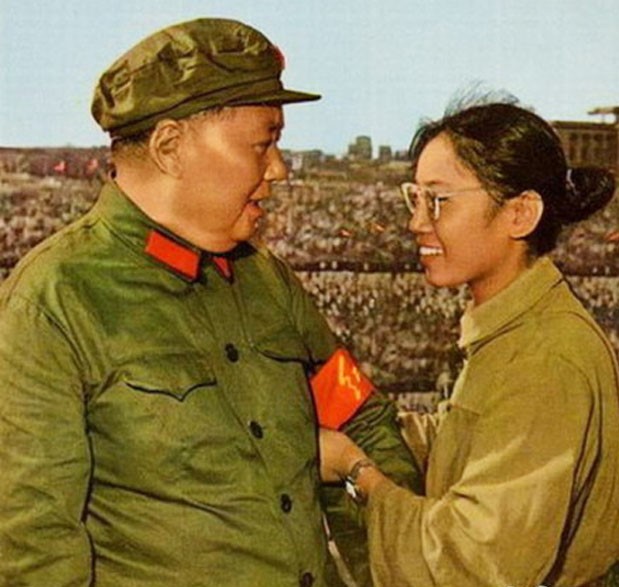
1. First, fix the record: birth year, letter date and years in prison — the brief was wrong three times
This file begins by correcting three figures, because the commissioning brief got all three wrong and each correction is sourced. First, her birth year: the brief said 1946; reliable sources agree on 1947 — she was born in Haidian, Beijing, and was nineteen at the rally of 18 August 1966, which fits 1947 exactly. Second, the date of the letter: the brief said 1 October 1966; every source gives 24 September 1966 — thirty-seven days after the rally, the interval in which she thought, wrote and acted. This page's sort date is therefore 24 September 1966. Third, the length of her confinement: the brief said about thirteen years; the academic literature (a peer-reviewed study of Cultural Revolution memory by University of Bologna researchers) gives twelve and a half years — arrested in September 1966, released in March 1979. One structural point must be fixed before anything else, because it organises everything that follows: she did not serve a twelve-and-a-half-year sentence. She was held for nearly ten years with no sentence at all; only in January 1976, as the Cultural Revolution was ending, was a life sentence pasted over the detention; and just over three years later that sentence was itself overturned on rehabilitation. Detention first, verdict afterwards, vindication last — that sequence is the key to this case.
2. Haidian, the No. 101 Middle School and the Foreign Languages Institute: how a German student was formed
Wang Rongfen was born in 1947 in Haidian, Beijing, attended Haidian Peiyuan primary school, and in 1957 entered Beijing No. 101 Middle School, one of the capital's most selective schools. In 1962 she entered the German programme of the East European Languages Department at the Beijing Foreign Languages Institute. German was a small language in the China of that day, and to study it seriously meant reading Goethe and Schiller — and also confronting the very recent German past: Nazism, the rallies, the leader cult, and the question of how a whole nation had been mobilised. That education is the only clue needed to understand the judgement she made in 1966. On 18 August 1966, at Tiananmen Square, a million Red Guards roared their loyalty as Mao waved from the rostrum; her contemporaries felt only exhilaration. She, who had studied German and read modern German history, saw a different picture. She later recalled that the scene that day was no different from Hitler's. This site files one sentence here and files it deliberately: this was not a pretty phrase polished in hindsight. She paid for that judgement with twelve and a half years in prison, and no nineteen-year-old pays that price for a figure of speech. She had joined the Communist Youth League and was, by the standards of the day, one of the regime's own — which is precisely why, when her faith collapsed in the summer of 1966, the rupture took the most formal and irreversible shape available to her: resignation from the League, in writing, addressed to Mao himself.
3. 18 August 1966: beneath the Tiananmen rostrum, she thought of Nuremberg
On Thursday 18 August 1966, two months into the Cultural Revolution, Mao Zedong received the Red Guards at Tiananmen for the first time. More than a million Red Guards and students filled the square and the avenues east and west. Mao came onto the rostrum in military uniform; Lin Biao spoke; the Red Guard representative Song Binbin pinned a Red Guard armband on Mao, who, on hearing her name, remarked that it should be changed to 'Song Yaowu' — Song Be-Militant. Official memory framed the day as a festival of revolution. In the two months that followed, Mao received the Red Guards seven more times, more than ten million people in all, and the nationwide Red Guard networking and the violence of 'destroying the Four Olds' spun wholly out of control: homes ransacked, people beaten, families expelled, books burned — in Beijing alone, those beaten to death by Red Guards in August and September 1966 numbered in the thousands. Wang Rongfen stood in the crowd on 18 August. She was nineteen, a German student and a Youth League member — by every contemporary measure, one of the regime's own children. What she carried home was not an enthusiastic report but a question she could not put down: what, exactly, distinguished that frenzy, those synchronised slogans, that worship of the leader, from the Nazi mass rallies she had read about in German and in history books? Her answer was: nothing. In the China of 1966 that answer could not be spoken aloud. Thirty-seven days later she paid for speaking it — with a letter, and with four bottles of insecticide.
4. 24 September 1966: the resignation letter — three questions for Mao
On Saturday 24 September 1966, Wang Rongfen mailed a letter to Mao Zedong. History knows it as the letter of resignation from the Youth League. Its core passage is preserved in full in multiple sources, and this site files its substance: it opened with three parallel questions — think, in the name of a Communist Party member, about what you are doing; think, in the name of the Party, about what all this that is happening means; think, in the name of the Chinese people, about where you will lead China. It then gave her verdict on the movement itself: the Cultural Revolution is not a mass movement; it is one man moving the masses with the barrel of a gun. And it closed with a formal declaration: from this day, I withdraw from the Communist Youth League of China. Three filing notes. First, the addressee was Mao himself: this was not a diary entry or a wall poster but a challenge delivered to the movement's founder — and under the postal censorship of the day, she cannot have doubted that the letter would fall into the hands of the apparatus before it ever reached him. Second, the weight of the act: in 1966 League membership was a young person's political life, and to resign voluntarily was to declare a public rupture with the organisation — the most decisive political statement an ordinary student could make. Third, the letter's manner: no abuse, no slogans, only three questions, one judgement and one declaration — calm, complete, self-possessed. The record of the letter is the standing refutation of every later insinuation of madness or fanaticism: its author reasoned clearly and accepted the consequences in advance.
5. Four bottles of insecticide outside the Soviet embassy: she wanted the world to know
After posting the Chinese letter, Wang Rongfen did a second thing. Carrying a German version of the same letter, she went to the vicinity of the Soviet embassy in Beijing and swallowed four bottles of dichlorvos (one account says DDT; both versions are filed). Her intention, as every account relays it, was that the Soviets would find her body and the German letter, and that the story of a Chinese student who had died protesting the Cultural Revolution would reach the whole world. This section is written as plainly as the act requires. She did not choose the Soviet embassy out of sympathy for Moscow: by 1966 China and the Soviet Union were bitter adversaries, and a Chinese student dead outside the Soviet embassy with a German letter in her pocket would inevitably become an international incident — it was the only device a nineteen-year-old could construct to carry a voice from inside the wall to outside it. She wrote the second letter in German because German was the one language in which she could address the outside world directly: her degree subject became her last loudspeaker. And she did not die. She was taken to a public security hospital, resuscitated, and arrested as soon as she had survived. This site does not romanticise the act; it fixes its nature: not an impulsive self-destruction but a fully designed protest at the price of her life — Mao as addressee, the world as witness, and her own life as the postage. Because she lived, the price was recalculated: not death, but twelve and a half years in prison, accruing from 24 September 1966.
6. Nearly ten years held without a sentence: 1966 to January 1976
From her arrest in September 1966 until her sentencing in January 1976, Wang Rongfen spent nearly ten years in custody without any verdict. The public record of that decade is, and this site says so plainly, extremely thin. The places of detention, the interrogations, the making of her case file, her cellmates, whether her family could visit — the items a complete archive should settle one by one are, in the public sources, mostly missing. What this check could establish: Chinese Wikipedia and the essay The woman political prisoner Wang Rongfen by Dai Qing and Luo Ke give the main line; Jung Chang and Jon Halliday's Mao: The Unknown Story (pp. 468–469) states that she suffered inhuman abuse in prison; a further detail carried in secondary relays — that her manacles were fitted with spikes and that she had to roll on the floor to eat — appears only in second-hand commentary with no primary source, and is filed as unverified, not as fact. The commissioning brief placed her in Qincheng Prison: this check found no reliable source for that attribution in Wikipedia, the academic literature or the interview record. Qincheng is the prison most reflexively attached to Cultural Revolution political prisoners, and precisely for that reason this site does not write it into her file unverified. What can be fixed is the structure: a nineteen-year-old student who had written one letter — no organisation, no accomplices, no programme — was arrested and then neither tried nor released for nearly a decade. In the China of 1966–1976 that was not an anomaly but the routine instrument for handling dissent: lawless detention was itself the method. Her youth, from nineteen to twenty-nine, passed inside that undocumented decade.
7. January 1976: a life sentence — and its reversal three years later
In January 1976, after nearly ten years in custody, Wang Rongfen was sentenced to life imprisonment. The timing deserves a section of its own. Nineteen seventy-six was the Cultural Revolution's last year: Zhou Enlai died in January, the April Fifth Tiananmen incident followed, Mao died in September, and the Gang of Four was arrested in October. To convert, in the January of that year, a woman imprisoned since 1966 for a single letter into a life prisoner shows the machine that handled her still running on its original logic to the very end: a person held for ten years could not simply be released, because release would concede the arrest had been wrong — so a life sentence was issued to retroactively legalise the decade. This site states the accompanying gap just as plainly: the name of the sentencing court, the case number and the exact wording of the charge appear in no public source located, and are filed as no public record; this site does not draft documents for history. She served three more years under that sentence. In March 1979, as the nationwide rehabilitation of unjust cases unfolded, her case was overturned and she was released as innocent. From September 1966 to March 1979 is twelve and a half years. What rehabilitation meant must also be written down: it annulled the 1976 verdict and every charge — the state's own admission that the twelve and a half years had been wrong from first to last. It was not an apology, not compensation, and not accountability: no public record shows that anyone who arrested, held or sentenced her was ever called to account. Detention first, verdict afterwards, vindication without consequence — her file and the system's file close differently, and this site files both.
8. After prison: Fei Xiaotong's recommendation and the Chinese Academy of Social Sciences
When Wang Rongfen walked out of prison in March 1979 she was thirty-two, and the life in front of her was broken in the usual places: studies interrupted for thirteen years, German rusted for thirteen years, a political-prisoner record only just rehabilitated, and work, residence registration and housing all to be rebuilt from nothing. The man who restarted her academic life was Fei Xiaotong. Every account agrees that after her rehabilitation, on Fei's recommendation, she entered the Institute of Sociology of the Chinese Academy of Social Sciences to work on translation. Fei was the founding figure of Chinese sociology, himself persecuted during the Cultural Revolution, and in 1979 he was rebuilding the discipline that had been abolished for a generation. To recommend a just-released German translator into his institute was an act of professional judgement — and of the mutual support by which that generation of scholars held each other up. At the Academy she took up German again, working on rendering the classics of German sociology from the original texts. That thread became the main line of her later life: in the Weber fever of the 1980s, Chinese scholarship distinguished the 'American Weber' who arrived through English translation from the 'German Weber' translated directly from the original — and she belonged to the second camp, one of the translators who rendered Weber systematically from the German, translating The Religion of China: Confucianism and Taoism. This section is filed to correct a lazy narrative habit: she is not a symbol frozen in 1966. After 1979 she spent a decade winning back, inch by inch, the education that had been taken from her. The prison took her youth; it did not take her ability to read.
9. June 1989: after witnessing a second crackdown, she left China
In June 1989 Wang Rongfen settled in Germany. The sources are consistent on the timing: June 1989, after the Tiananmen crackdown. The date is filed here because it is not a coincidence. On 18 August 1966 she had stood in Tiananmen Square and understood what she was seeing; in June 1989, in the same square, the army shot civilians. Twice in one lifetime the same square received the same answer from the same system to the same kind of people — those who questioned and those who protested. She left in 1989 and did not return to live in China, settling in Germany for the long term to translate and to write. The public record of her German life is sparse: her city, her institutional affiliations and her family circumstances have no complete public record, and this site neither fills nor guesses them. What can be fixed is the main line — she deepened the German scholarship she had rebuilt after prison; her translation of Weber's The Religion of China appeared in the 1990s (academic relays date it to 1997); and she entered the international scholarly literature on Cultural Revolution memory as herself a case, including a peer-reviewed 2022 study by University of Bologna researchers. One limit is stated honestly: apart from the nodes of 2008 and 2009 and an RFA interview, the public record of her three decades in Germany is close to blank. That blank matches her own low profile, and this site respects it rather than narrating a late life out of silence.
10. 12 January 2008: the second letter — to Hu Jintao, demanding punishment of the Cultural Revolution's crimes against humanity
On 12 January 2008, writing from Germany, Wang Rongfen published her second consequential letter. Its addressee was Hu Jintao, then President of China, and its title, in the form in which it circulated, urged Hu to punish the crimes against humanity of the Cultural Revolution. The peer-reviewed Bologna study devotes a section to it, and the two letters, forty-two years apart, form a matched pair. The 1966 letter was protest: a nineteen-year-old saying no to a crime in progress. The 2008 letter was a demand for accountability: a sixty-one-year-old who had served twelve and a half years for the first letter, requiring the state to face a crime forty years past. Writing as a member of Hu's own generation, she reminded him that he had lived through the Cultural Revolution as a student at Tsinghua and knew what the rally of 18 August 1966 had meant; and she called on China to accept an international-justice framework of the kind embodied in the Rome Statute of the International Criminal Court, so that the Cultural Revolution's crimes against humanity could meet a tribunal. The sequel to the second letter was the same as the sequel to the first: no public reply, and no accounting. But the meaning of the letters does not depend on replies. Filed together, they show one questioner and one system across forty-two years: in 1966 she asked Mao where he was leading China; in 2008 she asked Hu whether the forty-year-old account would ever be settled. Between the two letters lie twelve and a half years of prison and nineteen years of exile. The 2008 letter also proves a negative: the life sentence of 1976 failed in its purpose. It took her freedom; it did not take her memory, or her insistence on asking.
11. Looking back: the Deutsche Welle memoir and the Radio Free Asia interview
Her few systematic public statements in later life are filed one by one. In October 2009 Deutsche Welle's Chinese service published her first-person memoir essay Looking Back and Reflecting, her fullest account in her own words of the choice of 1966 and the prison years that followed; it is the first-person source behind several details on this page. Radio Free Asia broadcast an interview with her under the title Dear Chairman Mao, recording her path to the letter in oral form. In Chinese, the principal secondary literature consists of Dai Qing and Luo Ke's essay The woman political prisoner Wang Rongfen, Xu Weixin's Portraits of Historical China: 1966–1976, and the passage at pages 468–469 of Jung Chang and Jon Halliday's Mao: The Unknown Story; internationally, the 2022 peer-reviewed study in Information, Communication & Society carried her and her 2008 letter into the academic narrative of Cultural Revolution memory. This site grades the materials as they deserve: her memoir and interview are primary oral testimony; Dai Qing's essay and Xu's book are interview-based compilations made afterwards; Chang's book is popular scholarship, whose 'inhuman abuse' phrase must carry its attribution when quoted; the journal article is secondary research. Where the sources conflict, Section 14 registers the conflict rather than smoothing it over. One detail is worth filing on its own: in her memoir and interviews she looks back on 1966 in a level voice, narrating without an accuser's rhetoric. From a woman once sentenced to life, that restraint is itself among the strongest evidence on this page.
12. The family's page: a blank in the public record, stated as such
This site's archive standard requires every page to state the impact on the family, and in this case the section must be written honestly — which means writing about an absence. Of Wang Rongfen's parents and relatives, the public sources preserve almost nothing that can be verified. Her parents' names and occupations; whether the family was persecuted by association after her arrest in 1966; whether visits were ever permitted during thirteen years; how the household lived through that decade; whether her parents were still alive at her rehabilitation in 1979 — on every one of these questions, this check found no reliable record in Wikipedia, her memoir, the interview transcripts or the academic literature. Each is filed as no public record; nothing is invented and nothing is padded. What may be said — labelled as background, not as evidence about her family — is the general structure of the era: between 1966 and 1979 the families of political prisoners routinely bore class-background taint, workplace investigation and social discrimination, and denial of visits was the norm in political cases. That framework helps a reader understand the world her family inhabited; this site does not convert the general rule into her family's specific story. The section's existence is itself an archival finding: the persecution took twelve and a half years from her, and it also rendered her family nearly invisible in the public record. How the parents of a nineteen-year-old who went to prison for a letter grew old, nobody wrote down. The blank is left here, to be filled if family testimony or new material ever emerges.
13. Complete timeline
1947: born in Haidian, Beijing; childhood at Haidian Peiyuan School. 1957: enters Beijing No. 101 Middle School. 1962: enters the German programme of the East European Languages Department, Beijing Foreign Languages Institute; joins the Communist Youth League. May 1966: the Cultural Revolution is launched. 18 August 1966: attends the Tiananmen rally at which Mao first receives the Red Guards, and concludes the scene is indistinguishable from Nazi mass rallies. 24 September 1966: mails Mao the letter resigning from the Youth League — three questions and the declaration of withdrawal — and the same day, carrying a German version, swallows four bottles of dichlorvos (one account says DDT) near the Soviet embassy in a suicide attempt intended to alert the world; she is saved at a public security hospital and arrested. 1966–1976: held for nearly ten years without sentence (places of detention and interrogation detail have no complete public record). January 1976: sentenced to life imprisonment (court, case number and wording of the charge have no public record). March 1979: rehabilitated and released as innocent, after twelve and a half years in custody. After 1979: recommended by Fei Xiaotong into the Institute of Sociology of the Chinese Academy of Social Sciences as a translator. 1980s: rebuilds her German and joins the direct-from-German translation of Weber. June 1989: after the Tiananmen crackdown, settles in Germany, where she lives long-term, translating and writing. 1990s: her translation of Weber's The Religion of China: Confucianism and Taoism is published (academic relays date it to 1997). 12 January 2008: publishes from Germany her open letter to Hu Jintao demanding punishment of the Cultural Revolution's crimes against humanity and China's acceptance of an international-justice framework. October 2009: Deutsche Welle publishes her memoir essay Looking Back and Reflecting. Thereafter: Radio Free Asia broadcasts its interview with her, Dear Chairman Mao. 2022: a peer-reviewed study by Italian scholars discusses her case in the literature on Cultural Revolution memory. 18 November 2026: this site's check — she is living in Germany, approaching eighty; no public reporting on her since 2009 beyond academic citation was found; the file remains open.
14. Filed in parallel: divergences and unverified items
First, the birth year: the commissioning brief gave 1946; Wikipedia and the academic literature give 1947, which this site adopts, filing the brief's figure as corrected. Second, the letter's date: the brief gave 1 October 1966; all sources give 24 September 1966, adopted here, and this page's sort date is set accordingly. Third, the total confinement: the brief said about thirteen years; the academic figure is twelve and a half years (September 1966 to March 1979), adopted. Fourth, the poison: Chinese Wikipedia gives four bottles of dichlorvos, with DDT as an alternative account; the English academic paper says four bottles of insecticide — both versions filed. Fifth, the places of detention and imprisonment: the brief named Qincheng Prison among them; this check could not verify that attribution in any reliable source — neither Chinese Wikipedia nor the memoir transcripts name a specific prison — and it is not asserted, only registered as unverified. Sixth, the details of prison treatment: Jung Chang's Mao: The Unknown Story speaks of inhuman abuse, a single-source formulation by that book; the spiked manacles and rolling on the floor to eat appear only in secondary commentary with no primary source — both are registered with their grades, not adopted as unqualified fact. Seventh, the sentencing court, case number and charge wording of January 1976, and the rehabilitating authority and documents of March 1979: no public record. Eighth, her birth date: only the year 1947 is verifiable; no month or day is on public record, so the On This Day wall carries only the three nodes with firm month-days — 18 August, 24 September and 12 January 2008 — and no birthday is invented for her. Ninth, her city of residence in Germany, her family circumstances and her recent state of health: no reliable public record, and this site does not fill them in.
15. Latest status
As of this site's check on 18 November 2026, Wang Rongfen's latest verifiable status is: living in Germany, approaching eighty years of age. After the 2008 open letter and the 2009 Deutsche Welle memoir she published nothing that drew wide reporting; the 2022 international academic literature still writes of her as a living scholar. This check found no report of her death, and equally no new interview or new book from the 2020s — both are stated as not found in the public record, and no inference about her life or health is drawn from the silence. The original of her 1966 letter, the 1976 judgment and the 1979 rehabilitation documents have never been published. Her complete oral history still awaits any future work by family members or researchers. As a record of resistance the case stands thus: the act of resistance dates to 1966, its persecutory consequences ran for twelve and a half years, rehabilitation closed the legal case in 1979, and the questioning continued to 2008. In archival terms, this file is not closed.
16. Verification and sources
The sources actually consulted in this check are as follows. First class, her own texts and testimony: Wang Rongfen, Looking Back and Reflecting (Deutsche Welle Chinese service, October 2009, memoir essay); Radio Free Asia's interview with her, Dear Chairman Mao (checked through the academic literature's citations); her open letter to Hu Jintao of 12 January 2008 (checked in the full relay given in the Bologna peer-reviewed paper — written from Germany, demanding punishment of the Cultural Revolution's crimes against humanity and acceptance of a Rome Statute-style framework). Second class, academic sources: Tesini and Zambernardi, 'When Memory Exceeds History: The Emerging Visual Internet Archive on the Cultural Revolution', Information, Communication & Society 25(8), 2022, peer-reviewed (the post-1947 outline, the nineteen-year-old German student, the 18 August rally impression, the four bottles of insecticide, the twelve and a half years, the 1979 release, the move to Germany after Tiananmen, the 1997 Weber translation and the 2008 letter are from, or corroborated by, this study); Jung Chang and Jon Halliday, Mao: The Unknown Story, pp. 468–469 (the 'inhuman abuse' formulation is that book's, and is attributed as such). Third class, Chinese records: the Chinese Wikipedia entry on Wang Rongfen (born 1947 in Haidian; Peiyuan School; No. 101 Middle School; entry to the Institute's German programme in 1962; the 18 August 1966 rally; the text of the 24 September resignation letter; dichlorvos with DDT as an alternative; nearly ten years held; life sentence in January 1976; rehabilitation in March 1979; Fei Xiaotong's recommendation into the CASS institute; settlement in Germany in June 1989; the Weber translation); Dai Qing and Luo Ke, The woman political prisoner Wang Rongfen (China in Perspective); Xu Weixin, Portraits of Historical China: 1966–1976. Fourth class, secondary relays: the spiked-manacles and floor-eating details appear in a US legal scholar's commentary without a primary source and are filed as unverified. Official-position check: the Chinese authorities have never published any statement on Wang Rongfen's case; neither the 1976 judgment nor the 1979 rehabilitation documents have any public text — no public record. Image: this page's photograph is the historical image of the 18 August 1966 Tiananmen reception of the Red Guards (Song Binbin pinning the armband on Mao; Wang Rongfen was in that square that day), via Wikimedia Commons, public domain; no freely licensed photograph of Wang Rongfen herself was found on Commons, and press or institutional photographs of her are copyrighted and are not used — see the metadata.
17. Our Take
What earns Wang Rongfen a full page in this archive is a date: 24 September 1966. The Cultural Revolution was four months old, the Red Guard movement was at full blaze, and the whole country was competing to declare loyalty — when a nineteen-year-old Youth League member and student of German stated the movement's essence in one sentence: not a mass movement, but one man moving the masses with the barrel of a gun. It would take ten more years and deaths in the millions before official documents half-admitted as much; she saw it standing in Tiananmen Square, and she said it in the most dangerous way available — a letter mailed to Mao himself, followed by a German copy carried to the Soviet embassy and four bottles of poison, because she understood from the start that the letter would get no hearing inside China and wanted the world to hear. The system's answer was equally plain: hold her first, hold her for nearly ten years unsentenced, paste a life sentence over the detention as the movement expired, then overturn it three years later without apology or accountability. No link in that chain survives questioning: the letter was real, the crime was invented, the verdict was a backdated ticket, and the rehabilitation corrected the error while punishing no one. This site files one closing sentence. The three questions Wang Rongfen put to Mao in 1966 — what are you doing, what does all this mean, where are you leading China — she put again to Hu Jintao in 2008, demanding an accounting for the Cultural Revolution's crimes against humanity, and again received no answer. That a question asked by a nineteen-year-old student has hung in the air for sixty years is, by itself, the most complete verdict on this system that this archive can record.