
Zhu Yunlai and CICC: Zhu Rongji's Son, Sixteen Years at China's Flagship Investment Bank and About Twelve at Its Helm
A single-person deep dive in this site's finance series: Zhu Rongji's son left no map of family shareholdings behind him, but he did leave one of the most complete and longest executive tenures in Chinese investment banking — entering China International Capital Corporation in 1998, leaving by announcement in 2014, and spending about twelve of those years as its president and chief executive officer while the bank handled a run of the largest state-owned enterprise listings. This profile is the counterpart to the four-family short cards: the short card records the Zhu family as "tenure only, no empire," and this profile simply writes that tenure out in full, down to the years and the announcement.
Contents
- 1. Identity and evidence: a father-son relationship stated outright by a Xinhua-system outlet
- 2. Entry: joining CICC Hong Kong in 1998 and the limits of the phrase "arranged by Wang Qishan"
- 3. The institution: CICC, controlled by China Construction Bank with Morgan Stanley as a shareholder
- 4. The climb: management committee, president and chief executive officer — the title timeline
- 5. The deal line: ICBC, Agricultural Bank of China, China State Construction, China Pacific Insurance and other state listings
- 6. Departure: the announcement of 14 October 2014 and Lin Shoukang acting in his place
- 7. Relation to the short card: why a thick tenure line and no family empire do not contradict each other
- 8. The boundary of the evidence: what this profile can and cannot prove
- Material gaps (stated as found)
- Sources
The method of this profile has to be explained first, because it differs from most others in this series. Elsewhere, an archive grows thick from a company's decades of expansion, a chain of subsidiaries and a ledger of transaction amounts. Here, the thickness comes from one position and one span of time: a man entered an investment bank, rose from its Hong Kong office to its management committee and then to president and chief executive officer, and left by a single announcement on the eve of the firm's own listing preparations. The position is real, the span is long, and the project list is a matter of published compilation. Everything beyond that — personal shareholdings, private funds, offshore arrangements, a wealth figure — does not appear in the research file or the sources on which this profile rests. The archive rule is to write as much as the record holds: the tenure column can be written very thick, the columns that are empty stay neatly empty, and their emptiness is itself part of the finding.
The man first, pinned down. Zhu Yunlai was born in 1957 and is the son of Zhu Rongji — and that sentence is not an overseas media inference or an encyclopedia paraphrase. It is stated directly in a profile of Zhu Yunlai carried on the official website of the Economic Reference, a newspaper under Xinhua (Source 3). Across this series, mainland official curricula vitae almost never name a subject's parents, so most family relationships have to be supported by obituaries, court documents or first-tier media investigations. This one is different: the confirming text sits on the website of an official financial newspaper in the Xinhua system, where any reader can still open it and check. Because that one direct statement exists, the identity section of this profile needs no hedging vocabulary — no "reportedly," no "said to be." The relationship is written as fact, at grade A.
| Date | Event |
|---|---|
| 1957 | Zhu Yunlai is born; the Economic Reference profile on the Xinhua-system website states directly that he is the son of Zhu Rongji (Source 3) |
| 1998 | He joins the Hong Kong office of China International Capital Corporation, in an appointment the record describes as arranged by Wang Qishan (Source 3) |
| 2000 | He enters CICC's management committee (Source 3) |
| From 2002 | He successively holds the posts of chairman of the management committee, president and chief executive officer; media accounts commonly date his formal assumption of the chief executive role to 2004 (Sources 1, 3) |
| 2004–2014 | As president and chief executive officer he heads CICC while it leads the listings of Industrial and Commercial Bank of China, Agricultural Bank of China, China State Construction, China Pacific Insurance and other large state-owned enterprises (Sources 1, 2, 3) |
| 14 October 2014 | CICC announces that its board has approved Zhu Yunlai's resignation as president and chairman of the management committee, with chief operating officer Lin Shoukang acting in his place (Source 1) |
| 24 October 2014 | Caixin Weekly reviews the change under the title "CICC: Farewell and Beginning" (Source 2) |
1. Identity and evidence: a father-son relationship stated outright by a Xinhua-system outlet
The identity section looks like the simplest part of any profile in this series, and it is in fact where errors breed fastest. Versions of a princeling's family relationship usually outnumber the reliable ones: a shared surname hardens into shared lineage, a paraphrase hardens into a confirmation, and a headline grows heavier with every republication until the original source can no longer be found. This site's rule for family relationships is therefore strict: a relationship is written as fact only where an official text, a company document, a court document or first-tier media reporting states it plainly; anything carried only by aggregator republication is downgraded or left out. Zhu Yunlai's case passes the test in the cleanest available way. The profile on the official website of the Economic Reference, introducing his career, states directly that he is the son of Zhu Rongji and gives his birth year as 1957 (Source 3). Three things follow. First, readers do not have to take this site's word for the relationship; they can take the original text's. Second, the relationship never needed confirmation or denial from the man himself, because it was already written in an official-system publication. Third, every discussion of position that follows in this profile rests on an identity that is already pinned down, not on an association built out of surname and birthplace.
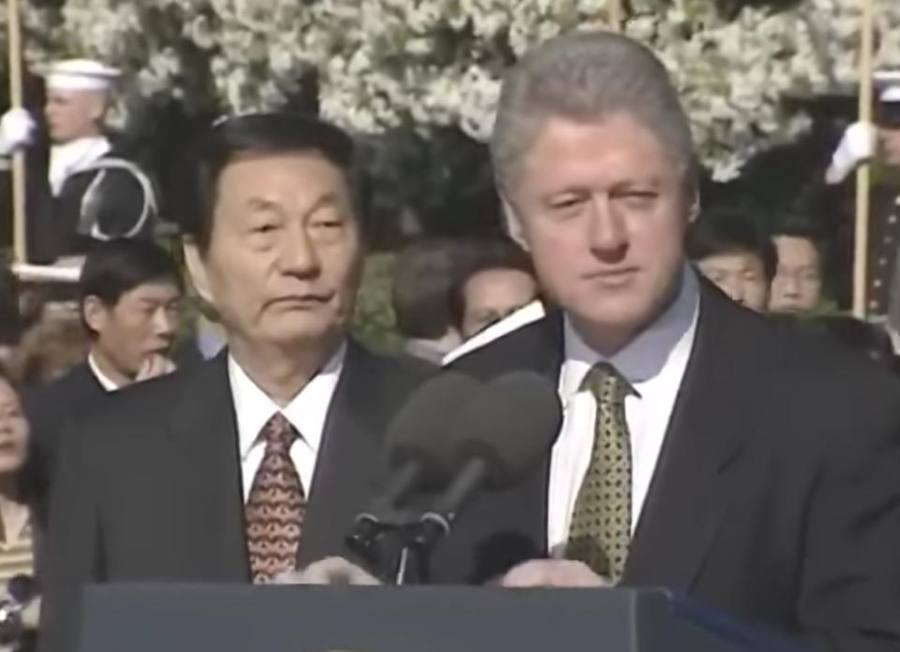
Zhu Rongji's own position must also be pinned down, because it is what makes this tenure line worth a standalone profile. Zhu Rongji is a former Premier of the State Council, one of the chief architects of China's economic reform and state-enterprise restructuring in the 1990s. CICC's core business was precisely that restructuring work made tradable: converting large state-owned enterprises into joint-stock companies and selling their shares to domestic and foreign investors. The son of the premier who presided over restructuring headed the investment bank that executed the restructuring listings. That structure is, by itself, the reason this profile exists. But a striking structure is not a conclusion. The archive can record each man's public offices and terms, the list of projects CICC handled during the son's tenure, and the announced dates of his arrival and departure. It cannot record how the father's office acted, in any concrete instance, on the son's appointment or on any project — no document in the sources used here describes any such process. Keeping those two layers apart is the precondition for reading this profile: the first layer is fact; the second remains, to this day, undocumented.
The source base should be declared here as well. This profile rests on exactly three sources: Caixin's report of 14 October 2014 on the resignation, written on the basis of CICC's announcement (Source 1); Caixin Weekly's retrospective of 24 October 2014 (Source 2); and the Economic Reference profile of Zhu Yunlai on its official website (Source 3). Their division of labour is clear. Source 3 carries the skeleton of identity and career. Source 1 carries the terminal event, the resignation, in announcement terms. Source 2 carries Caixin's overall retrospective on the tenure, including how the projects of those years are listed in compilations of his career. Three sources are not many, but each one bears directly on the facts it is asked to support, and that is what grade A means: not the largest pile of citations, but no load-bearing fact resting on paraphrase. Anything the three sources do not contain — details of his education, his career before CICC, his activities after leaving, the circumstances of other family members — is not developed in the body of this profile. It is registered, item by item, in the gaps section at the end. That restraint is not a shortage of space; it is the true width of this profile's evidence.
2. Entry: joining CICC Hong Kong in 1998 and the limits of the phrase "arranged by Wang Qishan"
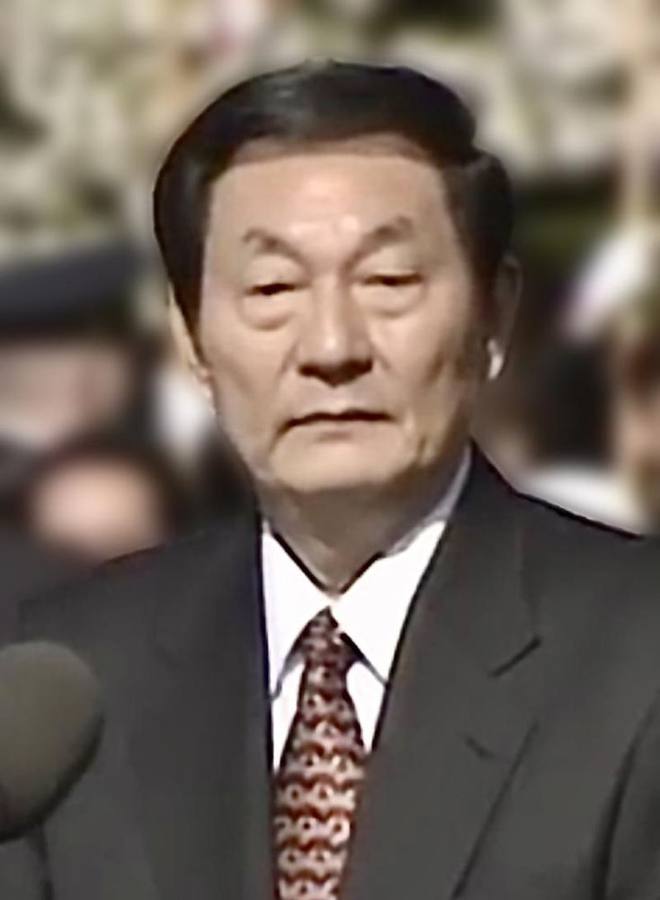
Zhu Yunlai's CICC career began in 1998, and it began in Hong Kong. The research file's formulation is one sentence containing three elements: the year was 1998, the manner was an arrangement by Wang Qishan, and the destination was the Hong Kong office of China International Capital Corporation (Source 3). The three elements must be read separately. The year and the destination are career facts; they fit seamlessly with his entry into the management committee in 2000 and his subsequent rise to president, and they are written here as facts. The phrase "arranged by Wang Qishan," by contrast, requires its evidential form to be labelled. It appears in the research file's summary of this career step and reflects the standard formulation in published accounts of the appointment, but none of the three sources used here contains a personnel document or a first-person account showing how the arrangement was made — who proposed it, in what setting, through what procedure, and under what title it was recorded inside CICC. All of that is without public record. This profile therefore registers the standard formulation as it stands, and states its boundary in the same breath: it proves that published accounts record the appointment this way; it does not document the mechanics of the arrangement, and it must not be expanded into a map of a personnel network. What relationship Wang Qishan himself bore to CICC in that year, and whom else he may have placed there, are matters the research file does not cover, and this profile does not write them.
The Hong Kong office as the point of entry deserves a page of attention, because it fixes both the starting level and the business direction of this tenure. CICC's centre of gravity in the late 1990s was underwriting and advising on overseas listings for large state-owned enterprises, and Hong Kong was where that business was executed: offering documents were prepared there, international investors subscribed there, and the listing rules of the Stock Exchange of Hong Kong applied there. A man who joined the Hong Kong office in 1998 was not entering a quiet middle-office post in a mature institution; he was entering the front line of the firm's core business. Two years later he was on the management committee — the day-to-day decision core of a joint-venture investment bank of this kind — which marks the step from business executor to institutional decision-maker. The two steps sit close together in time: entry in 1998, the committee in 2000. The archive registers the years and the outcomes, and does not explain the speed on the reader's behalf. Whether it reflected business ability, institutional expansion, shareholder arrangements or personnel arrangements, the public record offers no verifiable answer, and writing any one of those explanations into the text would dress speculation up as fact.
One further fact, easily flattened out of narratives, belongs in this section: when Zhu Yunlai entered CICC, his father was serving at the State Council. The overlap in time is objective and checks against the public chronology. But in an archive, an overlap is a date annotation, not a conclusion. This series has seen too many texts that convert temporal overlap directly into causation, and this profile does not follow them. The father's years as premier and the son's year of entry into the bank are placed side by side in the timeline where the reader can see them; the archive does not draw the connecting line. The only material that could draw it would be documents — appointment files, internal resolutions, project allocation records — and none has been published. This profile leaves that cell empty and explains why it is empty, which is closer to the true state of the historical record than filling it with imagination.
3. The institution: CICC, controlled by China Construction Bank with Morgan Stanley as a shareholder
To write about a man heading an institution, the institution itself must first be written clearly; otherwise the word "headed" is empty. The research file's characterisation of CICC is a single sentence, and it contains the whole key to this tenure: China International Capital Corporation was controlled by China Construction Bank, with Morgan Stanley as a shareholder (Source 3). On one side of the share register stood a state-owned mega-bank; on the other, a Wall Street investment bank. The firm's birth certificate bore state credit on one line and international investment-banking technique and distribution channels on the other. Nor was it an ordinary securities firm. An ordinary broker lives on channel and brokerage business; CICC's core business was the restructuring and the domestic and overseas issuance of very large enterprises — above all, central state-owned enterprises of a size that only a national-champion investment bank could absorb. Whoever sat in its chief executive's chair sat at the master control of the production line that turned Chinese state enterprises into listed companies. That is where the weight of Zhu Yunlai's tenure line lies: not in anything held in his personal name, but in what the position he occupied controlled.
The shareholder structure also explains another feature of this tenure: every step of it generated documents. CICC was a joint-venture investment bank; senior appointments and removals went through board procedure, and major personnel changes were announced publicly. Zhu Yunlai's 2014 resignation entered the public record in exactly that way — one announcement, stating the board's approval, the posts resigned and the acting successor (Source 1). The contrast with some other figures in this series is sharp. Some tenures can only be probed by journalists; some departures can only be reconstructed backwards from an obituary. Zhu Yunlai's arrival year, promotion milestones and departure date all sit in published text. This "fully announced" career shape makes the archive easier to write, and at the same time fixes its ceiling: the archive holds what announcements state. What announcements do not state — the real reasons for a resignation, the course of board discussion, the details of a handover — the archive can only register as without public record. A man written from announcements is necessarily a man written in terms of office, and readers should keep that in mind throughout.
CICC's place among the finance cases of this series also belongs in this section. Wang Jun, in this series, sat in the chairman's seat at CITIC Group, a platform spanning banking, securities, trust and industrial assets. Larry Rong sat as chairman of CITIC Pacific and personally held roughly eighteen per cent of that listed company. Zhu Yunlai's seat — president and chief executive officer of CICC — was a purely professional manager's position: neither the research file nor the three sources contains any record of his holding equity in CICC. Three men, one finance section, three entirely different kinds of seat: a group supremo, a chairman who was also a major shareholder, and an appointed chief executive running an institution. Distinguishing these natures is what allows the later conclusion — "no empire" — to stand. An empire means equity and companies in a person's own name. That column is empty for Zhu Yunlai, and its emptiness does not conflict with the height of his office, because office was never an empire in the first place.
4. The climb: management committee, president and chief executive officer — the title timeline
The milestones of Zhu Yunlai's rise inside CICC, as given in the research file, are three: he entered the management committee in 2000; from 2002 he successively held the posts of chairman of the management committee, president and chief executive officer; and media accounts commonly date his formal assumption of the chief executive role to 2004 (Sources 1, 3). Between the milestones sits a small discrepancy of dating that must be registered honestly: 2002 or 2004 — which year counts as the formal start of his command of CICC? The research file places the two datings side by side — the group of posts held from 2002, and 2004 as the year media accounts commonly give for formally becoming chief executive officer — and this profile follows that side-by-side presentation. Two statements are true under either dating: he spent sixteen years at CICC in total, and he headed it for about twelve years (Source 1). The word "about" cannot be dropped. Counted from 2002, the command is longer; counted from 2004, it is a full twelve years. The archive does not choose the tidier number for the reader; it puts the discrepancy on the table. That is precisely where an archive differs from both a eulogy and a denunciation: a eulogy wants a tidy number, a denunciation wants an inflated one, and an archive wants only a checkable one.
The titles themselves are worth unpacking. President, chairman of the management committee and chief executive officer are not three synonyms recited for effect. In CICC's setting, the chairman of the management committee convened the firm's internal decision body; the president was the top of its administrative line; and the chief executive officer was its highest executive facing shareholders and regulators. One man holding all three titles meant that internal decision, administrative execution and external representation were united in a single person. The wording of the 2014 resignation announcement is therefore worth reading word by word: it records his resignation as "president and chairman of the management committee" (Source 1). The list of posts in the announcement is the best available text for understanding how his authority was composed — what he handed back was not an honorific, but both keys of the bank, decision and execution. How the announcement treated the chief executive title itself, and what succession arrangements followed for it, are not developed in the research file or the three sources; this profile registers the point in the gaps section rather than completing it from other reporting.
What twelve years means becomes visible only inside the investment-banking industry. A bank chief executive's tenure usually rises and falls with the market cycle; arriving in a bull market and leaving in a bear market is the norm. Zhu Yunlai's tenure spanned the most violent round of expansion and adjustment in China's capital markets: the restructuring and listing of the great state banks, central enterprises issuing in domestic and overseas markets in turn, and the shock of the 2008 global financial crisis across the whole industry. That the tenure covered those years is fact. What decisions he made in each of those years, which projects he vetoed and which transactions he championed, the three sources do not record year by year, and this profile does not invent a yearly record. What can be confirmed is the shape of the trajectory: entry in 1998, the decision layer in 2000, the summit reached between 2002 and 2004, then roughly a decade without change, until a single announcement closed the tenure in October 2014. A straight rising line followed by a long plateau — that is the entire shape of this curriculum vitae. It is not dramatic, but in the public record of Chinese investment-bank executives, straightness and length are themselves rare.
5. The deal line: ICBC, Agricultural Bank of China, China State Construction, China Pacific Insurance and other state listings
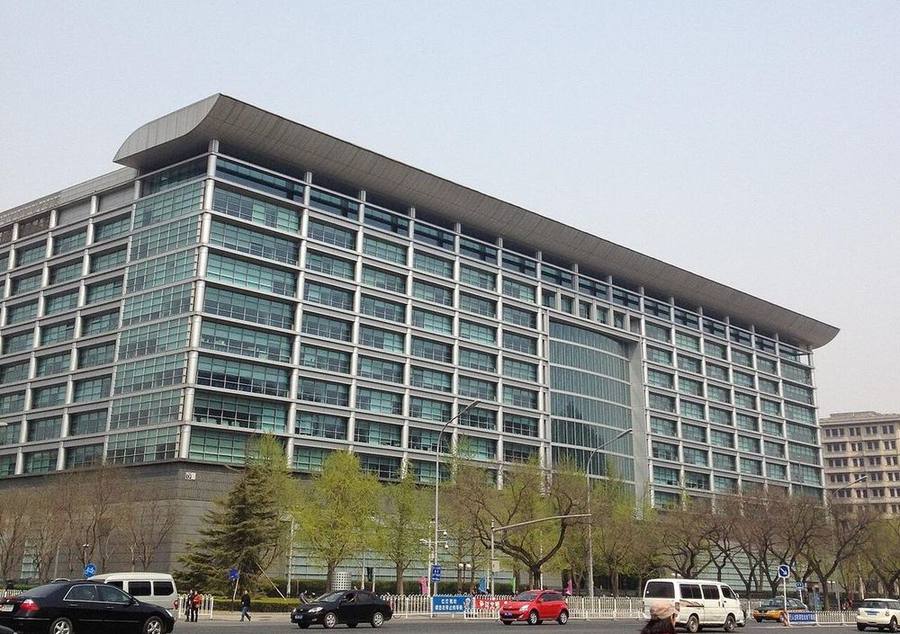
The hardest evidence for judging an investment-bank chief executive's tenure is not adjectives but a project list. The research file's formulation is that, during his tenure, CICC handled almost the entire run of large central state-enterprise restructuring listings, and it names the representative works in brackets: Industrial and Commercial Bank of China, Agricultural Bank of China, China State Construction and China Pacific Insurance, among others, drawn from Caixin's compilation of his career (Sources 1, 2, 3). Each name has to be read for its weight. ICBC and Agricultural Bank of China are the great state-owned commercial banks, whose joint-stock restructuring and public offerings were among the heaviest undertakings of Chinese financial reform in that era. China State Construction was the integral listing of a construction central enterprise. China Pacific Insurance was the listing of an insurance group. The four deals belong to banking, construction and insurance respectively; what they share is enormous size, complex structure, and the word "restructuring" — first converting an old wholly state-owned or state-controlled system into a joint-stock company, then issuing its shares to the public. An investment bank doing this kind of work earns not channel fees but a voice in restructuring design, issuance structure and pricing.
The phrase "almost the entire run" is the research file's own wording, and this profile quotes it only with reins attached. First, it is Caixin's compiled characterisation of CICC's market position, not a deal-by-deal statistic: the research file does not state, transaction by transaction, whether CICC acted as lead underwriter, joint underwriter or financial adviser on each project, and this profile does not assert those roles deal by deal. Second, "led" in the tasking and reporting sense refers to CICC's leading position in these projects during his tenure — an institutional lead, not a claim that he personally signed every document of every deal. Third, the significance of the list is to calibrate the substance of the tenure, not to build a personal roll of honour: listings on the scale of ICBC and Agricultural Bank of China are the product of hundreds of people working over years, and recording them under "during his tenure" is an attribution in time, not a personal merit book. With those three reins on, the deal section can be written both thick and honest.
The deal line also answers a question readers naturally ask: why CICC, and why always CICC? Half the answer sits in the institutional record. A controlling shareholder in China Construction Bank put the firm naturally close to large state-enterprise clients, while Morgan Stanley's shareholding brought the international issuance experience needed to reach foreign investors — a combination no second Chinese investment bank possessed in the period from the late 1990s to the early 2010s. The other half of the answer must, in honesty, be recorded as without public record. No single mandate left a checkable record of how the client chose its underwriters, what it weighed, or what part Zhu Yunlai's identity played in any client's decision. The archive stops there. It can confirm that the projects occurred during his tenure and that the institution held the leading position in them; it cannot confirm how any single mandate was won. Whoever reads the project list straight off as proof of relationship-driven allocation has already left the archive; whoever reads it as the pure outcome of market competition has left it in the other direction. The public record supports the list itself, and nothing beyond it.
6. Departure: the announcement of 14 October 2014 and Lin Shoukang acting in his place
The end of this tenure is the hardest fact in the whole profile, because it is a piece of paper: an announcement. On 14 October 2014 CICC announced that its board had approved Zhu Yunlai's resignation as president and chairman of the management committee, and that chief operating officer Lin Shoukang would act in his place (Source 1). The announcement contains four elements, and each is registered in turn. The approving body was the board — this was not a verbal departure but a personnel change that had passed through corporate-governance procedure. The posts resigned were president and chairman of the management committee, corresponding exactly to the composition of authority unpacked in section four. The public date was 14 October 2014, and Caixin reported it the same day under the headline of his farewell to CICC (Source 1). And the succession arrangement was an acting appointment, not a direct naming of a successor: the acting officer was the chief operating officer, Lin Shoukang. The word "acting" tells the reader that, at the moment the announcement was published, the formal succession procedure was either incomplete or unpublished, and the institution bridged its daily operations with its operations chief. All four elements come from the announcement's own terms; not one of them required a journalist's enquiry. That is what a grade-A fact looks like.
The timing of the resignation carries two coordinates in the research file. The first is his personal ledger: sixteen years at CICC in total, about twelve of them at its head, formally closed when the resignation announcement landed (Source 1). The second is an institutional coordinate: he left at a moment when CICC was preparing for its own listing (Sources 1, 2). The second coordinate is the one most easily distorted, so this profile draws its boundary with care. The research file states only that the departure occurred on the eve of the listing preparations — a temporal annotation. It does not state that the departure and the preparations were causally connected in either direction: neither that he left because a listing was blocked, nor that he left to make way for one. Both popular explanations lack textual support in the three sources. Caixin Weekly's retrospective ten days later was titled "Farewell and Beginning" (Source 2), a framing that pairs the end of an era with the start of a new phase for the institution. This profile adopts that framing as its narrative order, but adopts no account of motive that the announcement does not support. The reasons for the resignation are not stated in the announcement and are not given by Zhu Yunlai himself in any of the three sources; the gap section registers that plainly.
On the record after his departure, this profile must be blunter than most. Within the research file and the three sources on which it rests, no new post, activity or statement by Zhu Yunlai after October 2014 is recorded. Source 2's retrospective closes on 24 October 2014, and Sources 1 and 3 likewise end at or before the departure. The timeline of this profile therefore formally closes in October 2014, and what follows it is a blank labelled "no public record." That blank is set out item by item in the gaps section. It does not mean the man vanished; it means that the source base of this particular check contains no usable later text. One of the archive's cardinal sins is to pass off the boundary of a search as the boundary of fact. This profile writes "not recorded in the research file or the three sources," not "no activity thereafter" — and that difference of a phrase is the line between an archive and an assertion.
7. Relation to the short card: why a thick tenure line and no family empire do not contradict each other
This section addresses a question readers of this site will put immediately. The four-family short cards in this series treat the Zhu Rongji family under the heading "tenure only, no empire," and handle Zhu Yunlai as a short card. This profile, by contrast, gives him a standalone text of several thousand words. Do the two treatments contradict each other? They do not — and explaining why they do not happens to explain the method of the whole series. The short card's judgement concerns the "empire": equity in a person's own name, private funds, offshore companies and estimable wealth. In the short card's checking frame, that column is empty for Zhu Yunlai, and so the Zhu family belongs in the short cards. This profile excavates the "tenure": the offices a person held, the length of time he held them, and the matters of record during them. That column, for Zhu Yunlai, is not merely non-empty; it is exceptionally thick — sixteen years of service, about twelve at the head, four representative central-enterprise listings, and an announcement-grade exit. A thick tenure line and no family empire describe two entirely different ledgers: one records position, the other records property. A position can be occupied at the very top while the property column remains empty at the same time. Both sentences are true together.
Separating the two ledgers also explains why this profile is worth writing, and why it can only be written this way. It is worth writing because the CICC presidency is itself part of the history of Chinese financial reform: the mechanism by which the great state banks and central enterprises became listed companies was operated, at its execution end, by this investment bank, and the history of that period cannot bypass the man who headed it for twelve years. It can only be written this way because the moment the text steps past the tenure ledger into the property ledger, the material runs out. The three sources contain no personal shareholding of his, no company founded in his personal name, no name on an offshore list, and no estimate of his wealth. Other long profiles in this series can map an empire because those families left business registrations, court judgements or offshore-database records. Zhu Yunlai left no records of that kind, and so the shape of this profile is necessarily "one line, written to its end" rather than "a network spread out." Shape follows material: that is the first discipline of archive writing.
Finally, two common misreadings must be guarded against. "No empire" is not a commendation, and "a thick tenure line" is not an accusation; both readings exceed the archive. This profile's conclusion is a single sentence in the checking sense only: in the public record, what Zhu Yunlai left behind is a complete financial-executive curriculum vitae — a year of entry, milestones of promotion, a project list for his years in office, and an announced departure — and beyond that, the column of personal property records is empty. Empty does not mean innocence confirmed by a judicial or audit process; the archive has no such power. Thick does not mean any transfer of benefits; the archive has no such evidence either. This site presents the shape of this cell exactly as it is: a man who reached the summit of Chinese investment banking, whose public record stops at the office itself. That shape is quite distinctive among the commercial records of China's revolutionary-family descendants, and it deserves to be recorded accurately rather than conscripted by anyone's narrative.
8. The boundary of the evidence: what this profile can and cannot prove
What can be proved, gathered together: Zhu Yunlai, born in 1957, son of Zhu Rongji, the relationship stated directly in the profile carried on the official website of the Economic Reference (Source 3); he joined CICC's Hong Kong office in 1998 in an appointment recorded as arranged by Wang Qishan, entered the management committee in 2000, and from 2002 successively held the posts of chairman of the management committee, president and chief executive officer, with media accounts commonly dating his formal assumption of the chief executive role to 2004 (Sources 1, 3); CICC was controlled by China Construction Bank with Morgan Stanley as a shareholder (Source 3); during his tenure CICC led or handled the restructuring listings of Industrial and Commercial Bank of China, Agricultural Bank of China, China State Construction, China Pacific Insurance and other large state-owned enterprises, as listed in Caixin's compilation of his career (Sources 1, 2, 3); and on 14 October 2014 CICC announced the board's approval of his resignation as president and chairman of the management committee, with chief operating officer Lin Shoukang acting in his place — sixteen years at the firm, about twelve at its head, departing while the firm was preparing its own listing (Source 1). Every item above carries a source number, at grade A.
What cannot be proved is set out item by item as well: the concrete process and form of Wang Qishan's arrangement of the appointment — only the standard formulation exists, with no personnel document; which of the 2002 and 2004 datings was the internally effective date of his chief-executive appointment — the research file presents both and this profile does not adjudicate; CICC's precise role in each of the ICBC, Agricultural Bank of China, China State Construction and China Pacific Insurance transactions and the degree of Zhu Yunlai's personal involvement in each — the file holds only an institution-level compiled list, with no deal-by-deal documents; any personal equity holding, private company, offshore entity or measurable personal wealth of Zhu Yunlai — none is recorded in the three sources or the research file behind this profile; the real reasons for his resignation — not stated in the announcement and not given by him in any source; and his posts and activities after October 2014 — not recorded in the file or the three sources. On each of these this profile registers only the absence, and draws no inference in either direction.
A single concluding sentence. The shape Zhu Yunlai's sixteen years leave in the public archive is that of a standard curriculum vitae from the golden age of Chinese investment banking: a premier's son entered a joint-venture investment bank, climbed from the Hong Kong office to chairman of the management committee and chief executive officer, sat there for about twelve years while the institution handled the heaviest of the state-bank and central-enterprise listings, and left by announcement on the eve of the firm's own listing. Judgements on that tenure may take many positions, but the archive precedes position-taking. This profile nails every checkable year to the timeline and leaves every uncheckable cell empty, with the reason for its emptiness stated: the tenure is written as far as the announcement, and where the empire is not found, "not found" is what is written. That is the only responsible way this site can handle this profile.
<!--正文结束-->
Sources
- Caixin, "Zhu Yunlai Bids Farewell to CICC", 2014-10-14 — Key points: CICC's announcement that its board approved Zhu Yunlai's resignation as president and chairman of the management committee, with chief operating officer Lin Shoukang acting in his place; sixteen years at CICC and about twelve at its head; the compilation of state-enterprise listings during his tenure and the timing of his departure during the firm's listing preparations: https://finance.caixin.com/2014-10-14/100738133.html — Mainstream media reporting based on a company announcement (grade A).
- Caixin Weekly, "CICC: Farewell and Beginning", 2014-10-24 — Key points: a retrospective long-form account of Zhu Yunlai's departure and CICC's new phase, reviewing his tenure trajectory and the background of the projects of his years in office: https://weekly.caixin.com/2014-10-24/100742655.html — Mainstream media (grade A).
- Economic Reference (Xinhua) official website, profile of Zhu Yunlai, 2014-10-14 — Key points: states directly that Zhu Yunlai was born in 1957 and is the son of Zhu Rongji, and records his joining of CICC, his management-committee, president and chief-executive career, and CICC's background as controlled by China Construction Bank with Morgan Stanley as a shareholder: http://www.jjckb.cn/2014-10/14/content_523639.htm — Official record (grade A).
Material gaps (stated as found)
- Dating discrepancy for the chief executive appointment: The research file presents two datings side by side — the group of posts held from 2002, and 2004 as the year media accounts commonly give for formally becoming chief executive officer. No original announcement text is available to verify the internally effective date, so this profile does not adjudicate and uses the formulation "about twelve years at the head."
- Details of the Wang Qishan arrangement: Only the standard formulation "arranged by Wang Qishan to join CICC Hong Kong" exists. There is no personnel document and no first-person account; the time, setting and procedure of the arrangement are all without public record.
- Education and pre-CICC career: The research file and the three sources do not record Zhu Yunlai's education or his career before joining CICC. The body of this profile does not develop them, and they are not completed from other compilations.
- Roles in individual transactions: The projects — ICBC, Agricultural Bank of China, China State Construction, China Pacific Insurance and others — exist only as an institution-level compiled list. CICC's exact role in each transaction (lead underwriter, joint underwriter or financial adviser) and the degree of Zhu Yunlai's personal involvement cannot be verified from deal-by-deal documents.
- Personal equity and wealth records: Neither the research file nor the three sources contains any record of personal shareholdings, private funds, offshore companies or wealth figures for Zhu Yunlai. The emptiness of this column is a checking result, and no inference is drawn from it in either direction.
- Reasons for the resignation: The announcement of 14 October 2014 records only the resignation and the acting arrangement, not the reasons. Zhu Yunlai gives no account of them in the three sources. The motive is without public record.
- Whereabouts after departure: New posts, public activities and statements after October 2014 are not recorded in the research file or the three sources. There is no public record available to cite.
- Other family members: The circumstances of Zhu Yunlai's spouse, children and other family members are not recorded in the research file, and this profile does not develop them.
Contact: endccpworld@proton.me