
Wen Yunsong and China Satcom: A Princeling's Path from Private Equity to a State Satellite Chairmanship
A single-subject entry in the Red Families state-enterprise series: the son of a sitting premier followed a career line that a state news agency reported in the open — private-equity partner first, chairman of a satellite-communications central enterprise second. This entry and this site's already-published Wen Jiabao family wealth article divide the work between them: that article examines the family-wealth questions raised by The New York Times investigation of 2012; this one documents Wen Yunsong's own appointments, and only those appointments. The two lines carry different evidence grades, and neither is allowed to borrow authority from the other.
Contents
- 1. Identity and separation: the appointment line and the wealth line are not the same evidence
- 2. Timeline: from New Horizon Capital to the China Satcom chairmanship
- 3. The New Horizon years (2005–2010): what a founding-partner title can and cannot prove
- 4. The move to China Satcom (2010): the vice chairmanship and the 'avoiding suspicion' framing
- 5. The chairmanship (15 February 2012): a board election reported by China News Service
- 6. What China Satcom is: telecom origins, aerospace ownership, central-enterprise status
- 7. The public reaction: how an archive records commentary without adopting it
- 8. The ICIJ offshore record: Trend Gold Consultants proves existence, nothing more
- 9. Separation from the family wealth article: Grade A appointments, Grade B wealth figures
- 10. Departure and current status: accounts differ, so no date is fixed here
- 11. The boundary of the evidence: what this entry can and cannot prove
- Material gaps (stated as found)
- Sources
Most figures in the state-enterprise line of this series leave behind a string of appointment announcements that can be checked year by year. Wen Yunsong is unusual because his short appointment line is lit, simultaneously, by two evidence chains of completely different strength. One chain is clean, dated and official: appointment notices published by a state news agency and by the company itself. The other is enormous, contested and international: an investigation into his family's wealth that his family's lawyers have flatly denied. The first editorial duty of this entry is therefore not to weave the two chains together but to pin them apart. An appointment is an appointment; wealth is wealth. The first being true does not prove the second, and the second being disputed does not erase the first. That separation, stated here at the outset, governs every paragraph that follows. (Source 1, 2)
| Date | Event |
|---|---|
| 2005 | Wen Yunsong co-founds the private-equity firm New Horizon Capital and serves as a founding partner (Source 2) |
| 2006 | The ICIJ offshore database records Wen Yunsong setting up the British Virgin Islands company Trend Gold Consultants, with Credit Suisse in Hong Kong assisting, as its sole director and shareholder (Source 3, 4) |
| Around 2008 | Trend Gold Consultants is dissolved; its purpose is not recorded; the ICIJ sought comment from Wen Yunsong repeatedly and received no response (Source 3, 4) |
| 2010 | Wen Yunsong leaves the day-to-day running of New Horizon and moves to China Satellite Communications, known as China Satcom, as vice chairman; reporting in October 2010 already described the move and framed it as an effort to avoid conflicts of interest (Source 1, 2) |
| 2009 (institutional) | China Satcom is folded in its entirety into China Aerospace Science and Technology Corporation; the company is a central enterprise supervised by SASAC and one of the original six basic telecommunications operators (Source 1) |
| 15 February 2012 | China Satcom's board elects Wen Yunsong chairman; the company posts the news on its own website and China News Service reports it on 21 February 2012 (Source 1) |
| 25 October 2012 | The New York Times publishes its investigation into the Wen family's wealth and mentions the son's China Satcom chairmanship as one element of the family's business landscape; the wealth figures in that report are Grade B, as Section 9 explains (Source 2) |
| 28 October 2012 | Lawyers for the Wen family publish a statement through the South China Morning Post denying that any hidden fortune exists — a statement aimed at the wealth reporting, not at the appointment facts (Source 5, 6) |
| January 2014 | The ICIJ offshore disclosures bring the Trend Gold Consultants entry into public searchable form (Source 3, 4) |
| Departure | Published accounts of when Wen Yunsong left the China Satcom chairmanship do not agree; this entry fixes no date, for the reasons given in Section 10 and the gaps list (Source 1) |
1. Identity and separation: the appointment line and the wealth line are not the same evidence
Identity first. Wen Yunsong is the son of Wen Jiabao. In this entry's evidence system that relationship rests on two supports. The first is The New York Times investigation of 25 October 2012, which built its account on company and regulatory filings, described Wen Yunsong explicitly as Wen Jiabao's son, and treated his China Satcom chairmanship as one part of the family's business landscape. (Source 2) The second is the ICIJ offshore database, which maintains a person node under the name WEN Yunsong and records his offshore company formation. (Source 3) Readers should notice what is not in this paragraph: the appointment reporting itself. Chinese official biographies and state news agency appointment reports conventionally never name an officeholder's parents, and the China News Service report on the Satcom chairmanship is no exception — it does not contain the words 'son of Wen Jiabao'. The appointment notice proves that Wen Yunsong became chairman; the international reporting and the ICIJ database prove that this Wen Yunsong is Wen Jiabao's son. Only when the two kinds of text are placed side by side does the full appointment fact stand up. This entry makes that join in the open, because a conclusion that can be re-checked is worth more than one that hides its own scaffolding. (Source 1, 2, 3)
Separation next, and it is the structural decision of the whole entry. This site has already published a Wen Jiabao family wealth article. That article examines the claims made by The New York Times in 2012: after reviewing company and regulatory filings from 1992 to 2012, the newspaper said relatives of Wen Jiabao controlled assets worth at least US$2.7 billion, including a Ping An Insurance shareholding line. That article is graded B, for reasons stated in full both in the underlying research file and on the page itself: the reporting came from a leading newspaper and rested on documents, but its core claim — who ultimately benefited from shares registered in relatives' names — was denied head-on by Duan Weihong and by the family's lawyers, and no court, regulator or company filing has ever determined beneficial ownership. This entry is a different article about a different subject. It documents one man's appointments, and its core fact — election as chairman of China Satcom by the company's board on 15 February 2012 — is supported by the company's own website and by China News Service, and is graded A. The A grade of the appointment line does not endorse the wealth line's US$2.7 billion. The B grade of the wealth line does not weaken the appointment facts that are already established. Readers who consult both articles on this site should treat them as two separate archive boxes: one holds appointment documents, the other holds denied wealth allegations, and between them sits a note saying the two must never be mixed. Every paragraph of this entry obeys that note. (Source 2, 5, 6)
The insistence is worth one more paragraph of explanation, because it runs against the grain of how this story is usually retold. In much online retelling, 'the premier's son chaired a central enterprise' and 'the premier's family held US$2.7 billion' are compressed into a single slogan, as though the first were self-evidently proof of the second, as though a man taking a chairman's seat automatically validated every number ever attached to his family's name. That is exactly the inferential leap an archive must refuse. An appointment is an office-holding fact, provable by an appointment notice. Wealth is a property fact, provable only by title records, audits, judgments or admissions. Between the two lies an entirely different documentary system. A site that erases that line in its own writing will never be trusted on anything else it publishes. This entry therefore interrupts itself, deliberately and repeatedly: wherever the wealth investigation is mentioned, it is used only to support the father–son relationship and the appointment background, and its B grade is flagged on the spot; wherever an appointment conclusion is drawn, the only texts cited are appointment notices and the company website — Grade A material. (Source 1, 2)
2. Timeline: from New Horizon Capital to the China Satcom chairmanship
The documented career, in the research file underlying this entry, is strikingly compact. The first station is the market: in 2005 Wen Yunsong co-founded the private-equity firm New Horizon Capital and served as a founding partner. The second station is the state sector: in 2010 he moved to China Satellite Communications as vice chairman, and on 15 February 2012 its board elected him chairman. After that, published accounts of his departure diverge, and this entry fixes no year. Between the two stations sits one offshore record: a British Virgin Islands company formed in 2006 and dissolved around 2008. That is the whole of it. The son of a sitting premier moved from private equity to the chairmanship of a state satellite company; the bare sequence needs no adjectives to be remarkable. The archive's job is to fasten each step's date, institution and source, not to supply the reader's reaction. (Source 1, 2, 3)
The timeline also has an evidential shape worth registering, because it tells the reader how to read each section. The first half, the private-equity years, has almost no mainland official documentation: the founding-partner status is known chiefly from international reporting and later retrospectives. The second half, the state-enterprise years, is backed by a state news agency's open reporting, precise to the day. Most figures in this series present the opposite pattern — full official biographies for the early years, fog around the sensitive later ones. Wen Yunsong inverts it. A reader who keeps that inversion in mind will calibrate trust correctly: in the private-equity section, remember that the texts are journalism, not gazettes; in the appointment section, the dates may be used with gazette-level confidence. Each section below restates its own footing as it goes. (Source 1, 2)
3. The New Horizon years (2005–2010): what a founding-partner title can and cannot prove

New Horizon Capital was a private-equity firm. The research file's entry on this period is a single sentence, and it is a weighty one: Wen Yunsong was a founding partner of the firm, which he co-founded in 2005. (Source 2) What 'founding partner' means in the vocabulary of private equity can be stated as ordinary background knowledge: he was not a hired analyst or a portfolio manager but a co-founder standing at the top of the firm. That status is the prehistory of the appointment line, and it defines the character of the 2010 move — not an ordinary job change, but the withdrawal of a top partner of a private fund from the market front line into the state enterprise system. This entry writes this period no further, and says why: the research file contains no Grade A or Grade B record of any specific investment, project or amount attributable to his tenure at New Horizon, so this entry names no transactions. The many deal stories circulating around the firm and around Wen Yunsong personally never entered the research file's main entries, and this entry does not smuggle them in behind phrases like 'it is said' or 'according to some accounts'. In an archive, a blank space is simply the edge of the evidence. (Source 2)
The one database-supported side record from these years is the offshore company, treated in full in Section 8. Its discipline is previewed here because the private-equity years are exactly where a writer is most tempted to use a company registration to fill a transactions vacuum, as though a formation record were a business history. It is not. The ICIJ database can prove that a company existed, who its registered director and shareholder were, and roughly when it was formed and dissolved. It cannot prove what the company did, why it was formed, or whether anything it did was unlawful. For 2005 to 2010, this entry therefore records exactly two things: a founding-partner title, and one offshore registration. Everything else about those six years is stated, in so many words, to have no public record in the underlying file. (Source 3, 4)
4. The move to China Satcom (2010): the vice chairmanship and the 'avoiding suspicion' framing

In 2010 Wen Yunsong moved to China Satellite Communications, initially as vice chairman. The research file presents this move at two levels, and this entry keeps them apart. The first level is fact: he entered China Satcom as vice chairman in 2010, and by October 2010 published reporting already described him as having left the daily operations of New Horizon and moved into the aerospace system. The second level is the motive framing that reporting attached to the move: he was widely described as stepping back to avoid suspicion — the son of a sitting premier working at the front line of private equity would inevitably see his deals read against his family's power, and a move into the state system was presented as a gesture of separation. This entry's position is precise: the move and the post are facts; 'avoiding suspicion' is the reporting's interpretive frame, quoted here as framing and never promoted into either the subject's own stated reason or this site's conclusion. No statement by Wen Yunsong himself explaining the move appears in the underlying file, and this entry records that absence in words: no public record. (Source 1, 2)
One easily missed detail of the move deserves registration: the destination's ownership had just changed. In 2009 China Satcom had been folded, in its entirety, into China Aerospace Science and Technology Corporation. The company Wen Yunsong entered in 2010 therefore carried 'communications' in its name but already belonged, organisationally, to the aerospace and defence-industrial system. That is why the research file places his main entry in its military-industrial and aerospace section while cross-referencing it from the telecommunications section: China Satcom's ancestry is that of one of the original six basic telecom operators, its business bloodline is telecommunications, and its organisational home since 2009 is aerospace. A man walking into this company in 2010 stepped into the junction of two central-enterprise genealogies at once. Understanding that junction is the precondition for understanding the weight of what happened two years later: the chairmanship he assumed was not the top job of a marginal firm, but of an enterprise straddling the telecom and aerospace systems alike. (Source 1)
5. The chairmanship (15 February 2012): a board election reported by China News Service
The central fact of this entry is a single one, and it gets its own section so that it can be fastened word by word: on 15 February 2012, the board of China Satellite Communications Group elected Wen Yunsong as its chairman; China Satcom posted the news on its official website, and China News Service reported it on 21 February 2012. (Source 1) The evidence chain deserves to be displayed link by link, because it shows what a Grade A fact in this series is supposed to look like. The first link is the company's own announcement: the appointing body is the board, the form is an election, the date is 15 February 2012. The second link is the state news agency's published report six days later, independently confirming the first. The third link is subsequent international reporting: The New York Times investigation of October 2012, narrating the family's business landscape, cited the son's China Satcom chairmanship as an already established fact. (Source 2) Three links, none of them dependent on anonymous tips or self-media reposting. If a reader takes only one sentence away from this entry, it should be that one, with its date attached. (Source 1, 2)
The contemporary reaction to the appointment is registered in the research file and handled in full in Section 7. One archival observation belongs here, though. Open reporting by a state news agency of a sitting premier's son becoming chairman of a central enterprise was, in the reporting practice of the time, a rare event. The appointment itself proceeded through entirely public procedure; once published, the news was forwarded on Weibo in large volume, and Taiwan and Hong Kong media relayed the 'fighting over fathers' commentary it provoked. Public procedure and public uproar coexisted, and that coexistence is itself the most preservable slice of the era in this entry: the appointment line was never an unearthed secret. It was a fact confirmed by official text, debated by the public in real time, and later written into an international investigation. The handling it requires is correspondingly simple — no excavation, no revelation, just the published texts arranged by date with each conclusion's source marked. (Source 1, 2)
6. What China Satcom is: telecom origins, aerospace ownership, central-enterprise status

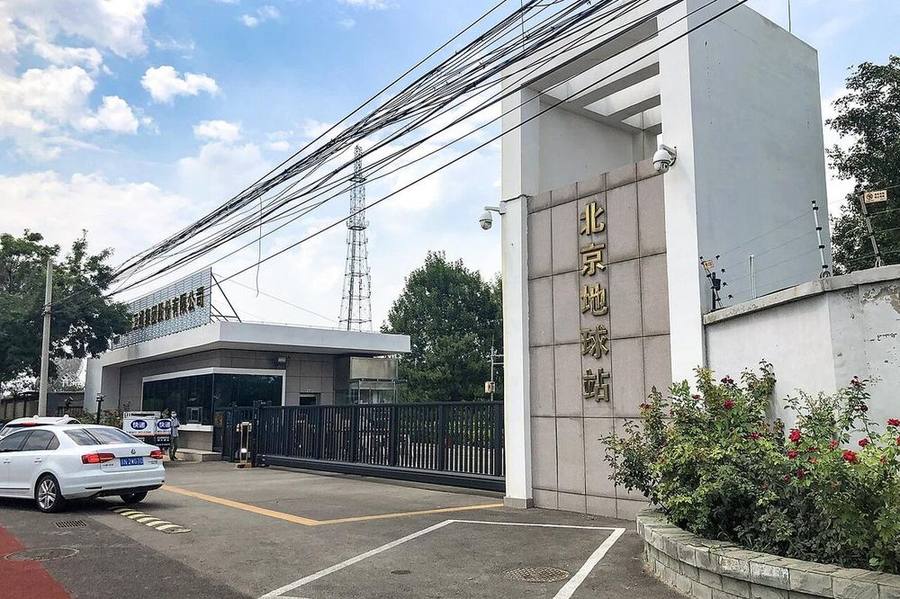
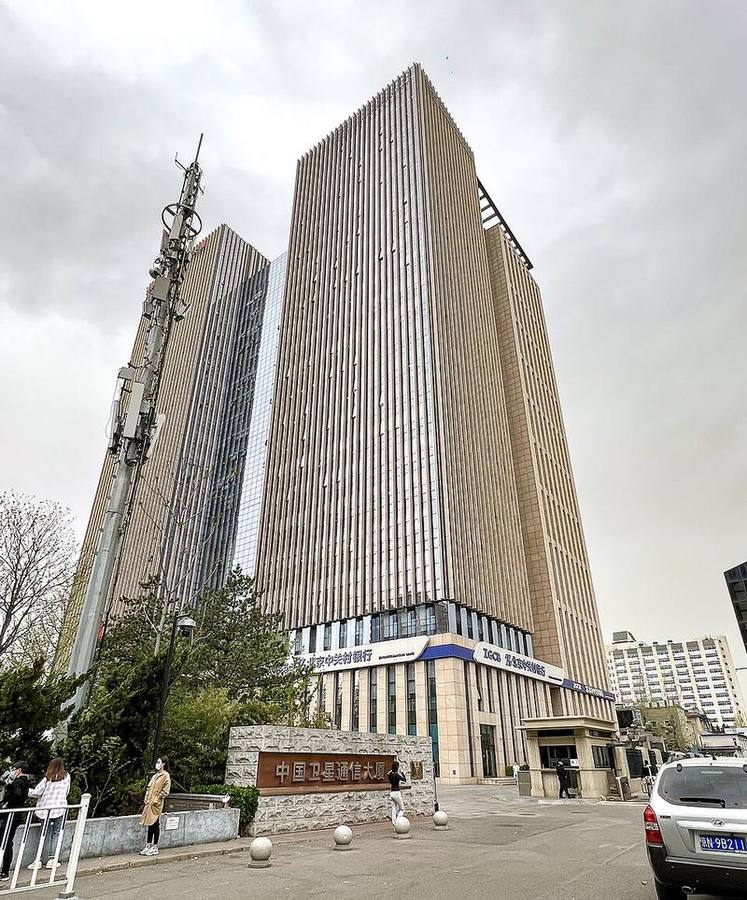
To gauge the weight of a chairmanship, the institution itself must be described, and the research file's institutional facts are as restrained as its personal ones; this entry reproduces them one by one. First, status: China Satcom is a central enterprise supervised by the State-owned Assets Supervision and Administration Commission. Second, origin: it was one of the original six basic telecommunications operators, part of the foundational carrier structure of Chinese telecoms — which is why the research file cross-references Wen Yunsong from its telecommunications section. Third, the change of ownership: from 2009 the company was folded in its entirety into China Aerospace Science and Technology Corporation, which is why the main entry sits in the aerospace section. Three facts, one picture: a satellite communications company with a telecom carrier's ancestry, an aerospace defence conglomerate as its organisational home, and central-enterprise status under SASAC. The posts Wen Yunsong entered in 2010 and came to head in 2012 belonged to an enterprise with exactly that triple identity. (Source 1)
This entry's institutional description stops there, and the reason is stated for the reader's benefit: the research file contains no itemised record of China Satcom's asset scale, revenues, launches, major projects or personnel changes during Wen Yunsong's tenure, so this entry introduces no operating figures. A personnel archive that pads itself with encyclopedia material about an employer's business dilutes the only core it has — the appointment facts and their evidential boundaries. The choice here is to keep the institution section short and exact: readers need the company's triple identity and its place in the central-enterprise order, and nothing else is within this entry's evidence. It is therefore also stated in words: for China Satcom's operating performance and major projects during his tenure, this entry has no itemised public record to cite, and offers no assessment. (Source 1)
7. The public reaction: how an archive records commentary without adopting it
The research file records the reaction in one line: after the China News Service report appeared, it was forwarded on Weibo in large numbers and drew 'whose father wins' commentary, which Taiwan and Hong Kong media relayed. (Source 1, 2) How this entry handles that line is itself a demonstration of method. Public reaction is a real social fact — it happened, on a named platform, at a datable moment, with a traceable relay chain — and an archive may register its existence. But the content of public reaction is not a finding of fact: netizens saying 'it is all about fathers' expresses a public judgement about the legitimacy of an appointment; it proves nothing whatever about the legality of the appointment procedure. This entry therefore registers exactly three things — the report's publication, the forwarding and commentary, and the Taiwan and Hong Kong relay — and registers no single piece of commentary as this site's view, converting no volume of reaction into strength of conclusion. Symmetrically, it registers no defence of the appointment as fact either. Cheers and challenges are measured with the same ruler: both go in the 'reaction' column, neither goes in the 'facts' column. (Source 1, 2)
This section also answers the question a reader will naturally ask next: was the appointment ever subjected to any review, challenge or official explanation connected with his family background? Beyond the 'avoiding suspicion' framing in reporting and the public commentary, the underlying file contains no record of the appointment procedure being investigated, formally questioned or specially explained by any authority. The only honest conclusion available is therefore a sentence about the file itself: within the evidence range of the underlying research, there is no public record. That sentence neither endorses the appointment nor hints at hidden dealings; it is an archivist's report on a search result. This series has formed a habit at exactly this point: wherever readers most want to press further and the public record is precisely silent, the entry writes the silence itself onto the page, with its date and its search range, so that later researchers know the blank was looked for carefully rather than skipped. (Source 1)
8. The ICIJ offshore record: Trend Gold Consultants proves existence, nothing more
The offshore section is the most misread part of this story, and this entry writes it out item by item, exactly as the research file grades it. The ICIJ offshore database, disclosed in January 2014, records the following: in 2006, with the assistance of Credit Suisse in Hong Kong, Wen Yunsong set up a British Virgin Islands company named Trend Gold Consultants; he was the company's sole director and sole shareholder; the company was dissolved around 2008; its purpose is unknown; and the ICIJ contacted Wen Yunsong repeatedly without receiving a response. (Source 3, 4) Those five items are the entirety of what this record can support. The existence of a database node is document-level evidence, so this entry grades the existence facts A. But the same record is silent on purpose, on funds and on counterparties, and where it is silent, this entry writes nothing. (Source 3, 4)
Alongside the fact list, the ICIJ's own disclaimer must always travel, and this entry reproduces its substance in full: offshore companies and accounts have lawful uses; inclusion in the offshore database does not mean that any person has broken any law; and the ICIJ has never treated presence in the database as an accusation of wrongdoing. Any quotation of this entry that strips away that disclaimer has changed this entry's meaning. The subject's position is recorded with equal care: the ICIJ sought comment repeatedly and Wen Yunsong did not respond. Non-response is neither an admission nor a denial; in an archive it is registered as exactly what it is, the words 'no response'. The same rule governs every offshore record in this series, whoever the subject is; the standard does not widen or narrow with the prominence of the name. (Source 3, 4)
Finally, this section cuts off a chronological misreading that is the commonest splice in retellings of this story. Trend Gold Consultants was formed in 2006 and dissolved around 2008; its entire lifespan falls inside the New Horizon period, more than two years before the 2010 move to China Satcom. The offshore record therefore does not overlap the state-enterprise tenure at all. It cannot be used to describe anything done at China Satcom, and it must never be narrated as 'an offshore company set up while he was chairman'. Chronology is the first discipline of an archive, and gluing a 2006 company registration onto a 2012 chairmanship is among the ugliest splices in circulation. This entry guards the line in three places — the timeline table, the section structure and the wording itself: the offshore record belongs to the private-equity chapter, the appointment facts belong to the state-enterprise chapter, and the two chapters are not blended. (Source 1, 3)
9. Separation from the family wealth article: Grade A appointments, Grade B wealth figures
This section expands the separation declared in Section 1 into a full evidential comparison, because this site publishes both Wen articles side by side and readers will inevitably cross-check them; this entry states in advance which cross-checks are valid and which are not. The wealth article's core figures come from The New York Times investigation of 25 October 2012. The newspaper said that relatives of Wen Jiabao controlled assets of at least US$2.7 billion; its Ping An line involved Duan Weihong's Taihong company as an investment vehicle, shares registered in the names of relatives and others, a Ping An investment standing in the name of Wen Jiabao's mother Yang Zhiyun said to have been worth US$120 million in 2007, and partnerships connected to relatives, friends and colleagues said to have held Ping An shares worth up to US$2.2 billion in 2007, the last year of disclosed holdings. (Source 2) The responses were complete and forceful. Duan Weihong told the newspaper the Ping An investments were in fact her own, that she had asked others to hold shares on her behalf to keep a low profile, that relatives of the premier had been selected as registered holders purely by accident without her prior knowledge, and she denied any financial relationship with the Wen family. Ping An stated that the company did not know the backgrounds of the entities behind its shareholders. On 28 October 2012 the family's lawyers, Bai Tao and Wang Weidong, published a statement through the South China Morning Post: the reported hidden wealth did not exist; Wen Jiabao's mother had never had income or property beyond her salary and pension and had never held a US$120 million Ping An investment; Wen Jiabao had never taken part in his family's business activities; and the family reserved the right to pursue legal liability. A Foreign Ministry spokesman called the report a smear with ulterior motives, and The New York Times stood by its reporting. (Source 2, 5, 6) A major investigation on one side, a head-on denial on the other, and no authoritative determination of beneficial ownership anywhere: that configuration is the definition of Grade B, and it is on that basis that the wealth article is graded. (Source 5, 6)
Set against that, the textual shape of this entry's appointment line is wholly different. The appointment has the company's own website announcement and a state news agency's report; date, institution, office and procedure are all present; and no party has ever denied it. The family lawyers' statement denied wealth — it never denied that Wen Yunsong had been a founding partner of New Horizon Capital or chairman of China Satcom. The difference between those two textual shapes is precisely the difference between Grade A and Grade B. This entry therefore lays down an internal citation rule for the whole site, printed here for readers to hold it to: anywhere on this site, Wen Yunsong's appointments may be cited directly as Grade A facts; the family's wealth figures may be cited only together with their B grade and the denials; and no channel of mutual proof runs between the two lines. Any text on this site that presents 'he chaired the company' as evidence that 'the family's wealth is real' breaks this site's own evidence rules, and readers are invited to say so. (Source 1, 2, 5)
10. Departure and current status: accounts differ, so no date is fixed here
The research file's instruction on when Wen Yunsong left the China Satcom chairmanship can be quoted in four words: accounts differ; fix nothing. This entry executes that instruction exactly, and shows the reader the execution. Within the evidence range of the underlying file, published reports give inconsistent versions of his departure timing, and no company announcement or official personnel notice has been collected into the file that would pin a departure date down. In that situation the correct archival practice is not to choose the most convenient version and print it, but to leave the cell empty and label the reason. The timeline table in this entry accordingly records the departure only as 'accounts differ', and the present section confirms it once more: the date on which Wen Yunsong left the China Satcom chairmanship has no consistent public record, and this entry offers no specific year. Any precise departure year a reader encounters elsewhere should be tested by demanding announcement-grade sourcing for it, and then compared against the deliberate blank left here. (Source 1)
Current status is treated with the same strictness. The research file contains no itemised record of a present post, public activity or public statement by Wen Yunsong after China Satcom, so this entry assigns him no 'current' identity, guesses at no destination, and imports no self-media description of his recent circumstances. It is stated in words: for his public status after the chairmanship, the evidence range of this entry holds no itemised public record. This blank is of the same kind as the transactions blank in Section 3 and the purpose blank in Section 8; together they mark this entry's honest perimeter. Half of a personnel archive's value lies in the facts it fastens down; the other half lies in the blanks it labels. An archive that reports facts but conceals its blanks leaves readers believing the world has been fully checked, when it has not. (Source 1)
11. The boundary of the evidence: what this entry can and cannot prove
What can be proved, gathered in one place: Wen Yunsong is Wen Jiabao's son, as recorded by The New York Times investigation of 2012 and by the ICIJ database. (Source 2, 3) In 2005 he co-founded the private-equity firm New Horizon Capital and served as a founding partner. (Source 2) In 2010 he moved to China Satellite Communications as vice chairman, and reporting of that year already described his departure from New Horizon's daily operations. (Source 1, 2) On 15 February 2012 he was elected chairman by China Satcom's board; the company posted the news on its website and China News Service reported it on 21 February 2012 — the central Grade A fact of this entry. (Source 1) China Satcom is a central enterprise supervised by SASAC, one of the original six basic telecommunications operators, folded in its entirety into China Aerospace Science and Technology Corporation from 2009. (Source 1) The ICIJ database records his 2006 formation of the British Virgin Islands company Trend Gold Consultants, his position as sole director and shareholder, the company's dissolution around 2008, and his non-response to the ICIJ's approaches — a record that proves the company's existence and nothing beyond it. (Source 3, 4) Every item above carries a source number and can be re-checked by the path given. (Source 1, 2, 3, 4)
What cannot be proved is listed with equal explicitness. The size of Wen Yunsong's personal assets: no text admissible in this entry determines it, and the family's wealth figures in the investigation are Grade B and denied, forming no part of this entry's conclusions. (Source 2, 5) Any connection between specific New Horizon transactions and his family background: no itemised record exists. (Source 2) The purpose of Trend Gold Consultants, or any unlawfulness attaching to it: the database is silent, and the ICIJ's own statement is that inclusion implies no wrongdoing. (Source 3, 4) Any causal line between his father's office and his election as chairman: the appointment procedure has a public text, causation beyond the procedure has none, and public commentary does not count. (Source 1) His exact departure date and his status after leaving: published accounts are inconsistent, or no itemised record exists. (Source 1) On each of these matters this entry registers the evidential state and draws no conclusion. (Source 1, 2, 3)
One closing judgement. What Wen Yunsong leaves in the public archive is an appointment line lit, unusually, by official text itself: private-equity founding partner, son of a sitting premier, chairman of a satellite communications central enterprise — three identities in sequence, each with a source, each with its boundary marked. Running parallel to that line is a family-wealth controversy belonging to another article, another evidence grade, and another complete set of denials and responses. This entry has nailed the two lines to the wall separately, and left every unverifiable cell empty. That is the only responsible way this site knows to handle the words 'red aristocracy'.
<!--正文结束-->
Sources
- China News Service (via Chinascope, relaying China Economic / CNS-system reporting), "Wen Yunsong Elevated to Chairman of China Satcom", 21 February 2012 — key points: board election as chairman on 15 February 2012, prior vice chairmanship, and China Satcom's institutional history: https://chinascope.org/archives/2871 — state news agency / mainstream media (Grade A).
- The New York Times, David Barboza, "Billions in Hidden Riches for Family of Chinese Leader", 25 October 2012 — key points: Wen Yunsong as Wen Jiabao's son, New Horizon Capital founding partner, and China Satcom chairman; the same report's family-wealth claims are Grade B, subject to the denials at Sources 5 and 6 (original paywalled and blocked in mainland China; text checked against an archived copy): https://www.mail-archive.com/marxist-leninist-list@greenhouse.economics.utah.edu/msg01449.html — leading newspaper investigation (Grade A for kinship and appointments; Grade B for wealth figures).
- ICIJ Offshore Leaks Database, "WEN Yunsong" node — key points: 2006 formation of the British Virgin Islands company Trend Gold Consultants, sole director and shareholder: https://offshoreleaks.icij.org/nodes/107049 — investigative journalism consortium database (Grade A, existence only).
- ICIJ (as reported by The Guardian, 21 January 2014), "Leaked Records Reveal Offshore Holdings of China's Elite" — key points: Trend Gold Consultants dissolved around 2008, repeated ICIJ approaches to Wen Yunsong unanswered, and the ICIJ statement that inclusion does not imply wrongdoing: https://tibet.net/chinas-princelings-storing-riches-in-caribbean-offshore-haven/ — investigative consortium / mainstream media (Grade A).
- South China Morning Post, "Wen family hits back at 'lies' on hidden fortune", 28 October 2012 — key points: the Wen family lawyers' statement denying that any hidden fortune exists and denying that Wen Jiabao's mother held a US$120 million Ping An investment: https://mcdn.i-scmp.com/news/china/article/1071504/wen-family-hits-back-lies-hidden-fortune — mainstream media carrying the family's statement (the denial side of a Grade B dispute).
- The Irish Times, "Wen family rejects reports of wealth", 29 October 2012 — key points: international relay of the family's rejection of the wealth reporting, corroborating Source 5: https://irishtimes-irishtimes-prod.web.arc-cdn.net/news/wen-family-rejects-reports-of-wealth-1.559073 — mainstream media (the denial side of a Grade B dispute).
Material gaps (stated as found)
- Departure date: Published accounts of when Wen Yunsong left the China Satcom chairmanship do not agree, and the underlying file holds no company announcement or official personnel notice that would fix the date; no specific year is therefore given.
- Status after departure: No itemised public record of a subsequent post, public activity or public statement after China Satcom is held in this entry's evidence range; no destination is guessed.
- New Horizon transaction detail: No specific investment, amount or counterparty from his founding-partner tenure is recorded at Grade A or Grade B in the underlying file; this entry names no transactions.
- Purpose of the offshore company: The purpose, fund movements and business of Trend Gold Consultants are not recorded in the ICIJ database and were not explained by its holder; this entry records existence and dissolution only.
- Birth and education: Wen Yunsong's birth year and educational history are not supplied by any checkable text in the underlying sources and are not stated in this entry.
- Operating record in office: China Satcom's operating figures, major projects and personnel changes during his vice chairmanship and chairmanship are not itemised in the underlying file; no operating assessment is offered.
- Causation beyond procedure: Whether any factor beyond the recorded appointment procedure played a part in his election has no documentary or first-person public record; public commentary is not evidence, and no conclusion is drawn.
Contact: endccpworld@proton.me