
Liu Lefei and CITIC Capital: Liu Yunshan's Eldest Son, from Insurance Fund Chief to Private-Equity Chairman
A single-subject entry in the Red Families state-enterprise series: the career of Liu Yunshan's eldest son runs across three financial sub-sectors — brokerages, insurance and private-equity funds — from head of a brokerage investment department, to chief investment officer of nearly a trillion yuan of insurance money, to chairman and chief executive of CITIC's private-equity platform and vice chairman of CITIC Securities. This entry documents only that appointment line, which rests on Caixin's personnel reporting and the surrounding company-announcement record; the single item concerning his wife's family is graded B and kept apart, never ranked alongside the Grade A appointment facts.
Contents
- 1. Identity: Liu Yunshan's eldest son, named directly by Caixin
- 2. Timeline: from brokerages to insurance funds to private equity
- 3. The early brokerage years: Shouchuang Securities and Galaxy Securities
- 4. Chief investment officer of China Life: the weight of nearly a trillion yuan
- 5. CITIC Private Equity is founded (June 2008): shareholding and institutional origin
- 6. Chairman and chief executive (December 2008): four funds and a size range
- 7. Stepping down as chairman (12 June 2012): Wang Dongming steps in, the CEO post stays
- 8. Vice chairman of CITIC Securities (March 2014): the third station
- 9. Chairman of CPE Yuanfeng: the current post after the platform's evolution
- 10. The Grade B item on his wife's family: Jia Liqing and Jia Chunwang
- 11. The boundary of the evidence: what this entry can and cannot prove
- Material gaps (stated as found)
- Sources
Liu Lefei occupies a distinctive place in this series. He never held the top job at an industrial state enterprise; his entire career moved inside the financial system — a securities firm, an insurance group, a private-equity fund manager, and back to the headquarters of a securities firm: four stations in all. That mobility is itself the key to reading this entry. In an industrial central enterprise, an appointment archive is built around one company, one seat and one tenure. In finance, the skeleton is a map of positions along a chain of money: who stood, in which year, at the entrance to how large a pool of funds. The entrances Liu Lefei stood at grew larger one after another — first a brokerage's investment management department, then the chief investment gateway to nearly a trillion yuan of insurance funds, then several tens of billions of yuan of private-equity funds to raise and invest, and finally a vice chairman's seat at a top-tier brokerage. The task of this entry is to fasten those four stations down by year, to register the size of each pool of funds in the terms the published reporting actually used, and to leave honestly empty everything that cannot be proved between the stations — above all, any connection between a specific transaction and his family background. (Source 1)
| Date | Event |
|---|---|
| Early years (no public dates) | Executive director of Shouchuang Securities; general manager of the investment management headquarters of Galaxy Securities (Source 1) |
| China Life period (start and end dates discussed in the text) | Chief investment officer of China Life Insurance (Group) / China Life Insurance Company and general manager of its investment management department, overseeing investment of insurance funds of nearly RMB 1 trillion (Source 1) |
| June 2008 | CITIC Private Equity Funds Management Co., Ltd. is established; CITIC Securities holds 35 per cent and is the largest shareholder (Source 1) |
| December 2008 | Liu Lefei becomes chairman and chief executive officer of CITIC Private Equity; its four funds total roughly RMB 26 billion to RMB 35 billion (Source 1) |
| 12 June 2012 | Caixin reports that Liu Lefei has stepped down as chairman of CITIC Private Equity, that Wang Dongming has taken the chairmanship concurrently, and that Liu Lefei remains chief executive officer (Source 1) |
| March 2014 | Liu Lefei becomes vice chairman of CITIC Securities (Source 1) |
| Current | Chairman of CPE Yuanfeng, the identity into which the CITIC private-equity platform later evolved (Source 1) |
| Wife's family (Grade B) | His wife Jia Liqing is reported by multiple Hong Kong and overseas media outlets to be the daughter of Jia Chunwang — Grade B, handled separately in Section 10 (Source 1) |
1. Identity: Liu Yunshan's eldest son, named directly by Caixin
Identity first. Liu Lefei is the eldest son of Liu Yunshan. The support for that relationship in this entry's evidence system differs from most figures in this series, and it is set out word by word. Mainland official biographies conventionally do not name an officeholder's parents, and Liu Lefei's appointment texts are no exception. But when Caixin reported his personnel changes, it named the relationship directly in its headline — 'Liu Yunshan's son Liu Lefei' — which is not an anonymous source being paraphrased but an explicit statement by one of China's most influential financial news organisations in its own published reporting. On that basis the research file grades 'his own appointments and the father–son relationship' together as Grade A, while noting the supporting structure: appointment changes rest on internal company notices and the CITIC Securities announcement system, and the kinship rests on Caixin's direct headline formulation and the consistent usage of its successive reports. This entry uses the grade and prints the structure alongside it, so the reader can judge the composition of the A for themselves: it is not an obituary or an official genealogy, but mainstream financial journalism speaking plainly, joined to a company announcement system. That is strong enough for the main text; its shape is simply different from a court judgment or an official curriculum vitae, and this entry does not disguise the difference. (Source 1)
The identity section also carries a reading instruction for the whole entry. Liu Lefei is reported to hold two kinds of family identity at once: as a 'son', the eldest son of Liu Yunshan, which is Grade A; and as a 'son-in-law', of Jia Chunwang, which depends on the premise that his wife Jia Liqing is Jia Chunwang's daughter — a premise supported only by Hong Kong and overseas media accounts and graded B in the research file. In many retellings the two identities are written in a single breath, as though their evidential strength were equal. This entry pulls them decisively apart. Sections 1 to 9 use only the Grade A identity and Grade A appointment facts. The Grade B item receives Section 10 to itself, with its own label and its own account of its sourcing. Wherever a reader meets a statement about his wife's family in this entry, the B marker should be visible immediately; if it is missing anywhere, that is this entry's oversight and corrections are welcome. The separation is not a favour to the subject — quite the opposite. Displaying weak evidence on its own, in the open, is more honest than smuggling it past the reader inside a bundle of strong evidence. (Source 1)
2. Timeline: from brokerages to insurance funds to private equity
Join the four stations and the career shows a clear upward line. The first station is the brokerage world: executive director of Shouchuang Securities and general manager of Galaxy Securities' investment management headquarters — both posts on the investment side of securities firms. The second station is insurance: chief investment officer of China Life and general manager of its investment management department, overseeing the investment of insurance funds of nearly one trillion yuan — the largest pool of money anywhere on this timeline. The third station is private equity: from December 2008, chairman and chief executive officer of the newly established CITIC Private Equity Funds Management, whose four funds totalled roughly twenty-six to thirty-five billion yuan. The fourth station returns to the top of the brokerage world: in March 2014 he became vice chairman of CITIC Securities. After that, the CITIC fund platform evolved into CPE Yuanfeng, whose chairman he now is, extending the appointment line to the present. Of the four stations, reporting on the first two concentrates on posts and magnitudes, while reporting on the last two concentrates on personnel changes with exact dates; the sections below follow each station's own evidential shape rather than forcing a uniform narrative density. (Source 1)
The timeline has a further structural feature worth registering. Each of his moves occurred close to an expansion point of the Chinese financial system. In the years when insurance funds were swelling, he stood at the investment gateway of the largest insurer. In 2008, when industrial investment funds were emerging as a new form for raising and deploying capital, he became the first helmsman of the CITIC system's entry. As CITIC Securities consolidated its position as an integrated financial group, he entered its board as vice chairman. This entry registers that structure as juxtaposition in time, and asserts nothing about causation: a man who appears at every turn of the market may invite many explanations, and the archive's responsibility is only to fasten down the years and the positions of each appearance, leaving the 'why' to readers and later researchers. In the language of the archive, this entry proves presence, not motive. (Source 1)
3. The early brokerage years: Shouchuang Securities and Galaxy Securities
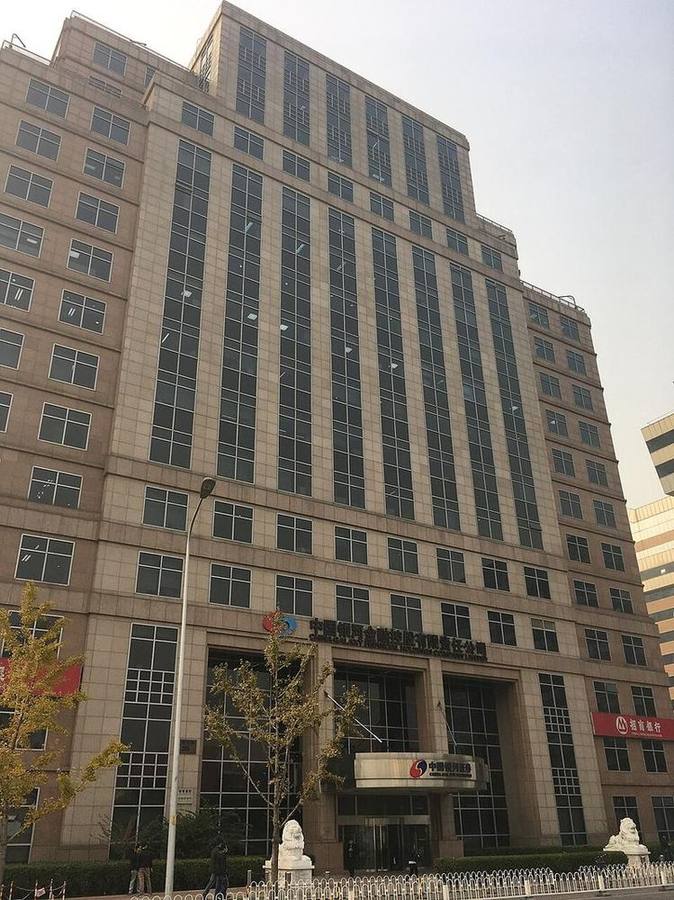
The first station in the research file is recorded in one line: in his early years Liu Lefei served as an executive director of Shouchuang Securities and as general manager of the investment management headquarters of Galaxy Securities. (Source 1) The character of the two posts can be located with ordinary background knowledge: an executive directorship sits at board level in a brokerage, while the general manager of an investment management headquarters runs the firm's proprietary and investment business line. Both are core posts directly concerned with investment inside a securities company. Within the whole career, this period functions as professional preparation for the two large stations that followed: first doing investment inside the sell-side and proprietary system, then managing buy-side money at an insurance group, and finally raising and investing money at a private-equity manager. This entry writes this period no further, for the reason stated as a rule throughout: the research file supplies no itemised record of the exact start and end dates of these two posts, of business he handled, or of public statements he made, so this entry fabricates no years and invents no deals. The timeline table's word 'early' is not laziness; it is the granularity of the public record itself. It is therefore stated in words: for the exact dates of the Shouchuang and Galaxy posts, no public record has entered the underlying file. (Source 1)
This section must also resist a standard temptation of biographical writing: inflating the early years in retrospect because of later prominence. Neither of the two brokerages of this period was, at the time, an institution of the later CITIC Securities' stature. To write this station up as a story of early brilliance or decisive deals would be the method of a literary biography, not of an archive. This entry accordingly registers two elements only — post titles and institution names — and adds not a single evaluative adjective. The restraint is symmetrical by design: later high office is not dramatised, earlier junior office is not dramatised, and the whole entry recognises three things only — the post, the date, and the source. (Source 1)
4. Chief investment officer of China Life: the weight of nearly a trillion yuan
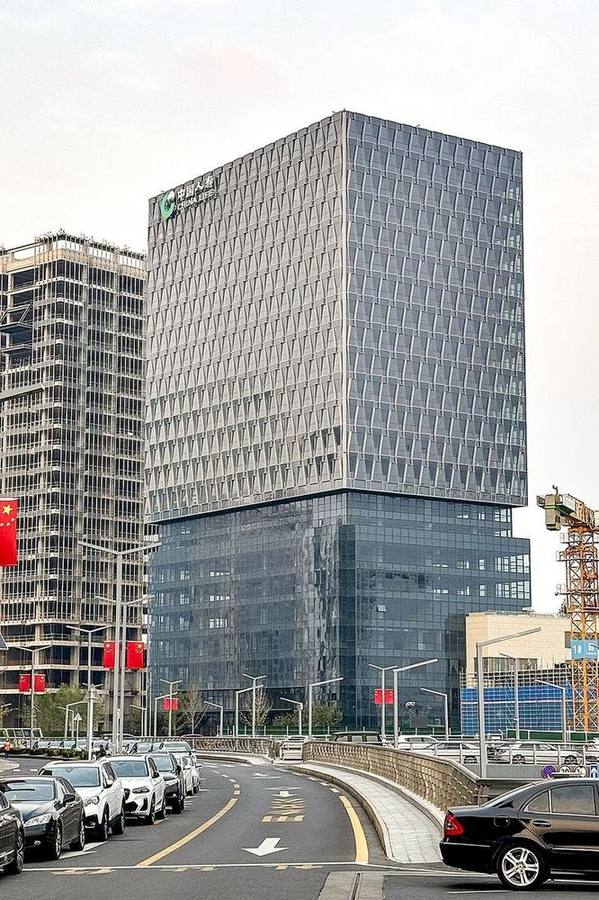
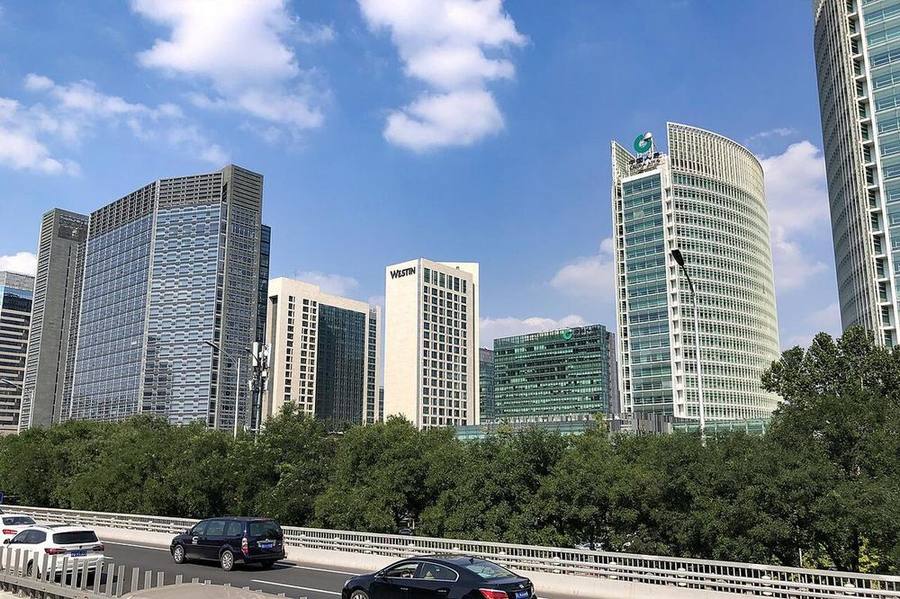
The second station is the position attached to the largest sum of money in Liu Lefei's career: chief investment officer of China Life Insurance (Group) and of China Life Insurance Company, serving concurrently as general manager of the investment management department, overseeing the investment of insurance funds of nearly one trillion yuan. (Source 1) The research file's single sentence contains three elements, and this entry takes them apart one by one. The institutional element: China Life is China's largest life insurer, and the file names its group and listed-company levels side by side; this entry reproduces both and chooses between neither. The office element: a chief investment officer is the highest officer of an insurer's investment line, and the general managership of the investment management department is the same line's departmental post; holding both means he occupied the nominal apex and the executive apex of that line at once. The magnitude element: 'nearly one trillion yuan' is the file's and the reporting's summary figure for the insurance funds under his oversight, reproduced here as such — a reported order of magnitude, not a precise figure from any single year's audited accounts. The three elements together support exactly one conclusion: on the investment decision chain of China's largest life insurer, he sat at the top. (Source 1)
One paragraph of institutional background is needed for non-specialist readers to feel the weight of that seat. Insurance funds are not an insurer's own money: their substance is the reserves formed from premiums paid by tens of millions of policyholders, their permitted scope, proportions and directions are tightly regulated, and investment authority is correspondingly concentrated at the chief investment officer's level. A person in that seat holds the asset-allocation direction of the country's largest life insurer in his hands. This entry states that background so that 'nearly a trillion' does not degenerate into an empty flourish — and immediately adds the boundary. The research file contains no record of any specific investment decision, project or portfolio list from his tenure in that post, so this entry names no allocations. The weight of a post can be proved by institutions and magnitudes; the assessment of particular transactions can be proved only by transaction records. The first, this entry has; the second, it has not. That dividing line reappears in every section of this entry; it is the load-bearing wall of the whole piece. (Source 1)
The start and end dates of this station are, likewise, not pinned down in the research file, and this entry handles them as it handled the brokerage years: no years are invented for the timeline, and the absence is stated in the text — the exact tenure dates have no settled public record in the underlying file. Readers should notice the consequence for how this entry can be used. The dates that can be given to the day are the CITIC-system nodes: December 2008, 12 June 2012 and March 2014. The insurance station, by contrast, is an interval with a post and a magnitude but no fastened endpoints. That unevenness is not the author's omission; it is the unevenness of the public record itself, and an archive that displays unevenness honestly serves its readers better than one that irons a timeline flat with guesses. (Source 1)
5. CITIC Private Equity is founded (June 2008): shareholding and institutional origin

The stage for the third station was built six months before its leading figure stepped onto it. In June 2008, CITIC Private Equity Funds Management Co., Ltd. was established; in its shareholding structure, CITIC Securities held thirty-five per cent and was the largest shareholder. (Source 1) Those two facts — the founding date and the largest shareholder — are the whole of the institutional background this entry offers for the third station, and they are sufficient: this was a CITIC Securities-system private-equity fund manager, whose senior appointments would naturally be drawn from the CITIC system's financial personnel network, founded in the very year when industrial investment funds in China moved from pilot schemes to establishment in batches. Who became chairman and chief executive of a newly founded fund manager was, at the time, a closely watched appointment, because that person would set both the investment style and the fundraising draw of the new funds. This entry's account of the institution's origins stops at shareholding and date: the research file supplies no itemised record of registered capital, approval documents or a founding team list, and none is introduced. It is stated in words: no itemised public record on those points has entered the underlying file. (Source 1)
Placed back on the map of Liu Lefei's career, the founding also reveals a continuity of personnel logic. His second station, China Life, was a holder of insurance funds — the side of the table where potential investors in funds sit. At the third station he crossed to the manager's side of the table, raising money and investing it himself. In the geography of the funds chain, the step is a reversal of role within an unchanged industry: from the investor's investment officer to the manager's helmsman. This entry registers that structural observation as position juxtaposition only: that he completed the reversal in 2008 is fact; the reasons and the process behind it have no first-person account or appointment document in the file to cite, and this entry does not speculate. No public record — and the words are printed here, as elsewhere, precisely so that no reader mistakes the silence for an oversight. (Source 1)
6. Chairman and chief executive (December 2008): four funds and a size range

In December 2008 Liu Lefei became chairman and chief executive officer of CITIC Private Equity Funds Management. (Source 1) Holding both titles at once made him simultaneously the head of the fund manager's board and its highest operating officer; the whole chain of raising, investing, managing and exiting nominally converged on that single combined office. Registered alongside the appointment, in the research file, is the scale of the funds under him: four funds, totalling roughly twenty-six billion to thirty-five billion yuan. (Source 1) This entry's handling of that figure requires an explicit word to the reader. Twenty-six to thirty-five billion is a range, not a point. Published reporting at different times and on different statistical bases produced different numbers inside that interval, and the research file prudently preserved the interval form; this entry quotes the interval and never promotes any single number inside it into a pretence of precision for the sake of smoother prose. The archive's discipline with figures is the same as its discipline with dates: a source that gives a range is quoted as a range, a source that gives a point is quoted as a point, and anyone who compresses a range into a point is manufacturing false precision. (Source 1)
Where a fund complex of four funds and roughly thirty billion yuan stood in the Chinese private-equity market of 2008, the research file offers no industry-ranking record, and this entry makes no ranking claim — only a registration of nature and magnitude. Set beside the near-trillion-yuan insurance funds of his previous station, the sum is two orders of magnitude smaller, but it is money of an entirely different kind. Insurance funds are liability money held in trust, their decisions constrained by regulatory proportions. Private-equity funds are capital raised from investors and run under partnership agreements, their decisions led by the manager within the framework of those agreements. That Liu Lefei moved within a single year from the highest investment officer of the first kind of money to the helmsman of the second is what gives this career line its sample value in the present series: it shows how the trajectory of one financial princeling followed the changing forms of capital itself. This entry points the sample value out and stops there, because the file supports the trajectory and nothing more — every appointment discussion and every personnel contest behind the trajectory is without public record, and none is written here. (Source 1)
7. Stepping down as chairman (12 June 2012): Wang Dongming steps in, the CEO post stays
The most precisely dated personnel change in this entry occurred in 2012. On 12 June 2012 Caixin reported that Liu Lefei had stepped down as chairman of CITIC Private Equity Funds Management, that Wang Dongming had taken the chairmanship concurrently, and that Liu Lefei himself remained chief executive officer. (Source 1) The report's headline was itself 'Liu Yunshan's son Liu Lefei steps down as chairman of CITIC Private Equity' — the direct naming of kinship and the personnel change accomplished in a single published report, which is also the concrete source of the Grade A support structure set out in Section 1. This section's duty is to cut apart the point in that news most easily misread: stepping down as chairman did not mean leaving the company. After the chairmanship passed to Wang Dongming concurrently, Liu Lefei still occupied the chief executive's seat; the highest officer of daily operations did not change. The common retelling in which 'Liu Lefei left CITIC Private Equity' is, at this point in time, simply wrong. What actually changed was that he surrendered the board's top title while retaining the executive top post. The separation of title from executive substance is exactly where financial personnel reporting most demands close reading, and this entry registers the two posts separately and narrates them separately; readers citing this entry are asked not to merge them. (Source 1)
As for the reasons for the change, neither the Caixin report nor the research file offers any explanation admissible in the main text: no statement by the subject, no company explanation, no official notice addresses the cause. This entry accordingly states it in words: for the reason he stepped down as chairman, there is no public record. The speculation about motives that has never left public discussion is, without exception, not adopted here. Speculation of that kind shares one trait — no document can refute it and no document can confirm it — and writing it into an archive plants a trap for future readers, who will mistake conjecture for source material. This entry would rather let the section look austere — reporting a change and no reason — than breach that line. A personnel archive records who moved, when, from which seat to which seat; the reasons column is filled only where a document exists, and where none exists it is left blank, with the blank labelled. (Source 1)
8. Vice chairman of CITIC Securities (March 2014): the third station
In March 2014 Liu Lefei became vice chairman of CITIC Securities. (Source 1) That appointment pulled his trajectory back to the top of the brokerage world, and it closes a loop in this entry's timeline that is worth noticing. His first station was an investment management post inside brokerages; the private-equity platform he went on to lead had CITIC Securities as its largest shareholder; and in 2014 he entered CITIC Securities' own board as vice chairman — moving from helmsman of a company the group held, to vice chairman of the holding parent itself. The research file registers for this appointment only the date and the title: no detail of the appointment announcement, of his portfolio within the board, or of his term. This entry registers it in exactly those terms and states the rest in words: for his specific responsibilities within the CITIC Securities board and the exact start and end of the term, no itemised public record has entered the underlying file, and the text does not expand them. The file marks 2008 to 2014 as the peak period of his appointment line, and the basis for that judgement is the overlap visible across this section and the two before it: the CITIC fund chairmanship, the afterglow of the China Life chief investment officership, and the CITIC Securities vice chairmanship converge in those years, which placed him at the highest positions of his financial career. (Source 1)
The nature of a vice chairmanship also deserves one archivist's sentence, as a guard against misreading. In the governance structure of a listed Chinese brokerage, a vice chairman holds a board-level office, below the chairman and above the executive management; its weight derives from the board seat rather than from any day-to-day signing authority. This entry's description of this station therefore differs deliberately from its description of the fund station. At the fund he was chairman and chief executive at once, title and execution united, and this entry could properly write that the whole chain converged on one office. At CITIC Securities he was vice chairman only, and this entry can write only of his board seat and its date, inventing no operating authority. Same man, different office, different prose — the difference dictated not by the author's sympathies but by the institutional meaning of the office itself and by the boundaries of the record. If a reader meets, outside this entry, a retelling that upgrades the vice chairmanship into 'running CITIC Securities', the correction is this entry's own wording: the file supports five words' worth of claim — he became vice chairman — and every word beyond that is addition. (Source 1)
9. Chairman of CPE Yuanfeng: the current post after the platform's evolution
The final station of the appointment line is a story of institutional evolution. The CITIC private-equity platform later evolved into CPE Yuanfeng, and Liu Lefei is now chairman of CPE Yuanfeng. (Source 1) The research file records this evolution in a single conclusory line — 'currently chairman of CITIC Private Equity / CPE Yuanfeng (the post after the company's evolution)' — and this entry reproduces it with its granularity disclosed to the reader: the file supplies no itemised record of the evolution's date, the renaming procedure, or the legal succession between old and new entities, so this entry invents no year for the change and narrates no renaming process. It registers two endpoints only: at one end, CITIC Private Equity Funds Management, founded in 2008; at the other, CPE Yuanfeng, whose chairman he now is. The dotted line between the endpoints is part of this entry's material gaps, and the gaps list at the end carries a corresponding item. (Source 1)
Registering a current post also raises the question of an archive's shelf life. The formulation 'now chairman of CPE Yuanfeng' reflects the research file's statement as of this entry's closing date; senior financial personnel change frequently, and future readers citing the sentence should check it against the latest public information at the moment of citation. An archive's 'current' is warranted only for its own closing date. Printing that time disclaimer in the main text is now standard practice across this site's recent entries; it reminds every quoter that an archive is not a prophecy and 'current' is not 'permanent'. One closing observation ties this section back to the whole entry. Counted from December 2008, when he took over the CITIC fund platform, his bond with this single institution has outlasted all his other stations combined: the fund station was his third, and it has in fact become the main station of his career. This entry juxtaposes that duration as fact, and writes no account of any intermediate adjustment of his duties for which the file holds no record. (Source 1)
10. The Grade B item on his wife's family: Jia Liqing and Jia Chunwang
This section handles, on its own, the entry's only Grade B item, and restates the handling rule once more. Liu Lefei's wife, Jia Liqing, has been reported by multiple Hong Kong media outlets and overseas media to be the daughter of Jia Chunwang, formerly Procurator-General of the Supreme People's Procuratorate. (Source 1) The shape of that material is: more than one reporting outlet, concentrated outside the mainland, consistent with one another in content — but supported by no mainland official text, company document or public statement by the parties that would give it strength equal to the Grade A appointment facts. The research file's grading instruction is explicit: this point's evidential strength is weaker than his own appointments, and it is to be cited as Grade B. This entry executes that instruction exactly. The item appears only in this section and in one annotated line of the timeline table. Nowhere else in the main text is 'Liu Lefei is also Jia Chunwang's son-in-law' used as a premise; it explains no appointment and reinforces no timeline. Should stronger text one day confirm the item, or the parties deny it, this site will adjust its grade and its placement in revision. As of this entry's closing date, its status is Grade B: reported by credible media, not confirmed to the same standard, stored separately. (Source 1)
Why an archive series devotes a whole section to a single item with a gossip-page flavour deserves one explanation to the reader. The peculiarity of Red Families research is that family networks are themselves the object of study: a man who is simultaneously one leader's son and, by report, another leader's son-in-law occupies a doubly connected node in the map of power, and that position carries information. Precisely for that reason, such material must not be used loosely. Every line on a network map should declare whether it is solid or dashed. Grade A appointment facts are solid lines, on which any analyst may stand. The Grade B item about his wife's family is a dashed line, and anyone stepping onto it must see the dashes first. This entire section has done one thing only: drawn that line dashed, and taught the reader how it was drawn. The rule applied here is the same rule this site applies to the spouses of every other figure in the series; it neither widens nor narrows with the person. (Source 1)
11. The boundary of the evidence: what this entry can and cannot prove
What can be proved, gathered in one place: Liu Lefei is the eldest son of Liu Yunshan, named directly by Caixin in its reporting of his personnel changes. (Source 1) In his early years he was an executive director of Shouchuang Securities and general manager of Galaxy Securities' investment management headquarters. (Source 1) He served as chief investment officer of China Life and general manager of its investment management department, overseeing investment of insurance funds of nearly one trillion yuan. (Source 1) CITIC Private Equity Funds Management was established in June 2008, with CITIC Securities holding thirty-five per cent as largest shareholder. (Source 1) In December 2008 he became its chairman and chief executive officer, its four funds totalling roughly twenty-six to thirty-five billion yuan. (Source 1) On 12 June 2012 Caixin reported that he had stepped down as chairman, that Wang Dongming had taken the chairmanship concurrently, and that he remained chief executive officer. (Source 1) In March 2014 he became vice chairman of CITIC Securities. (Source 1) He is now chairman of CPE Yuanfeng, into which the CITIC fund platform evolved. (Source 1) Every item above carries a source number and can be re-checked. (Source 1)
What cannot be proved is listed with the same explicitness. That his wife Jia Liqing is Jia Chunwang's daughter reaches Grade B only and is never stated as confirmed. (Source 1) Any specific investment decision of his China Life tenure, and any relation between such a decision and his family background: no itemised record exists. The names, individual sizes, investor composition and investments of the four CITIC funds: the file holds a total range and no breakdown. The exact start and end years of posts other than those dated above: no public record has entered the underlying file. The reason for his stepping down as chairman in 2012: no document or first-person account exists. His responsibilities within the CITIC Securities board and the details of his term there: no itemised record. On each of these matters this entry registers the evidential state and draws no conclusion. (Source 1)
One closing judgement. What Liu Lefei leaves in the public archive is a financial appointment line running across brokerages, insurance and private equity: four stations, three forms of capital, two personnel nodes datable to the day, and one Grade B family line drawn dashed and kept apart. Every station on that line has a source, and every blank on it has a label. To fasten down what can be proved, to leave empty what cannot, and to draw weak evidence as a dashed line — that is the only responsible way this site knows to handle the words 'red aristocracy', and this entry shares the one ruler with every other entry in the series.
<!--正文结束-->
Sources
- Caixin, "Liu Yunshan's Son Liu Lefei Steps Down as Chairman of CITIC Private Equity Funds", 12 June 2012 (archived by China Digital Times) — key points: Liu Lefei as Liu Yunshan's son; the June 2012 move (chairmanship to Wang Dongming concurrently, CEO retained); and, retrospectively across Caixin's successive reports cross-checked against the CITIC Securities announcement system, his China Life chief investment officership, his December 2008 appointment as chairman and CEO, the four-fund size range, and his CITIC Securities vice chairmanship: https://china-digital-times.github.io/?/id/231920 — mainstream financial media (Grade A for his own appointments and kinship; Grade B for the item on his wife's family, see Section 10).
Material gaps (stated as found)
- Dates of the early posts: The exact start and end years of the Shouchuang Securities executive directorship and the Galaxy Securities investment management post have no public record in the underlying file; the timeline can say only 'early years'.
- China Life tenure dates: The exact start and end of his service as China Life chief investment officer and investment management department general manager cannot be fixed from the underlying file; 'nearly RMB 1 trillion' is a reported summary magnitude, not an audited point figure.
- Breakdown of the four funds: The names, individual sizes, investor composition and investments of CITIC Private Equity's four funds are not itemised in the underlying file; the total is held only as a range of roughly RMB 26 billion to RMB 35 billion, and no point figure is adopted.
- Reason for stepping down: No company explanation, first-person account or official notice in the underlying file addresses why he stepped down as chairman in 2012; there is no public record.
- Detail of the CITIC Securities post: His responsibilities within the CITIC Securities board and the exact term of the vice chairmanship are not itemised in the underlying file.
- Detail of the platform's evolution: The date, renaming procedure and legal succession by which CITIC Private Equity became CPE Yuanfeng are not itemised in the underlying file; only the two endpoints and the current chairmanship are registered.
- Grade of the wife's-family item: The claim that Jia Liqing is Jia Chunwang's daughter rests only on Hong Kong and overseas media accounts, with no mainland official text or party statement of equal strength; it is held at Grade B — neither upgraded, nor deleted, nor stored with the confirmed facts.
- Specific transaction records: No document-grade record connects any specific investment handled during his tenures with his family background, and this entry makes no assertion of that kind.
Contact: endccpworld@proton.me