
第163案 | 余慧明Case 163 | Winnie Yu Wai-ming
余慧明,香港注册护士:她在深切治疗部当过护士,在两次抗争运动里蹲在伤者旁边做急救员,2019年底创办医管局员工阵线,两个月后发动香港医护界第一次大规模罢工,逾七千名医护放下工作,要求政府全面封关、给前线足够的口罩;同年她在民主派初选卫生服务界以2,493票击败时任议员。她没有当过一天议员,却因这场初选被控串谋颠覆国家政权:判刑理由一面写明她是迟来者、没有出席过协调会议或选举论坛,一面以七年为量刑起点,仅因她可能误解法律减三个月,判她监禁六年九个月,与抗争四十五年的梁国雄分毫不差。判刑前她已被羁押1,138天,她创办的工会在她还押期间解散;2026年2月上诉被驳回,8月她获上诉法庭证明书,可向终审法院申请上诉,现仍在服刑。Winnie Yu Wai-ming is a Hong Kong registered nurse who worked in an intensive care unit, volunteered as a first-aider beside the injured in two protest movements, founded the Hospital Authority Employees Alliance at the end of 2019, and two months later led the first large-scale strike in Hong Kong's healthcare history, as more than 7,000 medical workers downed tools to demand a full border closure and enough masks for the front line. That same year she beat the incumbent in the Health Services primary with 2,493 votes. She never served a day as a legislator, yet for that primary she was charged with conspiracy to commit subversion: the sentencing reasons record in terms that she was a latecomer who attended no coordination meeting and no election forum, and then adopt a seven-year starting point, deduct three months only for her possible mistake about the law, and sentence her to six years and nine months — identical, digit for digit, to the term given to Leung Kwok-hung after 45 years of protest. She had spent 1,138 days in custody before sentence, and the union she founded was dissolved during her remand; her appeals were dismissed in February 2026, in August 2026 she received a certificate to apply to the Court of Final Appeal, and she remains in prison.
1. An intensive care nurse: twice a first-aider at the protest sites
Winnie Yu Wai-ming was born on 28 May 1987 in Hong Kong. She trained as a nurse at university and, after graduating, joined a public hospital under the Hospital Authority as a registered nurse. She worked in an intensive care unit — the ward closest to death in any hospital, where patients live on machines and nurses keep watch over numbers and breathing. She later transferred to the Hospital Authority head office; the sentencing reasons record her post before arrest as Health Informatics Analyst. From the ward to data and systems, her understanding of the public healthcare system came from both ends of it. Published biographies also record that she once planned to emigrate to Japan — a plan she described in interview, registered on this page as background only: a woman who once thought of leaving stayed, built a union, struck, stood for election and went to prison, and that trajectory is the first question this archive entry poses.
Her public life began with a first-aid kit. In the 2014 Umbrella Movement she volunteered as a first-aid responder at the occupation sites; in the 2019 anti-extradition protests she did the same again. The Hong Kong Labour Rights Monitor and published profiles treat those two experiences as her doorway into public action — and the first-aider's position is a peculiar one: on no one's platform, crouched beside whoever is hurt. In the second half of 2019 Hong Kong saw a wave of new union organising: protesters concluded that the streets alone could not exert enough pressure, and hundreds of new unions were registered within months, on the theory that industrial action could carry the pressure inside the system. Yu was among the fastest to emerge from that wave. In December 2019 the Hospital Authority Employees Alliance was founded; she was a founder and its first chairperson. Nobody then imagined that a union two months old would, eight weeks later, call the first large-scale strike in Hong Kong's healthcare history — or that its chairperson would, thirteen months later, be one of 47 people charged with subversion under the National Security Law.
2. The Hospital Authority Employees Alliance: from zero to 20,000 members in two months
The Alliance's members were Hospital Authority employees — doctors, nurses, allied health professionals, support and administrative staff from public hospitals across the city. The Hospital Authority, the statutory body running all of Hong Kong's public hospitals, employs more than 80,000 people and is one of the city's largest single employers. A new union's foothold in such a workplace rested on the political energy of 2019 and on healthcare workers' long-standing grievances: chronic understaffing, overflowing wards, corridor beds in every flu season — the shared daily experience of Hong Kong patients and staff alike. On multiple published accounts, Alliance membership surged once a strike was mooted: past ten thousand by late January 2020, and around 20,000 on the eve of the strike, roughly a quarter of the Authority's workforce. A union less than two months old, with no inherited premises and no full-time staff, had gathered twenty thousand members. That was its strength and its fragility at once: it had never conducted a single ordinary negotiation before it had to face an epidemic and a government.
The Alliance's politics were never disguised. Born of the anti-extradition movement, it stood openly with the pro-democracy camp. But the issue it faced in early 2020 was not an election; it was a virus spreading in Wuhan. On 23 January 2020 Hong Kong recorded its first imported COVID-19 case. Healthcare memories snapped back to SARS in 2003, when 299 people died in Hong Kong, including medical workers among the dead. Frontline fears were concrete: insufficient stocks of masks and protective equipment, limited isolation wards, and a government unwilling to restrict arrivals from the mainland. In late January the Alliance pressed the Authority to demand border controls and adequate equipment publicly; on 24 January it joined dozens of unions at a joint press conference on epidemic demands. By about 26 January it had given notice: if the demands were not met, it would strike for five days. As chairperson, Yu was the public face of that pressure — on television, at press conferences, petitioning at the Authority's headquarters. Two months earlier she had been an analyst in a head-office job; now she was the most visible union leader in Hong Kong's news.
3. 3–7 February 2020: the first large-scale healthcare strike, and its five demands
On 1 February 2020 the Alliance held its second extraordinary general meeting. The meeting endorsed five demands, whose original structure is worth pinning down because it defines what the strike was. The first two asked the Hospital Authority to issue a public statement pressing the government to act: to forbid all travellers from entering Hong Kong via China — the demand universally shortened to "full border closure" — and to implement effective measures to ensure a sufficient supply of masks. The remaining three asked the Authority to guarantee a safe working environment: to provide sufficient isolation wards and stop all non-emergency services; to provide sufficient support and facilitation for staff caring for isolated patients; and to commit publicly to taking no disciplinary action in retaliation against strikers. On the Alliance's published figures, the strike motion passed overwhelmingly, with 3,123 votes in favour (see section 16 for a discrepancy in the reported vote totals). The strike ran in two stages: on 3 February, staff of non-emergency services struck first; from 4 to 7 February the action moved to its second stage, with emergency services maintained.
More than 2,000 medical workers struck on the first day, 3 February; that day Chief Executive Carrie Lam announced the closure of most border crossing points, keeping only the airport, the Shenzhen Bay crossing and the Hong Kong–Zhuhai–Macao Bridge, and insisted the decision had nothing to do with the strike. On 4 February, by the Alliance's count, more than 7,000 members joined the second stage — about 4,500 nurses, 360 doctors, 1,200 allied health professionals and support and administrative staff — close to a tenth of the Authority's entire workforce. Strikers signed in and rallied at the hospital clusters and petitioned at the government headquarters and the Authority's headquarters; on 5 February Yu marched with dozens of medical representatives to the government headquarters to deliver a letter. The government then announced compulsory fourteen-day quarantine for arrivals from the mainland from 8 February, but refused a full border closure and gave none of the assurances on equipment and non-retaliation that the Alliance had demanded. On 7 February members voted on extending the strike; the motion fell short of the threshold the union had set, and the five-day strike ended. Academic and labour accounts assessing it afterwards agree on this much: none of the five demands was fully met, yet arrivals fell sharply and quarantine measures followed. Whether the strike "succeeded" is still argued in Hong Kong. Its scale is not argued: it was the first large-scale industrial action in the history of Hong Kong healthcare, and a two-month-old union had taken seven thousand medical workers out in the same week.
The archival point of this section should be stated early: the charge Yu later faced has nothing to do with the strike — the word does not appear in the indictment; she was charged over the primaries. But to understand her, the strike is the source. In her own mitigation letter and her evidence at trial she traced her candidacy back to that epidemic: what frontline staff said in the streets and at press conferences, the government could ignore; she wanted to carry those words into the Legislative Council. After February 2020 her name was fixed in pro-establishment commentary as "the woman who called the strike", and among medical workers and pro-democracy supporters as "the woman who stood up for the front line". The same person, two verdicts — both followed her from that week all the way into the courtroom.
4. From the union to a candidacy: the March 2020 article and the "mutual destruction" platform
In 2020 the pro-democracy camp organised its "35+" primaries, aiming at a majority in the Legislative Council election then scheduled for September. The functional constituencies were one wing of the plan: Health Services was voted on by healthcare professionals, and its incumbent was the pro-establishment Joseph Lee. Yu decided to stand. On the prosecution's submissions at her bail hearing (HCCP 348/2021) and the reasons given there, her candidacy was no improvisation: before the primaries were publicly announced on 9 June 2020, she had already published an article on 31 March 2020 setting out her intention to enter the legislature to carry out the objective of "mutual destruction"; she signed the primaries' online declaration; she submitted her primary nomination form on 20 June; after the National Security Law took effect on the night of 30 June she was still lobbying for the primaries on social media on 7 July; after winning, she published a further article on 25 July restating that she would vote down the budget if elected; and on 27 July she submitted her Legislative Council nomination form. Those dates, taken one by one from court documents, are the evidence chain the prosecution used to call her "active" — and they are the skeleton this page uses to check her role in the primaries.
Two readings of that chain must be set side by side. The prosecution's and the court's reading: a candidate who, before and after the National Security Law, consistently advanced a scheme to veto the budget, and whose words and acts made her a party to the conspiracy. Her own reading, given in evidence and in mitigation: her motivation grew out of grassroots organising and medical work — pandemic management, healthcare equity, labour protection; the power to vote down a budget is a power the Basic Law gives the legislature, and voting to change the system was not wrong. Which reading prevailed, the court answered on 30 May 2024. The archive's duty is to pin down both sides' primary material, so that readers can see how the answer was reached. One further factual detail belongs to the sentencing stage: the Reasons for Sentence state expressly that she was a "latecomer" to the Scheme who had attended no coordination meeting and no election forum — she joined late and participated in few of its forms. The court wrote that into its reasons, and then declined to let it lower her starting point, for reasons set out in section 11.
5. The primary: 2,493 votes, and Health Services changed hands
The pro-democracy primaries were held on 11–12 July 2020, with more than 610,000 people voting across Hong Kong. The Health Services functional constituency result: Winnie Yu took 2,493 votes and defeated the incumbent legislator Joseph Lee, winning the pro-democracy camp's nomination for the seat. Functional constituencies have far smaller electorates than the geographical constituencies, so 2,493 is not a large absolute number; its political meaning is specific. The chairperson of a new union that had struck two months — in voters' memory, five months — earlier had beaten a multi-term incumbent inside his own professional electorate. Her campaign image rested almost entirely on the strike: the medics' vote, for the woman who had struck for the medics. After the primary she prepared, as arranged, to contest the Legislative Council election scheduled for 6 September, and submitted her official nomination on 27 July. On 30 July returning officers invalidated the nominations of a number of pro-democracy candidates; on 31 July the government announced the election would be postponed for a year on epidemic grounds. She never stood on a Legislative Council ballot at all. Unlike Leung Kwok-hung in the same case, she has no record of ever having been elected to anything in a statutory election. She was sentenced to six years and nine months on the basis that she won a primary — and of what she said and wrote in order to win it, and after winning it.
Her public activity did not stop after the primary. The Reasons for Sentence single this out: the evidence showed she was "active and vocal even after the Primary Election" — one of the court's stated reasons for refusing to place her in a lower category of participant. She kept speaking as Alliance chairperson on epidemic policy and healthcare workers' interests. Membership of the union ebbed from its peak, but it continued to operate. Through the second half of 2020 the chill of the National Security Law deepened month by month: Jimmy Lai arrested in August, the pro-democracy legislators resigning en masse in November, activists jailed in December. The detail of her own public statements in those months is sparsely recorded in the public sources checked, and this page does not reconstruct them item by item. The endpoint that can be pinned is firm: at dawn on 6 January 2021, the arrest came.
6. 6 January 2021: arrested, charged, suspended
At dawn on 6 January 2021 the National Security Department of the Hong Kong Police Force deployed about a thousand officers and arrested 53 pro-democracy figures. Yu, then 33, was among them. She was released on police bail on 7 January. On 28 February 2021 she was formally charged, with 46 others, with conspiracy to commit subversion, and remanded in custody. After the charge, her professional identity was dealt with first: the Hospital Authority suspended her from her duties. A registered nurse of many years' service in the Authority thereby left her post, and has never returned to it. The suspension was reported in March 2021; the outcome of any subsequent disciplinary or employment process has no public record in the sources checked. Whether she will face disciplinary proceedings before the Nursing Council after sentence — a risk her own counsel raised in mitigation — likewise has no public record of outcome (see section 10).
Her road to bail began, like the others', with the marathon bail hearings at the West Kowloon Magistrates' Courts in early March 2021, after which she remained remanded. She applied to the High Court and was at one stage refused (public compilations record a refusal on 1 June 2021). The turn came on 28 July 2021: High Court judge Esther Toh granted her bail (HCCP 348/2021), with written reasons issued on 14 September. The judge was satisfied that Yu would neither abscond nor commit further acts endangering national security, and one observation was written into the reasons: there was no evidence that Yu had ever had any international connection. The prosecution had argued at the hearing that she had advocated resistance to the regime and called for international support; in seven pages of reasons the judge worked through her background, her platform and her objective of entering the legislature, and granted bail. She was the thirteenth of the 47 defendants to win bail.
7. Seven months on bail: HK$100,000 cash, a HK$50,000 surety, reporting four times a week
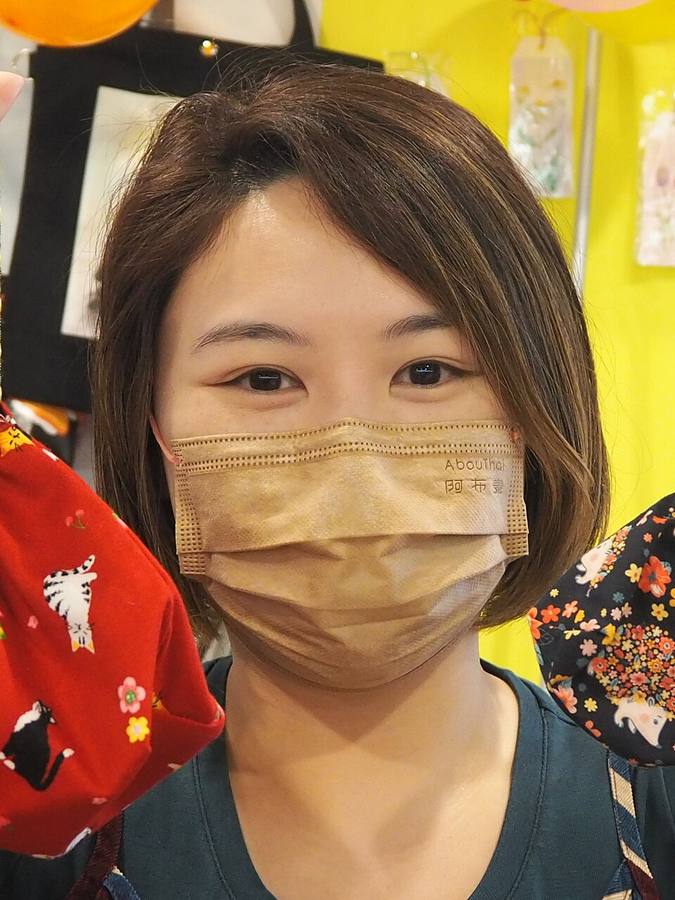
Her bail conditions were as stringent as everyone else's in the case, and each item is on public record: cash bail of HK$100,000, plus a HK$50,000 surety provided by her husband; a travel ban and surrender of travel documents; a nightly curfew; reporting to a police station four times a week; no making, distributing or reproducing any remark that could be regarded as endangering national security, including giving no media interviews; and no organising, running or coordinating any election. Under those conditions she lived for about seven months awaiting trial. Public reporting of those months is thin. One March 2022 report noted that in February she had run a stall at a Lunar New Year bazaar in Mong Kok, selling handicrafts and hand-brewed coffee — one of the few recorded public sightings of her on bail. A union chairperson who had once been on the news daily was now required, as a condition of her liberty, to be silent — she could not even give an interview. The image of her at a bazaar stall, pouring coffee, is the main picture those seven months leave to the archive.
In early 2022 Hong Kong's fifth COVID wave overwhelmed the public hospital system: daily cases ran into the tens of thousands, and photographs of patients on beds outside emergency departments circled the world. Yu posted on social media criticising the government's handling of the epidemic — that is the attribution given afterwards by multiple media outlets and by Radio Free Asia. On 7 March 2022, when she reported to Sha Tin Police Station as her conditions required, police arrested her; the National Security Department issued a statement that day saying a 34-year-old woman had been arrested on suspicion of breaching bail conditions. On 8 March she was brought before the West Kowloon Magistrates' Courts, where Acting Chief Magistrate Peter Law held that she had committed acts which could be regarded on reasonable grounds as constituting an offence endangering national security, revoked her bail and remanded her again. The defence application to lift reporting restrictions was refused, so the specifics of the alleged breach could not lawfully be reported at the time. This page keeps the evidential layers separate, as the record requires: what the court decided, in its own terms, was a breach of bail conditions as characterised above; the claim that the trigger was her social-media criticism of the fifth-wave response is a media attribution from sources, not a detail publicly confirmed by the court. The two must not be conflated. The 8th of March was International Women's Day — Radio Free Asia's headline remembered the date: a healthcare union leader, sent back to prison on Women's Day. She has not been at liberty since.
8. The arithmetic of pre-trial custody: how the 1,138 days accumulated
The Hong Kong Labour Rights Monitor's statement on sentencing day, 19 November 2024, gives a figure: Winnie Yu had spent 1,138 days in custody by the time she was sentenced. This page has re-checked that figure segment by segment against the public dates, and its composition is roughly as follows: the brief detention of 6–7 January 2021; remand from her charging on 28 February 2021 until bail on 28 July 2021, about 150 days, described in reporting at the time as nearly five months; and remand from the revocation of bail on 8 March 2022 until sentence on 19 November 2024, about 987 days. The segments sum to the Monitor's 1,138 days, subject to a day or two depending on how start and end dates are counted. In other words, before any court had found her guilty of anything, she had already spent more than three years in custody — and the longest continuous stretch before conviction ran from March 2022 to the verdict in May 2024, over twenty-six months. Her trial did not even begin until 6 February 2023; she gave evidence, was cross-examined and awaited the verdict throughout as a remand prisoner, carried to and from court in a prison van.
"Detention before trial" is one of the most internationally criticised structures of the Hong Kong 47 case, and her custody history has a shape of its own within it. She is not a defendant who was refused bail throughout: in July 2021 a court was satisfied she would not endanger national security and let her out. She was returned to custody seven months later because of things she was alleged to have said while on bail. The grant and the revocation applied the same test — whether the judge was satisfied she would not continue to act in a way endangering national security. In July 2021 Judge Esther Toh's answer was that she was satisfied. In March 2022, facing the alleged new posts, Magistrate Peter Law's answer was that he was not. This page files the two decisions side by side without adjudicating between them: for anyone who wants to understand how bail under the National Security Law actually works, her case is one of its most complete specimens — application, grant, conditions, alleged breach, revocation, all four steps present.
9. The trial: she gave evidence, and said she knew of no illegal plan
On 5 September 2022 Yu pleaded not guilty in the Hong Kong 47 case. The trial opened at the High Court on 6 February 2023 before three National Security Law designated judges — Andrew Chan Hing-wai, Alex Lee and Amanda Woodcock — sitting without a jury, and ran, with closing submissions, to 4 December 2023, over 118 days. She was one of the few defendants who gave evidence. As summarised by Columbia University's Global Freedom of Expression project from the reasons for verdict, she testified that her motivation stemmed from grassroots organising and from advocating better pandemic management, healthcare equity and labour protections, and she insisted that she had no knowledge of any illegal plan and no intention to violate the National Security Law. The defence case overall was that the primaries and the "35+" scheme were neither unlawful nor subversive. The prosecution's case ran along the evidence chain set out in section 4: the 31 March article, the online declaration, the nomination form, the lobbying after the National Security Law took effect, the post-victory article restating the budget veto, the Legislative Council nomination — in the prosecution's narrative, a woman who understood the objective from the start and kept advancing it after the law had changed.
On 30 May 2024 the court delivered its verdict: of the 16 defendants who had stood trial, 14 were convicted and two acquitted; Yu was among the convicted. The court's characterisation matched the rest of the case: the scheme aimed, through a Legislative Council majority and indiscriminate vetoing of the budget, to force the Chief Executive's resignation, and amounted to subversion of state power by unlawful means. Her evidence did not persuade the court to accept her account of her motives. Between conviction on 30 May and sentence on 19 November lay almost six months of mitigation process, throughout which she remained remanded. One detail is worth pinning: the mitigation hearings had originally been expected soon after the verdict and were postponed, beginning on 25 June 2024 (as the Labour Rights Monitor records) — the convicted defendants waited additional months in custody before the court even heard their pleas in mitigation.
10. Mitigation: the letter she wrote herself, and the judge's interruption
Yu's mitigation was heard on 11 July 2024. Her counsel, barrister Randy Shek, advanced points that are on public record: she was a nurse from an intensive care background, a person committed to doing good for the public; the pandemic had affected every Hongkonger, and it was that which made her feel she had to speak out and stand, carrying public opinion on the veto power into the legislature; her method of solving problems had never been violence — she advocated the strike as a means of exerting pressure; in classification she was at most at the lighter end of "active participants", if not an "other participant"; and after sentence she might face disciplinary proceedings before the Nursing Council. Counsel also read out a mitigation letter Yu had written herself. In it she traced everything back to the 2019 anti-extradition movement, and to the fact that one of the "Five Demands" was precisely the realisation of the universal suffrage the Basic Law promises; she asked, in substance, why implementing universal suffrage should not count as a constitutional responsibility if implementing national security legislation does; she maintained that voting in the legislature to change the system was not wrong; and the letter closed with a sentence that has been widely quoted since, in the reported English rendering: "Perhaps my only mistake was that I love Hong Kong too much."
The court's response to the letter is also on the record of that hearing: as the letter was being read, Judge Andrew Chan interrupted, saying in substance that this was not a mitigation letter but a political statement — the precise wording varies slightly between trial reports, and this page does not quote it verbatim. The archival significance should be stated plainly: in the common-law tradition the mitigation hearing is a defendant's last opportunity to lay her personal circumstances before the court, and in this national security courtroom the political self-account in a defendant's own letter was ruled outside the bounds of "mitigation". The Reasons for Sentence later recorded that the court had scrutinised her mitigation bundle — including the letters from family members, a schoolmate and a colleague — and concluded that it was "unable to identify any factors which may further reduce her sentence". Her own letter won her no reduction. What it won was the calm refusal recorded at paragraph 336 of the sentencing reasons. This page preserves all three items together — the letter's content, the judge's interruption, and the judgment's conclusion — because together, and only together, they are the complete record of that mitigation.
11. The sentencing arithmetic: an 84-month starting point, 3 months off, 81 months
Sentence was passed on 19 November 2024. The Reasons for Sentence ([2024] HKCFI 3298) deal with her in two places: paragraphs 320–323, the group assessment, and paragraphs 334–337, her individual sentence — checked item by item here. Paragraph 321: weighing the facts and the evidence, the court found her, with the other candidates in her group, Lester Shum and Wong Pak-yu, to have been an "active participant". Paragraph 322: the court stated that it did not ignore the fact that she was a "latecomer" to the Scheme and had participated in no coordination meeting or election forum, but did not consider that this called for a lower starting point — because the defendants were to be punished for their respective participation during the charge period, and their pre-National-Security-Law conduct provided only a backdrop; the same paragraph noted that the evidence showed she was active and vocal even after the primary. Paragraph 323: the court adopted a starting point of seven years (84 months) for each member of the group, having taken into account that the offence involved no violence. Paragraph 334: she was 37 at sentence, married, a registered nurse and Hospital Authority Health Informatics Analyst before her arrest, and of clear record. Paragraph 335: convicted after trial; having considered the mitigation in full, the court granted her a three-month deduction for her possible mistake as to the lawfulness of the Scheme — the same ground expressed elsewhere in the reasons as ignorance of the law. Paragraph 336: the court scrutinised the mitigation bundle, including letters from family members, a schoolmate and a colleague, and could identify no factor for any further reduction. Paragraph 337: the conclusion — six years and nine months (81 months).
Set out in the open, the arithmetic invites three comparisons. First, her numbers are identical to Leung Kwok-hung's in the same case: the same 84-month starting point, the same three months off, the same 81 months — for two defendants whose files are opposite in almost every particular. He had the 24 convictions recorded in his reasons and forty-five years of protest behind him; she had a clear record, and a public career of nursing and union work a few years long. The court's formula returned the same figure for both. Second, the defence said her participation was the shallowest and her arrival the latest; the court accepted the facts of lateness — no coordination meetings, no election forum — in terms, and stated in terms that they would not lower the starting point. The facts were admitted; the legal consequence did not follow the facts. That structure is there in black and white in the reasons. Third, a clear record, a nursing profession, letters from family and colleagues — scrutinised one by one, they yielded a further deduction of zero. Her only three months came from the court's view that she may have misunderstood the lawfulness of what she did. The more sincerely a defendant believed her conduct was lawful, the more her sole discount is framed as her mistake about the law. This page's entries on Claudia Mo and Leung Kwok-hung recorded the same juxtaposition; in her case it appears for a third time.
12. The union's end: the dissolution vote of June 2022, held in her absence
Three months after her bail was revoked, the union she founded reached its end. On 24 June 2022 the Hospital Authority Employees Alliance held a special general meeting at which members voted to dissolve; former chairman David Chan afterwards confirmed the result to the media, and the union was dissolved around the end of that month (the exact effective date of dissolution is reported inconsistently, and this page records it as late June 2022 — see section 16). The union that had once gathered 20,000 members and called the first large-scale strike in Hong Kong healthcare history ended while its founder and first chairperson was on remand, unable even to vote. The Hong Kong Labour Rights Monitor's six-year retrospective in 2026 describes the Alliance as having been forced to disband under political pressure: through 2021 and 2022 the Confederation of Trade Unions, the Professional Teachers' Union, the Alliance and other large unions and civic bodies dissolved one after another, in the retreat of Hong Kong civil society after the National Security Law. Responding to the dissolution news, the Hospital Authority said its human resources department was always willing to listen to staff views.
This page records a set of dates in parallel: December 2019, she founded the Alliance; February 2020, the Alliance struck; March 2021, she was charged and suspended; June 2022, the Alliance was dissolved during her remand. From founding to dissolution, two and a half years. Her file runs parallel to Leung Kwok-hung's here as well: the League of Social Democrats, which he co-founded, was dissolved in June 2025 while he was in prison; the Alliance she founded was dissolved in June 2022 while she was on remand. Two people, two organisations, the same kind of ending — the organisation's end arriving somewhere its founder could not reach, not even to attend a press conference or a members' meeting. It is a structure that recurs throughout the Hong Kong 47 archive, and this page registers it case by case, as it happened.
13. Appeals: dismissed in February 2026; in August, a certificate to the final court
In December 2024 she appealed against conviction and sentence, one of the defendants who did so in the weeks after sentencing. The appeals were heard from 14 to 17 July 2025 in the Court of Appeal (CACC 253/2024 and companion cases); she was one of twelve appellants. On 23 February 2026 the Court of Appeal handed down its judgment ([2026] HKCA 284), dismissing the conviction appeals of the eleven defendants convicted after trial and the sentence appeals of all the appellants, and dismissing the Department of Justice's appeal against Lawrence Lau's acquittal. Reuters reported the same day that the court had upheld the trial court's characterisation; Amnesty International issued a statement that day criticising the dismissals as a missed opportunity to restore justice (see section 15). The Labour Rights Monitor's profile page had recorded the appeal judge as saying the decision would come within nine months, by mid-April 2026 at the latest; the judgment in fact arrived on 23 February, ahead of that limit, and this page follows the judgment date, registering the earlier note here as corrected.
The appeal story gained a further chapter on 10 August 2026: the Court of Appeal issued certificates to eleven of the twelve appellants — Winnie Yu among them — certifying that the case involves five points of law of great and general importance, principally concerning the elements of the subversion offence under the National Security Law, and allowing them to apply for leave to appeal to the Court of Final Appeal. Hong Kong Watch's August 2026 briefing notes that this will be the first occasion on which the substantive elements of National Security Law subversion fall to be determined by the city's highest court; the same briefing cautions that no hearing date had been announced, and that some applicants might have served their sentences in full before the certified questions are decided. As at this page's verification date, 15 November 2026, whether leave will be granted and when any hearing will take place have no public record in the sources checked. She waits for news from the final court while serving her sentence.
14. Prison and family: the thinnest section in the public record
The institution in which she is serving her sentence is not stated in any public source checked, and this page records it as: no public record. The Correctional Services Department does not publish the placements of women prisoners in national security cases, and reliable media reporting of them is rare. Of her health, the public sources checked contain no report at all. Of her life inside, there are no published prison letters, interviews or memoirs; her public voice effectively ended when her bail was revoked in March 2022, and what remains is her stance inside legal procedure — the not-guilty plea, her evidence, her handwritten mitigation letter, the appeals. Of her family, the public record holds only fragments: the sentencing reasons record that she is married; her husband provided the HK$50,000 surety for her bail in 2021; letters from family members were in her mitigation bundle. Her husband's name, her family's public activity and the visiting arrangements have no public reporting in the sources checked, and this page does not supply or speculate about them. This section is short by necessity, not by oversight: part of an archive's honesty is admitting what cannot be found. How a nurse in her thirties is passing her days in prison is, to the outside world, known only to that extent — and no further.
On professional consequences, two points can be pinned. The Hospital Authority suspended her after she was charged, and there is no public report of her reinstatement. And her counsel told the court in mitigation that after sentence she might face disciplinary proceedings before the Nursing Council; whether any such proceedings have been held, and with what result, has no public record. In other words, even when she has served her time and walks out, whether she may ever practise again as a registered nurse remains an open question. Her sentence on paper is 81 months. The sentence on her professional life is written in no judgment at all.
15. International and labour-movement responses: the fullest record on the labour line
The international response to the Hong Kong 47 case as a whole is recorded on this site's Hong Kong 47 case page: on sentencing day, 19 November 2024, the United States State Department strongly condemned the sentences, demanded releases and announced visa restrictions; the United Kingdom, the European Union and the UN human rights office all expressed concern; and on 23 February 2026 Amnesty International condemned the appeal dismissals. For Winnie Yu personally, the fullest record runs along the labour line. The Hong Kong Labour Rights Monitor's sentencing-day statement strongly condemned the sentences imposed on her and on Carol Ng, the former Confederation of Trade Unions chairperson, setting out the 1,138 and 1,361 days the two women had respectively spent in custody before sentence, and quoting the closing line of Yu's mitigation letter; the Monitor's profile page has tracked her appeal process ever since. The labour rights chapter of the 2025 annual report of the United States Congressional-Executive Commission on China names Yu and Carol Ng as the two union leaders sentenced for subversion over the primaries. Hong Kong Watch's August 2026 briefing lists her among the eleven who received final-appeal certificates. International labour networks and Hong Kong diaspora unions continue to mark her name at strike anniversaries: in February 2026 the Labour Rights Monitor published a six-year retrospective of the healthcare strike, recording the imprisonment of its leader and the dissolution of its union. None of these statements has shortened her sentence by a day. But they constitute a second archival line: in the telling of labour-movement history, she is first the chairperson of the February 2020 strike, and only secondarily D47 of the Hong Kong 47.
16. Disputes and unverified matters
This section gathers the material this page does not adopt, treats as doubtful, or on which sources diverge. First, the release date: the "2028" figure appears in the Labour Rights Monitor's formulation that her term runs to 2028 and in the "expected 2028" column of public Hong Kong 47 compilations; both are projections from the sentence, not dates published by the Correctional Services Department or any court, and remand credit together with the bar on early release under the Safeguarding National Security Ordinance will affect the actual date — this page registers the projection only, marked unverified. Second, the specific content of the alleged bail breach in March 2022: because reporting restrictions were not lifted, the court record made public does not contain the specifics; media outlets (Radio Free Asia, the South China Morning Post and others) attributed the revocation to her social-media posts criticising the government's fifth-wave handling — a media attribution, not a publicly confirmed court record, and the body of this page keeps the two layers separate. Third, the strike vote of 1 February 2020: the Alliance's published version gives 3,123 votes in favour out of 3,164 cast, while some reports record about 3,000 in favour, 10 against and 23 abstentions; both versions are registered here, and the body of this page uses the Alliance's published figure for votes in favour. Fourth, the HAEA's dissolution date: the members' meeting voted to dissolve on 24 June 2022, but the exact effective date is reported inconsistently (a 30 June date could not be confirmed from a single authoritative source), so this page records late June 2022. Fifth, her plan to emigrate to Japan appears only in published biographies relaying an interview; this page registers it as background and draws no inference from it about her intentions. Sixth, the figure of 1,138 days in custody before sentence is the count of a single organisation, the Hong Kong Labour Rights Monitor; this page has re-checked it segment by segment against the public dates and found it consistent in substance (see section 8), but the precise day count remains that organisation's figure and is attributed as such. Seventh, scattered online claims about her prison institution, health and current condition have no reliable public sourcing and are not written into this page. Eighth, her name order appears in some English-language media as "Winnie Yu Wai-ming"; the court documents use "Yu Wai-ming Winnie", which this page follows, registering the common alternative here.
17. Full timeline
28 May 1987: born in Hong Kong. She trained as a nurse at university and became a registered nurse with the Hospital Authority, working in an intensive care unit before transferring to the head office as a Health Informatics Analyst. 2014: volunteered as a first-aid responder at the Umbrella Movement occupation sites. 2019: volunteered again as a first-aider during the anti-extradition protests, amid the new-union wave. December 2019: co-founded the Hospital Authority Employees Alliance and became its first chairperson. Late January 2020: the Alliance pressed the Authority and the government for border closure and adequate epidemic equipment; membership surged to about 20,000. 1 February 2020: an extraordinary general meeting endorsed the five demands and the strike motion. 3–7 February 2020: the five-day strike, joined by more than 7,000 medical workers — the first large-scale strike in Hong Kong healthcare history; on 7 February members voted not to extend it. 31 March 2020: published an article setting out her intention to enter the legislature to pursue the "mutual destruction" objective (per the prosecution's submissions at the bail hearing). 20 June 2020: submitted her primary nomination form and signed the primaries' online declaration. 7 July 2020: continued lobbying for the primaries on social media after the National Security Law took effect. 11–12 July 2020: won the Health Services primary with 2,493 votes, defeating incumbent legislator Joseph Lee. 25 July 2020: published an article restating that she would veto the budget if elected. 27 July 2020: submitted her Legislative Council nomination form; the election was then postponed. 6 January 2021: arrested in the National Security Law mass arrests; released on police bail on 7 January. 28 February 2021: charged with conspiracy to commit subversion and remanded; subsequently suspended from her duties by the Hospital Authority. 28 July 2021: granted bail by High Court judge Esther Toh (HCCP 348/2021) on stringent conditions; reasons issued 14 September, noting no evidence of any international connection. February 2022: ran a stall at a Mong Kok Lunar New Year bazaar, a reported public sighting during her bail. 7 March 2022: re-arrested when reporting at Sha Tin Police Station; on 8 March Acting Chief Magistrate Peter Law revoked her bail, and she was remanded continuously thereafter. 24 June 2022: an HAEA special general meeting voted to dissolve the union, in her absence. 5 September 2022: pleaded not guilty in the Hong Kong 47 case. 6 February–4 December 2023: the Hong Kong 47 trial (118 days), at which she gave evidence. 30 May 2024: convicted of conspiracy to commit subversion. 11 July 2024: mitigation hearing; her handwritten mitigation letter was read, and the judge interrupted, calling it a political statement. 19 November 2024: sentenced to six years and nine months (81 months); cumulative custody before sentence 1,138 days (Hong Kong Labour Rights Monitor figure). December 2024: filed appeals against conviction and sentence. 14–17 July 2025: appeal hearing. 23 February 2026: the Court of Appeal dismissed her conviction and sentence appeals ([2026] HKCA 284). 10 August 2026: the Court of Appeal issued certificates allowing eleven defendants, including her, to apply to the Court of Final Appeal. She remains in prison serving her sentence; neither her institution nor an official expected release date has been published.
18. Sources and verification notes
Principal sources for this page: the Court of First Instance Reasons for Sentence [2024] HKCFI 3298 (19 November 2024), paragraphs 320–323 and 334–337 (the D47 group classification, the reasons the "latecomer" point did not lower the starting point, the 84-month starting point, the ground for the 3-month deduction, the scrutiny of the mitigation bundle, and the 81-month conclusion), cross-checked against the D47 section of the Judiciary's sentencing summary, which agrees with the full text; the Court of Appeal judgment [2026] HKCA 284 (23 February 2026, the twelve appellants' conviction and sentence appeals dismissed) and Reuters' same-day report (Yu listed among those whose conviction appeals were dismissed); the High Court bail reasons HCCP 348/2021 (hearing 28 July 2021, reasons 14 September 2021, Esther Toh J: the prosecution's submissions on the 31 March article, the online declaration, the nomination and the post-victory statements, and the observation that there was no evidence of any international connection), with the South China Morning Post and Hong Kong Free Press reports of the same day (cash bail of HK$100,000, the husband's HK$50,000 surety, the curfew, reporting four times a week, and her position as the thirteenth defendant granted bail); Hong Kong Free Press reporting of 8 March 2022 on the bail revocation and Radio Free Asia's reporting that month (the 7 March arrest at Sha Tin Police Station, Magistrate Peter Law's stated ground, the reporting restrictions, and the media attribution to social-media posts — kept in separate layers in the body of this page); the Hong Kong Labour Rights Monitor's Winnie Yu profile page and its sentencing-day statement of 19 November 2024 (the 1,138 days in custody before sentence, the content of the mitigation letter, the appeal process) and its February 2026 six-year retrospective of the healthcare strike (the Alliance's dissolution in 2022); the HAEA's statement of its 1 February 2020 extraordinary general meeting (the original text of the five demands and the two-stage strike plan) and strike-period reporting (the composition of the more than 7,000 participants on 4 February, and the sequence of the government's border and quarantine measures); the primary result figure of 2,493 votes (the "Winnie Yu" entry in the English Wikipedia, relaying primary-result reporting, cross-checked against multiple reports); Columbia University Global Freedom of Expression's case summary of the Hong Kong 47 verdict (her evidence on motivation); trial reporting of the 11 July 2024 mitigation (counsel Randy Shek's submissions, the content of her letter, and Judge Andrew Chan's interruption); the South China Morning Post's June 2022 report of the Alliance's dissolution (the 24 June members' vote and David Chan's confirmation); Hong Kong Watch's August 2026 briefing (the 10 August certificates to eleven defendants, the five points of law, and the absence of an announced hearing date); the labour rights chapter of the United States Congressional-Executive Commission on China's 2025 annual report (naming Yu and Carol Ng); Amnesty International's statement of 23 February 2026 on the appeal dismissals; and the English and Chinese Wikipedia entries "Winnie Yu" / 「余慧明」 (secondary compilations, used only where not contradicted by the sources above: date of birth, the first-aider history, the suspension, and the refusal-then-grant sequence of her bail applications). Method: the sentencing arithmetic was cross-checked both ways between the full Reasons for Sentence and the sentencing summary (84-month starting point, 3 months off, 81 months total; paragraphs 320–323 and 334–337); the custody total was recomputed segment by segment from the public dates and compared with the Labour Rights Monitor's 1,138 days; the appeal and final-appeal-certificate sequence was cross-checked three ways between [2026] HKCA 284, the Reuters report and the Hong Kong Watch briefing. Single-source items and media attributions are flagged in the body of this page and in section 16. Last verified: 15 November 2026.
19. Our Take
Winnie Yu's file holds one of the sharpest contrasts in the Hong Kong 47 case: she is among the defendants furthest from being a "political figure". She was never a legislator, had no party, and never contested a single statutory election. Her road into public life ran through a ward, a first-aid station, a union and an epidemic. Yet the sentence she received is identical, digit for digit, to that of Leung Kwok-hung — a man with forty-five years of protest and a criminal record set out at length in his own sentencing reasons: an 84-month starting point, three months off, 81 months. When a court's formula returns exactly the same number for two lives that divergent, the reader should understand what the formula is measuring: not each person's life, but the position assigned to them inside "the Scheme". A candidate was priced as a candidate. This page places the two figures side by side and draws no conclusion for the reader — but the juxtaposition is, in our view, the plainest available summary of the sentencing logic of the Hong Kong 47 case.
We single out paragraph 322 of the Reasons for Sentence. In that paragraph the court itself wrote down the two facts most favourable to her: she was a latecomer; she had attended no coordination meeting and no election forum. The court then said those facts did not call for a lower starting point. And at paragraph 336 the court scrutinised the letters from her family, her schoolmate and her colleague, and found no factor that could reduce her sentence further. Her reasons read with a peculiar calm: every fact in her favour is on the record, and every one of them is without consequence. Her only three months came because the court thought she may have misunderstood the lawfulness of what she did — an intensive care nurse who organised a union during an epidemic, struck, and won 2,493 votes in a primary; her understanding of the lawfulness of all of that is characterised in the judgment as a mistake worth a three-month allowance. We set the judgment's own logic out here as we find it: the facts are in the reasons; the deductions are not.
There is one more line to follow, and it is her profession. In that week of February 2020 she stood at the centre of Hong Kong's news, demanding that the government close the border and give the front line enough masks. Four years and nine months later she was imprisoned for something else — and not one of that week's demands, the isolation wards, the protective equipment, the promise of no retaliation, appears in her indictment. Yet all of them appear in her fate: she was suspended from her post; the union she founded was dissolved while she was on remand; and after sentence she may yet face disciplinary proceedings over the nursing registration itself. We close with one recorded image. In February 2022, on bail, she ran a stall at a Mong Kok Lunar New Year bazaar, selling handicrafts and hand-brewed coffee — the last public sighting of her before she was taken back into custody. From an intensive care ward, to the front of a strike of seven thousand, to a small bazaar stall, to an institution whose name has no public record: that is the whole road Hong Kong's last six years left to one nurse. The archive's duty is to make sure later readers can find it — that she walked that road, and that every step of it has a date.