
第156案 | 毛孟靜Case 156 | Claudia Mo
毛孟靜,1989年在北京現場採訪六四的法新社記者、做了三十年新聞的主播與主持,2012年由選民送進立法會,2020年參加民主派初選並勝出九龍西,卻被控串謀顛覆國家政權——拒絕保釋的理由之一,是她與外國記者的WhatsApp往來。她認罪、求情,2024年11月19日被判監四年兩個月,2025年4月29日刑滿獲釋,是47人案首批走出監獄的四人之一。Claudia Mo covered the 1989 Tiananmen crackdown for AFP, spent thirty years as a Hong Kong journalist and presenter, and was sent into the Legislative Council by voters in 2012. For winning the Kowloon West pro-democracy primary in 2020 she was charged with conspiracy to commit subversion — and her WhatsApp exchanges with foreign journalists were cited among the reasons to refuse her bail. She pleaded guilty, was sentenced on 19 November 2024 to four years and two months, and on 29 April 2025 became one of the first four Hong Kong 47 defendants to walk free, her sentence fully served.
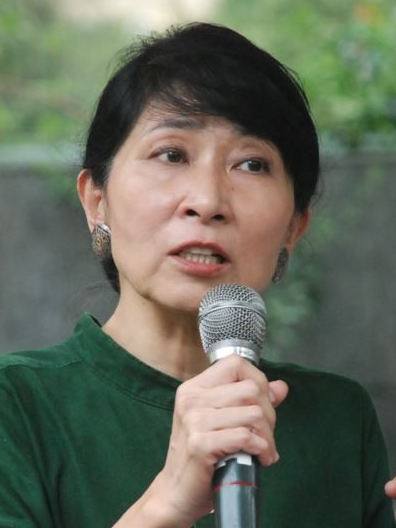
1. Claudia Mo the journalist: from AFP's French wires to the Tiananmen story
Claudia Mo Man-ching was born in Hong Kong on 18 January 1957. Her parents had arrived from Ningbo, Zhejiang, in 1950 as refugees — part of the great wave of mainland families who remade Hong Kong. She was educated at St Paul's Secondary School in Happy Valley, went to Toronto for pre-university study after her school certificate examinations, and in 1979 took a bachelor's degree in journalism, with English studies, from Carleton University in Ottawa. Returning to Hong Kong in 1980, she joined Agence France-Presse. She started out translating the agency's French wires into Chinese; by dint of three working languages and relentless legwork she rose to become AFP's chief Hong Kong correspondent. In that role she covered Beijing's 1989 crackdown on the Tiananmen protests. She later described that experience to HK Magazine as a watershed that cemented her journalistic principles and political beliefs. The sequence matters for everything that follows: Mo did not come to journalism with a political programme. She was a working reporter for three decades first, and politics came out of what she had seen.
After AFP she worked at The Standard, anchored television news at TVB in the early 1980s, and became one of RTHK's defining presenters — hosting "Media Watch" from 1991 to 2008 and "City Forum" in 1993–95. She taught part-time in the journalism department at Hong Kong Baptist University and at the Chinese University's government and public administration department, wrote newspaper columns, published a book on democracy (We Want True Democracy, 2015) and produced sets of English-learning books. One detail captures her place in Hong Kong's media ecology: fluent in French, she was for years the legislator whom francophone correspondents interviewed directly in French about Hong Kong affairs. Reporter, anchor, presenter, lecturer, columnist — by the time she entered politics in 2006 she was among the most recognisable media faces in the city. This site records that career in full because of what the prosecution later did with it: the everyday professional contact between a former journalist-legislator and foreign reporters became, in her bail hearing, material the state used to keep her in a cell (see Section 6).
2. Into the legislature: Civic Party founder, two terms for Kowloon West, HK First
Mo was a founding member of the Civic Party in 2006. She first stood for the Legislative Council in Kowloon West in 2008 and lost. In 2012 she won, campaigning on the slogan "Against Mainlandisation" — a formulation that caused friction inside her own party, whose line was "Against Communistisation"; she kept her wording. Within the pro-democracy camp she stood on its localist wing. In 2013 she co-founded HK First with Gary Fan of the Neo Democrats to push a "Hong Kong people first" agenda, and that August joined Fan, Fernando Cheung and others in a crowdfunded newspaper advertisement campaign under the banner of resisting mainlandisation. She took part in the 2014 Umbrella Movement and said afterwards that she did not regard it as a failure, because it had made many people look directly at Hong Kong's plight. Re-elected in 2016 on a platform of self-determination, she quit the Civic Party on 14 November 2016, citing differences over localism and filibustering, and served out the term as an independent democrat under the HK First label.
One scene from her legislative years was reported worldwide and says much about the chamber she worked in. On 15 October 2019, during a Legislative Council meeting, pro-Beijing lawmaker Junius Ho directed at her a crude remark — rendered in English reporting as a jibe about "eating foreign sausage" — aimed at her marriage to a British journalist. She replied that the comment was "blatantly sexist, racist and it amounts to sexual harassment". Ho refused to apologise and was expelled from the meeting. This site records the episode not for its colour but as a specimen: in the 2019 legislature, a woman legislator of the democratic camp could be publicly degraded by a colleague on the floor, and the price the abuser paid was to leave the room. It was not state repression of the kind that came later; it was the ambient hostility of her working environment, and it is documented in the legislative record.
Her parliamentary career ended by decree, not by election. On 11 November 2020, China's National People's Congress Standing Committee adopted a decision under which the Hong Kong government immediately disqualified four pro-democracy legislators — Alvin Yeung, Dennis Kwok, Kwok Ka-ki and Kenneth Leung. The rest of the camp resigned en masse in protest. Mo's term ended on 13 November 2020; Reuters photographed her packing up her office amid protest placards and boxes. Eight years in the legislature closed in a week. Two months later, the arrests began.
3. Documented pressure before 2020: what exists, and what does not
Under this site's archival standard, this section admits only reliably documented episodes directed at Mo personally, and states the gaps plainly. For the years before 2020, the documented record concerning pressure on her personally consists of hostility inside politics rather than action by law enforcement: the October 2019 Junius Ho episode (Section 2), documented in the Legislative Council record and multiple news reports, is the clearest instance. Pro-Beijing newspapers attacked her localist positions for years; that is political combat, and this site does not log it as persecution evidence. What must also be stated is the negative space: before 2020 Mo had never been arrested, never been prosecuted, and never been disqualified from an election. When returning officers invalidated the nominations of twelve pro-democracy candidates on 30 July 2020, her name was not among them — her own nomination stood valid; it was the election itself that was postponed and then replaced wholesale by a new system. Writing that blank space into the record matters. The arrest and prosecution that came in 2021 were not the cumulative enforcement of the law against a repeat rule-breaker. They were a single sweep, under a law six months old, against people whose every relevant act had been done in public and who carried no criminal record at all.
4. The 2020 primaries: she won Kowloon West, filed her nomination — and the election vanished
On 11–12 July 2020 the pro-democracy camp held its "35+" primaries to coordinate candidates for the Legislative Council election then scheduled for September. Initiated by Benny Tai and coordinated by Au Nok-hin and others, the exercise drew more than 610,000 voters who queued, in a pandemic, to cast ballots at some 250 polling stations. Mo stood in Kowloon West, the constituency she had represented for eight years, and won the coordination. Court reporting of her later mitigation hearing confirms the next step: having won the primary, she filed her nomination papers for the official election on 22 July 2020. That date deserves emphasis, because it converts the narrative the prosecution later built. Mo did not stop at taking part in an unofficial poll; she performed the formal statutory act of a candidate under Hong Kong election law, and at that moment her nomination was valid, the election was on, and she was a candidate in it. On 30 July 2020 returning officers disqualified twelve other pro-democracy candidates — not her. On 31 July the government postponed the election for a year, citing the pandemic. A year later, Beijing's overhaul of Hong Kong's electoral system, with its vetting machinery and "patriots governing Hong Kong" doctrine, meant the postponed contest was held under rules in which the democratic camp did not take part at all. In court, the primary was reconstructed as the first step of a subversive scheme. The archive must hold both facts at once: the vote was organised in the open, reported in real time, and everything Mo personally did in it — standing, campaigning, winning, filing — was, when she did it, the ordinary work of a legislator seeking re-election.
5. 6 January 2021: the dawn arrests, and seven weeks of bail
In the early hours of 6 January 2021, the Hong Kong Police Force's National Security Department deployed roughly a thousand officers across the city and arrested 53 pro-democracy figures — the organisers, coordinators and candidates of the primaries — on suspicion of subversion under the National Security Law. Mo, then 63, was among them, taken from her home. It was the largest single operation under the law since its imposition. Those arrested were released on bail over the following days; Mo was bailed on 7 January, in a release Hong Kong Free Press covered under the organiser's remark that Hong Kong had entered a bitter winter. Those weeks of bail — about seven of them — were the last freedom she would have for more than four years. In late February the police brought the reporting date forward. On 28 February 2021, 47 of those arrested were charged. Her life changed tracks that day.
6. The bail fight: her WhatsApp messages with foreign journalists became a reason to keep her locked up
On 28 February 2021 the 47 were charged with conspiracy to commit subversion, held overnight, and brought before the West Kowloon Magistrates' Courts on 1 March. The first appearance and bail hearings ran for four days, until 4 March, in marathon sessions during which several defendants were taken ill and hospitalised. On 4 March, Chief Magistrate Victor So initially granted bail to 15 of the defendants, Mo among them — whereupon the Department of Justice immediately applied for a review of those grants, and all 15 remained in custody. Not one of them walked out. The High Court then dealt with the reviews and with individual bail applications one by one. Mo's own application was heard on 14 April 2021 and refused the same day by Esther Toh, a designated National Security Law judge. The record must be stated precisely: she was not "released and rearrested". The 4 March grant never took effect. From 28 February 2021 until her sentence expired on 29 April 2025, Claudia Mo did not spend a single day at liberty.
The reasons for the April refusal were not published until late May 2021, and they landed like a stone in Hong Kong's press corps. As Hong Kong Free Press reported on 28 May 2021, the prosecution had pointed to Mo's exchanges, over WhatsApp and similar channels, with journalists of foreign outlets — the Wall Street Journal, the New York Times, the BBC and Sky News were among those named — in conversations touching on human rights in Hong Kong and on the twelve Hong Kong youths intercepted at sea while fleeing by boat. The prosecution argued that she had fed foreign media misleading accounts and that her interviews and media profile endangered national security; the court accepted this as part of the case against bail. The International Federation of Journalists condemned the reasoning in a statement whose key sentence this archive preserves (within the fifty-word limit): "Using texts and interviews as a justification to deny bail is a clear attempt by the Chinese government to silence and oppress free media." The Coalition for Women in Journalism likewise demanded her release. Three facts are fixed here. First, what was used against her was a former journalist and sitting legislator's routine contact with reporters — no money, no documents, no violence was alleged in connection with those exchanges. Second, of the 47 defendants, only thirteen were ever granted bail; she was not one of them. Third, her later, repeated bail applications were likewise refused, as multiple reports and reference entries record. A woman who had spent thirty years talking to journalists for a living was kept in prison, in part, because she talked to journalists. It is the sharpest single slice of this case's procedural history.
7. The guilty plea: her decision of August 2022, and what she wrote to the court
After the case was committed to the High Court, defendants began indicating guilty pleas. Around 18 August 2022, twenty-nine of the 47 — Mo among them — indicated in High Court proceedings that they would plead guilty to conspiracy to commit subversion; with later additions, 31 ultimately pleaded guilty and 16 stood trial. Those who pleaded guilty then had to wait, because their sentencing was deferred until the trial of the non-pleading defendants had concluded. In Mo's case the wait, in Lo Wu Correctional Institution, lasted more than two further years. On why she pleaded guilty she published no extended explanation, and this site does not put words in her mouth. What the record does contain is the material she herself placed before the court at mitigation. Her plea in mitigation was heard on 10 July 2024, in the fourth batch of defendants, at the West Kowloon Court Building. Drawing together the trial reporting of Hong Kong Free Press, the South China Morning Post and Hong Kong newspaper court coverage: her counsel, barrister Wong Nga-bun, submitted that she had not been an organiser or prime mover of the primaries, and that Benny Tai had consulted her on the legality of the exercise. She accepted that her role fell within the "active participant" band. She told the court, through her plea, that she now understood the potential harm of an indiscriminate budget veto and regretted it. Mitigation letters were filed on her behalf, including from former legislator Frederick Fung. In her own letter to the court she wrote that she had in the past acted out of personal anger, that she had reflected on her conduct, that she was willing to bear all the consequences, and she asked for leniency. The bench pressed counsel on points including her advocacy of an "international front" in support of the scheme; counsel responded that she had harboured reservations about the budget-veto pledge throughout.
Two points of discipline govern how this archive presents that material. First, a mitigation letter is a document addressed to a sentencing court for the purpose of reducing a sentence; its expressions of regret are recorded here in that context. This site does not inflate them into a general political recantation — and notes that in her single public statement after release (Section 10) she neither repeated nor withdrew them. Second, her path stands in documented contrast to that of Gwyneth Ho, who offered no plea in mitigation at all. Mo chose differently: a plea, an apology to the court, and a request for mercy, which bought her the standard one-third discount and, in the end, a release date within her lifetime. Both choices are recorded in this archive without ranking. The hard facts are these: the plea decision was made after a year and a half on remand without bail; she was 65 years old; and it was the plea that made 29 April 2025 possible.
8. Sentencing: how 4 years and 2 months was calculated (19 November 2024)
On 19 November 2024, the three designated judges of the Court of First Instance — Johnny Chan, Alex Lee and Amanda Woodcock — sentenced all 45 convicted defendants at the West Kowloon Court Building, to terms ranging from 4 years and 2 months to 10 years. This matches the record on this site's Hong Kong 47 case page: verdicts on the contested defendants had been delivered on 30 May 2024, and sentence was passed on 19 November 2024. Mo's arithmetic is set out in the Reasons for Sentence ([2024] HKCFI 3298). The court placed her role in the "active participant" band and adopted a starting point of 7 years (84 months). Her pre-trial guilty plea earned the conventional one-third discount, bringing the term to 56 months. The court then allowed a further deduction of 6 months on two grounds: her "past public service", and the finding that her participation in the scheme had been due to "ignorance of the law". The result was 50 months — 4 years and 2 months — the joint-lightest sentence in the case, shared with Kwok Ka-ki, Jeremy Tam and Gary Fan, all four of them former legislators who had pleaded guilty. Agence France-Presse highlighted the composition of that extra six-month deduction in both its sentencing and release coverage; the Reuters and Hong Kong Free Press accounts are consistent with it, and this site adopts the figure after cross-checking those sources.
The arithmetic repays a slow reading. The 7-year starting point was the same one applied to candidate-level "active participants" across the case: the sentencing framework had no separate cell for "eight-year legislator whose offending consisted of contesting an election". The one-third plea discount was the ordinary discount for an early plea in Hong Kong criminal practice, and she took it; co-defendants at the same band who fought the case and lost stayed at the full seven years, as Gwyneth Ho did. And the final six months contains the case's most quietly extraordinary pairing: half reward for "past public service", half concession that she had acted in "ignorance of the law". In the same document, the court convicted her of conspiring to subvert the state and recorded that she had not understood her conduct to be criminal. Section 17 returns to that contradiction. Because all her remand time from 28 February 2021 counted toward the sentence, by sentencing day she had already served about 45 of the 50 months; the balance was served at Lo Wu. She lodged no appeal — for a defendant convicted on her own plea the door to a conviction appeal is effectively closed, and she filed no appeal against sentence either, as the public record reflects.
9. Four years inside: Lo Wu Correctional Institution, a sick husband, and a letter from Westminster
From 28 February 2021 to 29 April 2025 — four years and two months — Mo was held at Lo Wu Correctional Institution, the Correctional Services Department's facility for women. The public record of those years is thin, as it is for all of Hong Kong's imprisoned dissidents: visits regulated, letters inspected, voices kept inside. What can be fixed is the following. In February 2023 her husband's health collapsed. On 9 February 2023 it was reported that Philip Bowring had been admitted to a Hong Kong hospital intensive care unit with pneumonia. On 24 February 2023, fifty-four British parliamentarians and public figures — among them the last governor of Hong Kong, Lord Patten of Barnes; former foreign secretary Sir Malcolm Rifkind; and the chair of the Foreign Affairs Select Committee, Alicia Kearns — wrote to the Foreign Secretary, James Cleverly, asking the British government to intercede for Mo's immediate release on compassionate grounds so that she could be with her husband. The letter pointed out that Bowring and both of the couple's sons are British citizens, and that Mo herself had previously held British citizenship, which she renounced in 2012 on taking her Legislative Council seat. The letter changed nothing. She was not released; the case was in the hands of the court, as the Hong Kong government side responded, and visits proceeded under prison rules. Bowring eventually recovered and was discharged — a fact the public only confirmed when he appeared outside their home on the morning of her release. Of her own daily life inside, nothing reliable was reported while she was there; her account of it came only after she was out, and it is recorded in the next section. Of her health, work assignments or disciplinary record inside, the public sources contain nothing, and this page marks those items: no public record.
10. 29 April 2025: sentence completed, first of the 47 to come home
In the small hours of Tuesday 29 April 2025, reporters kept watch outside Lo Wu Correctional Institution. The accounts of Reuters, Agence France-Presse and local media agree on the picture: Mo was driven away before sunrise in a vehicle with its curtains drawn; police at the scene confirmed she had left. The same morning, Kwok Ka-ki and Jeremy Tam left Stanley Prison and Gary Fan left Shek Pik Prison. The four were the first of the 45 sentenced defendants in the Hong Kong 47 case to regain their freedom, and they held the lightest sentences in the case. The release was stage-managed for invisibility: pre-dawn timing, curtained cars, roads controlled, no sight of her face. The Correctional Services Department said arrangements took account of institutional security and inmates' privacy. At the family home, Philip Bowring spoke briefly to reporters to confirm that his wife had arrived home and needed rest. It was the only public word from the family that day; Mo herself did not stop to speak.
Three days later, on 2 May 2025, she published her first public comments since her release, in a post on her social media page reported by Agence France-Presse and Hong Kong Free Press. She described prison life, at the start, as "surreal, almost Kafka-esque". She said she had read more than three hundred books, mostly novels, and had brushed up on her French. Thanks to the social arrangements inside, she said, she had been spared the two great traumas of imprisonment, loneliness and boredom. And she added a sentence that this archive preserves exactly: "My thoughts are with my co-defendants who remain in custody." It remains the fullest public statement she has made since regaining her freedom, and its substance is recorded here in full. As to conditions on her release: this site has checked the reporting of Reuters, Agence France-Presse, Hong Kong Free Press and Radio Free Asia and the Correctional Services Department's public statements, and finds no record of any post-release supervision attached to her case. The background fact is that Hong Kong's Safeguarding National Security Ordinance, in force from March 2024, removed the prospect of early release for good behaviour for national security prisoners; her release was simply the expiry of a 50-month sentence with remand time credited — not a conditional early release. The distinction is recorded here deliberately, because it determines her present legal status: she is a woman who has served her sentence in full, subject, on the documented record, to no continuing condition at all.
11. Family: Philip Bowring, two sons, and four years and two months of distance
Philip Bowring is a veteran British journalist, a former editor of the Far Eastern Economic Review and for decades a commentator on Asian affairs from Hong Kong. He and Mo married in 1982 and have two sons, both educated at the French International School and fluent in French, who have lived abroad as adults — one working in journalism, the other in environmental work, according to the public biographical record compiled in the Chinese Wikipedia entry. The 2023 parliamentary letter confirms that Bowring and both sons are British citizens. Across the four years of her imprisonment, the family's public traces are exactly three, all recorded above: Bowring's admission to intensive care with pneumonia in February 2023, while she sat in Lo Wu unable to be with him, and the public appeal it triggered in London; his recovery; and his appearance outside their home on the morning of 29 April 2025 to receive her and to tell reporters she needed rest. Beyond that, the sources checked by this site contain no reporting on the sons' visits, letters or public statements during her imprisonment, and this section records that plainly: no public record. The archive does not manufacture sentiment. It leaves one contrast on the page: she went to prison at 64 and came out at 68; during those years her husband nearly died in an intensive care unit, and the wife who might once have flown across a city to his bedside could not obtain even a single day's bail to visit him.
12. International response: from the IFJ to the Westminster letter
The international reaction to Mo's case runs on two tracks. The first is specific to her. When her bail was refused in April 2021 and the published reasons showed her journalistic contacts in the scales, the International Federation of Journalists condemned the use of media exchanges as bail material and demanded her release; the Coalition for Women in Journalism issued statements in 2021 and again at her sentencing in 2024, characterising the prosecution and jailing of a veteran journalist as the weaponisation of law against press freedom. In February–March 2023 the letter from 54 British parliamentarians and public figures sought her release on compassionate grounds (Section 9), covered by the BBC and Radio Free Asia and published by Hong Kong Watch; the Hong Kong side answered that the case was a matter for the courts. At sentencing on 19 November 2024, Reporters Without Borders listed her among the three press-freedom defenders imprisoned in the case. The second track is the response to the Hong Kong 47 case as a whole, recorded on this site's case page: on sentencing day the US State Department condemned the sentences in strong terms, demanded the unconditional release of all 45 and announced new visa restrictions on Hong Kong officials; the British government said the sentences showed the National Security Law being used to criminalise political dissent; the European Union called them another unprecedented blow to fundamental freedoms in Hong Kong; and the UN human rights office expressed grave concern. None of it shortened her sentence by a day — and the archive records the counterpart fact with equal plainness: the morning she walked out of Lo Wu, what had freed her was not any external pressure. It was the calendar reaching the last page of fifty months.
13. Current status: a woman at home, and a deliberately quiet public record
As of this site's last verification, on 13 November 2026, the documented facts of Mo's situation are these. She returned to her Hong Kong home on completing her sentence on 29 April 2025. She made one public post about prison life on 2 May 2025 (Section 10). Since then, within the public reporting of Reuters, Agence France-Presse, Hong Kong Free Press, Radio Free Asia, Amnesty International and Hong Kong Watch checked for this page, there is no record of her speaking publicly on political questions, giving an interview, joining an organisation, or returning to politics. There is no record of any post-release reporting, supervision or movement restriction imposed on her. There is no report of any re-arrest, fresh charge or exit ban. Her husband's health has not been further reported since his appearance on release day. Whether she has travelled to see her sons or grandchildren abroad is not covered in the sources checked: no public record. Her current situation can be stated in one sentence: a 68-year-old former legislator who spent thirty years in journalism has served, in full, four years and two months for taking part in a primary election that more than 610,000 people voted in — and she has gone home to live quietly, while the longest-sentenced of her co-defendants will not see the outside of a prison until the next decade.
14. Disputes and unverified material
This section logs what this site does not adopt, and why. First, a family of claims circulating in mainland Chinese and pro-Beijing self-media — that she sought permission to leave Hong Kong for a younger son's wedding and was refused; that she received funding from Jimmy Lai; various colourful accounts of her sons' lives and of her own supposed misery — was checked and set aside: these claims appear only in low-credibility, editorially unverified outlets, are supported by no court document, mainstream report or statement of the persons concerned, and in at least one version the release year itself is misstated. They are registered here as unverified rumours and are not used anywhere in this page. Second, the details of release day differ slightly between reports: some Chinese-language accounts say Bowring personally drove to Lo Wu to collect her, while Reuters and Agence France-Presse describe her being driven from the institution and Bowring waiting at home to confirm her return to reporters. This page's main text follows the Reuters and AFP scene reporting; the alternative version is logged here as not established. Third, her date of birth: English and Chinese Wikipedia both give 18 January 1957, while some Chinese-language sources give only the year; this site adopts 18 January and notes the source level. Fourth, her inner reasons for pleading guilty are not publicly documented beyond the mitigation material; all speculative commentary on her motives is excluded. Fifth, reporting on her life effectively stops after the post of 2 May 2025; any claim about her movements or views after that date, absent new first-hand reporting, is treated by this site as unverified.
15. Full timeline
18 January 1957: born in Hong Kong to parents who had fled Ningbo in 1950. 1975: leaves St Paul's Secondary School for pre-university study in Toronto. 1979: graduates in journalism from Carleton University, Canada. 1980: joins AFP in Hong Kong. 1982: marries British journalist Philip Bowring. 1989: covers the Tiananmen crackdown as AFP's chief Hong Kong correspondent — later described by her as the watershed of her journalistic and political convictions. 1991–2008: hosts RTHK's "Media Watch"; 1993–95 also hosts "City Forum". 2006: founding member of the Civic Party. 2008: first Legislative Council candidacy in Kowloon West; defeated. 1 October 2012: takes her seat as Kowloon West legislator, having renounced British citizenship as required. 2013: co-founds HK First with Gary Fan. 2014: takes part in the Umbrella Movement. 2015: publishes We Want True Democracy. 2016: re-elected in Kowloon West; quits the Civic Party on 14 November. 15 October 2019: targeted by Junius Ho's discriminatory insult in the Legislative Council; Ho is expelled from the meeting. 11–12 July 2020: contests the pro-democracy primaries and wins Kowloon West; 22 July 2020: files her Legislative Council nomination; 31 July 2020: the election is postponed. 13 November 2020: her legislative term ends in the camp's mass resignation. 6 January 2021: arrested in the National Security Law dawn raids; bailed on 7 January. 28 February 2021: charged with conspiracy to commit subversion and remanded in custody. 4 March 2021: a magistrate initially grants bail; the Department of Justice immediately seeks review, and the grant never takes effect. 14 April 2021: High Court judge Esther Toh refuses her bail application; the reasons, published in late May, rely in part on her exchanges with foreign journalists. August 2022: indicates a guilty plea, one of 29 defendants to do so. 9 February 2023: Bowring is reported in intensive care with pneumonia; 24 February 2023: 54 British parliamentarians and public figures write urging her compassionate release, without result. 10 July 2024: mitigation hearing; a personal letter expressing regret and acceptance of the consequences is placed before the court. 19 November 2024: sentenced to 4 years and 2 months (50 months). 29 April 2025: released from Lo Wu Correctional Institution on completion of her sentence, in the first batch of four defendants freed. 2 May 2025: first public comments since release — prison was "surreal, almost Kafka-esque"; she read more than 300 books; her thoughts remain with the co-defendants still in custody.
16. Sources and verification
Principal sources for this page: the Court of First Instance's Reasons for Sentence, [2024] HKCFI 3298 (19 November 2024), for the sentencing framework and individual terms; Reuters reporting of the 4 March 2021 bail hearings, the 19 November 2024 sentencing and the on-scene release coverage of 29 April 2025; Agence France-Presse's release reporting of 29 April 2025 and its report of her first post-release remarks on 2 May 2025; Hong Kong Free Press's report of 28 May 2021 on the bail reasons and foreign-media messages, its primary-election results coverage, and its 2 May 2025 report; BBC News coverage of the 6 January 2021 arrests and of the March 2023 parliamentary letter; Radio Free Asia's March 2023 report on the letter and its 29 April 2025 release report; the full text of the 24 February 2023 parliamentarians' letter as published by Hong Kong Watch; the International Federation of Journalists' 2021 bail statement; Reporters Without Borders' statement of 19 November 2024; Amnesty International's statements on the Hong Kong 47 case; the Wen Wei Po court report of 11 July 2024 on the mitigation hearing (a pro-Beijing newspaper, used only as cross-checking for courtroom procedure, its editorial line not adopted); and the English and Chinese Wikipedia entries for Claudia Mo / 毛孟靜, used as secondary compilations for biographical detail only where not contradicted by the sources above. Method: the release date, institution and first-batch composition were cross-checked between the Reuters and AFP scene reports and against this site's existing Hong Kong 47 case page, with which they agree; the sentence calculation was verified by reconciling the Reasons for Sentence framework with AFP's account of the additional six-month deduction; the bail chronology was fixed from the Hong Kong Free Press and South China Morning Post reporting referenced in reference entries, read with the IFJ statement, with particular care to distinguish the initial 4 March grant that never took effect from the High Court's substantive refusal of 14 April 2021. Single-source items that could not be cross-checked are logged in Section 14. Last verified: 13 November 2026.
17. Our Take
Claudia Mo occupies the lightest cell in the Hong Kong 47 sentencing table — and, examined closely, it is the cell the case can least explain. The court convicted her of conspiracy to commit subversion and, in the same sentencing document, recorded that she had taken part out of "ignorance of the law", and gave her six months off for it. Read those two findings together and the court has stated, in its own hand, that at least some of the people it imprisoned did not know, when they acted, that they were committing a crime. And what had they done? Stood in a primary that over 610,000 people voted in, won it, and filed a nomination form under the election law. The statute under which all of this became subversion had come into force eleven days before the vote. The ordinary understanding she relied on — that legislators voting down budgets is a power the Basic Law itself describes — was, in the court's eventual taxonomy, ignorance. A legal system that sends people to prison owes them, at minimum, a line that existed before they acted and that an ordinary reader could find. This case did not have one.
This site also records, separately, the bail chapter. A woman who had spent thirty years as a working journalist had her WhatsApp exchanges with reporters from the Wall Street Journal, the New York Times and the BBC laid before a judge as evidence that she threatened national security — and the judge accepted it, and she stayed inside for the better part of the next four years. In any society that still professes to protect press freedom, talking to journalists is the daily bread of legislators and former journalists alike. Here, it was a ground for imprisonment without trial. The International Federation of Journalists protested at the time and was ignored; the archive fixes the sequence here for later readers to judge: first she was refused bail because she talked to journalists, and only afterwards was she sentenced because she took part in a vote.
There was no ceremony on the morning she came out: dawn, drawn curtains, police on the roads, and a husband saying she needed rest. This site passes no moral judgment on her choices — the plea, the regret expressed in her mitigation letter, the single sentence of solidarity with her co-defendants followed by silence. The archive's duty is to the verifiable record, and the record is this: born in 1957; a reporter on the scene in Beijing in 1989; sent into the legislature by voters in 2012; a candidate in the primaries of 2020; arrested in 2021; home in 2025. Of the 47, she was among the first four to walk out. Ahead of her lay four years and two months. Behind her, inside, remain more than forty of her co-defendants, the longest of whose sentences run into the 2030s. She said her thoughts are with them. This site leaves that sentence, and this whole record, to history.
视频证据Video Evidence
《47人案毛孟靜等4前立法會議員出獄 清晨由拉窗簾七人車接走》(法庭線)|2025|現場原聲"Claudia Mo and three other ex-lawmakers released in Hong Kong 47 case, driven away in curtained vans at dawn" (The Witness HK) | 2025 | On-scene footage, original audio