
Zhuang Rongwen (1961– )
Zhuang Rongwen, born in Quanzhou, Fujian, in February 1961 and trained as a hydraulic engineer with a Hohai University doctorate in hydraulics and river dynamics, served in Fujian as a division head of the provincial engineering consulting corporation, deputy director of the Provincial Planning Commission and of the Development and Reform Commission, and director of the Provincial Department of Science and Technology; moved to Beijing in 2010 as a department director and then deputy director of the Overseas Chinese Affairs Office; became a CAC deputy director in August 2015; in April 2018 became a deputy head of the Propaganda Department concurrently heading the National Press and Publication Administration (relieved of the concurrent post that August); and on 31 July 2018 took over the Cyberspace Administration of China, becoming its state-side director in August — more than eight years in post, the longest tenure of any CAC director. The core of this file is how, under him, internet censorship passed from campaigns into institutions: the Online Information Content Ecosystem Governance Provisions (published December 2019, effective 1 March 2020) wrote 'positive energy' and platform liability into a binding rule; on 5 February 2020 the CAC publicly named Weibo, Tencent and ByteDance for thematic inspection at the height of the early COVID outbreak, while Citizen Lab testing found 516 coronavirus keyword combinations blocked on WeChat; a cybersecurity review of Didi opened in July 2021 closed on 21 July 2022 with a fine of RMB 8.026 billion; the Qinglang campaign series reported, by the CAC's own accounting, 1.34 billion accounts acted against in 2021 alone; and the Algorithmic Recommendation Provisions (effective 1 March 2022), the Deep Synthesis Provisions (10 January 2023) and the Generative AI Interim Measures (15 August 2023) brought recommendation, synthesis and generation under written control. Attribution runs in three tiers: his signed Qiushi essays attach to him personally; Qinglang's annual deployments and the Didi penalty attach to his institutional tenure; Hong Kong handling and individual deletion cases are not traced to him. Sanctions: none — his name appears on no government's public sanctions list; in 2024 Time placed him on its TIME100 AI list. A signed article under the CAC director's byline was still appearing on 2 November 2026, confirming he remains in post.
1. A Hydraulic Engineer: Two Decades in Fujian (1961–2010)
Zhuang Rongwen was born in February 1961 in Quanzhou, Fujian. His professional background has nothing to do with propaganda, public security or law: he studied water. In 1989 he graduated from Hohai University in hydraulics and river dynamics with a doctorate in engineering — among CAC directors he is the one with the most genuinely technical education: the founding director, Lu Wei, was a journalist, and his predecessor Xu Lin was a propaganda-system cadre, while Zhuang rose step by step from engineering posts. He qualified as a senior engineer in 1992. To understand his governing style, start here: the way he later ran the internet — filings, lists, quantified targets, campaign completion figures — carries the marks of engineering project management, treating the space of speech as a construction project that can be specified, inspected and signed off.
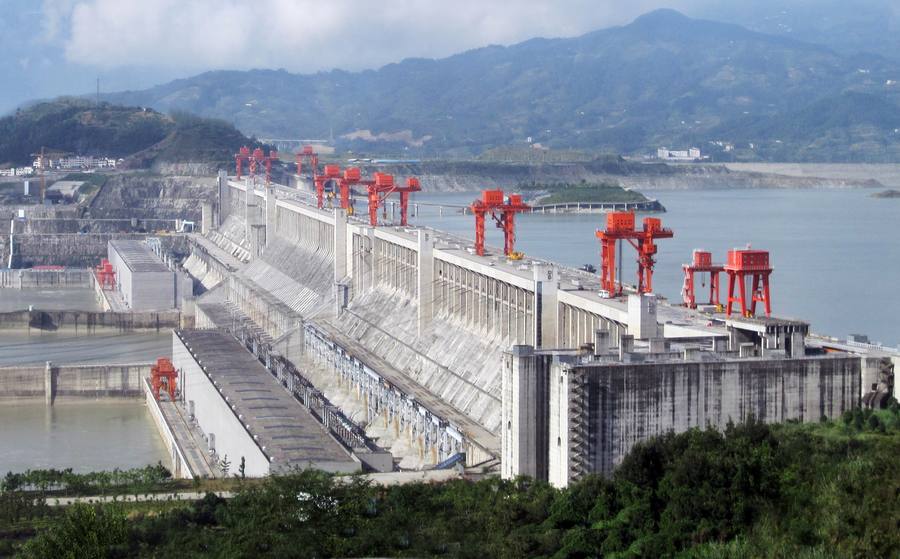
His Fujian record begins in technical and consulting work: technician at the Chitan hydropower plant, lecturer at Hohai University, engineer, senior engineer, deputy head and head of a business division at the Fujian Engineering Consulting Corporation, with a secondment as deputy director of the construction bureau of Xiamen's Haicang Investment Zone. It then moves into the planning system: head of the industry and energy divisions of the Fujian Provincial Planning Commission, deputy director of the commission, with a secondment as deputy head of the construction department of the Three Gorges Project Development Corporation and deputy general manager of a Yangtze investment company; after the commission's reorganization, deputy director of the Fujian Development and Reform Commission; and finally deputy director, then director and Party secretary, of the Fujian Provincial Department of Science and Technology — the last Fujian post, and the one that converted an engineering technocrat into a science-and-technology administrator. Not one segment of this record touches news, publishing, ideology or internet control.
On factional background, this page applies its usual discipline. Xi Jinping worked in Fujian for seventeen years, from 1985 to 2002, as vice mayor of Xiamen, Party secretary of Ningde, Party secretary of Fuzhou, and deputy Party secretary and governor of Fujian; Zhuang's years in the provincial planning and development-reform system overlap with that period, and the Chinese Wikipedia and several overseas outlets accordingly count him among the so-called "Minjiang New Army," Xi's network of Fujian alumni. This page archives that at the tier of "verifiable career overlap plus commentators' classification": that the two men served within the same provincial leadership system can be documented; turning that service into proven personal patronage or a promotion bargain goes beyond the public evidence and is not adopted here. Only one fact is solid: a Fujian water and science official left the province for Beijing at the end of 2010, and every transfer over the following eight years moved him closer to the center of power over the internet.
2. How This Page Attributes Responsibility: Three Tiers
Writing about Zhuang requires rules to be stated first, because the censorship machine has two properties. It is highly institutional: almost all deletions, account bans and summonses are executed by platform review departments acting on rules and guidance issued by the regulator, and public documents almost never contain a deletion order signed by the director personally. And it is personal at the level of office: the CAC director is the system's top administrative official, annual campaigns are deployed under his authority, major rules issue from the institution he heads, and he personally supplies the system's theoretical self-description in signed articles in Party journals such as Qiushi, Study Times and China Cyberspace. Attributing everything to him personally, or writing him up as a mere functionary carrying out orders from above, would both be dishonest.
This page therefore works in three tiers. Tier one, personally documented: his signed articles, public speeches and documented deployment settings, and formal documents for which he is the responsible head — for example his programmatic article in Qiushi of 16 September 2018, his first major statement as director, translated in full by Stanford's DigiChina project, which lays out Party leadership over the internet, tighter control of self-media and new applications, and the cultivation of "positive energy" as core tasks. Tier two, institutional tenure: every major rule, campaign and large fine issued by the CAC during his tenure is booked to his tenure — a different director might have kept a different pace and intensity — but the text always says "the CAC under Zhuang," not "he ordered," unless a public document ties a deployment to him personally. Tier three, case background: specific censorship events that occurred on his watch and were executed by this system, but whose instruction chain cannot be traced in public records to the CAC, let alone to him — a citizen journalist's banned account, a deleted article — cited only as system background, with the break in the chain marked. Every charge in this file can be tested by the reader against this scale.
One verification result belongs here, because it corrects a claim in circulation. Some briefing material credits Zhuang with briefing the Politburo's collective study sessions on big data. For this page we searched the published catalogue of Politburo collective study sessions and Xinhua readouts over the years and found no session at which Zhuang served as lecturer; the December 2017 study session on the national big-data strategy, the October 2019 session on blockchain, and the 23rd study session of 28 November 2025 on strengthening cyberspace-ecosystem governance (lecturer: Shi Jianzhong of the China University of Political Science and Law) were all briefed by others. This page accordingly marks "Zhuang briefed the Politburo on big data" as unverified and does not use it: he is the executor of big-data governance, not a lecturer at the Politburo's podium, and that single word's difference is the line between an archive and a rumor.
3. The Overseas Chinese Affairs Office and the CAC Deputy Directorship (2010–2018)
In December 2010 Zhuang moved into the central state apparatus as director of the Department of Economy, Science and Technology of the State Council's Overseas Chinese Affairs Office — a bureau-level post dealing with economic and scientific liaison with overseas Chinese communities, a natural continuation of his Fujian science portfolio. In June 2014 he became that office's deputy director. These six years are the quietest of his career, thinly covered in public reporting; this page archives them as they are and fills in nothing.
The turn came in August 2015, when he was appointed deputy director of the Office of the Central Leading Group for Cybersecurity and Informatization — the CAC. The institution was then a year old: created in 2014 with Xi Jinping himself chairing its leading group, it fused online-content management, cybersecurity review and informatization promotion into a single new power center, first directed by Lu Wei. Zhuang entered its leadership while Lu was at the height of his power; Lu was placed under investigation in November 2017, expelled from the Party in February 2018, and later sentenced to fourteen years for bribery — the CAC's succession was completed in the aftershock of an anti-corruption storm. Zhuang's three years as deputy director were publicly weighted toward informatization and cybersecurity topics, with the content-censorship edge carried mainly at director level; but those three years settled his later position: when the 2018 institutional reform converted the leading group into a commission and the directorship fell vacant, the deputy with a complete tenure in the building, untouched by the Lu Wei case, was the natural successor.
In April 2018 he took a half-step first: deputy head of the Central Propaganda Department, concurrently head of the National Press and Publication Administration (and of the National Copyright Administration). The NPPA was newly created in the 2018 reforms, folding publishing administration into the Propaganda Department system — the lever of publication censorship. The concurrent post lasted only about four months: in August 2018 the State Council relieved him of the NPPA and copyright posts. Four months as publishing chief looks like an interlude, but it completes a piece of his power map: he briefly held the publishing-censorship and internet-censorship levers at the same time, two outlets of a single speech-control system. This page records those four months at the level of office facts: research found no signature publishing-censorship event attached to his name within them, and none is invented.
4. 31 July 2018: Taking Over the CAC
On 31 July 2018 the CAC held a cadres' meeting at which Zhou Zuyi, a deputy head of the Central Organization Department, announced the Central Committee's decision: Zhuang Rongwen would direct the Office of the Central Cyberspace Affairs Commission, succeeding Xu Lin, who moved to head the State Council Information Office; in August the State Council appointed him director of the Cyberspace Administration of China, concurrently deputy director of the State Council Information Office and deputy head of the Propaganda Department. Western coverage was uniform in tone: the Wall Street Journal described a trusted internet regulator taking charge of an agency with censorship powers and huge sway over technology companies, and the China Media Project noted the continuation of the pattern of the CAC directorship going to a Xi confidant. What Zhuang inherited was a four-year-old institution in transition from Lu Wei's personalized power toward institutionalized rules.
The first signature act of his tenure was an essay. On 16 September 2018 Qiushi published his long signed article — his programmatic debut as director, translated in full and analyzed by DigiChina — setting out comprehensive Party leadership over the internet, tighter management of self-media and other new applications, and the propagation of "positive energy" compatible with Party objectives as core tasks. Its archival value is that it is his: not an institutional document, not a spokesman's briefing text, but a program published under his name, for which under Party convention he bears political responsibility whether or not he drafted every line. He kept the habit of marking his tenure in signed essays: a long Study Times front-page piece in April 2022 on building a cyber power, restating Qinglang and algorithm governance, and a November 2026 China Cyberspace article on digital-intelligence development and a shared future in cyberspace. Read in sequence, these essays are a censor's own account of his censorship system; the facts below — rules, campaigns, fines — can each be matched to his own formulations, and this page marks those matches where they occur.
One structural fact of his tenure should also be fixed here: he is the longest-serving CAC director to date. Lu Wei served about two years (2014–2016), Xu Lin about two years (2016–2018); Zhuang has served from 31 July 2018 to the present, more than eight years, spanning four governance cycles people once assumed unrelated — the COVID pandemic, the platform-economy rectification, the White Paper protests, and the generative-AI explosion. Under him, internet censorship changed from an episodic content-management task into a standing administrative system with written rules, annual campaigns, a filing registry and a record of fines. That passage "from campaign to institution" is this page's core judgment of his historical position, and its evidence is the inventory in the sections that follow.
5. The Ecosystem Governance Provisions: "Positive Energy" Written into a Rule (2019–2020)
In December 2019 the CAC published the Provisions on the Governance of the Online Information Content Ecosystem, effective 1 March 2020 — the first programmatic content rule of Zhuang's tenure, and unusually blunt for a Chinese administrative regulation. It sorts online content into three classes — "positive energy" content that platforms must encourage, unlawful information that must not appear, and "undesirable" information that must be guarded against and resisted — and makes platforms responsible for the ecology of their own services. Its lists run far beyond what statutes prohibit: exaggerated headlines, hyping of scandals, incitement of group and regional discrimination, insults to heroes and martyrs, and the promotion of vulgarity all fall within what platforms must act against. Researchers have repeatedly noted the effective date: 1 March 2020 fell in the first weeks of the COVID outbreak, while public mourning for Dr. Li Wenliang and calls for free speech were still reverberating — the rule handed platforms a ready-made regulatory basis for mass action against pandemic-related speech.
The rule's technical significance exceeds its political vocabulary: it transferred the duty of censorship from the state to the platforms. The CAC no longer needed to issue deletion orders item by item — to prove they had discharged their "principal responsibility," platforms must review user content proactively and in excess, and report their enforcement figures upward. Censorship thereby became a compliance cost and an act of corporate self-protection, scalable without limit, while the chain of instruction vanished from public documents. This is the institutional root of the attribution problem described in Section 2, and the key to Zhuang-era censorship: his most important innovation was not how much was deleted, but the construction of a liability structure under which platforms delete on the state's behalf, and delete more than the state demands. This page books that structure to his tenure (institutional tier), noting that the text issued as a CAC order from the institution he directed.
The same period codified the front end of account control. Real-name registration predated him — the 2017 Cybersecurity Law had established "real names at the back end, voluntary display at the front" — and Zhuang's tenure turned the framework into departmental rules and kept widening it: the Provisions on the Administration of Internet User Account Information, published in June 2022 and effective 1 August 2022, brought the registration, use and cancellation of accounts under CAC supervision, required platforms to verify registrants' real identities, and mandated labels for occupation and location — the location labels that subsequently appeared across Chinese platforms are this rule's visible output. The front-end real-name line also moved substantially on his watch: from October 2023, Weibo, WeChat, Douyin, Xiaohongshu, Kuaishou and Baidu successively required self-media accounts above thresholds of 500,000 to one million followers to display their real names publicly, a step the CAC publicly promoted in the name of cleaning up self-media. Back-end real-name tells the state who you are; front-end real-name tells everyone who you are — the chilling effect differs by an order of magnitude. This page labels front-end real-name as "implemented by platforms during his tenure at the regulator's direction," because the public documents are platform announcements, not a CAC order, and that distinction is preserved as found.
6. COVID: The Censorship Machine's First Full-Time War (2020–2022)
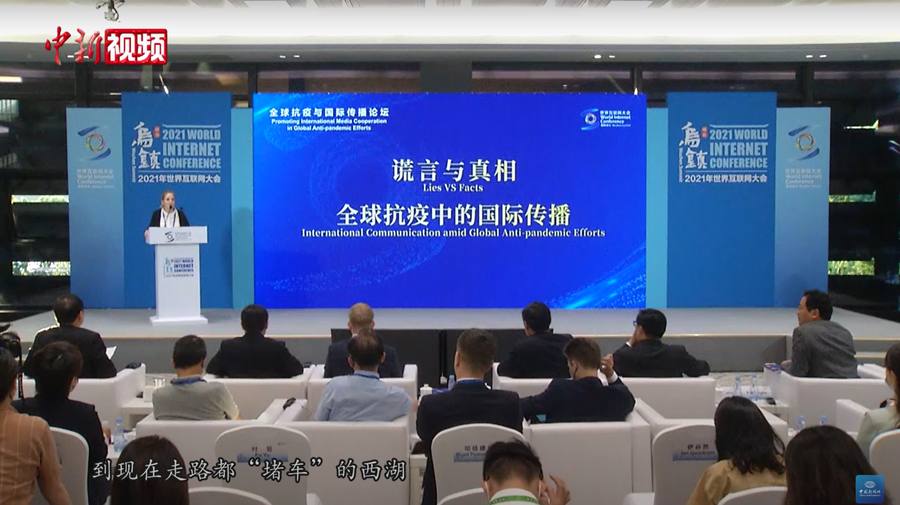
The COVID pandemic was the first great test of the censorship system on Zhuang's watch, and the research record is unusually complete. The Citizen Lab at the University of Toronto, in its March 2020 report "Censored Contagion," demonstrated by technical testing that as early as 31 December 2019 — the day after Wuhan doctors including Li Wenliang warned colleagues in a WeChat group — the streaming platform YY added 45 coronavirus-related blocked terms, including purely factual phrases such as "Wuhan unknown pneumonia" and "Wuhan seafood market"; that between 1 January and 15 February 2020 some 516 keyword combinations were blocked on WeChat; and that the scope widened markedly in February to cover criticism of the central government and local officials, speculative information, references to Li Wenliang, and even neutral relays of state-media reporting on the government's response. Reuters and other international media concluded that the pattern suggested platforms had received official guidance from the earliest stage of the outbreak. The same report records a public CAC statement of 5 February 2020 announcing punishment for websites, platforms and accounts publishing "harmful" content and "spreading fear," singling out Sina Weibo, Tencent and ByteDance for "thematic inspection" — a public document, and evidence at this page's institutional tier that at the most information-critical moment of the outbreak, the CAC's public action was to press platforms to delete and control, not to loosen.
Across the three pandemic years, CAC pandemic censorship ran under the single banner of rumor control: cyberspace departments at all levels published refutation and punishment notices by the tens of thousands, and those punished included both fabricators and ordinary users forwarding genuine appeals for help or recording lockdown conditions — both covered by the same word in the notice texts. This page does not re-litigate individual cases; the files of specific victims belong to this site's persecution section. It fixes only the system-level facts: throughout the pandemic, discussion of the virus's origins, death tolls and the secondary harms of lockdowns was continuously compressed, and several citizen journalists and writers who documented the outbreak lost their freedom in this period — through public-security, procuratorial and court channels, in which the CAC's part was the information-blockade link of the chain, not the detention link. That division of labor is recorded as found, neither inflated nor minimized. November 2022 brought the system's hardest moment, treated in Section 10.
One further institutional expansion of the pandemic years deserves recording: health-code and travel-code infrastructures were not CAC-run, but pandemic-era real-name data collection reached an unprecedented scale, and the CAC, as one of the principal authorities for personal-information protection and data security, was present throughout the making and enforcement of the data rules. When the Personal Information Protection Law and the Data Security Law took effect in 2021 and made the CAC the lead data enforcer, the data and the powers gathered over three pandemic years were already in place. Rules, data and enforcement authority converging in a single institution is the necessary background to the platform rectification that followed.
7. 2021: The Platform Rectification and the RMB 8 Billion Didi Fine
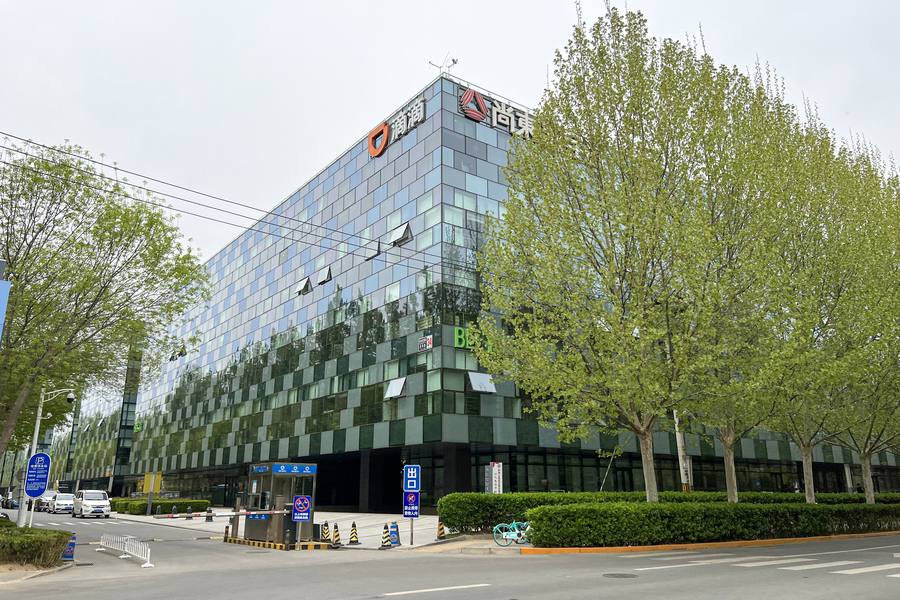
The year 2021 turned China's platform economy from expansion to rectification, and the CAC played the data-and-security enforcement line — parallel to the antitrust line of the market regulator and the financial line of the central bank and banking regulators. This page records only the CAC line and does not book the entire rectification movement to Zhuang personally. Its emblematic event is the Didi case. Didi listed on the New York Stock Exchange on 30 June 2021; two days later, on 2 July, the CAC announced a cybersecurity review of Didi, suspending new-user registration; on 4 and 9 July the Didi app and 25 affiliated apps were ordered removed from app stores for serious violations in collecting and using personal information; on 16 July seven departments — the CAC with the ministries of public security, state security, natural resources and transport, the tax administration and the market regulator — moved into Didi's offices to conduct the review. In December 2021 Didi announced it would delist from New York. On 21 July 2022 the CAC published its penalty: under the Cybersecurity Law, the Data Security Law and the Personal Information Protection Law, Didi Global was fined RMB 8.026 billion, and its chairman Cheng Wei and president Liu Qing were each fined RMB 1 million; the CAC's press Q&A stated that Didi's violations ran continuously from June 2015 for seven years, that sixteen categories of violation were established, that 64.709 billion items of personal information had been unlawfully processed, and that its data activities had seriously affected national security.
The Didi case carries three layers of archival meaning. First, it is a demonstration case for CAC enforcement power: a review decision could halt a newly listed company's growth within forty-eight hours, drive it to delist within a year, and close with a fine of roughly five percent of its 2021 China revenue — imposed under a legal basis that included two statutes which took effect only after the review had begun, a point analyzed by multiple law firms and recorded here in parallel. Second, it drew the political red line around data exports and US listings: data-compliance review for Chinese companies listing abroad became a standing procedure thereafter, and the CAC's revised Cybersecurity Review Measures of July 2021 and the 2022 rules that followed were catalyzed or accelerated by this case. Third, honesty requires the counterpart fact: the charge that Didi over-collected personal information is supported by the regulator's published itemized findings, and this page does not deny that specific violations may be real; what it records is the manner and structure of the enforcement — triggered at a political moment, run in the name of national security, with the national-security details withheld on national-security grounds and no judicial procedure anywhere in the chain. As to Zhuang's personal role: in the public documents, both the review's launch and the penalty issued in the CAC's institutional name, and no Didi-specific instruction under his personal name has been found; this page archives the case at the institutional tier — he was the director in post, the review measures issued from the institution he led, and the fine is booked to his tenure, not written as his personal order. The distinction is maintained deliberately.
The CAC's other 2021 actions form the rectification's background layer: across the year the cyberspace system summoned platforms for talks more than 5,920 times, issued over 4,400 warnings, levied fines totaling more than RMB 290 million, suspended functions or updates more than 470 times, and removed more than 30,000 apps (CAC enforcement通报 of January 2022, archived here as the regulator's own reporting); and on 20 October 2021 the CAC updated its list of approved internet news sources to 1,358 outlets, confining platform republication of news to the whitelist — the news-source whitelist passed on his watch from industry practice into a written list. Read together — fines, summonses, whitelist — by the end of 2021 the CAC held levers over content, data and capital simultaneously, the power base from which the annual Qinglang campaigns of the next section could be rolled out.
8. Qinglang: The Annual Campaign Made Permanent
The "Qinglang" (Clear and Bright) campaign brand predates Zhuang, but turning it into a standing mechanism — a dozen-plus deployments a year, covering every platform, with published enforcement figures — happened on his watch. In 2021 the CAC deployed fifteen Qinglang actions, including fan-circle ("fanquan") disorder, the Spring Festival online environment, user-account disorder and the online environment for minors; the fan-circle action escalated sharply from August 2021, idol talent shows were halted, mass fan fundraising and chart-boosting were cleaned up, and the accounts and works of several top celebrities were banned across all platforms in this period — executed by platforms, deployed under CAC programs, and tiered accordingly here. On 17 March 2022, at a State Council Information Office briefing, the CAC published its 2021 Qinglang results: more than 22 million items of unlawful or undesirable information cleaned up over the year, some 1.34 billion accounts acted against, more than 7,200 streamers banned, and more than 3,200 websites closed. The 1.34 billion figure exceeds China's total internet population — it counts account-actions, not persons, many of them spam and bulk-registered accounts — and this page archives it in the regulator's own terms with that note, rather than rewriting it as 1.34 billion people punished; even heavily discounted, the scale and automation of enforcement it marks is without precedent in the history of censorship.
In 2022 Qinglang deployed ten key tasks, including disorder in livestreaming and short video, MCN-agency content disorder, comprehensive algorithm governance, the minors' environment and the Spring Festival environment, adding a new front against online water armies and traffic fraud. In 2023 the campaign took a turn worth recording on its own: in March the CAC announced that Qinglang would prioritize problems damaging the online business environment, striking hard at information maliciously harming the image and reputation of enterprises and entrepreneurs — the censorship machine publicly adopting the protection of business reputation as a task, a shift analysts (including Taiwan's Institute for National Defense and Security Research) connected to Beijing's 2023 drive to restore private-sector confidence. The 2023 program also included the self-media disorder campaign: qualification labeling, monetization and source verification for self-media accounts were comprehensively tightened, and in November 2023 a CAC notice on strengthening self-media management was followed by the front-end real-name displays described in Section 5. The 2024 and 2025 rounds continued annually, extending to AI-generated content labeling, online violence and minor-mode requirements. The archival meaning of Qinglang lies not in any single action but in its conversion of the exceptional into an administrative calendar: every year, China's internet undergoes a round of speech-environment rectification with topics set by the CAC, execution by platforms and cooperation across the whole network — and the publisher of that calendar has not changed in eight years.
The attribution point of this section must land precisely: Qinglang's annual deployment briefings were usually fronted by a deputy director (such as Sheng Ronghua), and Zhuang rarely appeared at them in person — consistent with his low-visibility style. But Qinglang is written into his signed work: in his April 2022 Study Times essay he set down in his own name that cyberspace work would continuously run the Qinglang campaign series and strike hard at fan-circle disorder, online water armies and the like. That line lifts Qinglang half a tier in his file: it is not a campaign he was absent from, but a policy he publicly claimed. This page therefore describes it as "a tenure policy publicly claimed in his signed writings," and does not write "he personally deployed every Qinglang action" — for which no public document exists.
9. Algorithms, Deep Synthesis and Generative AI: Four Gates Written into Rules
If Qinglang is censorship in campaign form, rulemaking is the more consequential side of Zhuang's tenure. On 31 December 2021 the CAC, with the Ministry of Industry and Information Technology, the Ministry of Public Security and the State Administration for Market Regulation, published the Provisions on the Administration of Algorithmic Recommendation in Internet Information Services, effective 1 March 2022 — the world's first departmental rule devoted to recommendation algorithms. It bars providers from using algorithms to block information, over-recommend, manipulate rankings to intervene in information presentation, generate or synthesize fake news, or impose unreasonable differential treatment on users; and providers whose services have public-opinion attributes or social-mobilization capacity must complete an algorithm filing within ten working days of launch. The filing is the crux: recommendation algorithms ceased to be trade secrets and became registered objects, recorded with and assessed by the CAC. The algorithm filing system then became a registry that kept growing — deep-synthesis and generative-AI filings were grafted onto it.
The second gate is deep synthesis. On 25 November 2022 the CAC, MIIT and MPS published the Deep Synthesis Provisions, effective 10 January 2023: services using deep learning and virtual reality to generate or edit text, images, audio, video and virtual scenes were comprehensively regulated — generated content must be labeled, editing of faces and voices requires the edited person's separate consent, real-identity verification is required, and the filing and security-assessment machinery applies. The third gate is generative AI. On 10 July 2023 the CAC and six other departments published the Interim Measures for the Management of Generative AI Services, effective 15 August 2023 — among the world's first dedicated generative-AI rules: services offered to the public in China must use lawfully sourced data and foundation models, generated content must conform to content requirements including socialist core values, and services with public-opinion attributes or social-mobilization capacity may launch only after passing a security assessment and completing algorithm filing. In effect this is licensing: without filing and assessment, no large-model product may open to the Chinese public. Zhuang's own public account of this gate is on record in an August 2024 Xinhua interview: more than 190 generative-AI large-model services had completed CAC filing and come online, with registered users exceeding 600 million, he said, noting that China had issued generative-AI management rules ahead of others. The figures were announced by him personally and the measures issued by the institution he led — this section sits at the higher tiers of this page's scale.
The fourth gate closed later in his tenure: in March 2025 the CAC and three other departments published the Measures for Labeling AI-Generated Synthetic Content, effective 1 September 2025, requiring explicit and implicit labels on all AI-generated content, with duties assigned to generation providers, distribution platforms, app stores and users. Read together, the four gates form a complete technical control chain: what you see is decided by algorithms, which must be filed; how synthetic content is made is subject to labeling; whether a generative model may launch at all is subject to assessment; and how content spreads is governed by Qinglang and the ecosystem provisions. This page's assessment of this body of rulemaking records structure only: in technical-governance terms it is genuinely pioneering and complete — comparable EU and US instruments came later or reach less far — while every one of its articles writes content censorship in the name of technical compliance, with "socialist core values" standing in the generative-AI measures' text as a precondition of launch. A director trained as a hydraulic engineer spent eight years fitting the world's largest internet with a written, inspectable control project; that project will long outlast his tenure, and this page records the institutional legacy as found, whatever the reader's judgment of it.
10. The White Paper Protests and Hong Kong: Two Weeks of Maximum Pressure, and One Boundary
In late November 2022 the White Paper protests erupted: after the 24 November Urumqi fire, protests spread through Shanghai, Beijing, Nanjing, Wuhan and many other cities and campuses, demonstrators holding blank sheets of paper to demand an end to lockdowns and freedom of speech, with slogans against the top leader heard at some sites. These were the two weeks of maximum pressure on the censorship system in Zhuang's tenure: protest imagery at times survived on WeChat, Weibo and Xiaohongshu only in ten-minute cycles of posting and deletion; the words "A4," "white paper" and "Urumqi" were censored; researchers and overseas media documented the scrubbing of the domestic internet to the point of search nullity; protest imagery meanwhile flowed out through overseas platforms, and police checks of pedestrians' phones on subways and streets, deleting protest images, were recorded by multiple outlets. In early December COVID policy reversed abruptly and the protests subsided; in the following months a number of participants were detained, released on bail or sentenced — those case files sit in this site's persecution section and White Paper coverage, and this page records only the system level: the CAC's part in those two weeks remained the information-blockade link, while arrests and sentences belong to the public-security and judicial systems and are not booked to Zhuang here.
One point in the White Paper file is properly his: the censorship system was, for those two weeks, visibly overwhelmed, and that failure explains his later work priorities — the 2023 self-media rectification, front-end real-name display and deepened algorithm governance all publicly address the same problem, that unfiltered information must never again cross the whole network at that speed. On 28 November 2025 a Politburo collective study session was devoted to strengthening cyberspace-ecosystem governance, at which Xi Jinping named online platforms, self-media and multi-channel network agencies and called for long-term governance mechanisms — in the eighth year of Zhuang's tenure, internet governance was again raised to a Politburo study topic. This page records the sequence without causal overreach: explaining all post-2023 tightening as a White Paper aftershock goes beyond what public documents prove; but on the sequence of dates and his own signed formulations, the White Paper protests were the most important live-fire test of his censorship system, and that judgment rests on ample public material.
On Hong Kong, this page must draw an honest boundary. Since the 2019 anti-extradition movement and the 2020 Hong Kong National Security Law, Hong Kong's online speech space has contracted sharply — Apple Daily forced to close, independent outlets shuttered, mass takedowns and self-censorship under the NSL. These are established facts, but their executing bodies are the Hong Kong police's national-security department, the Hong Kong Department of Justice and Beijing's Office for Safeguarding National Security in Hong Kong, under the NSL and local law. This page's research found no public document showing Zhuang or the CAC directly ordering action against specific Hong Kong content; the CAC's institutional connection to Hong Kong runs mainly through mainland platforms handling Hong Kong-related content under mainland rules — in 2019–2020 large volumes of Hong Kong protest content on mainland platforms were cleaned under mainland censorship standards — and through the August 2019 disclosures by Twitter and Facebook of networks of accounts, assessed by the platforms as linked to the Chinese state, running information operations about the Hong Kong protests; the public material does not connect those networks directly to the CAC or to Zhuang personally, and this page archives them at "platform-assessed, institutional attribution unresolved." This page declines to book Hong Kong's overall speech contraction to Zhuang: doing so would dilute the responsibility of its actual executors and devalue every other attribution in this file. His real relation to Hong Kong is a single line, and it is not light: the mainland internet's censorship standard for Hong Kong topics was set and maintained on his watch, and what a billion mainland users could see of Hong Kong passed, for eight years, through the filter of his machine.
11. International Assessment, TIME100 AI, and the Absence of Sanctions
The international record on Zhuang has a curious double structure. On one side stands institutional criticism: CECC annual reports, Human Rights Watch, Freedom House and Reporters Without Borders have all repeatedly identified the CAC as the hub of China's censorship and online-surveillance system; RSF ranks China at or near the bottom of its press-freedom index and names its censorship apparatus, and Freedom House has rated China the world's worst environment for internet freedom for consecutive years. These documents criticize the CAC and the censorship system; Zhuang is mentioned in them at a frequency matching his low visibility — far less than his predecessor Lu Wei. On the other side stands technical-governance recognition: his algorithm and generative-AI rules have been widely studied, translated and cited by the global technology-policy community, and in 2024 Time placed him on the TIME100 AI list on the stated ground that his regulatory framework makes him one of the most influential officials in global AI governance. That a censorship director is simultaneously listed as an AI-governance influencer is not a contradiction: both judgments point at the same fact — he made censorship into technical governance, and technical governance into an exportable standard.
The sanctions column is short and clear: none. As of this writing, Zhuang's name appears on no public sanctions list of the US Treasury's OFAC, the State Department, the European Union, the United Kingdom, Canada or Australia, and he appears in none of the known Xinjiang-, Hong Kong- or Tibet-related designation waves — an absence that stands out among his peers: Xinjiang's Chen Quanguo, multiple Hong Kong liaison and Hong Kong–Macao system officials, and numerous surveillance-technology executives have all been designated by the United States, while the man who has run China's internet censorship for eight years has never been listed by any government. This page does not speculate on the reasons; it sets two verifiable facts side by side. First, sanctions practice has historically concentrated on executors of specific files — Xinjiang, Hong Kong — and on military-industrial and technology entities; the head of the content-censorship system has never become a designation category. Second, Zhuang himself barely travels, gives no speeches abroad and conducts no public engagement with Western counterparts, leaving far less personal material for a sanctions narrative to attach to than Lu Wei left. Eight years of documentary criticism, and no name on any list — the same picture as the liuzhi system's director elsewhere on this site, seen from another side, and archived here as found.
Domestic accountability is equally unrecorded. He crossed the 20th Party Congress in post and entered the 20th Central Committee — a CAC director seated on the Central Committee is itself a confirmation of rank among his line of predecessors. His public image remains exceptionally thin: no collected works, no memoir, no signature scandal, no purge rumors; his public activity consists of meetings, forums (above all the Wuzhen World Internet Conference) and signed articles. A man who operates the largest speech-control system in human history leaves, in the public record, little more than offices, essays and figures — and that thinness is itself part of the archive, because one of the system's design goals is precisely to make censorship look like technology, like compliance, like ecosystem governance, rather than like the product of any one person's will. This page exists to pin these eight years of rules, campaigns, fines and dates back under one concrete name.
12. Status Verification (as of November 2026)
This page verified his current status by the following path. First, on 2 November 2026 official outlets reproduced in full a signed article of his from China Cyberspace magazine, issue 10 of 2026, under the byline titles "deputy head of the Central Propaganda Department; director of the Cyberspace Administration of China" — the most recent public signature in his incumbent capacity available to this page. Second, the CAC website's leadership pages and institutional news carry a continuous record of his activities in office, with no official notice of departure, transfer or investigation. Third, both the Chinese and English Wikipedia entries list his directorship as incumbent, with Xu Lin as predecessor. On this basis this page confirms: as of 11 November 2026, Zhuang Rongwen remains director of the Cyberspace Administration of China, his tenure in its ninth year.
On age and departure this page records facts only: born in February 1961, he turned 65 in 2026, at and past the usual retirement-age line for ministerial-level officials; but no rigid public rule governs the tenure age of heads of Party and state organs, and his election to the Central Committee at 61 in 2022 itself signaled an arrangement spanning terms. This page predicts no departure date and adopts no unsourced succession rumors. His health, family circumstances and personal assets have no reliable public record and are not supplemented here.
13. Verification and Sources
The career and biographical facts of this page were cross-checked across multiple sources, principally: the Chinese and English Wikipedia entries on Zhuang Rongwen (born February 1961 in Quanzhou, Fujian, the Chinese entry giving 22 February; Hohai University doctorate in engineering 1989; senior engineer 1992; the Fujian sequence of Chitan hydropower plant, engineering consulting corporation, provincial planning commission, Three Gorges secondment, development and reform commission and science and technology department directorship; Overseas Chinese Affairs Office department director December 2010 and deputy director June 2014; CAC deputy director August 2015; Propaganda Department deputy head and National Press and Publication Administration head April 2018; the 31 July 2018 CAC cadres' meeting announcing his appointment as director of the Office of the Central Cyberspace Affairs Commission; appointment as CAC director in August 2018 with simultaneous removal from the NPPA and copyright posts; 20th Central Committee membership; TIME100 AI listing 2024); the China Media Project's personnel analysis of 5 August 2018 and the Wall Street Journal's August 2018 report of the appointment (cadres' meeting date, Zhou Zuyi's announcement, Xu Lin's destination); and DigiChina's full translation and analysis of Zhuang's signed Qiushi article of 16 September 2018 (programmatic debut, self-media control and "positive energy" formulations). Rules and campaigns rest on: the published text of the Provisions on the Governance of the Online Information Content Ecosystem (published December 2019, effective 1 March 2020); the Citizen Lab's March 2020 "Censored Contagion" report and Reuters' report of 3 March 2020 (the 45 blocked terms added by YY on 31 December 2019, the 516 WeChat keyword combinations, the CAC's 5 February 2020 statement naming Weibo, Tencent and ByteDance); the CAC's Didi review notices and its penalty decision and press Q&A of 21 July 2022 (review opened 2 July 2021; fine of RMB 8.026 billion; RMB 1 million each on Cheng Wei and Liu Qing; sixteen categories of violation; 64.709 billion items of personal information — cross-checked against DigiChina's full translation and multiple law-firm analyses); the CAC's figures at the 17 March 2022 State Council Information Office briefing (fifteen Qinglang actions in 2021; more than 22 million items cleaned; 1.34 billion accounts acted against; more than 7,200 streamers banned; more than 3,200 websites closed — cross-checked between law-firm briefs and briefing transcripts) and its 2021 enforcement report (more than 5,920 platform summonses; the 20 October 2021 whitelist of 1,358 news sources); the texts of the Algorithmic Recommendation Provisions (published 31 December 2021, effective 1 March 2022, ten-working-day filing), the Deep Synthesis Provisions (published 25 November 2022, effective 10 January 2023), the Interim Measures for Generative AI Services (published by seven departments 10 July 2023, effective 15 August 2023) and Xinhua's August 2024 interview with Zhuang (more than 190 large models filed; registered users above 600 million — his own figures); the User Account Information Provisions (published June 2022, effective 1 August 2022) and the October 2023 platform announcements of front-end real-name display for large accounts; and the AI-Generated Content Labeling Measures (published March 2025, effective 1 September 2025). The White Paper and Hong Kong sections rest on the London Review of Books' on-the-ground account of 30 November 2022 and multiple outlets' records of the November 2022 protests and censorship ("A4" and "white paper" terms censored, rapid deletion of imagery, police phone checks); Twitter's and Facebook's August 2019 disclosures on Hong Kong-related information-operation accounts (archived at platform-assessed tier); and Xinhua's readout of the Politburo's 23rd collective study session of 28 November 2025 (cyberspace-ecosystem governance; lecturer Shi Jianzhong). Current status rests on his signed article in China Cyberspace, issue 10 of 2026, and its official reproduction of 2 November 2026, byline showing the CAC directorship.
Corrections and reservations against the originating brief: First, birth date — English files record only February 1961, the Chinese Wikipedia gives 22 February; this page takes the month and year as its text and archives the day with its source marked, rather than presenting 22 February as multiply confirmed. Second, the start of the CAC directorship has three adjacent dates — the 31 July 2018 cadres' meeting announcement for the Party-side office, reporting on 1 August, and the August State Council appointment to the state-side office — and this page uses 31 July for the Party post and August for the state appointment, with the index tag year 2018, his first year in post. Third, the National Press and Publication Administration concurrent post is verified and brief: assumed April 2018, removed August 2018, archived as four months and not inflated into a long concurrent tenure. Fourth, the claim that Zhuang briefed Politburo collective study sessions on big data is not verified: no record of him as a lecturer appears in the published catalogue or readouts of Politburo collective study sessions, and the big-data, blockchain and cyberspace-governance sessions of the relevant years were all briefed by others; this page marks the claim unverified and does not use it, and corrects the brief's formulation accordingly. Fifth, sanctions — searches of the public sanctions lists of the United States, the European Union, the United Kingdom, Canada and others found no listing of Zhuang Rongwen, and the text states "none" as found; CECC and congressional criticism of the CAC as an institution is real but is institutional criticism, not personal designation, and the two are recorded separately. Sixth, the Qinglang figure of 1.34 billion is an account-actions count and the Didi figure of 64.709 billion an information-items count; both are archived in the regulator's original terms with their nature noted, not converted into headcounts. Seventh, matters personally deployed by Zhuang and matters issued by the CAC as an institution during his tenure are separated throughout under Section 2's three tiers: signed articles and public speeches attach to the person; Qinglang's annual deployments and the Didi penalty attach to the institutional tenure; Hong Kong handling and individual deletion cases are not traced to him personally. Matters without public-source support — his family and assets, the internal issuance of specific censorship instructions inside the CAC, and any departure date — are marked in the text as without public record or not predicted, with nothing supplemented. This page will be revised as new archives become public.
Contact: endccpworld@proton.me